
Why do we hold leadership to be something which is fascinating? Perhaps we do so because of the inherent complexity it represents.
One, it is the outcome of a delicate chemistry between an individual and his/her environment. All individuals have personality traits. Some of these come to the fore under some special circumstances. Take away those circumstances, and the trait may continue to remain dormant for a long time.
It follows that there is as much probability at work here as, say, in the tossing of a coin or in a game of chance. In the realm of human resources, we see examples of dullards becoming heroes in a given situation. In case of brands and organizations, we come across several cases where some which were ‘nothing’, when assiduously worked upon and when the market conditions were right, evolved into ‘everything’ and started enjoying commendable market equity.
Two, experts have always been at pains to distinguish it from management. To the initiated, if management is all about people and processes which enable an organization to run smoothly, leadership is all about disruptive vision which could spur innovation and end up transforming the way the organization works and responds.

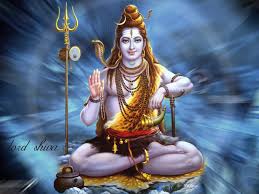
If one were to draw a parallel from the vast pantheon of Hindu gods and goddesses, one could perhaps say that if management is represented by someone like Lord Vishnu, leadership could be held to be portrayed better by someone like Lord Shiva. One is said to be maintaining and running the universe, while the other is the disruptive force which creates things anew.
Three, the term leadership itself leads us to another pertinent question – that of people being led. Just who are these followers? What are their characteristics? What are their aspirations? It is regrettable that while much research has been done on leadership, the followers – who make a leader what he/she is – have got a short shrift. The traits of this multitude of humanity have never been directly addressed; these are merely covered elsewhere, under the guise of subjects like motivation, communication, delegation, and the like.
Be that as it may, the charisma which a leader is said to possess remains a subject of relentless enquiry. This is yet another reason as to why leadership is fascinating. The inherent difficulty in defining the aura of a leader perhaps makes the phenomenon called leadership an enigma. Anything which is not readily grasped by the human mind invites even more attention. Such are indeed its ways. However, if one were to speak to one’s heart, the mystery unfolds. Human values, compassion and empathy come into play. The cumulative effort of a leader to connect with his/her followers goes a long way in creating the larger-than-life charismatic image of a leader.



 ashokbhatia
Reblogged this on ashokbhatia.
LikeLike