Posts Tagged ‘P G Wodehouse’
‘Pig-HOOOOO-OOO-OOO-O-O-ey’: A Sequel
Posted in What ho!, tagged Blandings Castle, Cow Hug Day, Empress of Blandings, George Cyril Wellbeloved, Humour, India, Lady Constance Keeble, Lord Emsworth, P G Wodehouse, Rupert Baxter | on September 3, 2026| Leave a Comment »
The Wodehousean Canon: A Guest Post by Mr. S. Subbaraman
Posted in What ho!, tagged Canon, Humour, P G Wodehouse, Tribute on August 13, 2026| Leave a Comment »
A visit to the Dulwich College, the Alma Mater of P G Wodehouse
Posted in What ho!, tagged Dulwich College, Humour, P G Wodehouse, UK on July 30, 2026| 2 Comments »
The Perks and Perils of Public Speaking
Posted in What ho!, tagged Humour, P G Wodehouse, Perils, Perks, Public Speaking on July 1, 2026| Leave a Comment »
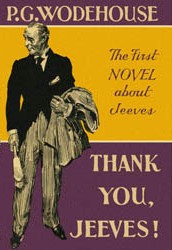
Thank You, Jeeves! (1936): Movie Review: Guest Post by Dustedoff
Posted in What ho!, tagged Humour, Movie, P G Wodehouse, Thank you Jeeves on June 18, 2026| 2 Comments »
Meeting a Plum fan at Pondicherry, India
Posted in What ho!, tagged Fans, Humour, P G Wodehouse, Pondicherry, Puducherry on May 21, 2026| 1 Comment »

On the brightly lit beach road of Pondicherry, one is apt to run across a wide variety of people of different hues, sizes, and shapes.
There are the casual ones who can be found munching on a snack and gazing ceaselessly at the ocean’s waves, as if contemplating the divine. A bunch of wide-eyed youngsters bonding with each other could get spotted. Young couples murmuring sweet nothings in each other’s ears might be sitting in secluded spots, blissfully unaware of the goings on around them. One could also run into a few impeccably dressed newlyweds, sharing a bar of ice cream, with dreams in their eyes. One notices families whose kids are enjoying their evening out, with hassled parents in tow, making futile attempts at curtailing their sprinting ambitions.
Elderly persons, comfortably perched on the boundary wall, can be seen enjoying the mild south-eastern breeze caressing their mortal frames. Some might be huddled in small groups, perhaps sharing notes on the condition of the lining of their stomachs. Groups of elderly ladies can be spotted, animatedly discussing between themselves either the kind of cruelty they suffer at the hands of their daughters-in-law or the severity of the knee pain they bear.
Besides leisurely walkers enjoying a saunter down the road, one is apt to see spirited pedestrians trying to achieve the daily quota of brisk walking prescribed by their physicians. Newton, were he to witness the scene, would heartily approve of their nimbleness in deftly trying to avoid colliding with the ones coming from the opposite side. After all, this reaffirms Nature’s law that a given spot on a given plane shall at a given moment of time be occupied by only one body. A couple of fitness enthusiasts cast in the mould of Ashe Marson can be noticed vigorously doing Larsen exercises at different spots.

The benign gaze of Mahatma Gandhi keeps encouraging all those present to spend more time on the beach road. Diagonally across, the well-lit old lighthouse beckons all those feeling lost in existence, motivating them to keep navigating through the choppy waters of life wisely and be clear and persistent about the goals to be achieved.
Managers in hotels and restaurants can be seen perspiring, trying to manage the queue of weary walkers trooping in, looking for some nourishment to put down the hatch. Behind the Promenade Hotel, one can see unruly crowds of customers gorging on tangy snacks being served by carts peddling street foods of all kinds.

Just a stone’s throw away stands the majestic structure of Raj Niwas, the office-cum-residence of the Lt. Governor of this union territory. On the back side, nestled amongst other buildings, one can easily find ‘Surguru Spot’, an establishment which serves South Indian cuisine. It offers only vegetarian fare, though one does not know whether the inspiration for the same comes from the poet Percy Bysshe Shelley or from Madeline Bassett.
As opposed to the boisterous surroundings one experiences on the beach road, the ambience inside the hallowed establishment known as ‘Surguru Spot’ is sombre, serene, and cosy. On the day in question, the place was full of customers who had permitted their greed to win over prudence. They could be seen wolfing down a wide range of South Indian delicacies.
Into the hall walked a fan of Plum’s, handsomely upholstered like Eve Halliday. An editor of impeccable reputation, she might as well be assisting Aunt Dahlia in running Milady’s Boudoir. To identify yours truly, sitting huddled in a corner with a morose expression on his visage, was the work of a moment for her.

When Plum fans meet, it always feels as if one has met a long-lost bosom pal. Books get discussed. Challenges faced by editors are mentioned. Life’s vicissitudes get shared. Movies come up for a loving mention, especially the ones which have loads of subtle humour. Characters created by the Master and many of his books come up for a detailed analysis.
Suffice it to say that it turns out to be a feast of Reason and flow of Soul, which is never punctuated by intervals of uncomfortable silences that arise when those meeting each other for the first time come together.
The more, the merrier, you might say. But I wonder if the number of fans present at such an impromptu meeting of the Drones Club really matters. To me, what is far more important is the depth of discussion, as well as the wide range of topics covered.
Of course, one winds up such a meet with the fond hope that in the future, a few more fans who might be hiding themselves well in a small city like Pondicherry may also get prompted to join in the festivities. Throwing medu vadas duly soaked in delectable sambhar at ceiling fans could also be fun, right?!
Related Posts
https://ashokbhatia.me/2025/02/19/the-myriad-challenges-faced-by-publishers-and-editors-in-plumsville
https://ashokbhatia.me/2016/04/20/the-travails-of-a-non-resident-pondicherryite
https://ashokbhatia.me/2023/05/29/when-anatole-goes-off-to-pondicherry-india
The Ghost in the Suitcase: Satyajit Ray, P.G. Wodehouse, and the Sunlit World of ‘Baksa Badal’: Guest Post by Suryamouli Datta
Posted in What ho!, tagged Baksa Badal, Bengali, Movies, P G Wodehouse, Satyajit Ray on May 7, 2026| Leave a Comment »

“But behind your achievement, the achievement of another remains…”
Feluda (“The Elephant God”)
In my schoolboy days, I once declared in an essay that Satyajit Ray was my favourite writer. Decades of reading have done nothing to dislodge him from that position. I have wandered through considerable literary territory since then—from Tolstoy to Tagore, from Borges to Bankim—and yet I return, always, to the particular flavour of Ray’s Bengali prose. Some will say this merely confirms that I never truly outgrew the garden walls of children’s literature. Perhaps. But to reduce Ray to Feluda and Professor Shonku is rather like insisting that a master chef is only to be judged by his breakfast menu. His short stories are every bit as accomplished, every bit as precise. Even his novel Fatickchand—into which he poured what one suspects was a deliberate effort to deny the reader any cause for tears—leaves, in the final pages, a bruise upon the heart that no amount of re-reading quite soothes.
A true storyteller, it seems to me, tells his tales with equal fluency across every medium available to him. Ray’s cinematic grammar is as fascinating as his prose, and the charge that his sensibility is somehow “Western” has always struck me as less a criticism than an inadvertent compliment. It was, in fact, that very Western flair which drew me deeper into his work—and led me, eventually, to a discovery that illuminated yet another facet of his genius.
The Screenplay and the Secret Admirer
Today I wish to set aside Ray’s directorial masterpieces—the Apu Trilogy, Charulata, Jalsaghar—and speak instead of a film in which he served not as director but as screenwriter and music composer. That film is Baksa Badal (1970) -literally, “The Exchange of Suitcases”—directed by Nityananda Datta and based on a story by Bibhutibhushan Bandyopadhyay. I have read the original story. I have seen the film. And I confess that the film, carrying Ray’s fingerprints on every scene, gave me a pleasure the source material alone could not.
The plot, briefly: Pratul, a psychiatrist, boards a train and encounters a young woman named Amiya. Upon arriving at his solitary quarters in a tea garden, he opens his suitcase to discover it belongs to a lady—silks, saris, and the unmistakable evidence of feminine proprietorship where his own belongings ought to be. The culprit is the oldest of railway comedies: the swapped suitcase. Fortunately, Amiya’s uncle’s address is tucked inside, and Pratul dispatches the bag to him in Kalimpong—the uncle being a botanist of the most magnificently unworldly variety. Amiya, meanwhile, has discovered the swap and is in pursuit of her property. What had been a simple exchange of luggage becomes, of course, something considerably more complicated—and considerably more enjoyable.
Now: what was in Amiya’s suitcase that makes this comic engine run? Not jewels. Not state secrets. Women’s clothing, homemade sweets, and—most dangerously of all—a personal diary, whose candid entries begin to sketch for Pratul a portrait of the woman he has never met. It is precisely this detail—the magnificently Wodehousean notion that a suitcase becomes a character reference—that lifts the film from pleasant entertainment into something approaching art.

Enter Plum
From an interview with Ray himself and later confirmed in Bijoya Ray’s memoir Amader Kotha (A commentary on Ray’s family life with his wife), came the revelation that explained so much: Ray’s favourite author was P.G. Wodehouse. Several veils lifted at once. The “smartness”—that unique quality of elegant mischief I had always sensed in Ray’s work without being able to name it—had a source. As Wodehouse himself once wrote: “I believe there are two ways of writing novels. One is mine, making a sort of musical comedy without music.” Ray, I would argue, understood this instinctively, and in Baksa Badal he composed precisely such a comedy—Bengali in its bones, Wodehousean in its spirit.
The Cast of Characters, Translated
The changes Ray made in adapting Bibhutibhushan’s story into a screenplay are where the Wodehousean influence declares itself most openly.
Pratul is the linchpin. In the original story, he is an unremarkable fellow on a train. In Ray’s version, he remains a traveller, but a traveller of considerable resource and ingenuity. He does not merely return the suitcase; he arrives at the lady’s house in disguise—deploying the sort of elaborate subterfuge that Wodehouse heroes (and villains, and valets) often resort to. To my mind, Pratul is much likely akin to Psmith: that magnificently unflappable young man who, in Psmith in the City, Leave it to Psmith, and elsewhere, glides through many a catastrophe with a raised eyebrow and a well-turned sentence. Psmith is intelligent, fundamentally decent, and possesses what one can only describe as an almost supernatural capacity for crisis management—all qualities that Pratul’s character shares with him. There is also, in Pratul’s moments of quiet wit, more than a little of Jeeves: the man who sees further than everyone else in the room and arranges outcomes with the serene competence of a chess grandmaster.
Shovan is an invention entirely Ray’s own—he does not exist in Bibhutibhushan’s original. And what an invention it turns out to be! Played with a perfection that still disarms audiences today by Satindra Bhattacharyya, Shovan is positioned as the conventional “thorn in the hero’s side.” But Ray, being Ray, refuses the conventional treatment. Shovan is not a villain. He is something far funnier and far more human: a well-meaning, chronically disorganised, constitutionally forgetful innocent who creates havoc not through malice but through a congenital inability to manage his own affairs. He is, in every sense, like Gussie Fink-Nottle—Bertie Wooster’s hapless friend, the newt-fancier, a man whose romantic difficulties and spectacular social mishaps provide the engine for some of Wodehouse’s finest passages. The film’s perfectly Wodehousean irony—and one suspects Ray savoured it—is that Shovan goes, entirely unwittingly, to his own romantic rival for what we might today call life coaching. Gussie himself could not have managed it better.
This matters enormously from a craft perspective. Traditional comic construction demands a powerful antagonist to make the hero shine. Ray understood, as Wodehouse understood, that a more sophisticated comedy arises when the “obstacle” is not wicked but simply hapless—when the hero must defeat not malevolence but a dash of pumpkin-headed-ness. It is a far more charitable worldview and a far more entertaining one with absolute warmth.

The Uncle—absorbed in his botanical specimens with a serenity impervious to surrounding drama—is Lord Emsworth to the life. Emsworth, the ninth Earl of that ilk, was Wodehouse’s great monument to benign incompetence: a man so thoroughly enchanted by his prize pig, the Empress of Blandings, and his garden, that the turbulent comedy erupting around him might as well be occurring on another continent. Ray’s uncle achieves precisely the same effect: while a romantic catastrophe unfolds under his roof, he nurses his plants with the focused tranquillity of a man who has simply declined to notice that the world exists.
Amiya completes the quartet in the manner of Wodehouse’s Joan Valentine or, in her drier moments, Sally Nicholas: the woman who is the only person in the room capable of matching the hero’s intelligence, who wields a quiet, lethal humour, and who loves the hapless third party (Shovan, in this case) with the exasperated affection of an elder sister rather than the romantic devotion of a heroine. This is where Ray—faithful to his Plum—refuses sentimentality. She scolds Shovan as a mother might; she respects Pratul as an equal. The emotional geometry crafted by Ray is Wodehousean in its precision.

The Moustache Gambit and Other Plummy Pleasures
One cannot leave Baksa Badal without observing the running comedy of the moustache—a joke that begins when Pratul draws a moustache on a photograph of Amiya’s brother. This incident elevates the narrative to a level where an entire architecture of double identity (one persona with the moustache; one without) gets unleashed upon the viewer. it gets sustained with the careful internal logic that all great farce requires. Ray introduced this particular brand of “moustache punning” to Indian cinema a full decade before Hrishikesh Mukherjee’s beloved Gol Maal (1979) made the device famous in Hindi film. Priority, one feels, should be acknowledged.
In Wodehouse’s world, physical disguise and mistaken identity are the load-bearing columns of the comic architecture. Much Obliged, Jeeves, The Mating Season, The Code of the Woosters, Big Money—in story after story, the elaborate management of who thinks whom is who drives the plot forward. Ray understood this mechanism well and deployed it with characteristic economy: never a beat wasted, never a joke pushed past its natural life.
There is also, finally, the matter of Sudden Resolution—what one might call the Wodehousean Restoration of Order. In Plum’s world, however catastrophic the muddle, the final pages deliver every character to their appropriate goal , no bitterness permitted, no score unsettled. It is, as Wodehouse himself put it, a world “two inches above the surface of the earth”—a place where unhappy endings are simply not allowed. Baksa Badal achieves this same smooth, frictionless landing. The suitcases are returned. The right people find one another. And the uncle, one imagines, is finally left free to potter about amongst his plants.

A (Belated) Birthday Tribute
I do not pretend to be worthy enough of being able to judge a colossus. Satyajit Ray remains, as he has always been, my favourite—followed closely, in a different register, by Wodehouse. What Baksa Badal represents, to my mind, is something rarer than influence and more graceful than homage: it is the act of a supreme artist absorbing his deepest pleasure and returning it, transformed, in his own idiom. The Bengali soul of the film is never in doubt—the tea gardens, the Kalimpong hills, the particular social textures of middle-class Bengal—and yet, threaded invisibly through it, is the sunlit comic universe of Pelham Grenville Wodehouse.
This, I believe, is the mark of the greatest creators. They carry their loves inside their work like light inside a lantern—invisible from the outside until you hold the thing up to the flame and see, suddenly, the pattern within.
Wodehouse wrote that his ideal was to take “a handful of people and ring the changes on them.” Ray did precisely this in Baksa Badal—and rang them in Bengali, on a hillside, a stolen moustache, and made something wholly and unmistakably his own.
But behind your achievement, the achievement of another remains.
That is not diminishment. In Ray’s case, it is the highest compliment one can pay: that he was capacious enough to carry Wodehouse within him, and confident enough in his own genius to let the presence show—like a watermark, visible only when you know to look, and glorious when you do.
Belated happy birthday, “Manik-da” (as Ray is famously known as). The suitcases, it turns out, were never really swapped at all. Everything arrived exactly where it was meant to go.
“The object of the writer is to charm, to amuse, and to interest.” — P.G. Wodehouse
Baksa Badal (1970) did all three. And it did so because two giants, born on different continents and dishing out creative stuff in different time zones, turned out to share the same understanding of what comedy, at its finest, is actually for. (Ray was born on the 2nd of May, 1921 and left us on the 23rd of April, 1992. Plum was born on the 15th of October, 1881 and left us on the 14th of February, 1975.)
After all, humour is not merely a tool for propelling a narrative. It is the garnishing that creative geniuses deploy to make their offerings more palatable to their audience’s mental hunger, which is forever seeking an inner bliss which would transport them to a more equitable, fair, and just world.
Related Post
Of Valentine’s Day, A Sentiment Called Love, and P G Wodehouse
Posted in Uncategorized, What ho!, tagged Death, Humour, Love, P G Wodehouse, Paradise Lost, Valentine's Day on February 14, 2026| Leave a Comment »
A Meeting of Plum Fans in New Delhi, India
Posted in What ho!, tagged Fans, Humour, NCR, New Delhi, P G Wodehouse on January 9, 2026| Leave a Comment »
Joy in the Evening – A meeting of Plum fans in Kolkata, India
Posted in What ho!, tagged Calcutta, Fans, Humour, India, Kolkata, Kwality, P G Wodehouse, Park Street, Travel on December 30, 2025| Leave a Comment »
-
Recent Posts
- The Humble ‘Phuchka’ and the Financial Philosophy of “The Road Not Taken”: Guest Post by Suryamouli Datta
- A comment on the Corporate Dharma book: Mr Victor Kannan
- Of Death and the Allure of Getting a Brand-New Vehicle!
- A comment on the Corporate Dharma book: Mr R Gopalakrishnan
- Of Reincarnation, Mushrooming, and Job Hopping
Buy the Book
Buy the Book

buy the book
Categories
-
cc
Tags
Art Bertie Wooster Bhagavad Gita Bingo Little Birthday Blake Mouton Grid Blogging Bollywood Book Campus Life CEO Chivalry Consciousness Coronavirus Corporate Dharma Corruption Empress of Blandings English Ethics Feminism Happiness Health Hindi Hollywood Human Values Humour India Jeeves Kalidasa KIds Leadership linkedin Literature Lord Emsworth Love Lyrics Mahabharata Mahatma Gandhi Management Movies Music Norway Paintings Panjab University People P G Wodehouse Politics Pondicherry Portugal Psmith Puducherry Rabindranath Tagore Ramayana Ritusamhara R K Laxman Romance Rosie M Banks Rupert Psmith Shakespeare Social Media Something Fresh Songs SPANDAN Spirituality SQ Sri Aurobindo Stephen Covey Switzerland Tatas Thos UBS Values Wodehousitis Women Work Life BalanceArchives
- September 2026 (6)
- August 2026 (7)
- July 2026 (8)
- June 2026 (6)
- May 2026 (5)
- April 2026 (3)
- March 2026 (2)
- February 2026 (5)
- January 2026 (2)
- December 2025 (1)
- November 2025 (2)
- October 2025 (2)
- September 2025 (3)
- August 2025 (3)
- July 2025 (2)
- June 2025 (2)
- May 2025 (4)
- April 2025 (5)
- March 2025 (5)
- February 2025 (4)
- January 2025 (4)
- December 2024 (6)
- November 2024 (6)
- October 2024 (6)
- September 2024 (5)
- August 2024 (5)
- July 2024 (4)
- June 2024 (4)
- May 2024 (5)
- April 2024 (5)
- March 2024 (3)
- February 2024 (1)
- January 2024 (4)
- December 2023 (2)
- November 2023 (3)
- October 2023 (3)
- September 2023 (3)
- August 2023 (5)
- July 2023 (5)
- June 2023 (7)
- May 2023 (6)
- April 2023 (6)
- March 2023 (8)
- February 2023 (8)
- January 2023 (7)
- December 2022 (6)
- November 2022 (5)
- October 2022 (8)
- September 2022 (5)
- August 2022 (6)
- July 2022 (6)
- June 2022 (8)
- May 2022 (7)
- April 2022 (8)
- March 2022 (7)
- February 2022 (3)
- January 2022 (7)
- December 2021 (4)
- November 2021 (8)
- October 2021 (7)
- September 2021 (6)
- August 2021 (7)
- July 2021 (7)
- June 2021 (9)
- May 2021 (8)
- April 2021 (9)
- March 2021 (10)
- February 2021 (8)
- January 2021 (8)
- December 2020 (7)
- November 2020 (6)
- October 2020 (5)
- September 2020 (9)
- August 2020 (9)
- July 2020 (8)
- June 2020 (8)
- May 2020 (6)
- April 2020 (5)
- March 2020 (7)
- February 2020 (4)
- January 2020 (7)
- December 2019 (12)
- November 2019 (10)
- October 2019 (5)
- September 2019 (9)
- August 2019 (10)
- July 2019 (9)
- June 2019 (14)
- May 2019 (13)
- April 2019 (14)
- March 2019 (11)
- February 2019 (11)
- January 2019 (14)
- December 2018 (12)
- November 2018 (12)
- October 2018 (14)
- September 2018 (9)
- August 2018 (10)
- July 2018 (10)
- June 2018 (8)
- May 2018 (11)
- April 2018 (11)
- March 2018 (6)
- February 2018 (9)
- January 2018 (10)
- December 2017 (10)
- November 2017 (9)
- October 2017 (8)
- September 2017 (11)
- August 2017 (10)
- July 2017 (10)
- June 2017 (11)
- May 2017 (9)
- April 2017 (7)
- March 2017 (7)
- February 2017 (8)
- January 2017 (10)
- December 2016 (9)
- November 2016 (11)
- October 2016 (10)
- September 2016 (10)
- August 2016 (9)
- July 2016 (6)
- June 2016 (10)
- May 2016 (10)
- April 2016 (10)
- March 2016 (10)
- February 2016 (12)
- January 2016 (10)
- December 2015 (11)
- November 2015 (11)
- October 2015 (10)
- September 2015 (10)
- August 2015 (10)
- July 2015 (10)
- June 2015 (10)
- May 2015 (10)
- April 2015 (10)
- March 2015 (9)
- February 2015 (10)
- January 2015 (8)
- December 2014 (9)
- November 2014 (8)
- October 2014 (8)
- September 2014 (7)
- August 2014 (7)
- July 2014 (7)
- June 2014 (7)
- May 2014 (7)
- April 2014 (7)
- March 2014 (7)
- February 2014 (6)
- January 2014 (7)
- December 2013 (6)
- November 2013 (6)
- October 2013 (6)
- September 2013 (6)
- August 2013 (6)
- July 2013 (6)
- June 2013 (6)
- May 2013 (6)
- April 2013 (6)
- March 2013 (6)
- February 2013 (6)
- January 2013 (6)
- December 2012 (4)
- November 2012 (4)
- October 2012 (3)
- September 2012 (2)
- August 2012 (4)
- July 2012 (2)
- June 2012 (2)
- May 2012 (2)
- April 2012 (2)
- March 2012 (2)
- February 2012 (3)
- December 2011 (3)
- November 2011 (1)
- October 2011 (2)
- September 2011 (2)
- August 2011 (2)
- July 2011 (2)
- June 2011 (3)

 ashokbhatia