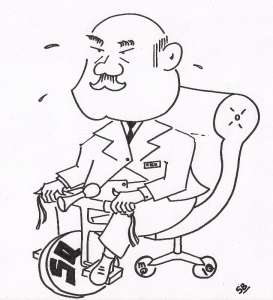
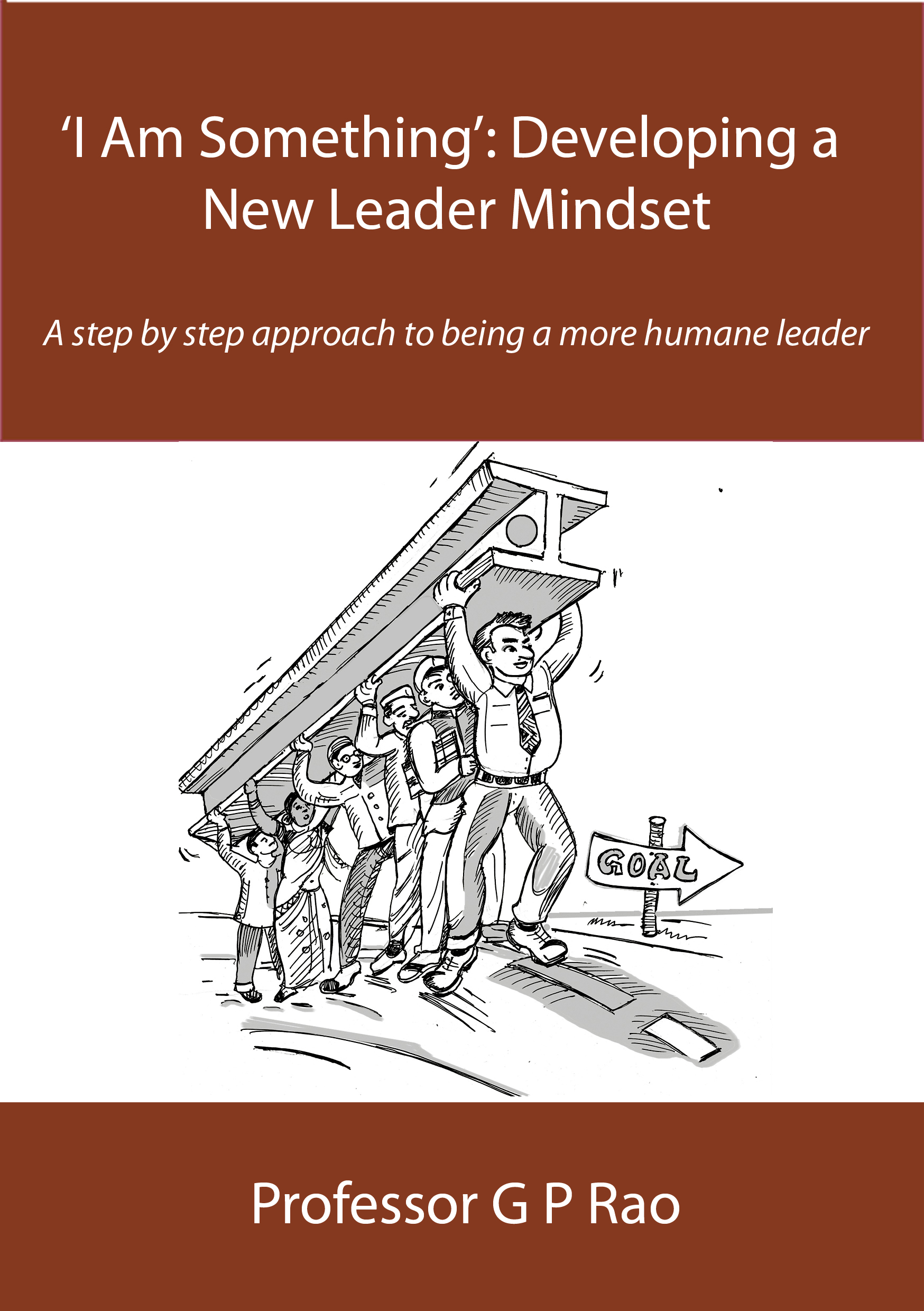
Consider the case of Jet Airways, which shut its operations in April 2019 after having been a key player in the Indian airspace for over 25 years. The unwillingness on the part of the promoter family to let go of its control over the business made the airline eventually crash-land. Professionals were hired in top key positions, but the art of delegation was apparently given short shrift.
In family-owned businesses, the younger generation is often raring to go. Many a scion keeps wondering when the elder owner would hang his corporate boots or sandals, so they could have a free hand to nudge the enterprise towards newer markets, adopting the latest technologies sprouting in the era of the Industrial Revolution 4.0. But for most of the elderly owners, it is a tough challenge to give up control. Like the proverbial man who keeps clinging to a tree but blames the tree for not allowing him to let go, they refuse to fade away gracefully into the sunset. During the period of transition, chaos and confusion reign. Hapless employees continue to suffer silently, caught as they are between the divergent thought processes of the two generations.
The war depicted in the epic Mahabharata, of which the Bhagavad Gita is an integral part, came about only because King Dhritarashtra could not overcome his attachment to either the throne or his son, Duryodhana. The outcome was the death of all his 100 sons, loss of prestige and kingdom, and of course, social and economic misery of the multitudes who had earlier thrived during his reign.
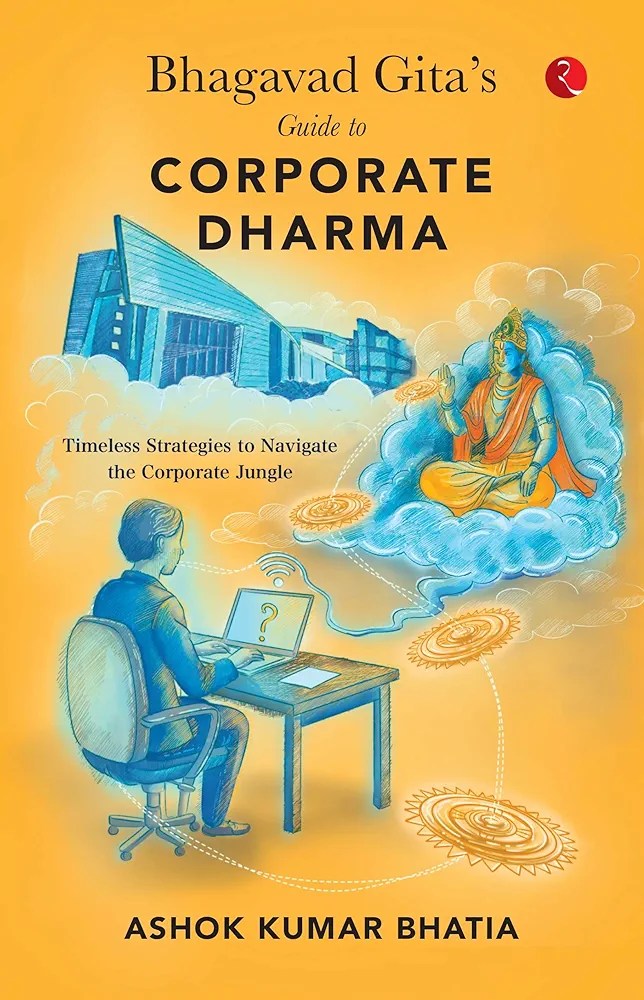
(The text is an edited excerpt from my latest book ‘Bhagavad Gita’s Guide to Corporate Dharma’.)
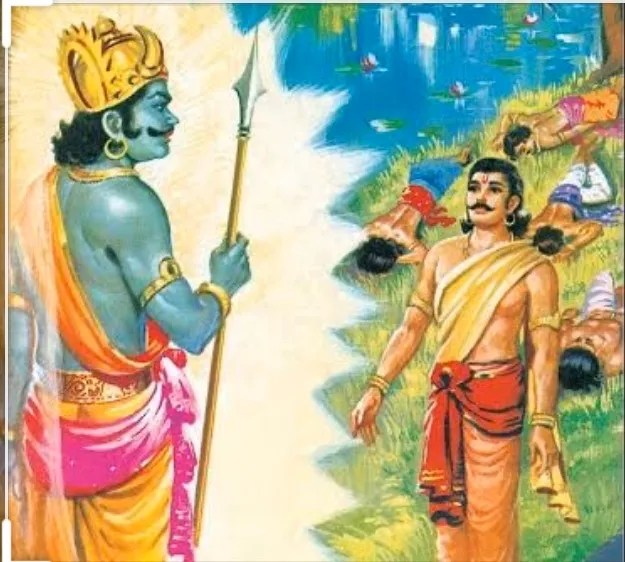
In the Yaksha Prashna episode of Mahabharata, Yudhishtira is asked many questions. One of these is:
“What do you find as the most surprising on earth?”
To which Yudhishtira replies:
“Numerous people are encountering death daily. Even though people are aware that they will have to die one day, they crave for worldly desires as if they are permanent on earth. There is nothing more surprising than this fact.”
Death and Taxes are both inevitable in life. But the sting of death is far deadlier than that of taxes. There is an irrevocability associated with it. When a loved one passes away, the physical form with which we associated ourselves for a long time simply vanishes. What is left behind is a void which is near impossible to fill.
The sting hurts us even more when the death is untimely. The passing away of a young person who was yet to drink deep from the joyful rivulet of life leaves us with a regretful feeling of deprivation. Shock, trauma, and depression follows. Our senses get numb. Nothing makes any sense anymore. A sense of disbelief envelopes us. Words of sympathy and condolences pour in, but these do not register. For some time, we act like zombies, moving about and doing things as we are advised by others to do. Lessons from Bhagavad Gita which tell us that the soul is immortal do not make any sense.
Feelings of guilt plague us. We regret not having done something more to save the person. We find it difficult to handle the anger we feel towards ourselves. Forgiving ourselves becomes an impossible task. We look up to the heavens and blame our favourite God for having been so cruel to us.
Losing a spouse is especially traumatic. I realized this myself when I lost my wife during 2018. Gradually, the reality of having lost a trusted companion, a bitter critic, and a true friend dawned upon me.
Two Persons Who Made Me Cry during 2022
Richa (1970-2022) was Principal Scientist at National Institute of High Security Animal Diseases (NIHSAD). Besides being an eminent scientist, she was a loving daughter, a devoted wife, and a caring and affectionate mother. She was not only a member of the selection committee of International Federation of Biosafety Associations for their much-coveted Biosafety Hero Awards; she had also won many awards herself at national as well as international level. She was the Secretary of Society for Biosafety, India, and a member of The Executive Council of the Asia Pacific Biosafety Association. She had published many research papers. A recognized badminton player, she was passionate about gardening, dancing, and singing. We lost her within a few months of 2022 to an aggressive form of cancer which was detected very late.
Pavan (1963-2022) was a self-made person. A first-generation entrepreneur par excellence. Someone who expanded his business by sheer dint of a lofty vision, hard work, perseverance, and a knack of identifying, nurturing, and deploying human talent. He played all the roles in his life to perfection, whether as a son, an elder brother, a husband, a father, and a grandfather. Above all, a fine and helping human being who would go out of his way to help the needy. With his passing away, we lost someone with excellent management skills. Premier management institutes would greatly benefit by publishing a case study on the business strategy which shaped his business and took it to dizzying heights. We lost him to a sudden cardiac arrest within a span of a few hours on a fateful day during December 2022.
The Five Aspects of Grief
In 1969, psychiatrist Elisabeth Kübler-Ross introduced what became known as the “five stages of grief.” These stages of grief were based on her studies of the feelings of patients facing terminal illness, but many people have generalized them to other types of negative life changes and losses, such as the death of a loved one or a break-up.
The five stages of grief, which I would prefer to refer to as aspects:
Denial: “This can’t be happening to me.”
Anger: “Why is this happening? Who is to blame?”
Bargaining: “Make this not happen, and in return I will ____.”
Depression: “I’m too sad to do anything.”
Acceptance: “I’m at peace with what happened.”
The reason I prefer to call these as aspects of grief rather than its stages is that these stages are not linear in nature, each following the preceding one over time. In my opinion, grief is cyclical or spiral in nature. Something happens, memories come flooding back, and we feel we are back to square one. But yes, the spiral does propel us forward, taking us gradually away from its epicentre.
Often, grief is like a sinusoidal curve of which the amplitude keeps decreasing over time, as the mundane concerns of life come back plaguing us soon enough. However, it is a curve which goes down in an exponential manner, never quite reaching a zero baseline. The emptiness within may never go away; we learn to accept it and move on in life. The time span of recovery is as individually unique as each one of us is.
Handling Grief
Remaining Surrounded by Loved Ones
In the initial phase, we tend to withdraw ourselves into a shell. Despite being surrounded by our loved ones, the feeling of loneliness and a vacuum inside persists.
Turn to friends and family members. Now is the time to lean on the people who care about us, even if we take pride in being strong and self-sufficient. Rather than avoiding them, draw friends and loved ones close and spend time together face to face. Physical hugs go a long way in the process of recovery.
Accepting the Assistance Offered
Often, people want to help but do not know how. We may have to be open and tell them what we need—whether it’s a shoulder to cry on, a listening ear, or just someone to hang out with. If we feel we do not have anyone you can regularly connect with in person, it’s never too late to build new friendships.
The Challenge of Comforting Others
We would do well to accept that many people feel awkward when trying to comfort us when we are grieving.
Grief can be a confusing, sometimes a frightening emotion for many people, especially if they have not experienced a similar loss themselves. They may feel unsure about how to comfort us and could be wary of saying or doing the wrong things.
Sharing Sorrow and Getting Busy
Sharing our sorrow with others who have experienced similar losses can help. What works best, however, is to get doubly busy with our occupation and start devoting more time to what we love doing.
Faith Can Help
As luck would have it, our physical body carries no guarantee. Perhaps, we can draw some comfort from our faith. If we follow a religious tradition, we may find that its mourning rituals may provide some comfort. Spiritual activities that are meaningful to us —such as praying, meditating, or going to religious places — can offer solace.
Lord Krishna speaks of reincarnation in the Bhagavad Gita, likening death to the way we change into a new set of clothes, discarding the old ones.
Fulfilling Pious Intentions
Most of us have a bucket list of things we always wished to do in our life. It helps to start fulfilling such pious intentions sooner than later.
It could be trips to places that we always wished to visit, a book that we always thought we could read, or write one of our own, few songs we could croon, close friends we wanted to visit, or movies that we wished to see, etc.
Imparting a Meaning to Our Suffering
Grief can beget meaning. It provides us an opportunity to reflect on what matters most to us. We could end up taking a social initiative which may, in some way, end up doing good to others. Suffering is virtually a steppingstone to spiritual upliftment.
On to Pleasant Memories
The good news is that the feeling of inner loneliness does get diminished over time. Our souls are forever seeking happiness within. Over time, memories which would have made us cry closer to the event, turn into pleasant ones. We remember the departed person with fondness. We keep in mind the values followed by the departed soul. We adapt to the new reality.
Making the Departed Soul Happier
The Mother of Sri Aurobindo Ashram, Pondicherry, India, has said that to make the soul happy, so that it reincarnates in good conditions, one should have no sorrow and remain very peaceful and quiet, while keeping an affectionate remembrance of the one who has departed. (Complete Works of the Mother; Words of the Mother – III; Death and Rebirth).
Some Myths and Misconceptions
Myth: The pain will go away faster if we ignore it.
Fact: Trying to ignore our pain or keep it from surfacing will only make it worse in the long run. For real healing, it is necessary to face our grief and actively deal with it.
Myth: It’s important to “be strong” in the face of loss.
Fact: Feeling sad, frightened, or lonely is a normal reaction to loss. Crying does not mean we are weak. We do not need to put on a brave front. Showing our true feelings can help us and those around us.
Myth: Not crying implies we are not sorry about the loss.
Fact: Crying is a normal response to sadness, but it is not the only one. Those who do not cry may feel the pain just as deeply as others. They may simply have other ways of showing it.
Myth: Grieving should last about a year.
Fact: There is no specific time frame for grieving. How long it takes differs from person to person.
Myth: Moving on with our life means forgetting about our loss.
Fact: Moving on means we have accepted our loss. This is not the same as forgetting. We can move on with our life and try to be happy. The memory of someone we lost shall always be an important part of us. In fact, as we move through life, these memories can become more and more integral to defining the people we are.
What To Avoid While Comforting Those Who Are Grieving
Aggressively seeking details as to how it happened. Allowing the grieving person to open up on his/her own makes better sense.
Right after the death, asking the affected person details about their immediate or future plans. Or, commenting on how things may shape up in the family in the times to come.
Discussing financial details of any kind.
Loose talk while being a part of any of the rituals or at any social gathering to mourn a death.
Talking about health-related precautions being taken by one, thereby implying that the responsibility of the sudden demise somehow lies on the deceased person or his/her family.
A Transformative Event
In his epic poem Savitri, Sri Aurobindo, the renowned Indian seer, presents the end of a person’s life as a transformative event, a passage or a door through which one passes towards a greater life. Essentially, the poem recounts the saga of human victory over ignorance and conquest of death.
Thus, on the racing tracks of Life, Death is but a pit stop. One gives up one’s creaking old jalopy. In exchange, one gets a shimmering new vehicle. One then zooms off to a newer horizon, the engine firing on all six cylinders. With each pit stop, one evolves further.
Conveying Positive Vibes to Those Who Are Still Around
If I ever run into Yaksha and he asks me as to what the next most surprising thing in life is, I would surely respond as follows.
“All of us realize that those we love are not going to be around all the time. Yet, we consciously end up praising a person only when he/she is no longer alive. During their lifetime, most of the times, we take them for granted and spend quite some time censuring, condemning, criticizing, and ridiculing them.”
Think of those around us. When was the last time we conveyed our genuine appreciation, praise, and gratitude to them for their importance in our life? Is it not better to do so when the person we love is still around and can appreciate it?!
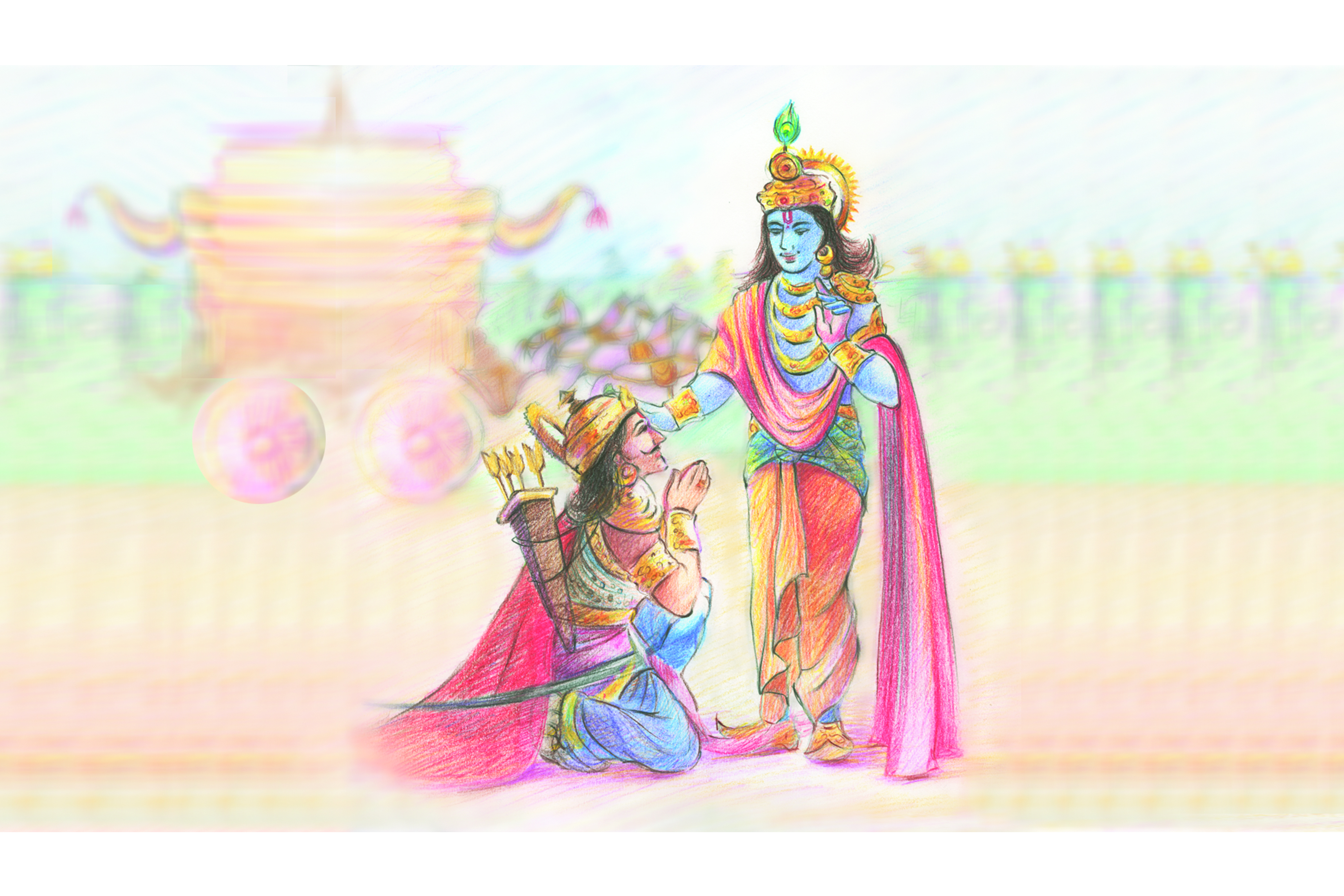
(1. The illustration depicting Krishna and Arjuna in the battlefield has been reproduced with permission from the illustrator, Arati Shedde, and Heartfulness Magazine – www.heartfulnessmagazine.com.
2. All other illustrations are courtesy www.
3. A version of this article also appears in the July 2023 issue of NAMAH, a journal of Sri Aurobindo Society, Pondicherry, India).
My audience may by now be losing its patience, thinking as to why I keep harping on the term ‘values’ so very often!
The Road to Happiness
Well, it would not need a Sherlock Holmes to figure out what is happening here. Besides being an occasional author, a speaker, a regular blogger and content creator on such topics as Management, P G Wodehouse, Bollywood and life in general, yours truly has undergone several juicy experiences in life – some sweet and some sour. Based on my 35 years+ experience in the corporate world, I have become aware and conscious of the need for high values and ethics in business. Some of you may recall my having worked across the two opposite ends of the Value Spectrum.
Add to this the enriching experience I have had while our planet has been busy spinning on its axis and completing 68 odd rounds around the sun since I have been around and the plot gets even thicker. Those of you who have had the misfortune of trudging through my articles and books would have already sensed an underlying current highlighting this very theme. In me, they would have discovered a fierce critic of any kind of compromises on this front.
My belief is that business ships (and lives too) which are built on a keel of sound values end up not only having a better brand equity but also yield better returns. When we are broad minded and give back to the society at large, we serve a higher purpose in life. Purpose brings inner happiness. Happiness is what we all seek.
Where Do Our Values Come From?
All this may have left my audience wondering as to from where our value systems come from. This would surely need the keen eye of Sherlock Holmes to explore.
Our Genes
After years of research on bonobos – intelligent apes closely related to us, homo-sapiens – Frans de Waal argues that human morality is not imposed from above but comes from within us. In his path-breaking book entitled The Bonobo and the Atheist, he proposes that moral behavior does not begin and end with religion. It appears that our values and ethics are instead a product of evolution and cultural response. All of us strive to be good within ourselves, in our own eyes. This explains our trait of innate goodness.
A cat or a dog may not think through the process so thoroughly, but bonobos surely appear to be aware of the nuances of social norms. They have a developed sense of reciprocity and fairness. They are even known to intervene in a fight between two tribe members so as to maintain peace and harmony!
Ancient apes, whales and dolphins deserve our gratitude for several qualities that we possess – our sensitivity to others, our concern for fairness, love of harmony and other just forms of societal behavior. If religion or spirituality attracts us, it is because that is how Mother Nature has made us. These present to us a template of good conduct; these touch a chord somewhere deep within us.
We, a Cocktail of ‘Gunas’
However, there is no guarantee that all of us follow the template of good conduct alone. As per Bhagavad Gita, each one of us has a unique mix of the three kinds of traits (gunas): Sattwic, Rajasic and Tamasic.
Spiritual texts tell us that both the good as well as the evil are manifestations of the Divine. When Lord Krishna manifests his all-pervasive and all-inclusive Vishwarupaform in the midst of his sermon to Arjuna, he reveals the negative side of the Divine as well.
Conception, Upbringing and Our Role Models
The thoughts of our parents when we were conceived, the manner in which we are brought up and the role models we have in our lives are perhaps some of the other factors which shape our inner value systems.
In childhood, when I picked up some money lying on the road outside my home, with gleeful thoughts of treating myself and my friends to an ice cream or two later, I had no other option but to be guided by the moral compass of my parents. I was made to donate the money to a beggar outside a temple we visited in the evening that day. In many other instances, a straight and narrow path of righteousness was laid out.
It was a common practice for my paternal grandmother to read a few pages of Ramcharitmanas almost every evening. Likewise, my maternal grandmother was a follower of the principles of Mahatma Gandhi, Vinoba Bhave and Swami Vivekananda. Stories from Panchatantra et al defined the nature of books and comics available to us in our childhood.
The rich legacy left behind by my parents and other family seniors comprises the kind of values they cherished. Never to brag about one’s accomplishments. To listen to all, but to do only what one’s inner voice holds to be right. Be truthful and honest, but not to hurt anyone in the process. Do not easily promise anything; once promised, just do it. Treat others in the way you yourself wish to be treated. Be punctual; you have no right to waste another’s time. Eat healthy. Exercise regularly. Be good to others, but protect yourself first. Be always courteous to members of the tribe of the delicately nurtured. Judge people only by their inner qualities; not by their external appearance. As to your future plans, share these only on a need to know basis.
In addition to the immediate family members, there were a bevy of uncles, aunts and cousins passing by the household, some benign and a few others not so. Their feedback and their comments also shaped up our thoughts.
Those were simpler days when the radio was the only means of entertainment. The power supply would often play hide and seek. At bed time, while watching the twinkling stars high above, one could learn much from the stories of various achievements of our ancestors narrated by someone senior.
Lord Rama and Lord Krishna
Mahabharata was yet another epic which influenced me. Arising out of an age-old belief that a copy kept in the house could lead to conflicts between siblings, I could read it only when I was in college. Some traits of Lord Krishna – a friendly disposition, fleet-footedness, detachment, helping those who are on the path of righteousness, strategic thinking, treating ends more important than the means, etc – are endearing and relevant to this day.
Both the godheads present a slightly different template of good conduct. Both exhort us lesser mortals to follow the path of righteousness, or dharma. But their methods vary. If Lord Rama is an epitome of virtue and is to be kept on a high pedestal and revered, Lord Krishna is less bound by notions of morality. He is a true friend, philosopher and guide. If a villain in our story is troubling us too much, one could frankly confide in Krishna and request him to ensure that the fellow be somehow banished from Earth and packed off to Mars on a one-way ticket. This is the kind of liberty we just cannot take with Rama who would surely take a jaundiced view of a request of this kind!
Much later in life, in the corporate world, I learnt the practice of ethical values at two of the companies I worked with. Tax planning and tax avoidance was fine, tax evasion was not. Creative interpretation of laws was fine; laxity in following the norms of governance was not. Payment of bribes was ruled out.
In one instance, while in the employment of one of these companies, I was invited by a management institute to be a part of their curriculum finalization team. A token remuneration was offered by the institute and accepted by me. As per company policy, the amount was gifted to a charity rather than used by me personally.
Learning from the Younger Ones
Bring in a leader of high values in an organization and see for yourself the manner in which ethical practices percolate down to all the levels. Given support from the very top, businesses then get run by striking a judicial balance between the commercial interests and the society’s welfare. A culture of encouraging Conscience Keepers and discouraging neither dissent nor whistle-blowing permeates such organizations.
In a way, we can learn much from our younger generation which does not feel shy in calling on its employers to either shape up or ship out. Uber experienced this recently, when it came to dealing with reports of harassment by its drivers of some of its female passengers. Likewise, producers of the 2020 movie, The Social Dilemma, deserve a hearty round of applause for giving us a peek into the way we get manipulated by the social media giants.
Values: Teaching and Learning
I have no academic credentials to say this, but I believe that values can not only be learnt but can also be taught. Learning comes from within whereas teaching is an external stimulus. One moves as if on a spiral, imbibing things within while also absorbing inputs from outside.
If our inner consciousness is awakened, so to say, we may be more open to learning good values. But if we have somehow evolved into dense, obstinate and shameless beings, believing ourselves to be the epitome of perfection, life’s harsher slings and arrows alone may be able to teach us quite a few things. All of us are like sponges which readily absorb the kind of cultural liquid which surrounds us. That is how, keeping the right ‘company’ is so very crucial in our lives!
In-house orientation programs, backed by relevant case studies and real-time experiences shared from across different verticals of the organization can help. The credibility of the resource person often plays a crucial role.
Grooming Spiritually Inclined Leaders
Businesses (and many of our governments too!) need to consciously groom leaders who rate high not only on their Intelligence and Emotional Quotients, but also on their Moral or Spiritual Quotient, bringing in to the work place a set of healthy values and ethical practices.
This, I believe, is the basic need of our times.
(SQ Illustration courtesy Sanket; other images courtesy www)
We do not necessarily need a degree from Harvard to realize the difference between right and wrong. The Moral Compass within us is capable of telling us if we are on the right path.
Human values form the inner core of our personalities. These keep nudging us to be good human beings.
If ‘Values’ are the cause, ‘Ethics’ are the effect. If our value system is in place, our outward behaviour and conduct shall be ethical. Same is true of organizations, where the underlying culture determines the response of its key managers to tough business situations.
A company which believes in human values would handle a separation differently. When ramping down a business, good performers could get helped to secure career opportunities elsewhere. A star performer who has made up her mind to leave would get treated with great respect, thereby making her a valuable brand ambassador for the company.
Lord Krishna, whose birthday will be celebrated tomorrow, happens to be one of the most revered and liked gods of the Hindu pantheon. Looked at from a management point of view, he is a leader par excellence. He manages events and people in such a manner that the end result is eventually positive and leads to a greater good.
Here are some facets of his personality which might be instructive for managers at all levels.
A friendly demeanour
When a devotee plans to seek a straight forward favour, like when a much-awaited promotion is due and hard work has indeed been put in for the purpose, Lord Rama is often the more sought after religious figure. But when a devious request has to be made, say when praying for the transfer of a CEO who keeps disturbing one’s mental peace, the attention invariably turns to Lord Krishna. After all, he…
Just like ‘Ramayana’, the epic of ‘Mahabharata’ also has many management lessons for the present day business leaders and managers. Greed, jealousy, quest for power, trying to achieve goals irrespective of the fairness of the means deployed – all these contradictions in life are very poignantly brought out.
Here are some lessons which could be drawn from the epic.
Merit over Birth
When it comes to announcing a successor to his vast kingdom, King Bharata does not choose any of his own sons. Instead, he names Bhumanyu whom he considers more capable to manage the affairs of his kingdom. In a dynastic rule, seeds of democracy are thus sown.
In India Inc’s power rankings, professional CEOs are on the rise. Three of the top ten in the 2013 edition of ‘India Inc’s Most Powerful CEOs’ are professionals. Five years back, K V Kamath was the only professional in the top…
When owners and founders of businesses hire CEOs, they hope for an attitude of quiet and respectful deference towards themselves, sans dissidence of any kind. Often, their attachment to the business surpasses all other considerations. Thus, fissures between the two power centers soon start popping up. If some of the actions of a CEO are leading to a compromise on the basic values of the business, like in the case of Tatas and Cyrus Mistry, or like in the case of Infosys and Vishal Sikka, it is understandable. But if the gaps have arisen due to the manner in which operations are getting handled, it just shows that the owner or founder is not willing to let go.
In family owned businesses, the younger generation is often raring to go. Many a scion keep twiddling their thumbs trying to figure out as to when the elder owner would hang his corporate boots or sandals, so they could have a free hand to nudge the enterprise towards newer markets, adopting the latest technologies sprouting in the era of Industrial Revolution 4.0. But for most of the elderly owners, it is a tough challenge to give up controls. Like the proverbial man who keeps clinging to a tree but blames the tree for not allowing him to let go, they refuse to fade away gracefully into the sunset. During the period of transition, chaos and confusion reigns. Hapless employees continue to suffer silently, caught as they are between the divergent thought processes of the two generations.
The war depicted in the epic Mahabharata, of which Bhagavad Gita is an integral part, came about only because King Dhritarashtra could not overcome his attachment to either the throne or his son, Duryodhana. The outcome was the death of all his hundred sons, loss of prestige and kingdom and, of course, social and economic misery of the multitudes who had earlier thrived during his reign.
Different Hues of Attachment
Attachment is an intoxicant which, when taken in excessive doses, leads to perilous outcomes. When consumed without a moderating dose of detachment, it could prove to be a disastrous tissue restorative, a concoction which is surely injurious to the efficiency and effectiveness of a manager.
Attachment with a Lion King could leave a sheep ending up as its prey. If the Lion King himself feels attached to a wily Finance-Fox and ends up promoting him as a CEO, the organization may soon start running only on Standard Operating Procedures, neglecting customer service and employee relationships. A Production-Bovine who is attached to the technology in use on the shop floor would take a jaundiced view of a more efficient technology being planned to be introduced by the management. A Human-Resources-Canine may start hiring people only from his own ethnic background, resulting into lack of diversity in the organization. Separations with non-performing employees do not get handled well, impacting down-sizing initiatives of the management. A sprightly Operations-Reindeer might start believing that the whole organization would collapse if he were to proceed on leave.
Often, attachment to a person leads to complications. Those who do not deserve a raise might even end up getting a promotion, impacting employee morale adversely. Those who are competent could get sidelined, increasing the chances of their seeking greener pastures. Ultimately, the organization suffers. Undue attachment to a senior could gradually transform one into a seasoned Yes-person. If ever the senior’s career graph takes a hit, the one hanging onto his coat tails would also suffer.
Likewise, when one gets attached to an experience, whether positive or negative, one’s Guardian Angels go into a state of hibernation and disaster lurks around the corner. A promotion could go to one’s head, leading to aberrant behaviour, with negative results quick to follow. Spectacular success in a project could lead to complacency. On the flip side, a sharp public rebuke from someone senior could make one withdraw into an emotional shell, thereby impacting one’s performance. One could decide to play the victim card for some time and continue to seek solace from those who are in no way capable of helping. It does not bring about desired results.
Attachment and Resistance to Change
In other words, attachment often leads to resistance to change. One’s sense of objectivity gets compromised. A tendency to remain in one’s comfort zone rules the roost. Innovation takes a back seat. Procrastination kicks in. Delegation gets dumped. Distortions start popping up. Conflicts and dilemmas do not get resolved in an unbiased manner. Relationships with key stakeholders turn sour. Signals of an imminent shift in customer tastes and preferences start getting neglected. Market share starts shrinking. Advances in technology do not get absorbed in the organizational processes. Business takes a hit. Brand equity nosedives. Existence of a business itself may come under a cloud.
Elsewhere, we have already touched upon the manner in which such market leaders as Kodak and Nokia have suffered in the past. Likewise, organizations which resist absorbing the newer technologies coming up in Industrial Revolution 4.0 could face a serious threat of either scaling down or getting completely wiped off in the times to come.
The Approach of Detached Attachment
All this is not to say that attachment is something which can be completely avoided. The concept of attachment is central to organizational life. Attachment is essentially an enduring emotional bond between people, events and belief systems. Experts have studied the nature, development, maintenance, and dissolution of this emotional bond through the lens of Attachment Theory, providing an insightful perspective in the understanding of human relationships. Dynamics of leadership is surely impacted by it. So is the concept of trust, mentoring and employer-employee relationships. Employees get motivated and become proactive when under the spell of attachment. It impacts ethical behaviour in a significant manner.
If the Western models of Attachment touch upon its gravitational pull and inevitability, Lord Krishna presents an Eastern template of Detachment, which could be held to be a spaceship which enables one to foray into interstellar space and enjoy the captivating beauty of a fraction of the universe.
Can a target be cracked unless the team working on it is truly attached to it? But the sense of attachment need not cloud the team’s judgement and even make it blind to other options which might result in the target being achieved more effectively and efficiently. Similarly, a leader has to give up his likes and dislikes for individual team members and handle all in an impartial manner, thereby highlighting the need to remain detached.
What is desirable is a healthy combination of Attachment and Detachment. Some may allude to it as a Detached Attachment!
Detachment: The Art of Living in the Present
Bhagavad Gita elaborates on the basic concept of detachment. It exhorts a CEO not to worry over and get herself preoccupied with the anxieties for the rewards of her actions, thereby avoiding a tendency to live in the future. Nor does it make sense for her to keep analyzing as to what transpired in the past and get overly worked up about it. The advice here is not to waste the present moment in inane memories and in concerns about the future. Rather, she can do her very best in the present moment, keep relevant stakeholders in the loop, and perform her duties, as dictated by a sense of virtuous righteousness. This way, she is released from all of her mental preoccupations. Work alone makes her live in the joy and ecstasy of inspired self-forgetfulness. The work itself becomes the reward.
कर्मण्येवाधिकारस्ते मा फलेषु कदाचन | मा कर्मफलहेतुर्भूर्मा ते सङ्गोऽस्त्वकर्मणि || 2.47 ||
You have a right to perform your prescribed duties, but you are not entitled to the fruits of your actions. Never consider yourself to be the cause of the results of your activities, nor be attached to inaction.
Cultivating a sense of detachment is easier said than done. CEOs need to make frequent inward journeys a habit. What helps is a practice to mentally walk away from a given situation and view it not as a participant but as a neutral witness or observer. As a neutral person, the CEO does not interfere with things. Nor does she expect or impose anything. She may still experience thoughts, but does not judge them or fight with them. There may still be chaos all around, but the witness is disinterested, and does not react to these inputs. To the witness, they are like the clouds that merely pass us by.
Who is this witness? It is not the mind. The mind is incapable of witnessing. Lord Krishna says that one’s soul is the Witness. If the CEO assumes a witness-like stance – witnessing her own thoughts, likes, dislikes actions and intentions – she is in resonance with her inner self. This has the potential to bring about a harmony between her thoughts, her words and her actions, thereby making her an inwardly happier and an outwardly successful professional.
(Published in the April 2019 issue of New Race journal of SACAR, Sri Aurobindo Centre for Advanced Research)
After the 2008 economic meltdown, the management world has discovered that CEOs need to follow not only a Business Compass but also a Moral Compass to steer the enterprises they happen to head. Improving one’s Spiritual Quotient is now a sheer business necessity, and shall be more so in the decades to come.
It is here that Indian scriptures and sages provide a ready template for managers of all sizes and shapes. Let us consider a few facets of some of the pearls of Indian wisdom which find ready application in the realm of management.
Some pearls of Indian wisdom
Ramayana
The entire narrative highlights the importance of values in our lives. Businesses which follow a policy of righteousness and conduct their operations in an ethical manner enjoy tremendous brand equity in the market. This rubs off on their products as well as on their employees.
We do not necessarily need a degree from Harvard to realize the difference between right and wrong. The Moral Compass within us is capable of telling us if we are on the right path.
Human values form the inner core of our personalities. These keep nudging us to be good human beings.
If ‘Values’ are the cause, ‘Ethics’ are the effect. If our value system is in place, our outward behaviour and conduct shall be ethical. Same is true of organizations, where the underlying culture determines the response of its key managers to tough business situations.
A company which believes in human values would handle a separation differently. When ramping down a business, good performers could get helped to secure career opportunities elsewhere. A star performer who has made up her mind to leave would get treated with great respect, thereby making her a valuable brand ambassador for the company.
In the Mahabharata, this is how Yudhishtira responds to queries by Yaksha:
Yaksha:
Which enemy of man cannot be conquered?
What is man’s persistent frailty?
Which man can be called moral?
Yudhishtira:
Anger is the unconquered enemy of man.
Greed is the persistent frailty.
That man is moral who seeks the good of all.
Values and ethics happen to be a crucial component of our Spiritual Quotient.
(Source: The Mahabharata of Vyasa, Transcreation by P Lal)
(Excerpt from my book ‘Surviving in the Corporate Jungle’, which covers more than hundred topics of interest to managers of all hues, shapes and sizes)
India offers to the world an immensely rich collection of sacred scriptures. First and foremost are the Vedas, which could be justifiably referred to as the core of the spiritual and psychological soft power of India. Then there are the Upanishads, which capture the highest spiritual knowledge and experience that India can offer to the world.
India also has Puranas, Itihasas, Tantras, Dharma Shastras, and Sutras, besides the innumerable works of religious poetry in regional languages.
Ramayana and Mahabharata
Amongst Indian scriptures, Ramayana and Mahabharata happen to be the most popular narratives. Both are pregnant with mature thought. Both contain teachings of political, religious, ethical and social kind. Both showcase, in a relatively simple language than that of the Vedas and the Upanishads, the Indian idea of Dharma, or righteousness.
Both appeal to the soul as well as to the imagination of an intelligent mind. Even illiterates find gems of wisdom in these two epics. If philosophy, ethics, morals, social concepts, political thoughts or administrative justice form the warp in this unique fabric, heroic tales, human emotions, poetry, aesthetics, fiction, romance and villainy form the weft.
These epics showcase a highly developed sense of ethics and values, social and cultural realities of a distant past, besides intellectual and philosophical refinement. Lay persons could draw several life lessons from both these works. So could professionals of all hues.
Sanskrit, the supreme language
Sanskrit is the language which forms the bedrock of a vast majority of these works. An intimate feeling of the language helps in understanding the multi-layered narratives better. One acquires a heightened sensitivity towards the shades of style and the context in which a statement is being made.
In today’s inter-connected world, one may not know Sanskrit but can still savour a fraction of the fragrant nectar of knowledge offered through any of the Indian scriptures.
Sacred scriptures comprise a minor part of all the Sanskrit literature available from the Vedic to the pre-modern times. Nonetheless, they form the bedrock of Indian culture and spirituality.
Bhagavad Gita: The Song Celestial
Bhagavad Gita forms an integral part of Mahabharata, appearing in its Bhishma Parva. It comprises eighteen chapters. Broadly speaking, this unique composition touches upon three kinds of Yogas – Karma Yoga (The Yoga of Action), Gnana Yoga (The Yoga of Knowledge) and Bhakti Yoga (The Yoga of Devotion). [Yoga is a term which is often confused with physical practices of a certain kind. However, the term is used here in the sense of describing a communion, specifically the communion of an individual soul with the Divine.]
Upanishads articulate the philosophical principles concerning mankind, world and God. Gita explains the manner in which human beings can practice these subtle philosophical principles in their mundane lives.
Soulful management
One of the basic concepts enunciated by Krishna in the Bhagavad Gita is that of the everlasting nature of the soul. The concept of a soul now finds a resonance even in modern management literature. In his book ‘The 8th Habit’, Stephen Covey urges professionals to pay heed to their ‘inner voice’. While proposing the whole person paradigm, he speaks of the four dimensions of a person – spirit, body, heart and mind.
From a management point of view, perhaps the most relevant are the concepts espoused under the overall umbrella of Karma Yoga. Here, Lord Krishna emphasizes the importance of self-less action, free of its rewards and gains. A state of inaction is held to be another form of action itself.
Gita III 6
कर्मेन्द्रियाणि संयम्य य आस्ते मनसा स्मरन्।
इन्द्रियार्थान्विमूढात्मा मिथ्याचारः स उच्यते।।
[A hypocrite is one who suffers from a false notion of having self-discipline. He is someone who controls the organs of action but continues to dwell upon the objects of sense.]
Gita III 7
यस्त्विन्द्रियाणि मनसा नियम्यारभतेऽर्जुन।
कर्मेन्द्रियैः कर्मयोगमसक्तः स विशिष्यते।।
[He who controls his senses by his mind and engages with the organs of action in a Yoga of Action achieves excellence in whatever he does.]
The concepts enshrined under Gnana Yoga are also highly relevant for management professionals. This is so because one of the major challenges in their careers is to keep unlearning, so the process of real learning can never cease.
Smart professionals always keep an open mind. They strive to keep abreast of latest technological developments. They keep learning from their failures as well as from their successes.
The Yoga of Devotion
When it comes to Bhakti Yoga, the relevance of what Gita says is perhaps somewhat limited as far as a practicing professional is concerned.
Loyalty and devotion – to a superior as well as to the company – are terms which readily spring to one’s mind. But in the absence of a truly charismatic business leader of the stature of Lord Krishna, blind devotion could perhaps lead to a catastrophe in one’s profession. A sense of misplaced loyalty often becomes an excuse for senior managers to remain in their comfort zones. Accepting fresh challenges becomes a key challenge. Their skill-sets start getting rusted. Much like stones which do not roll, they start gathering moss.
Time to rediscover the Gita
There is much that CEOs and managers can learn from the Bhagavad Gita. Its language is pregnant with symbolism at times. But it has rich lessons to offer for day-to-day conduct of business.
This stream of knowledge is close to 3,500 years old. It is never too late to rediscover it.