Consider the case of Jet Airways, which shut its operations in April 2019 after having been a key player in the Indian airspace for over 25 years. The unwillingness on the part of the promoter family to let go of its control over the business made the airline eventually crash-land. Professionals were hired in top key positions, but the art of delegation was apparently given short shrift.
In family-owned businesses, the younger generation is often raring to go. Many a scion keeps wondering when the elder owner would hang his corporate boots or sandals, so they could have a free hand to nudge the enterprise towards newer markets, adopting the latest technologies sprouting in the era of the Industrial Revolution 4.0. But for most of the elderly owners, it is a tough challenge to give up control. Like the proverbial man who keeps clinging to a tree but blames the tree for not allowing him to let go, they refuse to fade away gracefully into the sunset. During the period of transition, chaos and confusion reign. Hapless employees continue to suffer silently, caught as they are between the divergent thought processes of the two generations.
The war depicted in the epic Mahabharata, of which the Bhagavad Gita is an integral part, came about only because King Dhritarashtra could not overcome his attachment to either the throne or his son, Duryodhana. The outcome was the death of all his 100 sons, loss of prestige and kingdom, and of course, social and economic misery of the multitudes who had earlier thrived during his reign.
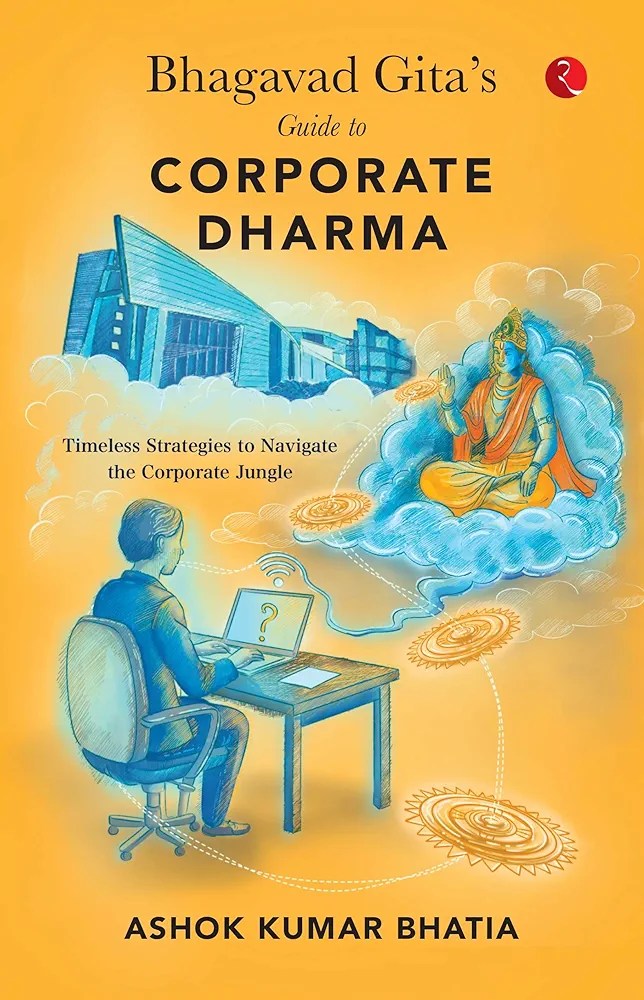
(The text is an edited excerpt from my latest book ‘Bhagavad Gita’s Guide to Corporate Dharma’.)
Related Post