Feeds:
Posts
Comments

Posts Tagged ‘Management’

Raj Yoga is not a term that the scripture uses explicitly. But throughout the narrative, one finds this to be the underlying current of thought. It elaborates upon the way business leaders and CEOs need to conduct themselves. It nudges them towards the overall goal of doing the right things the right way, keeping the overall good in mind. It highlights the need for a person to strive for spiritual progress and indulge in such practices as meditation and the study of scriptures to realise the ultimate reality of the self within each one of us. It helps one attain a state of perfect harmony where all distinctions and contradictions disappear.

In Chapter 9, Gita cautions us to abhor blind faith, thereby telling us to avoid sycophancy at all costs. Moreover, in real life, we see that religion, particularly the ritualistic version of it, often tends to divide humanity and leads to conflicts. Spirituality, on the other hand, has the potential to unite us.

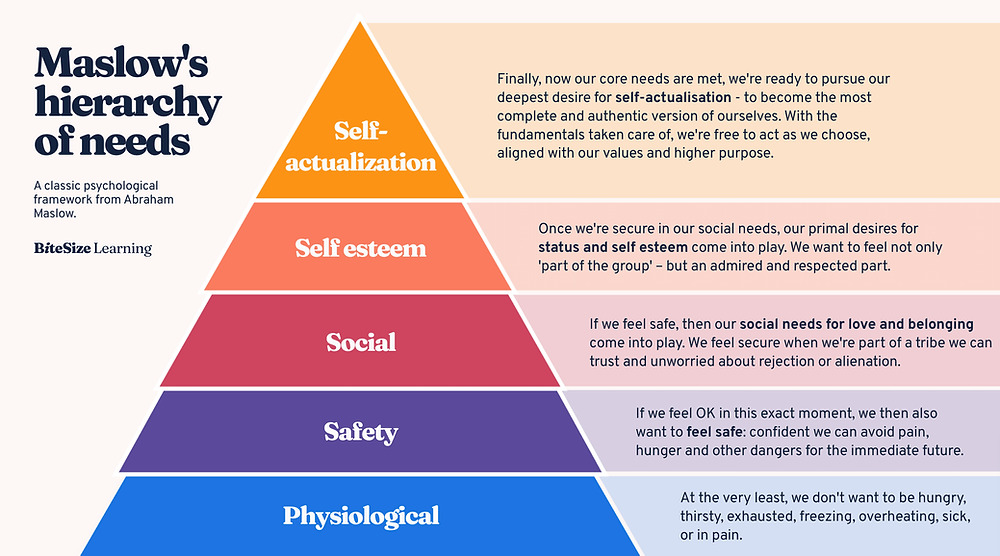
CEOs who take this path and evolve to ‘a state of self-actualisation’, to borrow a term from Maslow’s ‘Hierarchy of Needs’, would tend to take a holistic view of the operations and people under their control, thereby working for the good of all stakeholders. We may call them ‘leaders steeped in a higher state of consciousness,’ worried as much about the results of the next quarter as about the ESG impact of their businesses.

Gita presents the concept of Raj Yoga as an approach to self-perfection and extolls it as a royal secret!

राजविद्या राजगुह्यं पवित्रमिदमुत्तमम् ।
प्रत्यक्षावगमं धर्म्यं सुसुखं कर्तुमव्ययम् ॥ 9.2॥

This is the king of knowledge, the king of secrets, supremely holy, the best, directly experienced, righteous, easy to practise and imperishable.

(An excerpt from my latest book, ‘Bhagavad Gita’s Guide to Corporate Dharma’)

Related Posts

Read Full Post »

One of the basic concepts enunciated by Krishna in the Bhagavad Gita is that of the everlasting nature of the soul.

The concept of a soul now finds a resonance even in modern management literature. In his book The 8th Habit, Stephen R. Covey urges professionals to pay heed to their ‘inner voice’. While proposing the whole person paradigm, he speaks of the four dimensions of a person—spirit, body, heart and mind.

Peter Drucker, the renowned management expert, says that:

The individual needs the return to spiritual values, for he can survive in the present human situation only by reaffirming that man is not just a biological and psychological being but also a spiritual being, that is creature, and existing for the purposes of his Creator and subject to Him.

This stream of knowledge is said to be close to 5,500 years old. However, time has not robbed it of its relevance as it gives us clear tips on controlling our minds and thoughts, reining in our senses, transcending our queen-size egos, striving to achieve perfection in whatever we do, practising equanimity, and cultivating a habit of introspection and meditation. Ultimately, it is about living a happier and healthier life.

PS: In the Bhagavad Gita, the concept of a soul leads us to the idea of reincarnation, which, in turn, prompts us to the Karma Theory.

(Most of this note is an excerpt from my latest book, ‘Bhagavad Gita’s Guide to Corporate Dharma’)

Related Post

Read Full Post »

Those who aspire to occupy a C-suite keep an ear to the ground. But the real fun begins when they end up occupying one. Soon, they realise the perils of trying to swim in the Zambezi River on the Dark Continent. To their utter horror, they discover that mixed-bathing practices are in vogue and that their dip is being shared by a couple of young crocodiles. What leaves them literally cold in the feet are the penetrating and unfriendly eyes of some of the crocodiles swimming alongside, who take a jaundiced view of their habitat being infested with a juicy specimen of the tribe of Homo sapiens. Quite a few others are gleeful, drooling over a good source of their daily vitamins.

These crocodiles might as well be representing the kind of challenges C-suite occupants typically face—business goals, quarterly guidelines, macroeconomic shocks, dark clouds of wars and geopolitical tensions, pandemics, investor pressure, ethical dilemmas, redesigning business processes given newer frontiers of technology opening up, the advent of retaining high octane performers, compliances of all kinds, burnouts, employee morale, to cite only a few.

Business Leaders of the Future and Compassionate Capitalism

Enlightened businesses have invariably used a judicious mix of commercial and spiritual tenets to run their operations. Many of our Indian business leaders— J.R.D. Tata, Ardeshir Godrej, Verghese Kurien and R.K. Talwar, to name only a few—have guided their businesses thus. The last two, famous for the ‘milk revolution’ and the growth of the State Bank of India, respectively, have spoken of the influence of the Bhagavad Gita on their actions.

(An excerpt from my latest book, ‘Bhagavad Gita’s Guide to Corporate Dharma.’)

For orders from within India

For orders from outside India

Read Full Post »

The Bhagavad Gita touches upon this facet of our professional and personal lives as follows:

कर्मणैव हि संसिद्धिमास्थिता जनकादय: |
लोकसंग्रहमेवापि सम्पश्यन्कर्तुमर्हसि || 3.20||

By action only, indeed, Janaka and others gained perfection. Moreover, even looking to the welfare of the world, you should perform action.

We could interpret the term ‘welfare of the world’ in different ways. Sustainability and care for the environment and for local communities is one way. Running operations without being prejudiced about caste, colour, sex, or creed could be another way. Ensuring that the package disparity between different levels in the organisation is kept in check is yet another way. Living by setting good examples for others is one more way.

Dr Verghese Kurien, the person responsible for the White Revolution of India, lived a life which did not involve giving up worldly pleasures; yet, he practised a philosophy of ‘living for others.’ In his biography, he states that:

…but if you work for others, there is a deeper sense of fulfilment, and if things are handled well, the money too is more than adequate.

As stated by Dr Kurien, actions which benefit others lead to happiness within.

(An excerpt from my latest book, ‘Bhagavad Gita’s Guide to Corporate Dharma.’)

Related Posts

For orders from within India

For orders from outside India

Read Full Post »


To run a business well, wily jackals and cobras are required; but so are friendly giraffes, elephants and tortoises.

In the days to come, conscious managements would do well to assign the role of conscience keepers to any competent and willing full-time director on the board who would help to keep the business afloat without running into a collision with massive icebergs of targets which involve a hidden mass of compromise on core values and ethics. A culture of encouraging dissent and listening to whistle-blowers would also help in a business being steered right.

(An excerpt from my latest book, ‘Bhagavad Gita’s Guide to Corporate Dharma’)

Read Full Post »

“Life is like a Prepaid Sim Card with Limited Validity!”

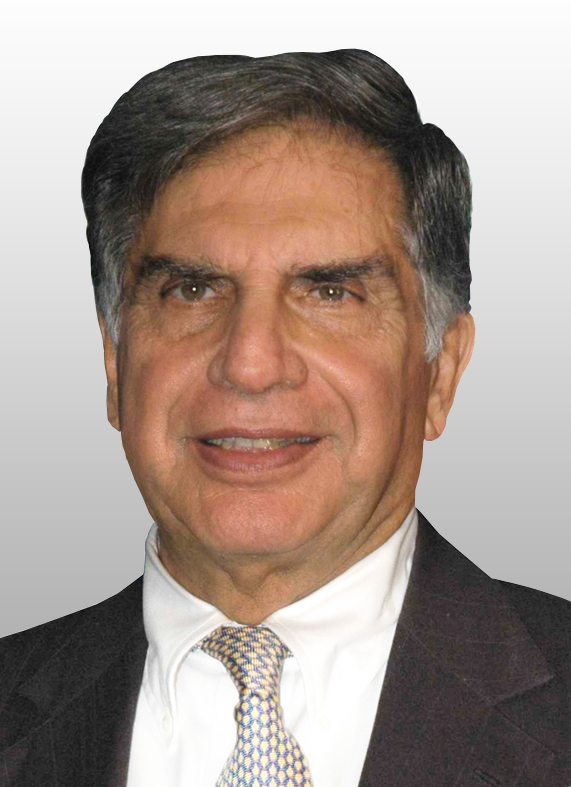
Many years back, Ratan Tata, chairman emeritus of the Tata
group from India, while addressing management students
passing out of one of the institutes in India, is reported to have
advised them thus:

Don’t just have career or academic goals. Set goals to give you a balanced, successful life. Balanced means ensuring your health, relationships, and mental peace are all in good order. There is no point in getting a promotion on the day of your breakup. There is no fun in driving a car if your back hurts. Shopping is not enjoyable if your mind is full of tension. Don’t take life seriously. Life is not meant to be taken seriously, as we are really temporary here. We are like a prepaid card with limited validity.

(An excerpt from my latest book, ‘Bhagavad Gita’s Guide to Corporate Dharma’.)

https://www.amazon.in/dp/9353520436

https://www.amazon.com/BHAGAVAD-GITAS-GUIDE-CORPORATE-DHARMA-ebook/dp/B0GHZJRQMR

Read Full Post »

Attachment is an intoxicant which, when taken in excessive doses, leads to perilous outcomes. When consumed without a moderating dose of detachment, it could prove to be a disastrous tissue restorative, a concoction which is surely injurious to the efficiency and effectiveness of a manager.

Attachment with a Lion King could leave a sheep ending up as its prey. If the Lion King himself feels attached to a wily Finance Fox and ends up promoting him as a CEO, the organization may soon start running only on Standard Operating Procedures, neglecting customer service and employee relationships. A Production-Bovine who is attached to the technology in use on the shop floor would take a jaundiced view of a more efficient technology being planned to be introduced by the management.

A sprightly Operations-Reindeer might start believing that the whole organization would collapse if he were to proceed on leave. A Human-Resources-Canine may start hiring people only from his own ethnic background, resulting in a lack of diversity in the organization. Separations with non-performing
employees do not get handled well, impacting down-sizing initiatives of the management.

The war depicted in the epic Mahabharata, of which the Bhagavad Gita is an integral part, came about only because King Dhritarashtra could not overcome his attachment to either the throne or his son, Duryodhana. The outcome was the death of all his 100 sons, loss of prestige and kingdom, and of course,
social and economic misery of the multitudes who had earlier thrived during his reign.


Those of you who have come across the works of Kahlil Gibran, the Lebanese-American luminary, might recall his poem ‘On the Children’ which captures the futility of being attached to one’s children thus:


Your children are not your children. They are the sons and
daughters of Life’s longing for itself. They come through
you but not from you, And though they are with you, yet
they belong not to you…

(Some excerpts from my latest book, as per details below)


https://www.amazon.in/dp/9353520436

https://www.amazon.com/BHAGAVAD-GITAS-GUIDE-CORPORATE-DHARMA-ebook/dp/B0GHZJRQMR

Read Full Post »

What do professionals think of this book?!

Here are some words of praise from people across different professions, diverse backgrounds, and from varied geographies.

Anatoly Yakorev

Mentor for Conscious Enterprises Network, Montenegro (Former Director, Centre for Business Ethics & Compliance, Moscow, Russia)

Managers face mighty challenges while delivering results. Ashok Bhatia cleverly alludes to the Bhagavad Gita’s lessons they can learn and begin to practise such concepts as detachment, and equanimity. He provides relevant examples from the corporate world to illustrate his arguments, making this book an interesting read. 

Dr Bharat Nain,
Arbitrator & Management Consultant,
PhD, MBA, BE(Mech), FSIArb, MCIArb,
Pune, India.

Ashok Bhatia, through his excellent book, propounds an alternative path that draws on the spiritual aspect of what is regarded as the foremost “religious book” in the Asian context, the Bhagavad Gita. Differentiating between the “mind and intellect”, he has used an ancient spiritual text to convey his message very simply and with humour.

Dr Ananda Reddy

Director, Sri Aurobindo Centre for Advanced Research, Puducherry, India

I am of the view that business leaders and managers may not consciously want it, but they really need it. It offers the only remedy for correcting mankind’s lopsided growth and bringing him sanity, inner and outer balance, peace, and harmony. The book by Ashok is a commendable effort. I wish the book and its future readers the very best in life.

Dominique Conterno

Conscious Enterprises Network (CEN) Co-Founder

United Kingdom

This book is a rare, business-friendly bridge between timeless Gita wisdom and the lived realities of modern organisations. Ethics and values are made to feel operational rather than ornamental. It speaks directly to pressure points leaders recognise, from stress and burnout to ego, desire, conflict and office politics. Karma Yoga stands as skilful action with steadiness in success and failure. It offers a calm, practical case for inner resilience, detachment, and better judgment in uncertain times. The book’s light humour keeps profound ideas accessible without diluting them. It finally acknowledges the technological moment, including the challenges of Industrial Revolution 4.0 and AI-era complexity. It leaves the reader with a clear invitation to go deeper into the original scripture, guided by a grounded corporate lens shaped by Ashok Kumar Bhatia.

Late Dr (Prof) G P Rao,

Founder-Chairman, SPANDAN, India
(Former Senior Professor and Founding Head,
Department of Management Studies, Madurai Kamaraj University, 1981–1997)

Ashok Bhatia paints a wide canvas of the kind of strategic and tactical issues business owners and managers face in their routine lives. With a calm objectivity, he demonstrates how the same could be resolved by imbibing what the scripture says. The undercurrent is essentially that of following high values and ethics in management, so a business may run on a sustainable basis.

Marco Suomalainen,

MMM Enabler at UHM (Uncovering Hidden Meanings),

Kotka, Finland

The book enables one to keep learning about the precious jewels existing in India. Industrialists and managers who wish to understand the basic concepts of the Bhagavad Gita and improve their ability to handle challenges in a more constructive manner would find this book very useful.

Mohan Arumugham

Global Technology Leader; IT Director – ERP

Digital Technology

GE Power, USA

This book motivates me to look at the bigger picture in life, while at the same time remaining connected to my inner self. Using many examples of the kind of challenges we face in our careers, it makes us appreciate the deep wisdom contained in the Gita. The book, even though rooted in ancient Indian wisdom, has a global appeal.

Ashok Narayan

IAS (Retired), Expert in Indian Scriptures,

Gandhinagar, India

The author has done a wonderful job of demonstrating how the eternal knowledge of the Bhagavad Gita can be applied to the business world, thereby enabling managers and CEOs to achieve their goals with maximum efficiency and to deal with all the problems without accumulating stress or losing the balance of mind.

Chandra Shekhar Dwivedi

Ex-Vice President (Manufacturing and Corporate Planning)

HCL Infosystems Limited, Pondicherry, India

Mr Bhatia is back with his references to what he calls the ‘corporate jungle’. If the theme of his earlier book was about survival, this one addresses the issue of doing well in one’s career. However, his underlying message continues to be that of adherence to values and ethics in business, of corporate governance, of human values and of conscious management. 

P R Ganguly

Member, Industrial Advisory Board, Manufacturing Department, Cranfield University, England

Ex-Deputy Chairman and Managing Director, Grenson Shoes Ltd, UK

The book is a great primer for CEOs and managers who are keen to get a basic grasp of the universal concepts highlighted in this unique scripture from India. The timeless lessons enshrined in the Bhagavad Gita have been innovatively presented by Ashok, with limited doses of subtle humour of a British kind.

Nilima Bhat

Founder: Shakti Leadership and Shakti Fellowship, Global Program for building Conscious Leaders & Change-makers, Co-convener Truth & Reconciliation Work, Distinguished Professor in Gender and Conscious Leadership. Business School and School of Humanities and Education, Tec de Monterrey, Mexico

I have no doubt that this book would be a valuable addition to the personal book collection of all leaders, as long as it does not merely remain either on their shelves or on their ‘To-Be-Read’ lists but gets quickly absorbed and put to practical use. 

Ram Mohan Pisharodi, Ph.D.

Marketing Professor,

Oakland University,

Rochester, Michigan, USA.

Ashok’s latest book is like a scuba dive which gently nudges the reader toward experiencing a deeper sea-bed exploration of the original scripture itself!

Vasco Gaspar

Human Flourishing Facilitator

Portugal

Ancient works like the Bhagavad Gita offer a source of knowledge to help leaders have this inner guidance. The work of Ashok Bhatia offers a convenient bridge between these ancient pieces of wisdom and the modern fast-paced world, allowing leaders and managers to apply this knowledge to their own lives and careers.

Gayatri Majumdar

Author,
Founder-Editor,
The Brown Critique Literary Journal, Pondicherry, India

Just as in life, there are varied ways to approach the perceived challenges and stress in a corporate environment! How can one navigate this ‘jungle’ with equanimity and inner resilience by “controlling the wild horse called mind”? Answers to many of our predicaments can be found in the eternal wisdom of the Bhagavad Gita. Ashok Kumar Bhatia’s Bhagavad Gita’s Guide to Corporate Dharma is an extraordinary book for all. He elucidates profound ideas with great simplicity, tremendous authenticity and logic. This captivating book draws parallels with Arjuna’s dilemma on the battlefield, and can be invaluable for management students and corporate leaders alike. It can guide us to enhance the quality of not just own life but everyone we cross paths with.

Amazon links (In India and elsewhere)

Related Post

Read Full Post »

How does a member of the tribe of the delicately nurtured feel when taking a just-born baby into her hands? As someone who is instead a member of the so-called sterner sex, I am least qualified to describe that moment of overwhelming joy.

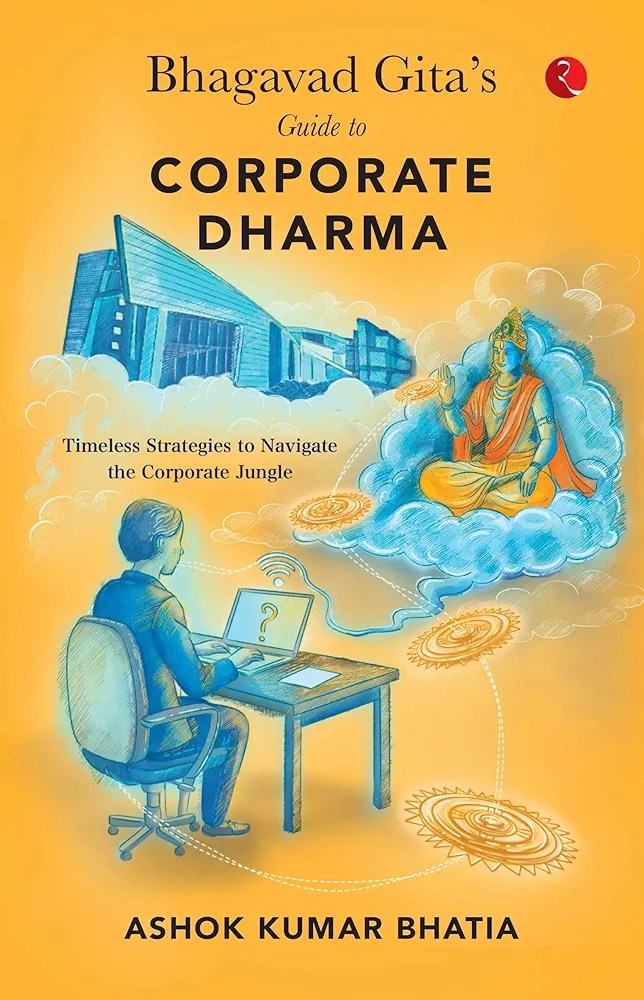
However, I guess I came pretty close to experiencing a somewhat similar emotion recently. A few days back, the first lot of my recently published book Bhagavad Gita’s Guide to Corporate Dharma: Timeless Strategies to navigate the Corporate Jungle arrived at my humble abode. A cloud of unalloyed joy enveloped me. I confess that a few tears of uncontrolled mirth rolled down my cheeks. This baby took close to seven years from its conception to delivery. Finally, I could hold it in my hands!

How this book happened

Studying the Gita had remained a pious intention for many years. Every time I tried to go through it, I could not progress beyond its fourth chapter. But the book then went back to its place on the bookshelf. Mundane concerns of life distracted one. Life rolled by.

Until the day, when Fate sneaked up from behind and struck me with the proverbial lead pipe. In 2018, my companion of over forty years passed away. A long phase of grieving followed, wherein the words of the Gita made little sense. When Reason started returning to its throne, the desire to go through the scripture resurfaced.

Having been a corporate warrior throughout my career, the only way I could look at the scripture’s contents would be through the tinted glasses of the art and science of management. Thus, when I again picked up one of the commentaries on the Gita, I was wondering if it had anything to say that would be considered relevant by managers. Gita did not disappoint. In fact, I found the vast canvas it paints to be of immense utility in the corporate world. It even touched upon the responsibilities of business leaders and entrepreneurs. It touched upon the importance of having saatvic (pious) thoughts and performing acts in a similar vein.

नियतं सङ्गरहितमरागद्वेषत: कृतम् |
अफलप्रेप्सुना कर्म यतत्सात्त्विकमुच्यते || 18.23||

The assigned action, which is done without attachment, attraction (or) repulsion and without clinging to (its) fruit that is called ‘sattvic.’

During my career span of 35+ years, I have had a privilege to be associated with many organisations. Each one had a unique set of values that it followed. Thus, each one’s culture was different. Quite a few of these could be found on the opposite ends of a spectrum of corrupt practices. To some, the means were as important as the ends. They put a high premium on values and ethics in business. An experience of this kind made a subjective interpretation of the Gita through the tinted glasses of someone who remains a student of management even more interesting.

Slowly, an idea of sharing this interpretation with a larger audience started taking shape. This is how the book under reference came about.

An Epidemic Intervenes     

By the end of 2019, a manuscript was in place. During January 2020, an agreement was signed with a publisher.

However, my Guardian Angels had their own plans for the book. Come March 2020, and the epidemic of Covid played a spoilsport. The book went into cold storage. Every two years, I kept updating the manuscript. Finally, it was in 2025 that the book found its place on the conveyor belt of the publishers.

From October to December 2025, the publisher’s editorial team burnt the proverbial midnight oil, tolerating my tantrums on finer details. Like ministering angels, they kept supporting me in polishing up the text and giving the book its present shape. The manuscript underwent as many as six upgradations during this period, even as I was recovering from a previously planned eye surgery.

The Launch

Much like Jonathan Livingston Seagull, the book is soon going to take a flight of its own. Time will tell how business owners, entrepreneurs, management scholars, and students receive it. That alone will decide if it soars to greater heights or gets dumped in the wastepaper basket of Time.

Well, I have done my duty. Results are surely not within my control, as Lord Krishna advises in the Gita!

Read Full Post »

Negativity is unnatural. Look at any other life form on our planet. It is not easy for one to come across an unhappy flower or a stressed oak tree. A depressed dolphin is pretty nigh impossible to locate. So are reindeer which have a problem with their self-esteem, elephants that cannot relax, or a peacock that carries hatred and resentment. These creatures, with brains far simpler than ours, teach us a vital lesson: to accept what is and live fully in the present moment. Their primal instinct for survival shows us the power of authenticity and being connected to our true selves.

Watch swans on a lake, peacefully floating and splashing, fully at ease in the Now. If a conflict with another swan comes about, it is brief and forgotten almost instantly—no anger, no grudges, no desire for revenge. They simply move on, embodying a natural grace and inner peace that many despondent CEOs could learn from.

Such are the perils Homo sapiens face for having an evolved mind!

In the movie Kung Fu Panda (2008, Directors: John Stevenson and Mark Osborne), Grand Master Oogway, an old Galapagos tortoise, motivates a demoralised Po Ping, the giant panda, as follows:

“You are too concerned with what was and what will be. There is a saying: yesterday is history, tomorrow is a mystery, but today is a gift. That is why it is called the present.”

Po’s morale gets boosted, and he goes on to achieve the goal he has set for himself.

(Excerpts from the book: ‘Bhagavad Gita’s Guide to Corporate Dharma: Timeless Strategies to Navigate the Corporate Jungle’)

The Bhagavad Gita recommends living in the present moment. It also speaks highly of the virtues of handling conflicts with equanimity, giving up anger, and forgiving not only others but even ourselves!

Related Posts

Read Full Post »

Older Posts »