
Which are the things that have a longer shelf life, one may well ask. One’s value system. One’s character. What one places one’s faith in. One’s attitude towards life in general. One’s capacity to be able to handle the rough and tumble of a management career. One’s ability to make decisions based not only on big data analytics but also on intuition.
These are the kinds of things that build the resilience of individual managers and organisations to face macroeconomic shocks and market uncertainties with aplomb. Over time, the harsh slings and arrows of a career find it difficult to chip away at one’s innate qualities. Once this core is managed well, external things fall in place most of the time. One’s responses to people and circumstances become more refined, thereby improving one’s managerial effectiveness. One’s personal brand equity acquires a better sheen.
The Bhagavad Gita highlights the importance of faith in our lives and the latent way it provides a compass that determines the direction of our efforts.
सत्त्वानुरूपा सर्वस्य श्रद्धा भवति भारत ।
श्रद्धामयोऽयं पुरुषो यो यच्छ्रद्ध: स एव स: ॥ 17.3॥
The faith of all humans conforms to the nature of their mind. All people possess faith, and whatever the nature of their faith, that is verily what they are.
This explains why many businesses end up merely being ‘businesses’, whereas some make the cut as ‘industrialists’, trying to give back to society in whichever way they can.
(I believe that businesses whose collective faith is sattvic in nature end up being industrialists!)
The Tata Group: Good Thoughts, Good Words and Good Deeds
Consider the case of the house of Tatas. The group can rightfully boast of a value system which goes back more than 158 years.
(Detailed examples follow in the book.)
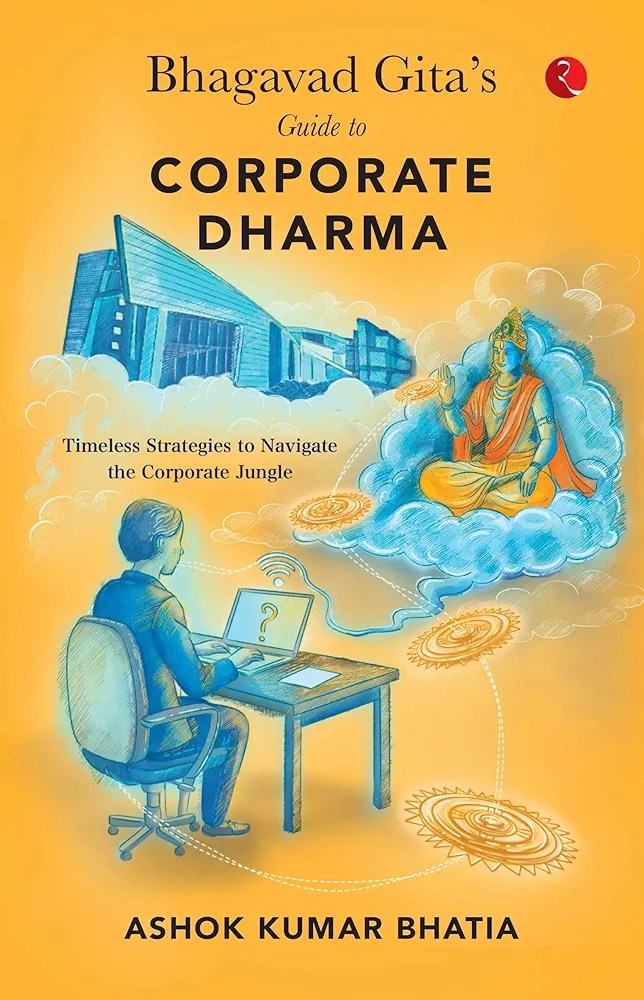
(The text is an edited excerpt from my latest book ‘Bhagavad Gita and Corporate Dharma’.)
Related Posts




Leave a comment