Having now completed forty-six circumambulations around the sun, perhaps it is time for a little reflection.
Is there a connection between a spicy street food item known as the phuchka and financial management, a critical but bland and dry aspect of our lives?
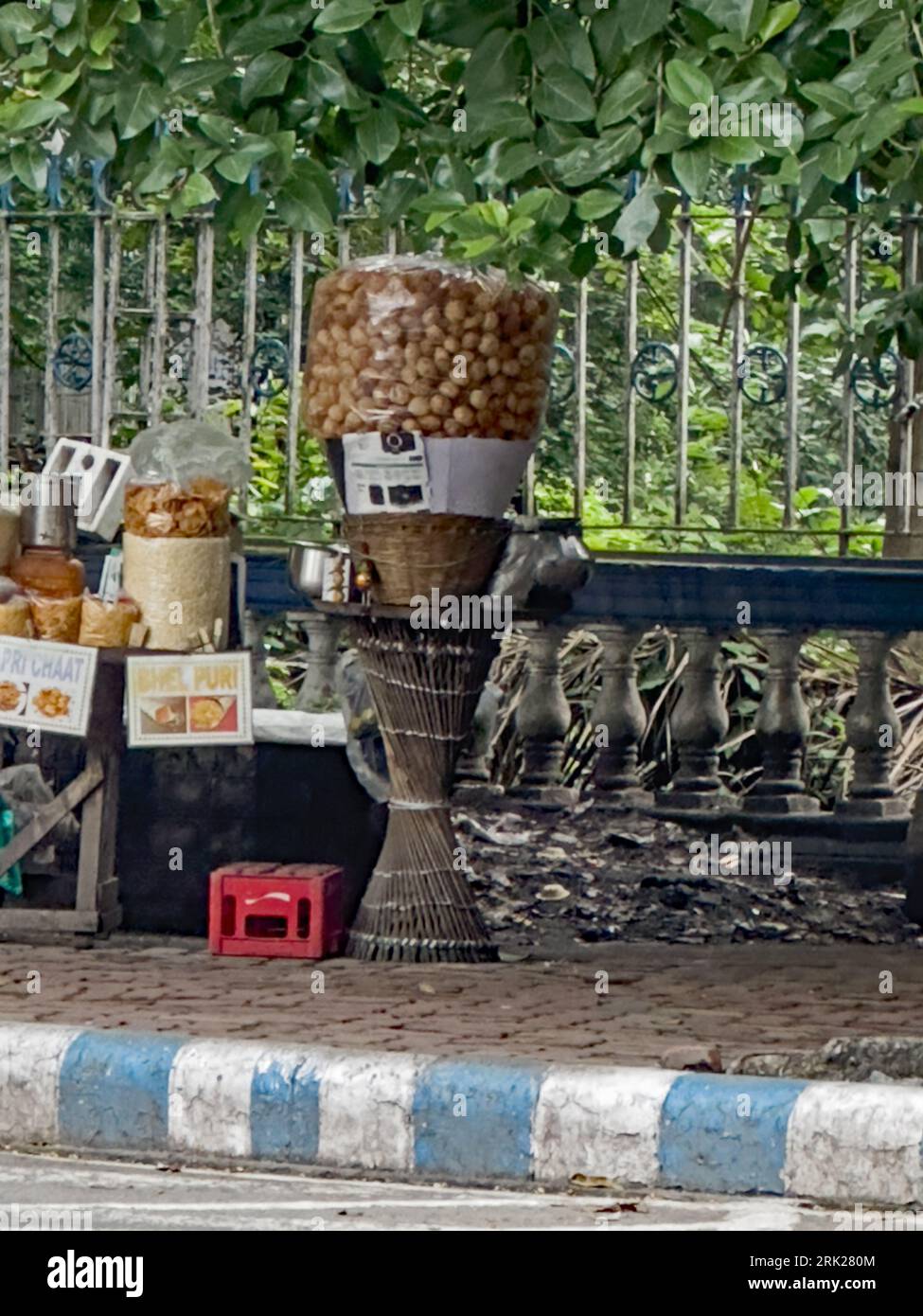
For the uninitiated, let me hasten to add that the term phuchka refers to those mouth-watering tiny hollow spheres of wheat flour or semolina, duly stuffed with spicy fillings of mashed potato, chickpeas, and finely chopped onions, served with tangy water flavoured with many kinds of additives, the two most popular ones being mint/coriander and tamarind. Yes, you could also know of it being referred to as puchka, golgappa, pani puri, gup chup, or pani ke batashe, depending on which area of India you happen to be in.
This reflection of mine is not about the financial aspect of either production or marketing of the humble phuchka. Nor is it about the seething frustration and helplessness that our tax sleuths experience owing to their inability to bring the street-cart owners merrily peddling their delectable stuff within the ambit of our tax laws. A vast majority of such vendors do not appear on their radar, simply because they do not file income tax returns. If our financial mandarins ever decide to bring the serving of phuchkas under the notoriously complex Goods and Services Tax instead, all hell may break loose. Housewives of all hues, sizes, and shapes will surely register a protest by refusing to cook at home, unless they too get compensated for rendering homemaking services.
Uncle Tom, had he been around, would have loved to suggest to Aunt Dahlia to shut down the publication of Milady’s Boudoir. He would have persuaded her to instead get into the highly profitable activity of selling phuchkas and save taxes for the family.
Rather, this rumination of mine is essentially about the financial gains made by me when I was a hormone-rich youth and had the wisdom not to deploy the phuchka as one of the tools in my arsenal to woo prospective girlfriends. Whether that ‘wisdom’ (if that is the term I want) ultimately improved my finances is another matter, to which I shall soon return.
The India of My Youth
I cannot speak for the members of the tribe of the delicately nurtured, but as a male child growing up in an average middle-class family in Bengal, I was initiated fairly early into a particular skill which, I suspect, was taught with remarkable consistency to a great many Indian boys of my generation, though never, so far as I remember, appearing on any school syllabus.
The ideal was something approaching the old English butler: whatever volcanic disturbances might be taking place within the soul, outwardly one was expected to preserve what those books, in their gloriously dated way, might call ‘the easy insouciance of a Red Indian at the stake’.
The finished product of this training was generally described, with considerable approval, as a man with nerves of steel.
Anyone brought up in a similar atmosphere will appreciate that the “English-butler” condition cannot be acquired in a single sitting.
It requires practice.
A great deal of it.
It therefore occurred to me fairly early that falling in love might impose an unreasonable additional workload upon an already overburdened emotional-control department.
Love, from what I could gather, involved uncertainty.
There could be misunderstandings.
There could be decoys.
There could be rejection.
There could even be acceptance, which, on closer inspection, seemed to create an entirely new category of problems.
And then there were parents.
One must remember that, in the India of my adolescence, being caught in a romantic relationship could acquire approximately the social atmosphere of being caught attempting to tunnel out of prison.
The unfortunate captive was only the beginning.
The family became involved.
Relatives became concerned.
Neighbours who had shown no interest in one’s welfare for eleven years suddenly developed intelligence-gathering capabilities that would have made the detectives at Scotland Yard sit up and take notice. Privacy, in such circumstances, existed chiefly as a philosophical concept.
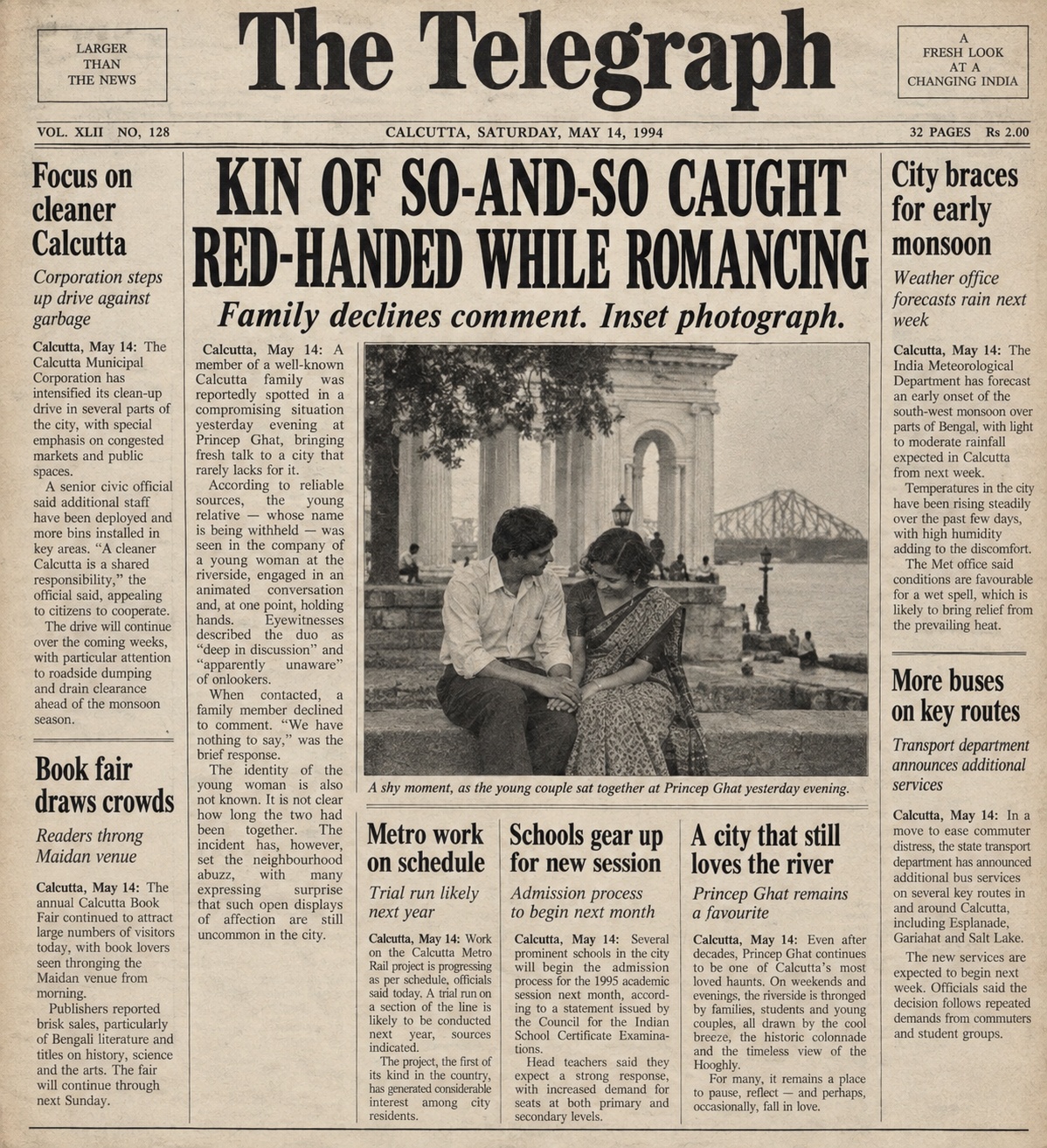
I could quite imagine my father opening the morning paper and finding this headline staring him in the face.
This, I felt, was publicity of entirely the wrong sort.
In any case, I had no ambition to follow Bingo Little in flitting from one romantic enthusiasm to the next in his pre-matrimonial phase of life. A young man intent upon his education had quite enough on his plate, leaving him little time for concerts, museums, Spinoza and the Bhagavad Gita, let alone for escorting a lady through a crowded Chowringhee (or any part of Kolkata) by-lane where the phuchka sellers lay in wait. A visit to a movie hall once a quarter, and that too in parental company, was considered luxury enough to keep frivolity within “acceptable limits” — limits which, my wife now assures me, already bordered on parental extravagance.
The perks and the perils of feasting on phuchkas
I confess that, in principle, I have nothing against the humble phuchka. It provides carbohydrates, protein and fat-soluble vitamins – a combination that would leave even someone fussy like Laura Pyke nodding in approval. Moreover, it also provides a vigorous practical course for the immune system, being frequently accompanied by water whose parentage does not always encourage detailed inquiry.
The more serious difficulty, I understand, is stopping once proceedings have begun.
Phuchka, however, is more than food. I strongly suspect that its stalls are among the great unofficial witnesses to romantic history in Kolkata and elsewhere. Registrars record marriages. Courts record divorces. But it is the phuchka stall owner who knows what happened in between. Had he kept minutes, several histories of Indian courtship might by now have been considerably better documented.
Economically too, it is admirably suited to the purpose. For generations of young couples, it has offered a remarkably attractive romance-to-capital-expenditure ratio. One could meet, talk, eat and return home without requiring institutional finance.
I have sometimes thought that phuchka possesses certain further advantages which the romantically inclined might appreciate better than I do. A man may also gaze into his lady love’s eyes with the sort of attention Wordsworth reserved for daffodils, while being recalled now and then to earthly affairs by tamarind, chilli and spice upon the tongue. Even Wordsworth, I suspect, might have relished the interruption.
And if the lady prefers the next round hotter, the gentleman may request an additional touch of chilli with something of the old knightly spirit. The treasure is modest, and the journey to the seller does not normally involve dragons, but these are details. To a man in love, I imagine, gallantry has always been less a matter of distance travelled than of the lady being pleased at the end of it.
However, my Guardian Angel had thoughtfully provided me with my own defences. I have always had an apprehension about tangy things, and the tamarind water formed the first barrier.
I have often observed what happens to others when the aroma from a phuchka stall invades their olfactory nerves. Their eyes bulge. Their mouths water. Some primitive mechanism appears to seize executive control of the nervous system and redirect the entire person towards the source.
Nothing similar occurs in my case.
My nervous system receives the information and merely files it.
As I grew older, hygiene joined the prosecution, though by then the case hardly required further evidence.
I have therefore been forced to accept that I may be one of the very few Bengalis entirely untouched by the emotional power exerted upon Homo sapiens by the humble phuchka.
Indeed:
I am as ignorant of this dish as an elephant is of modest self-presentation.
The economics of not having splurged on phuchkas
I therefore chose what appeared to be the safer road and, in my hormone-rich years, diligently avoided spending money on phuchkas.
Robert Frost had his Road Not Taken.
I had mine too, though mine contained fewer yellow woods and rather more parental surveillance.
Looking back from forty-six, I have discovered something which Frost, so far as I know, neglected to mention.
There was money in it.
And this brings us, inevitably, to the accounts.
A self-audit would plainly lack the necessary objectivity which an independent auditor may bring to the table. I therefore placed the matter before McCay of the Cape Pleasant Club, a chartered accountant whose professional qualifications were, fortunately for the case in hand, accompanied by a distinctly romantic temperament.
Independent Auditor’s Report on RomanticPhuchka Escapades
Period under Review: Age 14 to Age 46
We have examined the financial consequences of the Subject’s youthful decision not to employ phuchka as an instrument of courtship.
The accounts disclose the following:
Potential romantic engagements avoided:1,664 Estimated plates thereby not consumed:3,328 Average value adopted per plate:₹30 Total expenditure avoided:₹99,840
Rounded in accordance withGenerally Accepted Principles of Convenient Arithmetic:
₹100,000
The auditors note that this result was achieved without budgeting, investment planning or any recognisable financial discipline.
The principal method appears to have been:Nothing happened.
Supporting Evidence
Management was asked to produce girlfriend records, love letters, dating histories, joint photographs or credible third-party evidence of phuchka-induced courtship.
None was produced.
Ordinarily this would constitute a limitation of scope.
In the present case, it was considered unusually persuasive evidence.
Phuchka-Linked Romantic Asset: Not Identified.
Items Not Provided For
The above figure relates to phuchka alone and makes no allowance for:
The unexpected second plate,
Subsequent gobbling up of aloo tikki, dahi-puri and allied chaat items,
Tea on account of rain,
Transport,
Birthday and anniversary provisions,
Gifts purchased after being specifically informed that no gift was required,
or that highly volatile instrument:“I don’t want anything.”
Nominal value:₹0 Actual exposure:Unknown Risk classification:Emotionally Leveraged
Parental intervention, neighbourhood surveillance and emergency family consultation have likewise not been valued.
Auditor’s Opinion
The Subject’s performance in phuchka-linked courtship has been poor.
His cost control has been admirable, though he scores poorly in terms of Return on Love.
Return on Love: 0%
Return on Not Falling in Love: approximately ₹100,000
Few enterprises, in the auditors’ experience, have achieved thirty-two years of exemplary restraint with so little active management.
Signed,
McCay Chartered Accountant and Secretary, Cape Pleasant Club Department of Unrequited Accounts
I therefore closed the accounts with something of the serenity which, perhaps, descended upon the Buddha beneath the Bodhi tree. However, the outcome in my case was, admittedly, of a rather more mundane order. Stilton Cheesewright, who had once temporarily come under the influence of Buddhism, would have heartily approved of my sentiments.
There it was in black and white: my early decision to steer clear of romantic entanglements had apparently produced a surplus of approximately ₹100,000.
Not bad.
Then, unfortunately, I made the mistake of thinking further.
What if the money had been invested?
My first calculation, attempted with roughly the degree of financial sophistication that has characterised several of my actual investments, was tremendously encouraging.
₹100,000 compounded at around ten per cent annually for thirty-two years could, under sufficiently friendly assumptions, become roughly:
₹2.1 million!
This was no longer phuchka money.
This was a financial philosophy.
For one brief, intoxicating moment, what I had mistaken for romantic underachievement began to resemble an investment strategy of extraordinary crudity.
A stark realisation dawned. The savings had accumulated gradually. The full amount was not sitting obediently in my pocket on my fourteenth birthday awaiting deployment into a diversified portfolio.
The ₹2.1 million was therefore what accountants might call an aggressively optimistic scenario.
A modest monthly investment scheme, begun early and regularly fed with the expenditure avoided, might nevertheless have done the trick.
And this, I confess, annoyed me more than the absence of romance.
Over the years I had apparently exercised admirable control over oxytocin and absolutely none over asset allocation.
Nobody had mentioned that avoiding expenditure was only half the job.
One was expected to invest the blasted thing afterwards.
There is perhaps a little philosophy buried here after all, though I have serious doubts if someone of the calibre of Stanley Featherstonehaugh Ukridge would have approved of it. I suspect he might instead have established a Lovers’ Opportunistic Fund, into which people like me would have poured their phuchka savings, only to discover that he had decamped with the corpus and started a chicken farm in Switzerland.
We spend a surprising amount of life congratulating ourselves for avoiding one danger, only to discover that safety itself came with instructions nobody informed us about.
I took the safer road.
And, with admirable consistency, failed to invest the proceeds.
Thus, at forty-six, I carry one additional piece of wisdom.
Somewhere along the journey, I may have misplaced a perfectly respectable investment portfolio.
It appears, after all, that controlling oxytocin was the easy part.
Controlling capital required a maturity for which the auditors, even at forty-six, have found insufficient evidence.
For decades, Bollywood has showered us with unforgettable moments of romance under the rain, from shy glances under flickering streetlights to stolen moments beneath a sheltering umbrella. This humble prop, in Bollywood’s hands, transforms into much more than a simple shield from the rain. It becomes a cocoon, a private world that magically brings lovers closer, often igniting romance or intensifying feelings against the backdrop of monsoon showers.
Iconic and Unmatched – Shree 420 (1955)
Raj Kapoor and Nargis’ Pyar Hua Iqrar Hua remains Bollywood’s most legendary and unforgettable love scene under an umbrella. Here, the umbrella is a literal and a figurative shelter, a cocoon. Their rain-soaked declaration of love is still unmatched, symbolising romance that defies storms.
Rekindled Love – Kala Bazaar (1960)
Dev Anand and Waheeda Rehman’s enchanting stroll in Kala Bazaar unfolds the beautiful melody of Rimjhim Ke Tarane, an ode to love rekindled amidst the soothing Mumbai rains. This iconic scene captures the essence of timeless romance and heartfelt connection.
Enchanting Gem in Motion – Boond Jo Ban Gayi Moti (1967)
In the vibrant cinemascape of Bollywood, Jeetendra shines like a dazzling jewel. Especially in the enchanting song Ye Kaun Chitrakaar Hai, his innocent charm as the village educator weaves a spell. His trademark umbrella in hand, he renders a song which is an ode to the creator of this universe.
Fragile Beginnings – Rajnigandha (1974)
In Rajnigandha, a broken umbrella offered by Amol Palekar to a Vidya Sinha stranded in a heavy downpour embodies the characteristics of a budding romance on the horizon. The scene beautifully captures the uncertainty, the hesitation, and the warmth of an empathic gesture. Based on the short story “Yehi Sach Hai” by noted Hindi writer Mannu Bhandari, Vidya Sinha’s character finds itself drawn back to a former flame. She is caught between past and present. How she overcomes this challenge forms the rest of the story.
Mystery Under Umbrellas – Judaai (1980)
In Judaai, Rekha and Jeetendra huddle together beneath an umbrella, creating a cocoon of secrecy and intimacy. This iconic moment beautifully encapsulates Bollywood’s enduring fascination with fleeting, stolen moments of love, highlighting the magic found in cherished connections.
Mera Kuch Samaan – Ijaazat (1987)
While umbrellas often signal romance, in Ijazat’s Mera Kuch Samaan, they represent nostalgia and lost love. As the song transports audiences through Anuradha Patel’s lyrical memories, the umbrella becomes a portal into the past, a shelter that once held warmth but now feels like an echo of something lost. Gulzar’s lyrics, in particular, Ek Akeli Chhatri Mein Aadhe Aadhe Bheeg Rahe They, Aadhe Sookhe, Aadhe Geele…captures a deep sense of nostalgia.
Iconic Sridevi Moments – ChaalBaaz (1989)
Sridevi’s iconic transparent umbrella in ChaalBaaz transcends mere props, becoming a vibrant symbol of her infectious playfulness and captivating charm. The song Na Jaane Kahaan Se Aayi Hai echoes the same magic, capturing a sense of wonder and spontaneity, much like Sridevi’s presence under that iconic umbrella.
Romantic Night – Afsana Pyar Ka (1991)
Aamir Khan serenading Neelam beneath an umbrella in Afsana Pyar Ka is a timeless tribute to Bollywood’s love for rain-laden romance. The song Tip Tip Tip Baarish Shuru Ho Gayi reiterates this sentiment, with its playful yet tender tone, as the rain becomes a backdrop for the blossoming connection, transforming the moment into a celebration of love’s simple joys.
Colourful Romance – Khiladi (1992)
Akshay Kumar and Ayesha Jhulka’s Khiladi brings to life playful moments under vibrant umbrellas, infusing their budding romance with a burst of colour, energy and innocence. Dekha Teri Masti Nigahon Mein captures this light-hearted spirit, with its playful rhythm reflecting the ease and charm of a love that blooms effortlessly, even in the rain.
Mountain Rains – 1942: A Love Story (1994)
The rain-soaked landscapes of Himachal provide the perfect backdrop for 1942: A Love Story, where Manisha Koirala’s red umbrella against Anil Kapoor’s embrace brings the song Rimjhim Rimjhim to life in a delicate, timeless romance.
Joyous Drizzles – Dil To Pagal Hai (1997)
Yash Chopra, known for cinematic romance, uses rain brilliantly in Dil To Pagal Hai. Shah Rukh Khan, under the spell of Madhuri Dixit’s smile, jokes that her smile causes a downpour before they dance joyfully in Chak Dhoom Dhoom. The rain here becomes an extension of their happiness and spark. Umbrellas make a sporadic appearance, though – first in the very beginning, and then later when Karishma gets escorted back by the hospital staff.
Rain in The Big Apple – Kal Ho Naa Ho (2003)
In Kal Ho Naa Ho, Preity Zinta and Saif Ali Khan share an umbrella under New York’s rain, portraying friendship and affection amidst city lights. The rain-filled scene captures a mix of sweet nostalgia and urban romance.
Rain-soaked Realisations – Hum Tum (2004)
In Hum Tum, Rani Mukerji’s Rhea and Saif Ali Khan’s Karan find their love during a cold, rainy night. Rhea cares for Karan, who is drunk, and in that moment of vulnerability, their mutual feelings emerge. Lamhon Ki Guzarish Hai Yeh highlights moments where the rain acts as a backdrop to acknowledge love. Needless to say, umbrellas do put in a brief appearance.
A journey of Innocence and Hope – The Blue Umbrella (2005)
In The Blue Umbrella, the umbrella becomes a symbol of innocence and self-discovery. As the story unfolds, the simple act of holding the umbrella in the rain transforms into a journey of emotional growth for Pooja. The song Chatri Ka Udan Khatola carries this spirit, as the umbrella takes flight, not just through the skies but through the heart, weaving together themes of hope, dreams, and the quiet beauty of life unfolding under the rain.
Old-World Aesthetics – Saawariya (2007)
In Saawariya, Sonam Kapoor and Ranbir Kapoor’s romantic journey unfolds under Sanjay Leela Bhansali’s signature aesthetic. The umbrella in this film adds to the story’s vintage, dreamlike quality, even as their love story remains an unfulfilled yearning.
Saccharine Romance – Cheeni Kum (2007)
In London’s drizzling charm, every shared moment beneath the umbrella, helps blossom Amitabh and Tabu’s bond, proving that even the simplest things, like a rain-soaked city and a shared shelter, can weave stories of connection and understated romance.
A Captivating Tribute to Timeless Love – Rab Ne Bana Di Jodi (2008)
With Phir Milenge Chalte Chalte in Rab Ne Bana Di Jodi, Bollywood’s magic unfolds in a mesmerising homage to love across eras. Shah Rukh Khan and a bevy of heroines capture the essence of timeless romance, dancing through Bollywood’s golden moments. The very first sequence is a loving tribute to the umbrella of Shri 420 fame, as mentioned above.
Fantasy in Polka Dots – 3 Idiots (2009)
In 3 Idiots, Aamir Khan and Kareena Kapoor light up the screen in a playful, dreamy sequence, dancing under polka-dotted umbrellas to the Zooby Dooby tune. This Bollywood-inspired rainy fantasy is a joyful tribute to the filmy romance we all adore.
Glamour and Chhatris – Race 2 (2013)
Deepika Padukone’s character in Race 2 shows that even the traditional umbrella can shine in high fashion. With her chic style, she seamlessly integrates this classic accessory, adding a sophisticated touch to Bollywood’s enchanting love affair with the rain.
Fashion Meets Rain – Kick (2014)
Jacqueline Fernandez in Kick brings a playful touch with her bright red umbrella, which adds flair to her character’s quirky look. It’s a lively reminder that umbrellas can also be fun, fashionable, and part of Bollywood’s colourful world.
Why Umbrellas Work: The Psychology of Umbrella Romance
Umbrellas naturally bring people closer together, creating a physical boundary that heightens the feeling of intimacy. They offer a shield from the outside world, creating a bubble of privacy even in the most public of places. The proximity, the shared warmth, and the playful tug-of-war as both try to fit under a single umbrella, these are elements that cinema uses to create moments of magic.
And in Bollywood’s signature use, umbrellas almost always appear when love is on the brink of blossoming or when emotions run high, turning mundane rainy-day encounters into moments of cinematic romance. They’re devices that trigger vulnerability, the need to protect, and the desire to draw close, lending themselves perfectly to Bollywood’s penchant for grand romantic expression.
A Lasting Symbol of Love and Shelter
From the monochromatic elegance of then to the vibrant visuals of now, umbrellas continue to hold a special place in Bollywood’s love stories. These cinematic moments remind us that sometimes, it’s the simplest things, a shared umbrella, a gentle rain, a crowded street, a song, that bring us closer, that make the world fall away so that all that remains is the quiet, breathtaking beauty of two souls meeting under a storm.
So the next time you find yourself in the rain, umbrella in hand, you might just be one scene away from your own Bollywood moment.
P. G. Wodehouse is essentially a romantic at heart. Matters of the heart play a vital role in almost all the narratives dished out by him.
Bertie Wooster keeps avoiding a walk down the aisle, thanks to the support he gets from Jeeves. Yet, at the end of The Mating Season, we find him basking in the glow of satisfaction at having been instrumental in putting the affairs of quite a few couples in order.
In the Blandings saga, we meet a morose Gertrude who is pining for Beefy Bingham, her lover. She spreads depression in the house and, worse still, tries to be “helpful” to Lord Emsworth by tidying his study.
Mr. Mulliner keeps recounting love stories of various nephews and nieces of his. Ukridge may try and run a chicken farm, but the subplot of the love affair between Jeremy Garnet and Phyllis runs throughout the narrative. The spell of a quiet summer evening prompts Jeremy to confide his love to Phyllis.
The Literary Parabola of Seasons
It is hard to think of romance without thinking about the seasons. Whether it is the first warmth of spring pulling us out of hibernation or the quiet reflection that comes with autumn, there is an innate connection between the rhythm of nature and the emotional lives we lead. Wodehouse, of course, recognises this. He does not just use the seasons as convenient backdrops for romantic entanglements; he weaves them into the very fabric of his characters’ emotional journeys. Like that feeling of optimism you get on the first sunny day after months of grey skies, Wodehouse’s characters are often moved by the weather in ways they barely recognize themselves. It is this subtlety—this almost imperceptible nudge from nature—that aligns him with the great literary tradition of using the external world to reflect inner states.
The motif of seasons is deeply embedded in literature, symbolising various emotional and psychological states of characters. Many English literary experts have skilfully employed seasons to reflect inner turmoil, personal growth, and other emotional shifts.
In Sonnet 18 (“Shall I compare thee to a summer’s day?”), Shakespeare compares the beloved to a summer’s day, symbolising beauty, and vitality, while also lamenting the fleeting nature of summer and, by extension, life, and youth. In The Winter’s Tale, the season of winter represents both the coldness of jealousy and tyranny as seen in King Leontes’ irrational behaviour, whereas spring (in the later acts) symbolises rebirth, redemption, and forgiveness.
In his poem To Autumn, John Keats captures the beauty and melancholy of autumn, a season of maturity and ripeness and goes on to meditate on the bittersweetness of life’s temporality.
Tess of the d’Urbervilles by Thomas Hardy aligns Tess’s emotional journey with the changing seasons. The novel starts in spring, symbolising Tess’s innocence, and moves through summer and autumn, reflecting her growing despair and tragedy. Winter, in the end, represents death and loss.
In A Christmas Carol, Charles Dickens uses winter as a backdrop to explore themes of coldness, isolation, and redemption. The harsh, biting cold reflects Ebenezer Scrooge’s miserly, frozen heart. Yet, through transformation, the holiday spirit (and warming of his heart) mirrors a kind of internal spring-like rejuvenation.
Robert Frost, in Stopping by Woods on a Snowy Evening, depicts winter as representing solitude, contemplation, and the pull of death. The character’s momentary pause in a quiet, snow-covered wood suggests the allure of rest and surrender, while the journey he must continue reflects the mundane obligations of life.
These writers masterfully intertwined the natural cycle of seasons with human emotions, adding symbolic depth to their character’s emotional and psychological experiences. The ever-changing seasons become metaphors for the ups and downs of human life, making them a timeless tool in literary exploration.
The USP of Wodehouse
What sets Wodehouse apart is his imaginative use of Cupid’s machinations during different seasons. Cupid is indubitably one of the author’s most important comrade-in-arms. But the freedom to strike at will does not come without its attendant responsibilities. Love is in the air. Devotion is permitted. But physical intimacy is a taboo. Aphrodite has limited access to the goings-on. Eroticism is denied entry. An occasional occurrence which could amount to mild titillation alone is allowed. Across the oeuvre, Cupid is subject to strict Victorian norms of behaviour.
However, all this does not lessen his ingenuity in bringing lovers together. There are occasions on which even a member of either the feline or the canine species facilitates the development of a bond. Behind the frivolity and farcical events of Wodehouse’s narratives, Cupid ensures an almost imperceptible use of natural elements to influence the lives of the author’s characters. While stuck together on a rock by the seaside, a high tide in Mr. Wilton’s Holiday leads to a reconciliation between Jack and Mary.
Cupid even goes on to use different seasons as arrows in his quiver to smoothen the way to new relationships blossoming. In many of the relationships between two love birds, seasons provide a perfect backdrop. While the seasons may appear incidental to the plot, these not only embody the emotional states of the characters but also serve as invisible matchmakers.
Seasons become mere puppets in the deft hands of Cupid in a few cases. These play a key role in nudging Wodehouse’s characters toward romantic resolutions. Spring, summer, autumn, and winter often serve as metaphorical agents of Cupid, facilitating encounters, softening hearts, and reuniting sundered hearts. In fact, in such cases, seasons don the hat of an active participant in the narrative, behaving like key actors involved in the act.
Let us consider a few examples to see how Cupid assists Wodehouse in propelling the romantic chemistry between his characters by using various seasons as either a backdrop or a catalyst.
Spring: The Season of Blossoming Love
In Wodehouse’s fiction, spring invariably represents renewal, hope, and the blossoming of love. The imagery of spring, with its vibrant colours, warming temperatures, and burgeoning life, mirrors the rekindling or the birth of romantic feelings among characters. Wodehouse takes advantage of spring’s association with new beginnings to nudge his characters towards forging romantic affiliations, often underlining the season’s role as Cupid’s chief lieutenant.
Bertie Wooster takes some inspiration from Tennyson when he says:
“In the spring, Jeeves, a livelier iris gleams upon the burnish’d dove.”
He even imagines a charming girl to come up to him and seek his assistance in saving her from assassins.
“I don’t know if you know that sort of feeling you get on these days around the end of April and the beginning of May, when the sky’s a light blue, with cotton-wool clouds, and there’s a bit of a breeze blowing from the west? Kind of uplifted feeling. Romantic, if you know what I mean. I’m not much of a ladies’ man, but on this particular morning it seemed to me that what I really wanted was some charming girl to buzz up and ask me to save her from assassins or something.”
Similarly, in No Wedding Bells for Bingo, Cupid assists Wodehouse in explicitly tying romantic developments to the season. Bertie Wooster’s bumbling friends, eager to woo their respective partners, often find their romantic aspirations coming to fruition as spring blooms. Wodehouse seems to imply that the very air of spring carries romance, infecting even the most hopeless of suitors with renewed vigour and enthusiasm. Even Jeeves, who, when surprised, raises his eyebrows merely a fraction of an inch, is affected by spring fever. Towards the end of the story, we find that Bertie tells Bingo Little’s uncle that Bingo wants to marry Mabel, a waiter, and he, moved by the books read out to him, approves. Uncle declares that he plans to marry his cook, in whom Jeeves had shown interest earlier. However, Jeeves has already scratched the fixture and instead has another engagement of sorts with another girl, Mabel, the waiter whom Bingo had wanted to marry!
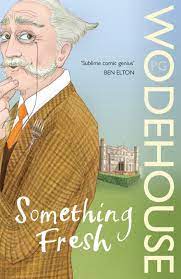
In Something Fresh, the sunshine of a fair spring morning incites a feeling of novel jauntiness amongst the residents of London. This is followed by the scene where Ashe Marson and Joan Valentine discover each other, and the seeds of romance get planted.
It is not that Cupid’s arrows prove to be effective in all the cases.
The spring motif continues with novels like Uncle Fred in the Springtime wherein the affair between Valerie and Horace comes to a satisfactory conclusion. However, Cupid’s arrows fail in the case of Polly and Gilpin. In Spring Fever too, Terry, who is initially wary of Mike due to his overwhelming good looks, warms up to him when she sees his battered face after a failed burglary attempt. Stanwood and Eileen also get together. But Mrs Punter runs off with Augustus Robb, leaving Shorty and Spink ruing their loss in love.
In the short story The Custody of the Pumpkin, the annual Spring Flower Show provides the backdrop for a classic Wodehouse romance. Lord Emsworth, obsessed with his prized pumpkin, is blissfully unaware that his son, Freddie Threepwood, is using the occasion to court a gardener’s daughter. The setting, with its blossoming flowers, is emblematic of the unanticipated flourishing of romance. While Lord Emsworth is preoccupied with his vegetables, spring’s inherent charm works on Freddie and his love interest, quietly orchestrating their courtship. Spring’s effect here is subtle but inevitable, as the characters seem unable to resist its influence.
Spring is also often a time for transformation in Wodehouse’s world. Characters who, during winter, might have been cynical, brooding, or emotionally distant, find themselves rejuvenated as the warmer weather arrives. When the ogre of winter is around, the characters’ instincts for self-preservation often dominate their tender thoughts of love. But once the winter is gone, the seasonal change from gloom to joie de vivre affects not only flora and fauna but also causes an emotional thawing amongst the Homo sapiens. Cupid assists Wodehouse in using this to show characters moving from a state of emotional hibernation to one of action and, eventually, romantic fulfilment.
Summer: Love in Full Bloom
If spring is the season of new beginnings, then summer in Wodehouse’s works represents the full bloom of love. It is as if Cupid decides to deploy the season at full throttle, its quiver operating on all its six cylinders. The warmth of the sun, long days, outdoor events such as garden parties and village fairs, a quick swim in a lake, and occasional bouts of rain create ideal conditions for love to grow further, often leading to a cementing of romantic affiliations. The languid pace of summer reflects the unhurried nature of developing affections, where flirtations deepen, and scales fall from couples’ eyes as they realise their love for each other.
Summer is the time when you can hear a snail clear its throat a mile away. When the sun is finishing its obligations for the day and rushing to a well-earned night of rest and repose, gnats and many other kinds of insects start fooling about all over the place.
In Right Ho, Jeeves, Bertie tells us it is July twenty-fifth when he returns from a trip to Cannes looking bronzed and fit. While at Cannes, a crisis arises in the matter of Tuppy Glossop and Angela Travers. They fall out due to Angela saying that Tuppy was getting fat and Tuppy not believing that a shark attacked her while at Cannes. Gussie Fink-Nottle is besotted with Madeline Bassett but does not have the courage to express his love to her. Eventually, it takes a dangerous midnight cycle ride by Bertie for Angela and Tuppy to reconcile their differences and for Madeline and Gussie to make up.
In The Mating Season, Madeline is yet again convinced that Bertie is secretly pining for her when he catches a 2.45 AM Milk Train and hides in the shrubbery, aiming to intercept the morning post which carries a letter from Gussie scratching the fixture with Madeline, thereby throwing a spanner in his plans to retain his bachelorhood. By the time the narrative ends, we find that Madeline and Gussie are reunited, Esmond Haddock has defied his aunts and is engaged to Corky, Constable Dobbs is reconciled with Queenie, and Gertrude has eloped with Catsmeat. Bertie’s bachelor status remains protected.
Cupid’s Benign Arrows
Cupid’s quiver contains many kinds of arrows. Other than the normal ones directed at consenting adults, on a few occasions, he also shoots the benign kind which are devoid of amorous intentions of any kind. Instead, these uplift the Spiritual Quotient of the ones at the receiving end. Or the kind that make one live up to the expectations of someone who is much younger in age, thereby also proving oneself worthy of one’s glorious ancestors.
In The Love that Purifies, we come across boys of a tender age who happen to be infatuated with Hollywood divas. We have Thos, who is besotted with Greta Garbo. We have Bonzo, who is in awe of Lilian Gish. Then, we have Sebastian Moon, whose affections are focused on Clara Bow. How these infatuations transform the behaviour of young boys is the nub or crux of the story. We are reminded that even menaces to society, in general, assume a saintly disposition when under the influence of the charms of their transient heartthrobs.
In Lord Emsworth and the Girl Friend, we discover that the lordship detests wearing stiff collars and making speeches. However, on the Parva School Treat Day, coinciding with the August Bank Holiday, when Blandings Castle becomes, in his lordship’s opinion, a miniature Inferno, he has little option but to fall in line with the command of Lady Constance Keeble. But that does not come in the way of his developing a respectful devotion towards Gladys. When she desires to have some flarze and gets spotted by Angus McAllister when doing so, the latter comes out of the potting shed at forty-five miles per hour. Gladys is quick to seek protection. She not only clutches the tails of Lord Emsworth’s coat but also slips her small, hot hand into his. It is a mute vote of confidence, and Lord Emsworth intends to be worthy of it. He stands up to the gardener and even defies his sister by refusing to deliver a speech.
The experience of Esmond Haddock and Lord Emsworth shows us that when Cupid strikes, even spines made of cottage cheese get transformed into those made of chilled steel!
When Rain Gods Assist Cupid
In Summer Lightning, Hugo Carmody is surprised to find that it has been raining and decides to rush to the cottage nearby.
Ho! for the cottage, felt Hugo, and headed for it at a gallop. He had just reached the door, when it was flung open. There was a noise rather like that made by a rising pheasant, and the next moment something white had flung itself into his arms and was weeping emotionally on his chest.
The ‘something white’ is Millicent, Lord Emsworth’s niece, frightened by the Empress stashed in the gamekeeper’s cottage.
In Leave it to Psmith, the hero’s first encounter with Eve comes about when she is caught in a sudden spell of rain beneath the awning of Messers Thorpe & Briscoe. Even though he says he is above softer emotions in general, Eve, who is sumptuously upholstered at the time, stirs a chord within him. Chivalry comes into play. Stealing the best umbrella available in the cloakroom of the club and rushing out to offer it to her is the work of a moment for him. Had Cupid not been assisted by the Rain Gods at the time, his machinations might have been in vain.
Summer’s role as Cupid’s agent is also evident in the way characters often find themselves outdoors during the warm months, in situations that lend themselves to romantic misunderstandings and reconciliations. Wodehouse’s characters often attend tennis matches, picnics, and boating excursions during the summer, all of which provide opportunities for private conversations, furtive glances, and sudden declarations of love. The idyllic natural settings serve as romantic catalysts, drawing characters together under the spell of the summer sun.
Moreover, summer’s association with heat and intensity often mirrors the emotional heat of Wodehouse’s love stories. The heightened emotions of characters — whether it is the confusion of unspoken feelings, jealousy, or the passion of newfound love — often come to a head during this season.
Autumn: The Season of Mists and Mellow Fruitfulness
Autumn, with its falling leaves and cooling air, often signals a time of reflection in Wodehouse’s works. This season is less about the exuberance of new love and more about characters realizing their feelings, coming to terms with past mistakes, or making decisions about their romantic futures. In many ways, autumn represents a transitional phase in the romantic arc of Wodehouse’s characters — a period of contemplation before the final act of a romantic resolve. Cupid, perhaps tired of the hectic time he has had in the previous two seasons – spring and summer – does a bit of introspection, reviewing the progress of the arrows shot earlier on whatever technical gizmo he uses to keep a track of things, and deciding the future course of action in each case.
In The Code of the Woosters, Jeeves tells Bertie that autumn is a season of mists and mellow fruitfulness.
One of the reasons for Bertie visiting Totleigh Towers is to heal a rift between Gussie Fink-Nottle and Madeline, Sir Watkyn’s daughter. Madeline incorrectly believes Bertie to be in love with her, and she has promised to marry him if her engagement should ever fail. To avoid this calamity to befall him, Bertie persuades Madeline to invite him down, but he learns upon arriving that Gussie and Madeline have already reconciled. A parallel romantic track is that of Stiffy Byng and Harold Pinker. A silver cow creamer, a notebook of Gussie’s which insults the host, Sir Watkyn Bassett, a policeman’s helmet, and the Eulalie effect on Roderick Spode – all take turns to play a spoilsport. Eventually, Cupid succeeds in his mission and both the couples get united.
In Jeeves and the Old School Chum, when a carefully packed lunch basket goes missing at the Lakenham Races, and the car carrying Rosie M Banks and her old school friend Laura Pyke runs out of fuel in the middle of nowhere, a fight ensues between the two friends. Bingo Little wins an intense argument with the owner of a house nearby and ensures that his wife gets her afternoon cup of tea. The romance between the couple is back on its throne.
She turned for an instant to Bingo, and there was a look in her eyes that one of those damsels in distress might have given the knight as he shot his cuffs and turned away from the dead dragon. It was a look of adoration, of almost reverent respect. Just the sort of look, in fact, that a husband likes to see.
“Darling!” she said.
“Darling!” said Bingo.
“Angel!” said Mrs Bingo.
“Precious!” said Bingo.
Cupid is thus successful in rekindling the romance between the wife and the husband, which had earlier come under strain owing to a clash between Bingo’s dietary habits and Laura Pyke’s strict diet regime based only on fat-soluble vitamins.
The Indian Summer
Many of Wodehouse’s fans are aware of his evocative use of the term Indian Summer, which is said to be a period of unseasonably warm, dry weather that sometimes occurs in autumn in temperate regions of the northern hemisphere. The UK Met Office Meteorological Glossary published in 1916 defines an Indian summer “a warm, calm spell of weather occurring in autumn, especially in October and November”.
In Indian Summer of an Uncle, Wodehouse touches upon yet another facet of love – that of a more mature variety. When Uncle Goerge starts planning a walk down the aisle with a much younger Rhoda Platt, Jeeves explains the phenomenon as follows:
“One must remember, however, that it is not unusual to find gentlemen of a certain age yielding to what might be described as a sentimental urge. They appear to experience what I may term a sort of Indian summer, a kind of temporarily renewed youth.”
For those in an advanced age, holding hands and physical intimacy gets relegated to the background. Instead, common ailments and related medications and therapies rule the roost. At times, the lining of the stomach paves the way for a couple to start sharing the trials and tribulations of life with each other. When Piggy and Maudie, the latter being the aunt of Rhoda Platt, happen to meet after a gap of many years, Cupid is quick to seize the initiative and ensures that their romance gets rekindled.
While autumn may lack the vibrancy of spring and summer, its quiet beauty is essential to Wodehouse’s romantic narratives. It allows characters the space to reflect, reconsider, and eventually take action to secure their happy endings. In this way, autumn becomes an integral agent of Cupid, providing the emotional clarity needed for love to succeed.
Autumn’s natural imagery — with its sudden riot of beige, yellow and brown colours, and the promise of winter’s chill and its eventual strokes of brilliant white on the landscape — often evokes a sense of urgency in Wodehouse’s characters. As the days grow shorter, characters are compelled to make decisions about their romantic futures. Cupid can be seen using this season to build tension, pushing characters toward decisive action. The cooling air of autumn can often be seen as a metaphor for the characters’ cooling patience, forcing them to act before it is too late.
Winter: Love Amidst the Chill
Though less frequently employed in Wodehouse’s works, winter nonetheless plays a significant role in his romantic comedies. The cold, stark landscape of winter can serve as a powerful contrast to the warmth of human affection. In some of his stories, the challenges of winter — whether it be physical cold, isolation, or the dormant state of nature — underscore the importance of companionship and love as a source of warmth and vitality.
In The Ordeal of Young Tuppy, the latter and Angela have again had the proverbial lover’s tiff. While on a rebound, Tuppy starts flirting with an athletic girl named Miss Dalgleish who lives near Bleaching. The girl is fond of dogs; Bertie supposes Tuppy wants an Irish water-spaniel to give her as a Christmas gift. To impress the girl, Tuppy participates in a local game of football, where he performs well but is sad to find out later that the girl was not present on the occasion, having rushed off to London looking for an Irish water-spaniel. A fake telegram imploring Tuppy to rush to the aid of an ailing Angela lands up, restoring the relationship between the two.
In Something Fresh, a concatenation of circumstances leads to Ashe Marson travelling in an open cart from Market Blandings to the Castle in biting cold. Wodehouse describes cold as an ogre that drives all beautiful things into hiding.
Below the surface of a frost-bound garden there lurk hidden bulbs, which are only biding their time to burst forth in a riot of laughing colour; but shivering Nature dare not put forth her flowers until the ogre has gone. Not otherwise does cold suppress love. A man in an open cart on an English Spring night may continue to be in love; but love is not the emotion uppermost in his bosom. It shrinks within him and waits for better times.
In The Knightly Quest of Mervyn, Mervyn Mulliner wants to marry Clarice Mallaby. She thinks he is a chump and does not consent to marry him. Mervyn wants to prove himself and asks her to give him a quest, like the knights of old. It is December, and she has always wanted to eat strawberries in the middle of winter, so she tells Mervyn that she will reconsider his proposal of marriage if he acquires a basket of strawberries for her before the end of the month. After having had many setbacks in his knightly mission, he lands up at Clarice’s house and intercepts a package which has strawberries for her from Oofy Posser in whom Mervyn had earlier confided. He gets an idea and calls out to Clarice that he brought her strawberries. However, by the time she reaches the room, he has absent-mindedly eaten all the strawberries. Clarice throws him out in the chilly weather, not even allowing him to retrieve his hat. Cupid fails yet again, though Mr Mulliner concludes the story to his companions at Angler’s Rest thus:
“So there the matter rests. The whole thing has been a great blow to my cousin’s son, for he considers — and rightly, I suppose — that, if you really come down to it, he failed in his quest. Nevertheless, I think that we must give him credit for the possession of the old knightly spirit to which our friend here was alluding just now.
He meant well. He did his best. And even of a Mulliner more cannot be said than that.”
In A Damsel in Distress, Maud is shocked to see how fat Geoffrey has become since the one year they met in Wales. Though he has inherited a great deal of money, he now sports a triple chin and talks only of food. Winter forms a backdrop when Geoffery speaks of his having lived on a yacht during the previous winter.
Upon discovering that the party of the other part is now close to thirty pounds overweight, the tender emotion of love in Maud’s bosom evaporates. She realises her mistake. She rushes to the nearest phone, gets George on the line, and asks if he has gained any weight in the last year and if he has ever been to Florida during winter and relished a fish called pompano! When George replies in the negative, Cupid’s endeavours succeed, and their romantic affiliation is sealed.
Winter’s challenges — both literal and metaphorical — often lead characters to realise the value of love as a source of comfort and joy in an otherwise cold world. The season’s emphasis on survival and endurance mirrors the perseverance required for love to thrive despite obstacles. In many ways, Cupid uses the season of winter as a test of true love, as couples must navigate the season’s difficulties to find warmth and happiness in each other’s company.
Though less romantic on the surface than spring or summer, winter provides Wodehouse with opportunities to explore the depth and resilience of romantic relationships. It is a season where love tries to prove its worth by enduring hardship and by a conduct which is not only chivalrous but also knightly. Seeds of love may occasionally lie dormant in the frozen soil, ready to sprout as and when the season of spring kicks in.
The Six Seasons of Kalidasa
Yet another literary figure who, like Wodehouse, has captured different seasons with highly insightful narratives is Kalidasa.
Kalidasa, said to be born in India in the fourth century AD, is widely regarded as the greatest poet and dramatist in the Sanskrit language. His evocative portrayal of female beauty, an enthusiastic depiction of the affairs of the heart, and the diverse ways in which ladies dress up for a romantic encounter with their beloved in each of the six seasons typical of a tropical country would have surely attracted Cupid’s attention.
In one of his seminal works, Ritusamhara (Medley of Seasons), Kalidasa describes six seasons in his inimitable style: Spring (Vasanta), Summer (Greeshma), Monsoon (Varsha), Autumn (Sharad/Patjhad), Pre-winter (Hemant), and Winter (Shishir). Each one is dealt with evocative descriptions of the elements of nature. The seasons form a backdrop for the affairs of the heart and the sensuous pleasures of the skin.
In Harmony with Mother Nature
In the works of P.G. Wodehouse, the seasons play a subtle yet significant role in shaping the romantic lives of his characters. Spring brings new beginnings and the promise of love, summer sees romance in full bloom, autumn provides space for reflection and realisation, and winter challenges love to survive amidst the cold. Each season, with its unique qualities, acts as an agent of Cupid, quietly orchestrating the romantic entanglements and resolutions that define Wodehouse’s timeless comedies.
All of us have occasionally experienced that curious, unexplainable surge of nostalgia that comes with a crisp autumn breeze or a sudden downpour in summer. An often-overlooked slice of his literary brilliance is how he grounds quite a few exaggerated situations in something so universal — the changing seasons. We have all watched relationships blossom in spring, only to weather the storms of winter. Wodehouse reminds us, with a wink and a smile, that love, like the seasons, goes through its cycles. And while his characters might find themselves tangled in knots, he trusts that much like nature itself, things have a way of sorting themselves out in time. In a world that so often feels chaotic, it is this quiet reassurance that keeps us coming back to his stories, much like the comfort of the seasons returning year after year.
By aligning the emotional journeys of his characters with the changing seasons, Wodehouse creates a world where love is not only a matter of human interaction but also a natural phenomenon, influenced by the rhythms of the earth itself. The seasons, in their silent and invisible way, become crucial agents in the hands of Cupid to stage the grand drama of attraction, affection, desire, infatuation, and love.
After all, he is supposed to be the son of the love goddess Venus and the god of war Mars. His role in nudging Wodehouse’s characters towards a conclusion of their affairs of the heart deserves to be appreciated and applauded.
Notes:
This article is inspired by Plumtopia’s blog post ‘The Four Seasons of Wodehouse’ (link below).
Inputs from a Wodehouse expert and Suryamouli Datta are gratefully acknowledged.
Plum’s caricature courtesy Suvarna Sanyal.
A version of this article appears in the March 2025 issue of Wooster Sauce, quarterly journal of the P G Wodehouse Society (UK).
When Cupid strikes, a relationship blossoms. But when it comes to expressing love, our dream merchants often deem it fit to put the hero on the forefront, who conveys his feelings in myriad ways. The colourful spectrum of the ways in which they express their emotions ranges from their being chivalrous to even being tormentors. Earlier, in a blog post, I had touched upon the nine different ways in which a hero sets about wooing the love of his life.
But occasionally, our dream merchants overcome their patriarchal mindset and let the heroine also express such tender sentiments as affection, adoration, adulation, devotion, attachment, fondness, passion, or love. Occasionally, they capture the precise moment when it dawns upon her that she is falling in love with the hero.
However, such songs are rather few and rare. But howsoever limited the availability of such songs, the range of emotions these songs capture is very wide. Some are downright submissive or devotional in nature. The bliss of domesticity gets poignantly showcased. Some are mildly flirtatious in their tone. Some others capture a dispute between the two also getting resolved in the process. Many others, picturized on the bold and the beautiful amongst the tribe of the delicately nurtured, express their admiration for the party of the other part in a frank and forthright manner. Some of these get rendered while the heroine is enjoying the bliss of solitude, or even in the presence of the party of the other part, thereby leaving the latter with no option but to eventually succumb to the charms of the party of the first part.
I do not allude here to songs of a rather seductive nature, like ‘Raat akeli hai…’ (Jewel Thief, 1967), ‘Husn ke laakhon rang…’ (Johnny Mera Naam, 1970) or ‘Kajra re…’ (Bunty aur Babli, 2005). You are not apt to find any ‘item numbers’ listed here. Songs where the heroine is pining for the hero in his absence do not appear in this compilation. Nor do I wish to cover here the songs which capture both the hero and the heroine expressing their unabashed love for each other, because these are available a dime a dozen, so to say.
Consider the following which come to my mind in this context.
Over time, with changes in our social attitudes, the heroines have gradually evolved from being mostly devotional to being more open, frank, and even flirtatious and goofy; bindaas is the word that comes to my mind!
On several occasions, the heroine tries to mollify a hero whose feelings have been willy-nilly hurt by her. For a list of such songs, please see this lovely post from Dusted Off.
Come Valentine’s Day and the air is fragrant with thoughts of love, caring and compassion. The movie buffs amongst us are literally spoiled for choice. For example, we can catch up on one of the breezy romcoms, like 50 First Dates (2004, Peter Segal), Rab Ne Bana Di Jodi (2008, A Match Made by God, Aditya Chopra), No Strings Attached (2011, Ivan Reitman) or Yeh Jawaani Hai Deewani(2013, Crazy Youth, Ayan Mukerji).
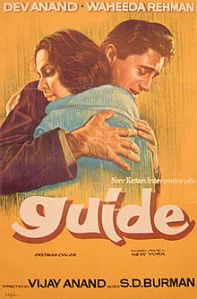
Or, we can delve into our personal collections and rediscover classics such as Gone With the Wind(1939, Victor Fleming, George Cukor, Sam Wood), Mughal-e-Aazam(1960, K Asif, The Emporer of the Mughals), The Sound of Music(1965, Robert Wise) or Guide (1965, Vijay Anand).
We also have the choice of curling up on a love couch and savoring romantic escapades of the mature and ripe kind. Here are some movies…
Mr Schnellenhamer, the head of the Perfecto-Zizz-baum Corporation, the leading movie studio, is reported to be having an odd disagreeable feeling these days. Perhaps, it is caused by what Roget’s Thesaurus would describe as agitation, fury, violent anger, wrath and similar emotions listed under the heading ‘Rage’, that too of an impotent kind.
Having struck a deal with Coronavirus Global Corp (CGC in short) to unleash upon the public a movie based on the current pandemic, he believes things to be moving a tad sluggishly. He is not able to gather enough goofy ideas to add a sparkle to the script. Discussions with his team of directors, script-writers, music composers, yes-persons, deputy yes-persons, junior yes-persons, nodders and trainee nodders have led to finalization of the basic outlines of the movie. But he feels much more could be done. CGC had mandated that the movie should get released before any…
Cupid has a free run in Plumsville. He is present everywhere. He influences and enables incidents which go beyond the normal call of his duty, not restricting himself merely to generating and sustaining magnetic currents flowing between two individuals.
The large circle of influence of Cupid
When he wants someone goofy like Thos to acquire a saintly disposition, he strikes at him, leaving him besotted with Greta Garbo, thereby making him rise in love. When he decides to champion the cause of vegetarians, he uses Madeline Bassett as a front and forces Gussie Fink-Nottle to lay off all the vitamins of animal origin, making him skip Anatole’s lavish spreads and survive only on spinach, sprouts, broccoli and similar stuff. When he wishes to campaign for safety of sharks, he deploys Angela to do his bidding.
Those who serve in the constabulary, however tough their exteriors and however pure their intentions…
Mr Schnellenhamer, the head of the Perfecto-Zizz-baum Corporation, the leading movie studio, is reported to be having an odd disagreeable feeling these days. Perhaps, it is caused by what Roget’s Thesaurus would describe as agitation, fury, violent anger, wrath and similar emotions listed under the heading ‘Rage’, that too of an impotent kind.
Having struck a deal with Coronavirus Global Corp (CGC in short) to unleash upon the public a movie based on the current pandemic, he believes things to be moving a tad sluggishly. He is not able to gather enough goofy ideas to add a sparkle to the script. Discussions with his team of directors, script-writers, music composers, yes-persons, deputy yes-persons, junior yes-persons, nodders and trainee nodders have led to finalization of the basic outlines of the movie. But he feels much more could be done. CGC had mandated that the movie should get released before any vaccine or virus anti-dote hits the market.
Tentatively titled ‘The Corona Gladiators’, the movie would capture the positive effects of the pandemic over all the inhabitants of our planet; also, the eventual victory of Homo sapiens over the deadly virus emanating from the laboratories of Coronavirus Global Corp (CGC in short).
Details of the plot are yet to be revealed but perhaps the hero and the heroine, cast in the mould of Psmith and Eve, would both be scientists working on an anti-virus drug. Frustrated at the lack of results, they go underground on a super secret mission to steal innovative ideas from laboratories elsewhere in the world. To be shot in Washington, London, Paris, Oslo, Beijing, Tokyo, New Delhi and Canberra, the movie will have car chases, gun fights, encounters with secret services and many other elements which would ensure not only commercial success but also critical acclaim.
The climax may see the couple, after having whipped up an anti-virus drug, facing a bunch of rogue Vice Presidents of CGC inside the Colosseum in Rome. Before being threatened with pistols designed to fire a volley of vials filled with the brand new anti-dote and running off to safer pastures, CGC personnel will blast humanity in general for its apathy towards environment and Mother Nature. As the drums start beating, declaring the brave gladiators to be victors, the titles start rolling. The end will leave the doors open for a sequel which could cover the onset of a far more deadly version of the virus.
Some of the sub-plots discussed so far for spicing up the script are as follows.
The Good, the Bad and the Ugly Leaders
Poor politicos live in glass houses but are well-endowed to hurl stones at others, as and when the situation demands so. The pandemic is merely just another tool in their hands to beef up their image further and also to win upcoming elections by clipping the wings of those in opposition.
Top honchos like Prime Ministers and others are improving upon their macho-but-sensitive images these days by not only flexing their muscles to browbeat enemies – real or imaginary – but also remaining in news for unexpected reasons.
Scribes were recently surprised – much like a nymph while bathing – when the British Prime Minister Boris Johnson did some push-ups on his office carpet during a newspaper interview to demonstrate his post-Corona fitness for the job.
Danish Prime Minister Mette Fredricksen decided to postpone her wedding in order to be able to attend a meeting of the European Council on the virus. We understand this is the third time she has done this.
Hon’ble A B Filmer has been requested to collect more details on the leaders who have publically defied such norms as social distancing and wearing masks.
Atithi Devo Bhava
Back home, India has always believed in treating guests with reverence, atithi devo bhava being the norm. Many Indians thus decided to heartily welcome the Country Managers of Coronavirus Global Corp (CGC) by clapping, lighting candles, ringing bells and banging pots and pans from their balconies.
In order to assist CGC in exceeding its own estimates of market share and bottom line in the country, some imaginative steps were taken. First, a complete lockdown ensured that the migrant labourers got stuck in cramped urban spaces where they could easily get infected. Gradually, they were prodded to migrate to distant rural areas, thereby improving the spread. Those who remained in urban areas threw caution to the winds when it came to wearing masks and following norms of social distancing. After all, there is a limit to what a hassled government and its officers can do to change the behaviour of its citizens in public places.
Aunt Dahlia is in agreement that this needs to be considered for inclusion in the proposed movie.
A Budding Romance
When two young and bright persons come to explore a small and peaceful place like Pondicherry in south India, a transient bond of affection gets strengthened. But on the 4th day of their stay, they are caught unawares by a harsh lockdown announced by the government at a notice of less than 4 hours!
While their needs for survival are adequately met, the sheer fact of living through a major event in their budding lives brings about a stronger play of the hormones. A not-so-astute observer might be forgiven for missing the stars in their eyes and the way their faces light up when they happen to be together.
Angela and Tuppy Glossop concur with this idea.
Cupid and the Mummification of the Corpse
Cupid is busy with his e-initiatives. Love birds living in different metros have learnt to remain contented with video and text chats till the time things return to a newer state of normalcy. A young couple whose marriage had got indefinitely postponed find that the boring part of their relationship has already started. The bride-to-be feels that there is a limit to the number of times one can ask each other how their day was, what they plan to have for dinner and the movie they intend to watch every night. It feels as if they have been living in a fast forward mode and have already sensed the process of the mummification of the corpse of love some time after the priest has chanted the last mantra and the marriage has been sanctified.
Bertie Wooster is delighted that he is not being asked to play a role in the movie.
Some Green Shoots
It is an open secret that thanks to the aggressive marketing strategy being practiced by CGC the world over, sale of sanitizers and related hygiene products has registered an exponential growth. Lifestyle coaches and loony doctors are laughing all the way to their respective banks. Yoga-gurus-turned-business-honchos are busy re-labelling and re-launching select products, unleashing these upon an unsuspecting public. So are the owners of online streaming platforms who have grabbed the rights of movies being churned out by our dream merchants.
The last mentioned would be delighted to know of a retired Rev. Aubrey Upjohn who has created an excel sheet which lists the movies on offer on various streaming platforms. Much of his time now gets spent on keeping the list always updated in terms of new arrivals and the ones which are yet to be watched!
Immunity-boosting Tissue Restoratives
Across homes, homemakers are whipping up turmeric and basil based tissue restoratives, prompting all their family members to gobble the same without much ado. Those who are in the business of spices are chuffed at the sudden uptick in their fortunes.
Laura Pyke heartily approves.
Suggestions are welcome!
Would you have a suggestion to offer as to how to make this movie a wee bit juicier? Suggestions may be mailed to Wilmot.mulliner@zizzbaum.org.
Those whose ideas get selected will receive an invitation to visit the studios and have a meal with Mabel Potter and Wilmot Mulliner.
Honoria Plum has a unique flair for digging deep and coming up with gems of pristine knowledge and wisdom as to the kind of life P G Wodehouse lived. Residents of Plumsville thus get a sneak peek into some aspects of his life which might have influenced his work.
Here is a blog post from Plumtopia which amuses, entertains and educates.
For some years now, I’ve been pushing the idea, aided and abetted by a gang of like-minded eggs, that Valentine’s Day should be commemorated as the anniversary of P.G. Wodehouse’s death in 1975. I’m a persistent sort of blighter, so here we are again in 2020.
This year, I was curious to take a look at Wodehouse’s writing on the subject of love and see how it might have developed over the course of his 75-year writing career. I quickly discovered (as ever with Wodehouse) that I’d bitten off more than I could chew. So until some generous bird comes across with the necessary oof for full-time study, it’s a mere snippet.
It’s unsurprising to find that love doesn’t feature in Wodehouse’s early school stories. The fact that it takes centre stage in his first grown-up novel, Love Among the Chickens (1906) is more curious. Wodehouse’s lifelong love…
There are indeed times when one ends up ignoring the sage counsel of Stephen Fry, exhorting lesser mortals to merely bask in the sunlit brilliance of P G Wodehouse and not to analyse it. Here is an analysis which is bound to make some of us wear asbestos vests and start scouring around for several long forgotten narratives dished out by Plum.
This February, I asked readers to nominate their favourite romances from the world of P.G. Wodehouse and to cast their votes in numerous polls on Twitter and Facebook. It’s an admittedly frivolous exercise, but we Wodehouse fans need not be steeped to the gills with serious purpose all the time. If our comments and discussion over the past month have led anyone to pick up a Wodehouse book, we have done our little bit to help spread sweetness and light in the world.
And there’s a lot of sweetness and light to spread — over 80 couples nominated from 58 different novels and story collections published between 1909 (The Gem Collector) and 1974 (Aunts Aren’t Gentlemen). Fans applied a liberal interpretation of ‘romance’ to include favourite couples Dolly and Soapy Molloy, Dahlia and Tom Travers, Bertie and Jeeves, and even Lord Emsworth and The Empress of…
















 ashokbhatia