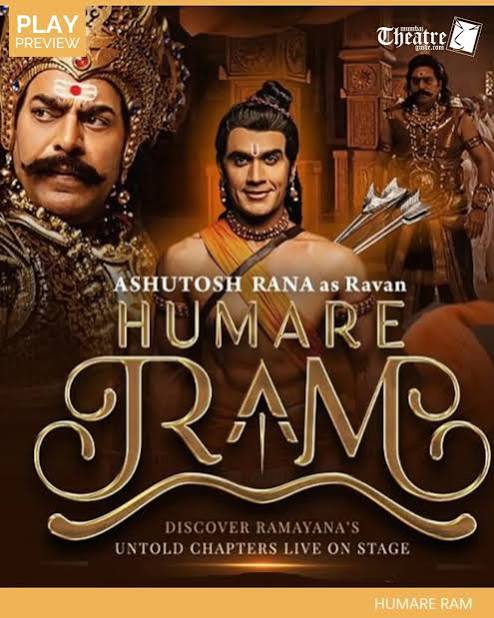
Humare Ram, by Felicity Theatre, featuring Rahul Bhuchar, my younger brother, as Ram and Ashutosh Rana as Ravana, is far more than a superb theatrical performance or a retelling of the Ramayana. Recently, it had yet another full house with likes of Manoj Muntasir and an elite Delhi audience at the Kamani auditorium.
It is an eye-opener to the extraordinary wisdom of our past — wisdom that remains remarkably relevant to our lives today.
From the very beginning, one is reminded of the sacred importance of a vachan — a word given, a promise made, a commitment that must be honoured, even when the price is immense.
And then comes the profound lesson of ahankar — the ego.
Perhaps the most moving moment comes when Lakshman, at the behest of Lord Ram, approaches Ravana to seek his blessings and wisdom. Ravana, despite being at the threshold of his end, possesses immense knowledge. When asked about the difference between himself and Ram, he gives an unforgettable answer:
“मुझे ज्ञान का अहंकार है और प्रभु राम को अहंकार का ज्ञान।”
(I have the arrogance of knowledge; Lord Ram has the knowledge of the ego.)
In that one sentence lies an entire philosophy of life.
The performance also brings alive the importance of respect for one’s parents, the sacredness of true love, the power of bhakti (devotion), and the realisation that knowledge alone is not enough.
Knowledge without humility can become arrogance.
Knowledge without devotion can remain incomplete.
And victory in life is not merely about possessing knowledge or power — it is about surrendering oneself to the Divine and allowing dharma (righteousness) to guide one’s actions.
That is what makes Humare Ram so exceptional.
The brilliance of the production lies not merely in the acting, the staging or the storytelling, but in its ability to make ancient wisdom speak directly to a contemporary audience. Rahul Butcher brings Ram to life with dignity and sensitivity, while Ashutosh Rana’s Ravana becomes a powerful embodiment of knowledge, brilliance, pride and the tragic consequences of unchecked ego.
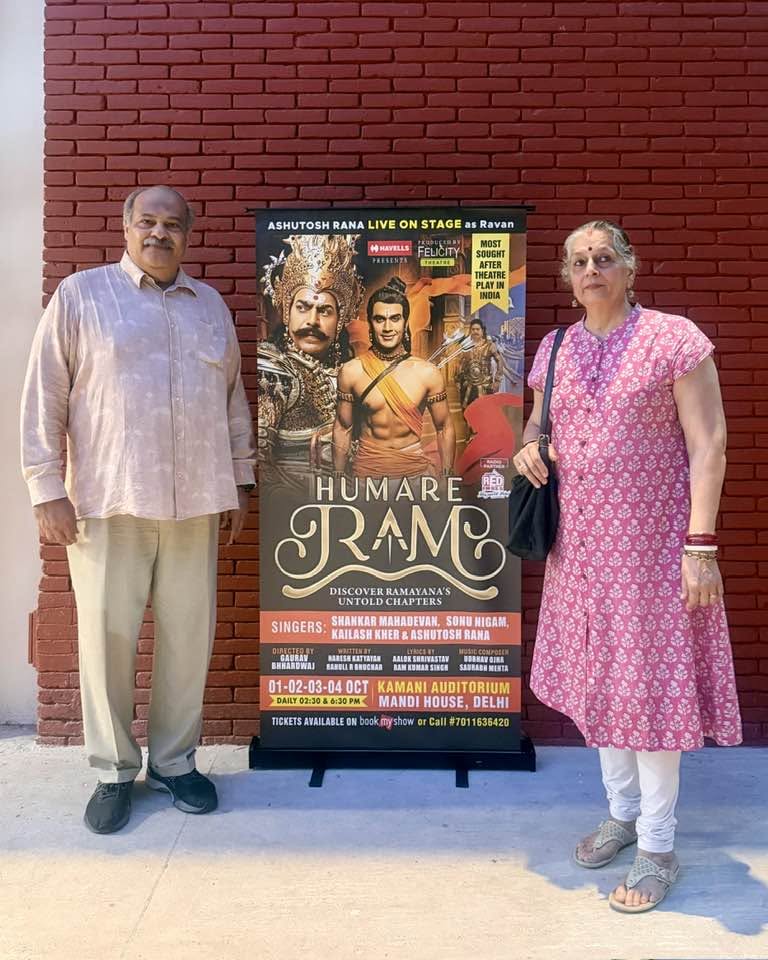
The Ramayana and the Mahabharata are not merely ancient epics. They are two great civilizational streams that have travelled through generations, serving as a sutradhaar — a thread connecting our past, our present and, perhaps most importantly, our future.
Watching Humare Ram, I was reminded of Sri Aurobindo’s beautiful words:
“We belong not to the past dawns, but to the noons of the future.”
And perhaps that is the greatest lesson of all.
If our past was blessed with such extraordinary sages, such profound values and such timeless wisdom, then we should not merely look backwards with nostalgia.
We should ask ourselves: what magnificent future can we create by carrying those values forward?
May this extraordinary production reach every section of our society — our youth, educators, leaders, politicians, artists, families and citizens. May many more people have the opportunity to experience it, reflect upon it and carry its message into their own lives.
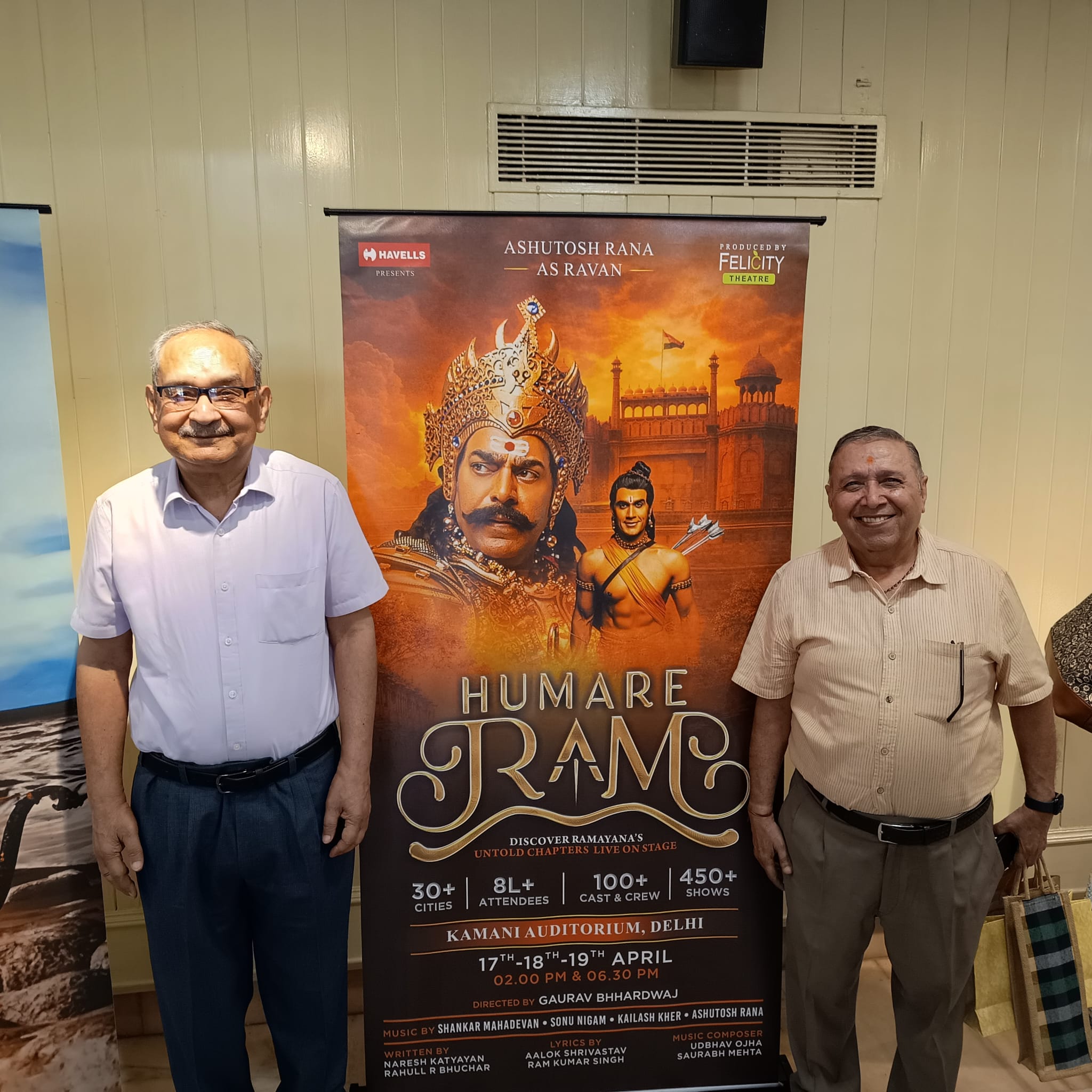
Having already crossed 573-odd performances in India as also elsewhere, I am sure Humare Ram will soon reach 1,000 shows — and deservedly so.
Because this is not simply a play about Ram.
It is a reminder of what it means to be human.
And perhaps, in a world increasingly driven by knowledge, power and ego, that reminder is needed more than ever.
Note
This article was first published on Facebook. Author’s consent to publish it here is gratefully acknowledged.
About the author
Lalit verma is the President of Aurodhan Art Galleries, Pondicherry, India.
Related Posts



Leave a Reply