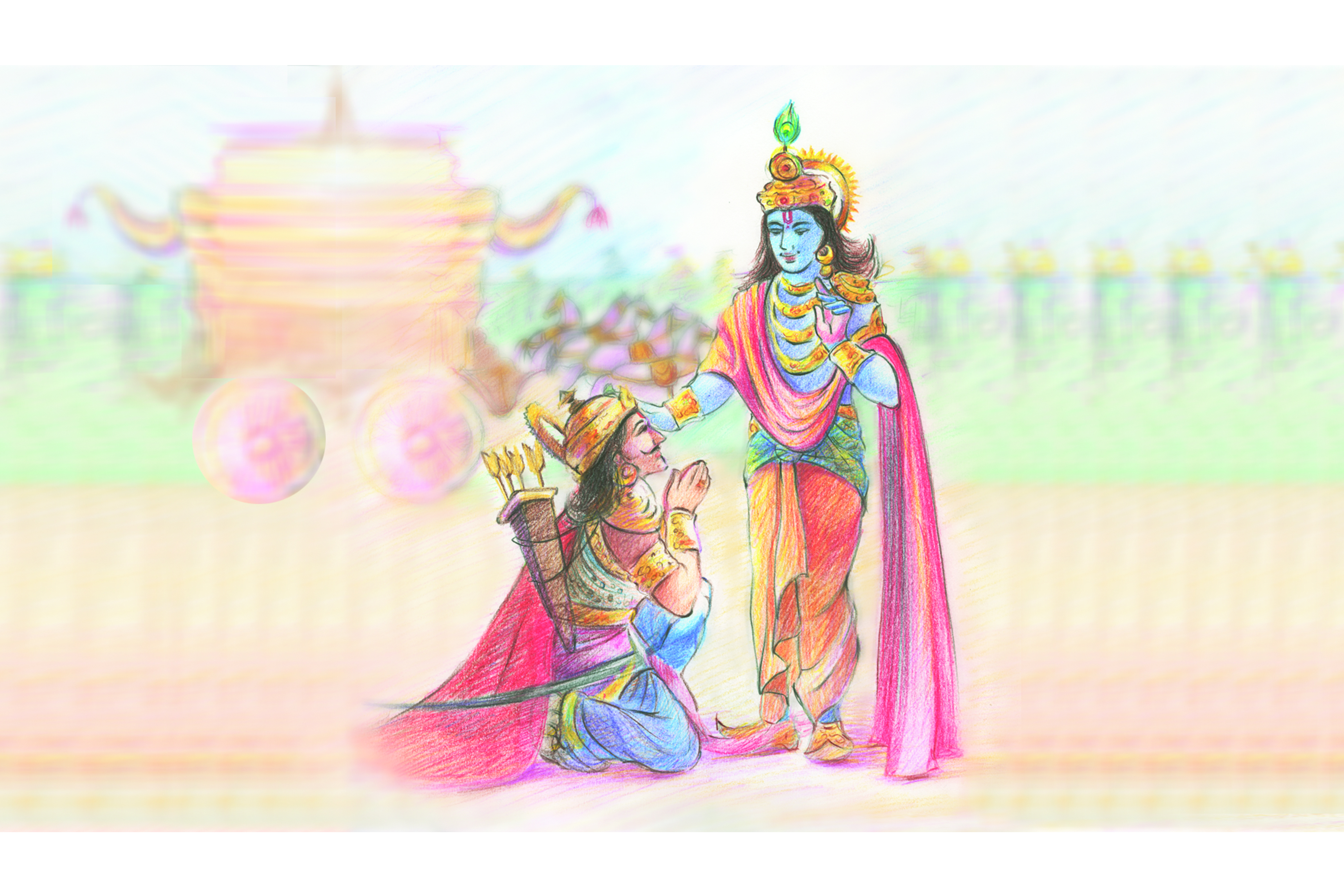
From a management point of view, perhaps the most relevant are the concepts espoused under the overall umbrella of Karma Yoga. Here, Lord Krishna emphasises the importance of selfless action, free of its rewards and gains. A state of inaction is held to be another form of action itself. In any case, inaction is neither desirable nor feasible.
He who sits, restraining the organs of action, (but) dwelling in his mind on the objects of senses, self-deluded, is said to be a hypocrite. But he who, controlling the senses with the mind, without attachment, engages the organs of action in the yoga of action, he excels, O Arjuna.
Gyan Yoga: Keeping Your Saw Sharpened
The concepts enshrined under Gyan Yoga are also highly relevant for management professionals. This is because one of the major challenges in their careers is to keep unlearning, so the process of real learning can never cease.
For example, those who are fearful about their prospects of earning a decent living in the era of Industrial Revolution 4.0 urgently need to re-skill in order to remain relevant amid a structurally shifting job market. Smart professionals always keep an open mind. They strive to keep abreast of the latest technological developments.
To use a phrase deployed by Stephen R. Covey, ‘they keep their saws sharpened.’ They keep learning from their failures as well as from their successes.
(1. An excerpt from my latest book ‘Bhagavad Gita and Corporate Dharma’ 2. Image courtesy Sri Ram Chandra Mission)
Raj Yoga is not a term that the scripture uses explicitly. But throughout the narrative, one finds this to be the underlying current of thought. It elaborates upon the way business leaders and CEOs need to conduct themselves. It nudges them towards the overall goal of doing the right things the right way, keeping the overall good in mind. It highlights the need for a person to strive for spiritual progress and indulge in such practices as meditation and the study of scriptures to realise the ultimate reality of the self within each one of us. It helps one attain a state of perfect harmony where all distinctions and contradictions disappear.
In Chapter 9, Gita cautions us to abhor blind faith, thereby telling us to avoid sycophancy at all costs. Moreover, in real life, we see that religion, particularly the ritualistic version of it, often tends to divide humanity and leads to conflicts. Spirituality, on the other hand, has the potential to unite us.
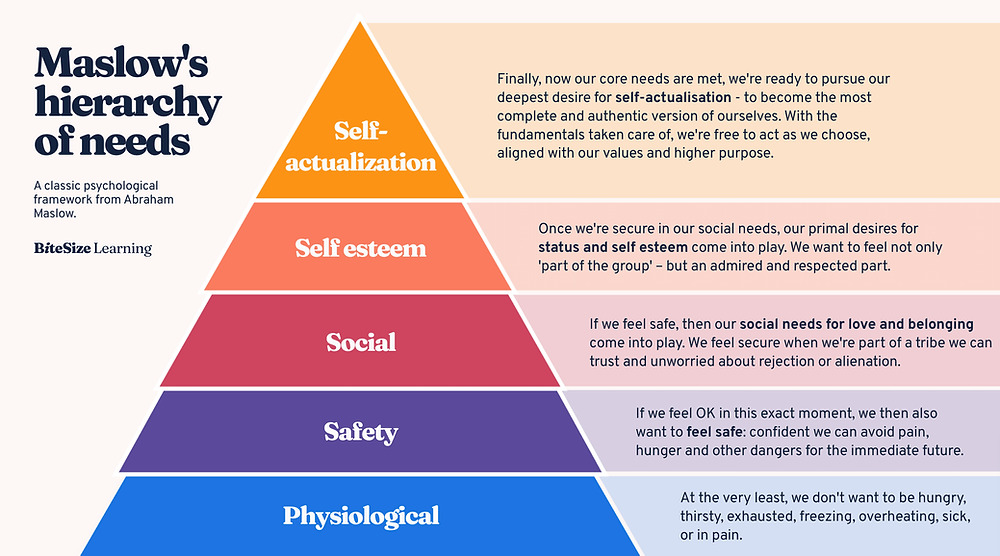
CEOs who take this path and evolve to ‘a state of self-actualisation’, to borrow a term from Maslow’s ‘Hierarchy of Needs’, would tend to take a holistic view of the operations and people under their control, thereby working for the good of all stakeholders. We may call them ‘leaders steeped in a higher state of consciousness,’ worried as much about the results of the next quarter as about the ESG impact of their businesses.
Gita presents the concept of Raj Yoga as an approach to self-perfection and extolls it as a royal secret!
When one has been a part of the Tata group for a decade in one’s 35-year-long corporate saunter, one can be excused for feeling an innate affection towards Air India. Thus, as a septuagenarian based in Europe, when one needs to travel to India, one chooses to fly Air India. And when one notices a few deficiencies in the services on offer, one feels sad. Why? Because one imagines Air India becoming a top-rated brand in the aviation business in the not-too-distant future.
Thus, this note, written as friendly feedback. It is based on my experience with the airline earlier this year.
The USP that works for the brand
When you grow up in a country, you have an emotional bond with its culture, its regional diversity, its clothing styles, its sounds, its smells, and, above all, its food. When you board an Air India flight, the ‘namaste’ greeting by the crew is enough to transport you to a world of nostalgia. The hospitality of the staff on board further reinforces your feeling of being cocooned in a comfort zone. The care and attention from crew members such as Bhumika (on the Zurich-Delhi flight) and Alisha (on the Delhi-Copenhagen flight) go on to make the journey a pleasant experience. You are naturally drawn to the ambience and the warmth.
Life today is so fast and constantly changing. In the middle of all that chaos, when a carefully curated Indian meal gets served, you get a sense of belongingness, comfort, and stability. Nostalgic dishes carry emotions and evoke memories. The inflight meal becomes an elevating and satisfying experience.
This, indeed, is the USP which works in Air India’s favour.
Of course, this is not to downplay the importance of safe landings, thanks to the ever-alert and experienced pilots hired by the airline.
Where the brand takes a hit
Delays
All three AI flights that I had flown had suffered delays.
To be specific:
Flight number AI 152 of January 26, 2026: Zurich-Delhi
(ETD as per ticket issued: 2035 hrs; ATD as I remember it: 2200 hrs)
Flight number AI 537 of January 27, 2026: Delhi-Chennai
(ETD as per ticket issued: 1545 hrs; ATD as I remember it: 1700 hrs)
Flight number AI 157 of April 24, 2026: Delhi-Copenhagen
(ETD as per ticket issued: 1215 hrs; ATD as I remember it: 1715 hrs)
In case of the Zurich-Delhi flight, there was a delay of close to 85 minutes. Luckily, it was announced in advance, so one could adjust to it.
The connecting flight from Delhi to Chennai was delayed by close to 75 minutes. At the boarding gate, a reluctant announcement of the delay came about 30 minutes after the announced boarding time had lapsed.
The return flight from Delhi-Copenhagen-Oslo was delayed by close to five hours. The delay was announced around 70 minutes after the check-in time at the Indira Gandhi International Airport. This left one stuck at the airport for an interminable time, waiting to board an 11-hour flight. As against an ETD of 1215 hours, the flight took off only around 1715 hours IST.
Considering that time is money these days, Air India really needs to avoid such delays in all its flights. I am not sure whether the airline is overcommitting its fleet or is constrained by maintenance issues. But I fail to understand why the management does not treat punctuality as a core feature of its service package. To me, everything else becomes secondary. I do believe that most passengers would not mind a delay of, say, 10-15 minutes. But delays running into hours surely tend to sully the image of the brand.
Ground support sans empathy
A swarm of AI staff could be seen strutting about like headless chickens. When asked as to where a person who has requested wheelchair assistance was supposed to report, a vague indication of the direction to be taken was received, but no attempt was made to effectively guide the passenger to the right counter. After two failed attempts, one arrived, huffing and puffing, to a counter and joined a serpentine queue meant to serve such passengers.
The assistance check-in counter
As luck would have it, this counter was at the farthest end (security check side) of the registration bay allotted to Air India! (Bay C, if I recall right).
With my limited intelligence, I could not fathom the logic of not allotting the counter nearest to the gate to such persons who have requested wheelchair assistance.
When procedures overrule passenger courtesy
Since the flight was declared to be four hours behind schedule, and my physical frame is not as robust as in the earlier days, I requested the ground staff to allow me to access the lounge. It was flatly and rudely denied. A rule was quoted saying that the lounge is not accessible to those flying economy class. Rules are fine, but can these not be tweaked a bit in case of unusual delays?
Getting onboard entertainment: A game of chance
Upon boarding the flight, I discovered that many of the screens were not functional. When I enquired, I was told that many of the aircraft, including the one I was travelling on, are under retrofitting and hence only some screens were working. Surely, an advance intimation could have helped me, while the seat was being allotted by the airline’s algorithm? Or, perhaps, a 10% discount could have been offered on the fare being charged?
The overnight stay at Copenhagen
The five-hour delay meant missing out on the onward late-night flight from Copenhagen to Oslo. On board, no announcement was made about any alternative arrangements in Copenhagen. However, the ground staff were there to address the queries of stranded passengers. In my case, thanks to a Good Samaritan, an overnight stay at a hotel at the airport was arranged.
A communication gap with SAS?
The connecting flight to Oslo next morning was operated by SAS. It took running around between several counters at the Copenhagen airport before a fresh boarding pass could be obtained.
Upon arrival at Oslo, the baggage checked in at Delhi was missing. Well, it was traced and courteously delivered at home within 24 hours.
With due humility at my command
All these might look like routine complaints from a lay passenger of Air India. But for someone who has suffered such indignities first-hand, these would surely remain with me as painful memories for a long time to come. As an ex-Tata guy, one feels anguished, deeply hurt, and let down. On a door-to-door basis, if the Zurich flight took 27 hours, the Oslo flight took 31 hours!
Essentially, a brand stands for impeccable service. It signifies delivery of results which exceed one’s expectations, that too with due respect, politeness and sagacity. However, Tatas know all there is to know about managing a brand. I am a lesser mortal who cannot tell them much about it.
I write this with the fond hope that the powers that run Air India would implement systems, processes, and procedures to address these issues. To recapitulate:
A rigorous system to ensure punctuality needs to be considered non-negotiable.
Better rewards for the pilots and the onboard crew.
An expansion of the culinary basket.
Sensitising the ground staff to the varying needs of different kinds of passengers.
Long live the Maharaja!
(Note: I was associated with the Leather and Footwear Divisions of Tata International at Dewas and New Delhi in two phases: 1976-81, 1988-93.)
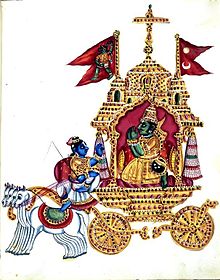
One of the basic concepts enunciated by Krishna in the Bhagavad Gita is that of the everlasting nature of the soul.
The concept of a soul now finds a resonance even in modern management literature. In his book The 8th Habit, Stephen R. Covey urges professionals to pay heed to their ‘inner voice’. While proposing the whole person paradigm, he speaks of the four dimensions of a person—spirit, body, heart and mind.
Peter Drucker, the renowned management expert, says that:
The individual needs the return to spiritual values, for he can survive in the present human situation only by reaffirming that man is not just a biological and psychological being but also a spiritual being, that is creature, and existing for the purposes of his Creator and subject to Him.
This stream of knowledge is said to be close to 5,500 years old. However, time has not robbed it of its relevance as it gives us clear tips on controlling our minds and thoughts, reining in our senses, transcending our queen-size egos, striving to achieve perfection in whatever we do, practising equanimity, and cultivating a habit of introspection and meditation. Ultimately, it is about living a happier and healthier life.
PS: In the Bhagavad Gita, the concept of a soul leads us to the idea of reincarnation, which, in turn, prompts us to the Karma Theory.
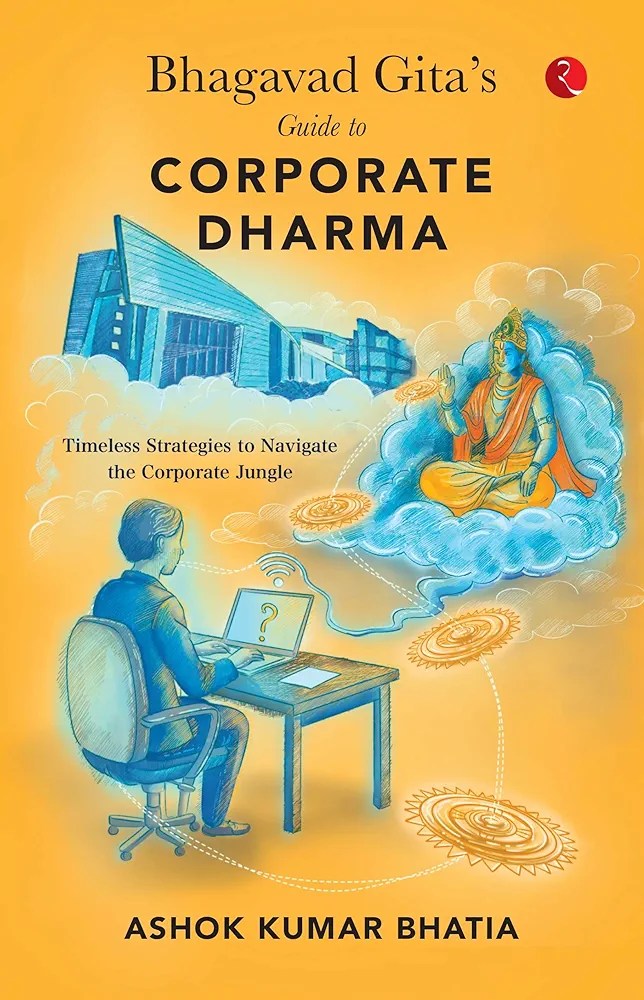
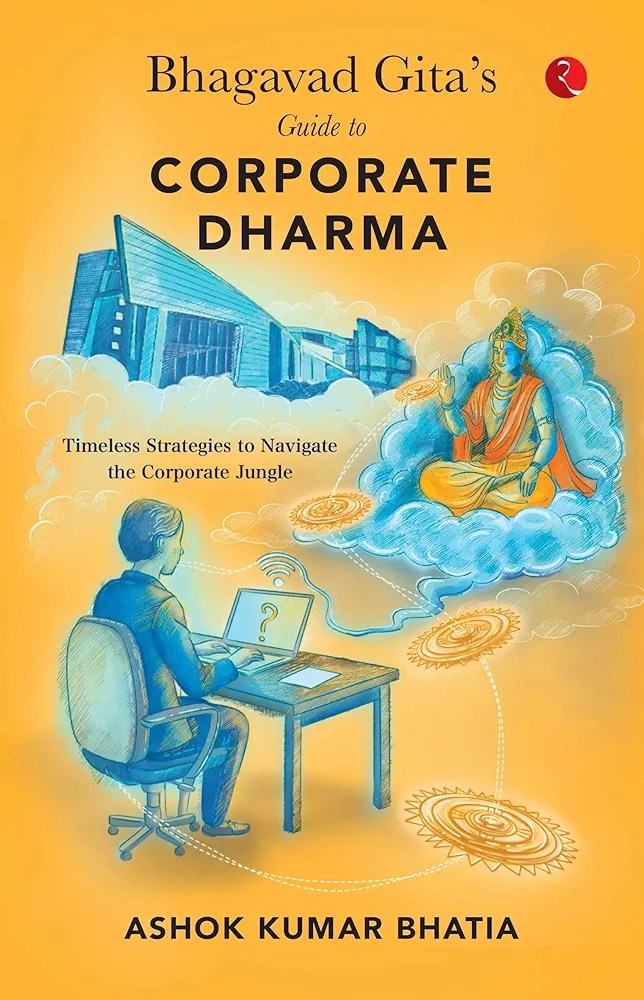
(Most of this note is an excerpt from my latest book, ‘Bhagavad Gita’s Guide to Corporate Dharma’)
Once in a blue moon, one comes across a remarkable book which stands as a living testimony to the high level of erudition, scholarship, and academic rigour an author can attain.
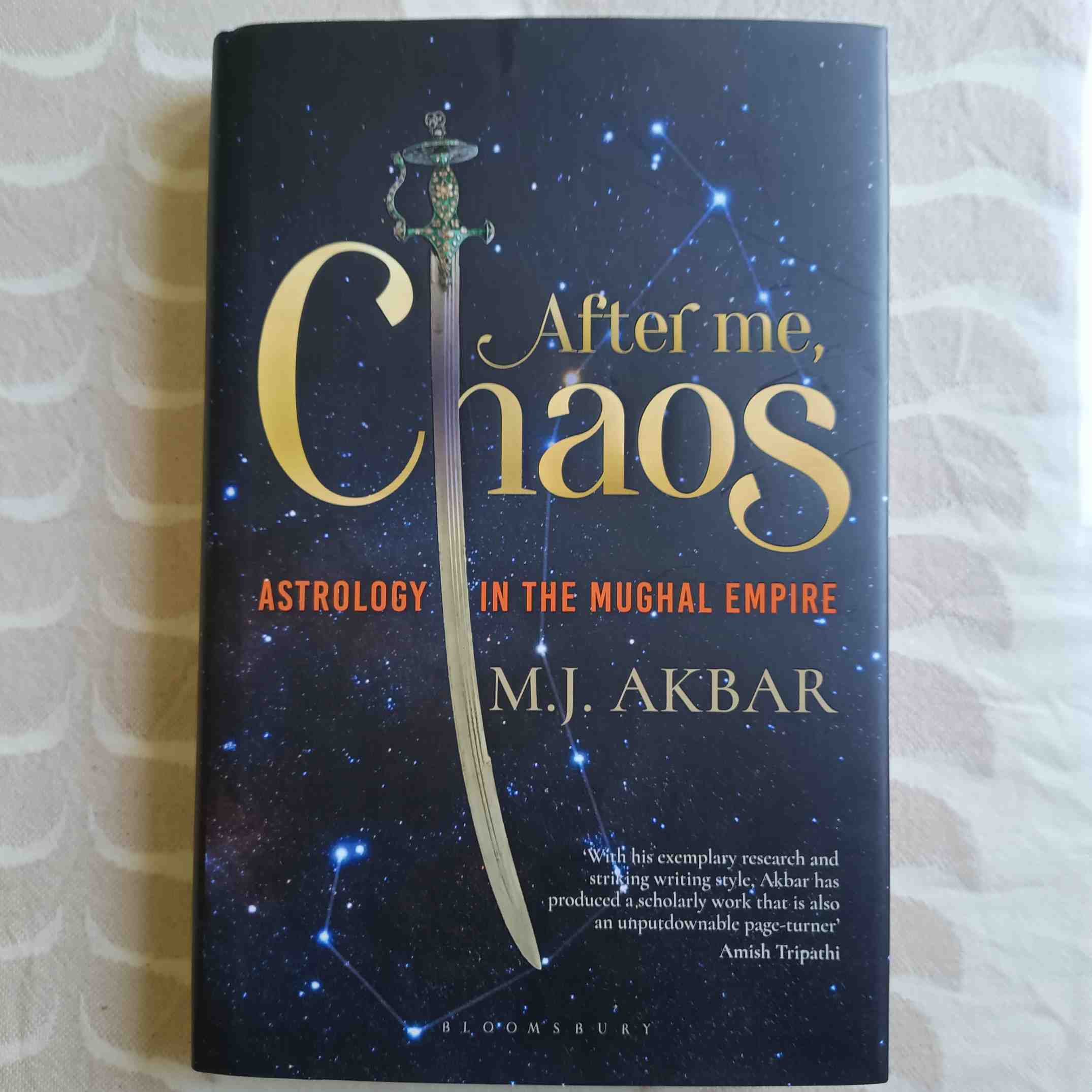
Could we, the lesser mortals, ever imagine the dependence of our past rulers on astrology? Many of us admire the Mughal dynasty for its contribution to our architecture and culture, our culinary baskets, and our administrative structures. But the level of their dependence on astrology is something we could never have guessed. Through his book ‘After me, Chaos’, M. J. Akbar makes us experience the same first-hand.
It is a fascinating book on a subject we have been blissfully clueless about so far. We come to understand that even the Mughals’ ancestors believed that astrology is essential for guidance in their lives. Many of the important decisions in their lives – waging a war, getting a marriage solemnised, planning hunting expeditions, coronation, weddings, deciding on food choices, introducing new currency, meetings with other rulers, friends or foes, naming a newborn – were taken after due consultations with the astrologers. The author even gives us an intriguing account of how Akbar’s birth was nudged to align with the most auspicious moment by the astrologer Maulana Chand!
The author goes on to point out that the use of astrology was not confined to the Mughals. It was also practised at the time by the Afghans, Persians, Arab Caliphs, in Central Asia, and even in the Vatican, as well as in other parts of Europe.
We come to discover that Aurangzeb believed that he would be the emperor based on what was foretold in his horoscope. He waited for twenty-four days before the astrologers decided upon an auspicious day for his coronation. The time of his death was predicted with great accuracy, as was the chaos that was to follow thereafter. The power and control of the Mughal Empire saw a rapid decline over the next two hundred and fifty years, ending with Bahadur Shah II. Hence, the title of the book: ‘After me, Chaos’.
We live in times when the communal polarisation of India’s multi-faith society has become a fashionable badge for many of us to wear. The forces of Hindutva would have us believe in the glories of the past. Laying claims over many branches of knowledge and spiritual practices surely gives us an ego boost. But this book prompts us to revise our prejudices and take off our tinted glasses coloured by an irrational definition of nationalism. It shows us that we cannot cast a supercilious eye on other civilisations and faiths and assert exclusive rights over such branches of knowledge as literature, building design, architecture, civil engineering, town planning, and the like. Astrology is also one such branch.
To me, this book is timely since it is a lesson in humility. It is based on exceptional historical research into a facet of the Mughal Empire that we had never heard of or even suspected. It is a great attempt at humanising one of our past rulers, revealing their vulnerabilities and their desire to make correct decisions when faced with uncertainties.
If you are a true-blue history buff, then this book could disappoint you. It is not a historical account of a dynasty which ruled over large parts of the Indian subcontinent for around three hundred and thirty years. However, history does form a backdrop to the events captured by the author. He puts us into a time machine, holds our hand, and allows us to take a sneak peek into the inner courtyards of the royal palaces and family quarters. He remains focused on the behind-the-scenes use of astrology by emperors we know only from a distance, marvelling at their fascination with and use of a branch of knowledge that satisfies the innate human trait of curiosity about the future.
The reality is that modern people, even if they are unconscious of it, require consolation, a buffer against and an escape from the disappointment and turmoil of earthly life, as much as people in any other period ever did, quite possibly more so. People in the old world, at least, could admit without shame their need for consolation. More often, with the spotlight of social media invariably upon one, modern people are denied even that.
A hapless modern aspirant, mentally fatigued by ceaseless efforts to keep the wolf away from the door, and the perennial pressure of putting up a pretence of being happy through the wide array of sensory gratifications offered by consumer-oriented market forces, aided and abetted by 24×7 connectivity, richly deserves to win a reprieve for herself and her loved ones. To cast off the shackles of this new kind of slavery is not an easy task. Often, she is apt to find that of the rainbows she is chasing, one has suddenly turned and bitten her in the leg.
Bhagavad Gita excels at providing the reader with at least two important spiritual benefits: a tender consolation from the sufferings of the world, and some insight regarding why one suffers in the first place. In the end, one finds that this work of erudite scholarship is an effective balm for an anguished soul.
Project this into a future replete with technological advances, and one would realise the increasing relevance of the scintillating and wisdom-laced advice which is merely to be plucked, savoured and imbibed from the low-hanging juicy fruits which line up both sides of the sunlit streets of this scripture.
(An excerpt from my latest book, ‘Bhagavad Gita’s Guide to Corporate Dharma’)
The theory of karma espoused in Indian scriptures applies only to those who operate at the material level of things. As they start growing out of the operational level and give up attachment, as well as aversion, altogether and perform all actions with a sense of duty, maintaining their equipoise in success and failure, they get released from the bondage of their own actions. With such a balance in the account, the application rewards them with higher privileges. Such souls end up easing the iron grip of karma on their lives. Unless they start abusing their privileges, they end up experiencing the bliss of true freedom.
The sanchita karmas of such realised souls could be declared to be inoperative in nature. With each step of reincarnation, their personal karma operating system and the core karma application would get deactivated.
Indeed, the proposition of enabling one to transcend the cycle of karma is a unique selling proposition of the Bhagavad Gita.
(An excerpt from the chapter entitled ‘The Karma Operating System’ of my latest book, ‘Bhagavad Gita’s Guide to Corporate Dharma.’)
Those who aspire to occupy a C-suite keep an ear to the ground. But the real fun begins when they end up occupying one. Soon, they realise the perils of trying to swim in the Zambezi River on the Dark Continent. To their utter horror, they discover that mixed-bathing practices are in vogue and that their dip is being shared by a couple of young crocodiles. What leaves them literally cold in the feet are the penetrating and unfriendly eyes of some of the crocodiles swimming alongside, who take a jaundiced view of their habitat being infested with a juicy specimen of the tribe of Homo sapiens. Quite a few others are gleeful, drooling over a good source of their daily vitamins.
These crocodiles might as well be representing the kind of challenges C-suite occupants typically face—business goals, quarterly guidelines, macroeconomic shocks, dark clouds of wars and geopolitical tensions, pandemics, investor pressure, ethical dilemmas, redesigning business processes given newer frontiers of technology opening up, the advent of retaining high octane performers, compliances of all kinds, burnouts, employee morale, to cite only a few.
Business Leaders of the Future and Compassionate Capitalism
Enlightened businesses have invariably used a judicious mix of commercial and spiritual tenets to run their operations. Many of our Indian business leaders— J.R.D. Tata, Ardeshir Godrej, Verghese Kurien and R.K. Talwar, to name only a few—have guided their businesses thus. The last two, famous for the ‘milk revolution’ and the growth of the State Bank of India, respectively, have spoken of the influence of the Bhagavad Gita on their actions.
(An excerpt from my latest book, ‘Bhagavad Gita’s Guide to Corporate Dharma.’)





 ashokbhatia