
If Marie Curie had decided to become a human-resource professional at some point of time in her illustrious career, she would surely have had something to say about the half-life of so many things: interpersonal relationships, joys and sorrows, promotions, increments, awards and other recognitions which come one’s way all the time. Even insults, abuses, and rebukes hurled at managers by their bosses, whether in private or in public, would have been held to be things which have a rather short half-life.
This is what the Gita has to say on the nature of material things:
मात्रास्पर्शास्तु कौन्तेय शीतोष्णसुखदु:खदा: ।
आगमापायिनोऽनित्यास्तांस्तितिक्षस्व भारत ॥ 2.14॥
O son of Kunti, contacts (of the senses) with (their) objects, giving rise to (the experience of) cold and heat, pleasure, and pain, are transient and they come and go. Bear them, O Bharata (without being disturbed).
If everything in the material world is of a transient nature, one might as well ask as to what is eternal, or at the least, longer-lasting, when compared to the kind of small stuff we touched upon here.
In the book, we go on to discuss the importance of values followed by organisations and the very purpose of business. If one looks at business entities that have been alive and kicking for a very long time, and have a shimmering brand equity to boot, one realises that these are indeed the considerations which are not of a transient nature.
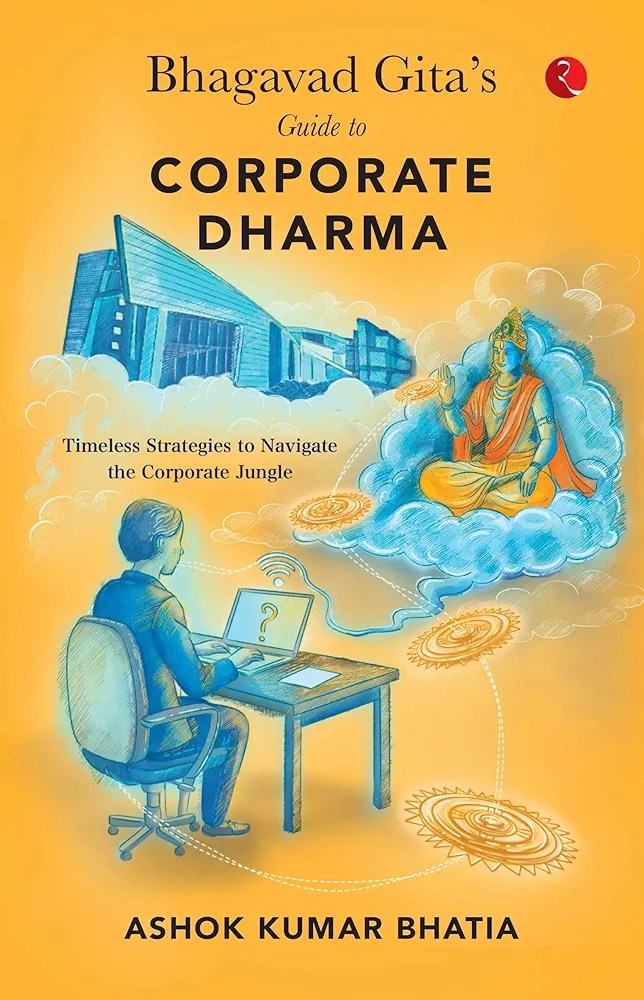
(The text is an edited excerpt from my latest book ‘Bhagavad Gita and Corporate Dharma’. Visual courtesy the World Wide Web.)
Related Posts




Leave a comment