A rare book that successfully connects timeless spiritual wisdom with the realities of modern leadership and business. What makes it stand out is its practicality. The author does not treat the Bhagavad Gita as abstract philosophy, but as a living framework for handling pressure, conflict, ego, uncertainty, ambition, and decision-making in today’s corporate world.
As someone involved in business leadership and operational strategy, I found the parallels between corporate life and inner discipline especially relevant. The discussions around values, resilience, detachment, leadership ethics, and Industrial Revolution 4.0 are thoughtful and highly timely.
The writing remains accessible, insightful, and often refreshingly humorous without losing depth. A valuable read for CEOs, entrepreneurs, professionals, and anyone trying to balance performance with purpose.
(Victor has been an avid practitioner of Heartfulness Meditation and a trainer for more than 40 years. As a career CFO he has been able to combine the benefits of meditation in the everyday management of his duties and responsibilities. He is a lifelong financial executive and a Director of Heartfulness Institute Inc, USA. He is a regular contributor to the Heartfulness Magazine.)
In his epic poem Savitri, Sri Aurobindo, the renowned Indian seer, presents the end of a person’s life as a transformative event, a passage, or a door through which one passes towards a greater life. Essentially, the poem recounts the saga of human victory over ignorance and death.
Thus, on the racing tracks of life, death is but a pit stop. One gives up one’s creaking old jalopy. In exchange, one gets a shimmering new vehicle. One then zooms off to a newer horizon, the engine firing on all six cylinders. With each pit stop, one evolves further.
The principle of reincarnation mentioned in the Bhagavad Gita indirectly captures the way death, a certainty in life—just like the taxes which one must grudgingly bear—can be faced with a smile on one’s lips.
Eventually, it also leads us to the theory of Karma.
(The text is an edited excerpt from my latest book ‘Bhagavad Gita and Corporate Dharma’.)
That the Bhagavad Gita is a universal lesson for all about life is no secret. However, people involved with enterprise too often do not associate with philosophy as being relevant to business. The reality is exactly the opposite. Enterprise without philosophy is crass. Philosophy without enterprise is intellectual. How do you combine a practical philosophy with enterprise?
Ashok Bhatia tells you how—in a relevant and practical manner.
Raj Yoga is not a term that the scripture uses explicitly. But throughout the narrative, one finds this to be the underlying current of thought. It elaborates upon the way business leaders and CEOs need to conduct themselves. It nudges them towards the overall goal of doing the right things the right way, keeping the overall good in mind. It highlights the need for a person to strive for spiritual progress and indulge in such practices as meditation and the study of scriptures to realise the ultimate reality of the self within each one of us. It helps one attain a state of perfect harmony where all distinctions and contradictions disappear.
In Chapter 9, Gita cautions us to abhor blind faith, thereby telling us to avoid sycophancy at all costs. Moreover, in real life, we see that religion, particularly the ritualistic version of it, often tends to divide humanity and leads to conflicts. Spirituality, on the other hand, has the potential to unite us.
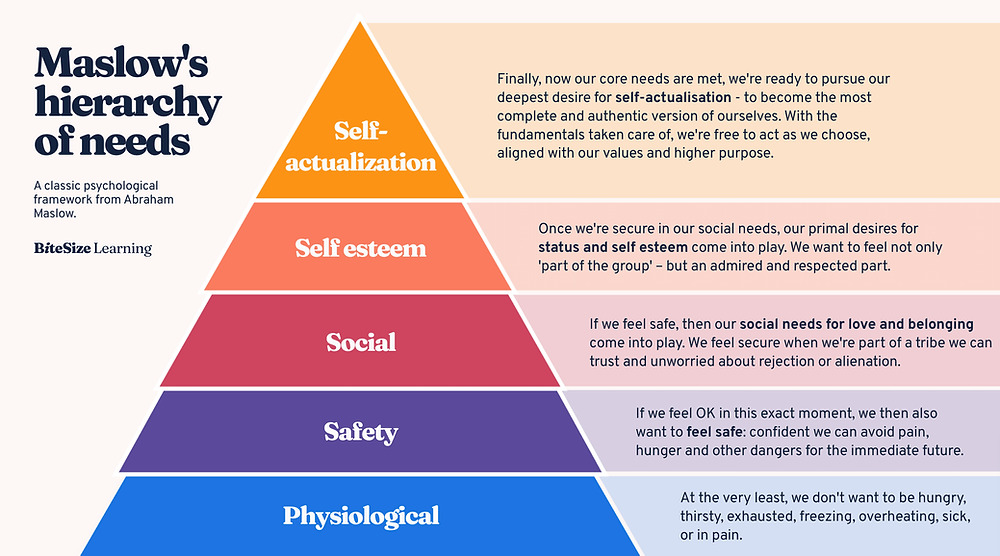
CEOs who take this path and evolve to ‘a state of self-actualisation’, to borrow a term from Maslow’s ‘Hierarchy of Needs’, would tend to take a holistic view of the operations and people under their control, thereby working for the good of all stakeholders. We may call them ‘leaders steeped in a higher state of consciousness,’ worried as much about the results of the next quarter as about the ESG impact of their businesses.
Gita presents the concept of Raj Yoga as an approach to self-perfection and extolls it as a royal secret!
One of the basic concepts enunciated by Krishna in the Bhagavad Gita is that of the everlasting nature of the soul.
The concept of a soul now finds a resonance even in modern management literature. In his book The 8th Habit, Stephen R. Covey urges professionals to pay heed to their ‘inner voice’. While proposing the whole person paradigm, he speaks of the four dimensions of a person—spirit, body, heart and mind.
Peter Drucker, the renowned management expert, says that:
The individual needs the return to spiritual values, for he can survive in the present human situation only by reaffirming that man is not just a biological and psychological being but also a spiritual being, that is creature, and existing for the purposes of his Creator and subject to Him.
This stream of knowledge is said to be close to 5,500 years old. However, time has not robbed it of its relevance as it gives us clear tips on controlling our minds and thoughts, reining in our senses, transcending our queen-size egos, striving to achieve perfection in whatever we do, practising equanimity, and cultivating a habit of introspection and meditation. Ultimately, it is about living a happier and healthier life.
PS: In the Bhagavad Gita, the concept of a soul leads us to the idea of reincarnation, which, in turn, prompts us to the Karma Theory.
(Most of this note is an excerpt from my latest book, ‘Bhagavad Gita’s Guide to Corporate Dharma’)
Once in a blue moon, one comes across a remarkable book which stands as a living testimony to the high level of erudition, scholarship, and academic rigour an author can attain.
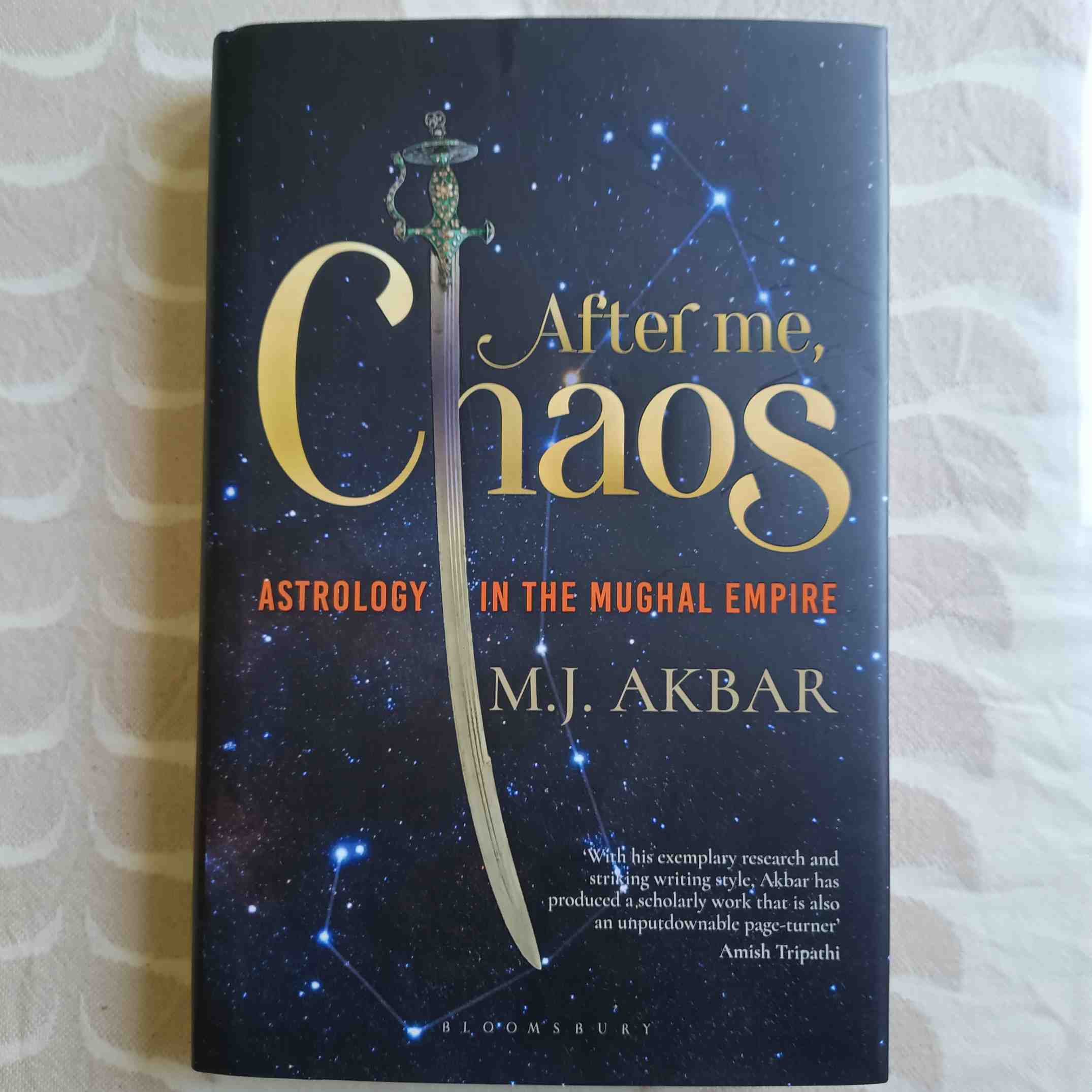
Could we, the lesser mortals, ever imagine the dependence of our past rulers on astrology? Many of us admire the Mughal dynasty for its contribution to our architecture and culture, our culinary baskets, and our administrative structures. But the level of their dependence on astrology is something we could never have guessed. Through his book ‘After me, Chaos’, M. J. Akbar makes us experience the same first-hand.
It is a fascinating book on a subject we have been blissfully clueless about so far. We come to understand that even the Mughals’ ancestors believed that astrology is essential for guidance in their lives. Many of the important decisions in their lives – waging a war, getting a marriage solemnised, planning hunting expeditions, coronation, weddings, deciding on food choices, introducing new currency, meetings with other rulers, friends or foes, naming a newborn – were taken after due consultations with the astrologers. The author even gives us an intriguing account of how Akbar’s birth was nudged to align with the most auspicious moment by the astrologer Maulana Chand!
The author goes on to point out that the use of astrology was not confined to the Mughals. It was also practised at the time by the Afghans, Persians, Arab Caliphs, in Central Asia, and even in the Vatican, as well as in other parts of Europe.
We come to discover that Aurangzeb believed that he would be the emperor based on what was foretold in his horoscope. He waited for twenty-four days before the astrologers decided upon an auspicious day for his coronation. The time of his death was predicted with great accuracy, as was the chaos that was to follow thereafter. The power and control of the Mughal Empire saw a rapid decline over the next two hundred and fifty years, ending with Bahadur Shah II. Hence, the title of the book: ‘After me, Chaos’.
We live in times when the communal polarisation of India’s multi-faith society has become a fashionable badge for many of us to wear. The forces of Hindutva would have us believe in the glories of the past. Laying claims over many branches of knowledge and spiritual practices surely gives us an ego boost. But this book prompts us to revise our prejudices and take off our tinted glasses coloured by an irrational definition of nationalism. It shows us that we cannot cast a supercilious eye on other civilisations and faiths and assert exclusive rights over such branches of knowledge as literature, building design, architecture, civil engineering, town planning, and the like. Astrology is also one such branch.
To me, this book is timely since it is a lesson in humility. It is based on exceptional historical research into a facet of the Mughal Empire that we had never heard of or even suspected. It is a great attempt at humanising one of our past rulers, revealing their vulnerabilities and their desire to make correct decisions when faced with uncertainties.
If you are a true-blue history buff, then this book could disappoint you. It is not a historical account of a dynasty which ruled over large parts of the Indian subcontinent for around three hundred and thirty years. However, history does form a backdrop to the events captured by the author. He puts us into a time machine, holds our hand, and allows us to take a sneak peek into the inner courtyards of the royal palaces and family quarters. He remains focused on the behind-the-scenes use of astrology by emperors we know only from a distance, marvelling at their fascination with and use of a branch of knowledge that satisfies the innate human trait of curiosity about the future.
The reality is that modern people, even if they are unconscious of it, require consolation, a buffer against and an escape from the disappointment and turmoil of earthly life, as much as people in any other period ever did, quite possibly more so. People in the old world, at least, could admit without shame their need for consolation. More often, with the spotlight of social media invariably upon one, modern people are denied even that.
A hapless modern aspirant, mentally fatigued by ceaseless efforts to keep the wolf away from the door, and the perennial pressure of putting up a pretence of being happy through the wide array of sensory gratifications offered by consumer-oriented market forces, aided and abetted by 24×7 connectivity, richly deserves to win a reprieve for herself and her loved ones. To cast off the shackles of this new kind of slavery is not an easy task. Often, she is apt to find that of the rainbows she is chasing, one has suddenly turned and bitten her in the leg.
Bhagavad Gita excels at providing the reader with at least two important spiritual benefits: a tender consolation from the sufferings of the world, and some insight regarding why one suffers in the first place. In the end, one finds that this work of erudite scholarship is an effective balm for an anguished soul.
Project this into a future replete with technological advances, and one would realise the increasing relevance of the scintillating and wisdom-laced advice which is merely to be plucked, savoured and imbibed from the low-hanging juicy fruits which line up both sides of the sunlit streets of this scripture.
(An excerpt from my latest book, ‘Bhagavad Gita’s Guide to Corporate Dharma’)
The theory of karma espoused in Indian scriptures applies only to those who operate at the material level of things. As they start growing out of the operational level and give up attachment, as well as aversion, altogether and perform all actions with a sense of duty, maintaining their equipoise in success and failure, they get released from the bondage of their own actions. With such a balance in the account, the application rewards them with higher privileges. Such souls end up easing the iron grip of karma on their lives. Unless they start abusing their privileges, they end up experiencing the bliss of true freedom.
The sanchita karmas of such realised souls could be declared to be inoperative in nature. With each step of reincarnation, their personal karma operating system and the core karma application would get deactivated.
Indeed, the proposition of enabling one to transcend the cycle of karma is a unique selling proposition of the Bhagavad Gita.
(An excerpt from the chapter entitled ‘The Karma Operating System’ of my latest book, ‘Bhagavad Gita’s Guide to Corporate Dharma.’)
All books represent the innermost thoughts of their respective authors, who toil day and night to share their innermost thoughts and insights with the world. They not only provide the soul of the book but also give it an initial shape, much like a sculptor would carve out a masterpiece from an uncut rock. A team of editors then moves in to refine the same. Much thought goes into deciding the title and the subtitle. Many options are considered before a cover, as well as the blurb on the back cover, is frozen. The formatting team and the printers give the book the finishing touches it needs. The book is eventually born!
Once born, the book acquires a life of its own, waiting to be discovered by its target audience. It charts out a journey for itself, travelling far and wide, carrying the key message that its author wishes to convey. However, in the initial phase, it must be introduced to a select audience, with the basic message underlying the composition explained.
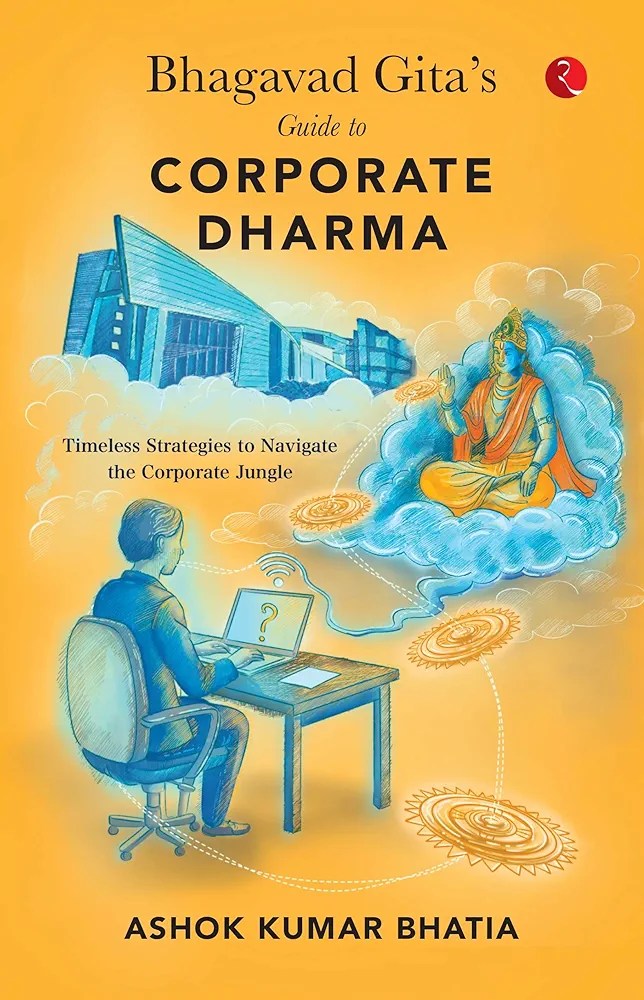
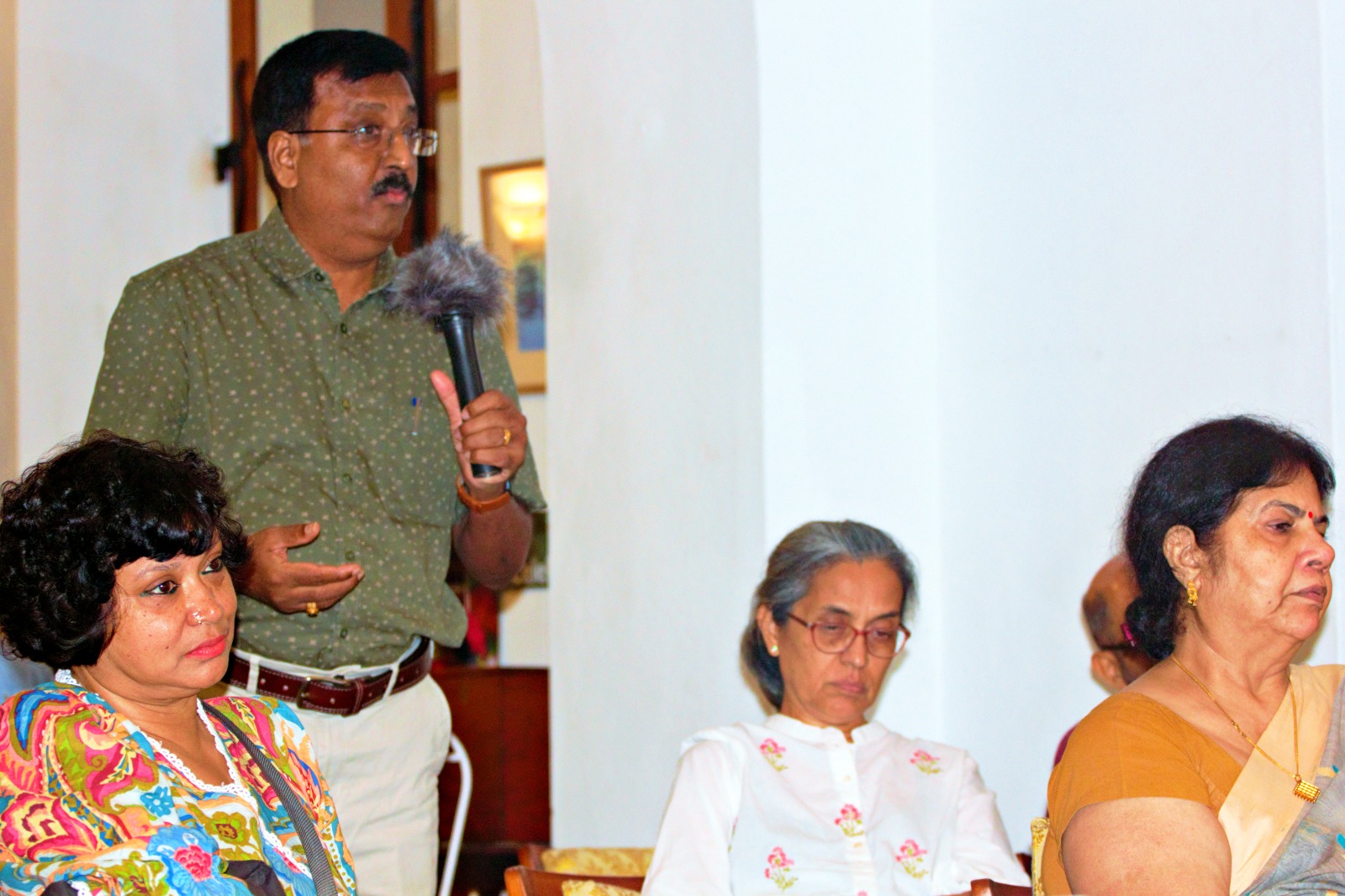
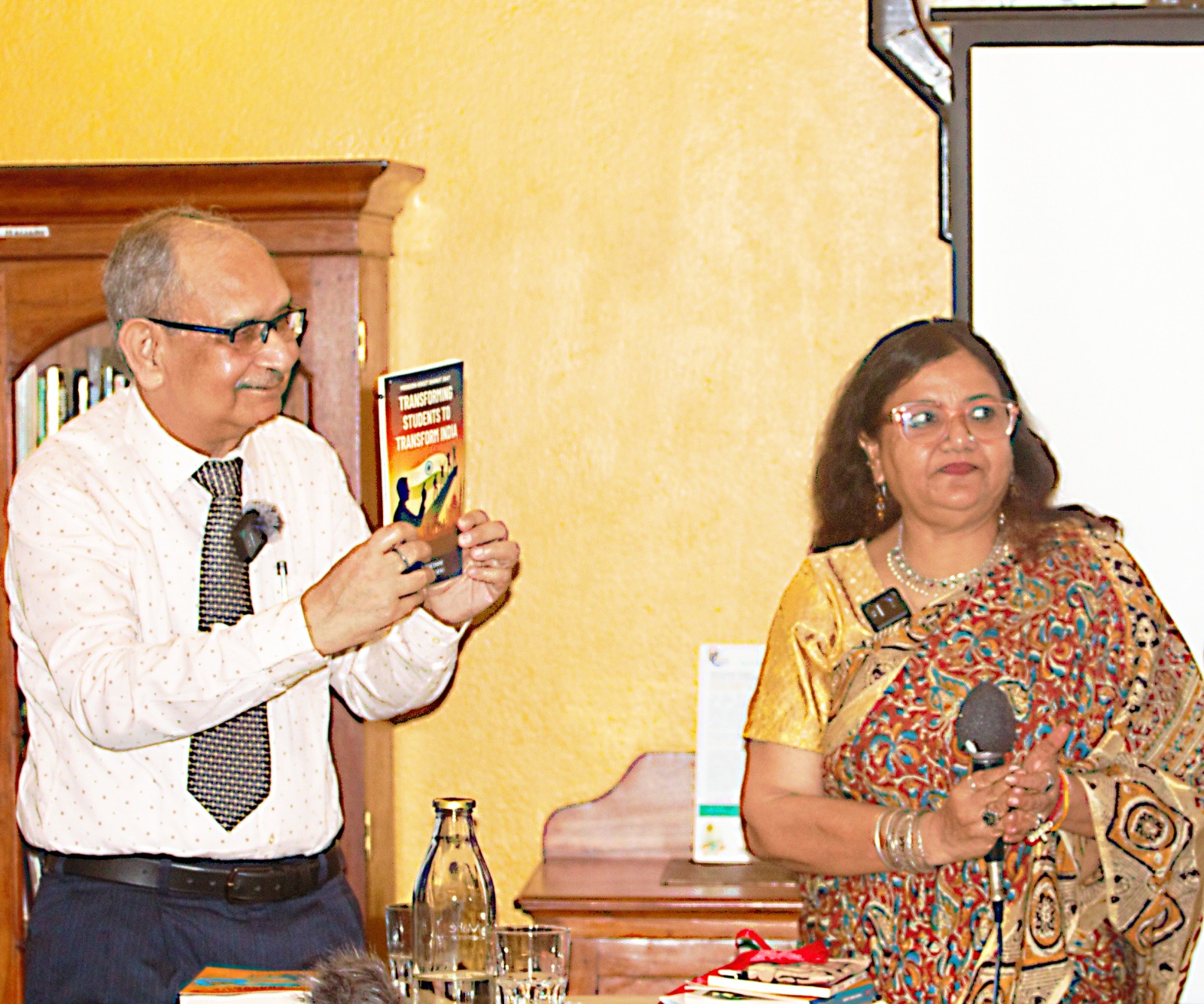
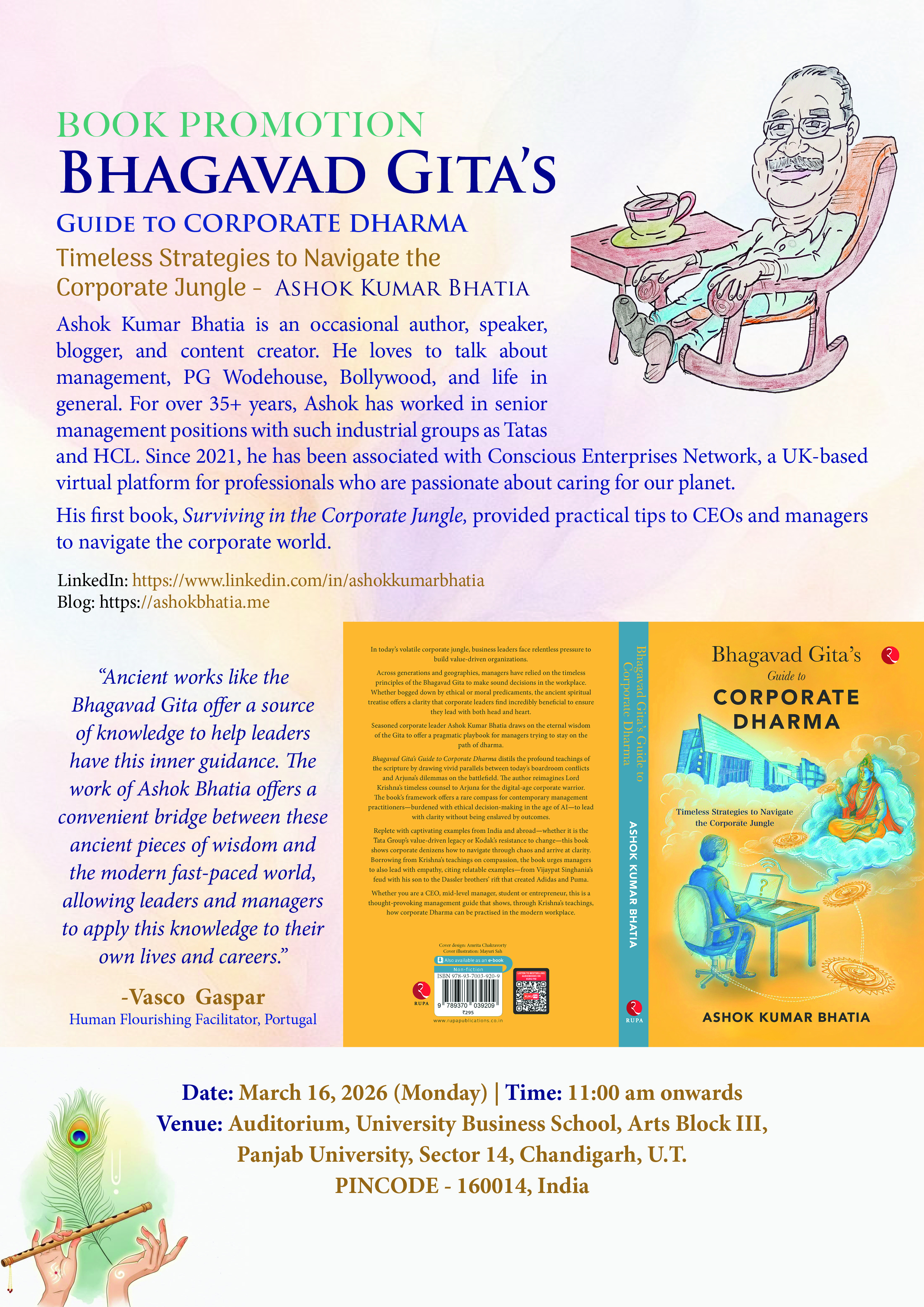
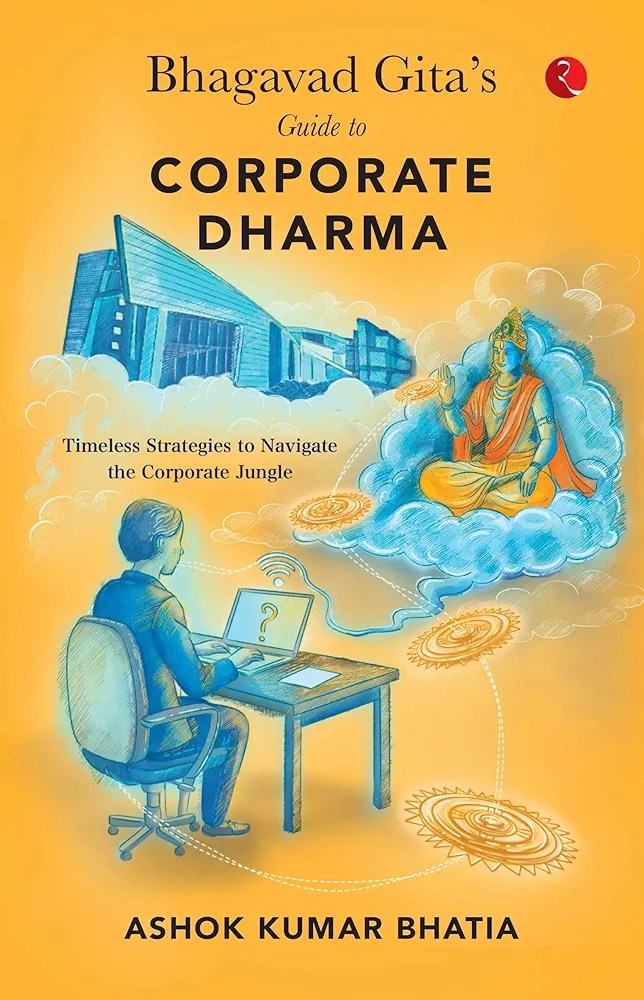
Over the last few months, my latest book, ‘Bhagavad Gita’s Guide to Corporate Dharma,’ has been fortunate enough to have travelled to four cities in India. Here are some key details which capture these events.
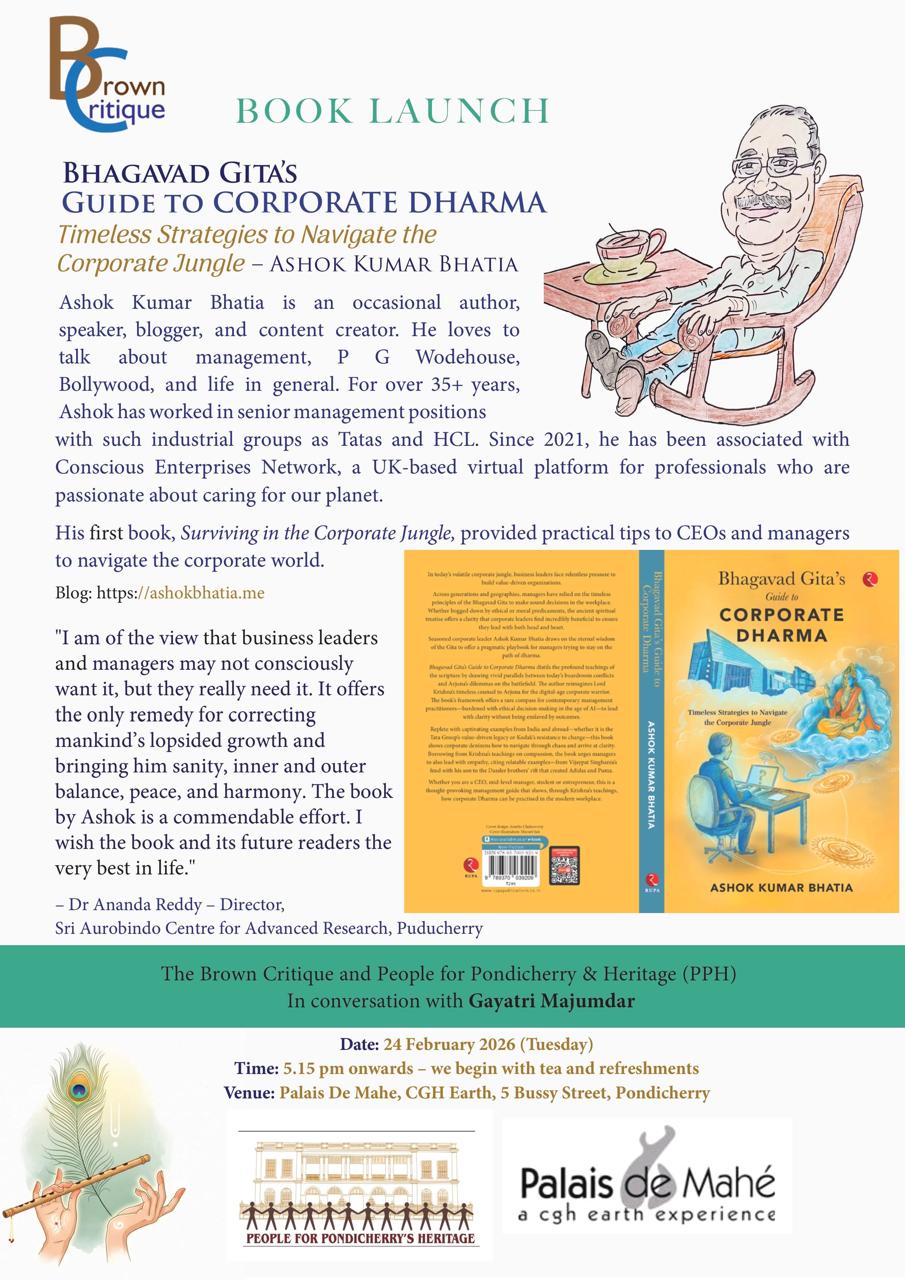
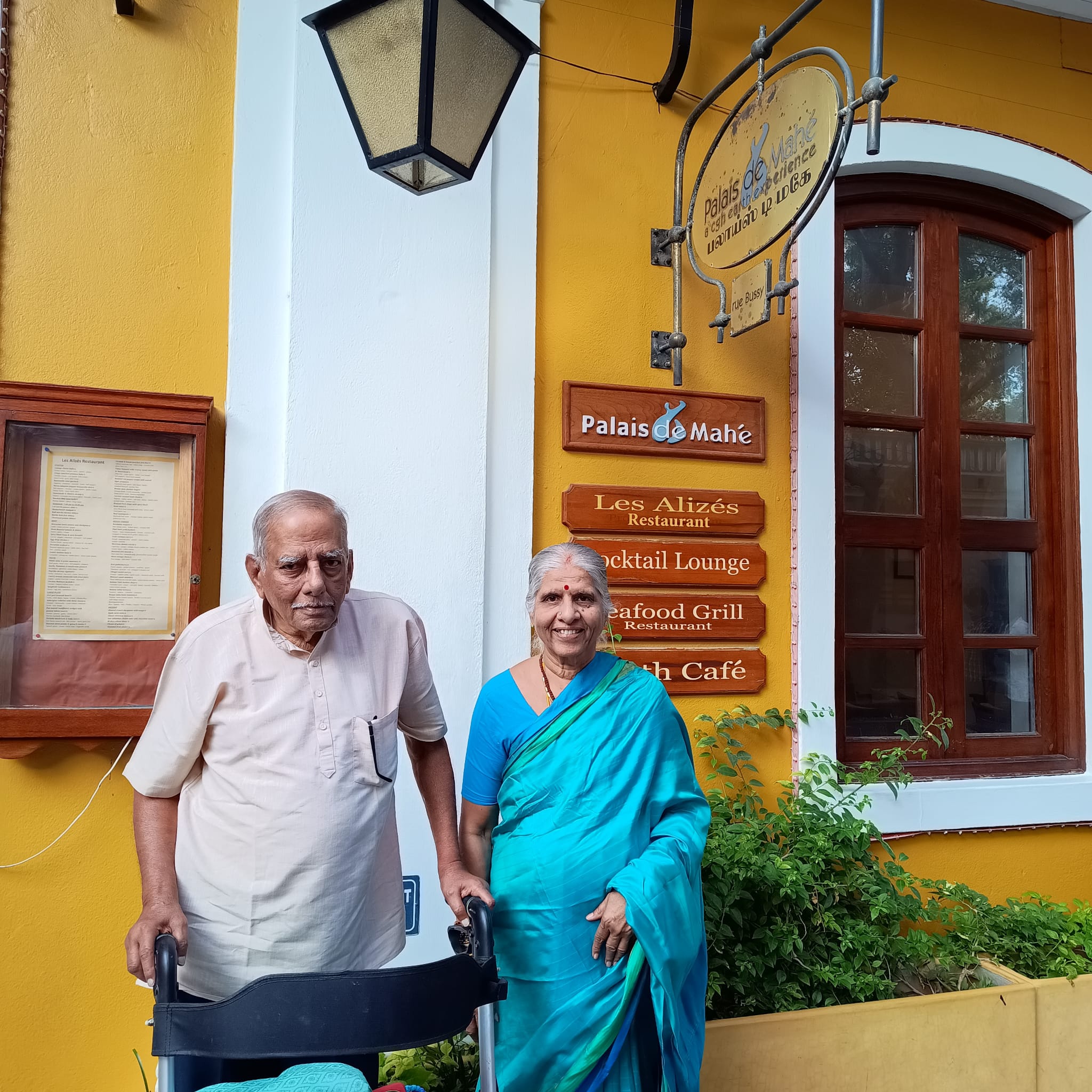
Pondicherry
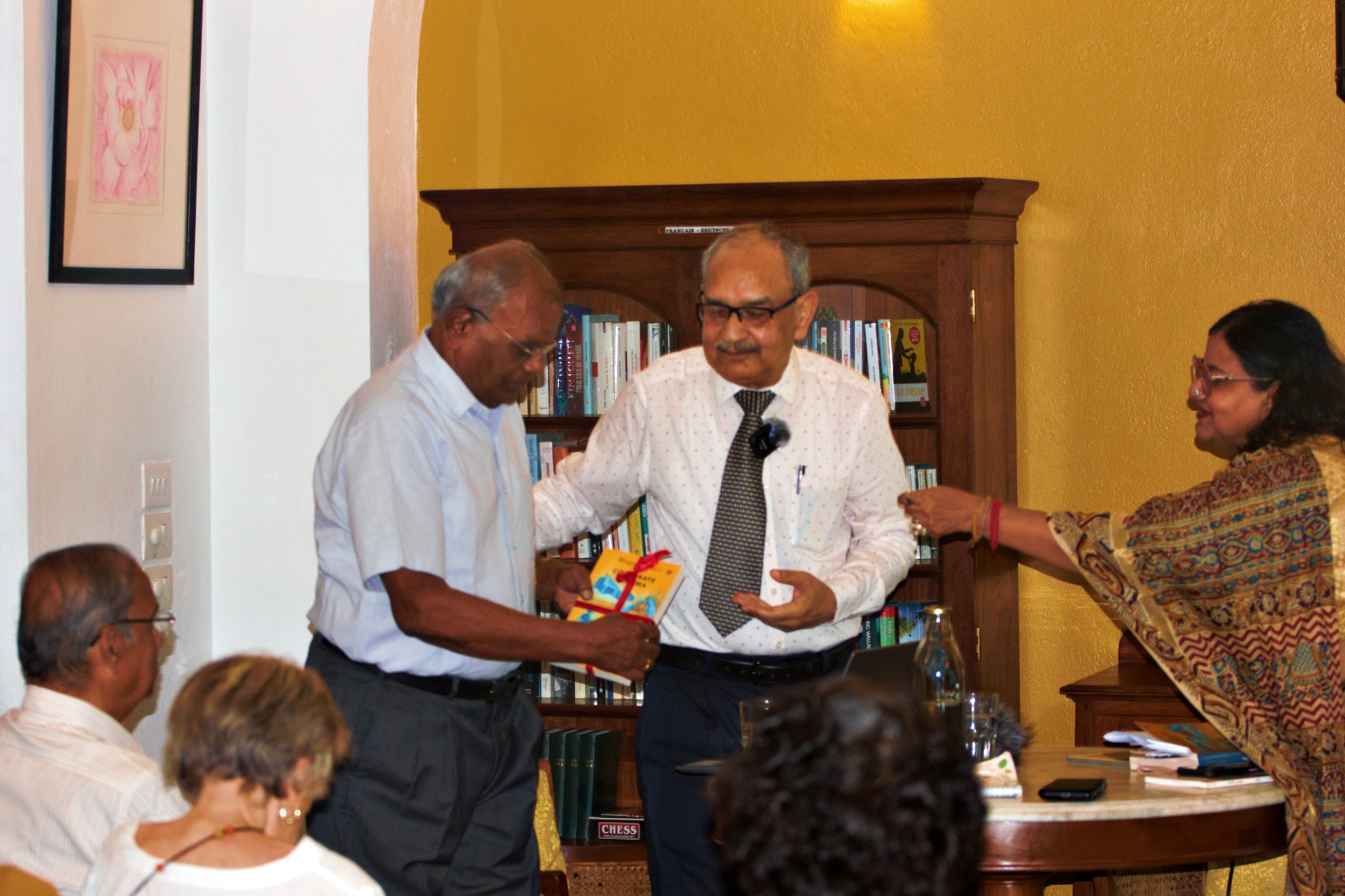
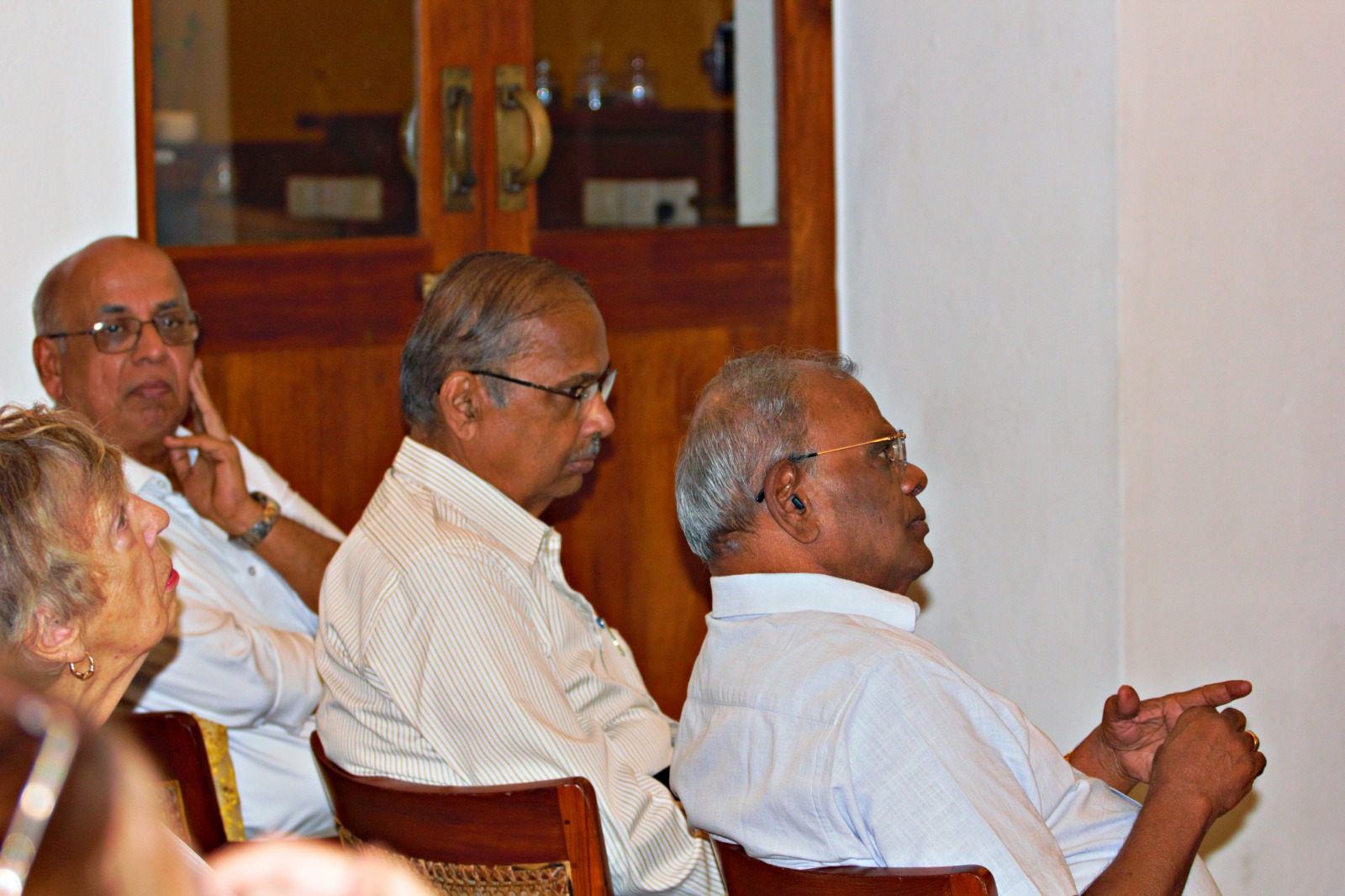
A modest launch function was held at the Palais de Mahe. Prominent industrialists, businesspeople, senior managers, management scholars, spiritual gurus, journalists, and members of the public attended the event.
Mr R. Mananathan, Chairman of the Manatec Group of Companies, was the Chief Guest on the occasion Ms. Gayatri Majumdar, a poetess in her own right and the Founder-Editor of The Brown Critique Literary Journal, conducted the session. Her scholarly acumen can be gauged by the fact that it took her only about 10 days to read the book and formulate the questions she wanted to ask me about its contents.
Wide-ranging discussions took place, covering topics such as detachment, stress management, managing day-to-day corporate challenges, and different hues of happiness. The necessity of using humour to facilitate communication was mentioned.
Dr. Ananda Reddy, Director, Sri Aurobindo Centre for Advanced Research, concluded the session with insightful remarks based on Sri Aurobindo’s Essays on the Gita.
Amongst those present were Mrs. and Mr. S. P. Krishnamurthy, who drove all the way from Bangalore to grace the occasion. Mr Krishnamurthy was a colleague of mine at Tata International many decades back.
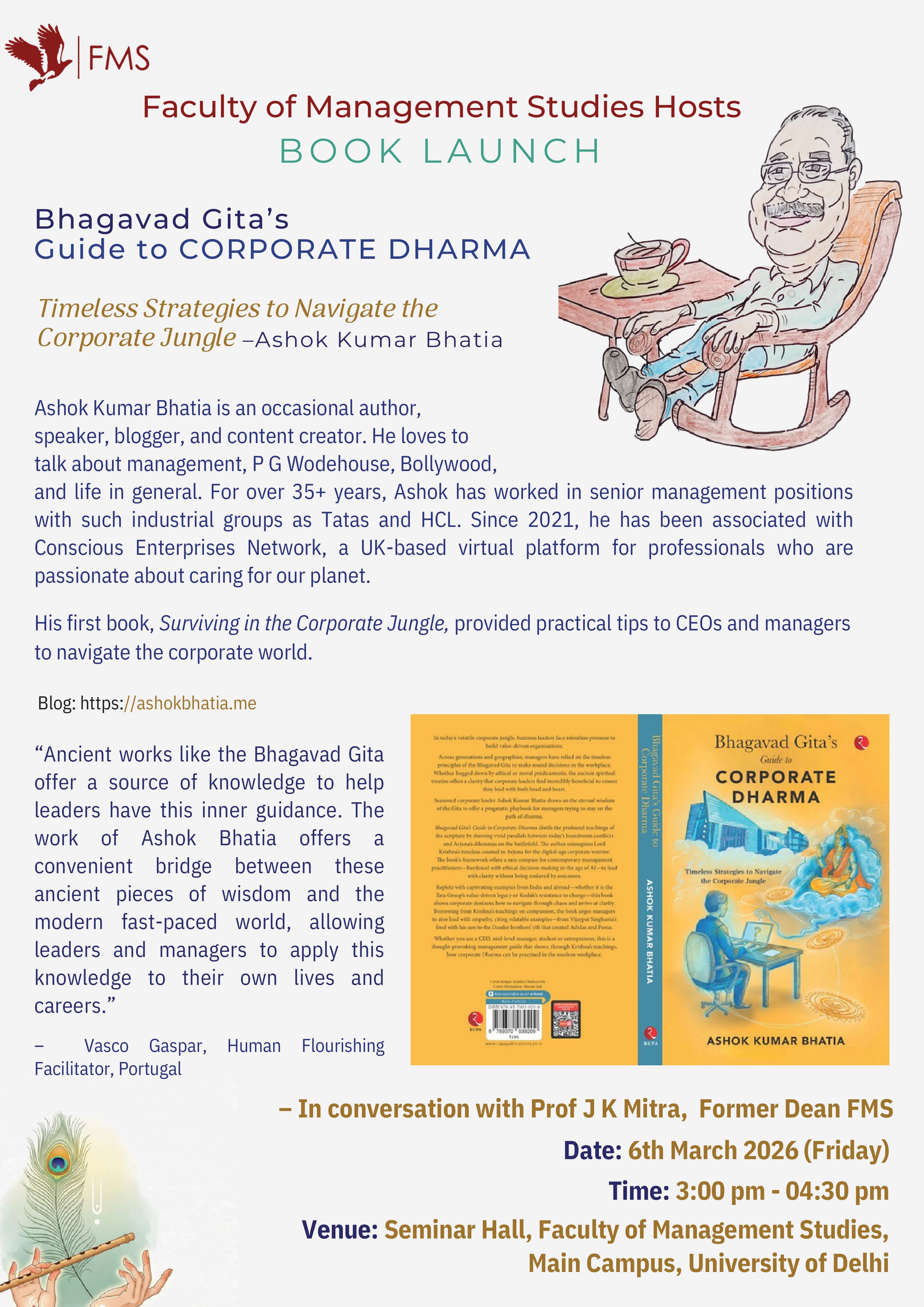
Delhi
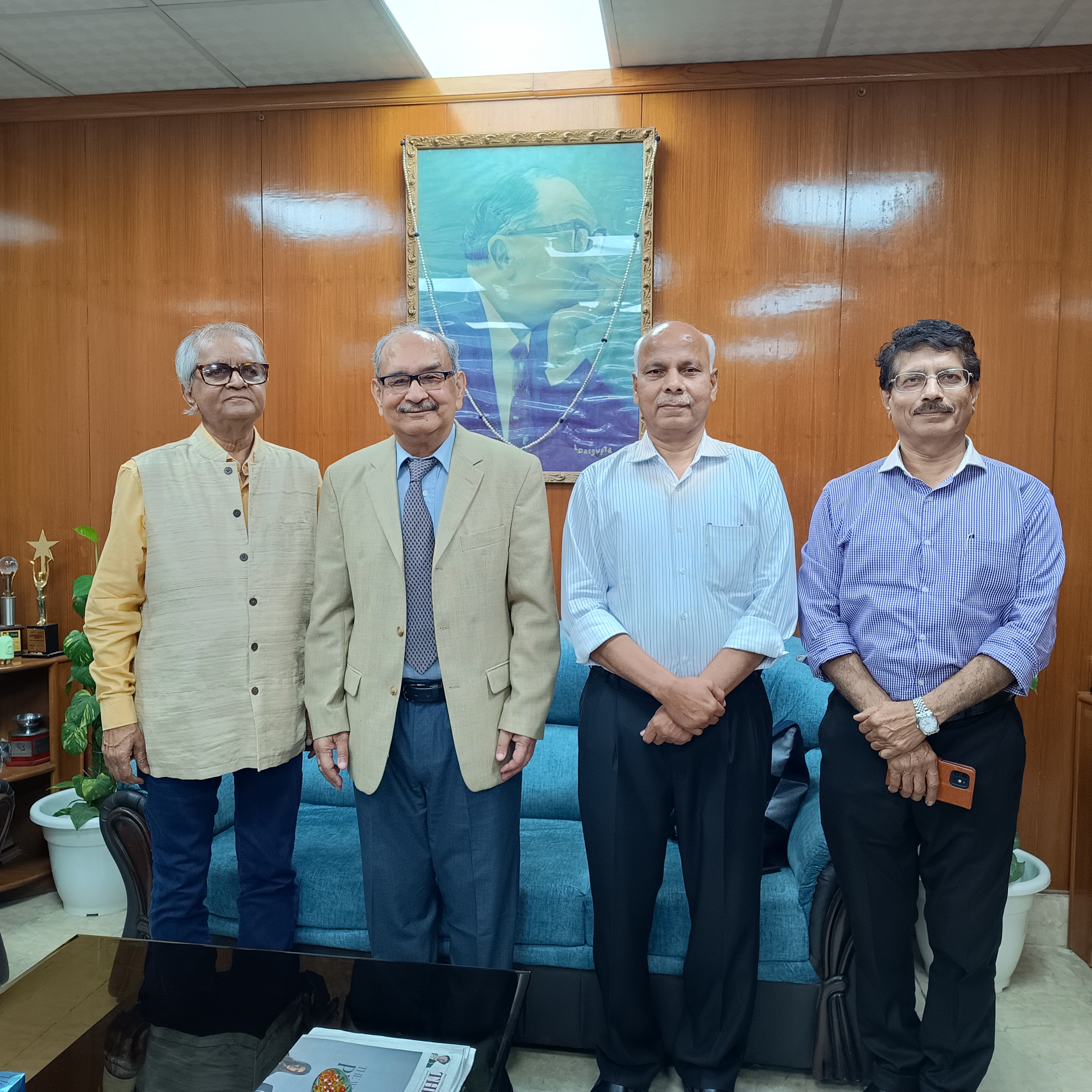
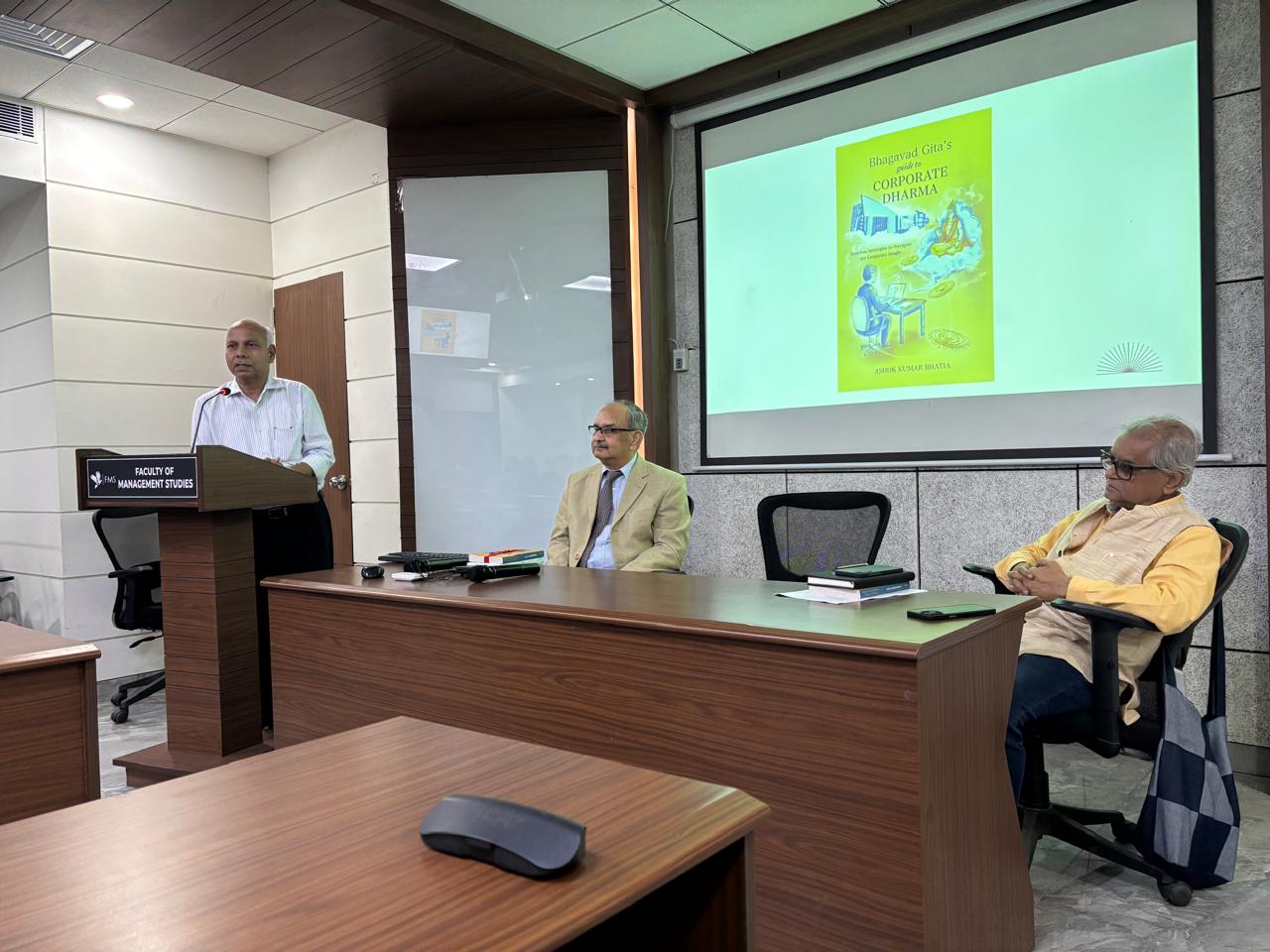
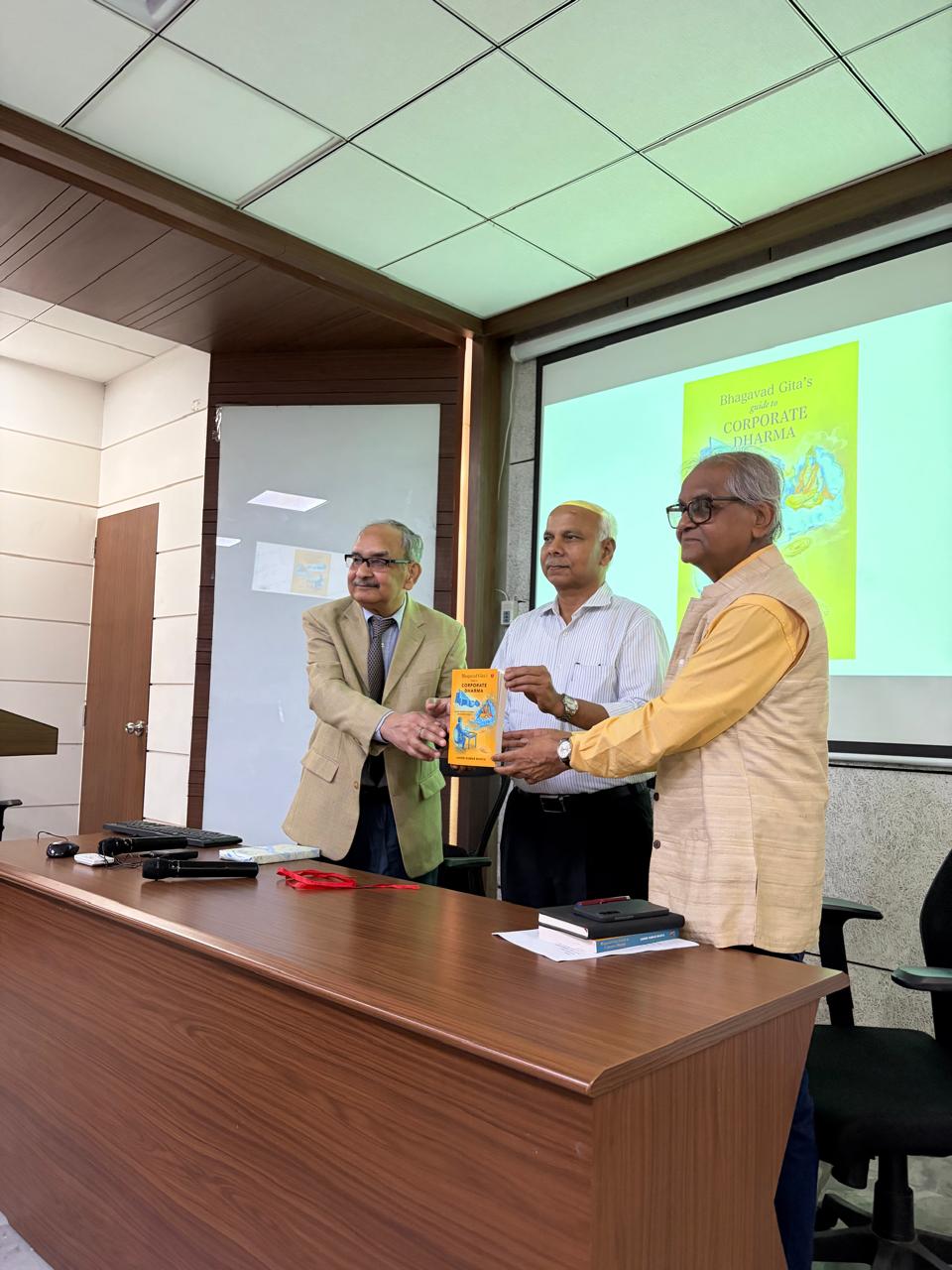
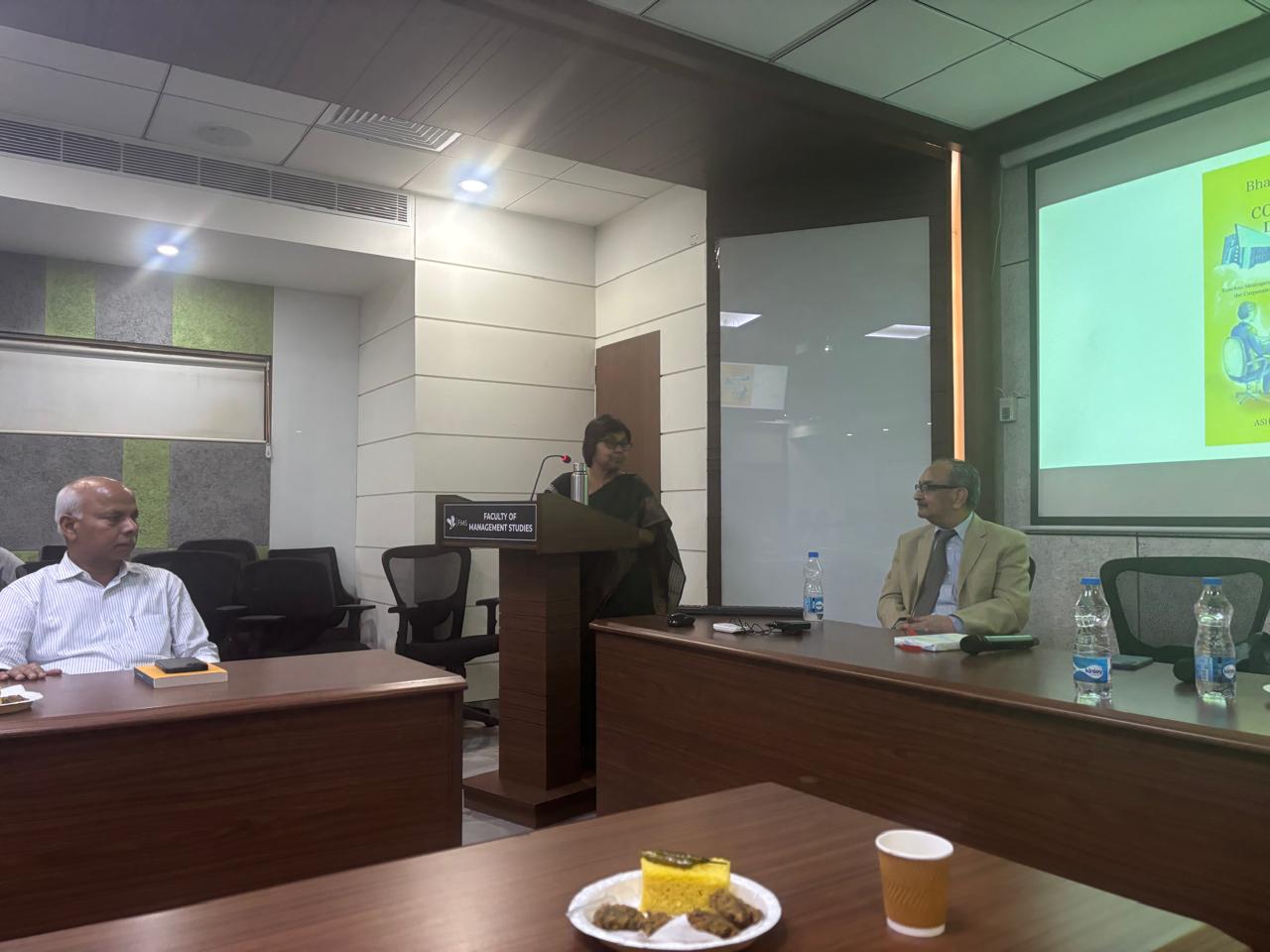
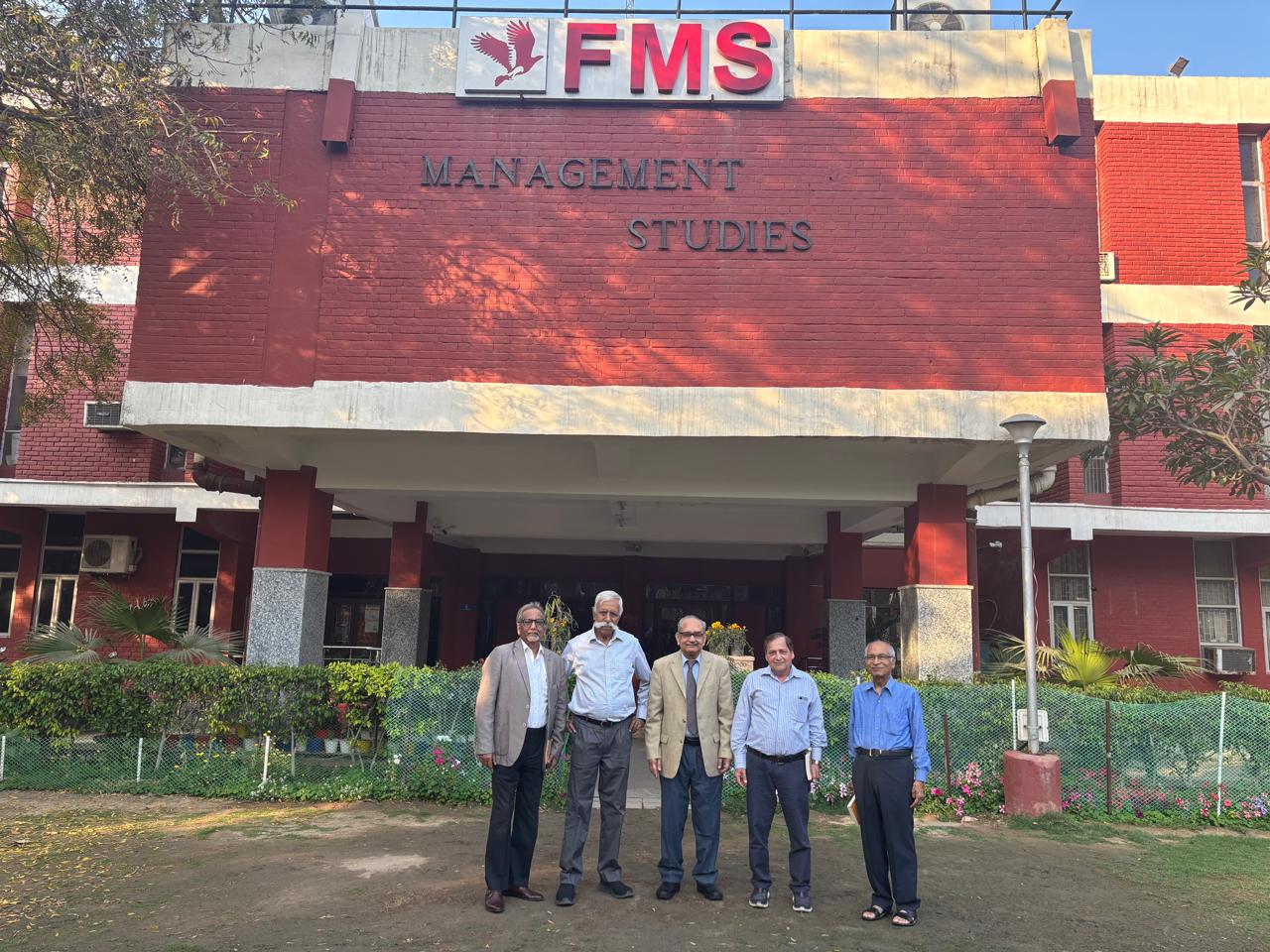
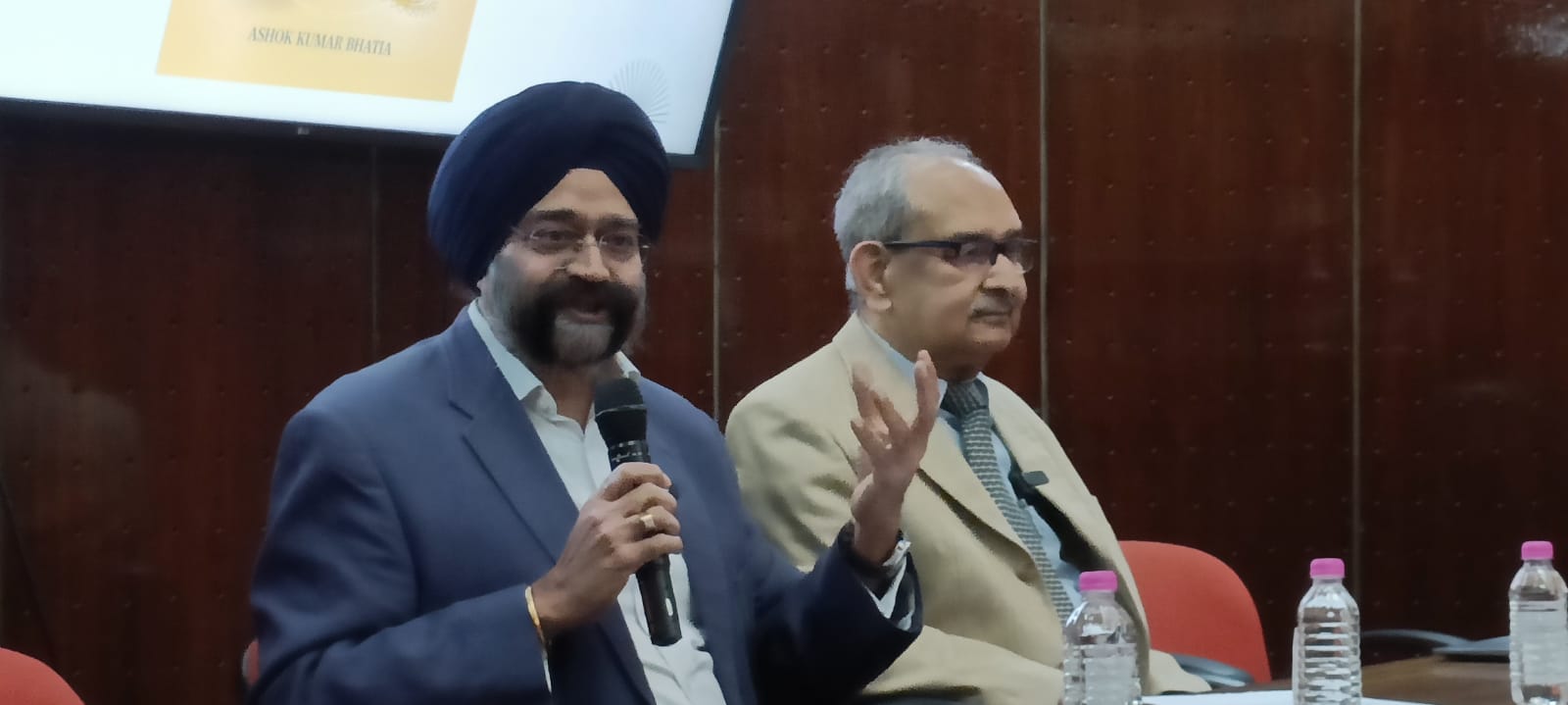
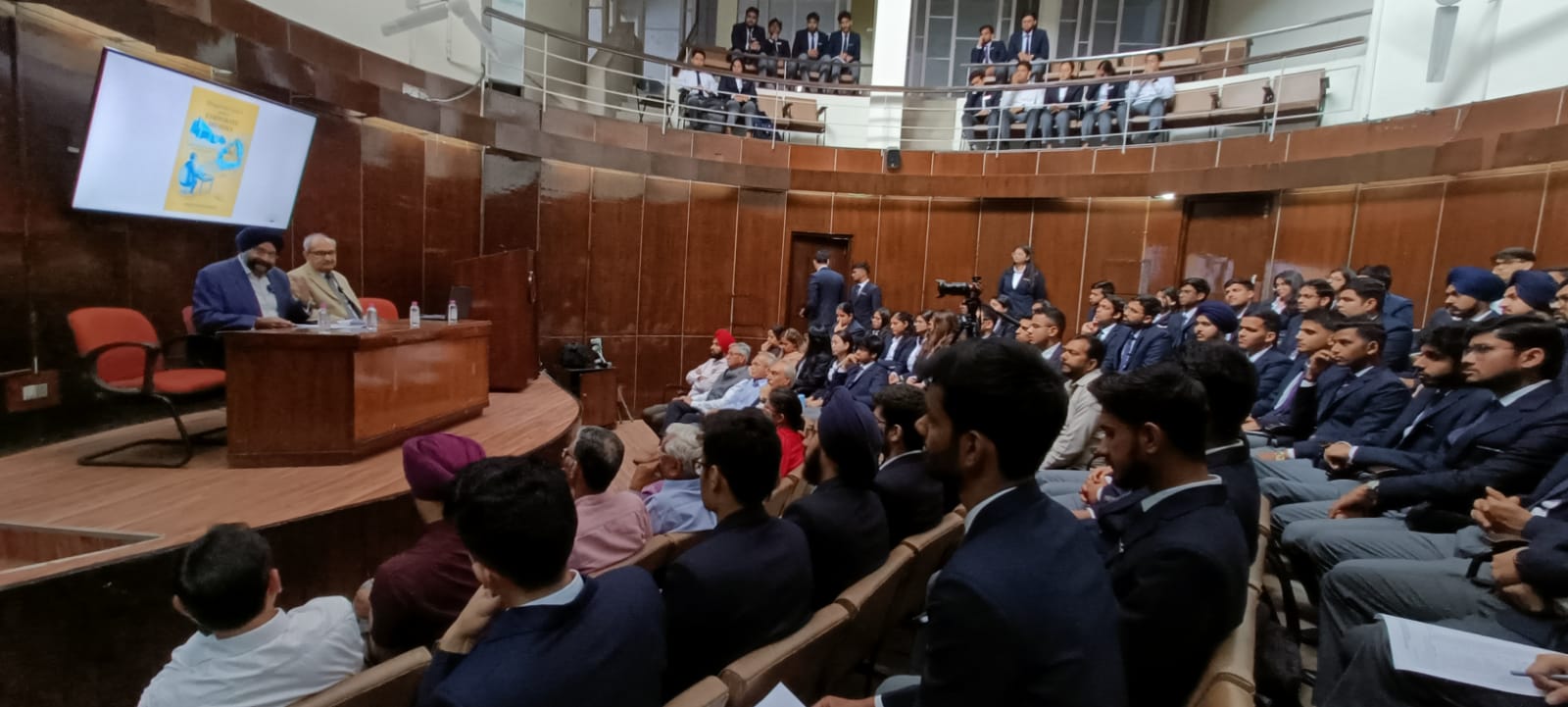
Thanks to the unqualified support of Prof. A. Venkat Raman, Head and Dean of the Faculty of Management Studies, Delhi University, the event went off well. The presentation was attended by a few seniors from the industry, faculty members, research scholars, and management students.
Prof. J. K. Mitra, Former Dean, FMS, and an expert in the Bhagavad Gita, was the Chief Guest on the occasion. Like a true mentor, he brought in a fresh perspective to the teachings of this unique scripture on quite a few occasions and supplemented my arguments by quoting real-life anecdotes.
After the presentation, a sombre discussion came about, followed by a lively interaction with those present. A senior faculty member proposed a vote of thanks.
Those who braved the traffic blues in NCR and spared the time to grace the occasion with their presence included such long-time friends and well-wishers as Arvind Dang, Ashok Kalra, Bakul Bhatia, Hukam Chand Verma, and Rajeev Varma.
Chandigarh
Just like it happened in Delhi, the exaltation one feels upon returning to one’s Alma Mater cannot be captured in words. A whiff of nostalgia comes one’s way. The familiar buildings whisk one back into a comfort zone. Gandhi Bhavan nearby stands as gracefully as ever. The Students’ Centre nearby beckons one.
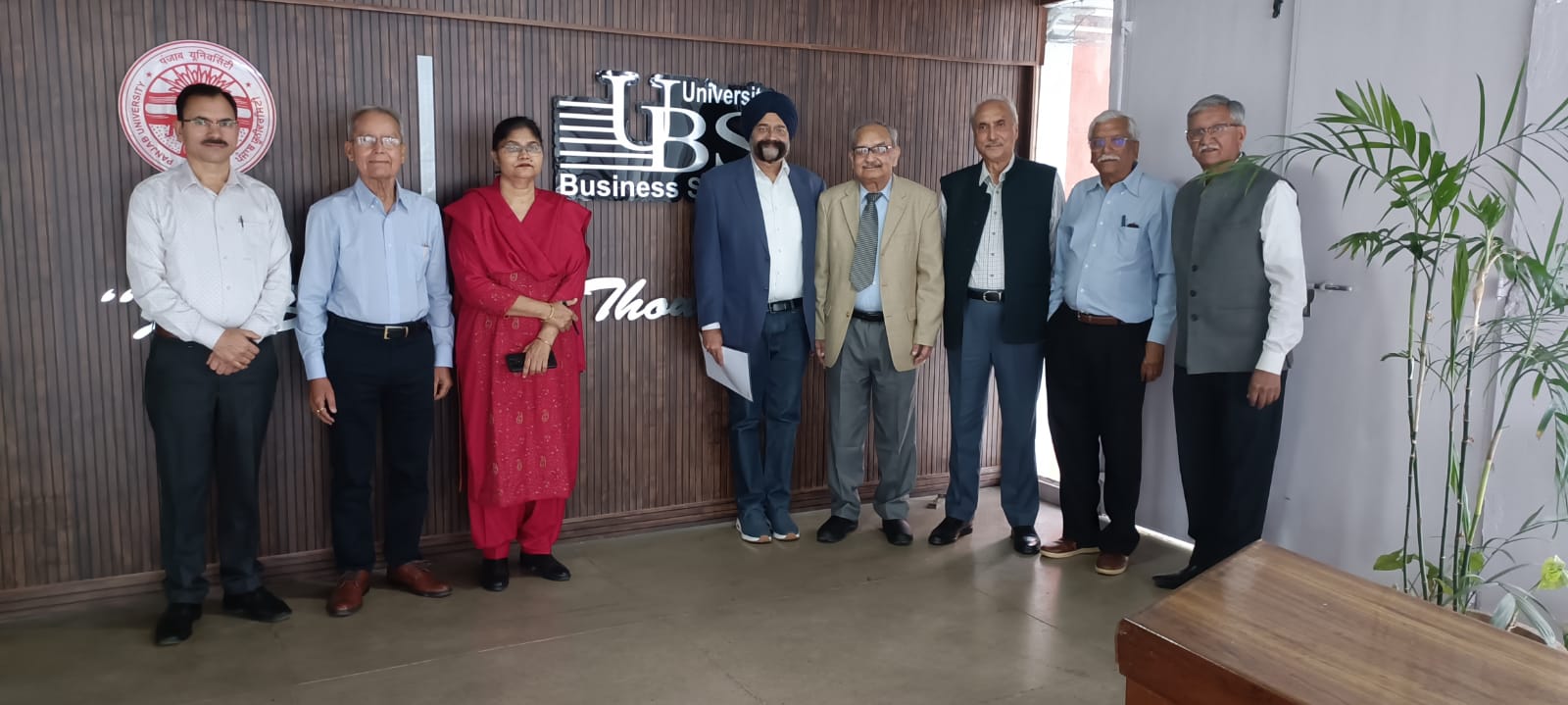
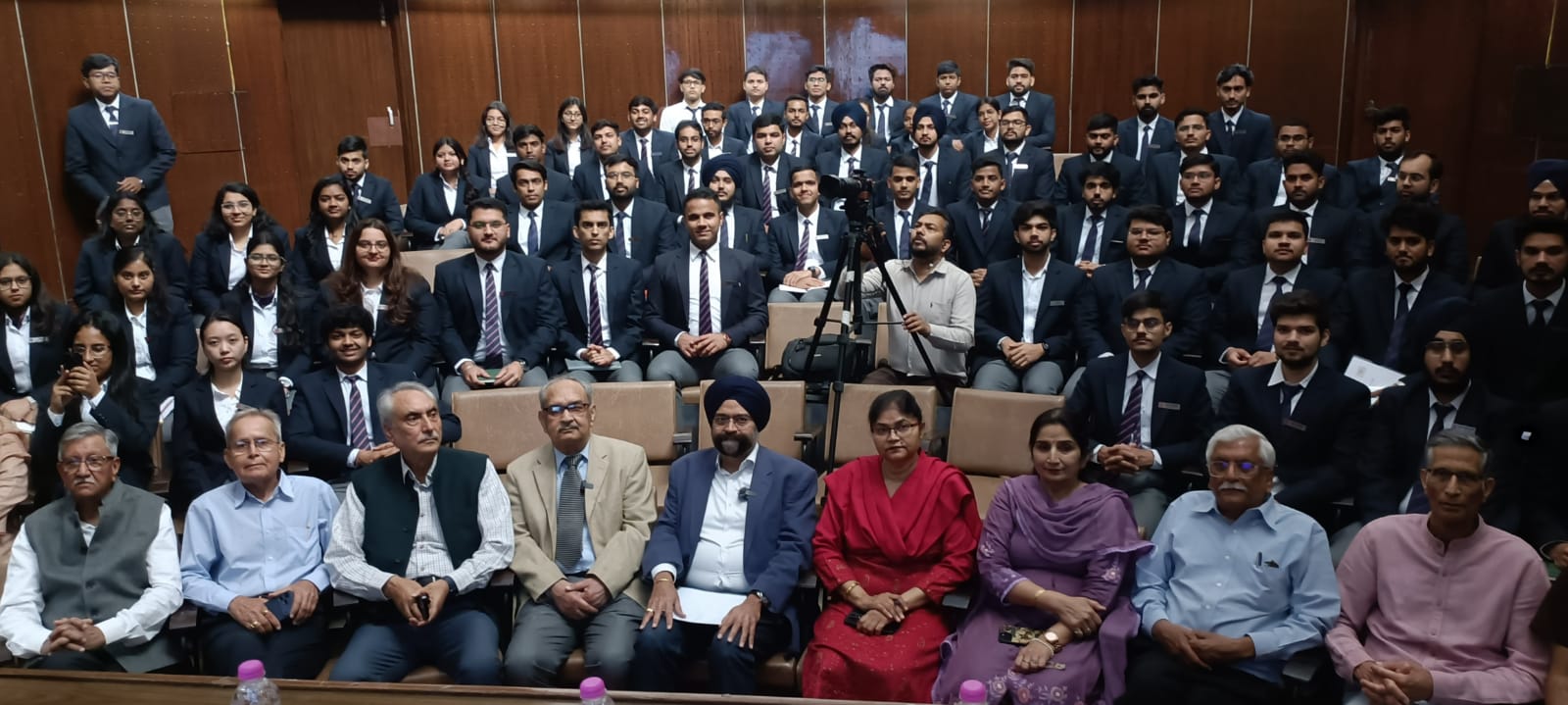
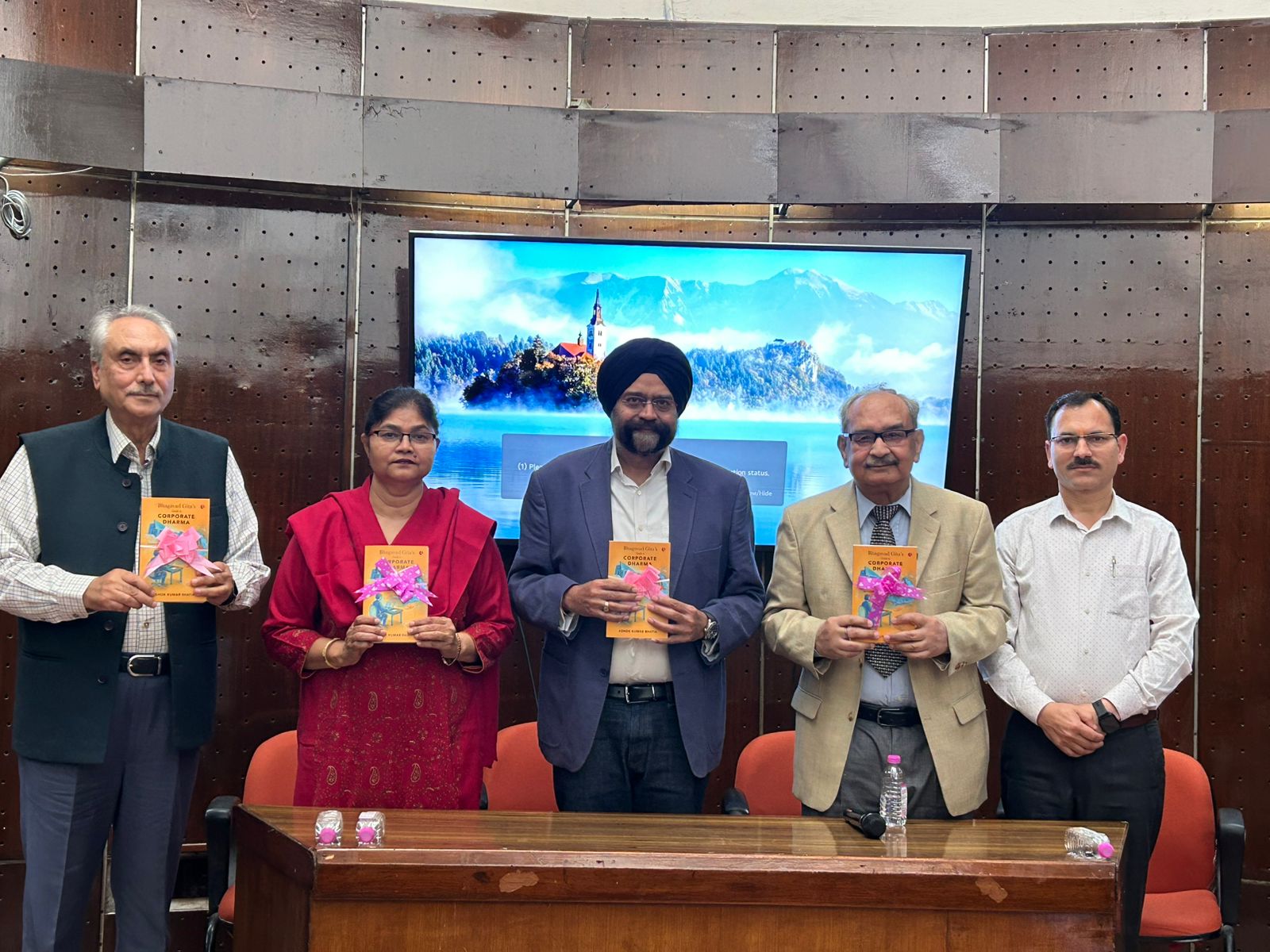
Thanks to the support of Prof. Parmjit Kaur, the present Chairperson of the University Business School at Panjab University, Chandigarh, and Mr. Kuldeep Kaul, Director, Metro Exporters Private Limited (and a batchmate of mine), the event rolled by smoothly. Industry seniors, faculty members, research scholars, and management students attended it.
Mr. D. P. Singh, the Head of Skills to Jobs with Amazon Web Services (India), had kindly consented to be the Chief Guest on the occasion. Having had a long stint with IBM and many other business houses as an HR professional, he brought in a cheery and light-hearted tone to the proceedings. Once the formal introductions were made, he asked me several searching questions, like the book’s origin, the intended target audience, my own favourite chapter/s from the book, and the like.
Followed by the presentation, a lively interaction took place. As Sir P. G. Wodehouse would have put it, the occasion turned out to be a feast of Reason and flow of Soul.
Mr. Kulbhushan Khullar, Mr. Kuldeep Kaul, Mr. Lalit Kapur, Mr. Praveen Malik, and Mr. Sunil Jain spared their valuable time and graced the occasion. So did Prof. Ashvini Agrawal, another friend, who made it a point to attend the event.
Hyderabad
Kanha Shanti Vanam is like an oasis in a desert. It is located around sixty kms from Hyderabad airport, off the Hyderabad-Bangalore highway. It is the global headquarters of Heartfulness Meditation Institute. (https://heartfulness.org).
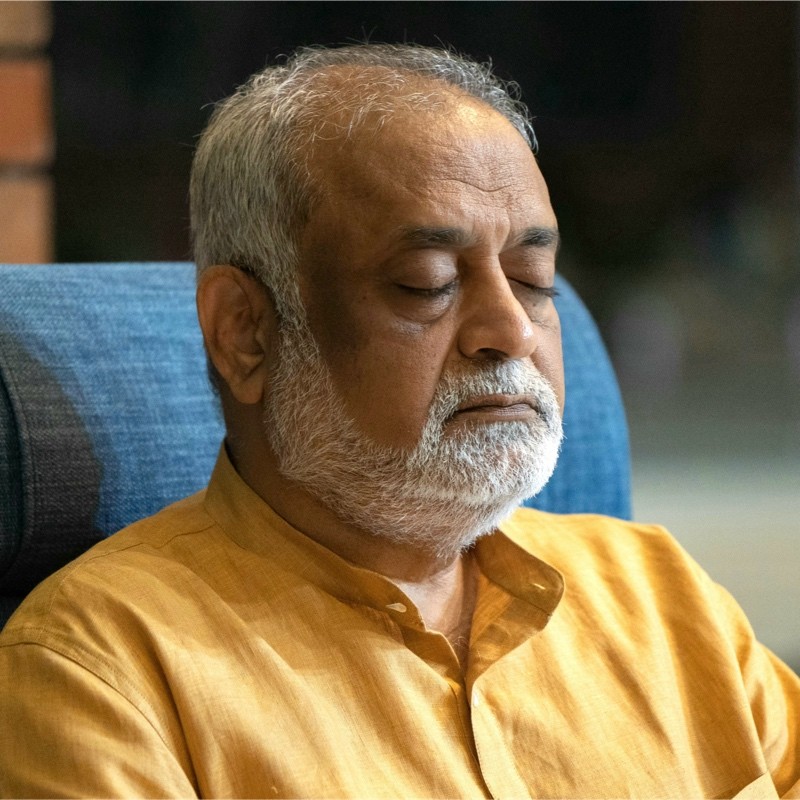
Part of the 1,400-acre complex is a lake, known as Kanha Sarovar. The head, Mr Kamlesh Patel (Daaji), was on a walk around the lake when I could see him briefly to present a copy of my latest book.
I reminded Daaji that he was kind enough to provide a Foreword to this book a few years back. Somehow, it got delayed in getting published. His remark: “Chalega. Good books take time to get published.”
One is reminded of these lines from Robert Frost:
The woods are lovely, dark and deep. But I have promises to keep, And miles to go before I sleep, And miles to go before I sleep.
The book’s journey continues, aided and abetted by many insightful and glowing remarks from those who have had the occasion to go through it.
This book also explores the challenges that management faces with the onset of the Industrial Revolution 4.0. It highlights the need to deploy both emotional and spiritual intelligence in order to navigate the choppy waters of advances in artificial intelligence, machine learning, blockchain and the like. The concept of the soul is explained based on the analogy of driver-less cars, which are already on the horizon.
A unique feature of the book is the humour and light-hearted way in which the author conveys deep and serious messages, without being preachy. Even still, he recommends a dose of one chapter a day, so that the reader does not suffer from intellectual dyspepsia!
There are many parallels between the teachings of the Bhagavad Gita and the Heartfulness Way of meditative practices that we recommend. The purpose of these practices, as well as the process of meditation, is described in detail in Chapter 6 of this unique scripture. In fact, the whole approach to individual growth and advancement is meditation-based. The Gita highlights the importance of absolute surrender to the Divine, just as Heartfulness practitioners are encouraged to do. The Gita speaks of doing selfless work, treating oneself as a mere instrument of the Divine. In the Heartfulness Way, we have the same concept, described as Constant Remembrance.







 ashokbhatia
A comment on the Corporate Dharma book: Mr Victor Kannan
Posted in Management Lessons, tagged Bhagavad Gita, Book, Comment, Corporate Dharma, Heartfulness, Inner Discipline, Performance, Purpose on September 17, 2026| Leave a Comment »
A rare book that successfully connects timeless spiritual wisdom with the realities of modern leadership and business. What makes it stand out is its practicality. The author does not treat the Bhagavad Gita as abstract philosophy, but as a living framework for handling pressure, conflict, ego, uncertainty, ambition, and decision-making in today’s corporate world.
As someone involved in business leadership and operational strategy, I found the parallels between corporate life and inner discipline especially relevant. The discussions around values, resilience, detachment, leadership ethics, and Industrial Revolution 4.0 are thoughtful and highly timely.
The writing remains accessible, insightful, and often refreshingly humorous without losing depth. A valuable read for CEOs, entrepreneurs, professionals, and anyone trying to balance performance with purpose.
Victor Kannan
Chief Executive Officer | Private Equity | Business Transformation | M&A
(Victor has been an avid practitioner of Heartfulness Meditation and a trainer for more than 40 years. As a career CFO he has been able to combine the benefits of meditation in the everyday management of his duties and responsibilities. He is a lifelong financial executive and a Director of Heartfulness Institute Inc, USA. He is a regular contributor to the Heartfulness Magazine.)
Related Posts:
Read Full Post »