
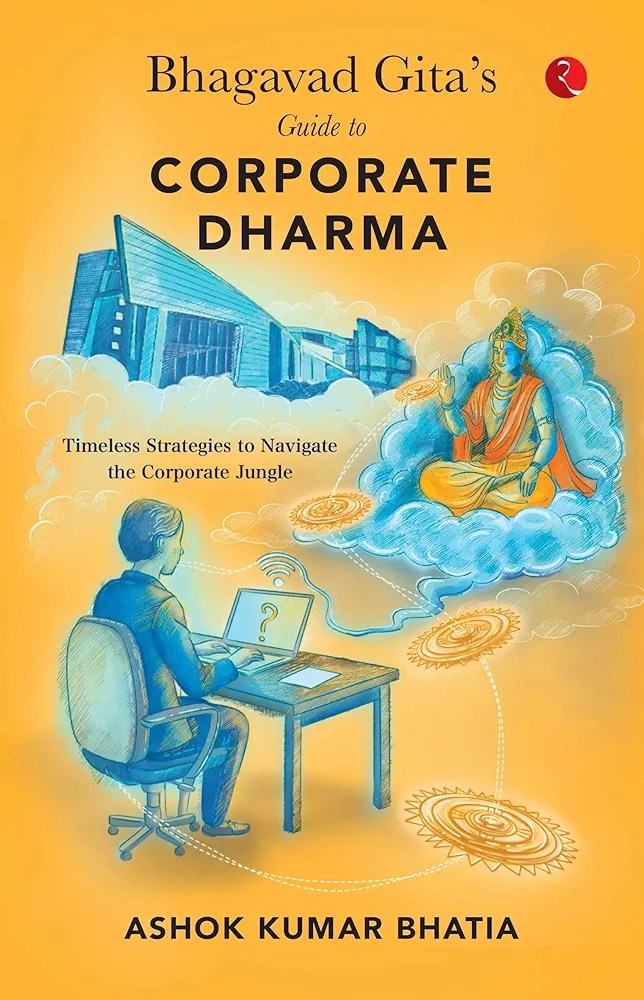
This book also explores the challenges that management faces with the onset of the Industrial Revolution 4.0. It highlights the need to deploy both emotional and spiritual intelligence in order to navigate the choppy waters of advances in artificial intelligence, machine learning, blockchain and the like. The concept of the soul is explained based on the analogy of driver-less cars, which are already on the horizon.
A unique feature of the book is the humour and light-hearted way in which the author conveys deep and serious messages, without being preachy. Even still, he recommends a dose of one chapter a day, so that the reader does not suffer from intellectual dyspepsia!
There are many parallels between the teachings of the Bhagavad Gita and the Heartfulness Way of meditative practices that we recommend. The purpose of these practices, as well as the process of meditation, is described in detail in Chapter 6 of this unique scripture. In fact, the whole approach to individual growth and advancement is meditation-based. The Gita highlights the importance of absolute surrender to the Divine, just as Heartfulness practitioners are encouraged to do. The Gita speaks of doing selfless work, treating oneself as a mere instrument of the Divine. In the Heartfulness Way, we have the same concept, described as Constant Remembrance.
Kamlesh Patel (Daaji),
Global Guide, Heartfulness Institute,
Kanha Shanti Vanam, Hyderabad,
India
(An excerpt from his Foreword to the book, ‘Bhagavad Gita’s Guide to Corporate Dharma’)
Related Posts
For orders from within India
For orders from outside India



Leave a Reply