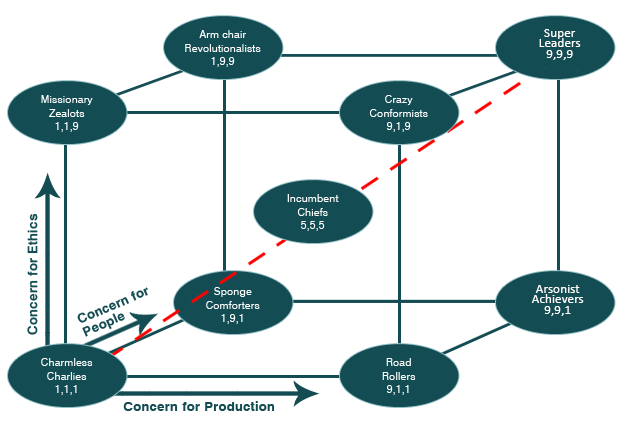
Hers is a balanced personality, free of unreasonable desires that could make her lose sight of her sense of righteousness. She does not have a binding attachment to her emotions. Nor does she have a jealous preference for her pet ideas or her pet people. She scoffs at nepotism. She encourages her team members to be nay-sayers, so voices of dissent can be heard and judiciously dealt with. She radiates positivity all around her. She is committed to the organisation’s goals and looks after her team members much like a lioness would protect her cubs.
Such a person of steady wisdom is described in the Bhagavad Gita as a Sthita-Prajna. Consider the following:
दु:खेष्वनुद्विग्नमना: सुखेषु विगतस्पृह: ।
वीतरागभयक्रोध: स्थितधीर्मुनिरुच्यते ॥ 2.56॥
He whose mind is unperturbed amid sorrows; who among pleasures is free from longing; from whom attachment, fear and anger have departed; he is said to be a sage of steady intellect.

A People-centric Approach
Alfred Sloan is reported to have once remarked, ‘What is good for General Motors is good for America.’ J.R.D. Tata always thought the other way around. ‘What is good for India is good for Tatas.
Tatas keep following a people-centric approach to their business decisions. I believe that companies like Asian Paints, Eicher, Godrej, Hindustan Unilever, Infosys, Johnson & Johnson, Mahindra, and many others, also follow the same path. They shield their staff from major business upheavals, like the coronavirus which surfaced during 2020.
Led by enlightened leaders, such organisations surely earn brownie points in respect of enjoying employee goodwill.
(An edited excerpt from my latest book, ‘Bhagavad Gita’s Guide to Corporate Dharma’)
Related Posts