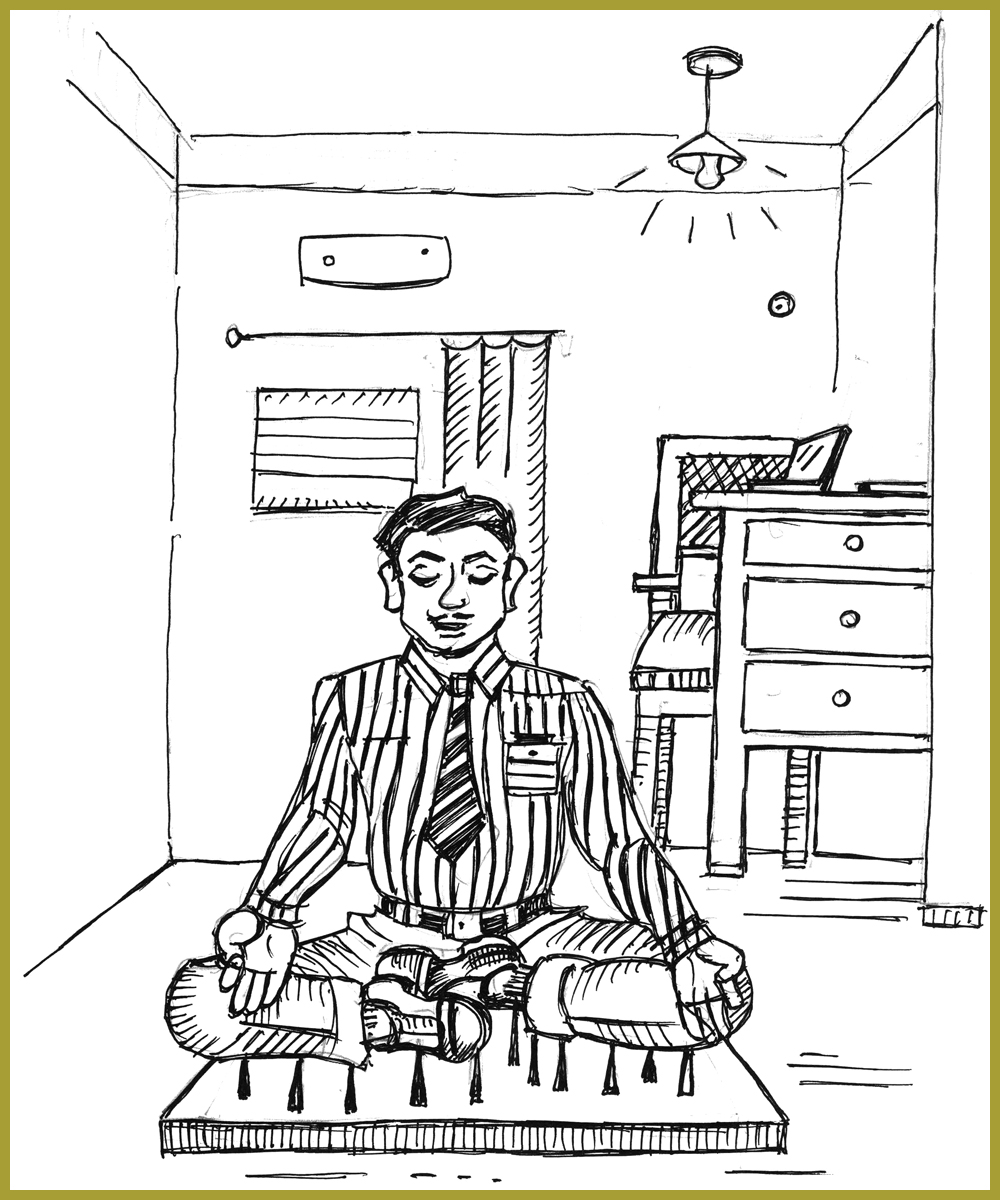
Regular meditation leads one to better self-control and inner peace. In Chapter 6, verses 14 to 18, the Bhagavad Gita prescribes the method to practise meditation.
Sample this:
यदा विनियतं चित्तमात्मन्येवावतिष्ठते ।
नि: स्पृह: सर्वकामेभ्यो युक्त इत्युच्यते तदा ॥ 6.18॥
With thorough discipline, they learn to withdraw the mind from selfish cravings and rivet it on the unsurpassable good of the Self. Such persons are said to be in Yog and are free from all yearning of the senses.

A true sign of self-control in the workplace is treating women fairly and with respect—something still too often ignored. Just as a cashier caught stealing faces consequences, powerful men abusing their positions harm vulnerable female colleagues, fuelling movements like #MeToo.
When management turns a blind eye or handles these issues secretly, it damages the company’s reputation. Real leadership demands transparency and courage to create a safe, equitable environment.
While politics often defends flawed leaders and confuses voters, business groups like the Tatas, owned by philanthropic trusts, set an example by managing wealth with detachment and social responsibility.
True happiness comes from letting go of ego and unchecked desires, controlling anger, nurturing inner peace, and helping those in need.
(This is an edited excerpt from my latest book, ‘Bhagavad Gita’s Guide to Corporate Dharma.’)
Related Posts





Leave a Reply