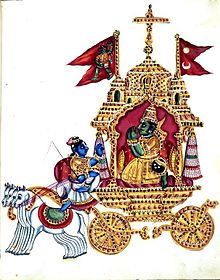
In the Bhagavad Gita, Lord Krishna exhorts us to rise above the three gunas and remain rooted in the self alone. He cites three kinds of personality traits, or gunas.
त्रैगुण्यविषया वेदा निस्त्रैगुण्यो भवार्जुन ।
निर्द्वन्द्वो नित्यसत्त्वस्थो निर्योगक्षेम आत्मवान् ॥ 2.45॥
The Vedas’ concern is with the three gunas. Be without the three gunas, O Arjuna, without the pairs of opposites, ever established in purity, without possessions, possessed of the Self.
All of us have these three gunas in varying proportions— sattvic (benign goodness), rajasic (action-oriented) and tamasic (inaction, lethargy, procrastination). In different settings, even the proportions comprising a personality might be somewhat different. A devil in the office could be a loving father at home. Someone who champions the cause of women’s empowerment in public could be terrorising his wife at home.
The bouquets and brickbats hurled at one by life invariably represent opposites that one faces in life—success and failure, joys and sorrows, heat and cold, health and disease, and the like. A manager would typically face many a tough choice to be made in her career—that of chugging along in an assignment which pays well but is not close to her heart, or calling it quits, finding her true calling and pursuing her passion in life; an important meeting at the office versus annual day celebrations at her only child’s school at the same time; whether or not to show the door to a long-serving cashier who has recently been found having his hand in the till; and the like.
What Lord Krishna is suggesting here is for one to be trans gunas. This way, one attains a balanced and harmonious state in all of one’s activities, whether materialistic or spiritual, thereby leading to true happiness within, irrespective of whether one fails or succeeds in one’s efforts.
(The text is an edited excerpt from my latest book ‘Bhagavad Gita’s Guide to Corporate Dharma’.)
Related Posts