Feeds:
Posts
Comments

Posts Tagged ‘Bengali’

“But behind your achievement, the achievement of another remains…”

Feluda (“The Elephant God”)

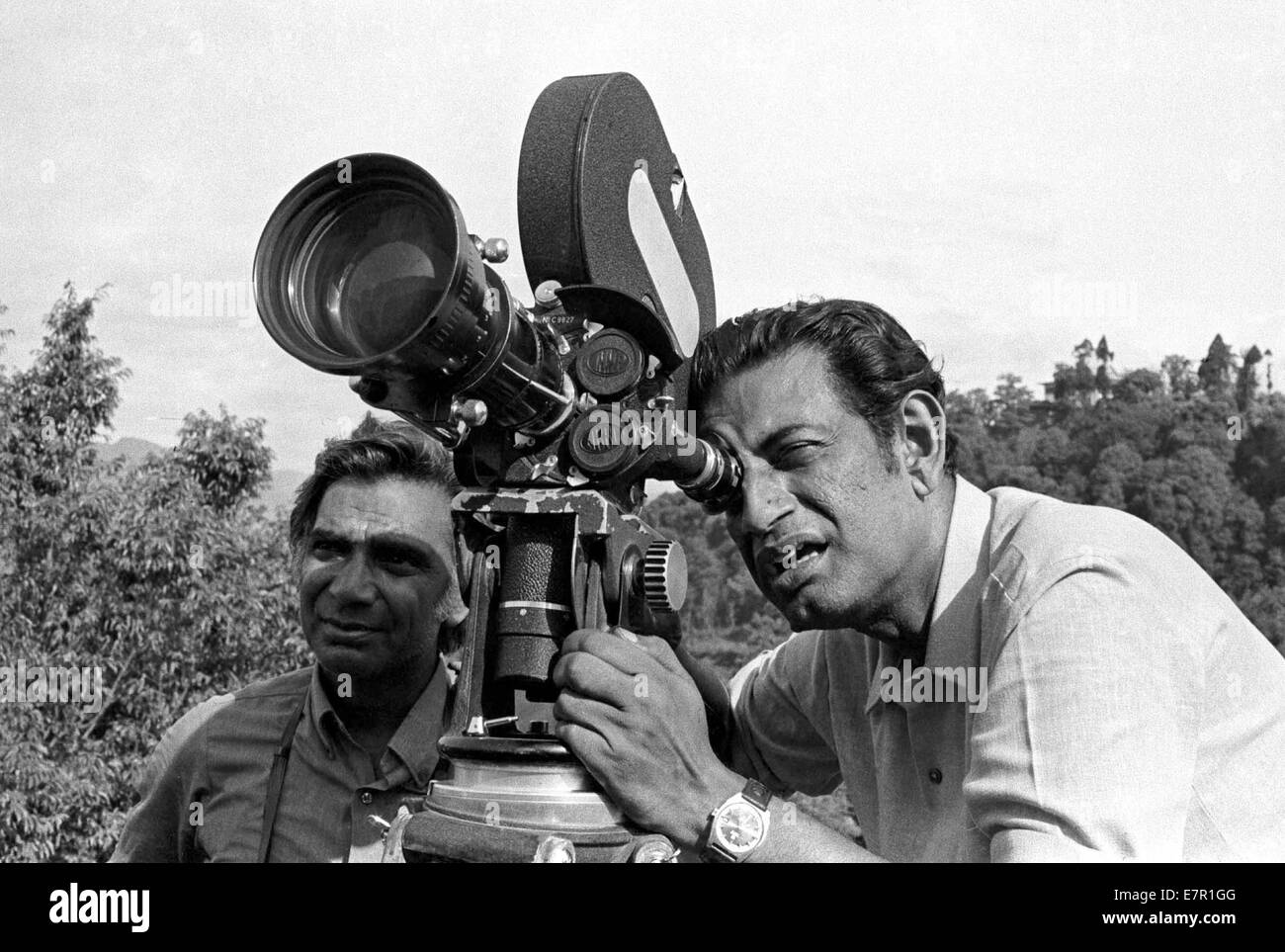
In my schoolboy days, I once declared in an essay that Satyajit Ray was my favourite writer. Decades of reading have done nothing to dislodge him from that position. I have wandered through considerable literary territory since then—from Tolstoy to Tagore, from Borges to Bankim—and yet I return, always, to the particular flavour of Ray’s Bengali prose. Some will say this merely confirms that I never truly outgrew the garden walls of children’s literature. Perhaps. But to reduce Ray to Feluda and Professor Shonku is rather like insisting that a master chef is only to be judged by his breakfast menu. His short stories are every bit as accomplished, every bit as precise. Even his novel Fatickchand—into which he poured what one suspects was a deliberate effort to deny the reader any cause for tears—leaves, in the final pages, a bruise upon the heart that no amount of re-reading quite soothes.

A true storyteller, it seems to me, tells his tales with equal fluency across every medium available to him. Ray’s cinematic grammar is as fascinating as his prose, and the charge that his sensibility is somehow “Western” has always struck me as less a criticism than an inadvertent compliment. It was, in fact, that very Western flair which drew me deeper into his work—and led me, eventually, to a discovery that illuminated yet another facet of his genius.

The Screenplay and the Secret Admirer

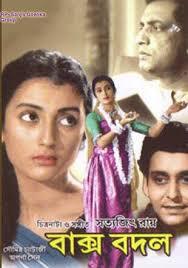
Today I wish to set aside Ray’s directorial masterpieces—the Apu Trilogy, Charulata, Jalsaghar—and speak instead of a film in which he served not as director but as screenwriter and music composer. That film is Baksa Badal (1970) -literally, “The Exchange of Suitcases”—directed by Nityananda Datta and based on a story by Bibhutibhushan Bandyopadhyay. I have read the original story. I have seen the film. And I confess that the film, carrying Ray’s fingerprints on every scene, gave me a pleasure the source material alone could not.

The plot, briefly: Pratul, a psychiatrist, boards a train and encounters a young woman named Amiya. Upon arriving at his solitary quarters in a tea garden, he opens his suitcase to discover it belongs to a lady—silks, saris, and the unmistakable evidence of feminine proprietorship where his own belongings ought to be. The culprit is the oldest of railway comedies: the swapped suitcase. Fortunately, Amiya’s uncle’s address is tucked inside, and Pratul dispatches the bag to him in Kalimpong—the uncle being a botanist of the most magnificently unworldly variety. Amiya, meanwhile, has discovered the swap and is in pursuit of her property. What had been a simple exchange of luggage becomes, of course, something considerably more complicated—and considerably more enjoyable.

Now: what was in Amiya’s suitcase that makes this comic engine run? Not jewels. Not state secrets. Women’s clothing, homemade sweets, and—most dangerously of all—a personal diary, whose candid entries begin to sketch for Pratul a portrait of the woman he has never met. It is precisely this detail—the magnificently Wodehousean notion that a suitcase becomes a character reference—that lifts the film from pleasant entertainment into something approaching art.

Enter Plum

From an interview with Ray himself and later confirmed in Bijoya Ray’s memoir Amader Kotha (A commentary on Ray’s family life with his wife), came the revelation that explained so much: Ray’s favourite author was P.G. Wodehouse. Several veils lifted at once. The “smartness”—that unique  quality of elegant mischief I had always sensed in Ray’s work without being able to name it—had a source. As Wodehouse himself once wrote: “I believe there are two ways of writing novels. One is mine, making a sort of musical comedy without music.” Ray, I would argue, understood this instinctively, and in Baksa Badal he composed precisely such a comedy—Bengali in its bones, Wodehousean in its spirit.

The Cast of Characters, Translated

The changes Ray made in adapting Bibhutibhushan’s story into a screenplay are where the Wodehousean influence declares itself most openly.

Pratul is the linchpin. In the original story, he is an unremarkable fellow on a train. In Ray’s version, he remains a traveller, but a traveller of considerable resource and ingenuity. He does not merely return the suitcase; he arrives at the lady’s house in disguise—deploying the sort of elaborate subterfuge that Wodehouse heroes (and villains, and valets) often resort to.  To my mind, Pratul is much likely  akin to Psmith: that magnificently unflappable young man who, in Psmith in the City, Leave it to Psmith, and elsewhere, glides through many a catastrophe with a raised eyebrow and a well-turned sentence. Psmith is intelligent, fundamentally decent, and possesses what one can only describe as an almost supernatural capacity for crisis management—all qualities that Pratul’s character shares with him. There is also, in Pratul’s moments of quiet wit, more than a little of Jeeves: the man who sees further than everyone else in the room and arranges outcomes with the serene competence of a chess grandmaster.

Shovan is an invention entirely Ray’s own—he does not exist in Bibhutibhushan’s original. And what an invention it turns out to be! Played with a perfection that still disarms audiences today by Satindra Bhattacharyya, Shovan is positioned as the conventional “thorn in the hero’s side.” But Ray, being Ray, refuses the conventional treatment. Shovan is not a villain. He is something far funnier and far more human: a well-meaning, chronically disorganised, constitutionally forgetful innocent who creates havoc not through malice but through a congenital inability to manage his own affairs. He is, in every sense, like  Gussie Fink-Nottle—Bertie Wooster’s hapless friend, the newt-fancier, a man whose romantic difficulties and spectacular social mishaps provide the engine for some of Wodehouse’s finest passages. The film’s perfectly Wodehousean irony—and one suspects Ray savoured it—is that Shovan goes, entirely unwittingly, to his own romantic rival for what we might today call life coaching. Gussie himself could not have managed it better.

This matters enormously from a craft perspective. Traditional comic construction demands a powerful antagonist to make the hero shine. Ray understood, as Wodehouse understood, that a more sophisticated comedy arises when the “obstacle” is not wicked but simply hapless—when the hero must defeat not malevolence but  a dash of pumpkin-headed-ness. It is a far more charitable worldview and a far more entertaining one with absolute warmth.

The Uncle—absorbed in his botanical specimens with a serenity impervious to surrounding drama—is Lord Emsworth to the life. Emsworth, the ninth Earl of that ilk, was Wodehouse’s great monument to benign incompetence: a man so thoroughly enchanted by his prize pig, the Empress of Blandings, and his garden, that the turbulent comedy erupting around him might as well be occurring on another continent. Ray’s uncle achieves precisely the same effect: while a romantic catastrophe unfolds under his roof, he nurses his plants with the focused tranquillity of a man who has simply declined to notice that the world exists.

Amiya completes the quartet in the manner of Wodehouse’s Joan Valentine or, in her drier moments, Sally Nicholas: the woman who is the only person in the room capable of matching the hero’s intelligence, who wields a quiet, lethal humour, and who loves the hapless third party (Shovan, in this case) with the exasperated affection of an elder sister rather than the romantic devotion of a heroine. This is where Ray—faithful to his Plum—refuses sentimentality. She scolds Shovan as a mother might; she respects Pratul as an equal. The emotional geometry crafted by Ray is Wodehousean in its precision.
The Moustache Gambit and Other Plummy Pleasures

One cannot leave Baksa Badal without observing the running comedy of the moustache—a joke that begins when Pratul draws a moustache on a photograph of Amiya’s brother. This incident  elevates the narrative to a level where an entire architecture of double identity (one persona with the moustache; one without) gets unleashed upon the viewer. it gets sustained with the careful internal logic that all great farce requires. Ray introduced this particular brand of “moustache punning” to Indian cinema a full decade before Hrishikesh Mukherjee’s beloved Gol Maal (1979) made the device famous in Hindi film. Priority, one feels, should be acknowledged.

In Wodehouse’s world, physical disguise and mistaken identity are the load-bearing columns of the comic architecture. Much Obliged, Jeeves, The Mating Season, The Code of the Woosters,  Big Money—in story after story, the elaborate management of who thinks whom is who drives the plot forward. Ray understood this mechanism well  and deployed it with characteristic economy: never a beat wasted, never a joke pushed past its natural life.

There is also, finally, the matter of Sudden Resolution—what one might call the Wodehousean Restoration of Order. In Plum’s world, however catastrophic the muddle, the final pages deliver every character to their appropriate goal , no bitterness permitted, no score unsettled. It is, as Wodehouse himself put it, a world “two inches above the surface of the earth”—a place where unhappy endings are simply not allowed. Baksa Badal achieves this same smooth, frictionless landing. The suitcases are returned. The right people find one another. And the uncle, one imagines, is finally left free to potter about amongst his plants.

A (Belated) Birthday Tribute

I do not pretend to be worthy  enough of being able to judge a colossus. Satyajit Ray remains, as he has always been, my favourite—followed closely, in a different register, by Wodehouse. What Baksa Badal represents, to my mind, is something rarer than influence and more graceful than homage: it is the act of a supreme artist absorbing his deepest pleasure and returning it, transformed, in his own idiom. The Bengali soul of the film is never in doubt—the tea gardens, the Kalimpong hills, the particular social textures of middle-class Bengal—and yet, threaded invisibly through it, is the sunlit comic universe of Pelham Grenville Wodehouse.

This, I believe, is the mark of  the greatest creators. They carry their loves inside their work like light inside a lantern—invisible from the outside until you hold the thing up to the flame and see, suddenly, the pattern within.

Wodehouse wrote that his ideal was to take “a handful of people and ring the changes on them.” Ray did precisely this in Baksa Badal—and rang them in Bengali, on a hillside, a stolen moustache, and made something wholly and unmistakably his own.

But behind your achievement, the achievement of another remains.

That is not diminishment. In Ray’s case, it is the highest compliment one can pay: that he was capacious enough to carry Wodehouse within him, and confident enough in his own genius to let the presence show—like a watermark, visible only when you know to look, and glorious when you do.

Belated happy birthday, “Manik-da” (as Ray is famously known as). The suitcases, it turns out, were never really swapped at all. Everything arrived exactly where it was meant to go.

“The object of the writer is to charm, to amuse, and to interest.” — P.G. Wodehouse

Baksa Badal (1970) did all three. And it did so because two giants, born on different continents and dishing out creative stuff in different time zones, turned out to share the same understanding of what comedy, at its finest, is actually for. (Ray was born on the 2nd of May, 1921 and left us on the 23rd of April, 1992. Plum was born on the 15th of October, 1881 and left us on the 14th of February, 1975.)

After all, humour is not merely a tool for propelling a narrative. It is the garnishing that creative geniuses deploy to make their offerings more palatable to their audience’s mental hunger, which is forever seeking an inner bliss which would transport them to a more equitable, fair, and just world.

Related Post

Read Full Post »

For more than six decades, Suchitra Sen, originally named Roma Dasgupta, stood as the undisputed queen of Bengali cinema, embodying the essence of Bengali femininity, beauty, and elegance. Even after her unexpected withdrawal from the public eye in 1978, her allure and mystique remained intact; in fact, her choice to retreat into seclusion only deepened the intrigue surrounding her.

It is believed that one of director Sukumar Dasgupta’s assistants was responsible for bestowing upon Roma Dasgupta the iconic screen name, Suchitra Sen. Sukumar Dasgupta was the director of her debut film, Saat Number Kayedi.

Her passing on January 17, 2014, signified the conclusion of a remarkable era in Bengali cinema.

The Suchitra Sen phenomenon was unprecedented in the history of Bengali cinema. Not only was she the leading female actor of her time, but she also emerged as one of the most significant stars to grace the Bengali film industry, with her widespread popularity rivaling only that of Uttam Kumar, with whom she shared the screen in 30 of her 60 films. She was the first and only actress to earn the title ‘Mahanayika,’ a distinction that was only similarly awarded to Uttam Kumar in Bengali cinema.

During the height of her fame in the 1950s and 1960s, it is estimated that she commanded a fee of around ₹ 1 lakh per film. Her immense star power made her a central figure in the film industry, often featured prominently on movie posters, and her name was typically highlighted even more than that of the male lead, with the exception of Uttam Kumar, where they shared equal prominence.

The partnership of Suchitra Sen and Uttam Kumar on screen marked a pivotal era in Bengali cinema. Their collaboration spanned 30 films, starting with Sharey Chuattar in 1953, and significantly altered the landscape of Bengali film history. For over two decades, from 1953 to 1975, Suchitra and Uttam reigned supreme in the industry, delivering memorable hits such as Agnipariksha, Shap Mochan, Sagarika, Harano Sur, Indrani, Saptapadi, and Bipasha.

They became icons that resonated with the youth, embodying their dreams and aspirations. Their undeniable on-screen chemistry was so powerful that they transcended their individual stardom, merging into a single entity: Suchitra-Uttam or Uttam-Suchitra. Uttam Kumar himself acknowledged this bond, stating, ‘Had Suchitra Sen not been by my side, I would never have been Uttam Kumar.’

Suchitra is hailed as the first style icon of Bengali cinema, with her unique mannerisms inspiring generations of young Bengali women. The characters she portrayed were often progressive, reflecting the aspirations of women ahead of their time. In many of her films, she took on the roles of ‘professional women,’ whether as an artist in Jiban Trishna, a doctor in Harano Sur, or a politician in Aandhi.

Madhuja Mukherjee, an associate professor of Film Studies at Jadavpur University, noted, ‘Her star persona was shaped by her roles. She exuded a remarkable star quality, both in her appearance and her performances. Compared to the societal norms of her time, she was almost placed on a pedestal, embodying the aspirations of women.’ Remarkably, according to Mukherjee, Suchitra maintained her status as a leading star throughout the 1960s, even as she entered her thirties.

Suchitra’s stunning beauty and immense fame frequently eclipsed her acting talent. Nevertheless, she made history as the first Indian actress to win the best actress award at an international film festival, receiving the honor for her role in Saat Paake Bandha (1963) at the Moscow International Film Festival. Her star power was well-recognized in the Hindi film industry, where she appeared in several major films, including Devdas, Bambai Ka Babu, Mamta, and Aandhi.

Born on April 6, 1931, in Pabna, now part of Bangladesh, Roma was one of eight siblings. Her father, Karunamoy Dasgupta, served as a school headmaster, and she was raised in a culturally rich environment. The Partition led her family to West Bengal, and Roma, already a captivating beauty, soon married Dibanath Sen, the son of a prosperous industrialist. Before venturing into acting, Roma aspired to pursue a music career and reportedly recorded several songs in her own voice.

Despite the admiration she garnered and the unwavering attention from her devoted fans, Suchitra Sen remained a mystery. Known as ‘Mrs Sen’ in the film industry, she was often viewed as distant and hard to approach. By the time she entered the film world, she was already a married woman and a young mother, and her striking looks, reserved demeanor, and privileged background often intimidated those around her. However, she was also recognized for her warmth and friendliness.

Veteran actress Moushumi Chatterjee remarked, ‘Suchitra Sen embodied elegance. She had a remarkable ability to distinguish her personal life from her public persona.’

Industry insiders believe that Suchitra’s keen awareness of her own celebrity status contributed to the myth surrounding her. This understanding may explain her enduring reign as the queen of Bengali cinema and the continued fascination with her, even 36 years after she chose to live in complete seclusion. Her abrupt withdrawal from the public eye only heightened interest in her, sparking numerous discussions, debates, and theories about the reasons behind her choice to retreat.

Rarely spotted in public, she became the most renowned recluse in West Bengal, drawing comparisons to Hollywood’s Greta Garbo. Her commitment to privacy and the lengths she reportedly went to maintain it often seemed almost obsessive.

In 2005, she allegedly declined the Dada Saheb Phalke Award because accepting it in person would compromise her privacy. Even in death, she preserved her enigmatic aura: her final journey was conducted in a black-tinted hearse, obscuring her body from public view.

Suchitra Sen had never collaborated with any of the three giants of Bengali parallel cinema: Satyajit Ray, Ritwik Ghatak, or Mrinal Sen. According to reports, she turned down an opportunity to work with Satyajit Ray because he requested that she refrain from taking on other projects while filming. Suchitra expressed her willingness to honor her commitment to him but was unwilling to promise exclusivity. As a result, the collaboration fell through, and Satyajit Ray ultimately abandoned the project.

While discussing her views on Hindi actors, she touched upon her decision to decline a collaboration with Raj Kapoor. Suchitra explained that the reason for her refusal stemmed from an encounter where the legendary actor and director positioned himself near her feet and presented her with a bouquet of roses. She expressed her preference for men who engage in sharp, intelligent dialogue, which made her uncomfortable with Raj Kapoor’s gesture.

Suchitra Sen and Dharmendra starred together in the film Mamta, directed by Asit Sen. According to a report, Suchitra recounted an incident where Dharmendra unexpectedly kissed her on the back during a scene. She revealed that this moment was not scripted, but the director, Asit Sen, found it compelling enough to include in the final cut of the film. Describing it as an ’embarrassing moment,’ Suchitra made it clear that she was not fond of Dharmendra’s spontaneous kiss.

The world had undergone significant changes in those 36 years of her seclusion, yet the image of Suchitra Sen remains timeless. This enduring presence continues to resonate with the Bengali community, as demonstrated by the large crowds of all ages that filled the streets of Kolkata during her final farewell.

While many regarded Suchitra Sen’s passing as a profound loss for the film industry, the esteemed director Buddhadeb Dasgupta offered a poignant perspective: ‘She will forever be celebrated as the greatest heroine of Bengali cinema. No one can rival her mass appeal. However, the industry truly lost her when she chose to live in seclusion over 30 years ago.’

Suchitra Sen has been honored with four BFJA Awards, the Best Actress Award at the 3rd Moscow International Film Festival, a Filmfare Bangla Award, the Filmfare East Lifetime Achievement Award, the Banga Bibhushan, and the Padma Shri.

Today marks Suchitra Sen’s 94th birthday, a perfect occasion to celebrate her remarkable film legacy. You can catch some of her iconic performances on Prime Video, where titles like Agnipariksha, Sagarika, Indrani, Bipasha, and Devdas are available. On YouTube, check out Shap Mochan, Harano Sur, Saptapadi, Jiban Trishna, Aandhi, Bambai Ka Babu, Mamta, and Uttar Phalguni. On Hoichoi, don’t miss Saat Paake Bandha, Deep Jwele Jai, and Sharey Chuattar.

Notes

  1. A version of this article first appeared in The Reviewer Collective group on Facebook. The author’s consent to reproduce it here is gratefully acknowledged.
  2. I believe that after she retired from acting, she lived in Pondicherry for a few years as a reclusive inmate of the Sri Aurobindo Ashram.
  3. All the visuals are courtesy the World Wide Web.

Read Full Post »

Languages are an important means of communication. The better you are at communication, the higher are your chances of Languages Winnipeg_Forks_-_Plains_Cree_Inscriptionsuccess in life. Success need not always be on the materialistic plane. It could even be just a sense of inner contentment you experience when you are able to connect with people of a different region or country. The sheer joy of being able to express yourselves clearly, as also that of being understood by the party of the other part, makes you feel at home in the most alien surroundings.

My father, who was born and brought up in British India, knew three languages – Hindi, English and Urdu. Whenever I came across a word of chaste Urdu in a poem or a song, he would explain it with much relish. On quiet evenings, he would pull out his worn out diary and read Urdu couplets to us. I always found Urdu very fascinating and lyrical, though I could never get to learn it. The ghazals, the nazams and the shaayari this language has spawned just leaves me mesmerized.

Life has been kinder to both my children who have ended up learning not only English and Hindi but also Sanskrit, Tamil, German and Norwegian. Not to be left behind, the newly arrived toddlers in the family are already honing their communication skills in diverse languages. The ease with which they switch between various languages and use different words from different languages in the same sentence leaves the entire family exasperated at times. You could very well call this Esperanto!

What about yours faithfully, you may well ask. People who are familiar with my subdued levels of IQ are of the opinion that I shall never get nominated for a Nobel Prize in any field of human study, especially so in the realm of linguistics. I am pretty dumb when it comes to learning languages. Other than Hindi and English, I have merrily tossed away opportunities to learn many other languages.

In childhood, I ended up learning Telugu which I found to be quite similar to Sanskrit. However, having never had to use it Languages Ancient_Tamil_Scriptagain, my knowledge of Telugu as of today is close to nil. Sanskrit was a part of the curriculum at school and what a treat it was to learn this mother of several other languages. The present knowledge of course happens to be rusty. It is a pity because knowledge of Sanskrit opens up newer vistas of wisdom enshrined in the Indian scriptures.

I spent quite a few years in Chandigarh. Somehow, the rustic nature of the Punjabi language never agreed with my innate soft nature. For close to eighteen years now, I have been living in the southern part of India. However, the only phrase I have learnt to speak so far is ‘Tamil teriyaadi’; in other words, a declaration that I do not know Tamil. I use it regularly, much to the amusement of the street vendors who are decent enough to give me an indulgent smile with a shrug.

Yes, I have a ready excuse for having practiced this policy of linguistic isolation. In senior management circles that I move in, my interactions are limited to those who speak English. However, I do realize that this laziness of mine in learning the local language is entirely my own loss. Admittedly, Tamil is a very rich language. May be some day I shall pick up the courage to fulfill my pious intentions of learning it!

I have never had the chance to learn Bengali, but I really find it very soothing to the ears. One of the best gifts I ever received from a friend of mine is a set of audio CDs containing Gurudev Rabindranath Tagore’s songs in Rabindra Sangeet, sung by a proficient Bengali singer in Hindi. The experience of listening to it on a quiet evening is absolutely uplifting and invigorating!

For a family where the parents hail from different regions of India, it is natural to have a conversation at home either in the ‘mother tongue’ or in the ‘father tongue’! Enter a visitor who knows neither and the family effortlessly switches over to English. Family members also enjoy the freedom of exchanging socially unpalatable remarks about the visitor who has no clue as to what is up!

Our family languages help us to maintain strong filial bonds. These also help us to preserve and build upon our cultural IMGP8066roots. However, knowledge of other languages helps us in building bridges with people from other regions and countries. By learning and using a language, we also help to preserve and perpetuate it for posterity.

Mine is a wrong example to follow. Even at the risk of being labeled a hypocrite, allow me to say that if you ever get an opportunity in life to learn a different language, just grab it! You learn your mother tongue naturally. If your parents are from diverse cultures and regions, you naturally end up learning your ‘father’ tongue as well! If you are lucky to live in a country other than where you were born, you naturally get exposed to colleagues and friends and also pick up the native language.

So, if life throws another chance your way, just pick it up and learn a different language altogether. You would surely end up having more fun. You would also end up being better connected to another part of humanity. Yours would be a more contented soul!

Read Full Post »