Feeds:
Posts
Comments

Archive for May, 2023

(Inspired by parts of Right Ho, Jeeves, The Code of the Woosters, and Clustering Around Young Bingo)

I had barely crossed the threshold of the dining room when I perceived Aunt Dahlia at the table, morosely tucking into salmon mayonnaise.

Being a keen observer, I could make out that she was in a sorrowful mood. A pall of despondency hung over her. It was as if she had been handed out a harsh sentence of thirty days without the option by a stern-looking beak.

She gave me a sharp look of the kind a person gulping down her last bit of coffee would give to a dead beetle at the bottom of her cup. She sighed and waved a depressed fork at me.

‘Hullo, Bertie, howsoever sad the circumstances, I thought I would never find you far away from the food. Try some of this salmon.’

‘Anatole’s?’ I queried.

‘No. I do not know why he has suddenly gone AWOL. Missing in action since the past two weeks, leaving all of us twiddling our thumbs. Poor Thomas, his digestion has already gone for a toss. I was so desperate to touch him for some vitamin M for Milady’s Boudoir. But I have had to put that proposal on hold.’

Well, Uncle Thomas, when his gastric juices have been giving him the elbow, is not his genial and benevolent self. To touch him for some funds then would be akin to waking a lion from its slumber.

‘Somehow, the new kitchen maid has struck an inspired streak. It suddenly seems to have come home to her that she isn’t catering for a covey of buzzards in the Sahara Desert, and she has put out something quite fit for human consumption.’

‘You never know with these temperamental French cooks,’ I chipped in on a sympathetic note, while mouthing a forkful of the salmon on offer.

‘Of late, he did seem a bit moody. Luckily, he left at a time when the new kitchen maid was just about to arrive. We are somehow…’

She broke off. The door had opened, and we were plus a butler.

‘Hullo, Seppings,’ said Aunt Dahlia. ‘Was there something you wanted to see me about?’

‘Yes, madam. It is with reference to Monsieur Anatole. He is on a video call on your laptop. He is desirous of having a word with you.’

‘Yoicks! Tally Ho!!’, she exclaimed excitedly. 

I had never suspected her of being capable of the magnificent burst of speed which she now displayed. She rose like a rocketing pheasant and was out of her seat and the room making for the instrument which was bracing itself for an acrimonious exchange of views between a hunting field expert and the typical Queen’s language laced with liberal doses of French which the God’s gift to our gastric juices deployed. And feeling that my place was by her side, I put down my plate and hastened after her, Seppings following at a loping gallop.

‘Hello, hello…’

Anatole’s round face popped up on the screen and one could discern a noisy air-conditioner growling in the background.  

‘Where are you calling from?’, Aunt Dahlia bellowed.

‘From India, Ma’am’.

‘What? India? What made you go to that God forsaken country?’

Sacre bleue! This is one pretty place – I am in Pondicherry, of which Madame is aware, I doubt myself.’

‘Pondicherry? Where the hell is that?’

‘Name of a dog, Madame! You don’t say! You are not serious! You haven’t heard of Pondicherry? It was a French colony years before.’

‘What are you doing there?’

‘I am ze most famous chef, Madame – know this! Even ze Indians know me. Several hotels here gave me jobs on ze platter.’

There was one of those long silences. Pregnant, I believe, is what they’re generally called. Aunt looked at butler. Butler looked at aunt. I looked at both of them. An eerie stillness seemed to envelop the room like a bubble pack for a silver cow creamer in transit.

‘But how can you leave us suddenly? It would have been nice if you could have at least told us about your plans,’ she said with as much politeness as she could muster. I couldn’t have believed that her robust voice could sink to such an absolute coo. More like a turtle dove calling to its mate than anything else.

Je suis vraiment désolé, Madame .’

‘It’s quite all right. What are you doing there?’

‘Listen. Make some attention a little. I bring my recipes. I add many new French dishes for a premier hotel here.’

‘New dishes? Introducing French cuisine for some hotel?’

Anatole perked up a bit. His soup-strainer kind of a moustache was quivering a bit. Like an artist’s who is showing his first ever painting to a connoisseur of art.

‘They already have places where you can find pastries and breads like the French baguette, croissants, pains au chocolat, pains aux amandes, macarons, crèmes caramel, etc. You pay little attention? I tell what I introduce here.’

‘Sure, I will, Monsieur Anatole, I will,’ cooed the aged relative. 

He then went on to rattle off several of his culinary achievements.

‘I introduce ze Boeuf bourguignon, Steak-frites, Poulet rôti, Ratatouille, Soupe à l’oignon, Bouillabaisse, Croque-Monsieur, Croque-Madame, Crêpe, Quiche Lorraine, to say a few. And, of course, many of which they never hear before, like Veloute auxfleurs de courgette, Consomme aux Pommes d’Amour, Sylphides a la Cremes d’ecrivesses, Mignonette de poulet Petit Duc, Pointes d’asperges a la Mistinguette, Supreme de foie gras au champagne, Neige aux Perles des Alpes, Timbale de ris de veau Toulousaine, Salade d’endive et de celery, Le Plum Pudding, L’Etoile au Berger, Bombe Nero, Friandises, and Diablotins.

Of course, all this made me drool like never before. I imagined the lavish spread Aunt Dahlia and I had discussed while we were at Totleigh Towers quite some time back. I had then graciously offered to undergo thirty days in the second division in lieu of Anatole’s services being transferred to Pop Bassett. Luckily, I had been dismissed without a stain on my character.

I went weak in my knees, imagining putting down the hatch some of the delicacies mentioned by him.

The irony of the situation also hit me hard. God’s gift to our gastric juices whisked off by a Third World country from right under our noses. The wizard of the cooking stove cocking a snook at us? My sister in Calcutta once did mention to me that this century belonged to countries like India and China, but I never took her seriously. If all our valets, butlers, chefs, and parlourmaids decided to migrate to one of the emerging economies, what would the harvest be? The British upper classes will be left behind twiddling their thumbs trying to figure out how to lead their lives. God save the Empire was the thought which I was ruminating upon, while Aunt Dahlia came direct to the nub of the matter.

‘That sounds great. When do you think we could sample these dishes here at Brinkley Manor?’

‘All in time desired. For the instant, I am content here. It is the beautiful life here. They give me big house with glass pyramid on top. I have a car with an Indian chauffeur. The beach is at distance of march from my house. It is just like Côte d’Azur. It is a place to make dream.’

‘You must be exaggerating – surely the place can’t be as beautiful as Brighton?’

‘Au contraire, Madame! There is a beautiful promenade with a tall statue of an old man walking with a stick in hand – Gandhi is his name, I think. Listen and take note – full moon evenings are magnifique here. You should make one visit here. In the evenings, lovely demoiselles in silk dress with gold jewels and fleurs de jasmin in their lustrous hair come for walk. Good heavens, do I give them company? You bet your last dime no. Hélas, I am too busy with my work. Me, I am French – work is sacré for me.’

‘Oh, so you are quite comfortable there, are you?’

‘Eh bien oui, Madame. I have a lady colleague – she teach me many South Indian dishes with strange names: dosa, idli, sambhar, rasam, vadai…Cest incroyable – they have amazing variety of plates in India. Like what, to each county her cuisine.’

‘The perfect life, eh, Anatole?’

‘I take some rough with some smooth, Madame. Behold and lo, in each man’s life, some rain must fall. The weather is hot and humid here. Often, intolerable. However, late afternoon onwards, sea breeze starts blowing in, bringing some comfort. Also, the place has very many people. A noisy city.’    

When it comes to milk of human kindness, there are indeed times when Aunt Dahlia’s kindly overtures do leave me, as Roget would put it, amazed, astonished, astounded, blown-away, dumbfounded, flabbergasted, jolted, and rendered speechless.

‘Is there anything you need from here?’

‘Kind of you to ask, Madame. Le soleil ici est très dur. Could you manage to send across one of my favourite chapeaux? Seppings can find one in my room. I shall let him know the address and the care taker’s phone number which he may need.’

‘Monsieur Anatole, thy will shall be done.’

While leaving, Aunt Dahlia cast a venomous look at the laptop, much like an Indian resident would eye a cobra, had she found it nestling in her bathtub. Seppings took over the dialogue, as we retired to the dining room. The pall of gloom had deepened considerably. My aged relative was fanning herself with a reproachful fork. She appeared to have aged a lot.

‘What do we do now?’, she looked at me enquiringly.

Before I could respond, there was a sound in the background like a distant sheep coughing gently on a mountainside. Jeeves had materialized, much like an Indian fakir.

‘Jeeves, do you know of the calamity that has befallen us?’, I asked.

‘Perhaps you allude to the prolonged absence of Monsieur Anatole from our midst, sir?’, he responded, unflappable as ever.

Tetigisti nub materiae, Jeeves. What do you suggest?’

Aunt Dahlia gave him a reverential look, pleading with her mute eyes.

‘Allow me some time to give the matter some thought, sir.’

‘Sure, Jeeves. Have as much fish as you need. A crisis has arisen in the affairs of Brinkley Manor. We need to come to the aid of the party.’

‘Indeed, sir,’ he bowed respectfully and withdrew.

Life at Aunt Dahlia’s lair would have become a tad boring had it not been for the sudden arrival of my cousin Angela from one of her trips to Cannes. We spent a good deal of time together in the open spaces, she lampooning Tuppy Glossop’s conduct at Cannes in no uncertain terms, while all I had to do was to make sympathetic noises in the interim.

Funny thing, talking to females, if you know what I mean. You need to utter only one sentence, switch over to a silent mode, and start thinking some beautiful thoughts of your own. You merely hear the party of the other part, without necessarily listening to it blowing off steam on whatever issue happens to be tormenting it at the time. More of a monologue kind of a thing. Bringing anything sideways into the so-called dialogue is as perilous as offering a juicy lamb sandwich to an enraged tigress.  

Meanwhile, Aunt Dahlia went about her daily routine in a listless, morose, and disgruntled manner. Uncle Tom kept complaining about the lining of his stomach registering frequent protests of a rather strong kind.

But the mood of our Guardian Angels suddenly turned benign. A miracle of sorts happened on the sixth day. A taxi pulled up, and, lo and behold, Anatole was amongst us! Back home. Duly tanned and dulled, possibly by the excessive heat and humidity braved by him while at Pondicherry. There were dark circles below the eyes. The moustache was drooping, Sure enough, his soul was bruised.

When told of the return of the prodigal chef, Aunt Dahlia perked up like a member of the canine species being offered a fish slice.  However, one glance at Anatole’s visage led her to steady herself against the sideboard. She spoke in a low, husky voice:

‘Are you fine, Monsieur Anatole?’

‘I do not think so, Madame.’

‘Why? What happened?’

‘I told you I was put up in a house with a glass pyramid on top.’

‘Oh, kind of a skylight?’

‘Yes. Honest to God, I liked it a lot. I used to look up at it and take in the moonlight sipping my post-dinner port.’

‘So, what went wrong?’

‘One night, I saw someone making faces at me through the glass pyramid.’

‘You mean someone was sitting on the roof?’

‘Oh là-là. You can say that. There was a walkway around the pyramid. This horrible man was standing on it, I guess. And I say, this is not true – jolly well no. But he kept staring at me making some faces. His eyes were bulging, and his mouth was open and tongue sticking out. Did it upset me? By Jove, you bet it upset me like anything. He looked like some rare fish in an aquarium.’

I must say that he had the complete attention and sympathies of the audience. Review the facts, I mean to say. There he had been, relishing his late-night snifter, thinking idly of whatever French cooks do think about when in an easy chair, hoping to look at the moon, and suddenly becoming aware of a frightful face menacingly peering at them. A thing to jar the sturdiest soul.

While I stood musing thus, Aunt Dahlia, in her practical way, was coming straight to the point:

‘When did this happen?’

Anatole did a sort of Swedish exercise, starting at the base of the spine, carrying on through the shoulder-blades and finishing up among the back hair.

‘Just two days after I spoke to you. Me, I am about to hit the hay, and presently I look up, and there is one who make faces against me through the dashed glass pyramid. Was that a pretty affair? Was that convenient? If you think I like it, you jolly well mistake yourself. I was so mad as a wet hen. And why not? I was an honoured guest there, isn’t it? I was at the place given to me, what-what, not a house for some apes? Then for what do blighters peer at me so cool as a few cucumbers, making some faces?’

‘Must have been very upsetting,’ said Aunt Dahlia.

Anatole clutched his drooping moustache and gave it a tug.

‘Wait yet a little. I am not finish. I say I see this type on the glass pyramid on top of the house, making a few faces. But what then? Does he buzz off when I shout a cry, and leave me peaceable? Not on your life. He remained planted there, not giving any damns, and stood regarding me like a cat watching a duck. Was this amusing for me? You think I liked it? I am not content with such folly. I think the poor mutt’s loony. Je me fiche de ce type infect. C’est idiot de faire comme ça l’oiseau… Allez-vous-en, louffier….’

‘Did you not complain to your hosts?’

Immédiatement. They said it is all right – they will check in the morning. What a heap of trash – blistering barnacles – I am like some cat on hot bricks – and they say it is all right. Forsooth!”

Aunt Dahlia laid a quivering hand on his shoulder.

‘That was very inhospitable on their part, I say. You must be shaken.’

‘All right? Nom d’un nom d’un nom! The hell they say it’s all right! Of what use to pull stuff like that? Wait one half-moment. Not yet quite so quick, my old sport. It is by no means all right. See yet again a little. It is some very different dishes of fish. I can take a few smooths with a rough, it is true, but I do not find it agreeable when one play larks against me on my windows. That cannot do. A nice thing, no. I am a serious man. If such rannygazoo is to arrive, I do not remain any longer in that house no more. I buzz off and do not stay planted.’

‘Of course. Those crazy loons!’, cried Aunt Dahlia, in that ringing voice of hers which had once caused nervous members of the Quorn to lose stirrups and take tosses from the saddle.

‘I tell them to make an immediate return booking. I collect all moneys due to me. Then I buzz off from that wretched place.’

‘You did the right thing’, cooed the aged relative. ‘I thought Indians believed in the principle that a guest is like God. What is the expression I am looking for, Jeeves?’

‘Perhaps you allude to a phrase in Sanskrit, Ma’am. Atithi devo bhavah.’

But Anatole went on, uttering such words as ‘marmiton de Domange’, ‘pignouf’, ‘hurluberlu’, and ‘roustisseur’. Lost on me, of course, because, though I sweated a bit at the Gallic language during my last Cannes visit, I’m still more or less an illiterate in that means of communication. I regretted this, for these words somehow sounded juicy.

Frenchmen are surely made of sterner stuff. Pretty soon, Anatole had regained his composure and got back to displaying his proficiency at the cooking stove, surpassing himself.

I am not a man who speaks hastily in these matters. I weigh my words. And I say again that Anatole had surpassed himself. The exotic fare dished out by him revived Uncle Thomas like a watered flower.

As we sat down to a sumptuous dinner, he was saying some things about the Government which they wouldn’t have cared to hear. With the soupe à l’oignon, he said but what could you expect nowadays? With the boeuf bourguignonde, he admitted rather decently that the Government couldn’t be held responsible for the rotten weather, anyway. And shortly after the quiche Lorraine, he was practically giving the lads the benefit of his whole-hearted support.

The dining table was yet again a lively place. Light-hearted family banter had once again become the norm. Aunt Dahlia was back to being a suave and genial host, presiding over the dinner-table on most nights. Often, the conversation in the group touched a high level and feasts of Reason and flows of Soul occurred. Angela and Tuppy had buried their hatchet and were no longer arguing whether a shark had indeed bitten Angela while she was swimming at Cannes. 

In other words, love and domestic peace had regained its throne. Flowers were in full bloom. Birds were twittering merrily. God was in heaven, and all was well at Brinkley Manor.

A day dawned when Jeeves and I were getting ready to drive back to the city. There was something troubling me within and I thought it fit to mention it to Jeeves.

‘Jeeves, I say, rummy all this, what? I mean Anatole popping back so very soon?’

‘Indeed sir. Most gratifying.’

‘Well, I suspect you had played some role there.’

‘Kind of you to say so, sir. I was somewhat baffled for a while, I must confess, sir. Then I was materially assisted by a fortunate opportunity that came up and I merely seized it.’

‘What opportunity?’

‘You may recall that some time back, Monsieur Anatole was very upset when Gussie Fink Nottle had made faces at him through the skylight of his bedroom.’

‘Yes. A chapter in the annals of Brinkley Manor which is not easy to forget.’

‘Since Anatole had given the contact particulars of the caretaker in Pondicherry to Seppings, it was not difficult for me to reach out to him. I explained the state of affairs at this end and he kindly accepted to help us out. He hired someone local to go on top of the house and deliver the goods, so to say, sir.’

‘Jeeves,’ I said, ‘this is genius of a high order.’

‘It is very good of you to say so, sir.’

‘What did Aunt Dahlia say about it?’

‘Details are not known to her, but she appeared gratified at the outcome, sir.’

‘To go into sordid figures, did she—’

‘Yes, sir. Two hundred pounds.’

‘Uncle Thomas?’

‘Yes, sir. He also behaved most handsomely, quite independently of Mrs Travers. Another two hundred and fifty pounds.

‘Good Lord, Jeeves! You’ve been coining the stuff!’

‘But, sir, I confess I owe one hundred pounds to the caretaker of the house where Anatole was staying while in Pondicherry.’

I gaped at the fellow.

‘Oh, for the services rendered?’

‘Indeed sir. There are no free lunches in life, as those across the pond say, sir.’

‘Well, I would hate to see you incurring a cost of that magnitude for benefitting a beloved aunt of mine. I suppose I had better pitch in and support you on that count.’

‘Why, thank you, sir. This is extremely generous of you.’

Notes:

  1. Inputs from Anand Pakiam, C G Suresh, Dominique Conterno, and Chakravarti Madhusudana are gratefully acknowledged.
  2. Illustration of Anatole courtesy Shalini Bhatia.
  3. Photo of beach road courtesy Sanjay Mohan.

Related Posts:

Read Full Post »

My dear friends, permit me to share with you the tale of my very first catch at a cricket match, an event that shall forever remain etched on the fabric of my memory.

I confess I am not as proficient in the game of cricket as, say, someone like Mike Jackson. Some of you may recall that he was a scion of a cricket clan, a distinction which I cannot claim. Nor do I have such a love for the outdoors as to think of ‘popping off’ a well-paying corporate assignment to play for my country. Anyhow, the sheer thrill of one’s first catch is not easy to forget.

So, grab a cuppa of your favourite tissue restorative and let me describe to you the sequence of events.

It was a bright and warm afternoon. The birds were chirping. The flowers were in full bloom, swaying in a gentle breeze. The bees and the butterflies were flitting about doing whatever they do. The sun, after a day’s hard work, was preparing to call it a day. I was standing at the infamous gully position during a school cricket match, determined to protect my team’s honour. I could not have fathomed the sequence of events that would soon conspire to change my destiny. Now, do not get me wrong, I am a fan of cricket, but I had never really been the one to actively participate in the game. I was more of a sideline spectator, cheering on my team with whatever degree of vibrancy I could muster.

On that ‘fateful day’ (the nearest phrase that I can think of at the moment), I remember how I wished to be an invisible entity, to disappear into thin air from the sight of my teammates, who looked at me with high expectations and aspirations. A keen observer might have noticed that my brow was furrowed. The stress of the mighty responsibility on my shoulders revealed itself in the profuse perspiration which adorned my not-so-handsome visage.

But as fate would have it, there was no escaping the inevitable. The ball, that red-colored round object that has the power to enchant and torment, came hurtling towards me with all its vim and vigour. It was like a thunderbolt, a messenger of the gods, which, if not dealt with, would bring upon calamity and chaos.

I did what any sane human being would do. I put out my open palm in a desperate attempt to shield myself from the oncoming danger. What were the odds that the ball would land in my hand? I must say, the chances were as slim as a hair on my by-now bald pate.

But lo and behold! The ball, in all its infinite wisdom, decided to fall in love with my palm and take some well-deserved rest there. Yes, you heard it right. It chose to stay there, to find solace and comfort in the warmth of my hand. It was a moment of ecstasy and of pure unadulterated joy. Words fail to describe that feel of the weight of the ball in my hands. It was like the loving caress of a specimen of the tribe of the delicately nurtured who had put her faith in my palm, much like Gladys putting her hands in those of Lord Emsworth, reposing her trust in him to protect her from the wrath of an irate Irish gardener charging at them at the speed of forty-five miles per hour. It was like the first-ever tender but electrifying touch of someone from the opposite sex, if you know what I mean.

Oh, the thrill of that moment! My heart was beating faster than a cheetah on a sprint! My breath was caught in my throat as I looked down at that precious ball, safely resting in my palm. The cheers (though not much but whatever my grey cells could register at the time) of my teammates and the people around me were music to my ears! It was as if I had conquered Mount Everest itself!

In that moment, I felt a sense of accomplishment that I had never felt before. I had done it! I had caught the ball, in just the right spot and at just the right time. I had made my team proud. Oh, what a feeling that was! It was as if I was suddenly swept away in a wave of euphoria, a wave that carried me higher and higher until I was sure that I would touch the very heavens, if only I dared to reach out!

And that, my dear followers, is how I felt when I took my first catch in a cricket match. It was a moment of magic, of beauty, of grace and of overwhelming joy! A moment that I will hold dear to my heart for all the days to come!

Mike Jackson would have been proud of me.

(Reviewed and somewhat spruced up by yours truly. Illustration courtesy the World Wide Web)

Read Full Post »

ashokbhatia's avatarashokbhatia

Commandments MosesI am the Lord

I am the heaviest vehicle on the road. I am the Lord and Master of what I survey. Others are mere mortals and slaves, born merely to be swatted like flies and crushed like ants.

Right of Way

Roads are meant only for vehicles to ply. All others are a distraction. Pedestrians, cyclists, manual and animal-driven vehicles do not have the right of way.

See the Light

Once headlights are switched on, even if in broad daylight, all misdemeanors, sins, omissions and commissions of the vehicle concerned shall stand condoned.

Not to remember the Order in vain

• The slowest moving vehicle shall stick to the median. Faster moving ones, specifically two-wheelers, have the right to overtake from the left hand side.

• While overtaking, a gap of more than six inches shows a deficiency in one’s driving skills.

• Treat driving like living life. Thread…

View original post 364 more words

Read Full Post »

Founder of subaltern studies Ranajit Guha’s death late April this year and maestro Satyajit Ray’s death anniversary had a series of excellent posts on the two men. I dug out a 2013 piece that connects the two tenuously with a bit of trivia, but hopefully it would be a nice primer on India’s various filmdoms.

About The Cut and The Thrust

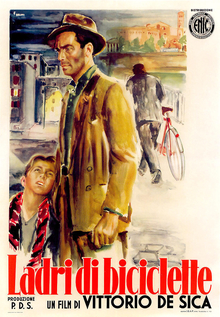
When the filming of Satyajit Ray’s path- breaking Pather Panchali began in 1952 it was the climaxing of a process immediately preceded by the 99 films the would-be auteur saw in London where his employer of the time had sent him on assignment as an advertising professional. Among the films that had the most profound effect on the master director was Vittorio De Sica’s Bicycle Thieves, and its influence is there for all to see in Pather Panchali.

However, Ray’s genius made his film original by adding to it a visual lyricism and poetry that was thoroughbred Bengali, in no small measure helped by the soft weeping, sighing, moaning, and soaring of Ravi Shankar’s sitar. The stories of the many agonies Ray suffered to create the masterpiece are now legion.

However, there is an alternative story parallel to Ray’s early struggles that is less known. A group of college-going teenagers in Kerala, also influenced by De Sica, went through more or less the same struggles to raise money and film a neo-realistic film, two years after Ray began filming. The Newspaper Boy, the Malayalam film, beat Pather Panchali to public release in May 1955.

Apu, or Appu in the Malayalam version, was the name of the protagonist in both the films and they were both a humane take on poverty in recently independent India, depicted as graphically as De Sica’s masterpiece did the poverty of the citizen in post WW II Italy in 1948. But by 2013, The Newspaper Boy has been relegated to trivia rounds of quizzes, despite the fairly high quotient of critical acclaim it garnered for its boldness and the heroic, awe-inspiring ambition, and tenacity of its young makers.

In May 2005 a social service club in Kochi, Kerala, toasted the surviving members of that pioneering team for their daring jab at film history. Nearly 60 years since, newly found prosperity, easier exposure to the world and the quickening of instinct that technology aids, has changed the nature of filmmaking and the pattern of how films are consumed by the Indian filmgoer. And yet, a lot of good work in various Indian native languages bypasses the cineaste despite great, concomitant advances in distribution of films.

So impermeable are the walls of the compartments that would be called Indian cinema that many nostalgic cineastes feel guilty for criticising the national television channel that showed regional language movies with subtitles through the ’80s when these movies won national prizes. It is another aspect of the nation-building process set in motion by earlier Indian statesmen that is ignored. However, in the more commercial and new media-led world a regulation college song in Tamil and English, “Kolaveri Di”, goes viral and becomes an instant hit.

Madras Meme

Mindless mass entertainers, oddly enough, cross over to wider audiences through remakes. Govind Nihalani, the acclaimed director of parallel cinema of the ’80s and ’90s, asked film scholar K Hariharan to explain this phenomenon that he said was called the “Madras Cut”. Nihalani was chairing a panel discussing changing narrative trends in Hindi cinema, at the Film Writers Association’s third Indian Screenwriters Conference in Mumbai this week.

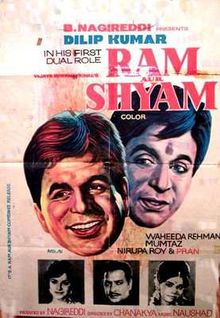
Hariharan, a film director and the dean of LV Prasad Film & TV Academy, answered it simply. He said Madras studios always made national films and the moment a film crossed 50 weeks in the theatres, Hindi producers had no qualms or questions to ask before they remade it in Hindi. Ram aur Shyam (1967) and Haathi Mere Saathi (1971) were such remakes that raked in the money for Hindi producers.

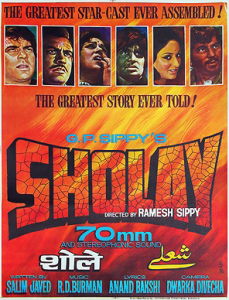
Incidentally, Haathi Mere Saathi was the first film from the celebrated writing duo of Salim Khan and Javed Akhtar, who would memorably use the Bundelkhandi word, “daari”, when they have the dacoit Gabbar Singh, in Sholay, leering at Hema Malini and saying, “Daari ke paaon toh dekho” in one of the prized rare bits of elemental detail Hindi films were not famous for, till then.

Gabbar’s speech pattern was a great distinction in creating the unforgettable character that the supremely talented Amjad Khan would forever be identified with. The fact was that Chennai, when it was Madras through the ’60s, ’70s and ’80s, was the home of the south Indian film industry for a long time. The Malayalam film industry, though it started originally in Trivandrum in the 1920s, eventually shifted to Madras before moving home in the late ’80s. The Telugu film industry’s biggest studios were incubated in Madras before moving to Hyderabad in the late ’90s.

The Kannada film industry looked north to Maharashtra, and flirted with Kolhapur, more than Bombay, in its nascent years. The Madras film industry of the time produced a lot of morality tales and Aesop’s fables-like simple-minded grand narratives for mass audiences. It deftly navigated the move from Hindu mythological tales to more contemporary stories.

Cultural Cauldron

About the same time, the Hindi film industry was a thriving marketplace blessed by unequalled talent from Bengal, in the form of directors and music composers, and from Punjab and Uttar Pradesh in the form of actors, producers and directors. They also benefited from the strong wave, perhaps once in the lifetime of a country, of out-of-work poets who wrote in Urdu from the entire northern region of the subcontinent.

After the partition of India, Urdu, that sublime language, was converted to ‘Islam’ in India’s popular consciousness. Gulzar reclaimed Urdu from its Islamic identity by transforming it into an irreligious, aesthetic adjective in 1998 with the line “Jiski zubaan Urdu ki tarah” in the Tamilian director Mani Ratnam’s Dil Se. But prior to that, Urdu’s best poets found a home in Bombay to write as they pleased and affect a vast majority of the country’s population. And they were the stars of the golden period of Hindi films.

Cross-fertilisation has always been a trend in filmdom. It is after all one of the four genuinely equal-opportunity spaces in India besides crime, spectator sports and politics. Ashis Nandy had identified these social segments in his panel discussion at the Jaipur Literary Festival that was overtaken by the controversy about his purportedly anti-dalit statement. Hindi films veered, I imagine because of brute strength, in terms of having a far larger market and spread than any other language films can ever have, to become the new English for Indians.

Its pan-Indian appeal has seen it muscling up on weaker language film industries of India, while the stronger, self-sustainable economies remain undaunted, much like the film industries of the south. And the rise of the Bhojpuri film industry in recent times is a wonderful reminder that Hindi too is not as monolithic as Bollywood films would have us believe.

Rules of Engagement

It is an unforgivable irony of India’s film history that MS Sathyu, a Kannadiga from Mysore, is the one who made the most defining film on partition. This, despite the fact that several well-known Bombay film families traced their individual stories directly to the partition of India. Partition also deprived Hindi film industry of the services of Sadat Hasan Manto, a film writer and the most original and daring literary cartographer of the partition. I heard very many speakers at the screenwriters’ conference moaning about the fact that Hindi films do not engage more urgently with the country’s contemporary reality.

One of the reasons was because it still was wondering if filmmakers should have any social responsibility. Frankly speaking, as sociologist Shiv Visvanathan reminded the screenwriters in his keynote address, social responsibility is not the screenwriter’s duty. Just recognising the current realities of his society and being informed about it, would do. One good way would be to recognise that a big swathe of those who watch Hindi films do not speak Hindi at home. At home they speak their mother tongues, which are as many and more than the states and regions of India. Similarly, a lot of good Tamil, Malayalam, Bengali, Kannada films are set in their local milieu.

Hindi films do not have to adapt them to resettle the story in Uttar Pradesh or Bihar. They can tell a Naga story set in Nagaland itself. It would be an excellent way to do justice to the diversity of the country for a national audience of Hindi films that is not from the Hindi heartland. Very often, local language films are also more integral to the milieu in terms of their deeper and organic connects with all aspects of the culture. MT Vasudevan, a Malayalam writer who is also a Jnanpith award winner, has won the highest number of National screenplay writing awards. A story he writes need not be excised from Kerala, his setting for most of his stories, just so that it can be made to “travel” to Hindi film viewers.

Spreading the Net

One great social responsibility the screenplay writers, directors and producers of Bollywood can undertake is scout for original stories in their natural locales. It would be an ambition that would be rewarding because it would tap into the cultural diversity of the Hindi filmgoers.

Besides, it will more directly address the question of social responsibility instead of ideological or moral pedantry that the term seems to mean to many. LV Prasad, the doyen of Telugu and eventually Hindi films, wrote his scripts in English as Hariharan told the capacity audience at the screenwriters’ conference.

The Los Angeles Times’ film blog headlined a story about the money raked in by a Telugu hit in a ticklishly amusing way in September 2011. “Dookudu, the biggest hit you’ve never heard of”. That would read horribly offensive in a Hindi paper. Looking farther afield, way beyond villages in the Hindi heartland and the metros of the country, will yield an embarrassment of riches in terms of stories and locations that would do greater justice to the multilingual army of fans of Hindi films.

For those who’d rather read it online: https://tinyurl.com/333yauup

The Author

Harish Nambiar is an editor with The Economic Times. Before that he was with Reuters and clutch of national mastheads. He has been a journalist since 1990.

In the mid-nineties he taught a semester as a lecturer to undergraduate students teaching the rise of the novel as a form and poetry appreciation in a Mumbai college.

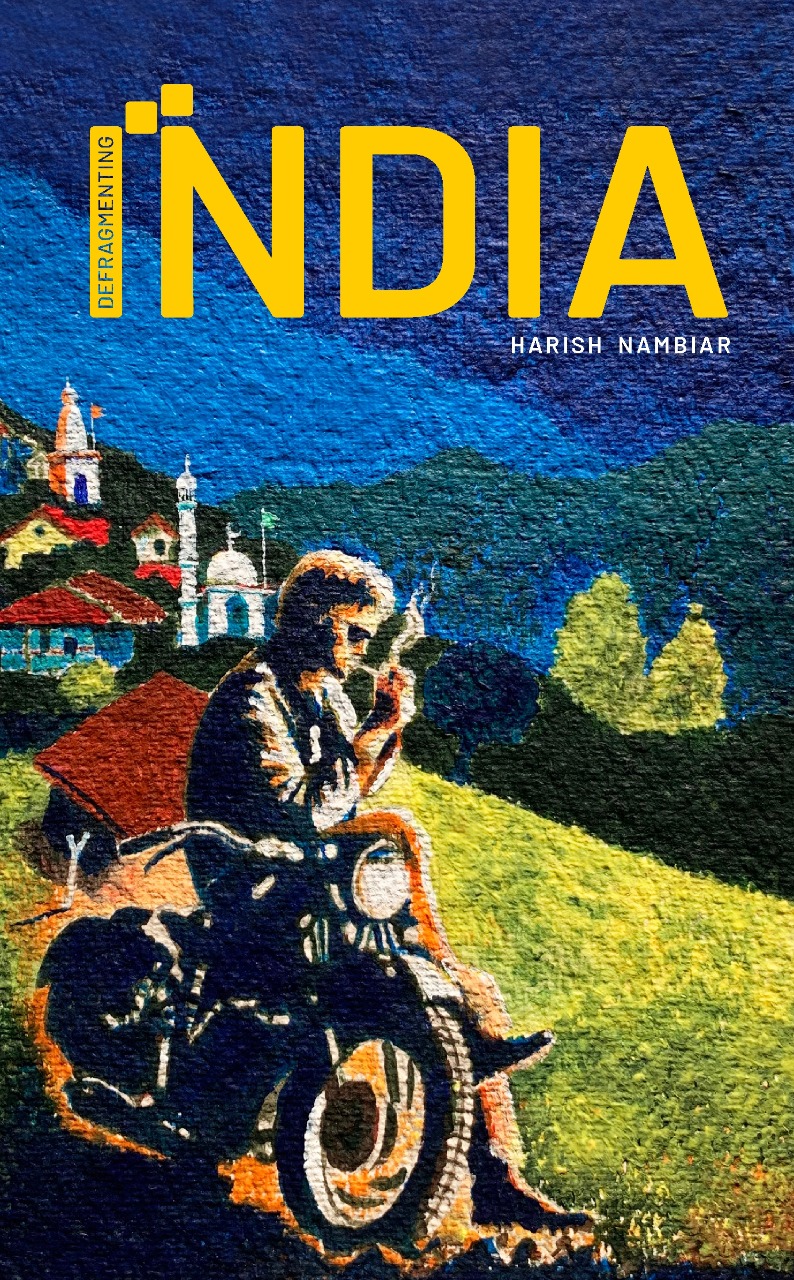
Sage Publications published his book of narrative non-fiction Defragmenting India: Riding a Bullet Through the Gathering Storm in 2012 that he plans to reissue on Amazon soon.

Related Posts:

Read Full Post »

kaykay46's avatarTalk the Walk

Abstract

I re-read Something New by P G Wodehouse (PGW) for the umpteenth time recently. With a little digging, I found out that this novel had been first published in the USA on 3rd September 1915 and published in the UK as Something Fresh on 16th September 1915. Though there are some differences between the two, it is basically the same story. For the record, Lord Emsworth, Blandings Castle and its staff are introduced for the first time in this book. They would feature more prominently in PGW’s later novels and short stories.

Savouring Something New in its Kindle avatar last month, I was left in awe and admiration of PGW’s extraordinary ability to conjure up vivid word pictures of not just characters and situations but also locations and the processes at work. Secondly, PGW surprises you every now and then with his keen sense of observation and…

View original post 2,058 more words

Read Full Post »

The foundations of our civilization are quivering. Homo sapiens are faced with a mental health crisis of gigantic proportions. There is widespread concern about the pace at which the twin epidemics of Filmitis and Serialitis are spreading across countries and continents. Medical researchers of all hues are twiddling their thumbs, trying to figure out a cure for these afflictions which happen to be not only highly addictive but also pleasurable.

These afflictions affect all human beings, irrespective of their age, sex, cast, creed, or ethnicity. Post-2020, when a pandemic struck humanity, the spread of these virulent challenges has posed a serious challenge to humanity. These are said to be highly contagious. A word of mouth is all that is required to lead one to contract it. Even an inane post on a social media platform in a Facebook group like The Reviewer Collective could nudge one to start watching a movie or an OTT series and then get hooked to it. Often, a long period of bondage ensues. Frequent viewers of the delightfully diverse content on the OTT platforms gladden the hearts of many a producer-director duo. The shareholders of such platforms can be seen laughing all the way to their banks.

To put it simply, once the germs of Filimitis and Serialitis have managed to find a foothold in any neuro-system, one’s fate is sealed.

Most people suffer from Serialitis these days. The OTT platform throws an infectious suggestion. We decide to check it out. We get sucked in. The directors and the scriptwriters ensure we never get to leave the confines of their alt universe. We get stuck with it. At night, we shudder to think of what may happen next. ‘Filmitis’ is far more tolerable. Whatever happens, it gets wound up in around 120 minutes.

Often, we worry about kids spending too much time on their screens. When a kid starts believing that he/she has super-powers like those possessed by either Batman or Spiderman, our brows get furrowed. However, when it comes to addictions like Filmitis and Serialitis, we, the so-called adults, are no less.

The Symptoms

These ailments manifest themselves in many ways. A mood of apathy towards one’s near and dear ones sets in. Public interactions are often given a skip, unless mandated otherwise by an overbearing spouse. One develops a strong tendency to compare on-screen characters to those one comes across in real life. At work, haughty bosses get likened to such villains as Gabbar Singh (Sholay) and Mogambo (Mr. India).

A perpetual state of intoxication envelops one. Meticulous notes get made of the varied recommendations which keep pouring in from all sides. Lists showing the yet-to-be-watched offerings by our dream merchants get updated regularly. A pitiless analysis of the scintillating characters on the screen gets done. Wikipedia gets searched for more offerings featuring a favourite actor on the screen. Speculations get made as to what would have happened if they had responded to a situation differently.

Even lay viewers suddenly evolve into seasoned reviewers, offering insights into such aspects as acting proficiency, script writing, cinematography, music, lyrics, editing, and the like. I, for one, upon coming across an offering which sound exciting to me, would be in the transient grip of a ‘Eureka’ moment, rushing to share the information with aficionados who may devour it with much glee. Archimedes would surely be squirming in his grave.  

The most serious symptom happens to be the disinclination of all those suffering from Filmitis and Serialitis to seek a cure for these maladies. Once contracted, one is apt to remain happy and contented to continue in a state of perennial addiction. Medical fraternity is yet to find a solution to this unique kind of viral resistance.

Three Stages

There are three stages of these diseases which have been identified and catalogued so far.

Stage 1

In the first stage, one displays occasional signs of having any of the symptoms described above.

Stage 2

In the second stage, one shows grave signs of many of these symptoms, but is still considered treatable by a heavy dose of socializing. Quite a few in this category practice detachment and can leave a series mid-way, without any feelings of remorse or any desire to get back to it, ever. Lord Krishna, were He to come to know of such souls, would be pleased for them to have acquired this spiritual trait.

Stage 3

The third stage is the most critical one, with no cure in sight as of now. Medicos continue to be baffled. In this stage, one is obsessed with all facets of the production of the collages of moving images, much to the exclusion of every other kind of arts. In every situation of life, a streak of one of the narratives is invariably noticed.

All relatives, friends, seniors, colleagues, and juniors get identified with one or the other characters created on the screen. Lawyers sound like either Mickey Haller (The Lincoln Lawyer) or Woo Young-woo (Extraordinary Lawyer Woo). When visiting a hospital, female doctors get likened to Meredith Grey (Grey’s Anatomy). Nurses who go out of their way to assist us sound like Amy Loughren (The Good Nurse). When visiting a shopping mall, mumbling managers get likened to Glenn and smart salesgirls to Amy (Superstore) fame.   

A person suffering from the last stage of these disorders often complain of a stifling sensation. Nothing else in life appeals any longer. The allure of catching up on the latest on-screen fate of the characters often makes one lose sleep. Binge-watching becomes the norm. During days, when life really happens, one goes about the mundane affairs of life like a zombie with frayed nerves, bleary-eyed, and lost in one’s own thoughts.

Weaponizing these maladies

Do we need de-addiction centres to counter these viruses of Filmitis and Serialitis? Do we wish our medical research honchos to come up with a vaccine to keep the foundations of our civilization from quivering incessantly? Not necessarily. Instead, an innovative deployment of these viruses would help humanity in more ways than one.

The day is not far off when governments the world over may end up weaponizing these diseases.

Tackling obdurate enemies

Leaders as well as soldiers of armies wanting to attack a country could be easily lulled into a sense of complacency and inaction if facilitated by the border area networks offering free streaming of OTT content dished out by the country under attack. Wars would then be a thing of the past. Money being spent on arms of all kinds would eventually get deployed to eradicate poverty and illiteracy across all our continents.

Improving internal security

A similar treatment, if meted out to criminals, terrorist groups and internet warriors who keep spreading fake news, would ensure peace and harmony in the society. Crime rates would nosedive.

Providing joyful healthcare

Seriously ill patients awaiting a surgery while lying on a hospital bed, if fed with such stuff as Wagle Ki Duniya and Happy Family…Conditions Apply, would happily wait for their turn to come up, thereby improving the billings of private hospitals and nursing homes.

Building a chivalrous society

If such movies as Ghar, Chhoti Si Baat, and Veer Zara get promoted aggressively by our Movie Mughals, members of the so-called sterner sex would end up being more chivalrous, thereby minimizing misdemeanours directed at the delicately nurtured. Divorce rates would plummet. Loving husbands would be more likely to follow the example of Dr Anand (Silsila), ensuring that the doves of peace keep their wings flapping over their humble abodes. Parents who are brought up on a healthy diet of such movies as Gunjan Saxena and Babli Bouncer may give up their patriarchal mindsets and encourage their daughters to scale newer heights in their lives and careers.

Improving political discourse

Politicos in power might keep the opposition leaders similarly engaged, thereby reducing their propensity to keep making defamatory speeches or hurling choicest abuses upon them. Those cooling their heels in jail, if shown an offering like Dasvi, may even get motivated to improve upon their academic record. A general improvement in the quality of political discourse may thereby ensue. Better degree of sanity may prevail around election time.

Population control

Health ministers who are having sleepless nights worrying about their country’s galloping birth rates may consider targeting their denizens in the reproductive age group with such offerings as Basic Instinct, The Dirty Picture and Lady Chatterley’s Lover, thus keeping them distracted from their amorous impulses.

Cocking a snook at the First World countries  

When meeting the leaders of countries which keep showing their disdain towards an emerging economy, the premier of such a country merely needs to present his/her hosts with video recordings of such serials as Scandal, The Designated Survivor and The Diplomat.

By an innovative and clever deployment of these afflictions, the score of Gross National Happiness of all countries may improve drastically.

In other words, disorders like Filmitis and Serialitis need neither be contained nor cured. On the contrary, these need to be spread as quickly as may be possible. This would ensure that we continue devouring inane as well as cerebral stuff on our screens while slouching in our sofas, flowers are forever in bloom, God continues to be in heaven, and all remains well with the world.

Related Posts:

Read Full Post »