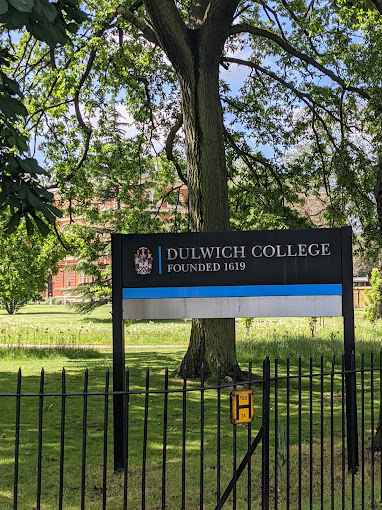
By no stretch of imagination can I be held to be an expert on cats. In any case, I have no clue as to how a cat which has been fed too much of cream would look like. Perhaps, having temporarily overcome its snootiness caused by the belief that in Ancient Egypt it would have been worshipped as a god of some reckoning, the milk of feline kindness would be coursing through its veins. Coming across a healthy mouse, it might just have shrugged its tender shoulders and decided to skip its quota of vitamins for the day. A wide grin would surely be adorning its visage.

Anyone who had spotted me coming out of the hallowed portals of Dulwich College recently would have noticed the wide grin on my not-so-handsome countenance. She might have seriously suspected me to be a member of the feline species which had just gorged on a diet full of rich cream duly enriched with fat-soluble vitamins. The spotter would have been left twiddling her thumbs trying to figure out the singular absence of the morose look which usually adorns the face of the spotted, making her wonder if the latter had just put in his papers relinquishing his position as the honorary Vice President of the Global Morons’ Association.
She would not have been off the mark. My cup of joy was indeed running over. The sky was bluer. The grass was greener. The air was more fragrant. In short, God was in heaven, and all was well with the world. Peter Mark Roget, had he been around, would have described me as being blissful, chuffed, delighted, elated, ecstatic, glad, grateful, gruntled, pleased, happy, and satiated. At the time, the heart was overflowing with unalloyed joy.
The cause of my having attained this state of blissfulness was two-fold.
One, Dulwich College had turned out to be a treasure trove of Wodehousean memorabilia. A place where brainy coves who happen to admire the Master Wordsmith of our times could settle down to drink deep from the joyous waters of his works and his methods and dish out some scholarly research papers brimming with erudition of the first order. They could even soak in the ambience of his own study, a recreated version of the one at his home across the pond at Southampton in New York. After his death in 1975, Ethel had donated the same to his beloved Alma mater.
Two, an overwhelming feeling of gratitude pervaded my mortal frame. I was, and continue to be, amazed at the affection, care and conscientiousness with which Dulwich College has built up and maintains multi-faceted records pertaining to Plum. Besides his books and their translations or pastiches in very many languages of the world, one could peruse his academic report cards, cricket score sheets, records of singing and theatrical endeavours, duly embellished with some juicy comments from the Rev. Aubrey Upjohns of his life while he was there from 1894 till 1900.
Sample this specimen:
He has the most distorted ideas about wit and humour; he draws over his books and examination papers in the most distressing way and writes foolish rhymes in other people’s books. Notwithstanding he has a genuine interest in literature and can often talk with enthusiasm and good sense about it.
(Dulwich College report on Wodehouse, 1899)
It is well known that in addition to his sporting achievements, he was a good singer and enjoyed taking part in school concerts; his literary leanings found an outlet in editing the school magazine, The Alleynian.

It may be of interest to note that Plum’s six years at Dulwich were among the happiest of his life. According to a statement made by him:
“To me the years between 1894 and 1900 were like heaven.”
Perhaps it was this sentiment of Plum’s which rubbed off on me when I had the privilege of visiting the college, guided by Calista Lucy, the Keeper of the Archive.
The college was founded by Edward Alleyn in 1619. Since then, many of its alumni have made it proud of their achievements in different realms of human endeavour. A few other celebrities who have passed through its hallowed portals are the writers Raymond Chandler, Graham Swift and Michael Ondaatje, the banker Eddie George (Governor of the Bank of England), and Anand Panyarachun (Prime Minister of Thailand).
The buildings have obviously undergone several additions since 1900, when Plum ended his sojourn at Dulwich College. We entered through the North Cloister, a corridor which was open to the elements during Plum’s days. It was a place where he would do his Larsen exercises.
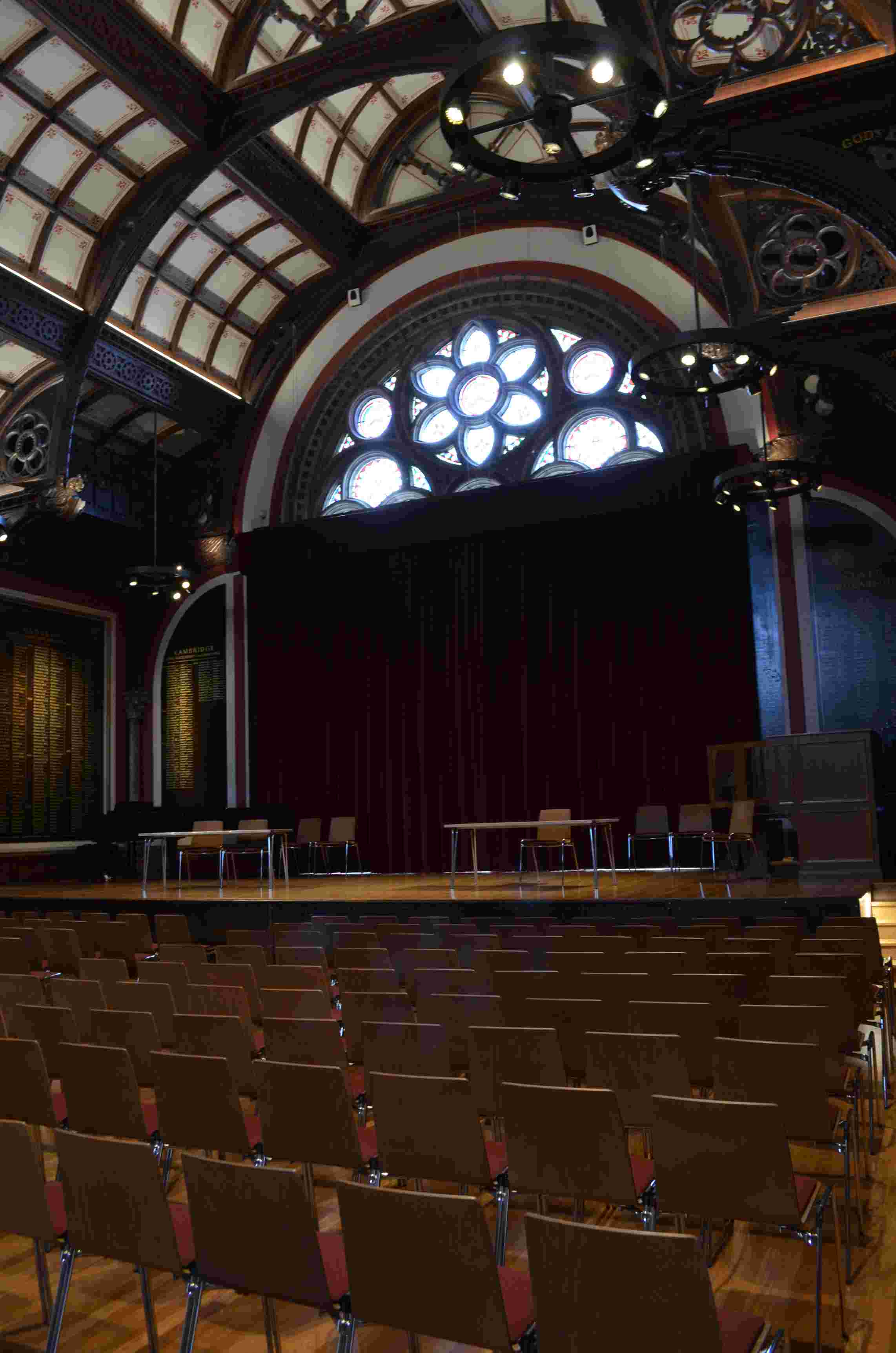
A grand staircase, adorned with portraits of various patrons of the college over time gazing benignly at us, led us to the Great Hall which is used for school assemblies and examinations. When Plum was at school, he and others would have eaten in the hall.
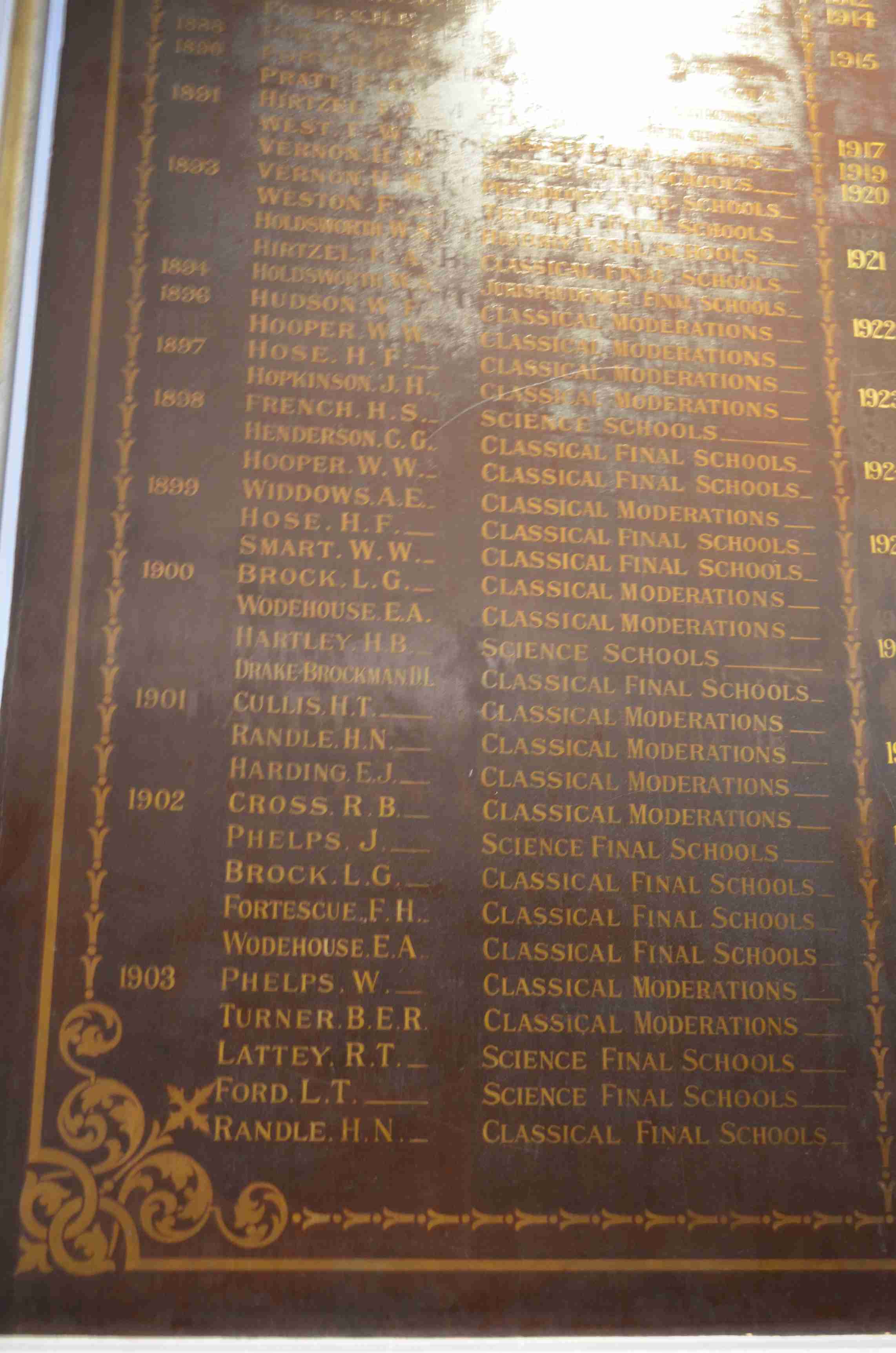
On the Honours Boards, one could see the name of Armine, Plum’s elder brother, who was also at the college. While the brother could subsequently gain admission to Oxford University, Plum was unable to do so owing to the financial difficulties faced by the family then.
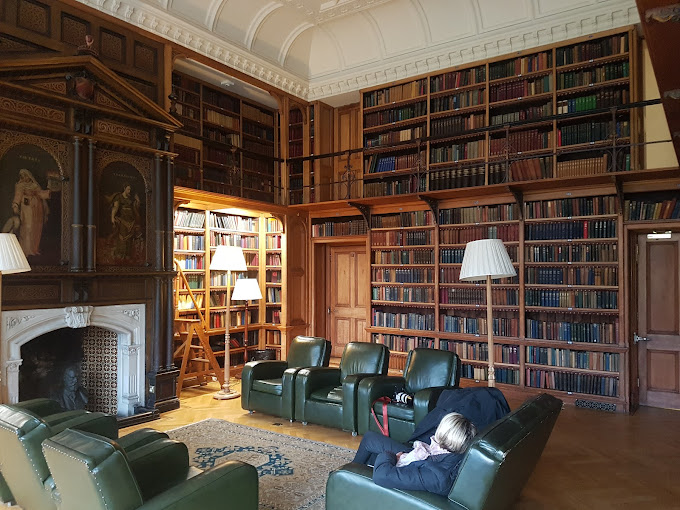
We passed by a well-stocked library of the college, named after Plum. Seeing the reconstructed study of his was a sheer delight. His working table, the chair that he used, two typewriters of his (one manual and another electric), his reading glasses, his pipes, the paperweights, a small figurine, and first editions of several of his books make the room come alive.
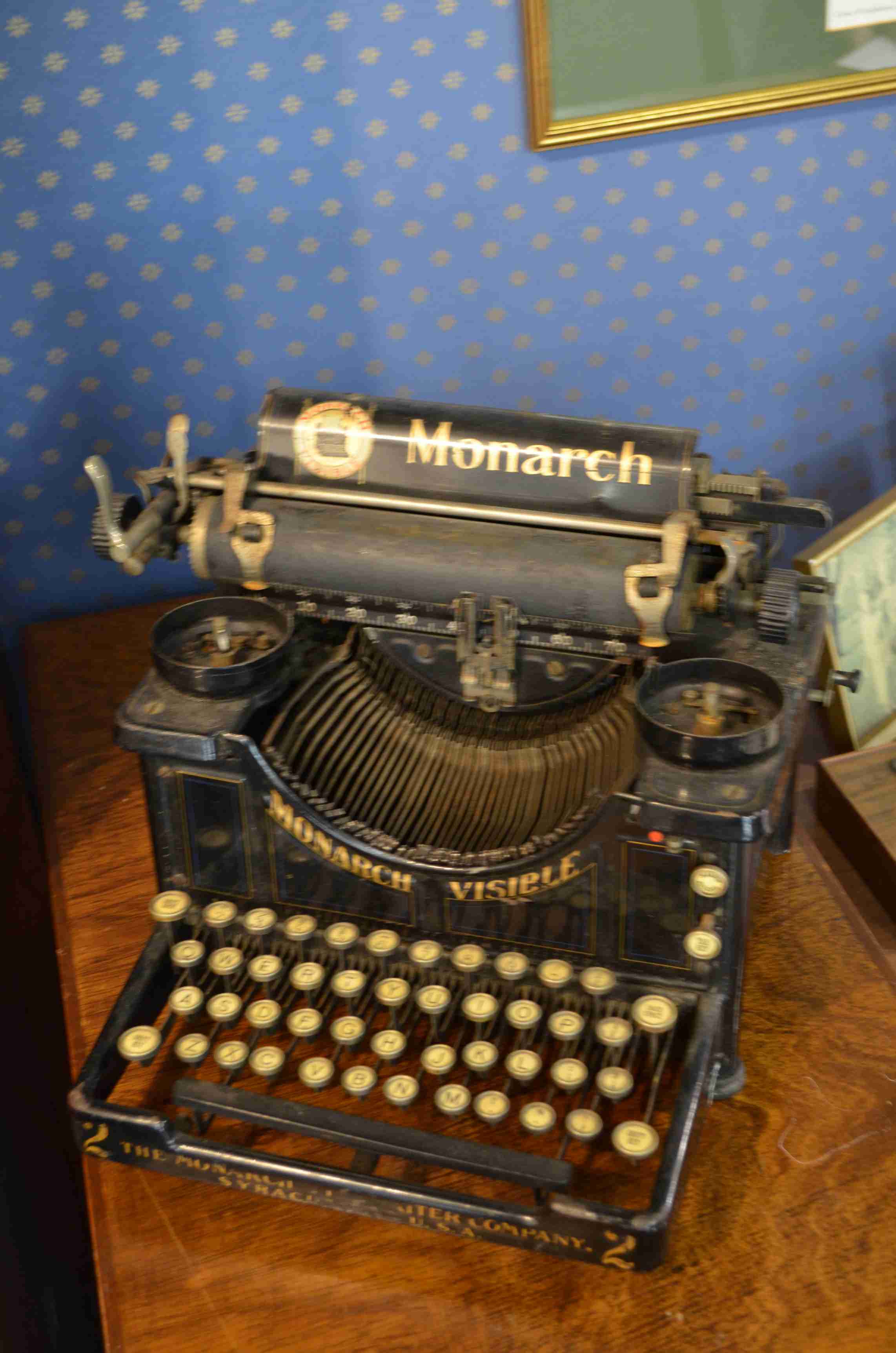
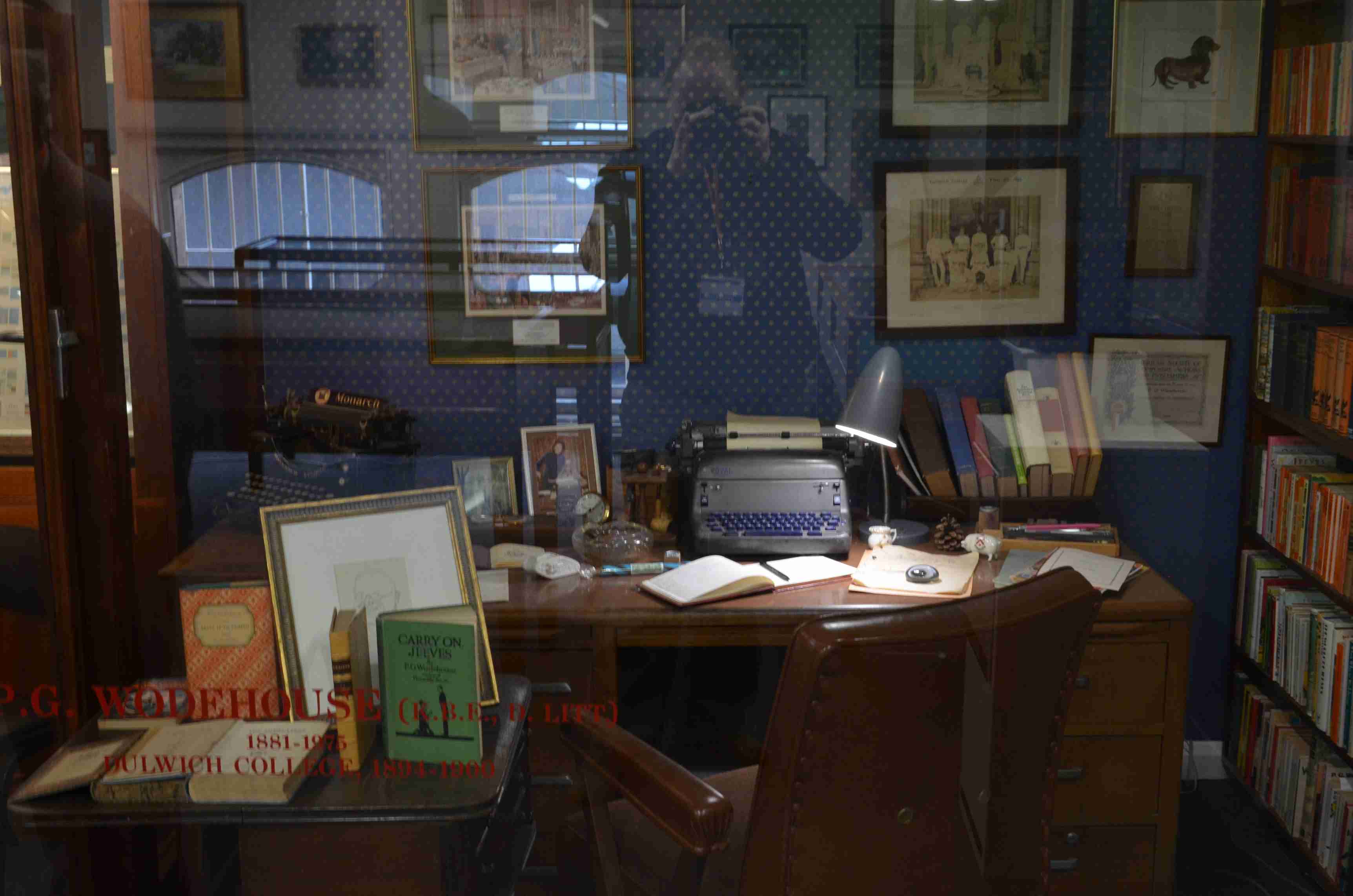

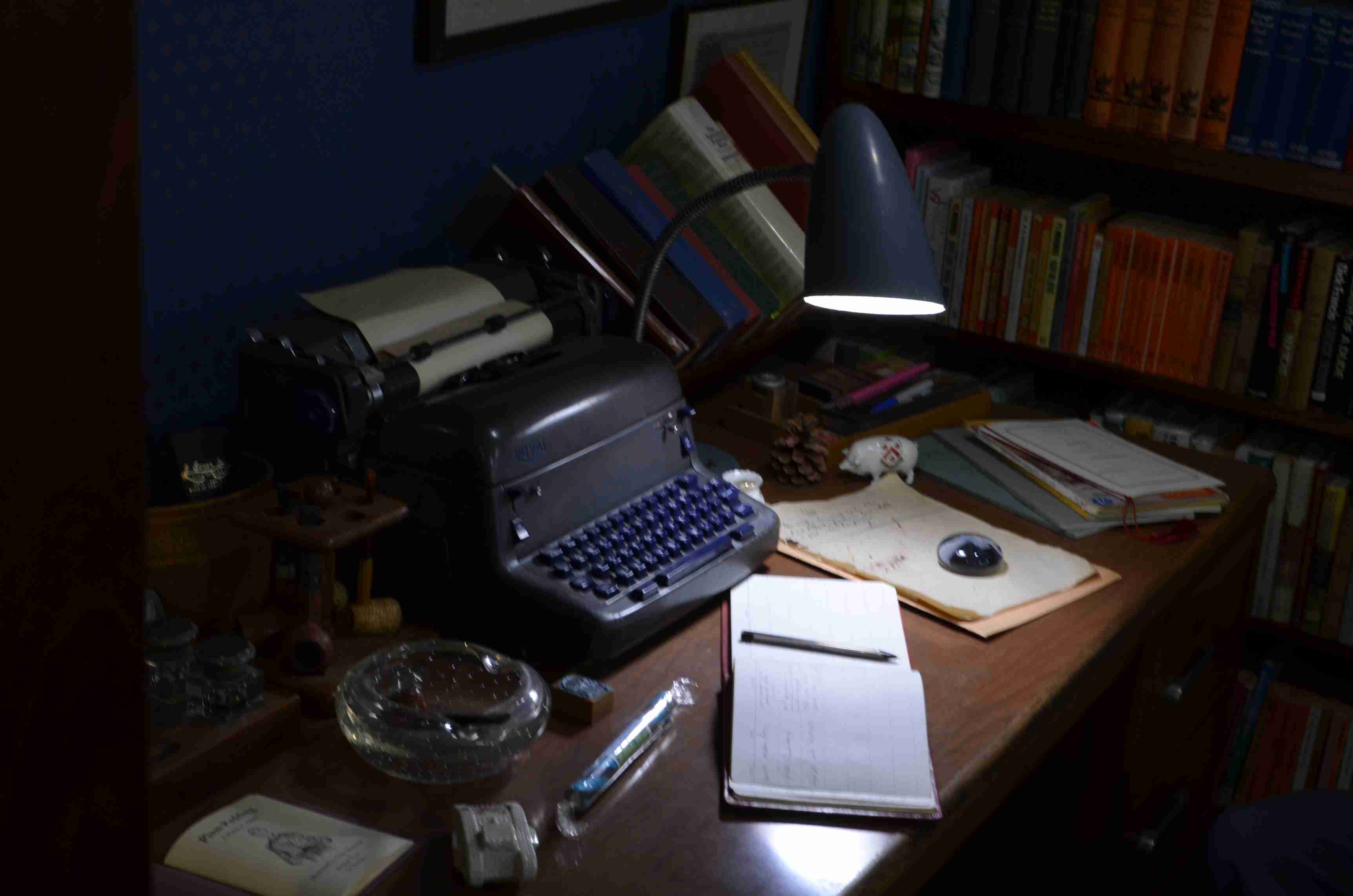
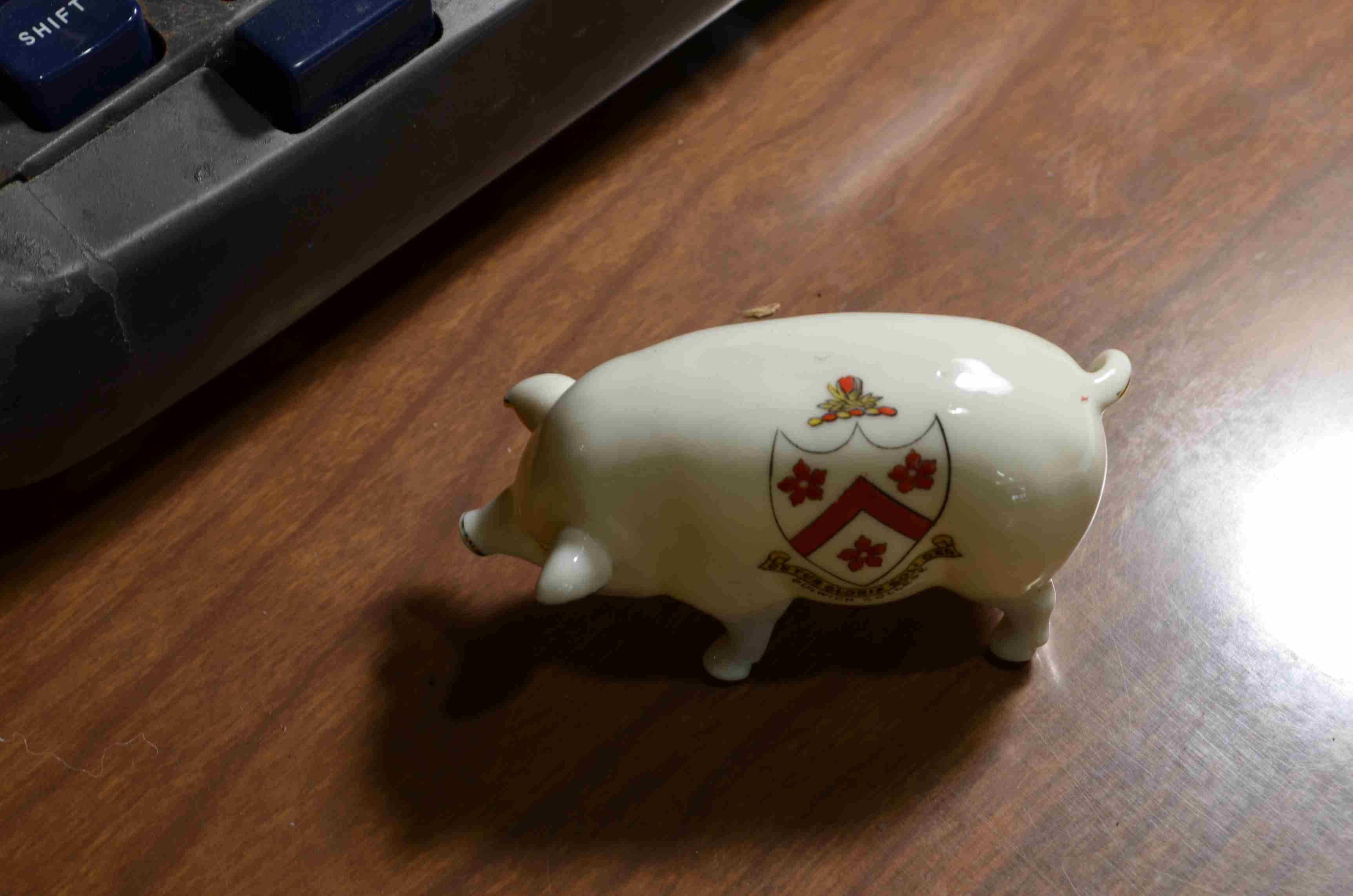
Calista was grace personified. She invited me to sit on Plum’s chair. Out of sheer reverence for the great man, I was hesitant, but than gave in to the temptation, merely to feel the vibrations of this genius humourist. The experience was something beyond words to describe, if you know what I mean. A signature in the Visitor’s Book was duly affixed.
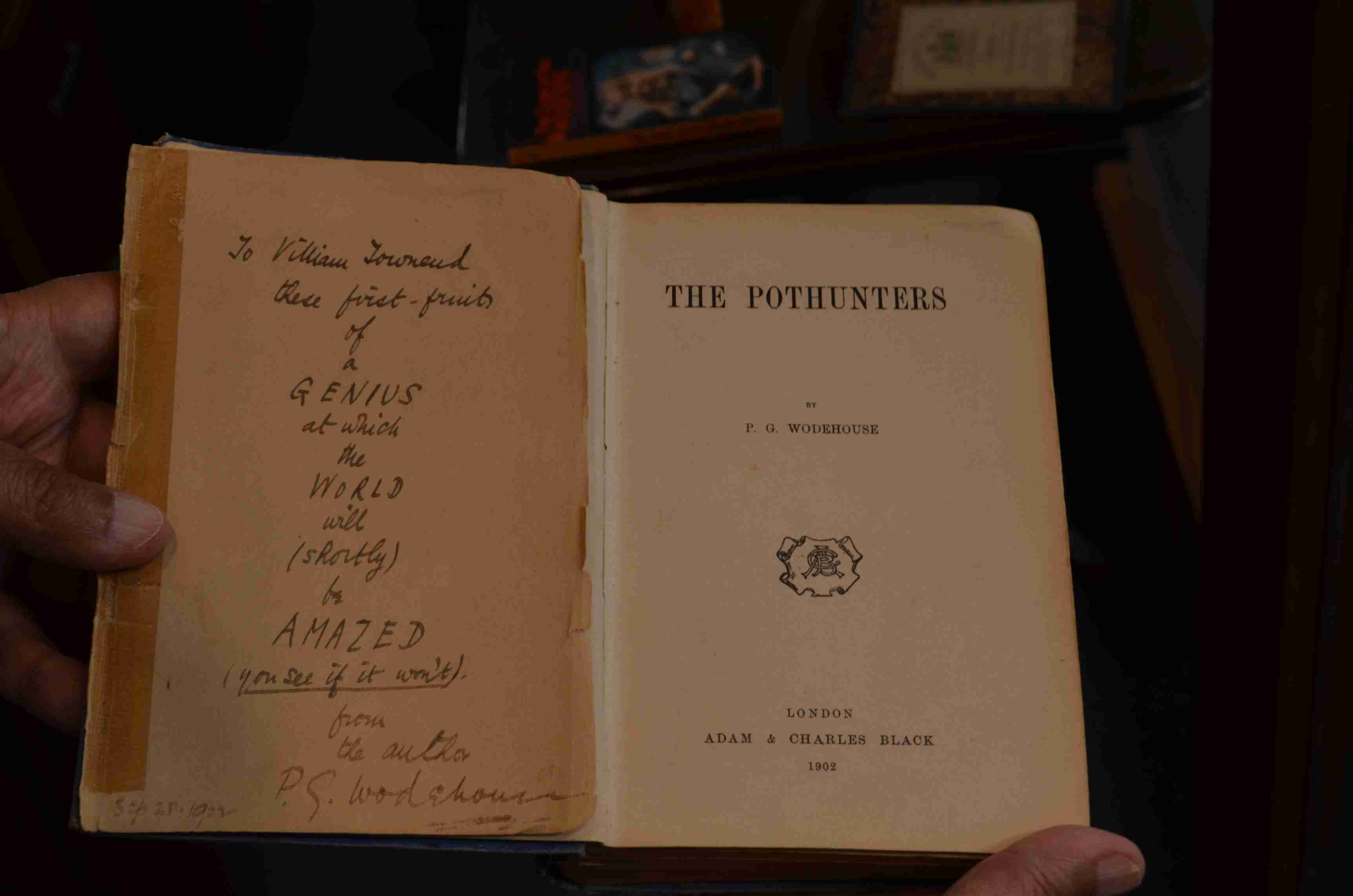
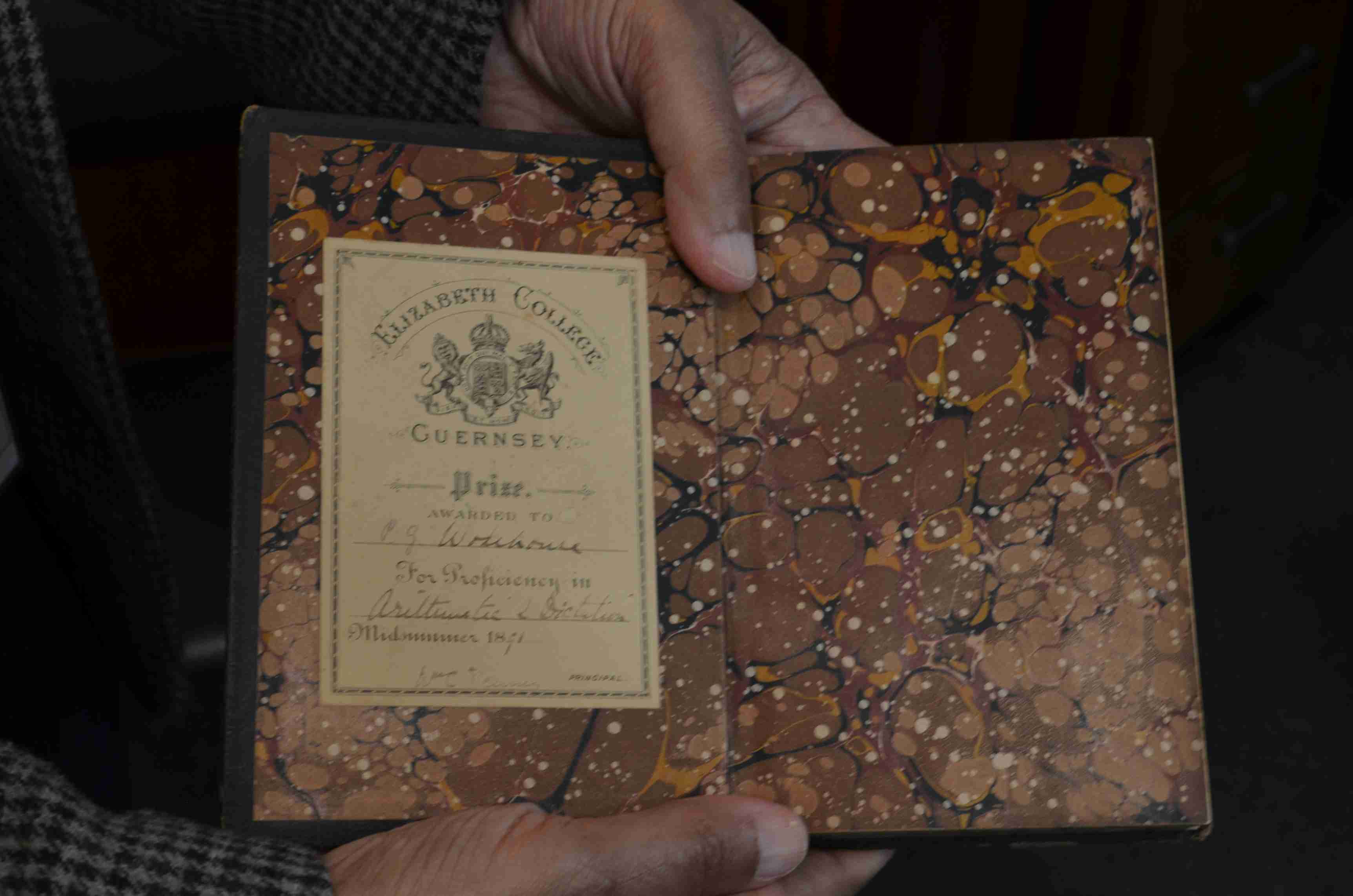


What followed was a perusal of his personal collection of books, Dulwich College report cards, cricket score sheets, and his correspondence with various other luminaries and friends, all lovingly catalogued and preserved. The icing on the cake was surely to be able to go through his comments on a manuscript of his own, mostly in red colour. Such comments as “Good,” “OK, but needs to be improved,” and “Not funny enough, rework on this,” gave a sneak peek into the kind of perfectionist he was when it came to dishing out his uproariously funny works.
Passing through a hall which had a bespectacled scholar working on a research project, we came across a room full of translations of his works in many languages and an array of books inspired by Plum’s works and published by authors of different hues, ethnicities, and nationalities in their native lingua franca.
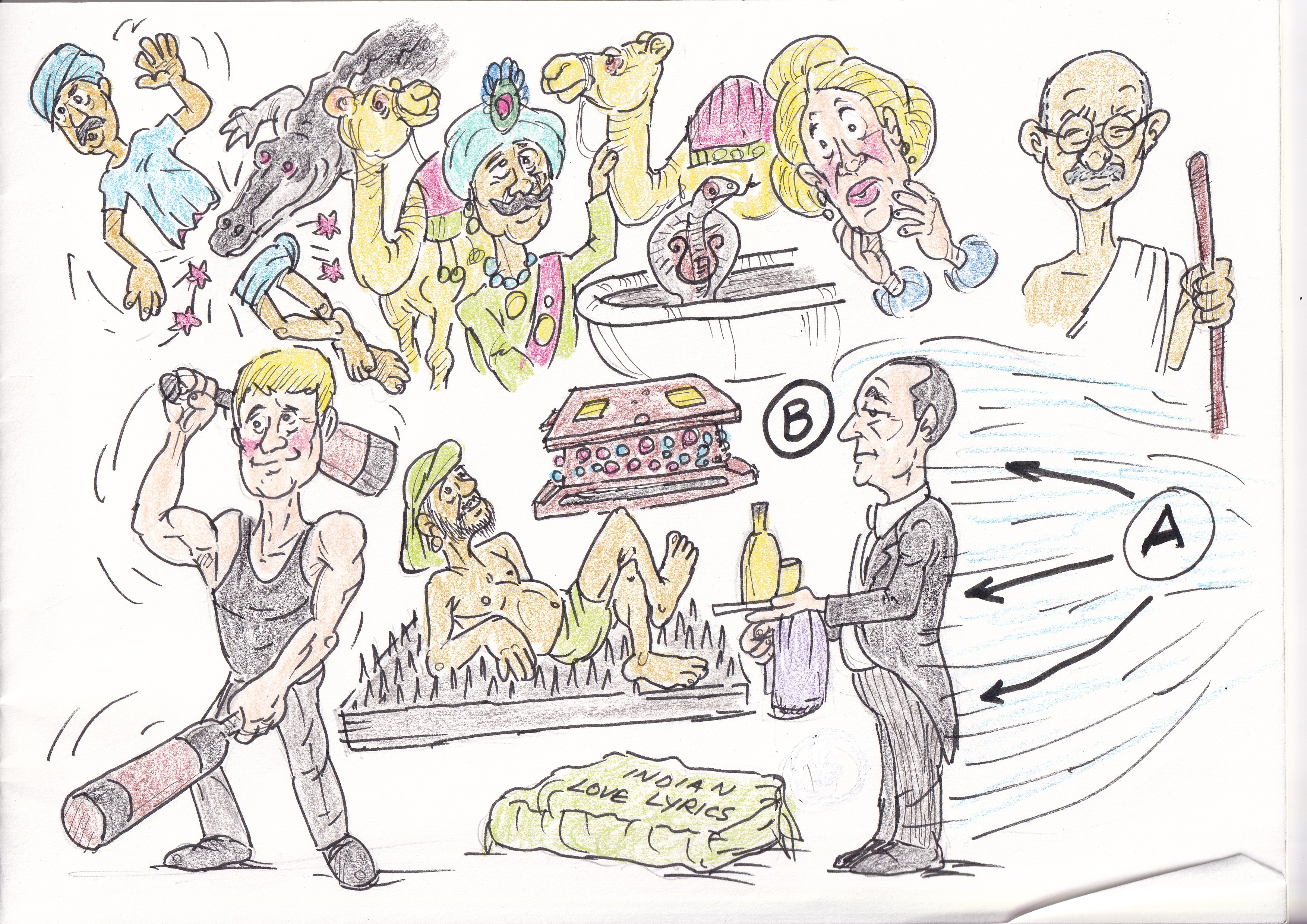
By way of a token of gratitude, I took the liberty of presenting my own compilation entitled “The Indian Curry Dished Out by Sir P. G. Wodehouse,” which is a long essay on various references to India in many of his works.

After expressing sincere gratitude to our gracious host for the time she could spare for us, I and my companion took leave of Calista and the college. If Lewis Carol had then described me as a Cheshire cat, albeit with a benevolent grin on my face, I would have taken the comment in my stride. The heart was aflutter. The world appeared to be full of joy, laughter, light, and sweetness. The everlasting value of the blissful cocoon left behind by Plum for Homo sapiens was driven home, yet again.

I also felt grateful to my Guardian Angels who had felicitated a trip to the Alma mater of P. G. Wodehouse by creating a concatenation of circumstances which had enabled my first ever trip to the United Kingdom.
If Plum and Ethel were then looking down from their cottage in heaven, I am reasonably certain that you would have noticed them both having a twinkle in their eyes. Perhaps, they might even have been waving at me!
Notes
- Most of the photos here are courtesy Dominique Conterno, my host in the UK.
- A few have been taken from the Dulwich College website.
- Caricatures courtesy Suvarna Sanyal.
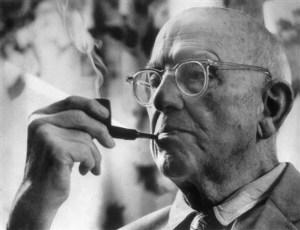
- Plum at Dulwich courtesy the world wide web.
- Inputs from Calista Lucy towards giving this article a better shape are gratefully acknowledged.
Related Post




 ashokbhatia