Feeds:
Posts
Comments

Archive for September, 2024

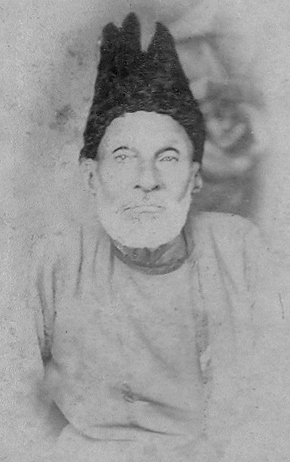
Mirza Asadullah Baig Khan, known popularly as Mirza Ghalib, was not just a poet but a literary phenomenon whose works have transcended time and space. He lived during the turbulent period from 1797 to 1869. He ended up being a chronicler of the chaotic times faced by the country during the 1857 revolt when many of the markets and localities in Delhi vanished. The mansions of his friends were razed to the ground. He wrote that Delhi had become a desert. Water was scarce. The city had turned into “a military camp”. It was the end of the feudal elite to which Ghalib had belonged. He wrote:

है मौजज़न इक क़ुल्ज़ुम-ए-ख़ूँ काश यही हो

आता है अभी देखिए क्या क्या मिरे आगे

An ocean of blood churns around me – Alas! Was this all?

The future will show what more remains for me to see.

Having settled down in the Chandni Chowk area of Delhi, he experienced first-hand the demise of the Mughal dynasty and the rise of the British Empire in India. Within a few months of his death in 1869, Mahatma Gandhi, who eventually led India to its independence in 1947, was born, though far away in Gujarat.

Why Chandni Chowk? I guess it would have been a posh area of the walled city known as Shahajahanabad then. Proximity to the Mughal court might have also weighed on his mind. The ease of shopping might have been another consideration.
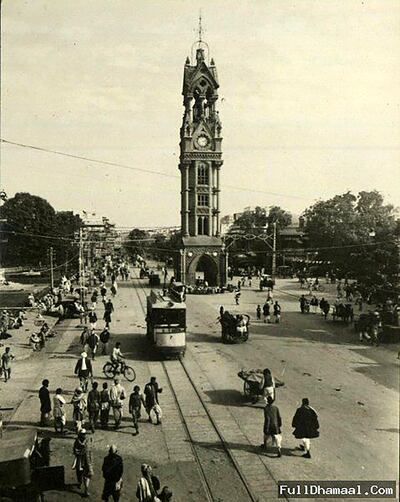
The Moonlit Square in Delhi

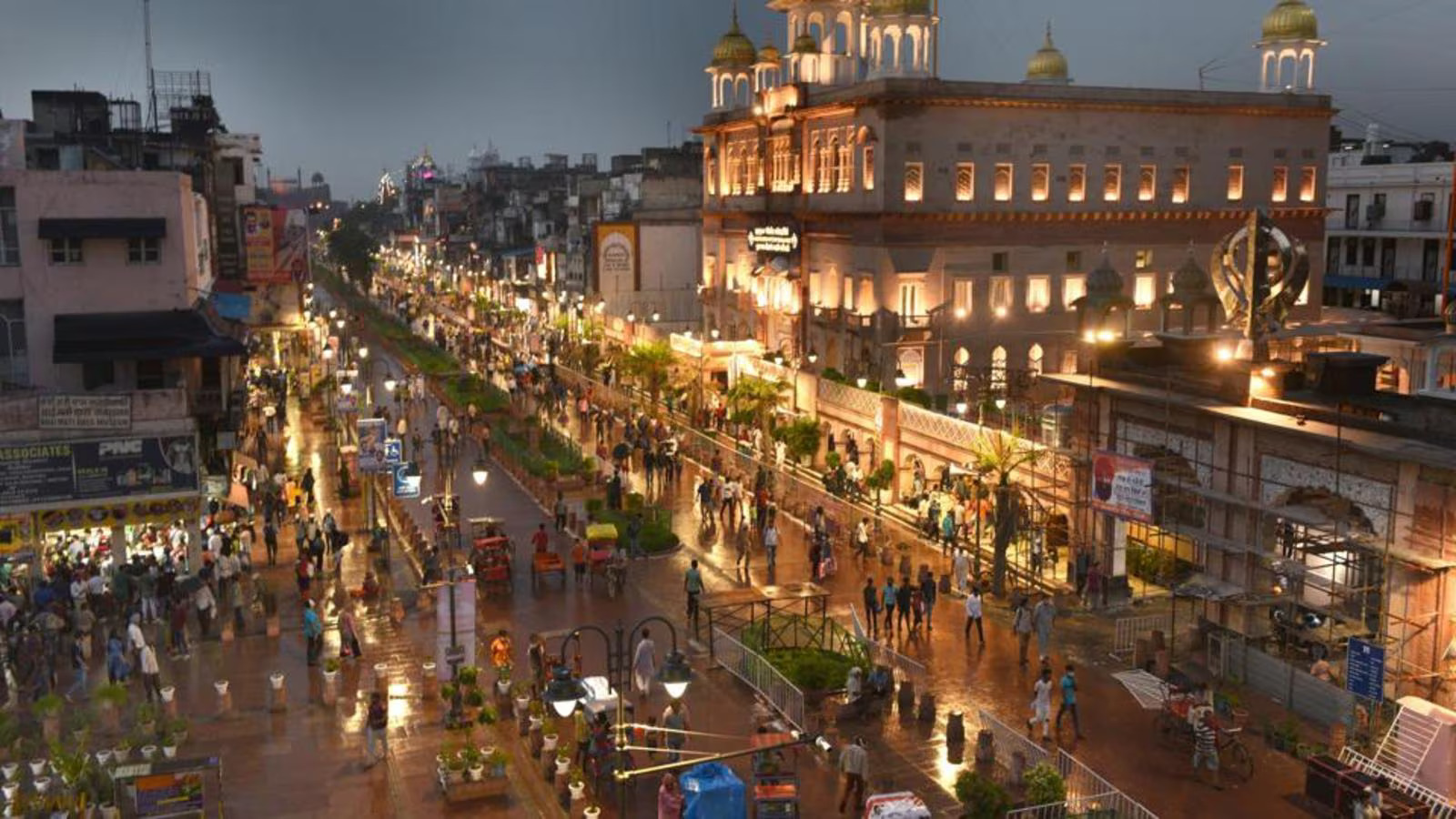
History buffs may recall that Chandni Chowk was built in 1650 by the Mughal Emperor Shah Jahan, and designed by his daughter, Jahanara. The market was once divided by a shallow water channel (now closed) fed by water from the river Yamuna. It would reflect moonlight. Hence its name.

There were roads and shops on either side of the channel. Ladies from the royal family are said to have ventured out of the Red Fort to shop for jewellery, clothes, and accessories. The place continues to be a shoppers’ paradise and has also become the biggest wholesale market in North India.

Shakeel Badayuni, the poet and lyricist, beautifully captures the image of this shoppers’ paradise thus in one of his nazms, ‘Tasaadum’:

वो बाज़ार की ख़ुशनुमा जगमगाहट

वो गोशआश्ना चलने फिरने की आहट

वो हर तरफ़ बिजलियों की बहारें

दुकानात की थी दुरबिया कतारें

That blissful glow of the market

That hustle-bustle of wide-eyed shoppers

A veritable spring of well-lit places

The endless rows of jewellery shops.

The range of products available is truly mind-boggling. Electrical goods, lamps and light fixtures, medical essentials and related products, silver and gold jewellery, trophies, shields, mementoes, and related items, metallic and wooden statues, sculptures, bells, handicrafts, stationery, books, paper and decorative materials, greeting and wedding cards, plumbing and sanitary ware, hardware and hotel kitchen equipment, all kinds of spices, dried fruits, nuts, herbs, grains, lentils, pickles and preserves/murabbas, industrial chemicals,  home furnishing fabrics, including ready-made items as well as design services.  

As to the mouth-watering sweets, savouries, and street food available in Chandni Chowk, right from the crispy jalebies of Dariba Kalan to the spicy chhole-chawal of Gol Hatti at Fatehpuri, full-length books alone may suffice.
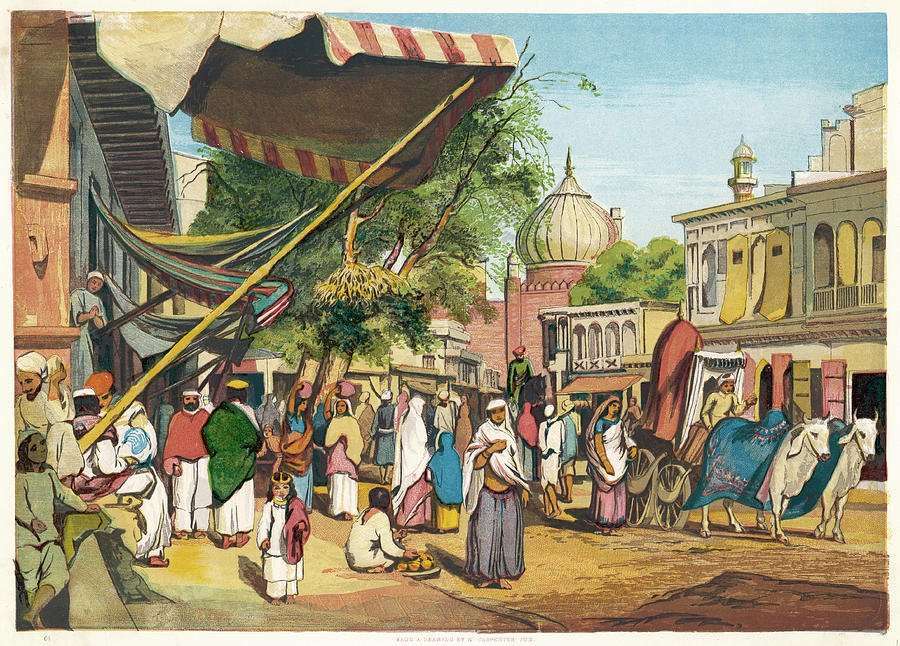
Kuchas, katras, and havelis

The road now called Chandni Chowk has several streets running off it which are called kuchas(streets/wings). Each kucha usually had several katras (cul de sac or guild houses), which, in turn, had several havelis.

Typically, a kucha would have houses whose owners shared some common attributes, usually their occupation. Hence the names Kucha Maaliwara (the gardeners’ street) and Kucha Ballimaran (the oarsmen’s street).

All this is not to say that there are no aspects of Chandni Chowk which one does not despise. One loathes its jostling crowds, its smells, its noises, its congested lanes, the mind-boggling variety of vehicles on its roads, its endless traffic snarls, its highly polluted air, its beggars trying to persuade perfect strangers to bear the burden of their maintenance with an optimistic vim, and its crowded pavements with aggressive sellers pouncing upon one to peddle their stuff. But if one has nerves of chilled steel and can manage all these with a chin-up attitude, one could eventually find one’s way to Ghalib ki Haveli, located in Gali Qasim Jan of Kucha Ballimaran.

As to Ghalib’s choice to live in Kucha Ballimaran, an area where oarsmen used to reside, one may merely surmise that as a creative genius of the literary world, he believed himself to be an oarsman, guiding his catamaran through the choppy waters of life!

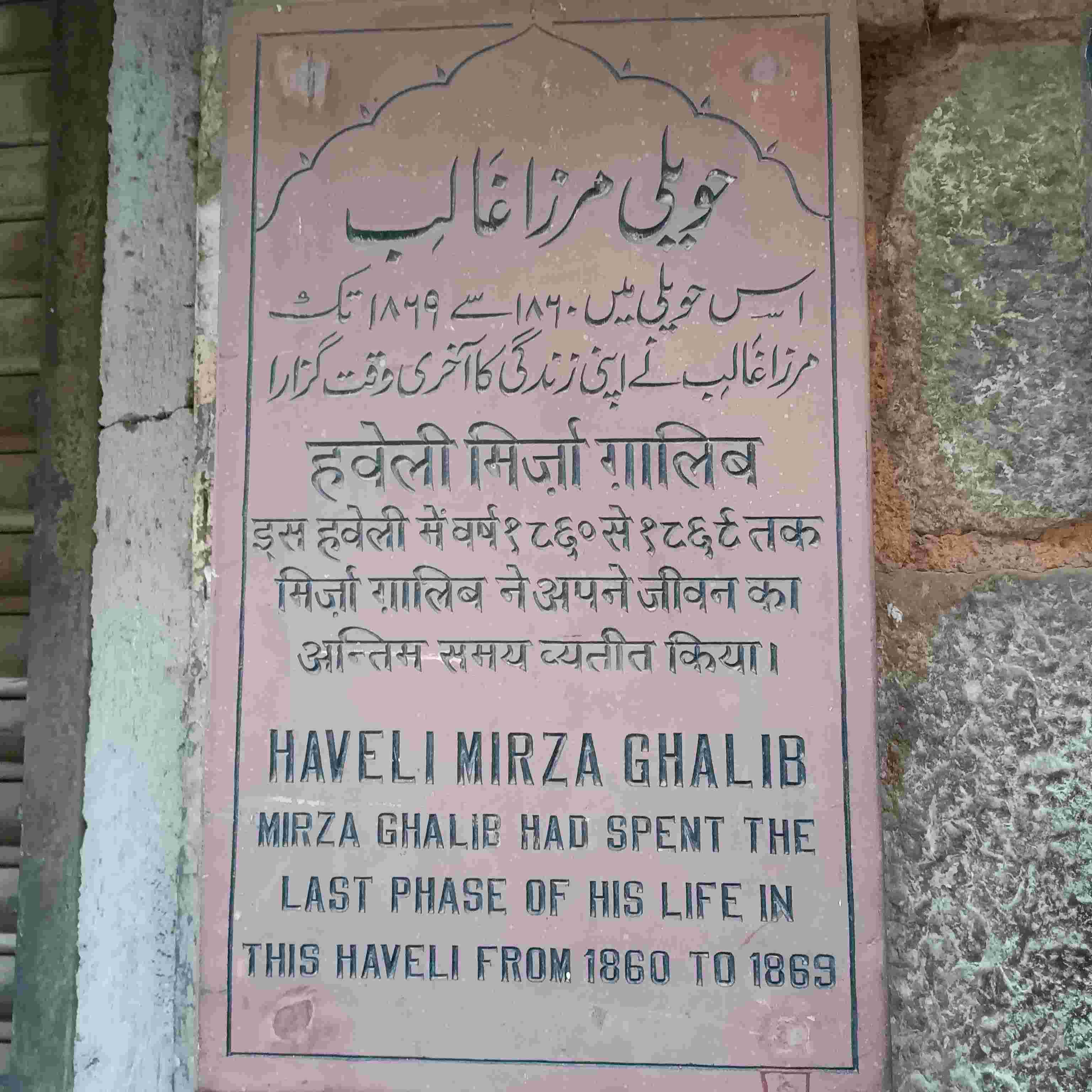
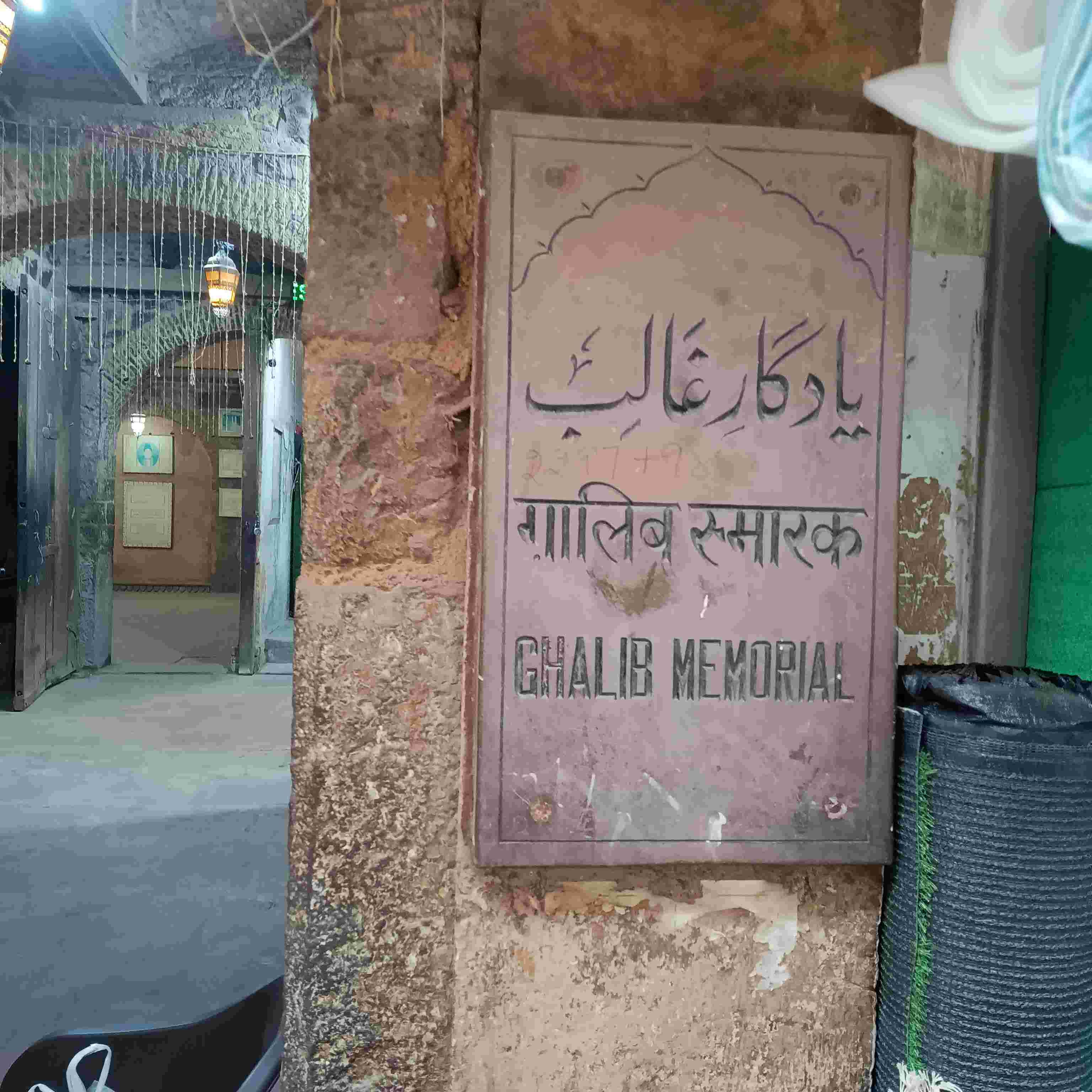
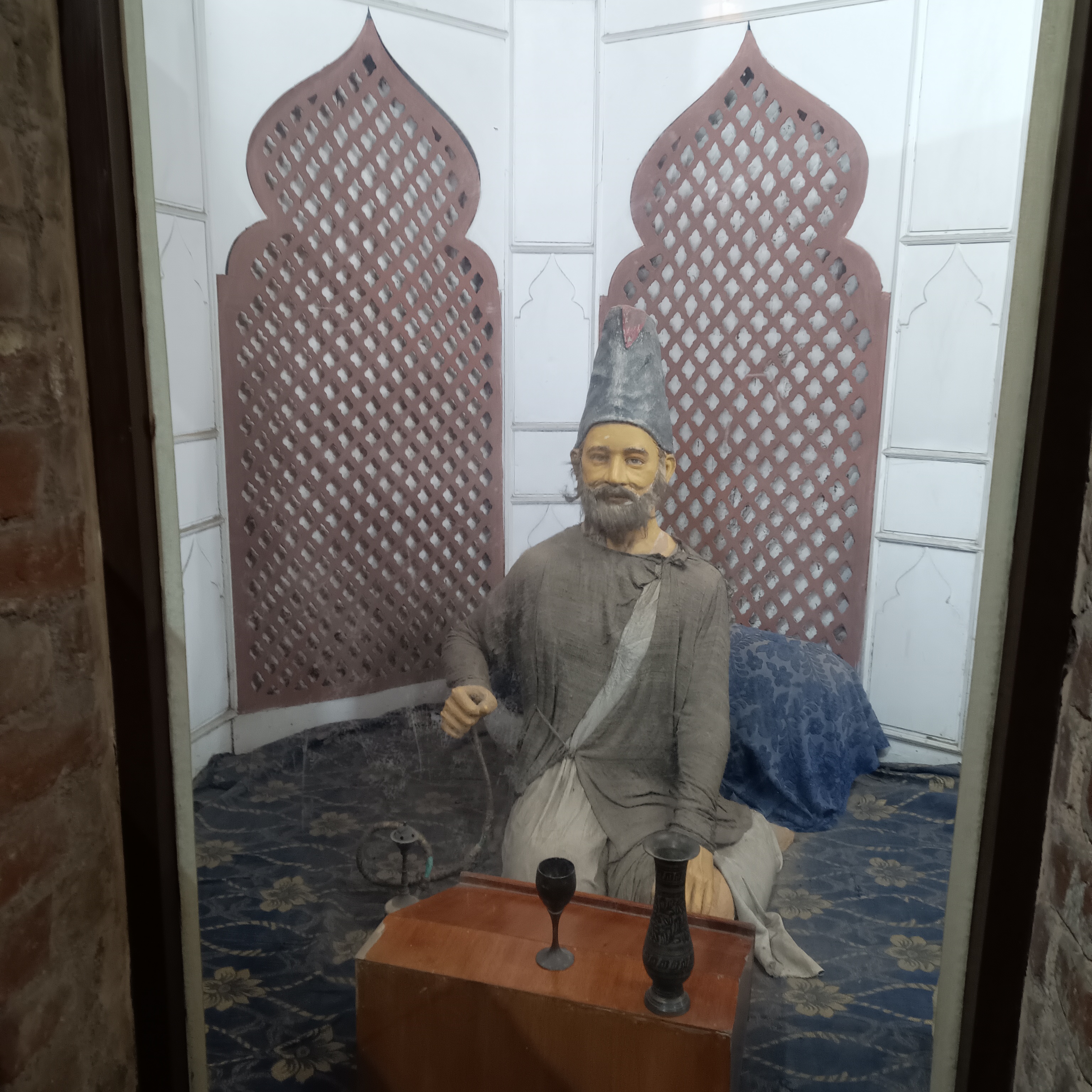
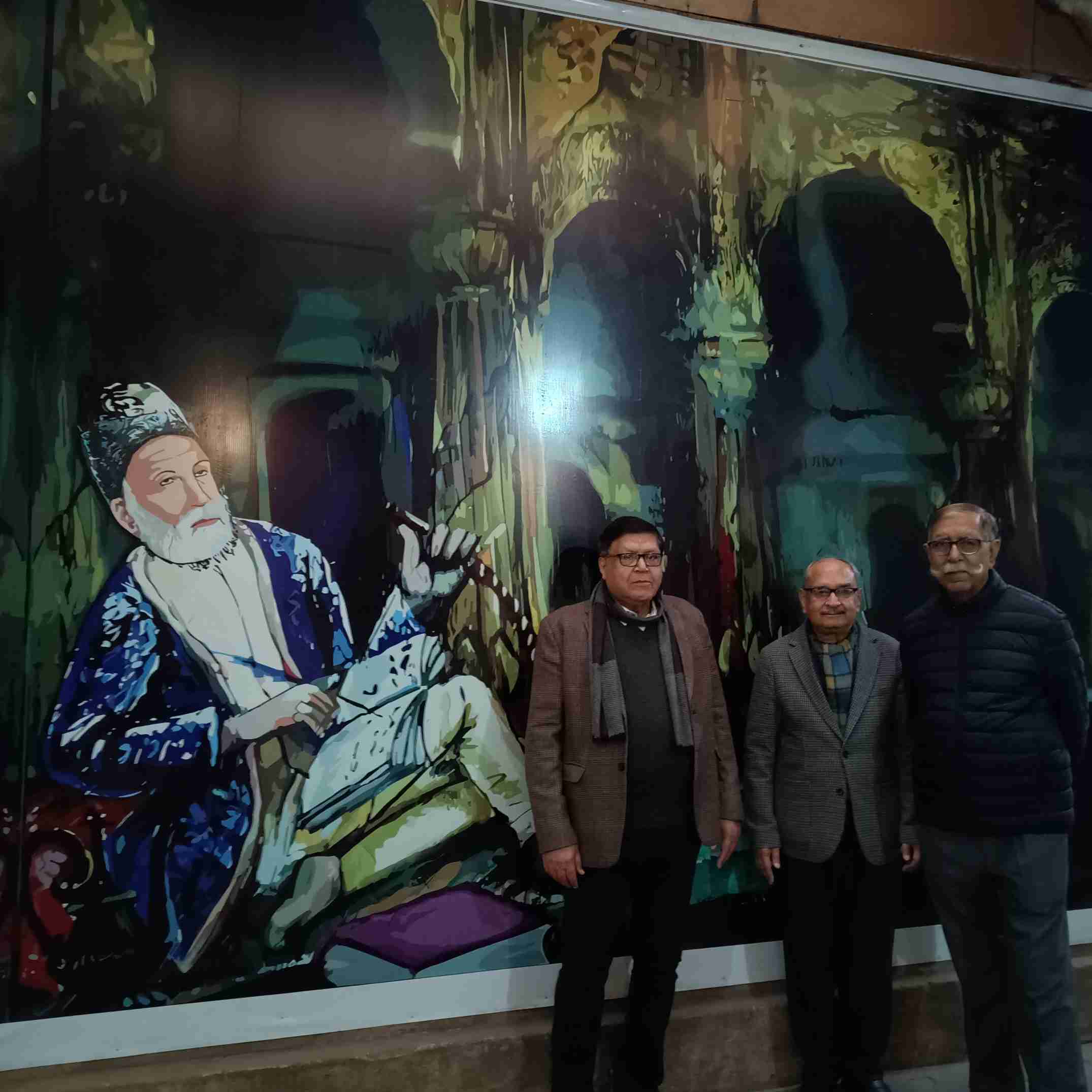
This place, where he lived from 1860 to 1869, till the time he breathed his last, has now been converted into a small museum of sorts. The main bust of Ghalib’s on display here has been gifted by Gulzar.
Mirza Ghalib

Born on December 27, 1797, in Agra, India, Ghalib’s life was marked by personal tragedies, political upheavals, and cultural transitions, all of which deeply influenced his poetic expression. Today, more than a century after his death, Ghalib remains one of the most celebrated poets in the Urdu and Persian literary traditions. His verses, rich with layers of meaning, continue to resonate with readers and scholars alike, offering insights into the human condition, love, pain, and the complexities of life.
Early Life and Personal Struggles

Ghalib was born into a family of Turkish aristocrats who had settled in India during the Mughal era. His father, Abdullah Beg Khan, was an officer in the army, but he died when Ghalib was just five years old. This left young Ghalib under the care of his uncle, Nasrullah Beg Khan, who also passed away a few years later. The early loss of his parents had a profound impact on Ghalib, and themes of loss, loneliness, and existential inquiry are recurrent in his poetry.

At the age of thirteen, Ghalib was married to Umrao Begum, a match arranged by his family. However, the marriage did not bring him the solace one might expect. Ghalib’s domestic life was fraught with tensions, and he found little happiness in it. None of his seven children survived beyond infancy. His financial struggles added to his woes, as he never held a stable job and relied on royal patronage, which was inconsistent at best.

The idea that life is one continuous painful struggle that can end only when life itself ends, is a recurring theme in his poetry. Consider this:

जब ज़िंदगी की क़ैद और ग़म का बन्धन एक ही है तो…

मरने से पहले आदमी ग़म से निजात पाए क्यूँ ?

The prison of life and the bondage of sorrow are the same,

Why should man be free of sorrow before dying?

Ghalib’s Literary Genius

Despite his personal hardships, Ghalib’s intellectual and poetic prowess blossomed. He was a polyglot, proficient in Urdu, Persian, and Turkish, and his poetry is a testament to his erudition. Ghalib’s work in Persian is extensive, but it is his Urdu poetry that has earned him eternal fame.

Ghalib’s ghazals are celebrated for their depth and complexity. A ghazal is a poetic form consisting of rhyming couplets and a refrain, with each line sharing the same meter. Ghalib mastered this form, infusing his verses with profound philosophical reflections, emotional intensity, and linguistic ingenuity. His poetry often grapples with the paradoxes of existence, the transience of life, and the elusive nature of love.

In keeping with the conventions of the classical ghazal, in most of Ghalib’s verses, the identity and the gender of the beloved are indeterminate. The critic/poet/writer Shamsur Rahman Faruqui explains that the convention of having the “idea” of a lover or beloved instead of an actual lover/beloved freed the poet-protagonist-lover from the demands of realism.

In one of my personal favourites on the tender emotion of love, he says:

उनके देखे से जो जाती है मुहं पर रौनक,

वो समझते हैं की बीमार का हाल अच्छा है.

My face is flushed with joy upon seeing my beloved,

Beloved mistakes my sickness to be a sign of good health.

One of the most remarkable aspects of Ghalib’s poetry is his exploration of the self. He delves into the intricacies of human identity, the soul’s relationship with the divine, and the quest for meaning in an indifferent world. For instance, in one of his famous couplets, Ghalib writes:

हज़ारों ख्वाहिशें ऐसी के हर ख्वाहिश पर दम निकले,

बहुत निकले मेरे अरमान फिर भी कम निकले

Thousands of desires, each worth dying for,

Many of them I have realised… yet I yearn for more.

This couplet reflects the insatiable nature of human desires, a theme that recurs throughout Ghalib’s poetry. His verses often portray a deep sense of melancholy, rooted in the understanding that the fulfilment of worldly desires is fleeting, and the ultimate truth lies beyond the material realm.

In many ways, the core of Ghalib’s poetry is not too far off from what Indian scriptures speak of.

The Philosophical Depth of Ghalib’s Poetry

Beyond his commentary on the socio-political changes of his time, Ghalib’s poetry delves into the philosophical. He was influenced by Sufism, a mystical Islamic belief system that emphasises the inward search for God and the personal experience of the divine. Sufi themes of love, union with the divine, and the eternal quest for truth permeate his poetry. However, Ghalib’s relationship with Sufism was complex. While he was drawn to its ideals, he also maintained a rational scepticism, often questioning established religious norms and dogmas. In one of his compositions, he mocks the hypocrisy of the preachers of Islam thus:

कहाँ मय-ख़ाने का दरवाज़ा ‘ग़ालिब’ और कहाँ वाइ’ज़

पर इतना जानते हैं कल वो जाता था कि हम निकले

What is the relation between the Preacher and the door of the tavern,

But believe me, Ghalib, I am sure I saw him slip in as I departed.

Ghalib’s poetry is also notable for its exploration of existential themes. He frequently contemplates the nature of reality, the impermanence of life, and the mysteries of the cosmos. His verses suggest a deep awareness of human knowledge’s limitations and the unknown’s vastness. In this sense, Ghalib can be seen as a precursor to modern existentialist thinkers, who similarly grappled with existence’s uncertainties.
Legacy and Influence

Ghalib passed away on February 15, 1869, in Delhi, but his legacy has only grown stronger with time. His poetry has been translated into numerous languages and continues to be studied, recited, and cherished by people across the world. Ghalib’s influence extends beyond literature; he has inspired musicians, filmmakers, and artists who have drawn upon his work to create new forms of artistic expression.

In India, Pakistan and elsewhere, Ghalib is not just a literary figure but a cultural icon. His ghazals are an integral part of the classical music tradition, and his life has been the subject of numerous plays, films, and television series.

Way back in 1954, Sohrab Modi gave us the movie Mirza Ghalib. Likewise, in 1961, Ataullah Hashmi of Pakistan gave us a movie on him.

In 1988, Gulzar came up with his television series which featured ghazals sung and composed by Jagjit Singh and Chitra Singh.

Various ghazal maestros like Mehdi Hassan, Iqbal Bano, Abida Parveen, Farida Khanum, Tina Sani, Noor Jehan, Suraiya, K L Saigal, Mohammed Rafi, Asha Bhosle, Begum Akhtar, Ghulam Ali, Lata Mangeshkar, Nusrat Fateh Ali Khan, and Rahat Fateh Ali Khan have sung his ghazals.
Low on The Richter Scale of Comprehension

Modern-day communication thrives on simplicity. Complex ideas are conveyed in a language that the masses understand. In other words, verses which would rate extremely high on the Richter Scale of Comprehension. However, it appears that most of our famous poets and literary figures perfected the art which is just the opposite. Simple ideas couched in high-profile and complex language, which only those at the top of the Language Proficiency Pyramid might fathom. Perhaps such literary geniuses wish to differentiate themselves from the hoi polloi.

When it comes to this particular trait, Ghalib has good company. In Urdu poetry, he is not always easy to understand. The poems dished out by him are often tough to understand, enriched as they happen to be with words drawn from the Persian language. In Hindi, the poetry of Jai Shankar Prasad comes to my mind. In Sanskrit, Kalidasa often keeps a lay reader guessing. In English, Shakespeare always leaves me baffled.

Quite some time back, I had luckily invested in a book of his poems which has not only the Urdu versions but also the corresponding translations in English and Hindi. As and when the ambience is right, I would play one of the renderings of Jagjit Singh, but only after having spotted the poem in the book. With lights dimmed, and one’s favourite tissue restorative perched on the table nearby, I get to feel the intensity of his words and end up experiencing a bliss which cannot be described in words!

Mirza Ghalib’s poetry is a treasure trove of wisdom, beauty, and emotional depth. His verses transcend the boundaries of time, language, and culture, speaking to the universal human experience. Ghalib’s ability to articulate the complexities of life with such eloquence and grace makes him a timeless poet, one whose work will continue to inspire generations to come. His legacy, like his poetry, is eternal—a shining beacon in the vast ocean of literary history.

For all lovers of Urdu poetry, visiting Ghalib’s haveli is a pilgrimage of sorts.

Notes:

  1. Vignettes of Chandni Chowk and movie/series posters courtesy of the World Wide Web.
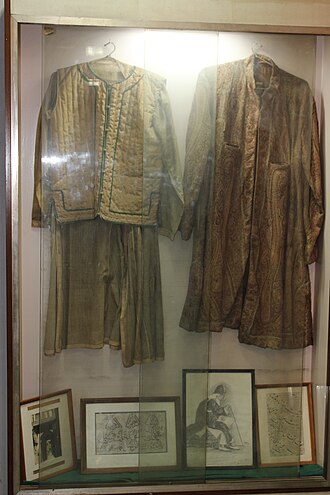
  2. Museum snaps taken by yours truly during a recent visit to the place.
  3. Inputs received from Colonel Vivek Prakash Singh (Retired), a renowned poet in Urdu and Hindi, are gratefully acknowledged.
  4. Thanks are due to Sanjay Bhatia and Ashok Kalra who enabled this visit!
Related Posts:

Read Full Post »


Oh, the eternal conundrum of a wannabe raconteur! How to entice the dear reader with a ripping yarn, without getting bogged down in the quagmire of tedious explanations? I, for one, have frequently found myself in this very predicament, my literary endeavours stymied by the pesky queries that insist on popping up every once in a while, much like the kind of obnoxious queries raised by Aunt Myrtle of The Mating Season fame at a family gathering. 

“Where, oh where, do I begin?” I cry, throwing up my hands in despair, as the words “It was a dark and stormy night” wither and die on my lips. For, you see, dear reader, I am not one of those dashed clever fellows who can effortlessly spin a tale, replete with vivid descriptions and witty asides. No, I am but a humble wordsmith, prone to getting tangled in the underbrush of my own verbosity.

Take, for instance, this endeavour of mine to regale you with the tale of our merry jaunt to Bangriposhi, a picturesque hamlet nestled in the eastern reaches of India, in the charming state of Odisha. I began, with all the confidence of a debutante at her first ball, “It was at the crack of dawn that we set forth on our journey to Bangriposhi…” only to be met with a chorus of “Wait, what’s the name of the place?” and “Why on earth did you go there?” and “Were you alone?” and so on, ad infinitum.

I confess, dear reader, that I was soon reduced to a state of utter exhaustion, my responses growing more and more feeble, like the dog Bottles of Blandings and Elsewhere fame, after it has been subjected to an excessive number of baths. “Well, you see, it was like this… we were in couples, and didn’t have any kids, so… er… yes, I suppose we did enjoy the scenery…” Ugh, the very thought of it makes me shudder!

But fear not, dear reader, for I have since sought the counsel of a wise and venerable sage, who has imparted upon me the ancient secrets of storytelling. And thus, with a renewed sense of purpose, let me share with you with the tale of our Bangriposhi adventure, sans the tedious interruptions. 

The halcyon days of Bangriposhi, where the scenic beauty unfolded like a tantalising tapestry, precisely as one would expect. A diminutive jungle, a cosy cottage, and a caretaker-cum-chauffeur, along with his better half, all combining to create an ambience reminiscent of the cinematic masterpiece, “Days and Nights of the Forest.” Our merry band of five families, sans the tiny terrors, converged upon this idyllic setting, our camaraderie forged in the crucible of our apartment complex in the bustling metropolis we infest. And yet, I confess, I felt as out of place as a toupee on a turtle’s head. The crowd, you see, was not exactly my cup of tea. Initially, I attributed this unease to my introverted nature, which, I feared, was not quite in harmony with the group’s collective psyche.

But, as I delved deeper into the mystery of my discomfort, I discovered that the root of the problem lay not with the group, but with my trusty sidekick, my wife. It was as if Bertie Wooster, sans Jeeves, had embarked on an adventure with the formidable Aunt Agatha in tow. Now, before you label me a bounder for making such a statement, permit me to explain. I have conducted an exhaustive study of my own psyche (well, as exhaustive as one can be when sipping tea and nibbling on biscuits) and discovered that, on occasion, I have mingled with groups with the élan of a seasoned socialite. So, what was the source of my trepidation this time around?

The answer, my friends, lay in the confidence-sapping presence of my wife, who, I dare say, is otherwise an epitome of virtue and rectitude. You see, in days of yore, my confidence was fuelled by those devilish cigarettes, but with my wife by my side, even the thought of those white sticks with filters at the end was tantamount to committing a mortal sin. I felt like Ignatius Mulliner, craving a smoke, but acutely conscious of the weight of my self-esteem, lest I incur the displeasure of my better half, which might precipitate a domestic turbulence of epic proportions.

In short, I was a man torn asunder by the conflicting desires of his heart and the stern dictates of his conscience, all the while attempting to navigate the treacherous waters of matrimonial bliss. Ah, the trials and tribulations of being a married man!  

Many of you may agree with me when I say that maintaining a stiff upper lip in the face of impending lunacy is something that could test the resilience of even those who are made of sterner stuff! I was, in a word, a bit of a mess, rather like Ignatius, that talented but temperamentally-challenged nephew of Mr. Mulliner. It seemed that with each tick of the clock, my grip on sanity was slipping, much like a chap trying to cling on to a greased pig at the village fair. But, by Jove, I was determined not to let the good people around me catch on to my internal turmoil. No, no, I played it cool, a regular mask of tranquillity, all the while thinking, “Good fellow, you’re one step away from being carted off to the loony bin!” If any of the group members had indeed caught onto the kind of inner torment I was experiencing, services of someone configured along the lines of Sir Roderick Glossop would surely have been sought.

And, I must confess, it’s a dashed difficult thing to do, this keeping-a-stiff-upper-lip business. I daresay, that’s why the bachelor chaps always seem so carefree – they can let their hair down, as it were, and express themselves without fear of being thought a bit…well, dotty. Alas, I felt like Horatio, constantly on the lookout for signs of my own Hamlet-esque madness bursting forth from its hiding place.

As a result, the kindly hospitality of our homestay hosts was rather lost on me. I’m afraid I responded to their warm overtures with all the enthusiasm of a sleepy sloth, muttering the occasional “thanks” and “so kind of you” in a tone that suggested I’d rather be undergoing a root canal without anaesthesia. In short, I was about as far from being my natural self as a fish is from flying. But, by George, I managed to keep the old mask in place, even if it was held together with nothing more than a few threads of sanity and a healthy dose of British pluck!

The dashed awkwardness of it all! I’m afraid I’ve made a thorough ass of myself by presenting myself in this tranquil and inviting setting, looking for all the world like a chap who has the look of one who had drunk the cup of life and found a dead beetle at the bottom. My companions, no doubt, had been hoping to indulge in a spot of idle chatter or a hearty guffaw or two, but instead, they were stuck with a fellow who resembled a fugitive from a particularly dismal funeral procession. I daresay, they must be thinking, “Good heavens, what’s got into this blighter? Has he been taking elocution lessons from a dyspeptic owl?” Ah, the horror! The shame! I might as well have worn a T-shirt proclaiming, “I’m a killjoy, avoid me at all costs!” 

As luck would have it, on a rainy day when any outdoor expedition was ruled out, the group decided to play Antakshari, a game based on songs. Amidst the dampness all around, some inner clouds of despair also gathered, leading to a veritable tempest of tune-less-ness.  I, a vocal virtuoso of the most dubious sort, found myself floundering in the depths of Antakshari despair. My usually trust-worthy memory, capable of recalling the most obscure ditties with the precision of a Swiss watch, had apparently gone on a spot of holiday, leaving me high and dry, like a chap who’s misplaced his favourite umbrella on a drizzly day. The lyrics, those pesky little devils, seemed to vanish into thin air, rather like Dr. Watson’s hasty estimate of James Mortimer’s age, which, if I recall rightly, went up in smoke the moment the good doctor cast his eye on the fellow in person.

As I stumbled from one musical misstep to the next, I felt my Superman cape fluttering to the ground, leaving me exposed, a mere mortal, stripped of my melodic mojo. It was a bit like Napoleon’s ill-fated Waterloo campaign, only instead of cannons and cavalry, I was facing a barrage of bemused glances and stifled giggles from my opponents. The ‘War of Songs’, that most noble of pursuits, had reduced me to a quivering mass of uncertainty, a chap who couldn’t carry a tune in a bucket, let alone emerge victorious in the fray.

The tribulations of a chap on holiday! As the inimitable Bertrand Russell so sagely observed, “The wise man will be as happy as circumstances permit, and if he finds the contemplation of the universe painful beyond a point, he will contemplate something else instead.” Ah, but what happens when the universe, in all its inscrutable wisdom, decides to play a trick or two on one?

On the final day of our jaunt, I found myself in a state of utter despondency, feeling as though I’d lost my own identity in the great vortex of travel. The atmosphere around me had grown as heavy as the infamous London fog, with nary a glimmer of sunshine in sight. It was as if the very clouds themselves were conspiring against me, refusing to yield even a single, solitary yellow gap which would allow a ray of sunshine to creep in and dispel the darkness of my melancholy. And then, like a beacon of hope, I chanced upon Russell’s wise words, reminding me that when the weight of the world becomes too much to bear, one must seek solace in more pleasant pursuits.

For me, that pleasant thought was a nice, long soak in the tub. Ah, bliss! We’d been cooped up in that confounded place for a couple of days, and I’d already indulged in a pre-trip scrub at home, but now, I was determined to treat myself to a good, old-fashioned bath. I became as resolute as a bulldog guarding its favourite bone, refusing to budge until I’d had my fill of hot water and soap. Much like Bertie Wooster, you would have found me soaping a meditative torso and even belting out something along the lines of Pale Hands I Loved Beside the Shalimar, if you know what I mean.

Almost all of our scriptures exhort us to introspect and meditate on the state of affairs in one’s life. Being a firm believer, I daresay there is no place other than the bathroom where one could experience this bliss and have an uninterrupted conversation with the universe, thereby giving a boost to one’s Spiritual Quotient.     

Alas, my companions, those dear, long-suffering souls, grew anxious at my intransigence, their faces as long as a wet weekend in Brighton. My wife, that paragon of patience, took centre stage, her eyebrows shooting up like a warning flag on a stormy day, signalling to me that I was being, well, a bit of a cad. But I, like Bertie Wooster in his most obstinate moments, chose to ignore her gentle remonstrations, much as he would have disregarded Jeeves’ sage advice on the perils of donning a white mess jacket with brass buttons.

The tension was palpable, the air thick with the weight of my own stubbornness. I can only imagine the trauma I inflicted upon my fellow travellers, who, in their infinite wisdom, chose to support my wife’s sensible entreaties over my own, ahem, principled stance. And yet, at the time, I felt the kind of hollow defeat that plagues a character from R.K. Narayan’s stories—like a weary clerk who, after dodging creditors, losing his lunch money, and missing the last bus, drags himself home only to find the milk curdled and the fan creaking in the sweltering heat.

But fate, in its infinite mercy, intervened, and the caretaker’s wife announced that they were running low on fuel, and hot water was a luxury we could ill afford. With a sigh that was equal parts relief and frustration, I beat a hasty retreat, my dignity bruised.

And so, dear reader, we come to the end of this tale of woe, a chronicle of one man’s valiant struggle to maintain a stiff upper lip in the face of impending lunacy. As I reflect on the trials and tribulations of our Bangriposhi adventure, I am reminded of the wise words of that great sage, G.K. Chesterton: “The only way to be sure of catching a train is to miss it.” Ah, the profound wisdom of those words! For, in the end, it was not the scenic beauty of Bangriposhi, nor the camaraderie of our merry band, that proved the greatest challenge, but rather the internal turmoil of my  own mind, aided and abetted by my better half. When everyone took my wife’s side instead of mine, in that moment of extreme insult, I was reminded of the following words by P.G. Wodehouse:

Are wives often like that? Welcoming criticism of the lord and master, I mean?’

‘They are generally open to suggestion from the outside public with regard to the improvement of their husbands, sir.’

Note: Images courtesy of the World Wide Web we have spun around ourselves.

Related Posts:

Read Full Post »

Much like all the mothers on this planet, my mother also thought me intelligent.

However, I suspect I might have become mentally arrested at an early age, dishing out the sort of articles and books which people, not knowing the facts, assume to be the work of a cheerful, if dense, young fellow of about thirty-five.

My readers, God bless their souls, perhaps tell one another that they might do well to lend an ear to what this youngster has to say. Get the aspiring generation’s point of view, and all that. Some of them, unable to contain their enthusiasm, occasionally manage to persuade the authorities to invite me over to their educational institute and share a few words of wisdom.

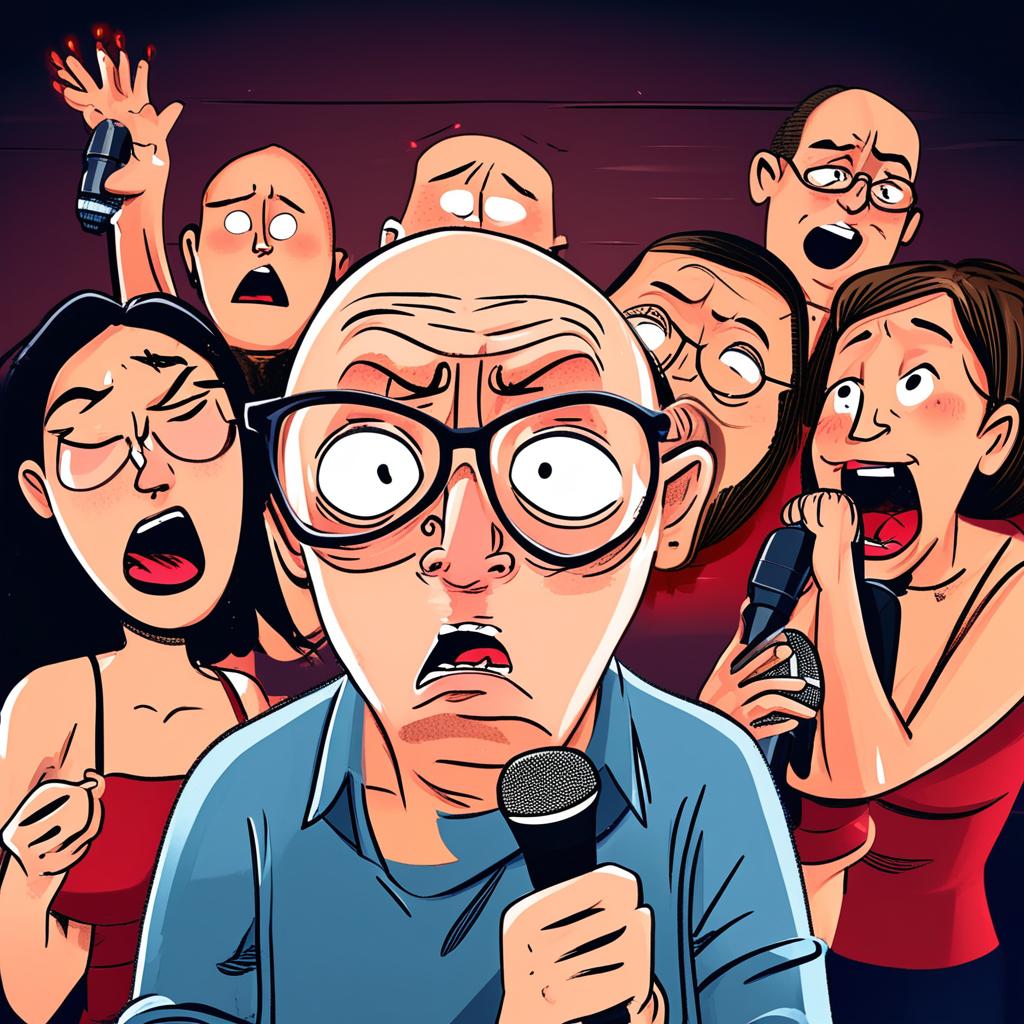
However, when the day finally dawns, they are in for a rude shock. Contrary to what they imagined, they find a septuagenarian with a stooping back whose bald pate is shining in the overhead lights. When invited, they are aghast at finding him tottering up the stairs to the stage. His face often sports a permanently worried expression, making the onlookers wonder if he happens to be one of the honorary Vice Presidents of the Global Morons’ Association.

A collective gasp of disbelief and disappointment emanates from the audience. Such was indeed the fate of a motley crowd of young ladies on a recent occasion.

Like many authors, I am content to remain in my own bubble of thoughts, ideas and words. Solitude is what I crave.

Public speaking for me is a tortuous experience. I detest the fact that whereas I need to work hard on preparing for a talk, the audience merely needs to troop in, listen to the sagacious wisdom being imparted in a nonchalant manner, often paying more attention to the birds twittering outside the windows of the auditorium. And if the audience were to comprise young ladies who have perfected the art of unnerving the speaker by either staring at the poor fellow, or simply giggling when something serious is being said, you can well imagine the rapidity with which the butterflies inside my abdomen start flapping their wings.

I have had the occasion to study the methods of some of the more popular public speakers. Other than excellent oratorial skills, they possess a quality which is not easy to define. Let me say that they appear to have undergone a crash course in Decision Making Under Uncertainty. They have what I might call the gift of dealing with the Unusual Situation. The staring and giggling technique adopted by my audience, though, queers the pitch.

In the presence of the Unusual, I am rather prone to smile weakly and allow my eyes to protrude. Perhaps, I lack Pluck and Presence. Thus, it proves to be an ordeal which knocks all the stuffing out of me right from the start. I look at the young ladies and find each one staring at me with an unwavering gaze. I blink, then begin picking feebly at my coat sleeve.

Most lectures I get invited to follow a similar blueprint. Somebody gets up and introduces the chairperson and the speaker of the evening. Both amble up the stage. The chairperson on this occasion was built along the lines of Mother Abbess of The Sound of Music fame. She does not croon an invigorating melody like Climb every mountain. Instead, she mumbles a few words designed to cheer up the speaker, to allay his anxiety as to whether the audience is carrying any supplies of rotten eggs, potatoes, and tomatoes which may come in handy in case they do not receive his words of wisdom in the right spirit.

She concludes by making a few sympathetic observations about the subject at hand. Later, while the talk is being delivered, she can be seen making brief notes on a scrap of paper in a studious manner. Later, she uses these to wrap up the proceedings as quickly as the norms of society, the dictates of behavioural sciences and the standards of politeness would allow.

As a distinguished speaker of the evening, I am invariably dressed in an impeccable corporate style. This is merely to mask the inner shivering I happen to be experiencing at the prospect of facing a firing squad comprising close to seventy-odd students. Externally, I exude confidence. Internally, I am all of a twitter. I regret not having been prescient enough to help myself to generous helpings of a strong tissue restorative prior to arriving at the venue to deliver a speech.

True to form, once the introductions are made, an uproarious bout of clapping comes about, and an air of expectancy falls upon the hall. I gulp, mop my brow, and take a tentative sip from the glass of water in front of me. Then, after having fortified myself with a deep breath, I totter forward.

“Well, you know——” I said.

Then it strikes me that this opening lacks the proper formal dignity.

“Ladies——”

A silvery peal of laughter from the front row stops me again.

I then summon all the courage at my command, take another deep breath, and go on to describe at great length what I think of the scandalous way the tyranny of the classroom gets unleashed upon unsuspecting students. I highlight to them the benefits of taking their studies seriously, to be better prepared to face the harsh slings and arrows of life. I even go on to exhort them to get rid of their addiction to smartphones.  

While I try my best to convey a few messages of the serious kind, I also attempt to induct some humour into the otherwise drab, listless, and sombre proceedings. This helps me to sugarcoat the otherwise dull and boring content of my talk.  

The audience upon which my verbosity is getting unleashed listens in a state of polite resignation, often suppressing a yawn or two. With an eye on the wristwatch and a nose trying to detect the faint aroma of snacks and coffee being served outside the lecture hall, it is not difficult to discern that they are merely biding their time, hoping for the ordeal to end soon.

Then comes the time to face the firing squad, so to say. A few in the audience take turns to rise and ask carefully phrased questions which are perhaps meant less to gain a better understanding of the subject but more to impress the faculty members present. When a question gets asked in the pure spirit of proving to the assembled group that the questioner is smarter than the questioned, I decide to assert myself by saying haughtily that I can find her arguments but cannot find her brains.

Occasionally, I need to do a mental foxtrot, sidestep a question of an obnoxious kind, and instead narrate a joke, thereby leaving the audience in a confused yet pleasant frame of mind. I find that it is always a good trick to occasionally lace one’s answers with high-sounding words and complex ideas. One of the golden rules to be followed is that an audience that is bewildered and clueless about what is being said would be less prone to raising penetrating queries.

I consider myself lucky that the meeting has not turned boisterous; had that happened, the audience would surely have had more fun, but yours truly a good deal less.

As the discussion teeters on the edge of chaos, the chairperson swiftly steps in, perhaps noticing that I am just moments away from starting to twiddle my thumbs. She rushes in to conclude the affair, thereby bringing joy and relief all around. As a speaker, I am delighted that I was rescued just in time. I look upon the chair much like a typhoon survivor would look upon the US Marines when they arrive to rescue him from a disastrous situation.

Someone from the institute’s side quickly offers a vote of thanks to all and sundry, lest I might change my mind and go on to depress the audience any further. Mother Abbess hands over a ghastly-looking trophy by way of a token of appreciation and gratitude, duly accompanied by a round of applause from the audience, who are obviously delighted that their trauma is finally over. They rush out to grab the vitamins laid outside the hall, not only to keep their body and souls together but also to overcome the state of depression induced by my talk.

The organisers breathe easy, having saved their reputation as well as the furniture and other items from any damage.

The pleasant surprise is that while gobbling up the refreshments served, some of the eager beavers surround me and question me on several topics of contemporary interest. I confess this works like a soothing balm to an otherwise bruised soul. A gentle glow of inner satisfaction, howsoever transient in nature, suffuses the mortal frame. However, this is not to say that one looks forward to repeating a public speaking appearance in the future.    

Anyhow, it can be safely stated that a smoothly conducted lecture meeting is one of our civilisation’s most delightful indoor games. The speaker gets to build on his brand equity and indirectly promote the inane stuff he keeps dishing out. His ego gets a boost. Surrounded by youthful energy and waves of curiosity, he ends up expanding his canvas of knowledge. If it is instead a congregation of business magnates, his circle of influence gets enlarged. The possibility of landing a consultancy assignment improves.

What is the moral of the story, you might well ask.

Well, accept any such invitation to deliver a lecture at a public forum only at your own risk and peril. Do a cost-benefit analysis before accepting the invitation. Have pluck. Have the capacity to handle the Unusual Situation. Be cautious that such an experience could end up smothering your ego. The poor thing could not be blamed for feeling as if it were getting pummelled with size twelve hobnailed army boots. If the audience comprises young students who might have perfected the art of unnerving speakers by alternately staring and giggling, develop nerves of chilled steel before heading to the venue.

Notes:

  1. Illustration courtesy Suvarna Sanyal.
  2. This article had first appeared on Slo Word: https://www.sloword.com/isbf24-the-perks-and-perils-of-public-speaking-by-ashok-kumar-bhatia.

Related Post:

Read Full Post »

वो सद-रश्क जन्नत वो गुलज़ार देहली

वो देहली जो फ़िरदौसेहिंदोस्ताँ है


वो मजमुआ-ए-हुस्नो अनवार देहली

वो देहली के जिसकी ज़मीं आस्माँ है


वही जिसने देखे हैं लाखों ज़माने

सुने हैं बहुत इन्क़लाबी फ़साने


जहाँ दफ़्न हैं सैकड़ों ताज वाले

दोरोज़ा हुकूमत के मैराज़ वाले


वहाँ शम्मा जलती है धीमीसी लौ की

जहाँ जल्वारेज़ी है तहजीबेनौ की


वहीं की ये दिल दोज़ रूदाद सुनिये

जहानेअलमज़िक्रे बेदाद सुनिये


शफ़क से पहर के ठिकाने लगी थी

सियाही फ़िज़ाओं पे छाने लगी थी


फ़लक पर सितारे चमकने लगे थे

मुहब्बत के मारे बहकने लगे थे


वो बाज़ार की ख़ुशनुमा जगमगाहट

वो गोशआश्ना चलने फिरने की आहट


वो हर तरफ़ बिजलियों की बहारें

दुकानात की थी दुरबिया कतारें


ये मंज़र भी था किस कदर कैफ़सामाँ

ख़ुदा की ख़ुदाई थी जन्नत बदामाँ


सड़क पर कोई रहरू कुए जाना

चला जा रहा था ख़रामा ख़रामा


इधर राह पर नौजवाँ जा रहा था

उधर कोई मोटर चला रहा था


ये गाड़ी थी जो चली रही थी

हक़ीक़त में जन्नत खिंची रही थी


कोई क्या बताये कि जन्नत में क्या था

वही था जो अब तक देखा हुआ था


वो हुस्नेमुक़म्मिल वो बर्केमुजस्सिम

वो जिसके तसव्वुर से भी दूर हो ग़म


वो इक पैकरेसादगी अल्लाहअल्लाह

वो नाज़ुक लबों पर हँसी अल्लाहअल्लाह


सरापा मुहब्बत सरापा जवानी

सितम उसपे साड़ी का रंग आस्मानी


वो रह रह के आँचल उठाने का आलम

वो हँसहँस के मोटर चलाने का आलम


ये आलम बज़ाहिर फ़रेबे नज़र था

कि बस एक लम्हे में रंगेदिगर था


बश्शाश चेहरा लब पे तबस्सुम

सुकून आश्ना था अदाये तकल्लुम


गिरा बारियाँ दिल को शर्मा गई थीं

निगाहों पे तारीकियाँ छा गई थीं


हुये सनफे नाज़ुक के होशो ख़िरद गुम

ज़ुबाँ ने पुकारातसादुमतसादुम


ये मंज़र भी था किस कदर वहशत अफ़्जा

कि मोटर सरे राह ठहरा हुआ था


दिगर गूँ थी हालत तमाशाईयों की

ख़बर थी उन्हें दिल की गहराईयों की


इधर नौजवाँ खूँ बदामा पड़ा था

उधर एक मासूम क़ातिल खड़ा था


इधर रूह अज़्मेसफ़र कर चुकी थी

उधर दिल पे वहशत असर कर चुकी थी


इधर मौत ख़ुद ज़िन्दगी अस्ल में थी

उधर ज़िन्दगी मौत की शक़्ल में थी


गरज़ खुल गई असलियत हादसे की

हुई मरने वाले की जामा तलाशी


पसे जेब क़ातिल की तस्वीर निकली

इलावा अज़ीं एक तहरीर निकली


तसल्ली हुई जान में जान आई

जो पर्चे पे लिखी इबारत ये पाई


जफ़ाएमुसल्सल से घबरा गया था

मैं ख़ुद आके मोटर से टकरा गया था


टिप्पणियाँ:
  1. मेरे दिवंगत पिताजी मुझे बचपन में बताते थे की यह नज़्म चांदनी चौक दिल्ली में बहुत साल पहले हुई एक असली दुर्घटना पर आधारित है
  2. तस्वीर हिंदुस्तान टाइम्स के सौजन्य से
  3. विवेक प्रकाश सिंह का विशेष आभार

Read Full Post »

Read Full Post »