
I. The Specimen at Breakfast
It is a truth universally whispered, if not acknowledged, that a man excessively fond of his mother is a developmental hiccup waiting to happen. He may be able to earn a salary, navigate traffic, even discuss the stock market — but the moment he mentions calling his mother, he is mentally filed away under Incomplete Specimen of Homo sapiens. This is especially so if the party of the other part happens to be either his spouse, or a live-in partner, or even a steady girlfriend.
Observe one in his natural habitat: spooning sugar into his morning tea with the precision of a laboratory technician, eyes flicking toward his phone — not for stock alerts or fantasy league scores, but to text “Good morning, Ma.” Evolution, one suspects, took a wrong turn somewhere between the Y chromosome and the apron string.
Society, ever alert to genetic inefficiency, has decided that this man must be mocked into extinction. He represents emotional dependency in an age that prizes self-sufficiency — the last candle in a world that prefers LED.
II. The Crime of Devotion
The modern “Mumma’s Boy” is a walking paradox: sentimental in public, decisive in none of the approved ways. He is not loud enough to be “alpha,” nor cool enough to be “detached.” He apologizes too quickly, remembers anniversaries unprompted, and believes emotions are meant to be acted upon, not merely analysed in therapy. In short, he is guilty of unedited humanity.
The crime, of course, is not affection itself — it is the refusal to outgrow it. Civilization applauds the man who rises above his upbringing, not the one who keeps it alive. The market rewards efficiency, not continuity. Our man, poor fellow, confuses tenderness with duty. He texts his mother daily because he has once lived through the silence that followed a missed call. He obeys her warnings about rain because he still remembers pneumonia from childhood. His obedience, mocked as immaturity, is often just trauma in polite clothes.
III. Society’s Favourite Punchbags
It is not that women despise such fussed-over persons — they simply find him inconvenient. For, how do you compete with someone’s story of origin? The Mumma’s Boy threatens the fragile ecosystem of modern romance: he already belongs to a woman who expects nothing, manipulates rarely, and forgives instinctively. It is not rivalry so much as redundancy.
Men, meanwhile, offer no solidarity. They, too, laugh — loudly — at the one who has not mastered emotional detachment. It is the laughter of the insecure, the sound of men terrified that affection might be contagious. Among themselves, they repeat that chilling corporate proverb of our age: Never mix feelings with efficiency.
And so, the mockery becomes ritual — a collective reassurance that we have evolved past dependence. What we really mean is: We have forgotten how to love without negotiation.
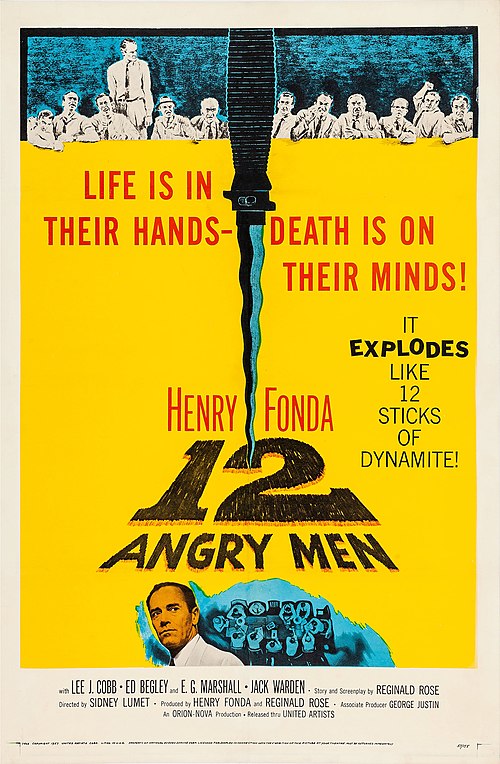
Sometimes it feels like that great trial on screen — twelve angry voices debating one man’s tenderness. The accused sits quietly, guilty of calling his mother, of speaking softly, while the jurors of modern life argue his fate. They call him dependent, unfinished, obsolete. And then Juror Eight raises his head, the lone dissenting conscience, asking what no one wants to: what if gentleness is not weakness but evidence of endurance? The others look away, impatient for a verdict. Empathy, as always, wins no medals — only the comfort of being right too early.
IV. The Concept of Extended Motherhood
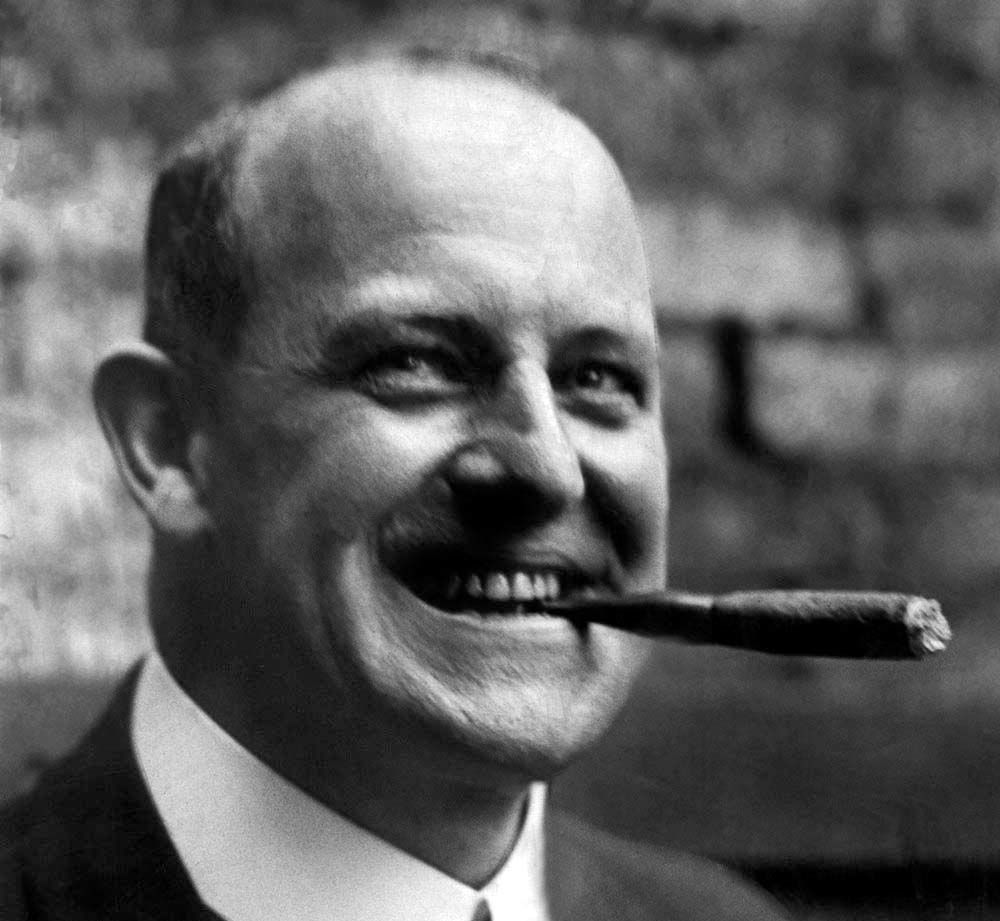
The role of the mother does not always remain confined to one’s genetic parent. Motherliness is a sentiment which many other parties could end up showering upon the hapless male in question. It could extend its scope to include obdurate aunts, assorted females, and even valets and butlers who fuss over the object of their affections or masters in a way that could turn their biological mothers green with envy.
Consider Aunt Agatha who is forever keen to see Bertie Wooster getting married and keeping the Wooster dynasty alive and kicking. We also find Emerald Stoker who is one of those soothing, sympathetic girls you can take your troubles to, confident of having your hand held and your head patted. There is a sort of motherliness about her which you find restful. Not to forget the likes of Florence Craye and Vanessa Cook, who wish to raise the level of Bertie’s intellect. Elsewhere, at Deverill Hall, we get introduced to Esmond Haddock, who lives with his five overcritical aunts. They disapprove of his relationship with Corky Potter-Pirbright, because she is an actor.
Social status is no barrier to such strains of motherhood. Lord Marshmoreton must muster all his courage to stand up to his sister, Lady Caroline Byng, and declare a matrimonial alliance with his newly appointed secretary. In Blandings, Lord Emsworth finds it challenging to ignore the instructions of Lady Constance Keeble.
V. The Wodehouse Paradox

If literature had a patron saint for this tribe, it would surely be Bertie Wooster — the eternally well-meaning man who requires Jeeves not to outthink him but to save him from his own kindness. The Wodehouse universe never punishes the sentimental fool; it merely chuckles at him. And yet, who among us would rather live in Jeeves’s world — all logic, all restraint — than Bertie’s, where affection and absurdity coexist like bread and butter?
Jeeves’ is another shining example in the genre of extended motherhood. Just like one’s mother would decide what to wear on a certain occasion, his sartorial choices often conflict with those of his master. Whether it is about a white mess jacket with brass buttons or a pair of socks, the valet’s wish eventually prevails.
Our modern world has no use for Woosters. We have replaced them with algorithmic men — rational, optimized, and barely human. We speak of “emotional intelligence” but what we really mean is emotional management. In a quiet act of rebellion, the Mumma’s Boy continues to feel un-strategically. He loves inconveniently. His sentimentality, far from being regressive, is the only authentic protest left.
Somewhere in his subconscious, he still believes love should precede purpose — a belief that makes him unemployable in the economy of the heart.
VI. A Matter of Chromosomes and Consequences

If one were to approach this anthropologically, one might say the X and Y chromosomes never quite recovered from the moral confusion of modernity. Men were trained to conquer, but not to comfort; to provide, but not to preserve. Our subject — this peculiar holdover from an earlier blueprint — runs on an emotional operating system last updated when people still said ‘touch base’ unironically. Once, during an office migration, he was the only one who refused to upgrade to the new HR portal because his old login still worked—and he trusted that more than promises of “a better interface.” That, in essence, is his problem and his virtue: he sticks to what once kept him safe, even when everyone else has moved to cloud-based feelings. He still believes that obedience to his parent can be a form of strength — a legacy code he sees no reason to rewrite.
He is loyal to the first woman who ever loved him unconditionally, and that loyalty leaks inconveniently into other relationships. But instead of being admired for gratitude, he is censured, condemned, criticised, denounced, lambasted, lampooned, and pilloried for having a regressive outlook. A culture that venerates mothers in myth, after all, cannot quite stand sons who take the mythology literally. We worship the Mother Goddess with cymbals and incense, but flinch when a man lives by her word. The hymns say, “Matru Devo Bhava,” yet a son who truly believes it — who lets his mother’s advice outweigh his wife’s or boss’s — is dismissed as weak, regressive, or unmanly. In our stories, divine mothers bless their children’s wars and ambitions; in real life, they’re expected to stay politely out of them. The contradiction is cultural theatre — we deify motherhood, but only in the abstract. The moment reverence becomes obedience, the devotee metamorphoses into a punchbag. You see it everywhere — we stage plays about mothers’ sacrifices, post emotional tributes on Mother’s Day, and light lamps to divine matriarchs, yet flinch at the real-world consequences of such devotion. A son who quotes his mother is infantilized; one who disobeys her is applauded for “growing up.” It’s as if society prefers motherhood embalmed in marble, not breathing at the breakfast table. The worship is safe precisely because it’s distant. Up close, it demands humility — a virtue now branded as weakness.

And if that sounds too tragic, literature has always offered more consoling alternatives.
Even Bram Stoker, that cartographer of nightmares, gave the world a family of obedient sons. The Children of the Night in Dracula rise only when summoned, hunt only what their master decrees, and retreat at a single gesture. Strip away the gothic trappings, and they are curiously domestic creatures — well-mannered predators who would never dream of disobeying their guardian. Theirs is not rebellion but perfect filial discipline: a household of nocturnal Mumma’s Boys, loyal to a fault, beautifully house-trained in terror. The feudal spirit prevails.
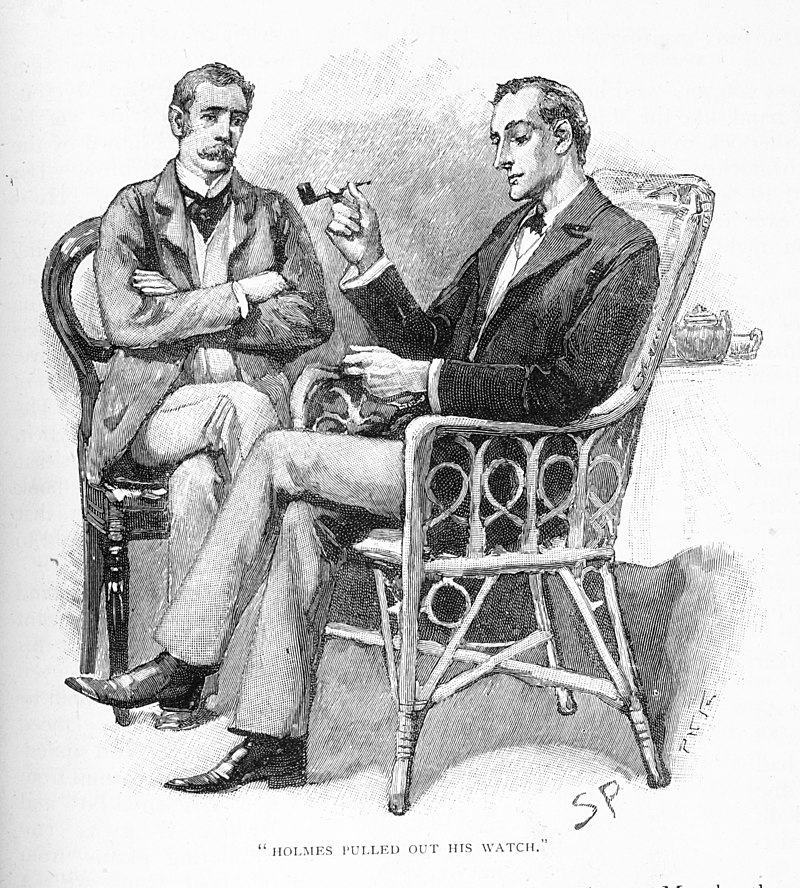
And then, on a very different plane, comes Arthur Conan Doyle’s The Adventure of the Three Garridebs. When Dr Watson takes a bullet meant for another, Sherlock Holmes — that priest of logic, that marble statue of reason — forgets deduction altogether.
“You’re not hurt, Watson? For God’s sake, say that you are not hurt!”, he cries, tearing open the wound like an anxious mother examining a scraped knee. For one mortifying instant, the cold machine of intellect becomes the warm machinery of care. The great detective, so often accused of heartlessness, turns out to have been hiding a maternal core under his waistcoat. Even Doyle, perhaps without meaning to, admits that the purest love left to civilisation may no longer be romantic or heroic, but quietly maternal in spirit.
VII. The Inconvenient Truth
Here is the inconvenient truth: the Mumma’s Boy is not a moral failure. He is, in fact, society’s unwanted conscience. His instincts are outdated only because ours have calcified. While we train ourselves to love efficiently — in 300-character texts, in time slots between meetings — he still believes affection does not need an agenda. He may never lead revolutions or scale startups, but he will never ghost you either.
His so-called immaturity is often merely a refusal to evolve into emotional automation. After all, unlike in the digital logic-driven world that he inhabits, emotions are challenging to predict based on an algorithm or a mathematical equation. Mock him all you want, but he carries the faint, embarrassing reminder that tenderness used to be fashionable. Those who like him love him enough to let him enjoy the extra space for himself – the segment of his heart which has been lovingly occupied by someone from his childhood days.
So, to borrow from Rocky Todd, let him be!
“Be!
Be!
The past is dead.
To-morrow is not born.
Be to-day!
To-day!
Be with every nerve,
With every muscle,
With every drop of your red blood!
Be!”
VIII. The Last Gentleman
And so, the poor “Mumma’s Boy” trudges on — neither rebel nor saint, just an outdated model of emotional software running in a world obsessed with constant updates. He will continue to be the butt of jokes at brunches, kitty parties, and on social media panels about “modern masculinity.” But here is the twist: when the Wi-Fi of human connection inevitably goes down, it is usually this man — with his unglamorous emotional wiring — who still knows how to reconnect without instruction.
He will still call home, still remember birthdays, still believe that love does not need a disclaimer. Society may keep rewarding the loud and detached, but somewhere, between a performance review and a reminder to buy detergent, he’s the one holding civilisation together with nothing more than a well-intentioned affection and a decent phone plan.
Note:
- Inputs from Prodosh Bhattacharya are gratefully acknowledged.
- Illustrations courtesy the World Wide Web.


 ashokbhatia
Leave a comment