
Archive for the ‘A Vibrant Life!’ Category
Aaj Jaane Ki Zid Na Karo: Guest Post by Krishna Kumar
Posted in A Vibrant Life!, tagged Farida Khanum, Ghazals, Music on May 27, 2024| Leave a Comment »
ये पचास साल का साथ हमारा
Posted in A Vibrant Life!, tagged 50th, Ancestors, Culture, Family Values, Heritage, Hindi, Marriage Anniversary, Poem on May 20, 2024| 4 Comments »

जीवन के इस स्वर्णिम पल का लें हम निर्मल आनंद,
हाथ में हाथ लेकर चल पड़े थे हम कभी जीवन की राहों पर;
समय एक मखमल के दुपट्टे जैसा फिसला है हाथों से,
जा बैठा है यादों के वृक्ष की एक ऊंची टहनी पर.
इस वृक्ष पर लटकी हैं ढेर सारी खट्टी मीठी यादें,
कहीं कुछ मुस्कुराहटें हैं, तो हैं कुछ आंसू भी;
टेढ़ी मेढ़ी टहनियां बताती हैं उन रास्तों की कहानियां,
जिनको पकड़ कर जीवन के हर मोड़ को हमने है जिया.
बरगद सरीखे इस पेड़ की जड़ें हैं बहुत गहरी,
पूर्वजों के आशीर्वाद से है इनकी उत्पत्ति;
अपने प्यार और अथक परिश्रम से सींचा है इनको,
प्यार और परस्पर विश्वास की खाद से पोषित किया है इनको.
इसकी जड़ें हैं संचित पारिवारिक मूल्यों की धरती से ही,
संस्कारों, शुद्ध विचारों, और सुकर्मों से भी;
अगली पीढ़ियों के पंछी कलरव करते इसकी विशाल टहनियों पर,
उनके चहचहाने और कूकने की आवाज़ें गूंजती आँगन भर.
परिवार के ये पंछी उन्मुक्त इस विशाल गगन में ऊँचे उड़ें,
नए क्षितिजों को ढूंढें, नव कीर्तिमान स्थापित करें;
जब भी किसी घने जंगल में अपने को एक दोराहे पर पाएं,
हमारे पारिवारिक मूल्यों की कंपास के साथ आगे बढ़ें.
बरसों बीते संग रहते, कुछ कहते, कुछ सुनते,
गृहस्थी की गाडी के दो पहियों को आगे बढ़ाते;
चन्दन पानी सा साथ है यह हम दोनों का,
अब शायद समय है एक दूसरे का ज्यादा ख्याल रखने का.
बहुत कुछ सोचा, बहुत कुछ किया, बहुत कुछ मिला है इस जीवन में,
बच्चों का मिल रहा है अथाह प्यार जिसके लिए ईश्वर के आभारी हैं;
खेद नहीं है कोई, न है कोई दुर्भाव अथवा पश्चात्ताप ही,
बस एक आतंरिक शांति अवश्य है, और संतुष्टि का आभास भी.
(एक युगल दंपत्ति की ५०वीं शादी की सालगिरह के अवसर पर रचित)
(सुनील जैन की प्रेरणा के लिए आभार)
Tribute to a Cinematic and Literary Genius: Guest Post by Suryamouli Datta
Posted in A Vibrant Life!, tagged Crime, Feluda, Fiction, Humour, Literature, Movies, P G Wodehouse, Satyajit Ray on May 2, 2024| Leave a Comment »

Allow me to share with you how his creative genius has exercised his soft power on a lesser mortal like me.
My earliest interactions with the master of Indian Cinema
I shall not delve into an analysis of his writing or filmmaking style here. Instead, allow me to recount my enduring fascination with this individual, a fascination that has only grown over the years despite conceding to certain critics who possess a profound understanding of the art of cinema and literature. My initial encounter with this luminary was through his debut film, ‘Panther Panchali (Verses of the Road).’
Back then, in the third grade, I was enthralled by action-packed movies and witty dialogues, the kind that resonated with my young mind. To me, Spiderman, Superman, and He-Man held more allure than any film of that era. I would eagerly watch the screen, whether on television or at the cinema, during fight scenes, shootouts, or comedic moments. It was during this time that I first encountered ‘Verses of the Road.’ Watching it alongside my younger cousin, who was two years my junior, I experienced a newfound appreciation for storytelling. Unlike the captivating action sequences, my interest in this film stemmed not from its technical aspects, which was perhaps too much to expect from me at that time, but rather from its narrative, which evoked the storytelling style of my elders.
Then, a film called ‘Shakha Proshakha’ (‘The Branches of a Tree’) was aired on television. Despite being by the same director, it failed to captivate me, save for a few clever lines delivered by a young child actor who amusingly mimicked phrases like ‘Batman’ and ‘Superman’. His familiar gestures, like darting into a thicket with a toy gun, alone resonated with me deeply.
As I followed his journey, other films like ‘Apur Sansar’ (The World of Apu) and ‘Mohapurush’ (The God Man) caught my attention, yet failed to resonate, perhaps because I was too young to grasp their significance back then.
Back in my fifth-grade days, I harboured a fervent desire to emulate him – a film director, you see. It stemmed from my own struggles with academic achievements of any kind, a trait that he shares with me. I recall stumbling upon his stories in books or magazines and catching a glimpse of him on TV. Looking back, I cannot help but chuckle at my youthful naivety. As I’ve matured, both physically and mentally, I’ve come to understand that he occupies a pedestal beyond my reach. Critics may nitpick, and there may have been filmmakers of greater acclaim before and after him, but none hold a candle to the place he holds in my heart. He serves as a guiding light, steering me towards a deep appreciation for the world of film and literature.
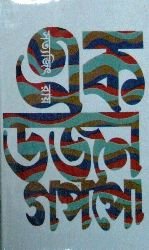
Immersed in the legend’s Literary Palette: An Anthology of Wonder
In the 5th grade, amidst one of my summer breaks, I stumbled upon a book from my mother’s collection titled ‘Ek Dojon Goppo’ (‘An Anthology of a Dozen Stories’). The initial tale, ‘Septopus-er Khide’ (‘The Hungry Septopus’), depicted a carnivorous plant resembling an octopus, bringing peril to its owner. At the time, while I found some scenes thrilling, overall, the story failed to captivate me.
Following this was ‘Bankubabu-r Bandhu’ (‘Banku’s Friend’), narrating the story of an innocent village schoolmaster teased by peers and students until encountering an alien named ‘Ang,’ subsequently altering his life. Interestingly, I had already watched a televised adaptation of this story, featuring Sadhu Meher as Banku. Having also seen ‘E.T.’ by then, the narrative felt somewhat familiar. Controversy arose when the author, also a filmmaker, envisioned earlier adapting the tale into a Hollywood collaboration film named ‘Alien,’ encountering similarities with ‘E.T.’ Yet, irrespective of the debate, the story failed to resonate with me at the time, likely due to my prior exposure to its audio-visual renditions.
First Realization: Indigo Terror
As I delved into the pages of the book ‘Ek Dojon Goppo,’ initially sceptical of its worth, one particular short story, ‘Neel Atanka’ (The Indigo Terror), captured my attention entirely. Aniruddha Bose, a 29-year-old employee of a prestigious multinational corporation, embarks on a journey to Dumka, near Bolpur, Shantiniketan, in his own car. Along the way, he encounters a series of mishaps—his car’s tires bursting at regular intervals, forcing him to rely on only one replacement. With no other recourse, he seeks refuge in a nearby house overseen by a caretaker, a narrative device that may have subsequently inspired the Ramsay Brothers, albeit uncredited (wink!). Exhausted, Aniruddha resigns himself to rest for the night. However, in the dead of night, he awakens to find himself transformed into the former owner of the house, a European indigo planter from long ago. The story unfolds with Aniruddha grappling with his new identity and the events that follow.
Long before the film ‘Bhool Bhulaiyaa,’ this narrative evoked the eerie atmosphere of a psychological horror tale. Moreover, being a short story, it left unresolved whether Aniruddha was possessed or was merely grappling with a psychological affliction that fateful night. Much like Tagore’s ‘The Hungry Stones,’ this tale masterfully navigated a complex plot with deceptive simplicity.
How The Indigo Terror Brought Out The Creator In Me
Let me share more reflections on this story, particularly the profound impact it had on me. Aniruddha, in my perception, embodied the essence of a western cowboy, albeit without the guns and horses. He exuded a down-to-earth demeanour, living life on his own terms. Even when faced with the peculiar experience in the former European indigo planter’s house, he approached it with remarkable nonchalance, almost as if it were just another day. This aspect deeply resonated with me. By no stretch of imagination can I be held to be an expert in the craft of dishing out screenplays. However, such was the grip of the narrative that I found myself compelled to draft my own screenplay. Let me recount a few memorable elements from my envisioned screenplay:
FADE IN:
EXT. HIGHWAY – DAY
Aniruddha drives his Ambassador car at full speed on a highway, flanked by trucks and lorries. Tense and escalating background music sets the mood.
CUT TO:
INT. AMBASSADOR CAR – DAY
Close up on Aniruddha, his face filled with determination as he drives with full concentration. The camera shifts focus to three tyres – one on the driver’s side and two at the back.
CUT TO:
EXT. HIGHWAY – DAY
The right tyre at the back bursts suddenly, startling Aniruddha. He grips the steering wheel tightly, his irritation evident. The camera quickly moves outside to show the car stopped in a peculiar position on the side of the road.
CUT TO:
EXT. HIGHWAY – DAY
Aniruddha steps out of the car, frustration evident in his movements. He begins working on replacing the burst tyre, his hands moving swiftly. The camera blacks out from a top view, only the sharp sound of metal is heard.
CUT TO:
EXT. HIGHWAY – DAY
The camera lights up, revealing Aniruddha having completed his mission. His shirt clings to his body due to sweat, but his expression is one of determination and accomplishment.
—
End of Scene.
In the narrative, I recollect the scene vividly, perhaps the most haunting sequence I experienced at that time. Aniruddha gradually comes to the realization that he has transformed into someone else. His slumber is abruptly interrupted by the howling of a hound. Aniruddha casually attempts to check his watch, an automatic timepiece that was quite in vogue when the tale was penned, only to discover it missing. With a sense of dread creeping over him, he turns around to reach for his torch, only to find it absent as well! Gripped by fear, he wonders if he has been pilfered during the night in this unfamiliar locale. Springing out of bed, he rushes to inspect his luggage, only to find it gone too!
I recall envisioning myself directing this scene with a not-so-well-defined screenplay in my mind.
**FADE OUT.**
**INT. ANIRUDDHA’S BEDROOM – NIGHT**
Aniruddha’s POV: Darkness envelops the room. Moonlight spills in through the window, casting eerie shadows.
SOUND: Howling of the hound continues, distant yet haunting.
Camera captures Aniruddha’s left hand, indicating he was trying to look at his watch, finding it bare. Panic flickers in the darkness.
SOUND: A muffled gasp, barely audible.
Camera captures Aniruddha’s other hand that darts to the other side of the bed, finding emptiness where the torch should be.
SOUND: Howling of the hound intensifies, heightening the tension.
Aniruddha’s body lurches forward, the camera capturing the movement as he dives under the bed.
SOUND: Silence, broken only by the faint howling of the hound.
The camera captures the floor under the bed which looks clean and empty.
SOUND: The rustle of fabric, as Aniruddha’s hand brushes against the floor.
**FADE OUT.**
**THE END.**
Discovering More of his Literature
The narrative left such an indelible mark upon me that I eagerly delved into the next tale, ‘Anathbabur Bhoy’ (The Fear of Anathbabu), with heightened anticipation. Even on a sweltering, sun-drenched afternoon, I recall vividly the lingering sense of unease that enveloped me after reading it. The enchantment, it seems, lies in the seamless integration of the supernatural, depicted with such casual and natural flair that its presence lingers long after the story concludes.
The next story I delved into was ‘Badur Bibhishika’ (The Terror of the Bat) – a tale infused with a werewolf or vampire undertone. The protagonist, also serving as the narrator, harbours a degree of chiroptophobia. Encountering a stranger named Jagdish Parcival Mukherjee in a local graveyard in Siuri, the situation takes a peculiar turn for the protagonist. He begins to suspect that Jagdish possesses the ability to transform into a bat! Undoubtedly, I found the story intriguing and maintained my curiosity into the following one – ‘Bipin Choudhury-r Smritibhram’ (Bipin Choudhury’s Amnesia). Here, Bipin Choudhury, the central character, encounters a stranger named Parimal Ghosh in a bookstore, who asserts a past connection with Bipin in Ranchi. Bipin is taken aback as he has never set foot in Ranchi before. As the narrative unfolds, Bipin confides in his close friends and realizes that indeed he visited Ranchi, yet cannot recollect the memories. The climax of the story hinges on what transpires with him. While this story adopts a thriller format, it inherently delves into the matter of values. It offers a unique fusion of values with the thriller genre. However, I must note that this narrative was adapted into a Netflix web series titled ‘Forget Me Not,’ which failed to captivate me. After revisiting ‘Bipin Choudhury-r Smritibhram,’ I revisited the stories that initially left me unimpressed, only to now find them intriguing. Thus, I found myself developing what one might dub ‘an acquired taste’ for the author’s oeuvre.
Exploring the World of a Master Storyteller: A Journey of Passion and Persistence
Following a series of articles in various newspapers and magazines, I found myself gradually developing a profound interest in the author behind these captivating stories. With each piece I read, my curiosity deepened. I started grasping the remarkable genius underlying his diverse range of writings, films, and unique filmmaking approach, including his interactions with actors. Intrigued by his distinctive style, I embarked on a quest for more knowledge.
In those days, devoid of internet access, my pursuit led me to rely solely on the insights garnered from magazines and newspapers to uncover the next book to delve into. I vividly recall spending countless hours in local bookshops, yearning to simply touch and feel the pages of his works, knowing my limited financial resources barred me from purchasing them outright. Determined to acquire his books, I meticulously saved every penny, whether gifted to me on birthdays or in recognition of other achievements. My maternal aunt played a pivotal role in assisting me in obtaining these literary treasures.
Titles like ‘Aro Ek Dojon’ (One More Dozen), ‘Aro Baro’(Twelve More), ‘Ebaro Baro’ (Twelve Again This Time), and ‘Eker pithe dui’ (One Tenths and Two) proudly adorned my book rack, marking the beginning of a cherished collection. Moreover, delving into crime thrillers penned by this author became a thrilling adventure that I eagerly looked forward to with a keen sense of anticipation.
Simultaneously, my cinematic journey continued as I immersed myself in his films, gradually developing an acquired taste for his distinct storytelling prowess.
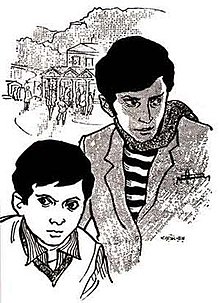
Tales of Crime and Detection
In the same book, ‘Ek Dojon Goppo,’ nestled at its conclusion were a couple of short stories: ‘Feludar Goendagiri’ (The Investigation by My Elder Brother Felu) and ‘Kailash Chowdhurir Pathor’ (The Gems of Kailash Choudhury), which whisked me away into a captivating universe of detective tales.
Enter ‘Felu,’ a detective extraordinaire, accompanied by his trusty cousin and sidekick, delving into a myriad of mysteries, each more intriguing than the last. These tales, so uniquely crafted, were bound to astonish any reader of my tender age. Thus began my enchantment with this universe, fuelling a relentless quest for Feluda books across bookshops, libraries, and even within the confines of relatives’ homes. And never once was I left disappointed, for ‘Feluda’ was a name omnipresent on the Bengali bookshelves, an iconic figure etched into the collective consciousness of every Bengali. Fortunately, a school friend, already steeped in the delights of this literature, graciously aided me in my quest, generously sharing volumes penned by this esteemed author. It’s worth noting that this friend of mine possessed a remarkable talent for storytelling, effortlessly weaving narratives that held us spellbound during our free periods. As the monitor of our class, I now realize, it served him twofold – honing his storytelling prowess while simultaneously diverting attention away from classroom duties. Soon, our circle of friends caught the fever, engaging in book swaps and animated discussions fuelled by the gripping adventures of Feluda.
Continuing with the same method outlined in the previous section, I embarked on my quest for the treasures of Feluda, the iconic fictional detective. Pouring over magazines and newspapers, I eagerly purchased and devoured books dedicated to him in rapid succession. Titles like ‘Feluda one, Feluda two’, ‘Feluda and Co.’, ‘Badshahi Angti’ (The Ring of the Emperor), ‘Baksho Rohossyo’ (The Mystery of the Suitcase), and many more swiftly found their place on my bookshelf, filling it with an ever-growing collection.
The dynamic chemistry between the trio who belong to different age groups – Feluda, his cousin Topse, and his humorous friend Lalmohanbabu – proved to be exceptional. It is this chemistry that makes revisiting these books a delight. Sometimes, I daresay, the camaraderie between them surpasses even that of Sherlock Holmes and Watson.
Much like the majority of the author’s other tales, Feluda narratives, frequently lacking in female presence, deftly entwine moral themes amidst their exhilarating plots. Isn’t it rather curious? The absence of women in Feluda tales – is simplicity the key to less complication? Though one might raise an eyebrow at the notion of a crime thriller sans complexity, I dare say this author was a virtuoso in such matters! His narratives, akin to a well-orchestrated symphony, subtly unveil moral motifs amidst the pulse-pounding intrigue. However, though told simply, some stories feature female characters and are given a noirish treatment, such as ‘Chinnamastar Abhishap’ (The Curse of Goddess Chinnamasta) and ‘Doctor Munshi-r Diary’ (The Diary of Doctor Munshi), reminiscent of Raymond Chandler, showcasing moral dilemmas and values subtly. In ‘Baksho Rahassya’ (The Mystery of the Suitcase), Feluda opts to let the antagonist go due to a lack of evidence for a courtroom conviction. However, when the same story is adapted into a screenplay by the author, Feluda harshly punishes the antagonist, labelling him a ‘thief’ in front of others. Perhaps the author aimed to underscore the importance of ‘values’ when presenting the story in a visual format.
One of my favourite Feluda tales, ‘Joto Kando Kathmandu Te’, was later remade as ‘Kissa Kathmandu Mein’ (The Trouble at Kathmandu) for television, targeting a national audience. Though I’m uncertain if any version of it exists online today, the adaptation featured Shashi Kapoor as Feluda, Alankar as Topshe, and Mohan Agashe as Lalmohan Babu.

Cinematic Revival: Rediscovering Masterpieces
A few days after enchanting me with his literary prowess, the author was bestowed with Oscars for his monumental contributions to world cinema before departing for his heavenly abode.
During that period, ‘Doordarshan’, the Indian Television Network, aired movies directed by him. I revisited ‘Panther Panchali’ with renewed reverence for the director, followed by the delightful ‘Goopy Gayen Bagha Bayen’ (Adventures of Goopy and Bagha), which I savoured thoroughly. Finally, a Feluda tale, ‘Sonar Kella’ (The Golden Fortress), captured my attention. I recall the television host summarizing the story before its airing, describing it as the tale of Mukul, who could recall his past life and claimed to have resided in a fort in Rajasthan. Pressured by the revelation of valuable stones in his past home, Mukul becomes the target of nefarious individuals. His father seeks the aid of a private investigator. As a kid, I distinctly recall a twinge of disappointment towards the television host as she casually mentioned Feluda (who, in my eyes as well as those of many Bengalis, had already attained an iconic status) as a ‘private detective.’
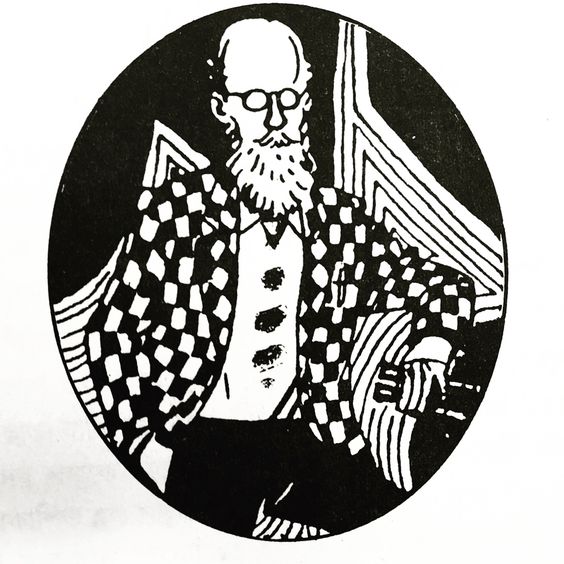
Deep Focus on the author as a filmmaker
After his Oscar-winning triumph and subsequent passing away, the media was flooded with articles delving into his life and work. Immersed in these pieces, I uncovered a deeper understanding of the man and his keen eye for detail, his cinematic philosophy, and his fusion of art and science. Concurrently, I delved into his literary repertoire. His eclectic interests permeated his writings, from the adventures of detective Feluda to his captivating science fantasy tales. Yes, I purposefully employ the term ‘fantasy’ because these narratives transcend the bounds of scientific certainty, inviting readers to imagine what science might one day substantiate.
The Professor Shonku stories, in particular, transported me to a realm where viruses inhabit spherical worlds, trees thrive on human cognition, and an enigmatic pistol has the power to make beings and objects vanish from existence. In the past, depictions of robots, that are mentioned in such stories, mimicking human behaviour, seemed utterly fantastical. These days, with the rise of artificial intelligence, one is left in awe of the prescient nature of the author’s works and wonders if such portrayals may eventually blur the lines of reality.
I embarked on my journey of maturation alongside this multi-talented artist, who excelled as a director, author, and illustrator, revelling in his imaginative works. Subsequently, post-college, I had the opportunity to revisit some of his cinematic masterpieces when they were reissued in theatres. Films like ‘Arannyer Din Ratri’ (Days and Nights of the Forest) and ‘Pratidwandi’ (The Adversary) captivated me anew, allowing me to rekindle my admiration for his boundless creativity.
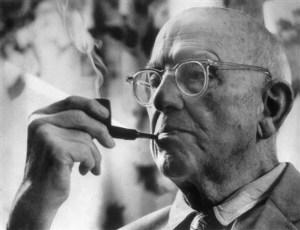
The Author and Wodehouse: A Meeting of Literary Minds
My fascination with P.G. Wodehouse was initially nurtured within my family circle, but his novels and stories significantly bolstered my admiration for the beloved author. I stumbled upon an article mentioning his affinity for Wodehouse, and as I matured, I discerned a striking resemblance between his works and those of the maestro himself. Whether through the sharp repartee in his films or the witty banter within his stories, his writing exudes a similar charm. Just as Feluda and Shonku have their own series, he crafted a distinct collection centered around ‘Tarini Khuro’ (Uncle Tarini), reminiscent of Wodehouse’s ‘Mulliner’ tales. While Tarini’s narratives occasionally veer into the supernatural or delve into emotional depths, the essence remains consistent. Moreover, the ‘Tarini Khuro’ stories serve as a masterclass in the art of storytelling, showcasing the creator’s versatility and prowess. One can truly grasp the breadth of his talent by delving into his literary oeuvre alone.
Feluda, the ingenious detective crafted by the author, to me, bears a striking resemblance to Psmith in his poised demeanour amid crises. Much like Feluda, who confronts his nemesis Maganlal Meghraj with remarkable calmness, Psmith maintains his cool in challenging circumstances. In ‘Joy Baba Felunath’ (The Elephant God), Feluda faces off against the formidable Maganlal Meghraj, yet his serene and collected demeanour never falters. Similarly, in P.G. Wodehouse’s tales, Psmith confronts adversaries with a suave approach and an unflappable attitude.
In the story ‘Bombaiyer Bombete’ (The Bandits of Mumbai), the author weaves a narrative where the Bengali iconic sleuth Feluda steps forward to assist his friend and companion, Lalmohanbabu. This action surely evokes memories of Wodehouse’s character Bertie Wooster, who, to aid his friends, frequently finds himself in perilous situations. The only divergence here is that Feluda must don both the Berite and Jeeves hats simultaneously to unravel the mystery.
Another story that I can remember at the moment is ‘Ghurghutiar Ghotona’ (The Trouble at Ghurghutiya) wherein, like Wodehouse’s stories, problem-solving involved misunderstandings and witty dialogues.
In ‘Shonku-r Shonir Dosha’ (Prof. Shonku in Dread Problem) we find, much like Wodehouse, characters resorting to mistaken identities and getting entangled in difficult situations.
P. G. Wodehouse is best known as a humourist. However, he had also dabbled in crime fiction, perhaps a rub-off of his having been an admirer of Sir Arthur Conan Doyle and Agatha Christie. Crime had found its way into some of his own writing, including into some of his Jeeves and Wooster and Blandings Castle stories. The range of misdemeanours depicted therein comprises thefts, bank heists, and airgun shootings, and even blackmail. In Wodehouse’s venture, ‘Death at the Excelsior’, he endeavours to concoct a crime thriller with a meticulously arranged sequence of events. Yet, at the close of the day, it leaves one with the impression of a light-hearted tale, with ‘murder’ serving as the solitary sombre element, a departure from his usual literary escapades.
While I’m fully aware that my stance might provoke the ire of passionate readers and discerning critics, let’s just say the comparison here is akin to trying to fit a square peg into a round hole. Allow me to elaborate. In the whimsical world of Wodehouse, these predicaments are served up with a generous dollop of humour and charm, akin to a delightful soufflé rising in the oven. On the other hand, our novel protagonists find themselves grappling with these challenges in the midst of murky criminal investigations, where the stakes are higher than a giraffe’s necktie. So, you see, it’s a bit like comparing apples to oranges – both fruit, but with vastly different flavours and textures!
Unveiling Wisdom: Exploring the Depths of Knowledge Through Timeless Tales
These stories are not only exciting and mysterious but also teach us new things. For example, I learned what galoshes are from reading the story ‘Neel Atanka’, even though the internet didn’t exist then! The description was so clear and vivid that I could picture them in my mind, even though I had never seen them before.
Since many of the stories about Feluda, Shonku, and Tarini Khuro are also about travel, they not only make us want to visit new placesbut also to learn more about them.
Also, I learned the meaning of the word incredible in a really easy way from the story ‘Feludar Goendagiri.’ In the story, Topse, Feluda’s cousin, helper narrator of the story, is sitting in a Darjeeling mall and overhears two old people talking about something, and the word incredible comes up. Topse knew the meaning of the word and since he’s telling the story, he explains it to the readers. Later, Feluda uses his amazing skills like Sherlock Holmes to figure out which side of the mall Topse was sitting on just by looking at his face! Topse is surprised and thinks of the word incredible in his mind. This is the easiest way to learn new words in school: first know the word, then know the meaning, and finally use it. But this story teaches us the same thing without making it feel like we’re being taught something!
From ‘Bankubabur Bondhu,’ I got a glimpse into the fascinating world of piranhas, those creatures of the depths with their sharp teeth. I also learned about the curious penguins that live in faraway lands.
There are many other such tales that I could share, but I do not wish to overwhelm you with my discoveries. Instead, I encourage you to read these wonderful writings for yourselves and embark on your own journey of knowledge.
Although the author is renowned as a director, his writings first stirred my soul. This inspired me to seek out his films, which I found equally endearing.
I may not have delved deeply into his cinematic endeavours here, for I believe the same have already been meticulously analysed by countless critics with a keen understanding of the art far surpassing my own.

Homage to the Maestro: Celebrating the Legacy of Satyajit Ray
On the auspicious occasion of his 103rd birth anniversary, I humbly acknowledge his creative genius. I offer my reverence to the individual who, alongside my parents, has steered me on my path of this lifetime, and undoubtedly will continue to do so in the days ahead.
Incidentally, throughout the entire article, I realize that I have not once mentioned his name. Yet, for the sake of thoroughness, it’s worth noting – his name, in case you are still twiddling your thumbs, is Satyajit Ray.
(All illustrations courtesy the world wide web)
Related Posts:
Song of the Forest: A Presentation from the Grand Kyiv Ballet, Ukraine
Posted in A Vibrant Life!, tagged Abhigyan Shakuntalam, Ballet, Choreogrpahy, Dance, Drama, Drammen Theatre, Grand Kyiv Ballet, Kalidasa, Meghdootam, Play, Ritu Samhara, Sanskrit, Song of the Forest, Theatre, Ukraine on April 28, 2024| 2 Comments »

It is not often that one comes across a live performance that promotes the cause of environment and sustainable living. The ballet from Ukraine, aptly titled Song of the Forest, takes the issue of environmental protection to a different level altogether.
The Theme
It is a magical tale of love between the forest girl Mavka and the young man Lukash. The world of man and nature interact. There is love, betrayal, despair, and human greed. There is the dependence of the animal kingdom on the forest. Either of the main protagonists cannot forget the magical moment of love. It is also a story about how fate changes for someone who loses touch with nature and stops listening to his inner voice.
The relationship between Mavka and Lukash develops gradually and coincides with the seasons. The ballet portrays the beginning of a relationship between Lukash and Mavka during spring. Their love blossoms during the summer, a season of fertility of the Ukrainian land.
Autumn brings Lukash’s betrayal as he marries another woman. Come winter, and both Mavka and Lukash die. Their souls eventually meet in the world of eternity.
The ballet has many mythological images from Ukrainian fairy tales. What is also endearing is the occasional presence of forest animals that appear on the stage at regular intervals. Characters with malevolent intentions are also unobtrusively woven into the flawless movements of the dancers.
At its core, the ballet is a story of the fearless Mavka, who seeks peace in her world, just as Ukraine fights for freedom and peace in her country today.

Background
Song of the Forest is a legendary ballet that has been the pride of Ukrainian choreography for over 75 years. It celebrates romance as well as the purity of classical ballet technique. The ballet has already entered the Golden Fund of Ukrainian musical culture.

It is based on a play of the same name The Song of the Forest (1911) by Lesya Ukrainka, who was one of Ukrainian literature’s foremost writers, best known for her poems and plays. She was also an active political, civil, and feminist activist.

Gentle and lyrical music by the Ukrainian composer Mykhailo Skorulskyi was written for the ballet in 1936. It would not be wrong to say that he has gifted us with a real hymn to living nature and pure love. The music has a romantic aspect, is full of folklore, and captures the vivid moods of nature in a musical language. However, in the soundtrack, one misses a few sounds one typically associates with a forest. Like, either the occasional chirping of birds, or an infrequent roar of some animals.
Premiered in 1946, the ballet highlights the crucial need to promote a dialogue between man and nature, an aspect of our lives that most of us ignore these days, albeit at our own peril.

The Skill of the Artists
The ballet is filled with complex duet supports and has fascinating choreographic patterns. The skill and sophistication of the artists of Grand Kyiv Ballet artists leave the audience spellbound. The grace with which they move and the poise with which they perform either an assemble, a grande jeté, a plié, a pirouette, or a tour en l’air, leaves one mesmerised.
Forests in Indian Epics and Dramas
Forests play an important role on our planet and are part of many epic plays from India and elsewhere. Narratives of the Ramayana and the Mahabharata – both epics that are revered across South Asia – keep shifting from the kings’ palaces to forests. Almost all the works of Kalidasa in Sanskrit are replete with references to nature.
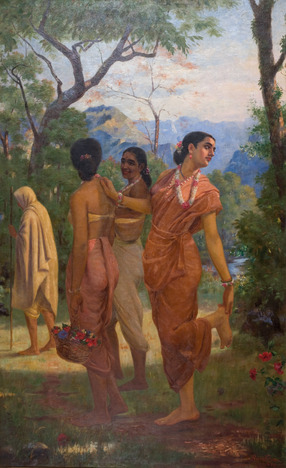
By way of an example, the heroine of Abhigyan Shakuntalam (The Recognition of Shakuntala) adores nature and is brought up in an area populated by dense forests. The play moves freely from the deep forest to the urban palace and from the earth to different levels of the heavens. The heroine falls in love with a king. Like Mavka and Lukash, their love also blossoms in the forest. However, upon return to his palace, the king forgets her. Eventually, the king realises his folly and the two get united.
Abhigyan Shakuntalam was probably the first Asian drama translated into Western languages. It is also one of the very first Sanskrit works ever translated into English. The first translation was done by the famous orientalist, Sir William Jones, in 1789. Its publication was a sensation and it went into five editions over two decades. It was translated into German in 1791, and into French in 1803. Later it was translated into several other Western languages. It inspired operas and ballets, including Marius Petipa’s ballet La Bayadère.
The hero of Meghadootam (The Cloud Messenger), a classic poem composed by Kalidasa, is a love-lorn yaksha. He has been banished by his master to a remote region for a year and is pining for his wife who lives in a far-off land. He requests a cloud hovering above to take a message of love to his wife.
Likewise, Ritu Samhara (An Account of All Seasons), a medium-length poem, captures in evocative detail all the six seasons in a tropical country like India. In all these literary masterpieces, nature plays an integral part.

The Venue
During April 2024, the Song of the Forest was performed at the Drammen Theatre in Norway.
It is a magnificent building dating back to 1870 and has faced many challenges, including fires. But with each setback, it has risen like a Phoenix and emerged stronger. The last upgrade of the complex happened in 1997.
The theatre, and its courteous staff, enabled many amongst the audience to create a memory to be cherished for a long time to come!
Notes:
- Part of the text is borrowed from the websites of Grand Kyiv Ballet and Drammens Theatre.
- Illustrations are courtesy the world wide web. Painting of Shakuntala is by Raja Ravi Varma.
Related Posts:
https://ashokbhatia.wordpress.com/2016/05/14/the-six-seasons-of-kalidasa-in-bollywood
A visit to the Sherlock Holmes Museum in London
Posted in A Vibrant Life!, tagged Doctor Watson, London, Meringen, Museum, Professor Moriarty, Sherlock Holmes, Sir Arthur Conan Doyle, Switzerland, UK on March 14, 2024| 7 Comments »

As a fan of the world-famous detective Sherlock Homes, what is the first thing one does once one has landed in London? Elementary, is it not? Well, one heads to 221b, Baker Street, right?!
The Sherlock Holmes Museum located at the above-mentioned address had opened its doors to the public on the 27th of March 1990. A belated honour, but surely a befitting one, to the world-famous detective, created by one of the greatest wordsmiths of our times – Sir Arthur Conan Doyle.
Visitors get permitted to the hallowed premises only in batches of twenty. Moreover, before they climb up the narrow staircase, they no longer run into an inquisitive Mrs. Hudson. Instead, they get greeted by a staff member who is dressed like a ‘Bobby’ and checks their online booking confirmation before allowing them to trudge up the stairs.
The famous study which Holmes and his friend Doctor Watson shared for almost twenty-five years (circa 1881-1904) is on the first floor overlooking Baker Street.
As described by Doctor Watson, the siting room boasts of two broad windows and turns out to be disappointingly small. The detective’s chair is there, and so is the tool kit he used to untangle the mysteries presented to him. The back side of the first floor displays several other things of interest to a fan, though it is said to have been the bedroom of the detective.



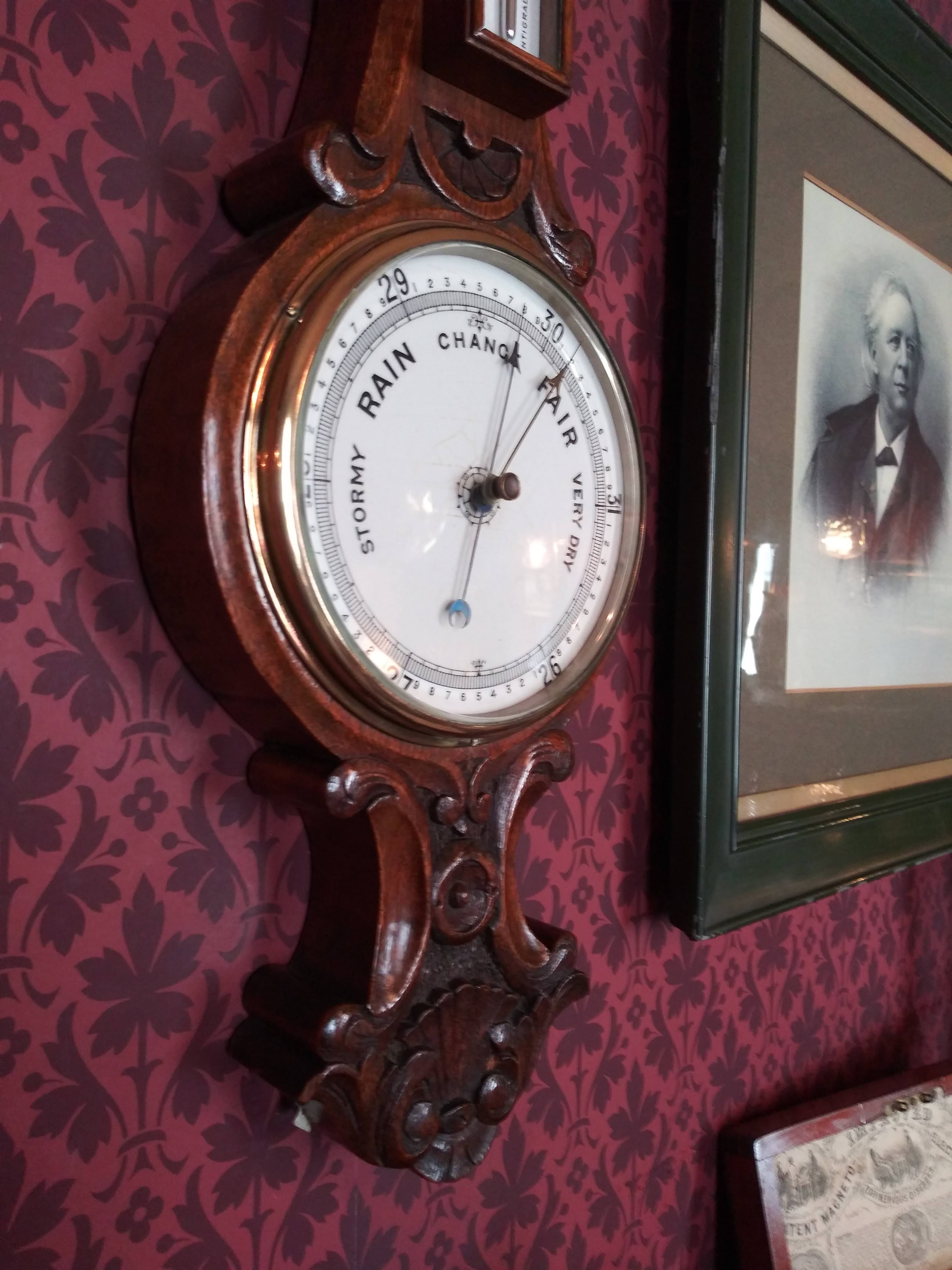

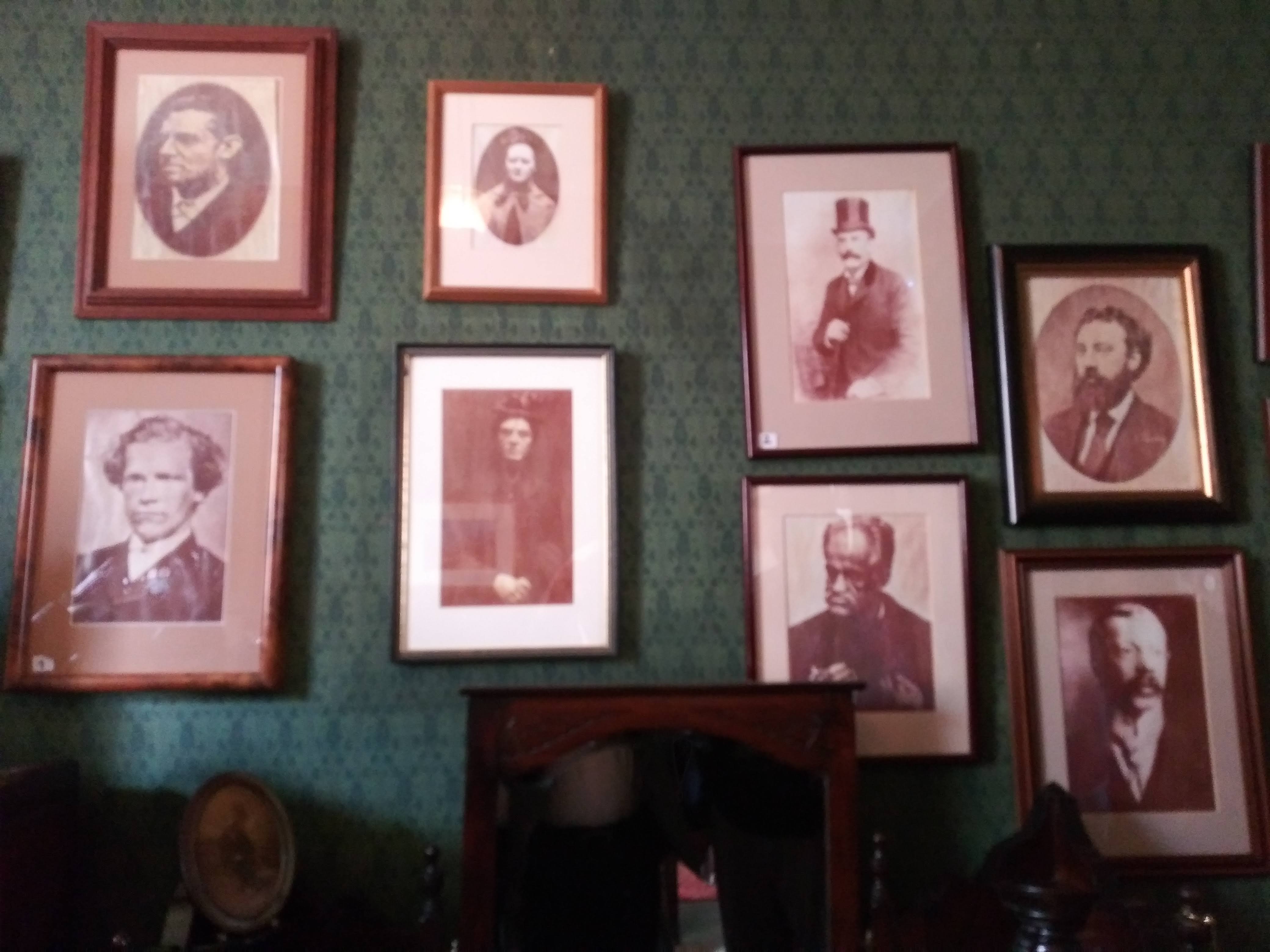
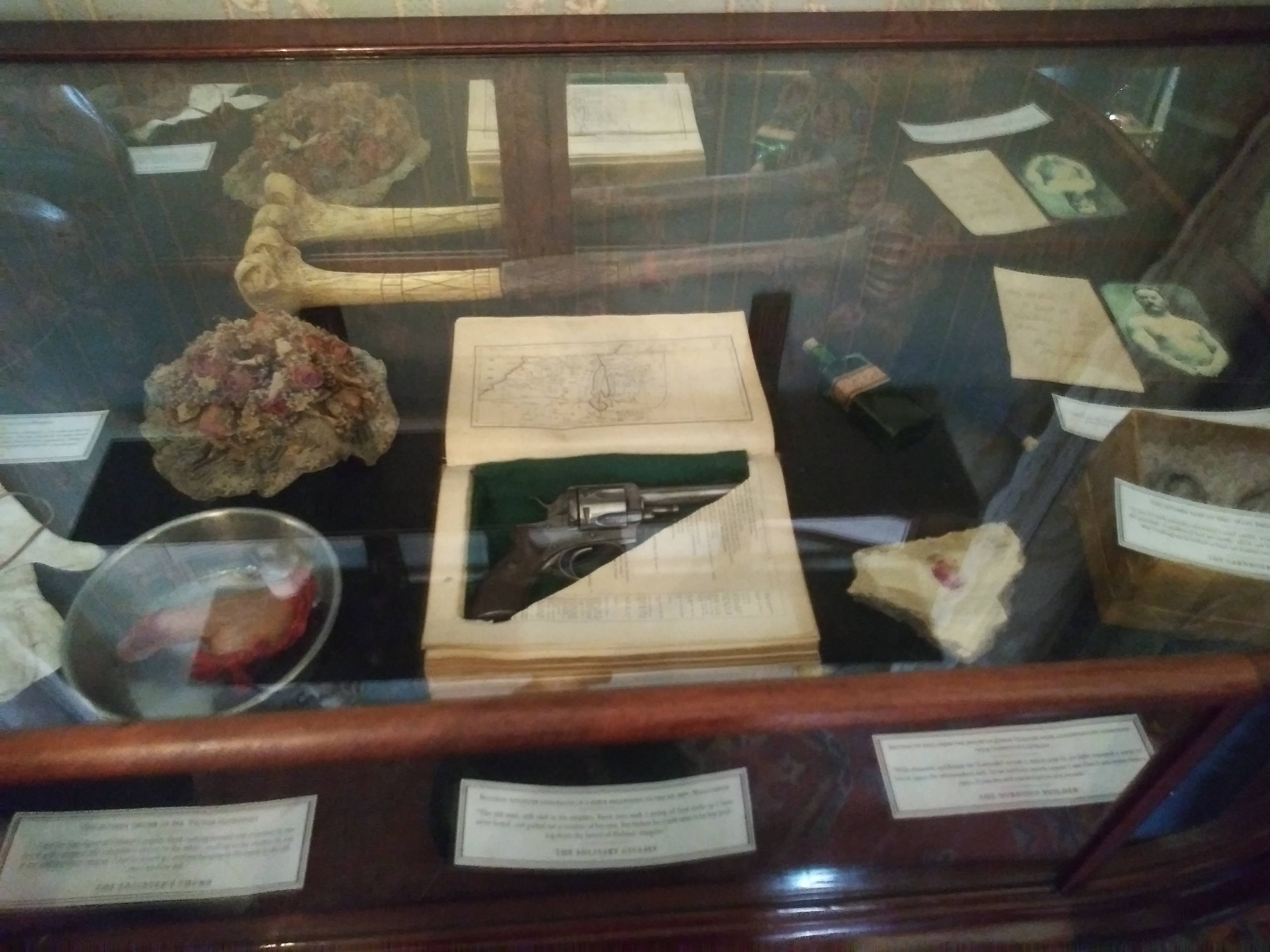


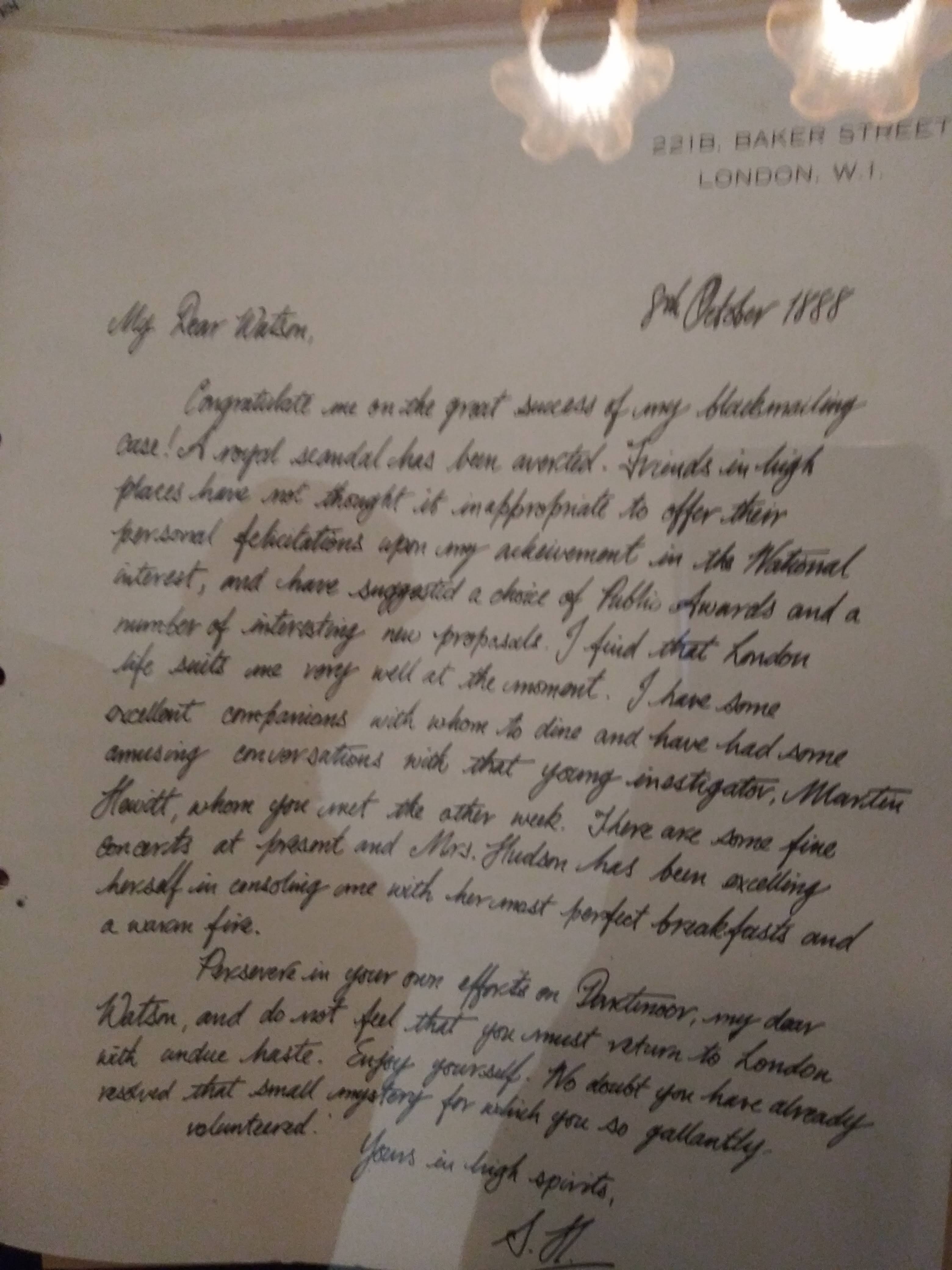
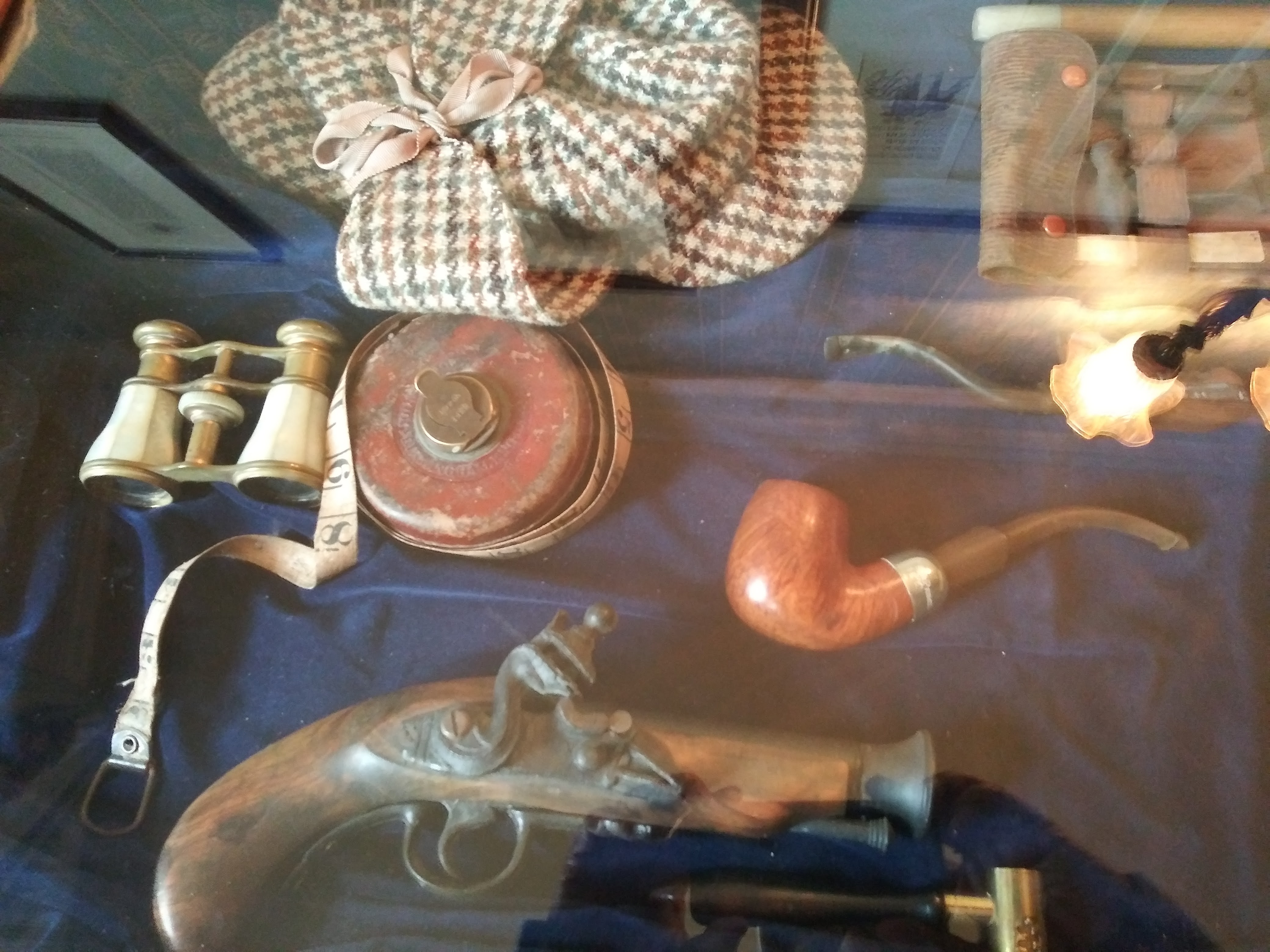
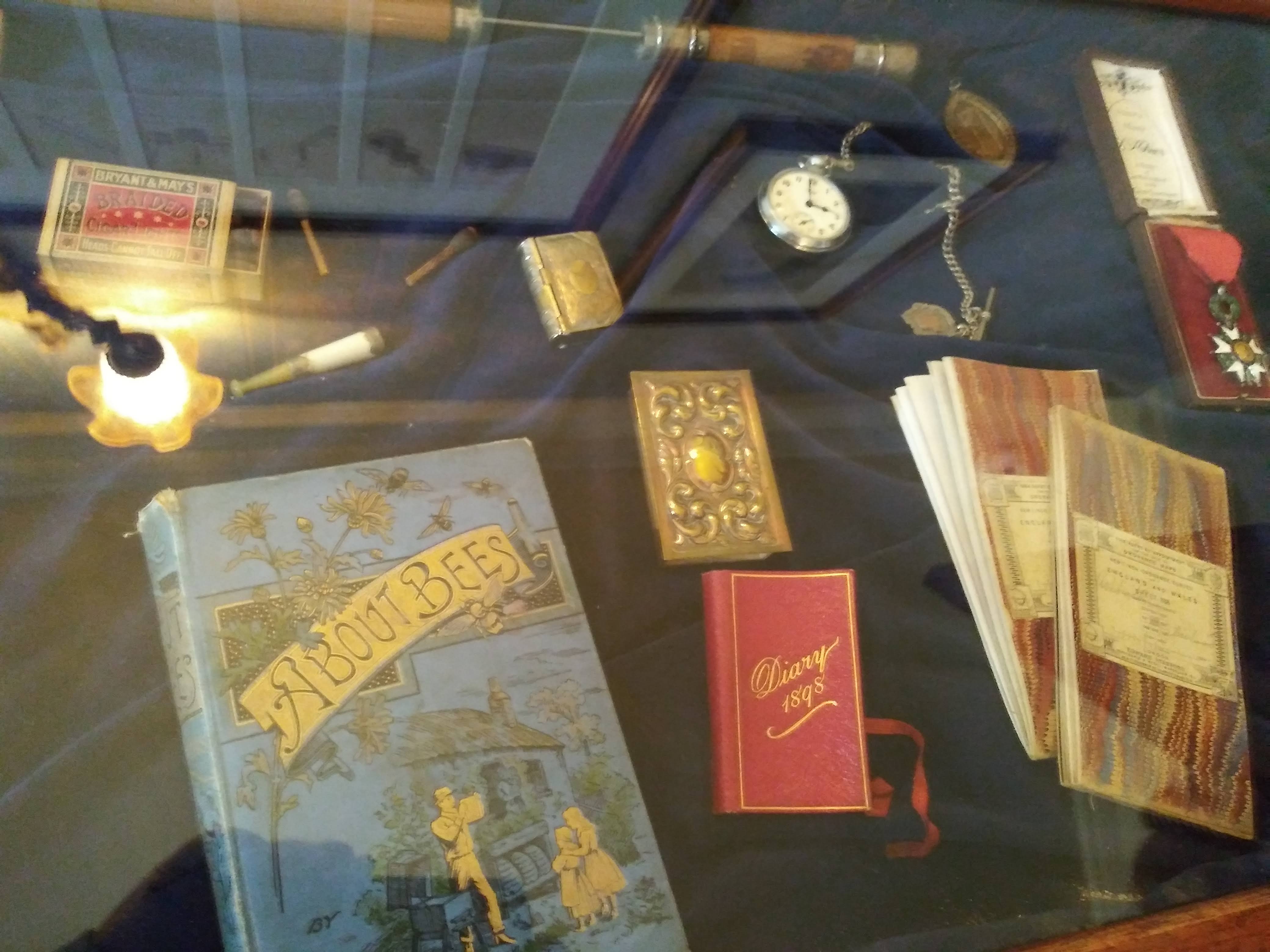
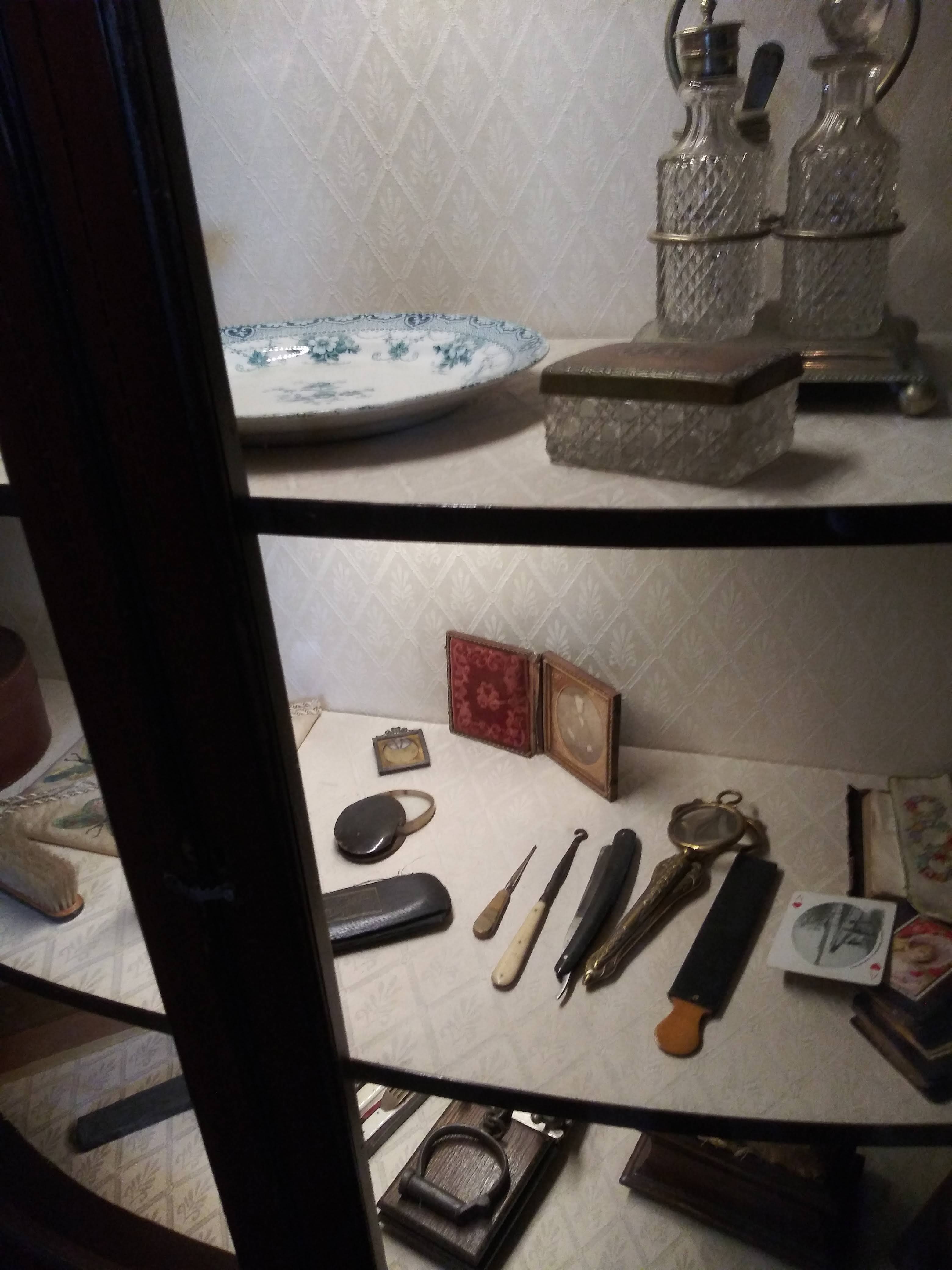

While going through the well-curated museum, visitors get readily transported to the Victorian era, immersing themselves in the gas-lit world of London’s iconic detective. The small and intimate setting of 221b is filled with authentic Victorian furniture and curiosities, and is a treasure trove of items belonging to Sherlock, his friends, and adversaries. Scores of familiar objects and paraphernalia mentioned in different stories are on display. Quite a few characters from his innumerable stories are also featured.
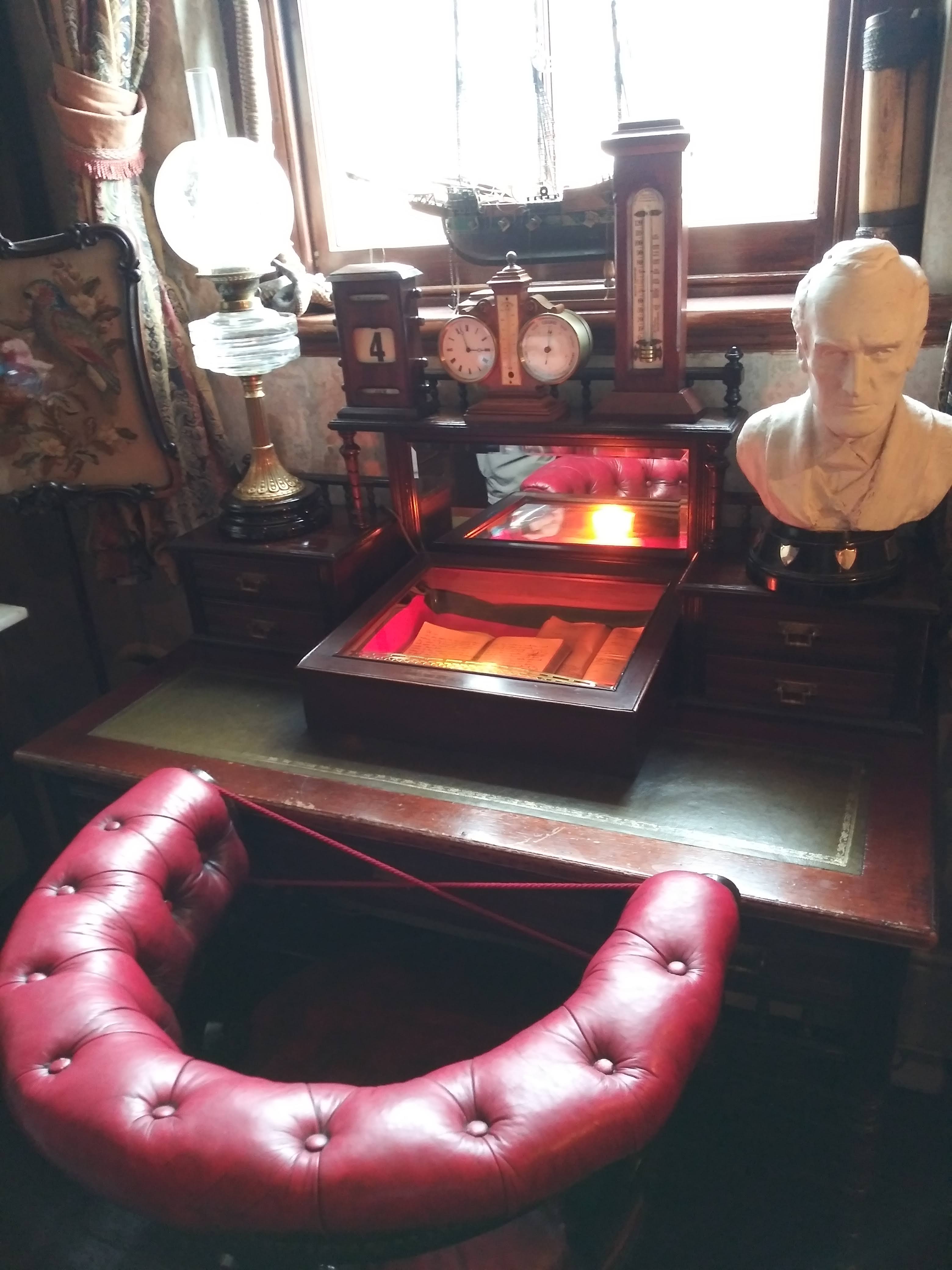
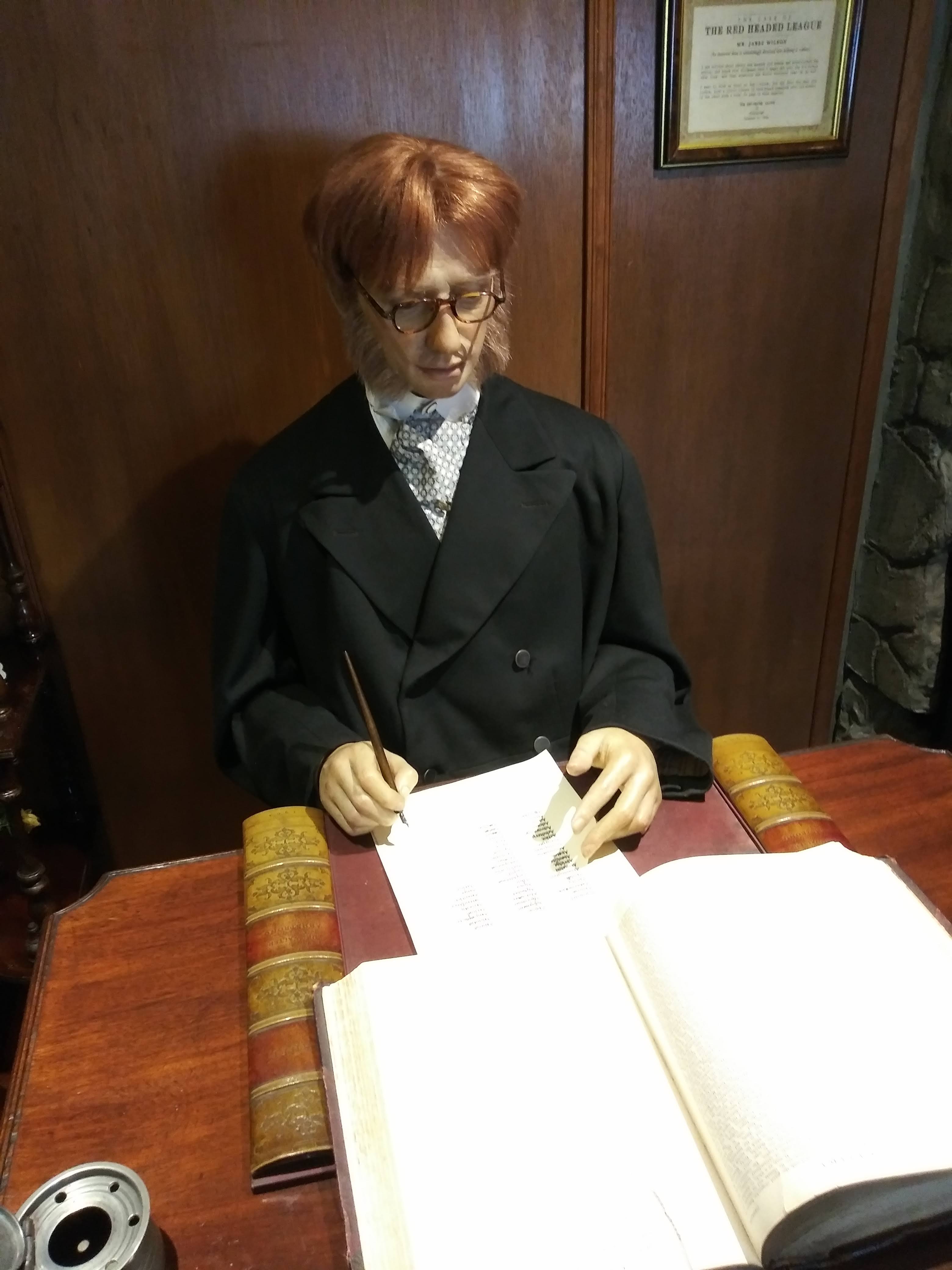






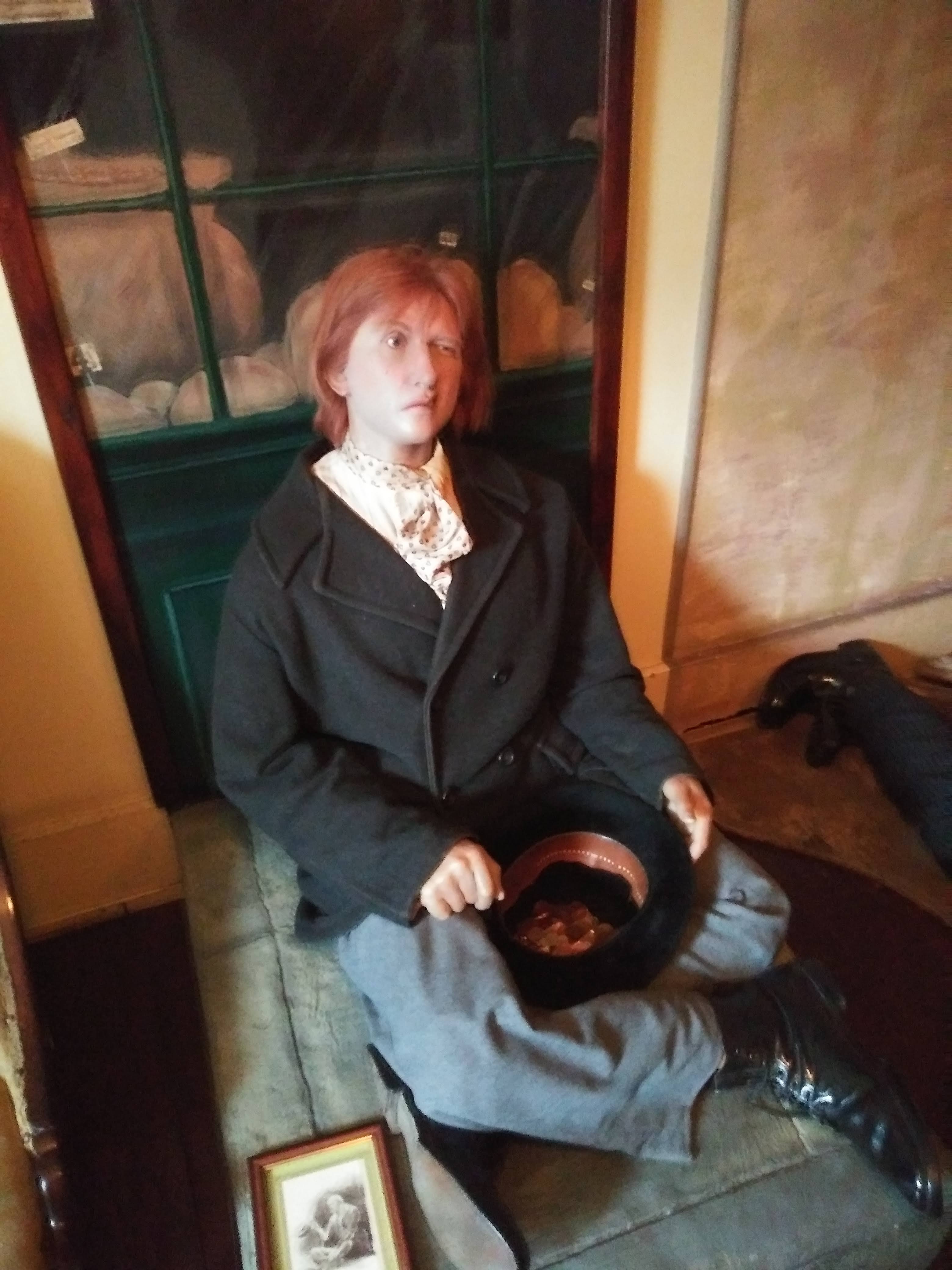


Doctor Watson’s bedroom is said to have been on the second floor, next to Mrs. Hudson’s room, both of which are used now as exhibit rooms. Professor Moriarty, arch enemy of Holmes, peers down menacingly at one from one of the corners.
The pilgrimage soon gets over. As one leaves the museum, one finds oneself wishing that one could simply hail a horse-driven hansom cab to take one to any joint which serves a wide range of tissue restoratives.
The Swiss Connection
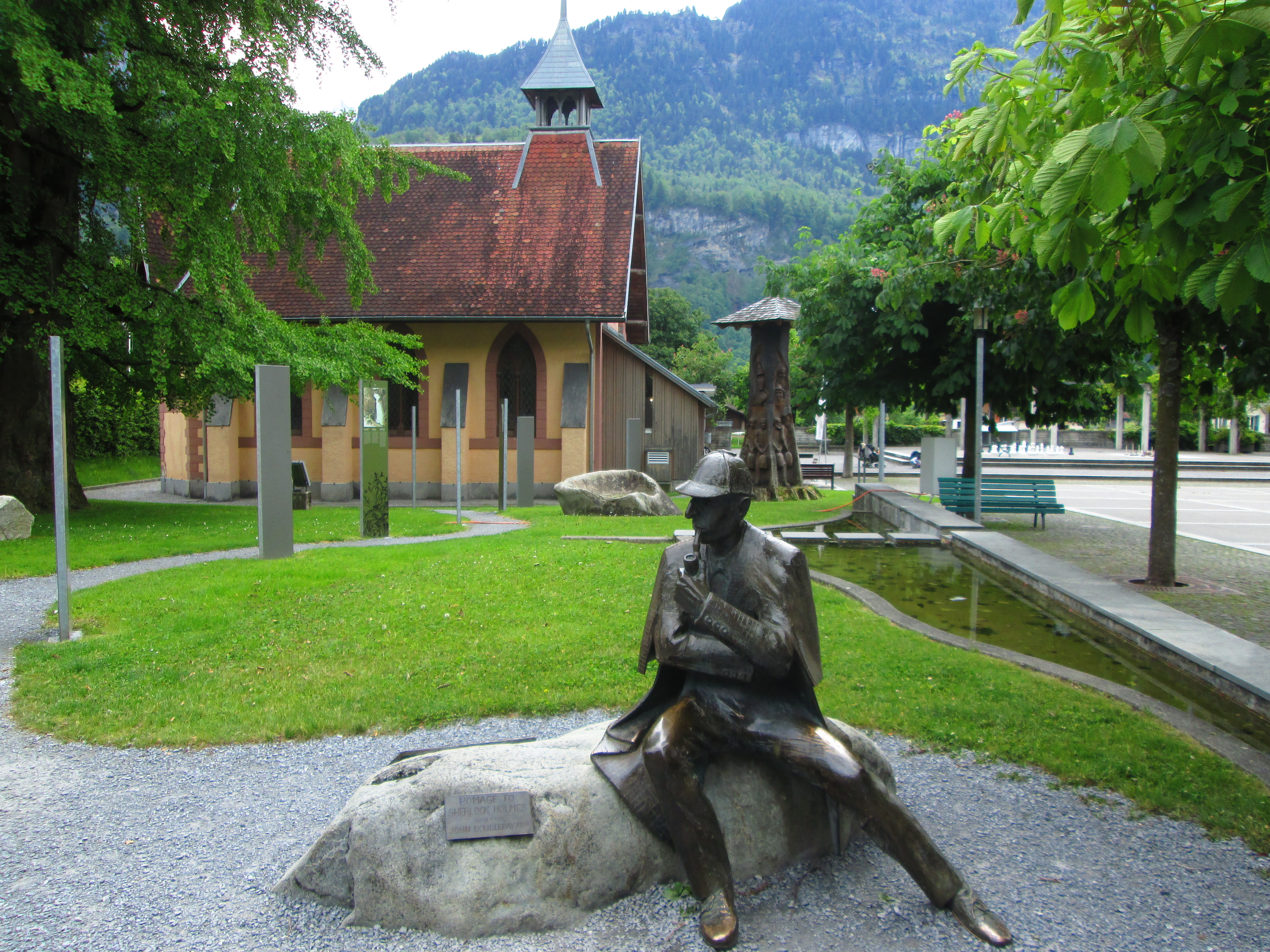
A few years back, I could visit the smaller museum dedicated to the world-famous detective at Meiringen in Switzerland. One marvels at the fact that Sherlock Holmes happens to be an honorary citizen of the township.
Included in the itinerary then was also a visit to the famous Reichenbach falls. That is where Sherlock Holmes was supposed to have met his end while fighting the criminal mastermind Professor James Moriarty. The Final Problem, a short story set in 1891, suggested the death of the detective. However, popular demand made the author eventually bring him back to life!
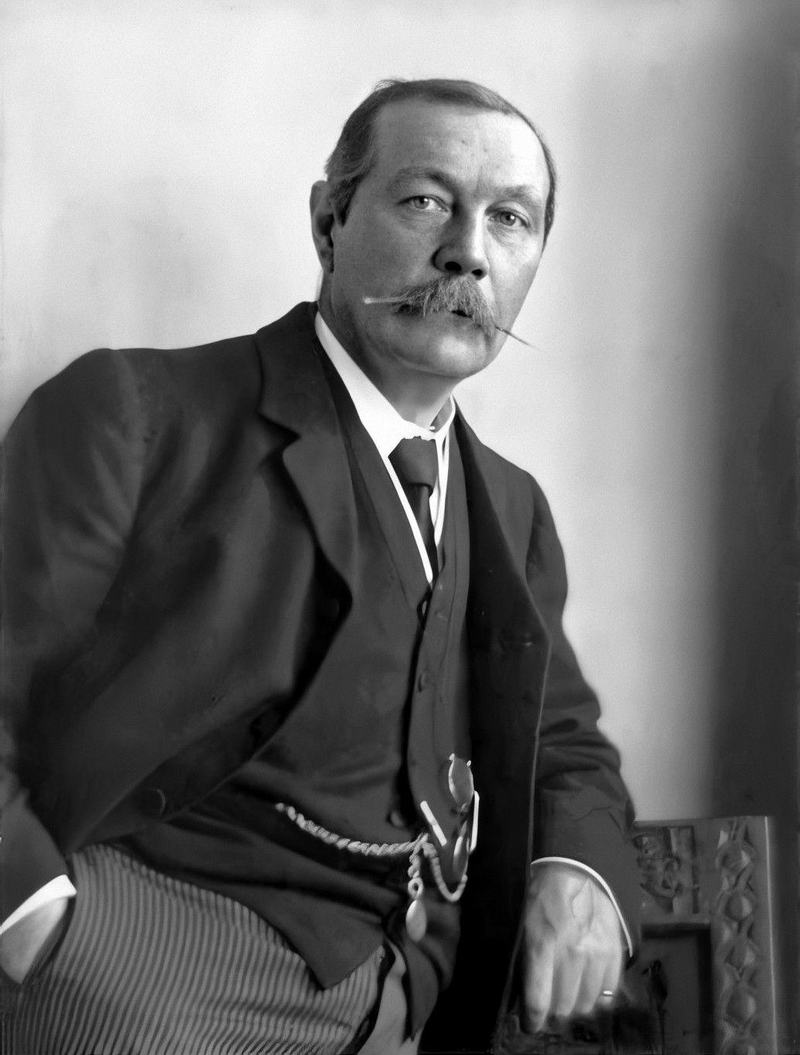
Can a fictional character assume a life and will power of its own? Can he scale heights of popularity and importance greater than those of his author and creator? That is precisely what appears to have happened in the case of Sherlock Holmes whose myth lives on. One marvels at the mental capabilities of a person like Sir Arthur Conan Doyle who created a detective who is more real to most of us than any real person we might have ever met.
In a way, Professor Moriarty still lives on even today. He manifests himself in various forms. Political manipulations, criminal deeds, injustice, disparity in opportunities and incomes, and corruption, just to name a few. However, one can derive satisfaction from the fact that characters like Holmes and Watson also continue to live on amongst us, represented by benign forces opposed to the likes of him.
(The picture of the London museum from outside and the one of Sir Arthur Conan Doyle are both courtesy Wikipedia. Most other pictures are courtesy Dominique Conterno. His contribution towards making the London visit happen is gratefully acknowledged).
Related Posts:
Pondicherry and the art of doing nothing
Posted in A Vibrant Life!, tagged Brain Stilling, Happiness, Inner Peace, Pondicherry, Puducherry, Relaxing on July 22, 2023| Leave a Comment »

Just in case you ever feel that you have evolved into a headless chicken and have ended becoming a zombie chasing deadlines and goals with not even time to breathe, try coming over to Pondicherry.

For many of us, our lives are so much filled with stimuli, not to speak of the onerous responsibilities we carry on our slender shoulders. It is not possible for us to sit still and do nothing, much less relax, even for a few minutes. We have no time for meditation. Nor do we have time for some simple yoga exercises. We are always doing something or the other. How proud we feel in telling someone that we do not have time for this or that. Our fragile ego gets a much-needed boost. In place of being ‘human beings’, we have become ‘human doings’.
Often, relatives from distant parts of the world call up to…
View original post 566 more words
OF NOMOPHOBIA AND NOCONNPHOBIA
Posted in A Vibrant Life!, tagged Arab Spring, Being a couch potato, Connectivity, Freedom, Internet Addiction, Keanu Reeves, Lifestyle Diseases, Matrix, Mobile Addiction, Nomophobia on July 17, 2023| Leave a Comment »
We appear to be headed for two new challenges to our mental equipoise in this century – Nomophobia and Noconnphobia! The fear of being out of mobile contact, that is, No–Mobile-Phobia, is already well-recognized. The significance of the other, No–Connectivity-Phobia, is perhaps yet to dawn on most of us!
Our addiction to mobile phones and internet knows no bounds. Six years back, I was working with a company in a very senior position. A night before I was to be wheeled into an operation theatre for a cardiac surgery, I was furiously making calls to my team members to ensure that things were handled right when I was away from work for some time. My distressed daughter ended up confiscating the mobile phone, leading me to a feeling of utter loneliness and helplessness. It was as if my world had…
View original post 883 more words
The Ten Traffic Commandments
Posted in A Vibrant Life!, tagged Civic Sense, Driving, Helmets, Road Safety, Rules, Seat Belts on May 18, 2023| Leave a Comment »
 I am the Lord
I am the heaviest vehicle on the road. I am the Lord and Master of what I survey. Others are mere mortals and slaves, born merely to be swatted like flies and crushed like ants.
Right of Way
Roads are meant only for vehicles to ply. All others are a distraction. Pedestrians, cyclists, manual and animal-driven vehicles do not have the right of way.
See the Light
Once headlights are switched on, even if in broad daylight, all misdemeanors, sins, omissions and commissions of the vehicle concerned shall stand condoned.
Not to remember the Order in vain
• The slowest moving vehicle shall stick to the median. Faster moving ones, specifically two-wheelers, have the right to overtake from the left hand side.
• While overtaking, a gap of more than six inches shows a deficiency in one’s driving skills.
• Treat driving like living life. Thread…
View original post 364 more words
The Many Versions of English: Some Stray Thoughts – Guest Post by Suryamouli Datta
Posted in A Vibrant Life!, tagged English, Humour, India, Kamasutra, Saint Valentine, Sex, Shakespeare, Vatsyayana on April 23, 2023| Leave a Comment »

Languages flourish depending on the need of people to fulfil their communication needs. It is said that necessity is the mother of invention. I tend not to deviate from this proverb by looking at the kind of imaginative uses of the ‘Anglo Saxon Language’ that I have experienced in my lifetime so far. In the world today, especially in social media, we experience a few words in English that are at times funny but would torment the soul of a linguistic purist.
Consider Shakespeare, the literary genius who not only captured myriad human emotions impeccably but also went on to enrich the language alluded to as the Queen’s Language in a unique manner, much more than those who have either preceded or succeeded him. If he were to be told of the various versions of English in vogue these days, he might be found squirming in his grave. Other than the UK-brand of the language, we have the one which is used across the Atlantic Ocean. The grammatic and punctuation approaches of these versions are as different as chalk and cheese, so are the spelling norms. Even within India, other than the British standard, we find ‘Hindish’ being used with much elan in areas where Hindi happens to be the dominant force. Then there are regional variants, adopted and held sacrosanct by those whose mother tongue is not Hindi. Consider ‘Bengish’ which is popular in Bengal and ‘Tamish’ which is prevalent in Tamil Nadu. Luckily, the regional variants are confined merely to the spoken version of the language.
Much Ado About Nothing
There are a few situations that at times make one wonder as to whether what is being articulated matches the intent of articulation. There are people who use words to try and stress the intent with extraneous words which tend to destroy the intent completely. For example, I have heard many people facing a chaotic situation, shouting to their heart’s content, ‘Let me rest in peace’; or sometime, there is an unnecessary usage of ‘s’ in a word – as in ‘everybody’s.’ In Julius Caesar, Shakespeare used the phrase, ‘most unkindest cut of all’ to, perhaps, make the intensity of the gore clear thereby prompting the audience to react appropriately to acknowledge the seriousness of the situation. Taking a cue from the Bard, in the place I belong to, often, I have heard people using the words ‘most best’ to convey how good or pleasurable a situation is! I tend to forgive such a mistake often thinking that it is ‘Shakesperean English.’
One of my friends tends to coin words with the bare minimum understanding of the knowledge, thus ‘law’ becomes ‘low’ (a debatable topic indeed – if we put the discussion in front of a relevant audience, you know what I mean), ‘maid’ becomes ‘made’ (well, if we focus on the activity performed by the person being referred to, I see a connection), ‘cough’ becomes ‘calf’ (God save the animal!), and even ‘laundry’ becomes ‘loundi’ (not sure if London District Stores have one of such things as a part of their services, or maybe, those who know Hindi, might find this as a bit of a sexist and derogatory comment, implying as it does that washing clothes is the job of those who belong to the tribe of the delicately nurtured!). God knows what more I am to hear from my friend in the future!
Sex and Its Side Effects
One of the many things that India gave to the world is Kamasutra, the famous treatise on the art and science of sex. However, the subject of sex is still a taboo for a vast majority of Indians. It continues to be the proverbial forbidden fruit. Some of you may recall the analogy that was drawn long back by the famous philosopher Bertrand Russel – the result that will be achieved if we wish to curtail a child’s interest in train by forbidding him/her from looking at it whenever he/she wishes to do so. The result of practicing a feigned ignorance of this kind is that we inadvertently tend to often drag sex into our conversations in an indirect manner, often leading to hilarious results.
Often, I have found pronunciations from my fellow Indians which are not only wrong but also funny. Many of us, including many celebrities, pronounce Shakespeare as ‘Sex-pyar’ or ‘Sex-pair’ while being clueless that though the words involved do not pronounce ‘The Bard of Avon’s’ name properly, but makes some sense since the latter pronunciation conforms to the fact that the act of intercourse is possible only when a ‘pair’ is involved. As to the former pronunciation, if I may use the Hindi language here, ‘pyar’ means love, hence the word fails to identify the great playwright; instead, it signifies that the act of having a physical union is a result of love. A fact which cannot be denied.
In Kolkata, the famed City of Joy, there is a place which is known as ‘Sector 5,’ which is pronounced by many as ‘Sexter 5.’ I can only assure you that the place alluded to here is not the red-light area of the city. Likewise, the poor musical instrument which goes by the name of a Saxophone always gives the jitters to many of those who are striving hard to learn it to pronounce it in public. Even expert players of the instrument feel shy and diffident to speak about their profession.
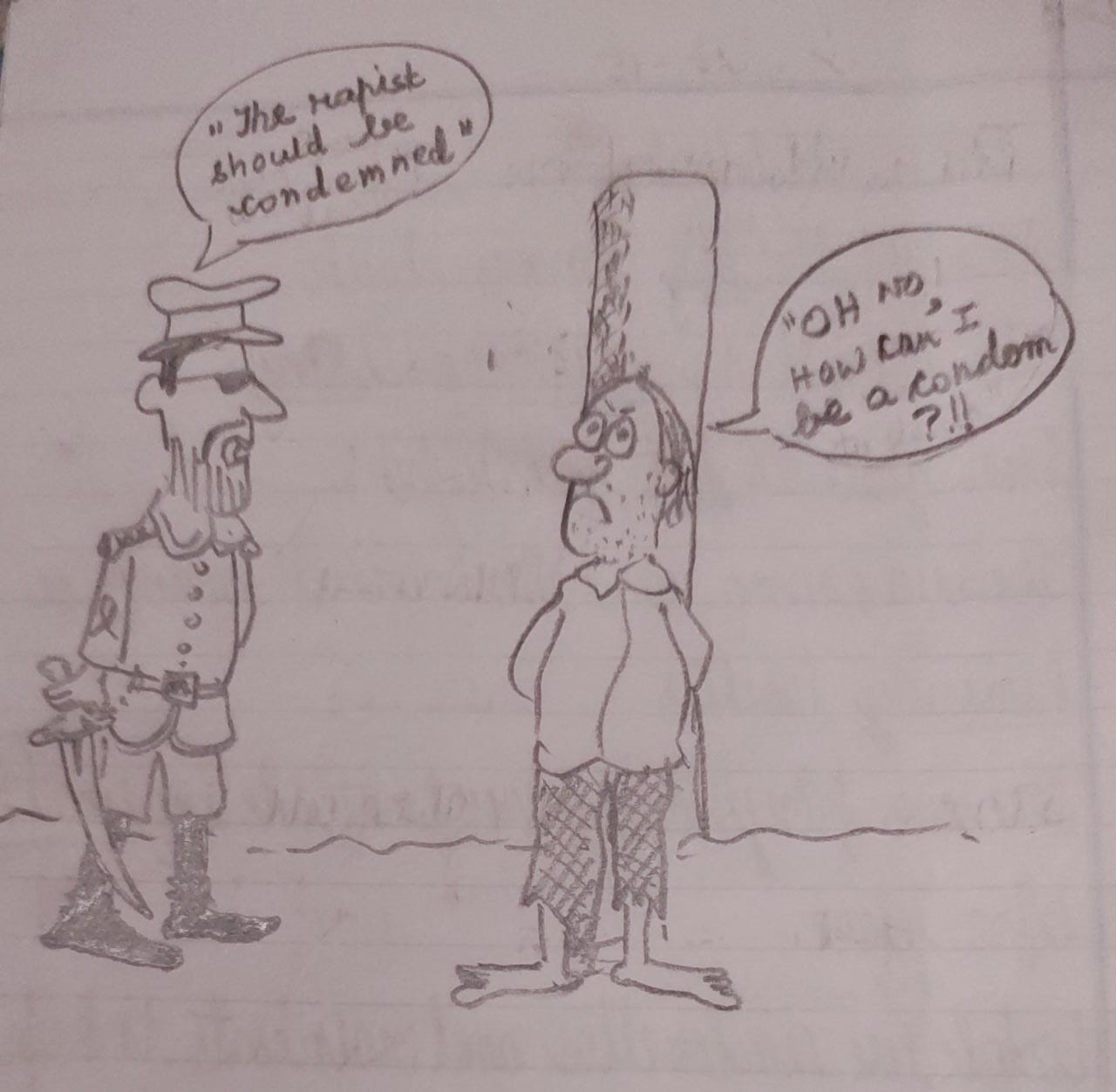
I may add a few more here. Like, people mixing up a ‘condom’ with ‘condemn’, thereby making light of the government’s ardent push to control the population of a country like India; or ‘beach’ with ‘bitch’, thereby adding a bit of spice to an otherwise serious conversation. A friend of mine has developed a habit of wishing couples ‘a happy conjugal life’ (irrespective of their ages) on their marriage anniversary! A harmless wish, of course, but perhaps my ‘puritan mind’ puts some reservations on the use of such statements.
A Fault in Our Stars?
Lest others feel I am trying to criticize the community by thinking of myself being beyond criticism, I would like to draw the attention of the reader to my own world of ‘creativity’ as far as the English language is concerned.
As a kid, I do remember spelling Calcutta (now known as Kolkata) as ‘Callcutta’. I am not sure whether the extra ‘l’ signified my love for the city I hail from. On the contrary, there used to be a lack of ‘l’ in words like ‘hell’ (not sure whether I tried to make the place a bit weak), and hill (surely, it would have fallen on me due to its weakness for an ‘l’).
Pronunciation-wise, I had a great knack of dropping ‘r’s while uttering some common words. Thus ‘electric’ used to become ‘elecktic’ and ‘clerk’ used to sound like the word ‘clique’ (which would make eminent sense to all those who have had exposure to administrative matters in organizations!). To add to the miseries of English classic, I used to pronounce ‘Dracula’ as ‘The Cooler’ and contrary to my habit of dropping ‘r’s, I used to add an extra ‘r’ to the name of the author, thereby, making him sound like ‘Bram Stroker.’ I am sure, had he been alive, this extra ‘r’ would have given him a pain on the left side of his chest.
Coming to sentences, I was put in a school where the medium of communication was English. Unfortunately, I had no choice but to align with the principles of my institution – to speak in English in the school. In the 3rd standard, one of my batchmates (can’t remember his name) accidentally dropped one of his eyelids while looking at me. Now, at the time I am speaking of, winking was considered to be a crime! I tried hard to wrestle with my feelings. I was surely clueless as to how to complain as I did not know the English word for the one-eyelid-dropping-forbidden-stuff. Moreover, to risk demonstrating the act physically to the teacher would have been fraught with a peril of the highest order, inviting some juicy canes on the soft spots! However, a part of my mind which believed in doing the right thing wished that somehow, I should address the situation soon. My next act, I trust, will readily explain what eventually ensued. ‘Madam’ I stood up and bleated, ‘that guy is dropping his right eyelid keeping his left eyelid open!’ I will not go for the quality of the sentence dished out to me, though, but today, when I reflect, I realize, I was technically wrong, for the complaint I had made was from my perspective – when the offender was facing me!
Social Media and English
With the progress of science and technology, now we have evolved into ‘Social Media’ beings. We tend to socialize more on popular platforms like Facebook, Instagram, WhatsApp, Twitter etc. rather than attending parties and social gatherings. So now we have the social media version of English, loved by all netizens who believe that the whole world is confined to their smart gizmos.
We use ‘IMHO’ instead of ‘in my humble opinion’, ‘gud mrng’ for ‘good morning’, ‘lingo’ for ‘language’, ‘bro’, ‘sis’ for ‘brother’ and ‘sister’ respectively, ‘lol’, ‘rofl’ signifying various modes of laughing (as in laughing out louder or rolling on the floor laughing), AFAIK for ‘as far as I know’, ICYMI for ‘in case you missed it’, and many such terms which have expanded our vocabularies. I suspect that publishers of dictionaries would soon be unleashing upon us tomes demystifying this latest version of the Queen’s language.
Recently, I encountered a unique way of detestation articulated by one of my friends on social media wherein the person concerned goes ahead to inform the profile viewers that she hates ‘peoples’ with fake emotions and attitude! The thought that pops up in my mind is whether she really feels that the whole community belonging to the world is at large with fake emotions and attitudes.
Perhaps, the poor soul is yet to stumble across genuine love in her life? Or did she believe that she will certainly find true love on social media platforms?! I wonder what Vatsyayana, the author of Kamasutra, or St. Valentine, would have to say to this.

Our Dream Merchants and Linguistic Puritanism
Very few of our dream merchants have found languages to be of some attraction when planning to dish out some movies.
Some of you may recall ‘My Fair Lady’ (1964; Dir: George Cukor), an American musical drama film adapted from the 1956 Lerner and Loewe stage musical based on George Bernard Shaw’s 1913 stage play Pygmalion. The movie depicted a poor Cockney flower-seller named Eliza Doolittle who overhears an arrogant phonetics professor, Henry Higgins, as he casually wagers that he could teach her to speak “proper” English, thereby making her presentable in the high society of Edwardian London.
In India, our yesteryear comedians often spoke in a funny accent and believed that slapstick comedy was best performed with a loud voice accompanied by wild gesticulation of arms and hands. But there is at least one Hindi movie which used subtle humour to cock a snook at linguistic puritanism.
I refer to ‘Chupke Chupke’ (1975, Dir: Hrishikesh Mukherjee) which was a remake of the Bengali film ‘Chhadmabeshi’. One of the characters, a brother-in-law of the heroine, is a linguistic purist who does not like the use of English words while conversing in Hindi. The heroine holds him in a very high regard and keeps praising him incessantly in the presence of her just-married hero. This gives the latter an inferiority complex, prompting him to prove to his wife that he is in no way a lesser mortal. When he speaks to the brother-in-law, he confuses him by using a highly pure version of Hindi, leaving the former baffled. The plot takes many hilarious turns before the hero succeeds in his mission and the brother-in-law learns a precious lesson in life.
Linguistic Hilarity
As long as Homo sapiens use the medium of a language to communicate with each other, there shall never be a dearth of instances of linguistic hilarity. Especially in a country like India, where some may still find an inner satisfaction in making fun of the British, their erstwhile rulers, it is quite likely that the unique and innovative use of the Queen’s Language, as brought about above, would continue unabated.
But to give credit where it is due, this does not happen consciously. I believe the phenomenon is better explained by the branch of science known as Chemistry. Two elements – English in its purer form and the local lingua franca – bond with each other and go on to form a compound which has its own unique properties. It is more like the amalgamation of two different civilizations, trying to live, love and respect each other in a very mundane way.
Purists may not be amused by the emergence of such ‘polluted’ versions of English, but perhaps the blessing in disguise is that the language continues to expand its reach, embracing diverse words, phrases and peoples originating from different parts of the world. The kind of additions being made every passing year by the producers of the Oxford Dictionary pundits would attest to this fact of life.
(Illustration courtesy Soumyojit Sinha.)
Related Post
Of Death and Grief
Posted in A Vibrant Life!, tagged Bhagavad Gita, Comforting Others, Death, Five Stages, Grief, Mahabharata, Myths, Sri Aurobindo, The Mother, Yaksha Prashna on March 24, 2023| 11 Comments »
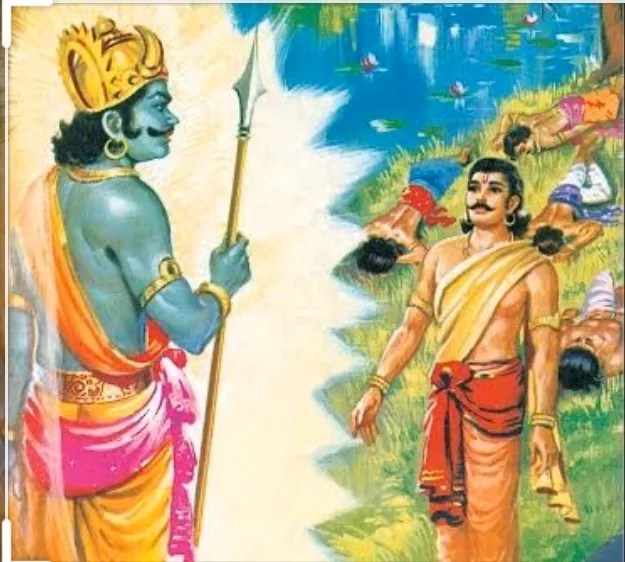
In the Yaksha Prashna episode of Mahabharata, Yudhishtira is asked many questions. One of these is:
“What do you find as the most surprising on earth?”
To which Yudhishtira replies:
“Numerous people are encountering death daily. Even though people are aware that they will have to die one day, they crave for worldly desires as if they are permanent on earth. There is nothing more surprising than this fact.”
Death and Taxes are both inevitable in life. But the sting of death is far deadlier than that of taxes. There is an irrevocability associated with it. When a loved one passes away, the physical form with which we associated ourselves for a long time simply vanishes. What is left behind is a void which is near impossible to fill.
The sting hurts us even more when the death is untimely. The passing away of a young person who was yet to drink deep from the joyful rivulet of life leaves us with a regretful feeling of deprivation. Shock, trauma, and depression follows. Our senses get numb. Nothing makes any sense anymore. A sense of disbelief envelopes us. Words of sympathy and condolences pour in, but these do not register. For some time, we act like zombies, moving about and doing things as we are advised by others to do. Lessons from Bhagavad Gita which tell us that the soul is immortal do not make any sense.
Feelings of guilt plague us. We regret not having done something more to save the person. We find it difficult to handle the anger we feel towards ourselves. Forgiving ourselves becomes an impossible task. We look up to the heavens and blame our favourite God for having been so cruel to us.
Losing a spouse is especially traumatic. I realized this myself when I lost my wife during 2018. Gradually, the reality of having lost a trusted companion, a bitter critic, and a true friend dawned upon me.
Two Persons Who Made Me Cry during 2022

Richa (1970-2022) was Principal Scientist at National Institute of High Security Animal Diseases (NIHSAD). Besides being an eminent scientist, she was a loving daughter, a devoted wife, and a caring and affectionate mother. She was not only a member of the selection committee of International Federation of Biosafety Associations for their much-coveted Biosafety Hero Awards; she had also won many awards herself at national as well as international level. She was the Secretary of Society for Biosafety, India, and a member of The Executive Council of the Asia Pacific Biosafety Association. She had published many research papers. A recognized badminton player, she was passionate about gardening, dancing, and singing. We lost her within a few months of 2022 to an aggressive form of cancer which was detected very late.

Pavan (1963-2022) was a self-made person. A first-generation entrepreneur par excellence. Someone who expanded his business by sheer dint of a lofty vision, hard work, perseverance, and a knack of identifying, nurturing, and deploying human talent. He played all the roles in his life to perfection, whether as a son, an elder brother, a husband, a father, and a grandfather. Above all, a fine and helping human being who would go out of his way to help the needy. With his passing away, we lost someone with excellent management skills. Premier management institutes would greatly benefit by publishing a case study on the business strategy which shaped his business and took it to dizzying heights. We lost him to a sudden cardiac arrest within a span of a few hours on a fateful day during December 2022.
The Five Aspects of Grief
In 1969, psychiatrist Elisabeth Kübler-Ross introduced what became known as the “five stages of grief.” These stages of grief were based on her studies of the feelings of patients facing terminal illness, but many people have generalized them to other types of negative life changes and losses, such as the death of a loved one or a break-up.
The five stages of grief, which I would prefer to refer to as aspects:
Denial: “This can’t be happening to me.”
Anger: “Why is this happening? Who is to blame?”
Bargaining: “Make this not happen, and in return I will ____.”
Depression: “I’m too sad to do anything.”
Acceptance: “I’m at peace with what happened.”
The reason I prefer to call these as aspects of grief rather than its stages is that these stages are not linear in nature, each following the preceding one over time. In my opinion, grief is cyclical or spiral in nature. Something happens, memories come flooding back, and we feel we are back to square one. But yes, the spiral does propel us forward, taking us gradually away from its epicentre.
Often, grief is like a sinusoidal curve of which the amplitude keeps decreasing over time, as the mundane concerns of life come back plaguing us soon enough. However, it is a curve which goes down in an exponential manner, never quite reaching a zero baseline. The emptiness within may never go away; we learn to accept it and move on in life. The time span of recovery is as individually unique as each one of us is.
Handling Grief
Remaining Surrounded by Loved Ones
In the initial phase, we tend to withdraw ourselves into a shell. Despite being surrounded by our loved ones, the feeling of loneliness and a vacuum inside persists.
Turn to friends and family members. Now is the time to lean on the people who care about us, even if we take pride in being strong and self-sufficient. Rather than avoiding them, draw friends and loved ones close and spend time together face to face. Physical hugs go a long way in the process of recovery.
Accepting the Assistance Offered
Often, people want to help but do not know how. We may have to be open and tell them what we need—whether it’s a shoulder to cry on, a listening ear, or just someone to hang out with. If we feel we do not have anyone you can regularly connect with in person, it’s never too late to build new friendships.
The Challenge of Comforting Others
We would do well to accept that many people feel awkward when trying to comfort us when we are grieving.
Grief can be a confusing, sometimes a frightening emotion for many people, especially if they have not experienced a similar loss themselves. They may feel unsure about how to comfort us and could be wary of saying or doing the wrong things.
Sharing Sorrow and Getting Busy
Sharing our sorrow with others who have experienced similar losses can help. What works best, however, is to get doubly busy with our occupation and start devoting more time to what we love doing.
Faith Can Help
As luck would have it, our physical body carries no guarantee. Perhaps, we can draw some comfort from our faith. If we follow a religious tradition, we may find that its mourning rituals may provide some comfort. Spiritual activities that are meaningful to us —such as praying, meditating, or going to religious places — can offer solace.
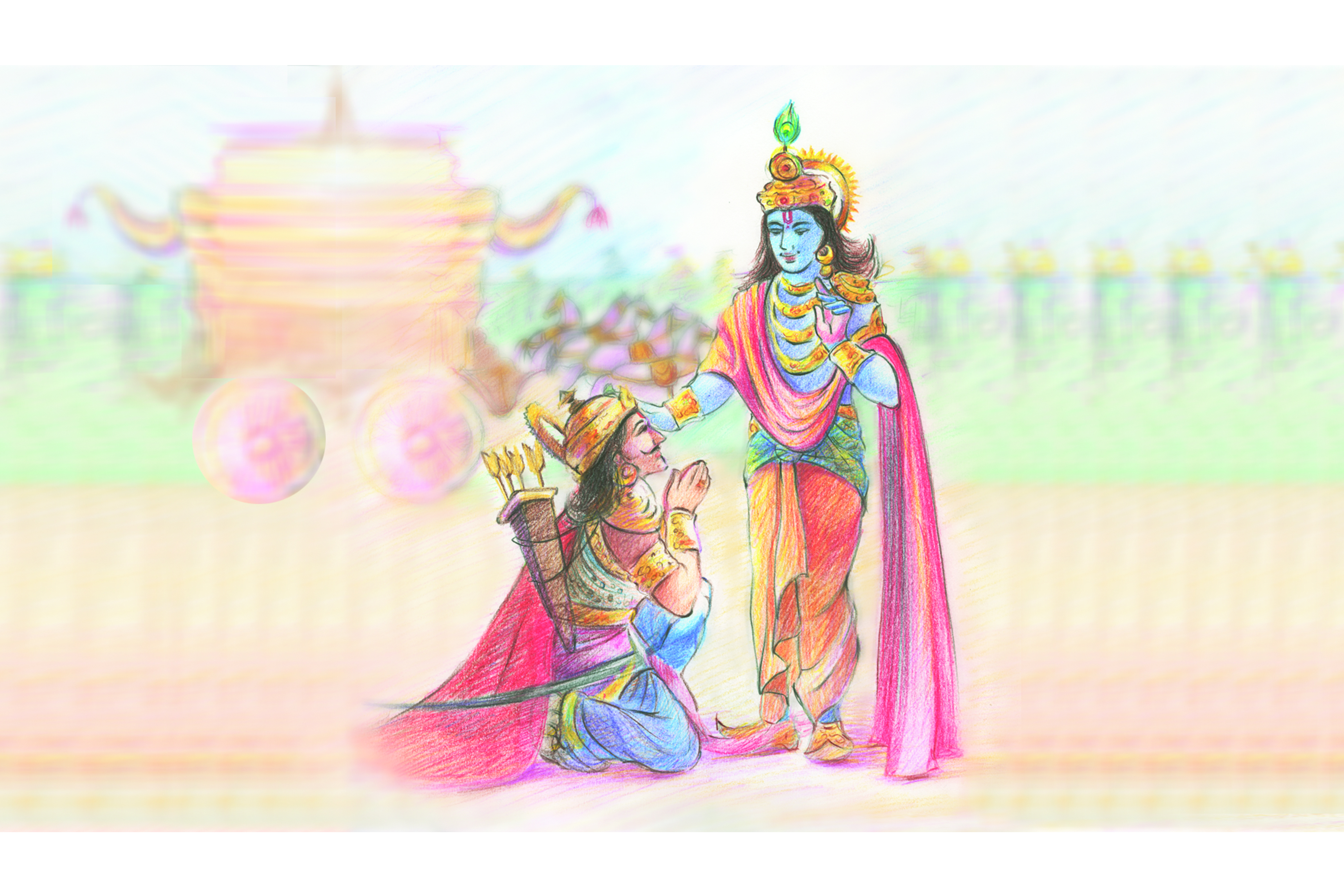
Lord Krishna speaks of reincarnation in the Bhagavad Gita, likening death to the way we change into a new set of clothes, discarding the old ones.
Fulfilling Pious Intentions
Most of us have a bucket list of things we always wished to do in our life. It helps to start fulfilling such pious intentions sooner than later.
It could be trips to places that we always wished to visit, a book that we always thought we could read, or write one of our own, few songs we could croon, close friends we wanted to visit, or movies that we wished to see, etc.
Imparting a Meaning to Our Suffering
Grief can beget meaning. It provides us an opportunity to reflect on what matters most to us. We could end up taking a social initiative which may, in some way, end up doing good to others. Suffering is virtually a steppingstone to spiritual upliftment.
On to Pleasant Memories
The good news is that the feeling of inner loneliness does get diminished over time. Our souls are forever seeking happiness within. Over time, memories which would have made us cry closer to the event, turn into pleasant ones. We remember the departed person with fondness. We keep in mind the values followed by the departed soul. We adapt to the new reality.
Making the Departed Soul Happier
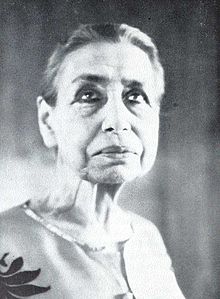
The Mother of Sri Aurobindo Ashram, Pondicherry, India, has said that to make the soul happy, so that it reincarnates in good conditions, one should have no sorrow and remain very peaceful and quiet, while keeping an affectionate remembrance of the one who has departed. (Complete Works of the Mother; Words of the Mother – III; Death and Rebirth).
Some Myths and Misconceptions
Myth: The pain will go away faster if we ignore it.
Fact: Trying to ignore our pain or keep it from surfacing will only make it worse in the long run. For real healing, it is necessary to face our grief and actively deal with it.
Myth: It’s important to “be strong” in the face of loss.
Fact: Feeling sad, frightened, or lonely is a normal reaction to loss. Crying does not mean we are weak. We do not need to put on a brave front. Showing our true feelings can help us and those around us.
Myth: Not crying implies we are not sorry about the loss.
Fact: Crying is a normal response to sadness, but it is not the only one. Those who do not cry may feel the pain just as deeply as others. They may simply have other ways of showing it.
Myth: Grieving should last about a year.
Fact: There is no specific time frame for grieving. How long it takes differs from person to person.
Myth: Moving on with our life means forgetting about our loss.
Fact: Moving on means we have accepted our loss. This is not the same as forgetting. We can move on with our life and try to be happy. The memory of someone we lost shall always be an important part of us. In fact, as we move through life, these memories can become more and more integral to defining the people we are.
What To Avoid While Comforting Those Who Are Grieving
- Aggressively seeking details as to how it happened. Allowing the grieving person to open up on his/her own makes better sense.
- Right after the death, asking the affected person details about their immediate or future plans. Or, commenting on how things may shape up in the family in the times to come.
- Discussing financial details of any kind.
- Loose talk while being a part of any of the rituals or at any social gathering to mourn a death.
- Talking about health-related precautions being taken by one, thereby implying that the responsibility of the sudden demise somehow lies on the deceased person or his/her family.

A Transformative Event
In his epic poem Savitri, Sri Aurobindo, the renowned Indian seer, presents the end of a person’s life as a transformative event, a passage or a door through which one passes towards a greater life. Essentially, the poem recounts the saga of human victory over ignorance and conquest of death.
Thus, on the racing tracks of Life, Death is but a pit stop. One gives up one’s creaking old jalopy. In exchange, one gets a shimmering new vehicle. One then zooms off to a newer horizon, the engine firing on all six cylinders. With each pit stop, one evolves further.
Conveying Positive Vibes to Those Who Are Still Around
If I ever run into Yaksha and he asks me as to what the next most surprising thing in life is, I would surely respond as follows.
“All of us realize that those we love are not going to be around all the time. Yet, we consciously end up praising a person only when he/she is no longer alive. During their lifetime, most of the times, we take them for granted and spend quite some time censuring, condemning, criticizing, and ridiculing them.”
Think of those around us. When was the last time we conveyed our genuine appreciation, praise, and gratitude to them for their importance in our life? Is it not better to do so when the person we love is still around and can appreciate it?!
(1. The illustration depicting Krishna and Arjuna in the battlefield has been reproduced with permission from the illustrator, Arati Shedde, and Heartfulness Magazine – www.heartfulnessmagazine.com.
2. All other illustrations are courtesy www.
3. A version of this article also appears in the July 2023 issue of NAMAH, a journal of Sri Aurobindo Society, Pondicherry, India).
Related Post:
-
Recent Posts
Buy the Book

buy the book
Categories
-
cc
Tags
Art Bertie Wooster Bhagavad Gita Bingo Little Birthday Blake Mouton Grid Blogging Bollywood Book Campus Life CEO Chivalry Consciousness Coronavirus Corruption Edwin Empress of Blandings English Ethics Feminism Happiness Health Hindi Hollywood Human Values Humour India Jeeves Kalidasa KIds Leadership linkedin Literature Lord Emsworth Love Lyrics Mahabharata Mahatma Gandhi Management Movies Music Norway Paintings Panjab University People P G Wodehouse Politics Pondicherry Portugal Psmith Puducherry Rabindranath Tagore Ramayana Ritusamhara R K Laxman Romance Rosie M Banks Rupert Psmith Seasons Shakespeare Social Media Something Fresh Songs SPANDAN Spirituality SQ Sri Aurobindo Stephen Covey Switzerland Tatas Thos UBS Values Wodehousitis WomenArchives
- March 2026 (1)
- February 2026 (5)
- January 2026 (2)
- December 2025 (1)
- November 2025 (2)
- October 2025 (2)
- September 2025 (3)
- August 2025 (3)
- July 2025 (2)
- June 2025 (2)
- May 2025 (4)
- April 2025 (5)
- March 2025 (5)
- February 2025 (4)
- January 2025 (4)
- December 2024 (6)
- November 2024 (6)
- October 2024 (6)
- September 2024 (5)
- August 2024 (5)
- July 2024 (4)
- June 2024 (4)
- May 2024 (5)
- April 2024 (5)
- March 2024 (3)
- February 2024 (1)
- January 2024 (4)
- December 2023 (2)
- November 2023 (3)
- October 2023 (3)
- September 2023 (3)
- August 2023 (5)
- July 2023 (5)
- June 2023 (7)
- May 2023 (6)
- April 2023 (6)
- March 2023 (8)
- February 2023 (8)
- January 2023 (7)
- December 2022 (6)
- November 2022 (5)
- October 2022 (8)
- September 2022 (5)
- August 2022 (6)
- July 2022 (6)
- June 2022 (8)
- May 2022 (7)
- April 2022 (8)
- March 2022 (7)
- February 2022 (3)
- January 2022 (7)
- December 2021 (4)
- November 2021 (8)
- October 2021 (7)
- September 2021 (6)
- August 2021 (7)
- July 2021 (7)
- June 2021 (9)
- May 2021 (8)
- April 2021 (9)
- March 2021 (10)
- February 2021 (8)
- January 2021 (8)
- December 2020 (7)
- November 2020 (6)
- October 2020 (5)
- September 2020 (9)
- August 2020 (9)
- July 2020 (8)
- June 2020 (8)
- May 2020 (6)
- April 2020 (5)
- March 2020 (7)
- February 2020 (4)
- January 2020 (7)
- December 2019 (12)
- November 2019 (10)
- October 2019 (5)
- September 2019 (9)
- August 2019 (10)
- July 2019 (9)
- June 2019 (14)
- May 2019 (13)
- April 2019 (14)
- March 2019 (11)
- February 2019 (11)
- January 2019 (14)
- December 2018 (12)
- November 2018 (12)
- October 2018 (14)
- September 2018 (9)
- August 2018 (10)
- July 2018 (10)
- June 2018 (8)
- May 2018 (11)
- April 2018 (11)
- March 2018 (6)
- February 2018 (9)
- January 2018 (10)
- December 2017 (10)
- November 2017 (9)
- October 2017 (8)
- September 2017 (11)
- August 2017 (10)
- July 2017 (10)
- June 2017 (11)
- May 2017 (9)
- April 2017 (7)
- March 2017 (7)
- February 2017 (8)
- January 2017 (10)
- December 2016 (9)
- November 2016 (11)
- October 2016 (10)
- September 2016 (10)
- August 2016 (9)
- July 2016 (6)
- June 2016 (10)
- May 2016 (10)
- April 2016 (10)
- March 2016 (10)
- February 2016 (12)
- January 2016 (10)
- December 2015 (11)
- November 2015 (11)
- October 2015 (10)
- September 2015 (10)
- August 2015 (10)
- July 2015 (10)
- June 2015 (10)
- May 2015 (10)
- April 2015 (10)
- March 2015 (9)
- February 2015 (10)
- January 2015 (8)
- December 2014 (9)
- November 2014 (8)
- October 2014 (8)
- September 2014 (7)
- August 2014 (7)
- July 2014 (7)
- June 2014 (7)
- May 2014 (7)
- April 2014 (7)
- March 2014 (7)
- February 2014 (6)
- January 2014 (7)
- December 2013 (6)
- November 2013 (6)
- October 2013 (6)
- September 2013 (6)
- August 2013 (6)
- July 2013 (6)
- June 2013 (6)
- May 2013 (6)
- April 2013 (6)
- March 2013 (6)
- February 2013 (6)
- January 2013 (6)
- December 2012 (4)
- November 2012 (4)
- October 2012 (3)
- September 2012 (2)
- August 2012 (4)
- July 2012 (2)
- June 2012 (2)
- May 2012 (2)
- April 2012 (2)
- March 2012 (2)
- February 2012 (3)
- December 2011 (3)
- November 2011 (1)
- October 2011 (2)
- September 2011 (2)
- August 2011 (2)
- July 2011 (2)
- June 2011 (3)

 ashokbhatia