Feeds:
Posts
Comments

Archive for the ‘For India, With Love!’ Category

Mention the name of any sweet and our bodies respond immediately. The saliva glands start operating on all twelve cylinders. The gastric juices gear up to receive the next morsel in keen anticipation, much like an Aberdeen terrier eyeing a slice of fish in his master’s hands.

Sweets contain heavy doses of sugar, a basic source of energy for our bodies. Besides keeping our bodies alive and kicking, sugar also keeps our spirits high. With the rights amount of sugar within us, we walk around with our head held high and with our chins up.

However, consumption of excess sugar is fraught with several risks. If one belongs to the Couch Potato Club, the body eventually registers a protest. Obesity, cardio vascular diseases and other ailments gradually start popping up. Pretty soon, life starts throwing up surprises of an unpleasant kind.

Each year, Indians gobble up around 23 million tons of the pristine white intoxicant. Each region has its own exquisite variety of sweets on offer. Talk of sandes, rasagulla, gulab jamun, jalebi and payasam, and we start drooling with gay abandon. For many Indians, these sweets form an integral part of at least one meal of the day. It comes as no surprise that we have more than 68 million diabetics in our fold. The real number is certainly much higher, given the absence of rural areas on our public health radar.

Think of long-term implications and the mind boggles. Besides ruining personal and family lives, diabetes surely drags down the Indian economy. The imagery of the country being a super power and reaping its demographic dividend simply evaporates. This truly calls for a National Mission which is supported by the public, the corporate world and the government alike.

Other than launching a media campaign exhorting the public to lead more active and healthier lives, the government can push this critical reform through in several ways.

One, we need to ensure availability of healthier food choices to our citizens across all our public spaces. For example, Indian Railways can offer the option of sugar-free diets to its passengers. As of now, even a cup of tea sans sugar is not readily available. Take a saunter down any of our railway stations and you would run into vendors peddling deep-fried stuff. If you are searching for some fruits or milk, you would have to be a Milkha Singh to be able to buy what you need and hop on back to your compartment. Travel by a bus and a similar challenge would await you. Go on a shopping spree and you are left gasping looking for a decent fruit juice joint. IRCTC can surely juggle around its menu and enable the hapless passengers to make a better choice as to the kind of nourishment they need.

Two, bicycles need to be promoted as a means of conveyance in a big way. Entrepreneurs can be encouraged to participate with the government in offering bicycle-on-rent facilities in cities and towns. Leaders and role models can be persuaded to get off their high-end limousines once in a while and campaign for this healthier and smarter way of commuting.

Three, urban planners and city mayors need to be pushed to create parks and dedicated walking spaces in the areas under their control. Cities and towns need to ensure clean and level pavements free of encroachments.

Four, our entrepreneurs simply hate taxes and love exemptions. Our taxation mandarins can surely sweeten the deal by offering tax breaks to those who deal in healthier food products of any kind. This would fire up their zeal to support the proposed National Mission and come up with innovative solutions. Perhaps the time has come to treat sugar at par with liquor and slap a ‘sin tax’ on it. Of course, this is a bitter pill to swallow.

Five, sugarcane can be increasingly diverted to produce bio-fuels. This would also help in curtailing our import bills, thereby improving India’s fiscal health. Countries like Brazil are already doing this.

If steps to control the Diabetes Tsunami are not taken now, the costs of healthcare in India would shoot up exponentially in the decades to come. The so-called demographic ‘asset’ would then become a severe ‘liability’ instead. Our time is running out.

(Related post: https://ashokbhatia.wordpress.com/2013/05/05/o-my-beloved-when-would-you-depart)
Read Full Post »

The new government in India has promised to cut red tape and substitute it with a red carpet. This is a great promise, but one has to wait and see how it actually unfolds. India has a federal structure in place. So, unless states come on board, wannabe entrepreneurs might still be found running from pillar to post negotiating their way through the dense maze of policies, procedures and rules at all levels. A major MNC recently stated that as many as 167 approvals were required before its project could see the light of the day.

The Doing Business 2013 report of the World Bank ranks India at 134 out of 189 countries in ease of doing business. India has questioned the methodology of the World Bank. This could satisfy the ego of some patriots amongst us. But the stark reality is that the costs of setting up and running a business in India are unreasonably high.

One also needs to consider the fact that India’s infrastructure is anything but world-class. There is a mismatch between the skill set available in the labor market and the needs of the industry. Policy framework is inconsistent, giving rise to a sense of uncertainty in the mind of investors. Add to this India’s poor record in enforcing contracts due to legal delays and the tendency to slap taxes on a retrospective basis, and the high level of discomfort experienced by investors can be readily explained.

One of the most serious stumbling blocks to India’s growth story is the widespread corruption. Businesses which are driven by pure greed find this rather handy. But those which stand by business ethics and operate within the paradigm of a value system detest this scenario. The latter surely deserve all the encouragement they can get.

The new government in India would do a great service to the nation by seriously cracking down on corruption. Some baby steps do appear to have been taken, but these do not attack the root cause of the problem. It is good to chase black money stashed abroad. But steps need to be taken to stem the rot at the root level itself.

Here are some steps which could possibly help to curb the growth of the cancer of corruption:

  • Political funding needs to be brought on a transparent plane. This can only be done if there is a clear message that witch-hunting of businesses, especially in case of a change of regime, would not take place. Suitable changes in India’s taxation laws would also help. Till the time political expenditure remains obscure, red tape would continue to hinder the country’s growth.
  • Bureaucracy performs a critical function. Safeguards can be improved. A well thought-out stick-and-carrot policy can be introduced and then ruthlessly implemented. This would ensure that the tendency of some to seek rent for grant of mandatory approvals is curbed.
  • A strategic policy for use of natural resources needs to be announced and implemented. It is not only about mineral resources but also about India’s rivers, airwaves and other bounties of nature.
  • Real estate sector needs structural reforms. A stronger MIS system is the need of the hour. Uniform rates of stamp duties attracted by property transactions across the country would go a long way in creating a level-playing field. Administering collections and detecting frauds would also become easier.
  • Pushing through DTC and GST would result in better revenues. This would give the government better leeway to reduce taxes across the board. In turn, this would improve Indians’ collective honesty levels.

On their part, businesses also need to do some soul-searching. By raising the bar higher on the compliance front, they could improve their market valuation. Their brand image is bound to get a makeover for the good. In turn, this helps them to attract more business as also more skilled employees.

Once a demonstration effect sets in, the government machinery would also develop confidence and stop viewing them through a jaundiced lens of suspicion. Instead, this would enable the government to go ahead with self-certification in several areas, thereby utilizing its own human resources better.

All of these are bitter pills to swallow. But unless this pain and suffering of chemotherapy and surgery is undergone, the cancer of corruption would continue to thrive. A strong political will alone can achieve this cure of the Indian system.

[Related posts:

https://ashokbhatia.wordpress.com/2014/05/03/a-16-point-agenda-for-the-16th-lok-sabha-of-india

https://ashokbhatia.wordpress.com/2013/04/14/combating-the-cancer-of-corruption%5D

Read Full Post »

For those of us Indians who just love berating themselves, here is a great morale booster. We get ruled more by our hearts, rather than by our minds. I believe this a major trait which supplements the ones listed in this interesting blog post!

Read Full Post »

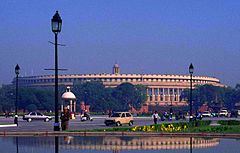
The heat, the dust and the vitriol thrown up by the campaign for general elections in India has already started fading away from public memory. Media has had a field day, what with rival claims being made by the contestants in the fray. Quite a few voters have been at a receiving end of a different kind; of freebies, money and liquor. In some pockets, sheer muscle power has been on overt display. Some armchair revolutionaries are disappointed; when it comes to real issues, whether in the realm of economy, diplomatic relations or delivery of public services, very little light has been generated in the past few months.SansadBhavan

The denizens desperately hope to collectively bring in a stable and strong government at the centre. They also realize that it is the right time to set the agenda for the 16th Lok Sabha.

Here are a few things which our new representatives need to consider:

1. Boosting infrastructure across the board, especially in the farm sector.
2. Containing inflation.
3. Giving an impetus to manufacturing, especially to check projected imports of IT products and selected white goods in the years to come.
4. Simplifying investment processes with clear goal posts.
5. Boosting revenue and simplifying indirect taxation by introducing GST in a time-bound manner. Bringing in DTC so as to reform direct taxation.
6. Revamping our definition of growth which should include not only economic growth but also social indicators like the Millenium Development Goals. Eventually, like one of our neighbours, a Gross Happiness Index should become the cornerstone of public policies.
7. Upgrading skill development mission and related programs so as to reap the benefits of the demographic dividend.
8. Instituting Power and Coal sector reforms.
9. Redefining basic principles of natural resource allocation.
10. Judicial reforms.
11. Law and order reforms.
12. Political reforms, especially in the areas of poll funding and decriminalization.
13. Curbing the parallel economy; building sector reforms and rationalization of stamp duties.
14. Implementing women’s reservation in all legislative bodies, public services and institutions. Enabling women’s education, empowerment and safety.
15. Focusing on IT-based enablement of citizens. Building on Aadhar card to improve the delivery of services to citizens. Replacing ‘narrow band’ by broadband. Special focus on the greying population.
16. Restoring the dignity of our legislative bodies.

A heartening feature of the 2014 election campaign has been the higher voter turnout. The aggregate turnout so far in the first 7 phases for 438 parliamentary seats has been 66.20%, significantly more than 57.41% figure in 2009 general elections. It appears that the silent majority wants to register its aspirations more effectively. This is a clear indication that our politicos need to sink their differences and work together for improving the quality of life of all its citizens.

Concerned citizens eagerly await the future contours of their ‘tryst with destiny’ to emerge on the 16th of May, 2014. Irrespective of the shape and composition of the new government which takes charge, a vigorous thrust in the areas mentioned above alone can ensure that India performs better and improves upon its image and stature in the comity of nations.

Read Full Post »

Howsoever dark a cloud is, there is always a silver lining. For those of us in India who are in a mood of despondency these days and continue to be defensive about quite a few things under the sun, let me list out what is there to cheer about.

  • There has been a record reduction in poverty, but we do not wish to announce it to the world. One, we are still concerned about the ones still lagging behind in the economic growth rat race. Two, we are not too sure about our own numbers!
  • There has been a sustained increase in rural wages and incomes. Pretty soon, we shall find that the market is being propped up by rural demand, while our urban folks continue to be in a doom gloom phase. While FMCG honchos are busy designing packages specifically targeted at the semi-urban and rural hinterlands, we continue to be diffident on this front.
  • In five year’s time, we have set up one-fourth of our installed capacity for power generation.  We have also laid power lines to 4.6 lac villages. We can not claim this to be an achievement because we have failed to provide back-up linkages of fuel, leaving vast swathes of country reeling under a power shortage.
  • On the road to financial inclusion, we have created and rolled out a programme which gives each of us a unique identity. This is also likely to help us plug leakages of subsidies, making resources available for other social welfare measures. We are defensive about it, because we are not too sure it would eventually work out. Sure enough, for the un-entitled ones who have been enjoying subsidies so far, the cost of living is just going to go up.
  • We have laid fiber optic cables to 2,50,000 panchayats. The only plausible reason for our hesitation to energizing the same and converting our narrow band capabilities into genuinely broad band ones  could be our fear of a majority of our denizens being covered by snooping measures of some foreign intelligence agencies!
  • Our parallel economy continues to thrive. Our politicos and private sector do not appear to be in a mood to stifle the same any time soon. However, one does come across some  papers and articles which indicate that post-Lehman Brothers, India faced the effect of a meltdown much later, the insulation having been provided by our underground economy. So, may be, we are being smart, allowing black money to proliferate!
  • Our rural tele-density at the beginning of this millennium was close to 1. As of now, it is around 40. We are quite defensive when it comes to claiming this to be an achievement because of some scam ridden decisions which were taken by those at the helm of affairs in the interim.  The argument is not that corruption is acceptable; it is only to say that there is indeed a positive aspect  which needs to be kept in mind.
  • We have also orchestrated a structural transformation of the economy. With the ratio of those engaged in agriculture coming down below 50%, we appear to be on our way to get more industrialized. We feel shy of talking about this because we have not pro-actively addressed the issue of urban housing and reforms.

Forget the ‘Incredible India’ campaign. The credible India has much going for it – a thriving democracy, a robust corporate sector, a young population, a growing and aspirational middle class, increasing urbanization, to cite some of the long-term strengths.  Brand India is there to stay. The devil is in the details – a tendency towards jugaad or short-term fixes, a habit of claiming rights sans any feeling of responsibility, a poor track record in implementation of grandiose projects, and the like.

So, here is a glass which is half full. Admittedly, there are mighty challenges ahead.  Just  as in the case of individuals, nations can learn to manage better from crises. If 1991 brought us economic reforms, the current crisis could prod us into reforming our legislative, executive and judiciary. Bolder and structural reforms could improve the standard of living of millions of Indians in the days to come. Let us be self-confident and push ahead in these times of economic turbulence.

Read Full Post »

It is heartening to know that India’s civil services aspirants shall soon be taking an examination in ‘Ethics, Integrity and Aptitude’ as part of their endeavor to make a career in public administration. It is a laudable initiative, and one does hope that in the days to come, our denizens’ issues with the administration shall start getting resolved with empathy, pragmatism and promptness, sans any corrupt practices.    

As an average person, one is tempted to ask if our politicos should also be taking a similar test! We live in an era when probity in India emblempublic life is at a nadir. The conduct of some of our honorable MPs and MLAs on the floor of our august legislative bodies often leaves us red-faced and scurrying for cover. The only time we see a semblance of unity amongst politicians of different hues is when they are faced by the threat of declaring their finances under the landmark RTI Act or when trying to thwart the judiciary’s attempts to keep criminals out of our polity.

How about an Indian Political Service?!

May be, the time has come to introduce an Indian Political Service? If meritocracy has to rule, those aspiring for a career in politics can be made to first apply to a body like the Union Political Service Commission! Detailed CVs backed by details of socially relevant projects handled, vision for the future, parentage and financial backing etc will need to be submitted and made public. Thereafter, the aspirants would need to undergo a rigorous selection process, comprising a written examination, followed by a group discussion, individual PPT presentations for the benefit of their target constituents, personal interviews and the like.

A professional working license can get issued only after a five-year internship with a duly registered political party. Thereafter, the incumbent could become entitled to joining the election fray. license can be put up for renewal once every five years.

Criteria for disqualification can also be laid down. Involvement in scams of any kind, a lapse in discharge of core duties, getting convicted in a court of law, disrupting legislative work, browsing the net for pornographic content while on duty, tax arrears of any kind, etc., could lead to suspension of the license to practice.

An exhaustive appraisal system can be put in place. Performance could be rated on various aspects like development works completed in the constituency, number of new legislations introduced, hours of legislative attendance registered, besides core targets met for the portfolio handled. For re-election, the license will need to be renewed based on the ballot performance.   

Would a Management Development Program Help?India Parliament House

In case our leaders and constitutional experts declare the above mentioned approach as null and void, another option is at hand. We can ask some of our premier management institutes to design a Management Development Program for our politicians! Such a program could have modules on ethics and integrity and behavioral sciences – with a focus on etiquettes and manners. A crash course on meditation techniques could lead our politicos to do some introspection on their own part, trying to figure out ways to attract today’s educated youth into the political mainstream, handling important legislations with equipoise and equanimity, controlling passions on the floor of the house and cleaning up the finances of the parties they owe their affiliations to.

In an era of scams and systemic corruption, the reputation of our political honchos has taken a severe beating. This is not to say that there are no straight forward and honest politicians ruling us. But corruption appears to rule the roost. Whether it is through a loot of the exchequer (Westland helicopters, fodder scam), sale of patronage (allocation of natural resources) or plain extortion and rent-seeking (pay or take the highway), the ingenuity with which public money gets siphoned off to either fill the political parties’ tills or to shore up personal fortunes is something which one cannot learn at management or accounting institutes.

Connecting with the Post-reforms Generation

All political parties need to do some introspection as to how to win and influence potential voters, specifically Gen-Z, meaning those who were born in the post-reforms era and who expect performance in place of promises and delivery in place of dithering.

The writing on the wall is clear – cleaning up political funding, giving up vote bank politics, avoiding inane bickering to win India Rashtrapati Bhavanbrownie points and joining hands to work together and taking concrete steps which enable common citizens to become successful entrepreneurs and make the delicately nurtured amongst us experience true freedom.

It is apparent that as a country, India has so far focused only on economic reforms. Reforms in the other realms of a vibrant democracy, like legislature and judiciary, are yet to be conceptualized and rolled out. We have miles to go before we get to sleep!


Read Full Post »

At present, the term GDP in India appears to have come to represent our collective Gross Despondency Perception. Our economists and statisticians can perhaps cheer up the hapless and overtly depressed citizens. They can do so by overcoming their obsession with pure materialistic growth. There are several ‘intangibles’ as well as ‘tangibles’ which can get added to the quantitative measure of our progress. For all you know, they could end up depicting a rosier picture which would also be closer to reality.

The following invisible facets of GDP could do with better visibility in the public domain:GDP Housewife

1.   Grand Domestic Pampering 

Household chores performed by a vast majority of the better half of our citizenry continue to remain invisible even to prominent economists who take such services for granted at their own homes. Home makers surely deserve a better deal. Without their contribution, the wheels of our economy would grind to a complete halt in no time. Home management services are provided by them 24×7. There is no doubt that they possess a high degree of multi-tasking skills. Also, their inventory management techniques always ensure that there are no stock-outs in the kitchen when uninvited guests suddenly pop up over the weekends.

 2.   Gross Dramatic ProduceGDP Tagore

Why neglect works of entertainment, literature, music and art works? The movie industry keeps churning out pot-boilers one after the other. Over the years, only the bar of success at the box office keeps getting raised. Television has already blossomed into a primary source of entertainment for the masses. Both the mediums have transcended international boundaries and gone global. India boasts of prolific writers across all languages and there is no reason their contribution to the social thought process should get neglected. Creative personalities and achievers of all kinds have added value to the Indian identity – right from Rabindranath Tagore to M F Husain, from M S Subbulakshmi to Pandit Ravi Shankar, from Munshi Premchand to Vikram Seth and from Lala Amarnath to Saina Nehwal. The relative soundness of the Indian IP regime can facilitate the inclusion of this parameter in the GDP computation without much fuss.

 3.  Groovy Digital Products

With broadband getting rolled out across the country, and with spectrum sales eventually coming out of the depressing shadow of scams GDP Aishwaryaand judicial overreach, the Indian economy would soon start getting digitalized at a faster pace. Digital experiences are slated to improve in terms of reach as well as quality. This sector can boast of a unique range of intangible assets of its own. Such developments can only be ignored at our own risk and peril.

4.   Great Domestic Patience

Yet another soft power which remains ‘invisible’ to the Homo economicus (as opposed to the Homo reciprocans) amongst us is the religiosity, the innate bent towards spirituality and the resultant bias towards non-violence. The patience displayed by most of our denizens in dealing with shoddy civic facilities, super-slow public services and systemic corruption is perhaps a result of our social mores which are steeped in spirituality. By ignoring this facet, a great mechanism to handle setbacks in life is therefore left out of the reckoning.

GDP R&D

5.   Grand Design Patronage

R&D expenditure in the private sector is another area which deserves attention. Admittedly, we are far behind in the realm of innovation and design. But we do have the potential to catch up with the rest of the world. If such expenditure is considered an investment in the economy, a more realistic perspective would emerge.

6.   Green Development Plans

In the relentless pursuit of economic growth, we are guilty of drawing more than we replenish to Mother Nature. Whether it is mining, spectrum-sharing or water-management, we are taking myopic liberties which would prove very expensive, if not irreversible, in the timesGDP environment to come. Green initiatives taken to compensate for the loss of natural resources surely merit inclusion in our scheme of things. The aggregate value of ‘production’ should surely be adjusted to reflect the permanent damage caused to our fragile environment.

Considering intangibles in macroeconomics data is not a new idea at all. Way back in 1908, Thorstein Veblen, a sociologist and economist, had used the phrase ‘intangible investment’ to cover everything from innovation to promotion and advertising. At a business level as well, the proportion of tangible assets backing up a brand could be a miniscule 5% of the overall value of the brand.

The Bureau of Economic Analysis of US has recently created history of sorts by publishing a revised series of public accounts which include the R&D investment in private sector as well as original works of art such as films, books and music. As an example, for the period from 2002-12, the new data shows an annual average growth rate of 1.8% in place of the earlier declared rate of 1.6%.

We have a number of institutions, bodies, statisticians and economists who can surely propose a more balanced way of capturing the realities of the Indian economy. The data may not be easily available and may have its own share of initial controversies, but the attempt would certainly be an improvement in the right direction.

PS: Whatever little I understand of Economics, it is due to the learning received from late Prof. S P Singh, a friend, philosopher and guide. This article is merely a humble tribute to the great person. 

Read Full Post »

The conscientious ones amongst the mandarins in the Indian Health Ministry cannot really be blamed for having sleepless nights. The epidemic of such lifestyle diseases as obesity, diabetes, hypertension and cardiovascular abnormalities is leaving them a wee bit clueless. The need of the hour is to come up with a scheme which nudges Indians of all sizes and shapes to start living slimmer and healthier lives.

Take obesity, for instance. As many as 60 million Indians – roughly 5% of the population – are considered obese. With more than 50 millionObesity image suffering from high blood sugar, India is a nation headed for a health tsunami the devastation caused by which would be anything but sweet. This is a grave threat to our vision of the country reaping a hefty demographic dividend in the years to come.

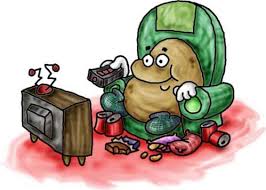
How do we motivate the Indian couch potatoes to switch off their TV sets and go out for a jog or a brisk walk? What is it that makes Indians tick?

One, all Indians have a great passion for gold. We are quite happy gobbling up around 900 tonnes of the yellow metal every year. Walk into any jewelry store and the rush there would make you wonder if someone inside is dishing out freebies. You would be excused for mistaking it for a fish market, albeit with an odorless soothing ambience where the sales people smell of perfume but are too busy to attend to your needs immediately. One thing we have surely learnt from our Gulf friends is to build multi-storied malls where a dazzling variety of bangles, rings, pendants, chains and other accessories are on display, each on an exclusive floor of its own. After all, aeons back, India was known as a ‘bird of gold’!

Two, like many of our brethren elsewhere on this planet, we despise paying taxes. In a country of 120 billions, where automakers face a slump but luxury cars still sell like hot cakes, less than 3% pay any tax on their incomes. Of these, merely 1.3% report an income exceeding Rs. 2 millions per annum. A Pareto’s Law is in operation here as well – these 1.3% alone make up for about 63% of the taxes collected! Come budget time, and our collective BP levels go up. The hapless salaried class, a sitting duck in any case, hopes for a tweaking of Section 80C etc. The businessmen keep improvising their art of fudging expenses year after year and still suffer from indigestion and insomnia. Corporates have a battery of professionally qualified people assisting them in tax planning, a euphemism for tax evasion being portrayed as tax avoidance.

The Government of India would do well to capitalize on these widespread weaknesses of Indians and launch a slew of incentives andgold bars schemes which nudge Indians of all hues to start living healthier lives. Dubai has already shown the way by deciding to lure its citizens to lose weight in kilograms and gain ounces of gold. India can improve upon the scheme and link weight loss of its citizens to tax savings as well. A carrot and stick approach based on a single health parameter which is easily measurable (like Body Mass Index, or BMI in short, for example) could be an instant hit with the masses.

The scheme can reward people whose BMI is in the normal range. They can hope to get 5 gms of gold plus a rebate of 10% on the taxes payable each financial year. Those who have a BMI in the obese or super-obese range can be made to pay a 10% surcharge on their taxes. Those who are underweight can be given extra rations in the proposed Food Security Bill. A scheme of this kind would surely motivate Indian citizens to start jogging, walking and refusing to become couch potatoes. Those who sustain fitness for longer periods can merit extra incentives. If they do not provide fitness certificates annually for a period of 5 years, there could be an obligation to return the gold thus earned. This would ensure that having pocketed their new-found wealth, the beneficiaries would not start piling up their pounds of flesh once again.

The spin-offs of such a scheme are many. Students, if given grace marks for being healthier, would certainly switch their lunch preferences in favor of salads, nuts and fruits, giving up on burgers and pizzas. Those opting for fitness-based careers would find their employment prospects brightening up. Our armed forces would no longer have to face a shortage of officers wanting to join its ranks. The additional supply of sports persons shall improve the country’s medal tally prospects in Olympics. Engineers and professionals of all kinds would start refusing white collar jobs, providing much-needed manpower for blue collared assignments. Medicos will start taking careers in public health more seriously.

Most of our denizens who have been happier staying out of the tax net would voluntarily start filing returns. The IT Department may soongym eqpmt image need to beef up its facilities to cope with the mad rush of filing returns, what with the humble paan-waalahs, the washermen and the milk delivery men also jumping onto the bandwagon. The rush for gym equipment, health monitoring accessories and healthy foods would increase manifold, bringing in fresh investments, thereby giving a much needed fillip to the ailing manufacturing sector. Bollywood stars who are already egging us on to remain in good shape would get a fresh lease of life. The just-to-be-married maidens who are fighting the battle of the bulge and chasing their size ‘zero’ dreams would soon start earning a part of their own dowry.

Politicians who remain cocooned in their climate controlled environs may soon decide to visit their constituencies more often, losing weight while walking through the heat and dust of the countryside. A healthy body houses a healthy mind. Soon, the citizens could expect a major improvement in the functioning of our parliamentary institutions. Bureaucrats would soon follow the healthier lifestyles of their leaders, thereby revitalizing a crucial part of our vibrant democracy.

Where is the infrastructure to implement a scheme of this nature, you might well ask. With inclusive banking just round the corner, postcouch potato offices, banks and hospitals of repute can certify the BMI levels of our citizens. P&T staff members who are twiddling their thumbs in the post-telegram era can be trained and used in the scheme. The excess outflow of foreign exchange on account of spurt in gold imports would be easily offset by the higher productivity of the working population of India. This in turn would give a boost to the much sought after GDP numbers, besides inching us conceptually closer to a Gross Happiness Product.

Overall, a win-win situation for all concerned. For all you know, India could prove to be the healthiest country on the planet in the near future!

(Realted Post: https://ashokbhatia.wordpress.com/2015/01/01/a-new-year-resolution-for-couch-potatoes)

Read Full Post »

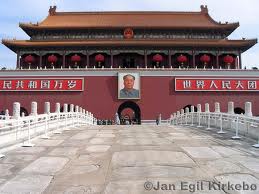
The Chinese Premier Li Keqiang honored Indians with a visit, his first international foray after he assumed charge. Once the Beijing imageeuphoria has died down, one is likely to find solace in the fact that both China and India have the courage of conviction to put all matters on the table and to try to thrash them out. Rhetoric apart, one also hopes that the Indian government shall nevertheless set in motion a long-term strategic plan to handle the game of Chinese Checkers that our northern neighbor plays with us.

The Chinese Premier is absolutely right that our two nations are destined to be together. But good words sometimes convey only pious intentions and do not get converted into positive ground realities. An entire state of India, Arunachal Pradesh, is claimed by China. Even at a forum like the ADB, loans for developmental works in Arunachal Pradesh have been scuttled at China’s behest. Zangmu and other dams are being planned on the Brahmaputra, with no participation by India which is a lower riparian state. India’s claim for a seat in the UN Security Council is not getting supported by China. Its stand on Kashmir touches a very sensitive chord amongst Indians and its support for Pakistan is an added thorn in the flesh.

If China is said to be working on a ‘string of pearls’, India is no less capable of creating an ivory necklace around itself, so it Rashtrapati Bahavanwould not be taken lightly by China. Maintaining better relations with other neighboring countries, backed by investments in strategic assets, is a singular step in that direction. The government has already shown imagination in going in for the development contract for Chahbahar port in Iran. Many more initiatives of this nature need to be followed through.

We surely need better highways within India. But our top priority has to be building up our border defense muscle. This can only be deferred at our own long-term risk and peril. The humiliation of 1962 is difficult to forget and so is the recent arm-twisting in Ladakh.  

At times, our innate sense of decency is taken to be a sign of weakness. Sure enough, India needs to far more proactive rather than just being reactive to Chinese manoeuvres, militarily or otherwise.

With due respects to the leader who is an honored guest, allow me to say that we need to judge countries not by what their leaders say but by what they actually do.

Read Full Post »

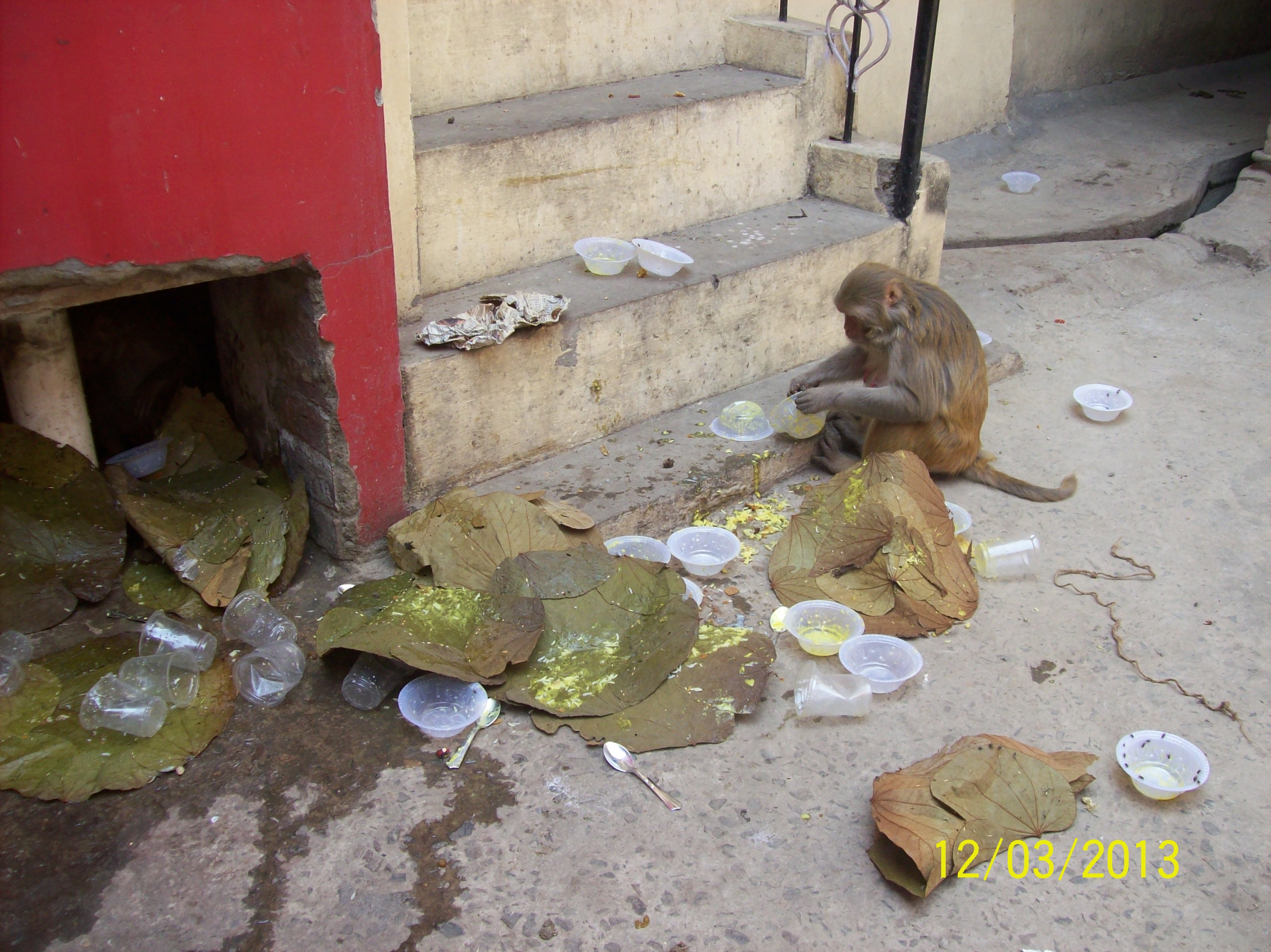
On a recent visit to Vrindaban, I was pleasantly surprised to discover the innate intelligence of our evolutionary predecessorsMarch 2013 471 residing there. A monkey decided to swoop down on our auto rickshaw and snatch away the spectacles of my wife. Not to despair, said the helpful driver. A currency note was offered to the monkey, and back came the glasses without much ado. We were told that it was standard practice for the monkeys to earn money in this manner, only to be exchanged with bananas and peanuts with a trader later! Sure enough, they have figured out how to survive and do well in life!

This led me to think of several other monkeys who have perfected the art of survival in the lives of ordinary Indians. The monkeys of ignorance, superstition, poverty, illiteracy, absence of clean drinking water, inadequate and ineffective delivery of public services and a marked absence of manners, civic sense and politeness in our public spaces. Unlike the Vrindaban monkey who left us in peace, these ones keep returning to haunt us. Each time, they leave us clueless as to how to make them go away permanently.

The Art of Apathy, Callousness and Greed

There is no point in blaming it all on our government. Do we ourselves care about the domestic waste that we generate – eventually, where does it land up and what happens to it? If we pass by an accident site, do we stop to check if anyone needs urgent medical help? While traveling by a bus or car, do we think before spitting or throwing a plastic bag out of the window? In public spaces, do we try to show restraint, respect and courtesy to those who are seniors in age? Do we not enjoy displaying our bravery by breaking a queue, whether at a railway station or while getting into a bus?

Blatant traffic violations are the order of the day. Our drivers routinely use high beams even during city limits, both during day as well as night-time. Overtaking from the left is a norm, and so is merciless honking, despite knowing that the vehicle in front has no way of giving us any overtaking space. When facing a traffic jam, we believe it is smart to go into the opposite lane, so as to make matters worse. Our respect for an authority figure is intact, though. Remove a traffic cop from a busy intersection and we are sure to jump the red light.

We have more mobile phones than toilets – which speaks volumes about the skewed priorities we have in life. Even if there are public conveniences, these are rendered useless by sheer neglect and apathy. In trains, there is no consideration for the following passengers who would like the place to be left in a reasonably clean condition. Men relieving themselves in public and fertilizing our soil across all roads is a common sight to behold.

Many of our corporates indulge in malpractices, perhaps believing that tax evasion is the same as tax avoidance! The fact that four major audit firms are now planning to hire forensic experts to check corporate frauds once again highlights the need for our moral compass to be set right. Our disdain for laws and courts is exemplary. We appear to thrive in informal systems, where rules are meant to be bent.

Blame it on Maasai Mara!

Why are we the way we are? Perhaps our ancestors and genes are to blame? Our ancestors had perhaps migrated all the way from 220px-Elephants_in_masai_maraAfrica. May be their nomadic lifestyles have shaped our genes, making us thrive only in a high degree of chaos. Then we had the invaders who kept plundering us time and again, making us love disorder and aggressive behavior. Or, has our own selfishness and individual greed grown to such an extent that we have turned highly myopic, with the greater good completely invisible to us?

The outlook of a majority of our workforce is still agrarian, giving rise to what one could label as a ‘Rabi-Kharif’ syndrome. What cannot be done today can easily be put off for another six months. No doubt, the attitudes we bring in to our work places (relative to our western colleagues) reflect this reality. As does our habit of making compromises in matters of quality – the thinking that ‘sab chalta hai’ (everything goes).

Ask any business executive and he would complain about long working hours and absence of quality time with family and loved ones. But is the quantity of time spent at the work place commensurate with the quality of the output? Having put in two hours’ honest work, don’t we get tempted to indulge in a long gossip session with a colleague, relaxing unduly long over a cup of tea or coffee?

Rights and Responsibilities

Come to think of it, are we not imitating the three monkeys loved by Gandhi-ji? Like one of those, we refuse to see the filth and squalor220px-Three_wise_monkeys_figure all around us. In fact, we go around spreading it all the more. Like another, we do not hear any voices emanating from our leaders, having given up on them quite some time back. And, of course, like the third one, we do not speak out when we see a serious issue plaguing a majority of our population. We remain safely cocooned in our comfort zone.

It is not my case that all is wrong with us Indians. The world can learn a lot from us – organizing mega events like the Kumbh Mela, managing coalition governments, yoga and spirituality, to name only a few. Our family bonds and values are still intact.  We have several systems that do work.

We also have a vibrant democracy to boast of. However, individually as well as collectively, we appear to be more keen on securing our rights rather than discharging our responsibilities. A touch of decency, concern, compassion, courtesy and humility is surely the need of the hour!

(Images of Elephants and Three Monkeys Courtesy Wikipedia)

Read Full Post »

« Newer Posts - Older Posts »