Feeds:
Posts
Comments

Archive for the ‘Management Lessons’ Category

ethics and values

We do not necessarily need a degree from Harvard to realize the difference between right and wrong. The Moral Compass within us is capable of telling us if we are on the right path.

Human values form the inner core of our personalities. These keep nudging us to be good human beings.

If ‘Values’ are the cause, ‘Ethics’ are the effect. If our value system is in place, our outward behaviour and conduct shall be ethical. Same is true of organizations, where the underlying culture determines the response of its key managers to tough business situations.

A company which believes in human values would handle a separation differently. When ramping down a business, good performers could get helped to secure career opportunities elsewhere. A star performer who has made up her mind to leave would get treated with great respect, thereby making her a valuable brand ambassador for the company.

In the Mahabharata, this is how Yudhishtira responds to queries by Yaksha:

Yaksha:

Which enemy of man cannot be conquered?

                  What is man’s persistent frailty?

                  Which man can be called moral?

Yudhishtira:

Anger is the unconquered enemy of man.

                  Greed is the persistent frailty.

                  That man is moral who seeks the good of all.

Values and ethics happen to be a crucial component of our Spiritual Quotient.

(Source: The Mahabharata of Vyasa, Transcreation by P Lal)

(Excerpt from my book ‘Surviving in the Corporate Jungle’, which covers more than hundred topics of interest to managers of all hues, shapes and sizes)

Read Full Post »

Designations are not important in cases where the external exposure of the employee is minimal. They form the psychological part of an employee’s compensation package.

For those whose role demands an external exposure, a higher sounding designation would improve the canvas of opportunities, enabling a faster realization of the company’s goals.

For employees who have outlived their core utility in companies which believe in firing people only when there is a disaster of a nuclear nature, an improvement in designation would be an invaluable tool in the company’s Human Resources arsenal.

(Excerpt from my book ‘Surviving in the Corporate Jungle’, which covers more than hundred topics of interest to managers of all hues, shapes and sizes)

Read Full Post »

conflict

An executive fighting his boss

– when he feels the top dog is wrong – is a good sign.

Executives fighting between themselves in the boss’ presence is also the sure sign of a healthy work culture.

Seniors airing their difference of opinion or berating their colleagues is an unhealthy sign.

We all remember the fable of a monkey which mediated between two warring cats and gobbled up the entire piece of cheese at hand.

(Excerpt from my book ‘Surviving in the Corporate Jungle’)

Read Full Post »

This is a malaise every workplace is stricken with. You may have a set of intelligent, obedient and relevant people working for you. But it is quite likely that half of them would have fallen into the trap of complacency. They would have become critical of the company/department, would be working in a comfort zone, and would be displaying a singular lack of initiative. They would no longer have the shine in their eyes and would surely not be operating on all four cylinders.

Your Human Resources honchos would be neglecting this lot at the company’s long-term peril. An antidote package could comprise a sustained program of employee engagement, elaborate mentorship, job rotation, sponsorships for advanced educational courses (either online or in the distance mode), and recreational breaks. Simply spicing up their work life would also help.

At the individual level, keep watching for signs of falling into the trap of complacency. Analyse, introspect, and then speak to your seniors the moment you notice the zeal gone. Or, become a rolling stone and gather no moss!

(Excerpt from my book ‘Surviving in the Corporate Jungle’)

Read Full Post »

When it comes to achieving the heights of Corporate Excellence, the element of Wisdom plays a crucial role. Look at any organization which enjoys a strong brand equity and one is apt to discover the wiser ways in which it conducts its operations. Its initiatives lead to a sustainable growth of the business, giving back to society in ways which are imaginative as well as pragmatic. The common thread running through all such initiatives is that of the element of Wisdom, one of the four pillars of Integral Management, the three other pillars being Perfection, Harmony and Strength/Power.

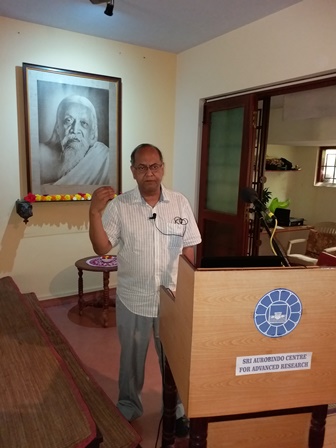
Sri Aurobindo Center for Advanced Research (SACAR) recently organized a one day seminar on the topic of ‘The Element of Wisdom in Management’. The event was a part of a series of seminars organized by SACAR over the past two years as a part of its endeavour to explore the relevance of some key spiritual tenets to the realm of management.

Wisdom in Organizations

A talk by yours truly covered the diverse ways in which Wisdom manifests itself in strategic as well as in tactical decision-making by organizations. It quoted real life examples of business houses using Wisdom in such managerial functions as Marketing, Finance, HR, and the like. Business houses like Tatas, Nestle India, HCL, Infosys and Wipro were covered.

Wisdom in managing People and Production

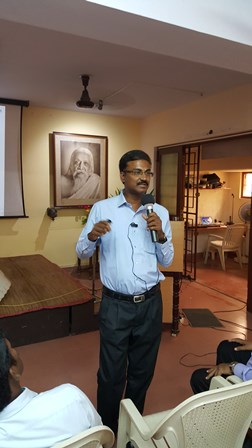
Mr. K. Nagaraja Kumar, Head-Marketing, L&T Corporate Technical, Chennai, explained the elements of Wisdom which can come in handy to managers responsible for handling people and production. With the help of light-hearted illustrations, he conveyed some profound messages to the participants. He presented a case study wherein a detailed road map was used to turn around the fortunes of an ailing manufacturing unit by engaging meaningfully with relevant stakeholders.

Balancing Intelligence and Intuition

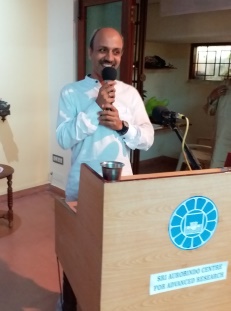
Dr. Narendra Joshi, Principal, Agnel Technical College, Mumbai, highlighted the necessity of balancing intelligence and intuition in the realm of Product Life Cycle Management. He cited the examples of companies like Sony, Xerox, Matsushita and Nestle which introduced innovative products which were much ahead of their times. Analytical tools like Teboul’s model, Kano’s model and the Fritz approach were quoted by him. So was the necessity for a quiet mind for reaping the benefits of one’s intuitive powers.

The Age of the Spiritual Manager

Dr Ananda Reddy, Director, SACAR, spoke of the fact that Wisdom is far above and beyond the realm of the thinking mind. It is about understanding and effectively using the underlying algorithms which open up the vast vistas of miraculous knowledge and infinite possibilities for managements to decide long-term business strategies and frame policies which ensure profitable as well as sustainable operations. He shared his perception that the age of the Spiritual Manager is already upon us and management professionals would do well to equip themselves with spiritual tools to succeed in their career and life objectives.

The Wisdom of Human Values

Prof G P Rao, a doyen in the field of management education, spoke of SPANDAN, a NGO founded by him, which espouses the Wisdom of running business enterprises based on human values and ethics.

Empirical evidence of Integral Management

Prof Kisholoy Gupta, Acharya Institute of Business Management, Bangalore, presented the empirical results of an insightful study done by him to gauge the perception and reality of the Four Pillars of Integral Management – Perfection, Harmony, Strength and Wisdom – by practicing HR seniors in the Indian industry. The results showed that there is already some awareness of the constituents of Integral Management, though the nomenclature arouses a curiosity and a desire amongst management practitioners to understand and adopt this new paradigm in their day-to-day working.

Wisdom at the personal level

What does Wisdom mean to a practicing manager? Mr Ganesh Babu, Founder & CEO, Winning Minds Solutions, Puducherry, came up with a heart-warming presentation on the dimensions and utility of Wisdom in the mundane life of a working manager. The talk explored different dimensions of Wisdom in all spheres of one’s life – professional, social as well as personal.

Leaders with equanimity

Dr. Debabrata Sahani, Surgeon, Optholmologist, Bhuvaneshwar, touched upon the importance of an inner connection for business leaders. Wise are those who enjoy a tranquility and calmness within themselves. Their decision-making is based on balanced, well-considered and holistic view of the facts of the case. They do not manage crises in business with knee-jerk reactions. They deal with people according to their nature and with occurrences in the business environment according to their force and the truth or hard reality they represent. Impartial they are. Detached they are. Compassionate they happen to be, but never at the cost of their innate wisdom and truth.

Wisdom for an Indian citizenMr Hariharan Subramaniam, Director, Indian Institute of Governance, Chennai, touched upon the Wisdom of not only connecting to one’s inner self, but also the need for an Indian to contribute towards restoration of the old glory of her country. India has a special role to play in the comity of nations and the need of the hour is to train value-based politicians and administrators who would steer the country in the decades to come. He spoke of the vision of kick-starting his dream project, the Indian Institute of Governance, which would serve this purpose. His opinion was that one’s wisdom was directly proportional to one’s inner growth.

The seminar was well attended by practicing managers, management academicians and research scholars. Its conduct marked another milestone in SACAR’s efforts to propagate the concept of Integral Management, the Four Pillars of which happen to be Perfection, Harmony, Power and Wisdom.

The Age of the Spiritual Manager is already upon us. The time has come for management professionals to consider and adopt Integral Management – an Indian paradigm to understand and refine our managerial processes.

(Related Posts:

https://ashokbhatia.wordpress.com/2015/03/17/an-inner-approach-to-leadership-and-management-note-on-a-seminar

https://ashokbhatia.wordpress.com/2015/10/06/managerial-perfection-notes-from-a-seminar-at-pondicherry-india

https://ashokbhatia.wordpress.com/2016/03/26/harmony-in-management-a-seminar-at-pondicherry-india

https://ashokbhatia.wordpress.com/2016/08/30/power-in-management-a-seminar-at-puducherry-india)

Read Full Post »

Amongst other things, you also get paid for keeping your boss’ blood pressure under check. Pity the poor over-stressed guy and update him before he thinks of any project assigned to you. In other words, meet him halfway through.

If it is getting delayed, or worse, not getting done at all, make him an accomplice to murder by keeping him informed in advance. In case you are likely to meet your target, present him with a draft report/outcome much before the deadline.

(Excerpt from my book ‘Surviving in the Corporate Jungle’)

Read Full Post »

bellcurveThe pre-dominance of the Bell Curve in performance appraisals has never been in doubt. It recognizes the fact that all people are not identical, the tasks assigned to them are different, and the environment they operate in need not be homogeneous. All organizations have their share of high performers, free riders, under-performers, and downright deadwood.

A well understood Bell Curve principle is about building meritocracy and practising a differentiated rewards strategy. It has its own limitations, especially in highly innovative outfits. However, it keeps the bar high, thereby helping an organization to scale greater heights.

(Excerpt from my book ‘Surviving in the Corporate Jungle’)

Read Full Post »

Advertising

Advertising

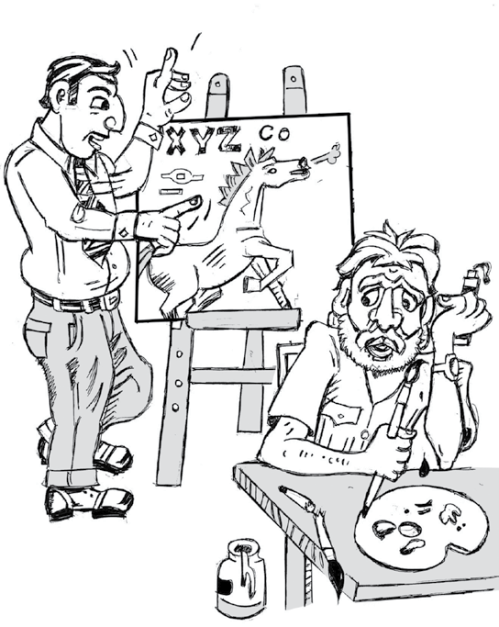
As a Chief Executive Officer, if you hire lions like Pablo Picasso or MF Hussain to create a corporate emblem for your company, would there be any point in getting a bunch of giraffe Vice Presidents and General Managers to meddle with his final work? Define a target and a budget, and let the agency have a free hand.

As a trainee cub, join an ad agency if you love irregular working hours, midnight escapades and hobnobbing with the hoi polloi of creative geniuses whose king (or, queen) size egos need to be managed at all times, with clients’ deadlines looming large over your work horizon. Depending on your skill set, you may gravitate towards copywriting, production, media planning, or client servicing. In all cases, creativity under pressure should be the motto of your life.

(Excerpt from my book ‘Surviving in the Corporate Jungle’)

Read Full Post »

Celebrating the first anniversary of having launched a book in Portuguese in March 2016.

English version to follow soon….!

ashokbhatia's avatarashokbhatia

Surviving in the Corporate Jungle

BookFrontCover

This is a short introduction to a book by yours truly, the Portugese version of which is getting launched in Portugal shortly. The launch event  in Porto is planned on the 2nd of March, along with a talk on “Work Life Harmony” at the  Catolica Porto Business School  of  Universidade Catolica do Porto. The launch event in Lisbon is planned at Universidade Europeia on the 3rd of March, 2016, as part of an event titled ‘Passport to India.’

How this book happened

Forty years back, the School of Business at a prestigious university in India made a big mistake. They awarded me a degree in Business Management. They were so very happy to see me off the campus that they even awarded a silver medal to me.

I owe this book to my professors – some of whom taught so well that I learnt a…

View original post 586 more words

Read Full Post »

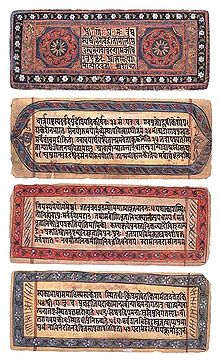
India offers to the world an immensely rich collection of sacred scriptures.rig-veda First and foremost are the Vedas, which could be justifiably referred to as the core of the spiritual and psychological soft power of India. Then there are the Upanishads, which capture the highest spiritual knowledge and experience that India can offer to the world.
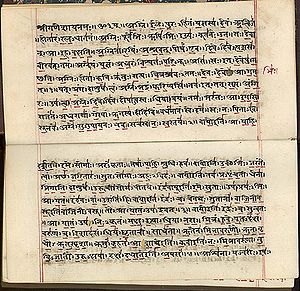
India also has Puranas, Itihasas, Tantras, Dharma Shastras, and Sutras, besides the innumerable works of religious poetry in regional languages.

Ramayana and Mahabharata

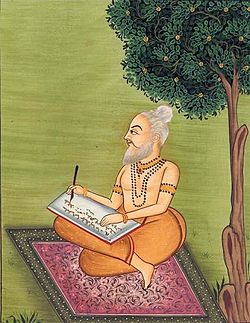
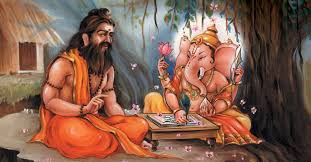
Amongst Indian scriptures, Ramayana and Mahabharata happen to be the most popular narratives. Both are pregnant with mature thought. Both contain teachings of political, religious, ethical and social kind. Both showcase, in a relatively simple language than that of the Vedas and the Upanishads, the Indian idea of Dharma, or righteousness.valmiki_ramayana

Both appeal to the soul as well as to the imagination of an intelligent mind. Even illiterates find gems of wisdom in these two epics. If philosophy, ethics, morals, social concepts, political thoughts or administrative justice form the warp in this unique fabric, heroic tales, human emotions, poetry, aesthetics, fiction, romance and villainy form the weft.

These epics showcase a highly developed sense of ethics and values, social and cultural realities of a distant past, besides intellectual and philosophical refinement. Lay persons could draw several life lessons from both these works. So could professionals of all hues.

Sanskrit, the supreme language  

Sanskrit is the language which forms the bedrock of a vast majority of these works. An intimate feeling of the language helps in understanding the multi-layered narratives better. One acquires a heightened sensitivity towards the shades of style and the context in which a statement is being made.

In today’s inter-connected world, one may not know Sanskrit but can still savour a fraction of the fragrant nectar of knowledge offered through any of the Indian scriptures.mahabharata-vyasa-ganesha
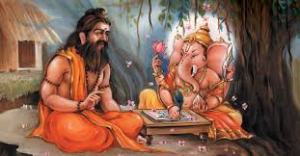
Sacred scriptures comprise a minor part of all the Sanskrit literature available from the Vedic to the pre-modern times. Nonetheless, they form the bedrock of Indian culture and spirituality.

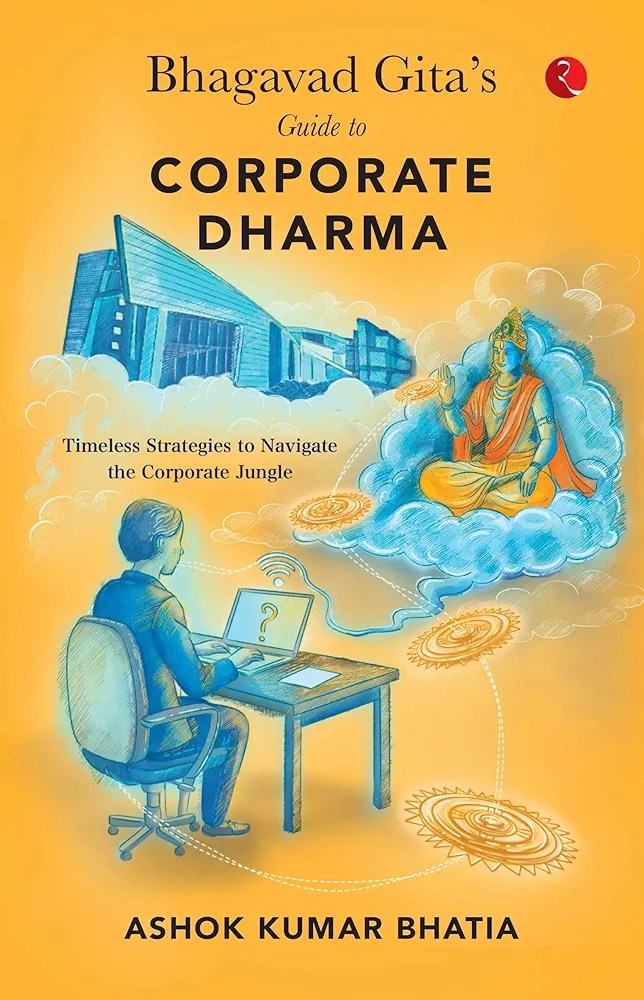
Bhagavad Gita: The Song Celestial

Bhagavad Gita forms an integral part of Mahabharata, appearing in its Bhishma Parva. It comprises eighteen chapters. Broadly speaking, this unique composition touches upon three kinds of Yogas – Karma Yoga (The Yoga of Action), Gnana Yoga (The Yoga of Knowledge) and Bhakti Yoga (The Yoga of Devotion). [Yoga is a term which is often confused with physical practices of a certain kind. However, the term is used here in the sense of describing a communion, specifically the communion of an individual soul with the Divine.]

Upanishads articulate the philosophical principles concerning mankind, world and God. Gita explains the manner in which human beings can practice these subtle philosophical principles in their mundane lives.

Soulful management

One of the basic concepts enunciated by Krishna in the Bhagavad Gita is that Mahabharat Krishna Arjunaof the everlasting nature of the soul. The concept of a soul now finds a resonance even in modern management literature. In his book ‘The 8th Habit’, Stephen Covey urges professionals to pay heed to their ‘inner voice’. While proposing the whole person paradigm, he speaks of the four dimensions of a person – spirit, body, heart and mind.

From a management point of view, perhaps the most relevant are the concepts espoused under the overall umbrella of Karma Yoga. Here, Lord Krishna emphasizes the importance of self-less action, free of its rewards and gains. A state of inaction is held to be another form of action itself.

Gita III 6

कर्मेन्द्रियाणि संयम्य य आस्ते मनसा स्मरन्।

इन्द्रियार्थान्विमूढात्मा मिथ्याचारः स उच्यते।।

[A hypocrite is one who suffers from a false notion of having self-discipline. He is someone who controls the organs of action but continues to dwell upon the objects of sense.]

Gita III 7

यस्त्विन्द्रियाणि मनसा नियम्यारभतेऽर्जुन।

कर्मेन्द्रियैः कर्मयोगमसक्तः स विशिष्यते।।

[He who controls his senses by his mind and engages with the organs of action in a Yoga of Action achieves excellence in whatever he does.]

The concepts enshrined under Gnana Yoga are also highly relevant for management professionals. This is so because one of the major challenges in their careers is to keep unlearning, so the process of real learning can never cease.

Smart professionals always keep an open mind. They strive to keep abreast of latest technological developments. They keep learning from their failures as well as from their successes.

The Yoga of Devotion

When it comes to Bhakti Yoga, the relevance of what Gita says is perhaps bhagavad_gitasomewhat limited as far as a practicing professional is concerned.

Loyalty and devotion – to a superior as well as to the company – are terms which readily spring to one’s mind. But in the absence of a truly charismatic business leader of the stature of Lord Krishna, blind devotion could perhaps lead to a catastrophe in one’s profession. A sense of misplaced loyalty often becomes an excuse for senior managers to remain in their comfort zones. Accepting fresh challenges becomes a key challenge. Their skill-sets start getting rusted. Much like stones which do not roll, they start gathering moss.

Time to rediscover the Gita

There is much that CEOs and managers can learn from the Bhagavad Gita. Its language is pregnant with symbolism at times. But it has rich lessons to offer for day-to-day conduct of business.

This stream of knowledge is close to 3,500 years old. It is never too late to rediscover it.

(Illustrations courtesy Wikipedia)

(Related Posts:

https://ashokbhatia.wordpress.com/2013/05/27/management-lessons-from-ramayana

https://ashokbhatia.wordpress.com/2013/07/12/management-lessons-from-mahabharata

https://ashokbhatia.wordpress.com/2015/09/04/management-lessons-from-the-life-of-lord-krishna

https://ashokbhatia.wordpress.com/2016/06/07/some-management-lessons-from-india)


Read Full Post »

« Newer Posts - Older Posts »