Feeds:
Posts
Comments

Archive for the ‘Management Lessons’ Category

Lord Krishna, whose birthday will be celebrated tomorrow, happens to be one of the most revered and liked gods of the Hindu pantheon. Looked at from a management point of view, he is a leader par excellence. He manages events and people in such a manner that the end result is eventually positive and leads to a greater good.

Here are some facets of his personality which might be instructive for managers at all levels.

A friendly demeanour

When a devotee plans to seek a straight forward favour, like when a much-awaited promotion is due and hard workKrishna_holding_flute has indeed been put in for the purpose, Lord Rama is often the more sought after religious figure. But when a devious request has to be made, say when praying for the transfer of a CEO who keeps disturbing one’s mental peace, the attention invariably turns to Lord Krishna. After all, he is our friend, with whom we can be frank and open!
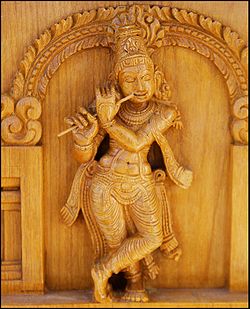
This is the kind of appeal Krishna has. The fact that he has been depicted as a playful child and teenager adds to his unique image. The manner in which he treats his friends like Arjuna and Sudama multiplies his allure as a great problem solver. His ready availability is his Unique Selling Proposition. This is a quality which many a manager would find good to imbibe.

Flexibility in Approach

When it becomes apparent that Jarasandh would not allow the kingdom of Mathura to enjoy uninterrupted peace as long as he and Balarama are there, Krishna does not hesitate to leave his comfort zone. In order to ensure that the denizens of the city remain safe, he decides to build a new capital at Dwarka and shift his operating headquarters there.

When market dynamics change, business leaders and their team members in FMCG companies do not hesitate to travel to the hinterland. This helps them to understand the customer psyche better, thereby improving their presence in diverse markets.

Examples abound of companies which did not keep pace with the changes in technology and the market place. They continue to remain alive in our memories only.

Accessibility

Whosoever happens to be facing a challenge can approach him. Whether it is Arjuna or Duryodhana, there is no hesitation in seeking his help. Yes, whether and how he decides to help depends on which side of ‘Dharma’ we happen to be on. Duryodhana gets the support of his entire army, whereas Arjuna ends up getting him as a personal charioteer.

The privilege of accessibility is granted even to those opposed to him. Sisupala has the liberty of abusing him publically. Admittedly, he has a quota which, when exceeded, results into his death.

True blue leaders are invariably accessible to their team members. When a sudden challenge pops up, anyone can reach out to them and seek guidance.

Adherence to ‘Dharma’ (Righteousness)

The values inherent in a corporate policy, the vision for the company, the mission of the organization – theseMahabharat Disrobing_of_Draupadi constitute the ‘Dharma’ of all leaders, CEOs and managers.

When Krishna gets invited to the palace of Duryodhana for a rich feast, he declines. Instead, he prefers to have simple food at Vidura’s place. When Draupadi gets disrobed in King Dhritarashtra’s court, he manages to protect her honour. When a war becomes inevitable, he sides with the Pandavas. Invariably, he sides with those who follow the path of righteousness.

Strategy and Vision

In a careful reading of the major turning events in the whole narrative of Mahabharata, Krishna emerges as an eminent strategist. He keeps Draupadi’s frustration under check. He knows that Kauravas would never agree to let Pandavas have their share of the kingdom in a peaceful manner. Yet, he himself goes to plead their cause so that peace is given a last chance.

In the battle that ensues, he virtually leads the 7 divisions of Pandavas’ army to a decisive win against the 11 divisions of Kauravas’ army.

All mighty warriors on the Kauaravas’ side fall with specific inputs from Krishna. In case of Bhishma, Arjuna attacks him standing behind Shikhandi. Dronacharya is misled to believe that his son Ashwatthama has fallen. When Duryodhana appears to be invincible in his mace fight with Bhima, Krishna gestures to the latter to hit the former below the navel, thereby incapacitating him. When Balarama gets upset with Bhima for having broken a cardinal principle in his final fight with Duryodhana, Krishna intervenes to pacify him by reminding him of the several injustices perpetrated by the Kauravas on Pandavas.

Detachment

The manner in which Krishna persuades a demoralized Arjuna to take up his arms by enunciating the basic principles Mahabharat Krishna Arjunaof life in the Bhagavad Gita is exemplary. The gospel of devotion to duty, without attachment or desire of reward, continues to show the way of life to all those who seek light in the dark problems of life.

Krishna not only preaches but also practices detachment. Consider the manner in which he decides to leave his home and hearth in Gokul and Vrindaban. To him, the call of duty, of restoring the kingdom of Mathura to King Ugrasena, a just and righteous monarch dethroned and imprisoned by his own son, Kansa, is supreme. The fact that Kansa happens to be his maternal uncle does not stand in the way of Krishna killing him to achieve his goal.

He does not entertain the thought of ruling over Mathura himself. He believes that in order to be a competent ruler, he first needs to complete his study of the Vedas, achieve proficiency in warfare and understand the nuances of governance.

What does a CEO do when business conditions warrant a manufacturing unit to be shut down, even though he himself had painstakingly set it up two decades back? What does a manager do when a much-liked junior commits an act of impropriety and has to be asked to leave the company? Or, when a plum assignment has to be given up due to compelling personal reasons? A sense of detachment comes in handy in all such situations. The higher the level of detachment, the more objective the decision is likely to be.

Unstinted Support

When Abhimanyu gets killed on the battle field, a grief-stricken Arjuna vows to slay the warrior responsible – Jayadratha – by next sunset, or end his own life. Krishna manages to save Arjuna’s honour, bringing much relief to the Pandavas.

To those who remain committed and loyal to them, leaders provide unstinted support.Krishna
The Many Masks

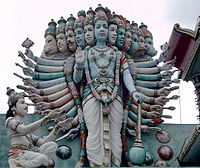
Krishna does not hesitate to reveal himself in his entirety in the midst of the battlefield. Arjuna is petrified to see the ‘Vishwa Roopa’ of someone he considers to be a close friend.

Leaders also wear several masks. They could be polite and gentle. They could be loving and compassionate. But if the situation demands it, they could also invoke dread and fear amongst their team members. Just like Krishna, they possess a multi-faceted personality.

The Inner Voice

One of the basic concepts enunciated by Krishna in the Bhagavad Gita is that of the everlasting nature of the soul. The concept of a soul now finds a resonance even in modern management literature. In ‘The 8th Habit’, Stephen Covey urges professionals to pay heed to their ‘inner voice’. While proposing the whole person paradigm, he speaks of the four dimensions of a person – spirit, body, heart and mind.

Intuition

Once the war gets over and all his sons have got killed, Dhritarashtra attempts to kill Bhima by crushing him in a close embrace. Krishna is able to read his mind and deftly pushes across a metal statue instead, thereby saving Bhima’s life.

Smart managers go beyond ‘analysis paralysis.’ They do use information, but they also rely on their intuition. A more balanced decision-making comes about.

Tenacity and Perseverance

When the disappearance of a valuable gem, the ‘syamantak mani’, is attributed to Krishna, he does not wallow in self-pity. With a chin-up attitude, he keeps working on the problem till the time it becomes clear that his conduct is as pure as the driven snow.

CEOs with a tenacity of purpose build up a unique team of followers. Perseverance is ingrained in their character. To give up does not come easily to them.

A Global MindsetMahabharat Draupadi_and_Pandavas

Personally, Krishna has little to gain from the great war. All his actions are directed towards the overall benefit of the society. Once Yudhishtira assumes the charge of the entire kingdom, peace prevails and development comes about.

Great business leaders share the same quality with Krishna. They try to give back to society in more ways than one. Sustainable business practices ensure that their companies’ operations do not cause irreparable damage to the eco-system.

Leading from Behind

Unlike Lord Rama, who leads an army from the front, Lord Krishna leads it from behind. The former leads an army of monkeys. The latter leads an army of illustrious people. Each one has great prowess, expertise and self-mastery. He also gets to handle people who are more shrewd and cunning.

In the initial phases of industrial revolution, when manufacturing was the primary activity, most of the leaders had to lead their teams from the front. In the services sector, as also in the emerging knowledge economy, leaders mostly manage from behind.

Depending upon the situation at hand, leaders switch from one mode to another. The style also varies from person to person.

A Tryst with Adversity

Krishna lives a unique life which is full of adverse circumstances. He is born in captivity. He is separated with hisKrishna birth parents immediately after his birth. Even as a child, he manages to survive attempts on his life. He leaves his foster home, never to return. He leaves the city of his birth and relocates to a far off place. He continues to be busy solving other’s problems throughout life. His whole clan gets destroyed in a bitter fight between its own members.

At no stage do we find Krishna blaming his circumstances. He is self-assured. He is confident. He is clear on what he wants to achieve. His methods may be rough at times, but they deliver.

Sure enough, like many a business leader, he pays a heavy price for upholding righteousness. With little time for family and children, the progeny is destined to remain unsung.

Tough situations bring out the best within managers. Life strives to chisel their character into a fine shape, much like a finely carved statue which is much admired by those who view it from the outside. Few realize the pain, suffering and sacrifice that the stone has undergone to achieve that exalted beauty and that state of perfection.Krishna_Arjuna_Gita

Krishna – A Spiritual Leader

Much like a business leader of modern times, Krishna displays vision, flexibility in approach, resourcefulness and an excellent capacity to command. The authority that he exercises over others is born more out of love and concern, not fear. He is the trouble-shooter par excellence who leads, inspires, guides and motivates. He sets a fine example for business leaders and managers to emulate.

Krishna is a role model for spiritually inclined leaders and managers. He demonstrates that being spiritual does not necessarily mean being soft. It only implies that one’s decisions and actions are rooted in stark pragmatism, backed by sound values and propelled by a desire to achieve the greater good.

(Related posts:

  1. https://ashokbhatia.wordpress.com/2013/05/27/management-lessons-from-ramayana
  2. https://ashokbhatia.wordpress.com/2013/07/12/management-lessons-from-mahabharata)

Read Full Post »

All of us encounter angry bosses – whether at our places of work or at our homes. Permit me to re-share some thoughts on this subject with you.

ashokbhatia's avatarashokbhatia

Quite often, life gives us a roller-coaster ride. We get pulled and pushed by forces beyond our control. Then, we suddenly discover someone on whom we can work off our pent-up feelings. In the house, it could be the unsuspecting spouse who ends up absorbing the shock. In an office setting, we ourselves could be at the receiving end. If so, we quickly find a scapegoat onto whom our own brand of vitriol could be off-loaded.

Consider this. The CEO, when things are going wrong, takes it out on the VP. The VP goes and ticks off the General Manager. The GM, the unpleasant OVERSTAYING ONE’S WELCOMEinteraction concluded, immediately proceeds to crucify the Manager. The Manager loses no time in giving a piece of his mind to the hapless Executive. While the Manager sits down to have a cup of coffee in an attempt to cool off, the fuming Executive takes the…

View original post 1,177 more words

Read Full Post »

Professionals need to step back every once in a while and check if their brand image is bright and shining. Keeping one’s brand value burnished helps in career progression. It is also an immensely satisfying slice of life which promotes self-worth and boosts self-confidence.

Here is a checklist of the kind of inputs which go into keeping a professional’s brand value burnished.

1. Under-promise, over-deliver
Being aware of our core strengths as well as limitations helps us to assess our chances of success in delivering on a project. By ensuring that we commit conservatively but deliver zealously, we build up a reputation of reliability. There are indeed times when a polite ‘no’ could save us from denting our reputation.

2. Practice honesty and openness in relationships
Our colleagues and team members are equally smart. They are quick to sense a touch of opacity on our part. They detest a lack of transparency in us. Dealing with those around us with honesty ensures that they repose their faith and trust in us. As a result, our capability of getting things done improves.

3. Be a friend, philosopher and guide
All of us have some expertise which may not be directly relevant to our Key Result Area. It could be an insight into theTEAMS realm of alternative therapies which a colleague can use for one of her family members. It could be about handling rebellious teenagers at home. If we put such expertise to use by helping others around us, word goes around and others rush in to seek our counsel. We might have the image of a tough task master, but this softer aspect of our personality helps us to build a unique brand for ourselves.

4. Network
Whether within the organization or outside, networking goes a long way in building up our reputation. The trick, however, is in avoiding those with a negative outlook, while promoting ties with those who have positive vibes.

5. Keep learning
Keeping the saw sharpened always helps. By refreshing our knowledge pool continuously, we remain a leader in more ways than one. Often, a dash of humility is all it needs to remain ahead of the curve.

6. Be genuine
By being ourselves, we enhance our dependability. Others feel reassured and refreshed after each encounter with us. They do not mind confiding in us. In turn, this helps us to understand and address their anxiety and concerns better. Our ability to deliver improves.

A brand is all about reliability and dependability. It offers good value for money. So do professionals who work on the basis of deliverables. Smart ones realize that an image is merely a matter of perception. It needs to be backed by real inputs so one’s brand value remains intact and is kept burnished at all times.

Read Full Post »

On the occasion of the upcoming International Yoga Day, managers of all sizes and shapes are all of a twitter, shuddering at the prospect of being called upon to celebrate the day by performing some complicated asanas, that too at the crack of dawn, on a day which, unfortunately, happens to be a Sunday.

It is not that people who pride themselves to be managers are any less patriotic. Nor are they any less health conscious. Those who believe that managers are forever thinking only of evading taxes while leading a sedentary life full of fun and frolic at star rated joints could not be more wrong.

The reason managers need not earmark a particular day for practicing yoga is rather simple. This hapless overworked breed is already devoting much of its time and energy to following yogic pursuits. This alone helps them to retain their sanity while riding their high octane roller coaster careers. By following yogic principles, managers are continually enhancing their mental and physical well being, living a more fulfilling and meaningful life.

A communion and a harmony

Most of us are well aware that yoga is a state of communion. Spiritual enthusiasts tell us that it is the science of unison of our finite self with the cosmic Self. Bhagavad Gita describes it as the art of perfect unanimity with right thoughts and action.

To a conscientious manager, though, the communion is that between one’s individual value systems and those of the organization and the boss one works for. As long as harmony prevails, one is able to discharge one’s obligations while remaining in a state of bliss.

The yogins in an organization

Organizations have an eclectic mix of professionals with yogic propensities of different kinds.

There are the intellectual kinds who follow Jnana Yoga. Usually, they gravitate towards R&D, product design, market research and planning kind of careers but could be found in any stream of an organization. Those in the higher echelons of management often believe they practice this kind of yoga.

Karma Yoga is rigorously followed by those who implement and execute plans. Often, they are found performing unattached service to their organizations and bosses. The genuinely committed ones continue to perform, without waiting for promotions or increments.

The mystic path of devotion gets followed by quite a few. They practice Bhakti Yoga. They hang on to the coat tails or skirts of their bosses till the time the latter’s career advancements result into their own climb on the corporate ladder. Organizations keep devising imaginative severance packages so as to ensure that their bloodstreams do not remain clogged with deadwood which entertains a misplaced sense of devotion.

A manager’s yogic postures

Those who place a greater emphasis on the different kinds of yogic postures try to devour the vast repertoire of such experts as B K S Iyengar. They look up Larsen exercises (popularized by ‘Something Fresh’ of P G Wodehouse fame). They try to unravel the mystery behind Sivananda yoga. They try to differentiate between Bikram yoga and Anusara yoga.

After brooding over the various alternatives on offer, managers become better aware of the kind of posturing they have to indulge in so as to be able to survive and do well at their places of work. Whether employed in the public or the private sector, here are some of the popular yogic postures deployed by them.

Balasana

(A Child’s Posture)

Yoga BalasanaWhile sipping the morning dose of their favourite tissue restorative, when the better half is interrupting their devoted perusal of the morning newspaper and is handing over the list of domestic chores to be completed by the end of the day without fail.

(“Balasana” by Iveto – Own work. Licensed under GFDL via Wikimedia Commons )

Kukkutasana

(A Cock’s Posture)

Yoga Kukkutasana_Yoga-Asana_Nina-MelWhile rushing through peak hour traffic, managers inhale and inflate their chest cavity to full when handling errant bikers whizzing across their path; they exhale and deflate their lungs when accosted with buses and trucks pouncing upon their humble means of transport. At all times, while driving, they maintain a hawk like vigil.

(“Kukkutasana Yoga-Asana Nina-Mel” by Kennguru – Own work. Licensed under CC BY 3.0 via Wikimedia Commons )

Ardha Chandrasana

(The Half Moon Posture)

Yoga Ardha-Chandrasana_Yoga-Asana_Nina-MelWhen the task assigned is impossible to achieve and the boss needs to be convinced that a divine intervention alone could help.

(Ardha-Chandrasana Yoga-Asana Nina-Mel” by Kennguru – Own work. Licensed under CC BY 3.0 via Wikimedia Commons)

Ardha Matsyendrasana

(Half Lord of the Fish Posture)

Yoga Ardha-Matsyendrasana_Yoga-Asana_Nina-MelWhen a situation calls for a look-in-the-eye confrontation, making the party of the other part wilt and run for cover.

(“Ardha-Matsyendrasana Yoga-Asana Nina-Mel” by Kennguru – Own work. Licensed under CC BY 3.0 via Wikimedia Commons )

Chakrasana

(The Wheel Posture)

Yoga Chakrasana_Yoga-Asana_Nina-MelWhen presented with a problem which has wheels within wheels – or multiple implications – the manager takes some time off to perform this asana. Soon, the mind is stilled and an out-of-the-box solution emerges.

(“Chakrasana Yoga-Asana Nina-Mel” by Kennguru – Own work. Licensed under CC BY 3.0 via Wikimedia Commons )

Dhanurasana

(The Bow Posture)

Yoga Dhanurasana_Yoga-Asana_Nina-MelManagers practice it when called upon to either announce or execute unpopular tasks, which could range from closing down business units to handing over a pink slip. The unpleasant arrow, conceptualized and designed by the top management, is shot. The manager graciously offers himself as a bow from which the arrow is finally shot.

(“Dhanurasana Yoga-Asana Nina-Mel” by Kennguru – Own work. Licensed under CC BY 3.0 via Wikimedia Commons )

Ek Pada Koundinyasana

(Koundinya’s Single Foot Posture)

Yoga Parivritta_Eka_Pada_KoundinyasanaA task which was on the back burner for the past six months suddenly needs to be executed at a lightning speed. Going off on a vacation is not an option.

(“Parivritta Eka Pada Koundinyasana” by Jemasty – Own work. Licensed under CC BY-SA 3.0 via Wikimedia Commons )

Garudasana

(The Eagle Posture)

Yoga Garudasana_Yoga-Asana_Nina-MelHandling either a supplier who, despite repeated warnings, fails to deliver on time or an employee who continues to under-perform.

(“Garudasana Yoga-Asana Nina-Mel” by Kennguru – Own work. Licensed under CC BY 3.0 via Wikimedia Commons )

Eka Pada Raja Kapotasana

(The Single Foot King Pigeon Posture)

Yoga Eka-Pada-Raja-Kapotasana_Yoga-Asana_Nina-MelMeeting either a politician or a government servant, with an attitude of abject surrender and servitude.

(“Eka-Pada-Raja-Kapotasana Yoga-Asana Nina-Mel” by Kennguru – Own work. Licensed under CC BY 3.0 via Wikimedia Commons )

Hanumanasana

(Lord Hanuman’s Posture)

Yoga Hanumanasana_-_Hanuman's_Posture_-_in_Diagonal_ViewAttending to an urgent task dished out by the boss at the last minute.

(“Hanumanasana – Hanuman’s Posture – in Diagonal View” by lululemon athletica – Flickr: Yoga Journal Conference. Licensed under CC BY 2.0 via Wikimedia Commons )

Janusirsasana

(The Head to Calf Forward Bend Posture) Yoga Janusirsasana_Yoga-Asana_Nina-MelTackling the CFO and answering some ticklish audit related queries.

(“Janusirsasana Yoga-Asana Nina-Mel” by Kennguru – Own work. Licensed under CC BY 3.0 via Wikimedia Commons )

Matsyasana

(The Fish Posture)

Yoga Matsyasana_Yoga-Asana_Nina-MelWhen reversing an earlier decision dished out to the team members, the manager needs to be as slippery as a fish only can be.

(“Matsyasana Yoga-Asana Nina-Mel” by Kennguru – Own work. Licensed under CC BY 3.0 via Wikimedia Commons )

 Vrikshasana

(The Tree Posture)

Yoga Vriksasana_Yoga-Asana_Nina-MelWhen motivating team members to undertake a task which sounds impossible.

(“Vriksasana Yoga-Asana Nina-Mel” by Kennguru – Own work. Licensed under CC BY 3.0 via Wikimedia Commons )

Adho-mukha-shvanasana

(The Downward Facing Dog Pose)

Yoga Ado-muka-shvanasanaWhen the boss decides to reprimand the manager, hopefully in private.

(“Ado-muka-shvanasana” by Joseph RENGER – Own work. Licensed under CC BY-SA 3.0 via Wikimedia Commons )

Bharadvajasana

(The Bharadvaj Posture)Yoga Bharadvajasana1When a junior approaches the manager seeking either leave or an undue favour.

(“Bharadvajasana1 (cropped)” by Iveto – Own work. Licensed under GFDL via Wikimedia Commons )

Adho-mukha-vrikshasana

(The Downward Facing Tree Posture)Yoga AcroDanceHandstandWhen the manager herself needs to seek either leave or an undue favour from the boss.

(“AcroDanceHandstand” by Lambtron at en.wikipedia. Licensed under CC BY 3.0 via Wikimedia Commons )

Padmasana

(The Lotus Posture)

Yoga Tanumânasî_en_Meditacion_Loto_PadmasanaAfter listening to the end of the day woes of the better half, this posture, if performed, leads to mental peace.

(“Tanumânasî en Meditacion Loto Padmasana” by Jesús Bonilla (Tanumânasî) – Retiros de yoga. Licensed under Public Domain via Wikimedia Commons )

With all these postures already a part of a manager’s daily life, is there a need for them to do some yoga on the appointed day as well?

Well, on this International Day of Yoga, I am toying with the idea of taking a dip in the Bay of Bengal nearby. To a busybee like me, it is a more exciting activity than Surya Namaskar – a set of twelve asanas for those with a lot of time on their hands.

Yet another option is to simply perform my favourite one only – the Shavasana.

Shavasana

(The Corpse Pose)

Yoga ShavasanaShavasana involves shutting down one unit of one’s body after another like a factory in the small place where I live, and then again turning them on one after another like the well heeled women at a ghazal concert.

Most managers would agree with me that this is the coolest thing that yoga offers.

(“Shavasana” by Joseph RENGER – Own work. Licensed under CC BY-SA 3.0 via Wikimedia Commons )

Related Post: https://ashokbhatia.wordpress.com/2015/01/01/a-new-year-resolution-for-couch-potatoes

Read Full Post »

WORK-LIFE BALANCECXOs of today operate in a hyper-competitive, fast-paced world. Round the clock connectivity gives them a great advantage – of being always accessible. However, it also takes a heavy toll. Making time for personal commitments poses a serious challenge; so does the absence of introspection as to where their own life and career is headed.

Here are some simple and do-able tips for CXOs to keep driving in the fast lane, with a clear view of the horizon and occasional stopovers in the sunlit valleys of life. In other words, to achieve the delicate goal of better work-life harmony.

Family time IS important

If you happen to be in station, earmark a time of the day which is exclusively for the family. Could be breakfast time. Could be dinner time. Make sure your international calls and Skype conferences are scheduled in such a way as to not to impinge on to this time.

Treat your weekly off days with the respect they deserve. Do not allow yourself the luxury of driving over to your office on such days.

Avoid sweating over small stuff

Small stuff is important. But you do have team members who take care of the minute details. Guide them, by all means. Do not get directly involved. You would only get blamed for micro-managing.

Prioritize well. Prioritize in advance. Follow Bhagavad Gita, which exhorts us to render our duties faithfully, guided not by desired results but by imperatives of the tasks themselves.

Check if you suffer from a decision fatigue. Put routine decision-making in an auto-pilot mode. This is bound to free up lot of your time which could be used more productively.

Managing technology

Let your biological age not bog you down. Learn and use technology in such a manner as to ensure some breathing space for yourself. That is when you will feel connected to terrestrial life outside your extra-terrestrial universe of work.

Technology can enable you to be virtually present at different places in different time zones. It can also enable you to be connected to anything critical happening which you genuinely feel might need your intervention. Use technology to delegate better and more effectively.

Schedule your priorities

Time is a finite resource. Use it intelligently. Engage when necessary; take a break when required. Meaningful interactions with family and close friends could leave you well charged up for the tasks ahead. Productive discussions with clients and professionals can help in resolving issues more effectively.

Excellence needs the fuel of passion. When passion drives your professional journey, constraints become less formidable. Tasks cease to become chores. Wise scheduling of your priorities results into excellence.

From IQ and EQ, on to SQ

Give your overworked brain some rest. Try using your heart to decide upon an issue. You will notice that improving your Spiritual Quotient would improve your performance. Small doses of gratitude and compassion help. Being aware of yourself and being conscious of what is happening within you helps. Humility helps. Developing equanimity helps.

Happiness and contentment within is great to have. You end up radiating it to those around you. Harmony in the work atmosphere improves. Output of the whole group improves.

You might find that IQ, EQ and SQ are like the spokes in the wheel of life, of which career is but one component. If all are equally developed, the wheel does not wobble – it runs smoothly.

A non sequitur?!

Before I sign off, allow me the liberty to pose a question. By hyphenating ‘work’ and ‘life’, are we not demeaning life? While chugging through our careers, we could honestly believe that work is much greater than life. In fact, it is merely a part of life. A subset, which needs to be in harmony with all other aspects of the multi-hued experience we call life. Perhaps, it is time to correct our perspective.

My proposal is this. Next time round, do not think about work-life harmony. Think only about achieving a state of harmony between the work-sphere of your life and the other spheres of your life – family, friends, hobbies, and the like.

When the conductor of an opera gets on to the stage to produce music that touches our souls, what he strives for is excellence, based on harmony. A discordant note from a single cello could ruin the performance. Likewise, all CXOs strive to get desired results, based on a harmony – between different managerial functions, between the organization and its various stakeholders and, above all, between the different constituents of their own lives.

So, how do you achieve this state of harmony? Would you like to share some insights?

Read Full Post »


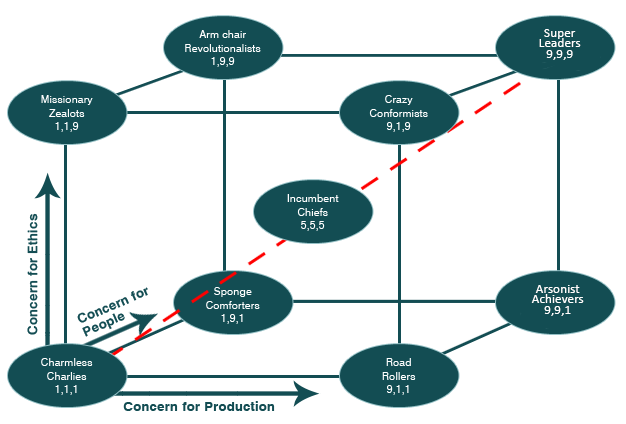
The art of managing people has been analysed in great detail by theorists in the past, and commendably so. McGregor was bang on target when he came up with the X and Y approach to managing people. Also, Robert R. Blake and Jane Mouton came up with their Management Grid concept, where the X-axis has ‘Concern for Production’ and the Y-axis has ‘Concern for People’. This proved to be a very useful tool to classify leadership styles.

With due respects to the brilliant work done by those mentioned earlier, one would like to make the concept of a Management Grid more contemporary by adding a new dimension, Z. This axis covers our ‘Concern for Ethics and Values’.

Based on the concept of this grid, leadership styles may well be categorized as follows:

1,1,1: Charmless Charlies
One can only wish their organizations the best of luck.

9,1,1: Road Rollers
They would achieve a target by ruthlessly crushing anything that comes in their way.

1,9,1: Sponge Comforters
As long as employees have an identity crisis, they are in high demand, ready with a bucket and a towel to listen to their woes and comfort them.

9,9,1: Arsonist Achievers
Under them, short-term goals would get achieved. Means be damned.

1,1,9: Missionary Zealots
Saint-like souls who have willy-nilly ventured into the business world.

9,1,9: Crazy Conformists
Those working under them could soon get referred to a lunatic asylum.

1,9,9: Armchair Revolutionists
They could be assets to political outfits owing an allegiance to some outdated doctrines.

5,5,5: Incompetent Chiefs
A middle-level successful manager on whom greatness has been thrust by a benevolent fate.

9,9,9: Super Leaders
A balanced Chief Executive Officer who leads his team successfully in the long run. To be spotted, head-hunted, and hired without further delay.

When it comes to corporate governance, most businesses are driven more by greed than by the norms of propriety. Compliance with statutory provisions and indulging in tax avoidance rather than blatant tax evasion are given a short shrift. As a repercussion, we end up having more controls and complex laws, thereby making non-compliance even more attractive.

The good news is that there are indeed enlightened businesses and right thinking managers who score high on the Z-axis as well. Such businesses have been around for more than a century and have done well for themselves; they have also given back to society in terms of advanced medical facilities, support to fine arts and sports, and several other Corporate Social Responsibility initiatives. The Tata group of India is a shining example of the same.

Read Full Post »

LEADERSLet us say that you happen to be a very successful CEO. A spate of rewards, tons of recognition and loads of adulation has left you with an after-glow of inner contentment. Entrapped by the spoils of success, have you started taking life easy? Have you started believing that you are infallible?

It is perhaps a good time to introspect. Here are seven habits which highly successful CEOs never get addicted to. Let us check our present score and evaluate where we stand.

1. Being partial or dishonest

You would always find them transparent and fair in their dealings. Never would you find them cheating. They set high standards in conduct of business, based on values and principles they cherish and believe in.

2. Dwelling on the past

It is not that they have not made their share of mistakes in the past. But they have learnt from them and marched on towards the future. Never would you find them gloating about their past companies and victories. They live in the present, never allowing their past to define them.

3. Letting down their team members

They would never let down a team member. Praising in public and firing in private is one of their key personality traits. They identify, nurture and mentor talent. They take good care of their people, earning life-long loyalty. Those who have hung onto their coat tails would be willing to make important sacrifices for them.

4. Being conformists

They know what they want. They are willing to get off the beaten track and achieve what they have set their hearts and minds on. They know how to manage controversies. They have the requisite skills to bring even their worst critics on board.

5. Saying ‘Yes’ when they mean ‘No’

They tend to be good listeners. Whether they agree or disagree with you is entirely a different matter. They can argue out their case well. They have mastered the art of putting across a disagreement without breaking a relationship.

6. Being surrounded by sycophants

They encourage dissent. They believe that healthy disagreements form the bedrock of good decision-making. Listening to – or indulging in – gossip or lose talk is never one of their favorite activities. Attention to detail is one of their key characteristics.

7. Being late

Unless they have a very good reason to have got delayed, highly successful CEOs are downright punctual. And we are not talking of client meetings alone. We are also speaking of internal meetings, with their own team members. This trait keeps others in the company on their toes, invariably following the dictum of punctuality.

Are we guilty of having cultivated any of these habits? If so, can we make a conscious attempt at overcoming these?

Which are the habits you try not to form, so as to sustain your progress in life?

Would you like to add some more habits to the list above?!

Read Full Post »

When it comes to upholding righteousness in our turbulent times, instances from Indian scriptures offer invaluable insights.

ashokbhatia's avatarashokbhatia

India can justifiably boast of a long history of culture, tradition and values. Scriptures of Indian origin are a treasure trove of nuggets of wisdom. These continue to be relevant in the current context and also find ready application in the field of business management and administration.

Here are some of the areas where I believe Ramayana can inspire management14 practitioners.

  • A Premium on Values

Sticking to some core values which are steeped in righteousness eventually leads to success. The main protagonist, Rama, is depicted in Ramayana as an epitome of virtue. He is an ideal king, an ideal son and a pragmatic person. He sets high ethical standards in warfare and invariably sides with dharma, or righteousness.

A random sample of all successful business houses which have been around for more than a century now – Siemens and Tatas, for instance – is ample proof that ethics in…

View original post 1,475 more words

Read Full Post »

It is not altogether wrong to say that it is the early worm which gets caught! Quite a few managers have perfected the art of selective amnesia and acquired honorary membership of the Global Procrastinators’ Club.COMPLACENCY

Procrastination works best when the idea is to delay a crucial decision which, if taken at that point in time, could create more problems than it would solve. Governments appear to do it all the time. The flip side is the higher probability of losing a business opportunity.

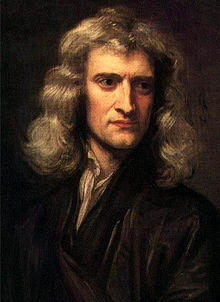
With due respects to Newton and Einstein, we do have some Laws of Procrastination:

The First Law

A task which has been put on hold will remain undone till the time an external force is applied.

The force could come either from your boss or from a peer or a subordinate. In matters of domestic chores, reluctant husbands succumb to the pressure applied by a nagging wife all the time.

Those who push you deserve to be treated with respect.

The decision to not to take up the task is still yours.Scientist IsaacNewton-1689

The Second Law

Force equals Mass multiplied by Acceleration.

For people, ‘Mass’ denotes their ego level and seniority in the company. The higher the ego/seniority, the more the force required to get a person to do the work in an accelerated manner.

It follows that the higher you happen to be in the hierarchy, the easier it is for you to indulge in the luxury of sleeping over a problem; if you are still stuck in the lower echelons, try to exert an inner push on yourself to overcome the static inertia. If you don’t, a pink slip could soon become a painful reality.

The Third Law

Any action results into an equal and opposite reaction.

If the reaction of a decision being taken by you is going to be counter-productive, take no action. Simply join the Global Procrastinators’ Club and be happy.

Theory of Procrastinative RelativityScientist Albert_Einstein

The following tenets may be considered:
• Bosses always expect you to do things at speeds higher than that of light (read thought).
• The Propensity to Procrastinate is inversely proportion to the visibility of the task at hand. A mail from a junior team member can remain unopened for a week. A mail on the same subject from the CEO has to be attended to at the speed of light.
• The Propensity to Procrastinate is directly proportional to the manager’s frame of reference. If the manager’s role model happens to be a sloppy performer, the propensity is higher. If the role model is a star performer, the propensity may vanish altogether.
• The relative difficulty of taking up a much-delayed task is directly proportional to the delay itself. The more the delay, the more difficult it is to take up that particular task.

A Statistical Approach to Procrastination

Much like in Time Series Analysis, a manager’s Propensity to Procrastinate can be explained in terms of four factors:
(a) Long term, which is inbuilt into the character and the attitude of the manager,

(b) Cyclical, determined by the performance appraisal cycle of the organization, with weeks just preceding the annual appraisal ritual registering the lowest values of Propensity to Procrastinate,

(c) Seasonal, linked to the overall mood of the organization, whether upbeat or downcast, as also to the relative importance of the issue at hand,

(d) Random fluctuations, related to the mood of either the boss or the manager.

How do you handle procrastination? Is there any facet that you would like to share by way of comments below?

(A version of this post appears in the book ‘Surviving in the Corporate Jungle’ authored by yours truly)

(Related Posts:
https://ashokbhatia.wordpress.com/2011/11/16/procastrination-the-virtues-of-being-a-lazy-bum

https://ashokbhatia.wordpress.com/2013/10/07/career-advice-from-some-eminent-scientists

https://ashokbhatia.wordpress.com/2013/01/23/of-idleness-innovation-and-the-peter-principle)

Read Full Post »

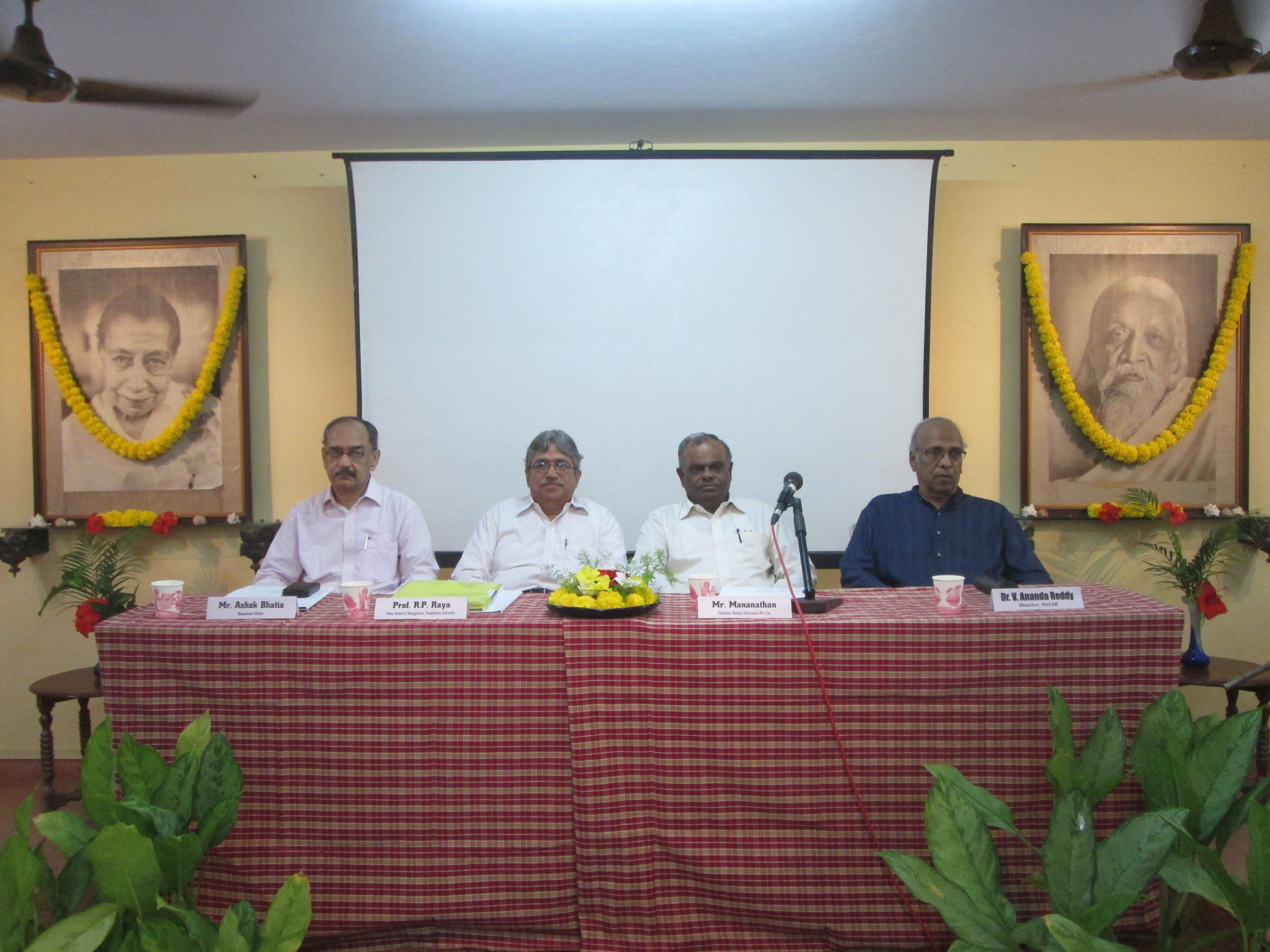
Can a business be run without resorting to corrupt practices? This was one of the several questions attempted to be answered by management experts at a recent seminar organized by Sri Aurobindo Center for Advanced Research at Pondicherry (SACAR) at Pondicherry in India.1 Inaugural Session IMG_2266At every step, a business faces a choice – whether to indulge in corrupt practices to get what is its legitimate due, or face hardships and bottlenecks in meeting its obligations towards such stakeholders as its suppliers and employees.SACAR Dr ReddyThere are no simple answers to this vexed issue. However, there could be innovative ways of handling such challenges. A strong anti-corruption image helps. The conviction, that this is just not done, takes time to radiate to those who place such a demand on the business.

Another way to face such a challenge is to politely decline meeting an illegal demand. Instead, an offer to fund a legitimate activity which falls in the realm of CSR and shores up the image of the official/department concerned could get readily accepted. This could be by way of toilets being set up in schools, trees being planted and maintained on a main thoroughfare, or by investing in a scheme of social benefit.

???????????????????????????????The conviction emanates from an inner strength and a resolve to ensure that the dealings of the corporate concerned remain above board. Once adopted and marketed as a strategic choice, the business gains in the long-term – by adding value to its own brand equity and by gaining public trust. In turn, this could be leveraged to command better margins in the market place and also to attract better talent at a lesser cost.???????????????????????????????According to a business captain who addressed the participants at the seminar, the core mantra is to not to readily give in to illegitimate demands and to do simply what is in one’s control. The path of righteousness is not easy to tread but can be adhered to successfully if the top management has the necessary conviction. Decision making based on good values and an inner connection always helps a business person to strike this delicate balance in its operations.

Speakers at the seminar also touched upon VUCA and the increasing rate of change in the business environment. Studies which have proved that businesses which adhere to the basic values of honour, truth, beauty, justice and love were quoted do better in the long run. Participants were exposed to leadership lessons drawn from such Indian scriptures as Ramayana, Mahabharata, Thirukkural and also from Sri Aurobindo’s works.???????????????????????????????The value of meditation and resultant control of one’s mind was demonstrated. A panel discussion explained the likely changes in the business environment over the next decade and outlined the leadership and management attributes which would become more relevant in the times to come. The emphasis was on leaders who steer their businesses not only directed by an economic compass but also by a moral one.

The seminar, entitled ‘Preparing Future Business Leaders and Managers: An Inner Approach’, drew an enthusiastic response from business managers, scholars and students alike. It was addressed by Dr. Ananda Reddy, Director of SACAR, Mr. R. Mananathan, Chairman and MD, Manatec group of companies, Prof R. P. Raya, Dean, School of Management, Pondicherry University, Dr. Saikat Sen from SAFIM, Prof. Kisholoy Gupta, Mr. J. V. Avadhanulu, Mr. Ganesh Babu and yours truly;  a heady mix of management educators, lifestyle coaches, business thinkers and influencers.

Read Full Post »

« Newer Posts - Older Posts »