Feeds:
Posts
Comments

Archive for the ‘Management Lessons’ Category

Thirukkural (திருக்குறள்), also known as the Kural, is a classic Tamil ‘sangam’ (3rd century BC to 4th century AD) literature composition. It has 1,330 couplets or ‘kurals’. It was authored by the renowned poet Thiruvalluvar.

The Thirukkural is one of the most important works in the Tamil language. This is reflected in some of the other names by which the text is given by such as ‘Tamil marai’ (Tamil Vedas); ‘poyyamozhi’ (words that never fail); and ‘Deiva nool’ (divine text).

Just like ‘Ramayana’, ‘Mahabharata’, ‘Bhagavad-Gita’ and other scriptures, Thirukkural is also replete with words of wisdom. It is simple and contains profound messages.

Thirukkural has 133 chapters, each containing 10 couplets. Broadly speaking, all the 133 chapters can be divided into three sections: Righteousness, Wealth and Love. In the text below, the serial number of each couplet appears on the top, followed by its Tamil text and then by its near-literal translation in English.

Thiruvalluva

Practising as well as aspiring managers could draw quite a few lessons from Thirukkural. Here is a modest attempt to capture a few of its facets.

Leadership

Leadership is more of an attitude and a way of living and behaving. It is about opening one’s heart. It is about inspiring those around one. It is about leading others by example. It is about standing up for others and shielding them from harm.

770Thirukural 770Of what avail is the army of heroic warriors if there be no general to guide them?

388Thirukural 388He is a God among men who shields his subjects.

A good leader is an avid listener. He encourages dissent.

416Thirukural 416Listen to wholesome counsel however meager; for out of it springs great good.

389Thirukural 389The world is under the sway of the monarch who puts up with bold and bitter counsel.

529Thirukural 529Reject none on the score of disagreement. Men who have become estranged will flock to you.

LEADERS

A leader’s life is not easy. Following ‘dharma’ (righteousness) is his/her foremost trait. Being impartial and just is another.

33Thirukural 33Avail yourself of all opportunities. Do not cease from practicing Dharma on all possible occasions to the best of your ability.

111Thirukural 111An equity which knows no partiality is in itself a unique virtue.

432Thirukural 432Niggardliness, empty honor, blind favoritism, are all the faults of a king.

541Thirukural 541Strict enquiry and impartial justice mark the rule of a just monarch.

Intuition plays an important role in the life of a leader. Steve Jobs’ life is a living example of this trait.

429Thirukural 429Men of foresight who guard themselves against coming events know no distress.

Leadership is about human experiences and not about processes.

578Thirukural 578The world belongs to a king who can do his duty and yet be courteous.

Mergers and acquisitions often follow the rule of tying up with a former adversary in business. Google acquired Android, YouTube and Motorola Mobility, so as to extend the reach of its business as also to diversify into related verticals.

679Thirukural 679It is much more urgent to secure the alliance of one’s enemies, than to do good to one’s friends.

Brand Image of an Organization

Thirukkural has chapters which are intended for developing and managing kingdoms. The attributes of an ideal kingdom mentioned in the ancient text are equally applicable to the contemporary corporate world.

738

Thirukural 738Five are the ornaments of a kingdom – absence of disease, wealth, fertility, happiness and security.

This can be interpreted to mean that a great company is one which has a strong brand image amongst all its stakeholders. Healthy and vibrant employees form the backbone of a company. By generating a surplus for its shareholders, wealth gets created. A culture which enables fertile imagination and innovation ensures its long-term survival and well-being. A result-oriented but relaxed culture results into greater happiness of its employees. Guarding the company’s assets – material as well as intellectual – ensures survival in a highly competitive environment.

Management

Managers need to be resolute, decisive and action-oriented. Loyalty to the management and operating within the company policy paradigm are two of the several qualities they need to have.

668Thirukural 668What you have clearly decided to do, do it without hesitation and delay.

766Thirukural 766Heroism, honor, tried policy and fidelity to the king, these four are an army’s shelter.

Stephen Covey has spoken of the habit of ‘sharpening the saw’. The poet also emphasizes the need to keep upgrading our subject knowledge, so as to do well in our careers.

401Thirukural 401Entering an assembly without sufficient knowledge is like playing at a dice board without its knowledge.

444Thirukural 444To follow in the footsteps of those who are greater than oneself is the crown of one’s strengths.

Planning, and thinking ahead, needs to be given a high priority. Want to beat the competition? Know its strengths and review your plans accordingly.

461Thirukural 461After much deliberation over profit and loss and the final gains, launch on a task.

471Thirukural 471A king must act after measuring the strength of his plan, his own resources, the strength of the enemy and that of the ally.

Restraining anger is important. Anger is also an important weapon in a manager’s arsenal. It can be used to put in place a team member who might be getting too big for his boots. When held back and allowed to simmer within, it can be used very effectively. Patience and forbearance are recommended. We also need to have the knack of getting our timing right!

305Thirukural 305If a man were to guard himself, let him restrain anger. Otherwise anger gets the better of him.

487Thirukural 487The wise will not fly into a passion when assailed; they allow their anger to smoulder within till the right time comes.

158Thirukural 158Conquer with forbearance one who has done you harm and caused you anguish.

484Thirukural 484One can succeed in the attempt to conquer the world if the right time and the right place are chosen.

Management is all about getting things done. A smart manager would know what needs to be done, who is the best person for doing it, and the right time to get it done.

516Thirukural 516The thing to be done, the proper person for it and the appropriate time for doing it, must all be duly weighed.

Meetings

Here are some guidelines on when to speak, how to speak and what to speak.

711Thirukural 711Men should weigh their words in speaking when addressing an audience.

714Thirukural 714Before brilliant people, be brilliant; before plain people, be as plain as white chalk.

715Thirukural 715The humility to maintain silence before superiors is the best of all good qualities.

Planning and Execution

The poet exhorts us to avoid procrastination.

674Thirukural 674An unfinished deed and an unfinished fight will, like a half-extinguished fire, cause ultimate harm.

675Thirukural 675Do a thing after carefully deliberating on five things – resources, means, the time, the nature of the deed, and the place.
ch-12-we-and-us-2

677Thirukural 677The manner in which a thing should be done is to be determined after consulting an expert.

Getting Hired

Whether we are hiring a chartered accountant or an engineer, the cultural fit with the company is of great importance. People who sound the same based on their CVs are all different. Their value systems are determined by the family they belong to and the environment they have grown up in. Their personality traits are not the same.

Would they fit in with their immediate team members? Would they vibe well with the culture of the organization? These are some of the questions to be asked so as to ensure that we make better hiring decisions.

960Thirukural 960Out of modesty springs one’s greatness. Out of humility rises the honor of the family.

951Thirukural 951Probity and a sense of shame are virtues innate only in men of noble lineage.

The poet also exhorts us to make a hiring choice with due diligence.

509Thirukural 509Let men be chosen with deliberate care; when once the choice is made, let no suspicions crawl into your soul.

632Thirukural 632A minister should have five qualities: tenacity of purpose, birth in a respectable family, welfare of people, profound learning and perseverance.

Managing the Self

Like all spiritual texts, Thirukkural also extols the virtues of connecting with one’s inner self.

Being amiable and speaking positively helps.

93Thirukural 93To welcome one with a pleasant look and loving words is righteousness.

Helping others in a self-less manner may result into long-term loyalists getting developed. However, help rendered to an ungrateful person could be a waste of one’s time and efforts.

103Thirukural 103Help done expecting no return, if weighed, will be vaster than the sea.

105Thirukural 105Help rendered is not in terms of the return but its value depends on the receiver.

Forgetting and forgiving helps us to reduce our own stress levels.

108Thirukural 108It is not good to forget the benefit received; but it is good to forget then and there the injury done by another.

Self control is the real treasure. So is walking on the right path.

122Thirukural 122There is no greater wealth than self-control; treasure it as your wealth.
132Thirukural 132Strive hard to walk in the right path. One finds it one’s surest ally.

Tiruvalluvar_Statue_Kanyakumari

Loose talk, inane gossip and back-biting happen to be some of the tricks of making enemies and losing friends!

187Thirukural 187Those who alienate friends by back-biting may have forgotten the art of making friends through suavity of speech.
200Thirukural 200Speak profitable words; avoid nonsense.

Gems of General Wisdom

Renown

234Thirukural 234The wise are not favored by the gods; but the renowned on earth are adored by them.

Compassion

250Thirukural 250Oppress not the weak; remember your own fate in stronger hands.

Truth

298Thirukural 298Water cleanses the body; truth cleanses the soul.

True knowledge

352Thirukural 352Men of pure vision are led from darkness to light.

Will Power

595Thirukural 595The greatness of a person is proportionate to the strength of his will power.

Challenges

621

Laugh over your obstacles; nothing like it to push them further and further.

FEMALE POWER

When it comes to cautioning leaders and managers against amorous advances within the confines of their place of work, Thirukkural is silent. However, it is interesting to note that in the Love section, it does deal with matters of romance, sex and lust. If there are observations from the view-point of the so-called sterner sex, we also find insights from the delicately nurtured amongst us. To that extent, the text may be held to demonstrate a decent level of gender parity. Chivalry is far from being dead!

Each ‘kural’ is complete in itself. It deserves to be meditated upon, one at a time, and imbibed in our day-to-day lives. One wonders at the keen observations of the poet, his sagacity and the effort he has taken to collate and compile this beautiful work, replete with words of wisdom which continue to be as relevant today as they were in the days of yore.

(Notes:

  1. English translations of the ‘kurals’ quoted here are courtesy Mr V R Ramachandra Dikshitar, as per the book ‘Thirukkural of Tiruvalluvar’ brought out by The Adyar Library and Research Centre of The Theosophical Society, Chennai, India; ISBN 81-85141-08-8.
  2. My sincere gratitude to various persons who enabled this multilingual compilation.
  3. An abridged version of this post also appears in my book ‘Surviving in the Corporate Jungle’, ISBN 978-1-4828-8850-8.)

(Related Posts:

https://ashokbhatia.wordpress.com/2017/11/14/the-many-faceted-thirukkural

https://ashokbhatia.wordpress.com/2013/05/27/management-lessons-from-ramayana

https://ashokbhatia.wordpress.com/2013/07/12/management-lessons-from-mahabharata

https://ashokbhatia.wordpress.com/2015/09/04/management-lessons-from-the-life-of-lord-krishna

https://ashokbhatia.wordpress.com/2017/02/01/sacred-scriptures-of-india-and-the-bhagavad-gita)

Read Full Post »

Learning from Failures

With a higher level of uncertainty, a leader’s chances of failure would also go up. A failure which results into pain and suffering can also be taken as a boon, as time often proves. If the right lessons are drawn, the chances of a failure repeating itself in future can be drastically brought down.

Consider these words of wisdom from Narad when he tries to explain to Savitri’s mother as to why she must marrya1 1 (11) Satyavan and suffer on the terrestrial plane.

‘Although the shaping god’s tremendous touch
Is torture unbearable to mortal nerves,
The fiery spirit grows within
And feels a joy in every titan pang.’
(Savitri, page 444)

Leaders wear their crowns of glory. But the crown does not come cheap. The cost they have to bear is that of the cross they have to carry.

‘Hard is the world-redeemer’s heavy task;
The world itself becomes his adversary,
Those he would save are his antagonists:
This world is in love with its own ignorance,
Its darkness turns away from the savior light,
It gives the cross in payment for the crown.’
(Savitri, page 448)

Management by Consent

In the times to come, the profile of the followers would also be different. Hierarchical authority is already proving difficult to manage change; there is no reason to believe this would not be even more so in the future. The followers would demand a higher degree of participation in the decision-making processes. Leaders who recognize this need of their followers and create a working environment which enables the same would achieve higher levels of efficiency and effectiveness in their business processes.

Creating a non-coercive environment in which employees and other stakeholders are clear about the corporate identity and the mission would be far more important than it is today. Reverse mentoring would be more a norm than an exception in the days to come.

Consider the all-powerful God of Death. When accosted by Savitri, he does not dictate terms. He allows a reasonableSavitri_Yama discussion on the subject. He keeps changing the line of his arguments, intent upon denying Savitri the life of her husband. He tries his best to dissuade her from changing one of the basic laws of nature. He even declares “I, Death, am the gate of immortality.”

Savitri is undaunted. She points out that if this creation has arisen out of a meaningless void, if matter can come forth from energy, and life from matter, and mind from life, and if soul can peep through the flesh, what is wrong in hoping that the imperfect man of today will someday transform himself into the perfection of God?

The God of Death eventually loses the argument, his authority and also his stature. But his greatness lies in the fact that he has the good grace to permit and then lose an argument to a person who looks like a mere mortal. Realizing her sincerity of purpose, he even grants her a boon.

In Ramayana, the villain is Ravana, a highly learned and accomplished person. One of the reasons for his downfall is to neglect the advice of nay-sayers. His wife, Mandodari, brother Vibheeshana and grandfather Malyavaan – all advise him to return Sita to Rama. Instead, he chooses to listen to his courtiers who play on his ego and pride and advise him not to do so.

A couplet in Sundara Kanda of Ramcharitmanasa clearly advises us to ignore the advice of a paid deputy, aRamayana 2 doctor and a teacher who speak positively out of either fear or expectation of a gain. A king who acts upon such motivated advice loses his kingdom, his body and his righteousness (dharma) as well.

When Lord Rama decides to accept Vibhishana in his fold, he does not simply order the same. He consults all seniors present before arriving at a decision.

Monsanto’s CEO, Robert Shapiro, had the ability to go against traditional hierarchy. He initiated strategy sessions with cross-sections of employees of different ranks, specialties and geographical perspectives and reaped rich dividends for his company.

The Moral Compass

Leaders who believe in sustainable businesses would not only use their commercial compass while determining the direction to take. Using a moral compass would be a valuable trait amongst the future leaders. A strong inner core, embedded with a value system which recognizes the needs of the society at large, would be a great quality to have. A pre-condition for employing key managers would be their endorsement and support of the core values of the business.

Sticking to some core values which are steeped in righteousness eventually leads to success. The main protagonist, Rama, is depicted in Ramayana as an epitome of virtue. He is an ideal king, an ideal son and a pragmatic person. He sets high ethical standards in warfare and invariably sides with dharma, or righteousness.Krishna_Arjuna_Gita

One of the basic concepts enunciated by Shri Krishna in the Bhagavad Gita is that of the everlasting nature of the soul. The concept of a soul now finds a resonance even in modern management literature. In ‘The 8th Habit’, Stephen Covey urges professionals to pay heed to their ‘inner voice’. While proposing the whole person paradigm, he speaks of the four dimensions of a person – spirit, body, heart and mind.

A random sample of all successful business houses which have been around for more than a century now – Siemens and Tatas, for instance – is ample proof that ethics in business do pay dividends in the long run. Names of such business houses enjoy tremendous brand equity in the market; understandably, that rubs off on their products as well.

When the likes of Siemens and Wal-Mart come clean on their misdemeanors, they set an excellent example of probity in the business world. When Mr. Ratan Tata, the Chairman Emeritus of India’s salt to software conglomerate, rues his inability to enter some fields of business because of the absence of a level playing field in India, his focus is on one of the core values of his business.

Indra Nooyi is charting a unique course for Pepsico globally, shedding traditional markets and going in for healthier food products instead.

Preparing Leaders for 2025!

In a careful reading of the major turning events in the Mahabharata, Krishna emerges as an eminent strategist. He keeps Draupadi’s frustration under check. He knows that Kauravas would never agree to let Pandavas have their share of the kingdom in a peaceful manner. Yet, he himself goes to plead their cause so that peace is given a last chance.

Eventually, all mighty warriors on the Kauaravas’ side fall with specific inputs from Krishna. In case of Bhishma,Krishna Arjuna attacks him standing behind Shikhandi. Dronacharya is misled to believe that his son Ashwatthama has fallen at the behest of Krishna. When Duryodhana appears to be invincible in his mace fight with Bhima, he gestures to the latter to hit the former below the navel, thereby incapacitating him. When Balarama gets upset with Bhima for having broken a cardinal principle in his final fight with Duryodhana, Krishna intervenes to pacify him by reminding him of the several injustices perpetrated by the Kauravas on Pandavas.

Much like a business leader of modern times, Krishna displays vision, flexibility in approach, resourcefulness and an excellent capacity to command. He is the trouble-shooter par excellence who leads, inspires, guides and motivates.

Captains of industry today can set a personal example by getting cross-functional teams in their organizations to come up with suggestions to face the challenges of future effectively. They can also emulate some of the traits, thereby leading to a trickle-down effect across the entire organization.

HR honchos can re-design their appraisal processes and re-assess training needs of key managers to address this issue.

Those in senior management positions can consciously plan to hone their skills in areas they find themselves deficient.

Management institutes can tweak their course content to ensure that those leaving their hallowed portals possess these traits, so as to improve their contribution towards the organizations they decide to either float or serve.

Indian scriptures are replete with instances which demonstrate the importance of good values and ethics.chanakya Ramayana speaks of righteousness to be upheld at any cost. Mahabharata tells us to limit our ambitions and desires and be reasonable in life, lest a fate worse than death may befall us. Bhagavad Gita – the song celestial – is like an ocean full of practical advice for managers young and old alike. Chanakya Neeti is full of pearls of wisdom. All these are waiting to be explored by those who are interested in being spiritual as well as practical in their approach to problem solving and leading people to their goals.

(Note: On matters spiritual, inputs from a subject expert, philosopher and guide are gratefully acknowledged.)

[Related Post: https://ashokbhatia.wordpress.com/2014/12/02/grooming-future-business-leaders-a-spiritual-approach-part-1%5D

Read Full Post »

Abstract
Can tenets from the realm of Spirituality help in grooming business leaders for the future? This two-part article attempts to answer this query. It first proposes the dominant characteristics of the business environment of the future. It then goes on to joining the dots between the apparently diverse fields of Management and Spirituality in respect of each such characteristic. An enhanced role for intuitive faculties, inner resilience, dynamism, a global and inclusive mindset, clarity of purpose, learning from failures, managing by consensus and cultivating a moral compass are some of the leadership traits discussed. Examples are drawn from the business world, as also from such Indian scriptures as Ramayana, Mahabharata and Sri Aurobindo’s ‘Savitri.’

Leadership is a much discussed virtue in management literature. However, like Peter Drucker says, there is no ideal LEADERStype of leader. “Leadership personality’, ‘leadership style’ and ‘leadership traits’ don’t exist”, he writes in The Leader of the Future. The emergence of a leader is the result of a complex interplay of two factors – personality traits of the leader and what needs to be done at a given point in time. The moment the two become congruent, a new leader could emerge on the scene and deliver the goods!

I am convinced that the leaders of tomorrow would need personality traits which would be qualitatively different from those of today. Here is my take on what business environment (say, circa 2025) would be like, and how our future business leaders would be tackling it.

2025 – A Likely Business Scenario

What would be the business environment like in 2025? Let us try to crystal-gaze and find out the kind of possibilities the future portends:
• Business leaders in 2025 shall be working against the backdrop of a world which would, in all likelihood, be a multi-polar one, with Asia, particularly China, exerting more influence on global events.
• It would be a world which would be more inter-connected, commercially and otherwise.
• Thanks to new communication means, the individual empowerment levels would have risen significantly. Social paradigms would have transformed further, with a more individualistic mindset. Hence, employee expectations would be qualitatively different from what managers typically face today.
• Also, it would be a more urbanized world. Thanks to the rise of a new global middle-class, society in general would internet image 1have reached a higher level of aspiration, resulting into a much higher demand for energy, food and water. On the flip side, income disparities would have risen substantially.
• Changes arising out of our climatic patterns would also pose a formidable challenge to the leaders of those times. Internet security concerns would perhaps be centre-stage.
• Disruptive changes are quite likely to overwhelm us. These changes could come in the form of impact of new technologies in the field of robotics, biotechnology, space sciences and communication. Increasingly, governments world over may start becoming enablers of entrepreneurship, faced as they will be with direct and intensive pressure from those they govern. We shall surely be seeing more entrepreneurs amongst our midst – whether in the commercial sector or in the societal sector.

A Business Leader in 2025

Beyond Analysis Paralysis

Since the level of entropy in the system would have gone up further by then, a business leader of circa 2025 would have to be adept at making decisions under a higher level of uncertainty. The abnormal today would be the new normal, and many a leader would be feeling more like experts at river rafting in our economic and statutory rapids, often being called upon to go against the current.

For those who are quantitatively inclined, advanced statistical tools would become more sophisticated. There will be an overdose of data as well as information available to a business leader then. However, ultimately, his/her intuitive abilities would prove to be more valuable. Even today, most innovators think ‘out-of-box’. Businessmen, when creating a new vertical, are apt to take a leap of faith, that is, decisions off-the-seat-of-their-pants/skirts/sarees and not on voluminous reports of an analytical nature.

Sir Colin Marshall, the ex-Chairman of British Airways, transformed his organization into one of the premier Mahabharat Draupadi_and_Pandavascustomer service kinds in the days of yore. The uncertainty he faced in the period of his association with BA was monumental and serves as an example to be followed by CEOs of future.

Jeff Bezos of Amazon came up with the concept of ‘predictive analytics’, paving the way for all of us to enjoy the convenience of shopping on-line.

A logical corollary of the above would be the need for a leader to be ahead of the curve. Those who have counter-intuitive responses and place a higher trust in their natural instincts would surely fare better.

In Mahabharata, after the war is over, Pandavas visit Dhritarashtra to offer their respects and condolences. By using his intuitive skills, Lord Krishna is able to save Bheema’s life. When the uncle proceeds to hold Bheema in a crushing embrace, a metallic statue of similar dimensions is offered to him instead.

Likewise, in Sri Aurobindo’s Savitri, Narada has the gift of fore-knowledge. He is not averse to Savitri marrying Satyavan whom he describes as ‘a marvel of the meeting of earth and heaven’ but adds:

Heaven’s greatness came, but was too great to stay.
Twelve swift-winged months were given to him and her;
This day returning Satyavan must die.
(Savitri, page 431)

Intuitive abilities of a manager typically arise from three distinctive domains – the cultural upbringing, experience in one’s formative years and one’s value system imbibed from elders and role models. Regular meditation and introspection also helps.

An Inner Resilience and Dynamism

There would be a strong need for a much higher degree of inner resilience, because this alone would enable them to keep their stress levels under control even in trying circumstances.

Dynamism will be yet another critical input. It would ensure that they are able to steer their businesses through thec1 (25) dense economic fog enveloping the business highways.

This is where tenets of spirituality can play a vital role. Take the example of the character of Savitri, as portrayed by Sri Aurobindo in his epic composition. She has fore-knowledge of the imminent death of Satyavan, her husband. Does she get scared? No. She faces the monumental task of facing the Lord of Death himself. She never gives up hope, displays exemplary courage and resilience and successfully reasons out the revival of her husband. She handles the whole situation all by herself, walking tall but lonely – as a true leader of humanity.

‘Whoever is too great must lonely live.
Adored he walks in the mighty solitude;
Vain is his labour to create his kind,
His only comrade is the Strength within.’
(Savitri, page 368)

As a seer extraordinaire, Sri Aurobindo brings to us in a very concise form the symbolic affirmation of life on earth. He did not compose Savitri as a management treatise. But like all other scriptures, the epic poem contains invaluable lessons for potential as well as practicing managers.

In the Ramayana, we see Lord Rama waging a war on Lanka with very limited resources, backed by an army whichRamayana 1 is pretty out-of-the-box or unconventional. It is an army which is highly motivated, expecting minimal facilities. The challenge of crossing the sea is also faced in a highly unconventional manner. Goes on to show the power of the dynamism of a true leader even when circumstances are highly unfavorable.

The World Economic Forum had proposed a theme centered on the twin traits of resilience and dynamism for 2013. Given that there are no risk free growth models available to leaders and CEOs of the future, one could not have agreed more with this proposition.

A good example of facing flak and not losing sight of one’s goals is that of Larry Page of Google. He continues to trust his instincts and doing what he thinks is best for his business.

A Global, Self-less and Inclusive Mindset

Given a much more inter-connected world, a business leader in the future would need to possess a vast knowledge of commercial, behavioral and societal norms followed in different parts of the world. A primary task would obviously be to ensure that his/her organization has world-class management processes. Only those institutionalizing best practices in strategic planning, marketing and human relations would be able to make their organization a successful one. The fact that a leader would, in all likelihood, be leading a multi-cultural team of followers would pose a challenge – irrespective of whether the situation demands a leadership which is ‘transactional’ or ‘transformational’.

A self-less and inclusive mindset would imply taking on board all stakeholders in a situation that warrants an Mahabharat Krishna Arjunaimportant decision to be made. A true business leader would work for the overall benefit of the society and environment at large.

When Lord Krishna delivers the message of Bhagavad Gita on the battle field, it is not for the narrow purpose of Pandava’s victory. It is the song celestial, delivered for the benefit of the entire humanity.

When Ashwapathy, the virtuous and noble King of Madra in Savitri, seeks a progeny, he does not behave like a sorrow-stricken childless King. He acts like a representative and true leader of humanity. He is engaged in a quest, but not for a personal gain like having a child. He is seeking that creative principle which has the power to end human frustrations, discontents and ills. He is doing so for the entire humanity. He recognizes the painful truth that neither science and technology, nor religion and art, have so far managed to free mankind from the clutches of ignorance, suffering and death. Is there a way the age-old aspiration of mankind seeking a union with its Creator could get realized? Can a higher power come down and help him achieve this goal for the sake of humanity? Aswapathy’s impassioned plea eventually wins the promise of grace from the Divine Mother.

In the Ramayana, we do not like Lord Rama banishing Sita to the forest merely because an ordinary citizen had cast aspersions on her character. But he acts like a true blue CEO who shows no mercy when upholding the path of righteousness even at a huge cost in terms of personal happiness and comfort.

When one considers the example of Compaq’s Eckard Pfeiffer, who was a leader in a race against himself, it becomes clear as to how organizational renewal can be brought about. “No matter what industry a company competes in”, he said, “it must live with one foot in the present and the other in the future….There is simply no other way to build world leadership”.

A Clarity of Purpose

When faced with higher levels of uncertainty, a calm mind and clarity of purpose become the sine qua non of success.
According to one version of the Ramayana, both Rama and Sita are committed to the welfare of the people. They are aware that by remaining confined to their palaces and royal trappings, they would not be able to serve the purpose for which they exist. Thus, when an opportunity presents itself in the form of Kaikeyi’s demands at the time of His coronation, they accept the fait accompli with equipoise and leave their comfort zone with a great clarity of purpose.

Note how Savitri declares the completion of her mission (to locate a soul-mate) to her father.a1 1 (13)

‘The son of Dyumatsena, Satyavan
I have met on the wild forest’s lonely verge.
My father, I have chosen. This is done.’
(Savitri, page 424)

Savitri’s supreme self-confidence is revealed when she convinces her mother about the need of not changing her decision, despite Sage Narad’s prophetic announcement that Satyavan has only one year to live.

‘Let Fate do with me what she will or can;
I am stronger than death and greater than my fate;
My love shall outlast the world, doom falls from me
Helpless against my immortality.’
(Savitri, page 432)

(Part 2 to follow)

Read Full Post »

Success often makes us complacent. On the other hand, failures help us in our relentless pursuit of excellence.OVERSTAYING ONE’S WELCOME

My own experience tells me that it helps to befriend and manage our failures. Each failure makes us discover a latent strength of ours. Each one has the potential to open up fresh vistas in our lives.

Yes, it also helps to take a step back to evaluate our successes, so the critical factors behind those could be understood better.

Befriending Failures

There is no cut-and-dried formula for managing failures. However, I do believe that a renewed focus on the following factors can help us in getting more out of our failures.

Giving up Self-pity

It does not get us anywhere. It only ties us down to a past which can’t be rewound and rerun. Negative things do happen. It does not mean that all others are as happy as they appear to be. Let us look up ourselves in the mirror of our soul. The nastiest comment made to us could have a grain of truth which could be a great lesson for us to get out of the emotional wilderness.

Doing a Root Cause Analysis

What makes us bite the dust? Over-confidence or lack of confidence? Wrong tactics? Faulty implementation? Taking someone’s effort for granted? Let us resist the temptation to blame others for our failures. Let us look inwards. Let us introspect. What did we do wrong? Friends and well-wishers can help us to figure this out. Going forward, the trick is in ensuring we do not make the same mistakes again.

Understanding Core Values

What are our core values? Despite adversity, can we stick to them? This is not to say that we should lack flexibility. At the same time, it is crucial to remain connected to our inner core, around which our universe can be rebuilt with ease.

DisciplineBoss - Meet Him Halfway Through

Did we fail because we slipped on any of our parameters of discipline? Did we believe someone and acted on misleading information without cross-checking what the ground realities were? How can we avoid jumping to conclusions and acting on impulses? Do we plan to spend some quiet time with ourselves and etch out a plan in detail before rolling it on for implementation?

Punctuality

This might sound too simplistic, but believe me, it is not. Respect for others’ time is a virtue effective managers invariably have. Taking our own commitments seriously is a quality that all successful people have. Delivering results in a time-bound manner is one of the single most important factors determining our success in life.

Physical Fitness

Mind rules over body. But if the body were to revolt, what are we left with? Abusing and neglecting our bodies lands us in a crisis situation sooner or later. We suffer. Our near and dear ones suffer. Let us take care of ourselves better, so the body will support us through the vicissitudes of life.

KnowledgeJOB LABELS and Skills

In our desire for advancements in career, we often take on assignments for which we do not really have the domain knowledge. This is a good way – to challenge ourselves and to enrich our knowledge bank. Learning the basics from a subject expert never hurt anyone. Subduing our ego while seeking support from others helps.

Humanity and Common Sense

Being humane in our approach minimizes our chances of failure. Are there others who care for us so much that they will alert us of the pitfalls on the way to our achieving a major goal? There is pretty little we can do all by ourselves. Delegation helps. So does networking with those who have a more pragmatic approach than we do.

Habits Leading to Failure

Generally speaking, the following habits could prove to be a recipe for disaster.
• Concern about job and not career
• Earning but not learning
• Focus on Branding ourselves and not on our work content
• Higher concern about what others are doing

Evaluating our Successes

The following factors help us in evaluating and then replicating our successes better:PROMOTIONS
• Understanding our own words and beliefs;
• Smallest of actions is much greater than the largest of intentions;
• ‘Now’ is the only time available;
• Never tell a lie; it does not help in the long run;
• Don’t be too eager to make a promise; if made, never break it!

Some Basic Truths

Some basic truths of life that we need to realize and imbibe:
That human worth has nothing to do with status;
Power must always be balanced by humility and a willingness to listen and learn;
Arrogance is never justifiable;
Privilege always entails responsibility.

It is said that ‘Success is a bastard and Failure is an orphan’. Let us try checking the DNA of our successes, so we have a better chance of replicating those in future. As to failures, let us try and adopt the hapless orphans we run into in our careers and lives!

Read Full Post »

Oh, how we love our office, our place of work, the pedestal of our self,
The adrenalin, the morning rush, the smug comfort of power and pelf.

PROMOTIONS

The ego kick, the pampering, the earmarked parking place,
The welcoming smiles, the handshakes, the feigned grace.

The ambition for the corner office, mighty challenges, charged meetings,
Naysayers and villains who oppose us and spice up the proceedings.

Bosses who are supportive but cranky at times; never satisfied, they whine;
Peers who keep us connected to the corporate gossip and the grapevine.

Juniors who adore us, others who detest us but lie low,
The fun of pulling them up when they show up after a furlough.

The pressure of work, the fun and frolic, the humor, the glee,
The water cooler parley, intimate chats over endless cups of tea.

For the henpecked amongst us, the freedom from the fiefdom of a spouse,
Liberty from kids’ PTA meetings, household chores and many an odd grouse.

Vacations planned in advance often getting scuttled at the last hour,
Sulking family members, cancellation costs, well laid out plans turning sour.

When a vacation plan does mature, it is preceded by hectic planning,
Ensuring the world does not collapse while we are away snorkeling.

‘Keeping in touch’ while on vacation a misplaced sense of one-way loyalty,
A habit, an addiction, a magnified view of our role which could be faulty.

Return finds us facing a pile of tasks, an overflowing mail box to grapple with,
Unwarranted blames having come our way, we resolve never to plan a vacation forthwith.

VACATIONS

Oh, the yearning for a real vacation, freedom from the torrent of mails,
Quality time with the family, regaling kids with impromptu tales.

All this makes better sense when our on-the-job performance is going on well,
Or else we could be languishing in the low-performance-and-low-reward hell.

Yet, how about offices where we can take an ‘off’ while being present, filling up the gaps,
A gym, a yoga and meditation room, an allowance for post-lunch power naps.

An environment which keeps our creative juices flowing, our stress levels healthy and vibrant,
Our performance at its peak, productivity high, imagination always fragrant.

Companies like Daimler which allow a real ‘off’ from office would win in the long run,
Incoming mails diverted, deleted from our in-box, allowing us to have real fun.

Some others encourage us to lead a rich personal life, switching off after normal working hours,
Enabling a healthier work-life balance, assigning projects which make us walk out of our ivory towers.

WORK-LIFE BALANCE

The ones which encourage us to put out an out-of-office message which changes tack,
“Hi, I am on the Mars these days, missing Wi-Fi or cell signal, shall get in touch once I am back!”

(Note: For an interesting perspective on the vanishing office spaces, see http://paulbromford.wordpress.com/2014/07/31/why-the-death-of-the-office-cant-come-too-soon)

Read Full Post »

Here is a thought provoking post on the subject of ethics. In my own career, I have come across several kinds of persons with different approaches to the issue of following ethics. There are the Pragmatic ones who would do whatever it takes to ride up in the company hierarchy. At the other end of the spectrum, we have the Idealists who would chuck a lucrative career at the first sign of deviant corporate behaviour. Midway, we run into the Negotiators who would not give up on the system but would try and attempt to make it more compliant from the inside. Yet another category is that of The Conformists, who would simply go along with the flow.

Leadership plays a vital role in setting up the standards down the organization.

This post is based on the media, but has lessons which are relevant for all sectors of the economy.

broadsideblog's avatarBroadside

By Caitlin Kelly

Do you trust what you read, hear or see in the mass media?

THINK LIKE A REPORTER

Even blogs?

A Gallup poll of 1,000 Americans a few months back says no:

Their findings: just 21 percent of the people surveyed ranked newspaper reporters with high or very high honesty and ethical standards. Next came lawyers, tying with 21 percent, followed by TV reporters at 20 percent, then advertisers at a miserable 14 percent.

View original post 1,278 more words

Read Full Post »

Those of you who are fond of cats would perhaps be able to draw a parallel between the behavioral traits of the bosses they deal with at their place of work and the feline creatures whose company they cherish at home.

Here are some of the roles which appear to be common between the two species.cat 4

Actors

Both expect to be treated like royalty. The way they conduct themselves is nothing short of regal. They lord over whatever they survey. They can show off annoyance at being interrupted – while devouring a slice of fish as well as while delivering a sermon on office manners.

Never would they show appreciation for what you do. The only time you find them cuddling up close and purring is when they need a tacit assurance of your support towards an assured delivery against a juicy target set by the top dog.

Try and meet them to complain about a missed promotion. They are apt to put on a deadpan expression and look at you with glassy eyes. When presented with a request which they have decided to decline, they could simply mumble a ´let us see´and walk off to attend an all too important meeting with a top government honcho.

Like cats, bosses are also acrobats, athletes and entertainers – all rolled into one. Great artists to learn from any day.

Companions

They are silent but steadfast companions. They are wont to growl at any other member of the tribe that dare threaten any of the team members.

In tough times, they rally around with a warmth and gentleness which would make you want to get back at resolving the crisis with renewed vigor and zeal.

They often provide a work environment which offers the perfect balance between solitude and companionship – two of the many features loved by cats.

Detached Souls

You may enjoy an excellent rapport with them. You might have even got used to hanging on to their coat tails or skirts as they clawed, purred and hissed their way up in the hierarchy. Beware. Do not take them for granted. One fine morning, they could spring a surprise and announce their plans to switch over to another family/company.

As a species, they have perfected the art of remaining detached.

Detectives

Just as all new items being brought into a home must undergo a mandatory sniff test, all those joining the company must undergo a compulsory briefing by those who claim to be effective managers.

All lazy, uncooperative and under-performing rats who hide in their comfort zones must be hunted down and asked to either shape up or be ready to get shipped out (read devoured).

Any cat-and-mouse game being played within the team must be brought to their notice. Romantic escapades of all kinds must be investigated in full and acted upon firmly without fear or favor.

All movements of the top dog and his cabinet of puppies must be monitored at all times.

Healers

They lower your blood pressure while keeping you on your toes. Come to them depressed and they would fuss over you so charmingly that you could waltz out of their cabin doing a samba.

All those applying for sick leave have to necessarily listen to the simple home remedies the manager has on offer.

Need advice on the joys of procreation? They have a simple solution to share. A bunch of kids sick at home? Learn from them the art of tele-medicine. You can always lick your cubs if and when you eventually get home.

Lone Crusaders

They are quite lonely at times.

Their sense of insecurity is invariably higher at the start as also at the tail end of the day. Getting back to them in advance on all pending critical assignments for the day reduces their blood pressure. It brings some cheer into their lives which are often full of struggles to survive in the corporate jungle.

If you stroke their backs first thing in the morning and last thing in the evening, they come to admire and respect you.

Private Birds

Their need for privacy is paramount.

You would often find them vanishing from the public spaces. The feline ones would do so either when they wish to relieve themselves or when bringing a fresh bevy of beauties into this world. The office ones would either be discussing strategic matters with their own bosses or simply working on a top-secret but otherwise widely known downsizing plan.

Handling Catty Bosses

How do you handle bosses who are excessively catty?

If you are a simpleton, you could choose to behave like a devoted dog. This works out fine as long as you have a unique skill which the boss does not possess. So, you avoid getting treated like a doormat.

If you happen to be a born diplomat, you could develop an underground channel of communication to the boss´ boss.

You could also consider switching over to another rat hole. However, there is never a guarantee you would not have to deal with a cattier boss in the new outfit!

Do you think there are other common traits between bosses and cats? Or, would you like to share your own recipe for handling a catty boss? Go ahead. Post a comment.

(Image courtesy Tumblr)

Read Full Post »

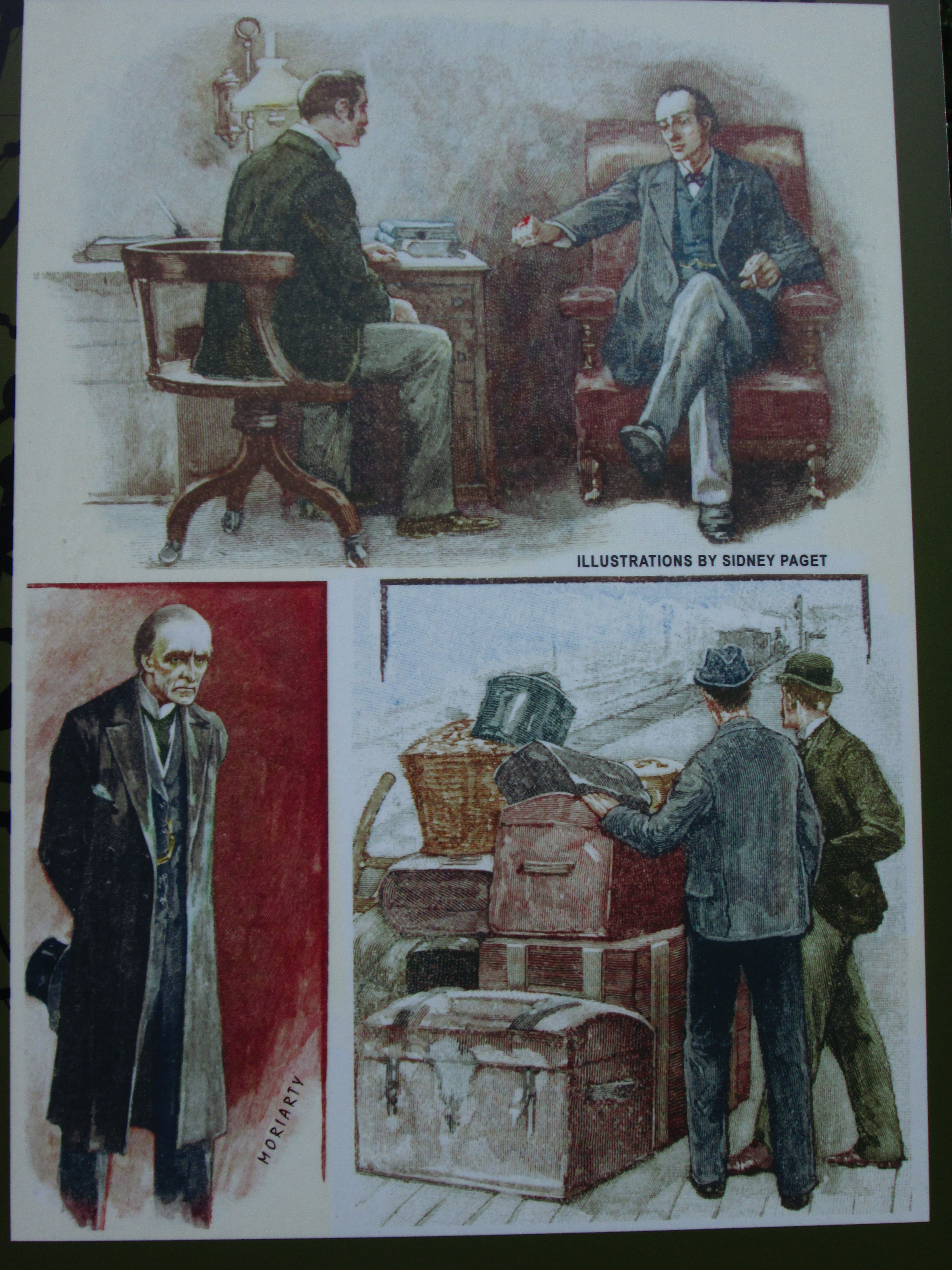
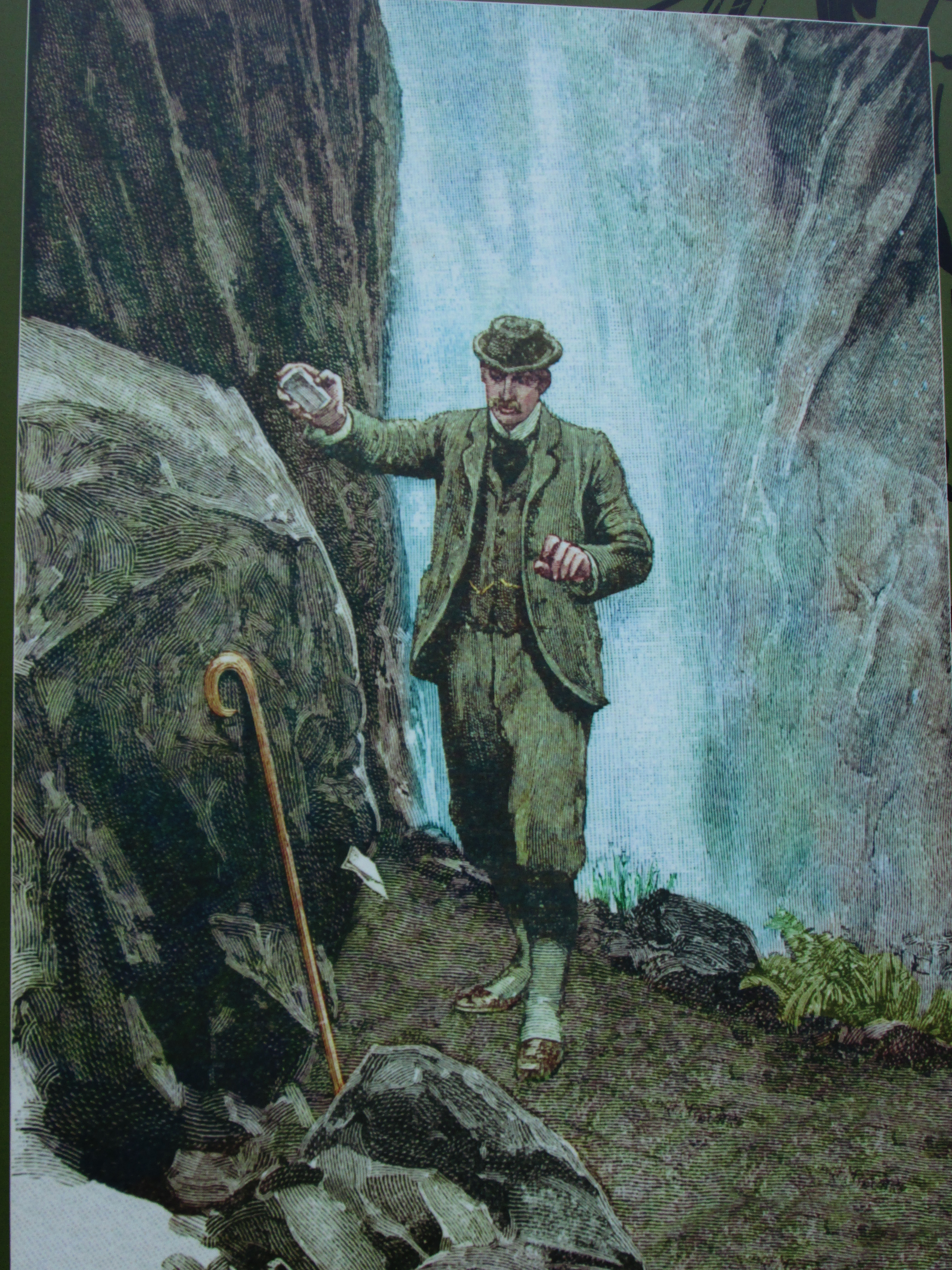
Can a fictional character assume a life and will power of its own? Can he scale heights of popularity and importance greater than those of his author and creator? That is precisely what appears to have happened in the case of Sherlock Holmes, the famous fictional detective.May 2014 379

The Final Problem was intended to be Sir Arthur Conan Doyle´s last work portraying Sherlock Holmes. He entertained a belief that the Sherlock Holmes stories were distracting him from more serious literary efforts. An option available to the author was that of “killing” Holmes and undertake other literary endeavors.May 2014 380

In order to keep the fans of the detective in good humor, the author came up with a plot which involved Holmes saying good-bye with a flourish, ridding the world of a criminal so powerful and dangerous that any further task would be trivial in comparison (Holmes says as much in the story).May 2014 381

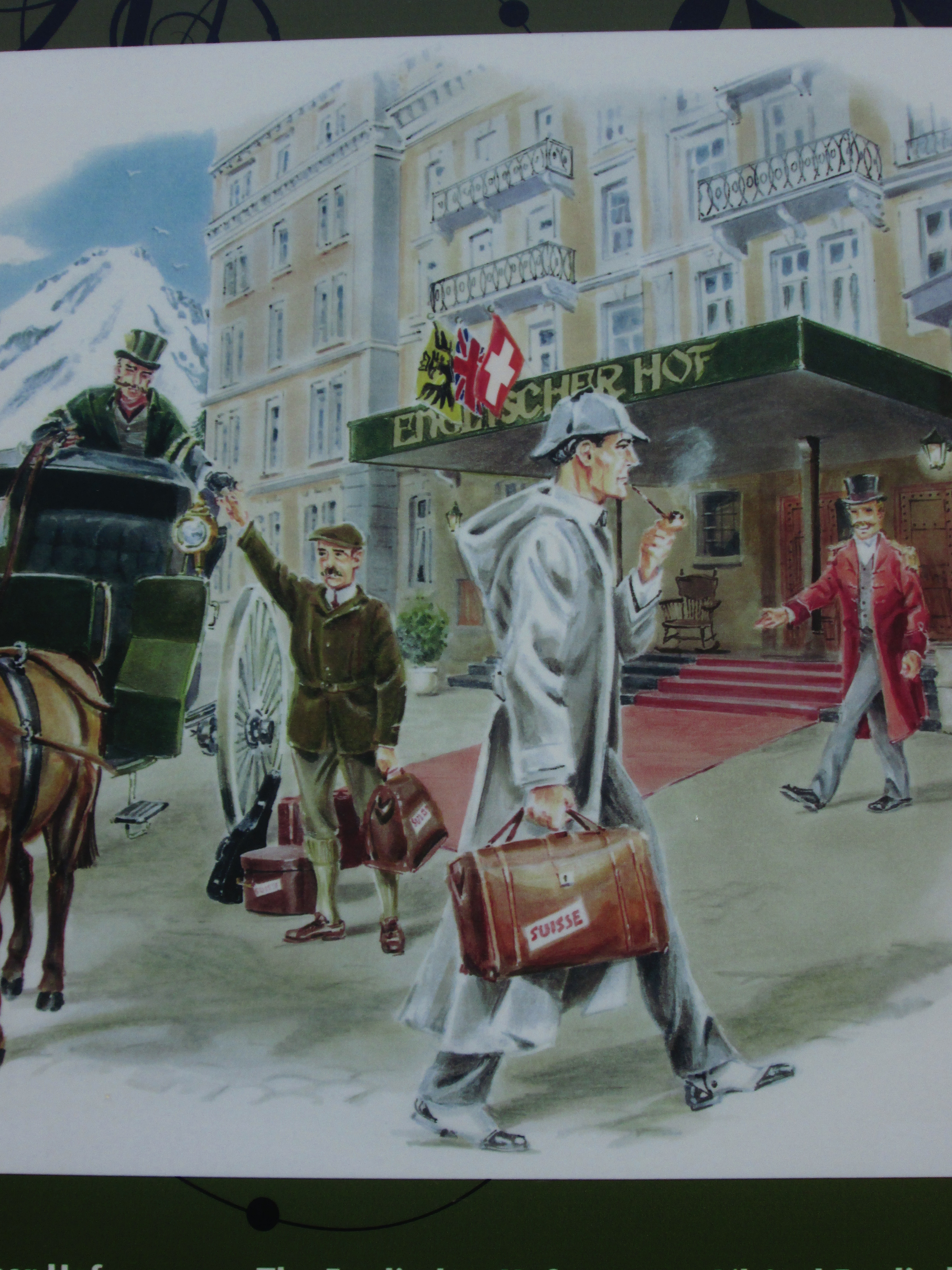
All authors walk a thin line between imagination and reality. In 1893, Conan Doyle and his wife toured Switzerland and discovered the village of Meiringen in the Bernese Alps. It was here that the idea of killing Sherlock Holmes at the Reichenbach Falls took shape.May 2014 382

However, Doyle let the detective die in circumstances shrouded in mystery. No revolvers. No air guns. No African powders which emit deadly vapors. No eyewitnesses. No physical remains. No deceptive burials. Simply, a natural setting. Just the footprints in a muddy dead-end path. Signs of a violent struggle which make Dr. Watson come to the conclusion that Holmes is no more.May 2014 383

When one picks up a Sherlock Holmes story, one is assured of good value for one`s time and effort. Backed by hard-nosed judgement, insightful observations and above-par analytical skills, he delivers. He is utterly reliable. These are the very attributes which go on to build up a brand.

Eventually, the brand called Sherlock Holmes proved to be stronger. Pressure from fans persuaded Doyle to bring Holmes back, first writing The Hound of the Baskervilles and then resurrecting him in The Adventure of the Empty House.May 2014 384

Finally, it transpired that Sherlock Holmes had actually won the struggle at Reichenbach Falls and sent Moriarty to his death though nearly meeting his own at the hands of Moriarty’s henchmen. Conan Doyle could plausibly resurrect Holmes, much to the eternal delight and gratitude of the detective`s fans!May 2014 385

Have you come across any other characters in literature which survived their creatorエs attempt to vanquish them?!

For management experts, herein lies a potential case study: How to make a brand assume a higher stature than the corporate entity which creates it!

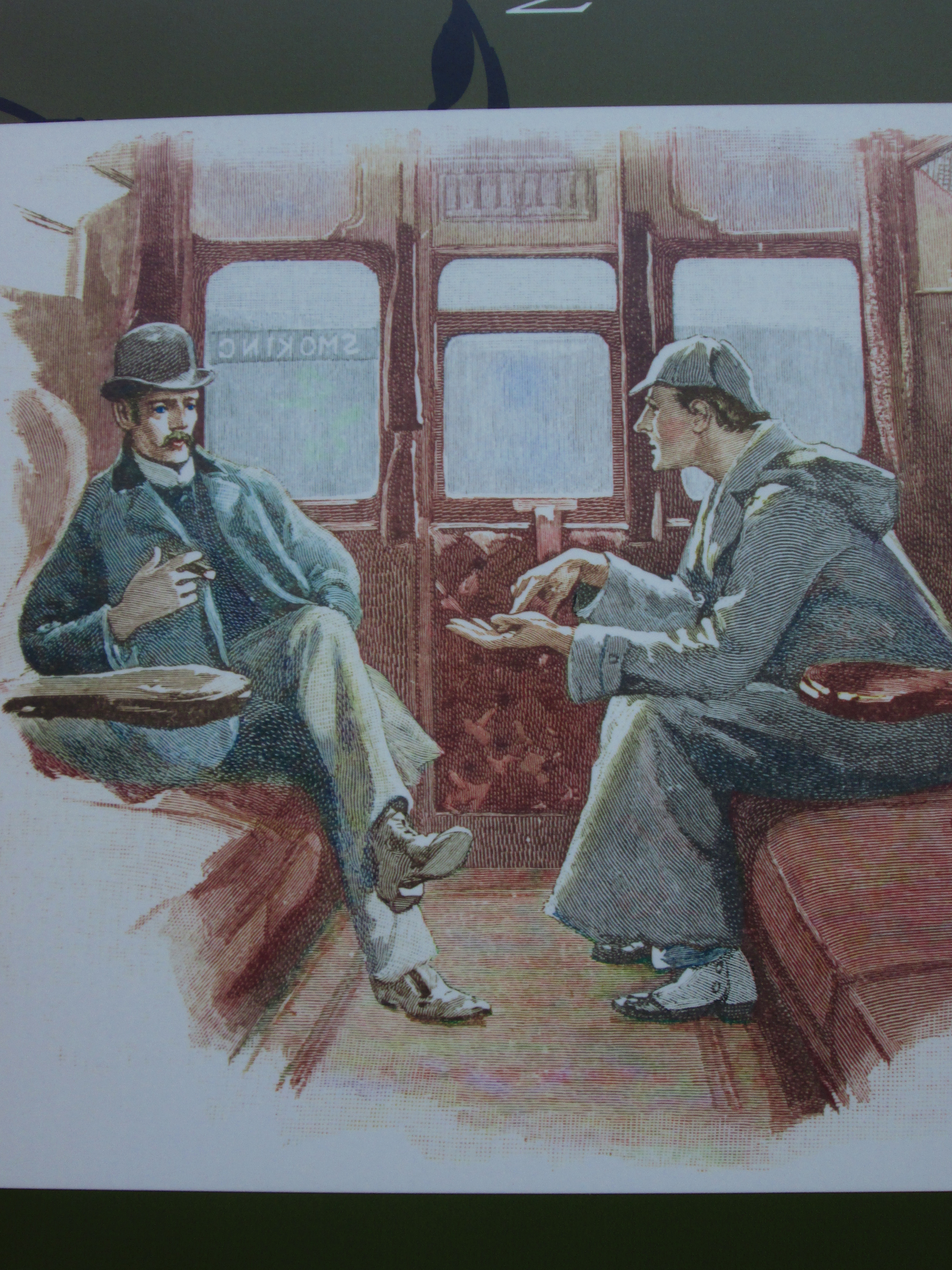
(Illustrations from the Sherlock Holmes Museum at Meiringen, Switzerland)

(Related post: https://ashokbhatia.wordpress.com/2014/05/28/sherlock-holmes-the-honorary-citizen-of-meiringen-switzerland)

Read Full Post »

Quite often, life gives us a roller-coaster ride. We get pulled and pushed by forces beyond our control. Then, we suddenly discover someone on whom we can work off our pent-up feelings. In the house, it could be the unsuspecting spouse who ends up absorbing the shock. In an office setting, we ourselves could be at the receiving end. If so, we quickly find a scapegoat onto whom our own brand of vitriol could be off-loaded.

Consider this. The CEO, when things are going wrong, takes it out on the VP. The VP goes and ticks off the General Manager. The GM, the unpleasant OVERSTAYING ONE’S WELCOMEinteraction concluded, immediately proceeds to crucify the Manager. The Manager loses no time in giving a piece of his mind to the hapless Executive. While the Manager sits down to have a cup of coffee in an attempt to cool off, the fuming Executive takes the office boy to task. The office boy delivers a stunning kick to the dog. The dog, realizing that this is surely not his day, steps out in the street to bark at the cat. The cat starts scouring the drains for a mouse which deserves to be at least rebuked, if not devoured.

Note that down the line, each one is unhappy. Each one is looking for someone else to whom the baggage of anger can be passed on. It is like a relay race, where the torch of anger is being kept ablaze. As the day progresses, we find that the place is replete with dull faces, bent backs and slouching shoulders. People go around with a highly constipated look on their faces. Possibly the only people left suppressing a chuckle are the ones who serve tea and coffee at the tables of the high and mighty. For the better part of the day, white-collar productivity goes for a toss.

When Anger Becomes Predictable and Routine

Many bosses have honed their skills of managing and controlling affairs by using what they consider to be the most deadly weapon they have at their disposal – anger. A public display of anger leaves those around them shaking and shivering. This gives them a feeling of having overpowered their hapless subjects. However, when this becomes a predictable and a routine affair, several things happen.

One, the blame game starts. I did not do it, sir. It was she who forgot to ship the material on time, sir. Thus, the power of human ingenuity gets used up in inventing new excuses.

Two, the quick-fix approach comes into play. People get used to seeking look-good short-term fixes. The long-term implications are forgotten.

Three, some people develop resistance to it. Next bout of shouting and one could see them merely shuffling their feet and trying to put on a melancholy mask so as to hide their chuckles. In other words, there is no attempt at a genuine improvement in the situation.

Four, the boss willy-nilly acquires a reputation of someone who apportions blame without a fair hearing being given to all the parties concerned. All employees detest this disservice to the principles of natural justice. The respect for a senior is no longer real; it is feigned. A culture of hypocrisy gets perpetuated. Eventually, operational efficiency nosedives.

In such outfits, when the boss enters the work place, a frenzy of activity starts. Electrified at the boss’ presence, the employees run around like headless chickens. Physical presence and activity gets interpreted as a sign of efficiency. Those who can think quickly on their feet suddenly remember a very crucial issue for which they need to seek valuable guidance from the boss.

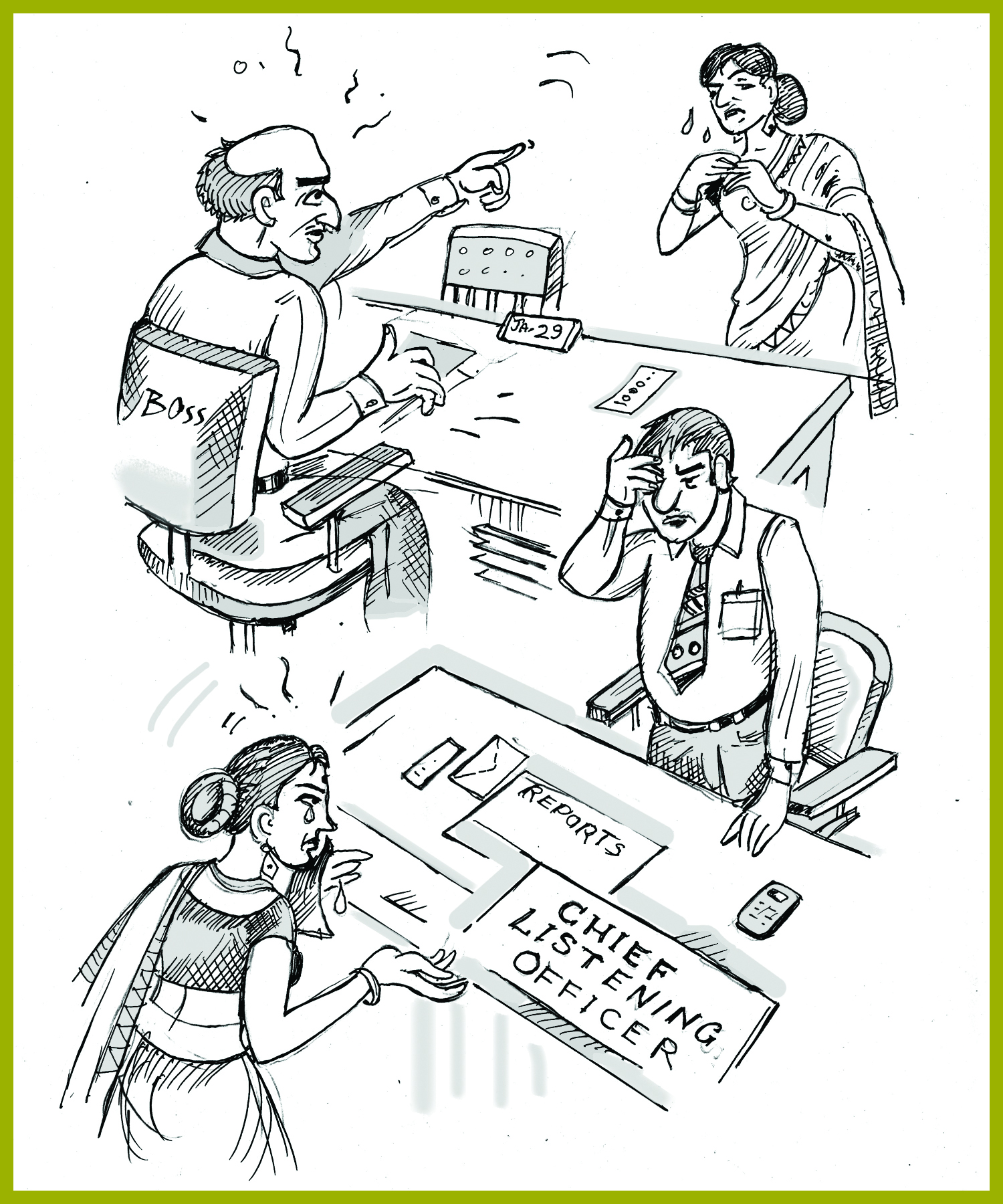
Five, seniors supporting the boss end up having to spend a great deal of time on mollifying the hurt souls. Invariably, they have an extra box of tissue papers readily available, just in case the tormented souls need to wipe off their tears. No senior is comfortable having to work with a sulking manager who might otherwise be a star performer. Many of them end up donning the extra hat of being Chief Listening Officers of the company. Seniors’ contribution towards company’s goals faces a real risk of getting diluted.

Handling Anger – Countering vs. Conditioning

Admittedly, there are juniors who feel they have been wronged and do not hesitate the register a protest. They have the guts to look the boss in the eye JOB LABELSand make him/her beat a hasty retreat, much like a hunter with a shotgun who, while taking a stroll in the corporate jungle, suddenly encounters a lioness who has just had a fight with her soul mate.

In one such situation, the telephone operator, a sprightly and spirited soul from amongst the delicately nurtured species, failed to transfer a customer’s overseas phone call because the top boss’ extension was busy with another call. The customer got through finally on her third attempt to call up the boss. All hell broke loose as the boss lost no time in court martialling the hapless operator, with the head of administration and the head of HR also getting ticked off in the process. Drawing herself to her full height, the operator stood her ground. Eventually, the boss realized that it was his own secretary who had kept the extension busy and was responsible for the delay. The operator got a well-earned reprieve. In due course of time, she even ended up being promoted as a secretary to the boss!

In such organizations, one could often run into morose executives. When prodded as to the reasons for their despondency, they are quite likely to come up with the explanation that they were yet to get the daily ‘quota’ of shouting from the boss! Pavlov would have been delighted to include this form of conditioning as well in his research work.

Of Oceans and Immersed Volcanoes

Once, when I asked one such CEO what he thought of his frequent display of anger, he gave me a rather harsh look and said ‘Do you think I like doing this? To be frank, it ruins a few hours of my day. But what to do? These people are so very stupid…etc, etc.’ I ended up pitying the fellow. He was working on a wrong premise – that anger alone can resolve issues – and was causing long-term damage to his own health.

Anger is highly contagious, much like negative news is. Mankind can perhaps be divided into two kinds. There are the ‘ocean’ types – those who are turbulent on the surface but calm deeper inside. Then there are the ‘immersed volcano’ types – the vast lake may look very placid on the surface but could be seething with anger within. It is this kind which causes maximum damage to its own well-being.

Selective Use of Anger

There are no easy solutions to controlling one’s anger. One has to first learn to accept oneself and feel happy and contented inside. One also needs to empathize with others and accept them as they are. Then alone does one stand a chance of guiding others around oneself in rectifying the mistake and in ensuring that it does not recur. The basic quality one needs to have is the capacity of observing oneself at all times, and following a strict self-discipline as to when a display of anger is done and when it is not.

Soothing music surely helps. Agitated nerves can get calmed down by a bout of meditation. A ‘laughter break’ with a colleague who has a sunny outlook towards life could bring some relief. Getting busy with another challenge for the day is another anti-dote to anger.

Yes, I also happen to know bosses who have perfected the art of displaying anger selectively, while not feeling it within themselves. But they do so once in a while, when a situation really demands a show of temper. I admire them for their wisdom and sagacity.

How do you deal with anger at the work place?

Read Full Post »

If you happen to be a professional to whom the allure of becoming a director on the board of a company is irresistible, here is a confidential note written by the Chairman of an imaginary company to one such aspirant, listing out the unstated terms and conditions of the offer.

From: The Chairman, XYZ Ltd.
To: A wannabe Independent Director

“Dear Aspirant,

I am happy to know that you aspire to be an independent director on the board of our company. Whereas a formal letter of appointment would soon follow, I write to you in my personal capacity to explain the real rights and responsibilities of an independent director.

1. You shall be hired only for your fame, your excellent contacts and your eminence. Your subject knowledge, competence and seriousness of participation in the meetings are important but secondary to the scheme of things.

2. Our company believes that machinations of the management (read “real owners”) are supreme. Our business is run on a quarter to quarter basis. PROMOTIONSAny talk of business strategy, etc, happens against this background. You shall always remain an embellishment on the board and shall conduct yourself with grace and equanimity accordingly.

3. Please appreciate that the Chairman and the President/CEO are advised by the best brains in legal and accounting matters. Their word is final and binding.

4. For the sake of excellent PR, as also to keep our market image shining and bright, the company has a set of clear guiding principles, a sparkling vision document, an exemplary code of conduct, a well spelled-out corporate philosophy, a robust governance framework, a sound CSR policy and a clearly articulated intention of zero tolerance to graft, corruption or sexual harassment. However, based on exigencies faced in the business environment or the seniority of the person involved, the management reserves the right to be flexible in its approach towards enforcing the aforesaid.

5. During your tenure, you may discover some creative accounting practices resorted to by the company. You may come across audit notes which point out the calculated risks we take while planning our direct as well as indirect taxes. You may also discover highly ingenious ways in which we interpret the laws of the land. You shall be expected to put across innovative suggestions to further refine such practices. You shall not be expected to raise any objection to the same, whether in private or in public.

6. You shall be encouraged to represent a group of shareholders, or appear to be partial to a group of stakeholders of the company; provided, of course, that your performance shall always be evaluated based only on the key deliverables – namely, towing the line of the management and ensuring that the company’s image is protected and its business interests advanced at all times.

7. Should you become involved in any legal hassle owing to having not registered a dissent on issues of either corporate governance or legal compliance by the company, an issue-based support may be provided. In such an eventuality, the company reserves its right to publically disown you and terminate its association with you forthwith.

8. Any attempt on your part to form a group of Independent Directors shall be treated as an act of dissidence and betrayal by management. As a matter of corporate policy, we do not encourage dissent, whether expressed or otherwise.

9. In respect of any matter pertaining to the operations of the company, you shall never take a moral high ground and start teaching us ethics and value YES-MENsystems. The last thing we need is a lecture from a glorified employee, the real capacity in which you shall serve the company.

10. The company expects you to observe complete confidentiality even after the end of your term as an Independent Director.

11. Post-retirement, you shall undertake not to become a whistle-blower and seek protection under any such scheme offered by the government of the day.

12. Advances, affiliations and activities of an amorous nature attempted by you towards directors from the other sex shall be frowned upon; unless, these happen to be dictated by the business needs of the company and have prior tacit approval of the management.

Even if you do not appear in the database of prospective candidates maintained by the Ministry of Corporate Affairs, we trust that you have so far been smart enough to ensure that your legal record is squeaky clean. We are sure that you shall continue to be vigilant on this score.

We look forward to a long-term mutually beneficial association with you. We welcome you as a part of the growing tribe of (perceived to be) independent directors in the country. We have no doubt whatsoever that you shall conduct yourself in a manner which would enhance the prestige and influence of this newly created labor market.

Yours truly, etc”

Background note:

Indian companies having a paid up capital of more than INR 100 millions and those whose aggregate outstanding loans, debentures and deposits exceed INR 500 millions are now required to have at least two independent directors on their respective boards. The new rules notified by the Government of India come into force from the 1st of April, 2014.

Likewise, some companies are now required to have at least one woman director on their board. For some, it is now mandated to spend 2% of their profits on CSR activities.

Hopefully, in the days to come, the newly emerging tribe of Independent Directors would play a far more effective role in ensuring that more companies conduct their affairs with better attention to transparency, ethical standards, gender diversity, environment protection measures and socially relevant investments.

Read Full Post »

« Newer Posts - Older Posts »