Feeds:
Posts
Comments

Archive for the ‘Management Lessons’ Category

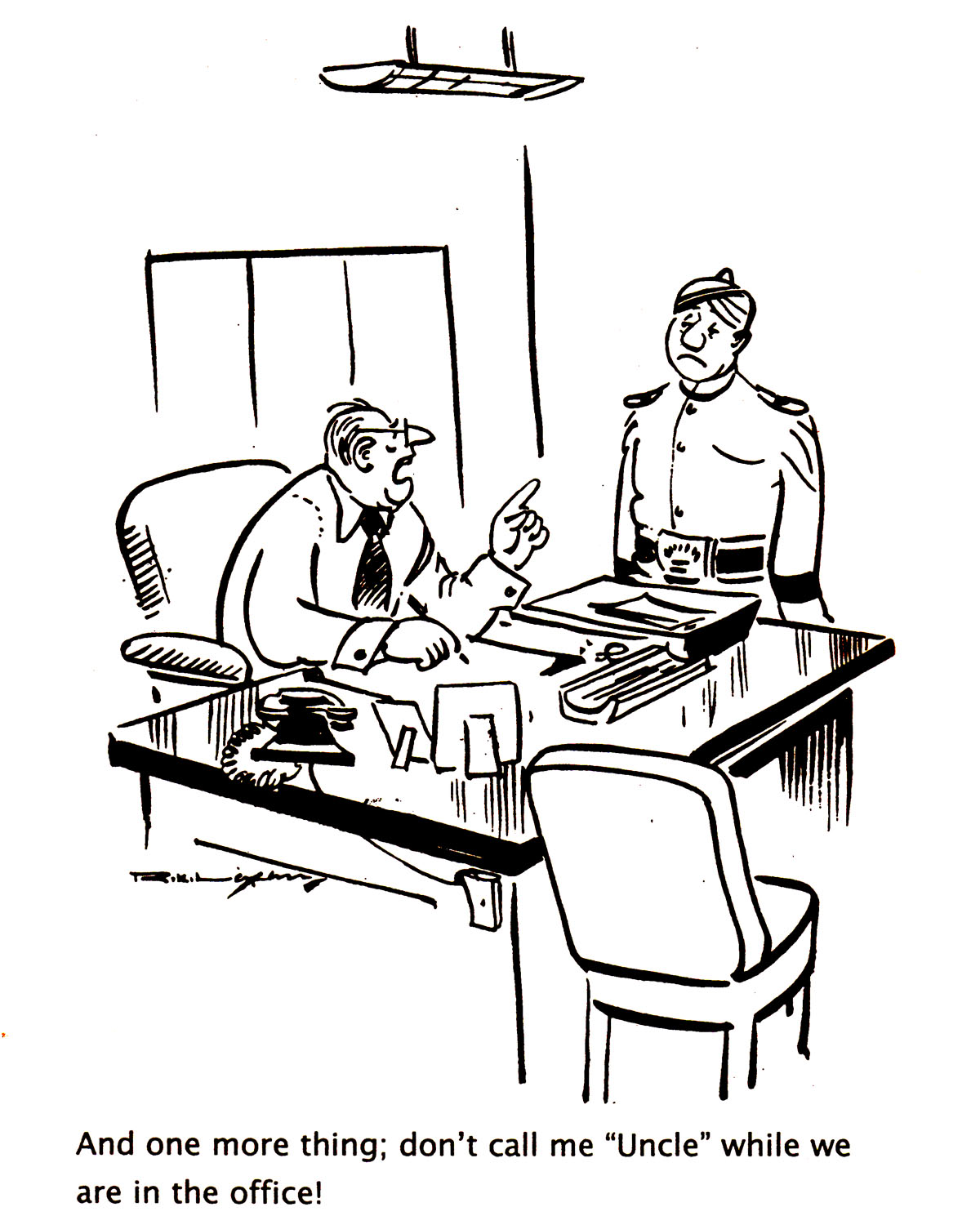
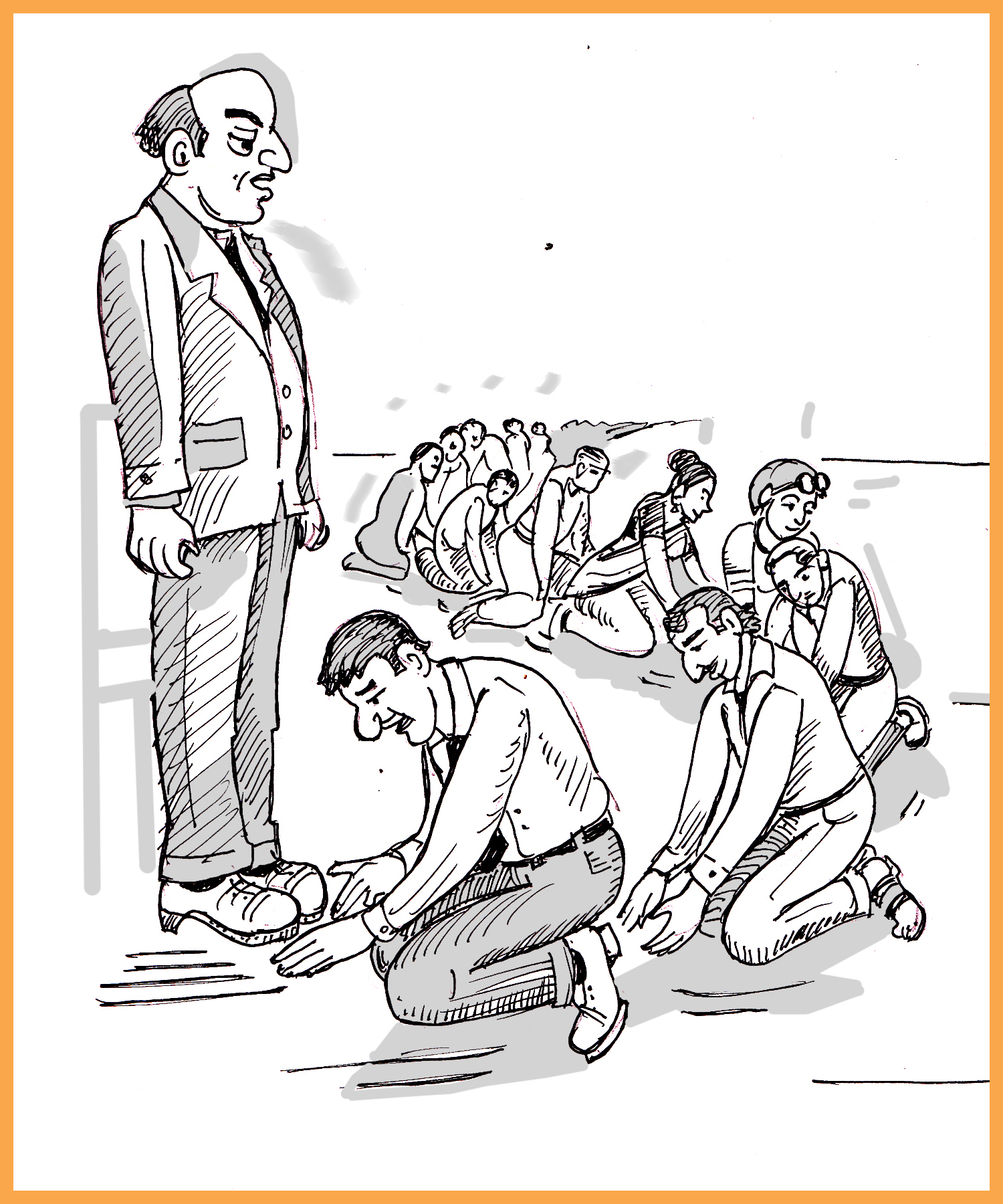
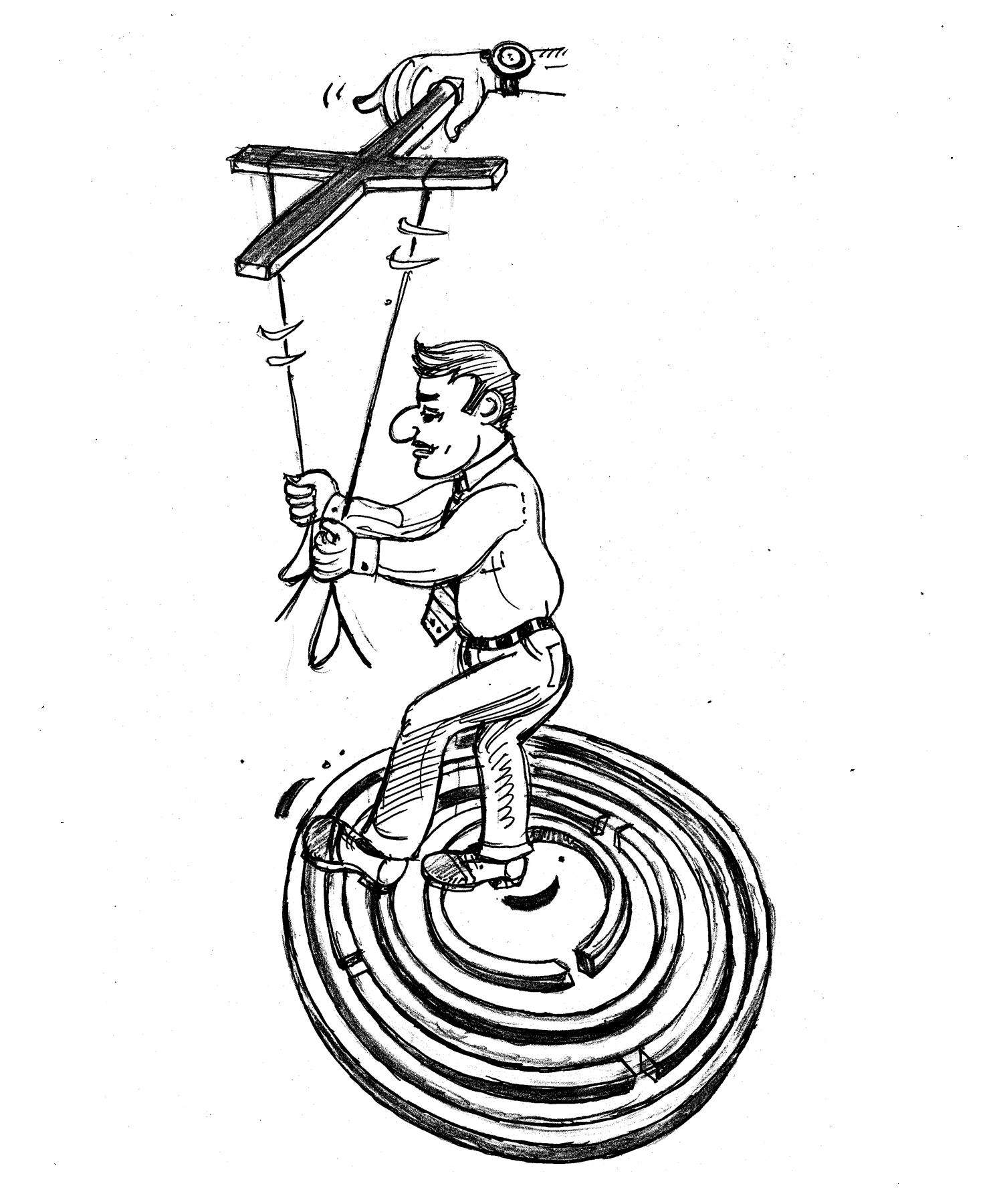
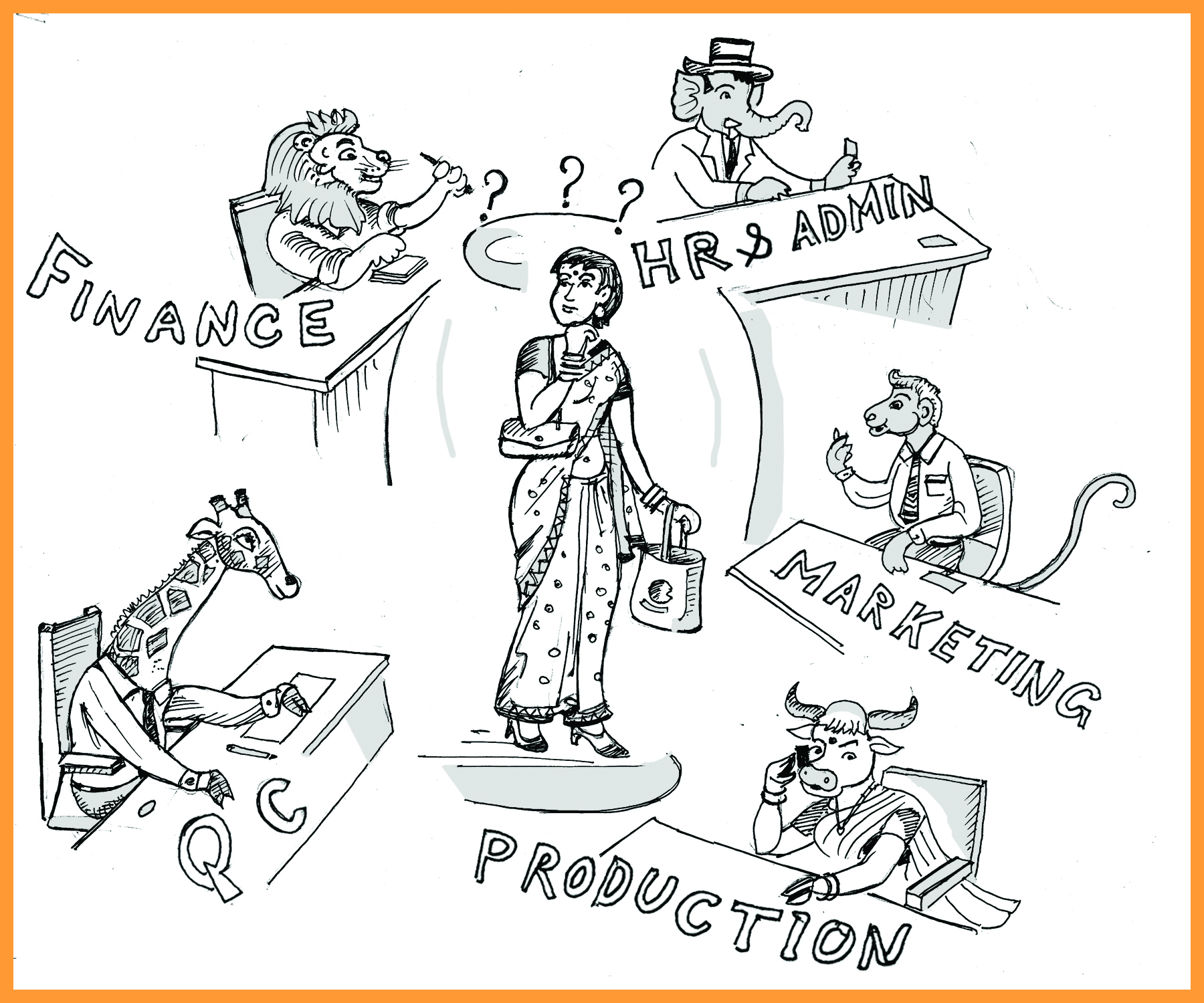
The management issues R K Laxman touches upon in his witty cartoons are wide-ranging. The messages are hard-hitting. For any manager who is trying to beat the blues, here is an effective anti-dote.

Driving the Boss Nuts

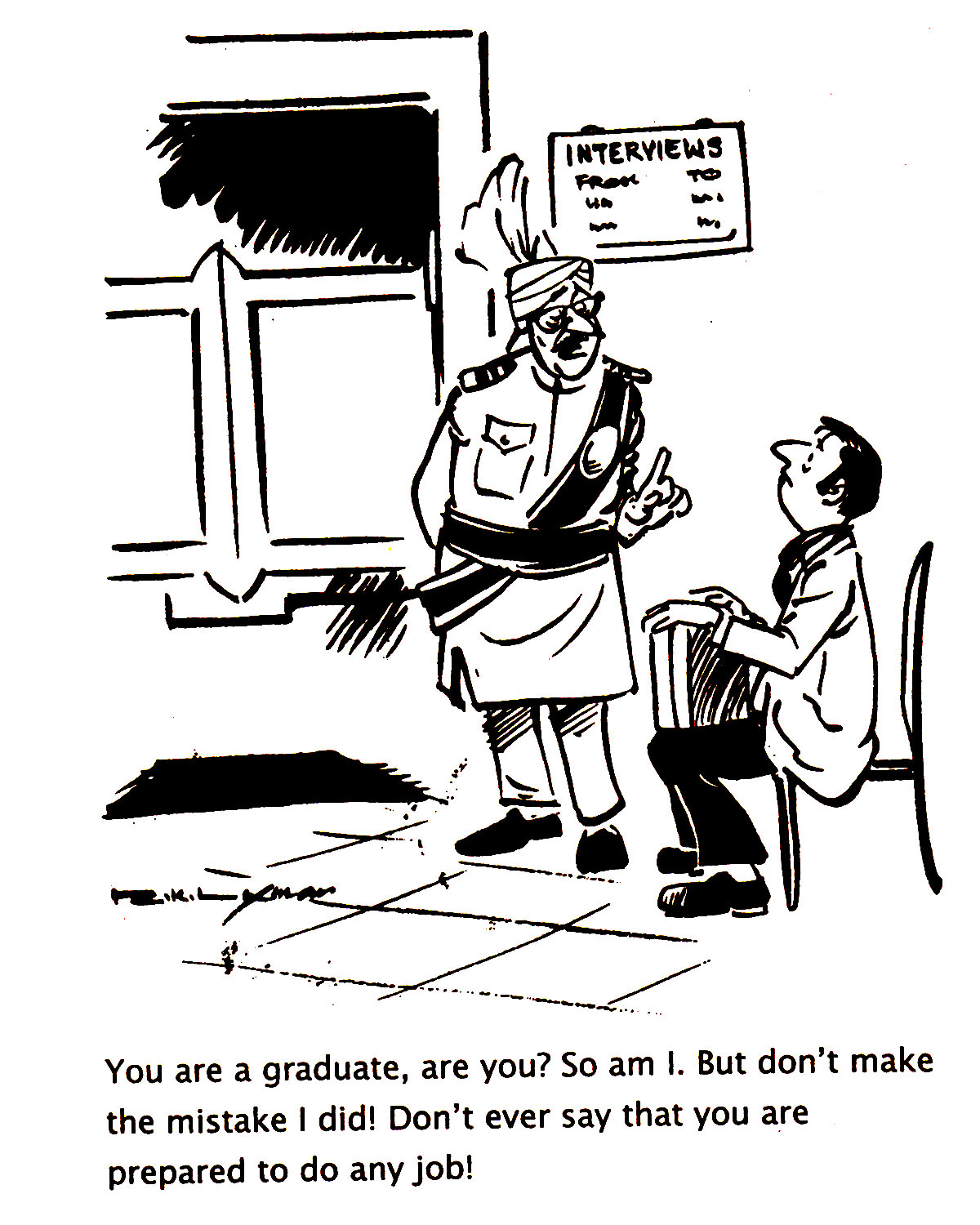
Cartoon Admitting Mistakes

The perils of over-committing oneself

Cartoon Flexibility in Jobs

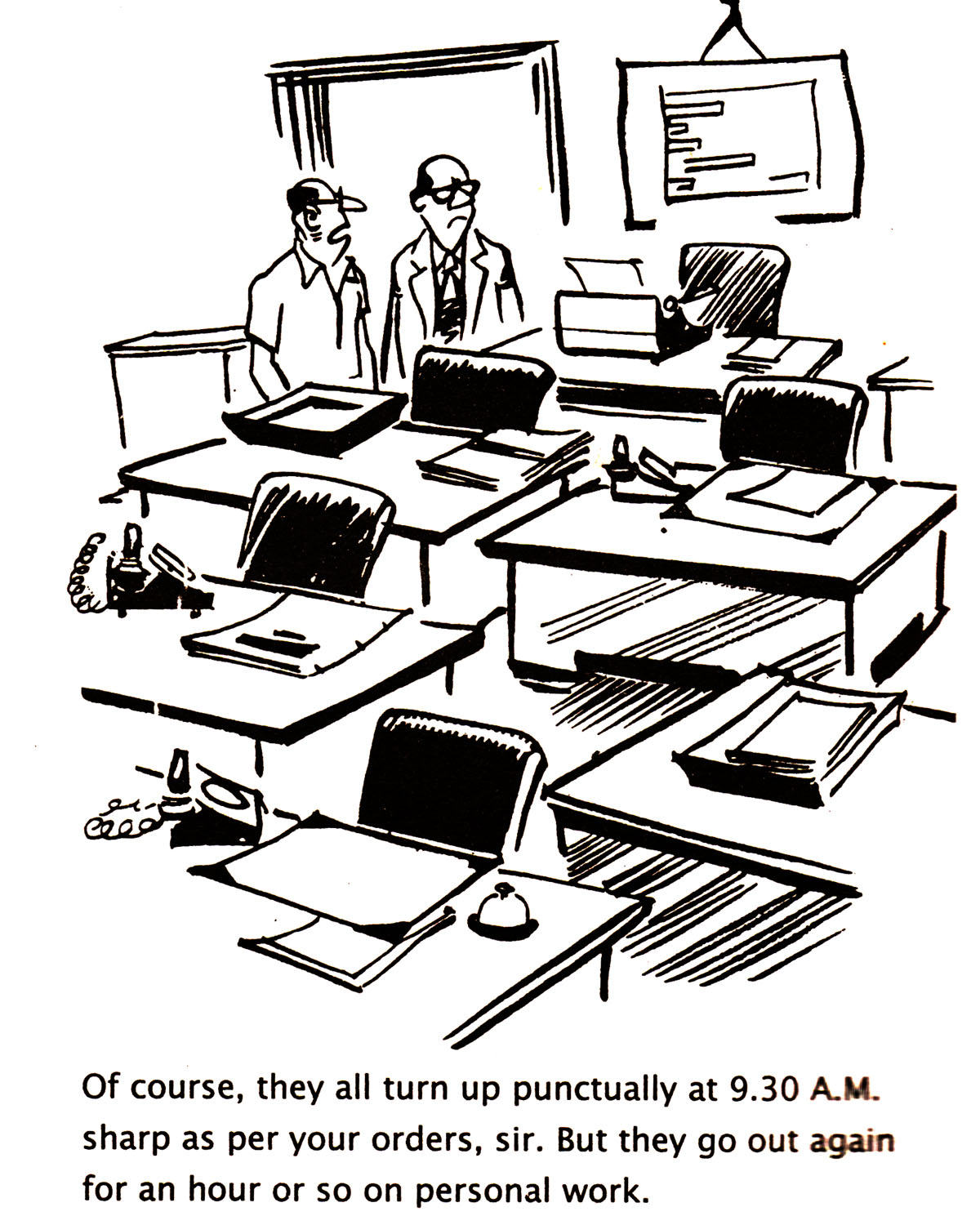
Punctuality

Cartoon Punctuality

Caught reading naughty magazines in office?

Cartoon Taking Work Home

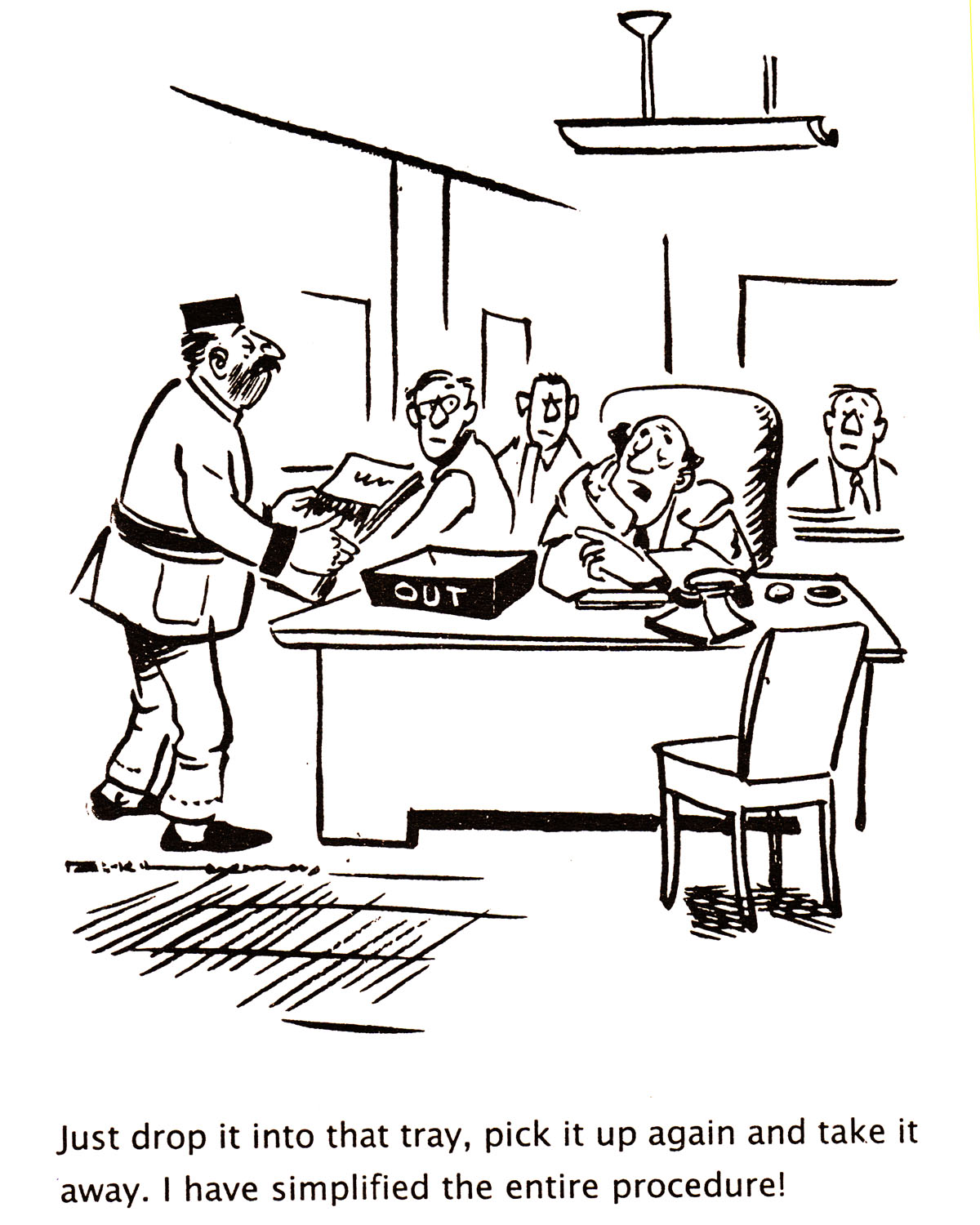
Simplifying systems and procedures

Cartoon Simplifying Procedures

A manager’s life never has a dull moment. His/her career is like driving a crazy car which is always going either too fast or too slow. From the time a manager enters the n-dimensional space of his/her career space, till the time the boots/sandals are hung right and proper, a roller-coaster ride with uncertain twists and turns is the only certainty.

To maintain one’s sanity, it helps to revisit the works of literary geniuses who have created an eternal world full of blooming flowers bathed in the soft glow of  humor. For those amongst us who are fond of books, P G Wodehouse and Terry Pratchett are there to help us. If we happen to like cartoons, Dilbert, Mario Miranda and R K Laxman are there to becalm our agitated minds!


(Illustrations from: ‘The Management of Management’ by R K Laxman, ISBN 81-7094-497-X)

Related Post: https://ashokbhatia.wordpress.com/2013/10/15/the-inimitable-r-k-laxman

Read Full Post »

Words of Wisdom

Stressed about stress management? Read this one!

Read Full Post »

I have had the privilege of observing several business leaders at close quarters. Most of them are professionalsLEADERS who have become true blue leaders purely by merit. Some of them are owners and entrepreneurs who have built up a business empire by sheer innovation, risk appetite, organizational ability and hard work.

Here is a listing of some unique traits and habits which I believe make them exceptionally great leaders.     

1.   A Four-Dimensional Thought Process

Any issue being faced by great leaders is viewed through a four-dimensional lens. They possess the unique capacity to be able to see not only the spread, the reach and the depth of the problem at hand, but also its likely evolution over a period of time. They have good intuitive faculties.

Being both a visionary and a thorough person is important. All the four dimensions of a problem are intricately entwined. A great leader’s vision would be rooted in something big and motivational; it would also be backed by a detailed implementation plan, a contingency plan, and, of course, loads of hard work.

In other words, their vision and broad mental sweeps are matched by finer details. Their attention to detail could be annoying at times. Send them a note/mail with a typo and you are sure to earn a gentle reprimand. Attend a client meeting with them and your pencil color and tie pattern had better match that of the team!

Opening a sealed envelope and double-checking the figures and totals in a statement are habits they tend to have. Ensuring that an important letter is put in an envelope with the correct name, title and address of the recipient is another dimension of their spirit of perfectionism.

2.   Good Speakers but Better Listeners and Readers

Leaders who charm us would perhaps never be at a loss for words. They would conduct meetings with great finesse and nudge the discussion in a productive manner. But they would also know how to listen. Don’t be surprised to find them walking around with small cards to take notes when people talk.

Send them a well-drafted mail on a matter of critical importance and we can be rest assured it would be read with all the attention it deserves. A well thought-out response would invariably follow, if not a phone call or an invitation for a personal meeting.

For matters which are of a strategic nature, or involve a policy decision, they are never in a hurry to hit the send button.

Strong leaders like to hear alternate viewpoints. They have neither time nor patience for sycophants. Irrespective of the time or venue, they are always willing to listen. Of course, the final call on any issue is their own.

3.   A Hardened Love for People

They just love people, though it does not mean they cannot be hard on them. Understanding people and their problems comes naturally to them. In most cases, it is empathy at work and not sympathy.

If there is a personal problem, they would go to great lengths to assist us in finding a solution. If a mistake gets repeated, we can be sure of their coming down like a ton of bricks on the real defaulter amongst us.

Great leaders are invariably fair when it comes to apportioning blame. The policy they follow is that of praising in public and rebuking in private. The focus is always on finding a solution and not on witch-hunting.

They would never select a wrong person for the organization. Interviews for new recruits would be detailed and exhaustive. An exhaustive background check of a successful applicant would be done before a formal offer is made. A meticulous induction program would be in place. They would elicit feedback at all stages of our progress through the company and intervene in matters of career advancement wherever necessary.

They would not shy away from fixing tough targets. Performance would be their primary consideration. They would neither delegate nor avoid meetings where a negative feedback has to be shared with an employee. A person found wanting on initiative has no place in their scheme of things.

Zero tolerance for a breach in values and ethics happens to be one of their prime qualities. A case of immoral conduct would get settled quickly and effectively. It would not matter if it involves either a great performer or someone who has been ‘loyal’ to the organization all along.

4.   A Commitment is a Commitment

It is not easy to extract a commitment out of them. But once they commit to something, they would move heaven and earth to deliver on their promise.

Likewise, if we agree upon a target with them, we would do well to deliver on our promise. If we fail, the consequences could be disastrous for our career progression.

Each one has a unique follow-up system in place. Some have the habit of pulling out small scribbled notes from one of their pockets to check on the progress of tasks assigned and agreed upon. Some are sticklers for maintaining and updating their diaries – manual or otherwise. Once we appear on this follow-up radar of theirs, we would not find it easy to squiggle out of it till the time the task is indeed accomplished.

5.   A Stronger Moral Compass

Great leaders live by example. They create a culture which is at once innovative and results-driven, entrepreneurial and collaborative, socially responsible and pragmatic. To them, their moral and spiritual compass is as important as their business and financial compass.

At the core of their moral compass is an intra-preneurial approach. They might be employees themselves, but their vision, actions, behavior and responses would be totally entrepreneurial. They would walk around behaving just like the true owners of the business they are meant to govern. Try to fall foul of them on their basic value system and you could be getting a pink slip earlier than you think.

Smart leaders are also aware that gender diversity facilitates better decision-making at all levels of the organization.

6.   Straddling the Digital Divide

They have also perfected the art of balancing the digital world with their real world. They answer every email addressed to them. If they are part of the hapless ‘cc’ brigade, they do not hesitate to intervene if and when a multilateral dialogue on the mails becomes either unproductive or political in nature.

Somehow, they always find the time to communicate face-to-face. They strongly believe that if something is worth communicating, it is surely worth over-communicating.

We would not find them coming up with knee-jerk solutions to problems. Dispassionate at heart, they have somehow mastered the technique of always maintaining their equipoise, radiating positivity all around them.

Management can be learnt; leadership is basically inborn. The good news is that there are several leadership traits which can also be emulated and learnt.

Imbibing such traits needs a great deal of focus and sustained effort. The journey could well transform us into becoming better leaders, whose style would trickle down the organization. This would improve employee morale and behavioral consistency across the entire set up, thereby making the organization more effective.


Read Full Post »

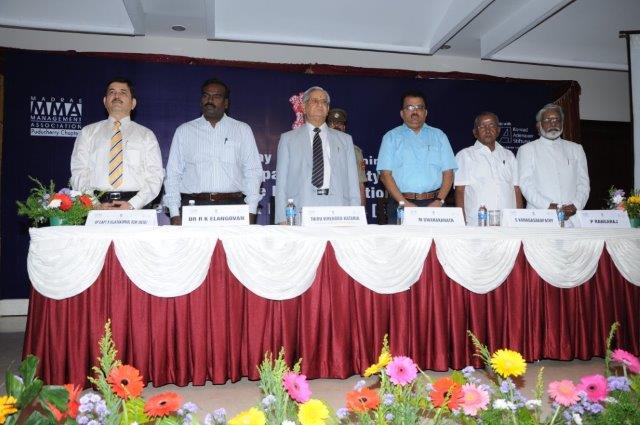
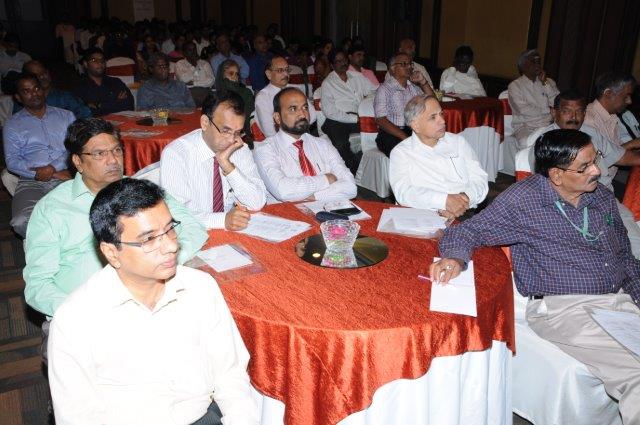
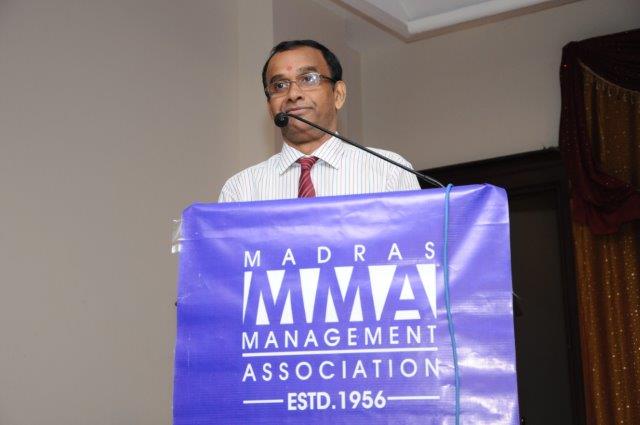
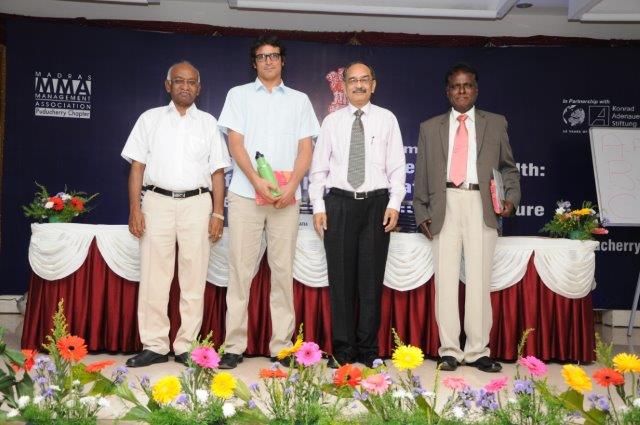
Here are some key ideas which emerged at a National Seminar on Industrial Safety, Health and Environment organized by the Regional Labour Institute, Chennai and the Madras Management Association recently at Pondicherry in India.  

  • Businesses today face three kinds of challenges:
  1. Increasing digitization and the spread of internet which is fundamentally changing the way a    business interacts with its customers and suppliers.
  2.  As the world’s economic power and consumption of goods and services gradually shifts from the developed world to Asia, a host of new business opportunities present themselves.
  3. A value-based culture which takes into account socio-economic realities is becoming increasingly necessary to succeed in business. Businesses have the choice of being proactive while shaping future policies and goals. In the long run, this would avoid their facing pressure from either the community, or the government or the society at large. DSC_4999
  • Growth in business has to be consistent, competitive and profitable. A business also has to be socially relevant. A renewed emphasis on S-H-E alone can achieve this.
  • Following the tenets of S-H-E is not only about companies creating a separate Department to drive these goals. It is also about better regulatory compliance. It is also about calculating the carbon foot print. It is also about a change of attitude. It is about putting people and planet alongside the drive for profits. DSC_5025
  • Unless companies imbibe a culture which encourages all managers and executives to work together to achieve their goals by adopting sustainable methods, continuous growth may be difficult to achieve. Ensuring safety of all concerned is an important responsibility of the business. Many business leaders realize that a healthy employee contributes better. Work-life balance needs to be taken care in such a way that the employees are always happy as well as healthy. Businesses also need to ensure that they give back to Mother Earth more than what they draw from it. taking care of environment is an important issue which facilitates sustained growth.DSC_5109
  • All over the world, businesses are gearing up to ensure that their operations take place on a sustainable basis. There are already companies which have started reporting Environmental P&L Accounts.
  • In India, the government is now talking of shifting subsidies from chemical fertilizers to organic fertilizers. MNCs like BASF are talking about Product Stewardship, meaning compliance right through the entire supply chain to its end-use customers. DSC_5124
  • According to a recent study done by KPMG, India has emerged as a leader in the field of sustainability reporting. In the Asia-Pacific region, India has recorded the highest growth in sustainability reporting since 2011 – 53%. Chile is the next, with 46% increase, followed by Singapore (+37%), Australia (+25%), Taiwan (+19%) and China (+16%).
  • The safety of an employee should also cover the duration he or she is not on duty. The concept needs to be extended to the life outside, at home, on the road – practically in all spheres of life. DSC_5158
  • When companies think of a SHE culture, they should not ignore the safety and health of their women employees in a much wider context. They need to feel empowered to report misbehavior of any kind. At the work place, the need is to treat them with dignity and respect. As part of a progressive society, males need to examine their attitudes towards women at home and in public spaces.

The day-long seminar was attended by over 200 participants who benefited from the expertise of several subject experts and thought leaders from the field. It was inaugurated by the Lt Governor of Pondicherry.  

Read Full Post »

When a finer member of our species becomes the part of an all-men group, the results are obvious – better focus on the job at hand, a far more effective team, higher levels of decency and a groundswell of chivalrous overtures.

Chamaiporn Uerpairojkit

Chamaiporn Uerpairojkit

Better still, if she happens to be a CEO, we have a boardroom which is painted a deeper shade of pink, thereby driving away the boredom from the drab proceedings. We also have a crackling company which is more result-oriented and has better empathy while dealing with diverse stakeholders. We are also likely to get a greener and cleaner business entity which believes in corporate ethics and good governance.

In the Pink of Health

Several studies done in far-flung countries such as USA, France and Vietnam have shown that companies led by women deliver better financial results. A McKinsey study compared the top-quartile of companies in terms of share of women  in executive committees against companies that have all-male executive committees. It found that the former companies exceeded the latter by 41% in return on equity and by 56% in operating results.

Two studies have shown that companies with significant numbers of top women managers do better when compared to competitors in the same sector. The improved performance is in both in terms of such organizational aspects as innovation and accountability as also in terms of profit.

Wang Feng Ying

Wang Feng Ying

The tipping point is the key: At three members of the board, the benefits of women start to make a real difference. It appears that with that critical mass, female board members are more likely to come up with challenging questions and encourage the entire group to arrive at a more inclusive and better decision.

There are also studies which negate this view. The Credit Suisse Research Institute, acknowledging that it is hard to make sense of the many confusing and contradictory findings, came up with its own analysis. The study suggested that better performance by companies with female board members does not necessarily suggest that the women led to the stronger performance; it could also mean that companies that are financially successful tend to be more inclusive. Nevertheless, the authors concluded that “more balance on the board brings less volatility and more balance through the cycle.”

Eva Chen

Eva Chen

The Global Scenario

A Grant Thornton International Business Report released earlier this year concluded that 49 per cent of CEOs in Thailand are women, which is the highest proportion in the world. The global ratio was reported to be 24 per cent of senior management roles filled by women, up from 21 per cent in 2012 and 20 per cent in 2011.

In general, ASEAN and the Asia-Pacific regions are ahead of the global average with 32 and 29 percent female proportions, respectively. Vietnam and the Philippines are in the top 10, with 37 per cent of senior posts in the Philippines being held by women, down by two percentage points from 2012.

Nonkululeko Nyembezi-Heita

Nonkululeko Nyembezi-Heita

The G-7 economies appeared at the bottom of the league table with just 21 per cent of senior roles occupied by women. This compares to 28 per cent in the BRIC economies and a remarkable 40 per cent in the Baltic countries.

Japan was the worst performer with just 7 per cent of senior roles occupied by women. UK (19 per cent) and the USA (20 per cent) were reported to be within the bottom eight countries for women in senior management. In contrast, top of the table for women in senior management – not only CEOs – is China, with 51 per cent.

The report also revealed that proportion of women in senior positions depends on the sector under consideration. More than double the number of positions in the global healthcare sector was occupied by women than in construction or mining. The most popular top management position for women was reported to be chief financial officer, while chief information officer was the least.

If Thailand has Chamaiporn Uerpairojkit as a President of Henkel, Australia has Veronica Johns heading Fiat Chrysler’s operations down under. Di Humphries takes care of Pumpkin Patch in New Zealand, whereas Wang Feng Ying looks after the Great Wall Motor Company in China.

Eva Chen is the CEO of Trend Micro of Japan. Nonkululeko Nyembezi-Heita oversees the operations of Arcelor Mittal South Africa Limited.

Maria Asuncion Aramburuzabala

Maria Asuncion Aramburuzabala

Maria Asuncion Aramburuzabala fusses over Group Modelo in Mexico.

Women on Top

Globally, women have made it to the top in diverse sectors of businesses, ranging from IT, FMCG, chemicals, social media and banking. According to a Deloitte study, women comprise 12.5 percent of board directors on ASX 200 companies in Australia. Fortune lists an impressive array of powerful women, globally as also in USA. Think Ginni Rometty of IBM, Indra Nooyi of PepsiCo, Ellen Kullman of DuPont, Sheryl Sandberg of Facebook and Marissa Mayer of Yahoo and you get a part of the picture in USA alone.

The European Commission proposed new rules last year to require companies listed in EU countries with more than 250 workers to have 40 percent of women on their boards by 2020. But Germany and other EU countries resisted, arguing that rules should be set at the national level.

Ginni Rometty

Ginni Rometty

According to German media reports, women currently hold about 12 percent of corporate board seats. Among the 30 largest DAX companies, women have 101 of the 488 board seats, or 22 percent, according to the DSW, Germany’s largest association of private investors. Coalition compulsions have now made the Angela Merkel government to introduce a legislation that will require German firms to allot 30 per cent of their non-executive board seats to women from 2016.

Norway, which is not an EU member, imposed a 40 per cent quota in 2003, a target reached in 2009. Norwegian companies can be liquidated if they fail to reach the target. However, a recent study by two University of Michigan professors shows that a government mandated quota led to younger and less experienced boards, thereby putting the businesses to higher risk.

In UK, the Cranfield report came up with the assertion that women hold more than one in five (21.8%) of non-executive FTSE 100 posts but still only account for little over one in 17 (5.8%) executive roles. That means there are just 18 women executive directors in Britain’s top boardrooms, against 292 men. Perhaps more alarming still, the Cranfield study found, among the broader top management tier at FTSE 100 firms – the key decision-making groups, known as executive committee members – the representation of women had fallen dramatically, down from 18.1% in 2009 to 15.3% today.
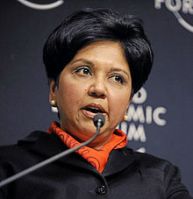
Indra Nooyi

Indra Nooyi

Susan Vinnicombe, co-author of the Cranfield report, suggested this shrinking pool of top-flight women managers made it harder for progress to be made with chief executive and finance director appointments. “Despite women dominating the fields of human resources, law and marketing … [executive positions in the boardroom] are still going to men, who are being promoted internally over experienced female candidates.”

Annika Falkengren heads SEB, a Swedeish Bank. Angela Ahrendts takes care of Burberry in UK, while Jonella Ligresti oversees the operations of Fondiaria-SAI of Italy.

Wanted: Women Directors in India

In India, men make up 94.7 per cent of the boardroom. A survey conducted by the Association of Chartered Certified Accountants (ACCA) and the Commonwealth Business Council (CBC) earlier this year, across Commonwealth countries, found that India has one of the lowest percentiles of women in senior management positions, second only to Pakistan among the countries surveyed. In many cases, even when women are present in the board, they usually tend to be “sleeping partners”.

Kalpana Morparia

Kalpana Morparia

With the new Companies Act coming in force in India, mandating women’s representation on boards, companies are searching far and wide for good candidates. Naina Lal Kidwai of HSBC, Kalpana Morparia of JP Morgan and  Renuka Ramnath of Multiples Alternate Asset Management are all busy running their own companies. It does not help that top women bankers like Chanda Kochhar and Shikha Sharma cannot be tapped because RBI rules do not allow bank CEOs to be on the boards of other companies except by rare special permission.

The first woman to head the SBI in its 206 year old history, Arundhati Bhattacharya, recently made headlines by joining the elite group of women who control banks and financial outfits in India.

Mallika Srinivasan is a well-known thought leader and strategist, heading TAFE. Vinita Bali heads Britannia, whereas Kiran Mazumdar-Shaw steers Biocon. Roshni Nadar takes care of HCL Corporation. Debjani Ghosh heads Intel’s operations in South Asia.
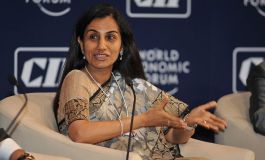
Chanda Kochhar

Chanda Kochhar

One of the highly respected business groups from India, Tatas, is already on a gender-diversity overdrive. Falugni Nayar, Vishakha Mulye and Ireena Vittal have recently joined select companies of the group.

A case in point is that of ICICI Bank where winds of a subtle change are blowing. Chanda Kochhar is making the company transform its work culture from a stress-ridden one to a more relaxed one. She has drawn an internal road-map to make the bank a service-led and not a distribution-led organization. One of the key challenges the bank is handling is to tone down aggression without losing its USP of being a dynamic and result-oriented organization.

According to information available in the public domain, out of India’s top 100 listed companies, 34 do not have any women directors. Demand for proven, independent women who are well experienced in board service, possess the required domain or functional skill experience and fit the culture of a company far outstrips supply.

Mallika Srinivasan

Mallika Srinivasan

In India, gender diversity is more pronounced in the banking sector. By nature, men and women are not better bankers. The conditioning by society perhaps plays a more important role in shaping up women’s skills in money management. One, they carry the burden of balancing the household budget. Two, they tend to be thrifty because they have to manage the household affairs within the resources provided by the bread-winner of the family.

The Glass Ceiling of Corporate Frauds

A study reported in one of the recent issues of the American Sociological Review found that only 9 percent of people involved in high-level financial  corporate conspiracies are women. The study also shows that female criminals stole less than their male counterparts. The study proposes that this could be happening because men see women as less criminally competent.

However, according to a survey of nearly 1400 global fraud cases from the Association of Certified Fraud Examiners, at the lower levels, women

Roshni Nadar Malhotra

Roshni Nadar Malhotra

made up 45 percent of the culprits. But at all levels, women steal less than their men counterparts. The difference lay in that women do it for a specific reason or purpose, whereas men tend to do it for longer periods, more as a habit of sorts. Women are brought up with an ‘ethic of care’ which means they are less likely to behave in a manner which hurts others.

Have Daughter, Be Gentler

In another study covering more than 10,000 Danish companies, a study done by Michael Dahl, Cristian Dezso and David Gaddis Ross found that CEOs paid lesser salaries to their staff after having had a son. But there was no reduction when they had a daughter! The hypothesis appears to be that daughters tend to make fathers more gentle and caring.

Studies led by Alice Eagly demonstrate that women tend to give more than their male counterparts in close relationships than men.

The Pink Shades of Philanthropy

Bill Gates believes that his mother Mary and wife Melinda are behind his philanthropic initiatives. At a wedding in 1993, Mary read out a letter she had written to Melinda: ‘From those to whom much is given, much is expected.’

It is quite likely that with more women at the helm of affairs, organizations may take their environmental and social responsibilities more seriously.

The Gender Bender 

Women tend to be more balanced and meticulous in their approach. Giving care and offering empathy comes naturally to them. Look across various companies and one would notice that most HR departments are wo-manned.

Annika Falkengren

Annika Falkengren

When it comes to the impact of women heading organizations, the jury is perhaps still out. Recently, professors at the Stanford University Graduate School of Business and the University of Edinburgh examined two thousand firms and found that larger companies with bigger boards were more likely to add women. In other words, better performance was not necessarily due to women power in the top echelons.

In India, the challenge is to keep up a continuous supply of leadership talent of the delicately nurtured. This can be met only by progressive HR policies of organizations which proactively offer a level playing field to women enabling them to break the corporate glass ceilings.

Just as the Norway example has shown, it is debatable whether introduction of a government mandated quota is a good move. Yes, it does force
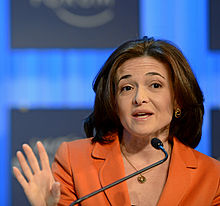
Sheryl Sandberg

Sheryl Sandberg

companies to do some soul-searching and ensure better succession planning while placing greater emphasis on gender parity. A positive beginning gets made. Over the long run, such steps would surely improve corporate governance levels and possibly check the cancer of graft and corruption nibbling away at the roots of India’s vibrant democracy.

Gender bias is deep-rooted in our psyche. Cultural bias and stereotyping restrains women from realizing their full potential. With her book ‘Lean In: Women, Work and Will to Lead’, Sheryl Sandberg has recently brought back the agenda of gender inequality on the global conversation map.

From Capitalism to Idea-ism

We are rapidly moving from capitalism to ‘idea-ism’ where the definition of capital is getting enlarged with each passing decade. The term capital covers not only the material and financial resources but also its softer and gentler variety – intellectual resources. In a world of this nature, gender parity can bring in a hitherto latent capital. A more efficient use of the same would be a key driver of competitiveness in the days to come.

The moves to paint our ‘bored-rooms’ a deeper shade of pink are endeavors in the right direction. Howsoever long it takes to achieve gender parity in business circles, the journey has begun.

Read Full Post »

What is it that makes a professional fondly look back and remember the time spent with a particular organization?

The initial package sounds jaded over a period of time and the Law of Diminishing Utility eventually kicks in. The seniority for which one so adroitly negotiates at the entry stage fails to charm after some time,  unless backed by further achievements, recognition and rewards, added responsibilities and advancements. Time also takes the glow and shine off the social prestige which goes with being associated with one of the better known brands in the industry.

So, what is a professional left with after having left an organization?

The Lingering Sweetness

Much after the association with an organization has come to an end, the everlasting impression one carries in one’s mind depends on two simple factors. One, professional achievements which were individually attained but facilitated and enabled by the support systems ingrained in the culture of the organization. Two, the manner in which one was treated as a human being. Often, one of the results is the number of long-lasting relationships that one makes while the association lasts.

Organizations happen to be made up of people of all sizes, shapes and temperaments. But the treatment received at the hands of key people one comes in touch with determines whether the after-taste remains sweet or sour; also, how long it lingers in the taste buds of our memory cells.

The Brand of the People

A brand represents an element of trust and reliability. The concept is not limited merely to the quality of the product or service on offer.  In fact, the systems and procedures followed by an organization, their sturdiness in the face of adversity and change, the element of fairness in its dealings with diverse stakeholders – all go on to add to the allure and enigma of the brand.

Much of the aura which characterizes a brand emanates from its people. It is they who create a buzz in the employment market. The lingering sweetness of an association is often determined by the Employee Brand Value.

I have had the opportunity of working with several companies. Each one had a different culture and a unique way of handling people. Nevertheless, it was interesting to observe how employees got treated far better by companies which had a stronger brand identity.

Allow me to share with you some of my experiences which have left me with a positive feel and a sweet after-taste!

The Human Touch

The care and companionship I was fortunate to receive in all the companies I worked with was unique in more ways than one.

When the management decided to shut down an operation headed by me, a colleague of mine and I were mercilessly beaten up by a gang of misinformed workers. Prompt medical attention, legal support, counseling for the self and the family and a compulsory vacation followed automatically. A month later, the then MD, nine rungs above us in the rigid hierarchy, called us over for a friendly chat over a cup of tea and instilled in us a sense of pride and fulfillment for having stood up to the rowdy elements in the work force.

In another company, a colleague met with a serious road accident on a busy highway while reporting for work. Over the next two years, he had to undergo a series of reconstructive surgeries to regain normality. No effort was spared to ensure that he and his family got the best support available. This, despite the company facing a severe financial challenge at the time.

In yet another case, my entry was marked by a gentle induction into the operations of the company. As my role expanded and evolved over a period of time, support – technical as well as emotional – was invariably close at hand. Above all, the HR policies facilitated a healthier work-life balance to be achieved. Which is not to say that there was ever a compromise on the goals to be achieved.

A Premium on Compassion

While I was on a personal overseas trip, a much revered colleague suddenly died of a cardiac failure. A prompt mail came from a colleague of mine. I was simply devastated. When I called back to find out precisely what had occurred and how, I was given only sketchy details. Subsequently, an inquiry was instituted to find out who had made the bloomer of conveying the disturbing news to me at a personally critical time!

A woman playing a critical role on the operations side faced a dilemma on a day which was very crucial for the company. Her husband, working in a far off city, was to return home for a brief period on the same day, that too after a gap of a few months. Having delegated her tasks and arranging a smooth conduct of her area of responsibility, she requested for half a day off from work. The immediate boss was in no mood to oblige, but relented after the top boss decided to intervene on humanitarian grounds.

Separations as Brand Building Opportunities

In one instance, a popular and effective manager suddenly decided to leave the company. At a glittering farewell ceremony, he was showered with lavish praise and presented with a gold medal by the President of the company himself. Within six months, he found that he was a cultural misfit in the next company. Feelers came in through informal channel and he soon rejoined us.

In another case, a much pampered and popular junior decided to leave the company after a long stint when he was in fact being groomed to take over a key department. A red-faced bunch of seniors met to discuss what steps could be taken to prevent the person from leaving the company’s employment. When all efforts failed, the group decided not to be vindictive in nature. Instead, the exit was facilitated so as to leave the employee in a highly positive frame of mind. The result is that even today, the , channels of communication between the company and the ex-employee remain open and smooth. Whenever the employee needs support in his new assignment, the company is there to back him up.

When the time came for me to part company (due to personal reasons, of my own accord), a smooth and graceful exit was ensured. In a farewell meeting, seniors, colleagues and others from across the company paid rich compliments in a manner which would forever remain fresh in my memory. An informal association continues till this day.

Winding Up With Minimal Resistance

Since business was not doing well, management decided to wind up the operations at the unit I was associated with in the past. The unit, directly employing more than 1,000 persons, happens to be located in an area which has seen multifold increase in labor disputes of all kinds over the past decade. As of date, there is hardly any unit which does not sport a red flag on its main gate, declaring the union which is active therein.

And what happens in this case? A well thought-out separation package gets rolled out. Most of the management staff get either relocated or out-placed. A well-rehearsed PR campaign gets underway with all the key government functionaries to ensure adequate and effective communication. The outcome of this well-designed initiative is that there are no unpleasant obstructions to the winding up plans of the company. Also, no one in authority enjoys the dubious pleasure of subsequently claiming that he or she could have done something to stop the loss of employment to a plethora of people, had they only been told of it before hand. A smart winding up, no?!

The Trust Reposed in the Employee

A common feel-good factor is the exemplary support provided to a senior manager on a critical mission. Just the feeling that one was free to take a call and will get backed up by the management, come what may, does the trick. An intrapreneur gets enthused no end when he or she is working on a mission wherein the survival of a business entity depends on him or her ensuring that a particular issue gets settled favorably. The top man merely looks him in the eye and tells him to go for it – and the goal is met. The after-glow of a professional  achievement of this kind surely lasts a life time!

Building up the Employee Brand Value

Organizations focus on crafting a powerful employee brand so as to attract and retain the best talent. What I have mentioned above are some examples which have added to the company’s brand value by focusing even on separations. A well thought out plan for winding up ensured that while business goals were met effectively, there was no damage caused to the brand.

When alumni recall their positive association with the organization, it is a sure sign that the memory of its brand is getting leveraged right. Making an employee feel valued even after he or she has parted company only adds to the long-term allure of the brand.

(Related Post: ashokbhatia.wordpress.com/2012/09/11/ramping-down-a-business-the-smart-way)

Read Full Post »

What do we do when the raw excitements and vicissitudes of a managerial career sap our energy and excitement of life? With impossible deadlines looming large, a key team member suddenly disappearing on a furlough and the better half turning into a bitter half because of our indifference to attending the Parent Teacher Meeting in the kid’s school, we are just left gasping for some fresh air.

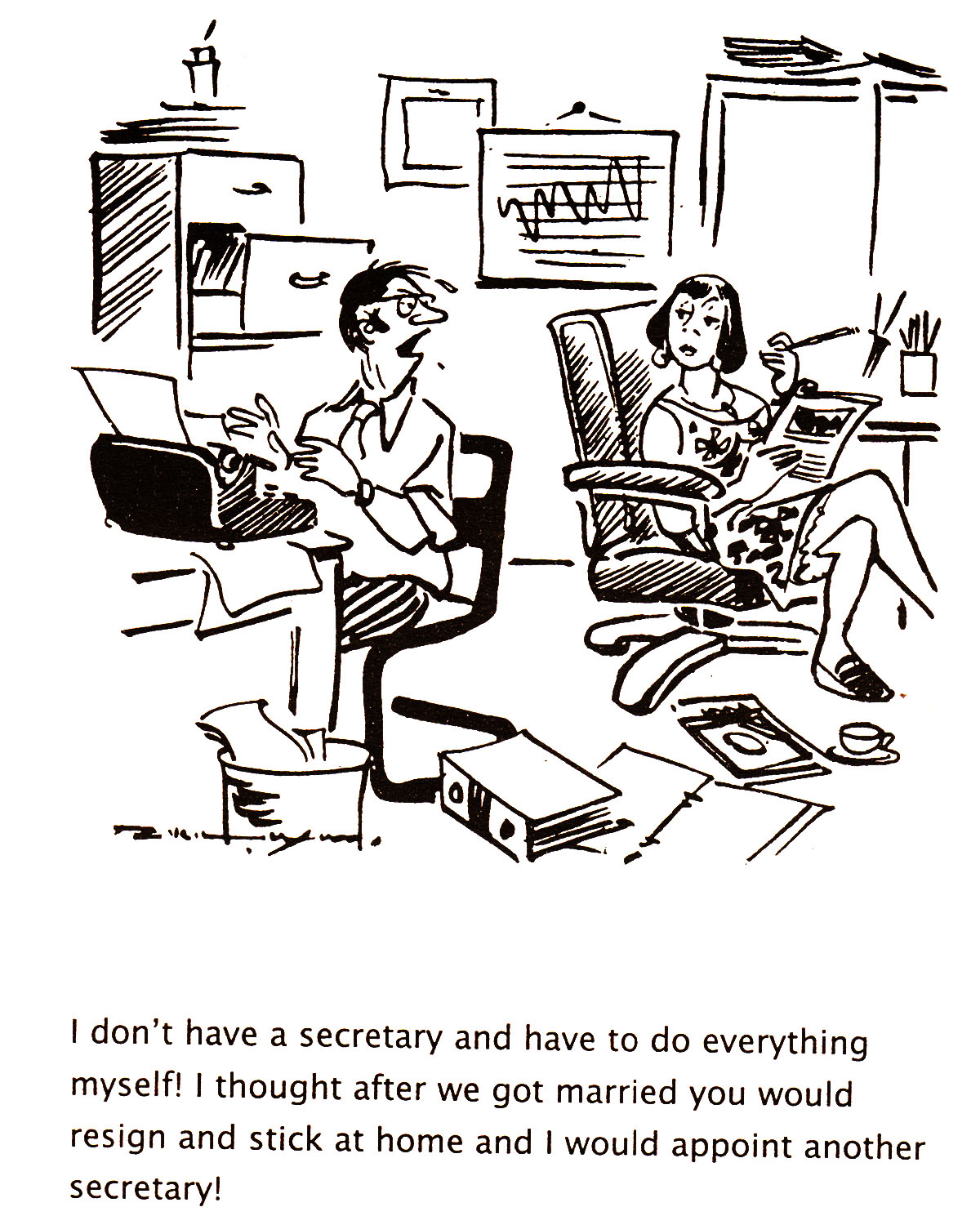
What could possibly perk us up on such a day? Browsing through the incisive and witty cartoons of someone like R K Laxman can surely help us to beat our blues. For decades, he has kept the sanity of our denizens intact by bringing us a daily dose of the travails of the ‘Common Man’. He has also produced some of the best management cartoons with messages for employees, CEOs and business owners alike.

There is a tongue-in-cheek quality in his cartoons which gently prods the reader to introspect on a wide range of managerial challenges. The issues could range anywhere from late coming in office to the tendency to carry work home, to indulging in nepotism, to working under a very difficult boss, and the like.

Here is a very small sample from the vast repertoire of his works:

The Torture of Getting Hired

Cartoon Attending Interviews

Getting Work Done

Cartoon Getting Work Done

Late Coming

Cartoon Late Coming

The Perils of Marrying Your Secretary

Cartoon Secy as a Wife

Nepotism

Cartoon Nepotism

Working Under a Tough Boss

Cartoon Working under a Tough Boss

Carrying Work Home

Cartoon Bringing Secty Home

In these days of technical gizmos and 24×7 connectivity, the office settings in these cartoons may look a little dated. But the messages are as hard-hitting and relevant as ever.

The works of Mario Miranda (who can forget the inimitable Miss Fonseca?!) are also delightful. Dilbert is another series which can educate and entertain us. But R K Laxman has created a unique world for managers of all hues with such sunlit perfection that we can just sit back and bask in its splendor and warmth.

(Source: The Management of Management by R K Laxman, ISBN 81-7094-497-X)

(Related Posts:

https://ashokbhatia.wordpress.com/2014/03/28/the-inimitable-r-k-laxman-2-0

https://ashokbhatia.wordpress.com/2015/11/01/of-secretaries-and-the-inimitable-miss-fonseca)

Read Full Post »

XEROX

There are innovations which have an irresistible mass appeal. A brand name thus ends up becoming a generic name of a product class. Xerox is a ready example in the same genre. All those who take creativity and innovation seriously would notice that such developments happen only because someone identifies a latent demand and proceeds to do something about it. An organization culture which enables such endeavours deserves to be complimented and replicated.

X, Y and Z

The art of managing people has been analyzed in great detail by theorists in the past, and commendably so. McGregor was bang on target when he came up with the X and Y approach to managing people. Also, Robert R. Blake and Jane Mouton came up with their Management Grid concept, where the X axis has “Concern for Production” and the Y axis has “Concern for People”. This proved to be a very useful tool to classify leadership styles.

Yes-Men

Yes-Men

With due respects to the brilliant work done by those mentioned above, one would like to make the concept of a Management Grid more contemporary by adding a new dimension, Z. This axis covers our “Concern for Ethics”.

When it comes to corporate governance, most businesses are driven more by greed than by the norms of propriety. Compliance with statutory provisions and indulging in tax avoidance rather than blatant tax evasion are given a short shrift. As a repercussion, we end up having more controls and complex laws, thereby making non-compliance even more attractive.

The good news is that there are indeed enlightened businesses and right thinking managers who score high on the Z axis as well. Such businesses have been around for more than a century and have done well for themselves; they have also given back to society in terms of advanced medical facilities, support to fine arts and sports and several other CSR initiatives.

YES-MEN

They are to be found in all spheres of life. They have perfected the art of boosting the sagging morale and ego of their superiors, thereby securing better perks and intangible benefits for themselves. Due to close proximity to their bosses – whether perceived or real – they end up being king makers.

Smart bosses easily figure out how to remain at an arm’s length from them. The tricks they use to steer clear of yes-men: a discouraging body language, asking for hard evidence for all the charges being levied against someone who is absent and generally berating them on select occasions in public.

Zombies

Zombies

ZOMBIES

A vast majority of professionals decide to be ‘passengers’ and not ‘drivers’ in their careers. They are happy to behave like headless chickens, strutting about sounding very busy but with meagre results to show. Typically, they outsource the thinking part to brainy birds around them and lead a mentally sedentary but self-contented life-style.

Call them file-pushers, clock-watchers, head clerks or what you will – they do serve a useful purpose in keeping big bureaucracies running like well-oiled machines.  They can also be groomed to become devoted followers for charismatic and dynamic leaders.

ZOO ORGANIZATIONS

Organizations where the top management believes that any suggestion for improvement in a department emanating from another department amounts to interference and sacrilege tend to become like zoological parks. All subject experts get confined to their ‘cages’ or ‘enclosures’. Forays into another’s territory are frowned upon. This is a sure shot recipe for nipping creativity and innovation at the work place.ZOO ORGANIZATIONS

The biggest casualty of course is the hapless customer who has had the misfortune of buying a product which turns out to be defective. The incessant running from pillar to post he/she is subjected to ends up creating a market ambassador the organization could surely do without.

Read Full Post »

Smart managers are always keen to ‘sharpen their saw’. They always remain alert to new ideas from all sides. Movies are no exception. These provide valuable inputs to managers at all levels – from green-behind-the-ear beginners to CEOs and owners.

Here is an update on the key take away lessons from some of the movies I am aware of: some from Kollywood, some from Hollywood and many others from Bollywood.

ENTERING THE CORPORATE JUNGLE

  • Setting Realistic Goals (Manal Kayiru: A Rope/Thread of Sand)movieposter-_manal_kaiyru_2

Be Realistic, whether looking for a life partner or a job! The hero sets impossible conditions to be met while seeking a life partner. As a result, he gets conned into marrying a girl who is exactly the opposite.

In the arena of management, we work with customers, suppliers, employees, service providers and other stakeholders. It helps us to be realistic about what we want from them.

Be SMART: Goals should be Simple, Measurable, Achievable, Realistic and Time-bound!

  • Realigning Goals to our Passion (3 Idiots, Maya Kannadi: The Illusory Mirror)Movie Threeidiots

Better alignment between inner self and outer self helps us to find joy at the work place. Money, status and power are a logical corollary.

We should excel at whatever we do – even if it is hair dressing! There is no merit in frittering away our energy in trying disparate things which we are not good at. Our life is in our own hands and we can shape it well.

  • A Personal SWOT Analysis: Overcoming Weaknesses (Black)

Movie BlackGetting a committed and competent guide helps us to learn to overcome our weaknesses.

High involvement invariably leads to high commitment. This, in turn, leads to higher accomplishments in life.

We face negative energy in the shape of self-doubts which often plague us. By winning over these, we can achieve great things in life.

The protagonist is a deaf and blind girl. Her tutor gets afflicted by Alzheimer’s disease towards the climax.

The movie was inspired by the life and struggle of Helen Keller.

DOING WELL IN THE CORPORATE JUNGLEiqbal

  • Putting First Things First (Iqbal)

The hero has a passion to excel. He motivates a reluctant coach to take him under his wings. The training methods are very primitive. At no stage does he dream of better facilities.

To play cricket for India is his dream. He works on it with the end in mind.

  • Being Proactive (Bhaag Milkha Bhaag: Run Milkha Run)Bhaag_Milkha_Bhaag_poster

Milkha has a short-term affair with his coach’s granddaughter and ends up losing at the 1956 Melbourne Olympics. He learns from this failure and goes on to win several medals for India in the 400m sprint slot.

Perseverance, hard work and a passion to succeed lead him to eventual success.

  • Networking and Bonding (Dil Chhahta Hai: Do Your Thing, Zindagi Na Milegi Dobara: You Don’t Get to Live Twice)

220px-Dil_Chahta_HaiMost work gets done in organizations based on informal networking and bonding.

The effectiveness of a better networked team is much higher, as it taps the potential of underground cable connections.

Bonding encourages lateral thinking within the group, thereby improving its productivity. 220px-Lagaan

  • Spotting the Potential of Individuals (Lagaan: Land Tax)

Team building involves a clear definition of diverse roles and the assigning of roles based on individual strengths. Overcoming regional and social biases, the hero motivates a group of villagers to form a team and beat the English rulers in a game of cricket, thereby leading to a waiver of taxes for a period of three years.

  • Taking Good Care of People (Anbe Sivam: Love is God)Anbesivam

The conflict between a communist way of thinking and a capitalist one is brought out in this Kamal Hassan and R Madhavan flick very poignantly. Better management of people, the value of compassion and the need to minimize financial disparity is highlighted in the movie.

  • Delegation by Micro-managing (Udaan: Flight)

Movie Poster UdaanAn overpowering father bullies a son into accepting a career and lifestyle of his choice. The seeds of revolt sprout. How the hero, a 17-year-old teenager, overcomes his low self-esteem and picks up the courage to walk out of the home to lead a life free of humiliation and abuse forms the crux of the theme.

Aggressive bosses who tend to micromanage affairs in the name of delegation end up creating a team with very low self-esteem. This could affect the long-term plans of the organization.

  • Delegation by Macro-managing (Sholay: The Embers)

In this case, the focus is on results, not on methods or means. The target – of capturing a dreaded dacoit – is clearly defined. The assignment is clearly accepted by two small time criminals who succeed in their mission, though one of them loses his life in the process.Movie Jerry_Maguire

  • Sticking to Values (Jerry Maguire)

When Jerry gets disgusted with the unfair practices in a sports event management company, he chooses to come out with a Mission Statement: ‘The Things We Think and Do Not Say: The Future of Our Business’. He goes on to build his own business as a sports agent and develops a very close relationship with his one of his clients, leading to eventual success.

  • Leaving the Comfort Zone (Do Aankhen Barah Haath: Two Eyes, Twelve Hands)

Do Aankhen Barah Haath was based on a real life incident. A jailer proposes to handle six hardened criminals in an open jail, so as to reform them and return them to society as responsible citizens. The movie captured the spirit of innovation in solving a social problem. Lessons like empathic counseling, strict discipline and a fair and transparent system of reward and punishment are relevant for professionals who face white-collar crimes in today’s business world.

How the hero overcomes the initial disapproval and cynicism of his superiors in implementing a novel scheme of this nature teaches us to try to walk out of our comfort zones once in a while to scale new heights in our career.Movie The Poseidon Adventure

  • Crisis Management (The Burning Train, The Towering Inferno, The Poseidon Adventure, Independence Day)

The causes for a crisis could be many – professional rivalry, an ego clash, or sheer chance. But what wins the day is Rather than trying to pass on the blame; a professional would adopt a rational attitude and take immediate steps to contain the damage. Cooperation, team work, level headedness and fleet footedness are the pre-requisites for success to be achieved.

In all the movies cited here, a deep commitment to save lives comes first. When faced by a do-or-die situation, new groups often get formed and assume a leadership role to tackle the crisis effectively.

  • Strategy First, Execution Later (The Bridge on the River Kwai)Movie Bridge on River Kwai

Implementing ruthlessly without understanding strategic implications could be injurious to the organization’s health!

The leader is ruthless in getting a group of prisoners of war to construct a railroad bridge during World War II. He believes in demonstrating British engineering skills to posterity even though, when completed, the bridge would help the Japanese troops. In a nutshell, the bridge is built, only to be destroyed when the first train passes through!

LORD OF THE JUNGLE

  • Leadership (Norma Rae)Movie Norma_rae

Based on the real life story of a wage earner in North Carolina, the movie captured the essence of labor unionization and the leadership qualities required to achieve the same. We learn that people follow us not necessarily because we are smarter or more knowledgeable; only because we are passionate and clear about what we set out to achieve.

  • A Win/Win Strategy (Jodhaa Akbar)

Movie Jodha AkbarAkbar, a Muslim Mughal Emperor, marries a proud Hindu Rajput princess, so as to forge strategic ties with smaller states which are otherwise resisting his expansion plans. The princess resents being used as a pawn in a political game and Akbar is fed by vested interests with negative inputs as to her real intentions. Eventually, they learn to respect and love each other.

When businesses merge, the birth pangs of the new business entity are experienced by all stakeholders. It is through cooperation, mutual trust, shared values and enlightened HR communication that the bonds become stronger, thereby giving the business a synergistic advantage.

  • Failure is Not an Option (Apollo 13)Movie Apollo 13

When the third manned mission to the Moon gets aborted due to a technical snag, the challenge before the NASA flight controllers is to get the three astronauts aboard back to Earth. With team work and an out of box approach, the crew manages to make a difficult but crucial course correction. The team lands safely.

When a boss decides not to take a ‘no’ as an answer, amazing results often come up. Human imagination and ingenuity, when pushed to its limits, truly knows no boundaries.

  • Innovation in Business and Processes (Vicky Donor, Munna Bhai MBBS)

An unemployed youth – relentlessly chased by the owner of an infertility clinic – ends up becoming a sperm donor. The220px-Vicky_Donor movie captures his trials and tribulations in a hilarious manner. Goes on to show that lot of new businesses can be conceived by being alert to the demand supply gaps in the society. By offering products/services designed to capture such gaps, new business verticals can be designed to tap the market potential.

For a hospital, an empathic touch is necessary to heal better is one of the clear messages of the Munna Bhai movie. Core service delivery – taking care of the sick and the infirm – cannot become secondary to procedures, systems and paperwork is another important message.

  • Discovering Synergy (Chak De! India: Go, India!)

220px-Chak_De!_IndiaA hockey coach pulls off the impossible – by coaching and leading the Indian women’s field hockey national team to win the World Cup. There are regional, racial and ethnic biases to be overcome. There are ego clashes between players to be tackled. Players who keep their personal success above that of the team need to be counseled. Then there are issues of eve teasing and perceived sexual harassment which need to be addressed. The apathy and cynicism of the government regulatory officials needs to be overcome. He does all this and leads the team to an astounding win. He does so by seeking areas of agreement first, by building on strengths of individual players and by compensating for their weaknesses.Movie Elizabeth

  • The Leader Walks Alone (Elizabeth, Mughal-e-Azam)

The Queen gives up her romantic interests for the sake of a public life, rules England for 40 years; eventually learns to trust her own instincts

Likewise, a CEO has to set the bar very high and forsake quite a few mundane pleasures of life to lead the organization to rapid growth

It is always lonely at the top; concern for organization reigns supreme

Factors which can help: strong relationships, pragmatism, flexibility, meditation

SOME KEY ENABLERS

  • Giving Back to Society (Thirumalai)

Thirumalai_Vijay_Movie_posterThe hero is a motorbike mechanic. He ends up falling in love with a girl whose father is a rich businessman.

The father, not liking the match, hires local goons to kill the hero. Predictably, the hero survives.

In a key scene, he tells the father to behave himself and be straight and positive.

The key messages: Life is a circle: you reap what you sow; Discovering our Inner Voice.

  • Helping the Community First (It’s a Wonderful Life)Movie Its_A_Wonderful_Life

The hero has given up on his dreams to help others and ends up committing suicide on a Christmas evening. His guardian angel shows him how he has made a difference to other’s lives and the community in general.

  • Think Green (Wall-E, Erin Brockovich, Avatar)

Movie Wall EAll these movies have themes which are centered around the concept of sustainable living.

Caring for the environment and Mother Earth is the central message.Movie avatar poster-normal

In Wall-E, it is a small plant which makes humans come back to inhabit earth.

Erin Brockovich is all about a legal clerk motivating a group of sufferers to stand up against a large company and get suitable compensation awarded by a court of law. It is based on a real life incident.

Avatar also champions the cause of protecting our environment.

THE REEL/REAL LIFE

In reel life, we empathize with a hero we admire. We readily fall for the grace and charms of a heroine and get infatuated by her. We love at least one doting parent. We come to hate rogue villains.

In real life, we look up to some seniors who become our role models. We fall for the charms of an organization whose image and brand equity we admire. We meet an experienced senior who guide us, much like a doting parent. All those who shoot down our plans appear to be rogue villains. In the process, they teach us to balance between divergent opinions and also help us to grow professionally.

While entering the reel life, we willingly suspend our sense of belief and logic, leaving our mind behind at the hall entrance. We simply get mesmerized for a period of two to three hours.

In some single owner driven companies, we learn to leave behind our ego and autonomy of thought at the office entrance itself. It is a reality check which sometimes lasts sixteen hours in a day. Thanks to technical gizmos and improved connectivity, it is well-nigh impossible to ‘switch off’ for the day!

AN OVERVIEWThe_Lunchbox_poster

  • Making movies is a high-risk business. Thanks to the multiplex business model, innovation in themes appears to have picked up of late. In the realm of Hindi movies, think ‘A Wednesday’, ‘Bumm Bumm Bole’, ‘Barfi’, ‘Cheeni Kum’, ‘Dor’, ‘I am Kalaam’, ‘Lunchbox’, ‘Pa’, ‘Stanley Ka Dabba’, ‘The Blue Umbrella’, ‘Udaan’, ‘Welcome to Sajjanpur’, etc.
  • Movies are not only about entertainment. They are also about education, empowerment and enlightenment.

(To avoid an overlap between an earlier blog post and this one, the movies mentioned here differ from the ones cited earlier. Here is the link to the earlier one: https://ashokbhatia.wordpress.com/2012/10/27/management-lessons-from-movies.)

Read Full Post »

WEAKNESSES – MARKET THEM!

There are rich rewards to be reaped by practicing transparency at the personal level. Be open about your weaknesses and discuss them upfront. You would get respected for your maturity.

WORK-LIFE BALANCEWORK-LIFE BALANCE

Neglect this vital part of life only at a personal risk of your well-being – mental as well as physical. Take time off for your kid’s parent teacher meeting due next Saturday. Cultivate a hobby which helps you retain your sanity while handling the whirlwind operations that you manage at the speed of light.

Remember, E (Energy and Enthusiasm) = m (Mental peace) X c (mental and physical Capacity) squared. When you achieve a better work-life balance, you improve your inner peace, as well as your capacity to do things.

WORKING HOURS

Those who watch the clock remain one of the hands! For a real growth in career, stop grumbling about long working hours. Work smarter. Improve you productivity. If you follow Parkinson’s First Law (Work increases depending upon the time available), and are prone to spending 20 hours in the office, you could end up having a tendency to defer important assignments for later in the day – you then get into a vicious cycle of low performance and low productivity.

Read Full Post »
« Newer Posts - Older Posts »