Feeds:
Posts
Comments

Archive for the ‘Management Lessons’ Category

UNDERGROUND CABLE CONNECTIONS

Strong relationships of a personal nature, which can be used once in a while to achieve good results. These need investment of time, affection and mutual trust to be built up over a period of time. The returns are surely worth the effort.


VACATIONSVACATIONS

Not to be neglected. Do not give in to the temptation of believing that the whole organization would collapse in your absence. Plan for the same in advance and delegate while keeping your boss updated. You would be surprised to find that your team turned in a better performance while you were away to Bahamas.

The absence of a good manager is never felt, because his team is trained up so very well!


“VICE” PRESIDENTS

Being a “Virtue” President makes eminent sense, being a “Vice” President does not. If the top management is being over ambitious and the delicate line between avoidance and evasion is disappearing, register your dissent. If you are not heard, look for greener pastures before the sordid affair gets dumped onto your shoulders and you get lynched.

It pays to build up and protect your own brand value!


VISIBILITY

Being a visible employee always helps.

To improve visibility, check if you are engaged and motivated enough on the job. Introspect and take corrective steps to improve your level of engagement. Analyze and imbibe the qualities and skills of those who are more visible than you are. Take charge of your behavior and stop feeling like a victim. Excel at what you do and make sure you are noticed by the right people across the organization.


Read Full Post »

TALENT

The care that organizations bestow on managing money is generally much better than what they bestow on their people. Identifying, nurturing and constructively exploiting the talent and innate strengths of their people imparts a great competitive advantage to organizations. The competency of an organization to create a steady stream of in-house leaders determines its strategic success in the market place.

Successful organizations have this trait in common – a culture of observing, judging and unleashing talent.

TEAMSTEAMS

For cross-functional tasks to be carried out, build teams with due care. Let your team have like-minded people as well as a minority of likely dissidents who will ensure the team does not go off track.

TERROR

There are bosses who epitomize terror at the work place. Insulting and demeaning you is second nature to them. They would set impossible targets; as long as the task is in your hands, it would be top priority; once it reaches their own desk, you may not hear of it for the next two years. Some of them have agricultural inclinations – a suggestion made by you would get rejected with much fanfare, in full public view; after six months, it would become their idea and get marketed to the top brass.

Fight or flight? If you are sure of your ground and stand up to them once in a while, heavens will not fall. You could end up dealing with a less aggressive boss in the days to follow. The flight option gets linked to the status of the industry as well as your own USP.

When forced to continue under such a boss, bide your time and hope for a better planetary configuration in the days to come. Or, quietly work through the grapevine to have alternate relationships and collaborations within the company, so the immediate boss’ sins get exposed to others who might be able to do something about it.

THANKS!

Use it as frequently as you can. Use it genuinely, only when you mean it.

TIME, MANAGING

There would always be disruptions, leaving you frustrated with only truncated time at hand. Report for work early and enjoy a quiet time to plan your affairs for the day. Spend the last fifteen minutes of the day to outline the plan for the next day before leaving office. And yes, keep some time to spare for a friendly cup of coffee with a colleague – informal, no agenda – and see how new ideas take shape!

TRUST

There is a strong positive correlation between trust, loyalty, engagement and ownership of targets agreed to be met by people. Ignore building up of trust and you scuttle the chances of getting things done.

Read Full Post »

Poster The_Beauty_InsideWould hi-tech companies like Intel and Toshiba believe in the traditional Indian ethos of spirituality and reincarnation? The fact that their recent promos give us a glimpse into a universe where what is on the inside alone counts does indicate this. The key message appears to be that whether it is a man or a machine, it is only the entity inside which makes a difference. ‘The Beauty Inside’ promo has a narrative of daily incarnations, which fits in rather well with what Lord Krishna tells us in the Bhagavad Gita – that the soul inside us is what really matters!

This is obviously not to say that the essential principles enshrined in Eastern scriptures necessarily need an endorsement from the West. It is common knowledge that post-Lehman Brothers, premier management institutions from the West have started showing some interest in the Eastern philosophy. The concepts of morality and ethics have gained currency in management circles. The fact that Stephen Covey speaks of an inner voice and a soul in his book ‘The 8th Habit’ is yet another manifestation of this trend.

Learning it from intelligent apes

The concept of a soul is an integral part of various streams of religion and spirituality we see around us today. It is interesting to understand how religion and spirituality originated; also, the value these really add to our mundane lives.Bonobos

After years of research on bonobos – intelligent apes closely related to us, homo-sapiens – Frans de Waal argues that human morality is not imposed from above but comes from within us. In his path-breaking book entitled The Bonobo and the Atheist, he therefore proposes that moral behavior does not begin and end with religion. It appears that our values and ethics are instead a product of evolution and cultural response.

The fact that our innate goodness resulted into diverse streams of religions we see around us today readily explains the success of religion – and various Gods revered in each stream – as a concept. The spiritual thought process is also an outcome of the same core of our need to be good within ourselves, in our own eyes.

A cat or a dog may not think through the process so thoroughly, but bonobos surely appear to be aware of the nuances of social norms. Religion Ankara_Muzeum_They have a developed sense of reciprocity and fairness. They are even known to intervene in a fight between two tribe members so as to maintain peace and harmony!

Ancient apes, whales and dolphins deserve our gratitude for several qualities that we possess – our sensitivity to others, our concern for fairness, love of harmony and other just forms of societal behavior. If religion or spirituality attract us, it is because these touch a chord somewhere deep within us.

Templates of Exemplary Conduct  

The contribution of religion therefore is in presenting us with templates of exemplary conduct. It has codified the social and ethical norms for the average person. In particular, it has made it easier to explain the nuances of ethical and moral values by portraying examples of Gods and Goddesses whose conduct is worth emulating for the average person. Religion cleverly uses fear and temptation to guide and control human conduct.

Irrespective of the stream of spirituality one chooses to follow, the basic template invariably is again that of exemplary conduct. However,A_Vishva-rupa_print the focus is on listening to one’s inner self. The endeavor is to silence the mind, thereby attaining inner peace and happiness. Each stream of spirituality has a different prescription and a unique methodology, but all are unanimous that the spirit is at the centre of it all. To that extent, spirituality has the potential of uniting people, whereas religion has been seen to divide it along communal lines.

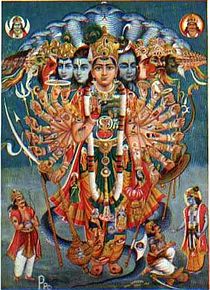
As compared to religion, spirituality is more embracing. In religion, we have the good guys – devas – and the bad guys – asuras. Following one’s Dharma, the code of righteousness, man can hope to attain salvation. However, spirituality encompasses the good as well as the evil, both being manifestations of the Divine. When Krishna manifests his all-pervasive and all-inclusive Vishwarupa form in the midst of his sermon to Arjuna, it shows the negative side of the Divine as well.

A Heady Cocktail

Intel and Toshiba have surely come up with a winner promo in ‘The Beauty Inside’. Similar campaigns which work on a heady cocktail ofintel logo some basic tenets of religion and philosophy on the one hand and the latest that technology and management has on offer on the other would surely follow.

Given that our scriptures are replete with gems of wisdom and lay down templates of exemplary conduct, more and more corporates could be hopping on to the spiritual bandwagon in the days to come. Already, we find companies appointing Chief Belief Officers and Chief Ethics & Compliance Officers. Goes on to show that the role of conscience keepers in corporates is getting the recognition it deserves.

Toshiba logo

Such developments give one hope that the upcoming generations of our future business leaders and professional managers would rate high not only on their Intelligence and Emotional Quotients, but also on their Moral or Spiritual Quotient, bringing to the work place a set of ethical values and practices.

Read Full Post »

Just like ‘Ramayana’, the epic of ‘Mahabharata’ also has many management lessons for the present day business leaders and managers. Greed, jealousy, quest for power, trying to achieve goals irrespective of the fairness of the means deployed – all these contradictions in life are very poignantly brought out.

Here are some lessons which could be drawn from the epic.

  • Merit over Birth

When it comes to announcing a successor to his vast kingdom, King Bharata does not choose any of his own sons. Instead, he namesMahabharat King Bharat Bhumanyu whom he considers more capable to manage the affairs of his kingdom. In a dynastic rule, seeds of democracy are thus sown.

In India Inc’s power rankings, professional CEOs are on the rise. Three of the top ten in the 2013 edition of ‘India Inc’s Most Powerful CEOs’ are professionals. Five years back, K V Kamath was the only professional in the top ten.

In a reversal of an openly declared of Infosys, Chairman N R Narayana Murthy recently stirred a hornet’s nest by insisting on bringing his own son as a team member. Only time will tell if the decision pays off; as of now, seniors in the company are a bit shaken up with the move.

  • Commitment

For his father Shantanu’s happiness, Bhishma swears never to marry. Throughout his life, he remains committed to the kingdom of Hastinapur. Despite his difference of opinion with Dhritarashtra and Duryodhana, and despite his obvious fondness for the Pandavas, he leads a vast army against the latter. However, his conduct is very transparent; he openly tells Duryodhana that though he is fighting for Kauravas, he shall not harm any of the Pandavas.

On the flip side, Bhishma also sets the example of a senior professional who overstays his welcome!

Many organizations have deeply committed silent performers who stick by it irrespective of the business ups and downs being faced. Business houses which follow a healthy set of values do end up attracting more such professionals whose value systems match with their own. In times of crisis, such people tend to be pillars of strength for the company. However, there could be situations when they need to be taken on board merely as advisors and not as executors, so younger blood in the organization also gets a chance to prove its mettle.

  • Failures are Stepping Stones

Bhishma abducts three sisters – Amba, Ambika and Ambalika – to get them married to Vichitravirya. However, Amba claims she is already in love with Salva and cannot accept anyone else as her life partner. Eventually, she is rejected by both Bhishma and her own ex-lover Salva. She takes this failure as a challenge and ends up being born as a person of mixed gender –Shikhandi – in King Drupad’s family. Eventually, he/she becomes the cause of Bhishma’s death in the battlefield.

Those who take their failures as a challenge have the capacity to introspect. They identify their weaknesses and take steps to excel in areas in which their arch rival is strong. Ultimately, victory is theirs.

  • Promises are like Babies!

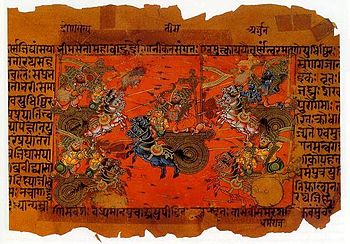
Just like babies, promises are easy to make but difficult to keep. When they are studying together, Drupad, a prince, and Mahabhata KurukshetraDronacharya, a commoner, become good friends. Drupad light-heartedly tells Dronachrya that once he grows up to become a king, he would be happy to share half of his kingdom with Dronacharya. However, once they grow up, Drupad reneges on his statement and even mocks Dronacharya in his court. The result is life-long bitter rivalry between the two which spills onto the battle field, with Dronachrya on the Kaurava’s side and Drupad on the Pandava’s side.

CEOs who promise a promotion merely to achieve short-term results often find that the promotee eventually reaches his level of incompetence at lightning speed, embarrassing all concerned. Smart HR honchos never make promises which they know cannot be kept. Same goes for marketing wizards who fear a severe backlash from customers should the product not live up to the latter’s expectations.

  • Destructive Attachment

Contrast the behavior of King Bharata to that of Dhritarashtra. He has an obsessive attachment to his evil son. He permits the Pandavas to proceed to Varnavat where, by his son’s evil designs, they are persuaded to stay at a house constructed of inflammable materials. He allows a deceptive game of dice, making the Pandavas lose their part of the kingdom. In his presence, Draupadi, his daughter-in-law, is insulted in his royal court. Bhishma, Vidur, Krishna and several others attempt to persuade him to rein in the unbridled ambition of his son Duryodhana, but to no avail. The result is a terrible war leading to devastation of the kingdom.

CEOs who promote their sycophants without assessing the overall welfare of an organization get doomed likewise.

  • Concentration

Multi-tasking is a buzzword in professional circles. But Arjuna displays a kind of concentration which involves a complete focus on Mahabharat Swayamvara_Draupadi_Arjuna_Archerythe task at hand. In the process, he evolves into an excellent archer of his times. Whether it is the bird whose eyes alone he is able to see before shooting his arrow, or the rotating fish whose eye he has to pierce based on the image cast in the water urn placed below in the court of King Drupada, he excels in accomplishing the task at hand.

Managers who look satisfied with their day’s work would invariably share the same secret with you – of having done something satisfactorily that day! Aiming for perfection, they are at least able to excel in the tasks at hand. And focusing on one thing at a time surely helps!

  • Perseverance

Notice the kind of setbacks Pandavas get to suffer in their lives. They survive the insidious designs of their Kaurava cousins at Varanavat. After losing their kingdom and wealth to Kauaravas in an unfair game of dice, they undergo an exile for twelve years in forests. This is followed by a year of remaining incognito, which they do so in King Virata’s palace. When a peace proposal gets discussed with Kauravas, Yudhishthira offers to settle the dispute between the brothers by being content with ownership of five villages only. Even this gets turned down by Duryodhana.

The tenacity of bouncing back in the face of adversity that Pandavas display is worth emulating. Many MNCs are put off by the way the Indian market is skewed – with a miniscule share of the well-heeled who have global exposure and a vast majority of common people who aspire for reliable products and services at highly discounted prices. GE and Nestle have learnt their lessons. McDonald’s, KFC, Domino’s, Pizza Hut and Café Coffee Day in the fast food business have also sharpened their teeth by offering mouth-watering menus in the range of INR 44-119!

  • United We Stand

The mother of Pandavas, Kunti, delivers a master stroke by getting Draupadi to accept all the five brothers as her husbands. The result is a whole unified family which goes through its trials and tribulations as a single unit. Each of the brothers has a USP – if Yudhishthira is the epitome of virtue upholding ‘dhrama’ (righteousness) at all costs, Bhima and Arjuna are great warriors who have to be kept on a tight leash, impatient as they are in extracting revenge from Kauravas. Nakula and Sahdeva have their own unique qualities. Together, the five brothers form a multi-skilled and invincible team.

Large conglomerates like Tatas often sound similar in their overall configuration. Each company within the group’s fold has a unique place in the market. Each is headed by a stalwart who is a subject specialist in the field. The companies operate in fields as disparate as salt and software. Yet, all of them are connected by a common value system and a similar business philosophy.

  • Draupadi Syndrome

Juggling between five husbands is no mean task and Draupadi appears to handle it rather well.

In what are euphemistically known as “matrix” organizations these days, reporting to several bosses at the same time could be a Mahabharat Draupadi_and_Pandavaschallenging experience. One has to learn to balance each boss’ expectations against those of others. Much depends on their relative seniority or clout in the company, based on which one could handle the situation. Of course, it does not pay to pitch one of the bosses against the other, whether directly or indirectly!
  • Excellence in Governance

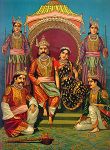
When Indrapastha is built, Pandavas rule in a fair and just manner. They do not stray from the path of righteousness, thereby winning the love and affection of their subjects. They rule for thirty-six years before falling prey to an unfair game of dice.

Excellence in governance is a vital condition for a business leader to command respect amongst his team members. Taking good care of people is an important part of governance. The HR initiatives taken by the Tata group after The Taj Mahal Palace Hotel was targeted in a terrorist attack on November 26, 2008 in Mumbai, go on to show how well the company cares for its employees.  

  • Being Impartial

In the Yaksha episode, Yudhishthira is asked as to which of his four brothers he would wish to be brought back to life. He chooses Nakula. When queried, he justifies his choice by explaining that of the five of them, three (himself, Bhima and Arjuna) were born to Kunti and two (Nakula and Sahdeva) to his father’s second wife, Madri. Since he is alive, Kunti is only partially bereaved. Likewise, let Madri also be partially bereaved – hence his choice of Nakula. Pleased at this, Yaksha revives all the four remaining brothers.

Being impartial does not come easy to a leader. However, this is indeed the mark of a true statesman.

  • Loyalty to Boss

Karna faces humiliation at the hands of Pandavas for not being born in a royal family. Duryodhana realizes his potential as an ally and immediately comes forward to confer kingship upon him. They become life-long friends. Karna’s loyalty towards Duryodhana is so strong that even after realizing that he is the eldest of the five Pandavas, he chooses to fight against them, for Duryodhana.

Here is an example of unflinching loyalty to a boss!

  • Yin and Yang

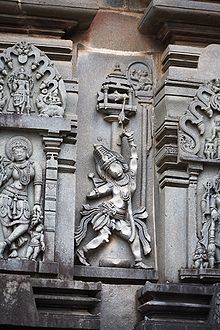
India has a great tradition of real men displaying not only their macho side, but also their effeminate and softer side. The great yin yangwarrior Arjuna spends a whole year incognito in King Virata’s palace, disguised as the eunuch Brihannala, teaching music and dance. One of his pupils, Princess Uttara, ends up becoming his daughter-in-law who gives birth to Parikshit who eventually inherits the kingdom when Pandavas decide to retire.

There is increasing realization amongst corporates in contemporary times to encourage females to assume leadership roles. Companies like Diageo, Cadbury, Coca Cola and others are making conscious efforts in that direction.

Bringing a better gender balance at the board level is the current buzzword. Leading businessmen are hiring icons of the stature of Deepak Parekh, G M Rao, Mukeeta Jhaveri and a host of others to mentor women who can shoulder board level responsibilities in the days to come.

  • Juniors First

When a decision has to be taken as to who should lead the Pandava army in the war, Yudhishthira first consults Sahadeva, the junior most brother.

This approach has several spin-offs. It instills enthusiasm and self-confidence in the younger managers. If the seniors are consulted first, others may not be able to speak with freedom, and even honest differences of opinion may get construed as disrespect.

  • Strategy and Leadership

In a careful reading of the major turning events in the whole narrative, Krishna emerges as an eminent strategist. He keeps Draupadi’s frustration under check. He knows that Kauravas would never agree to let Pandavas have their share of the kingdom in a peaceful manner. Yet, he himself goes to plead their cause so that peace is given a last chance.

In the battle that ensues, he virtually leads the 7 divisions of Pandavas’ army to a decisive win against the 11 divisions of Kauravs’ Mahabharat Disrobing_of_Draupadiarmy. The manner in which Krishna persuades a demoralized Arjuna to take up his arms by enunciating the basic principles of life in the Bhagavad-Gita is exemplary.

One of the basic concepts enunciated by Krishna in the Bhagavad-Gita is that of the everlasting nature of the soul. The concept of a soul now finds a resonance even in modern management literature. In ‘The 8th Habit’, Stephen Covey urges professionals to pay heed to their ‘inner voice’. While proposing the whole person paradigm, he speaks of the four dimensions of a person – spirit, body, heart and mind.

Coming back to ‘Mahabharata’, all mighty warriors on the Kauaravas’ side fall with specific inputs from Krishna. In case of Bhishma, Arjuna attacks him standing behind Shikhandi. Dronacharya is misled to believe that his son Ashwatthama has fallen at the behest of Krishna. When Duryodhana appears to be invincible in his mace fight with Bhima, he gestures to the latter to hit the former below the navel, thereby incapacitating him. When Balarama gets upset with Bhima for having broken a cardinal principle in his final fight with Duryodhana, Krishna intervenes to pacify him by reminding him of the several injustices perpetrated by the Kauravas on Pandavas.

Once the war gets over and all his sons have got killed, Dhritarashtra attempts to kill Bhima by crushing him in a close embrace. Krishna is able to read his mind and deftly pushes across a metal statue instead, thereby saving Bhima’s life.

Much like a business leader of modern times, Krishna displays vision, flexibility in approach, resourcefulness and an excellent capacity to command. He is the trouble-shooter par excellence who leads, inspires, guides and motivates.

  • Execution and Followership

If Krishna proves his leadership skills, Pandavas display the skills of being true followers and executors. Yudhishtira, considered an epitome of virtue, agrees to announce the false news of Ashwatthama’s death, thereby leading to Dronacharya getting vanquished. Motivated by him, Arjuna takes up his arms against his grandfather, Bhishma. Bhima listens to Krishna and ends up killing Jarasandha (much earlier in the narrative) and Duryodhana (towards the fag-end of the battle).

Often, seniors in companies lament about the lack of some qualities in their assigned leader. But one needs a sense of humility, Mahabharat Krishna Arjunaconfidence in another’s ability and the motivation to achieve a super-ordinate goal to work as an effective team member. An objective assessment of the situation at hand, unqualified support for the overall goal, registering dissent wherever necessary and balancing the leader’s weaknesses with one’s own strengths are some of the factors which result into better execution of plans.

  • Do Not Take Help for Granted

Nakula and Sahdeva’s uncle, Shalya, decides to offer his big army to Pandavas in the ensuing war. However, on the way to the battle field, Duryodhana extends a very thoughtful and warm hospitality to Shalya’s army. The result is that Shalya becomes obliged to fight his own nephews in the war! Yudhishthira ends up repenting for having taken Shalya’s help for granted without worrying about the needs of the vast army marching on its way with the intention to assist him.

When working on a project, we often take our friends and colleagues for granted. ‘Mahabharata’ exhorts us to first put ourselves in the other person’s shoes, realize his constraints and then only expect to be helped accordingly.

  • Receive Favors with Humility and Alertness

Shalya receives favors from Duryodhana with humility but without alertness. He does not bother to check whose hospitality he and his army are enjoying.

There are days on which a manager may be pleasantly surprised to find himself being unduly praised by seniors. In some cases, this could be a sign of impending doom – of being saddled with an impossible task which others might be loath to pick up! Alertness while accepting praise surely pays.

  • Key to Failure  

As the crown prince of Kauravas, Duryodhana initiates a war which has to be fought under the leadership of commanders who have a soft corner for the Pandavas! With the exception of Karna and his own brothers like Dushasana et al, all his commanders – like Bhishma, Dronacharya and Shalya – are only duty bound to support him. Their real sympathies are with the Pandavas. Thus, he is saddled with an army which is far superior to that of Pandavas in terms of sheer numbers, but sorely lacks in motivation. Duryodhana’s greed, envy and jealousy lead him to his doom.

In the business world, we often come across fool hardy leaders who set their goals so high as to be unrealistic. If a proper assessment of the resources available at their command is not made, failure is bound to follow.

  • Rash Commitments

Abhimanyu, Arjuna’s son, gets killed unfairly and the main culprit is held to be Jayadratha. Arjuna is livid with rage and declares that he would kill Jayadrath by the following evening or renounce the world. At a crucial moment in the next day’s war, Krishna intervenes to ensure Arjuna’s victory, bringing relief and joy to all.

Faced with a drastic situation, a professional needs to sit back and think for some time before committing himself to a target which could well turn out to be unattainable.  

  • Knowledge vs. Virtue

One of the sub-plots narrates the story of Arvavasu and Paravasu. Both are sons of a great scholar and become great scholars in their own right by acquiring knowledge. But one turns out to be good and the other evil. Moral of the story – knowledge which remains undigested information crammed into the mind cannot instill virtue in a person. Such knowledge merely remains like our clothes, an external factor in our appearance which does not reveal what we are within ourselves.

Post Lehman Brothers, educational institutions have started taking the issue of instilling the right values in their students seriously. A business leader without a strong moral compass and lacking a set of virtuous values and ethics could lead the business to eventual ruin.

  • Seeking Favors sans Competence

In another sub-plot appears the story of Yavakrida, who craves to master the Vedas without having to study them! He is grudgingly granted a boon to this effect, but eventually dies at the hands of a demon after being charmed by a young maiden.

A true blue professional would surely aim to occupy the coveted corner office, but only after he has done his own SWOT analysis.

  • Avoid Arrogance

One of the several sub-plots in ‘Mahabharata’ is that of Nahusha who falls from grace after having occupied the throne of Indra, king of the Gods. His fall comes about because of sheer arrogance and pride.

Power and pelf bring in severe obligations in their wake. Successful CEOs understand this, take extra care to keep their pride in check and tailor their inter-personal relationships accordingly.

‘Mahabharata’ is rich with several other narratives which could be useful to management practitioners. Also, each narrative may be interpreted in several ways, depending upon how one goes about analyzing it.

References:

  1. ‘Mahabharata’ by C Rajagopalachari.
  2. Adi Parva original.
  3. Bhagavat Purana.
  4. Series by K M Munshi.
  5. Series by Ram Kumar Bhramar.

(Related posts:

    1. https://ashokbhatia.wordpress.com/2013/05/27/management-lessons-from-ramayana
    2. https://ashokbhatia.wordpress.com/2015/09/04/management-lessons-from-the-life-of-lord-krishna)

Read Full Post »

STRESS

Pressure is an external stimulus. Stress is what we experience. The level of stress we experience therefore is directly proportional to the pressure weSTRESS receive. The good news is that stress is inversely proportional to our inner strength and resilience.

Since each individual is uniquely configured, the response of each person to the same level of Pressure would be different. Some would take it lightly and focus on the action at hand, thereby improving their chances of a better and quicker delivery of results. Others would take it seriously, and jeopardize their own achievements and career. Those who are ever-anxious and have an ‘A’ type personality would invariably experience more stress than those who are the happy-go-lucky ‘B’ types.

Stress experienced by a professional is also a function of time. The psychological condition varies with time and also plays a role.

Distress can be handled positively. Art of creative dissatisfaction, loosening up and letting go, a dash of humor and meditation can help.  (You may read more about this in a blog entitled ‘Handling Hurricane Stress’, published on Feb 1, 2013.)

A little bit of stress is good for a professional’s health and output. Thanks to Richard Lazarus and Hans Selye, we understand the distinction between ‘eustress’ and ‘distress’!

SUCCESSION PLANNING

Smart companies would have a talent pool which enables them to keep refreshing the senior levels at all times. If one senior gets promoted, they are prepared for two other seniors quitting. If one senior gets poached by a competitor, there are two to choose from internally.

SUSTAINABILITY

John Elkington has coined the term “triple bottom line”, based on people, planet and profits. Corporates which offer products and services based on this premise will surely sustain their businesses longer.

Jochen Zeitz, Director of Kering and Chairman of its board’s Sustainable Development Committee is also a Co-Chair of The B Team. He has worked on the first-ever environmental profit and loss (EP&L) for Puma. (You may read about Team B in a blog entitled ‘Plan B for Business’, published on June 27, 2013). 

Bill Ford Junior wants Ford Motor to evolve from a car maker to a “mobility company”. It is working with stakeholders to offer a spectrum of transportation solutions – walking, cycling, buses, metro rails and waterways.

Read Full Post »

SECRETARIES

A creed which has simply vanished from the corporate world. The advent of computers and the intelligence with which MS kept coming up with upgraded versions of its Windows software has resulted into most yester year secretaries donning a line manager’s hat by now. They have shown excellent results in most organizations, for which, of course, their erstwhile bosses take full credit, having coached them well in the first place.

SENIORITY, RESPECT FOR

A good way to kill an otherwise brilliant idea is to first convey it over mail.

If you are a lazy bum who can’t walk up to some of your seniors and colleagues to discuss an important matter, and have instead decided to send a mail on the subject, at least show due courtesy in addressing the mail in a proper manner, with due respect for seniority; also, double-check it for accuracy before hitting the “send” button.

Seniors are highly status conscious. An ever-changing sequence of their names in bulk mails, ignoring their level in the hierarchy, keeps most of them on tenterhooks; some could get offended and respond to your brilliant idea by hitting the “delete” button!

SHOOTING FROM THE HIP

Managers who either lack information or are too lazy to bother about details often end up being part of the Shooting from the Hip brigade. It takes another bunch of managers to use their ingenuity to the full and handle the nuclear fall outs of wrong decisions.

STEALING CREDIT

This is just not done! Label your junior’s idea as your own and push it upwards at your own peril. Openly name the team members who have contributed to a success, and your people would just love you.


Read Full Post »

Businesses all over the world chase profits, and rightly so. However, when they do so at the cost of the planet we depend upon or by usurping the legitimate rights of communities they operate in, there is a cause for concern.

All professionals who care for probity in corporate lives, stand for sustainable living and detest relentless pursuit of profits would heartily welcome the recent initiative taken by some of our far-sighted business and community leaders. These leaders have pledged themselves to work on an alternate paradigm for business which puts people and planet alongside profits.

Planet, People and Profits

Known as The B Team, the initiative is a global nonprofit venture co-founded by Sir Richard Branson, and Jochen Zeitz in October 2012. It brings together international activists and business leaders to “make business work better”. The “B” in The B Team represents the need for a “Plan B” for Business. By implication, “Plan A” is the current framework in which corporates are driven by commercial greed alone.

Branson has stated that business has had many positive impacts on the world but needs to move away from a focus on immediate profit to one where it invests and operates for the long-term good of people and the planet. The B Team intends to achieve this vision by dividing an Agenda into Challenges, which will be acted upon and implemented by B Leaders in their own organizations.

Upon its formation, the group assembled a collection of young influencers and gathered feedback on where and how The B Team could have the most impact and pinpoint the roadblocks that prevent businesses from contributing to the greater good.

The B Leaders

On June 13th, 2013, at an event in London, the full list of sixteen B Leaders was announced:

  • Sir Richard Branson, Founder and Chairman of Virgin Group comprising around 400 of its business entities, and Co Chair of The B Team.
  • Jochen Zeitz, Director of Kering and Chairman of its board’s Sustainable Development Committee; Co-Chair, The B Team. He has worked on the first-ever environmental profit and loss (EP&L) for Puma.
  • Dr. Gro Harlem Brundtland is an international leader in sustainable development and public health. Under her leadership, the Brundtland Commission had defined the word ‘sustainable development’ in the 1980s. She served three terms as Prime Minister of Norway (1981, 1986–89, 1990–96), and has served as the Director General of WHO. She now serves as a Special Envoy on Climate Change for the UN Secretary General Ban Ki-moon.
  • Shari Arison, the owner of the Arison Group, is an America-born Israeli businesswoman and philanthropist and is one of Israel’s wealthiest women. She is the owner of several business companies, the largest among them being Bank Hapoalim. She also manages several philanthropic organizations which are subsidiaries of The Ted Arison Family Foundation.
  • Kathy Bushkin Calvin is President and CEO, United Nations Foundation. She joined the Foundation in 2003, following a diverse career in politics, journalism, public relations and business.
  • Arianna Huffington, Chair, President & Editor In Chief, The Huffington Post Media Group, is a Greek-American author and syndicated columnist. She is best known for her news website The Huffington Post.
  • Dr. Mohamed “Mo” Ibrahim is a Sudanese-British mobile communications entrepreneur and billionaire. He worked for several other telecommunications companies before founding Celtel. After selling Celtel in 2005 for $3.4 billion, he set up the Mo Ibrahim Foundation to encourage better governance in Africa. He also created the Mo Ibrahim Index, to evaluate nations’ performance.
  • Guilherme Peirão Leal is a Brazilian billionaire entrepreneur. He is the co-chairman of the Board of Directors of, and owns a 25% stake in, Natura, Brazil’s leading manufacturer and marketer of skin care, solar filters, cosmetics, perfumes and hair care products.
  • Strive Masiyiwa is the founder and chairman, of global telecommunications group, Econet Wireless. He currently serves on a number of international boards including the Rockefeller Foundation, the Advisory Board of the Counsel on Foreign Relations, the Africa Progress Panel, AGRA, the UN Sec General’s Advisory Boards for Sustainable Energy, and for Education.
  • Dr.  Ngozi Okonjo-Iweala is a globally renowned Nigerian economist best known for her two terms as Finance Minister of Nigeria and for her work at the World Bank, including several years as one of its Managing Directors (October 2007–July 2011).
  • François-Henri Pinault, is a French business person and the CEO of Kering. He is the son of the company’s founder, businessman Francois Pinault. Often nicknamed ‘FHP’, he is also Director of Financière Pinault, as well as the President of Artémis’ executive board.
  • Paulus Gerardus Josephus Maria Polman is the CEO of the multinational Anglo-Dutch food and detergent company Unilever. He is committed to transforming Unilever, its customers as well as supply chain partners, into strict followers of sustainability.
  • Mary Therese Winifred Robinson served as the seventh and the first female President of Ireland from 1990 to 1997 and as the UN Commissioner for Human Rights from 1997 to 2002. Robinson returned to live in Ireland at the end of 2010, and has set up The Mary Robinson Foundation – Climate Justice, which aims to be ‘a centre for thought leadership, education and advocacy on the struggle to secure global justice for those many victims of climate change who are usually forgotten – the poor, the disempowered and the marginalized across the world.’
  • Ratan Tata, KBE, an Indian business person of the Tata Group, a Mumbai-based salt to software conglomerate. He was the Chairman of the group from 1991-2012. Since 2012 he holds the position of Chairman Emeritus of the group which is an honorary and advisory position. The Tata Group and its companies & enterprises are perceived to represent India’s best-known global brand within and outside the country as per an ASSOCHAM survey.
  • Zhang Yue, Chairman and Founder, Broad Group of China, which is one of the few Chinese manufacturing companies that has been widely recognized for its green policies and commitment to countering climate change.
  • Professor Muhammad Yunus is a Bangladeshi banker, economist and Nobel Peace Prize recipient. As a professor of economics, he developed the concepts of micro-credit and micro-finance. These loans are given to entrepreneurs too poor to qualify for traditional bank loans.

Team B therefore draws upon a wide array of skills, whether from business or from social activism side. There is a geographical diversification in the choices made, thereby bringing on board a broad spectrum of regional perspectives.

Challenges Aplenty

All the members want to first start practicing before they start preaching. In other words, they intend to start making changes at their own organizations first and then start motivating others to follow suit.

In an interview on the website of B Team, Ratan Tata touches upon the need to curb corruption in the corporate world. He also points out that 66% of the stake in Tata Sons, the holding company of the group, is held by Tata trusts which eventually plough the earnings back into charity. There is increasing realization within the group that the trusts’ activities should now spread globally, no longer restricted to India alone.

In the days to come, one would watch with considerable interest the way things shape up for the Team B. One hopes that fostering of values at the work place would be taken up as a serious challenge, as would be the task of developing future leaders driven by a strong moral compass.

Green Shoots of Cleaner Businesses

In a dismal scenario where not a week passes without us hearing of some corporate scam or other and where the memory of Lehman Brothers is still fresh in our minds, some recent initiatives sound like green shoots which have the potential of changing the business scenario by modifying the ways in which profits are pursued, as also by utilizing the returns from business for the common good.

Formation of The Team B is one such laudable initiative. In 2006, the World Economic Forum launched its Partnering Against Corruption Initiative. It continues to make progress by roping in more and more corporates from across the world. Earlier, in 2003, UN members had signed its Convention against Corruption. As of June 2013, there are 167 countries, including the EU, which are a party to the same.

If these initiatives bear fruit, most responsible corporates the world over would perhaps be e-publishing their EP&Ls in not too distant a future. More significantly, we shall have the collective satisfaction of handing over a healthier planet to the coming generations!

(Related blogs that you might find of interest on this site:

  1. Getting a Moral Compass would be a Sound Business Strategy for India Inc.’ published on December 9, 2012.
  2. Bidding an adieu to Mr. Ratan Tata’ published on December 27, 2012
  3. What would our Business Leaders be like in 2025?’ published on January 27, 2013.
  4. Combating the Cancer of Corruption’ published on April 4, 2013.)


Read Full Post »

Movies from Hollywood as well as Bollywood are often based upon romantic affairs which unfold against the backdrop of a work related scenario. Some of these also touch upon the issue of sexual harassment at the work place.

Since there are major differences between the Western and the Eastern cultural milieu and values, movies churned out by Hollywood are invariably bold. On the other hand, those coming out of Bollywood are relatively tame affairs, often confining themselves to flirtatious bosses.

But whenever either has chosen to dive into the murky waters of sexual harassment at work place, the director concerned has been rather liberal in depicting the relationship between a CEO and a team member. Yes, true to style, both Hollywood and Bollywood have ensured that the proceedings willy-nilly end up on a positive note!

THE HOLLYWOOD TAKE

9_to_5_movie_poster

  • 9 to 5 (Colin Higgins, 1980) 

A comedy starring Jane Fonda, Lily Tomlin, Dolly Parton and Dabney Coleman, the movie is about three women living out their fantasies of getting even with their autocratic and sexist boss. Eventually, they manage to successfully overthrow him, extracting sweet revenge in the process. 

  • Disclosure (Barry Levinson, 1994)

Instead of getting an expected promotion, Tom ends up reporting to a woman with whom he had an affair in his bachelor days. His new boss, not only dangerously sexy but also overtly ambitious, has climbed the corporate ladder by exerting undue influence on the CEO. She apparently tries to pick up where they left off but he just about manages to resist. Eventually, realization dawns that she intends to use Tom merely as a scapegoat to cover her technical misdeeds. He decides to file charges of sexual harassment, a development of which the company takes a jaundiced view. The movie starred Michael Douglas and Demi Moore.

  • North Country (Niki Caro, 2005)NorthCountryPoster

The movie depicts a fictionalized account of Jenson v. Eveleth Taconite Co., the first sexual harassment class action lawsuit in the U.S. Josey’s refusal to give in to her male co-workers’ demands causes them to spread lies about her being promiscuous and trying to seduce them. When the company board does not take her charges of sexual harassment seriously, she decides to file a case. In court, an attempt is made to paint Josie as being promiscuous. Eventually, co-workers stand up to support Josey’s complaint. They are followed by more women, family members, and miners. With this, the mining company loses the case and is forced to pay the women for what they suffered, in addition to establishing a sexual harassment policy at the workplace.

  • The Proposal (Anne Fletcher, 2009)The_Proposal_poster

Starring Sandra Bullock and Ryan Reynolds, the movie depicts a hard-nosed boss Margaret Tate terrorizing Andrew Paxton at a New York publishing house. To avoid deportation to Canada upon expiry of her visa, Margaret hatches a scheme to marry Andrew – he agrees if she’ll promise a promotion. She flies to Andrew’s home to Sitka in Alaska and realizes the essential values of decency and goodness his family stands for. After she runs off from the marriage ceremony, Andrew’s grandma feigns sickness and facilitates a matrimonial union between the two.

THE BOLLYWOOD TAKE  

  • Pati, Patni aur Woh (B R Chopra, 1978, ‘Husband, Wife and the Other One’)

Ranjit is a CEO, happily married to his lady-love Sharda. He exploits his poor secretary Nirmala by arousing her sympathy over a fake illness of his wife. Eventually exposed, he tries to mend his ways but ends up falling for the charms of his next secretary! The movie starred Sanjeev Kumar and Vidya Sinha.

  • Rang Birangi (Hrishikesh Mukherjee, 1983, ‘The Colourful One’)Rang_Birangi Poster

Yet another comedy in which Ajay, a workaholic boss who neglects his wife Neema, is persuaded by his best friend to start a romance with his secretary, basically to bring some pep back into his seven-year old married life. The wife also decides to reciprocate the sentiment by taking up a job and then claiming to be getting close to her own boss. Eventually, Ajay realizes his mistake and they both live happily thereafter. The cast comprised Amol Palekar, Parveen Babi and Deepti Naval.

  • Chandni  (Yash Chopra, 1989, ‘Moonlight’)

Chandni (Sridevi) and Rohit (Rishi Kapoor) meet at a family wedding and fall for each other. Due to a misunderstanding, they get separated. Chandni shifts to another city and lands a job with a travel agency headed by Lalit (Vinod Khanna) who falls for her. He is already grieving over the loss of the love of his life and eventually ends up losing Chandni as well to her lover.Aitraaz Poster

  • Aitraaz (Abbas-Mustan, 2004, ‘Objection’)

The female boss Sonia (Priyanka Chopra) has the hot pants for Raj, a happily married subordinate. Raj resists her advances, with Sonia dragging him to court on a trumped-up attempt-to-rape charge. However, the subordinate has a lawyer wife who comes to his rescue, with the female boss committing suicide in the end. The movie was inspired by Disclosure.

  • Inkaar (Sudhir Mishra, 2013, ‘Refusal’)

This one is Bollywood’s latest take on sexual harassment at work place. Based on gender politics and power play in a large advertisingInkaar-Movie-Poster agency, the movie covers an investigation into a sexual harassment complaint filed by Maya (Chitrangada Singh) against Rahul (Arjun Rampal). Whereas the agency can obviously do without a scandal of this nature, both Maya and Rahul realize towards the end that they are in love with each other!

Story and screenplay writers for movies based on management related themes no longer need to scratch their heads to get new ideas for their scripts. Nor do they need to look around for a muse or even bother about the writers’ block. All they have to do is to build up on the juicy details of the sexploits of CEOs of various hues provided by the real corporate world and convert these into mega successes in the reel world.

Read Full Post »

What do Reka Maximovitch, Araceli Roiz and Lisa Rundle have in common? Well, their hormones broke through the glass ceilings of the rigid hierarchies of their respective employers. All of them had affairs with their high and mighty bosses and ended up filing sexual harassment cases against them. I am convinced that besides harassment, they also underwent the trauma of lewd comments and ridicule at the hands of their peers and subordinates. One can readily imagine the mental anguish suffered by them in the process.

Sexual harassment cases in companies are notorious for being immoral as well as immortal. Penguin Canada ex-CEO David Dravidar eventually went in for an out-of-court settlement. So did Phaneesh Murthy a decade back when he quit Infosys. The fact that he was recently back in the news for the wrong reasons, with i-GATE handing him a pink slip so as to minimize damages, goes on to show that old habits die hard.

Sexual-predator seniors and victim-subordinates often live off each other. As long as managements have a tolerant attitude on issues of sexual harassment at work place, skirt-groping CEOs and seniors with irrepressible libidos would conveniently continue to forget keeping their trousers zipped.

CEOs who are power drunk could indulge in this. So could those who are over-stressed and find such affairs an easy way to relax and unwind. Then there are the incorrigible ones who could not stay out of trouble. Whatever the justification, affairs of such nature lower the self-esteem of employees as well as the employers. These also corrupt the working eco-system, thereby impacting business results in the long run.

Some career-wise ambitious PYTs who do not mind petty flirtation in return for rapid advances in career could reach a tipping point after which it becomes difficult for them to apply brakes on the relationship. They then end up keeping the boss’ amorous treadmills running.

Managements which keep their eye only on the performance of their CEOs and tend to look the other way when it comes to issues of moral turpitude also create an enabling environment for immoral activities to flourish. They could also use a sexual harassment case to ease out a senior who has become too big for his boots.

What is it that managements can do without appearing to be intruding into the privacy of an individual? Having women in senior positions in the organization surely helps. Creating an atmosphere where developments of an amorous nature get reported and promptly acted upon is another anti-dote. The best deterrent is a clear and unambiguous message that sexcapades of any kinds are just not acceptable, irrespective of the level or importance of the persons involved.

Physical attraction and lust easily pass for love in the confined office space. And an affair of such nature easily turns into litigation. Once the mutual needs are no longer congruent, hot babes in offices, whether blonde or otherwise, could easily file lawsuits in countries where laws take a dim view of such conduct and courts award millions of greenbacks as compensation.

To save unnecessary costs as also to avoid a severe dent in their market image, managements need to understand that if they lock up a bunch of smart people in a room and not expect them to react to each other, they live in a fools’ paradise. After all, if left unchecked, human hormones are powerful enough to demolish a hierarchy!

Read Full Post »
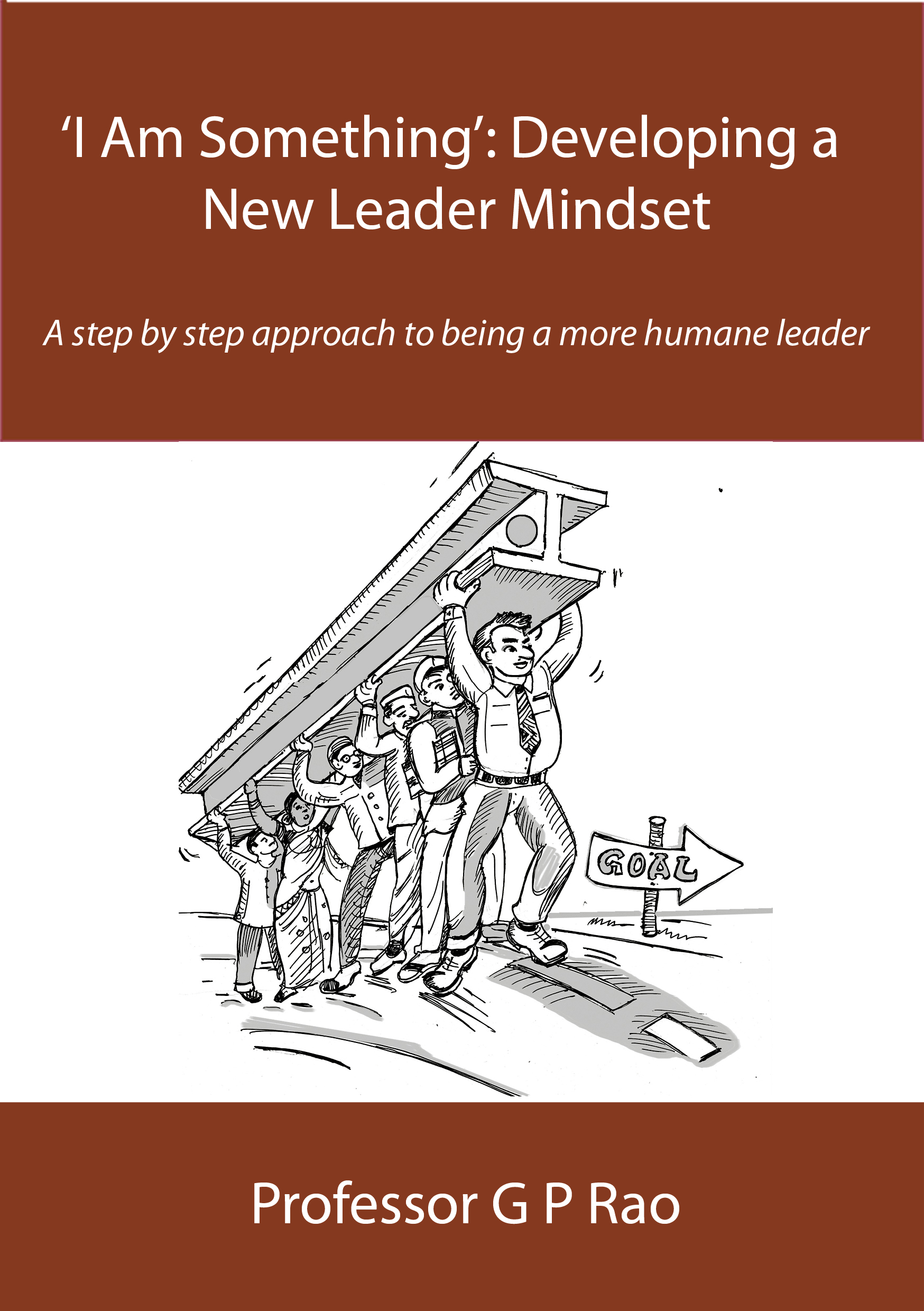
How does one stem office politics? Ask a manager who has benefited from such politics, and he or she would be loath to even accept it exists. Prod someone who has lost out on that coveted promotion to the corner office and he (or she) would be spouting venom and making out a strong case for the degradation in company values, the way in which nepotism rules the roost and how unfair life in general is.

Smart leaders would nip office politics in the bud. This is how they go about doing it.

Minimizing one-to-one interactions 

When discussing a problem which involves several team members, a smart leader would encourage an open dialogue, with all stakeholders present. He would have a patient ear for the extrovert and aggressive ones who have a view on everything. He would ensure that by gentle persuasion, the less vocal ones also come out with their view on the subject.

Maintaining an open and transparent working culture would enable the team members to be more objective, thereby cracking their targets more effectively. Corner stand-alone meetings would only get tongues wagging all over, diluting the team`s effectiveness.

Prompt and open redressal

Rather than allowing things to keep simmering for long, it makes sense to confront the issue and call the bluff of the mischief mongers. The earlier it is done, the better it is for the eventual fate of the project at hand.

In large bureaucratic organizations, a rumour which keeps circulating for a few months often tends to become a reality. This has two clear disadvantages. First, the surprise element goes missing, thereby impacting the enthusiasm with which the implementation takes place. Second, cliques get formed based on perceived likes and dislikes of the top bosses involved, thereby vitiating the working culture.

Selective use of underground cable connections

Informal structures and groups are invariably more effective than the formal ones. Smart leaders take advantage of such informal groupings and communication channels to clean up the political mess. Team members who try to earn brownie points with the boss by reporting juicy gossips at frequent intervals get discouraged, whereas those who have solid data and clinching evidence to share in an open forum get all the  encouragement they deserve.

Transparent policies help

Organizations which keep tweaking policies to suit specific individuals or groups end up suffering in the long run. Employees loath the absence of a level playing field and eventually seek greener pastures elsewhere. Even after parting company, they tend to become negative ambassadors of the organization, thereby holding back potential employees from showing up at the HR outpost.

Being fair and lovely

A leader who maintains equipoise and is widely perceived to be fair enables a cleaner work culture. He or she does not discriminate between team members based on their race, caste, creed or sex and ends up creating a strong meritocracy based set up. Such attributes and behavioral norms cascade down the hierarchy, thereby improving the overall performance of the organization.

All said and done, only the foolhardy would chase the utopia of creating an organization totally devoid of any kind of politics. A healthy dose of stem cell therapy is therefore necessary to keep the political quotient below tolerable and at healthy levels.

Read Full Post »

« Newer Posts - Older Posts »