Feeds:
Posts
Comments

Archive for the ‘Management Lessons’ Category

Leadership is a much discussed virtue in management literature. However, like Peter Drucker says, there is no ideal type of leader. “Leadership personality’, ‘leadership style’ and ‘leadership traits’ don’t exist”, he writes in The Leader of the Future. The emergence of a leader is the result of a complex interplay of two factors – personality traits of the leader and what needs to be done at a given point in time. The moment the two become congruent, a new leader could emerge on the scene and deliver the goodies!LEADERS

There is no doubt that the leaders of tomorrow would need personality traits which would be qualitatively different from those of today. Here is my take on what business environment circa 2025 would be like, and how our future business leaders would be tackling it.

2025 – A Likely Business Scenario

What would be the business environment like in 2025? Several CEOs I spoke to said that business leaders in 2025 shall be working against the backdrop of a world which would, in all likelihood, be a multi-polar one, with Asia, particularly China, exerting more influence on global events. It would be a world which would be more inter-connected, commercially and otherwise. Thanks to new communication means, the individual empowerment levels would have risen significantly. Also, it would be a more urbanized world. Thanks to the rise of a new global middle-class, society in general would have reached a higher level of aspiration, resulting into a much higher demand for energy, food and water. On the flip side, income disparities would have risen substantially. Changes arising out of our climatic patterns would also pose a formidable challenge to the leaders of those times.

We could still be in for surprises, though. Disruptive changes are quite likely to overwhelm us. These changes could come in the form of impact of new technologies in the field of robotics, biotechnology, space sciences and communication. Increasingly, governments world over may start becoming enablers of entrepreneurship, faced as they will be with direct and intensive pressure from those they govern. We shall surely be seeing more entrepreneurs amongst our midst – whether in the commercial sector or in the societal sector.

A Business Leader in 2025

Decision Making Under Higher Uncertainty

Since the level of entropy in the system would have gone up further by then, a business leader of circa 2025 would have to be adept at making decisions under a higher level of uncertainty. The abnormal today would be the new normal, and many a leader would be feeling more like experts at river rafting in our economic and statutory rapids, often being called upon to go against the current.

I am not an expert in Econometrics, but could venture to guess that for those who are quantitatively inclined, advanced statistical tools would come in even more handy. I say so because there will be an overdose of data as well as information available to a business leader then. However, ultimately, his/her intuitive abilities – based on personal experiences in their formative years – would prove to be more valuable.

Sir Colin Marshall, the ex-Chairman of British Airways, transformed his organization into one of the premier customer service kinds in the days of yore. The uncertainty he faced in the period of his association with BA was monumental and serves as an example to be followed by CEOs of future.

Jeff Bezos of Amazon came up with the concept of ‘predictive analytics’, paving the way for all of us to enjoy the convenience of shopping on-line.

Higher Trust in Instincts

A logical corollary of the above would be the need for a leader to be ahead of the curve. Those who have counter-intuitive responses and place a higher trust in their natural instincts would surely fare better. In turn, there would be a strong need for a much higher degree of inner resilience, because this alone would enable them to keep their stress levels under control even in trying circumstances. Dynamism will be yet another critical input. It would ensure that they are able to steer their businesses through the dense economic fog enveloping the business highways.

The World Economic Forum had proposed a theme centered on the twin traits of resilience and dynamism for 2013. Given that there are no risk free growth models available to leaders and CEOs of the future, one could not agree more with this proposition.

A good example of facing flak and not losing sight of one’s goals is that of Larry Page of Google. He continues to trust his instincts and doing what he thinks is best for his business.

A Global Mindset

Given a much more inter-connected world, a business leader in the future would need to possess a vast knowledge of commercial, behavioral and societal norms followed in different parts of the world. A primary task would obviously be to ensure that his/her organization has world-class management processes. Only those institutionalizing best practices in strategic planning, marketing and human relations would be able to make their organization a successful one.  The fact that a leader would, in all likelihood, be leading a multicultural team of followers would pose a challenge – irrespective of whether the situation demands a leadership which is ‘transactional’ or ‘transformational’.

When one considers the example of Compaq’s Eckard Pfeiffer, who was a leader in a race against himself, it becomes clear as to how organizational renewal can be brought about. “No matter what industry a company competes in”, he said, “it must live with one foot in the present and the other in the future….there is simply no other way to build world leadership”.

A Democratic Style

The profile of the followers would also be different. Hierarchical authority is already proving difficult to manage change; there is no reason to believe this would not be even more so in the future. The followers would demand a higher degree of participation in the decision-making processes. Leaders who recognize this need of their followers and create a working environment which enables the same would achieve higher levels of efficiency and effectiveness in their business processes.

Creating a non-coercive environment in which employees and other stakeholders are clear about the corporate identity and the mission would be far more important than it is today. Reverse mentoring would be more a norm than an exception in the days to come.

Monsanto’s CEO, Robert Shapiro, had the ability to go against traditional hierarchy. He initiated strategy sessions with cross-sections of employees of different ranks, specialties and geographical perspectives and reaped rich dividends for his company.

The Moral Compass

Leaders who believe in sustainable businesses would not only use their commercial compass while determining the direction to take. Using a moral compass would be a valuable trait amongst the future leaders. A strong inner core, embedded with a value system which recognizes the needs of the society at large, would be a great quality to have. A pre-condition for employing key managers would be their endorsement and support of the core values of the business.

When the likes of Siemens and Wal-Mart come clean on their misdemeanors, they set an excellent example of probity in the business world. When Mr. Ratan Tata, the Chairman Emeritus of India’s salt to software conglomerate rues his inability to enter some fields of business because of the absence of a level playing field in India, his focus is on one of the core values of his business.

Indra Nooyi is charting a unique course for PepsiCo globally, shedding traditional markets and going in for healthier food products instead.

 Preparing Leaders for 2025

Captains of industry today can set a personal example by getting cross-functional teams in their organizations to come up with suggestions to face the challenges of future effectively. They can also emulate some of the traits, thereby leading to a trickle-down effect across the entire organization.

HR honchos can re-design their appraisal processes and re-assess training needs of key managers to address this issue.

Those in senior management positions can consciously plan to hone their skills in areas they find themselves deficient.

Management institutes can tweak their course content to ensure that those leaving their hallowed portals possess these traits, so as to improve their contribution towards the organizations they decide to either float or serve.

And our time to start preparing the leaders of tomorrow starts now!
 

Read Full Post »

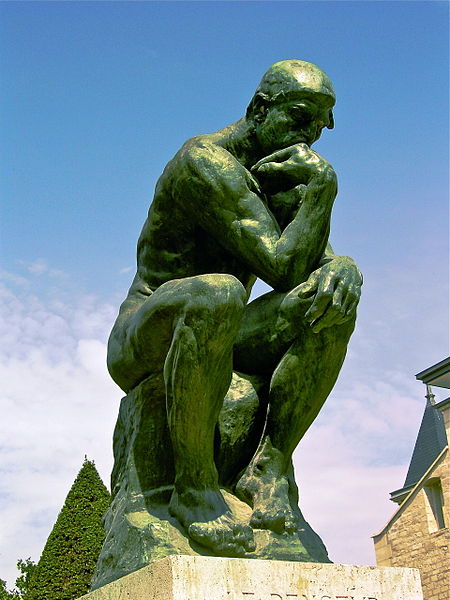
Whenever you pass by the desk of a colleague in office and see him staring with blank eyes at nothing in particular, you may 'The Thinker' : Rodinbe wrong in assuming that he is either worried about his upcoming annual appraisal or concerned about the academic performance of his kids. For all you know, like Rodin’s ‘The Thinker’, he could simply be withdrawn into himself, in a rather introspective mood, and trying to unravel life’s managerial mysteries which appear unfathomable at normal times.

One of the profound mysteries is that of facilitating innovation. History of major breakthroughs tells us of at least one factor which prompted the coveted ‘Aha!’ moment – a spot of idleness. Not the kind of idleness which is a trademark of laziness, but the dynamic type where the mind, firing at all six cylinders, suddenly decides to take a break, looks at its own self in a detached manner, delves into the realms of the sub-conscious and comes up with a gem of wisdom which had eluded it so far at the conscious level.

Some Unforgettable ‘Aha!’ Moments

Rewind to around 250 BC. If Archimedes had not decided to take some time off and soak himself in a bath tub, possibly playing with some floating toy ducks and singing along in a leisurely fashion – much to the discomfiture of his neighbors, world would have surely missed great many developments so far. There would have been no boats and ships. Countries the world over would have been dependent only on their foot soldiers and armies to defend their borders. At a more mundane level, the streets of ancient Syracuse would have missed the sight of a guy in his birthday suit running along, shouting ‘Eureka’ in gay abandon.

Visualize this scenario in 1666 AD. Newton has once again retired from Cambridge. In a contemplative mood, he is taking a leisurely stroll at Lincolnshire, in an apple orchard ostensibly owned by his mother. He has just been enjoying some tea which has had a remarkably invigorating effect on his grey matter. He sees an apple falling to the earth and starts wondering why it always has to fall down, an observation which lesser mortals like you and I would have merely shrugged off and resumed our walk. He gets down to doing some calculations and ends up giving to the inhabitants of Earth a great theory on forces of gravitation. Goes on to show what a relaxing cup of tea sipped in quiet repose in an apple orchard can accomplish.

Einstein, who left us as late as 1955 AD, was much impressed by the violin sonatas of Mozart and used to play chamber music. An inspiration for all those who suffer from absent-minded professor-itis, he pushed the frontiers of knowledge to mind-boggling levels at that point in time. History does not record a particular ‘Aha!’ moment when the theory of relativity got discovered, but the connection between the paradigm shift in our understanding of the universe and his love for music and the soothing effect it has on one’s grey matter can be readily understood. There is no doubt that the great man did not find the environment of the Swiss Patent Office conducive enough for innovative thinking.

Contemplative Downtime   

A common thread running through all these events is the presence of a unique ‘Aha!’ moment of illuminating thought, undoubtedly facilitated by a phase of idleness. Some scientists in California now say that even lesser mortals can benefit from a spot of daydreaming. This goes on to prove – if proof was ever needed – that sitting idle is not wasteful, as many whip-cracking CEOs would have us believe. A vast majority of managers, workers and students would heartily attest to the fact that difficult assignments are handled much better if only preceded by a spot of contemplative downtime. This way, they are likely to envision a more productive approach to the issue at hand, resulting into substantial savings for the organization they serve. As Tom Hodgkinson says, ‘The art of living is the art of bringing dreams and reality together’.

Globally, managements need to seriously look at the utility of mental downtime when the thinking faculties are allowed to wander freely. Rather than mistaking hectic physical activity for real efficiency and effectiveness on the job, most bosses heading a team of innovators and developers typically create a work culture which facilitates a contemplative mood. They also perfect the art of refraining from micromanaging. Nor do they abdicate. They lead simply by inspiring and standing up for their team members, whenever necessary. The result is an exponential jump in the much-coveted ‘Aha!’ moment for their team members.

Does A Rigid Hierarchy Stifle Innovation?

It has been shown that under favorable circumstances, problem solving abilities tend to improve by as much as 40%! If such moves are introduced, and further backed by tea/coffee breaks, the results could be even better. High time some ad honchos took up this clue and designed some clever TV spots for companies marketing these beverages!

In India, where the propensity to innovate appears to have diminished substantially compared to what it used to be in the Aryabhatta days, this proposition deserves far more serious thought. Perhaps our national laboratories, centers of excellence and R&D institutions need to work more days, but provide for additional tea/coffee breaks and exciting vacation binges. Going in for flatter organizations devoid of strict hierarchy could also lead to better quality of informal interactions, thereby increasing the productivity and rate of innovation. The Peter Principle is proof that organizations which put a higher premium on seniority are more likely to have a dismal record in the realm of innovation.

The Power of Daydreaming

Scientists may now claim to have discovered that the rejuvenating powers of officially sanctioned breaks are reduced if people skip off-times and use these to perform other equally demanding tasks. But the power of dynamic daydreaming was never in doubt. Our grand-parents have always held that ‘All work and no play make Jack a dull boy’!

Read Full Post »

MANAGEMENT

Unlike a “should” guy who is a philosopher, and a “would” guy who is a politician, a good manager is a “could” guy. He is aware of the constraints of resources at his disposal, and get things done accordingly.

He is the first one to come in and the last one to go from office. No job is too small for him; he is a true hands-on guy, but develops his team by delegation.

He defines and respects the invisible boundary of professional distance between himself and his key team players. When his team members are attacked, he behaves like a lioness out to protect her cubs. His team just loves him!

MARKETINGMARKETING

An ever-changing discipline, though surely not the only one. When conceived and described by Philip Kotler, it consisted of the famous 4 Ps – Product, Price, Place and Promotion. With due respects to the great man, one may safely add one more P – Password (used for viral marketing).

With the advent of internet has come a virtual democracy in information. Changes in technology have brought in a new way the customers and brands interact. Marketing has undergone a sea change and will continue to do so in future as well, what with social re-engineering leading to a greater degree of inclusion in the economy, with hordes of new customers from a so-far underprivileged social milieu joining the market. Persons with access to internet now research the brands before making a decision. They are increasingly welcoming fresh content rather than repetitive ads.

Take note of the mini packs of biscuits, noodles and other consumer items being marketed at price points of Rs. 5 and below. Thirty years back, Indians had to wait for years to get to ride their own “Hamara Bajaj”. On the car front, there were hardly three suppliers in the fray then. Now, we see global brands wooing the customer and competing cheek and jowl for a slice of the market pie.

The Customer has now become a more empowered king!

MEETINGS

Meetings to decide strategic issues are best held off campus, though not necessarily in exotic locales.

Meetings to review operations are best kept short, held in the standing mode, at regular intervals (like TV news) without prior intimation, kept crisp by ruthlessly disallowing inter-departmental issues getting discussed while all others gape in horror and ignorance, ending much before the deadline and minutes being circulated by the end of the day with clear responsibilities defined in respect of targets to be met and respective deadlines.

It is generally accepted that the probability of a meeting taking place is inversely proportional to the number of participants.

Parkinson’s Law of Meetings states that “To a certain degree, the time spent in a meeting on an item is inversely proportional to its value”.

MEDIOCRITY vs. EXCELLENCE vs. PERFECTION

Always aim for perfection! It is said that Mr. R. M. Lala, an editor, writer and publisher of repute, once commented to Mr. J. R. D. Tata that the latter believed in excellence. The great man is said to have retorted thus: “Not excellence. Perfection. You aim for perfection, you will attain excellence. If you aim for excellence, you will go lower.”

Rabindranath Tagore, in his Gitanjali, captures the same concept thus: “Where tireless striving stretches its arms towards perfection”. Even though “perfection” may not be attainable in reality, what matters is the “tireless striving”, which could well prove to be a reward in itself. “Perfection”, like happiness, need not be a station one arrives at, but a mode of travel, making the journey interesting and worthwhile.MICROMANAGING

To improve our personal capacity utilization, our basic struggle needs to be attitudinal – to adopt a Culture of Perfection and to give up the Culture of Mediocrity.  Our collective chalta hai attitude is passé.

MICROMANAGING

A sure way of becoming a liability for your team and also for your employers is to micromanage – getting into the nitty-gritty of each and every aspect of the task at hand. Learn to delegate and allow your team members to make mistakes. Demand results, but develop your people in the long run.

MISTAKES, HANDLING OF

As an individual, say sorry. Say it openly. Add a dash of humor and laugh at yourself publically. Avoid a buck passing posture. Do a root cause analysis. Suggest and work on a solution to rectify the mistake. Try to avoid a recurrence.

As a corporate, get your PR to handle the issue well. Take demonstrable steps to set the record straight. During June 2011, Toyota globally recalled as many as 1,06,000 vehicles, offering to replace front right hand shaft in selected vehicles. During 2007, Mattel announced a recall of over 19 million toys fearing that the toys had powerful magnets which could come loose and be swallowed by infants. Their brand recall value only shot up.

Read Full Post »

14As Mr. Ratan Tata demits office as a Chairman of Tata Sons and as a head of the $84 billion conglomerate of over 100 companies in the world-famous Tata group on the 28th of December, 2012, permit me to salute the group as well as its illustrious leaders who have led it to great heights in the field of business, as also in philanthropy and in socially relevant initiatives.

I am just one amongst millions of the group’s ex-employees who have had a stint with the Tata group.  The connection of my family with the group spans three generations. Way back in 1945, my father was associated with Tata Airlines. In 1976, I started my career with the Leather Complex of Tata Exports (now known as Tata International). Due to compelling personal reasons, I had to finally leave the group in 1993. In 2003, my son started his career innings with Tata Motors.

What is it that goes on to make the Tata group different from its competitors and contemporaries in the business world? With all humility that I can muster, here is my take.

Succession Planning

Mr. Jamsetji N. Tata was the founder of the group. In 1904, he handed over the baton to Sir Dorab Tata, who was at the helm of affairs till 1932, followed by Sir Nowroji Saklatvala who was there till 1938.

The group was then steered by Mr. J. R. D. Tata till 1991, when the charge passed on to Mr. Ratan Tata. It was on March 23, 1991, that Mr. Ratan Tata was told by his uncle that he intended to handover the baton of the group to him. Coinciding with the economic reforms unleashed by Dr. Manmohan Singh, the group has had a remarkable journey since then!

Mr. Ratan Tata took over the reins of the group at a time when it was an empire made up of several independent fiefdoms, run by stalwarts like Mr. Darbari Seth, Mr. Russi Mody, Mr. Ajit Kerkar and Mr. Nani Palkhivala.

Much like the King Bharata in Mahabharata who chose a successor based on merit alone, the group has invariably followed the principle of meritocracy when choosing a successor. What Cyrus Mistry takes over from him today is a much more well-knit and cohesive group, united by a shared philosophy, vision and identity.

A Conservative Outlook on Diversification

Tatas have often been criticised for not being enterprising enough to diversify into new fields. Mr. J. R. D. Tata himself attributed this in 1991 to two factors – an unwillingness to compromise on certain principles in the licence and permit raj prevalent then, and a long-held belief that the group’s principal role was to develop basic industries.

From textiles, hotels and a premier institute of learning, the group took a leap of faith to set up the first steel plant in India at the beginning of the last century. Then it ventured into hydro-electric power, soaps and detergents, cement, tin, soda ash, housing and commercial vehicles. Post 1947, when India gained independence, the group went in for cosmetics, steel tubes, refrigeration, fisheries, refractories and pharmaceuticals. Tea, watches, bearings and several others followed.

During Mr. Ratan Tata’s tenure, the group improved its focus on the business horizon. In tune with the changing times, TOMCO, Lakme, Merind, ACC, Nerolac Paints and others got hived off. Businesses like IT, telecom and financial services got added to the group’s portfolio. TCS became a flagship company, leading India’s march into the knowledge economy.

In 2000, Tata Tea took over UK brand Tetley. During 2007, Tata Steel acquired Anglo-Dutch rival Corus. The buyout of JLR in 2008 supplemented the core competency of the group company now referred to as Tata Motors. This move further established the global aspirations of the group – a segment which today contributes 60% of its revenues. Leveraging its strengths in the automobile sector, the group entered the territory of passenger cars, overcoming such hurdles as the Singur controversy. Nano is an innovation which has been taken note of globally.

Mr. Ratan Tata did not have it easy. Due to a negative business environment, the entry of Tatas in the field of airlines got aborted. It moved in time to save Tata Financial Services when the top management there committed fraud. In the telecom field, it had to grapple with a nascent industry which is still plagued by policy uncertainty. The controversy surrounding the infamous Radia tapes went on to show that what would have been considered a minor transgression by any other business house proved to be a demoralizing factor, somewhat sullying the group’s pristine white image.

Referring to the airline fiasco, he claimed in a press interview that he was rather proud of the fact that he could not handle political manipulations.

Concern for Environment and CSR

Industrialists complaining about environmental regulations and land acquisition issues today could surely learn a few lessons from Mr. J. N. Tata when he went about setting up India’s first steel plant during the early 1900s in what was then a predominantly forest area, inhabited by tribals.

In a letter written to his son in 1902, five years before the site of the steel plant was finally located, Mr. J. N. Tata laid down broad guidelines covering the design of the industrial complex which was to come up at Jamshedpur: “Be sure to lay wide streets planted with shady trees, every other of a quick-growing variety. Be sure that there is plenty of space for lawns and gardens. Reserve large areas for football, hockey and parks. Earmark areas for Hindu temples, Mohammedan mosques and Christian churches”.

When TELCO Pune was planned, thousands of trees got planted first. Since trees needed water, an artificial lake was created with a circumference of four kilometres. The factory buildings came up much later.

At the Leather Complex at Dewas (MP) that I was associated with, other than a massive plantation of trees of all kinds, a deer park was also set up. Our Accounts Department was often twiddling its thumbs to figure out if the cost incurred on the animals’ upkeep was reasonable!

Focus on People

The average Tata manager is sober, knowledgeable, mature, restrained, dignified, humane and downright ethical.  It does not boast of, but is quietly aware of, being part of a group which has always conducted its affairs in a transparent and ethical manner. There is an in-born self-belief that the values Tatas follow are not a mere statement of pious intentions; rather, these form a blueprint which guides and permeates all the activities the group.

Tata Steel has several firsts to its credit in the realm of labour welfare. An eight-hour working day was introduced in 1912 itself, whereas the law mandated it only in 1948. Likewise, free medical aid, establishment of a Welfare Department, formation of a Works Committee for handling employee grievances and leave with pay, provident fund, etc. were introduced much before the relevant laws came into being.

The social welfare measures across various Tata companies may vary, but the standards set by them somewhat exceed the legal requirements. Tax planning, yes; tax evasion, never. The group’s foray into education, fine arts and other socially relevant projects was planned and executed at a time when CSR norms were not even heard of.

How closely the value of compassion is cherished became very clear in the aftermath of the 26/11 terrorist attack on The Taj Mahal Hotel. The conduct of the employees during the attack and the subsequent support they received from the management is a case study in organizational behaviour and employee motivation.

I had a first-hand experience of this value of compassion in 1991 when I and a colleague of mine were mercilessly beaten up by a gang of misinformed workers of one of the small ancillary units of the Tata Exports. Prompt medical attention, legal support, counselling for the self and the family and a compulsory vacation followed automatically. A month later, Mr. Syamal Gupta, the then MD, nine rungs above us in the rigid Tata hierarchy, called for a personal meeting and instilled in us a sense of pride and fulfilment for having stood up to the rowdy elements in the work force.

The fact that I write this piece almost twenty years after I parted company with the group goes on to show the sense of belongingness I still – and shall continue to – carry with me!

Ethics and Values – A High Moral Quotient

When I look back at my association with the group, which lasted over ten years split over two phases, I am amazed at the rich learning I had. Job rotation, technical training and job knowledge apart, the exposure to the nuts and bolts of business ethics left an everlasting impression on my psyche.

A bribe was a simply not payable, whatever the commercial cost of keeping an entire manufacturing facility idle for three weeks. A senior manager who made the error of judgement of offering a bribe to a government servant for securing a permission was publically rebuked and persuaded to leave the company. Instead, I, a junior office then, was sent to accomplish the task without any speed money being paid. Luckily, I could manage this feat, though the company ended up incurring a cost of five times the bribe amount on my trip alone!

Aiming for Perfection

As per Mr. J. R. D. Tata, “One of the weaknesses of our country is that we are satisfied with the second or third best in everything. The basic attitude of chalega, ayega, dekhega. Therefore almost everything we do, we do it poorly”. He always maintained that “You can’t achieve high standards by aiming at those standards. You can only achieve a standard by aiming at something more. If you want excellence, you must aim at perfection”.

This implies painstaking attention to detail, a trait which permeates all spheres of the group’s activities. When a new factory block came up in the company, I asked my boss as to why a black stone slab was made a part of the flooring at the entrance to the shop floor. He was quick to point out: “That is the only way to ensure that we have minimum dirt and dust entering the floor; black colour will show any deviations without fail!”

“Humata”, “Hukhta”, “Hvarshta”

These words form a part of the Tata crest, designed by the founder Mr. Jamsetji Tata. In the ancient Avesta language, these mean “Good Thoughts”, “Good Words” and “Good Deeds”. The premium that the Tata brand enjoys in the market is the culmination of more than a century of efforts of the group, based on these principles and values preached as well as practised by the group.

As Mr. Ratan Tata henceforth channelizes his dynamism towards philanthropic activities and development projects, I have no doubt that he would come up with more innovations in the field of social entrepreneurship, so as to transform and upgrade the lives of millions in India at the bottom of the pyramid.

I once had the privilege of meeting him fleetingly at a Pragati Maidan Expo held in New Delhi in 1993. From what little I know of him, he is not the retiring kind. To him one cannot express the usual wishes of a peaceful and quiet retirement, howsoever well deserved it is. One may instead wish him long life, health, contentment and all the fun and excitement he can find in any activity he may choose to indulge in hereafter.

Likewise, one wishes Mr. Cyrus Mistry a great cruise ahead in these times of exciting business possibilities for the group! To quote a song from “The Sound of Music” – one of the greatest musical movies ever produced:

“Climb every mountain, ford every stream; Follow every rainbow, till you find your dream….!”

Read Full Post »

It is heartening to note that as many as six large Indian corporate groups have joined World Economic Forum’s Partnership Against Corruption Initiative at a recently concluded WEF India Summit in New Delhi. Infosys, Wipro, Godrej, Bajaj and Genpact have thus joined ranks with MNCs like Siemens, ABB and Rio Tinto in pledging to stamp out corruption across all their business verticals. Thirty more companies have apparently discussed concrete action that they can take to curb graft in their business dealings. A small beginning, but a crucial step appears to have been taken in the right direction. 

Corporates – Victims as well as Participants

To lay the entire blame for corruption in high places at the doorstep of either the politicians or the bureaucrats is like looking at only one side of the coin. The corporate world is not only a victim but also a participant in the vicious cycle of corruption that corrodes our economy and saps the vitality of our constitutional institutions. The fact that business has finally articulated its voice against unfair practices goes on to confirm that anti-graft measures make eminent sense as a business strategy.

India Inc willy-nilly becomes a partner in institutionalized corruption not only because of its need to line the pockets of those who make and implement laws and regulations which touch upon their businesses. The need to milk the exchequer to generate vast sums of cash to fund political activity also contributes towards the malaise.

Setting the Moral Compass Right

Siemens’ is a case in point. Based on investigations between 2001 and 2007, the German engineering major admitted to several bribery charges and paid fines of USD 1.6 billion to US and German authorities. The cases involved its operations in such far-flung countries as China, Venezuela, Argentina, Iraq, Bangladesh and Vietnam.

A massive clean-up started, starting right from the Board of Directors. A Compliance Director was brought in. Besides organizational changes, compliance teams were set up across all the business verticals. All such teams formed an integral part of the respective business processes but functionally reported to the Compliance Director. As a policy, internal whistle-blowing platforms were created. A conscious decision was taken to withdraw from projects and territories where it was not possible for the company to engage in clean business.  In other words, rather than confining itself to paper affirmations and lip service, anti-graft measures were made an integral part of the business processes of the company.

It is not surprising that Tatas, a group renowned for its ethical standards in business, decided to study the Siemens model. It is well-known that for more than a century, Tatas have maintained a steady rate of growth without succumbing to the charms of shady deals as a means to the end of making profits. The result has been a steady build up of the trust placed by the public in the Tata brand.

There are many instances of small businesses the owners of which suffer sleepless nights when asked to shell out taxes of any kind. Some reckless souls end up crossing the thin line dividing tax evasion and tax avoidance. There is no dearth of professionals who specialize in supporting such efforts, either due to pecuniary considerations or owing to the need to be in the good books of their bosses.

Quality and Types of Corruption

The World Economic Forum deserves to be lauded for its efforts to facilitate the anti-graft renaissance amongst India Inc. However, what needs to be realized is that the quality of corruption has undergone a major change over the past several decades. Way back in the late 1970s, it used to be either about bending the rules or for terming a “wrong” as a “right”. Now, it is mostly about framing the rules in such a way as to favor a privileged few, and terming a “right” as a “right”!

Corruption, as we face it today, has become more refined, operating within the legal paradigm, at subterranean levels. Corrupt practices brook no standardization; there are different kinds which have evolved depending upon the situation at hand.

The customary kind is designed to prevent harassment and delays. “Speed money” helps smoother implementation of a business venture, within the ambit of rules and regulations in force. This kind also covers a bidding process where all players do not get a level playing field.

The predatory type of corruption is one where those connected to power centers exploit business opportunities armed with prior knowledge of the development projects being planned. Again, all activities would be within the ambit of law, though there would be an in-built advantage in favor of the well-heeled.

The patronage kind of corruption is based on cliques. A team gets formed, and the proceeds typically flow towards the higher echelons. Private businesses as well public sector entities fall prey to this type of corruption.

Companies typically face internal corruption in such areas as procurement, logistics, outsourcing and the like. Internal audits are useful to curb these to some extent, but the real game changer is a clear message from the top, as also an exemplary reward and reprimand system for those who work in sensitive areas.

Then there is petty corruption which all companies and individuals face in their day-to-day operations! Eradicating this type could perhaps be the toughest challenge.

The Road Ahead

The RTI Act in India has surely been a very progressive step in the right direction. It has brought the corruption issue centre-stage and continues to remind us of the fragility of our systems and procedures at regular intervals.

The response of our business leaders to the initiative of WEF is praiseworthy. One would watch their future actions with a keen sense of anticipation and hope. If the business in India comes together and forms a self-regulatory Corruption Watchdog, it could bring in a major change in the way the masses perceive its conduct. Corporates can also resolve to make all political donations transparent, thereby dismantling one of the main pillars of our parallel economy.

The fact that India is ranked 94th out of 176 countries in corruption by the 2012 scores released by Transparency International is a wake-up call to all stakeholders to address this issue with all the seriousness it deserves.

Leaders with a High Moral Quotient

I may sound like a pessimist, but I do believe that just like the oldest profession in the world, viz. prostitution, the oldest practice in the world, viz. corruption, cannot be altogether eliminated. But all self-respecting citizens – corporate or otherwise – would perhaps agree with me that it can at least be reined in, if not eliminated.

For this to be achieved, both the Government and India Inc can work in tandem. The Government can pitch in by playing the role of a transparent facilitator of business and by renewing its efforts towards creating a more equitable and inclusive society. Corporates can effectively contribute towards this goal by depending upon those who have the wisdom to differentiate between right and wrong. In other words, by having leaders and managers who have a high Moral Quotient!

In the long run, a sound business strategy means steering a business by using a moral compass as well!


Read Full Post »

A vast majority of our management professionals may typically scoff at the idea of any common areas between the realms of happinessspirituality and management. After all, management is all about getting things done, irrespective – perhaps – of the means deployed. Result orientation, MBO, resource optimization, mentoring, etc, have been the key words in the better part of the last century. On the other end, spirituality is widely perceived as one being decent and nice to others, of being considerate and empathic. This sounds more like a surreal concept, because then, it is commonly feared, there is a good chance of either insubordination, or an emotional blackmail by others in the organization, thereby diluting the chances of achieving one’s goals effectively and efficiently.

In other words, management is perceived to be at one end of the spectrum whereas spirituality is believed to be at the opposite end. However, if one were to look a little deeper, one is likely to find not only several dots which join the two apparently diametrically opposite view points, but also a new vision and strategy to manage affairs more effectively than ever.

BEING SPIRITUAL

What do we understand by spirituality? Sure enough, it is not being good to others around us. It has more to do with an inner call and a yearning to do better, whatever may be the chosen field of one’s activity. Like perfection and happiness, which are not destinations in life but the journey of life itself, being spiritual is a process in itself. An inner process of self introspection, development and improvement is what makes a person spiritual. Spirituality is awakening oneself and developing one’s unique abilities to the maximum, thereby maximizing one’s innate potential to achieve excellence in management.

Spirituality is not about withdrawing from the worldly activities; instead, it is about an active engagement with the mundane affairs of life, whether pertaining to managing an enterprise, or related to one’s personal life and self-development,

A manager is not an exception to this fundamental truth. In fact, armed with his systematic approach, he would chalk out a plan to achieve the goal of becoming spiritual in all his dealings. And that would make him even more spiritual than he originally would have been!

ATTRIBUTES OF A SPIRITUAL MANAGER

A manager who is keen to realize his own self would be more empathic towards his team mates’ problems. He would instinctivelyMahabharat Krishna Arjuna know when to motivate whom and when to pull up a defaulting team member. He would never rebuke a team member in public and praise in private. He would do his own home work in advance, and base his plans on feedback and suggestions from his team. Invariably, he would go into minute details of the plan, thereby striving for and achieving perfection. Failures would be taken as stepping-stones of future successes, and not necessarily used for witch-hunting. He is a leader as well as a mentor.

Why did Krishna choose to teach the essential principle of detachment to Arjuna on the battlefield of Kurukshetra? Because due to a misplaced sense of attachment, Arjuna was deviating from his karma. The Lord was obviously a smart leader, so he decided to motivate him at a crucial juncture in his career. If the goal was to facilitate a win for the Pandavas in the war and avenge injustice and humiliation suffered by them at the hands of the Kauravas, he got it done very effectively indeed! Would it then be wrong to label Krishna as a Spiritual Manager?!

MOVING OVER TO “SQ” – A SPIRITUAL QUOTIENT

Management thought and practice has evolved dramatically over the past few decades.  The early 20th century saw our civilization coming up with an index for our cognitive and intellectual abilities – the IQ. Then in 1985, Howard Gardner came up with his research on “multiple intelligences” in his book Frames of Mind. Later, John Mayor and Peter Salovey co-propounded a new concept of “emotional intelligence” that is said to shape the quality of our inter- and intra-personal relationships. Reuven Bar-On coined the term “EQ” and described it thus:

            It is thought that the more emotionally intelligent individuals are those who are able to recognize and express their emotions,c1 (25) who possess positive self-regard and are able to actualize their potential capacities and lead fairly happy lives; they are able to understand the way others feel and are capable of making and maintaining mutually satisfying and responsible interpersonal relationships without becoming dependent on others; they are generally optimistic, flexible, realistic and are fairly successful in solving problems and coping with stress without losing control.

Daniel Goleman published his book Emotional Intelligence in 1996, confirming that success in life is based more on our ability to manage our emotions than on our intellectual capabilities; also, that a lack of success is more often than not due to our mismanagement of emotions. Some factors comprising emotional intelligence are “self-awareness, seeing the links between thoughts, feelings and reactions; knowing if thoughts or feelings are ruling a decision; seeing the consequences of alternate choices; and applying these insights to choices.”

Now, the time is coming for another paradigm shift – that of considering SQ – a Spiritual Quotient. Managers of tomorrow not only need to unlearn what they have learnt so far in business – their own or others’. To be effective, they need to refurbish their arsenal of managerial techniques by bringing in a spiritual awareness in whatever area they work in. Work, tempered with a liberal dose of contemplation alone would hold the key to managerial success in the days to come.

SELF-REVERENCE, SELF-KNOWLEDGE AND SELF-CONTROL  

The young executive today has excellent media exposure. A completely different set of rules at home have ensured an upbringing which is quite different from that of the earlier generation of managers. Undoubtedly, HR professionals today have a far more challenging job at hand in attracting as well as retaining the people.

The other day, the HR manager of a reputed software company bemoaned that unless one gets used to such inane tantrums as thea1 1 (11) aroma of toilet soap provided to employees in the wash rooms of their sprawling campus, and took care of the temperature at which a pizza or a hamburger was served in the canteen, the guy who is worth a couple of million dollars worth of revenue to the company might just decide to call it quits!

When it comes to appraising their team members, how many leaders are comfortable to be candid and straightforward? The underlying cause is for them to mix up between the person and his performance. Irrespective of the amount of rating scales developed, judging a person remains a subjective affair. But when it comes to rating performance, a great deal of objectivity is essential as well as desirable. A sense of detachment is of great help in such situations.

Likewise, when there are separations to be handled, true blue HR guys would handle the same with professionalism – in other words, with a sense of objective detachment.

Leaders have to make great sacrifices on the personal front so they may set a good example to their followers. “Self-reverence, self-knowledge, self-control – these three alone lead life to sovereign power”, Alfred Lord Tennyson wrote in Oenone, the poem named after the daughter of Mount Ida, who precipitated the Trojan War. Leaders without a spiritual compass in hand could result in their teams going astray.

THE HEART-MIND CONNECT

The heart, considered to be the seat of our spirit, isn’t a sentimental or an emotional entity. It is now understood to be intelligent and04 powerful in its own right. Its intelligence manifests itself as an intelligent flow of awareness and insight, or simply put, as intuition.

Several ancient civilizations, like the Egyptian, the Greeks and the Indian, have held the heart to be a primary organ capable of influencing our emotions, our morality and our decision-making abilities. Similar views are echoed in the Bible as well as in Chinese, Hindu and Islamic beliefs and scriptures. According to pioneering work done by Doc Childre, Howard Martin and Donna Beech: “All these conceptions have a common view of the heart as harboring an “intelligence” that operates independent of the brain yet in communication with it.”

Unlike the mind, the heart processes its intelligence in a more intuitive and different manner. The heart is not only open to new possibilities; it actively seeks from the environment newer understandings. The head “knows” but the heart “understands”.

In spiritual practice, we have streams which focus on quietening the mind; we also have systems in which the focus is on the “divine light” in one’s heart. All forms of spiritual practices nevertheless lead to better clarity of thought. This eventually translates into higher effectiveness and productivity at the work place.

THE AGE OF THE SPIRITUAL MANAGER

The following are some of the ways in which a spiritual manager stands to benefit:Technology MEDITATION-ENTREPRENEUR-SUCCEED

  1. Improving his self management, resulting into better effectiveness and improved personal productivity.
  2. Radiating his positivity to those around him/her, thereby improving organizational climate. This surely has a long-term impact on the operations.
  3. Improving communication, thereby enhancing his capability of getting things done.
  4. Facilitating sustained invigoration of operational strengths and continuous replenishment of organization’s resources.

In the future, thanks to shorter attention spans of consumers and an information overload, businesses would be facing higher levels of uncertainties. Managers with a high SQ would invariably have a higher chance of succeeding in meeting their goals.

Thanks to Lehman Brothers and the ensuing economic meltdown, there is an increasing realization in the west that there are serious pitfalls in the culture of materialism. No wonder that Harvard, MIT and Sloan are a few of the business schools which are now actively collaborating with management education institutes in India. This gives a unique opportunity to their students to learn the Indian culture and ethos first-hand. Management lessons from Gita, socially relevant projects and mentoring of under-privileged children in Indian slums are some of the points of interest to them.

Sure enough, the age of the Spiritual Manager is likely to dawn upon us rather early.

Read Full Post »

KISS FREQUENTLYKISS FREQUENTLY

Managements are well-known for their propensity to give priority to business targets, and to hell with all the systems, controls and procedures! So, go in for systems which are simple and can be operated by idiots. Auditors will keep coming up with new SoPs. Before rolling these out, a manager would do well to apply the KISS (Keep It Simple and Stupid) test.

LAWYERS

Choose a lawyer based on the gravity of the issue at hand. Local lawyers are pretty effective for minor matters. For global issues affecting the industry, get your HO to rope in the second best in the country. This way, you will get first-rate attention, service and results.

LEADERS

Management can be learnt; leadership is inborn. The good news is that in some cases, leadership styles trickle down the organization, and get copied, thereby improving the behavioral consistency across the set up.

Lao-tzu, a Chinese philosopher, said “To lead the people, walk behind them”. LEADERS

LOGIC VS EMOTION

Formal education systems lead us to depend more on the mind, which thrives on logic alone. However, the heart is the seat of emotions, and has intelligence of its own. The power of intuition flows from the heart, and so does empathy. To survive and do well in the corporate jungle, managers need both in equal measure!

LONELINESS BLUES

The men at the top are a lonely lot, with no one to share their blues with. Special care needs to be taken to ensure they have a circle of neutral confidantes who can help them in retaining their balance and perspective on issues facing the organization from time to time.

Read Full Post »

Movies reflect what is happening in the society. In some cases, like literature, they also hint at what could be in store for us in the days to come. They not only influence what happens in the society, but also take a harsh look at its ills – including their own! There are a number of spoofs, created by some of our best known dream merchants, which reveal the level of maturity the film industry has attained.

Somehow, movies examine only some segments of the society; that too, mostly along predictable lines. Politicians, cops, industrialists and others are mostly depicted in a stereotyped manner. Business and management have so far not merited much attention from our film makers.

If business has been captured, it has mostly been depicted to be ruthless. Catering to mass appeal, the film makers have propounded the belief that big money is invariably bad. The fact that wealth is not always ill-gotten has been ignored. The reality that every business activity has social spin-offs – like employment generation and wealth creation –   has invariably been given a short shrift.

Likewise, the subject of management appears only on the fringes of the narrative. If the story revolves around a business family which is trying to modernize its factories by bringing in advanced equipment and machinery, the issue gets hijacked either as a personality clash  between the hero and the villain, or as an industrial relations dispute between the management and the workers.

Nevertheless, quite a few movies have captured some facets of management. It would be instructive for us to review a random sample and see if we could learn some lessons from these. 

Setting Clear Goals

Way back in 1992, we had “Jo Jeeta Wohi Sikandar” (Director: Mansoor Khan) which showed the single-minded pursuit of the hero avenging a humiliation by winning a marathon cycle race in an interesting climax.Lakshya

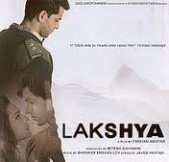
Lakshya” narrated the story of a youngster drifting in life, clueless as to what he wants to do for a living. Circumstances lead him to join the Indian Army and he gets involved with the Kargil incursions by Pakistan into Indian territory. In the process, he discovers himself, achieves a clarity of purpose and leads his men to victory. (2004, Director: Farhan Akhtar)

Yet another coming of age story came our way in “Wake Up, Sid”. It is the heroine (Konkona Sen Sharma) who inspires the hero (Ranbir Kapoor) to set his own goals in life. (2009, Director: Zoya Akhtar). 

Let Goals be Based on What You Excel In!pondy movie 3_idiots

Rajkumar Hirani explained this concept rather well in his immensely successful “3 Idiots” (2009). If you are passionate about a hobby of yours, and make it your profession as well, you would surely excel. Happiness, contentment, recognition and rewards would automatically follow.

Ethics in Business

Rocket Singh – Salesman of the Year” (2009, Director: Shimit Amin) had a theme which spoke of ethics in business. If marketing efforts are directed at deceiving customers and if either the product or service is shoddy, the business will go down in the dumps. Philip Kotler would have surely approved!

Managing the Boss

Aziz Mirza delighted us with both “Yes Boss” (1997) and “Phir Bhi Dil Hai Hindustani” (2000). Scratch below the glitzy surface Yes bossof these slick flicks and you are sure to learn quite a few tricks on managing bosses. If “Yes Boss” was about being a yes-man, “Phir Bhi Dil Hai Hindustani” was about manipulating bosses to get them to announce decisions which were contrary to their original stands. Yes, the bosses were mere caricatures and depicted as bumbling buffoons. But the hero and the heroine could get away with it purely based on the outstanding results they brought in!

Another interesting dimension we got to see was in “Aitraaz” (2004, Directors: Abbas Mustan). The movie was based on a Hollywood flick by the name of “Disclosure”. In return for rapid promotions, the female boss ends up trying to seduce the subordinate hero. However, thanks to a zealous wife and smart technology, the hero manages to wriggle out of a tricky situation!

Handling Corruption

Hrishikesh Mukherji came up with “Satyakam” in 1969. Based on a Bengali novel by Narayan Sanyal, the movie tugged at our heart-strings by taking us through the trials and tribulations of Satyapriya, a whistle-blower who suffers in his professional as well as personal life and loses the battle against corruption.Well done abba

In 1983, Kundan Shah gave us the memorable “Jaane Bhi Do Yaaron”. With sterling performances by Nasseruddin Shah, Ravi Baswani and others, it tackled the issue of corruption in real estate and construction deals in a humorous vein. The movie ends with a cut-throat gesture made by both the protagonists, signifying the death of justice, fair play and truth in an age of corruption.

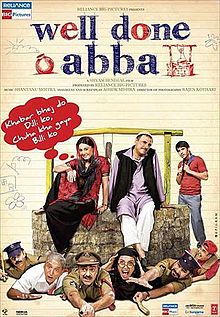
Fast forward to 2010, when Shyam Benegal gave us a heart-warming “Well Done, Abba”. A great satire on our public delivery failures, the movie captured the effect of rampant corruption on laymen. Armaan Ali, a driver, plans to dig a well in his farmland to ensure adequate water supply. Depending upon a government scheme, he soon learns the pitfalls involved. How he wriggles out of the situation forms the interesting part.

Getting Hired!

Of the several interview scenes one has witnessed in movies churned out by Bollywood, the one portrayed in “Golmal” (1979, Day_of_the_JackalDirector: Hrishikesh Mukherji) remains my favorite. Facing an eccentric industrialist, Bhavani Shankar (Utpal Dutt), who believes in traditional values and thinks that all those without a moustache happen to be characterless, Ramprasad Dashrathprasad Sharma (Amol Palekar), desparate to get a job, puts on a moustache and manages to charm the boss in the interview. He not only lands up with a job with a salary higher than expected, but also manages to eventually sing his way into the heart of the boss’ daughter!

The Day of the Jackal” (1973, Director: Fred Zimmermann) has the professional assassin appearing for an interview. The OAS team is astounded by the fee of half a million dollar quoted by him to assassinate Charles de Gaulle. The Jackal responds by saying that he deserves the fee, because he is the best in the business!

In both the cases, professional capability, coupled with self-confidence, won the day!

Industrial Relations

In “Namak Haraam” (1973, Hrishikesh Mukherji), the issue of rising trade unionism was portrayed effectively. Vicky (Amitabh Bacchhan) plans to defuse the situation by getting his friend Somu (Rajesh Khanna) to become a union leader. In the process, Somu gets influenced by the workers’ point of view and a confrontation between the friends ensues. Love-u-mr-kalakaar

Management Lessons

In Rajshri Production’s 2011 offering, “Love U…Mr. Kalakaar”, Sahil, a struggling artist, is faced with the challenge of running his future father-in-law’s business empire more profitably, so as to be able to win the hand of his lady-love Ritu. In order to ensure success, Ritu, a fresh MBA, ends up giving marketing and HR lessons to Sahil. The movie, directed by S. Mansavi, also captured office politics effectively. Performance on the job and the strong bonding between the lovers eventually saves the day.

Self Confidence vs. Shyness and Diffidence  

Basu Chatterji treated us to a sumptuous fare in “Chhoti Si Baat” (1975). Both the hero and the heroine work in different offices. Love blossoms, but the hero is a simpleton and keeps losing to a colleague of the heroine – whether in social skills or in indoor games. Eventually, Arun (Amol Palekar) decides to undergo a crash course in self-confidence, comes back in style and wins the hand of Prabha (Vidya Sinha), the girl of his dreams!Guru

Finances, Share Markets

Satta Bazaar” (1959, Director: Ravinder Dave) portrayed the ruin of a family due to over indulgence in the share markets very effectively. In another Rajshri offering, “Jeevan Mrityu” (1970, Director: Satyen Bose), the hero uses share price manipulations to seek revenge from the bad guys who had got him convicted for a theft he had never committed. “Guru” (2007, Director: Mani Ratnam) was loosely based on the life of late Dhirubhai Ambani. It restored our faith in the equity markets and showed us how one’s fortune could get reversed and then regained!

Work-Life Balance

In “Chhodo Kal Ki Baatein” (2012, Director: Pramod Joshi), the hero is so busy pursuing his career goals that he fails to attend his daughter’s arangetram. His family deserts him for a weekend. The movie is all about his regaining the work-life balance, and 220px-Bumbumboleposterarticulates the current dilemmas being faced by managers. There are some useful tips on the art of living, placing the movie on a spiritual plane.

Innovation

A high-risk business like producing movies can survive only on continuous innovation. Of late, the upwardly mobile middle class in India has opened up a new segment of the movie goers’ market. Bollywood themes are no longer confined to romantic duets, with the hero and the heroine chasing each other around trees. New themes have been experimented with, and the results are heartening. Consider movies like “Iqbal”, “Pa”, “Bum Bum Bole”, “Chak De India”, “Dor”, “Welcome to Sajjanpur”, “A Wednesday”, “Udaan”, “Taare Zameen Par”, “Vicky Donor”, “Kahaani” and “Barfi”. The sheer diversity of themes is remarkable, even if there is a romantic angle deftly woven into some of the plots to ensure commercial survival. 

Giving Back to Society

Swades” (2004, Director: Ashutosh Govarikar) set a good example of how rural problems can be addressed by talented people who decide to chuck their lucrative careers abroad and return to their roots in India.

A recent IFC report showcases Indian Social Ventures like Husk Power Systems, WaterHealth International and Suvidhaa Infoserve. In the days to come, trust Bollywood to come up with more variants of the “Swades” theme!pati patni aur woh

Extra-marital Affairs

If “Pati Patni aur Woh” (1978, Director: B R Chopra) touched upon the boss going wayward, “Rang Birangi” (1983, Director: Hrishikesh Mukherji) brought home the issue of a bored housewife getting her busy husband’s affection back with the support of a mutual friend. Both were excellent comedies with serious messages; one showed us the futility of romancing a secretary, the other spoke of the need to attach a better value to the needs of our loved ones.

Corporate Intrigues

When it comes to the inner machinations of business empires and corporate feuds, one readily remembers “Kalyug” (1981, Director: Shyam Benegal) and “Corporate” (2009, Madhur Bhandarkar). Even though such efforts have been few and far between, the honesty with which these movies have got made speaks highly of the directors, producers and the script writers. The underbelly of over-reaching greed, unbridled ambition and business rivalry – all have been brought home very candidly in both these works.Duplicity

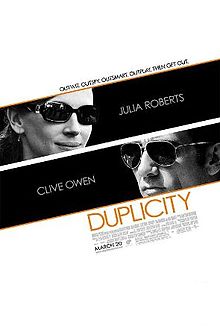
Duplicity” (2009, Director: Tony Gilroy), starring Julia Roberts and Clive Owen was an interesting take on corporate espionage. “Pyaar Impossible” (2011, Director: Jugal Hansraj) touched upon the issue of software piracy, though the basic theme was romantic in nature.

Team Work

When it comes to team work and bonding, who can forget the Jai and Veeru duo of “Sholay” fame? Personality-wise, both are poles apart. Jai, played by Amitabh, is sober, quiet and meditative. Veeru, played by Dharmendra, is loud and outspoken. The ways in which they go about wooing their sweethearts in the village are as different as, say, chalk and cheese. But when it comes to confronting Gabbar, they work in perfect unison, displaying a unique understanding and respect for each other. (1975, Director: Ramesh Sippy).

MOVIES AS AN INSTRUMENT OF CHANGE ?!

In the scam-ridden exciting times that Indian managers operate in these days, new social developments are taking place. Thanks to a byte-hungry media, we have a torrent of CAG reports, court cases, corporate misadventures, information tumbling out of closets courtesy the RTI Act, sting operations and confidential conversations getting recorded and leaked at regular intervals.

One has no doubt that our movie makers can be relied upon to soon start churning out movies with scripts which highlight management and governance issues with a sharper focus.  Hopefully, these would capture the business world in a more balanced fashion – depicting not only the seamier and manipulative side but also the philanthropic and CSR side, besides depicting initiatives in the realm of social entrepreneurship!

(PS: You may also like to look up https://ashokbhatia.wordpress.com/2013/10/04/management-lessons-from-movies-2-0)

Read Full Post »

As a manager, one is always obsessed with expansions, diversifications, setting up new projects, and the like. In other words, boosting the organization’s top line. However, another important aspect of a manager’s role is to ensure that business units showing signs of sickness do not bog the company down and erode its market goodwill. How does one do it smartly?

Out of several companies I worked for in my career of 35 years, I had the unique experience of closing down business units in four. The reasons for closure were as diverse as the culture and the size of the company I was associated with then – an over-estimation of the marketing prospects of a product or service, a shrinking marketing space owing to changes in market characteristics, high overheads leading to sustained financial losses, abysmally low levels of productivity, IR issues, supply chain bottlenecks, financial mismanagement and the like. In one particular case, a peculiar combination of these factors had led to negative financial contributions – the more the unit produced, the higher were the losses incurred!

Size and Culture of the Organization

All the closures I had been involved with were manufacturing set-ups. All the organizations were configured differently – if one was a large company with a bureaucratic set-up, another was a fleet-footed medium-sized company; yet another was a small-scale unit where entrepreneurial zeal had misfired.

Culture-wise also, the companies were poles apart. From an open manner of decentralized working to a secretive style of centralized decision making, one had a closure challenge which had to be met in tandem with the way the organization was configured. The task was surely unpleasant, but the learning was invariably rich.

Whatever the reason, the size or the culture of the organization, there was not much difference in the basic steps to achieve the goal. The difference came about only in the detailed approach to each step. The larger the size, the better the refinement in the approach towards handling an aspect of the challenge. In all cases, conceptualizing a closure was a much simpler affair than executing it.

Handling a Closure

With the benefit of hindsight, I can summarize and share my learning with those who might be interested. Here is what I believe was a common thread running through all the closures I was associated with:

  1. Breaking Up The Task: When it comes to dissolution, fixed assets like land and building need a different approach. The skills required to handle requisite government permissions are surely not the same as those required for liquidation of inventories. Admittedly, the biggest challenge is to hold the hands of customers and of the people getting impacted by the decision.

  2. Making Smaller Teams: The probability of meaningful decisions getting made and executed at the operational level is inversely proportional to the number of members in a team. It also helps to have a dissenter in each team – someone who will stand up for his/her convictions. The senior guy in each group plays the role of an arbitrator, if and when necessary.

  3. Planning Well: A typical closure may take anywhere from 9 to 24 months to plan and execute. At the planning stage, tasks may be identified and allocated to various teams. The most important priority is to ensure minimal disruption in fulfilling the order book commitments. No less critical are good relations with suppliers and service providers who can add value by remaining committed to the organization till the end of the road. Timely payments come in handy in this area.

  4. Using Grapevines: Informal networks and cliques are surely of immense value when rolling out a closure plan. To keep undue demands under check and to ensure a fair deal to all stakeholders, grapevines can be used very effectively.

  5. Listening to Legal Eagles: Before freezing a Closure Plan, allow your Legal Eagles to put it under a microscope and chew it over. Down the road, there would be lesser surprises for the teams which are tasked with executing a closure.

  6. Flaunting Your Assets: Alternate utilization of land and buildings needs immaculate planning upfront, as does the shifting/disposal of plant and machinery. Way back in 1924, the Dallas assembly plant of Ford was redeveloped as loft apartments. In mid-1980s, DCM, a textiles conglomerate in India, closed down its Bara Hindu Rao factory in Delhi and contemplated a real estate project at the site. In 2005, Alfa Romeo managed to convert its Milan factory into a museum dedicated to the automobile industry in Italy. In 2008, Chrysler estate at Delaware was shut down in USA. It was bought over and converted into a science and technology campus of the University of Delaware. Closure of several textile mills and movie theatres in India in the recent past has resulted into swank new malls and residential apartments coming up.

  7. Preparing for Role Reversals: The Marketing team pores over the details of minimizing the damage to company’s image, whereas the Sales team starts working with your distributors and franchisees to fine tune the details of stock liquidation. Just as your Purchase team dons the Marketing hat and starts liquidating unwanted stocks, the Production and Maintenance guys roll up their sleeves and start worrying about getting the conveyors and machinery prepared for packing and disposal. The Finance team starts reviewing the organization’s obligations to financial institutions, and HR honchos start finding jobs for employees about to face an onslaught of the dreaded pink slips.

  8. Communicating Proactively: If there is something worth communicating, it is worth over-communicating! All stakeholders, including the community near the plant, need to get convinced that the closure is a ‘no option’ decision of the management. Communication needs to be designed to ensure that the management is perceived to be fair, transparent and caring.

  9. Handling People: There is a limit to which the issue can be kept under wraps. People are much smarter than we give them credit for. It helps to have a time-bound plan for necessary information to flow to different levels of the organization. Sure enough, this works best on a need-to-know basis. The CEO, the Plant Head or the HR head can play the role of a PR guy very effectively, though there could be other managers who have good people skills and can address concerns more effectively. The latter option provides better elbow room to the CEO/Plant Head in adopting a flexible approach. Other than a severance package, an enlightened management would offer out-placement services and hold the hands of those who have undue anxiety. When BP shut down its solar panel facility at Frederick, so as to shift manufacturing from UK to lower wage options in China, India and elsewhere, besides three months’ full pay and benefits,it offered a severance package and placement assistance to the affected employees. Good employers would travel the ‘extra mile’ to ensure that spouses, kids and parents of those affected would get taken care of as well.

  10. Expecting the Unexpected: If either the reason for closure or the severance package is perceived to be grossly unfair, we could be inviting unsolicited interference from unexpected quarters. These could be government agencies, politicians or some disgruntled elements well-disguised as self-proclaimed well-wishers of the workmen. This needs deft handling, backed by tact and resource.

A Smart Closure

The detailed strategy, planning and execution would obviously vary depending upon whether the whole company is being shut down, or only the manufacturing units are getting closed, or only a single plant is facing a ramping down situation. With manufacturing getting increasingly shifted from the developed part of the world to the developing part, more and more organizations are faced with a closure scenario.

As Bill Taylor points out in his brilliant article ”Your Company’s ‘Obituary’ Can Shape Its Future’ on ‘http://www.blogs.hbr.org‘, much after the dust has settled down, the key questions which will get asked by different segments of your stakeholders shall be: ‘What legacy did your company leave in its industry? What contributions did your business unit make to your company? How did your brand move the needle in a market category?’

Call it by any name – restructuring, redesigning, re-engineering, ramping down or down-sizing, the key elements to be handled in a closure are Customer Relations and Human Resources. A couple of years down the road, would a majority of those affected by a closure be still speaking well of the organization? Would your customers be missing your product or services?

As long as these criteria are met, the management would have done a smart job on its part!

Read Full Post »

JOB LABELSJOB LABELS

Tired of time-worn designations? Try these:

  • Chief Worrying Officer: Normally, the CFO who is worried sick about legal compliance in all areas of business.

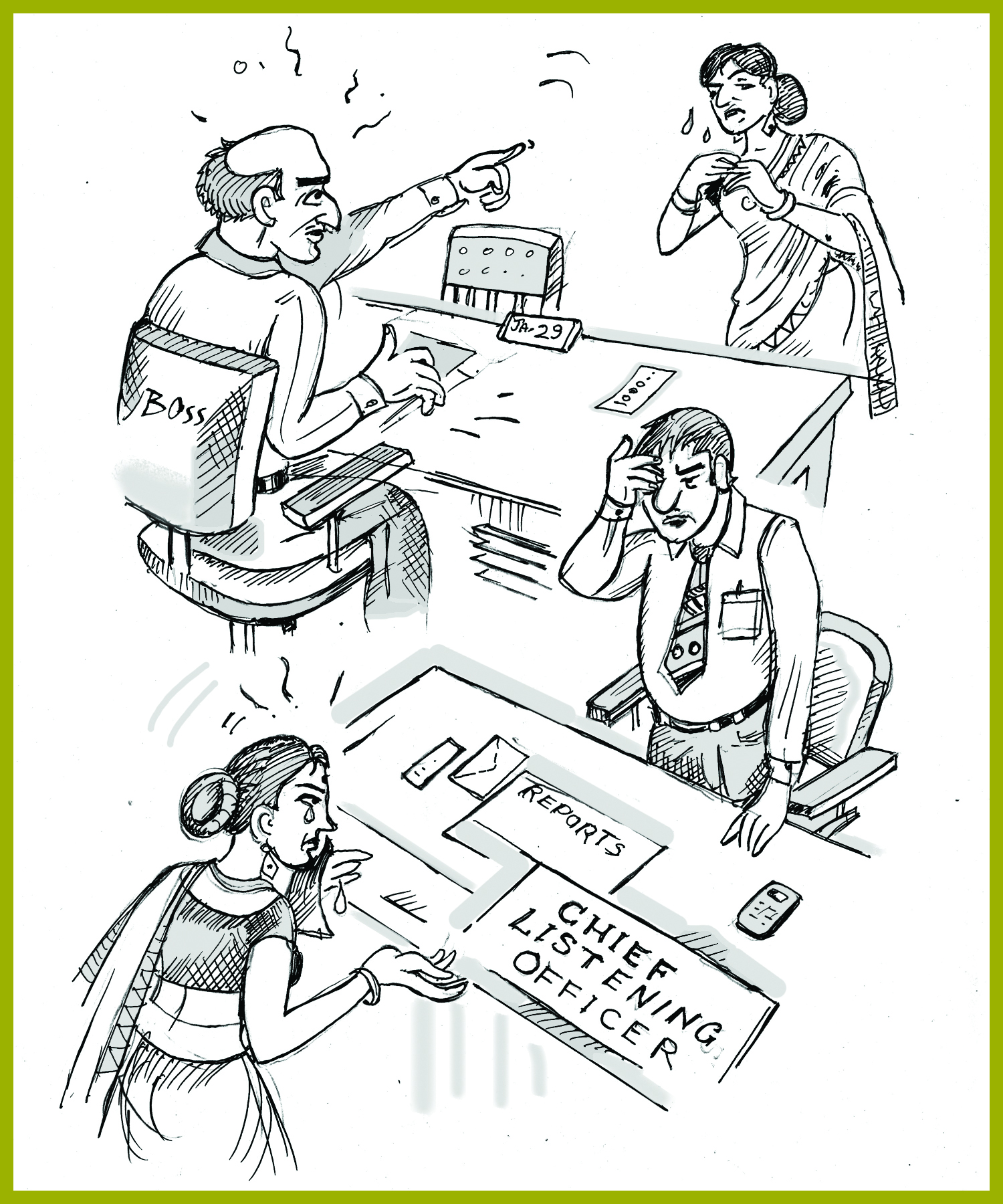
  • Chief Listening Officer: A VP-HR who is always ready with a bucket and towel to help employees facing emotional distress.

  • Chief Results Officer: The CEO who believes that ends justify all means.

  • Chief Dreams Officer: The R&D Head who keeps dreaming of new products and businesses.

  • Chief Ethics Officer: Keeps a strict eye on fraudulent behavior anywhere in the organization.

JUMPING TO CONCLUSIONS

Quite a few bosses have an innate ability to be able to think in four dimensions at the same time – viz., the length and breadth of a problem, its depth and also how it may unfold over a period of time. If your boss is not a specimen from this tribe, and if he happens to jump to conclusions without evaluating all the other dimensions of an issue at hand, one can only wish you the very best in your career.

If reporting to such a boss (God forbid!), each day you will be having a roller coaster ride, much like NASDAQ/Sensex, linked to the vagaries and uncertainty of the mood of the “market” at any given point in time. In one such company where I had the good fortune to work (great learning opportunity, if I may say so), public shouting at subordinates was the order of the day. One day, a very sullen looking junior walked into my office. When I asked him the reason for his sadness, he said he was missing the daily “quota” of shouting from the boss that day!

Read Full Post »

« Newer Posts - Older Posts »