Feeds:
Posts
Comments

Archive for the ‘Management Lessons’ Category

ashokbhatia's avatarashokbhatia

What is it that makes a professional fondly look back and remember the time spent with a particular organization?

The initial package sounds jaded over a period of time and the Law of Diminishing Utility eventually kicks in. The seniority for which one so adroitly negotiates at the entry stage fails to charm after some time,  unless backed by further achievements, recognition and rewards, added responsibilities and advancements. Time also takes the glow and shine off the social prestige which goes with being associated with one of the better known brands in the industry.

So, what is a professional left with after having left an organization?

The Lingering Sweetness

Much after the association with an organization has come to an end, the everlasting impression one carries in one’s mind depends on two simple factors. One, professional achievements which were individually attained but facilitated and enabled by the support systems ingrained…

View original post 1,367 more words

Read Full Post »


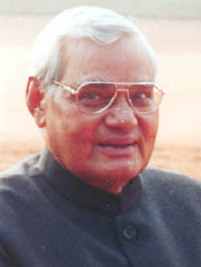
A deluge of homage thru editorials, articles, opinions, blog posts poured in after Shri Atal Bihari Vajpayee left his mortal coil. The electronic media was abuzz with discussions on the tallest leader that India has ever produced. After those exhaustive and emotional encomia showered by everyone, the opposition included, what else is there to write? After every paean has been sung what is left for me to say?

But it is believed that a tribute is truly paid only when you emulate the leader and walk his path. For doing that one has to understand Atalji’s exemplary leadership style.

Despite many thousands of empirical studies, leadership remains a tantalizing enigma for many – me included. Is it possible to annotate Atalji’s actions? Is it at all possible to codify the colossus called Atal Bihari Vajpayee?

To fit his great persona into a frame, to capture his myriad methods and to titrate his thoughts would greatly tax even a scholarly brain – but the practical value of that exercise will be invaluable for the country. Therefore I will make an attempt.

His Leadership Style – Elusive yet Effective

All the leadership theories espoused by the west are inadequate to describe Atalji’s style. His style straddles the oldest to the latest western theories effortlessly – but the core of his unique leadership style is completely elusive. Not much has been understood about the guiding ‘force’ behind his style.

When Atalji addressed the ISKON meeting on Ram Navami 5th April 1998, he said “I am all in favor of globalization of the message of the Gita and messages of all the sacred books of the world with which the message of Gita bears close conformity” – This openness expressed by him would have been categorized at best as a collaborative or an inclusive style by the Western theories but ‘NITI Shastra‘ of Kautilya would elevate the same to a higher level of ideological depth – ‘Which country, which faith is foreign to a man of True Learning?’ it says.

After the 1999 Pakistan coup, Prime Minister Atalji had to deal with the crafty general Musharraf. Atalji persisted with his offer of friendship but when that was resisted by Musharraf, he made another attempt at Agra which also failed. But three years later, it was Musharraf who made the long walk at the SAARC Summit in Islamabad to greet him. He made a commitment then not to allow any territory under Pakistan’s control to be used for terrorist activities against India!

No western style, however contemporary, explains this persistence and patience of Atalji.

However, the eastern tradition of TAOism highlights this kind of engagement. “The leader who is centered and grounded can work with erratic people and critical groups without experiencing harm. The wise leader is like the water that can YIELD yet LEAD!”

A RAJARISHI Leads the Coalition

Atalji was the great harmonizer. He aligned different coalition partners and managed to drive major reforms during his tenure as the Prime Minister. He was the great unifier who built bridges between different ideologies, political parties and countries.

What made the Coalition partners align with Atalji? Why was he was fondly referred to as the  ‘Gentle Giant’and ‘Ajatahshatru’ (someone who has no enemies)?

According to Kautilya, a leader will turn into a ‘Rajarishi-a King Sage’ through purity of speech, of the mind, of heart and of the senses – all these can be acquired only through ‘Indriyajayah’ – control over the senses- lust, anger, pride, arrogance and fool hardiness.

The traditional philosophies Taoism and Buddhism also explain how leaders deal with the complex dilemmas of the real world. Taoism explains this craft beautifully – “Because the leader does not push, the group does not resent or resist: A moderate ego demonstrates wisdom: remain open and receptive, no matter what issues arise: Learn to lead without coercion. Both praise and criticism should not excite – Interestingly Indian scriptures too praise ‘Sthitaprajna (to remain stable through intellect) as a great leadership trait !

Atalji was known for long spells of silence and contemplation. The Tao principle, ‘Wu-wei’ generally translated as non-action or non-doing is the most powerful of all. Paradoxically it’s not about inaction but is about ‘Action without Effort’. All the tenets of Tao resonate with our very own ancient prayer to the universe “Samastha Lokaha Sukhino Bhavantu” (May everyone in all the worlds be happy).

No wonder Atalji the Rajarishi could lead the largest coalition effortlessly.

His style was HARMONY in WAR

Atalji’s biggest success in foreign affairs was in bringing relations with the US back from the brink after the US imposed sanctions on India– This cannot be explained effectively by any theory, only AIKIDO can.

AIKIDO, a Japanese martial art, is where practitioners defend themselves while protecting their attacker from injury. The tactic of blending with an attacker’s movements for the purpose of controlling their actions resembles a dance rather than a fight. How Atalji restrained the US to protect India, yet rallied support for the US later by controlling China’s nuclear aggression, is but the skill of an AIKIDO Master!

His style is BEYOND THEORY

No theory spoke about how ‘silence’ can silence the enemy or how ‘contemplation’ can control the situation. No leadership theory spoke about poetry paving pathways into people’s hearts. No theory praised a dignified ‘retreat from public life’ as a laudable leadership trait.

ALT is the key for India

His leadership style, call it the ‘Mother Leadership’ that is intuitive and all giving or the ‘Mother of Leadership’ styles that straddles all existing theories is the key for India’s progress.

The exercise to codify his leadership style will have far reaching implications for the country’s progress. For patriots it should be a blueprint to follow. For people in power it should be taught as a refresher course and for the newly elected politicians, it should be introduced at the orientation training.

ALT – Atal Leadership Theory – is as much about ALT key of change as it is about Altruism– it is a theory about Impact, Influence and Inspiration. A Master Class on leadership paradoxes- for ALT, WHEN I GIVE MYSELF I BECOME MORE is but the MOMENT OF TRUTH !

Karuna Gopal

President, Futuristic Cities

Global Thought Leader, Advisor on Smart Cities, Governance & Policy

Published on 22-Aug-2018

The Hans India


(Note: Sh Atal Bihari Vajpayee was the 10th Prime Minister of India from 1998 to 2004)

(Permission from the author to blog this piece here is gratefully acknowledged. Details about her work can be seen at http://www.karunagopal.com)

Read Full Post »

(Sanjay Sehgal is Chairman & CEO at MSys Technologies, USA. His profile is accessible at https://www.linkedin.com/in/sehgalsanjay. In this post, he examines the relevance of some of the basic tenets of Bhagavad Gita to real-life business situations.)


The saying “As you sow, so shall you reap,” is considered one of the best-known representations of the concept of “Karma.” It got me thinking when it comes to work, how far can we caution ourselves about what we are “sowing” into our business (money, work, culture, decisions, conflicts, resolutions, etc.)? More importantly, how will we know if our dealings are in line with constructive evolution (the good side of the scale of karmic balance) or submerging us further into karma’s vicious cycle (the bad side of the scale of karmic balance)?

A rare tale of a leap of good faith

I still remember reading this inspiring news that made me smile with moist eyes. In 2015, Dan Price, the CEO of Gravity Payments, raised the minimum wage of all his employees to $70,000 a year. Dan had slashed his salary to $70,000 from $1.1 million to do so. Dan had once pronounced that he wishes to buy his dream car. To return the favor, 120 employees of Dan’s firm saved their one month’s salary and gifted him his dream car. It was Karma unfolding in its classic style.

Karma – the good, the bad, and the ugly

The notion of karma is comparable to a balance sheet, with the golden principle – debit in, credit out. You earn credit for all your debits. This credit will be good, bad, or ugly, depending on the debit you produce.

When you marry karma and business, you are bounded by the law –

A.   Good karmic debits = Good Credit>input

B.    Bad karmic debits = Bad Credit >input

C.   Ugly karmic debits = Ugly Credit >input

Where karmic debits are your intentions, the input is your action based on intentions, and credit is your output. In any way, your output is greater than the input. Therefore, rule A is what we all must aim.

After having set up several ventures, and mentoring start-up enthusiasts I’ve consolidated the five Sutras of Karmic Management, which I feel can be applied in almost all situations:

1. The Law of Growth

While starting a new project, venturing out to materialize an idea, or managing a team, hasten the course of inevitable failure and stop doing anything that is not working out. That way, you may fail fast but it will turn out better if you also learn fast, and can help you grow faster. Take a new path that promises to take you to your destination. The great Abraham Lincon lost elections eight times and failed in business twice. But, he quickly moved on by failing fast and recovering faster for success.

2. The Law of Synchronicity

You’re thinking of replacing your car while driving on a highway, and you drive past a billboard, which advertises a good exchange offer on a car. This phenomenon is called synchronicity. The law of synchronicity is looking out for signals or events in the external surroundings that can help us achieve our objectives. You’re attracted to such signals unconsciously; as you’re constantly thinking of your objective, you are linking everything around to it.  Logically, the idea emanates from the bedrock of curiosity that makes one look for the answer in everything around. Therefore, you are more aware of the external world that attracts you to the desired answer quickly, just like the law of attraction.

3. The Law of Reflection

We reflect our surroundings, and our surroundings mirror us. When we carry positivity within, we also reflect the same in people around us. Resultant – you are appreciative of people’s efforts and become a source of motivation. On the contrary, when you’re always complaining and criticizing, it is a clarion call to look within and reignite the fire of positivity. Take someone like Mahatma Gandhi, who was filled with hope and selflessness. He invariably saw the same in everyone and inspired the whole world to lead the life of righteousness.

4. The Law of Focus

In the face of problems, if you tend to lose direction, you are giving way to insecurity and rage. Instead, the best way to rise above challenges is by seeing them as opportunities to focus on your goals. Despite hurdles and lawsuits, the great Nicolas Tesla never lost sight and created over 300 patents to his name. It is said that he once worked 84 hours straight.

5. The Law of Significance and Inspiration

Your good returns are the fruits of your energy and intent. Fair use of intelligence is to have positive intentions and to put your energy into fructifying them. Invest in improving your business conduct. Use the profits to thank, encourage, and improve the lives of those who helped you succeed. Humility is the best form of investment.

The Karmic Philosophy of Business Sustainability

The core objective of any business is sustainability. A good business Karma will ensure a long run for any organization. Let’s decode further. The business Karma consists of four key elements

  • Strategy – Implementing decisions that are thought through and would reap long term benefits. For example, mergers and acquisitions or product diversification.
  • Transparency – Acting per policies and communicating in all openness, honesty, and goodwill to employees and customers. For example, intimating clients in case of an operational-hiccup.
  • Nurturing – Promoting a culture of care and empowering employees to grow in the system. For example, a manager guiding his/her team by sharing expertise and wisdom.
  • Objectivity – Acting fair by ensuring pragmatic criteria to arrive at a decision. For example, eliminating personal biases when addressing employee grievances.

When actions comply with these four elements the good business karma is manifested in form of sustainability. On contrary, bad business karma will impact a business’s lifeline.

(Link: https://yourstory.com/mystory/apply-good-karma-business?utm_pageloadtype=scroll)


(Related Posts: 

https://ashokbhatia.wordpress.com/2019/03/27/when-ceos-are-left-twiddling-their-thumbs-bhagavad-gita-could-help

https://ashokbhatia.wordpress.com/2019/08/01/the-karma-operating-system

https://ashokbhatia.wordpress.com/2018/06/11/ignoring-the-small-stuff-focusing-on-values-in-business)

Read Full Post »


Bishal Dev Bandhopadhya was a brilliant individual but a terrible boss. He held a senior position in an organisation of repute in Bangalore. One afternoon, Bishal is found collapsed on his table and dies soon after he is taken to the hospital. His coffee has been laced with poison. Is this murder or suicide?

Read more about this mystery in the recently released book ‘Who Killed the Boss?’

It is a whodunit which comes highly recommended, especially for hard-nosed CEOs, HR honchos and line managers who treat the people around them like mere specks of dust beneath their chariot wheels!

The narrative is lucid, tight and has a smooth flow. It keeps the reader hooked from very early itself. Suspense keeps building and one keeps twiddling one’s thumbs trying to figure out the real suspect. The amazing part is the expertise the author has deployed – one can’t figure out how – of bringing in extensive knowledge about detective methods, criminology, chemistry of poisons and drugs, human aspirations and motivations, the brighter and the darker side of pharmaceutical industry and, above all, the flip side of bosses who become road rollers. The concluding part is simply brilliant, touching upon a part of the underbelly of corporate life – a boss’ tyranny – and goes even further to
offer a preventive road map for the future.

The touch of compassion towards the accused is a fine stroke indeed. As the human race hurtles towards cold advances in technology, the criticality of following human values is appropriately brought home.

A complaint, if I may. There should be a law that authors refrain from coming up with such un-put-down-able books. Like captivating members of the tribe of the delicately nurtured, such books demand undivided attention and often end up disturbing the normal life of a lay reader.

(Pradeep Swaminathan has had a fairly successful corporate career in India and abroad. Prior to his retirement he was on the board of listed companies. Some of his articles have been published both in the Hindu and Readers Digest. His first book was based on a PG Wodehouse character and published privately got him an excellent review from the Hindu. The book ‘Who Killed the Boss?’ is his first one to be formally published. It can be accessed here.)


(Related Posts:

https://ashokbhatia.wordpress.com/2014/04/05/the-angry-birds-in-management

https://ashokbhatia.wordpress.com/2016/01/14/ceos-who-end-up-becoming-road-rollers

https://ashokbhatia.wordpress.com/2017/09/08/terror)

Read Full Post »

ashokbhatia's avatarashokbhatia

(This is a dramatized version of the experiences of Prof. Sandeep Mann while he was at UBS. It is built around some facts furnished by him as to his movie marathon experience of those days. Inputs from him are gratefully acknowledged.

The narrative below is penned – or, key-board-ed, if you prefer – on his behalf. For bouquets, if any, please feel free to contact him. As to brickbats, you may risk hurling those at yours truly.)

Much before one of our learned professors started sharing with us, the batch of 1990, the nuances of Decision Making Under Uncertainty (DMUU, in short) and statistical models of exponential smoothening, we had figured out that two of the most high-risk businesses that beckoned us in the post-UBS phase of our lives were Politics and Movies, not necessarily in that order. Both need deep pockets, a very high risk appetite and, of course…

View original post 842 more words

Read Full Post »

In Part 2 of this series of thoughts on the challenges posed by the pandemic to business leaders, we had noticed that the same are being met by:

  • Reposing one’s faith in the basic goodness of human beings,
  • Responding to fresh challenges in a creative and innovative manner,
  • Adopting a sunnier disposition,
  • Preparing for contingencies in advance, and
  • Reconfiguring operations with due respect to nature and mother earth.

One no longer has the luxury of treating these traits as being theoretical constructs. Leadership is always context-specific and top managements need to evaluate the seniors on the traits listed here. These are the transformative professionals in the organization who need to be brought into critical roles without delay.

Much like a befuddled Arjuna twiddling his thumbs at the beginning of Bhagavad Gita who is made to realize his true path of righteousness towards the end of this unique Manual of Motivation, the pandemic is telling leaders to wake up to a new reality and get their act right.

Lord Krishna does not directly refer to human values; instead, he places a premium on one following the path of righteousness, a concept which is all-encompassing. He exhorts us to work in a detached manner, to focus on our efforts and be clear that results are not in our control. He speaks of the virtues of higher resilience, equanimity and the extent of control we exercise over our desires. All these enable us to enjoy an inner sense of peace and joy. He also speaks of human behavior being governed by the mix of three ‘gunas’: Sattvic, Rajasic and Tamasic.

The qualities mentioned in Bhagavad Gita mostly match with the traits mentioned earlier. Businesses and traders downing their shutters and moving on to totally different activities surely have owners who are learning the art of detachment the hard way. Many have expanded their footprints, revealing their nerves of chilled steel and reflecting a high degree of resilience. Seeking inner peace and equanimity by adopting some meditative practices and doing yoga is helping professionals to switch over to a work-from-home mode, despite distractions caused by family matters. All these have made leaders discard their sense of pessimism and get cracking in the face of a pandemic, setting an example for others to follow.

It would be appropriate to revisit some verses of the scripture:

Whatever actions great persons perform, common people follow. Whatever standards they set, all the world pursues. (3.21) 

When the mind, restrained from material activities, becomes still by the practice of Yog, then the yogi is able to behold the soul through the purified mind, and he rejoices in the inner joy. (6.20)


 In that joyous state of Yog, called samādhi, one experiences supreme boundless divine bliss, and thus situated, one never deviates from the Eternal Truth. (6.21)


 Having gained that state, one does not consider any attainment to be greater. Being thus established, one is not shaken even in the midst of the greatest calamity. (6.22)


 That state of severance from union with misery is known as Yog. This Yog should be resolutely practiced with determination free from pessimism. (6.23)


 Completely renouncing all desires arising from thoughts of the world, one should restrain the senses from all sides with the mind. (6.24)


With the benefit of hindsight, those who have a positive attitude are not only surviving the virus but have also discovered newer dimensions in their lives. They are on the way to re-skilling themselves and learning other trades. For many, especially in countries like India, an abiding faith in a divine power brings about a sense of surrender, acceptance, patience and resilience. The result is that they end up following the key lessons of Bhagavad Gita, even though in a subconscious manner. This helps them to do well during the kind of churning that the pandemic has inflicted on us.

What the virus has thrown up is a challenge to human beings to live, work and become smarter; to respect nature and environment better and to focus on being sustainable. It has prodded us in the ribs to be more flexible in our thinking and to expect the unexpected.

It has brought home some basic truths: that human beings come first; also, that the key lessons imparted by Lord Krishna to Arjuna on a battlefield some 5,500 years ago continue to be relevant to this day.

(Inputs from Mr Ashok Narayan are gratefully acknowledged; translations of Gita verses courtesy https://www.holy-bhagavad-gita.org)

(The illustration is reproduced with permission from the illustrator, Arati Shedde, and Heartfulness Magazine – www.heartfulnessmagazine.com.)


(Part 3 of a series of articles on Corona virus and Leadership)

(Related Posts:

https://ashokbhatia.wordpress.com/2020/09/05/corona-virus-and-an-early-onset-of-industrial-revolution-4-0

https://ashokbhatia.wordpress.com/2020/09/08/corona-virus-leadership-traits-and-human-values)

Read Full Post »

ashokbhatia's avatarashokbhatia

In order to commemorate 125 years of the Chicago address of Swami Vivekananda, Integrating Spirituality and Organisational Leadership (ISOL Foundation) had recently organised a World Congress on Vedic Foundations of Management Science.

Several luminaries and experts in diverse fields addressed the gathering, which was inaugurated on the 11th of September at the Breasted Hall, The Oriental Institute, The University of Chicago. Distinguished Trinity and ISOL Awards were presented on the day. The event concluded on the 13th of September, 2018.

The Inaugural Session started with a Welcome Address by Dr J L Raina, Chairman of ISOL Foundation. Vedic Mantras were chanted by Mr Ashok Vyas, followed by a Welcome Song penned by Mr D V Shastry.

Prof Sunita Singh Sengupta, Founder ISOL Foundation, welcomed the delegates and presented a Background Paper.

The Inaugural Addresses were delivered by the following:

  • Ms Neeta Bhushan, Consul General of India in Chicago
  • Dr Larry…

View original post 298 more words

Read Full Post »

How have some of our business leaders responded to the challenges posed by the pandemic? Well they appear to be following the popular saying that when times get tough, the tough get going!

As per press reports, Sanjiv Mehta, Chairman and MD of Hindustan Unilever, has spoken of the kind of steps taken to boost the company’s prospects by focusing better on health, hygiene and sanitation products. As many as 50 new product and pack innovations are said to have been made. Agility and speed have helped.

Manu Jain, MD of Xiaomi India, has said that the pandemic has taught him the importance of empathy and patience during tough times. The ability to be able to put oneself in another person’s shoes stands out. Instant gratification is nowhere on the horizon; patience alone helps. So does slowing down and staying calm.

Ronojoy Dutta, CEO, IndiGo, has highlighted the importance of staying connected as well as being transparent with employees so as to retain their trust. According to him, irrespective of the situation, honesty and transparency win in the harshest of times. According to C P Gurnani, CEO and MD, Tech Mahindra, leaders need to give up their ‘command and control’ mindset and shift to a ‘mentor and inspire’ mindset.

Manish Sabharwal, Chairman, Teamlease Services, concludes that resilience matters as much as performance.

(*Source: The Economic Times Magazine, August 30-September 05, 2020, etc)

Leadership traits which help

Leaders who thrive in an era of heightened uncertainty and bloated entropy are better placed to steer their organizations more purposefully and effectively. The virus has highlighted the following qualities in someone who leads an organization in such stormy times: Prioritizing people. Creating clarity on what needs to be done; providing hope and refusing to let a mood of despondency creep in. Having an ear to the ground and being flexible in an evolving crisis; engaging with other stakeholders, including employees, to understand their concerns better.

The virus has brought into focus the dire need for such leaders. It has even indicated the kind of traits such leaders should have: empathy, compassion, higher resilience, an inner sense of peace and equanimity, brain stilling, actions which are rooted in basic human values and better concern for the environment.

It is already understood that leaders who believe in delegation, decentralization and quiet consensus building are able to handle crises better. The approach to problem solving needs to be non-muscular. A shock-and-awe tactics is best avoided.

Leader Mindsets and Human Values

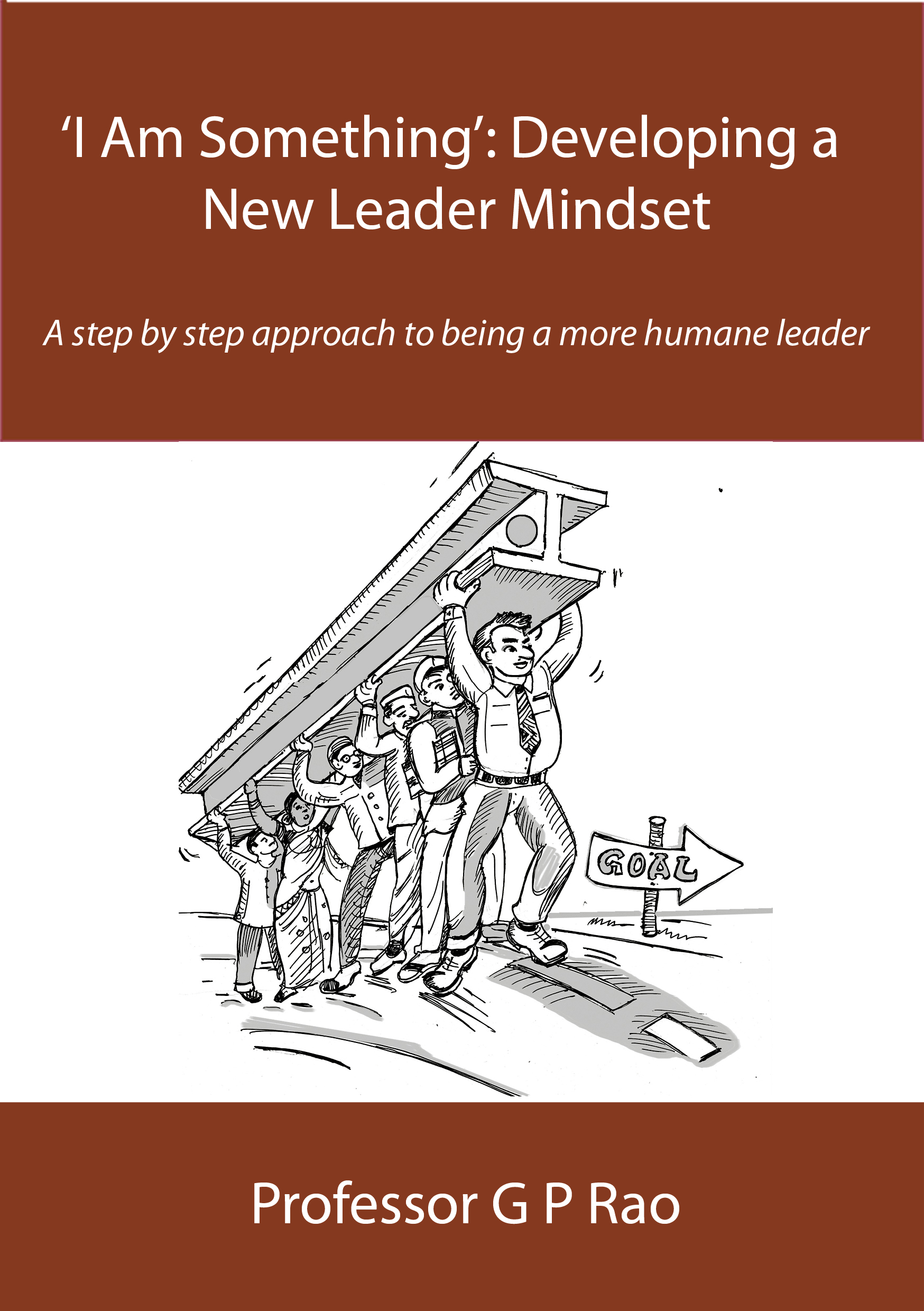
Prof G P Rao, a behavioural scientist of repute and the founder of SPANDAN, a NGO which espouses the cause of human values in organizations, demonstrates that leaders have three kinds of mindsets: ‘I am Everything’, ‘I am Nothing’ and ‘I am Something’.

In a recent study, he has identified the following five topmost values perceived as being conducive to tackling the pandemic successfully:

  • Faith in basic goodness of human beings
  • Creativity and Innovation
  • A positive outlook: Happiness – contentment – self fulfillment
  • Respect to nature and mother earth, and,
  • Preparedness.

The empirical study covered a total of 100 professionals, of which 57 were drawn from the senior and middle management rungs of a software company and 43 belonged to a mixed group from different professions and organizations. The study was conducted during the months of July and August, 2020.

The basic premise is that ‘I am Something’ leader mindset needs to balance the needs and aspirations of others and that of the environment, choose suitable human values and facilitate others to do likewise.

Examples quoted above from the practical business world also testify to the proposition put forward by Prof Rao – that the aim of a leader should be to strike and acquire an optimal balance between and among the select human values so that there is synergy between ‘I am Something’ leadership and human values.

By reposing one’s faith in the basic goodness of human beings, by responding to fresh challenges in a creative and innovative manner, by adopting a sunnier disposition, by preparing for contingencies in advance and by reconfiguring operations with due respect to nature and mother earth – that is how the challenges posed by the pandemic are being met.

(Inputs from Prof G P Rao are gratefully acknowledged.)

(Part 2 of a series of articles on Corona virus and Leadership) 

(Related Posts:

https://ashokbhatia.wordpress.com/2020/09/05/corona-virus-and-an-early-onset-of-industrial-revolution-4-0

https://ashokbhatia.wordpress.com/2020/09/14/corona-virus-some-lessons-from-bhagavad-gita)

Read Full Post »


When businesses started limping back to a state of suboptimal normalcy – call it the new normal, if you will – they woke up to the kind of belt-tightening they could do by increasing their dependence on Artificial Intelligence, Machine Learning and many other technological advances. Many digital czars see the pandemic accelerating tech-trends in the long run, driving social good.

The future portends enlarging the scope of technology in such diverse realms as education, health, security, agriculture, river management and the like. India has just announced plans to create a health data base for its citizens. Hopefully, when a suitable vaccine comes up, an ambitious roll-out program could be undertaken.

According to Genpact CEO Tiger Tyagarajan, the pandemic has cut companies’ digital transformation timelines to as little as 6-12 months from about 4-5 years. Remote working and online transactions have already become a norm rather than an exception across industries.

Rahul Aggrawal, CEO and MD of Lenovo India believes that ‘the recovery journey could be tedious and technology is playing a critical role in helping us adapt to this new reality. The growing role of technology is already evident through enabling remote working, virtual learning, remote business engagement and significant growth in tele-medicine, e-commerce, PCs, smart phones and many other industries.’

Cheer-bots and Bot-dogs have started brightening up life for sports persons and patients. In Japan, in stadiums bereft of human presence, robot cheerleaders have perked up players on the field. Robotic priests have started popping up in Buddhist temples. Therapy dogs have started spreading sweetness and light amongst patients.

Large companies which place a premium on employee goodwill have responded by hiking salaries, promoting good performers and facilitating work-from-home. Quite a few others have had no other option but to resort to issuing pink slips and giving people a compulsory break from work. Many have slashed salaries temporarily so as to manage their cash flows better. Many others are struggling to cope with a sudden spike in demand after a lull induced by extended lockdowns.

The fact that growth rates have plummeted across most sectors of the economy indicates the need for accelerated innovation and a higher rate of learning. Since newer technologies like Artificial Intelligence and Machine Learning need to be absorbed faster, there is a need to have hybrid organizations which utilize technological interventions alongside human ingenuity.

As per recent press reports, Nandan Nilekani, Chairman of Infosys, has highlighted the need to absorb newer technologies faster. Falguni Nayar, Founder and CEO of Nykaa, emphasizes that ‘Digital has emerged as a clear Winner.’ Whether shopping for daily provisions or for cars, the customers have shown a preference for digital transactions. Virtual meetings have become a norm. Carbon footprints of organizations have got reduced.

The pandemic is helping leaders to identify the slack in their systems. The need for leaders to keep coming up with out-of-box solutions was never higher.

(Part 1 of a series of articles on Corona virus and Leadership)

(Related Posts:

https://ashokbhatia.wordpress.com/2020/09/08/corona-virus-leadership-traits-and-human-values

https://ashokbhatia.wordpress.com/2020/09/14/corona-virus-some-lessons-from-bhagavad-gita)

Read Full Post »

ashokbhatia's avatarashokbhatia

panjab-university-ubs

An academic course in management obviously does not offer lessons in managing the affairs of the heart. But the Class of 1977 broke through the academic shackles, with some of its members walking out of the campus with a clear strategy as to who their future soul mate shall be.

The stiff-upper-lip approach

Management education is all about the stiff-upper-lip approach of the mind. Analytical skills rule supreme, leading to rummy situations where analysis often leads to paralysis. Linear programming models get worked upon. Statistical techniques get dished out by stern looking professors who might have been hotter in their jobs more as police officers or as judges.

Hapless students are made to understand exponential smoothening techniques so as to be able to forecast business parameters in an uncertain business environment. Those with an engineering background struggle to match their debits and credits. The lucky ones who have had a…

View original post 1,066 more words

Read Full Post »

« Newer Posts - Older Posts »