Feeds:
Posts
Comments

Archive for the ‘The European Diaries’ Category

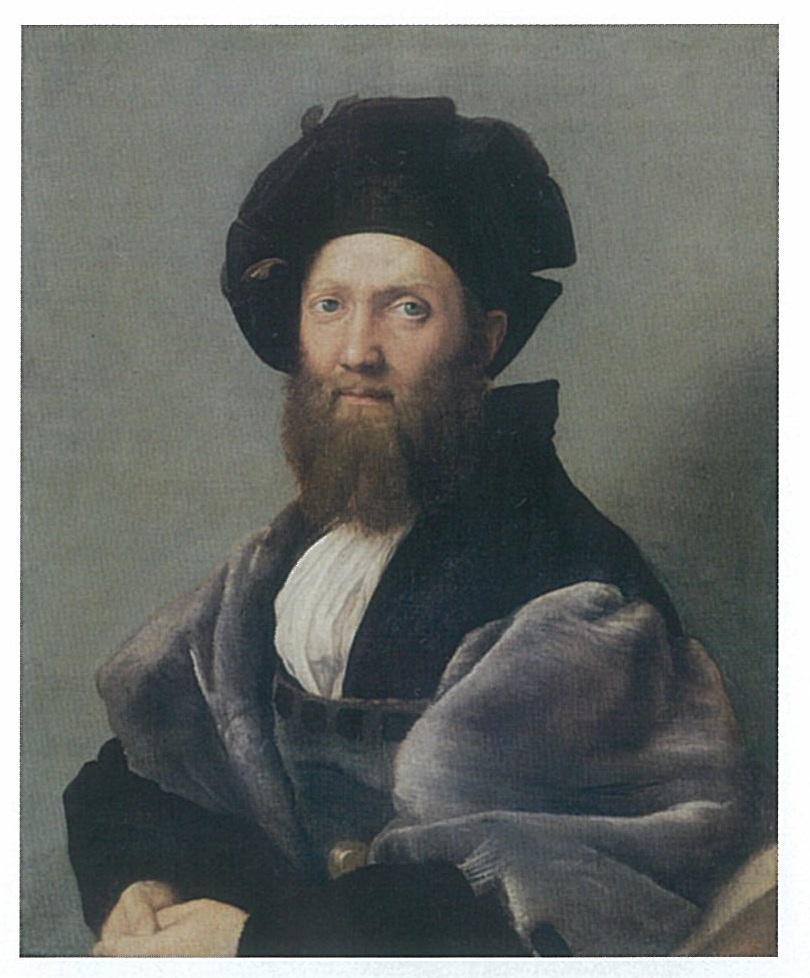
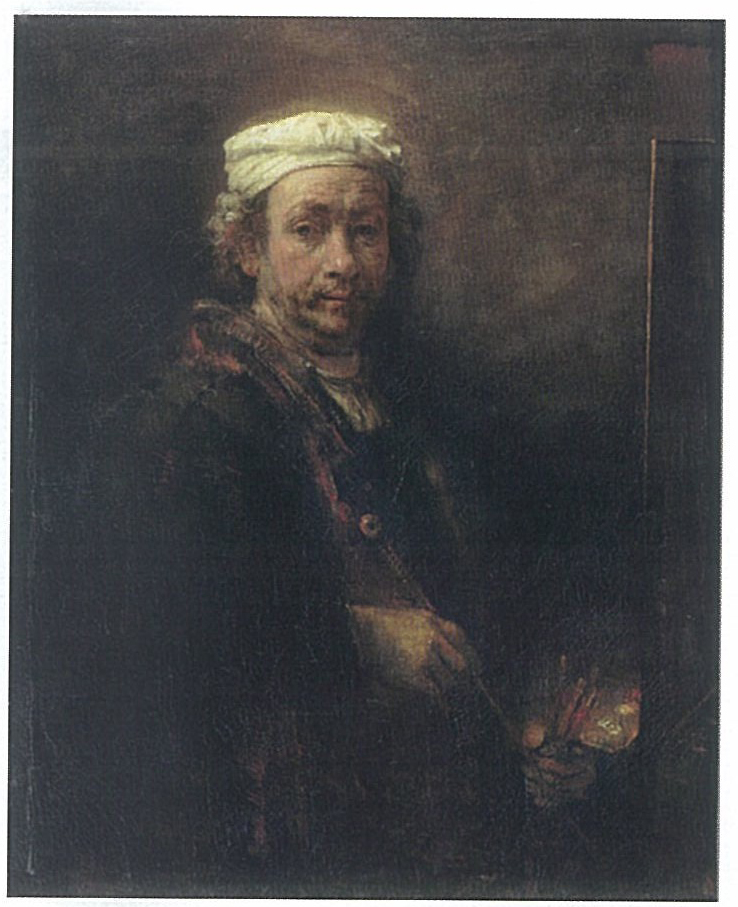
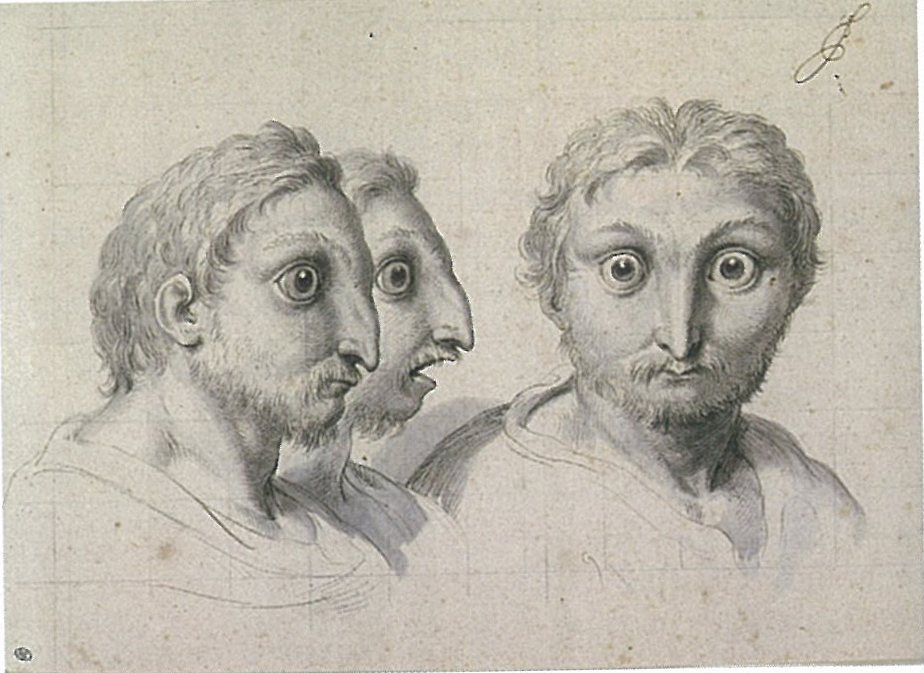
The Louvre has a magnificent collection of paintings on display. Whether on the first floor of the Denon wing or the second floor of the Court Square and the Richelieu wing, the display captures various phases of European art from the 13th century to the mid-19th century.

Madame Recamier

Madame Recamier

Conversation in a park

Conversation in a park

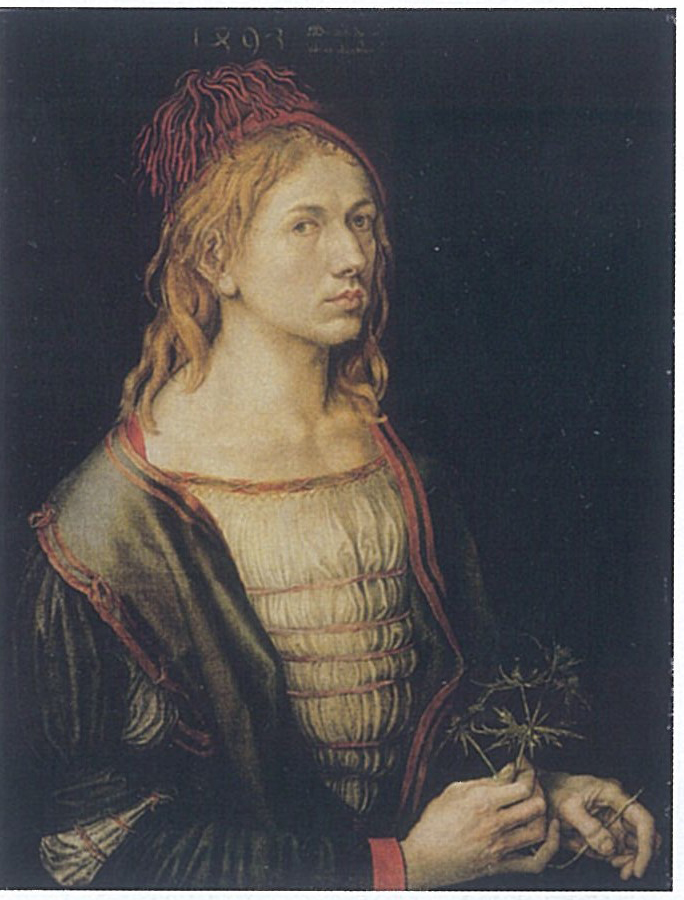
Albrecht Durer

Albrecht Durer

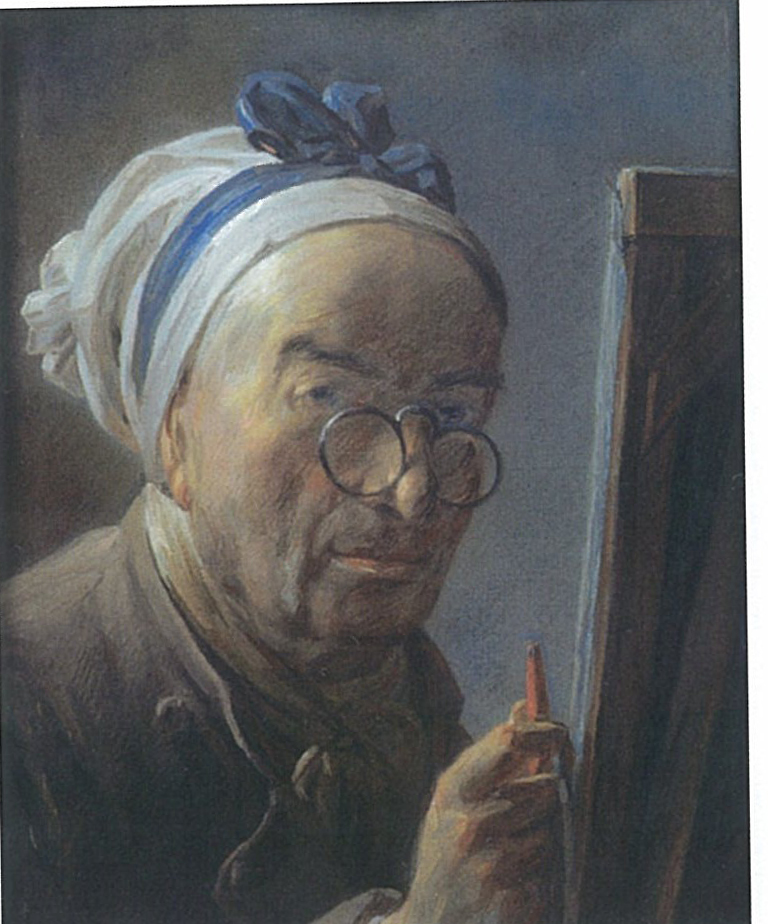
Jean Simeon Chardin

Jean Simeon Chardin

Madame Vigee-Lebrun and Her Daughter

Madame Vigee-Lebrun and Her Daughter

Man with a Glove

Man with a Glove

Marquise de Pompadour

Marquise de Pompadour

Master Hare

Master Hare

Nikolas Krazer

Nikolas Krazer

The King drinks

The King drinks

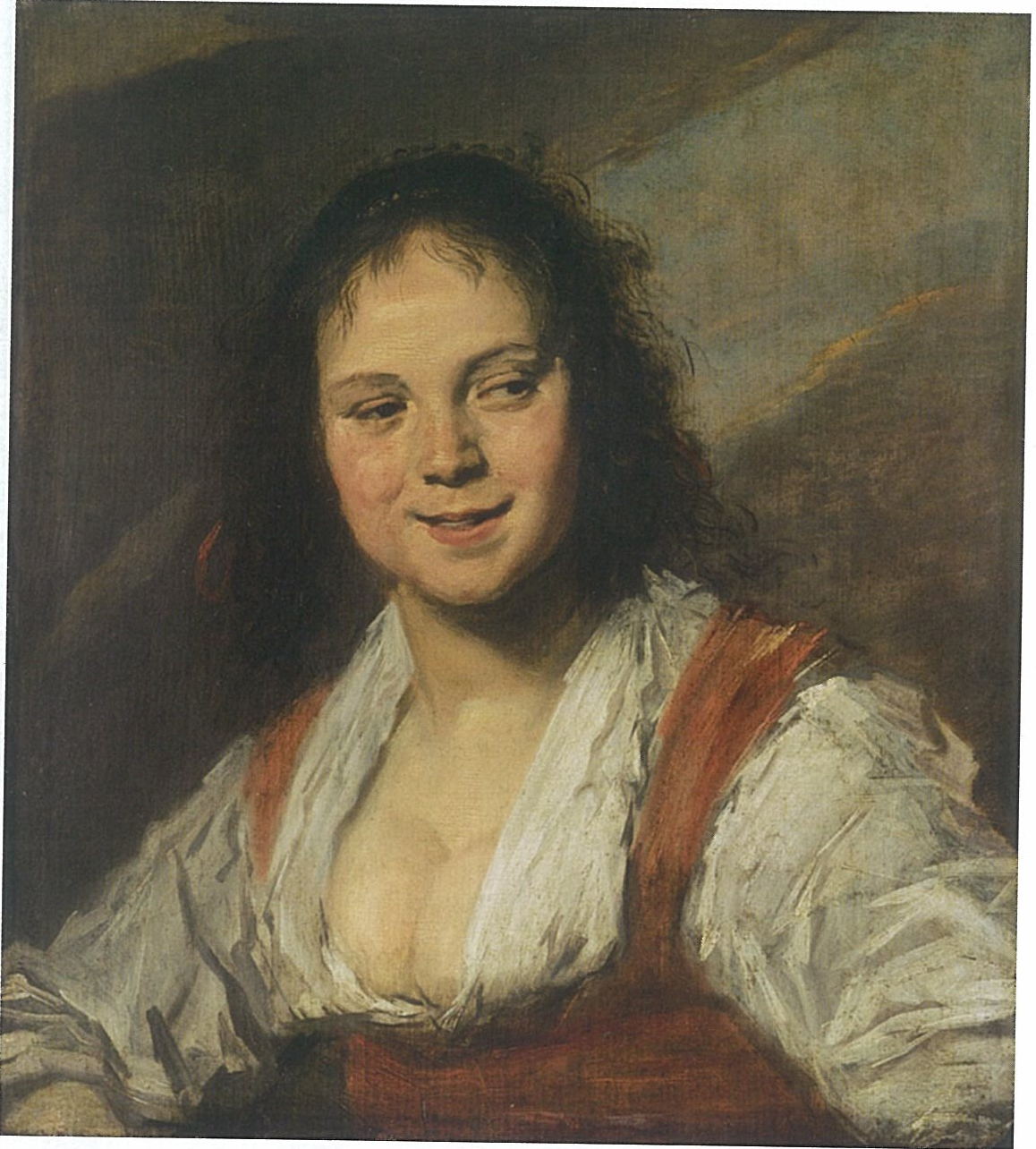
The Gypsy Girl

The Gypsy Girl

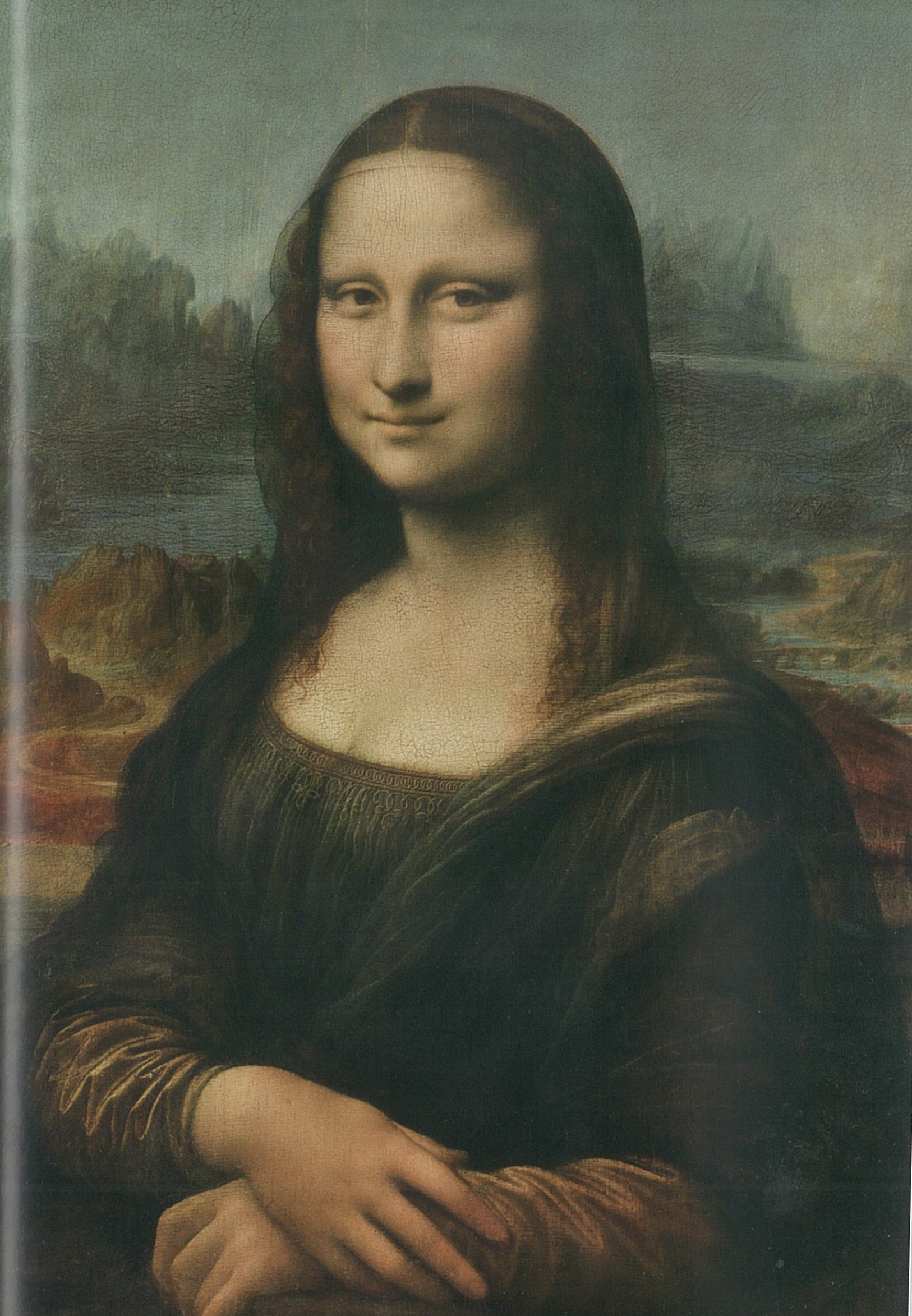
Mona Lisa

Mona Lisa

Portrait

Portrait

St. Apollonia

St. Apollonia

Rembrandt

Rembrandt

Relationship of the human figure with that of the Tawny owl

Relationship of the human figure with that of the Tawny owl

Museums play an important role in our lives. They remind us of the artistic richness of our past. They preserve the same for posterity, thereby boosting our pride in our culture and society. They showcase the best achievements of humanity in many diverse fields. By doing so, they motivate us to strive for perfection in whatever we decide to do in our own lives.

[Related Posts:

https://ashokbhatia.wordpress.com/2014/12/12/a-saunter-down-the-louvre-part-1

https://ashokbhatia.wordpress.com/2014/12/15/a-saunter-down-the-louvre-part-2%5D

Read Full Post »

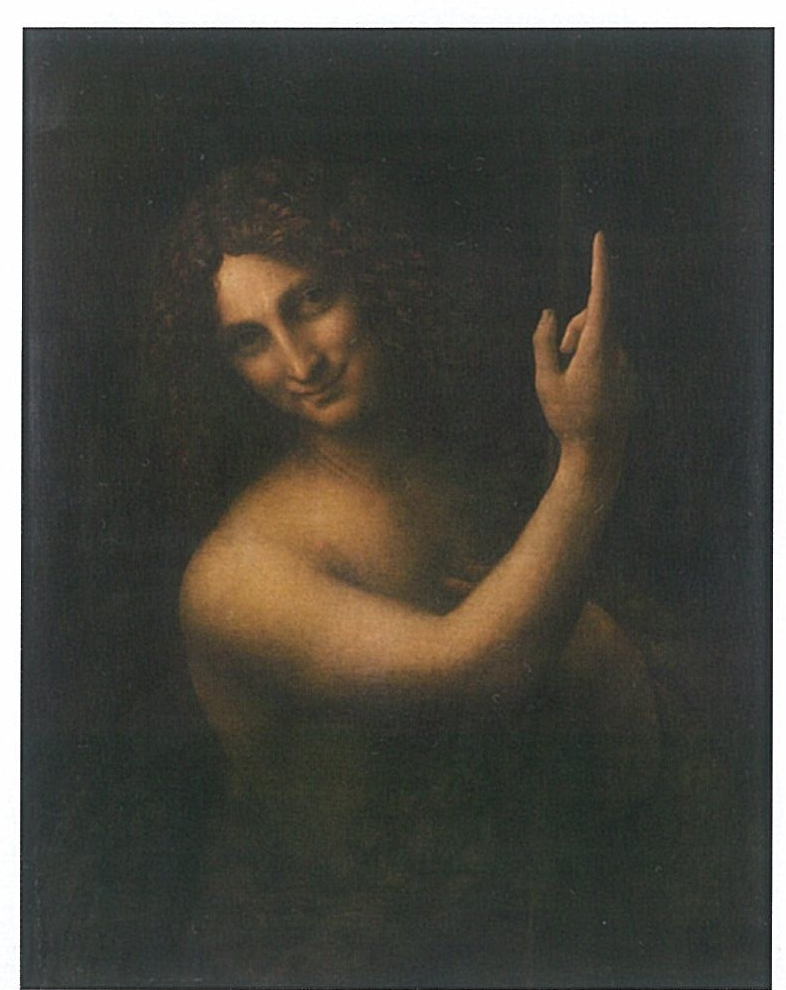
As we approach Christmas, our thoughts invariably turn to Jesus Christ. Here is a selection of paintings from the Louvre in Paris which might make our Yuletide spirits soar!

Virgin and Child with St. John the Baptist

Virgin and Child with St. John the Baptist

The Virgin and Child with St. Anne

The Virgin and Child with St. Anne

John the Baptist

John the Baptist

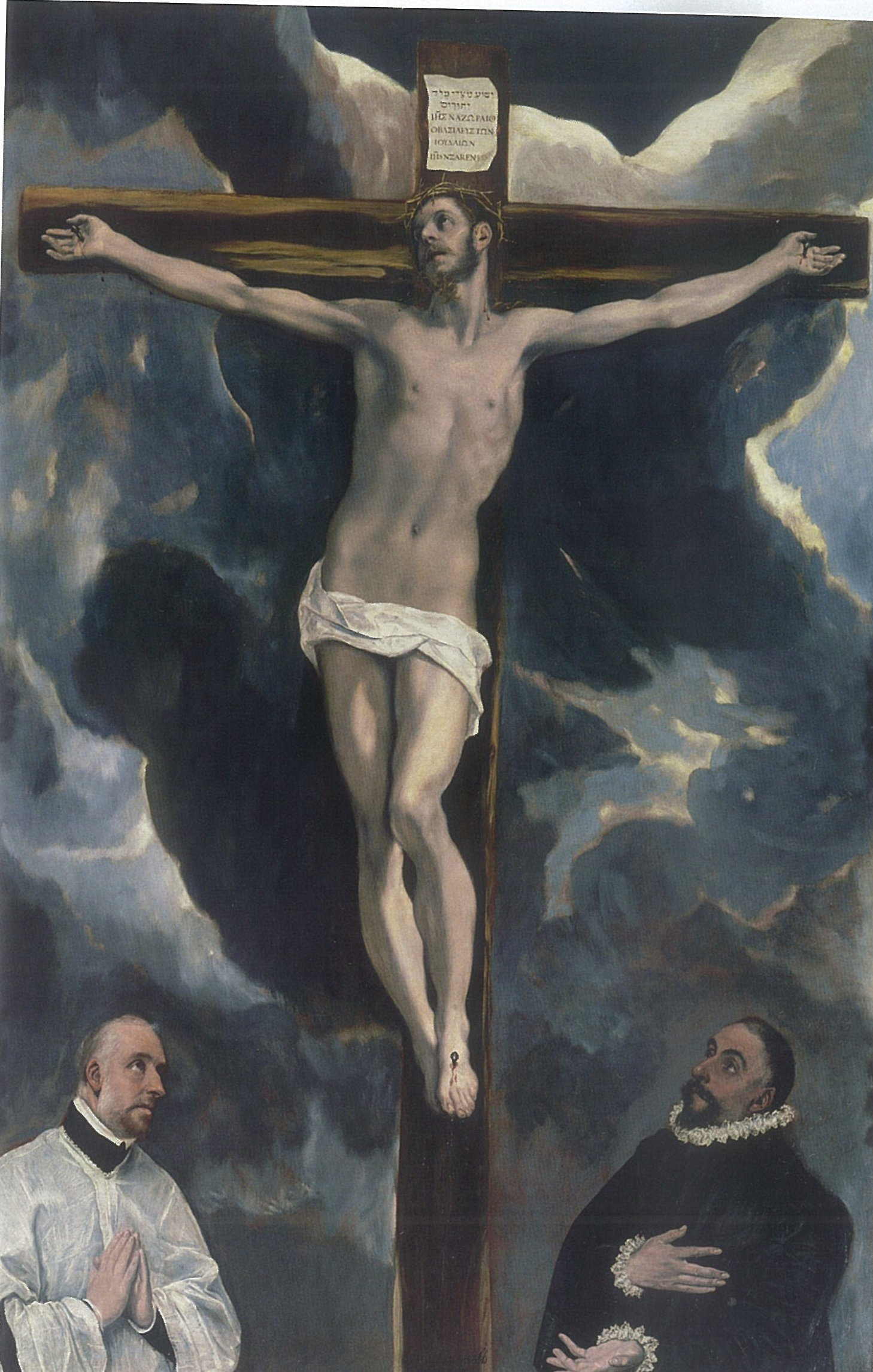
Christ on the Cross

Christ on the Cross

One truly marvels at the passion of the artists who would have toiled hard to create these exquisite works of art. One also feels grateful to the persons who have caused these to be preserved for the sake of posterity.

Merry Christmas!

[Related Posts:

https://ashokbhatia.wordpress.com/2014/12/12/a-saunter-down-the-louvre-part-1

https://ashokbhatia.wordpress.com/2014/12/22/a-saunter-down-the-louvre-part-3

https://ashokbhatia.wordpress.com/2014/07/29/dear-lady-paris%5D

Read Full Post »

Louvre Paris_July_2011

When one is in Paris, can one avoid walking down the galleries of the most visited museum on our planet – the Louvre?

With more than 380,000 objects and 35,000 works of art on display, spread over an area of 60,600 square meters, it beckons connoisseurs of art and lay persons alike. Understandably, one is never having adequate time and energy at one’s disposal to be able to do justice to the lovingly displayed objects in its several galleries.

The Apollo Gallery

The Apollo Gallery

The Eastern, Egyptian, Greek and Roman antiquities transport one back in time to the era of pharaohs, pyramids and the Sphinx.

Great Sphinx

Great Sphinx

Squatting Scribe

Squatting Scribe

Rampin Horseman

Rampin Horseman

Nefertiabet's Stele

Nefertiabet’s Stele

Female Statue

Female Statue

Head of Female Figurine

Head of Female Figurine

The display of sculptures falls into two distinct groups: the French sculptures in the Richelieu wing, and the foreign sculptures in the Denon wing.

Christ on the Descent from the Cross

Christ on the Descent from the Cross

St. Mary Magdalene

St. Mary Magdalene

Diana the Huntress

Diana the Huntress

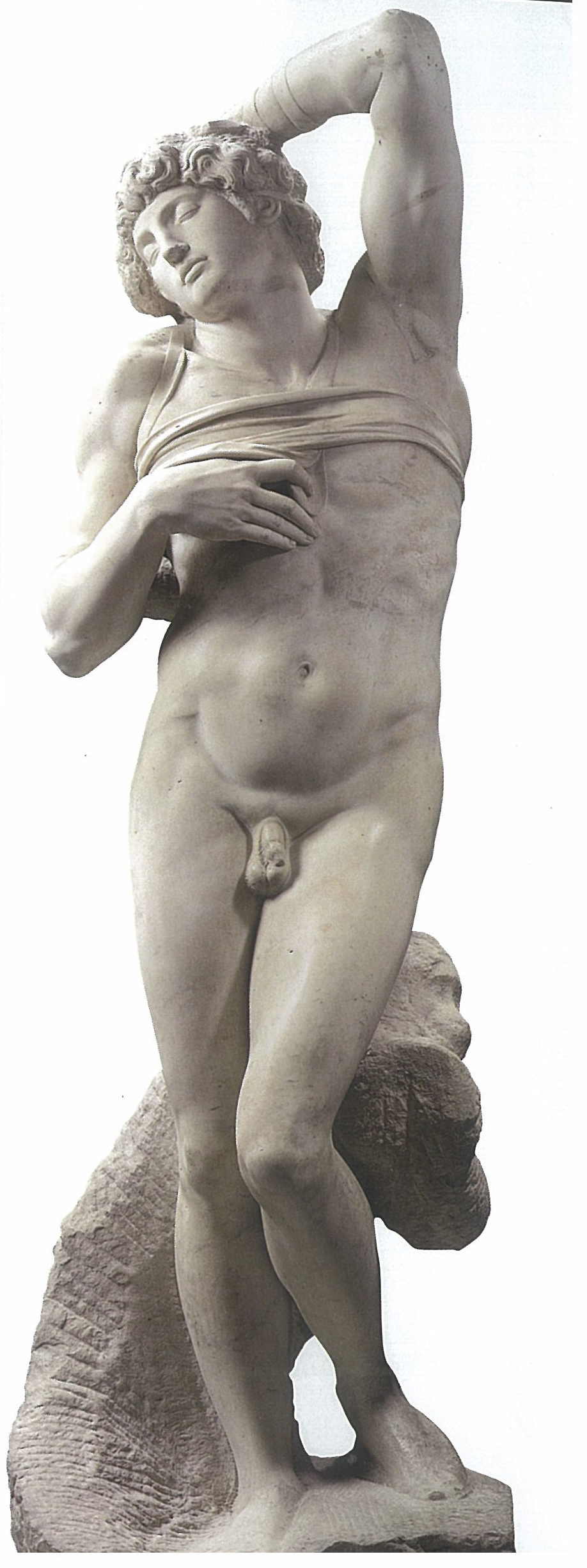
The Dying Slave

The Dying Slave

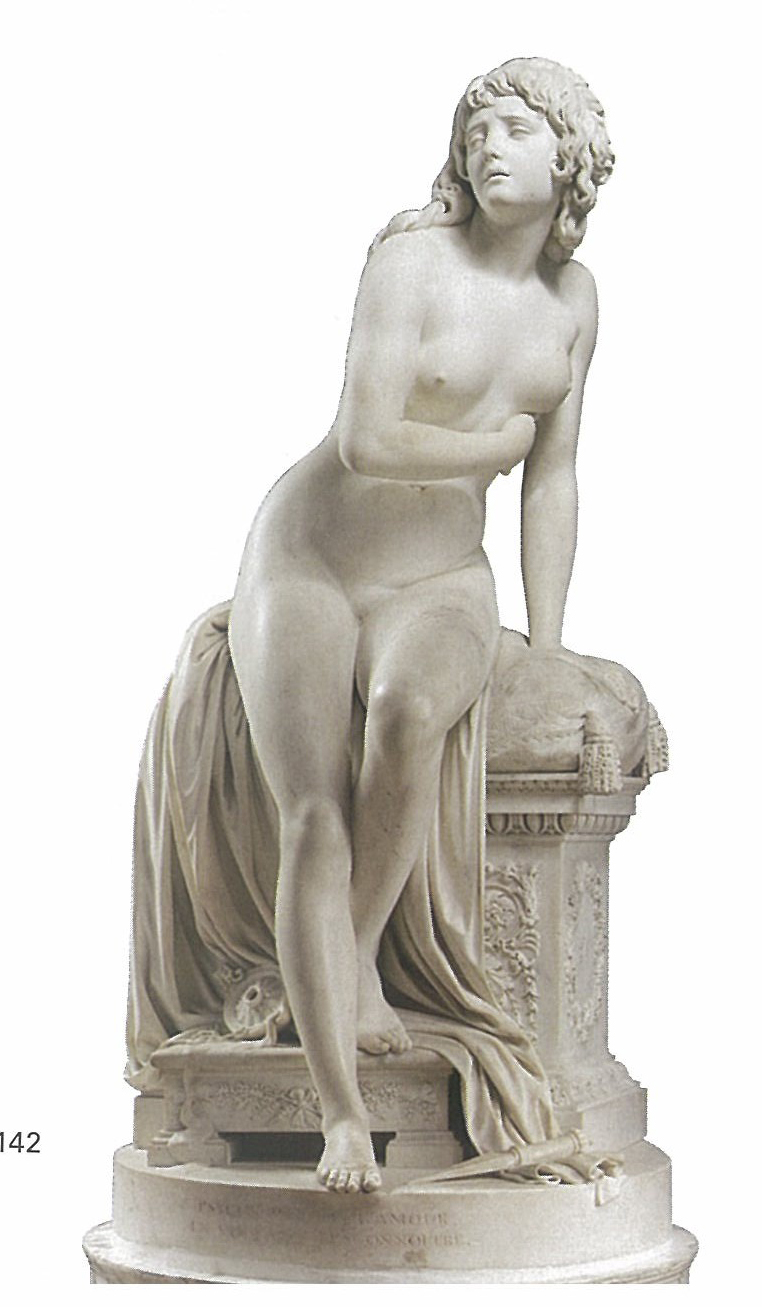
Psyche Abandoned

Psyche Abandoned

Psyche Revived by Cupid's Kiss

Psyche Revived by Cupid’s Kiss

An exquisite collection, to say the least. One could spend weeks together to soak in the brilliance of the masterpieces on display at the Louvre.

[Related Posts:

https://ashokbhatia.wordpress.com/2014/12/15/a-saunter-down-the-louvre-part-2

https://ashokbhatia.wordpress.com/2014/12/22/a-saunter-down-the-louvre-part-3

https://ashokbhatia.wordpress.com/2014/07/29/dear-lady-paris%5D

Read Full Post »

We came and courted you for a brief time,

Keen to explore your many charms we were told you possess;

Your physical assets we could see we found irresistible,

Qualities of your kindly soul your helpful denizens made us assess.IMG_1194

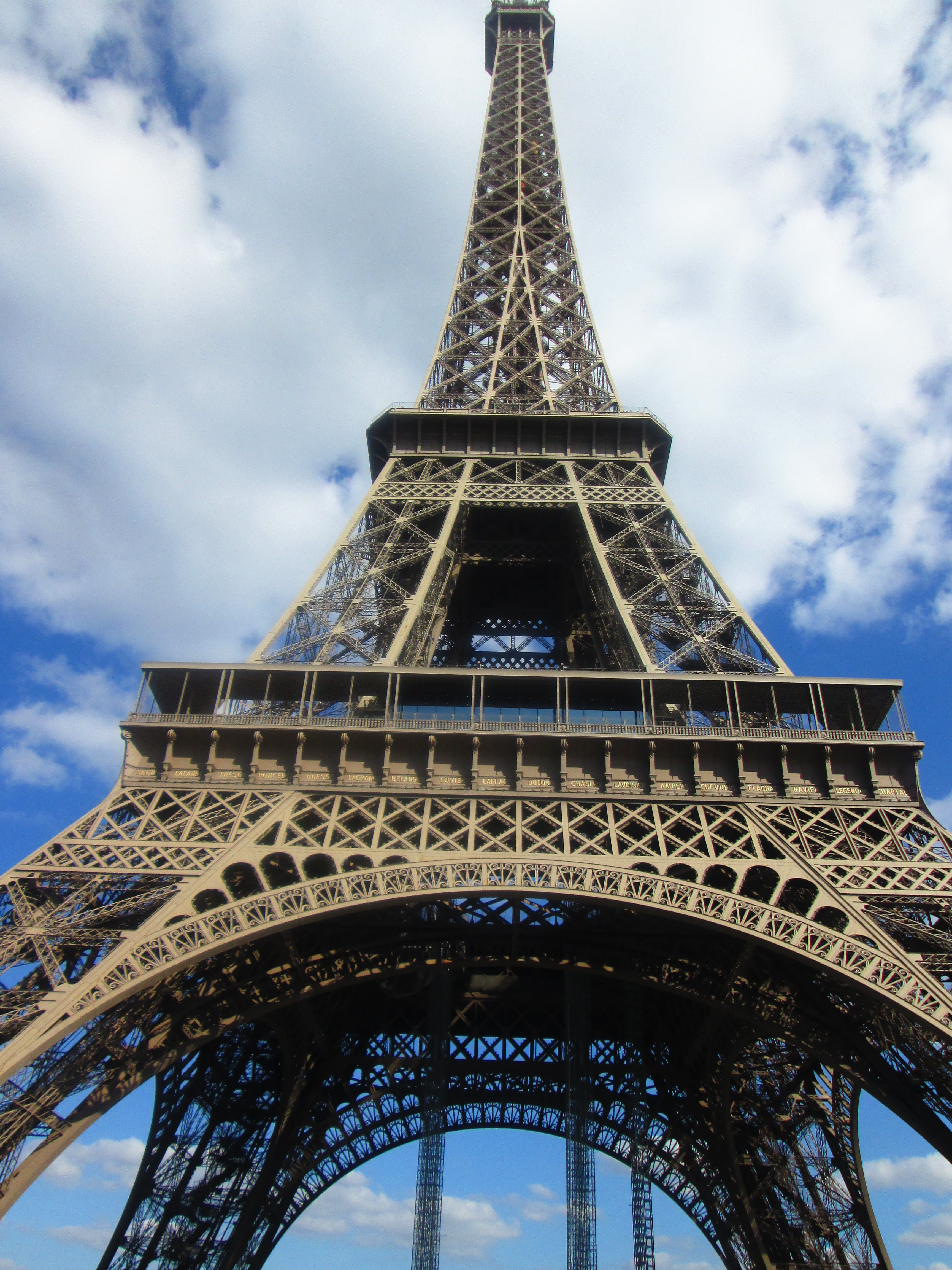
The Eiffel Tower proved to be as magnificent as its pictures had made us believe,

We learned of its role in advancement of science and visited the underground bunkers vast;

We marvelled at its elaborate elevator mechanisms and the general attention to detail,

Enjoyed the view from the top, shivering in the strong chilled breeze blowing past. Paris Obélisque_de_la_Concorde

The hunchback at the Notre Dame de Paris we could not locate,

The inner precincts were sombre, the performers outside nimble and smart;

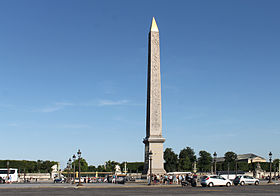
The Luxor Obelisk took us back in time by a couple of millennia,

La Madeline and other structures held us spellbound, their architectural grandeur playing an important part.

IMG_1243

The Louvre had us in enthrall as we waltzed through its corridors rich in cultural heritage,

Mona Lisa, Venus and a multitude of others conspired to keep us riveted, not to part;

The Egyptian Gallery left us simply awe-struck, the beauty of sculptures cast a spell,

Grateful to those who have had the vision to preserve such magnificent works of art.

 IMG_1190

The Arc de Triomphe reminded us of your brush with history,

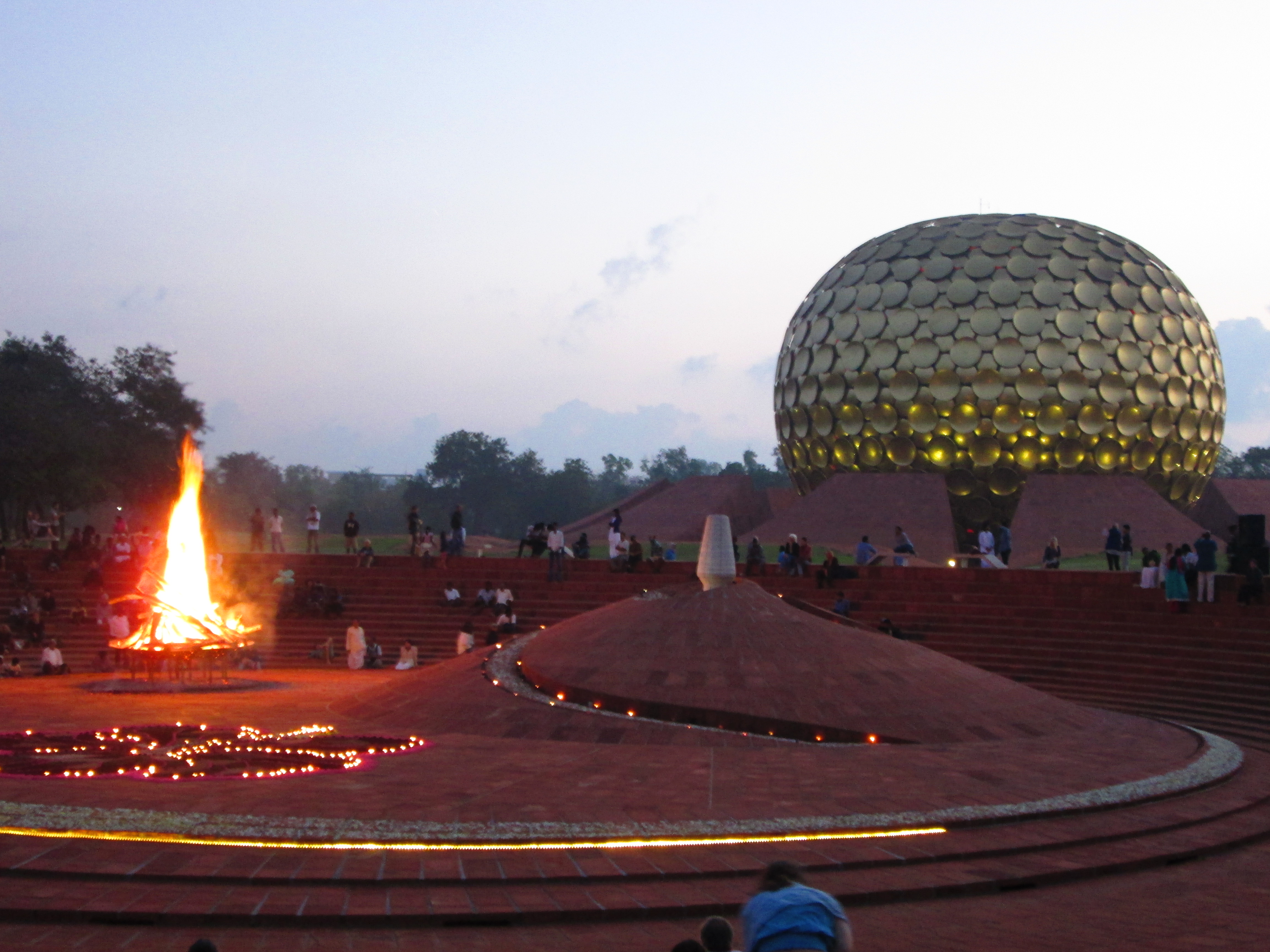
Reminding us of India Gate in New Delhi and the modest Aayi Mandapam at Pondicherry;

The Champs-Elysees showcased the best that you have on offer,

International brands, famous buildings, wide-eyed tourists not in a hurry.

 IMG_1142

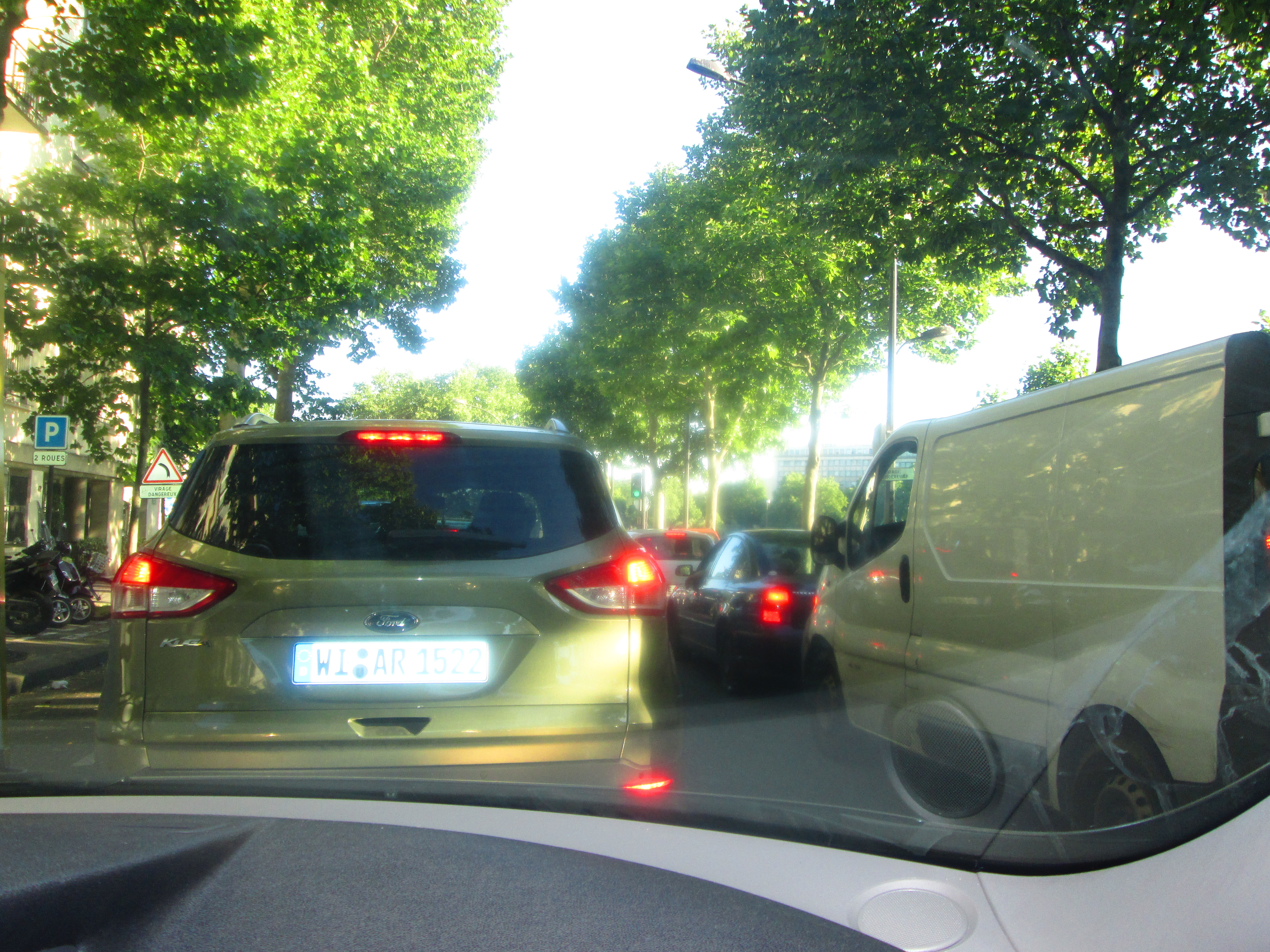
The tree-lined avenues were charming, so was a cruise down the Seine,

Public conveniences we found in good shape, the multi-modal transport system we enjoyed too;

Our hearts went out to the much hassled drivers crawling through your congested roads,

Those in Pondicherry who practice the art of aggressive driving could perhaps teach them a trick or two.

IMG_0446

Visiting you only whetted our appetite to explore so many of your other attractions,

We wish you and your denizens a balanced and peaceful life, we do not grudge your modernity;

Even though you continue to revel in a materialistic life full of chutzpah and glamour,

You gifted Mother to us, spreading the message of universal brotherhood and spirituality.

Read Full Post »

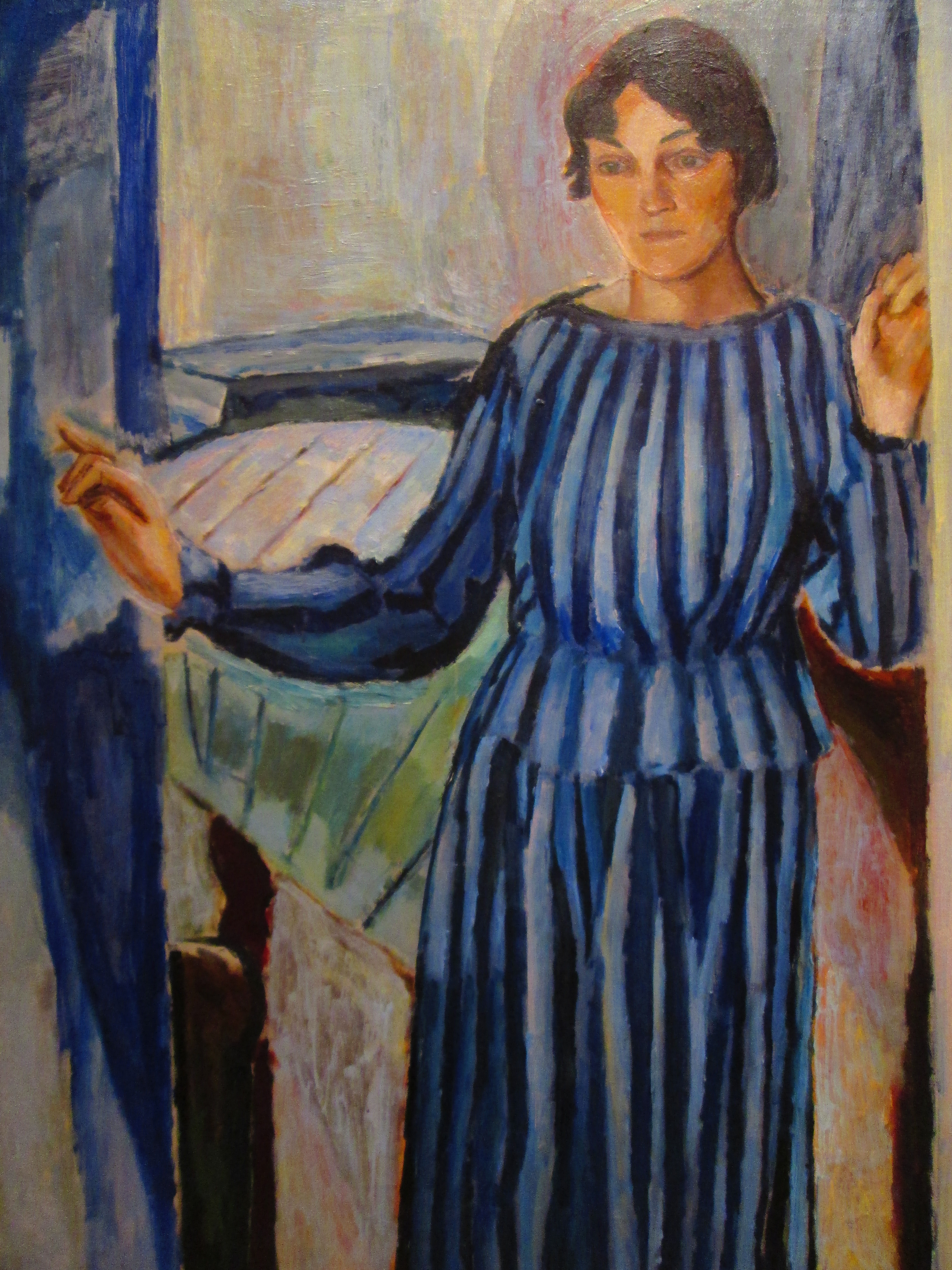
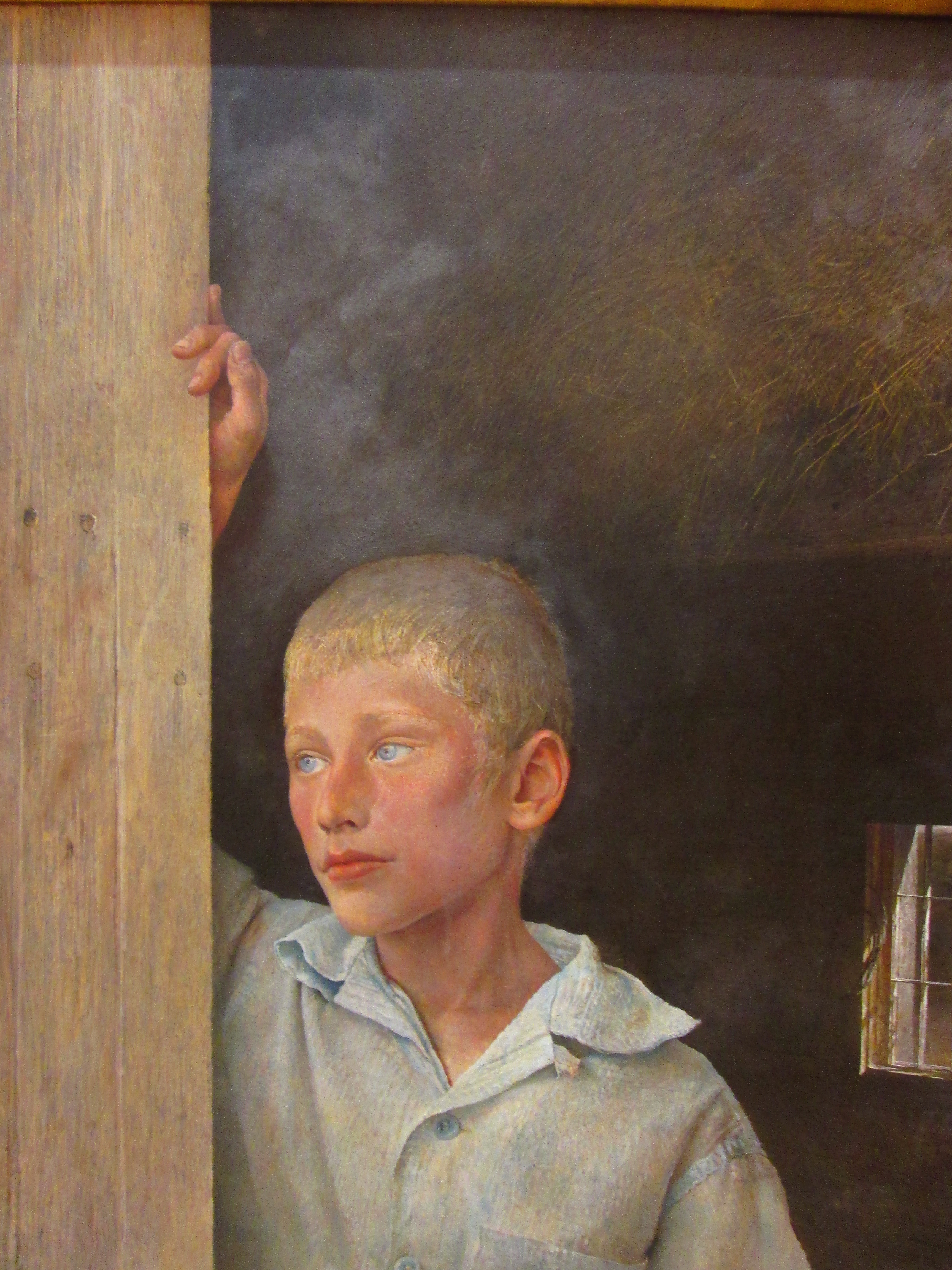
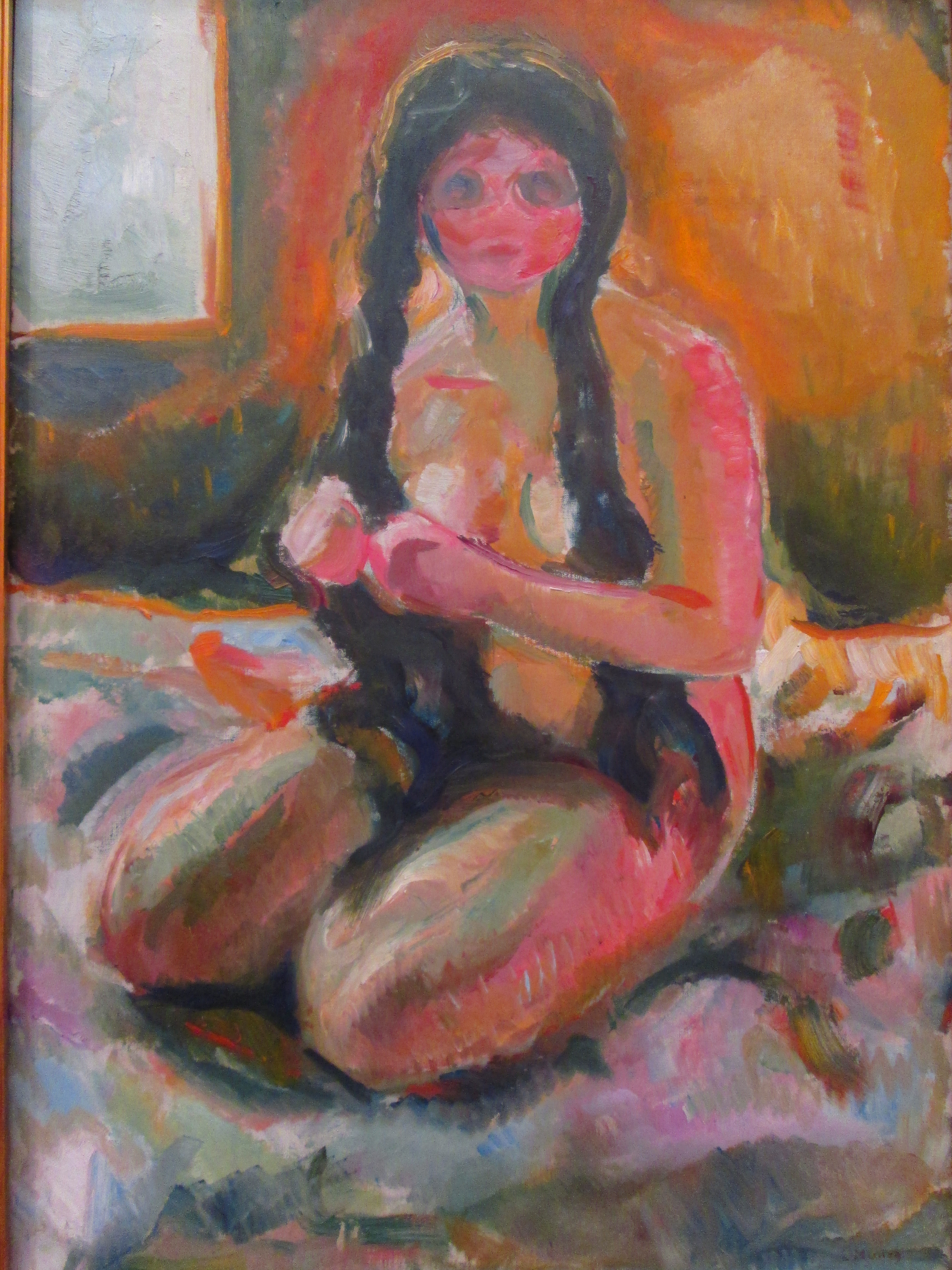
A friend suggested visiting the National Gallery in Oslo. Having had the opportunity of admiring the works of Leonardo da Vinci, Michelangelo, Pablo Picasso and others in the last few years, I was naturally curious as to what Norwegian artists had come up with in the past. The visit turned out to be a truly instructive one. I realized the depth and range of work done by painters as well as sculptors and marvelled at the passion and artistic fervour of the artists concerned.IMG_1716

Founded in 1837, the National Gallery houses Norway’s largest public collection of paintings, drawings and sculptures. In its permanent and temporary exhibitions, the museum presents older art, with principal emphasis on art from Norway.IMG_1652

Highlights from the collection are shown in the permanent exhibition “The Dance of Life – The Collection from Antiquity to 1945”.IMG_1664

The exhibition presents a chronological overview of more than 300 Norwegian and international masterpieces from the Renaissance, the Baroque period, Romanticism, Realism, Impressionism, Symbolism, Cubism and modern abstract art. IMG_1658

Special attention is devoted to paintings by J.C. Dahl and Romanticism, Christian Krohg and Realism, Edvard Munch’s renowned works, as well as Norwegian evocative painting from the turn of the last century.The_Scream

Central attractions include Edvard Munch’s The Scream and Madonna and paintings by Cézanne and Monet.IMG_1672

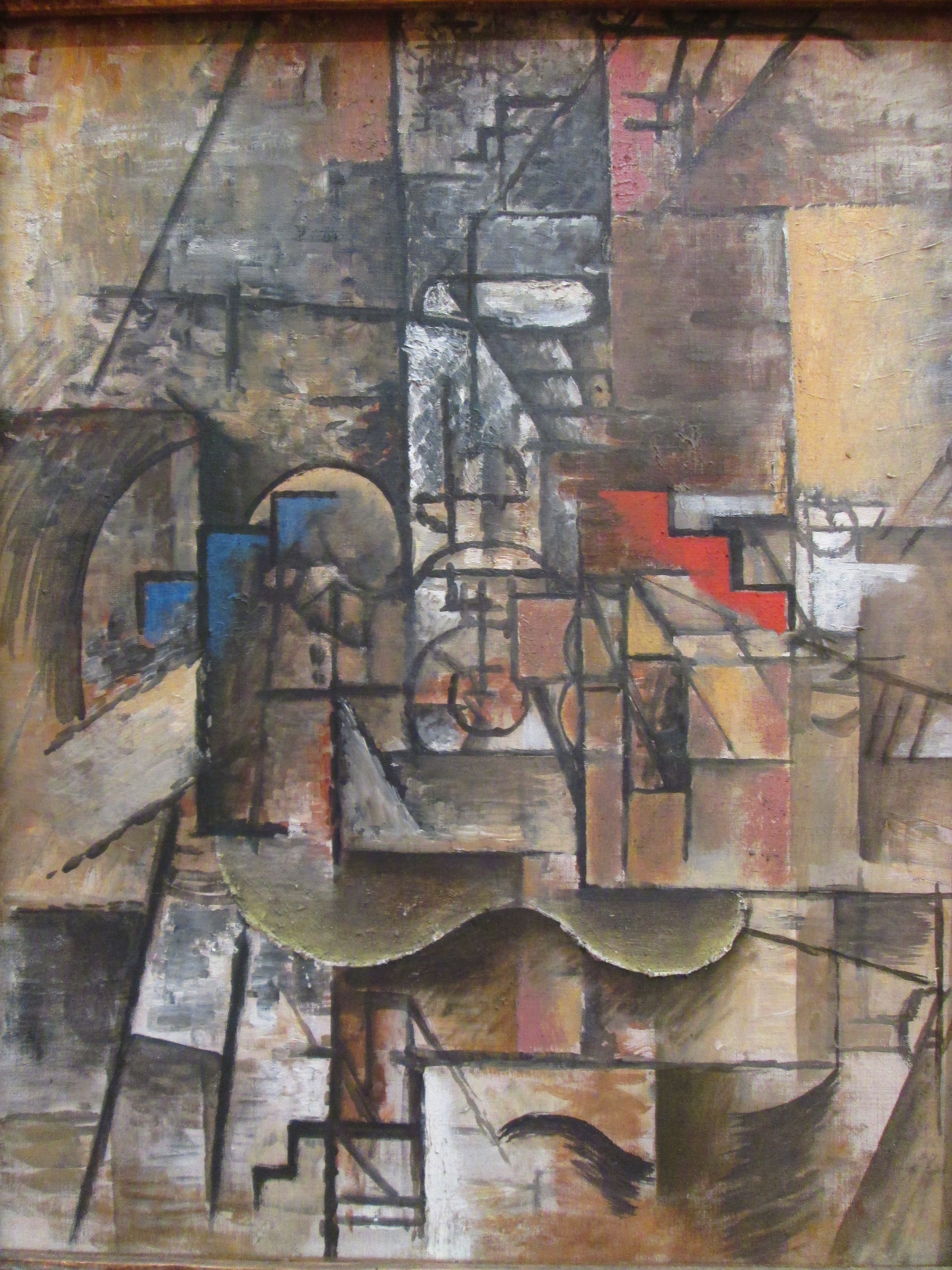
Paintings by Picasso and several other artists are also on display.IMG_1683

In the exhibition on abstract art, one could see some striking works. A particular one I found of great interest was entitled ‘The Universal Flag.’IMG_1638

With more than 4,000 paintings, 1,000 sculptures and nearly 50,000 works on paper, the National Gallery’s art collection is the most comprehensive and wide ranging in Norway, and one of the largest of its kind in Northern Europe.IMG_1692

Michelangelo is said to have taken four years to adorn the ceiling of the Sistine Chapel. Leonardo da Vinci is said to have taken three years to finish ‘The Last Supper.’ Dahl is said to have taken six years to paint ‘Stalheim’; remarkably, he did it while he was nowhere near a fjord in Norway!Dahl-Stalheim

All these eminent artists worked in an age devoid of photography, computers, internet, trains, aeroplanes and mobile phones. They suffered innumerable hardships while creating their works. Since they simply loved what they were doing at the time, they would have surely derived immense joy and satisfaction while pursuing their creative goals.IMG_1678

Leads one to wonder how creativity originates. We may know the external circumstances and the trials and tribulations they faced. We may marvel at the outstanding works of art they have produced. We may surmise as to the motivation and the feeling behind each work. But would we ever know the precise moment when the germ of an idea really hit them? How long did it simmer within them before taking a tangible shape? Unless they have left behind an autobiographical account, or someone else has covered their life and times in some detail, we might never be able to identify the real point of origin of their creative outburst.IMG_1689

Surely, all great artists have a streak of divinity in them. Besides, they have passion for their form of art. Patience and perseverance would be only two of their several sterling qualities. They would also have been lucky to get mentors who spotted and nurtured their talents. Some blossomed in adversity, enabled perhaps only by their innermost conviction.IMG_1702

We may not know the exact point of conception. We may be unaware of the technical details or the process of eventual delivery. But we shall be forever grateful that they have left behind a rich tapestry of the dance of life, capturing its precious moments for posterity. It is a legacy which continues to attract, entice and inspire artists and laymen alike all over the world.

Note: ‘Scream’ and ‘Stalheim’ reproductions are courtesy Wikipedia. Others are a result of my photographic skills, which are severely limited. Please bear with me for deficiencies – if you notice any – in these.  

Read Full Post »

Quite a few amongst us are fed up with our daily dose of bad news. Wars – covert or overt. Disasters – natural or otherwise. Genocides. Murders. Rapes. Income inequalities. Social prejudices. Accidents. Every single day, the media keeps reminding us of what is wrong with our world.

During the last three weeks, we were fortunate to have come face to face with institutions and bodies which try to do something good for the world.

Here is a quick recap of such encounters of the pleasant kind.

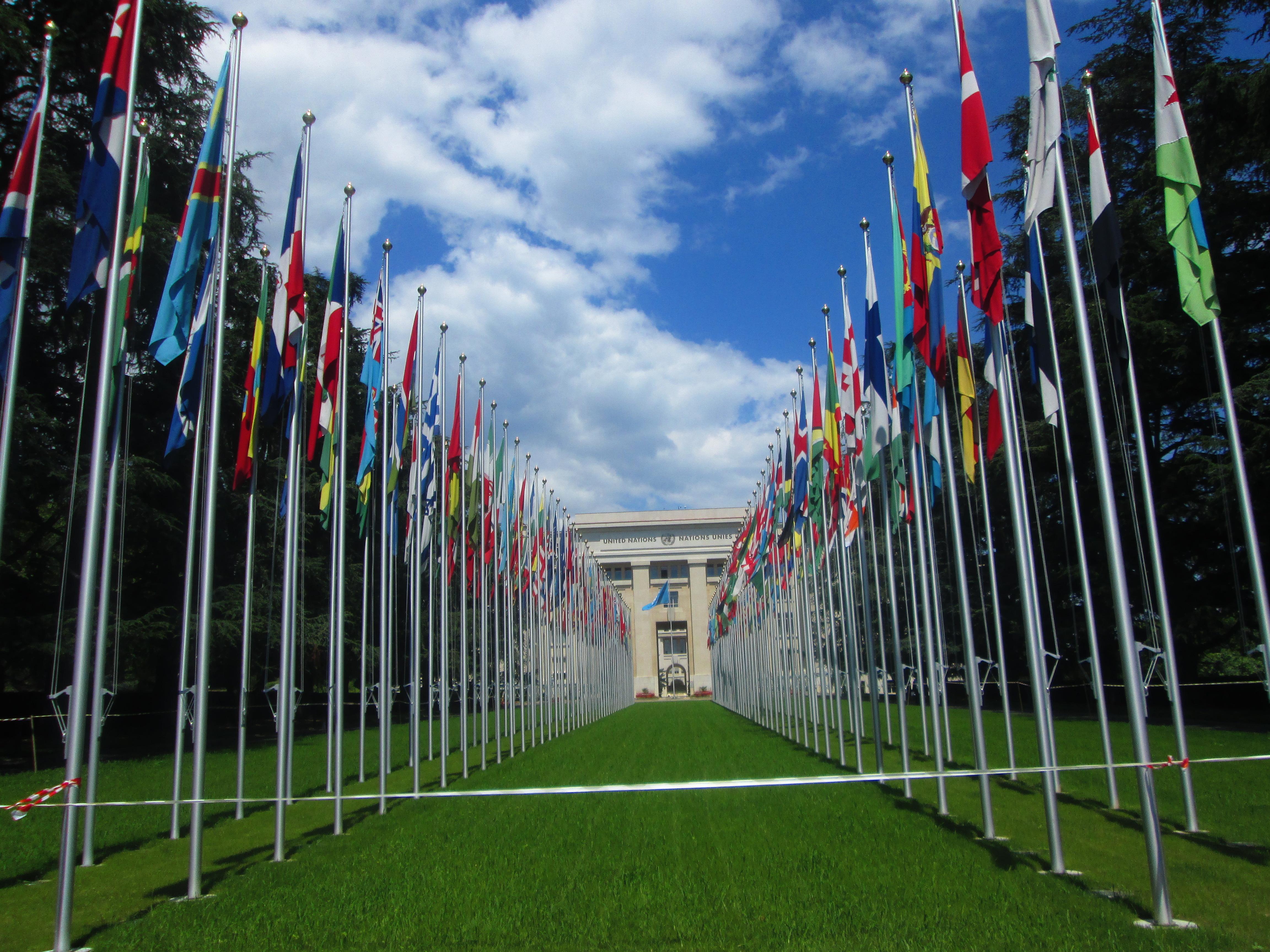
THE UN OFFICE at Geneva

A guided tour of the Palais de Nations in Geneva makes us realize the way the UN functions and the organs through which it operates in fields as diverse as health, education and sustainable development, besides matters of political import.

Palais de Nations

Palais de Nations

Other than United Nations administration, the UN Office at Geneva also hosts the offices for a number of programmes and funds. As many as 23 organs of the UN are located at Geneva – such as the UN Conference on Trade and Development (UNCTAD), the UN Office for the Coordination of Humanitarian Affairs (OCHA), the UN Economic Commission for Europe, the International Labour Organization, the World Intellectual Property Organization and the World Health Organization.

The General Assembly hall at Geneva

The General Assembly hall at Geneva

We get to witness a Human Rights Council meeting where records of countries are getting reviewed and commented upon.

The compound has impressive artefacts, including a statue of Mahatma Gandhi.

Mahatma Gandhi in the UN compound at Geneva

Mahatma Gandhi in the UN compound at Geneva

Where the League of Nations failed in 1939, the UN appears to have succeeded so far – keeping a global war at bay by a relentless effort to defuse tensions. However, several conflict zones remain active in various parts of the world, needing intervention.

The ICRC at Geneva

A visit to the global headquarters of the Red Cross brings us face to face with the kind of trauma, pain and suffering the denizens of our planet have undergone over the last 100 years.

The ICRC Headquarters at Geneva

The ICRC Headquarters at Geneva

The ICRC, established in 1863, works worldwide to provide humanitarian help for people affected by conflict and armed violence and to promote the laws that protect victims of war. An independent and neutral organization, its mandate stems essentially from the Geneva Conventions of 1949.

At the permanent exhibition, testimonies of witnesses and survivors can be heard. A section on children missing from strife-torn areas moves us deeply. Records of persons missing during both the World Wars and the attempts made to reunite families leave us wondering as to why wars are waged at all.
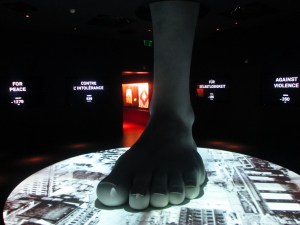
An exhibit at the permanent exhibition at ICRC

An exhibit at the permanent exhibition at ICRC

Havoc caused by natural disasters like earth quakes, tsunamis and global warming can be experienced by means of movies, working models and testimonies of witnesses.

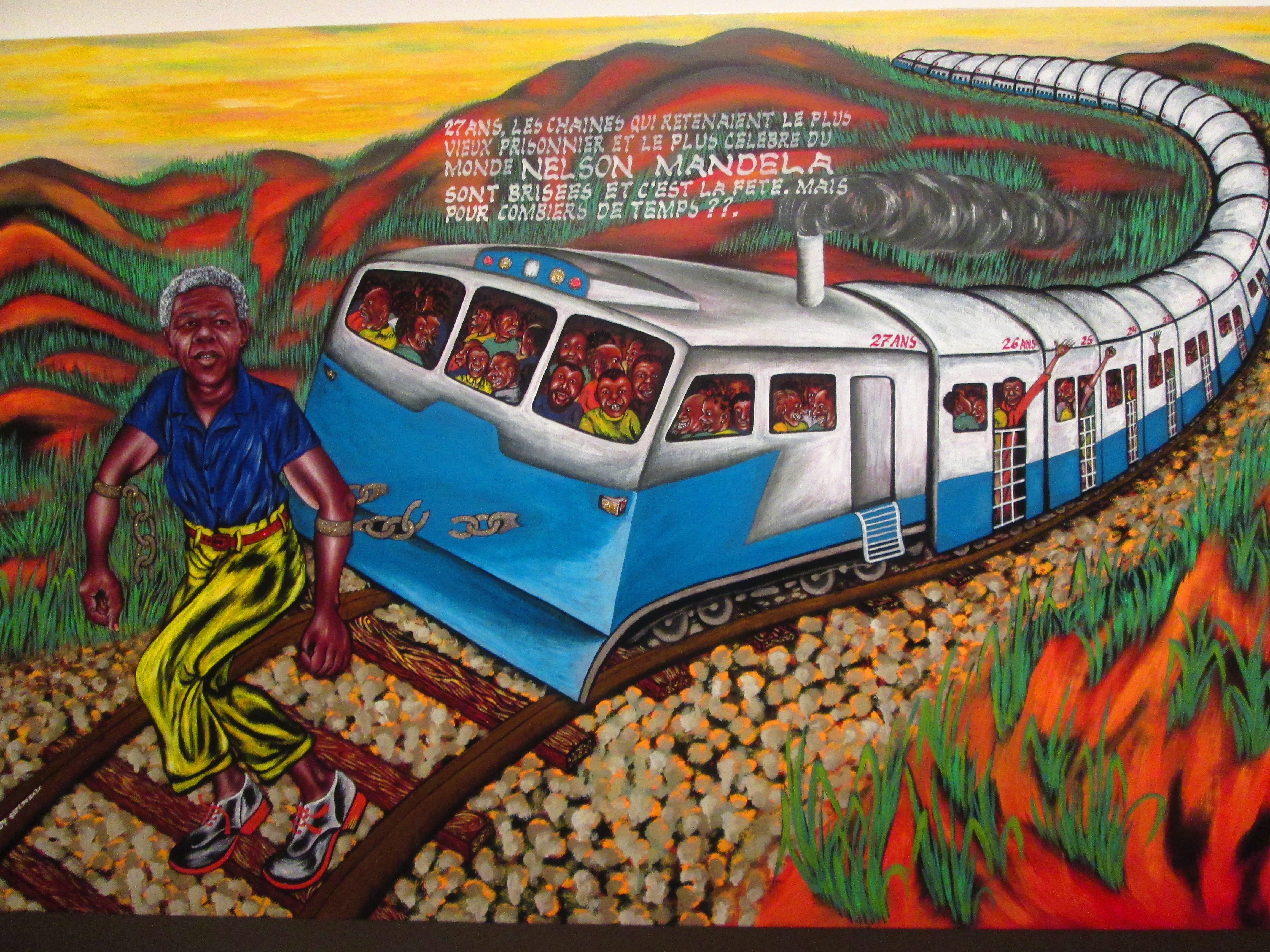
A painting lauding the efforts of Nelson Mandela

A painting lauding the efforts of Nelson Mandela

For those made of sterner stuff, some details of the treatment meted out to prisoners of war can be realized through a temporary exhibition of paintings, sculptures and short movie clips.

The NOBEL PEACE CENTER at Oslo

In an ironical twist of faith, Alfred Nobel, in his sunset years, decided to do something to help society overcome the damage some of his inventions had done. Of the five prizes conceived by him, the Peace Prize gets awarded in Norway since 1905.
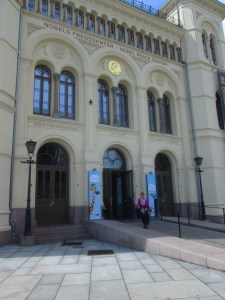
The Nobel Peace Center at Oslo

The Nobel Peace Center at Oslo

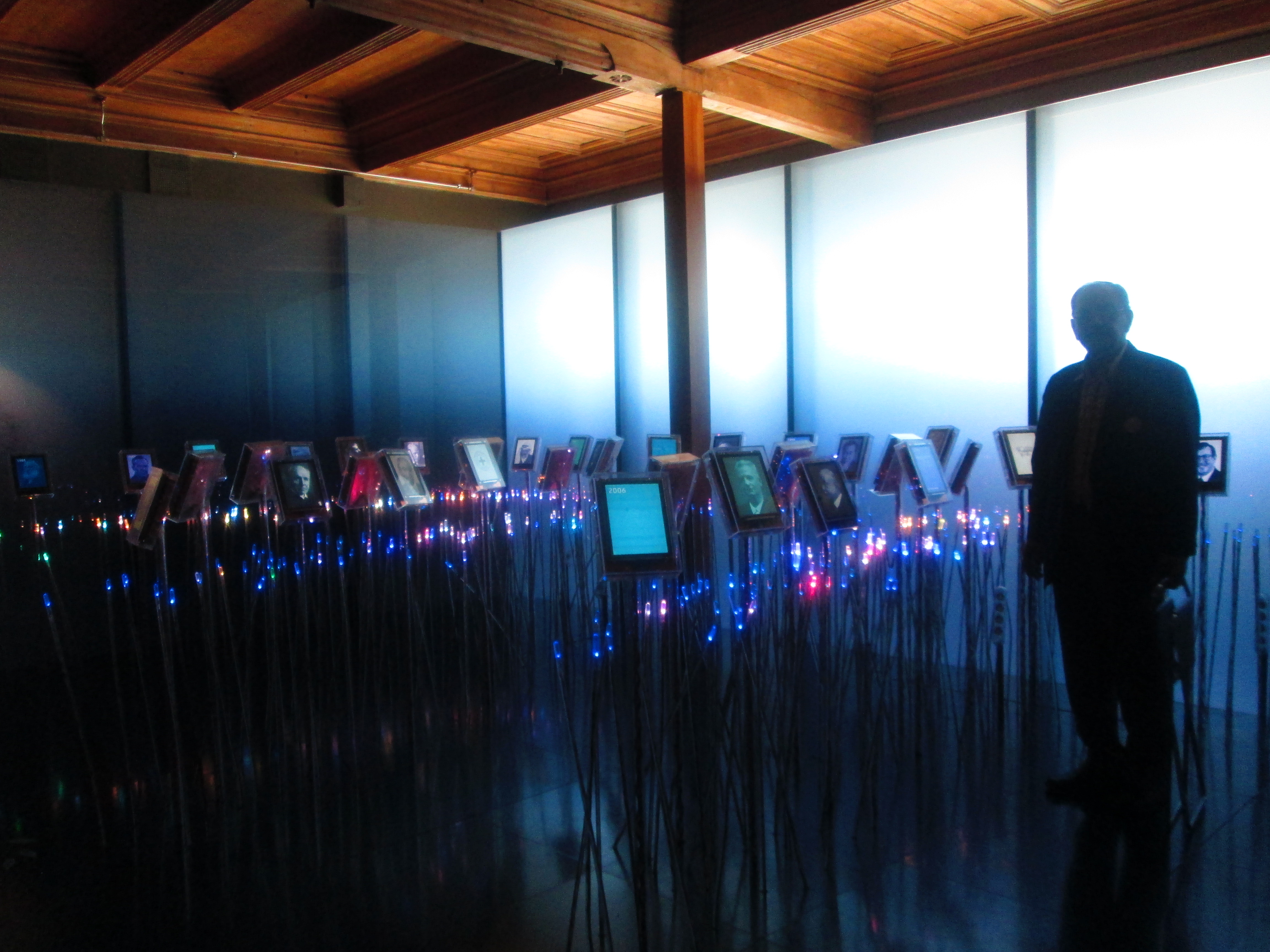
The Centre at Oslo captures the spirit behind the prize, the process of its finalization and details of all its 123 recipients till now. An electronic book about Alfred Nobel provides interesting insights into his life.

Use of technology to display the details of all the Prize recipients

Use of technology to display the details of all the Prize recipients

Activities of the 2013 winner – Organization for Prevention of Chemical Weapons (OPCW) – are on display. We get to understand how the OPCW inspectors monitor, locate and destroy chemical weapons. It is interesting for us to know that it was only in 1997 that the protocol for control of chemical weapons came into force.

In a temporary exhibition entitled ‘Be Democracy’, we learn the extent to which the democratic form of governance has become popular all across the world. In an interactive section, one can form a message supporting global peace and leave it behind.

An interactive exhibition

An interactive exhibition

Mahatma Gandhi appears at different places in the exhibition. It is a matter of deep regret that a person of his stature could never get a Nobel Peace Prize.
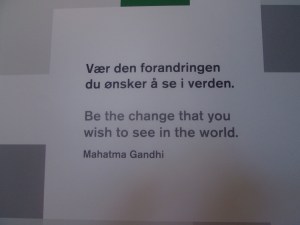
A quote from Mahatma Gandhi

A quote from Mahatma Gandhi

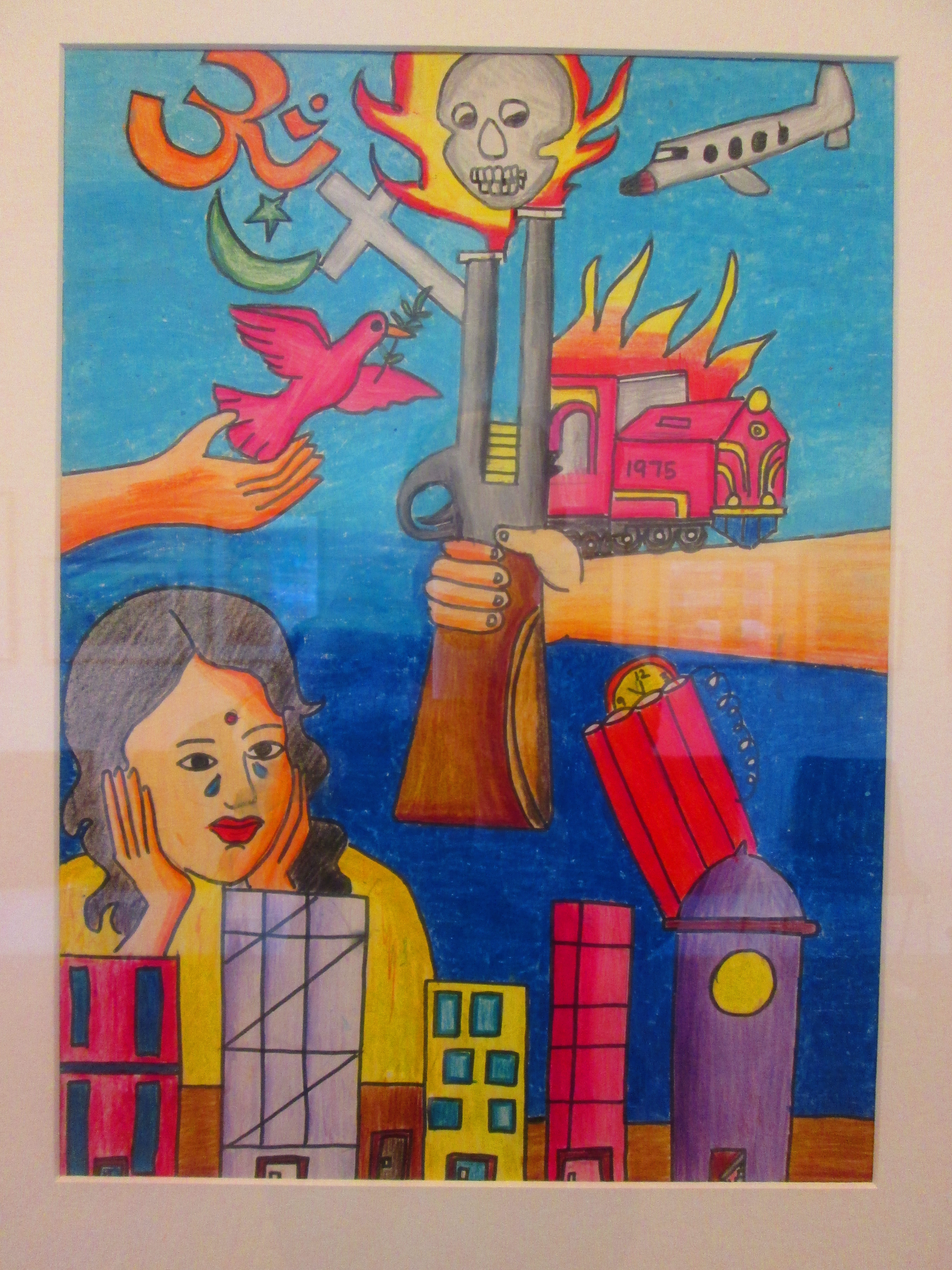
In a small room, we come across some paintings done by children of different countries. We are delighted to see three by Indian children.

A Churning and Cleansing

Global bodies which try to do something good face tremendous challenges. Better access to health and education continues to cause concern; so does the rise of terrorism, the sophistication in weaponry, the change of a bipolar world into a multi-polar one, economic predation, sustainable development and non-compliance with humanitarian laws, just to cite a few.

Stop Terrorism, Spread Peace - a painting by Sudarshan V, 12 years, India

Stop Terrorism, Spread Peace – a painting by Sudarshan V, 12 years, India

We live in times when the spread of internet has changed the way we experience and interact with the world. Use of armed drones and robots and cyber-attacks are newer challenges on the horizon.

One may scoff at the idea that peace prevails. There are conflicts all around us. Possibly these are part of a churning which takes place within the collective soul of humanity. Such churning appears to be a cleansing process, designed by nature to rid us of the poisons within our collective conscience.

Beacons of Hope for Mankind

When hatred grows with no end in sight, it generates its own momentum. That is where the role of organizations like the United Nations, the Red Cross and the Nobel Foundation assumes relevance. It is a role which earns more brickbats than bouquets and is never short of generating controversies.

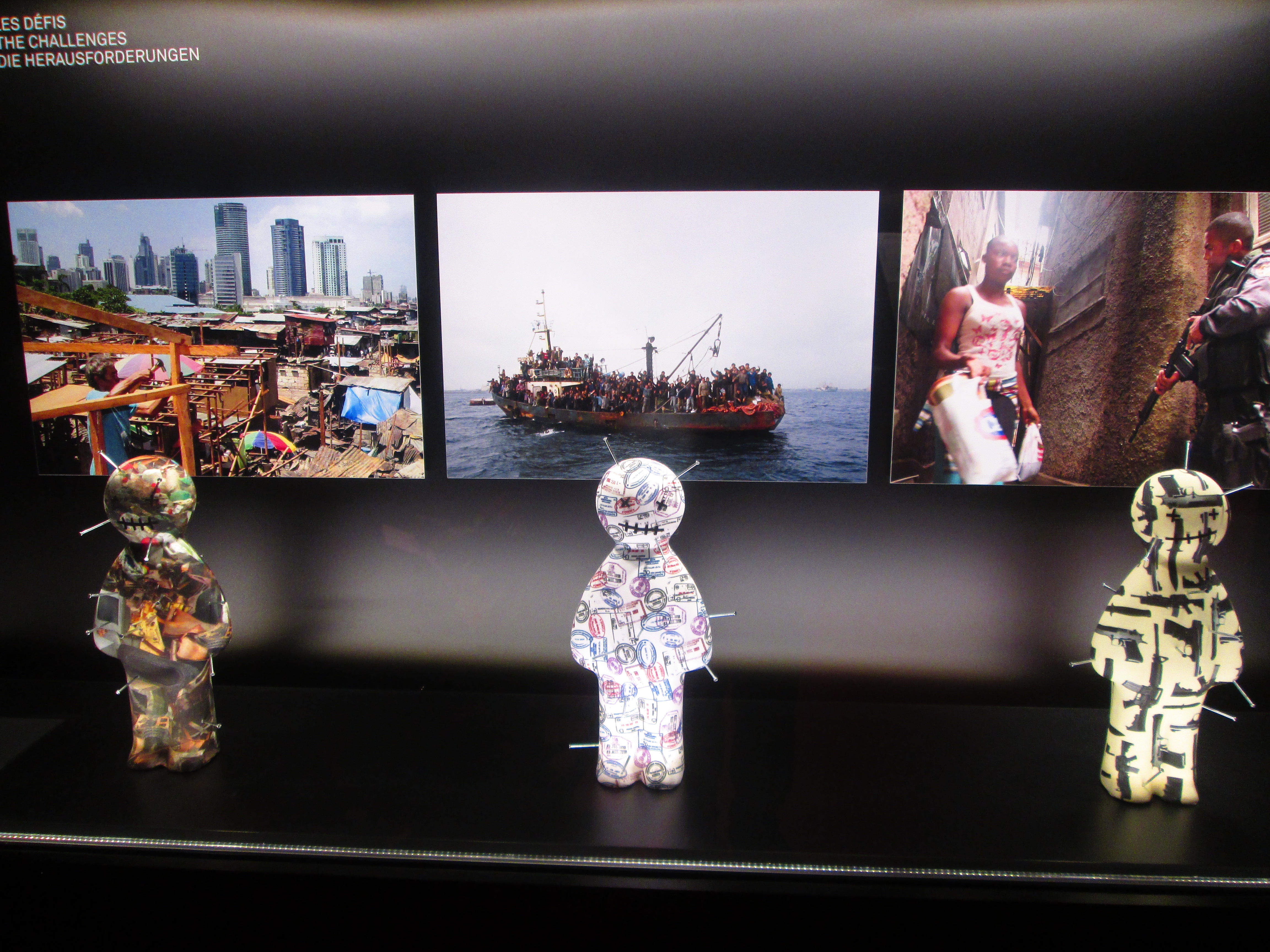
Voodoo dolls depicting the problems affecting humanity (ICRC, Geneva)

Voodoo dolls depicting the problems affecting humanity (ICRC, Geneva)

The good news is that despite political pushes and pulls, they continue to discharge their obligations towards humanity. Going forward, a conscious drive to make them more inclusive – providing better role in decision-making to the emerging economies – would surely help.

The presence of dynamic institutions and bodies which stand up for righteousness and work for the collective good assures us that there is hope for mankind. May be, a day would dawn when ‘Vasudhaiv kutumbukam’ (let the whole earth be one family) would become a reality!

Read Full Post »
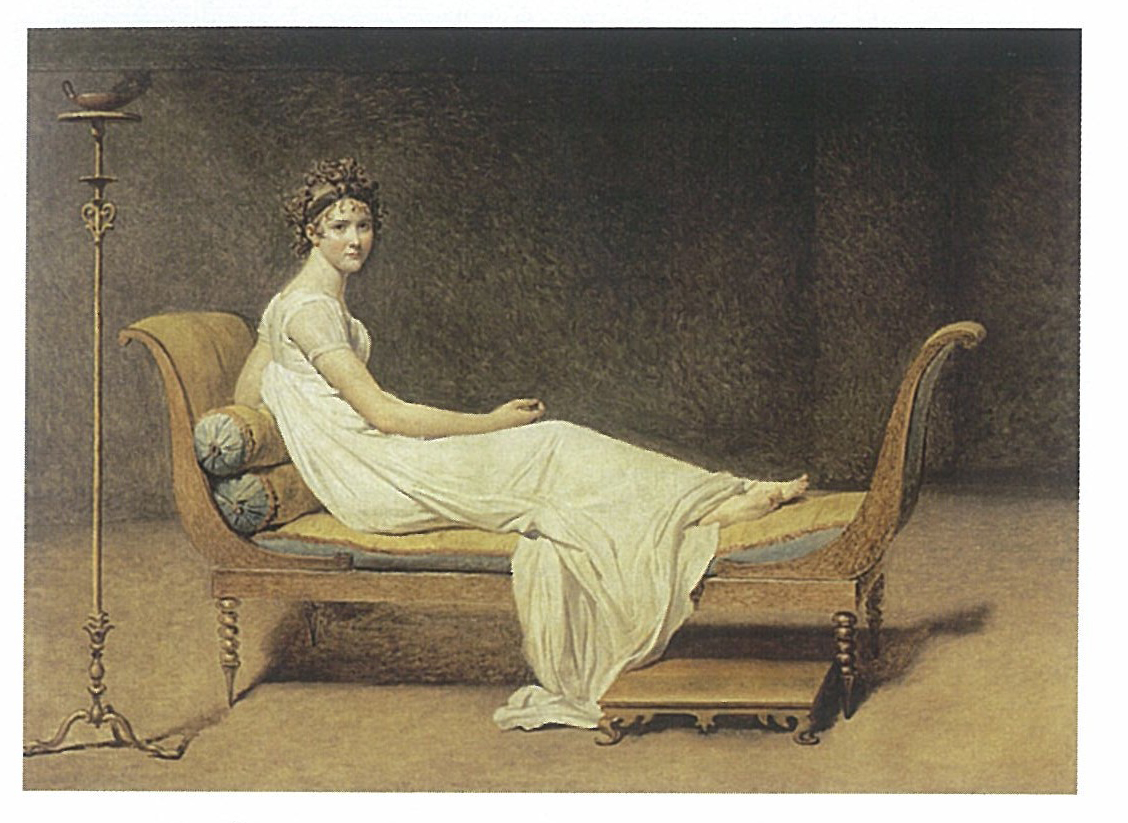
With temperatures ranging from 10 to 20 degrees Celsius, it is summer time in Norway. Flowers of all hues are in full bloom. The birds and the bees are going about their daily chores with gay abandon. Streams are in full flow. Fjords present a majestic tapestry of greenery interspersed with charming backwaters.

Denizens of the Land of the Midnight Sun are out in full force, soaking in the scarce sunlight, enjoying the greenery, swimming and indulging in other outdoor sports. That is, the ones who have not decided to take a vacation to some exotic locale in Italy, France or Switzerland.

Time to venture out and explore Oslo! We decide to start with the Oslo City Hall, which is the seat of the City Council and the City Government.

Outside the City Hall, an Astronomical Clock uses five hands to indicate time, sidereal time, the phases of the sun and moon, and eclipses.IMG_1445

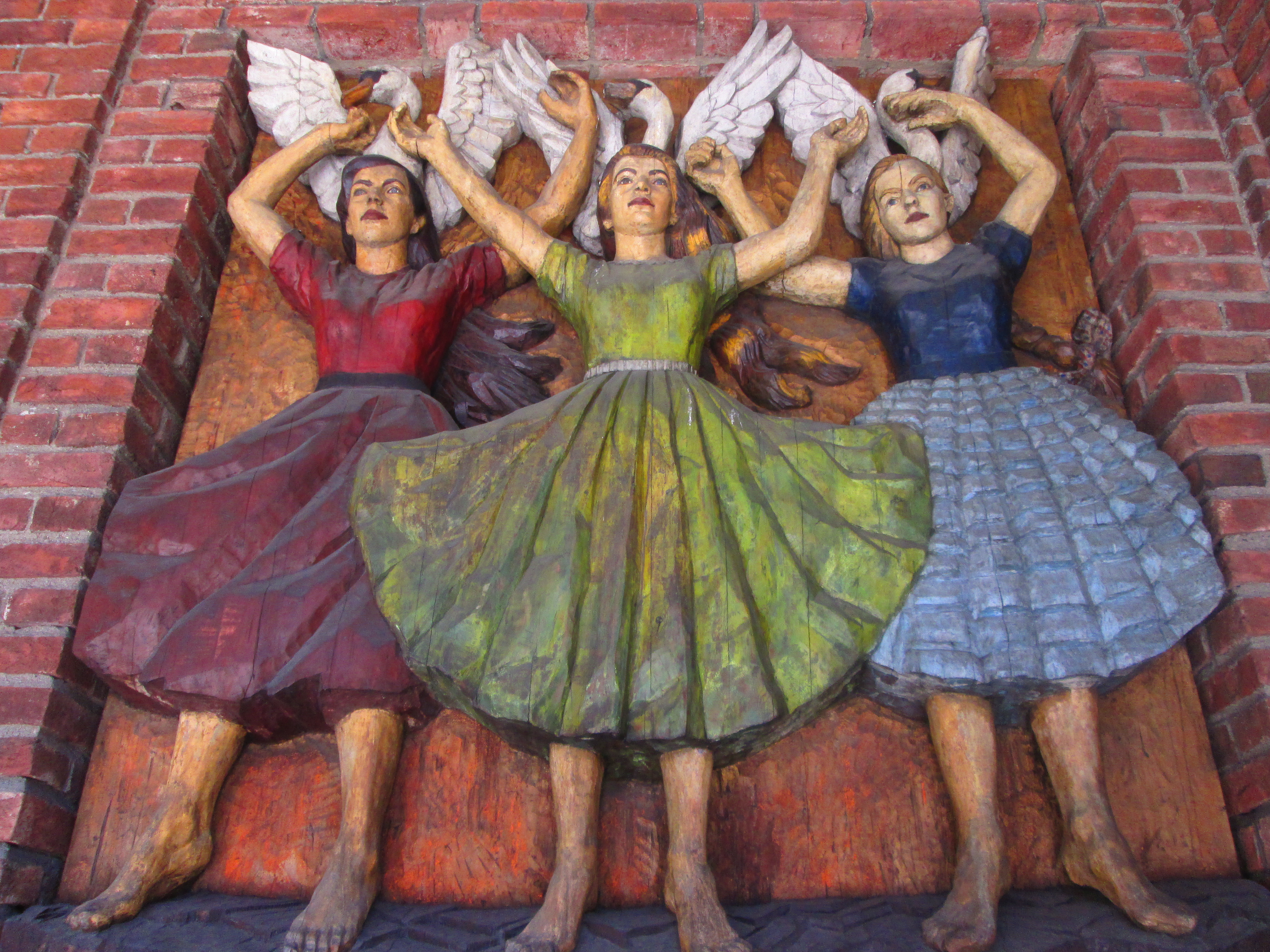
The swan maidens Alrund, Svankit and Alvit are the first ones to greet us in the outside courtyard.IMG_1425

Fables of pre-historic times are beautifully presented in finely chiselled wooden reliefs, all works of Dagfin Werenskiold.IMG_1433

Embla and Ask, the Scandinavian version of Eve and Adam – the first human beings who appear from the mythical power of creation – are also there to receive us.IMG_1435

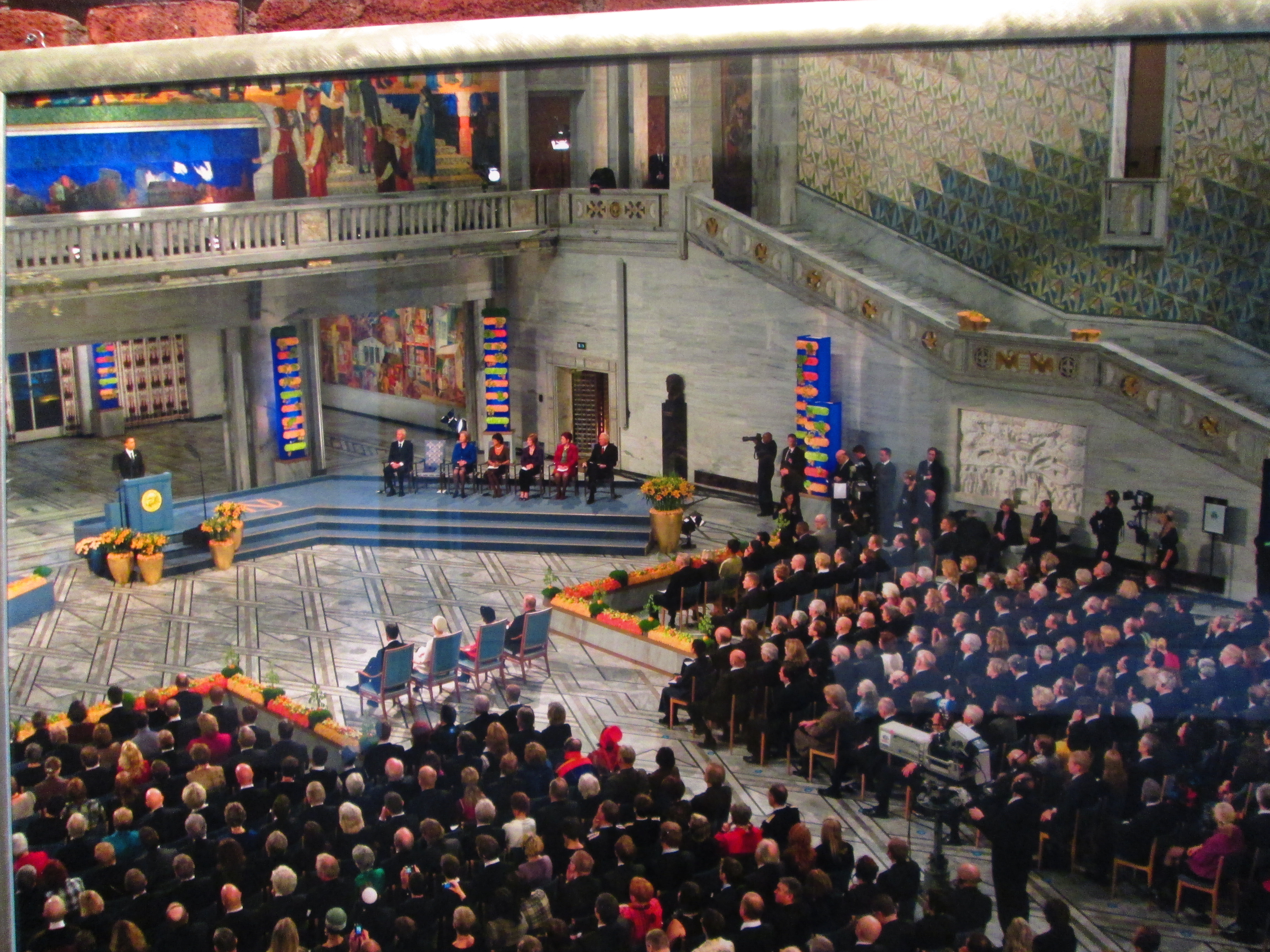
Inside, we find the main hall where the Nobel Peace Prize award ceremony takes place.IMG_1473

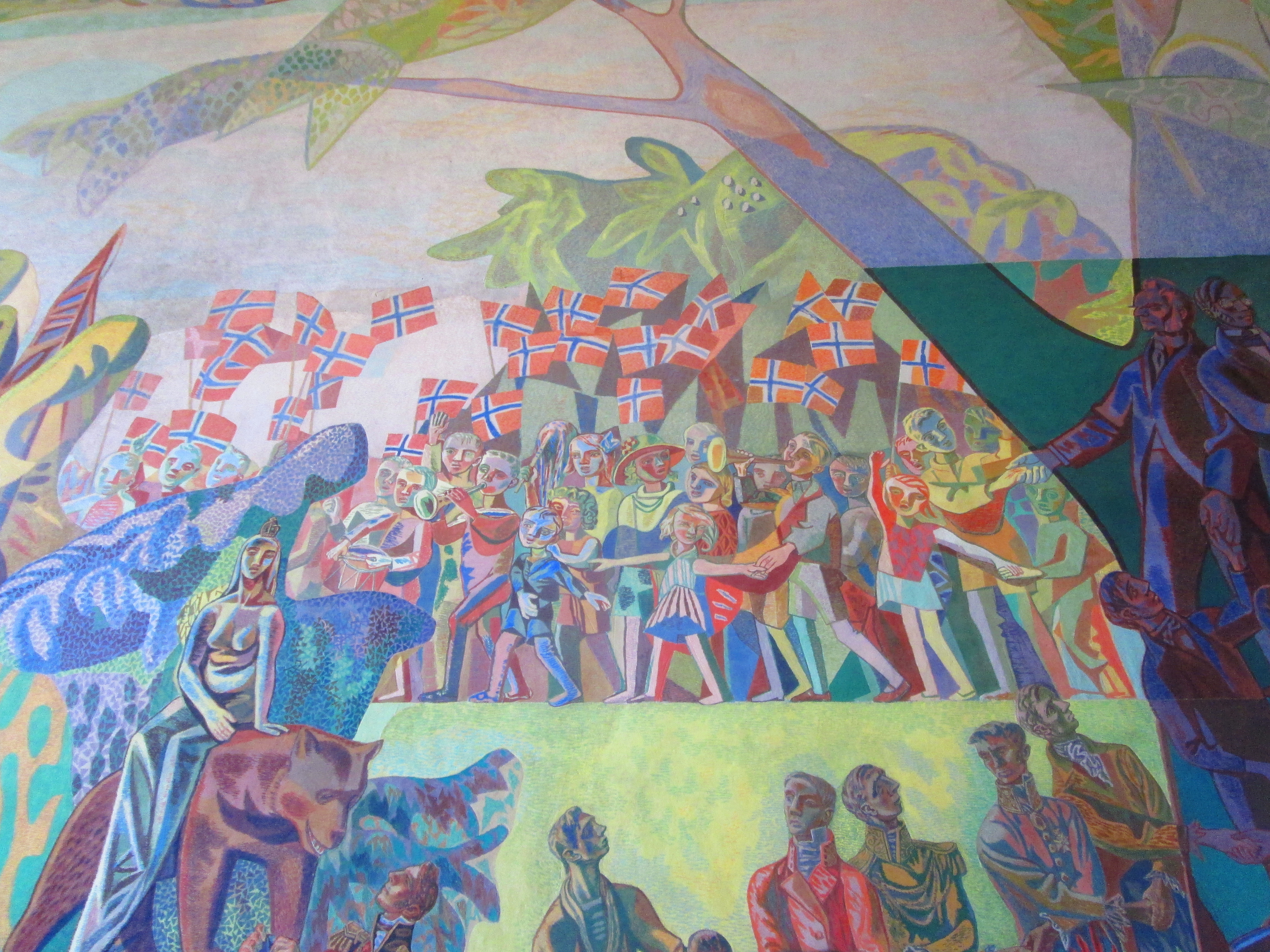
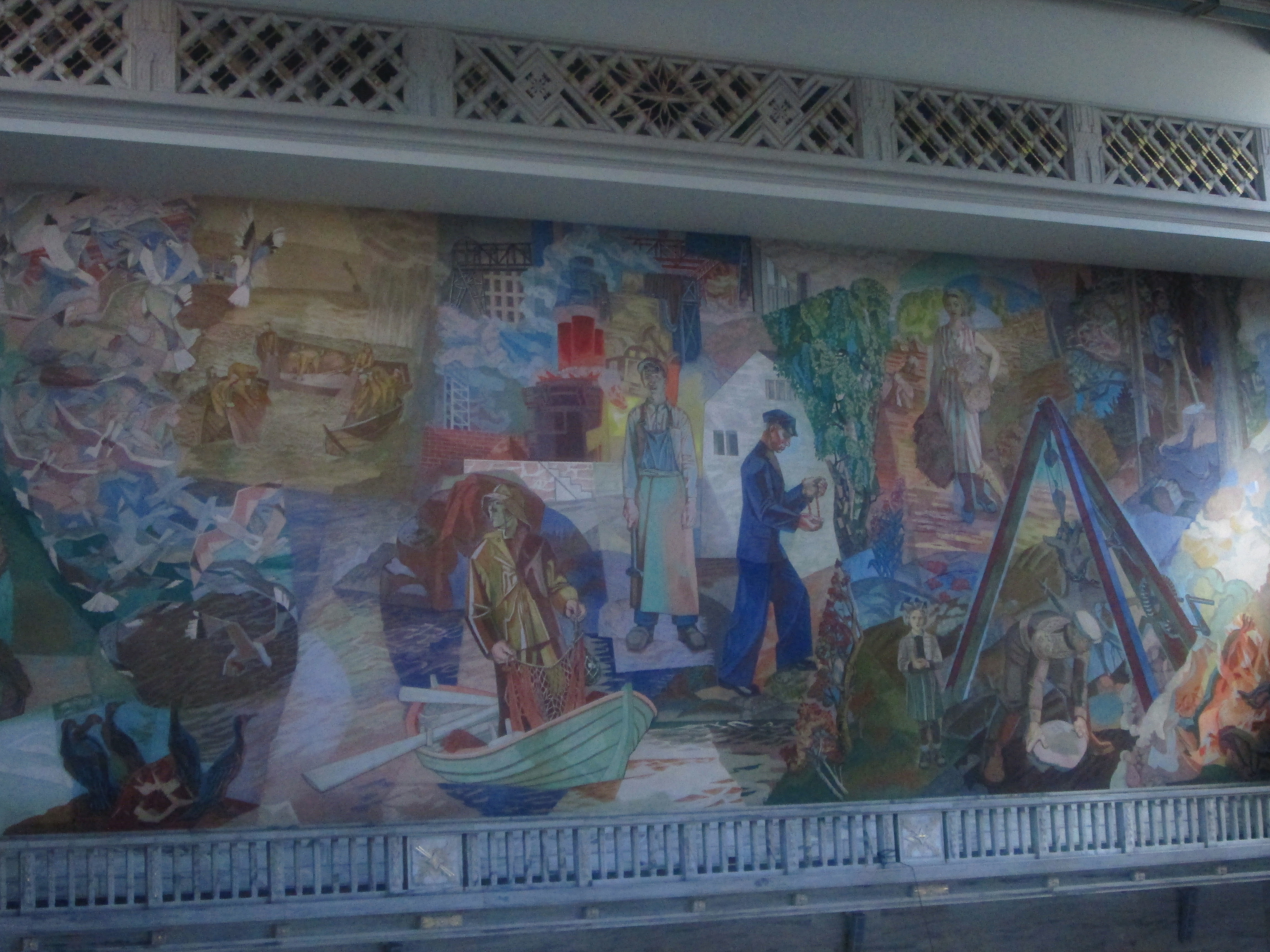
All around, the walls are lovingly painted. There is Henrik Sorenson’s oil painting ’Work, Administration, Celebration’ adorning the back wall. Alf Rolfsen’s three ornamental works dominate the rest of the hall.IMG_1486

The fresco at the bottom of the staircase represents Oslo’s patron saint, St. Hallvard, and the woman he tried to rescue.  IMG_1469

Upstairs, we walk through the Hadrade Room, named after the founder of Oslo city, the Munch Room with his painting ‘Life’ adorning the back wall, the Festival Gallery and the Banquet Hall with the portraits of the royal family.IMG_1477

The Krohg Room has fascinating frescoes on changing seasons. The City Council Chamber is an open political arena where the public is allowed to observe the proceedings and the Storstein Room where a mural depicts how human rights and the torch of freedom were carried from the French Revolution in 1789 to the signing of Norway’s Constitution 200 years back, in 1814.IMG_1499

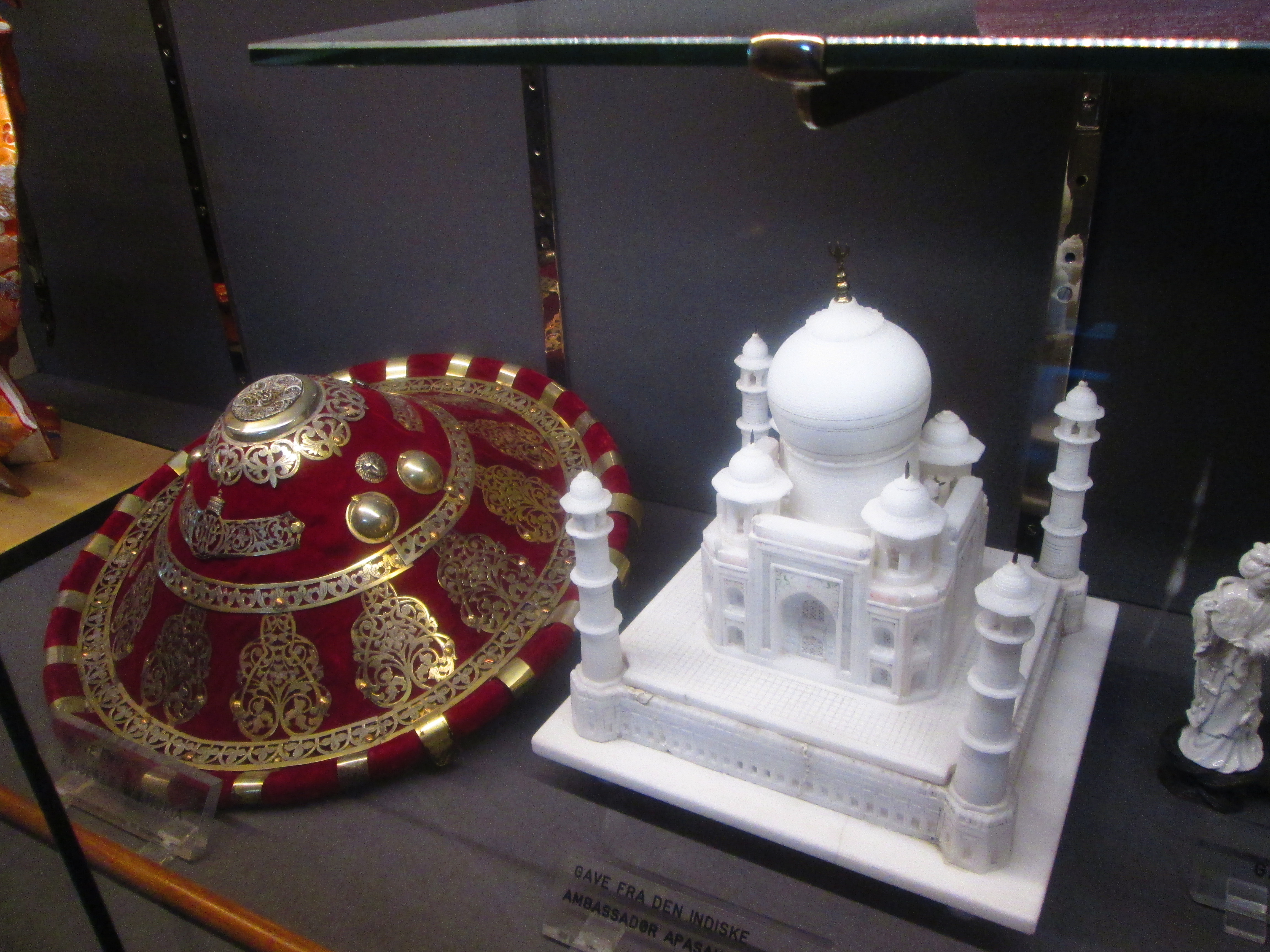
We are delighted to see a replica of the Taj Mahal, a miniature marble piece, gifted by an Indian Ambassador.IMG_1502

At noon time, a twelve gun salute declares the birthday of Queen Sonja who turned 77 on the 4th of July, 2014, the day we happened to be visiting the Oslo City Hall.IMG_1482

Within a space of two hours, thanks to elaborate paintings, frescoes and murals, we get a whiff of the history and culture of Norway. We also get a sneak preview of the artistic, literary and commercial accomplishments of the country.

Each nation has a unique culture of its own. It is justifiably proud of its accomplishments. The fact that a nation chooses to showcase its essential character in a magnificent manner touches a chord within us.IMG_1506

Our thoughts wander to the basic concept of a nation. Given the diversity in cultural values, ethnic origins and aspirations of people across our planet, it makes eminent sense to let a collective identity get perpetuated through the concept of a nationality. This fulfils the basic need of a unique identity being acquired by a group of people. By it’s very nature, the concept of a nation is a truly democratic one.

Unfortunately, boundaries also create problems when greed, avarice and envy rule the roost and replace the credo of freedom, equality and fraternity!

(Related post: https://ashokbhatia.wordpress.com/2012/10/06/a-trip-to-norway-the-land-of-the-midnight-sun)

Read Full Post »

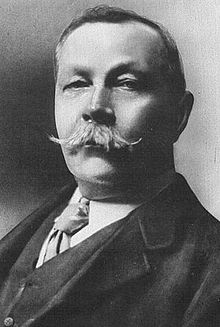
May 22 happens to be the birth anniversary of one of the greatest wordsmiths of our times – Sir Arthur Conan Doyle. This year, the family decided to celebrate it by paying a visit to a museum dedicated to him in Switzerland.

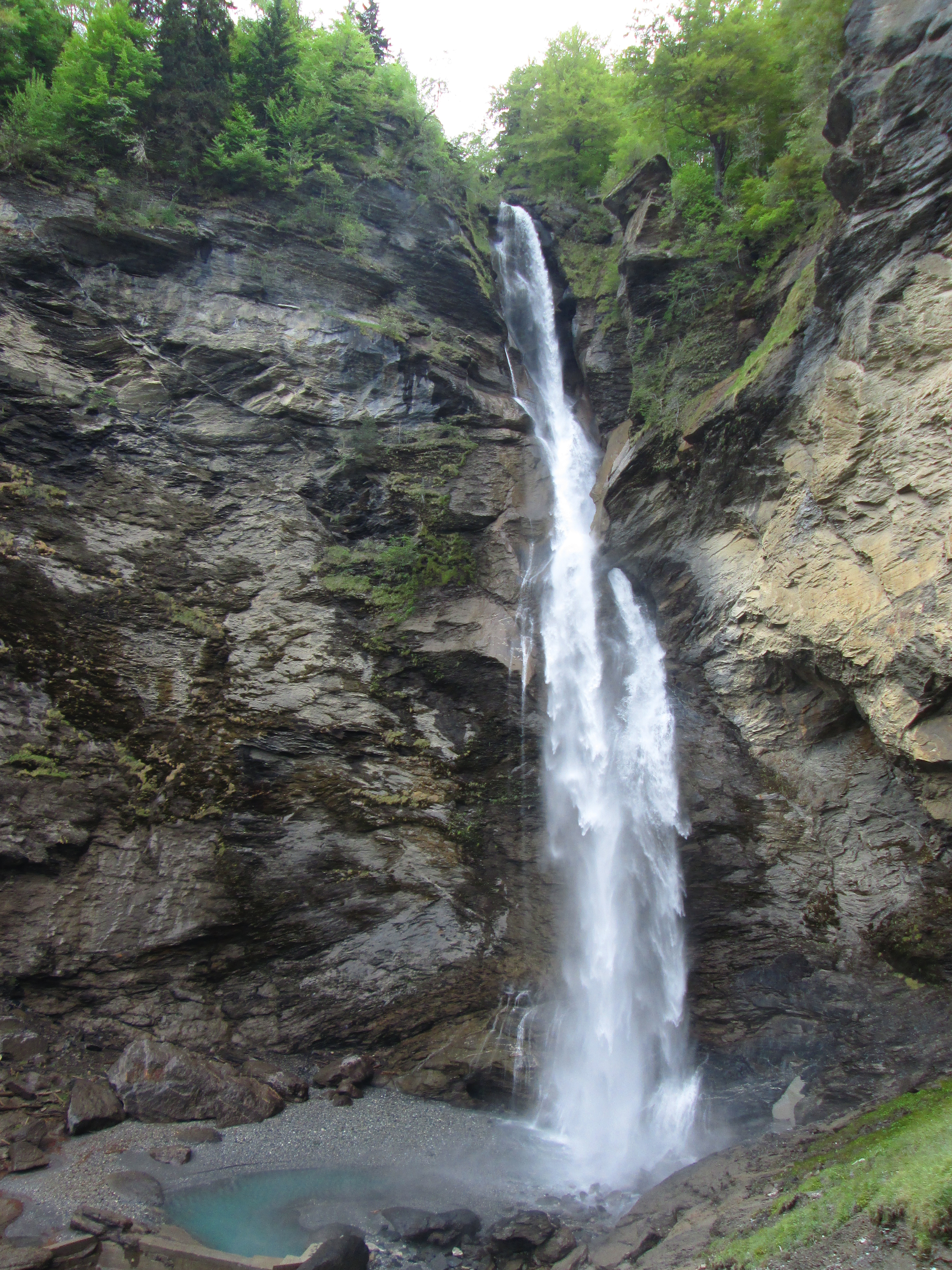
Included in the itinerary was a visit to the famous Reichenbach falls. That is where Sherlock Holmes was supposed to have met his end while fighting the criminal mastermind Professor James Moriarty. “The Final Problem”, a short story set in 1891, suggested the death of the greatest detective whose methods have influenced crime investigations all over the world!

The Museum

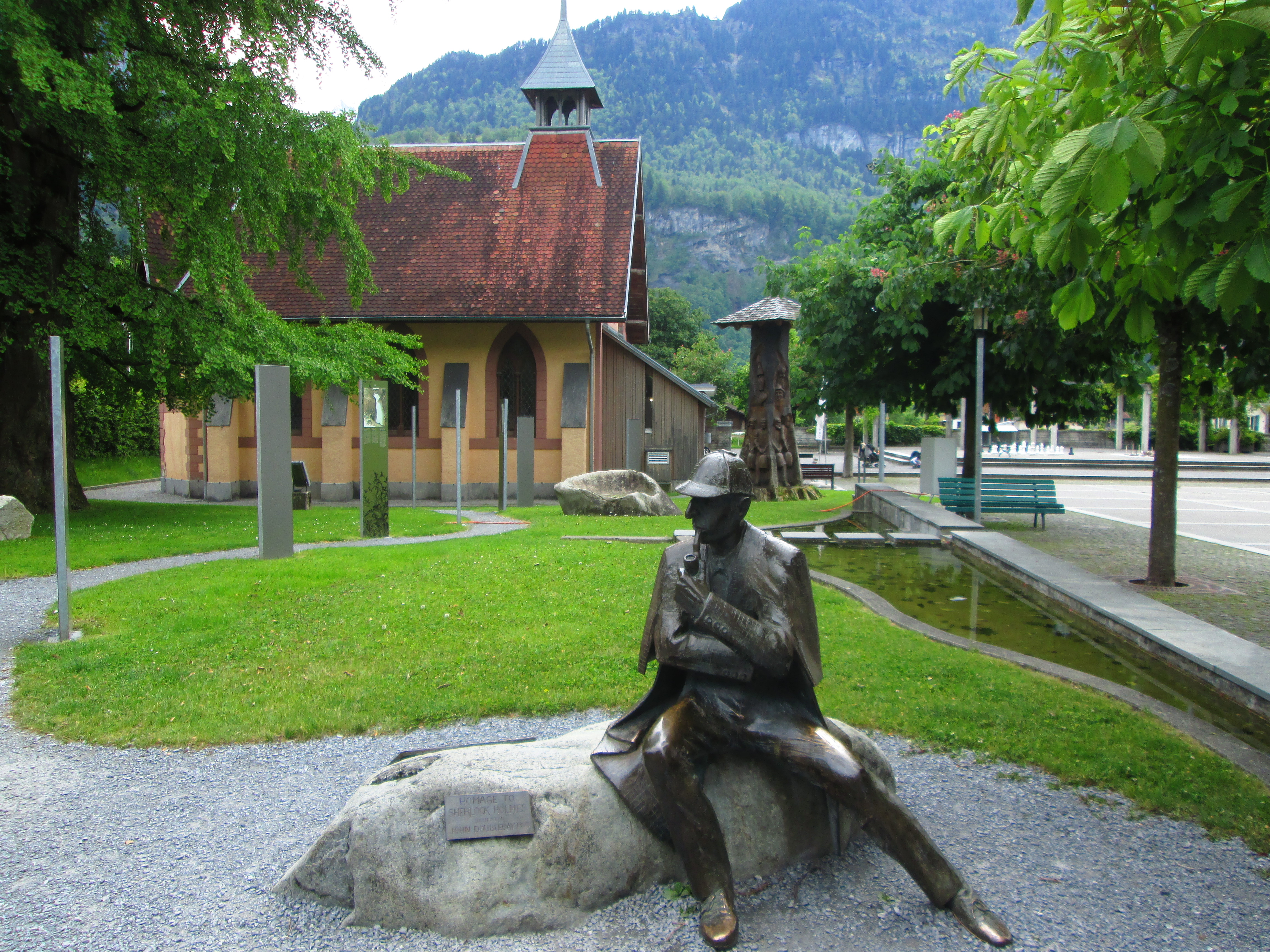
The small museum dedicated to Sherlock Holmes is located in a quaint little church in the small town of Meiringen. The entrance has a fine sculpture of the detective in deep thought.May 2014 376

A short pathway of gravel leads one to an old building which was originally used as a church. The pathway has stone panels on its sides. These contain beautiful illustrations depicting in brief not only the story of “The Final Problem” but also retirement plans of the detective!

May 2014 374

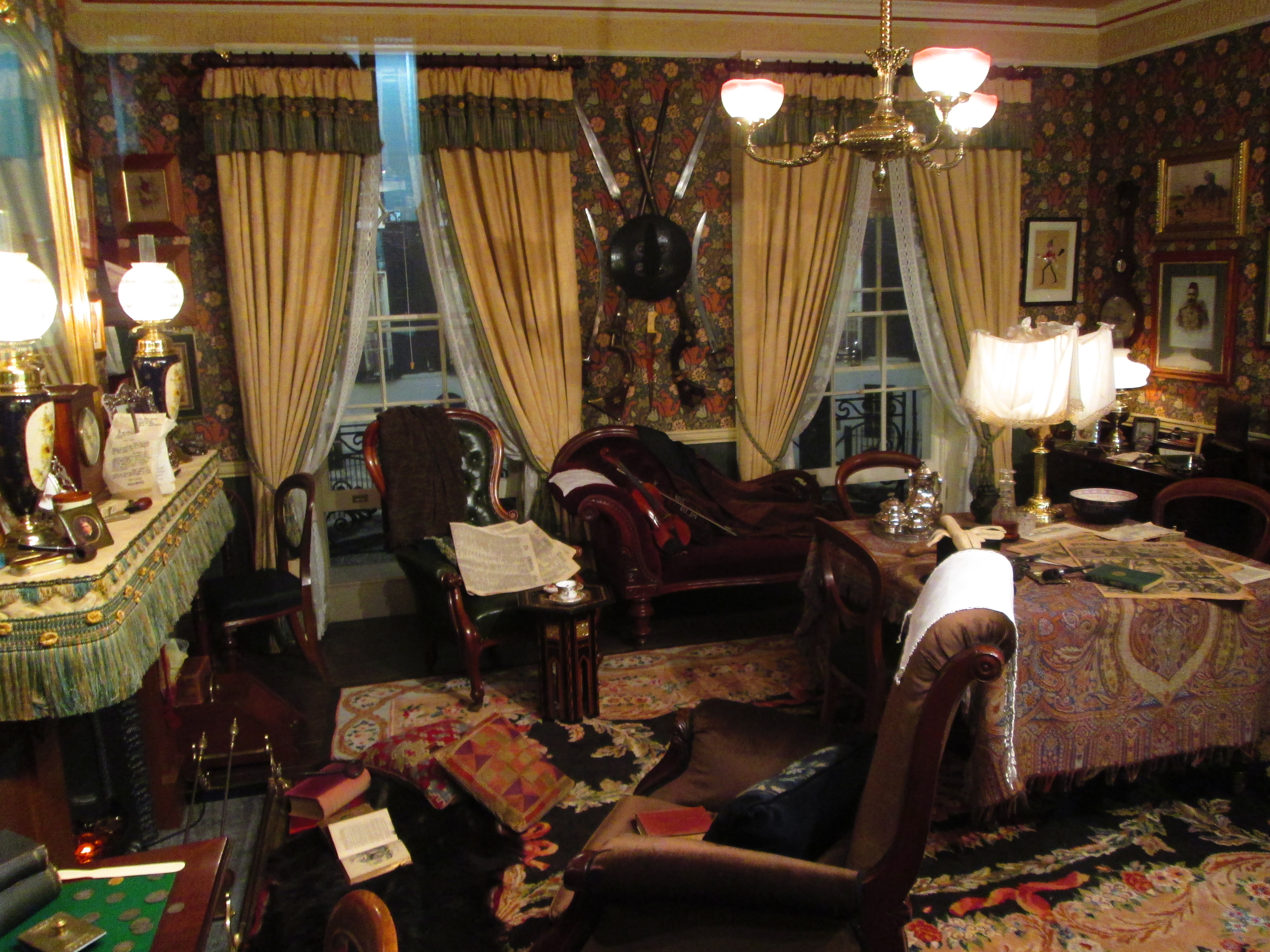
The basement has several displays which would interest anyone familiar with the life and times of Sir Arthur Conan Doyle and his legendary characters Sherlock Holmes and Dr. Watson. The highlight is a faithful recreation of the room at 221-b, Baker Street, just after the two inhabitants have left it hurriedly, supposedly on a top-secret mission of theirs.May 2014 345

In a corner of the room one can spot a cupboard which is full of the kind of books and records the destruction of which would regale many a criminal hounded by the legendary duo in their times.May 2014 364

For the architecturally inclined, there is a map showing the location of 221-b, Baker Street, as also an elevation of the building which houses it.

The display has, amongst others, sculptures of Holmes, the certificate of honorary citizenship of Meiringen issued to him, a set of binoculars, the famous pipe and the hat. The small note left behind by Holmes at the Reichenbach Falls can also be seen.May 2014 356

Uniform of a Scotland Yard rozzer of 1890s is on display, along with some investigative tools used way back then. Articles touching upon the rugby interests and army career of Dr. Watson also enthrall the visitor.

Reichenbach FallsMay 2014 414

“The Final Problem” tells us that in May 1891, Sherlock Holmes and Dr. Watson had stayed at the Englischer Hof at Meiringen. A walk had led them to the Falls, from where Dr. Watson had been tricked into returning to the inn, leaving Holmes all by himself.

Finally, Dr. Watson returns to Reichenbach Falls, only to find two sets of footprints going out onto the muddy dead-end path with none returning. There is also the note from Holmes, explaining that he is about to fight Moriarty, who has graciously given him enough time to pen this last letter.

Watson sees that towards the end of the path there are signs that a violent struggle has taken place and there are no returning footprints. It is all too clear Holmes and Moriarty have both fallen to their deaths down the gorge while locked in mortal combat. Heartbroken, Dr. Watson returns to England.

In the present, a funicular railway takes the visitor up to a platform from where the falls are clearly visible. The place from where Holmes and his adversary had fallen off is marked with a star. One can trek up to the star and also beyond and enjoy the magnificent scenery around.

A Tribute

While climbing the mountain, one contemplates on the ingenuity of the human mind. When used against humanity, it has the potential to give rise to a Napoleon of criminals like Dr. Moriarty. When deployed to protect the denizens against fraud, crime and cheating, it produces characters like Sherlock Holmes and Dr. Watson.May 2014 424

In a way, Dr. Moriarty still lives on even today. He manifests himself in various forms. Criminal deeds, injustice, disparity in opportunities and incomes and corruption, just to name a few. However, one can derive satisfaction from the fact that characters like Holmes and Watson also continue to live on amongst us, represented by forces opposed to the likes of Dr. Moriarty.

The myth of Sherlock Holmes lives on. One marvels at the mental capabilities of a person like Sir Arthur Conan Doyle who created a detective who is more real to most of us than any real person we might have ever met.Conan_doyle

Such visits are more like pilgrimages. These are but a form of tribute to legendary authors who live on in our collective psyche and imagination through their works.

(Curious?  Check out http://www.sherlockholmes.ch)

Read Full Post »

Having settled back in the shadow of the Alps yet again, I am filled with a sense of exhilaration and awe. The heat of India has got replaced by the chill of melting snow. TheSwiss Zermatt dust has given way to fresh air which is invigorating. In the cobbled streets, litter is missing. The greenery and the snow-capped mountains are a relief for the eyes. The ears are just about getting used to the soothing silence which has replaced the relentless honking on Indian roads. Courtesy in public spaces is once again leaving me dumbstruck.

But the stark contrasts do not end at the physical level. There are differences in the mental make up. The value systems which govern our behavior appear to be differently configured. The forces of nature and nurture which have shaped our personalities are quite different.

East and West can both learn quite a few things from each other.

What Indians can learn from the West

  • Respecting the Public Good

In the West, we find better respect for the public good. For instance, public spaces are cleaner and drivers on roads are courteous. On the contrary, in India, we keep our houses values cartoon corruptionclean and water our gardens everyday – but, when we go to the beach front, we litter the place with gay abandon.

In an office setting, a friendly colleague could get chastised for being careless on a project. In India, a criticism would either not be made – so it may not hurt the feelings of a friend – or taken personally by the recipient.

Corruption is another manifestation of the same lack of concern for the common good. Society is relatively corruption free in the West. In India, corruption, tax evasion, cheating and bribery have become a part of daily routine.

Apathy towards solving problems which affect the ordinary citizen is another dimension. In the West, people form groups to solve common problems in a proactive manner. In India, we see serious problems around us but do not try to solve them. We either believe that the problems do not impact us directly, or it is for someone else to resolve the issues.

  • Openness to Learning

If we have to progress, we have to change this attitude, listen to people who have performed better than us, learn from them and perform better than them. In India, we appear to have perfected the art of rationalizing our failures and explaining them off by misquoting our scriptures. We are good at finding excuses to justify our incompetence, corruption, and apathy. This attitude will not do.

  • Accountability based on the RoleAccessibility

Another interesting attribute that we Indians need to learn from the West is that of accountability. Irrespective of your position, in the West, you are held accountable for what you do. However, in India, the more ‘important’ you are, the less answerable you are.

Organizations whose top honchos indulge in illicit relations with their team members need to be pulled up and acted against as firmly as a junior cashier who siphons off money from the till.

  • Dignity of Labor

Dignity of labor is an integral part of the Western value system. In the West, each person is proud about his or her labor that raises honest sweat. On the other hand, in India, we have a mindset that respects only supposedly intellectual work.

A peon deserves as much respect as a Head of the Department. CEOs whose fragile egos are shaken by someone else parking his/her car in the normal slot needs to do some introspection.

  • Discriminating between Intimacy and Friendliness

Indians tend to become intimate even without being friendly. They ask favors of strangers without any hesitation. Rudyard Kipling once said: A westerner can be friendly without being intimate while an easterner tends to be intimate without being friendly.

Those who have worked as expatriates in another cultural setting would readily attest to this.

  • A Professional ApproachWORK-LIFE BALANCE

In India, more than 70% of the time of senior managers is spent on follow-ups; just ensuring that what is committed is indeed delivered. Delays are easily explained, and so are cost over-runs. Keeping a person unduly waiting is a sure sign of seniority in an Indian organization.

Here is yet another lesson to be learnt from the West – that of professionalism in dealings. Managements in the West ensure better work-life balance for their employees.

What the West can learn from India

  • Loyalty towards FamilyZOMBIES

Indians are part of a culture which has deep-rooted family values. We have tremendous loyalty to the family. For instance, parents make enormous sacrifices for their children. They support them until they can stand on their own feet. On the other side, children consider it their duty to take care of aged parents.

In organizations, we often find executives who are competent as well as extremely loyal. Also, respect for seniors is deeply ingrained in the system. There are times when juniors find it tough to take independent decisions. Very few are adept at registering a dissent with their seniors. Successful organizations have a culture which is designed to overcome such handicaps.

  • Family: A Critical Support Mechanism

One of the key strengths of Indian values is the presence of so much love and affection in the family life. In India, families act as a critical support mechanism for employees. Thus, resilience is better.

In the West, it is common to have break-ups when the career prospects of a manager nosedive. This adds to the stress experienced by a manager. Mental disorders present a much greater challenge. Predominantly, life has a materialistic approach, leading to a vacuum within.

  • Managing Chaos

Indians have improved upon the art of managing chaos and disorder. Even in high entropy situations, Indians tend to keep their nerve. Perhaps, this leads to better levels of perseverance as well.

Successful management of a human congregation like the Kumbh Mela is but one example of this trait.

  • Facing Adversity with EquanimityFeatured Image -- 1211

Upbringing steeped in religion and spirituality enables an average Indian to face adversity and failures with equanimity.

Learning from Different Value Systems

Values are like mountains. They have survived for centuries and shall continue to do so much after we have kicked the bucket. Universal common denominator is that of, say, love and affection. Over and above that, value systems differ across continents and cultures. When it comes to values, every culture has its own Unique Selling Proposition.

In this age of globalization and connectivity, mingling of diverse cultures is bound to happen. Learning from other value systems and adapting their good features is the only way to enable humanity to realize its full potential faster and better.

Read Full Post »
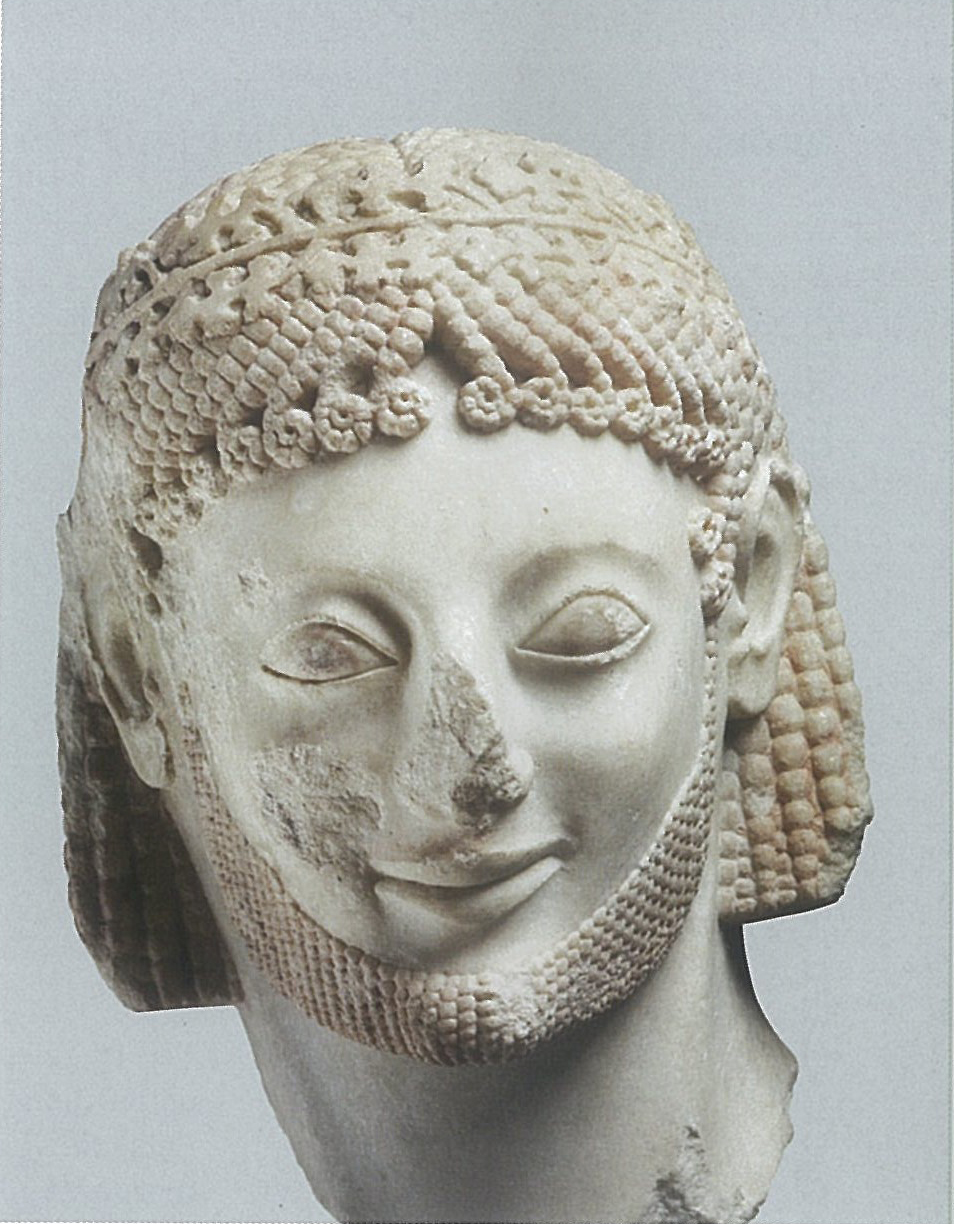
The principles of marketing and branding apply in equal measure to countries as much as they do to businesses. Just like in Swiss Zermattthe corporate world, marketing can merely help a great product to reach its target customer segment more effectively. However, best laid marketing and branding plans can fail if the product or service on offer lacks inherent strengths or USPs which make it useful to the customer.

Switzerland is one of the countries we admire, particularly for the manner in which it has built up a unique brand identity for itself over the centuries. A strong commitment to innovation and quality, an imaginative foreign policy based on neutrality, higher importance to the services sector and an excellent work-life balance it offers to its workforce are some of the USPs which make Switzerland the toast of the planet.

Its population is less than that of the capital of India. In terms of per capita GDP, at USD 45,418, it ranked 9th in the world in 2012. Low taxes, low debt, a reasonable rate of growth, public budgets in the black, low unemployment at 3.1% and a trade surplus – these factors just about sum up Switzerland’s economic stature. The country is home to many large MNCs – ABB, Roche, Nestle, Novartis, Logitech and Tetra Pak, to name a few.

A Multidimensional USP  

For a commoner, it is the land of milk, chocolate and cheese. For the lay tourist, it offers captivating natural beauty which is Swiss naturemany notches above than what the likes of Thomas Hardy and William Wordsworth have described in their works. Placid lakes, snow-capped mountains, leafy wooded greens, well maintained caves and water-falls and a rich culture make up for a heady combination.

The reason why postcards, calendars and movie frames look so appealing is because the real views are twice as dreamy. Take a funicular train at a gradient of 47 degrees up in the mountains, and you get a series of breath-taking views all the way to the top. You realize that homo-sapiens can pierce a tunnel through a mountain, but it takes a divine power to create one in the first place.

For a businessman, it offers a friendly and stable regime, with world-famous banking services to boot. For its citizens, it signifies orderliness, tolerance of neighbors, peace, prosperity and a healthy work-life balance. For the world at large, it stands up for armed neutrality and peace. It hosts a number of international institutions.

For those wanting to hone their skills in hospitality management, it offers several options. There are several institutes of international repute offering courses in diverse streams of sciences and humanities. For centuries, royalty has used its finishing schools to groom its delicately nurtured princesses.

The Humble Origin of the Brand – The Oath of Grutli

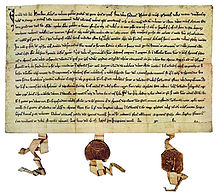
The Switzerland we see today is surely not an overnight miracle of sorts. The Roman Empire granted autonomous control to Swiss Federal Charter 1291three regions in the early 13th century – Uri, Schwyz and Unterwalden. In August 1291, they decided to renew their earlier alliance and took an oath of mutual allegiance. The newborn Confederation Helvetia faced several challenges over the centuries – peasant revolts, civil wars, religious wars, French invasion, liberal revolutions, conflicts between liberals and Catholic conservatives and innumerable false starts in industrialization and revising its constitution.

It has not been in a state of war since 1815. In 1848, the federal constitution converted all the cantons into one federal state with one common military, postal service and legislature. Today, it is recognized as the pinnacle of economic prowess, self-preserving neutrality and racial tolerance. It pursues an active foreign policy and is frequently involved in peace keeping initiatives globally. It boasts of the highest per capita number of Nobel Laureates in the world.

The Finer Aspects

Foreigners it has welcomed into its fold include many great personalities, like Lord Byron, Charlie Chaplin, Leon Gambetta, Igor Stravinsky, Vladimir Nabokov, Jean Calvin, etc.

The country has over 900 well maintained museums. National Museum in Zurich and the Museum of Photography are not Swiss Federal Palacethe only ones which merit a close look.  Musee d’alimentation in Vevey – owned by Nestle – is all about the history of food. The Museum of Horology in La Chaux-de-Fonds explains different aspects of watch-making. Then there is the captivating Toy Museum at Basel and the Natural History Museum at Lucerne.

Art and culture are an integral part of the life on offer. Public toilets are unbelievably clean. For those from the developing countries, trains are disturbingly punctual.

Tremendous Soft Power

Building and construction, tunneling and excavation, hydro-geology, rail road planning contribute much towards its GDP. Unique topography has led to innovations in all these fields. Swiss architect Othmar Ammam came up with the Golden Gate Bridge in San Francisco. Then there is the gigantic Itaipu Dam across the Amazon in South America, not to forget the flyover bridges in Alexandria in Egypt, all of which have come up based on Swiss expertise.

The Swiss are known as hardworking, conscientious, reliable and punctual to a fault. Efficiency of its people is legendary and leads to self-sufficiency.

Keeping the Brand Shining

A vibrant direct democracy, Switzerland has been a safe haven for the wealthy and for business. Banks have had a cult Palace of Nations Euro UN HQ Genevastatus, what with their fabulously wealthy client lists. Where our clients get their money from is none of our business has been their refrain so far.

However, with the signing of the Multilateral Convention on Mutual Administrative Assistance in Tax Matters, Switzerland recently became the 58th nation to join the comity of nations which hound tax evaders across borders. By doing so, it is going to break its own time-honored and time-tested traditions of banking secrecy.

The country is now aligning itself with global norms of financial transparency, thereby giving a fitting boost to the morale of tax administrators all over the world. Swiss banks obviously do not have much to worry about. Given their maturity and the political and economic stability of the country, international investors would continue to repose their trust and faith in them.

In the coming decades, the brand equity of Switzerland is unlikely to lose its allure. Therein lies a great lesson for many other countries in the world which could surely do with an image makeover.

Read Full Post »

« Newer Posts - Older Posts »