As Indian cinema completes 103 years of its remarkable journey, it is time to remember the doyen of the industry whose passion, determination and perseverance started it all.
A hundred and thirteen years back, one man’s passion and vision gave birth to what has become a billion dollar industry today which has managed to carve a unique identity for itself commanding respect from a worldwide audience and holds the distinction of producing the maximum number of films in the world in a year.
The man was Dhundiraj Govind Phalke or Dadasaheb Phalke as he is popularly referred to and with the release of his first silent film ‘Raja Harishchandra’, he not only became the Father of our Indian Cinema, but also inadvertently sowed the seeds of a passionate and deep-rooted relationship between movies and moviegoers in our country which has only grow deeper with the passage of time.
My article is but a small tribute to this visionary genius…
May 3rd, 1913: This historic day marked the beginning of the journey…
There is nothing more disheartening to an artiste than to have his/her work not appreciated at the right time…
Dadasaheb Phalke Award
Recently veteran writer-director-lyricist-poet Gulzar was bestowed with the coveted Dadasaheb Phalke award for his outstanding contribution to the world of Indian cinema. A truly deserving award for such a multi-talented genius the like of whom the industry may never produce again. But does he realize how lucky he is to have received the award when he is still active and is in full possession of his mental and physical faculties to enjoy the award?
Unlike the last year’s recipient of this same award –the late veteran actor Pran who was given the award too late in life. This gem of an actor hung his boots several years ago and though he had been in good health for a number of years after that, the Government…
One of the reasons for the persistent allure of Shakespeare’s works is obviously the depth as well as the range of human behaviour these capture. One can easily relate to such elements as greed, power, jealousy, suspicion, love and lust which form the undercurrent of all his characters.
These are precisely the ingredients which producers, directors and script writers in Bollywood bank upon to whip up larger than life narratives, keeping the viewers enamoured and enthralled.
If a movie is said to be either ‘inspired by’ or ‘adopted from’ a literary classic, the intellectual coves are left more than satisfied. The critics could anyway pan the movie for its digressions from the original, but the common man is quite happy to have connected with a classic which he might otherwise never have the time, inclination or capacity of devouring in his saner moments.
A dash of spicy item numbers further adds to the mass appeal of such a movie. The ‘Masala Quotient’ for the front benchers also improves drastically.
It comes therefore as no surprise that Bollywood can boast of a number of screen adaptations of the Bard’s works. Here are a few which readily spring to one’s mind.
The Comedy of Errors
The tale of two sets of twins has invariably left the audience in splits.
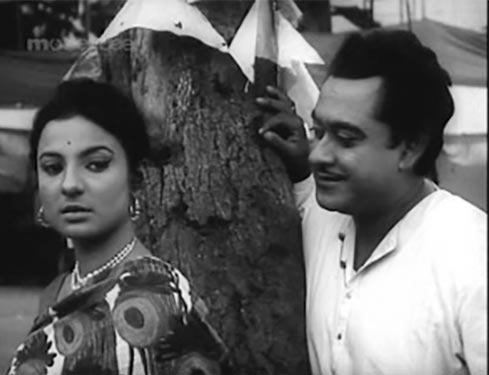
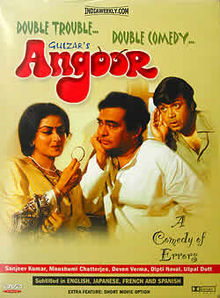
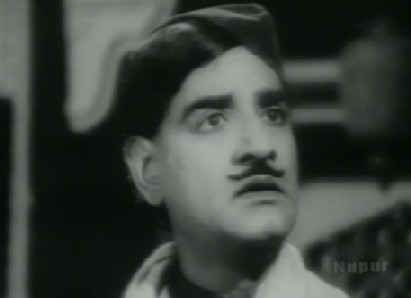
If ‘Do Dooni Chaar’ had the Kishore Kumar-Asit Sen duo, ‘Angoor’ had Sanjeev Kumar- Deven Verma, ably assisted by Moushumi Chatterjee, Deepti Naval and Aruna Irani. Both are ageless comedies. (A still from the movie ‘Do Dooni Chaar, Year: 1968, Director: Debu Sen)
(1982, Gulzar)
Othello
When the cancer of distrust and suspicion spreads, disaster looms ahead.
If ‘Hamraaz’ had a stage performance based on the travails of Othello, ‘Omkara’ brought home the anguish of the hero in a poignant manner.
(1967, B R Chopra)
(2006, Vishal Bhardwaj)
Romeo and Juliet
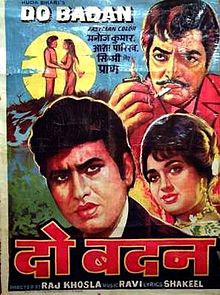
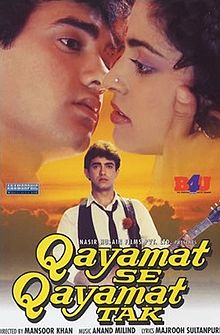
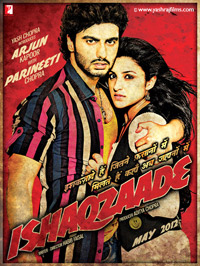
The tale of star-crossed lovers has been used by Bollywood in a number of its offerings. ‘Do Badan’, ‘Qayamat Se Qayamat Tak’, ‘Ek Duje Ke Liye’, ‘Goliyon Ki Leela – Raas Leela’ and ‘Ishaqzaade’ can be said to be based on the Bard’s eternal love classic.
(1966, Raj Khosla)
(1988, Mansoor Khan)
(1981, K Balachander)
(2012, Habib Faisal)
(2013, Sanjay Leela Bhansali)
In tune with the changing times, the last two were rather graphic in their depiction of the heat of desire, an aberration which only made them stray even farther from the original theme.
Macbeth
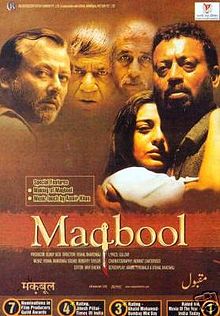
‘Maqbool’ had finely etched performances by the likes of Tabu, Pankaj Kapur and Irrfan Khan. A dark offering against the backdrop of a Mafia gang, it left the viewer struck with its audacity and the departures from the original work.
(2003, Vishal Bhardwaj)
Hamlet
‘Haider’ had all the elements of the original – intrigue, ambition, retribution and an amorous love affair to boot.
(2014, Vishal Bhardwaj)
A Midsummer Night’s Dream
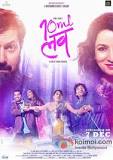
’10 ml Love’ came enchantingly close to the original, but did not have the depth of the original.
(2010, Sharat Katariya)
Most of these movies had the necessary ingredients for commercial success – exotic locales, lavish sets and costumes, outlandish exaggeration and intense passion. Opposites co-existed in many of these movies. Comedy often walked hand in hand with tragedy, poetic language got intermeshed with coarse slang, and middle class morality and values were juxtaposed with unabashed display of physical desire.
A timeless appeal
It would be too simplistic to say that the poet is merely a vestige of India’s colonial past. Much like Thomas Hardy, Jane Austen, P G Wodehouse, Agatha Christie and many others, the multi-layered characters etched out by him touch a chord somewhere deep within the psyche of Indian movie buffs of all hues, sizes and shapes.
It is this mass appeal which makes the Bard a source of inspiration for many a scriptwriter in Bollywood. His works depict the essential traits of human beings and shall forever continue to regale movie goers all over the world.
(If you liked this post, there is a chance you may like these as well:
Acknowledged as one of Hindi Cinema’s greatest legends, Kundan Lal Saigal was hailed as ‘Shahenshah-e-mausiqi’ (emperor of music) as well as the ‘ghazal king’ and became a phenomenon in his lifetime. He appeared at a time when recording techniques were rudimentary and the film industry was on the brink of changing from ‘silent films’ to ‘talkies’. As songs started becoming an integral part of movie scripts, he had to devote his time equally between acting and singing. Within a short span of 15 years and without any formal training in music, the irresistible spell cast by his golden voice remains unparalleled and his songs recorded eighty years ago evoke the same kind of magic even today…
Often while writing columns on superstars of Hindi Cinema, the counting incongruously starts with the triumvirate of Dilip Kumar-Dev Anand-Raj Kapoor who dominated a large part of the Black&White…
She is the one with a resilient spirit. She takes up an issue and brings it to a logical conclusion.
Nadira started this trend in Hunterwaali(The Lady with a Whip) way back in 1935. Several others followed.Hema Malini played a role with negative shades in Laal Patthar(Red Stone, 1971). Rekha extracted a revenge in Khoon Bhari Maang (The Blood-filled Hair Parting, 1988). In Insaaf Ka Tarazu(Scale of Justice, 1980), Zeenat Amaan took a serial rapist to court. Mirch Masala(Spices, 1987) depicted a fiery Smita Patil who resists the amorous advances of a village headman. Zakhmi Aurat(Wounded Woman, 1988), had Dimple Kapadia avenging her rape by means of castrating the perpetrators of the crime.
Damini(Lightning, 1993) raised the issues involved in bringing a rapist to justice. In Bandit…
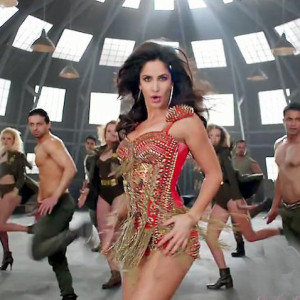
Recently, a friend asked me what I thought of Katrina Kaif’s character in the just released Dhoom-3(The Blast-3, 2013). Even at the risk of offending some of you, I confess I found it full of chutzpah and oomph but, alas, hollow otherwise. From this perspective, the script of Dhoom-2 perhaps etched the characters played by Aishwarya Rai and Bipasha Basu in somewhat greater detail.
This led me to think of the kaleidoscope of movies churned out by Bollywood and the wide spectrum of roles written for and played by women. It is also interesting to see how their roles have evolved over the past few decades, much in tune with two inter-related trends in the Indian society – a deeply patriotic fervor giving way to the rise of consumerism, and the outlook changing from a society-centric one to an individual-centric one. The first one has to do with…
Often, we get to see men portraying women in Bollywood movies. In the distant past, social compulsions led to such cases. In the recent past, such cases have proliferated based on the need to amuse the masses. Some were essayed in an artistic manner. Many others were crude attempts at entertaining the front benches in movie halls.
By Sharada Iyer The heroine of Raja Harishchandra, the first full-length feature film of Indian Cinema, was a male actor Anna Salunke cast in the role of Queen Taramati. Acting was a profession …
When it comes to essaying the role of a lawyer in a Bollywood movie, one fondly remembers such male actors as Motilal and Ashok Kumar. Even the much-hated Gabbar (Amjad Khan) tickled our funny bones in the comedy ‘Chameli ki Shadi’.
Here is a great listing of movies where our favourite heroines have donned the mantle of a lawyer, proving their acting prowess and versatility in an area where our mainstream heroes have not been very active.
In October 2015, after a five-year hiatus post her delivery, Aishwarya Rai made a grand comeback with the taut thriller Jazbaa, which had her essaying the role of a suave criminal lawyer with effortless ease. The film made me wonder why our industry makes such few films focussing on lawyers and courtroom drama and even fewer ones where the female protagonist is a lawyer.
Looking back one realizes that this genre has never been accorded much importance in our films which probably explains why many of our top male stars like Raj Kapoor, Dilip Kumar, Amitabh Bachchan, Shammi Kapoor, Aamir Khan, Shahrukh Khan, Salman Khan, etc., have refrained from essaying the role of a lawyer.
After a lot of research, I came across 14 remarkable films where our actresses have had the opportunity to don the black robe. Interestingly out of these, except for Insaaf Ka…
What is it that makes us label a movie as a classic? A unique blend of enchanting visuals, a rich story line, fine acting, lilting music and captivating lyrics are some of the features a successful movie invariably has. However, to be considered a classic, it would also have a multi-layered narrative with a social message which connects with us at a deeper level. Its theme would have an underlying timelessness, often brought in by the values it espouses.
Values which happen to be eternal in nature. Family values. Faint stirrings within a society to transform itself. The need for a soul to be free and joyous. The assertion of independence which demolishes societal norms of the time. The harmony in working towards a jointly shared goal or ambition. A meteoric rise in terms of materialistic goals. The frustration of having hit a plateau of sorts. The complex interplay of human emotions. The gradual transformation of relationships. The downfall arising out of human greed. The introspection. The burden of guilt. The beginning of a spiritual awakening. The search for a utopia. The redemption.
Here are some movies released fifty years back which remain as fresh as ever in one’s mind.
GUIDE
Released in 1965, this movie, directed by Vijay Anand, was based on a novel of R. K. Narayan, The Guide. The U. S. version of the movie was written by Pearl S. Buck.
The heroine, Rosie, walks out of a loveless marriage, so as to be able to pursue her passion of dance. The hero, Raju, helps her in achieving stardom. The song ‘Tere mere sapne’, though four minutes long, had merely three shots, each helping the heroine to gradually overcome her hesitation to accept the offer of reassurance and love from the hero.
The movie had great dance performances by the inimitable Waheeda Rehman. Other than the snake dance, we got treated to the six-part extravaganza – ‘Piya to se naina laage re’.
With success comes the fading away of love, which gradually gives way to self-interest. The transformation of tender love depicted in ‘Tere mere sapne’ gets eventually replaced by an emotional chasm between the main protagonists, so delectably captured in the song ‘Din dhal jaaye’.
The movie had a female lead character who was ahead of her times. The climax was rooted in superstition, though. The hero attained a spiritual enlightenment of sorts.
The charm of this landmark movie remains undiminished even after fifty years of its release, proving the immense possibilities of artistic collaboration.
The Sound of Music
Based on the memoir The Story of the Trapp Family Singers by Maria von Trapp, the film is about a young Austrian woman studying to become a nun in Salzburg in 1938 who is sent to the villa of a retired naval officer and widower to assume charge as a governess to his seven children. She brings love, spontaneity and music into the lives of the family through kindness and patience.
The manner in which mutual respect and affection grows between the naval officer and the governess is delicately captured in this tender piece.
The governess ends up marrying the officer. Together with the children they find a way to survive the loss of their homeland through courage and faith.
The musical scores stand out for their richness and the way in which they advance the plot of the movie. The heroine, though plagued by self-doubt, shows ample pluck and resource to win over a bunch of defiant children and their disciplinarian father. Characters of all the kids are well etched out and enamour us no end. Underlying the whole narrative is the value of family togetherness, delicate love interwoven with the need for discipline, and the loyalty towards each other.
Even after fifty long years, the movie does not fail to cast a spell. Watch any portion of fifteen minutes and one would come back refreshed and invigorated.
Chemmeen
Even though one is not familiar with Malayalam language, one has heard a great deal about this movie. Released on August 19, 1965, it acquired a cult status in the minds of movie buffs.
The success of this movie is said to be due to its heady combination of social-realistic melodrama, bolstered by high production values. It had creative inputs from some of the most talented persons from the Indian movie industry at that time – music by Salil Chowdhury, editing by Hrishikesh Mukherjee, cinematography by Marcus Bartley and lyrics by Vayalar Rama Varma.
The tale of Pareekutty and Karuthamma is a tragic romance. It makes one cry. It gives one a feel as if one lives close to the sea-coast, listening to the incessant roar of the waves, rising to the cries of fishermen and joining their yells of glee when their catch is a bumper one.
At a deeper level, in a muted manner, the movie argues for social transformation. It portrays the problems that arise when an Araya girl falls in love with a Muslim trader. This is a chasm that most of us are still grappling with.
This New Year eve, one would be tempted to curl up in bed to soak in the delectable cinematic brilliance on offer in any one of these movies. As the New Year rings in, we could be joining the Von Trapp family in its trek across the Alps, looking ahead to the future with hope, faith and goodwill!
As Indian cinema completes 103 years of its remarkable journey, it is time to remember the doyen of the industry whose passion, determination and perseverance started it all.


 My article is but a small tribute to this visionary genius…









 ashokbhatia