Feeds:
Posts
Comments

Archive for the ‘The Magic of Movies!’ Category

In a majority of movies churned out by Bollywood, doctors and nurses have only been on the fringes of the narrative. But there are some which have highlighted the professional trials and tribulations faced by our healers. Few have even commented upon the complex challenges of poverty, malnutrition and scarce resources faced by doctors and nurses in a developing country like India.

Keeping in tune with the times, the depiction has also undergone a major transformation. As our society has become more self-centered, so has the general character of the doctors and nurses shown in the Bollywood flicks. The self-sacrificing doctors of yesteryears have slowly but steadily given way to glamorous ones playing second fiddle to a mostly romantic script at hand.

Risking Their Own Lives

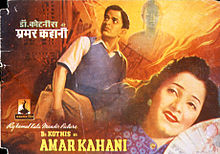
In the pre-independence era prior to 1947, we had self-sacrificing doctors who rendered their services in alien lands, serving the Poster Dr_Kotnis_ki_Amar_Kahanipeople affected by war and plague. Old timers may remember Dr. Kotnis Ki Amar Kahani (1946, V. Shantaram, ‘The Immortal Saga of Dr. Kotnis’) which was based on the true life-story of Dr. Dwarakanath Kotnis who was sent to China during World War II. Dr. Kotnis helps the people of China during the Japanese invasion. Rendering a selfless service, he marries and settles down there itself but eventually dies of plague.
Post-independence, we had Dil Ek Mandir (1963, C. V. Sridhar, ‘Heart is a Temple’), where the doctor performs a successful surgery but ends up collapsing due to the tireless effort he puts in preparing for the same. Aman (1967, Mohan Kumar, ‘Peace’) was inspired by the story of Dr. Kotnis. The hero gets inspired to serve humanity after meeting Sir Bertrand Russell and goes to Japan to serve the victims of nuclear holocaust.

In Selfless Service  

In movies like Anuradha (1960, Hrishikesh Mukherjee) and Khushboo (1975, Gulazar, ‘The Fragrance’), the heroes are doctors Poster Khamoshiwho decide to serve poor villagers in the interiors of India. Risking their own health and welfare, they keep busy with their work and neglect their family and personal lives. In Anuradha, the wife eventually ends up sacrificing her urbane musical ambitions to support the husband. In Khushboo, the wife does so but not before she has questioned his lack of initiative in inviting her to live with him. Both movies had finely chiseled performances by the lead actors – Balraj Sahni, Leela Naidu, Jeetendra and Hema Malini.
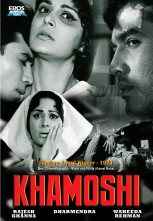
Khamoshi (1969, Asit Sen, ‘Silence’) had the inimitable Waheeda Rehman playing a nurse in a mental asylum. She falls in love with a patient who gets well and moves out without reciprocating her sentiments. Impressed by her success, the doctor-in-charge entrusts yet another patient to her care. She falls in love with him as well but loses her own mental balance when he is cured. The moral of the story: a medical professional should not get personally involved with a patient. Easier said than done!

Battling the Big C

In the 1970s, Bollywood came out with several movies which had a medical problem as the cornerstone. In quite a few movies, cancer took over from TB as the real villain. Most of these movies tugged at our heartstrings. One, there was the inevitability of death. Two, the sheer helplessness of a doctor made the narration even more poignant. Audiences loved them nevertheless and often came out of theatres with drenched handkerchiefs.

Safar (1970, Asit Sen, ‘The Journey’) had a doctor facing the charge of intentionally killing someone dear to her. The story was Poster Anandessentially a love triangle. The underlying theme was that of jealousy of the doctor’s husband, guilt of the doctor wife and reconciliation with the fact of impending death by the wife’s close friend who is afflicted with cancer.
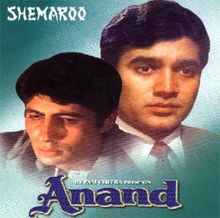
Anand (1971, Hrishikesh Mukherjee, ‘Bliss’) was a landmark film which touched upon several facets of a doctor’s life. Indian health care system’s discrimination between the haves and the have-nots of the society was one of the facets. Yet another was the transformation of an atheist doctor into someone who starts  believing in the power of prayer to heal. The need to have a positive attitude towards life, howsoever short it may be, was the basic message of the movie.

Commercial and Legal Dilemmas

Tere Mere Sapne (1971, Vijay Anand, ‘Your Dreams, My Dreams’) narrated the story of a doctor who migrates to a city after Poster Tere Mere Sapnehaving suffered professional as well as personal setbacks in a rural setting. His transformation into a money spinning professional in an urban environment is well captured. Eventually, he migrates back to the village and regains his sense of good values and ethical practices in healthcare.

Achanak (1973, Gulzar, ‘All of a sudden’) posed an interesting dilemma faced by a doctor at times. Does it make sense for a doctor to strive hard to save the life of a convict who is to be sent to the gallows? The movie answers this question in the affirmative.

The Fringe Benefits of Healthcare

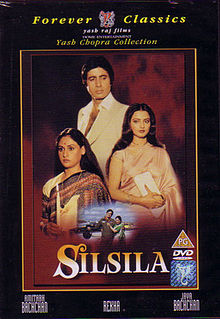
In Silsila, we had a hapless doctor (Sanjeev Kumar) trying to figure out how to handle the post-marital affair of his wife (Rekha). In Satte Pe Satta, we had the heroine (Hema Malini) playing a gutsy nurse, though only in the first few reels.  Salman Khan in Maine Pyar Kyun Kiya, Abhishek Bacchhan in Dostana, Kareena Kapoor in 3 Idiots, Vidya Balan in Pa and Aishwarya Rai in Guzaarish were all glitzy characters playing to the gallery, with their medical talents appearing only on the fringes of the main narrative.  

Healthcare with Bear Hugs

Munna Bhai MBBS (2003, Rajkumar Hirani) was a hilarious take on the medical profession. It touched upon the mixed up Poster-Munna_Bhai_M.B.B.S.priorities in hospitals where patients lack a personal healing touch and where procedures take precedence over urgent medical issues. Quite a few of our aspiring and practicing doctors would have drawn inspiration from the movie to improve the healthcare system by according better priority to compassion, empathy and liveliness in treating patients!

Summer 2007 (2008, Suhail Tatari) raised the issue of lack of awareness amongst medicos about the social ills and absence of any healthcare delivery service in India’s rural areas. Greedy moneylenders and power-hungry politicians rule the roost. A group of medical interns attempts to cope with the daunting challenges facing villagers.

Waiting for Medical Blockbusters!

The wide variety of healthcare related issues touched upon in these movies is commendable. However, one still waits for an in-depth poster comatreatment of the field of medicine at the hands of Bollywood. There is immense scope for medical thrillers based on patent rights of gene based therapies, moral dilemmas raised by the new frontiers of medicine, whistle blowers exposing corrupt practices in the pharmaceutical industry, shortages of critical vaccines and contemporary challenges on providing universal healthcare services in India.

In the last decade, Bollywood has demonstrated its capacity to make shorter movies based on innovative themes. Hopefully, the field of medicine would also get better attention with script-writers and directors coming out with a Coma, a Strong Medicine, a Virus and, possibly, even an Erin Brockovich in not too distant a future!
Read Full Post »

Movies from Hollywood as well as Bollywood are often based upon romantic affairs which unfold against the backdrop of a work related scenario. Some of these also touch upon the issue of sexual harassment at the work place.

Since there are major differences between the Western and the Eastern cultural milieu and values, movies churned out by Hollywood are invariably bold. On the other hand, those coming out of Bollywood are relatively tame affairs, often confining themselves to flirtatious bosses.

But whenever either has chosen to dive into the murky waters of sexual harassment at work place, the director concerned has been rather liberal in depicting the relationship between a CEO and a team member. Yes, true to style, both Hollywood and Bollywood have ensured that the proceedings willy-nilly end up on a positive note!

THE HOLLYWOOD TAKE

9_to_5_movie_poster

  • 9 to 5 (Colin Higgins, 1980) 

A comedy starring Jane Fonda, Lily Tomlin, Dolly Parton and Dabney Coleman, the movie is about three women living out their fantasies of getting even with their autocratic and sexist boss. Eventually, they manage to successfully overthrow him, extracting sweet revenge in the process. 

  • Disclosure (Barry Levinson, 1994)

Instead of getting an expected promotion, Tom ends up reporting to a woman with whom he had an affair in his bachelor days. His new boss, not only dangerously sexy but also overtly ambitious, has climbed the corporate ladder by exerting undue influence on the CEO. She apparently tries to pick up where they left off but he just about manages to resist. Eventually, realization dawns that she intends to use Tom merely as a scapegoat to cover her technical misdeeds. He decides to file charges of sexual harassment, a development of which the company takes a jaundiced view. The movie starred Michael Douglas and Demi Moore.

  • North Country (Niki Caro, 2005)NorthCountryPoster

The movie depicts a fictionalized account of Jenson v. Eveleth Taconite Co., the first sexual harassment class action lawsuit in the U.S. Josey’s refusal to give in to her male co-workers’ demands causes them to spread lies about her being promiscuous and trying to seduce them. When the company board does not take her charges of sexual harassment seriously, she decides to file a case. In court, an attempt is made to paint Josie as being promiscuous. Eventually, co-workers stand up to support Josey’s complaint. They are followed by more women, family members, and miners. With this, the mining company loses the case and is forced to pay the women for what they suffered, in addition to establishing a sexual harassment policy at the workplace.

  • The Proposal (Anne Fletcher, 2009)The_Proposal_poster

Starring Sandra Bullock and Ryan Reynolds, the movie depicts a hard-nosed boss Margaret Tate terrorizing Andrew Paxton at a New York publishing house. To avoid deportation to Canada upon expiry of her visa, Margaret hatches a scheme to marry Andrew – he agrees if she’ll promise a promotion. She flies to Andrew’s home to Sitka in Alaska and realizes the essential values of decency and goodness his family stands for. After she runs off from the marriage ceremony, Andrew’s grandma feigns sickness and facilitates a matrimonial union between the two.

THE BOLLYWOOD TAKE  

  • Pati, Patni aur Woh (B R Chopra, 1978, ‘Husband, Wife and the Other One’)

Ranjit is a CEO, happily married to his lady-love Sharda. He exploits his poor secretary Nirmala by arousing her sympathy over a fake illness of his wife. Eventually exposed, he tries to mend his ways but ends up falling for the charms of his next secretary! The movie starred Sanjeev Kumar and Vidya Sinha.

  • Rang Birangi (Hrishikesh Mukherjee, 1983, ‘The Colourful One’)Rang_Birangi Poster

Yet another comedy in which Ajay, a workaholic boss who neglects his wife Neema, is persuaded by his best friend to start a romance with his secretary, basically to bring some pep back into his seven-year old married life. The wife also decides to reciprocate the sentiment by taking up a job and then claiming to be getting close to her own boss. Eventually, Ajay realizes his mistake and they both live happily thereafter. The cast comprised Amol Palekar, Parveen Babi and Deepti Naval.

  • Chandni  (Yash Chopra, 1989, ‘Moonlight’)

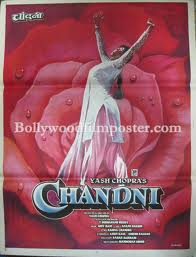
Chandni (Sridevi) and Rohit (Rishi Kapoor) meet at a family wedding and fall for each other. Due to a misunderstanding, they get separated. Chandni shifts to another city and lands a job with a travel agency headed by Lalit (Vinod Khanna) who falls for her. He is already grieving over the loss of the love of his life and eventually ends up losing Chandni as well to her lover.Aitraaz Poster

  • Aitraaz (Abbas-Mustan, 2004, ‘Objection’)

The female boss Sonia (Priyanka Chopra) has the hot pants for Raj, a happily married subordinate. Raj resists her advances, with Sonia dragging him to court on a trumped-up attempt-to-rape charge. However, the subordinate has a lawyer wife who comes to his rescue, with the female boss committing suicide in the end. The movie was inspired by Disclosure.

  • Inkaar (Sudhir Mishra, 2013, ‘Refusal’)

This one is Bollywood’s latest take on sexual harassment at work place. Based on gender politics and power play in a large advertisingInkaar-Movie-Poster agency, the movie covers an investigation into a sexual harassment complaint filed by Maya (Chitrangada Singh) against Rahul (Arjun Rampal). Whereas the agency can obviously do without a scandal of this nature, both Maya and Rahul realize towards the end that they are in love with each other!

Story and screenplay writers for movies based on management related themes no longer need to scratch their heads to get new ideas for their scripts. Nor do they need to look around for a muse or even bother about the writers’ block. All they have to do is to build up on the juicy details of the sexploits of CEOs of various hues provided by the real corporate world and convert these into mega successes in the reel world.

Read Full Post »

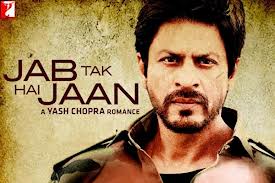
When we think of gorgeous heroines draped in plain color chiffon saris and sleeveless blouses – swaying to rhythmic beats composed poster jab tak hai jaanby eminent musicians and lip-synching soulful lyrics penned by proficient poets – with the magnificent Alps as a backdrop, the only name that comes to our minds is that of Yash Chopra!

The producer and director showed us the value of pure romance sans vulgarity in times when the only mantra to box office success appears to be “the lewder and cruder, the better”. He passed away last year. He has left behind a rich legacy of social comment through the wide-ranging themes of movies he produced or directed.

But the king of romance acquired this sobriquet by a very interesting process of evolution, through a long and arduous journey of making socially relevant movies which reflected our society’s challenges of their respective times. Like other popular directors of Bollywood – Raj Kapoor, Subhash Ghai and others – he had a unique ear for music, which was a hallmark of all his movies. The lyricists he associated with were accomplished poets who invariably came up with relevant and meaningful verses.

Evolving Into a King of Romance220px-Dhool_Ka_Phool

Partition, Secularism and Peace

If ‘Dhool ka Phool” (1959) was about illegitimate children, ‘Dharamputra’ (1961) touched upon religious intolerance in days when the term Hindu fundamentalism was not part of our vocabulary. The story of a Muslim bringing up a Hindu boy tugged at one’s heart-strings. The scenes of partition were hard-hitting, leading to a backlash at the time. That was perhaps the reason he never ventured to make a film on a political theme again during his lifetime.

However, he did come up with a clear message on peace and unity with his ‘Veer Zaara’ (2004). Not even a single bullet was fired in the film, but the message was loud and clear – that India and Pakistan share a common culture and a strong bond – by implication, both countries deserve a poster veer zaarachance to be together again, pooling their scarce resources to alleviate poverty, hunger and disease, instead of war mongering.

Family Values, Wealth and Bigamy

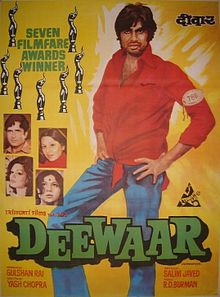
‘Waqt’ (1965) was his last movie where he worked with his elder brother Baldev Raj Chopra. It was the first one to have had a multi-star cast, a practice which is followed till today. It also spawned several other movies in the lost-and-found genre, popular ones being ‘Yaadon ki Baraat’ and ‘Amar Akbar Anthony’. The movie also depicted the lavish styles of the rich, conveying that 220px-Deewar_posteracquiring wealth is not necessarily evil.

Then he formed Yash Raj Films, his own banner, and came out with ‘Daag’ (1973). The issue of bigamy was handled with his trademark elegance and suavity.

The Angst of the Youth

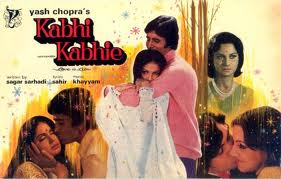
This was followed by two angry-young-man-phase movies, capitalizing on Amitabh Bachchan’s recently acquired image in ‘Zanjeer’. It started off with ‘Deewar’ (1975) and was followed by ‘Trishul’ (1978). In ‘Mashaal’ (1984), he cast thespian Dilip Kumar who portrayed an angry old man. Much to the glee of middle class audience struggling with rising aspirations kabhie kabhie posterand astronomical living costs, the means were no longer important; ends were.

Elegant Romance

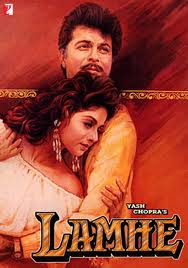
With ‘Kabhie Kabhie’ (1976), he introduced a poetic touch into the art of commercial movie making and set the box office registers tingling. This trend continued in his subsequent movies like ‘Silsila’ (1981), ‘Chandni’ 220px-Silsila(1989) and ‘Lamhe’ (1991). The angst eventually mellowed down and human emotions acquired center stage. All the characters in these movies were from an affluent background. In each venture, the canvas only got larger. In each, candy-floss romance was in the air, backed by melodious music and soulful lyrics that would remain etched in our collective psyche for a long time to come.

His style of depicting romance was muted, elegant and refined. The main protagonists were invariably civil and dignified, following the norms of propriety. It was devoid of lewd dialogues, coarse lyrics and vulgar scenes. Even in ‘Darr’ (1993), we had an anti-hero stalking the heroine, but never in bad taste.

Social Values and the Indian Diaspora Lamhe poster

He produced ‘Dilwaale Dulhania Le Jayenge’ (1995), which was directed by his son, Aditya Chopra. The movie set new records and Indians world over could readily connect with the superiority of family values it espoused. A daughter brought up in UK needs permission from her overbearing father for a vacation in Europe; a hero refuses to get persuaded by the heroine’s mother to elope with the heroine; instead, the couple works towards getting an approval of the match from the heroine’s father, come what may – these were market savvy master strokes in the script which made the movie immensely popular with all age groups.

Musical Romanceposter of chandni

Very few directors have ventured to work on a theme with music as a backdrop. ‘Dil To Pagal Hai’ (1997) did precisely that. All the main characters had a different perspective on love, and the movie was about the transformation of their belief systems. It was beautifully built around music and dance, elevated to a level where soul-mates discover each other.

We live in terrorism infested times. It is not surprising that his last venture, ‘Jab Tak Hai Jaan’ (2012) used this as a backdrop of a triangular love story.

An Ear for Music and Rich PoetryDDLJ poster

While supporting his brother, B. R. Chopra, Yash Chopra got to work with music directors like N. Dutta and Ravi. However, once on his own, he first worked with Lakshmikant Pyarelal for ‘Daag’, and then with Rahul Dev Burman for ‘Deewar’. Khayyam was his choice for ‘Kabhie Kabhie’ and ‘Trishul’. All through these movies, he worked with Sahir Ludhianvi as the lyricist.

Yet another master stroke was his persuading legendary classical musicians Shiv Kumar Sharma and Hari Prasad Chaurasia to compose the music for several of his movies. Together, they created a rich legacy of music in such movies as ‘Silsila’, ‘Chandni’, ‘Lamhe’ and ‘Darr’. The classical dance sequences performed with aplomb by  Sridevi in ‘Chandni’ and ‘Lamhe’ remain as fresh today as they were when captured on celluloid. ‘Silsila’ and ‘Veer Zaara’ had lyrics by Javed Akhtar, whereas all others had poetic inputs from Anand Bakshi.DTPH poster

For ‘Dil To Pagal Hai’, he turned to Uttam Singh, who came up with mellifluous compositions for the movie. His best was, however, reserved for ‘Veer Zaara’, which dug up old compositions of the legendary Madan Mohan, revived by the latter’s son Sanjeev Kohli.

In his last offering, ‘Jab Tak Hai Jaan’, he teamed up with A. R. Rehman, with lyrics by Gulzar.

Setting New Benchmarks

Undoubtedly, he set new benchmarks for the film industry. Several trends that we take for granted today were initiated by him. He set the template for future Bollywood directors who continue to ape his technical gloss but lack the depth of romance and human emotions captured by him. He was among the first to push the industry into professionalism. Working with classical musicians and accomplished Urdu poets, he has left behind a rich repertoire of music for all of us to savor for a long time to come.

He would always be fondly remembered for a certain elegance and refinement of language which many of the current breed of Bollywood dream merchants sadly lack. Also, for the unique brand of secularism, peace and unity he propagated through his movies.

Read Full Post »

Dear Amitabh ji,

I often wonder as to how you are able to handle yourself so well despite a continuous barrage of praise getting heaped on you from all sides. How do you keep your mental balance and equipoise in the face of unprecedented love and adulation being received by you at all times?

You conduct and carry yourself so well on KBC. When you suddenly have a winner of a “Ghar Baithe Jeeto Jackpot” award gushing all over you on phone, it is a treat to see your muted and calibrated response! The innumerable gifts and poems being presented to you by those making it to the “hot seat” of this game show do seem to move you but only for a few fleeting moments. You recover very quickly and get back to the job on hand, just like a true professional and gentleman that you indeed are!
You are ten years senior to me. I have had the pleasure of watching you enter Bollywood with “Saat Hindustani”. The way you have re-invented yourself in each of the subsequent decades is something to be learnt from you. Your career and that unique baritone voice is so well documented that I do not wish to bore you by repeating it here.

Some time back, a friend of mine gave me the entire set of four books comprising the biography of your illustrious father. Some parts were very touching – like the one which describes the first meeting between your parents, and the one where Khwaja Ahmed Abbas writes to your father, seeking his consent to offer you a role!

I also found the biography very instructive. It led me to a better understanding of the excellent family background that you have. Sure enough, your grooming has resulted into the calm and mature manner in which you conduct yourself. Your parents have set a fine example for all parents, bringing you up the way they had.

However, other than your excellent grooming, there is apparently something more to your unique quality of not allowing the abundant praise received by you to go to your head. A lesser mortal in your place would have surely become excessively swollen headed by now, leading to his own downfall. The younger actors of today need to learn this from you.

Can you please take some time off your busy schedule and answer this query? How did you develop this trait?

Warm regards,

Ashok Bhatia

Pondicherry, India

Read Full Post »

Quite early in life, I discovered that a movie should be selected for viewing not based on its cast Lekinbut based on its director. Each director has a distinctive perspective on life, and the manner in which he/she presents a theme is as unique as, say, one´s finger prints. Admittedly, the core brilliance of a movie is determined by the producer-director duo. But the unmistakable stamp on the narrative is that of the director. To put it simply, if you sit down to watch a movie by Gulzar saheb, you know what to expect. On the other hand, if you are going to see a David Dhawan flick, you already suspect what is in store.

The Brand Equity of a Director

Over a period of time, a movie director builds up a strong brand equity for himself. It comes from the uniqueness of his style, the choice of his scripts, consistency in quality of his directorial ventures, earning a respect from the discerning viewers, crowned by some degree of commercial success.

As a person who has been brought up on a rich diet of Bollywood fare right since his childhood, and maachisas someone who has dabbled in the art of movie making himself, it is not difficult for me to appreciate the complexity of producing a commercial pot-boiler. The cine-goers eventually get to see only the end result on the screen, little realizing the hard work done by all to ensure a high quality product. That is why, a good movie makes me feel fulfilled. I feel like saluting the producers and directors who have invested their effort and money on a worthwhile product.

The CEO of a Dream Merchandise Factory

A director’s role in shaping a movie would perhaps be comparable to that of either the CEO of a company or the conductor of an orchestra. A CEO’s mindset determines the business strategy of a company. His style of functioning and his value system permeates across all levels of the company. Likewise, the conductor of an orchestra blends the notes of stringed, percussion and other instruments, creating a symphony which is unique. Like a CEO guiding a company or a conductor presenting a symphony, the director also balances the strengths and weaknesses of his team members and comes up with a movie which is entertaining – and possibly educative – in the social context.

Surely, a director coordinates and guides various specialists to achieve the level of perfection in hisGaja_Gamini_ product. Apart from the choice of a script and the main caste, no department of movie making would remain aloof from the influence of a director. Screenplay, cinematography, sound design, choreography, music, editing, budgeting, financing, marketing and many other facets of movie making come under a director’s watchful eye, thereby making each movie a unique attempt at story telling. And when someone as accomplished as M F Hussain decides to wield the megaphone, we are in for a stupendous visual treat, as in ‘Gaja Gamini’ and ‘Meenaxi – A Tale of Three Cities’!

A Director’s Take

Exploiting the latent potential of an actor is surely one of the key traits of a director. Look at some of the amazing transformations we have seen on the silver screen all these years! To recapitulate just a few:

  • A villain or a vamp being cast in a positive role: Remember Lalita Pawar in a matronly role in Raj Kapoor´s ‘Anari’? Or, Shashikala supporting the sulking heroine in Hrishikesh Mukherji´s ‘Anupama’? Cut to ‘Abhiman’ and you notice Bindu empathising with the lead pair. Under the baton of Manoj Kumar and Manmohan Desai, we had Pran playing positive roles in ‘Shaheed’, ‘Upkar’ and ‘Zanjeer’. From a staunch villain, Madan Puri became a doting grand-pa in Rajshri Production’s ‘Dulhan Wohi Jo Piya Man Bhaye’.
  • From a flamboyant playboy to a chivalrous gentleman: Yesteryear´s jumping jack JeetendraHum aapke hain kaun becomes a simpleton in ‘Geet Gaya Pattharon Ne’ and ‘Boond Jo Ban Gayi Moti’ under the watchful eyes of V. Shantaram. Gulzar is equally effective with Jeetendra in ‘Parichay’ and ‘Khushboo’. Lately, we have seen Salman Khan being tamed by Suraj Barjatya in ‘Maine Pyar Kiya’, ‘Hum Aapke Hain Koun..!’ and ‘Hum Saath Saath Hain’.
  • From a debonair hero to a villain: Under Brij, Ashok Kumar, the quintessential hero, becomes a villain in ‘Ustadon ke Ustad’; under Vijay Anand, he springs a surprise in ‘Jewel Thief’.

The chemistry between a music director and a director has also produced enchanting results for music buffs.

  • Besides raucous beats in movies like ‘Bombay’ and ‘Rangeela’, A R Rehman comes up withZubeidaa soulful music in ‘Zubeida’ for Shyam Benegal. Likewise, for Subhash Ghai, he composes a different genre of music in ‘Taal’.
  • The duo of Shankar-Jaikishan, when working with Raj Kapoor, left behind a rich repertoire of scores, some of which are evergreen and a treat for movie goers of all ages.
  • Salil Chaudhury, when coupled with Basu Chatterjee, came up with some unique scores in ‘Rajnigandha’ and ‘Chhoti Si Baat’.

Some Directors I Admire

Selection of a script essentially determines the social message that a director wishes to convey through his work. One fondly recollects the following directors who have sought to convey a unique message of their own through their work:

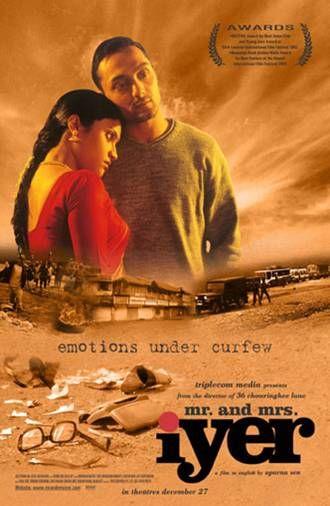
  • Aparna Sen did a great service to the senior citizens by highlighting their plight in the thought-provoking ’36 Chowringhee Lane’. The acute loneliness of Violet Stoneham touched our hearts. In ‘Paroma’, she explored the psyche of a tradition-bound housewife seeking liberation in her own way. In my opinion, her best offering so far has been ‘Mr. & Mrs. Iyer’. It conveyed the message of inter-religious harmony in a very effective manner. Her latest offering, ‘The Japanese Wife’, depicts the true meaning of love, sans any physical contact. One wishes her a long innings of creative offerings.
  • Ashutosh Gowarikar is another director whose work one has come to admire. ‘Lagaan’, ‘Swades’, ‘Jodha Akbar’ and ‘What is Your Rashee’ were all brilliant offerings. One surely looks forward to more movies from his stable in the days to come.
  • Basu Bhattacharya excelled in depicting the post-matrimonial relationships between couples. If ‘Anubhav’ captured the vacuum felt in the absence of a child and the misunderstandingTeesri kasam created as a result of an ex-lover of the wife walking into the household, ‘Aavishkar’ dwelt at length on the dissappointment caused by the realization that a college romance is so very transient. In ‘Teesri Kasam’, he came up with a classic philosophical treatise, whereas in ‘Sparsh’, he touched upon the challenges faced by the differently abled in our society. Finally, in ‘Aastha’, we saw him covering the impact of a materialistic culture on our morality and social values.
  • Basu Chatterjee‘s movies are classics in their own right. Depicting the dilemmas faced by the great Indian middle class with a dash of humour was his forte. Right from ‘Chameli Ki Shadi’ to ‘Baaton Baaton Mein’, ‘Chitchor’, ‘Hamari Bahu Alka’ and ‘Piya Ka Ghar’, he has regaled us with heart-warming tales, backed by tongue in cheek humour. In ‘Rajanigandha’, the hero, while watching a movie, imagines himself and the heroine as Dharmendra and Hema Malini on the screen – one of the several master strokes of the director. In ‘Chhoti Si Baat’, the hero and the heroine go about singing a song in crowded places whereas all others around them remain preoccupied with their own activities! In ‘Khatta Meetha’, we find an irritated Ashok Kumar threatening to kill Pradip Kumar, the heroine’s father, if he fails to bless her marriage with his adopted son.
  • One has admired some of the B. R. Chopra movies because of not only their socially Gumrahresponsible messages but also for their experimental streak. If ‘Naya Daur’ was about rapid industrialization leading to labour unrest, ‘Gumrah’ was about the perils of a wife likely to go wayward. ‘Humraz’ spoke of the dangers inherent in a situation where one attempts to hide facts from one’s spouse. ‘Insaf Ka Tarazu’ covered the trauma of rape, whereas ‘Nikaah’ was about a woman asserting her rights to choose a husband. ‘Pati Patni aur Woh’ was a humouros take on the proverbial seven-year itch of the male of the species, a theme which was effectively countered in ‘Rang Birangi’ subsequently by none other than Hrishikesh Mukherjee! His experimental foray into the genre of suspense led to two classics: ‘Kanoon’ and ‘Ittefaq’, both of which broke from convention and did not boast of any song, a taboo for the mainstream BollywoodDark Bandini cinema. ‘Baghban’, directed by his son Ravi Chopra, is a great comment on the derogatory attitude adopted by some of the grown up children towards their parents.
  • Bimal Roy gave us realistic movies with a socialistic message. ‘Do Beegha Zameen’ and ‘Bandini’ shall remain etched in our minds forever. In ‘Sujata’, he touched upon the stigma of untouchability in a very poignant manner.
  • David Lean‘s work has left an indelible impression on me. Think of either the elements of nature or the complexity of human relationships and you end up remembering ‘The Lawrence of Arabia’, ‘Dr. Zhivago’ and ‘Ryan’s Daughter’. ‘The Bridge on the River Kwai’ was yet another masterpiece from this great man.
  • Govind Nihalani has given us some brilliant movies over the years. ‘Aakrosh’ was based on a real life incident. ‘Ardh Satya’ captured the realities faced by our police force in stark detail. Much later, the trauma faced by youth involved in the naxalite movement was poignantly captured in ‘Hazaar Chaurasi Ki Ma’. Another unforgettable offering of his was the TV serial ‘Tamas’.
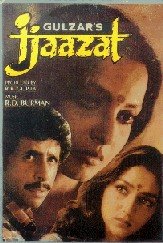
  • Gulzar is another favourite of mine. Right from ‘Mere Apne’, ‘Koshish’, ‘Parichay’, ‘Achanak’Ijaazat and ‘Kitaab’ to ‘Khushboo’, ‘Kinara’, ‘Aandhi’ ‘Angoor’, ‘Namkeen’ and ‘Ijazat’, he demonstrated a finely nuanced grip on capturing human emotions. Using flashbacks as an essential ingredient of his inimitable style of story telling, he has created a series of movies which explore the human psyche with unparalleled depth. For Doodrdarshan, he created a master piece in the serial ‘Mirza Ghalib’, ably assisted by Jagjit Singh and Naseeuddin Shah. Other unforgettable movies directed by him are ‘Lekin’, ‘Maachis’ and ‘Hu Tu Tu….’. What a creative line up!
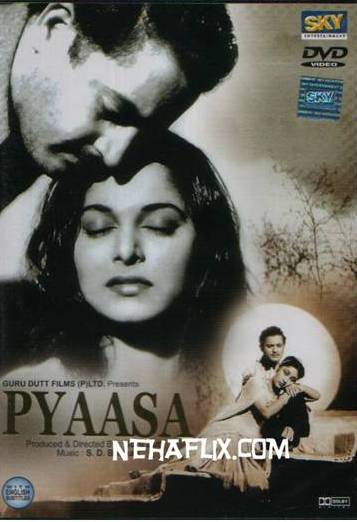
  • Guru Dutt has left behind a series of thought-provoking movies for all of us to enjoy for all times to come. ‘Pyaasa’ captured not only the frustration of a creative poet who earns recognition only after he is presumed to be dead, but also the angst of the youth dissppointedPyaasa poster by the shattering of socialistic dreams in post independence India. ‘Kagaz Ke Phool’ was autobiographical in nature, and went on to assume a cult status in black and white cinematography. ‘Sahib Bibi aur Ghulam’ looked at the degrading zamindari system and was backed by powerful performances. He also gave us ‘Chaudavin Ka Chaand’, memorable for its music.
  • Hrishikesh Mukherjee is yet another director who has captured the value system of the great Indian middle class in a very effective manner. If ‘Anupama’ portrayed the transformation of a docile daughter into a rebel of sorts, ‘Satyakam’ touched upon the trials and tribulations of a whistle-blower who values integrity and honesty above all else in his life. ‘Aashirwad’ captured a daughter’s longing for her father, whereas ‘Anand’ captured the dilemmas of the medical profession in a heart-wrenching manner. In ‘Guddi’, he touched upon the perils of hero-worship amongst teenagers and the negative influence of movies on those in an impressionable age. ‘Abhimaan’ put the fragile male ego under a microscope. In ‘Chupke Chupke’, he came up with a rip-roaring treatise on the eccentricities of the linguistic purists. ‘Bawarchi’ touched upon the joint family system, whereas ‘Golmaal’ was well-intended pun directed at moustache maniacs. In ‘Khubsoorat’, he drove home in his inimitable style the need of striking a balance between fredoom and discipline in family life, espousing the cause of nirmal anand (unalloyed bliss). His last offering was ‘Jhoot Bole Kauwa Kaate’ Pakeezahwhich conveyed the value of truthfulness in all relationships in a very humorous manner. One truly misses such directors!
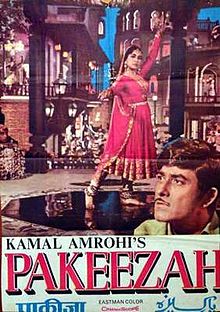
  • Kamal Amrohi came up with virtual poetry on celluloid with ‘Pakeezah’. The whole movie was a work of passion, akin to the rich tapestry of the bright red carpet he had got specially woven for a single dance sequence to be picturized. His ‘Razia Sultan’ was also a rich offering.
  • When it comes to clean family entertainment steeped in Indian tradition, Rajshri Productions has always been very consistent. Right from ‘Aarti’, ‘Dosti’, ‘Jeevan Mrityu’ andmovie Vivah ‘Tapasya’ to ‘Hum Aapke Hain Kaun…!’, ‘Hum Saath Saath Hain’ and ‘Vivah’, we have lived through good and bad times faced by families we could easily identify with. Several of their offerings have tugged at our heart-strings: ‘Uphaar’, ‘Ankhiyon Ke Jharokhon Se’, ‘Chitchor’, ‘Dulhan Wohi Jo Piya Man Bhaye’ and ‘Maine Pyar Kiya’, to name a few.
  • If there is one person who earned money in routine Bollywood pot-boilers and ploughed it back to produce some unique movies, it is Shashi Kapoor. ‘Vijeta’ captured in detail the challenges faced by young officers in the Indian Air Force. ‘Utsav’, directed by Girish Karnad, was yet another master piece, based on the famous Sanskrit play ‘Mriccha-katikam’. ‘Kalyug’ was based on the epic Mahabharata and was directed by ShyamAnkur Benegal.
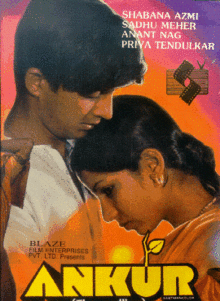
  • Shyam Benegal started off as a master of alternate cinema, offering such hard-hitting comments on the under-privileged of the society as ‘Ankur’, ‘Nishant’, ‘Manthan’ and ‘Bhumika’. ‘Zubeidaa’ presented an interesting slice of history. However, his recent offerings have been rich public-spirited satires, highlighting glaring deficiencies in the public delivery system and also taking a dig at our age-old misconceptions and taboos. If you have seen ‘Welcome to Sajjanpur’ and ‘Well Done, Abba’, you would know what I am talking about.
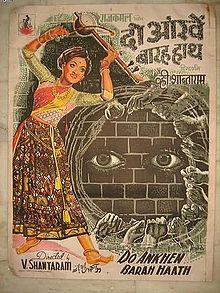
  • V Shantaram gave us classics which drew on the traditional values and art forms. If ‘Dr. Kotnis Ki Amar Kahani’ was based on a real life happening, ‘Jhanak Jhanak Payal Baaje’ captured the dilemmas faced by artists committed to their profession. ‘Do Aankhen Barah Haath’ touched on the criminal system, whereas ‘Navrang’ explored in detail the male fantasy of having the perfect female as a life companion. 
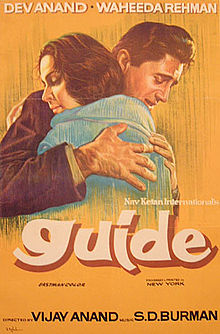
  • Vijay Anand gave us jewels like ‘Nau Do Gyarah’, ‘Jewel Thief’, ‘Tere Mere Sapne’ and ‘JohnyGuide_poster Mera Naam’. ‘Guide’ immortalized one of the great works of R. K. Narayan. Performance of the lead pair of Dev Anand and Waheeda Rehman still remains fresh in our memories. His penchant for perfection was such that in ‘Nau Do Gyarah’, if a bomb was to go off in seven minutes, the on-screen suspense went on for precisely seven minutes!

Several other legendary directors, like Raj Kapoor, Mehboob, K. Asif, Subhash Ghai, Yash Chopra, Shekhar Kapur and others do not appear here. Their exclusion here is in no way meant to belittle their immense contribution to the art and form of cinema as we know it today. It is just that a majority of their work has come to define what we generally refer to as ‘mainstream cinema’, whereas the idea here has been to capture directors who have been innovative in their own way.

Directors to watch out for

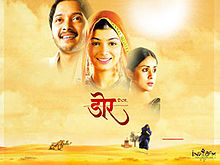
All this is not to say that brilliant work is not being done these days. ‘Khosla ka Ghosla’ directedDor by Dibakar Banerjee, ‘Iqbal’, ‘Dor’ and ‘Mod’ from Nagesh Kukanoor, ‘Tare Zameen Par’ by Aamir Khan, ‘Black’ by Sanjay Leela Bhansali, ‘Munnabhai’ series and ‘3 Idiots’ by Raj Kumar Hirani, ‘Chak de India’ by Shimit Amin, ‘Cheeni Kum’ and ‘Pa’ by R. Balakrishnan, ‘The Blue Umbrella’ by Vishal Bhardwaj, ‘Atithi Tum Kab Jaoge’ by Ashwani Dheer, ‘Chhodo Kal ki Baatein’ by Pramod Joshi, ‘Do Dooni Chaar’ by Habib Faisal, ‘Stanley ka Dabba’ by Amol Gupte, ‘I am Kalaam’ by Nila Madhab Panda and ‘Vicky Donor’ by Shoojit Sircar are all movies which give us the firm hope that Bollywood is finally out of the singing around the tree days, willing to experiment with unconventional themes, that too while keeping the box officeTaareZameenPar registers tinkling.

Rise in disposable incomes has led to the proliferation of multiplexes. Audience has turned younger. In turn, small budget movies have carved out a niche for themselves. Several producers have learnt to minimize financial risks by beating the star system and are instead banking on smarter scripts, thereby achieving better returns on their investments.

Exercising Our Emotional Muscles

Consider this: why do we get hooked on to movies in the first place? Is it sheer escapism? May be, yes, but also coupled with an appreciation of – and fascination with – this genre of entertainment. Identifying oneself with either a character or a situation presented on the screen gives one immense psychological relief. Also, one needs to exercise one’s emotional muscles or skills in a way that may or may not be acceptable in our routine lifestyles!

A director with a strong brand equity surely knows how to touch our heart-strings. In the process, he teaches us to exercise our emotional muscles better and think out-of-the-box when confronted with a real life situation!!

Read Full Post »

Discovering and Cultivating a Hobby

In the restricted circle of friends and relatives that our family is exposed to, it is common knowledge that since the past four years we have been assiduously chronicling the events and occurrences in the family. These chronicles have taken the shape of movies which are more in the nature of a collage of videos and still photos, backed by appropriate musical scores from diverse sources.

The intention of making these movies is surely not to advertise the family or its mundane achievements in life. The basic idea is to share the major events in the family with the extended family members who are spread across diverse geographical locations, as also to preserve the family history for posterity. If the history buffs in our future generations preserve these, our family background would always be just a click away.

Enabling Factors

What have been the enabling factors for the development of these movies? Let me attempt to list a few. One, a healthy dose of movies celebrating the middle class values like caring, sharing, mutual trust and a respect for one´s elders. Two, happy moments and events which leave one´s emotional core stirred and shaken. Three, a fondness for good music, backed by soulful lyrics. Four, a hobby of preserving the family archives, whether in the form of old photos, diaries left behind by our forefathers, and the like. Five, creative juices sloshing about inside one in gay abundance at times, not allowing one to rest till the time a meaningful external expression is found.

Challenges

What could be challenging about arranging some dumb photos in a sequence and backing them up with a few songs, you may well ask. Well, to present something new and unique to my audience every time is one. Also, one has to keep one´s self-promotional tendencies in check – so, no hapless visitor to our house shall ever be strapped to a couch and forced to watch one of these movies! Moreover, narcissism is not considered a virtue; so, each movie´s theme encompasses snippets of even those unsuspecting friends and relatives who are not necessarily a part of the main narrative.

The Journey So Far

Shruti-Vinod

The year 2007 saw our daughter getting married. Gradually, an idea took shape – to make a movie which would not only cover the various ceremonies that took place in connection with the marriage, but would also capture the childhood days and upbringing of both the bride and the bridegroom. Once old photos had been collected, search began for a studio which could transform the concept into reality. However, tradition-bound studios were not too keen to experiment with their own formats. With the help of a friend, we could identify a suitable software. Work started at home with a humble second-hand laptop.

Backed by quotations from Shri Aurobindo´s Savitri, the dvd took about eight months to get composed. Goodwill messages from all those who could not attend the event also got covered. Titled `Shruti Vinod`, the movie was 125 minutes long. Reactions from viewers were encouraging, to say the least.

Hamari Bahu Garima

Come 2008, and our son got married. Our daughter-in-law, Garima, joined the family. Motivated by the first experiment, the canvas of the second movie got wider. Appropriate cartoon sequences were added up, juxtaposed with audio clips of the bride and the groom. Few other special effects also brightened up the proceedings. The end result of this labor of love was a 250 minutes long movie. For the benefit of those in a hurry, a smaller version of 130 minutes was also prepared. This one was titled `Hamari Bahu Garima`.

Dhoom Macha Le

In 2009, our daughter had a toddler of her own. Aptly named Suman, the blossoming of this flower in the family garden at Asker in Norway was greeted with unbridled enthusiasm. A dvd running into about 35 minutes came up first. During 2010, a dvd named `Dhoom Macha Le` was completed and released. An interesting feature of this 100 minute long movie was a special chapter on Suman´s future career aspirations, with examples drawn from a long list of celebrity female achievers.

Both were followed up with another dvd which captured the second year of her life.

X´mas 2009 and God Bharai

This covered the get together of all the children and their families. Both the couples danced to their heart´s content, with Suman witnessing the God Bharai function of Garima.

Shalini´s Griha Pravesh

Lovingly done, this one hour-long dvd captured the birth of Shalini, our son´s daughter, in March 2010. It ended up showing the new-born entering her house in Basel, Switzerland, for the first time.

1962 : A Love Story

As I write this in July 2012, two more movies have got added to the family portfolio. In February, we could add `1962: A Love Story’. It is about 55 minutes long and covers the life and times of my eldest co-brother who completed 50 years of married life on the 8th of March this year. In this work, it was challenging to capture the trauma of partition of India in 1947, faced by the families then.

Shalini – The Beautiful

June 2012 brought about the completion of yet another movie, `Shalini – the beautiful`. Based on the first two years of our son´s daughter, this runs into 108 minutes. A special feature here is the coverage of diverse aspects of Shalini´s personality, as we have seen it evolving over time so far. The thematic peg used for this purpose is the `NAVARAS` concept espoused centuries back by Bharat Muni in his famous treatise on the fine arts, `Natya Shastra`.

An Enriching Experience!

Overall, cultivating this hobby has been a very fulfilling and enriching experience. The effort is highly labor intensive, what with a scheme to be followed for all inputs to be neatly arranged. Exhausting and challenging, yet exhilarating and liberating in more ways than one. Possibly, this is what Maslow meant when he spoke of self-actualization.

Courtesy Bollywood and Hollywood

All the family members have contributed immensely to all these ventures. However, the lion´s share of the credit goes to the creative minds from Bollywood as well as Hollywood. One has drawn liberally from the works of such creative geniuses as Gulzar, Basu Chatterji, Hrishikesh Mukherji, Yash Chopra, David Lean and the like. Movies from the Rajshri stable find a place of pride in our scheme of things. And, of course, renowned music directors whose immortal works have regaled all of us all these years have unknowingly enriched our family archives beyond compare.

One is grateful for all the grace one has received in different aspects of one´s life, including for the baby steps taken so far in capturing family events through the medium of movie making.

Read Full Post »

The Bollywood awards season in 2012 is finally over! Every year, it is a good time to analyse and wonder at the direction Hindi cinema is taking. At a time when there are raging debates about gagging obscene content on social networking sites, cinema – a powerful medium in the society – appears to be getting away with a great deal of sleaze. With each passing year, it has pushed the frontiers of obscenity further and wider. Hemlines are only getting pushed northwards, and so are the box office collections!

Cinematic content these days has made a self-professed movie buff like me rather immune to all the dare-to-bare acts. One only gets a feeling of contempt and disgust. Show of skin has become a necessary evil, the language has become expletive-laden and the lyrics somewhat soul-less, provided of course one is able to hear them over the cacophony of sounds touted as music these days!

It is perhaps a sign of our times that the most obscenely crafted and inane movies end up collecting major awards. It is surprising to see movies like “Ishqia”, “Rockstar” and “The Dirty Picture” winning all kinds of accolades and awards (even National!) without any consideration to the sense and sensibility of the contents for the masses. Titillation leading to commercial success is surely the name of the game today; art can always take a back seat!

This is not to belittle the artistes who do a commendable job and bring complex characters to life on the screen. It is the content and Movie Mughal-e-Azamthe overt manner of presentation that leaves one yearning for some cultural decency. My mind goes back to that eternal classic “Mughal-e-Azam”. We have Dilip Kumar and Madhubala romancing in the royal gardens late at night, with Bade Ghulam Ali Khan Saheb singing in the background. Just a gentle swish of the feather across Madhubala’s beautiful face, and my heart still races up. There is no touch of vulgarity or obscenity of any kind; just an artistic expression of the romance, leaving much to the viewers’ imagination.

Think of another classic: “Guide”. It is still a pleasure to see Dev Anand and Waheeda Rehman enacting their roles with much aplomb on the screen. The songs are as mellifluous as ever, the dialogues as evergreen as Dev sahib himself was, the music soothing to the ears and the lyrics pregnant with meaning. Towards the end of a romantic song, “Gata rahe mera dil….”, the camera pans out, leaving the hero and the heroine alone in their moment of solitude and privacy. A subtle depiction of romance, to say the least.

In “Sholay”, the delicate relationship between Amitabh and Jaya is captured with sensitivity, without the need for even a single dialogue, let alone any physical contact. Smita Patil’s portrayal of a hapless and exploited actress in “Bhumika” came as a whiff of fresh air then.

However, in 1970s and 80s, with the success of movies like “Bobby” and “Ram Teri Ganga Maili”, display of flesh perhaps became an essential ingredient of success in Hindi cinema.

During the 1990s, we became even more liberal. “Dil” legitimized the threat of rape, whereas “Hum” eulogized the desirability of kissing in public. We saw an Urmila Matondkar swaying to orgasmic beats in “Rangeela” and lesbianism being brought out in the open in “Fire”.

Cut to the next decade. We saw “Kal Ho Na Ho” coming up with a homosexuality based comic sequence between the two Khans – Shahrukh and Saif. The envelope was pushed further in “Dostana” a couple of years later, with Abhishek and John Abraham being made to smooch in public with gay abandon.

If a Rani Mukherjee astounded us with expletive laden dialogues in “No One Killed Jessica”, Vidya Balan went a step further while Movie The_Dirty_Picture2mouthing obscenities in “Ishqia” and “The Dirty Picture”.

Meaningful lyrics in mainstream cinema also got drowned in metallic orchestras quite some time back. While watching “Rockstar”, I was wondering as to when lyrics would also be shown as sub-titles on the screen! Contrast this with “Masoom” and “Prem Pujari”, where we were treated with soulful poetry on celluloid.

These days, we seldom appear to have the luxury of either soothing music or good lyrics.  Market dynamics demands that the hero and the heroine should necessarily be shown in bed, in close embrace, with suggestive gestures and movements. May be, twenty years down the road, XXX rated films would be shown under a U/A certificate!

(Related Post: https://ashokbhatia.wordpress.com/2014/01/01/women-through-the-bollywood-lens-part-1-of-2)

Read Full Post »

« Newer Posts