Archive for the ‘The Magic of Movies!’ Category
Anil Biswas: Guest Post by S. Krishna Kumar
Posted in The Magic of Movies!, tagged Anil Biswas, Bollywood, Hindi Movies, Music, Music Directors on August 17, 2023| 1 Comment »
Different ways in which Bollywood heroines express their love
Posted in The Magic of Movies!, tagged Bollywood, Hindi Movies, Love, Romance on June 30, 2023| 6 Comments »
When Cupid strikes, a relationship blossoms. But when it comes to expressing love, our dream merchants often deem it fit to put the hero on the forefront, who conveys his feelings in myriad ways. The colourful spectrum of the ways in which they express their emotions ranges from their being chivalrous to even being tormentors. Earlier, in a blog post, I had touched upon the nine different ways in which a hero sets about wooing the love of his life.
But occasionally, our dream merchants overcome their patriarchal mindset and let the heroine also express such tender sentiments as affection, adoration, adulation, devotion, attachment, fondness, passion, or love. Occasionally, they capture the precise moment when it dawns upon her that she is falling in love with the hero.
However, such songs are rather few and rare. But howsoever limited the availability of such songs, the range of emotions these songs capture is very wide. Some are downright submissive or devotional in nature. The bliss of domesticity gets poignantly showcased. Some are mildly flirtatious in their tone. Some others capture a dispute between the two also getting resolved in the process. Many others, picturized on the bold and the beautiful amongst the tribe of the delicately nurtured, express their admiration for the party of the other part in a frank and forthright manner. Some of these get rendered while the heroine is enjoying the bliss of solitude, or even in the presence of the party of the other part, thereby leaving the latter with no option but to eventually succumb to the charms of the party of the first part.
I do not allude here to songs of a rather seductive nature, like ‘Raat akeli hai…’ (Jewel Thief, 1967), ‘Husn ke laakhon rang…’ (Johnny Mera Naam, 1970) or ‘Kajra re…’ (Bunty aur Babli, 2005). You are not apt to find any ‘item numbers’ listed here. Songs where the heroine is pining for the hero in his absence do not appear in this compilation. Nor do I wish to cover here the songs which capture both the hero and the heroine expressing their unabashed love for each other, because these are available a dime a dozen, so to say.
Consider the following which come to my mind in this context.
Kisi ne apna banake mujh ko…
Movie: Patita (1953)
Singer: Lata Mangeshkar
Composer: Shankar Jaikishan
Lyricist: Shailendra
Aap ki nazron ne samjha…
Anpadh (1962)
Singer: Lata Mangeshkar
Composer: Madan Mohan
Lyricist: Raja Mehndi Ali Khan
Bhanwra bada naadaan…
Sahib, Bibi aur Ghulam (1962)
Singer: Asha Bhosle
Composer: Hemant Kumar
Lyricist: Shakeel Badayuni
Tere pyar mein dildaar…
Mere Mehboob (1963)
Singer: Lata Mangeshkar,
Composer: Naushad
Lyricist: Shakeel Badayuni
Jaaiye aap kahaan jayenge…
Mere Sanam (1965)
Singer: Asha Bhosle
Composer: O. P. Nayyar
Lyricist: Majrooh Sultanpuri
Tum hi meri manzil…
Khandan (1965)
Singer: Lata Mangeshkar
Composer: Ravi
Lyricist: Rajendra Krishan
O mere sona re…
Teesri Manzil (1966)
Composer: R. D. Burman
Lyricist: Majrooh Sultanpuri
Dheere dheere machal…
Anupama (1966)
Singer: Lata Mangeshkar
Composer: Hemant Kumar
Lyricist: Kaifi Azmi
Ye kaun aaya…
Sathi (1968)
Singer: Lata Mangeshkar
Composer: Naushad
Lyricist: Shakeel Badayuni
Na jiya laage na…
Anand (1971)
Singer: Lata Mangeshkar
Composer: Salil Chowdhury
Lyricist: Gulzar
Le to aaye ho humein…
Dulhan Wohi Jo Piya Man Bhaye (1977)
Singer: Hemlata
Composer and Lyricist: Ravindra Jain
Tere bina jiya jaaye na…
Ghar (1978)
Singers: Lata Mangeshkar, Kishore Kumar
Composer: R D Burman
Lyricist: Gulzar
Ankhiyon ke jharokhon se…
Ankhiyon Ke Jharokon Se (1978)
Singer: Hemlata
Composer and Lyricist: Ravindra Jain
Sona kitna sona hai…
Hero No. 1 (1997)
Singers: Udit Narayan, Poornima
Composer: Anand-Milind
Lyricist: Sameer
Dil deewana…
Maine Pyar Kiya (1989)
Singer: Lata Mangeshkar
Composer: Raam-Laxman
Lyricist: Asad Bhopali
Dheeme dheeme gaoon…
Zubeida (2001)
Singer: Kavita Krishnamurthy
Composer: A.R. Rahman
Lyricist: Javed Akhtar
Khatti meethi…
Shirin Farhad Ki To Nikal Padi (2012)
Singer: Shreya Ghoshal
Composer: Jeet Ganguli
Lyricist: Amitabh Bhattacharya
Uff…
Bang Bang (2014)
Singers: Harshdeep Kaur & Benny Dayal
Composer: Vishal-Shekhar
Lyricist: Anvita Dutt
Moh moh ke dhaage…
Dum Laga Ke Haisha (2015)
Singers: Papon, Monali Thakur
Composer: Anu Malik
Lyricist: Varun Grover
Kaun tujhe…
M S Dhoni – The Untold Story (2016)
Singer: Palak Muchhal
Composer: Amaal Mallik
Lyricist: Manoj Muntashir
Pal…
Jalebi (2018)
Singer: Shreya Ghoshal
Music: Javed – Mohsin
Lyrics: Prashant Ingole & Kunaal Vermaa
Over time, with changes in our social attitudes, the heroines have gradually evolved from being mostly devotional to being more open, frank, and even flirtatious and goofy; bindaas is the word that comes to my mind!
On several occasions, the heroine tries to mollify a hero whose feelings have been willy-nilly hurt by her. For a list of such songs, please see this lovely post from Dusted Off.
Related Posts:
Some Hindi Movies Which Celebrate Friendship
Posted in The Magic of Movies!, tagged Bollywood, Female, Freindship, Hindi, Male, Movies, Women Empowerment on June 12, 2023| 7 Comments »
Friendship is one of the main condiments which spices up our lives. It helps us to face the harsh slings and arrows of life. Whether formed during our student days, or while pursuing our career goals and even during the sunset years of our lives, we develop relationships based on matching personality traits, common interests, mutual trust and quite a few other factors. Often, the bonds which get forged turn out to be strong and resilient. Bonds which are like underground cable connections – dormant, but in place, ready to be reactivated as and when necessary.
Friendship is a theme which is regularly harvested by our dream merchants to enrich their offerings and evoke emotions amongst their audience. If scenes of goofing around with pals make us happy, misunderstandings act like villains, making us sad.
In the post here, I have attempted to mention some movies which, I believe, have friendship as one of the main planks of their theme. Love and revenge are almost always around, but often occupy a back seat in the overall scheme of things.
However, I have avoided movies where the relationship between friends ends up becoming a love triangle of sorts. So, you may find such movies as Sangam (1964), Muqaddar Ka Sikandar (1978), Saajan (1991), Mujhse Dosti Karoge (2002), Kal Ho Na Ho (2003), and many others missing from the list below. Likewise, I have given a miss to the ones wherein friendships fall in the LGBTQ category, of which there is no dearth these days. Thus, series like Anokhi Daastaans (Episode: Geeli Pucchi: 2021), Modern Love, Mumbai (Episode: Baai: 2022) and movies like Maja Ma (2022) have been given a skip.
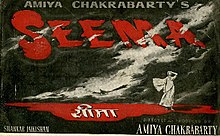
Seema (1955)
Director: Amiya Chakrabarty
The chemistry between Nutan and Shubha Khote in the surroundings of an orphanage stood out. Some of you may remember the long cycle ride undertaken by the latter towards the climax of the movie.

Dosti (1964)
Director: Satyen Bose
Circumstances and love for music brings together a blind person and a handicapped one. Trust Rajshri Productions to keep regaling us with family-oriented themes which tug at our heart strings.

Anand (1971)
Director: Hrishikesh Mukherjee
An unusual bond develops between an idealistic doctor and a terminal cancer patient who comes to stay with him during the last few months of his life. The frustration of a doctor at not being able to alleviate the suffering of his new-found friend was etched out so very poignantly.

Victoria No. 203 (1972)
Director: Brij
Two old golden-hearted crooks get released from jail and wish to spend the rest of their lives as good, respected men. The plan is short lived when they willy-nilly find themselves on the trail of some stolen diamonds.
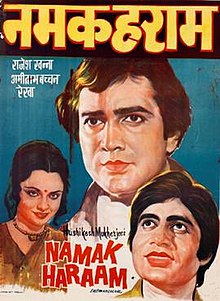
Director: Hrishikesh Mukherjee
An industrialist who does not care much about maintaining harmonious relations with his labour force ends up being confronted by a close friend who empathizes with the travails of the workers and evolves into a trade union leader of sorts.
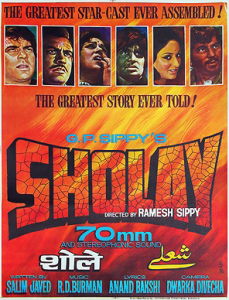
Sholay (1975)
Director: Ramesh Sippy
Even though the main theme was all about revenge with romantic sub-plots thrown in, the friendship between Jai and Veeru went on to become the stuff of cinematic legends.

Hera Pheri (1976)
Director: Prakash Mehra
Two small-time crooks loot other rich ‘respected’ but criminal-minded people for a living. Misunderstandings arise between them, but eventually get cleared up and the friendship between them gets reestablished.

Chashme Baddoor (1981)
Director: Sai Paranjape
Three friends who live together run into a young lady from the neighbourhood. The studious one ends up winning her heart. Out of jealousy, the other two try to complicate the relationship between the couple. A grandmother ends up clearing the mists, reuniting the couple.
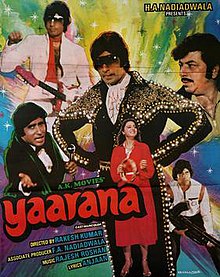
Yaarana (1981)
Director: Raakesh Kumar
If one friend goes out of his way to promote the singing career of a childhood friend, the other, upon becoming famous and rich, reciprocates the gesture by donating the proceeds of his earnings and consequent record deals in order to rid his friend of his many mortgages and to reunite his family. When one gets admitted into a lunatic asylum, the other one manages to sneak in and restore his sanity.

Andaaz Apna Apna (1994)
Director: Rajkumar Santoshi
Two daydreamers come up with a get-rich-quick scheme by pursuing a millionaire’s daughter. Once they meet each other, they form a competitive bond and land up at the daughter’s place under some false pretexts. Diamonds, mafia dons and jealous uncles play a role. Eventually, they play saviours to the daughter, her secretary, and the family, thereby achieving their goals.

Dil Chahta Hai (2001)
Director: Farhan Akhtar
Three close friends pursue a different career path after passing out of college. Love blossoms for each one, though differently. They go on a road trip together. Misunderstandings between them get cleared in the end.
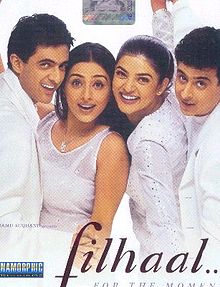
Filhaal (2002)
Director: Meghna Gulzar
One of the rare movies which portrayed a strong bond of friendship between two inseparable friends. During a fencing session, a freak accident leaves one of the friends injured, rendering her unable to conceive later in life. The other one offers to be a surrogate mother for the couple. Complications arise in the relationship, though the story eventually ends up on a positive note.

Rang de Basanti (2006)
Director: Rakeysh Omprakash Mehra
When a British student decides to make a film on pre-independence freedom fighters from India, contemporary reality meets history, forcing the viewers to introspect as to where we are headed as a country. The bond between the friends stood out for its empathic and realistic portrayal.
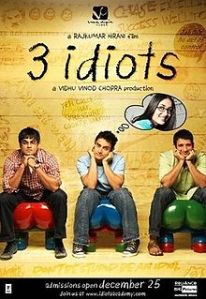
3 Idiots (2009)
Director: Rajkumar Hirani
The friendship between three classmates withstands the test of time. Ten years down the road, their common antagonist also joins in when they decide to search for one of the missing friends. The central message of the movie was to decide one’s career moves based not on parental or popular expectations but on one’s inner passion.

Zindagi Na Milegi Dobara (2011)
Director: Zoya Akhtar
Three friends undertake a joint trip so as to experience different facets of life. Their plan is that during the road trip each of them will pick a surprise adventure sport in which they all have to participate together. They complete the event successfully, bonding better with each other and gaining a renewed sense of purpose in life.

Kai Po Che (2013)
Director: Abhishek Kapoor
Three friends spot a talented boy who is good at cricket and decide to groom him. A love affair leads to misunderstandings arising between them. The 2001 earthquake in Gujarat and the riots of 2002 also pose many challenges to their bond of friendship.

Dedh Ishquia (2014)
Director: Abhishek Chaubey
Two partners in crime run into a pair of scheming ladies who have ideas of their own. The latter end up cocking a snook at the former by selling a necklace stolen by them, buying a property from the proceeds, and settling down there to start a dance school for young girls – a scheme the two friends had hatched between themselves.

Parched (2015)
Director: Leena Yadav
Four women in a desert village of Gujarat, India, forge a strong bond of friendship between themselves while facing social evils, age-old traditions and practices of patriarchy, child marriage, dowry, marital rapes, and physical and mental abuse.

Double XL (2022)
Director: Satramm Ramani
A common challenge of being overweight results into a bond of friendship developing between two young ladies. They decide to work together and demonstrate the perks of obesity to the world, ridiculing the current craze for Size Zero and unrealistic norms of beauty peddled by fashionistas and the media.
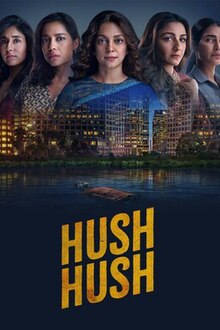
Hush Hush (2022, Series)
Director: Tanuja Chandra
A taut thriller where one of the four close friends dies in mysteriously circumstances. The other three ladies eventually uncover the real reason for the death of their friend, while battling the challenges in their own lives.

Uunchai (2022)
Director: Sooraj Barjatya
When a close friend suddenly dies, three friends decide to honour his last wish – that of visiting the Himalayas. Despite health challenges, they undertake a hiking trip to the Everest base camp. They manage to scatter the ashes of their departed friend there. The perilous journey makes them realize that each one of them has heights within which are waiting to be scaled, bringing home the key message of striving to realize our fullest potential in life.
Why Are Women Short-changed?
There may be many more friendship-based movies which I would have missed out here. However, one thing that strikes is that of a serious shortage of movies on friendships between women. Is it that those hailing from the tribe of the delicately nurtured do not have friends?
The underlying cause could perhaps be that a major chunk of our society thrives on a patriarchal mindset; while males enjoy their friendships for a very long time, females often get a raw deal on this front because family commitments reign supreme, often to the exclusion of all else. With hardly any personal space and a minimal availability of ‘Me Time’, the bonds of female friendship, if any, do not enjoy the kind of continuity that male friendship does.
We need to encourage and empower the women in our lives to keep their own embers of friendship aglow, alive and kicking!
Related Posts:
The Madras Cut and the Bombay Thrust in Indian Cinema: A Guest Post by Harish Nambiar
Posted in The Magic of Movies!, tagged Bombay Thrust, Indian Cinema, Madras Cut on May 10, 2023| Leave a Comment »
Founder of subaltern studies Ranajit Guha’s death late April this year and maestro Satyajit Ray’s death anniversary had a series of excellent posts on the two men. I dug out a 2013 piece that connects the two tenuously with a bit of trivia, but hopefully it would be a nice primer on India’s various filmdoms.
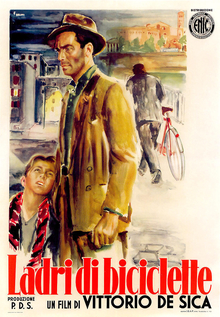
About The Cut and The Thrust
When the filming of Satyajit Ray’s path- breaking Pather Panchali began in 1952 it was the climaxing of a process immediately preceded by the 99 films the would-be auteur saw in London where his employer of the time had sent him on assignment as an advertising professional. Among the films that had the most profound effect on the master director was Vittorio De Sica’s Bicycle Thieves, and its influence is there for all to see in Pather Panchali.
However, Ray’s genius made his film original by adding to it a visual lyricism and poetry that was thoroughbred Bengali, in no small measure helped by the soft weeping, sighing, moaning, and soaring of Ravi Shankar’s sitar. The stories of the many agonies Ray suffered to create the masterpiece are now legion.

However, there is an alternative story parallel to Ray’s early struggles that is less known. A group of college-going teenagers in Kerala, also influenced by De Sica, went through more or less the same struggles to raise money and film a neo-realistic film, two years after Ray began filming. The Newspaper Boy, the Malayalam film, beat Pather Panchali to public release in May 1955.
Apu, or Appu in the Malayalam version, was the name of the protagonist in both the films and they were both a humane take on poverty in recently independent India, depicted as graphically as De Sica’s masterpiece did the poverty of the citizen in post WW II Italy in 1948. But by 2013, The Newspaper Boy has been relegated to trivia rounds of quizzes, despite the fairly high quotient of critical acclaim it garnered for its boldness and the heroic, awe-inspiring ambition, and tenacity of its young makers.
In May 2005 a social service club in Kochi, Kerala, toasted the surviving members of that pioneering team for their daring jab at film history. Nearly 60 years since, newly found prosperity, easier exposure to the world and the quickening of instinct that technology aids, has changed the nature of filmmaking and the pattern of how films are consumed by the Indian filmgoer. And yet, a lot of good work in various Indian native languages bypasses the cineaste despite great, concomitant advances in distribution of films.
So impermeable are the walls of the compartments that would be called Indian cinema that many nostalgic cineastes feel guilty for criticising the national television channel that showed regional language movies with subtitles through the ’80s when these movies won national prizes. It is another aspect of the nation-building process set in motion by earlier Indian statesmen that is ignored. However, in the more commercial and new media-led world a regulation college song in Tamil and English, “Kolaveri Di”, goes viral and becomes an instant hit.
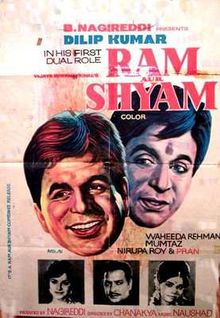
Madras Meme
Mindless mass entertainers, oddly enough, cross over to wider audiences through remakes. Govind Nihalani, the acclaimed director of parallel cinema of the ’80s and ’90s, asked film scholar K Hariharan to explain this phenomenon that he said was called the “Madras Cut”. Nihalani was chairing a panel discussing changing narrative trends in Hindi cinema, at the Film Writers Association’s third Indian Screenwriters Conference in Mumbai this week.
Hariharan, a film director and the dean of LV Prasad Film & TV Academy, answered it simply. He said Madras studios always made national films and the moment a film crossed 50 weeks in the theatres, Hindi producers had no qualms or questions to ask before they remade it in Hindi. Ram aur Shyam (1967) and Haathi Mere Saathi (1971) were such remakes that raked in the money for Hindi producers.
Incidentally, Haathi Mere Saathi was the first film from the celebrated writing duo of Salim Khan and Javed Akhtar, who would memorably use the Bundelkhandi word, “daari”, when they have the dacoit Gabbar Singh, in Sholay, leering at Hema Malini and saying, “Daari ke paaon toh dekho” in one of the prized rare bits of elemental detail Hindi films were not famous for, till then.
Gabbar’s speech pattern was a great distinction in creating the unforgettable character that the supremely talented Amjad Khan would forever be identified with. The fact was that Chennai, when it was Madras through the ’60s, ’70s and ’80s, was the home of the south Indian film industry for a long time. The Malayalam film industry, though it started originally in Trivandrum in the 1920s, eventually shifted to Madras before moving home in the late ’80s. The Telugu film industry’s biggest studios were incubated in Madras before moving to Hyderabad in the late ’90s.
The Kannada film industry looked north to Maharashtra, and flirted with Kolhapur, more than Bombay, in its nascent years. The Madras film industry of the time produced a lot of morality tales and Aesop’s fables-like simple-minded grand narratives for mass audiences. It deftly navigated the move from Hindu mythological tales to more contemporary stories.

Cultural Cauldron
About the same time, the Hindi film industry was a thriving marketplace blessed by unequalled talent from Bengal, in the form of directors and music composers, and from Punjab and Uttar Pradesh in the form of actors, producers and directors. They also benefited from the strong wave, perhaps once in the lifetime of a country, of out-of-work poets who wrote in Urdu from the entire northern region of the subcontinent.
After the partition of India, Urdu, that sublime language, was converted to ‘Islam’ in India’s popular consciousness. Gulzar reclaimed Urdu from its Islamic identity by transforming it into an irreligious, aesthetic adjective in 1998 with the line “Jiski zubaan Urdu ki tarah” in the Tamilian director Mani Ratnam’s Dil Se. But prior to that, Urdu’s best poets found a home in Bombay to write as they pleased and affect a vast majority of the country’s population. And they were the stars of the golden period of Hindi films.
Cross-fertilisation has always been a trend in filmdom. It is after all one of the four genuinely equal-opportunity spaces in India besides crime, spectator sports and politics. Ashis Nandy had identified these social segments in his panel discussion at the Jaipur Literary Festival that was overtaken by the controversy about his purportedly anti-dalit statement. Hindi films veered, I imagine because of brute strength, in terms of having a far larger market and spread than any other language films can ever have, to become the new English for Indians.
Its pan-Indian appeal has seen it muscling up on weaker language film industries of India, while the stronger, self-sustainable economies remain undaunted, much like the film industries of the south. And the rise of the Bhojpuri film industry in recent times is a wonderful reminder that Hindi too is not as monolithic as Bollywood films would have us believe.
Rules of Engagement
It is an unforgivable irony of India’s film history that MS Sathyu, a Kannadiga from Mysore, is the one who made the most defining film on partition. This, despite the fact that several well-known Bombay film families traced their individual stories directly to the partition of India. Partition also deprived Hindi film industry of the services of Sadat Hasan Manto, a film writer and the most original and daring literary cartographer of the partition. I heard very many speakers at the screenwriters’ conference moaning about the fact that Hindi films do not engage more urgently with the country’s contemporary reality.
One of the reasons was because it still was wondering if filmmakers should have any social responsibility. Frankly speaking, as sociologist Shiv Visvanathan reminded the screenwriters in his keynote address, social responsibility is not the screenwriter’s duty. Just recognising the current realities of his society and being informed about it, would do. One good way would be to recognise that a big swathe of those who watch Hindi films do not speak Hindi at home. At home they speak their mother tongues, which are as many and more than the states and regions of India. Similarly, a lot of good Tamil, Malayalam, Bengali, Kannada films are set in their local milieu.
Hindi films do not have to adapt them to resettle the story in Uttar Pradesh or Bihar. They can tell a Naga story set in Nagaland itself. It would be an excellent way to do justice to the diversity of the country for a national audience of Hindi films that is not from the Hindi heartland. Very often, local language films are also more integral to the milieu in terms of their deeper and organic connects with all aspects of the culture. MT Vasudevan, a Malayalam writer who is also a Jnanpith award winner, has won the highest number of National screenplay writing awards. A story he writes need not be excised from Kerala, his setting for most of his stories, just so that it can be made to “travel” to Hindi film viewers.

Spreading the Net
One great social responsibility the screenplay writers, directors and producers of Bollywood can undertake is scout for original stories in their natural locales. It would be an ambition that would be rewarding because it would tap into the cultural diversity of the Hindi filmgoers.
Besides, it will more directly address the question of social responsibility instead of ideological or moral pedantry that the term seems to mean to many. LV Prasad, the doyen of Telugu and eventually Hindi films, wrote his scripts in English as Hariharan told the capacity audience at the screenwriters’ conference.
The Los Angeles Times’ film blog headlined a story about the money raked in by a Telugu hit in a ticklishly amusing way in September 2011. “Dookudu, the biggest hit you’ve never heard of”. That would read horribly offensive in a Hindi paper. Looking farther afield, way beyond villages in the Hindi heartland and the metros of the country, will yield an embarrassment of riches in terms of stories and locations that would do greater justice to the multilingual army of fans of Hindi films.
For those who’d rather read it online: https://tinyurl.com/333yauup
The Author
Harish Nambiar is an editor with The Economic Times. Before that he was with Reuters and clutch of national mastheads. He has been a journalist since 1990.
In the mid-nineties he taught a semester as a lecturer to undergraduate students teaching the rise of the novel as a form and poetry appreciation in a Mumbai college.
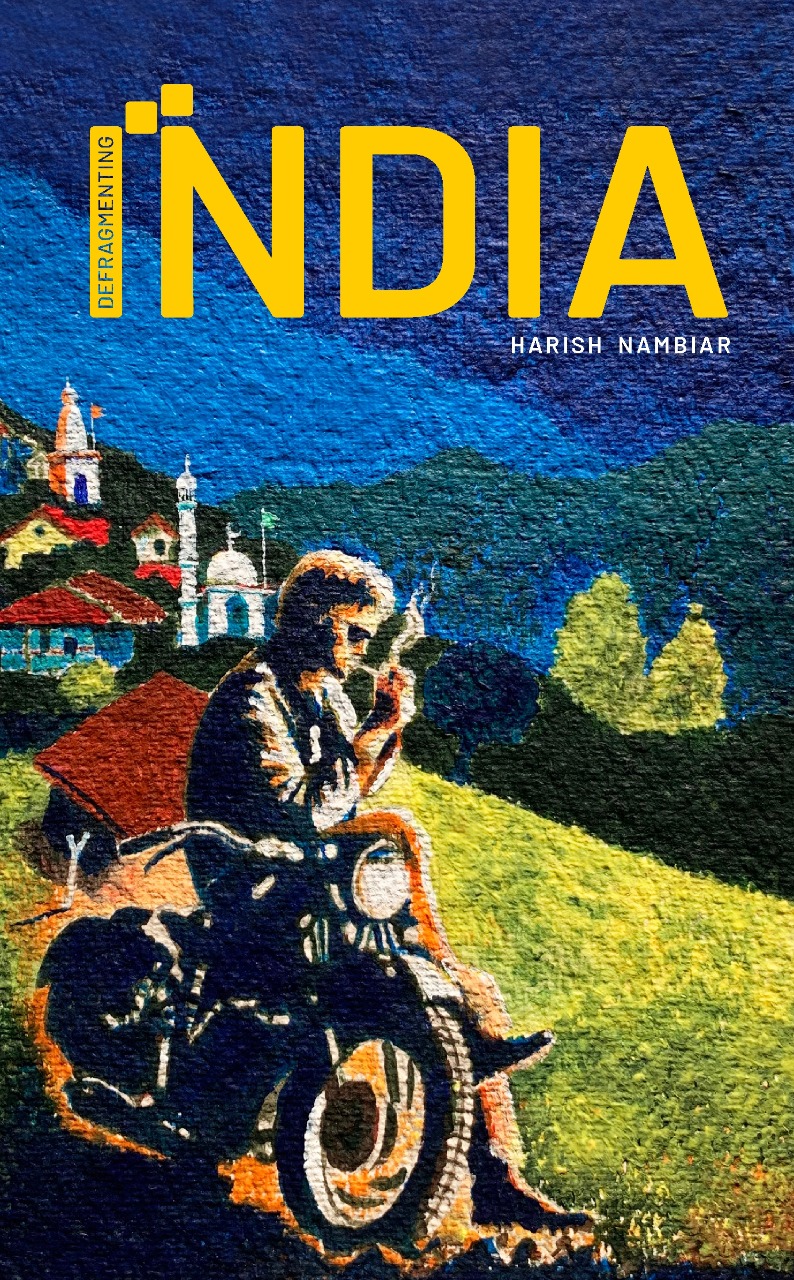
Sage Publications published his book of narrative non-fiction Defragmenting India: Riding a Bullet Through the Gathering Storm in 2012 that he plans to reissue on Amazon soon.
Related Posts:
Of Filmitis and Serialitis
Posted in The Magic of Movies!, tagged Addiction., Facebook, Humour, Movies, OTT, Serials, The Reviewer Collective on May 2, 2023| 8 Comments »

The foundations of our civilization are quivering. Homo sapiens are faced with a mental health crisis of gigantic proportions. There is widespread concern about the pace at which the twin epidemics of Filmitis and Serialitis are spreading across countries and continents. Medical researchers of all hues are twiddling their thumbs, trying to figure out a cure for these afflictions which happen to be not only highly addictive but also pleasurable.
These afflictions affect all human beings, irrespective of their age, sex, cast, creed, or ethnicity. Post-2020, when a pandemic struck humanity, the spread of these virulent challenges has posed a serious challenge to humanity. These are said to be highly contagious. A word of mouth is all that is required to lead one to contract it. Even an inane post on a social media platform in a Facebook group like The Reviewer Collective could nudge one to start watching a movie or an OTT series and then get hooked to it. Often, a long period of bondage ensues. Frequent viewers of the delightfully diverse content on the OTT platforms gladden the hearts of many a producer-director duo. The shareholders of such platforms can be seen laughing all the way to their banks.
To put it simply, once the germs of Filimitis and Serialitis have managed to find a foothold in any neuro-system, one’s fate is sealed.
Most people suffer from Serialitis these days. The OTT platform throws an infectious suggestion. We decide to check it out. We get sucked in. The directors and the scriptwriters ensure we never get to leave the confines of their alt universe. We get stuck with it. At night, we shudder to think of what may happen next. ‘Filmitis’ is far more tolerable. Whatever happens, it gets wound up in around 120 minutes.
Often, we worry about kids spending too much time on their screens. When a kid starts believing that he/she has super-powers like those possessed by either Batman or Spiderman, our brows get furrowed. However, when it comes to addictions like Filmitis and Serialitis, we, the so-called adults, are no less.
The Symptoms
These ailments manifest themselves in many ways. A mood of apathy towards one’s near and dear ones sets in. Public interactions are often given a skip, unless mandated otherwise by an overbearing spouse. One develops a strong tendency to compare on-screen characters to those one comes across in real life. At work, haughty bosses get likened to such villains as Gabbar Singh (Sholay) and Mogambo (Mr. India).
A perpetual state of intoxication envelops one. Meticulous notes get made of the varied recommendations which keep pouring in from all sides. Lists showing the yet-to-be-watched offerings by our dream merchants get updated regularly. A pitiless analysis of the scintillating characters on the screen gets done. Wikipedia gets searched for more offerings featuring a favourite actor on the screen. Speculations get made as to what would have happened if they had responded to a situation differently.
Even lay viewers suddenly evolve into seasoned reviewers, offering insights into such aspects as acting proficiency, script writing, cinematography, music, lyrics, editing, and the like. I, for one, upon coming across an offering which sound exciting to me, would be in the transient grip of a ‘Eureka’ moment, rushing to share the information with aficionados who may devour it with much glee. Archimedes would surely be squirming in his grave.
The most serious symptom happens to be the disinclination of all those suffering from Filmitis and Serialitis to seek a cure for these maladies. Once contracted, one is apt to remain happy and contented to continue in a state of perennial addiction. Medical fraternity is yet to find a solution to this unique kind of viral resistance.

Three Stages
There are three stages of these diseases which have been identified and catalogued so far.
Stage 1
In the first stage, one displays occasional signs of having any of the symptoms described above.
Stage 2
In the second stage, one shows grave signs of many of these symptoms, but is still considered treatable by a heavy dose of socializing. Quite a few in this category practice detachment and can leave a series mid-way, without any feelings of remorse or any desire to get back to it, ever. Lord Krishna, were He to come to know of such souls, would be pleased for them to have acquired this spiritual trait.
Stage 3
The third stage is the most critical one, with no cure in sight as of now. Medicos continue to be baffled. In this stage, one is obsessed with all facets of the production of the collages of moving images, much to the exclusion of every other kind of arts. In every situation of life, a streak of one of the narratives is invariably noticed.
All relatives, friends, seniors, colleagues, and juniors get identified with one or the other characters created on the screen. Lawyers sound like either Mickey Haller (The Lincoln Lawyer) or Woo Young-woo (Extraordinary Lawyer Woo). When visiting a hospital, female doctors get likened to Meredith Grey (Grey’s Anatomy). Nurses who go out of their way to assist us sound like Amy Loughren (The Good Nurse). When visiting a shopping mall, mumbling managers get likened to Glenn and smart salesgirls to Amy (Superstore) fame.
A person suffering from the last stage of these disorders often complain of a stifling sensation. Nothing else in life appeals any longer. The allure of catching up on the latest on-screen fate of the characters often makes one lose sleep. Binge-watching becomes the norm. During days, when life really happens, one goes about the mundane affairs of life like a zombie with frayed nerves, bleary-eyed, and lost in one’s own thoughts.

Weaponizing these maladies
Do we need de-addiction centres to counter these viruses of Filmitis and Serialitis? Do we wish our medical research honchos to come up with a vaccine to keep the foundations of our civilization from quivering incessantly? Not necessarily. Instead, an innovative deployment of these viruses would help humanity in more ways than one.
The day is not far off when governments the world over may end up weaponizing these diseases.
Tackling obdurate enemies
Leaders as well as soldiers of armies wanting to attack a country could be easily lulled into a sense of complacency and inaction if facilitated by the border area networks offering free streaming of OTT content dished out by the country under attack. Wars would then be a thing of the past. Money being spent on arms of all kinds would eventually get deployed to eradicate poverty and illiteracy across all our continents.
Improving internal security
A similar treatment, if meted out to criminals, terrorist groups and internet warriors who keep spreading fake news, would ensure peace and harmony in the society. Crime rates would nosedive.
Providing joyful healthcare
Seriously ill patients awaiting a surgery while lying on a hospital bed, if fed with such stuff as Wagle Ki Duniya and Happy Family…Conditions Apply, would happily wait for their turn to come up, thereby improving the billings of private hospitals and nursing homes.
Building a chivalrous society
If such movies as Ghar, Chhoti Si Baat, and Veer Zara get promoted aggressively by our Movie Mughals, members of the so-called sterner sex would end up being more chivalrous, thereby minimizing misdemeanours directed at the delicately nurtured. Divorce rates would plummet. Loving husbands would be more likely to follow the example of Dr Anand (Silsila), ensuring that the doves of peace keep their wings flapping over their humble abodes. Parents who are brought up on a healthy diet of such movies as Gunjan Saxena and Babli Bouncer may give up their patriarchal mindsets and encourage their daughters to scale newer heights in their lives and careers.
Improving political discourse
Politicos in power might keep the opposition leaders similarly engaged, thereby reducing their propensity to keep making defamatory speeches or hurling choicest abuses upon them. Those cooling their heels in jail, if shown an offering like Dasvi, may even get motivated to improve upon their academic record. A general improvement in the quality of political discourse may thereby ensue. Better degree of sanity may prevail around election time.
Population control
Health ministers who are having sleepless nights worrying about their country’s galloping birth rates may consider targeting their denizens in the reproductive age group with such offerings as Basic Instinct, The Dirty Picture and Lady Chatterley’s Lover, thus keeping them distracted from their amorous impulses.
Cocking a snook at the First World countries

When meeting the leaders of countries which keep showing their disdain towards an emerging economy, the premier of such a country merely needs to present his/her hosts with video recordings of such serials as Scandal, The Designated Survivor and The Diplomat.
By an innovative and clever deployment of these afflictions, the score of Gross National Happiness of all countries may improve drastically.
In other words, disorders like Filmitis and Serialitis need neither be contained nor cured. On the contrary, these need to be spread as quickly as may be possible. This would ensure that we continue devouring inane as well as cerebral stuff on our screens while slouching in our sofas, flowers are forever in bloom, God continues to be in heaven, and all remains well with the world.
Related Posts:
Some Music-themed Hindi Movies
Posted in The Magic of Movies!, tagged Bollywood, Dance, Hindi, Movies, Music, Rivalry, Success on April 28, 2023| Leave a Comment »
Music is the backbone of Hindi movies and OTT series, whether by way of songs and dances, or in the form of the background variety. However, there are very few offerings dished out by our Dream Merchants which are devoted to the subject of music itself, where the life of most of the characters revolves around the practice of music. Such human emotions as love, hatred, animosity, jealousy, pride, prejudices are all there, but music forms the central theme. The key characters get success after a great deal of practice. In the interim, they often taste heart-breaking failures. But spurred on by their immense talent, ardent passion, and sometimes by either a teacher or a muse, they persevere in their efforts and eventually achieve the recognition they deserve.
The idea here is not to recall and list movies which may be termed as musicals. Nor would I like to mention the ones which have provided uplifting music. In the list that follows, you will not find the ones where either music merely serves the purpose of entertainment or even where the main characters may be music teachers.
Thus, movies such as Dholak (1951), Phagun (1958), Jahan Ara and Chitralekha (1964), Heer Ranjha (1970), Pakeezah (1972), and Umrao Jaan (1981), do not appear here.
I have instead tried to focus here on the movies where music forms a core part of the script. Many of these depict the trials and tribulations of an artist who is enthusiastic about this form of fine arts. Many others capture the gravitational force exerted by music in making a relationship either blossom or wither.
Consider the following movies which are music-based offerings from our dream merchants.
Street Singer
(1938)
Direction: Phani Majumdar
Music: R. C. Boral
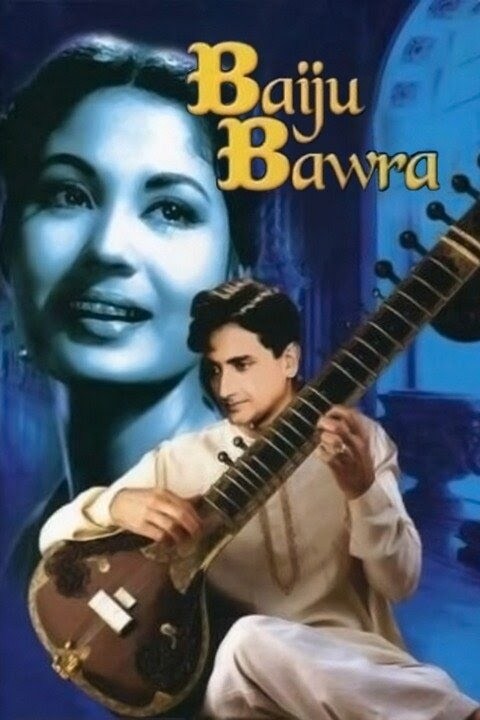
Baiju Bawra
(1952)
Direction: Vijay Bhatt
Music: Naushad
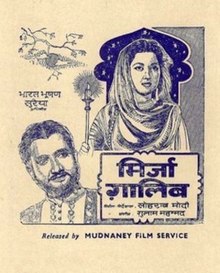
Mirza Ghalib
(1954)
Direction: Sohrab Modi
Music: Ghulam Mohammed

Shabab
(1954)
Direction: M. Sadiq
Music: Naushad
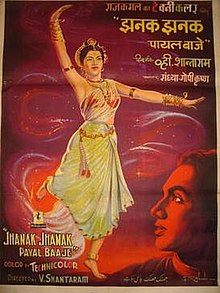
Jhanak Jhanak Payal Baje
(1955)
Direction: V. Shantaram
Music: Vasant Desai

Basant Bahar
(1956)
Direction: Raja Nawathe
Music: Shankar–Jaikishan

Phagun
(1958)
Direction: Bibhuti Mitra
Music: O. P. Nayyar
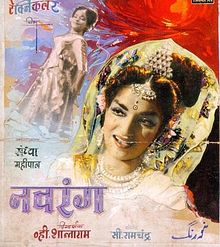
Navrang
(1959)
Direction: V. Shantaram
Music: C. Ramachandra
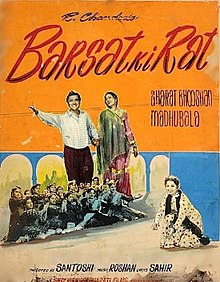
Barsaat ki Raat
(1960)
Direction: P. L. Santoshi
Music: Roshan

Sangeet Samrat Tansen
(1962)
Direction and Music: S. N. Tripathi

Meri Surat Teri Ankhen
(1963)
Direction: R. K. Rakhan
Music: S. D. Burman
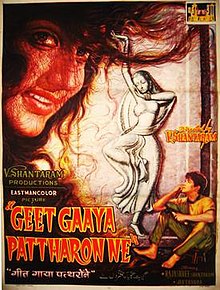
Geet Gaya Pattharon Ne
(1964)
Director: V. Shantaram
Music: Ramlal

Geet
(1970)
Direction: Ramanand Sagar
Music: Kalyanji–Anandji

Jal Bin Machhli Nritya Bin Bijli
(1971)
Direction: V. Shantaram
Music: Laxmikant–Pyarelal
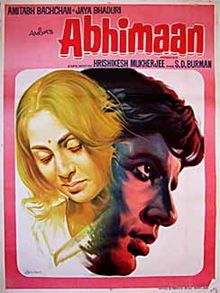
Abhimaan
(1973)
Direction: Hrishikesh Mukherjee
Music: S. D. Burman
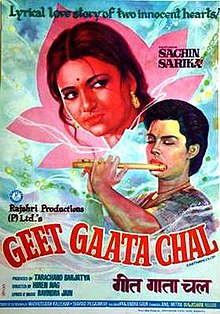
Geet Gata Chal
(1975)
Direction: Hiren Nag
Music: Ravindra Jain

Alaap
(1977)
Direction: Hrishikesh Mukherjee
Music: Jaidev
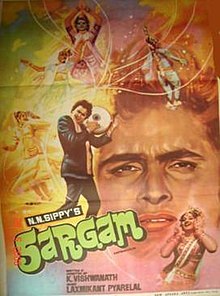
Sargam
(1979)
Direction: K. Viswanath
Music: Laxmikant-Pyarelal

Kalaakaar
(1983)
Direction: P. Sambasiva Rao
Music: Kalyanji–Anandji

Sur Sangam
(1985)
Direction: K. Viswanath
Music: Laxmikant–Pyarelal

Naache Mayuri
(1986)
Direction: N. T. Rama Rao
Music: Laxmikant–Pyarelal
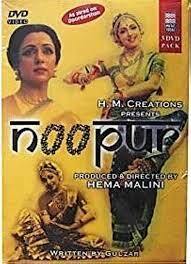
Noopur
(1990 TV series on Doordarshan)
Direction: Hema Malini

Sangeet
(1992)
Direction: K. Vishwanath
Music: Anand Milind
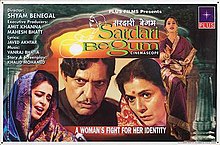
Sardari Begum
(1996)
Direction: Shyam Benegal
Music: Vanraj Bhatia

Taal
(1997)
Direction: Subhash Ghai
Music: A. R. Rahman

Dil To Pagal Hai
(1997)
Direction: Yash Chopra
Music: Uttam Singh

Saaz
(1998)
Direction: Sai Paranjpye
Music: Yashwant Deo, Bhupen Hazarika, Zakir Hussain, Raj Kamal

Sur – The Melody of Life
(2002)
Direction: Tanuja Chandra
Music: M. M. Keeravani
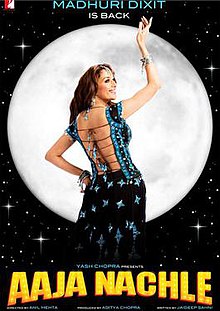
Aaja Nachle
(2007)
Direction: Anil Mehta
Music: Salim–Sulaiman
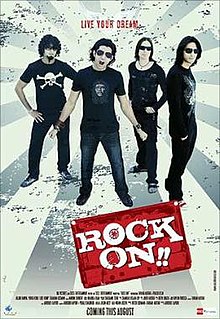
Rock on!
(2008)
Direction: Abhishek Kapoor
Music: Shankar–Ehsaan–Loy

Rockstar
(2011)
Direction: Imtiaz Ali
Music: A. R. Rahman
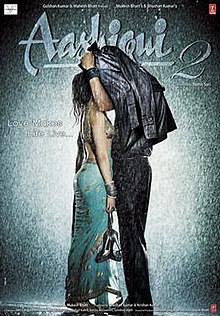
Aashiqui 2
(2013)
Direction: Mohit Suri
Songs: Jeet Gannguli, Mithoon, Ankit Tiwari
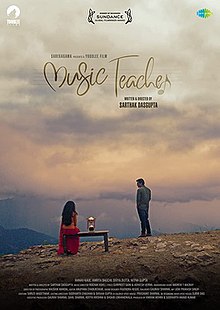
Music Teacher
(2019)
Direction: Sarthak Dasgupta
Music Original Composition: R.D. Burman
Music Re-created by: Rochak Kohli
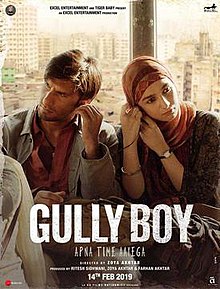
Gully Boy
(2019)
Direction: Zoya Akhtar
Music: The 18-song soundtrack, involving an estimated 54 contributors, was supervised by Ankur Tiwari

Bandish Bandits
(2020; Amazon Prime Video)
Direction: Anand Tiwari
Music: Shankar–Ehsaan–Loy,
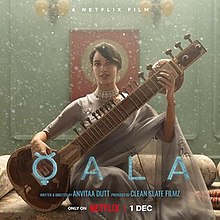
Qala
(2022)
Direction: Anvita Dutt
Music: Amit Trivedi
I am reasonably certain that there are many more which I might have missed out here. However, as the listing shows, over time, as Hindi cinema has moved away to modern settings, India’s rich cultural heritage is perhaps no longer getting the attention it deserves. That is how, a series like Bandish Bandits and a movie like Qala come like a whiff of fresh air in our turbulent times.
The price one pays for success
Some of these movies, like Saaz and Qala, depict the kind of competitive spirit which prevails in the field of music. A character even ends up jeopardizing the career of another, resulting in overpowering guilt. Such movies also capture the kind of cunning, guile and nerves of chilled steel needed to achieve success in a highly competitive world. Perhaps many of the famous artists we know of might have passed through quite a few such phases in their careers.
Like any other profession, the world of music is also replete with rivalry. It would be naïve to assume that success comes cheap. Often, the price it extracts from an artist’s inner being, especially in terms of a compromise on one’s ethics, beliefs, and values, is heavy.
For us, the audience, music is indeed an enriching food for the soul. However, the soul of an artist may carry a few scars, not known to us. But ignorance is bliss, as they say!
Note:
Inputs from Purva Agarwala, Dileep Raina, Madhulika Liddle, Avantika Nirupama, Sunil Jain, and a few others are gratefully acknowledged.
Related Posts:
Some Movie Awards Which Leave Us Fogged: Guest Post by Shouquot Hussain
Posted in The Magic of Movies!, tagged Awards, Bollywood, Hollywood, Movies on April 2, 2023| Leave a Comment »
Never have I had the privilege of being invited to a panel of judges which decides which movies an award goes to. But there are several which leave me, a lay viewer, a bit fogged. Consider the following:
In the year of The Lunchbox, The Good Road represented India at the Oscars.
In the year of Dharm, Eklavya represented India at the Oscars.
In the year of All the President’s Men, Rocky won the best picture award.
In the year of Citizen Kane, How Green Was My Valley won the best picture.
In the year of Saving Private Ryan, Shakespeare in Love won the best picture.
It’s A Wonderful Life flopped when it was released and did not even garner much critical acclaim. And that is how it lay – till a copyright clerical error gave the world a right to screen it freely, making it an annual Christmas staple, and it grew and grew on the masses and the classes and the critics – so much so that today it is considered Frank Capra’s masterpiece.
Shawshank Redemption did not wow the public or the critics much during its original theatrical release. Then came its TV premiere, and then DVD, and finally OTT – where it found phenomenal traction and the world finally fell in love with it.
Sholay received a very lukewarm response upon the week of its release, and in desperation Ramesh Sippy was about to the reshoot the end and keep Amitabh alive. The cast and crew had one final meeting, and it was decided they should wait out the weekend at least. And lo and behold – during the weekend all hell broke loose, and Indian cinema witnessed its biggest phenomenon – the birth of the blockbuster.
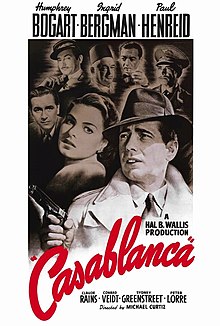
Casablanca was a pretty last-minute effort, with Warner Bros trying to cash in on the war situation, and the resultant fervour of patriotism that was spreading across the English-speaking world. An unpublished play, Everybody Comes to Rick’s, was adapted for the movie and Bogart’s agent liked it. But neither Bogart nor Ingrid Bergman was keen on doing it because they did not think it would really turn out to be good. They thought the dialogue was ridiculous and the situations were unbelievable. They were constantly trying to think of ways to get out of the movie. Bergman was then focused on For Whom the Bells Toll which she thought would be a big movie. And Bogart was not enjoying the fact that Bergman at 5’10 was two inches taller than him, and that he was made to stand on top of wooden blocks or sit on extra cushions by director Michael Curtiz because of it. And to top it all, neither the director nor the scriptwriters (the Epstein brothers) knew how the movie will end even while they were shooting it. In fact, Ingrid Bergman did not know how much love she should exhibit for Bogart’s character because she did not know whether they were in love or not (though that ambiguity ultimately gave the performance more stature). And to know now that the movie won multiple Oscars and is on all ‘Best Movies of All Tmies’ lists and is the movie with the maximum all time favourite quotes (7)!
About the Author
Shouquot Hussain is an educator and has been raising the intellect level of young students in India, as also in Kenya and Indonesia, since quite some time. He loves to read books. He dabbles in writing poetry, making the literary critics keep a keen eye on his progress. He is also a keen observer of movies; new OTT platforms keep licking their lips in anticipation of his valuable subscriptions. His son, like the proverbial fruit which does not fall far from its tree, is currently pursuing a BSc in Film Making. He is a self-proclaimed foodie. Like him, his spouse is also in the field of education. The couple infest the environs of Jakarta these days.
Related Posts:
How have Hindi movies evolved over time?
Posted in The Magic of Movies!, tagged Bollywood, Comedy, Evolution, Hindi, Language, Movies, Music on March 13, 2023| 9 Comments »
Charles Darwin, were he to be around in the exciting times that we live in these days, and if commissioned by a prominent Hollywood studio to study the manner in which Hindi movies have evolved over time, might have come up with some unique insights into the matter!
Perhaps, he might have proposed that movies do change over time, that new movies often pop up from some of the pre-existing ones, and that all movies share two common ancestors – an Adam who keeps providing the producers with healthy returns on their investment and an Eve who keeps nourishing wide-eyed-and-glued-to-their-seats kind of denizens with wholesome entertainment. He might have proposed that the concept of entertainment itself has undergone a major transformation. If the audience in the past used to get entertained by movies based on classical music and dance forms – like Baiju Bawra (1952) and Jhanak Jhanak Payal Baaje (1955), the flavour of the season now is that of item numbers, say, something on the lines of ‘Laila o Laila…’ in Raees (2017), which are meant for momentary gratification only, soon to be forgotten.
Recently, Bandish Bandits (2020) came as a whiff of fresh air.
He might have pointed out that there are indeed movies which try to convey a social message as well, but these belong to a different genre/species. When it comes to caste-based prejudices, we have had Sujata (1959), Masaan (2015) and Article 15 (2019). A movie like Jhund (2022) showcases the everyday struggles of vagabond Dalit youngsters, haunted by the humiliating gaze of society. Speak of the disadvantaged and we are apt to think of Ankur (1974), Akrosh (1980), Chakra (1981) and Nil Battey Sannata (2015). Think of the angst of the educated unemployed and we discover Albert Pinto Ko Gussa Kyoon Aata Hai (1980) and Rang De Basanti (2006). Speak of sex workers and movies like Chandni Bar (2001), Chameli (2003) and Gangubai Kathiawadi (2022) pop up in our minds.
He might have even concluded that there is no universally applicable formula for whipping up a blockbuster, that past success does not guarantee future conquest, that such formulae have a rather short shelf-life, and that one must factor in the then prevailing social mores, the economic condition of the target audience and the impact of disruptive technology which has its own pace of evolution. If a delectable mix of sex and violence worked at a time, and if star power was the magnet which kept the box office aflame, content, acting prowess and slick editing work the magic now.
He might have pointed out that each genre/species has its own unique characteristics, that each one has its own path of evolution, and that the onset of the multiplex phase, followed by the OTT-era, has enabled our dream merchants to climb newer heights of imagination. Those of us who have loved such series as Gullak (2019-2022) and Panchayat (2020 onwards) might concur with this thought.
Specifically, he may have made a few general observations about the evolution of our Hindi movies over time:

Some Tectonic Shifts
In the pre-partition days, the audience lapped up offerings which were based on values, patriotism, mythology, or religious beliefs. Raja Harishchandra (1913), Bhakt Vidur (1921), and Amar Jyoti (1936) can be mentioned in this context. Kismet (1943) was a different cup of tea altogether.
In the years followed by India’s independence, hopes for a new country ran high. Besides romantic ones, idealistic movies steeped in socialistic thinking – like Awara (1951), Boot Polish (1954), Jagte Raho (1956), Do Aankhen Barah Haath (1957), Mother India (1957), Pyaasa (1957), and Phir Subah Hogi (1958) – came up. Mythologicals like Sampoorna Ramayan (1958) and Mahabharat (1965) also kept the audience engaged. A primarily agrarian economy liked such offerings as Do Bigha Zamin (1953).
In the next decade, we loved seeing movies like Mughal-E-Azam (1960), Hum Dono (1961), Sangam (1964), Guide (1965), and Aradhana (1969).
During the 1970s, the angst of the common man was identified by our dream merchants to be a key point of attraction. Movies like Deewaar (1975) and Sholay (1975) came to rule our collective psyche. Thanks to the likes of Shyam Benegal, Govind Nihalani and others, the parallel cinema stream catered to the tastes of the intelligentsia. We also had some Hollywood-style movies with a taut script, such as Ittefaq (1969) and Achanak (1973). The critics loved these, but not the non-discerning audience sold on cheap melodrama.
Thereafter, many of us would remember Tezaab (1988), Chaalbaaz (1989), DDLJ (1995), Lagan (2001), and Bunty aur Babli (2005). Somewhere down the road, cheap, low budget movies aimed at the front benchers also flooded the market. Many of these were South Indian productions made on tight budgets starring the likes of Jeetendra etc. in this phase, the production sources were dubious, and films were tasteless and crass. Over time, the upper classes withdrew from cinema halls and started devouring movies on VCRs.
Thanks to economic liberalization, we started becoming Westernised to an unrecognisable extent. Consumerism started blooming. The joint family system started disintegrating. Individualistic themes gained prominence. Gradually, we found ourselves faced with the reality of living not only in ‘Bharat’ but also in ‘India.’ The former was catered to by single-screen theatres. However, thanks to upward mobility, rising incomes, and ready availability of international merchandise, the culture of shopping malls and multiplexes sprouted. The multiplex phenomenon opened the doors for shorter and crisper flicks, based mostly on urban-centric themes. The cinematic landscape changed, offering ultra-commercial masala fare dished out by the likes of Subhash Ghai and Sanjay Leela Bhasali to the ultra-niche cinema of Vishal Bhardwaj, R Balki, Anurag Kashyap and Madhur Bhandarkar.
Over time, internet became easily available and then OTT followed. We, the audience, exposed as we were to international media offerings, became choosier. Now, our critical eye looks at a wider range of the cinematic offerings – its genre, storyline, acting prowess of the characters, music, camera movements, technical excellence, and so forth.

The Yin and Yang Balance
Most of you who have examined the phenomenon of falling in love would agree that in the earlier days of Bollywood, those belonging to the tribe of the so-called sterner sex happened to be the dashers and the knights in shining armours who could do nothing wrong. All the hero had to do was to flex his muscles, and a coy member of the tribe of the so-called delicately nurtured would swoon and fall in his arms. Most of the times, the females would not be dashers but merely dormice, exerting their soft power occasionally. Only once in a blue moon, when pushed with their backs to a wall, did they strike back.
Cut to the present. The heroes are no longer diffident about shedding their macho image and reveal their softer side on the screen. The heroines have now become far more decisive and assertive. They resist amorous advances. They call the shots. They continue to be as beautiful as ever but have become far bolder. Now, they come into their own out of sheer free will, revealing the inner strength they possess.
Even though the fight against a deeply entrenched patriarchal mindset is far from being over, the Yin-Yang balance has tilted in favour of the females. They rule the roost. On the other hand, the males are no longer shy about showing their vulnerabilities. The male rabbit often gets attracted by a female dasher. He no longer has the luxury of concentrating on some mild, gentle dormouse with whom he could settle down peacefully and nibble lettuce. In the past, we had Arth (1982) where the heroine chooses to lead a life independent of either her well-wisher or her ex-husband. Of late, we have had such movies as Astitva (2000), Aitraaz (2004), Wake-Up Sid (2009), Inkaar (2013), Queen (2013), Dedh Ishqia (2014), Ki and Ka (2016), English Vinglish (2012), Thappad (2020), and Jugg Jugg Jiyo (2022), which speak of women empowerment. On the OTT platforms, we have had Delhi Crime (2019), Bombay Begums (2021), Modern Love Mumbai (2022), and Modern Love Hyderabad (2022).
Not to forget such stand-alone female-centric movies as Kahaani (2012), Gulaab Gang (2014), Mardaani (2014), Parched (2015), Nil Battey Sannata (2015), Jai Gangaajal (2016), Neerja (2015), and Gunjan Saxena (2020), where males play either a supplementary or a villainous role.
Of late, script-backed roles for heroines have gained better traction. The effeminate side of males has garnered better prominence. Heady days are here!
Mamma Mia!
The image of the Indian mother has got a 180-degree makeover.
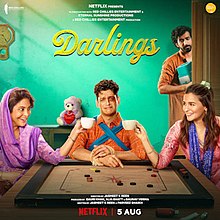
From a weepy, sacrificing Sulochana (Dil Deke Dekho, 1959) and Nirupa Roy (Do Bigha Zamin, 1953) to a dictatorial Dina Pathak (Khoobsurat, 1980) and Supriya Pathak (Goliyon Ki Rasleela Ram-Leela, 2013), we have seen her role metamorphosing over the decades. Now, we even have a mother who hatches a plan to torture/murder an abusive son-in-law, a la Shefali Shah (Darlings, 2022)!
Yes, we have always had the morally upright mother who goes to an extreme to restrain her errant son, like Nargis (Mother India, 1957) or Reema Lagoo (Vaastav, 1999).

Sex Education
No more flowers swaying in a gentle breeze touching other flowers. We are not only beautiful; we are also bold. Steamy scenes are now an essential part of a movie/series. Several movies use the services of an ‘Intimacy Director’ to manage the delicacy of such scenes, when getting shot. Teenagers no longer need to necessarily depend upon unreliable sources to learn the nuances of love making.
Consider the 1953 version of Parineeta (Ashok Kumar, Meena Kumari) wherein the mere act of garlanding signifies a matrimonial alliance. However, in the 2015 version (Saif Ali Khan, Vidya Balan), the level of intimacy between the couple goes to a different level altogether.
LGBT relationships are out of the closet and no longer make us raise our eyebrows, like Fire (1996) managed to do in the past. Whether it is a series like The Fame Game (2022) or movies like Badhai Do (2022) or Maja Ma (2022), such affairs are now out in the open.

Technology Rules
No more dacoits on real horses. Thanks to our new-found sensitivity towards other species, most scenes depicting animals depend on technology, which has made things easier. Compare the magnificent battle scenes of Mughal-E-Azam (1960) with those of Samrat Prithviraj (2022). In the latter, whole battalions of soldiers can be seen marching ahead in perfect unison, putting our brave soldiers who participate in the Indian Republic Day parade each year to shame. The absurdity and the sheer artificiality of the scene made me laugh out aloud, prompting my multiplex co-viewers look at me with scorn, their shapely highbrows raised more than an inch.
‘Dishoom-dishoom’ scenes have all but vanished. Instead, what we have now are gravity-defying stunts which would be leaving Sir Isaac Newton shaking his head in disbelief and perhaps even squirming in his grave.
The day is not far off when AI-backed tools will be churning out innovative scripts, screenplays, and lyrics, leaving many of the Bollywood writers and lyricists crying all the way to their respective banks.

The Diminishing Returns of Tragedies
One of the side-effects of the arrival of economic liberalization has been the reduction in the audience’s appetite for outright tragedies. When the aspirational upwardly class is obsessed with chasing economic goals, there is a greater need for positive narratives and happy endings. Tragedies like Andaz (1949) and Sahib, Bibi aur Gulam (1962), featuring such actors as Dilip Kumar and Meena Kumari, gradually become passe. While feel-good and revenge-oriented themes continue to be popular, movies like Matto Ki Saikil (2022), which depict the harsh realities of life, receive critical acclaim but meet with open disdain at the box office.

Many Shades of Grey
Gone are the days when we would be shuddering in our seats in a theatre while listening to Amrish Puri saying ‘Mogambo khush hua…’ while drumming his heavily ring-infested fingers on one of the arms of his throne, or Gabbar Singh calling out ‘Arre o Sambha, kitne aadmi they…?’ while prowling around menacingly with a pistol aimed at three of his terrified cronies, or Prem Chora pouncing upon a damsel in distress with clear intentions of outraging her modesty while mouthing such dialogues as ‘Prem naam hai mera, Prem Chopra’.
If Pran was a suave but scheming villain unleashing his vicious plans on a hapless couple, Ajit, duly attired in a white coat and even wearing white-coloured shoes, sent quite a few shivers down our spines. In each story, there was a good guy and a bad guy. When the ‘angry young man’ happened, the hero’s character itself took on an unapologetic black shade.
If Sholay set a new benchmark in the action sequences, directors like Vidhu Rahul Rawail, Vinod Chopra, and Ram Gopal Verma gave us gut-wrenching fights and dreaded villains in such movies as Arjun (1985), Parinda (1989), Satya (1998), Shool (1999), and Shiva (2006). These showcasedraw cycle chain and knuckle duster fights.
The advent of characters with negative shades has further accentuated this transformation; think of Shahrukh Khan in Baazigar (1993) and Darr (1993), Kajol in Gupt (1997), Aishwarya Rai in Khakee (2004), and Aamir Khan in Fanaa (2006), just to name a few.
I am skipping flicks in the horror genre here because I have never watched any of these.
Once liberalization happened, nobody had the nerve to lash out at a rich guy. Wealth ceased to be a liability; instead, it became a desirable goal and a badge to be unabashedly worn on one’s sleeve. Blacks and whites disappeared from our screens, and shades of grey became predominant. Movies moved closer to the real world and ceased to be pure fantasies.
The brain started kicking on all its six cylinders and eventually started ruling over brawn. In the past, cerebral offerings such as Jewel Thief (1967) were few and far between. Now, we have the likes of Kahaani (2012), Andhadhun (2018), Raat Akeli Hai (2020) and Drishyam (2013, 2022) keeping us biting our nails and twiddling our thumbs trying to figure out what will hit us next.
This trend gained further traction owing to a seminal change brought about by OTT. Think of Abhishek Bachchan playing Bob Biswas in Breathe: Into the Shadows (2020) series.
The original script of one of our epics, Ramayana, is still there. But the shades of the hero and the villain have evolved. Achieving the goal has become supreme; means be damned. Just like the characters in Mahabharata, different shades of grey prevail.

Lingua Franca
Given the delightfully rich diversity of Indian languages and dialects, movie makers obviously do a smart thing by resorting to the local dialect when presenting different characters on the screen. For example, Aamir Khan mouthed dialogues in what is alluded to as the tapori dialect of Mumbai (Rangeela, 1995). Tamannah Bhatia aped the Haryanvi dialect in Babli Bouncer (2022).
But when the characters start using cuss words, things go a bit too far, especially in movies which are meant for general viewing. Take the case of Vidya Balan in Ishqia (2010) or Rani Mukherji in No One Killed Jessica (2011).
However, with the plethora of movies and serials which capture the endeavours of northern hinterland warlords inundating our screens of late, this appears to have become a trend. The warlords wait till the end to jump into the fray directly. They let their henchmen do the dirty work, while they enjoy a public life which is as pure as freshly driven snow.
Likewise, urban-themed offerings now ape the American way, routinely using such words as sh*t, fu*k, and the like. This is the new normal.
Consider Gangs of Wasseypur (2012), Jamtara – Sabka Number Ayega (2020), Masaba Masaba (2020), and Hush Hush (2022) for instance.
The Loo Mania
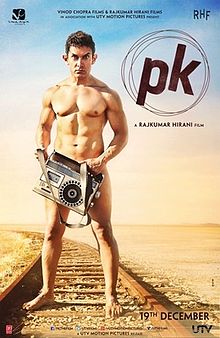
Relieving oneself in open is rather common in India. However, to have it depicted on our screens, is rather nauseating and appalling. By doing so, the message given out is that it is perfectly normal to do so.
Even our top-notch actors have not shied away from performing such acts. Many of us would remember Akshay Kumar gleefully doing it in Singh is Kinng (2008), Madhavan and Sharman Joshi in 3 Idiots (2009), Ranbir Kapoor in Besharam (2013) and Yeh Jawaani Hai Diwaani (2013), Aamir Khan in PK (2014), and Anupam Kher in Baby (2015).
The fact that a tactic of this kind needs to be resorted to merely to improve the Comic Quotient of a movie goes on to show our directors and script writers to be woefully short of imagination at times.
The Sounds of Music
Over the decades, the music in Hindi movies has evolved in more ways than one.
Mother Nature Gets a Short Shrift
Elements of nature (moon, rains, lakes, rivers, seasons, clouds…) have gone missing. High rises, cityscapes, interpersonal relations take the front seat. So do emotions, feelings, and the like.
Songs like ‘‘Ye raat ye chandni phir kahaan…’ (Jaal, 1952), ‘Aaja sanam Madhur chandni mein hum…’ (Chori Chori, 1956), ‘Ye raatein ye mausam…’ (Dilli Ka Thug, 1958), ‘O sajana, barkha bahaar aayi’ (Parakh; 1960) and ‘Chalo dildaar chalo, chaand ke paar chalo…’ (Pakeezah, 1972) have almost vanished from the silver screen. Once in a while, we get treated to such songs as ‘Suraj hua maddham’ (Kabhi Khushi Kabhi Gham; 2001), ‘Barso re…’ (Guru, 2007) and ‘Hawaayein…’ (Jab Harry Met Sejal, 2017).
Visual Appeal Elbows Out Our Ears and Minds
Gradually, the orchestra and the sound have elbowed out the lyrics somewhat. Songs which appealed to the audience not only for their deep layered meaning but also for their soulful music have become part of a rare breed. Philosophical truths of life have got relegated to the background. Thus, we have become used to getting entertained by offerings which accord a higher priority to our ears than to our minds.
Moreover, with the new-found zeal for quick cuts, adroit camera work and the razzle-dazzle of a heightened visual appeal, we have virtually stopped hearing songs and have willy-nilly become reconciled to seeing them. Cinematography rules. Locations keep changing in quick succession. Even before we have had the chance to savour one, the next one pops up. The camera has become obtrusive. Even if a patriotic song like ‘Teri mitti mein mil jaawan…’ (Kesari, 2019) comes up, we are exposed to a visual world which is in the fast forward mode. Since our eyes are constantly being bombarded with visual information, the hapless ear often has no other option but to take the back seat.
Actors no longer need to worry much about their lip-synching abilities. Most songs get relegated to the background.
Cabarets have metamorphosed into ‘item numbers’.
Lullabies Lose Out to Screen Time for Kids!
No longer do we have scripts with room for any lullabies. Remember ‘Aa ja ri aa, nindiya tu aa…’ (Do Bigha Zamin, 1953), ‘Mein gaoon tum so jaao…’ (Brahmachari, 1968) and ‘Pyara sa gaon…’ (Zubeida, 2001)? Of late, the only lullaby we got treated to was ‘Jo tum saath ho…’ (Salaam Venky, 2022).
Kids are smarter these days. They need only their technical gizmos to get to sleep. Parents may rest easy. Inspired by ‘Mere buddy…’ (Bhootnath, 2008), grandparents of all hues, sizes and shapes are busy honing their dancing skills!
Like real-life kids, reel-like kids have also become far more intelligent, often mouthing dialogues which would leave us twiddling our thumbs trying to figure out their real age. Gone are the day of innocence epitomized by Baby Naaz, Daisy Irani and Baby Farida.
Species Which Have Become Extinct
Besides vamps and villains, poor comedians have also become mostly extinct. Though we still have the likes of Raghuvir Yadav and Rajpal Yadav entertaining us, the separate comedy tracks have all but vanished from our screens. Such roles have been usurped by mainstream heroes and heroines.
The comic timing of such talented artists as Sridevi (Chandni, o meri Chandni…Chandni, 1989) and Akshay Kumar (Hera Pheri, 2000 onwards) has consigned the parallel comedy track in which we earlier had such character artists as Johnny Walker, Mehmood, Mukri, Agha, Tuntun, Aruna Irani, Manorama et al, to the dustbins of history. In the past, even some villains had tried their hands at comedy, and successfully, at that. I refer to Amjad Khan in such movies as Qurbani (1980) and Chameli Ki Shaadi (1986).
An interesting phase was that of the Wodehousian comedy of a subtle kind, presented to us by such artists as Om Prakash, Utpal Dutt, and David in such movies as Chupke Chupke (1975), Golmaal (1979) and Baaton Baaton Mein (1979).
Even the golden hearted house help, popularly known as ‘Ramu Kaka’,has all but vanished.

Of Political Headwinds
Our politicos have never shied away from influencing the kind of messages which need to be conveyed to the hoi polloi through the powerful medium of cinema. Our dream merchants have also been sensitive to the political thinking of the day, coming up with movies which are relevant to the theme of the times.
The first Chinese aggression in 1962 prompted Chetan Anand to come up with Haqeeqat (1964) which tugged at our heartstrings.
Naunihal (1967), directed by Raj Marbros, was about Raju, an orphan, who believes that his only surviving relative is Chacha Nehru. The film’s music was composed by Madan Mohan, with lyrics by Kaifi Azmi, including the song ‘Meri Aawaz Suno, Pyar ka Raaz Suno’, sung by Mohammad Rafi. The song captured not only the funeral procession of the first Prime Minister of India, Jawahar Lal Nehru but also his study and his office; a loving tribute, indeed, to a towering personality then.
Much later, in 1988, one of his seminal works, The Discovery of India (1946), was presented by Shyam Benegal in the form of a television serial, labelled as Bharat Ek Khoj.
Rewind back to 1965, when Pakistan attacked India. Mr Lal Bahadur Shastri, the then Prime Minister, came up with the slogan ‘Jai Jawan Jai Kisan’. He is said to have persuaded Manoj Kumar to come up with a movie based on the slogan. That is how we got to see Upkar (1967).
Assassination of Prime Minister Indira Gandhi in 1984 led to riots in Delhi and elsewhere. The same were covered in the recent movie Jogi (2022) and were also briefly touched upon in Laal Singh Chadha (2022).
Mani Ratnam gave us Bombay (1995), based on the riots which took place in the city between December 1992 and January 1993 after the demolition of the Babri Masjid led to religious tensions between Hindu and Muslim communities. Gujarat riots in 2002 led to movies like Parzania (2005) and Firaaq (2008).
In the recent past, many of us have been swayed by the political headwinds and movies with a jingoistic nationalism have caught our imagination. A movie like Kashmir Files (2022) which shows a minority community in a negative light has been openly promoted by the present ruling dispensation. Another one, Samrat Prithviraj (2022), went a step further and highlighted the bravery and sense of nationalism of the majority community. The Accidental Prime Minister (2019) attempted to show the previous Prime Minister in a negative light, and now we wait for Emergency (2023).
Come to think of it, the worlds of movies and politics have several common traits. Dream merchants thrive in both. So does star power. Funding and returns on investment are fundamental concerns. Eventually, the onus of sifting the wheat from the chaff obviously falls on the common public.
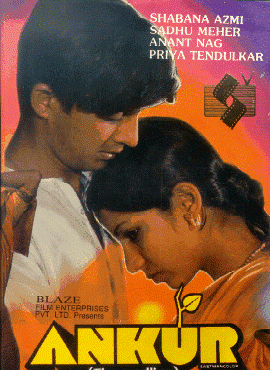
A Rich Cultural Heritage Getting Lost?
It may not be out of context to mention here that in the days of yore, the kings used to consciously nurture fine arts and culture by patronizing poets, musicians and dancers. However, the way successive governments are turning a blind eye to the essential task of preserving our cinematic heritage, and even gradually withdrawing support to creative cinema, while continuing to gobble up the revenue generated by this industry, is a travesty of justice and common sense. Remember the outfit known as the National Finance Development Corporation, which gave us a stream of gems in the past – Ankur (1974), Manthan (1976), Mirch Masala (1987), Ek Din Achanak (1989), Train to Pakistan (1998), Mammo (1994), and the like? The future looks bleak on this front.

Acting Prowess and Content: The Ultimate Winners
Even though star-power, presentation and packaging continue to be important, content has now come to rule the roost. Acting is also back on its throne, where it rightfully belongs.
Now, if we root for a blockbuster like Pathaan, we also love an actor-driven movie like Laal Singh Chadha. If we like to see the trials and tribulations of the heroine in Gangubai Kathiawadi, we also empathize with the dilemmas faced by an elderly couple in Vadh, besides appreciating such off-beat offerings as Doctor G and Kantara.
As we sit bleary-eyed in front of our smart TVs, we now have the best of both the worlds – glamour, duly backed by razzmatazz, as well as the depth of genuine art.
(Some inputs from a few members of the Best of Cinema and OTT group on Facebook are gratefully acknowledged.)
Related Posts:
Book Review: Jerry Pinto’s ‘Helen: The Life and Times of a Bollywood H-Bomb’
Posted in The Magic of Movies!, tagged Biography, Bollywood, Book Review, Dance, Helen on March 3, 2023| Leave a Comment »
There are persons in Bollywood who become a legend in their lifetime itself. Helen is one such actor. Here is an insightful review of a book by Jerry Pinto.

I won’t go so far as to say that Helen was the first Hindi film actress I remember seeing (that would be Shakila, since CID was the first Hindi film I remember watching). But I distinctly remember being about 10 years old, watching Chitrahaar, and being very excited because an old favourite of mine, a song I had till then only heard and never seen, was going to come on (in Chitrahaar, there would always be a sort of intertitle between songs, a single frame in which the name of the next song, the film it was from, and the names of the music director, the lyricist, and the singer(s) would be listed).
This song was Mera naam Chin Chin Choo, and my feet were already tapping when it began. All that frenetic movement, those men in sailor suits dancing about. The energy, so electric that it…
View original post 1,412 more words
Some Unique Dance Numbers from Bollywood
Posted in The Magic of Movies!, tagged Aishwarya Rai, Amala Shankar, Asha Parekh, Bollywood, Classical, Dance, Gopi Krishna, Hema Malini, Hrishikesh Mukherjee, Hritik Roshan, Kamal Hasan, Madhuri Dixit, Meenakshi Seshadri, Movies, Music, Pandit Birju Maharaj, Rajshri, Rekha, Sandhya, Sanjay Leela Bhansali, Semi-classical, Solo, Sridevi, T R Rajakumari, Uday Shankar, V Shantaram, Vyjayantimala, Waheeda Rehman on February 20, 2023| 6 Comments »
Many of our Bollywood heroines have waltzed into our hearts and minds based not only on their acting prowess but also owing to their knowledge of classical dance forms. The latter skill has enabled them to present some unique dances on the silver screen, with due support from their directors, music composers and choreographers. If some have been accompanied in their performances in the past by such stalwarts as Gopi Krishna, others have had the backing of legendary figures like Pandit Birju Maharaj.
Allow me to share with you some dances which I would label as being unique. Either because these are based on classical or semi classical forms of Indian dances, or simply because the presentation as well as the sheer attention to detail leaves one awestruck. Quite a few are solo performances, backed only by instrumental music. Collectively, these present a vibrant rainbow of various human emotions, ranging from love and passion to a gutsy fury.
The Drum Dance (Nagada dance) here is the grand celebration of a royal marriage. It was well choreographed and presented in an era which did not have access to the kind of technology available these days. The story was about a feud between two brothers over their right to rule their father’s kingdom. Each of the huge drums acted like a Trojan horse, hiding soldiers from the rival’s camp. Apparently, it took six months’ practice to get this dance ready for the silver screen.
Chandralekha (1948)
Lead Dancer: T R Rajakumari
Music: S Rajeshwar Rao
Uday Shankar and Amala Shankar entertained us with quite a few classical dances in another movie released in the same year. It was the first film to present an Indian classical dancer in the leading role and was entirely shot as a dance ballet and a fantasy. Here is one gem of a dance which depicts Lord Shiva and Parvati gyrating to their heart’s content.
Kalpana (1948)
Lead Dancers: Uday Shankar, Amala Shankar
Music: Vishnudas Shirali
V. Shantaram’s offerings were invariably based on classical forms of music. Even the design of the titles was highly innovative, often summarizing the key message of the movie in a poignant manner.
When Lord Shiva flies into a rage, he is believed to break into a special dance form: tandav. Part of this dance depicts the same. Eventually, a timely intervention by the feminine force of the universe – shakti – saves the day.
Jhanak Jhanak Payal Baaje (1955)
Dancers: Gopi Krishna, Sandhya
Music: Vasant Desai
These are two unique dances. One speaks of the extent of imperfection in our lives. Another captures the playful spirit of Holi – the festival of colours – and even features an elephant trying to match the dancing steps of the heroine.
Navrang (1959)
Dancer: Sandhya
Music: C. Ramchandra
Based on the classic play Abhigyan Shakuntalam from Kalidasa, this dance captures the feelings of a woman spurned in love.
Stree (1961)
Dancer: Rajshri
Music: C. Ramchandra
Here is yet another enchanting dance performance.
Chhaya (1961)
Dancers: Baby Farida, Asha Parekh
Music: Salil Chowdhury
Many movies have depicted the folklore of love between Radha and Krishna. Songs like Hamen gop gwala kehte hain…(Navrang, 1955) and Mohe panghat pe…(Mughal-E-Azam, 1960) readily pop up in our minds. Here is another such performance.
Phoolon Ki Sej (1964)
Dancers: Gopi Krishna, Vyjayanthimala
Music: Adi Narayana Rao
What we have here is a classic snake dance. A unique presentation, indeed, superbly crafted and rendered.
Guide (1965)
Dance: Waheeda Rehman
Music: S. D. Burman
Arthashastra of Kautilya mentions the grooming of visha kanyas (Poison Damsels) whose blood and body fluids had poisonous properties. They were used as assassins to eliminate powerful enemies of the state. This dance performance depicts one such case.
Sagaai (1966)
Dance: Rajshri
Music: Ravi
When a proficient dancer gets challenged in a royal court, she leaves us spellbound by her dancing skills.
Amrapali (1966)
Lead Dancer: Vyjayanthimala
Indian actress
Music: Shankar–Jaikishan
Yet another solo dance which leaves one mesmerized.
Chhoti Si Mulaqat (1967)
Dance: Vyjayanthimala
Music: Shankar–Jaikishan
A captivating dance performance by a multi-skilled actress who went on the become a member of the Indian Parliament.
Kinara (1977)
Dance: Hema Malini
Music: R. D. Burman.
Versatile directors like Hrishikesh Mukherjee had a knack of presenting character artists who are otherwise famous for their negative roles in a positive light on the silver screen. In this dance sequence, we find Shashikala joining hands with Rekha.
Khubsoorat (1980)
Dancers: Shashikala, Rekha
Music: R. D. Burman
What happens when an introvert and shy person gets prodded by her well-wishers to showcase her dancing skills at a social gathering?
Chaal Baaz (1989)
Dancer: Sridevi
Music: Laxmikant–Pyarelal
This one is a temple dance by late Sridevi. Unfortunately, I am yet to trace the name of the movie.
Dancer: Sridevi
Yash Chopra, known as the King of Romance, had a unique way of presenting his heroines at their sensuous best. His name always reminds us of the colour white and of gorgeous heroines draped in plain colour chiffon saris and sleeveless blouses, swaying to rhythmic beats composed by eminent classical musicians.
Chandni (1989)
Dancer: Sridevi
Music: Shiv-Hari
Lamhe (1991)
Dancer: Sridevi
Music: Shiv-Hari
A sophisticated way of telling the ruler to behave himself when it comes to visiting the ‘other woman’.
Lekin (1991)
Dancer: Hema Malini
Music: Hridaynath Mangeshkar
This one captures the inner anguish felt by a woman who is part of a highly patriarchal family which tries to protect the name of a male member who, along with his friends, had gang-raped the maid servant.
Damini (1993)
Dancer: Meenakshi Seshadri
Music: Nadeem-Shravan
Two more captivating dances from the stable of Yash Raj Films.
Dil To Pagal Hai (1997)
Dancer: Madhuri Dixit
Music: Uttam Singh
Dil To Pagal Hai: The Dance of Envy
Dancers: Madhuri Dixit, Karishma Kapoor
Sanjay Leela Bhansali is yet another director whose movies are lavishly produced and mounted on a larger-than-life canvas. Consider this song and dance sequence.
Hum Dil De Chuke Sanam (1999)
Lead Dancer: Aishwarya Rai
Music: Ismail Darbar
Here is yet another offering from Bollywood based on the Radha-Krishna folklore. This version brings in the dancing skills of Madhuri Dixit, duly backed by Birju Maharaj’s choreography, music, and lyrics.
Devdas (2002)
Singers: Birju Maharaj, Madhuri Dixit, Kavita Krishnamurthy
Composer/Lyricist: Birju Maharaj
The memories of a distant past come flooding back when the passion for dance resurfaces after the dancer runs into an old love interest.
Dedh Ishqia (2014)
Lead Dancer: Madhuri Dixit
Music: Vishal Bhardwaj
A solo dance, sans lyrics, surely leaves the entire burden of a sparkling performance on the shoulders of the heroine. Our multi-talented divas have never failed us on this count.
It is not that our heroes do not possess outstanding dancing skills. However, these are very few. The names of Kamal Hasan, Hritik Roshan, Ranbir Kapoor, late Sushant Singh Rajput and Tiger Shroff can be mentioned in this context.
Here are two video clips which some of you may relish.
Ek Duuje Ke Liye (1981)
Dancer: Kamal Hasan
Music: Laxmikant–Pyarelal
(Courtesy Aman and Swasti Sharma)
Lakshya (2004)
Dancer: Hritik Roshan
Music: Shankar, Ehsaan & Loy
These days, most male actors can also shake a leg or two, though the trend is towards disco, break-dance, and such newer forms of dances as hip hop, lyrical, freestyle, and fusion.
Gaining proficiency in any form of art needs talent, passion, mentoring, and years of continuous practice. What we get to see for a few minutes on our screens is the culmination of a long-drawn-out effort towards conceptualization, synchronization, persistence, and hard work by all the crew members. One is filled with a feeling of reverence towards all the directors, choreographers, artistes, and technicians who bring such unique offerings to us.
Recently, at a private party, some youngsters had to work assiduously for about two hours to eventually come up with a dance sequence which ran into merely 53 seconds!
One can well imagine the magnitude of effort artists, choreographers and directors put in to come up with unique dance sequences which keep us enchanted. Imagine creating something as elaborate as, say, Pyar kiya to darna kya… (Mughal-E-Azam, 1960), Hothon mein aisi baat… (Jewel Thief, 1967) and Dola re… (Devdas, 2004). The mind boggles!
Related Posts:
-
Recent Posts
Buy the Book
Buy the Book

buy the book
Categories
-
cc
Tags
Art Bertie Wooster Bhagavad Gita Bingo Little Birthday Blake Mouton Grid Blogging Bollywood Book Campus Life CEO Chivalry Consciousness Coronavirus Corruption Edwin Empress of Blandings English Ethics Feminism Happiness Health Hindi Hollywood Human Values Humour India Jeeves Kalidasa KIds Leadership linkedin Literature Lord Emsworth Love Lyrics Mahabharata Mahatma Gandhi Management Movies Music Norway Paintings Panjab University People P G Wodehouse Politics Pondicherry Portugal Psmith Puducherry Rabindranath Tagore Ramayana Ritusamhara R K Laxman Romance Rosie M Banks Rupert Psmith Seasons Shakespeare Social Media Something Fresh Songs SPANDAN Spirituality SQ Sri Aurobindo Stephen Covey Switzerland Tatas Thos UBS Values Wodehousitis WomenArchives
- April 2026 (1)
- March 2026 (2)
- February 2026 (5)
- January 2026 (2)
- December 2025 (1)
- November 2025 (2)
- October 2025 (2)
- September 2025 (3)
- August 2025 (3)
- July 2025 (2)
- June 2025 (2)
- May 2025 (4)
- April 2025 (5)
- March 2025 (5)
- February 2025 (4)
- January 2025 (4)
- December 2024 (6)
- November 2024 (6)
- October 2024 (6)
- September 2024 (5)
- August 2024 (5)
- July 2024 (4)
- June 2024 (4)
- May 2024 (5)
- April 2024 (5)
- March 2024 (3)
- February 2024 (1)
- January 2024 (4)
- December 2023 (2)
- November 2023 (3)
- October 2023 (3)
- September 2023 (3)
- August 2023 (5)
- July 2023 (5)
- June 2023 (7)
- May 2023 (6)
- April 2023 (6)
- March 2023 (8)
- February 2023 (8)
- January 2023 (7)
- December 2022 (6)
- November 2022 (5)
- October 2022 (8)
- September 2022 (5)
- August 2022 (6)
- July 2022 (6)
- June 2022 (8)
- May 2022 (7)
- April 2022 (8)
- March 2022 (7)
- February 2022 (3)
- January 2022 (7)
- December 2021 (4)
- November 2021 (8)
- October 2021 (7)
- September 2021 (6)
- August 2021 (7)
- July 2021 (7)
- June 2021 (9)
- May 2021 (8)
- April 2021 (9)
- March 2021 (10)
- February 2021 (8)
- January 2021 (8)
- December 2020 (7)
- November 2020 (6)
- October 2020 (5)
- September 2020 (9)
- August 2020 (9)
- July 2020 (8)
- June 2020 (8)
- May 2020 (6)
- April 2020 (5)
- March 2020 (7)
- February 2020 (4)
- January 2020 (7)
- December 2019 (12)
- November 2019 (10)
- October 2019 (5)
- September 2019 (9)
- August 2019 (10)
- July 2019 (9)
- June 2019 (14)
- May 2019 (13)
- April 2019 (14)
- March 2019 (11)
- February 2019 (11)
- January 2019 (14)
- December 2018 (12)
- November 2018 (12)
- October 2018 (14)
- September 2018 (9)
- August 2018 (10)
- July 2018 (10)
- June 2018 (8)
- May 2018 (11)
- April 2018 (11)
- March 2018 (6)
- February 2018 (9)
- January 2018 (10)
- December 2017 (10)
- November 2017 (9)
- October 2017 (8)
- September 2017 (11)
- August 2017 (10)
- July 2017 (10)
- June 2017 (11)
- May 2017 (9)
- April 2017 (7)
- March 2017 (7)
- February 2017 (8)
- January 2017 (10)
- December 2016 (9)
- November 2016 (11)
- October 2016 (10)
- September 2016 (10)
- August 2016 (9)
- July 2016 (6)
- June 2016 (10)
- May 2016 (10)
- April 2016 (10)
- March 2016 (10)
- February 2016 (12)
- January 2016 (10)
- December 2015 (11)
- November 2015 (11)
- October 2015 (10)
- September 2015 (10)
- August 2015 (10)
- July 2015 (10)
- June 2015 (10)
- May 2015 (10)
- April 2015 (10)
- March 2015 (9)
- February 2015 (10)
- January 2015 (8)
- December 2014 (9)
- November 2014 (8)
- October 2014 (8)
- September 2014 (7)
- August 2014 (7)
- July 2014 (7)
- June 2014 (7)
- May 2014 (7)
- April 2014 (7)
- March 2014 (7)
- February 2014 (6)
- January 2014 (7)
- December 2013 (6)
- November 2013 (6)
- October 2013 (6)
- September 2013 (6)
- August 2013 (6)
- July 2013 (6)
- June 2013 (6)
- May 2013 (6)
- April 2013 (6)
- March 2013 (6)
- February 2013 (6)
- January 2013 (6)
- December 2012 (4)
- November 2012 (4)
- October 2012 (3)
- September 2012 (2)
- August 2012 (4)
- July 2012 (2)
- June 2012 (2)
- May 2012 (2)
- April 2012 (2)
- March 2012 (2)
- February 2012 (3)
- December 2011 (3)
- November 2011 (1)
- October 2011 (2)
- September 2011 (2)
- August 2011 (2)
- July 2011 (2)
- June 2011 (3)

 ashokbhatia