Feeds:
Posts
Comments

Archive for the ‘The Magic of Movies!’ Category

Summary

These days, as a pandemic stalks us, people are hooked to movies of all kinds, even while supposedly working from home. The cumulative effect of using high-definition gadgets, lockdown ennui, death tolls and binge-watching movies is that of a higher level of stress. The lack of freedom to venture out on long drives further compounds the problem. 

To avoid landing up in a loony bin, we could cut off our daily diet of depressing news. We could ensure interacting only with those who radiate positive vibes. We could also think of consciously changing our movie-watching palette so as to start appreciating flicks which have a deeper layer in their themes.

In this series, we consider some movies through the spiritual lens of 12 personality traits mentioned by The Mother of Sri Aurobindo Ashram at Pondicherry in India.

Introduction

When the upright good guy defeats the morally deficient bad guy, we cheer. Think of the James Bond franchise, courtesy Hollywood.

When a movie ends on a positive note, we applaud. Imagine any movie from Bollywood where the hero and the heroine finally walk into the sunset on a sandy beach, with a romantic song playing in the background. The unstated assumption is that the couple lived happily ever after.

When the outcome is negative but the movie is well crafted, we may sulk but still carry a favourable impression of it. Go back to either Titanic or Mughal-e-Azam. Both were tragedies but mounted lavishly, with excellence in almost all the departments of film making.

But once in a while comes along a movie which touches us somewhere deep inside. The script may carry a key message. Or, it may showcase certain values which we cherish ourselves, thereby creating a deep resonance within. We experience love. We feel hopeful and uplifted in a somewhat deeper manner. The soul gets awakened.

If we were to muse upon the theme much afterwards, we could say that such movies had been conceptualized with a dash of spirituality. These are movies which inspire us to live through and face difficult situations in our lives. We could think of classifying these in the genre of what we could refer to as Conscious (or Soulful) Entertainment.

Of a Spiritual Streak

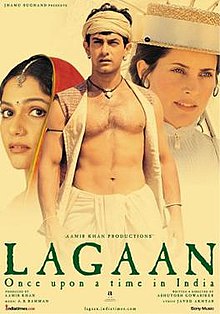
Think of such movies as Shawshank Redemption, Avatar, Contact, Gladiator, Schindler’s List, The Sound of Music, Lagaan, Jagte Raho, Swades, Guide, Abhimaan, Mr. and Mrs. Iyer, Veer Zara and many others of a similar ilk. What do all these have in common? Yes, most of these are big hits. Yes, they have A category stars. Yes, all are well made. But these are not their most important features.

When we go back to the first time we watched one of these, most of us would recall having felt uplifted and hopeful. We would have felt compassion and love for the entire humanity. Our hearts would have felt much enlarged. Much like the short sequence from Mera Naam Joker where the hero’s heart goes on expanding and no one has a clue as to how to solve the problem!

We would have felt like living much longer, drinking deep from the rivulets of unalloyed joy that life offers. These films are but a few in the genre of ‘Conscious’ or ‘Soulful’ films which have the potential to change lives, inspire choices, and elevate human consciousness.

One of the spiritual lenses available to us to view such movies has been offered to us by The Mother of Sri Aurobindo Ashram at Pondicherry in India. She has mentioned the following twelve traits which are essential for the spiritual progress of an aspirant:

Sincerity, Humility, Gratitude, Perseverance, Aspiration, Receptivity, Progress, Courage, Goodness, Generosity, Equality and Peace.

Some movies which touch upon Mother’s 12 traits


Sincerity

The sincerity with which an individual takes up a challenging task and executes it well, even while risking his or her own welfare,  generates a swell of positive emotions within the viewer and sets an example of achieving perfection in the discharge of one’s professional duties.

Do Aankhen Baarah Haath (1957) which captured the valiant efforts of a jail warden Adinath (V Shantaram) to rehabilitate six dangerous prisoners released on parole to persons of virtue in an open jail experiment. Besides demonstrating how concentration, perseverance and hard work can make one realize one’s goals in life, the movie also drives home the point that if people focus their energy on a worthy cause in a sincere manner, success is easy to come by.

Maria (Julie Andrews) who is a free-spirited person lacking in self-discipline and self-confidence assumes the role of a governess for the seven children of Captain Georg von Trapp (Christopher Plummer) and ends up winning the hearts of the entire family in The Sound of Music (1965).

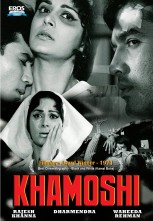
In Khamoshi (1970), we meet nurse Radha (Waheeda Rehman) who loses her own mental balance by being so sincere in discharging her duties as a professional as to neglect her own emotions of love towards two of her successive patients, Dev Kumar (Dharmendra) and Arun Choudury (Rajesh Khanna). A key lesson underlying the storyline is that of cultivating a sense of detachment in one’s profession, as highlighted in the Bhagavad Gita as well.

Think of Debaraj Sahai (Amitabh Bachchan) mentoring Michelle (Rani Mukherji) in Black (2005). The movie was inspired by The Miracle Worker (1962).

Humility

Here is a quality which covers such personality traits as purity, charity and obedience.

Gladiator (2000) captures the saga of General Maximus Decimus Meridius (Russel Crowe) who is devoted to Emperor Marcus Aurelius and works throughout his life to keep the Roman Empire safe. When offered the throne, he declines the offer, preferring instead to return to his village. Before he dies, he asks for political reforms, for his gladiator allies to be freed, and for Senator Gracchus to be reinstated. Maximus’s friends and allies honor him as “a soldier of Rome”. His character represents not only the purity of his intentions and loyalty to the empire, but also humility.

When denizens of planet Earth soar into space, they have this humbling experience of realizing how infinitesimal Homo sapiens happen to be in the overall scheme of a vast universe. We may be rooted in our prejudices and may be overly busy, what with our ego-skirmishes with others over petty matters and a relentless chase of the materialistic goals in our lives; yet, we are merely a fraction of a speck in the divine arrangement.

Watching movies like Apollo 13 (1995), Gravity (2013), and many others leaves us humbled in more ways than one.  

(This series of posts is dedicated to Ms Usha Bhatia, my late wife. Inputs from Mr Sanjay Mohan and Ms Gargi Banerjee are gratefully acknowledged)

(Related Post:

https://ashokbhatia.wordpress.com/2020/08/16/some-movies-with-a-dash-of-spirituality-part-2-of-4

https://ashokbhatia.wordpress.com/2020/08/20/some-movies-with-a-dash-of-spirituality-part-3-of-4

https://ashokbhatia.wordpress.com/2020/08/24/some-movies-with-a-dash-of-spirituality-part-4-of-4)

Read Full Post »

For movie buffs who are also tuned to ‘ragas’ of Hindustani Classical Music, here is yet another delectable offering from ‘My Views on Bollywood’.

Enjoy!

findshars's avatarMy Views On Bollywood

By

Sharada Iyer

Music directors of our film industry have skillfully woven the basics of classical ragas from our rich musical heritage in a simple form and given us outstanding film songs that could reach out to a much wider section of the audience and thus find mass appeal. Instead of strictly adhering to all the technicalities of the raga which can be appreciated only by a few, the essence or the flavour of the raga is maintained in the song to give us the right feel and emotion associated with the scene or mood of the character. Sometimes the raga is only lightly touched upon and at other times the raga is mixed with other ragas to highlight its beauty.

Lyricists, music directors, singers and finally the actors and actresses have all contributed by adding their own magic to enhance the appeal and reach of these songs to the…

View original post 2,121 more words

Read Full Post »

ashokbhatia's avatarashokbhatia

One of the reasons for the persistent allure of Shakespeare’s works is obviously the depth as well as the range of human behaviour these capture. One can easily relate to such elements as greed, power, jealousy, suspicion, love and lust which form the undercurrent of all his characters.

These are precisely the ingredients which producers, directors and script writers in Bollywood bank upon to whip up larger than life narratives, keeping the viewers enamoured and enthralled.

If a movie is said to be either ‘inspired by’ or ‘adopted from’ a literary classic, the intellectual coves are left more than satisfied. The critics could anyway pan the movie for its digressions from the original, but the common man is quite happy to have connected with a classic which he might otherwise never have the time, inclination or capacity of devouring in his saner moments.

A dash of spicy item numbers further…

View original post 544 more words

Read Full Post »

findshars's avatarMy Views On Bollywood

By

Sharada Iyer       

The ‘mother’ figure has played a very prominent and significant part in Hindi cinema. Though mostly seen in the role of a warm, loving, caring, understanding and sacrificing person which a mother is without doubt, she is sometimes portrayed as an intimidating and powerful woman and she can also become ruthless and cruel as a ‘mother-in-law’ or a stepmother. A number of actresses have brought to life these myriad shades of our on-screen Bollywood mother in their own unique way and added their special ‘X’ factor to make these characters realistic and life-like.

This blog-post is a tribute to all the on-screen mothers of Bollywood. It must be mentioned however that neither is it possible to cover all the types of mother’s roles played in a single blog-post nor will it do justice to the talent of these actresses who have immortalized the ‘mother’ character with…

View original post 2,690 more words

Read Full Post »

The world can now be said to be inhabited by at least three kinds of Bollywood fans. These are newer communities emerging the world over, irrespective of their age, sex, religion, caste, wealth, political leanings and nationality. This is one of the several boons being granted to a despondent humanity by the dreaded Corona virus. A macro-level restructuring of the entire planet is already on its way.

One tribe is that of those who are blissfully unaware of the consequences of suffering from this virus. Members of this tribe keep going around in a carefree manner, possibly believing themselves to be far different than the hoi polloi, a cut above the rest and invincible. Experts would label members of this tribe as Covidiots. They pose a serious threat to most of us.

Another kind are the ones who are clueless, suffering a deep sense of anxiety and dreading its arrival on their doorsteps. They keep twiddling their thumbs trying to figure out as to when it would strike them. Either out of fear or a desire to keep themselves and their near and dear ones safe and healthy, they try to follow as many do’s and dont’s which keep popping up on their smart screens with a frequency which could put an atomic clock to shame. One may call such obedient persons as Covidients.

Yet another tribe comprises die-hard optimists who believe they are watching a horror film, tucking into their favourite snack and occasionally sipping some atrociously-priced coffee, waiting for the last reel to unfold, hoping for a happy ending. Had they been watching it at home, they would have preferred to watch the same in a fast forward mode. They might be labelled as Covimists.

For succour, members of all these tribes can readily turn to some songs dished out by our Bollywood flicks over the decades. Here is a random sample of the same.


Songs which are best avoided by Covidients


Abhi na jao chhod kar

(Hum Dono, 1961)


Mujh ko apne gale laga lo

(Hamrahi, 1963)


Lag jaa gale

(Woh Kaun Thi, 1964)


Choo lene do

(Kaajal, 1965)


Rut hai milan ki

(Mela, 1971)


Baahon mein chale aao

(Anamika, 1973)


Jaane do na

(Sagar, 1985)


Jumma chumma de de 

(Hum, 1991)


Ang se ang lagana

(Darr, 1993)


Dhiktana

(Hum Aapke Hain Kaun…!, 1994)


Maiyya Yashoda

(Hum Saath Saath Hain, 1999)


Chupke se lag ja gale 

(Saathiya, 2002)


M bole to

(Munna Bhai MBBS, 2003)


Yeh tara woh tara 

(Swades, 2004)


Tere haath mein mera haath ho

(Fanaa, 2006)


Songs which might motivate Covidiots to mend their ways


Mere piya gaye rangoon

Patanga, 1949


Jalte hain jiske liye

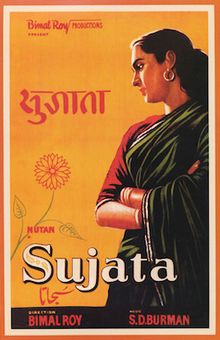
(Sujata, 1959)


Chalo ek baar phir se 

(Gumrah, 1963)


Songs which may suit the Covimists


Saathi haath badhana

Naya Daur, 1957


Hum honge kamyab

(Jaane Bhi Do Yaaron, 1983)


Aye mere humsafar

(Qayamat Se Qayamat Tak, 1988)


Human ingenuity knows no bounds. Fashionistas are devising women’s headgear incorporating a noise and mouth, keeping viruses and those with amorous intentions at bay, cheering up the Covidients.

Behavioural Scientists are burning the proverbial midnight oil to come up with therapeutic packages which can help the Covidiots improve their ability to realize the limits of their own – rather limited – abilities. Human resource consultants are busy dishing out programs which would assist managements to instill a better sense of equanimity and resilience among their employees, something which was recommended by Lord Krishna more than 5,000 years back.

Covimists, delighted at the environment bouncing back to the pink of its health and noticing a trend towards better sustainability, await the day when many of the perks of the pandemic would truly get appreciated and acted upon so the human race can continue its relentless journey towards evolution.

And here is a tribute to Mother Nature:

Yeh kaun chitrakaar hai

(Boond Jo Ban Gayi Moti, 1967)


(The following inputs are gratefully appreciated:

  1. Suggestions for some of the songs listed here, courtesy Sanjana Bhatia.
  2. Terms like Covidiots and Covedients courtesy The Economic Times).


Read Full Post »

dustedoff's avatarDustedoff

I have been watching with increasing despair and sorrow these past few months as India has teetered on the brink of disharmony and violence, hoping against hope that it was just a passing phase. There were moments when I felt things were looking up, for instance, when people of other faiths—not just Muslims—came together at Shaheen Bagh and elsewhere to oppose CAA and NRC. There were times I told myself it was getting better, that India was essentially secular, and that divisive forces would eventually be defeated.

Then the Delhi carnage happened. Many were killed, even more injured. Property was destroyed, people were forced to flee their homes. Curfew was clamped. We mourned. Not just for the dead, but for the way the hydra-headed monster of hatred, bigotry and violence had again reared its head.

I have lived in Delhi for most of my life, and to see the city…

View original post 1,763 more words

Read Full Post »

ashokbhatia's avatarashokbhatia

TALAT_MAHMOOD

For those who continue to be enamoured of the velvet-like voice of the late Talat Mahmood, here is an article from Mr Raj Kanwar, an India-based author, freelance journalist and music lover.

His ‘quivering’ voice still a rage

One of Talat Mahmood’s most unforgettable songs is “Meri yaad mein tum na aansoo bahana,” rendered way back in 1951. Over the following two decades, Talat sang one hit ghazal after another and continued to cast a spell on legions of ghazal aficionados both in India and abroad.

Today 64 years later, the musicality and lyricism of these ghazals still haunt generations of his loyal fans.

However, it was not all hunky dory for Talat Mahmood as he had to compete with the likes of Mohammad Rafi, Kishore Kumar, Mukesh and Manna Dey.

It is, therefore, creditable that Talat was able to hold his own and remain the first choice for…

View original post 708 more words

Read Full Post »

One often wonders as to why nature has stopped playing an important role in Bollywood songs. Perhaps, themes have come to represent the urban lot, and are no longer village-centred. Moon no longer gets compared to the face of the beloved as frequently as it did in the past. The gentle rustling of soothing wind has all but vanished from our soundtracks. Shimmering waters of a sea or a lake no longer excite our lyricists. Snow-covered mountains make a rare appearance. The soothing sounds of nature have got replaced by metro screeches, car honkings and trains trudging along.

Not to fret, though. Here is a brilliant post from Dusted Off, which takes us back in time, right into the warm embrace of nature.

dustedoff's avatarDustedoff

Several years back, poet, friend and fellow Sahir Ludhianvi fan Karthika Nair and I were discussing Sahir’s poetry. After a while, we arrived at the conclusion that, while everybody acknowledges the brilliance of Sahir’s more revolutionary poetry—of the Yeh duniya agar mil bhi jaaye or Chini-o-Arab hamaara—and some of his more angsty and emotional lyrics (Chalo ek baar phir se, anyone?), many people tend to overlook the fact that Sahir was also one of those poets who could describe nature brilliantly.

When I mentioned having studied Pighla hai sona in school (it was in our school textbook), Karthika remarked that, in that song, “nature became an active agent, not a landscape.” That reminded me of a theme I’d been toying with for a long time, for a song post. Songs that celebrate nature, songs that appreciate the beauty of nature. Nature or an aspect…

View original post 1,465 more words

Read Full Post »

findshars's avatarMy Views On Bollywood

By

Sharada Iyer

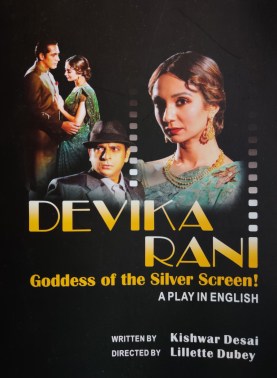
On September 21st, 2019, I had the good fortune of watching a brilliant play titled ‘Devika Rani: Goddess of the Silver Screen’. Written by Kishwar Desai (whose book on this incredible screen diva will be released next year) and directed by the talented stage veteran Lillette Dubey, the play brought to fore many significant and hitherto unknown incidents in the personal life of Devika Rani who was indeed a trailblazer of pre-independent Indian Cinema.

IMG_20191025_091217__01The play roughly covered around 18 years of Devika Rani’s life from 1926 to 1943- approximately from the time she met her husband Himanshu Rai to the last time she appeared on the silver screen as an actress. Lillette Dubey’s daughter Ira Dubey who reprises the role of Devika Rani comes up with a memorable performance and also does a fabulous job of singing the famous song – ‘Main ban ki

View original post 3,116 more words

Read Full Post »

By Sharada Iyer Multifaceted Kishore Kumar was an enigmatic personality and an entertainer par excellence. A truly gifted singer with a God-given voice who never received any typical classical training yet proved with every song that he was in no way lesser than any of his contemporaries of the ‘Golden era’. Blessed with a rare […]

via The inimitable Kishore Kumar in ‘classical’ mode — My Views On Bollywood

Read Full Post »

« Newer Posts - Older Posts »