Feeds:
Posts
Comments

Archive for the ‘What ho!’ Category

Oh, Woman, Woman, I said to myself, not for the first time, feeling that the sooner that sex was suppressed, the better it would be for all of us.

(Bertie Wooster)
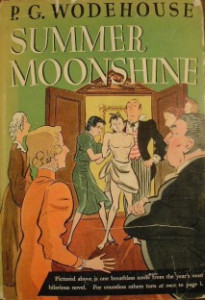
Jane Abbott

We run into her in Summer Moonshine. A girl of spirited nature, she is courageous herself and is an admirer of courage in others. She is fair minded and does not like reneging on her promises. She is a small, slim and pretty girl of twenty, with fair hair and a boyish jauntiness of carriage. Often, in her cornflower-blue eyes, there is a tender light which comes into the eyes of women when they are dealing with a refractory child or a misguided parent.

Her conscious but perplexed soul is torn between two love interests. The manner in which she goes about making up her mind is a quality for many of us to emulate. Analytics and mindfulness does not help her; a heartful approach to problem solving alone does.
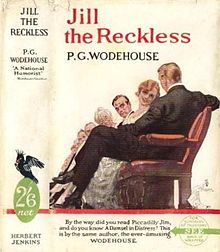
Jill Mariner

We get introduced to her in Jill the Reckless. She is portrayed as a sweet-natured and wealthy young woman who, at the opening, is engaged to a knighted Member of Parliament, Sir Derek Underhill. Her journey through life is depicted as one through financial disaster, an adventure with a parrot, a policeman and the colourful proletariat, a broken engagement, an awkward stay with some grasping relatives, employment as a chorus girl, and the eventual finding of true love.

Lavender Briggs

Secretary to Lord Emsworth in Service With a Smile, Miss Briggs is a tall young girl, with a cold, haughty eye, harlequin glasses, and what her former employer Lord Tilbury describes as hair like seaweed. She becomes the bane of Emsworth’s life with her haughty efficiency. Requiring capital to start her own typing business, her schemes to acquire it by stealing the Empress gets her fired from her job, but her friendship with Uncle Fred sees her through.

Her character has hidden depths. If you happen to know of any teetotal bar, do please convey the details to her; she would much appreciate the kind gesture.

Whereas Lord Emsworth considers Miss Briggs to be worse than Rupert Baxter, Galahad Threepwood, as of Galahad at Blandings, believes that she may not have been as intolerable as Rupert Baxter, but she had come very close to achieving that difficult feat.

Rosie M Banks

Rosie M. Banks is a fictional romance novelist. A tall, lissome girl with soft, soulful brown eyes and a nice figure, she is devoted to her Pekingese dogs, owning as many as six at one time.

She is the author of works such as: All for LoveA Red, Red Summer RoseMadcap MyrtleOnly a Factory GirlThe Courtship of Lord StrathmorlickThe Woman Who Braved AllMervyn Keene, Clubman‘Twas Once in MayBy Honour Bound; and A Kiss at Twilight. She also wrote the Christmas story “Tiny Fingers”.

According to Jeeves, her books make for a very light, attractive reading. But Bertie describes her writing as some of the most pronounced and widely-read tripe ever put on the market.

She is a fine husband-tamer. Bingo Little, who, in his bachelor days, kept coming under the spell of as many as six females, gets transformed into a highly devoted husband in his post-nuptials phase of life. When it comes to keeping his lady-love happy and contented, there is little that he leaves to chance. When his sporting spirits make him blow up a month’s allowance on an animal which refuses to live up to his expectations, he even takes up the onerous task of tutoring someone like Thos. He quietly bears the dietary deprivations and disparaging remarks in the presence of Laura Pyke, Rosie’s school chum.

 Sally Nicholas 

She is described as a small, trim, wisp of a girl with the tiniest hands and feet, the friendliest of smiles, and a dimple that comes and goes in the curve of her rounded chin. Her eyes are a bright hazel; her hair a soft mass of brown. She has an air of distinction and carried her youth like a banner.

A democratic girl, pomposity is a quality which she thoroughly dislikes, even if it is her brother who is the guilty party. She works in NY as a taxi dancer and vigorously pursues her theatrical ambitions. A role model, indeed, for business leaders and start-up founders of our times. (Adventures of Sally)
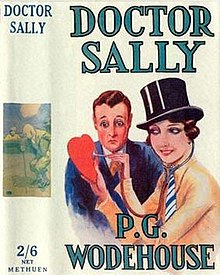
Dr Sally Smith  

She is an American general practitioner in medicine, with abiding interest in golf. Her skills at the game impress even someone like the nerve specialist Sir Hugo Drake.

When Bill nervously confesses his feelings for her, he gets a rather unemotional response. Sally says she still has not met the right man. Sally continues to turn down Bill until she sees him do some paperwork for his dairy farm. Seeing that he does in fact work, she ends up falling for him.

She is described as a small girl and as being extremely pretty.

Sue Brown

A chorus girl, Sue is the daughter of Dolly Henderson. A tiny girl, mostly large eyes and a wide smile, she has a dancer’s figure and catches the eye of many a man, including Percy Pilbeam and in the past Monty Bodkin, to whom she was engaged for a spell, but when we first meet her in Summer Lightning, she has been fiancée to Ronnie Fish for some nine months.

Galahad Threepwood, who adored her mother in his youth, has a fatherly affection for her, and aids her considerably in her hopes of marrying Ronnie; although his sister Julia at one point accuses Gally of being her actual father, in fact Dolly Henderson married Jack Cotterleigh, an Irish Guardsman, while Gally was in South Africa. After her mother’s death, they moved to America for a time.


Veronica Wedge

The daughter of Lady Hermione and Colonel Wedge is a spectacularly attractive girl, a fact which never ceases to amaze her doting father and attracts many a fashion photographer whenever she appears in public. She has a direct way about her, and invariably follows her parents’ instructions to the letter, even when it comes to falling in love. Her extreme beauty is matched by her extreme simplicity of mind, a fact which does not put off Tipton Plimsoll when he meets her shortly before her twenty-third birthday, in Full Moon.

Tipton cashes in on her love for jewelry, eventually persuading her to elope to a registry office in the climax of Galahad at Blandings. 


Of Female Empowerment

Staunch advocates of gender parity will be pleased to note that Wodehouse has created women characters which not only call the shots in their men’s lives but also pursue their own career interests with a single-minded devotion, alacrity and aplomb. They make a wide range of career choices and make a success of the same.

Of course, his men do make unkindly comments about women. But they also recognize women’s enablement of the human race going. In any case, Wodehouse is not like Nietzsche, who warns the better sort of reader not to venture out among the ladies without a stick or a whip. Some clans may drag their women about by the hair, but Wodehouse’s gentlemen are far too inhibited. So far from going after women with whips, they can’t even go back on incautious engagements—a man’s word is his bond, and it wouldn’t do for a preux chevalier to refuse an offer made by someone from the tribe of the delicately nurtured. Nor do they believe in bandying about the name of any woman. Even if they are aware that they happen to be merely a stop-gap arrangement in the scheme of things of someone like Bobby Wickham, who, by quoting their despicable candidature to their discerning parents, merely wish them to approve the alliance really intended. We end up realizing that Wodehouse agrees with Macbeth’s witches, at least when they say that fair may be foul: he presents men as sorely tried by the fair sex.

Even conscientious men, duly frocked in the service of the Lord, find that women are apt to bring them as close to the peril of being defrocked as would be humanely possible. Stiffy Byng tries to get her man to pinch a policeman’s helmet to even a private score.

Women are not like gentle­men, who have a code in these things:

She was fully aware that she was doing something which even by female standards was raw, but she didn’t care. The whole fact of the matter is that all this modern emancipation of women has resulted in their getting it up their noses and not giving a damn what they do.

A Unique Therapeutic Proposition

In a way, there is much in common between Wodehouse’s works and those of Jane Austen. Both happen to follow strict codes. Both play out as movies rated under the category ‘U’, thereby making them a family affair. Sex is taboo.

In Plumsville, friendly romps and jocular embraces are taken a jaundiced view of. Impersonation and white lies dished out in the course of a boat ride meet with approval; So do the pinching of umbrellas, policemen’s helmets, scarabs, silver cow creamers and such members of the animal kingdom as cats, dogs and pigs. Bunging in a policeman into a cooling stream is not scoffed at. One is forever living in a world which is essentially decent, uplifting and far away from the kind of trials and tribulations one faces in real life. Practical jokes do get played, albeit within limits.

Plum’s works happen to be an effective balm for a weary and wounded soul. Women of all kinds, irrespective of their Goofiness Quotient, contribute in no small measure towards building this unique therapeutic property of his works.

(Related Posts:

Some More Shades of Women in Plumsville 3.0

Different Shades of Women in Plumsville 2.0 (Aunts and Seniors)

https://ashokbhatia.wordpress.com/2014/04/12/different-shades-of-women-in-plumsville

https://ashokbhatia.wordpress.com/2014/10/30/of-bertie-goofy-females-and-the-wooster-clan

https://honoriaplum.com/2017/02/20/money-in-the-bank-review-by-john-lagrue

https://ashokbhatia.wordpress.com/2020/02/14/some-tips-on-the-art-and-science-of-courtship-from-rupert-psmith)

Read Full Post »


You know, the more I see of women, the more I think that there ought to be a law. Something has got to be done about this sex, or the whole fabric of society will collapse, and then, what silly asses we shall all look.

(Bertie Wooster)


Aline Peters

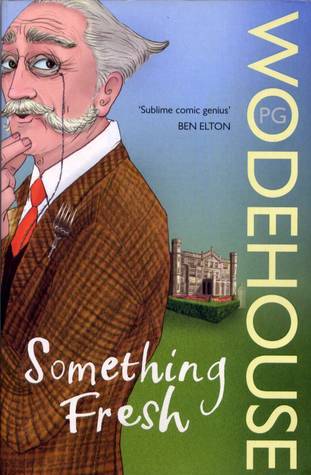
Freddie Threepwood’s fiancee in Something Fresh, Aline is the daughter of J Peterson Peters, the American millionaire. She is a gentle, kindly girl who dotes on her father to the extent of starving herself to support his struggle with dyspepsia, and is in turn adored by George Emerson, who she finds too volcanic and over-dashing for her tastes.

Her old school friend Joan Valentine thinks she has been spoiled by too much ease, and that having to fight a little for her independence would be the making of her; Emerson, on the other hand, thinks her perfect. She eventually realizes her long-standing love for him, when he shows signs of weakness and brings out her mothering instinct.

One of the interesting aspects of life highlighted by Plum in Something Fresh is the personality contrast between Aline Peters and Joan Valentine. One is born with a silver spoon in her mouth, so to say, whereas the other has to struggle through life to survive and do well.


Anne Benedick

Her laugh is so musical and silvery that she evokes deeper emotions in Jeff; something he realizes is nothing but unalloyed love. Her laugh conjures up visions of a cozy home on a winter’s night, with one’s slippers on one’s feet, the dog on one’s lap, an open fire in the grate and the good old pipe drawing nicely.

We meet her in Money in the Bank. She is 23 years old and a secretary-companion to Clarissa. In secret, she is engaged to Lionel.

For Jeff Miller, at the first sight of Anne Benedick:

There was something about this visitor that seemed to touch some hidden chord in his being, sending joy bells and torchlight processions parading through the echoing corridors of his soul. Romeo, he fancied, must have experienced a somewhat similar, though weaker, emotion on first beholding Juliet.

When Jeff gets hit on the head during a tussle with the Molloys, Anne cries out for Jeff’s sake. The two get engaged in a cellar. The true location of the diamonds occurs to Lord Uffenham and he retrieves them from that spot. Anne agrees to marry Jeff.


Cora Starr

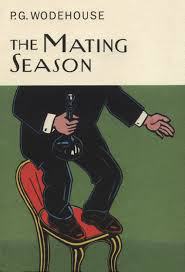
When it comes to her Goofiness Quotient, Cora (‘Corky’) Pirbright can easily be treated at par with the likes of Roberta Wickham and Stiffy Byng. She does not boast of having red hair, but would always approve of anything that seems likely to tend to start something. Alas, we get to meet her only in The Mating Season. 

When Constable Dobbs gets bit in the leg by Sam Goldwyn, thereby obstructing him in performing his duties to the Crown, she puts the animal’s case extremely well, pointing out that it had probably been pushed around by policemen since it was a slip of a puppy and so was merely fulfilling a legitimate aspiration if it took an occasional nip at one. When Dobbs refuses to accept her view and takes the animal in his custody, all she has to do is to snap her fingers and egg on one of the men around her to go about strewing frogs all over the chokey concerned.

Her uncle Sidney may not be chuffed at the prospect of having someone like Thos around the vicarage, she believes that it is good for a clergyman to have these trials. These make him more spiritual, and consequently hotter at his job.

Though differing from Aunt Agatha in almost every possible respect, Corky has this in common with that outstanding scourge, she is authoritative. When she wants you to do a thing, you find yourself doing it.

Bertie describes her as being one of those lissom girls of medium height whose map has always been worth more than a passing glance. In repose, it has a sort of meditative expression, as if she were a pure white soul thinking beautiful thoughts, and, when animated, so dashed animated that it boosts the morale just to look at her. Her eyes are a kind of browny hazel and her hair rather along the same lines. The general effect is of an angel who eats lots of yeast.

Corky is said to have been wowing the customers with her oomph and espièglerie since she was about sixteen. She distinctly took the eye. Two years in Hollywood had left her even easier to look at than in her earlier times when she used to attend dancing classes with Bertie.

When introduced to her, Gussie Fink Nottle’s thoughts are along the following lines:

It’s extraordinary that a girl as pretty as that should also have a razor-keen intelligence and that amazing way of putting her arguments with a crystal clarity which convinces you in an instant that she is right in every respect.

Esmond Haddock, who is in love with her, thinks she is an angel in human shape. Old Pirbright introduced the two of them. Their eyes met. And it was not more than about two days after that they talked it over and agreed that they were twin souls.

But Esmond’s aunts did not like actors. In their young days, in the reign of Queen Elizabeth, actors were looked on as rogues and vagabonds. As to the aunts, her stock was plainly down in the cellar and the market sluggish.

Corky refuses to consider the idea of hitching up with Esmond unless he defies his aunts, and he very naturally gets the vapours at the mere idea. She thinks he has allowed them to oppress him from childhood, and it’s time he threw off the yoke. She wants him to show her that he is a man of intrepid courage. Her matrimonial plans thus hit a snag, since there is not even a remote chance that Esmond would ever stand up to Dame Daphne Winkworth, and the Misses Charlotte, Emmeline, Harriet, and Myrtle Deverill and make them play ball.

But Bertie and Jeeves conspire to ensure that the two end up walking down the aisle.


Dolly Molloy

The newcomer was a girl in the middle twenties, of bold but at the moment rather sullen good looks. She had the bright hazel eyes which seldom go with a meek and contrite heart. Her colouring was vivid, and in the light from the window her hair gleamed with a sheen that was slightly metallic.

(Sam the Sudden)

This is Dora (“Dolly”) Molloy (née Gunn), a young American woman, known to her friends as Fainting Dolly, from her practice of swooning into the arms of rich-looking strangers as a prelude to picking their pockets, hence her alternative nickname of Dolly the Dip.

She is brassy, golden-haired shoplifting wife of Soapy, the brains of the couple. Unlike her husband, Dolly is a firm believer in direct action: in Money in the Bank, Jeff Miller considers her to have the executive abilities of Lady Macbeth.


Elizabeth Boyd

She is a hard-working beekeeper in Brookport, Long Island, where she lives with her irresponsible brother “Nutty”, Claude Nutcombe Boyd. A letter from Jerry informs them that Nutcombe’s money went to someone called Lord Dawlish.

When we get introduced to her in Uneasy Money, Elizabeth Boyd is twenty-one, though with her hair tumbling about her shoulders she could have been taken by us to be a child. It is only when we peer into her eyes and notice the resolute tilt of the chin that we realize that she is a young woman very well able to take care of herself in a difficult world. Her hair is very fair and her eyes brown and very bright. These are valiant eyes, full of spirit; eyes, also, that see the humour of things. Her chin, small like the rest of her, is strong; and in the way she holds herself there is a boyish jauntiness.

In New York, Bill sends a letter to Elizabeth offering to split the money, but she sends a reply refusing it. However, circumstances eventually bring them together and love blossoms aboard a train. They plan to get married when the train reaches New York and later run a big bee farm together.


Eve Halliday

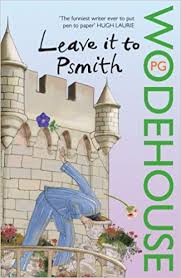
In Leave it to Psmith, Eve first catches Psmith’s eye while sheltering from the rain under the awning of a coal merchant’s joint opposite the Drones. She takes up an assignment at the Blandings Castle, cataloguing the library, a feat which has not been attempted since the year 1885.

Eve gets by on a small annuity from a late uncle, but frequently has to find work due to tempting but expensive hats, gloves and other necessities. She is a person of dash and vigour. Gazing into her soul, one is apt to find such finer sentiments there as honesty, sympathy and intelligence.

She is a girl of medium height, very straight and slim; and her fair hair, her cheerful smile, and the boyish suppleness of her body all contributed to a general effect of valiant gaiety, a sort of golden sunniness – accentuated by the fact that, like all girls who looked to Paris for inspiration in their dress that season, she often wears black.

A highly attractive young girl, Eve is adept at deflecting proposals from young men like Freddie, but finds Psmith’s advances more difficult to fend off. Capable and efficient, she works hard at her cataloguing job despite Psmith’s attempts to lure her away; a faithful and reliable friend, she does much to help her friend Phyllis get the money she deserves. By the end of the narrative, she is engaged to Psmith.


Honoria Glossop

Most of us are already aware that Honoria Glossop is the daughter of Sir Roderick Glossop and the elder sister of Oswald Glossop. Large, brainy, and athletic, she has an assertive personality and a forceful voice. Her laughter is said to make a noise like that of the Scotch express going under a bridge.

She plays every kind of sport, and Bertie suspects she may have boxed for her university. She has a strong presence; Bertie notes that there is something about Honoria which makes almost anybody you meet in the same room seem sort of under-sized and trivial by comparison. She is interested in intellectual pursuits, and reads Nietzsche and Ruskin.

Egged on by Aunt Agatha, Bertie reluctantly agrees to get married to her. While engaged to her, Bertie ruefully describes the time spent with her as follows:

….not a day had passed without her putting in some heavy work in the direction of what Aunt Agatha had called ‘moulding’ me. I had read solid literature till my eyes bubbled; we had legged it together through miles of picture-galleries; and I had been compelled to undergo classical concerts to an extent you would hardly believe… I had just been saying to myself, ‘Death, where is thy jolly old sting?’

But when the eminent doctor pops up for a spot of lunch at his place, the presence of few cats in his bedroom ensure that he is saved from the gallows.

To Bertie, she is simply nothing more nor less than a pot of poison. One of those dashed large, brainy, strenuous, dynamic girls you see so many of these days.

Plum has left behind for us a wide spectrum of women characters. Each one is a unique specimen, even though some of them might sound like duplicates of each other.


(Few more women characters to follow in the next post on the subject!)

(Related Posts:

Different Shades of Women in Plumsville 2.0 (Aunts and Seniors)


Of Bertie, Goofy Females and the Wooster Clan

Bertie, Jeeves and the Internet of Things

Some Tips on the Art and Science of Courtship from Rupert Psmith

Different Shades of Women in Plumsville

Read Full Post »

In an earlier post on the same topic, we had considered a wide range of women who dot the Plumsville landscape. Here are some who happen to play the roles of loving as well as obdurate aunts and seniors.

It is no use telling me there are bad aunts and good aunts. At the core, they are all alike. Sooner or later, out pops the cloven hoof.

(Bertie Wooster)


Aunt Agatha 

To residents of Plumsville, she needs no introduction. She is the one who chews broken bottles and kills rats with her teeth. When she issues orders, one simply fulfills them, there being no court of appeal.

Generally formidable in appearance, Aunt Agatha is five-foot-nine, with a beaky nose, an eagle eye, and a lot of grey hair. The mere fact that she brings up someone like Thos, her son – a fiend in human shape – is sufficient to reveal that she has nerves of chilled steel.

When it comes to Bertie Wooster, Aunt Agatha calls the shots, making him an expert at sliding down water pipes or even going off across the Atlantic so as to escape her wrath. Towards the end of The Mating Season, one finds Bertie apparently mustering up the courage to stand up to her.

She is a matchmaker who never quite gives up on Bertie, who has been intimidated by her since he was young. However, partly thanks to Jeeves’ cunning, her plans invariably fail. In Pearls Mean Tears, the party of the other part proves to be a thief, leaving her red-faced. In Sir Roderick Comes to Lunch, the presence of cats in Bertie’s bedroom scratches his fixture with Honoria Glossop, thereby saving him from the gallows.

If it is a matter of protecting saving family, Bertie is often her favoured nephew to go to. In Extricating Young Gussie, he is sent off to New York to ensure that a cousin does not marry beneath the family’s stature.

She does not approve of family matters being placed in the hands of a menial like Jeeves. We even get to meet her pet dog McIntosh, an Aberdeen terrier, in one of the stories.


Aunt Dahlia

Dahlia Travers happens to be a large, genial soul, and Bertie often praises her humanity, sporting qualities, and general good-eggishness. Though typically friendly, she is capable, with effort, of going into an authoritative grande dame act if the situation calls for it, assuming a serious expression and cold, aristocratic tone. There are occasions when she could even resort to such methods as pinching silver cow creamers, getting cats kidnapped and hold out blackmail threats in order to achieve her goals. The threat which often proves to be the most effective is that of denying her nephew access to Anatole’s lavish spreads at Brinkley Court.

She is short and solid and has a reddish complexion. According to Bertie, her face takes on a purple tinge in moments of strong emotion. She wears tortoiseshell-rimmed spectacles for reading. She has a loud, carrying voice. Riding in her youth for years with such fox-hunting packs as the Quorn and Pytchley, she tends to address Bertie as if shouting across ploughed fields in a high wind. Expressions like “Yoicks!”, “Tally ho!”, “Gone away!”, and “Hark forrard!” happen to be a part of her vocabulary. One also runs into her sleepy black cat called Augustus.

Dahlia dandled Bertie on her knee when he was very young, and once saved him from swallowing a rubber comforter. When Bertie had measles as a child, Aunt Dahlia played tiddlywinks with him for hours and let him win, though Bertie maintains that his victories were due to his own skill.

The exchange of telegrams between her and Bertie are the stuff of a legend. However, the vagaries of time have made telegrams and postal services vanish from the public’s mind, depriving us of any pleasure of that kind in the present internet-driven times. On one occasion, Bertie had contributed an article about men’s dress trousers to her publication Milady’s Boudoir.

She is devoted to her husband Tom Travers and is always keen on touching him for a spot of money to keep her publication alive and kicking. Deeply concerned about the lining of his stomach, she does not display a sense of even rudimentary morality when deciding to pinch Anatole from the household of Rosie M Banks and Bingo Little.

(Why does she deserve the honour of being repeated here, despite having been covered in the previous post? Well, when an informal survey was conducted by yours truly within two of the several groups of Plum’s fans on Facebook, she was the one who was remembered most fondly across the board, miles ahead of Bobby Wickham, another all time favourite amongst those who add a dash and a punch to the proceedings in Plumsville!)


Lady Constance

She is Lord Emsworth’s most formidable sister, a strikingly handsome woman, with a fair, broad brow, and perfectly even white teeth. She has the carriage of an empress, and her large grey eyes are misleadingly genial.

She has an interest in fine arts and frequently invites writers, poets and other artists to Blandings Castle. She expects her brother to pay better attention to family members rather than either in pottering about his extensive gardens or fussing over the Empress of Blandings. She also admonishes her brother on his poor dress sense, expecting him to wear tight collars and top hats at the height of summer while giving speeches at local events. Often, while speaking to her fluffy-minded brother, she suffers a swimming sensation in the head. She connives with the gardener to convince her brother to give up his fascination with a yew alley covered with mossy growth and have instead a gravel path constructed through it but fails.

She strongly disapproves of anyone in her distinguished family marrying inappropriately, and spends much of her time trying to keep nieces and nephews away from unsuitable matrimonial prospects. She is rather fond of Rupert Baxter, the secretary of Lord Emsworth for some time, whom she considers highly capable and on whom she calls whenever she is in dire need of practical assistance.

Towards the end of the story Lord Emsworth and the Girl Friend, one finds her brother having the courage to stand up to her.


Lady Hermione Wedge

Lord Emsworth’s short and fat sister, who resembles a cook, albeit a passionate one. The wife of Colonel Egbert and mother of Veronica, Hermione has all her sisters’ fear of one of the family marrying beneath them, and is incensed when Bill Lister, unsuitable suitor of her niece Prudence, mistakes her, as so many do, for a cook, in Full Moon.

When we meet her again in Galahad at Blandings, she is for a spell acting as a chatelaine at the castle, in the absence of her sister Constance, but gives it up in the face of her brother’s impossible ways; we learn that once, as a child, she struck Galahad over the head with her doll, laying him out cold.

Breeding tells. Lady Hermione Wedge might look like a cook, but there ran in her veins the blood of a hundred earls. She overcame the sudden, quick desire to strike her nephew over his fat head with the nearest blunt instrument.

A Chunk of Baloney is how Tipton Plimsoll is apt to describe her as.


The Five Aunts

In The Mating Season, we get introduced to a bevy of aunts: Charlotte, Emmeline, Harriet, Myrtle Deverill and Dame Daphne Winkworth. They exert undue influence over Esmond Haddock, despite the fact that it is he who foots the weekly bills at Deverill Hall. They come in different sizes and shapes. One is in the habit of soliloquizing to an extent that one comes to believe that if  Shakespeare would have ever come across her, he might have just liked her.

One of the aunts happens to be deaf, one dotty, one Dame Daphne Winkworth, and all of them totally unfit for human consumption on an empty stomach…

(Bertie Wooster)

They happen to be a family rooted in old customs and ways of life and do not take a kindly view of their nephew falling under the influence of Cora Pirbright, a Hollywood diva. In any case, they take a jaundiced view of actors, considering them as rogues and vagabonds. They judge everyone by their narrow county standards.

Having won a resounding approval from his audience at a public performance, the spineless hero eventually musters enough courage to stand up to his aunts, declaring her love for Corky unabashedly. Here is a part of the final words of Esmond Haddock to his aunts:

“…I really cannot have any discussion and argument about it. I acted as I deemed best, and the subject is closed. Silence, Aunt Daphne. Less of it, Aunt Emmeline. Quiet, Aunt Charlotte. Desist, Aunt Harriet. Aunty Myrtle, put a sock in it. Really, the way you’re going on, one would scarcely suppose that I was the master of the house and the head of the family and that my word was law. I don’t know if you happen to know it, but in Turkey all this subordinate stuff, these attempts to dictate to the master of the house and the head of the family, would have led long time before this to you being strangled with bowstrings and bunged into the Bosporous.”


Aunts and Spiritual Growth

Whether good and straight forward or bad and manipulative, aunts and senior ladies in Plumsville perk up the proceedings no end. They display a unique sense of loyalty to their families and can often be blamed for playing spoilsport. But their feudal spirit stands out.

But is there really a point in blaming aunts for any of the challenges faced by their nephews and nieces? At a given point in time, they might look like being worse than fire-breathing dragons. But this is perhaps their way of testing our mettle and the level of passion we have for what we seek. In childhood, they might have dandled us on their knees physically. In adulthood, perhaps this is their way of making us grow into more conscious, more persevering and dashing coves.

In other words, much like the many villains in our lives, they help us to evolve spiritually; to always have a chin up attitude and face the charging dragons and ferocious hippopotami we encounter in our lives with courage, equanimity, tact and resource.


Related Posts:

Different Shades of Women in Plumsville

Of Bertie, Goofy Females and the Wooster Clan

Bertie, Jeeves and the Internet of Things

Lord Emsworth and the Girl Friend: A Visual Version

Read Full Post »

On the first anniversary of the strict lockdown imposed in India on this day, a year back!

ashokbhatia's avatarashokbhatia

The 24th of March, 2020 dawned upon us as any other normal day. Denizens of India were going about their daily chores with as much zombiness as they could muster. Flowers were in bloom. Birds and bees were going about doing whatever they normally do. Trees were swaying in the gentle breeze coming in from the Bay of Bengal. In other words, God was in heaven and all was well with the world.

However, by 2030 hours in the evening, our world had turned upside down. The Indian government imposed a comprehensive lockdown across a country comprising 1.3 billion persons. The Prime Minister himself appeared on our TV screens and announced this decision. By the time he finished, a mere three and a half hours were remaining for the decision to take effect.

This sudden whammy left all of us twiddling our thumbs trying to figure out as to…

View original post 1,898 more words

Read Full Post »

ashokbhatia's avatarashokbhatia

Here is what my dream soul mate would sound like,
He may or may not be tall, dark and handsome;
While handling Life’s harsh slings and arrows,
I merely expect the young prune to be agile and lissome.

A blighter like Gussie Fink Nottle would surely not do,
A newt fancier and a teetotaler is bound to leave me cold;
A chappie like Freddie Threepwood would also put me off,
Someone like Spode I would stoutly detest, truth be told.

A lack of interest on my part in flowers, pumpkins and sows,
Rules out any dalliance with the ninth Earl of Emsworth;
A rugged and handsome Esmond Haddock may make the cut,
But his domineering aunts would vitiate matrimonial mirth.

Having a whack at any bloke’s millions is not my idea of fun,
An abundance of the milk of human kindness would do;
His frequent visits to an all-men’s club…

View original post 436 more words

Read Full Post »

Vikram M N's avatarconstantscribbles

A soothing humorous tale

Wodehouse’s works are always fresh isn’t it. Even though ‘Something Fresh’ isn’t as good as Psmith or Jeeves tale, it still is soothing in feel. I’m not really a fan of humor but the way Wodehouse does humor is so ingenuine, where no one would be hurt. Even in this story, in spite of knowing all the twists and turns, the flow is just lovely. Maybe it’s not Jeeves funny because the protagonist is just a common man unlike a superhero like Jeeves. But overall, it marks for a wonderful read.

Wodehouse’s works feel like Crazy Mohan’s works. There will be lot of characters, comedy at unprecedented times, there will be chaos, there will hell lot of funny dialogues but none would be hurt. And that’s the best part. I read this book around ten years back but didn’t remember a thing. Only when I was…

View original post 432 more words

Read Full Post »

A note from Shiva Kumar

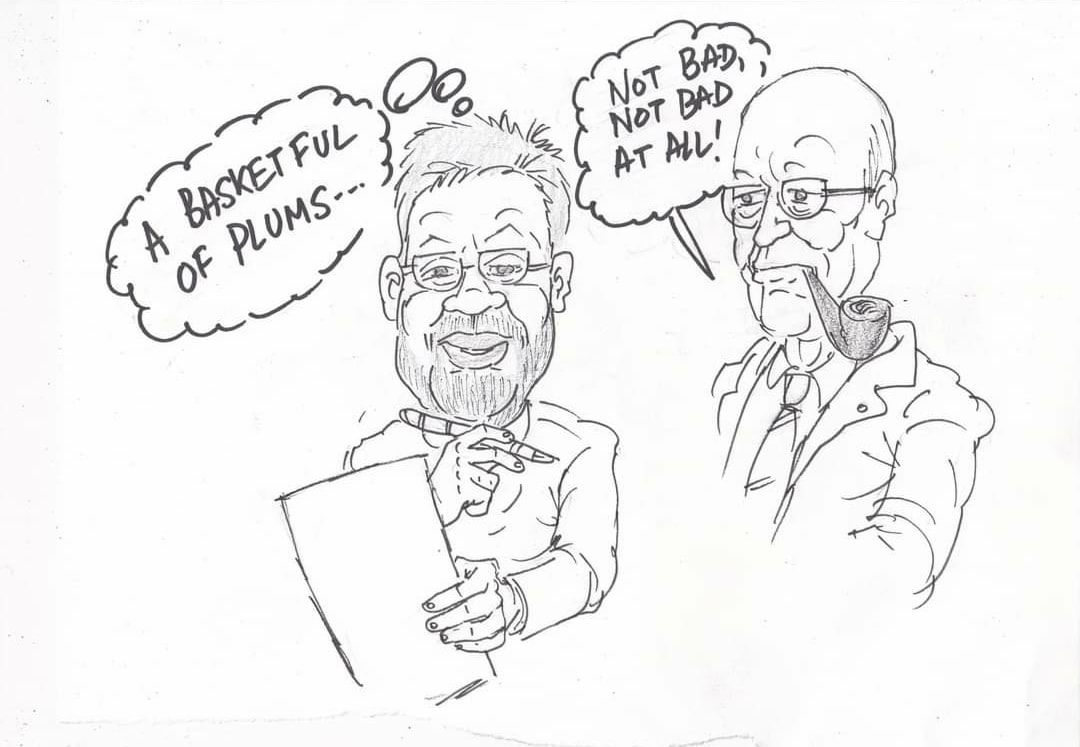
I had written this poem in 2015 as a tribute to the master humourist, P.G.Wodehouse, who died on Valentine’s Day in 1975. Ace caricaturist Suvarna Sanyal paid me the highest compliment with his superb sketch showing The Master himself appreciating my poem. Thank you, SS!


A BASKETFUL OF PLUMS

Holiday morning, lovely day
To the bookshop, I’m on my way
The bookman called and said “come, quick,
Come a-running and take your pick.
A bunch of ol’ books have arrove,
A big crateload, a treasure trove.”


I wade in, my wish list in hand
Books all over, I can’t see land.
Dark grim tales to the left of me,
Sob stories to the right of me;
Pah! Bah! And Tchah! Far away be,
I want books which guffaw make me.


Melodrama, romance, forsooth!
Stuff, no sense in the bitter truth.
Yes, ribbing prose, tickling poetry,
But no science nor geometry.


Clarence, Freddie, Threepwood clan
Sir Galahad, the Pelican
Empress, Baxter, the angry swan;
Plum makes you chortle, that’s his plan.


Psmith the name with the silent P,
Sometimes dotty, always natty!
Ukridge the get-rich-quick schemer,
Out, looking for his redeemer.


Anatole, chef extraordinaire,
He cooks up a superb French fare;
But when he expresses his ire,
His English is simply hilare!


Come and meet Mr. Mulliner,
Angler’s Rest’s own story teller.
Or, the golf club’s Oldest Member,
Who many tales does remember!


Roderick Spode, Sam the Sudden,
Uncle Fred, Pongo Twistleton!
Sally, Gussie, Bingo, Catsmeat,
On my bookshelf you all I’ll greet!


Ah! There I spy a Bertie tale
With his antics he does regale.
By himself he’ll be in a bind
Thankfully, Jeeves isn’t far behind.


Wodehouse Omnibus, just you wait
Till I pick you up from that crate!
Plum’s the word for the humour stuff
Reading once is just not enuff!


A holiday morning well spent
Time flew, so fast, it came and went!
Now to curl up in the arm chair
Read away, come up only for air!


(Shiva Kumar is an electrical engineer by education. Having served in several industries, he and his Alma Mater are both relieved that he has never been called upon to prove his subject knowledge. He is otherwise adept at delivering uplifting shocks to those who follow him with his occasional blog posts, dishing out stuff that would make a reader laugh. His creative outpourings can be accessed at either https://sudden-elevenses.blogspot.com or https://thewiklyupdet.blogspot.com.He also loves to indulge in photography and listening to music. He likes nature and his favourite places to visit are the hills. 


Suvarna Sanyal has had a satisfying career pouring over bulky ledgers of a bank. He has an eye for the humorous and the unusual. He never fails to amuse with the sparkling illustrations he keeps coming up with. An Ace Caricaturist he surely is!


Permission to post this composition here is gratefully acknowledged.)

Read Full Post »


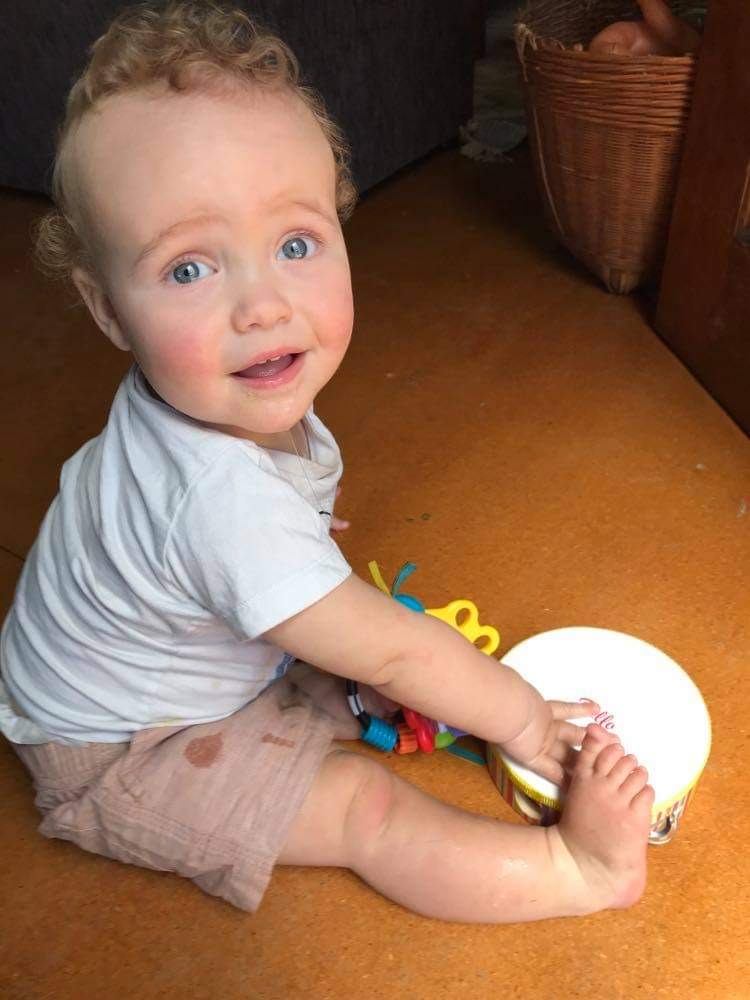
Allow us to welcome you belatedly to this wonderful world on a special day,

When you turn one and fans in different continents are celebrating Plum;

For this is the day he decided to hand in his dinner pail,

Leaving a rich legacy of joy, should we ever become glum.


Unbeknown to you, you have brought happiness in many lives,

Not only to that of your parents and immediate family members;

But also to the lives of fans suffering from Corona-induced blues,

You brought hope to a sick planet and kept aglow joyful embers.


You dispelled our manner of death-where-is-thy-sting-fullness,

Keeping us safe indoors, devouring the works of the Master;

Reveling in the antics of those who lived almost a century back,

Keeping our sanity intact, building immunity, recovering faster.


In Plumsville, Death is surely not a dreaded phenomenon,

On the contrary, it confers wealth, castles and titles upon heirs;

Hiring Jeeves or Anatole, buying white jackets with brass buttons,

But not behaving like an American millionaire, putting on airs.


Your first year on this planet was a tough year indeed,

When many of us lost our clear vision of 20:20;

Plum’s works kept us afloat, giving us hope of a brighter future,

We have survived to the day and can read these lines aplenty.


A stern look from you and the virus would have gone into hiding,

Like a rhino retreating upon seeing a White hunter with a shotgun;

Enthused, we also took it head on, savouring our enforced isolation,

Relishing opportunities for introspection and having fun.


Like Bertie Wooster, you may approve of our chin up attitude,

Deploying nerves of chilled steel, surviving a sudden lockdown;

Oh, how we craved renting a cottage in the countryside,

Free of the fear of an Edwin the Scout who may burn it down.


Lest we may contract the dreaded virus,

We had to let go of Anatole, God’s gift to our gastric juices;

A Laura Pyke type diet regime we had to follow,

Partaking immunity boosting foods, sans any dietary excuses.


Many unopened books adorning our shelves we could go through,

Improving our intellect with tomes dished out by brainy coves;

Curled up in a corner with a tissue restorative by our side,

While affianced couples connected over internet, cooing like turtle doves.


Never in our lives did we imagine watching so many flicks,

Many inane, some average and few so very well made;

Homemakers turned creative and tried myriad recipes,

Prompting many of us to don a figurative skirt and chip in with due aid.


The pleasures of offline shopping sprees had to be given up,

Instead, online shopping alone saved the day for many of us;

With the giant wheels of commerce temporarily shut down,

A revival of the environment turned out to be a big plus.


Some rarely seen birds trooped in, giant butterflies fluttering,

The bees were active, flora and fauna flourished, sky was azure;

Flowers bloomed with gaiety, greener trees swayed gently,

Nature was bountiful; the air one breathed was pure.


Those in metros were severely hit, spinsters all alone and forlorn,

Musicals like ‘Hamilton’ and ‘Pretty Woman’ were sorely missing;

Engagements and nuptials had to be postponed, wedding plans trimmed,

Couples had a tougher time, unsure of even an act like kissing.


You have brought great joy into the lives of your parents,

As you grow, you shall surely return their nurturing ways;

They are bringing you up with lots of love and care,

Your innocent smiles and hugs brightening their days.


May your intellect be always one up on that of Jeeves,

Your investigative skills as sharp as those of Baxter the efficient;

In culinary skills, may you surpass Anatole, in smartness, Psmith,

A heart that bleeds for its pals may also be sufficient.


When it comes to heartily gorging on your daily nourishment,

The Empress could already learn a few things from you;

As to keeping the enthusiasm of a big sister under check,

Clarence could imbibe you, proving worthy in his ancestors’ view.


Your crawling skills would soon evolve into brisk walking ones,

If ever you get besotted with a Hollywood diva in your pre-teen days,

Like Thos, you may walk six miles to fetch the Sporting Times for Bertie,

Aspiring to win the Good Conduct competition, winning Greta Garbo’s praise.


You shall grow to be like a Hercules with nerves of chilled steel,

With abundant milk of human kindness coursing through your veins;

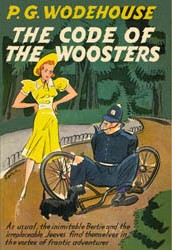
Following the Code of the Woosters with alacrity and aplomb,

Handling overbearing aunts, using Esmond Haddock’s tact and brains.


You chose to be born on a very special day,

Resurrecting the spirit of Plum, of whom your grandmother is a fan;

May your own life be full of light, sweetness and joy,

As long as a benevolent and humorous sun keeps cheering up man.


(Master John Jasper happens to be the grandson of Lucy Smink, a fan of P G Wodehouse Down Under. This impromptu composition is addressed to him. Permission of the family to publish it here is gratefully acknowledged.)

(Related Posts: 

https://ashokbhatia.wordpress.com/2019/06/08/lord-emsworth-and-the-girl-friend-a-visual-version

https://ashokbhatia.wordpress.com/2016/10/23/my-dear-clarence

https://ashokbhatia.wordpress.com/2015/07/05/the-gallery-of-rogue-kids-in-plumsville

https://ashokbhatia.wordpress.com/2015/04/01/when-masters-thos-bonzo-and-moon-rise-in-love)

Read Full Post »

ashokbhatia's avatarashokbhatia

Those who happen to know me personally are often deceived by my polite manners. They often wonder as to why I never opted for a diplomatic career.

Allow me to set the record straight. P G Wodehouse played some role in indicating that my Guardian Angels had planned my life much unlike that of Eustace Mulliner, who was a part of the British Embassy in Switzerland.

Jeeves’ psychology-of-an-individual factor has also led me to believe that the diplomatic corps on this planet are better off without me.

My limited intuitive faculties also tell me that life as a career diplomat could not be as glamorous and hunky dory as it might appear to be from the outside of an embassy building.

The Eustace Mulliner saga

Wodehouse fans might recall that the splendid idea of Eustace Mulliner joining the British Embassy in Switzerland was dangled before him by his godfather, Lord…

View original post 988 more words

Read Full Post »

‘Wodehouse is the perfect antidote to today’s misery’, says Gavin Ashenden in one of his posts wherein he  highlights the role played by negative news and contrasts it with the sublime joy dished out by Plum in his narratives. The post is highly relevant in today’s pandemic-ridden era when even the credibility of our media channels, social or traditional, is at a low ebb. I personally know of at least two persons who passed away during the 2020 spate of lockdowns, primarily because of an overdose of negative news.

Here is his post of 2017 vintage, brought to the attention of Plum fans by Morten Arnesen recently.

I’m not sure that too much news is very good for you.

A constant diet of misery chosen by some random news editor gets poured into our ears by a radio, or batters our eyes and heart on the TV. Bad news always grabs our attention; good news, not so much.

The hiatus of horror trumps the tedium of the tepid. After a while, we get used to the non-stop human misery. We develop a thicker skin, toughened against other people’s suffering.

Twenty-four-hour news cycles have only made it worse. We need antidotes to this one-sided misery fest. One of mine is P G Wodehouse. Some people met him for the first time on TV, through Jeeves and Wooster. I slip into his world of rampant aunts and the magic of his mix of metaphors with a sigh of relief.
Once heard, who can ever forget the image: ‘The Right Hon. was a tubby little chap who looked as if he had been poured into his clothes and had forgotten to say “When!”’

If you have wilted under the constant curse of ‘I told you so’ from your well-informed beloved, you recognise the affliction of Mavis at once: ‘There are girls, few perhaps but to be found if one searches carefully, who when their advice is ignored and disaster ensues, do not say “I told you so”. Mavis was not of their number.’

And perhaps my perpetual concise favourite: ‘I could see that, if not actually disgruntled, he was far from being gruntled.’

Wodehouse didn’t come by his plots or his phrases easily. It was hard perfectionist graft. He would take the pages of the day and pin them on the wall opposite him. The best pages would get fixed higher up the wall, and the weaker ones lower down. Then he would take the lowest and work on it to improve it and pin it up higher… and go to the next lowest and so on…
Anyone who has struggled with relatives in general and aunts in particular, will enjoy: ‘It is no use telling me there are bad aunts and good aunts. At the core, they are all alike. Sooner or later, out pops the cloven hoof.’

He married an American chorus girl and wrote the lyrics for Hollywood and Broadway shows as well as crafting the most beautiful English novels that enfolded you into a world that never had been, but you longed to be part of; a world of innocence and charm, where malice was restrained, brains were optional and friendship always triumphed.

His own world grew more complex in 1939. Living in Le Touquet in northern France with a community of well-bred and well-heeled expats, he failed to foresee the speed of the German advance. He wasn’t alone in this. Most of the British High Command made the same misjudgment, but unlike him, they weren’t arrested.

He was. He found himself shoved into a cattle truck and after three prisons ended up in a converted mental asylum near the Polish border.

Throughout his time in Tost, he sent postcards to his US literary agent asking for $5 to be sent to various people in Canada, mentioning his name. These were the families of Canadian prisoners of war, and the news from Wodehouse was the first indication that their sons were alive and well. He risked severe punishment for the communication, but with careful turns of phrase managed to evade the German censor.

Having turned 60, he was released and sent to Berlin where he was asked to broadcast to the US. The Germans hoped they had a propaganda success on their hands, but Wodehouse used the five broadcasts to describe the horrors of internment using laconic understatement, heavy irony and razor wit.

But the British public, freaked out by the radio broadcasts of a real traitor, Lord Haw-Haw, couldn’t cope. They turned to hate. Particularly dense MPs demanded that if he returned he be tried for treason. He was interviewed and exonerated by MI5 in Paris in 1944. He fled to America at the end of the war. It wasn’t until the 1980s that the British public got over their fit of clumsy moral hysterics, but they had forgotten rather than forgiven.

When asked if he didn’t hate the Nazis, one more question designed to flush out the traitor in him, he replied that he found it impossible to ‘hate in the plural’.

Hating has become a political as well as a personal problem recently. When even the state has taken charge over mapping our minds to flush out our ‘hate crime’ and other politicised moral misdemeanours, there is something to be said in taking refuge in the simple nostalgia of innocence in his novels.Laughter lifts a fallen world. We can learn, too, from his blank refusal to hate class, gender or race.

Both the news and the world would be a better and easier place, if like Wodehouse, we absolutely refused to ‘hate in the plural’.

(This article of Gavin Ashenden had earlier appeared in the Jersey Evening Post: https://jerseyeveningpost.com/news/2017/08/17/comment-wodehouse-is-the-perfect-antidote-to-todays-misery)

Read Full Post »

« Newer Posts - Older Posts »