Archive for the ‘What ho!’ Category
What!? Lord Emsworth, an evil-doer?!? (Guest Post by Tomas Prenkert)
Posted in What ho!, tagged Humour, Lord Emsworth, P G Wodehouse, Sweden, Tomas Prenkert, Wodehouse Society in Sweden on January 4, 2025| Leave a Comment »
P. G. Wodehouse: Laughter guranteed
Posted in What ho!, tagged Humour, Laughter, P G Wodehouse on November 26, 2024| Leave a Comment »
Some Transferred Epithets from P G Wodehouse
Posted in What ho!, tagged English, Humour, Language, P G Wodehouse, Transferred Epithets on November 7, 2024| Leave a Comment »
PG Wooster, Just As He Useter – A poem by Ogden Nash
Posted in What ho!, tagged Humour, Ogden Nash, P G Wodehouse on October 22, 2024| Leave a Comment »
How P. G. Wodehouse helps me to grow spiritually: Guest Post by Suryamouli Datta
Posted in What ho!, tagged Bhagavad Gita, Bosses, Death, Friends, Humour, P G Wodehouse, Rabindranath Tagore, Rajanikant Sen, Spirituality, Spouses, Wisdom, Yamaraj on October 15, 2024| Leave a Comment »
So, you think that P G Wodehouse is only about farcical butlers, upper-class twits, domineering aunts, goofy females, rogue kids, dogs with supercilious gazes, cats that wear snootiness on their sleeves, horses that are fond of cats, and pigs which need their daily quota of 57,800 calories?
Think again, I would say! For, deep within the juicy narratives dished out by the Master Humourist of our times lie buried many lessons of a spiritual kind. These are latent nuggets of wisdom that, if adopted, could enable one to lead a spirited life, facing its ups and downs with a jaunty sang froid.
Baffled, bewildered, confounded, confused, flummoxed, mystified, perplexed, and puzzled?
Allow me to elucidate.
A Journey of Self-Discovery: Embracing the ‘Me First’ Mindset
Any spiritual quest begins with an inner journey of self-discovery. Like Bertie Wooster, one has to be a keen observer of the inner workings of one’s mindset. One should know when to slide down a pipe and when to board a cruise ship to avoid an impending encounter of an unpleasant kind. Self-preservation serves one well. To put it simply, one must have a ‘Me First’ approach to life.
Take my own case. Well, I must say, I happen to be a prime candidate for the “Me First” award, if ever one is instituted by the concerned authorities. You see, I’ve got this knack of putting my own pleasure and happiness on the pedestal, leaving others hanging like a wet sock in the wind.
It’s like that old saying about chasing the rainbow – the closer you get, the further it slips away. So, here I am, with my long face like a dropped pie, whinging about my sorry lot in life. And let me tell you, it’s not a pretty sight.
If I were watching myself on the telly, I’d hand that grumpy old git the remote control and tell him to skip to the next channel, pronto! Because, my friends, a moaner, and a whinger, is about as popular as a caterpillar discovered at the bottom of a bowl of salad.
My dears, we humans are like archers, shooting our arrows of hope into the void, never sure if they’ll hit their mark. I’ve tried everything under the sun, from meditation to listening to hot-air speeches. And let me tell you, spirituality is a tough nut to crack. It’s like trying to peel a banana with oven mitts!

Finding Light in the Darkest Moments: Unravelling the Tapestry of Adversity
Now, I know this is the path to freedom from my woes, but here’s the rub: I can’t seem to figure out the ‘how-to’ manual. It’s like trying to find Waldo in a crowd of walruses. Frustrating, isn’t it? But fear not, for I’m blessed with nerves of chilled steel and am not one to give up easily. I continue my quest, armed with a magnifying glass that remains duly focused on the works of the Master.
My dear compatriots, the pursuit of spirituality proved to be a meandering journey through the labyrinth of existence, a perplexing conundrum that tested the limits of my mortal soul. Alas, in the face of such a formidable challenge, we resilient humans are wont to seek out solutions that may not blaze a trail to perfection, but rather offer a semblance of respite in the stormy seas of life.
As fortune would have it, amidst my quest for spiritual enlightenment, I stumbled upon a veritable treasure trove – the timeless works of Sir Pelham Grenville Wodehouse. Ah, the sheer delight and solace that his writings brought to my weary heart in times of dire need! My lineage, bless their souls, had been perusing his literary masterpieces for generations, paving the way for my own delectable encounter with this literary luminary.
One of the things that captivates me most was the uncanny comportment of Wodehouse’s characters in the face of adversity. Take for instance the indomitable Psmith in “Psmith Journalist”, who maintains an air of nonchalance even when confronted by kidnappers.
Such a profound sense of detachment amidst chaos brings to mind the teachings of the Bhagavad Gita, does it not? Indeed, could we not consider this delightful escapade into the world of Wodehouse as a form of modern-day spirituality? My friends, the parallels are as intriguing as they are enlightening.
The Perks of Forgetfulness and Living in the Present
Ah, Lord Emsworth! A man with an asset so heart-warming that it could melt the frigid polar ice caps – forgetfulness, leading to a habit of living in the present!
In the annals of history, great minds have extolled the virtues of forgetting. Our scriptures enjoin us to live in the present. It’s like dusting off the cobwebs in your attic – why cling to the dusty remnants of the past when you could embrace the sparkling potential of the future?
Lord Emsworth’s forgetfulness is a veritable cornucopia of blessings. It allows him to shed the heavy cloak of past grievances, like an absent-minded hiker shedding a backpack filled with regrets. And behold, he emerges anew, lighter, brighter, and infinitely more lovable to those who grace his presence.
Perhaps the saints of yore sought solace in this blessed amnesia, freeing their spirits to soar among the celestial heights. For in forgetting, we find not only liberation from the shackles of the past but also an uncanny ability to charm the socks off those around us. Thoughts of future encounters with a belligerent sister never fill us with a sense of dread.
In the realm of the spirit, or that which offers me a sense of tranquillity, I find that Wodehouse has bestowed upon me a profound lesson. Lord Emsworth stands as a beacon of hope in this respect. His forgetfulness of past events allows him to embrace the present with an unencumbered mind. Unburdened by the weight of memory, he revels in his solitude, finding pleasure in his own company. As Plum so aptly puts it,
‘Lord Emsworth sat and smoked, and sipped and smoked again, at peace with all the world. His mind was as nearly a blank as it is possible for the human mind to be. The hand that had not the task of holding the cigar was at rest in his trousers pocket. The fingers of it fumbled idly with a small, hard object.’
When he finds a scarab in his pocket, does he not simply conclude that it must have been gifted to him by the American millionaire? Once he starts focusing on the Empress of Blandings, does he ever worry about the pumpkin? He surely practices the delicate art of detachment, spoken of so very highly in our scriptures.
From Being a Self-doubting Thomas to an Opportunity-Grabber
In my annals of domestic disputation, I recall a particular clash with my bitter half. She, with her fervent tongue, extolled the valour of a dear friend who had summoned the intrepidity to pen a social media missive, heedless of any sinister implications. And I, rather than question her judgment, was exhorted to contemplate my own measly progress in the realm of social media.
The aftermath of this matrimonial contretemps was, as one might surmise, somewhat perplexing. I found myself in an odd state of accordance with her sentiments, heaping further ignominy upon my own head. For though my pen may have faltered, I had hitherto cherished the notion that the contemplation of others’ creations and the articulation of my own preferences constituted an inherent privilege.
Yet now, as if by some cruel twist of fate, I could conjure no words for my own use. Unlike some prodigies, blessed with an inexhaustible reservoir of ideas, I had no such celestial aid. Suffice it to say, my aspirations of literary heroism faded before my wife’s eyes, leaving me a mere buffoon engaging in a pathetic display of self-sabotage.
And as I spiralled further into this abyss of self-reproach, a voice whispered through the labyrinth of my mind, a voice I recognized from Joy in the Morning:
‘It was one of those cases where you approve the broad, general principle of an idea but can’t help being in a bit of a twitter at the prospect of putting it into practical effect. I explained this to Jeeves, and he said much the same thing had bothered Hamlet.’
Dear readers, lend an ear to these words that wrought a profound transformation within me. Like a veil lifted from my vision, I beheld the absurdity of my former self-chastisement. A chuckle escaped me, a gentle mockery of the charade that had held sway over my existence.
And so, I cast off the shackles of self-criticism and chose a path of liberation. This, my friends, is spirituality in its purest form—not a celestial embrace or mystical communion, but a triumph over the prison of my self-limiting beliefs. For, in embracing the folly of self-doubt, we find true freedom and the boundless expansiveness of the human spirit.
Though not directly akin to the realm of the spirit, dear reader, I often find solace in the words of P. G. Wodehouse’s The Small Bachelor. When the weight of life’s trials weighs heavy upon my mind, I turn to these lines, finding therein a gentle balm that soothes my troubled heart.
‘That’s the way to get on in the world – by grabbing your opportunities. Why, what’s Big Ben but a wristwatch that saw its chance and made good?’
By Jove, friends! When I hear such stirring words, my very essence is transformed. I feel a surge of vigour coursing through my veins, aided and abetted by a burning desire to embrace uncharted territories. The shackles of doubt and hesitation fall away, replaced by a boundless sense of possibility. Trust me, friends, such words are the catalyst that ignite the flame of adventure within me! So, dear readers, let us raise a toast to such characters as Lord Emsworth, the master of forgetting, Bertie, the epitome of chivalry, and Jeeves, whose sage counsel is akin to the teachings of Bhagavat Gita.

Different Facets of Life and the Transformative Power of Wodehouse
Overcoming Road Rage
Picture yourself on a bustling Monday morning as you prepare to embark on your daily pilgrimage to the office – the place where your purpose perhaps lies. You find yourself surrounded by a sea of cars, all honking impatiently, and scowling faces in desperate search of an outlet for their irritation. In that moment, your motivation wanes, the world around you darkens, and you feel like you are trapped in a never-ending episode of the Twilight Zone.
But then, like a bolt from the blue, something changes. The darkness dissipates, and you find yourself grinning in the face of this adversity when you get reminded of the following quote, all of a sudden!
‘The best method of getting to the Highfield is by the Subway. To see the Subway in its most characteristic mood one must travel on it during the rush-hour, when its patrons are packed into the carriages in one solid jam by muscular guards and policemen, shoving in a manner reminiscent of a Rugby football scrum.’
Now, as a mere neophyte in the realm of spirituality, I hesitate to delve deeper into this phenomenon. Yet I can’t help but wonder – does spirituality possess the power to transform our outlook so swiftly, like a magician pulling a rabbit out of a hat? The mysterious ways of the author P. G. Wodehouse never cease to amaze me, dear reader!
Meeting Theatrical Challenges with a Chin-up Attitude
Coming to the dreaded stage fright, my fellow thespians! When all eyes are peeled upon you, like a banana waiting to be devoured, your mind races at a million miles per second, a veritable rollercoaster of emotions. You fear deviation from the script, like a wayward sailor lost at sea. And let us not forget the dreaded missiles from the audience. No, I do not allude here to rotten potatoes, tomatoes or eggs. I mean words that can sting like bees, leaving you with a swollen performance.
In these trying times, performers seek solace in a tonic, a shot of confidence to carry them through the ordeal. And may I suggest that this tonic be none other than Plum’s following lines:
‘To an outside spectator he would have seemed rather like a very well-dressed Daniel introduced into a den of singularly irritable lions.’
Upon getting reminded of these words, a surge of tranquillity washes over the performer. They gaze upon themselves from a newfound perspective, an indifferent platform. A sterling performance comes about, followed by a burst of applause which could be heard across many a busy street outside the auditorium.

Tackling Lion Bosses at Office
When life’s a right ol’ cacophony, with your boss booming like a bassoon, your missus harping on you like a broken trumpet, and your pals piping up with their well-intentioned but ear-splitting advice, I find solace in the quotes delivered by this fellow who is fondly referred to as Plum.
By Jove, my dear readers, have you ever felt as though you’ve been thrown into a spin cycle by your boss? Like a tie caught in a washing machine, I find myself being mercilessly zipped and tumbled around when summoned for a “little chat.”
As I stand before my superior, shuffling my feet, my tongue resembling a malfunctioning typewriter, I utter the fateful words, “I, er… well, I went into the call and told, er…”
“Spare me the details, my boy,” he interrupts with the subtlety of a charging rhinoceros. “Let’s cut to the chase and unscrew this mess.”
Oh, the irony! My boss, the man with the power to “screw” me over, is demanding a “solution” to the screw-up I was being “screwed” for. It is enough to make me feel like a human pretzel.
For those who have trodden the path of such encounters, the subsequent unfolding is a familiar script. But for the uninitiated, allow me to veil the scene in the obscurity reminiscent of the ancient Greek plays where violence was shown. The tumultuous emotions surging within me after such an encounter were weighty enough to prompt contemplation of departure from my current vocation.
But then, as if a bolt of lightning has struck my brain, I recall these wise words from the pages of P G Wodehouse:
‘The fact is, uncle—’
‘Never mind the facts. I know them! What I require is an explanation.’
In that instant, like a light bulb illuminating a dusty attic, the missing pieces of my explanation miraculously reappear. The scales fall from my eyes. I can finally see a way out of this corporate labyrinth.
My spirits, as I said before, were as low as a politician’s poll ratings after a particularly scathing dressing-down from the discerning public. It was a veritable downpour of negativity, threatening to drench my career aspirations and send them scurrying for cover. But the words from the maestro, in their infinite wisdom, have a rather amusing trick up their sleeves.
As the day wore on, a queer thing happened. I caught a glimpse of my reflection in the office window and, lo and behold, the thunderous frown that had been etched upon my visage had mysteriously evaporated, replaced by a glow as radiant as a summer sunset. As if on cue, the sun broke through the clouds, casting its golden rays upon the scene like a celestial stand-up comedian.
And then I realized it. My boss, who had hitherto been as dour as Bingo Little who has just been ridiculed by Laura Pyke for gorging on food like a python, now bore an uncanny resemblance to Sir Thomas, while I, your humble narrator, took on the unmistakable air of the legendary Lord Dreever, a man known for his wit and indomitable spirit. The realization was like a tonic, lifting my spirits and rendering the boss’s earlier admonishments as mere comedic fodder.
Indeed, I believe that if I had dared to venture into the restroom, I would have encountered a mirror that reflected not the glum visage of a man on the brink of despair, but a veritable symphony of smiles, as if the entire universe was conspiring to cheer me up. And so, my friends, I leave you with this profound observation: even in the darkest of times, Wodehouse has a way of finding its place, painting a smile upon our souls, and reminding us that life, like a good joke, is often more amusing than it first appears.
Depression comes in all sizes and shapes. But irrespective of whether it is U-shaped, V-shaped, or W-shaped, we would do well to remember this advice from Bertie Wooster.
‘A short while ago, the air was congested with V-shaped depressions, but now one looks north, south, east and west and descries not a single cloud on the horizon – except the fact that Gussie’s wedding is still off, and that can’t be helped. Well, this should certainly teach us, should it not, never to repine, never to despair, never to allow the upper lip to unstiffen, but always to remember that, no matter how dark the skies may be, the sun is shining somewhere and will eventually come smiling through.’

Marriage Melee: A Battle of Wits and Wiles
Now, the trials and tribulations of married life! The constant struggle for supremacy between husband and wife can often lead to heated arguments. I remember one particular instance when my bitter half uttered a particularly sharp remark, causing me to contemplate throwing in the towel altogether.
Indulge me in the whimsical ramblings of a man ensnared in married life’s merry-go-round of mishaps. Picture the daily drudgery: the perpetual hide-and-seek with misplaced keys, the ceaseless battle against the despotic alarm clock – each a farcical subplot in the grand theatrical spectacle of existence. Yet, amidst the cacophony of chaos, I find refuge in the absurdity, relishing the comedic undertones of my predicaments. Armed with naught but a wry grin and a dollop of fortitude, I gallantly press forward, for in the face of adversity, it’s not the weight of our burdens that defines us, but the panache with which we pirouette through the harsh slings and arrows of life.
Measuring Up: Dealing with Matrimonial Blues
Growing up in a typical Indian household, I was no stranger to the dreaded act of comparison. Whether it was with the neighbour’s kid, my cousins, or my school chums, I was always being held up against others to highlight my shortcomings. These never-ending comparisons turned even the sweetest successes sour, casting a shadow of self-doubt over my young existence.
When I finally graduated from college and landed a job, I thought I had escaped the torment of comparison, once and for all. Alas, fate had other plans in store for me, as I soon found myself walking down the aisle and entering the realm of marriage. To my dismay, the comparisons from my youth had simply taken on a new form – instead of being measured against other youngsters, I was now being pitted against other fellow husbands.
Despite the familiar pang of depression that accompanies these regular comparisons, I find solace in the wise words of the great author. Remembering his following lines helps me to shake off the gloom and face the day with renewed vigour:
‘Chumps always make the best husbands. When you marry, Sally, grab a chump. Tap his head first, and if it rings solid, don’t hesitate. All unhappy marriages come from husbands having brains. What good are brains to a man? They only unsettle him.’
It is said that indifference is the key to true enlightenment. Perhaps that is why this quote also enters my mind upon meeting my wife’s friends. After all, they are a minefield of potential misunderstandings, where every word uttered can be met with laughter… or judgment. The joys of married life indeed!
Dinner Dynamics: A Delicate Dance of Drollery and Discretion
In this age of dual toilers, the dining hour has become our cherished trysting place. Yet, for some hapless souls like mine, it brings nought but tribulation.
For, the myriad oddities I perpetrate throughout the day come under my beloved’s scrutiny at this nocturnal tribunal. The evaluation process is akin to a relentless gauntlet, where each gaffe is met with a withering gaze and each feeble defence checkmated with a dismissive sigh.
To endure such a scenario demands the courage of a martyr and the willingness to face the unvarnished truth about oneself. And woe betide those who would dare to argue, for their fate is to be cornered and outmanoeuvred with surgical precision.
Well, I found myself in a bit of a pickle the other day. I wasn’t paying proper attention to my bitter half’s chatter, and it wasn’t long before her dulcet tones turned into something akin to a vinegar factory. In a moment of weakness, I surrendered to my plate much like a hungry squirrel would to a nut.
But alas, my hopes for a swift meal were dashed, for when one is in a spot of bother, even the most basic of tasks seem to conspire against one. The words of humiliation flowed from my wife as freely as water over Victoria Falls, and I found myself longing for the respite that only a finished meal could provide. But as we all know, when we most need something, it inevitably eludes us, and so I was forced to endure the verbal onslaught, my own loquacity proving no match for her linguistic torrent.
Terribly wounded by the slings and arrows of outrageous fortune, my dear readers, I sought refuge in yonder privy, a sanctuary most welcome after such a verbal tempest. Upon reflection, however, I found myself dishing out a double dose of censure to my ears, for my assailants’ barbs had stung me less sharply than my inner dialogue. Indeed, I resembled the legendary Ratnakar the Bandit (later known as Valmiki – the esteemed composer of that epic tale, the ‘Ramayana‘), when his kith and kin turned a cold shoulder upon discovering the slightly unsavoury nature of his profession.
Perhaps the following limerick might better explain my predicament:
There once was me so vain,
My ego could cause quite a strain.
I felt humiliated,
My pride, agitated,
Frowning at myself was his bane!
Well, my word, I was right down in the dumps, looking for a celestial lifebuoy, only to be greeted by a chorus of proverbs that made my predicament look as clear as a bottle of brown ale. Allow me to enlighten you with their profound wisdom:
‘He had just about enough intelligence to open his mouth when he wanted to eat, but certainly no more.’
(On how I took my dinner while braving the crisis.)
‘He had the look of one who had drunk the cup of life and found a dead beetle at the bottom.’
(On my present disposition.)
‘I could see that, if not actually disgruntled, he was far from being gruntled.’
(On my present mental state.)
‘I’m not absolutely certain of the facts, but I rather fancy it’s Shakespeare who says that it’s always just when a fellow is feeling particularly braced with things in general that Fate sneaks up behind him with the bit of lead piping.’
(On my fate.)
Well, bless my buttons, as I sat there in the midst of all that gloom, a flicker of mirth gently tickled my lips. My addled noggin, after a spot of sulking, decided to drag its weary feet from the doldrums and amble towards the sunny uplands!
Stakeholder Strife: Navigating the Minefield of Marred Joys and Spousal Scrutiny
The joys of childhood! Such innocent days were tarnished only by the looming spectre of criticism from the dreaded external stakeholders. The lion-tamers at the school, who, when annoyed at a group of boisterous and noisy backbenchers, flash their canes, leaving the tender spots on one’s backside throbbing as if hit by electric jolts. Neighbours, those ever-watchful guardians of politeness, who never failed to report any deviation in my behaviour to my dear mother. Oh, the horrors that ensued! One might think that growing older would bring respite from such sinister critiques, but, alas, fate had other plans.
Enter marriage, that venerable institution where the list of stakeholders expands faster than rabbits in spring. And the criticism? It descends upon me with the relentless persistence of British rain, every deviation dissected with the meticulousness of a tax inspector. My once-dreaded mother’s interventions have faded into mere historical footnotes, overtaken by the ever-vigilant gaze of my beloved wife. It feels as though I am trapped in an endless cycle of scrutiny, with no escape from those eager to critique my every move.
In this bleak landscape, I am often reminded of the haunting lines from W.H. Auden’s The Unknown Citizen:
‘Was he free? Was he happy? The question is absurd:
Had anything been wrong, we should certainly have heard.’
So you see, my friends, the feeling of emptiness and how it impacts my mental well-being at times?
Indeed, the struggle is real. Yet, in moments of solitude, when the weight of the world threatens to crush my spirit, I find solace in the words of P. G. Wodehouse:
‘Marriage is not a process for prolonging the life of love, sir. It merely mummifies its corpse.’
Wodehouse! His wit and wisdom are like a tonic for the soul, lifting my spirits and infusing me with the courage to face whatever life may throw my way. And so, armed with the sagacity of Jeeves and the indomitable spirit of Bertie Wooster, I march forward, ready to take on whatever stakeholder challenges lie ahead.

Friends – The Good, The Bad, and The Ugly
Friends, like the delectable variety of cheese, come in all shapes and sizes. You’ve got the brie-lliant ones who lift you like a hot air balloon when you’ve plummeted into a pit of despair, and then the tangy Swiss kinds who puncture your ego with holes of different sizes using harsh words as soon as you confess your blunders.
On paper, the latter may seem like a blessing, especially when it comes to spiritual enlightenment. However, my heart belongs to the feta-tastic crew who know the art of providing a shoulder to cry on rather than dishing out a lecture. These friends are as rare as a unicorn riding a unicycle, and their absence can be as painful as an ingrown toenail.
Now, dear listeners, I shall not bore you with the details of my recent blunder (let us just say that I’m still learning the difference between ‘brake’ and ‘accelerator’), but as one of my well-meaning friends was giving me a verbal scolding that could have curdled milk, I heard the screeching of tires. And like a magic skipping rope, those words from the wise P. G. Wodehouse unravelled the knot in my mind, leaving me laughing at my own misfortune.
‘…she turned away, and the lift bore her aloft. Its machinery badly needed a drop of oil, and it emitted, as it went, a low wailing sound that seemed to John like a commentary on the whole situation.’
My dear astute readers, while I eschew the mantle of a pontificator, I must confess that spirituality for me is like a tête-à-tête with oneself, a tête-à-tête that, as the aforementioned anecdotes so eloquently attest, has the miraculous power to vanquish external woes like a magician making a rabbit disappear.
The Ambivalence of Aid: To Help or Not to Help?
As certain well-intentioned individuals may perceive me, I am eternally grateful for their estimation of my character, particularly their belief in my inherent propensity to extend assistance to those in need and remain steadfast in times of adversity. However, in all humility, I regret to disappoint them.
Indeed, there have been numerous occasions when I have grappled with the profound internal struggle ‘To help or not to help’. The nagging fear that my actions might lead to calamitous consequences, akin to those suffered by Corky Corcoran in his ill-fated attempts to aid Ukridge, has repeatedly paralyzed me. Thus, I have likely squandered countless opportunities to transcend my mortal coil and attain the ethereal heights of a Bertie Wooster, who unflinchingly sacrifices his own well-being for the sake of his companions.
One particularly vivid literary example that haunts my consciousness is P. G. Wodehouse’s timeless masterpiece, The Code of the Woosters. In its pages, we witness the indomitable Bertie willingly leaping into the abyss to rescue his beleaguered friend Gussie. Bertie’s unwavering loyalty is an exemplar of selfless love and unwavering friendship.
Moreover, Bertie’s compassion knows no bounds. To safeguard the delicate health of his esteemed Uncle Tom, he willingly embraces the ignominy of incarceration, all to ensure that the culinary artistry of the inimitable Anatole would continue to nourish the elderly gentleman.
‘You were actually contemplating giving up Anatole for my sake?’ I gasped.
‘Of course.’
‘Of course jolly well not! I would not hear of such a thing.’
‘But you can’t go to prison.’
‘I certainly can, if my going means that that supreme maestro will continue working at the old stand. Don’t dream of meeting old Bassett’s demands.’
‘Bertie! Do you mean this?’
‘I should say so. What’s a mere thirty days in the second division? A bagatelle. I can do it on my head. Let Bassett do his worst. And,’ I added in a softer voice, ‘when my time is up and I come out into the world once more a free man, let Anatole do his best. A month of bread and water or skilly or whatever they feed you in these establishments, will give me a rare appetite. On the night when I emerge, I shall expect a dinner that will live in legend and song.’
‘You shall have it.’
In contemplating Bertie’s unwavering moral compass, I am forced to confront my own shortcomings. I lament the realization that I fall woefully short of the spiritual ideal espoused by Wodehouse, who believed that true happiness lies in the selflessness of bringing joy to others.
Lessons from Literary Luminaries: Rajanikant Sen and the Art of Spiritual Affection
Dear friends, the memory of the celebrated Bengali poetaster Rajanikanta Sen dances upon my fancy like a sprite! For, through his enchanting melodies, he has instructed us in the art of coalescing prayer and affection for the Great Architect of the Cosmos. Indeed, a certain passage from his oeuvre brings to mind my own peculiar connection with the wordsmith Wodehouse. It is a bond forged in the crucible of admiration, tinged with a soupçon of jovial banter, akin to that between Jeeves and his beloved Wooster.
In the grand tapestry of literary artistry, where words are spun like silken threads to weave tales that captivate and inspire, I raise my voice in a resounding ode to the master wordsmith. Like the legendary Rajanikanta, whose words danced with such grace and power, I offer my humble tribute to the one who wields the magical power of lifting my spirits to the highest level with unmatched skill.
‘… You try to embrace me, with bonds so tight,
Through myriad ties, freedoms take flight.
Thoughts of parting, but I turn to see,
Not a step you’ve taken away from me.’

Wodehouse: The Divine Comic Conductor of My Life’s Soothing Symphony
Now, let us ponder, dear readers, who it is that has been my spiritual confidante? Why, none other than the literary luminary P. G. Wodehouse! One of my superiors (not the previously mentioned one) once referred to Wodehouse as a saint. Even at the risk of being labelled a Yes-Man, I find myself in complete accord. In the tapestry of life, Wodehouse has been an unwavering presence, a steadfast companion through both the sunny meadows of joy and the murky depths of despair. Like a literary guardian angel, he has assumed the weighty burden of my well-being, leaving me free to frolic in the fields of fancy.
If I may indulge in a bit of literary wordplay, I might say that Wodehouse’s prose has been the balm that has soothed my troubled mind, the tonic that has invigorated my weary spirit, and the elixir that has granted me spiritual stamina. In short, my dear readers, P. G. Wodehouse is the holy grail of my spirited pilgrimage of life, the literary oracle who has guided me through the labyrinth of life with his wit, his wisdom, and his unforgettable characters who have made me laugh and reflect upon the human condition in all its splendid absurdity.

A Plummy Plan for My Celestial Departure
The curious customs of humanity! In the land of the sacred Ganges, where the earthly shed their mortal coils, a peculiar tradition persists. They furnish the departed with a copy of the Bhagawat Gita, believing it shall guide the soul through the ethereal realms, awakening it to the futility of earthly attachment.
As for myself, I confess to being a shameless opportunist, teetering between the realms of faith and scepticism. When the spectre of danger looms, I implore the divine, accusing Him of neglect and demanding succour as a matter of fraternal obligation. But when fortune smiles upon me, my atheism reasserts itself, and I become an artist extraordinaire.
Contemplating my own celestial departure, I ponder the tome I shall carry to enlighten me enroute to my heavenly abode. After much deliberation, I have come to a profound realization: it must be a work by the inimitable P.G. Wodehouse. For he, to me, in the words of the great Tagore, which I have translated with my limited knowledge, is:
‘My Lord divine, my treasure rare,
On every path, with me You fare.
In joy or sorrow, let me find,
In freedom’s call, no chains to bind,
In life’s sweet song, Your presence there.
Within my soul, Your essence gleams,
In love’s eternal, flowing streams.
Oh, universal, oh, my own,
In every heart, Your light be shone,
In endless dance, where beauty teems.’
With Wodehouse as my cosmic companion, I shall traverse the celestial planes with a knowing grin, revelling in the absurdity of existence and finding solace in the delightful follies of humanity.
Comrades, consider this to be my last wish. When I get around to kicking the proverbial bucket, I shall bid a hearty farewell to all mortal concerns! I shall breathe my last with a copy of Right Ho, Jeeves by my side. If Yamaraj, the Lord of Death, would allow me some time, I may even ask him if he has ever read Plum. If he replies in the negative, I could perhaps read a part of the speech delivered by Gussie Fink-Nottle to him, hopefully cheering up the hapless guy a wee bit in the midst of the kind of gloomy and obnoxious work he has been assigned by the celestial powers.
I shall then gaze at him brightly, bracing myself with the old Wooster grit. Up will come the chin, and back will go the shoulders.
‘Lead on,’ I shall say, and he will lead on.
As the flames consume my mortal remains, the jolly old fumes of Right Ho, Jeeves shall waft in the air, spreading joy, sweetness, and light all around. Roses shall then be in bloom, butterflies shall be merrily flapping their wings, birds and bees shall be happily going around doing whatever nature ordains them to do, God shall be in heaven, and all will be well with the world.
Thus only shall I embrace the celestial with a dash of wit and humour, and carry with me the indomitable spirit of P. G. Wodehouse.
Related Posts:
https://ashokbhatia.wordpress.com/2018/02/14/the-death-of-death-at-the-hands-of-p-g-wodehouse
https://ashokbhatia.wordpress.com/2014/10/30/of-bertie-goofy-females-and-the-wooster-clan
Of P. G. Wodehouse, Different Seasons, and Cupid
Posted in What ho!, tagged Cupid, Humour, Infatuation, Kalidasa, Literature, Love, P G Wodehouse, Ritusamhara, Romance, Seasons on October 10, 2024| 2 Comments »
P. G. Wodehouse is essentially a romantic at heart. Matters of the heart play a vital role in almost all the narratives dished out by him.
Bertie Wooster keeps avoiding a walk down the aisle, thanks to the support he gets from Jeeves. Yet, at the end of The Mating Season, we find him basking in the glow of satisfaction at having been instrumental in putting the affairs of quite a few couples in order.
In the Blandings saga, we meet a morose Gertrude who is pining for Beefy Bingham, her lover. She spreads depression in the house and, worse still, tries to be “helpful” to Lord Emsworth by tidying his study.
Mr. Mulliner keeps recounting love stories of various nephews and nieces of his. Ukridge may try and run a chicken farm, but the subplot of the love affair between Jeremy Garnet and Phyllis runs throughout the narrative. The spell of a quiet summer evening prompts Jeremy to confide his love to Phyllis.

The Literary Parabola of Seasons
It is hard to think of romance without thinking about the seasons. Whether it is the first warmth of spring pulling us out of hibernation or the quiet reflection that comes with autumn, there is an innate connection between the rhythm of nature and the emotional lives we lead. Wodehouse, of course, recognises this. He does not just use the seasons as convenient backdrops for romantic entanglements; he weaves them into the very fabric of his characters’ emotional journeys. Like that feeling of optimism you get on the first sunny day after months of grey skies, Wodehouse’s characters are often moved by the weather in ways they barely recognize themselves. It is this subtlety—this almost imperceptible nudge from nature—that aligns him with the great literary tradition of using the external world to reflect inner states.
The motif of seasons is deeply embedded in literature, symbolising various emotional and psychological states of characters. Many English literary experts have skilfully employed seasons to reflect inner turmoil, personal growth, and other emotional shifts.
In Sonnet 18 (“Shall I compare thee to a summer’s day?”), Shakespeare compares the beloved to a summer’s day, symbolising beauty, and vitality, while also lamenting the fleeting nature of summer and, by extension, life, and youth. In The Winter’s Tale, the season of winter represents both the coldness of jealousy and tyranny as seen in King Leontes’ irrational behaviour, whereas spring (in the later acts) symbolises rebirth, redemption, and forgiveness.
In his poem To Autumn, John Keats captures the beauty and melancholy of autumn, a season of maturity and ripeness and goes on to meditate on the bittersweetness of life’s temporality.
Tess of the d’Urbervilles by Thomas Hardy aligns Tess’s emotional journey with the changing seasons. The novel starts in spring, symbolising Tess’s innocence, and moves through summer and autumn, reflecting her growing despair and tragedy. Winter, in the end, represents death and loss.
In A Christmas Carol, Charles Dickens uses winter as a backdrop to explore themes of coldness, isolation, and redemption. The harsh, biting cold reflects Ebenezer Scrooge’s miserly, frozen heart. Yet, through transformation, the holiday spirit (and warming of his heart) mirrors a kind of internal spring-like rejuvenation.
Robert Frost, in Stopping by Woods on a Snowy Evening, depicts winter as representing solitude, contemplation, and the pull of death. The character’s momentary pause in a quiet, snow-covered wood suggests the allure of rest and surrender, while the journey he must continue reflects the mundane obligations of life.
These writers masterfully intertwined the natural cycle of seasons with human emotions, adding symbolic depth to their character’s emotional and psychological experiences. The ever-changing seasons become metaphors for the ups and downs of human life, making them a timeless tool in literary exploration.

The USP of Wodehouse
What sets Wodehouse apart is his imaginative use of Cupid’s machinations during different seasons. Cupid is indubitably one of the author’s most important comrade-in-arms. But the freedom to strike at will does not come without its attendant responsibilities. Love is in the air. Devotion is permitted. But physical intimacy is a taboo. Aphrodite has limited access to the goings-on. Eroticism is denied entry. An occasional occurrence which could amount to mild titillation alone is allowed. Across the oeuvre, Cupid is subject to strict Victorian norms of behaviour.
However, all this does not lessen his ingenuity in bringing lovers together. There are occasions on which even a member of either the feline or the canine species facilitates the development of a bond. Behind the frivolity and farcical events of Wodehouse’s narratives, Cupid ensures an almost imperceptible use of natural elements to influence the lives of the author’s characters. While stuck together on a rock by the seaside, a high tide in Mr. Wilton’s Holiday leads to a reconciliation between Jack and Mary.
Cupid even goes on to use different seasons as arrows in his quiver to smoothen the way to new relationships blossoming. In many of the relationships between two love birds, seasons provide a perfect backdrop. While the seasons may appear incidental to the plot, these not only embody the emotional states of the characters but also serve as invisible matchmakers.
Seasons become mere puppets in the deft hands of Cupid in a few cases. These play a key role in nudging Wodehouse’s characters toward romantic resolutions. Spring, summer, autumn, and winter often serve as metaphorical agents of Cupid, facilitating encounters, softening hearts, and reuniting sundered hearts. In fact, in such cases, seasons don the hat of an active participant in the narrative, behaving like key actors involved in the act.
Let us consider a few examples to see how Cupid assists Wodehouse in propelling the romantic chemistry between his characters by using various seasons as either a backdrop or a catalyst.
Spring: The Season of Blossoming Love
In Wodehouse’s fiction, spring invariably represents renewal, hope, and the blossoming of love. The imagery of spring, with its vibrant colours, warming temperatures, and burgeoning life, mirrors the rekindling or the birth of romantic feelings among characters. Wodehouse takes advantage of spring’s association with new beginnings to nudge his characters towards forging romantic affiliations, often underlining the season’s role as Cupid’s chief lieutenant.
Bertie Wooster takes some inspiration from Tennyson when he says:
“In the spring, Jeeves, a livelier iris gleams upon the burnish’d dove.”
He even imagines a charming girl to come up to him and seek his assistance in saving her from assassins.
“I don’t know if you know that sort of feeling you get on these days around the end of April and the beginning of May, when the sky’s a light blue, with cotton-wool clouds, and there’s a bit of a breeze blowing from the west? Kind of uplifted feeling. Romantic, if you know what I mean. I’m not much of a ladies’ man, but on this particular morning it seemed to me that what I really wanted was some charming girl to buzz up and ask me to save her from assassins or something.”
Similarly, in No Wedding Bells for Bingo, Cupid assists Wodehouse in explicitly tying romantic developments to the season. Bertie Wooster’s bumbling friends, eager to woo their respective partners, often find their romantic aspirations coming to fruition as spring blooms. Wodehouse seems to imply that the very air of spring carries romance, infecting even the most hopeless of suitors with renewed vigour and enthusiasm. Even Jeeves, who, when surprised, raises his eyebrows merely a fraction of an inch, is affected by spring fever. Towards the end of the story, we find that Bertie tells Bingo Little’s uncle that Bingo wants to marry Mabel, a waiter, and he, moved by the books read out to him, approves. Uncle declares that he plans to marry his cook, in whom Jeeves had shown interest earlier. However, Jeeves has already scratched the fixture and instead has another engagement of sorts with another girl, Mabel, the waiter whom Bingo had wanted to marry!
In Something Fresh, the sunshine of a fair spring morning incites a feeling of novel jauntiness amongst the residents of London. This is followed by the scene where Ashe Marson and Joan Valentine discover each other, and the seeds of romance get planted.
It is not that Cupid’s arrows prove to be effective in all the cases.
The spring motif continues with novels like Uncle Fred in the Springtime wherein the affair between Valerie and Horace comes to a satisfactory conclusion. However, Cupid’s arrows fail in the case of Polly and Gilpin. In Spring Fever too, Terry, who is initially wary of Mike due to his overwhelming good looks, warms up to him when she sees his battered face after a failed burglary attempt. Stanwood and Eileen also get together. But Mrs Punter runs off with Augustus Robb, leaving Shorty and Spink ruing their loss in love.
In the short story The Custody of the Pumpkin, the annual Spring Flower Show provides the backdrop for a classic Wodehouse romance. Lord Emsworth, obsessed with his prized pumpkin, is blissfully unaware that his son, Freddie Threepwood, is using the occasion to court a gardener’s daughter. The setting, with its blossoming flowers, is emblematic of the unanticipated flourishing of romance. While Lord Emsworth is preoccupied with his vegetables, spring’s inherent charm works on Freddie and his love interest, quietly orchestrating their courtship. Spring’s effect here is subtle but inevitable, as the characters seem unable to resist its influence.
Spring is also often a time for transformation in Wodehouse’s world. Characters who, during winter, might have been cynical, brooding, or emotionally distant, find themselves rejuvenated as the warmer weather arrives. When the ogre of winter is around, the characters’ instincts for self-preservation often dominate their tender thoughts of love. But once the winter is gone, the seasonal change from gloom to joie de vivre affects not only flora and fauna but also causes an emotional thawing amongst the Homo sapiens. Cupid assists Wodehouse in using this to show characters moving from a state of emotional hibernation to one of action and, eventually, romantic fulfilment.

Summer: Love in Full Bloom
If spring is the season of new beginnings, then summer in Wodehouse’s works represents the full bloom of love. It is as if Cupid decides to deploy the season at full throttle, its quiver operating on all its six cylinders. The warmth of the sun, long days, outdoor events such as garden parties and village fairs, a quick swim in a lake, and occasional bouts of rain create ideal conditions for love to grow further, often leading to a cementing of romantic affiliations. The languid pace of summer reflects the unhurried nature of developing affections, where flirtations deepen, and scales fall from couples’ eyes as they realise their love for each other.
Summer is the time when you can hear a snail clear its throat a mile away. When the sun is finishing its obligations for the day and rushing to a well-earned night of rest and repose, gnats and many other kinds of insects start fooling about all over the place.
In Right Ho, Jeeves, Bertie tells us it is July twenty-fifth when he returns from a trip to Cannes looking bronzed and fit. While at Cannes, a crisis arises in the matter of Tuppy Glossop and Angela Travers. They fall out due to Angela saying that Tuppy was getting fat and Tuppy not believing that a shark attacked her while at Cannes. Gussie Fink-Nottle is besotted with Madeline Bassett but does not have the courage to express his love to her. Eventually, it takes a dangerous midnight cycle ride by Bertie for Angela and Tuppy to reconcile their differences and for Madeline and Gussie to make up.
In The Mating Season, Madeline is yet again convinced that Bertie is secretly pining for her when he catches a 2.45 AM Milk Train and hides in the shrubbery, aiming to intercept the morning post which carries a letter from Gussie scratching the fixture with Madeline, thereby throwing a spanner in his plans to retain his bachelorhood. By the time the narrative ends, we find that Madeline and Gussie are reunited, Esmond Haddock has defied his aunts and is engaged to Corky, Constable Dobbs is reconciled with Queenie, and Gertrude has eloped with Catsmeat. Bertie’s bachelor status remains protected.
Cupid’s Benign Arrows
Cupid’s quiver contains many kinds of arrows. Other than the normal ones directed at consenting adults, on a few occasions, he also shoots the benign kind which are devoid of amorous intentions of any kind. Instead, these uplift the Spiritual Quotient of the ones at the receiving end. Or the kind that make one live up to the expectations of someone who is much younger in age, thereby also proving oneself worthy of one’s glorious ancestors.
In The Love that Purifies, we come across boys of a tender age who happen to be infatuated with Hollywood divas. We have Thos, who is besotted with Greta Garbo. We have Bonzo, who is in awe of Lilian Gish. Then, we have Sebastian Moon, whose affections are focused on Clara Bow. How these infatuations transform the behaviour of young boys is the nub or crux of the story. We are reminded that even menaces to society, in general, assume a saintly disposition when under the influence of the charms of their transient heartthrobs.
In Lord Emsworth and the Girl Friend, we discover that the lordship detests wearing stiff collars and making speeches. However, on the Parva School Treat Day, coinciding with the August Bank Holiday, when Blandings Castle becomes, in his lordship’s opinion, a miniature Inferno, he has little option but to fall in line with the command of Lady Constance Keeble. But that does not come in the way of his developing a respectful devotion towards Gladys. When she desires to have some flarze and gets spotted by Angus McAllister when doing so, the latter comes out of the potting shed at forty-five miles per hour. Gladys is quick to seek protection. She not only clutches the tails of Lord Emsworth’s coat but also slips her small, hot hand into his. It is a mute vote of confidence, and Lord Emsworth intends to be worthy of it. He stands up to the gardener and even defies his sister by refusing to deliver a speech.
The experience of Esmond Haddock and Lord Emsworth shows us that when Cupid strikes, even spines made of cottage cheese get transformed into those made of chilled steel!
When Rain Gods Assist Cupid
In Summer Lightning, Hugo Carmody is surprised to find that it has been raining and decides to rush to the cottage nearby.
Ho! for the cottage, felt Hugo, and headed for it at a gallop. He had just reached the door, when it was flung open. There was a noise rather like that made by a rising pheasant, and the next moment something white had flung itself into his arms and was weeping emotionally on his chest.
The ‘something white’ is Millicent, Lord Emsworth’s niece, frightened by the Empress stashed in the gamekeeper’s cottage.
In Leave it to Psmith, the hero’s first encounter with Eve comes about when she is caught in a sudden spell of rain beneath the awning of Messers Thorpe & Briscoe. Even though he says he is above softer emotions in general, Eve, who is sumptuously upholstered at the time, stirs a chord within him. Chivalry comes into play. Stealing the best umbrella available in the cloakroom of the club and rushing out to offer it to her is the work of a moment for him. Had Cupid not been assisted by the Rain Gods at the time, his machinations might have been in vain.
Summer’s role as Cupid’s agent is also evident in the way characters often find themselves outdoors during the warm months, in situations that lend themselves to romantic misunderstandings and reconciliations. Wodehouse’s characters often attend tennis matches, picnics, and boating excursions during the summer, all of which provide opportunities for private conversations, furtive glances, and sudden declarations of love. The idyllic natural settings serve as romantic catalysts, drawing characters together under the spell of the summer sun.
Moreover, summer’s association with heat and intensity often mirrors the emotional heat of Wodehouse’s love stories. The heightened emotions of characters — whether it is the confusion of unspoken feelings, jealousy, or the passion of newfound love — often come to a head during this season.
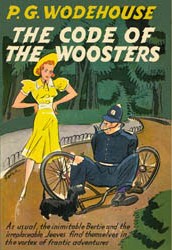
Autumn: The Season of Mists and Mellow Fruitfulness
Autumn, with its falling leaves and cooling air, often signals a time of reflection in Wodehouse’s works. This season is less about the exuberance of new love and more about characters realizing their feelings, coming to terms with past mistakes, or making decisions about their romantic futures. In many ways, autumn represents a transitional phase in the romantic arc of Wodehouse’s characters — a period of contemplation before the final act of a romantic resolve. Cupid, perhaps tired of the hectic time he has had in the previous two seasons – spring and summer – does a bit of introspection, reviewing the progress of the arrows shot earlier on whatever technical gizmo he uses to keep a track of things, and deciding the future course of action in each case.
In The Code of the Woosters, Jeeves tells Bertie that autumn is a season of mists and mellow fruitfulness.
One of the reasons for Bertie visiting Totleigh Towers is to heal a rift between Gussie Fink-Nottle and Madeline, Sir Watkyn’s daughter. Madeline incorrectly believes Bertie to be in love with her, and she has promised to marry him if her engagement should ever fail. To avoid this calamity to befall him, Bertie persuades Madeline to invite him down, but he learns upon arriving that Gussie and Madeline have already reconciled. A parallel romantic track is that of Stiffy Byng and Harold Pinker. A silver cow creamer, a notebook of Gussie’s which insults the host, Sir Watkyn Bassett, a policeman’s helmet, and the Eulalie effect on Roderick Spode – all take turns to play a spoilsport. Eventually, Cupid succeeds in his mission and both the couples get united.
In Jeeves and the Old School Chum, when a carefully packed lunch basket goes missing at the Lakenham Races, and the car carrying Rosie M Banks and her old school friend Laura Pyke runs out of fuel in the middle of nowhere, a fight ensues between the two friends. Bingo Little wins an intense argument with the owner of a house nearby and ensures that his wife gets her afternoon cup of tea. The romance between the couple is back on its throne.
She turned for an instant to Bingo, and there was a look in her eyes that one of those damsels in distress might have given the knight as he shot his cuffs and turned away from the dead dragon. It was a look of adoration, of almost reverent respect. Just the sort of look, in fact, that a husband likes to see.
“Darling!” she said.
“Darling!” said Bingo.
“Angel!” said Mrs Bingo.
“Precious!” said Bingo.
Cupid is thus successful in rekindling the romance between the wife and the husband, which had earlier come under strain owing to a clash between Bingo’s dietary habits and Laura Pyke’s strict diet regime based only on fat-soluble vitamins.
The Indian Summer
Many of Wodehouse’s fans are aware of his evocative use of the term Indian Summer, which is said to be a period of unseasonably warm, dry weather that sometimes occurs in autumn in temperate regions of the northern hemisphere. The UK Met Office Meteorological Glossary published in 1916 defines an Indian summer “a warm, calm spell of weather occurring in autumn, especially in October and November”.
In Indian Summer of an Uncle, Wodehouse touches upon yet another facet of love – that of a more mature variety. When Uncle Goerge starts planning a walk down the aisle with a much younger Rhoda Platt, Jeeves explains the phenomenon as follows:
“One must remember, however, that it is not unusual to find gentlemen of a certain age yielding to what might be described as a sentimental urge. They appear to experience what I may term a sort of Indian summer, a kind of temporarily renewed youth.”
For those in an advanced age, holding hands and physical intimacy gets relegated to the background. Instead, common ailments and related medications and therapies rule the roost. At times, the lining of the stomach paves the way for a couple to start sharing the trials and tribulations of life with each other. When Piggy and Maudie, the latter being the aunt of Rhoda Platt, happen to meet after a gap of many years, Cupid is quick to seize the initiative and ensures that their romance gets rekindled.
While autumn may lack the vibrancy of spring and summer, its quiet beauty is essential to Wodehouse’s romantic narratives. It allows characters the space to reflect, reconsider, and eventually take action to secure their happy endings. In this way, autumn becomes an integral agent of Cupid, providing the emotional clarity needed for love to succeed.
Autumn’s natural imagery — with its sudden riot of beige, yellow and brown colours, and the promise of winter’s chill and its eventual strokes of brilliant white on the landscape — often evokes a sense of urgency in Wodehouse’s characters. As the days grow shorter, characters are compelled to make decisions about their romantic futures. Cupid can be seen using this season to build tension, pushing characters toward decisive action. The cooling air of autumn can often be seen as a metaphor for the characters’ cooling patience, forcing them to act before it is too late.
Winter: Love Amidst the Chill
Though less frequently employed in Wodehouse’s works, winter nonetheless plays a significant role in his romantic comedies. The cold, stark landscape of winter can serve as a powerful contrast to the warmth of human affection. In some of his stories, the challenges of winter — whether it be physical cold, isolation, or the dormant state of nature — underscore the importance of companionship and love as a source of warmth and vitality.
In The Ordeal of Young Tuppy, the latter and Angela have again had the proverbial lover’s tiff. While on a rebound, Tuppy starts flirting with an athletic girl named Miss Dalgleish who lives near Bleaching. The girl is fond of dogs; Bertie supposes Tuppy wants an Irish water-spaniel to give her as a Christmas gift. To impress the girl, Tuppy participates in a local game of football, where he performs well but is sad to find out later that the girl was not present on the occasion, having rushed off to London looking for an Irish water-spaniel. A fake telegram imploring Tuppy to rush to the aid of an ailing Angela lands up, restoring the relationship between the two.
In Something Fresh, a concatenation of circumstances leads to Ashe Marson travelling in an open cart from Market Blandings to the Castle in biting cold. Wodehouse describes cold as an ogre that drives all beautiful things into hiding.
Below the surface of a frost-bound garden there lurk hidden bulbs, which are only biding their time to burst forth in a riot of laughing colour; but shivering Nature dare not put forth her flowers until the ogre has gone. Not otherwise does cold suppress love. A man in an open cart on an English Spring night may continue to be in love; but love is not the emotion uppermost in his bosom. It shrinks within him and waits for better times.
In The Knightly Quest of Mervyn, Mervyn Mulliner wants to marry Clarice Mallaby. She thinks he is a chump and does not consent to marry him. Mervyn wants to prove himself and asks her to give him a quest, like the knights of old. It is December, and she has always wanted to eat strawberries in the middle of winter, so she tells Mervyn that she will reconsider his proposal of marriage if he acquires a basket of strawberries for her before the end of the month. After having had many setbacks in his knightly mission, he lands up at Clarice’s house and intercepts a package which has strawberries for her from Oofy Posser in whom Mervyn had earlier confided. He gets an idea and calls out to Clarice that he brought her strawberries. However, by the time she reaches the room, he has absent-mindedly eaten all the strawberries. Clarice throws him out in the chilly weather, not even allowing him to retrieve his hat. Cupid fails yet again, though Mr Mulliner concludes the story to his companions at Angler’s Rest thus:
“So there the matter rests. The whole thing has been a great blow to my cousin’s son, for he considers — and rightly, I suppose — that, if you really come down to it, he failed in his quest. Nevertheless, I think that we must give him credit for the possession of the old knightly spirit to which our friend here was alluding just now.
He meant well. He did his best. And even of a Mulliner more cannot be said than that.”
In A Damsel in Distress, Maud is shocked to see how fat Geoffrey has become since the one year they met in Wales. Though he has inherited a great deal of money, he now sports a triple chin and talks only of food. Winter forms a backdrop when Geoffery speaks of his having lived on a yacht during the previous winter.
Upon discovering that the party of the other part is now close to thirty pounds overweight, the tender emotion of love in Maud’s bosom evaporates. She realises her mistake. She rushes to the nearest phone, gets George on the line, and asks if he has gained any weight in the last year and if he has ever been to Florida during winter and relished a fish called pompano! When George replies in the negative, Cupid’s endeavours succeed, and their romantic affiliation is sealed.
Winter’s challenges — both literal and metaphorical — often lead characters to realise the value of love as a source of comfort and joy in an otherwise cold world. The season’s emphasis on survival and endurance mirrors the perseverance required for love to thrive despite obstacles. In many ways, Cupid uses the season of winter as a test of true love, as couples must navigate the season’s difficulties to find warmth and happiness in each other’s company.
Though less romantic on the surface than spring or summer, winter provides Wodehouse with opportunities to explore the depth and resilience of romantic relationships. It is a season where love tries to prove its worth by enduring hardship and by a conduct which is not only chivalrous but also knightly. Seeds of love may occasionally lie dormant in the frozen soil, ready to sprout as and when the season of spring kicks in.

The Six Seasons of Kalidasa
Yet another literary figure who, like Wodehouse, has captured different seasons with highly insightful narratives is Kalidasa.
Kalidasa, said to be born in India in the fourth century AD, is widely regarded as the greatest poet and dramatist in the Sanskrit language. His evocative portrayal of female beauty, an enthusiastic depiction of the affairs of the heart, and the diverse ways in which ladies dress up for a romantic encounter with their beloved in each of the six seasons typical of a tropical country would have surely attracted Cupid’s attention.
In one of his seminal works, Ritusamhara (Medley of Seasons), Kalidasa describes six seasons in his inimitable style: Spring (Vasanta), Summer (Greeshma), Monsoon (Varsha), Autumn (Sharad/Patjhad), Pre-winter (Hemant), and Winter (Shishir). Each one is dealt with evocative descriptions of the elements of nature. The seasons form a backdrop for the affairs of the heart and the sensuous pleasures of the skin.

In Harmony with Mother Nature
In the works of P.G. Wodehouse, the seasons play a subtle yet significant role in shaping the romantic lives of his characters. Spring brings new beginnings and the promise of love, summer sees romance in full bloom, autumn provides space for reflection and realisation, and winter challenges love to survive amidst the cold. Each season, with its unique qualities, acts as an agent of Cupid, quietly orchestrating the romantic entanglements and resolutions that define Wodehouse’s timeless comedies.
All of us have occasionally experienced that curious, unexplainable surge of nostalgia that comes with a crisp autumn breeze or a sudden downpour in summer. An often-overlooked slice of his literary brilliance is how he grounds quite a few exaggerated situations in something so universal — the changing seasons. We have all watched relationships blossom in spring, only to weather the storms of winter. Wodehouse reminds us, with a wink and a smile, that love, like the seasons, goes through its cycles. And while his characters might find themselves tangled in knots, he trusts that much like nature itself, things have a way of sorting themselves out in time. In a world that so often feels chaotic, it is this quiet reassurance that keeps us coming back to his stories, much like the comfort of the seasons returning year after year.
By aligning the emotional journeys of his characters with the changing seasons, Wodehouse creates a world where love is not only a matter of human interaction but also a natural phenomenon, influenced by the rhythms of the earth itself. The seasons, in their silent and invisible way, become crucial agents in the hands of Cupid to stage the grand drama of attraction, affection, desire, infatuation, and love.
After all, he is supposed to be the son of the love goddess Venus and the god of war Mars. His role in nudging Wodehouse’s characters towards a conclusion of their affairs of the heart deserves to be appreciated and applauded.
Notes:
- This article is inspired by Plumtopia’s blog post ‘The Four Seasons of Wodehouse’ (link below).
- Inputs from a Wodehouse expert and Suryamouli Datta are gratefully acknowledged.
- Plum’s caricature courtesy Suvarna Sanyal.
- A version of this article appears in the March 2025 issue of Wooster Sauce, quarterly journal of the P G Wodehouse Society (UK).
Related Posts:
Book Review: The Inimitable Jeeves
Posted in What ho!, tagged Book Review, Humour, P G Wodehouse, The Inimitable Jeeves on October 5, 2024| Leave a Comment »
Plum’s universal appeal: Guest Post by Captain Mohan Ram
Posted in What ho!, tagged Appeal, Bertie Wooster, Humour, Jeeves, P G Wodehouse, Psmith, Tribute on October 1, 2024| Leave a Comment »

P.G. Wodehouse, an Englishman who eventually settled in America, wrote novels set in a charming, idealized version of England—a place that, while fictional, captures a timeless allure. His stories are peopled with endearing characters: affluent young men with time and money to spare, formidable aunts, eccentric American millionaires, temperamental French chefs, and the ever-resourceful Jeeves, alongside the delightful The Empress of Blandings, the apple of the eye of absent-minded Lord Emsworth.
At first glance, Wodehouse’s plots might seem repetitive. However, much like Bach’s intricate counterpoints and fugues or the variations in a jazz improvisation or Carnatic Kalpana swaras, Wodehouse’s stories are masterful variations on simple themes. Their charm lies in their subtlety and simplicity, creating a captivating experience that speaks to readers across different backgrounds.
How do his novels set in 1920s English country houses resonate universally? Let’s explore the reasons behind their widespread appeal.
Most of us harbor a certain resentment towards authority. Whether dealing with bossy relatives, stern headmasters, or demanding bosses, we often yearn for the chance to rebel against those who impose their will upon us. Wodehouse’s humor, which targets pompous magistrates, domineering aunts, and cigar-smoking tycoons, provides a delightful escape. His satirical treatment of such figures allows us to revel in their ridiculousness and momentarily escape the constraints of authority.
The Drones Club members, epitomized by the charmingly clueless Bertie Wooster, live lives of leisure—an existence many of us can only dream of. While we may outwardly dismiss the idle rich, there’s often a hidden envy for their carefree existence, so different from our own routines. Although our work may have its moments of interest, it often involves mundane tasks and repetitive duties.
Wodehouse’s protagonists are not heroic supermen but rather ordinary young men with sunny dispositions. Unlike the Casanova on steroids James Bond or the suave Saint, his characters are more relatable: shy eccentrics like Gussie Fink-Nottle, small-time fixers like Ukridge, and domineering domestic servants like McAllister. In my own life, I have encountered people reminiscent of these characters, yet I have never met anyone resembling a James Bond. Wodehouse’s characters, though exaggerated, embody qualities found universally.
Occasional mavericks like Piccadilly Jim or the irrepressible Psmith add to the charm of Wodehouse’s world. Who can resist Psmith’s nonchalant umbrella appropriation on a rainy day? These mildly caricatured individuals are both believable and endearing, whether in Knightsbridge or Kolkata.
Finally, Wodehouse’s prose is irresistible. His ability to seamlessly integrate quotes from Latin and Greek classics, the Bible, and Shakespeare into whimsical situations demonstrates his linguistic brilliance. His writing flows with a natural, effortless grace reminiscent of Beethoven’s serene and evocative second movement of the Pastoral Symphony.
As someone from Coimbatore, a small city in southern India, I first encountered Wodehouse’s novels in my teens, beginning with Piccadilly Jim. The charm and wit of his writing enchanted me then, and seventy years later, my admiration remains as strong as ever.
Wodehouse’s work transcends borders and cultures—he belongs to the world.
(Captain Mohan Ram, ex Naval designer, eventually moved to the automobile industry where, if one may hazard a guess, he might have been designing some amphibian vehicles. His career trajectory followed the Peter’s Principle. He rose to senior positions, until finally retiring recently at the age of eighty four. He is currently cooling his heels, writing inane posts on Facebook.
His permission to reproduce this piece here is gratefully acknowledged.)
Related Post:
A Raconteur’s Riddle: Spinning Tales While Dodging Dullness and Domestic Drama: Guest Post by Suryamouli Datta
Posted in What ho!, tagged Adventure, Bangriposhi, Humour, India, Odisha, P G Wodehouse, Tourism, Travel on September 21, 2024| Leave a Comment »

Oh, the eternal conundrum of a wannabe raconteur! How to entice the dear reader with a ripping yarn, without getting bogged down in the quagmire of tedious explanations? I, for one, have frequently found myself in this very predicament, my literary endeavours stymied by the pesky queries that insist on popping up every once in a while, much like the kind of obnoxious queries raised by Aunt Myrtle of The Mating Season fame at a family gathering.
“Where, oh where, do I begin?” I cry, throwing up my hands in despair, as the words “It was a dark and stormy night” wither and die on my lips. For, you see, dear reader, I am not one of those dashed clever fellows who can effortlessly spin a tale, replete with vivid descriptions and witty asides. No, I am but a humble wordsmith, prone to getting tangled in the underbrush of my own verbosity.
Take, for instance, this endeavour of mine to regale you with the tale of our merry jaunt to Bangriposhi, a picturesque hamlet nestled in the eastern reaches of India, in the charming state of Odisha. I began, with all the confidence of a debutante at her first ball, “It was at the crack of dawn that we set forth on our journey to Bangriposhi…” only to be met with a chorus of “Wait, what’s the name of the place?” and “Why on earth did you go there?” and “Were you alone?” and so on, ad infinitum.
I confess, dear reader, that I was soon reduced to a state of utter exhaustion, my responses growing more and more feeble, like the dog Bottles of Blandings and Elsewhere fame, after it has been subjected to an excessive number of baths. “Well, you see, it was like this… we were in couples, and didn’t have any kids, so… er… yes, I suppose we did enjoy the scenery…” Ugh, the very thought of it makes me shudder!
But fear not, dear reader, for I have since sought the counsel of a wise and venerable sage, who has imparted upon me the ancient secrets of storytelling. And thus, with a renewed sense of purpose, let me share with you with the tale of our Bangriposhi adventure, sans the tedious interruptions.

The halcyon days of Bangriposhi, where the scenic beauty unfolded like a tantalising tapestry, precisely as one would expect. A diminutive jungle, a cosy cottage, and a caretaker-cum-chauffeur, along with his better half, all combining to create an ambience reminiscent of the cinematic masterpiece, “Days and Nights of the Forest.” Our merry band of five families, sans the tiny terrors, converged upon this idyllic setting, our camaraderie forged in the crucible of our apartment complex in the bustling metropolis we infest. And yet, I confess, I felt as out of place as a toupee on a turtle’s head. The crowd, you see, was not exactly my cup of tea. Initially, I attributed this unease to my introverted nature, which, I feared, was not quite in harmony with the group’s collective psyche.
But, as I delved deeper into the mystery of my discomfort, I discovered that the root of the problem lay not with the group, but with my trusty sidekick, my wife. It was as if Bertie Wooster, sans Jeeves, had embarked on an adventure with the formidable Aunt Agatha in tow. Now, before you label me a bounder for making such a statement, permit me to explain. I have conducted an exhaustive study of my own psyche (well, as exhaustive as one can be when sipping tea and nibbling on biscuits) and discovered that, on occasion, I have mingled with groups with the élan of a seasoned socialite. So, what was the source of my trepidation this time around?
The answer, my friends, lay in the confidence-sapping presence of my wife, who, I dare say, is otherwise an epitome of virtue and rectitude. You see, in days of yore, my confidence was fuelled by those devilish cigarettes, but with my wife by my side, even the thought of those white sticks with filters at the end was tantamount to committing a mortal sin. I felt like Ignatius Mulliner, craving a smoke, but acutely conscious of the weight of my self-esteem, lest I incur the displeasure of my better half, which might precipitate a domestic turbulence of epic proportions.
In short, I was a man torn asunder by the conflicting desires of his heart and the stern dictates of his conscience, all the while attempting to navigate the treacherous waters of matrimonial bliss. Ah, the trials and tribulations of being a married man!

Many of you may agree with me when I say that maintaining a stiff upper lip in the face of impending lunacy is something that could test the resilience of even those who are made of sterner stuff! I was, in a word, a bit of a mess, rather like Ignatius, that talented but temperamentally-challenged nephew of Mr. Mulliner. It seemed that with each tick of the clock, my grip on sanity was slipping, much like a chap trying to cling on to a greased pig at the village fair. But, by Jove, I was determined not to let the good people around me catch on to my internal turmoil. No, no, I played it cool, a regular mask of tranquillity, all the while thinking, “Good fellow, you’re one step away from being carted off to the loony bin!” If any of the group members had indeed caught onto the kind of inner torment I was experiencing, services of someone configured along the lines of Sir Roderick Glossop would surely have been sought.
And, I must confess, it’s a dashed difficult thing to do, this keeping-a-stiff-upper-lip business. I daresay, that’s why the bachelor chaps always seem so carefree – they can let their hair down, as it were, and express themselves without fear of being thought a bit…well, dotty. Alas, I felt like Horatio, constantly on the lookout for signs of my own Hamlet-esque madness bursting forth from its hiding place.
As a result, the kindly hospitality of our homestay hosts was rather lost on me. I’m afraid I responded to their warm overtures with all the enthusiasm of a sleepy sloth, muttering the occasional “thanks” and “so kind of you” in a tone that suggested I’d rather be undergoing a root canal without anaesthesia. In short, I was about as far from being my natural self as a fish is from flying. But, by George, I managed to keep the old mask in place, even if it was held together with nothing more than a few threads of sanity and a healthy dose of British pluck!
The dashed awkwardness of it all! I’m afraid I’ve made a thorough ass of myself by presenting myself in this tranquil and inviting setting, looking for all the world like a chap who has the look of one who had drunk the cup of life and found a dead beetle at the bottom. My companions, no doubt, had been hoping to indulge in a spot of idle chatter or a hearty guffaw or two, but instead, they were stuck with a fellow who resembled a fugitive from a particularly dismal funeral procession. I daresay, they must be thinking, “Good heavens, what’s got into this blighter? Has he been taking elocution lessons from a dyspeptic owl?” Ah, the horror! The shame! I might as well have worn a T-shirt proclaiming, “I’m a killjoy, avoid me at all costs!”

As luck would have it, on a rainy day when any outdoor expedition was ruled out, the group decided to play Antakshari, a game based on songs. Amidst the dampness all around, some inner clouds of despair also gathered, leading to a veritable tempest of tune-less-ness. I, a vocal virtuoso of the most dubious sort, found myself floundering in the depths of Antakshari despair. My usually trust-worthy memory, capable of recalling the most obscure ditties with the precision of a Swiss watch, had apparently gone on a spot of holiday, leaving me high and dry, like a chap who’s misplaced his favourite umbrella on a drizzly day. The lyrics, those pesky little devils, seemed to vanish into thin air, rather like Dr. Watson’s hasty estimate of James Mortimer’s age, which, if I recall rightly, went up in smoke the moment the good doctor cast his eye on the fellow in person.
As I stumbled from one musical misstep to the next, I felt my Superman cape fluttering to the ground, leaving me exposed, a mere mortal, stripped of my melodic mojo. It was a bit like Napoleon’s ill-fated Waterloo campaign, only instead of cannons and cavalry, I was facing a barrage of bemused glances and stifled giggles from my opponents. The ‘War of Songs’, that most noble of pursuits, had reduced me to a quivering mass of uncertainty, a chap who couldn’t carry a tune in a bucket, let alone emerge victorious in the fray.
The tribulations of a chap on holiday! As the inimitable Bertrand Russell so sagely observed, “The wise man will be as happy as circumstances permit, and if he finds the contemplation of the universe painful beyond a point, he will contemplate something else instead.” Ah, but what happens when the universe, in all its inscrutable wisdom, decides to play a trick or two on one?

On the final day of our jaunt, I found myself in a state of utter despondency, feeling as though I’d lost my own identity in the great vortex of travel. The atmosphere around me had grown as heavy as the infamous London fog, with nary a glimmer of sunshine in sight. It was as if the very clouds themselves were conspiring against me, refusing to yield even a single, solitary yellow gap which would allow a ray of sunshine to creep in and dispel the darkness of my melancholy. And then, like a beacon of hope, I chanced upon Russell’s wise words, reminding me that when the weight of the world becomes too much to bear, one must seek solace in more pleasant pursuits.
For me, that pleasant thought was a nice, long soak in the tub. Ah, bliss! We’d been cooped up in that confounded place for a couple of days, and I’d already indulged in a pre-trip scrub at home, but now, I was determined to treat myself to a good, old-fashioned bath. I became as resolute as a bulldog guarding its favourite bone, refusing to budge until I’d had my fill of hot water and soap. Much like Bertie Wooster, you would have found me soaping a meditative torso and even belting out something along the lines of Pale Hands I Loved Beside the Shalimar, if you know what I mean.
Almost all of our scriptures exhort us to introspect and meditate on the state of affairs in one’s life. Being a firm believer, I daresay there is no place other than the bathroom where one could experience this bliss and have an uninterrupted conversation with the universe, thereby giving a boost to one’s Spiritual Quotient.
Alas, my companions, those dear, long-suffering souls, grew anxious at my intransigence, their faces as long as a wet weekend in Brighton. My wife, that paragon of patience, took centre stage, her eyebrows shooting up like a warning flag on a stormy day, signalling to me that I was being, well, a bit of a cad. But I, like Bertie Wooster in his most obstinate moments, chose to ignore her gentle remonstrations, much as he would have disregarded Jeeves’ sage advice on the perils of donning a white mess jacket with brass buttons.

The tension was palpable, the air thick with the weight of my own stubbornness. I can only imagine the trauma I inflicted upon my fellow travellers, who, in their infinite wisdom, chose to support my wife’s sensible entreaties over my own, ahem, principled stance. And yet, at the time, I felt the kind of hollow defeat that plagues a character from R.K. Narayan’s stories—like a weary clerk who, after dodging creditors, losing his lunch money, and missing the last bus, drags himself home only to find the milk curdled and the fan creaking in the sweltering heat.
But fate, in its infinite mercy, intervened, and the caretaker’s wife announced that they were running low on fuel, and hot water was a luxury we could ill afford. With a sigh that was equal parts relief and frustration, I beat a hasty retreat, my dignity bruised.

And so, dear reader, we come to the end of this tale of woe, a chronicle of one man’s valiant struggle to maintain a stiff upper lip in the face of impending lunacy. As I reflect on the trials and tribulations of our Bangriposhi adventure, I am reminded of the wise words of that great sage, G.K. Chesterton: “The only way to be sure of catching a train is to miss it.” Ah, the profound wisdom of those words! For, in the end, it was not the scenic beauty of Bangriposhi, nor the camaraderie of our merry band, that proved the greatest challenge, but rather the internal turmoil of my own mind, aided and abetted by my better half. When everyone took my wife’s side instead of mine, in that moment of extreme insult, I was reminded of the following words by P.G. Wodehouse:
Are wives often like that? Welcoming criticism of the lord and master, I mean?’
‘They are generally open to suggestion from the outside public with regard to the improvement of their husbands, sir.’
Note: Images courtesy of the World Wide Web we have spun around ourselves.
Related Posts:
-
Recent Posts
Buy the Book

buy the book
Categories
-
cc
Tags
Art Bertie Wooster Bhagavad Gita Bingo Little Birthday Blake Mouton Grid Blogging Bollywood Book Campus Life CEO Chivalry Consciousness Coronavirus Corruption Edwin Empress of Blandings English Ethics Feminism Happiness Health Hindi Hollywood Human Values Humour India Jeeves Kalidasa KIds Leadership linkedin Literature Lord Emsworth Love Lyrics Mahabharata Mahatma Gandhi Management Movies Music Norway Paintings Panjab University People P G Wodehouse Politics Pondicherry Portugal Psmith Puducherry Rabindranath Tagore Ramayana Ritusamhara R K Laxman Romance Rosie M Banks Rupert Psmith Seasons Shakespeare Social Media Something Fresh Songs SPANDAN Spirituality SQ Sri Aurobindo Stephen Covey Switzerland Tatas Thos UBS Values Wodehousitis WomenArchives
- March 2026 (1)
- February 2026 (5)
- January 2026 (2)
- December 2025 (1)
- November 2025 (2)
- October 2025 (2)
- September 2025 (3)
- August 2025 (3)
- July 2025 (2)
- June 2025 (2)
- May 2025 (4)
- April 2025 (5)
- March 2025 (5)
- February 2025 (4)
- January 2025 (4)
- December 2024 (6)
- November 2024 (6)
- October 2024 (6)
- September 2024 (5)
- August 2024 (5)
- July 2024 (4)
- June 2024 (4)
- May 2024 (5)
- April 2024 (5)
- March 2024 (3)
- February 2024 (1)
- January 2024 (4)
- December 2023 (2)
- November 2023 (3)
- October 2023 (3)
- September 2023 (3)
- August 2023 (5)
- July 2023 (5)
- June 2023 (7)
- May 2023 (6)
- April 2023 (6)
- March 2023 (8)
- February 2023 (8)
- January 2023 (7)
- December 2022 (6)
- November 2022 (5)
- October 2022 (8)
- September 2022 (5)
- August 2022 (6)
- July 2022 (6)
- June 2022 (8)
- May 2022 (7)
- April 2022 (8)
- March 2022 (7)
- February 2022 (3)
- January 2022 (7)
- December 2021 (4)
- November 2021 (8)
- October 2021 (7)
- September 2021 (6)
- August 2021 (7)
- July 2021 (7)
- June 2021 (9)
- May 2021 (8)
- April 2021 (9)
- March 2021 (10)
- February 2021 (8)
- January 2021 (8)
- December 2020 (7)
- November 2020 (6)
- October 2020 (5)
- September 2020 (9)
- August 2020 (9)
- July 2020 (8)
- June 2020 (8)
- May 2020 (6)
- April 2020 (5)
- March 2020 (7)
- February 2020 (4)
- January 2020 (7)
- December 2019 (12)
- November 2019 (10)
- October 2019 (5)
- September 2019 (9)
- August 2019 (10)
- July 2019 (9)
- June 2019 (14)
- May 2019 (13)
- April 2019 (14)
- March 2019 (11)
- February 2019 (11)
- January 2019 (14)
- December 2018 (12)
- November 2018 (12)
- October 2018 (14)
- September 2018 (9)
- August 2018 (10)
- July 2018 (10)
- June 2018 (8)
- May 2018 (11)
- April 2018 (11)
- March 2018 (6)
- February 2018 (9)
- January 2018 (10)
- December 2017 (10)
- November 2017 (9)
- October 2017 (8)
- September 2017 (11)
- August 2017 (10)
- July 2017 (10)
- June 2017 (11)
- May 2017 (9)
- April 2017 (7)
- March 2017 (7)
- February 2017 (8)
- January 2017 (10)
- December 2016 (9)
- November 2016 (11)
- October 2016 (10)
- September 2016 (10)
- August 2016 (9)
- July 2016 (6)
- June 2016 (10)
- May 2016 (10)
- April 2016 (10)
- March 2016 (10)
- February 2016 (12)
- January 2016 (10)
- December 2015 (11)
- November 2015 (11)
- October 2015 (10)
- September 2015 (10)
- August 2015 (10)
- July 2015 (10)
- June 2015 (10)
- May 2015 (10)
- April 2015 (10)
- March 2015 (9)
- February 2015 (10)
- January 2015 (8)
- December 2014 (9)
- November 2014 (8)
- October 2014 (8)
- September 2014 (7)
- August 2014 (7)
- July 2014 (7)
- June 2014 (7)
- May 2014 (7)
- April 2014 (7)
- March 2014 (7)
- February 2014 (6)
- January 2014 (7)
- December 2013 (6)
- November 2013 (6)
- October 2013 (6)
- September 2013 (6)
- August 2013 (6)
- July 2013 (6)
- June 2013 (6)
- May 2013 (6)
- April 2013 (6)
- March 2013 (6)
- February 2013 (6)
- January 2013 (6)
- December 2012 (4)
- November 2012 (4)
- October 2012 (3)
- September 2012 (2)
- August 2012 (4)
- July 2012 (2)
- June 2012 (2)
- May 2012 (2)
- April 2012 (2)
- March 2012 (2)
- February 2012 (3)
- December 2011 (3)
- November 2011 (1)
- October 2011 (2)
- September 2011 (2)
- August 2011 (2)
- July 2011 (2)
- June 2011 (3)

 ashokbhatia