Feeds:
Posts
Comments

Archive for the ‘What ho!’ Category

One of the perils of suffering from the third and final stage of Wodehousitis is that wherever you may be and whatever mischief you may be up to, allusions to Plum’s characters and situations lurk just around the corner.

Recently, I had the opportunity of visiting the historic city of Allahabad (or Prayagraj, as it is known these days) in the northern part of India. The couple who took the risk of hosting me were cast in the mould of Angela and Tuppy Glossop. Having sunk all their differences over sharks, they had long since settled down to a state of matrimonial bliss. They were the epitome of hospitality, fussing over me and pampering me no end. Three times a day, the lavish spreads on offer made Greed win over Prudence, as they say. Trips to exotic locales in the city were meticulously planned and executed. All the itineraries inevitably included stopovers at joints famous for their importance, whether in terms of geography, history, culture, or those offering a lip-smacking variety of street foods, sweets, and savouries.

Sangam, the renowned confluence of three rivers – the Ganges, the Yamuna, and the mythical Saraswati – made one wonder if students at Allahabad University ever organize boat-racing nights there, eventually depriving some of the rozzers on duty of their caps or helmets. Also, after every twelve/six years, when a religious congregation of millions of persons happens, whether someone like Ukridge runs a syndicate which encourages people to bet on the percentage of dysfunctional public toilets in the area.  

The city also boasts of haing been the capital of India for a single day.

A friend like Rev. Aubrey Upjohn, who happens to be a senior faculty member at Allahabad University, offered to drive me around the campus. He was accompanied by his illustrious elder brother who practices at the local High Court and is also a former student of the University. The latter proved to be a treasure trove of the institution’s glorious past. While passing by the English Department, which was once headed by such a literary stalwart as Harivansh Rai Bachchan, one’s head simply bowed in reverence.  

When passing by an iconic coffee house in the Civil Lines area, one is told of the small room in its corner which used to play the role of the Drones Club where famous literary figures of yore would meet up and exchange ideas of books and poems to be unleashed upon the unsuspecting public.    
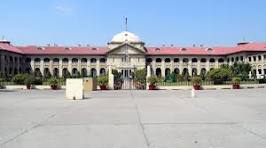
While driving past the majestic High Court building, one wonders if a beak as prominent as Sir Watkyn Bassett would be dishing out harsh sentences to some criminals inside its hallowed precincts. If so, one pities the latter who, despite having mentioned false identities, might still be meekly shuffling their feet.

While watching a sound and light show which highlighted, inter alia, the supreme sacrifice made by one of India’s freedom fighters, one wonders if either Roderick Spode or Stilton Cheesewright had ever heard of him.         
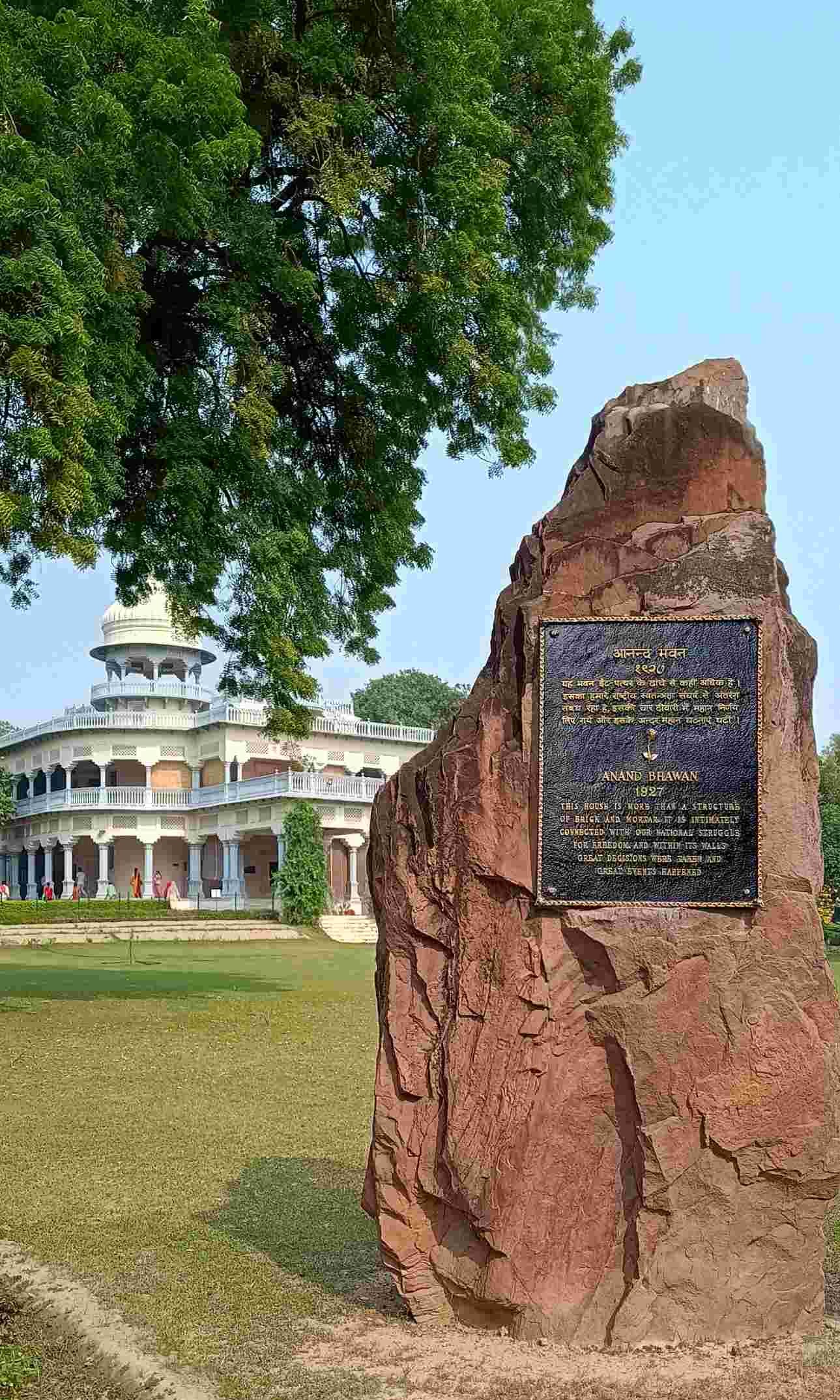
When visiting Anand Bhavan, the ancestral residence of the Nehru family and the place which played a crucial role in India’s fight for independence from British rule, one comes across a room where Mahatma Gandhi used to stay when visiting the place. One shudders to think of the outcome for India if the British had ever conspired to entice him there with a good juicy steak, followed by roly-poly pudding and a spot of Stilton, possibly nipping his movement of civil disobedience in bud.  

Of course, the icing on the cake was a meeting with Ma and Pop Stoker who happen to live in the city. Just like yours truly, the latter happens to be not only a Plum fan but also a movie enthusiast. Both were gracious enough to call on me and discuss matters of mutual interest.

Pop Stoker is done with the Telecommunications stream of the Indian Air Force. He has had a jolly good time there, especially because, unlike the other ‘arms’ of Indian army, which happen to have more of a stiff-upper-lip temperament, the air force believes in keeping its tribe happier. It does so by according ‘Humour’ a remarkably high priority. This would perhaps explain his fascination with the antics of Jeeves, Bertie, Ukridge, Lord Emsworth, and the rest of them. As and when he can tear himself away from Plum’s oeuvre, he loves spending his time goggling at divas like Sophia Lauren, Julie Andrews, Audrey Hepburn, Julia Roberts, Drew Barrymore, and Meryl Streep on the screen. Having settled down in the sylvan surroundings of Chuffnell Hall, he and his wife have a large heart, generously offering to host even lesser mortals like yours truly at their place.  

Ma Stoker has not really been an avid Wodehouse reader herself. But matrimony comes with associated perils. She is not immune to the moments when her husband is spotted variously chuckling, guffawing and, to use a modern illusion, rolling on the floor with laughter. Investigations conducted at these junctures do keep popping up Wodehousean passages as chief suspects. And she excels at that profound quality found in the better or bitter halves of devoted readers, without which the very pursuit of reading would be rendered impossible – indulgence. She indulges Pop Stoker as he reads and tolerates him even as he sometimes reads aloud to her. It was this sterling indulgence, supplemented by a dash of feminine curiosity, which had brought her to size me up.

Both happen to be proud parents of Pauline and Emerald. Pauline assists a large conglomerate in her capacity as an Instruction Designer. Since she has landed a desk job, it is not clear if she still expects her loved ones to swim a mile before breakfast and then proceed to play five sets of tennis post-lunch. Perhaps her dynamism now manifests itself in the virtual world. It is also not known if she is fond of wearing heliotrope pyjamas, whether borrowed from a friend or bought online.

Emerald is training to be a lawyer with an institute of eminence. One is not aware if she ever lost a bet on the racing tracks and had to work as a cook to cover up the losses. She could be one of those soothing, sympathetic legal eagles a wannabe litigant could take her troubles to, confident of having her hand held and her head patted, restoring her faith in our judicial system.   

When persons known to one from social media pop up thus in flesh and blood, it is a refreshing experience to talk to them over a piping hot cup of tea and a couple of fresh samosas, duly organised by my genial hosts.

It defies one’s imagination to believe that a city like Allahabad which boasts of a rich literary heritage hosts only a single fan of Wodehouse. I am reasonably certain that there are quite a few others. However, they hide themselves well.

Plum was not much off the mark when he said that “There is no surer foundation for a beautiful friendship than a mutual taste in literature.” With due apologies to him, one gets tempted to add fine arts and movies as well to his assertion. 

Related Posts


Read Full Post »

There is no doubt that there is in Delhi all that life can afford. Someone who is tired of Delhi is tired of life itself. The city and its surroundings are littered with relatives and friends of all hues, sizes, and shapes. There are localities which are replete with old memories. Besides glitzy malls, shopping areas and historic monuments, the city still retains many of its green areas. Street foods which suit all palettes and pockets and are from various parts of the country are readily available.

All this is not to say that there are no aspects of the metropolis which one does not hate. One loathes its teeming millions, its smells, its noises, its buses, its taxis, the mind-boggling variety of vehicles on its roads, its endless traffic snarls, its highly polluted air, its beggars trying to persuade perfect strangers to bear the burden of their maintenance with an optimistic vim, and its crowded pavements with aggressive sellers pouncing upon one to peddle their stuff. Commuting is a hassle, though the metro is a great boon to the citizenry.

During the peak of winter, when a smog envelops the city and its surroundings, and the sun goes AWOL, the pleasure of munching on roasted peanuts and gorging on either baked and spiced chunks of sweet potatoes or delectable carrot pudding is also snatched away from its hapless denizens.

But help is not far away. The prospect of meeting a bunch of fans of P. G. Wodehouse invariably drives the blues away. It makes one develop nerves of chilled steel and venture to crawl out of one’s multi-layered quilt. It infuses the inner being with a mirthful warmth, spreading light and sweetness all around.

And if the meeting gets held at a place with a unique ambience where one could even tuck into an Anatole-ish spread, the grass outside looks greener and the flowers swaying in a gentle wind blowing mentally transport one to the gardens of the Blandings Castle. One realizes that God is in heaven, and all is well with the world. More so, since there happens to be a gallery of modern art just next door, and there is no Honoria Glossop around to exhort one to not only look at the ghastly objects on display but also pass some intelligent-sounding comments about the same.

Rupert Psmith, who had coordinated the event, was already present, along with Eve Halliday, the affable lawyer. Having given up on fish business, being a fake poet, and then providing secretarial support services to Lord Emsworth, he had developed a passion for photography. His lens captures the eternal beauty of flora and fauna. While others got busy with much back slapping and what-ho-ing, he quietly went about using his lens to create a visual record of the boisterous proceedings.

Eve continues to be as strong and compassionate as she was when we met her last at Blandings Castle. Having had quite a few adventures in her life, she had decided to lead a relatively quieter life in the company of Psmith.  While maintaining her dash and vigour, she decided to become a lawyer, to gainfully deploy her honesty, sympathy, and intelligence to assist her clients in seeking justice. Setting the tone of the party was the work of a moment for her.       

Mrs. Spottsworth was amongst the first ones to show up, to check out the kind of mischief we were up to. This was her maiden attempt at joining in, and a fulfilment of one of her long-held pious intentions. One is not too sure if she is still interested in psychical research or if she uses a Ouija board to communicate with departed souls. One does know that she had been a lion-tamer of very young kids at a prestigious school in the city. However, she was humility personified when she pointed out that it was she who had got tamed instead, having had the opportunity of learning quite a lot from her wards.

Yours truly was the next one to troop in, looking like a stuffed frog. As is my wont when unduly elated in the exalted company of Plum fans, I guess I enlivened the proceedings somewhat by croaking intermittently.   

Willoughby Scrope (Willy, in short), yet another legal eagle to grace the occasion, was the next one to pop up. The group was pleasantly surprised to find that besides looking some prominent beaks in the eye while advancing his cogent arguments in favour of his clients, he also happens to be an author. He gifted a copy of his recently published book The Sterling Bull and Other Stories to all of us. It turned out to be a nice collection of some juicy stories from his earlier days, written in a lucid manner, with a dash of Wodehousean humour.

When food was being ordered, Willy solemnly declared that he had recently turned a pure vegetarian. The group was left wondering if his predicament was similar to the one faced by Gussie Fink-Nottle who was once barred from making his stomach a graveyard by Madeliene Bassett.

The conversation that followed covered a broad sweep of Plum’s works. Empress of Blandings. Lawyers. Heliotrope pyjamas. Kids who demand protection money from their would-be stepfathers. Butter slides. Blackened faces. The precise number of cats in Bertie’s room when Sir Roderick Glossop came for a spot of lunch. The head of a fish, staring up at Bertie in a rather austere sort of way, as if it wanted a written explanation and apology. Shoplifting leading to a shift from Madison Avenue, NY, USA, to a dilapidated country house in the UK. The propensity of millionaires from across the pond to scout around for stately mansions in Queen’s land. The castles where in the summer the river is at the bottom of the garden, and in the winter the garden is at the bottom of the river.

While delectable food was being put down the hatch, all advice rendered by Laura Pyke about fat-soluble vitamins was forgotten. Luckily, Doctor Murgatroyd, who might have cautioned the group about the perils of greed winning over prudence on the dining table, including but not limited to spots appearing on our chests, was singularly absent. Doctor Hailsham, had he been present, would have taken a jaundiced view of the gourmet food being gobbled up. He would have instead recommended either parsnip or seaweed juice, followed by stewed lettuce. Perhaps, even some potassium broth and grated carrots, followed by a refreshing cup of dandelion coffee.  

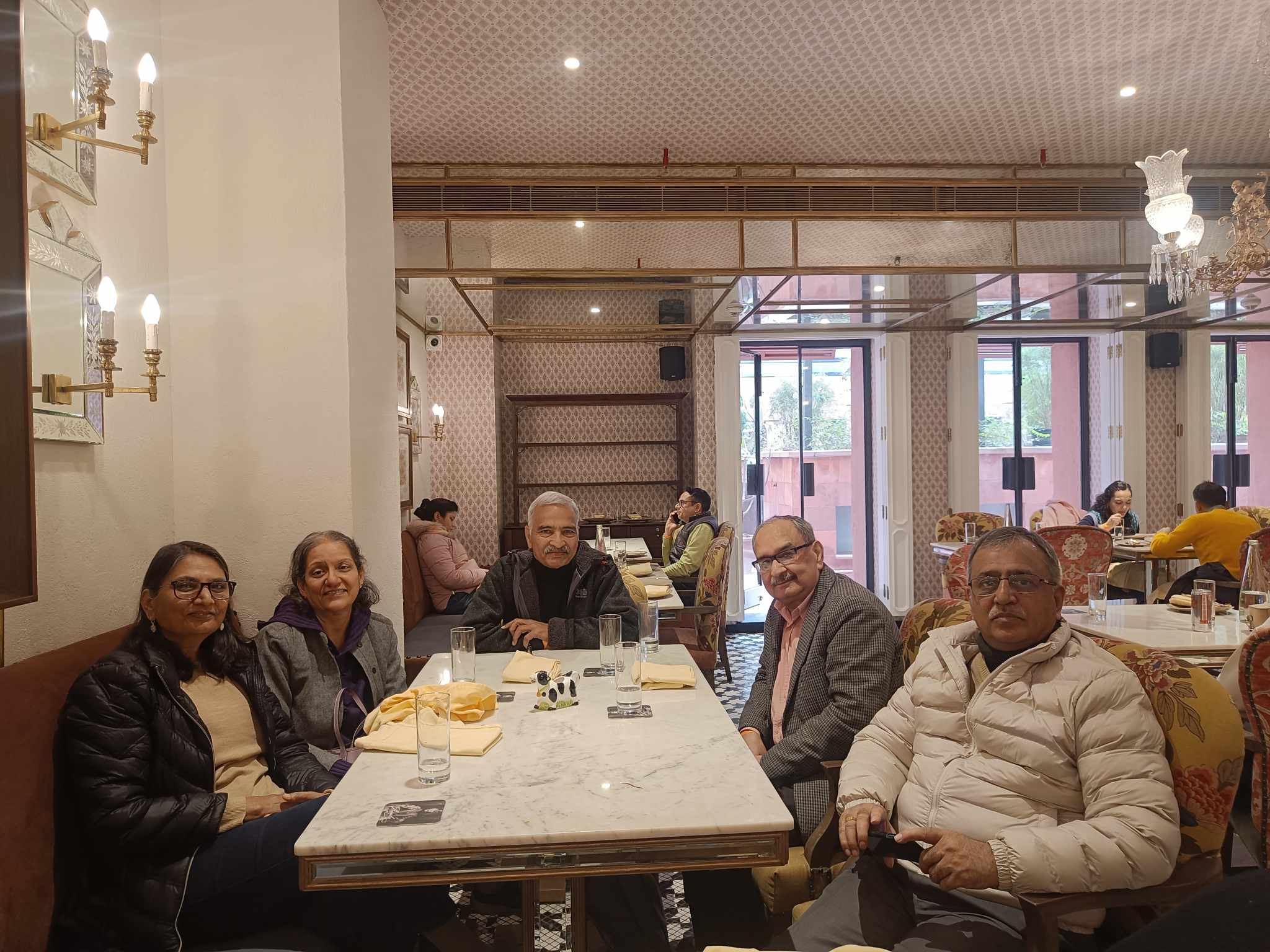
On quite a few occasions, when the ripples of laughter emanating from the table crossed a certain decibel level, one could notice other customers seated nearby raising their eyebrows a quarter of an inch, an art which they might have learnt from Jeeves. The hassled waiters heaved a sigh of relief when the group ventured out. Goodbyes were said and phone numbers exchanged, followed by another photo shoot.  

(From left to right: Willoughby Scrope, Yours truly, Mrs Spottsworth, Eve Halliday, Rupert Psmith)

Those who are turning green with envy upon reading this account need not fret. They would do well to brace up for the next gig, which may get planned around February 14, 2024.

(Note: All allusions to characters of P G Wodehouse here are purely arbitrary and subjective and are not intended to offend any of those who spared the time to join in and make this gig a memory to cherish for a long time. Permission to use photographs is gratefully acknowledged.)

Related Posts:

Read Full Post »

Introduction

“In shattered gates, your radiant stride, proclaiming triumph’s song,

In the vast ascension from shadows, yours, the victory throng.

O triumphant soul, at life’s dawn anew,

In your grasp, the hopeful scythe, cutting bonds askew.

Through ancient woes, in desolation’s field, let freedom ring,

Come, O melancholy, come, O tranquil, yours, the victory spring.

Come, O unstained essence, come, O fearless breath,

In the morning sun’s arrival, midst storms, vanquish death.

The chariot of sorrow, in your path, resounds loud,

Awaken the dormant minds, in the heavens, be proud.

In the tapestry of life, weave melodies of joy,

Yours, the call of victory, that nothing can destroy.”

The translated lines above are from a song by Rabindranath Tagore. To me, they provide a clear description of the ‘Fearless Monk’ from India, which resonates with me and many others.

On His Birth Anniversary

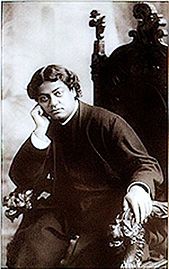
As we commemorate Swami Vivekananda’s birth anniversary, it’s customary to applaud his spiritual wisdom and profound contributions. However, let us embark on a unique journey into an often-overlooked facet of his personality – his impeccable sense of humour, beautifully encapsulated in many of his writings, however, I want to highlight particularly the piece titled ‘Paribrajak’ or ‘Traveller’. Here, we get a glimpse into the witty and comical storytelling prowess of Swamiji, accompanied by his closest disciples, Brother Tu (Swami Turiyananda) and Sister Nivedita.

Lethargy and the Diary Debacle

Swamiji, in his typical playful style, initiates the narrative with a candid confession about his inability to maintain a daily journal of his travel experiences. Blaming it on his inherited Bengali lethargy (and of course, his ‘inability’ to remember dates), he humorously claims his intention to write daily but continuously postpones it to eternity due to various engagements. The struggles of a Bengali writer unfold comically, resonating with the perpetual promises to put pen to paper but succumbing to the irresistible allure of life’s myriad distractions.  Call it a shade of procrastination if you will.

Sea Sickness and Lord Hanuman

The adventure at sea brings its fair share of amusement as Swamiji ponders whether Hanuman, Lord Rama’s devoted monkey disciple, also experienced sea sickness during his legendary leap to Lanka. Tongue-in-cheek, Swamiji suggests that Hanuman might have encountered some sickness when he accidentally stumbled upon a demon’s mouth. Comparing their voyage on a ship to Hanuman’s ‘heroic leap’, (apart from the ‘small detail’ that Lord Hanuman managed to accomplish through a mere leap, here we have Swamiji, an ‘ordinary person’ (?!), attempting to achieve the same feat by riding in a ship that sways with the whims of the waves!), Swamiji further jokes that their fellow travellers are no less than mischievous imps (who Lord Hanuman encountered upon arriving in Sri Lanka), but unfortunately, as Swamiji describes, he himself is stuck traveling with these imps who, according to Swamiji, are heavy meat eaters, solely fixated on using forks and knives for their meals. With a playful tone, Swamiji teases his beloved disciple, Brother Tu, for being afraid of being assaulted by these harmless items of cutlery.  For, according to Swamiji, his disciple is quite traumatized about the fact that those imps who have taken the shape of travellers will be quite eager to have him (Brother Tu) as a snack!

Comic Description of the Sea and Rivers

In the realm of Kalidasa’s poetic tapestry, the sea unfurls its boundless expanse, merging seamlessly with the distant orbits of the wheel. Along the shores, dark blue illusions dance amidst rows of swaying palms, their rhythm mirroring the heartbeat of the forest. On the maritime horizon, where the earth meets the sky, a black line dissolves into the saline stream of the ocean, creating a mesmerizing spectacle.

Swamiji takes a jocular dig at the famed poet Kalidasa’s romanticized depiction of the sea in his work “Raghuvamsa”. He asserts that reality differs greatly from poetic imagination. From the ship’s wild swings to Britannias shouting slogans, Swamiji amusingly reveals how his disciple, Brother Tu, succumbs to seasickness, likening his troubled state to a desperate search for the first grain of rice consumed during a rice eating ceremony. He then dives into humorous descriptions of India’s rivers, adding a splash of laughter to the narrative.

A Satire on Caste and British Rule

Swamiji uses his unique sense of humour to shed light on the caste system prevalent in India during the British Raj. With a sarcastic tone, he applauds the British government for considering all Indians as mere “natives,” thereby eradicating the evil of caste discrimination.

Moving on, he mocks the Indians who attempted to disown undesirable aspects of Hinduism by claiming to be of Aryan descent and enlightened by British blood, only to find that the British government disagreed. Swamiji emphasizes the need to cherish and learn from the West rather than blindly imitate it.

Racism and the Loss of Homesickness

Condemning racism, Swamiji humorously compares the Western concept of maintaining a distance from natives to India’s caste system. He expresses how this realization, though bitter, temporarily erased his homesickness, as it mirrored the Indian belief of a caste getting corrupted when mingling with people of lower social standing.

Entertaining Tales of Forts, Businessmen, and Seasickness

Swamiji entertains readers with amusing stories of forts, businessmen, and the challenges faced by fellow travellers on their voyage to the west. The witty anecdotes and lively descriptions bring history and places to life, providing delightful storytelling and a fresh perspective.

A Humorous Take on Cultures and History

Swamiji, the master of wit, unveils a delightful indifference as he takes us on a journey through cultures and the histories of nations. With his clever and comical lines, he effortlessly breathes life into his writing, leaving us in stitches. Let me share with you one such gem that may leave you chuckling uncontrollably.

“The Europeans,” quips Swamiji, “believe it is scandalous to have bare feet, so they go to great lengths to cover them up, completely disregarding the exposure of any other body parts! And in this incredible land of India, women are expected to cover their heads with veils, seemingly unconcerned about which other body part is on display in the process.”

Swamiji’s light-hearted tone adds an extra layer of amusement and intrigue to his narrative, making it an enjoyable ride. 

How Swamiji Channels His Inner Western Art: A Delightful Analysis

Being an ardent admirer of the great humourist P.G. Wodehouse (whom, I think, Swamiji had never met), I can’t help but spot the same brilliant wit in Swamiji’s works! Believe it or not, his clever observations about society, the history of any nation documented, his fellow companions, and even himself, bring back fond memories of Plum’s delightful creations. You simply must delve into this masterpiece (Traveller) to grasp the essence of my claim. But alas, I must offer my sincerest apologies to my dear readers, as my feeble attempts at capturing the same mirth in my humble language may do grave injustice to the brilliance of his original writings.  But fear not, for Swamiji’s words are an absolute riot,   

For example, in the realm of architectural contemplation, Swamiji’s astute reflections on the nuances of German and French architecture elicit a hearty guffaw. With a dash of wit as effervescent as a perfectly shaken cocktail, he wittily opines:

“Behold the robust and masculine visage of German Architecture, akin to a residence crafted for grand elephants or noble horses. Contrastingly, the French architectural symphony, tailored for our cherished animal companions, paints a tableau of celestial beings frolicking in ethereal realms!”

Surely, such ingenious observations offer a sneak peek into the kind of humour-laced glasses which Swamiji used to differentiate between two starkly different architectural styles.

In a similar vein, Wodehouse describes a street in London in his inimitable tongue-in-cheek manner as follows:

In shape Arundell Street is exactly like one of those flat stone jars in which Italian wine of the cheaper sort is stored. The narrow neck that leads off Leicester Square opens abruptly into a small court. Hotels occupy two sides of this; the third is at present given up to rooming houses for the impecunious. These are always just going to be pulled down in the name of progress to make room for another hotel, but they never do meet with that fate; and as they stand now so will they in all probability stand for generations to come.

(Something Fresh)

In Conclusion

This exploration of Swami Vivekananda’s humour unveils a side of him rarely discussed – his comic genius. By delving into his humorous travel writings, readers gain insight into the wit possessed by this esteemed Indian monk. Beyond being a spiritual leader, Swamiji emerges as a storyteller with a keen sense of humour, inviting everyone to dive into the hilarity and discover the “Indian Monk with a sense of humour” for themselves.

Cheers to the fearless monk who not only enlightened our minds and exhorted us to lead purposeful lives, but also tickled our funny bones!

Related Posts:

Read Full Post »

Come festive season and a new Yuletide spirit casts its spell over Homo sapiens every year. A spirit of outwardly cheerfulness and goodwill prevails. Fresh rays of hope penetrate through the dense clouds of gloom. Concerns of eking out a living fade away, giving way to a transient resurgence of happiness. Relationships get nurtured afresh. Networking concerns reign supreme.

Kolkata, the erstwhile second city of the British empire, is no exception. For those enlightened souls who are already well-versed in the seasonal predicament that plagues the illustrious Park Street in Kolkata, no further elucidation is necessary. On the brightly lit street, one is apt to see spirited pedestrians deftly trying to avoid colliding with the ones coming from the opposite side, thereby re-affirming Nature’s law that a given spot on a given plane shall at a given moment of time be occupied by only one body. One can spot hassled drivers manoeuvring shimmering limousines as well as old jalopies which are crawling along at a speed which would make a tortoise glance at them in a supercilious manner.

In brightly lit departmental stores, befuddled customers can be seen getting lured by hefty but deceptive discounts. One may feel a sense of pity for the hassled husbands hidden behind a huge pile of shiny gift packets dutifully following their wives to the nearest billing counter. Lobby managers in hotels and restaurants can be seen perspiring, trying to manage the queue of weary shoppers pouring in, looking for something to put down the hatch.

Those peddling street foods of all kinds can be seen doing brisk business. Amidst all the razzmatazz, one can see quite a few pavement book sellers sit idly, having a forlorn look in their brooding eyes, as if contemplating the divine. Kolkata may pride itself on being a city of intellectuals but perhaps there are times when the festive cheer takes over the collective spirit of its inhabitants, suppressing their innate yearning for intellectual upliftment.       

As opposed to the infernal din on Park Street, the ambience inside the hallowed establishment known as ‘Kwality’ was serene and cosy. If the government ever instituted an award for a successful and victorious entry into the equivalent of the Drones Club of Kolkata, its first claimants would surely be the five brave souls who could make it on the occasion.  

Those turned up included a prominent beak who, had she been cast as Aunt Dahlia in one of Plum’s theatre adaptations, would have been spectacularly popular, a school principal in the mould of Rev. Aubrey Upjohn, a senior educationist in the realm of milk of human kindness, an IT expert who is devoted to his family as much as Bingo Little happens to be, and yours truly.

All those present were punctual, jovial, and exhibited a proclivity for rolling on the floor in fits of laughter (figuratively, of course). The gleeful yelps emanating from them often made other patrons seated on the nearby tables raise their eyebrows a quarter of an inch. Their indulgences were not limited to the culinary delights of Darjeeling tea and delectable fish fingers. Their minds were nourished by scintillating conversations and an abundance of references to literary treasures dished out not only by Plum but also by many others. Movies steeped in a Wodehousean spirit, or the ones inspired by his works, came up for discussion.

They spoke of Wodehouse and his influence on all of them. The challenges of translating his works were discussed. Surprise was expressed when one spoke of some creatures who do not like him, primarily owing to the language being a bit dated and many plots appearing to be copy-and-paste jobs. Information about the Bengali film Rajat Jayanti directed by Pramathesh Barua, which was an adaptation of Money for Nothing, was shared. Sakher Chor by Uttam Kumar, which bears a significant resemblance to A Gentleman of Leisure was mentioned.

The beak spoke with great enthusiasm about the famed Bengali cuisine and about her meetings with other fans located in Bengaluru and Delhi. The eminent educationist shared the kind of work he does to uplift the intellect level of his students at one of the premier institutes of management in India. The principal, who has just published a book of short stories, spoke briefly of challenges of taming lions and lionesses in our liberal times. Bingo Little gave a detailed account of works in Bengali literature and movies which happen to be inspired by Plum.     

They listened with some interest to a brief account of my recent pilgrimage to Dulwich College. This made them recall another famous alumnus of that esteemed institution, Raymond Chandler, which took them to Humphry Bogart and Philip Marlow.

Suffice it to say that it was a feast of Reason and flow of Soul which was never punctuated by intervals of uncomfortable silences which arise when all the members are meeting each other for the first time.  

Who says that joy cometh only in the morning? It also comes in the evening, especially if it is an occasion when fans of Plum meet, that too in a metropolis which is often alluded to as the City of Joy.  

(Inputs from Ms Indrani Ganguly and Mr Suryamouli Datta are gratefully acknowledged.)

Related Posts:

Read Full Post »

What happens when you are made to feel like a celebrity, that too, someone of the stature of Shashi Kapoor, the role model of many amongst us who admire movies and theatre?

Well, you feel as if you are walking on cloud nine. You think you must have done something creative of a remarkably high order to deserve a treatment of that kind. Looking inward, you wonder if your limited supply of creative juices could have ever enabled you to dish out something juicy which could merit a recognition comparable to that of the famous actor-director.  

I confess that, unlike Shashi Kapoor, nature has not bestowed me with the kind of charming personality he had. Nor do I sport an impish smile. In fact, rare are the occasions when you would spot me smiling. As an honorary vice president of the International Society of Morons, you would find my shoulders stooping owing to the troubles of the entire world weighing on the slender frame. Smiling does not come easy to me.   

As to acting, my endeavours in that field have never met with any success, since I believe in what quite a few of our Indian scriptures preach, that is, to have an alignment between our manasa-vacha-karmana. In other words, to have a harmony between what we think, what we speak, and what we do. But in acting, one has to be exactly the opposite. One may be very sad internally but may have to do a comic scene in front of the camera. The biggest back-handed compliment I ever got in my life came once from a lady lawyer who was defending my employer’s case where I was supposed to face the firing squad as one of the witnesses. She advised me not to appear in the court, lest all the untruths proposed to be advanced by her in her arguments to help the company win the case may be rendered null and void. When it comes to theatre, the closest I have ever come to a stage is when the director of the play being staged thought that I was fit enough only to perform the function of drawing the curtains in and out.        

So, how did I feel getting treated like Shashi Kapoor by a worthy cousin of mine? Well, the credit for this goes entirely to her.   

The Cousin

Now, this cousin of mine happens to be a girl of medium height, with jute-white hair which remind one of freshly driven snow on the Himalayas. During her long sojourn on this planet, much rain has fallen into her life, but has failed to dampen her spirits. She maintains a cheery disposition.

I am not an expert about girls’ eyes but can vouch with confidence that hers are as shiny brown as a November sky when the sun has just completed its obligations to humanity for the day and is heading for a well-earned reprieve for the night. Her eyes are eyes that look straight and often challenge one. The gaze is occasionally intent, as if powered by a laser beam. At times, it could be a piercing gaze which expresses an icy anger, annoyance or contempt, possibly directed at her bitter half. It could also be one which conveys either a dumbstruck admiration and wonderment or a deep concern for the welfare of a fellow human being. When in a compassionate mood, the eyes could thaw to the light brown of the coast of the Mediterranean Sea, where it splashes about the coast of Monaco in Southern France. Even though her eyes do not thaw for everybody, they surely thaw for a cousin like me who comes visiting her lair once in a blue moon.

Having been a teacher in her working life, I am certain that she would have had a sound reputation as a tamer of lions and lionesses amongst her students, somewhat akin to that of Miss Tomlinson of Bertie Changes his Mind fame. But many of her students would have possibly loved her as well. On occasions, she might have been like Emerald Stoker. You know, one of those soothing, sympathetic girls you can take your troubles to, confident of having your hand held and your head patted, bringing some solace to the bruised soul.

Of Shashi Kapoor and the Business of Staring

A few decades back, this cousin tagged along with her illustrious husband who was then an editor of a premium Bollywood magazine to an interview with the famous star. He was late owing to a tight shooting schedule, leading to a long wait during which she noticed the dull and drab surroundings of a makeshift room in a studio. However, when the charming and radiant person came in, in a sharp contrast, the whole place lit up. Introductions were made but she was overawed, dumbstruck and tongue-tied to say anything. She simply sat soaking in the brilliance and charisma of Shashi Kapoor, staring at him with an unwavering eye. You know, the kind of steady stare Piggy and her friends kept giving Bertie Wooster when he was trying to address the girl students at the school near Brighton. When the interview got over, the star got up, turned to this cousin of mine, and quipped:

“Hope I look as good as I do on the screen?!”

Embarrassed, the cousin suddenly realized her folly – of having been so brazenly staring at him all the time!

Being Made to Feel Like Shashi Kapoor

Cut to the present. One of my habits is to go out for an evening walk. I believe it keeps the good old pump in a better shape. Also, it is never a bad idea to grasp the topography of the neighbourhood, exchange courteous nods with some other strollers who view me as a harmless creature and are open to making eye contact, besides, of course, trying to be pally with the dogs in the area. The last mentioned take a jaundiced view of strangers venturing into a territory on which they believe they have exclusive rights. Some would bark when they notice me, whereas others would simply treat me with dignified apathy. Some of them who suspect I could be offering them a morsel of some interest might even wag their tails tentatively. However, once they sense that I have nothing to offer, they follow one of the key principles propounded by the Bhagavad Gita, practice the art of detachment, and quietly melt away.

On a particular day, it so happened that the ambient temperature was more than 34 degrees Centigrade. By the time I got back home from my walk, I was a bit breathless. Rather than going straight back into my room, I simply turned the fan on and parked myself in the drawing room itself.

It was the work of a moment for my concerned cousin to swoop in. With deep lines of worry lining her face, she stood nearby, intently staring at me for quite some time. After some time, I gave her a sheepish smile, and teased her by saying:

“Nothing dramatic is happening. Not to worry. But do I look like Shashi Kapoor?!”

We both had a hearty laugh. But her piercing gaze cast at me then did make me feel like the star in question. It chuffed me no end. After all, one does not get to feel like a celebrity every other day.      

Of Sister Acts

In fact, looking back, I find that most sisters fuss over and pamper one no end. One look at the Anatole-ish spreads laid out on the dining table, and greed prevails over prudence. Concepts like diet control sound like the esoteric propositions of theoretical physics which appear to have no relationship to the reality around us.

I realize that sisters operate with a dash of motherliness which comforts and soothes one. An angelic disposition is surely their forte.

Right after this visit, I raided the home of another cousin. She and her husband also spared no effort in showing me around almost all the important places in their city. One could get a whiff of the history and the culture of both the places and even gorge on the exotic cuisines on offer.

The care and attention I received at both the places merely reaffirmed the importance of sisters in one’s life. Sisters are truly special.

Of course, Lord Emsworth, who is often found shuddering at the prospect of facing his sister, Lady Constance Keeble, may not concur with my views.

Related Post:

Read Full Post »

Read Full Post »

It was a splendid night that would have made even Jeeves put on his dancing shoes. I was decked out in my finest outfit, ready to make a grand spectacle of myself. It was Navaratri, or as we Bengalis call it, Mahanavami. A time of joy, abundance, and piety. Unlike the Scots, who celebrate the autumn season with kilts and bagpipes, we in India observe it with a spiritual and cultural extravaganza. The festival of Mahanavami is a time for revelry, worship, and artistic expression.

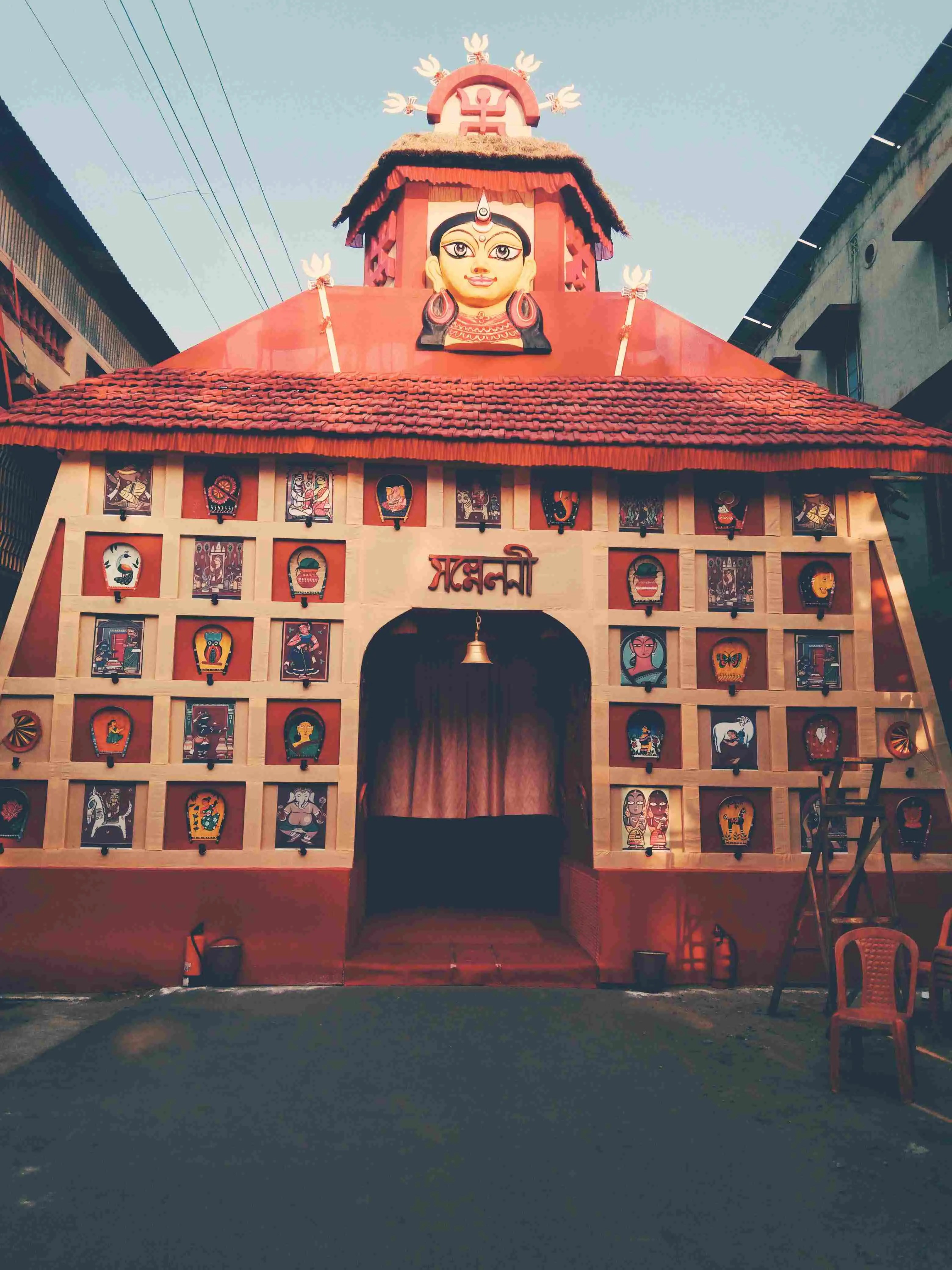
Ah, what an evening it was! We Bengalis, being people of culture and taste, celebrate Navaratri with a tradition called “pandal hopping.” We erect temporary temples – pandals – all over the city, and people go from pandal to pandal, offering prayers and admiring the artwork. And let me tell you, my fellow readers, the artwork is simply something to die for.

The best part of pandal hopping, of course, is the company. I was with a group of seven friends, and a wizened elder to keep us on the straight and narrow. We were all in the ninth grade then, bright-eyed and bushy-tailed, excited to explore the city and its many pandals. We did not have a care in the world. A rather reckless mood prevailed, much like that of Bertie Wooster and his pals on the night of the Boat Race night.

All of us were merrily going from one pandal to the next, wonderstruck at the kind of magnificent sculptures of the mighty Goddess on display and taking in the finery worn by the bhadra lok. Wherever the gaze went, one could spot the glittering jewellery put on by the members of the tribe of the so-called delicately nurtured, duly draped in that six-meter enigmatic wonder called saris, that too of a mind- boggling variety, like Baluchari, Gorod, Murshidabad silk, Tusser, Tangail, and Tant.

As and when our wizened elder was looking elsewhere, our eyes would invariably get busy casting some furtive glances at the many giggling and merry-making girls who happened to be in the immediate vicinity. After all, at such a tender age as that of ours then, who could miss a chance to indulge in what is euphemistically alluded to as birdwatching? 

However, my sense of wonder was brief as I realized after a couple of pandal hops that I was separated from my comrades. It was like a scene from the Odyssey, where the protagonist finds himself lost in a strange and unfamiliar land. It was as if I’d been spirited away to a strange, unknown land in the blink of an eye. Meanwhile, the other musketeers accompanying me were nowhere to be seen. Allow me to remind you that we lived in simpler times then. Internet had not been heard of. Mobile phones were yet to arrive on the scene.  

Now, most people in this situation might have panicked or given up hope entirely. But not me. We, the Dattas, are made of sterner stuff. Seldom do we panic or despair. Howsoever challenging the circumstances, we believe in maintaining sang froid.  We possess a chin up attitude. We are a spiritually enlightened lot. We believe in acceptance and surrender. I confess that unlike Bertie Wooster, I never won a prize in Scripture Knowledge while being at school. I simply accepted that I was lost, surrendered myself to a higher power, as it were, and that was that.

You see, there are two types of people in the world: one, those who search for lost things, and two, those who let lost things be. I fell into the latter category, and I’m not ashamed to admit it. What I needed was a little motivation to keep moving forward, even if it meant moving alone.

And so I found my motivation: food. I stumbled upon a shop and, being the intense budgeteer that I am, found I could only afford a bottle of Coke. I paid the restaurant owner and left, content with my meagre rations.

But oh, dear readers, what happened next was truly the stuff of legends. As I quaffed my Coke, I noticed a bus moving towards my destination at a pace slower than that of a funeral procession. It does not require one to be a Sherlock Holmes to realize what my next steps were, but dear readers, just to get the facts clear, I would like to inform that I first checked my pockets to ensure that I had sufficient funds for the ride. After all, one does not wish to deprive the government of the day of some revenue. Boarding the rickety bus which was bursting at the seams with people of all sizes and shapes was then the work of a moment. The ride was less comfortable than the milk train ride undertaken by Bertie Wooster to intercept a letter before it got delivered to Madeline Bassett, but I finally reached my destination on time and avoided the raised eyebrows of my parents. Soon, I had a sumptuous dinner prepared by my mom followed by a good night’s what-you-call-an-activity-that- knits-up-the-raven-sleeve-of-care. It had been a long day, after all.

But the real story unfolded the next day, my dear readers. As I sat at home, basking in the glow of my achieved objectives, and sipping from a cup of aromatic Darjeeling tea, my friends arrived, with a sheepish looking wizened elder in tow. They were all in a tizzy, recounting their spine-chilling ordeal of trying to locate me in the jostling crowds from the night before. The sudden disappearance of yours truly from amongst their midst had left them shaken up from the base of their toes to the top of their heads. You know what I mean. They were all baffled, bewildered, confounded, confused, fazed, flummoxed, mystified, puzzled, and stumped. The hair-raising mystery of my disappearance from their midst had led to sleepless nights for most of them. 

‘The august guardian’, having circumnavigated the sun some twenty-two times till then, appeared to have aged considerably overnight, what with the emergence of dark halos beneath his ocular organs. It did not require the supreme intelligence of a Reginald Jeeves to figure out that his soul had been in torment, primarily owing to the thoughts of facing the firing squad waiting at home to pounce upon him for dereliction of duty. He was tongue-tied, reminding one of Bertie Wooster being presented to Sir Watkyn Bassett in a court of law. His relief, upon being told that I had made it back home in one piece relieved him instantly. His brow ceased to be furrowed. His visage soon adorned a toothsome grin. He perked up like a flower which had just been watered after a gap of few days.

Indeed, the way they went about trying to trace me and the related incidents narrated by my friends invoked a feeling of being a part of an ‘edge of the seat thriller’ amongst all of us, even though I or my parents were not a part of it.

By Jove, the account of my chums’ efforts to trace my whereabouts was nothing short of a gripping thriller! Their narrative of the numerous challenges they encountered during the hunt kept us all on tenterhooks. Sure enough, their skills of narration were no match to the sparkling way Mr. Mulliner would recount the experiences of his nephews and nieces to his companions at the Angler’s Rest. But while my sister acted like the erudite Miss Postlethwaite, ensuring a steady supply of piping hot tea to all those assembled, we listened in rapt attention to the trials and tribulations of my friends when I went missing from amongst their midst. Apparently, they even sought the help of a rozzer to locate me. Unfortunately, he was busy taking his own family around the multitudes of the pandals so all they earned was a stern rebuke for distracting him from his familial ‘duties’. Although my parents and I were absent at the time, we felt like active participants in the dramatic turn of events!

I believe that the festival of Mahanavami is a wonderful reminder that culture and tradition can bring people together, even during difficult times. It is a time for us to celebrate our shared heritage, enrich our spiritual leanings, enjoy the fruits of artistic expression, and gorge on the delicacies on offer. And it is a time for us to remember that even when we feel lost or alone, there is always a way forward with a little bit of humour and ingenuity. Above all, festivals happen to be subtle reminders of the values that we cherish the most – values of togetherness, caring, compassion, and empathy. 

So, there you have it, my dear readers. A night to remember, a tale of adventure, and a bottle of Coke to make it all possible.

How’s that for a slice of life in Bengal?!

(Illustrations courtesy Suryamouli Datta)  

Related Posts:

Read Full Post »

Read Full Post »

Read Full Post »

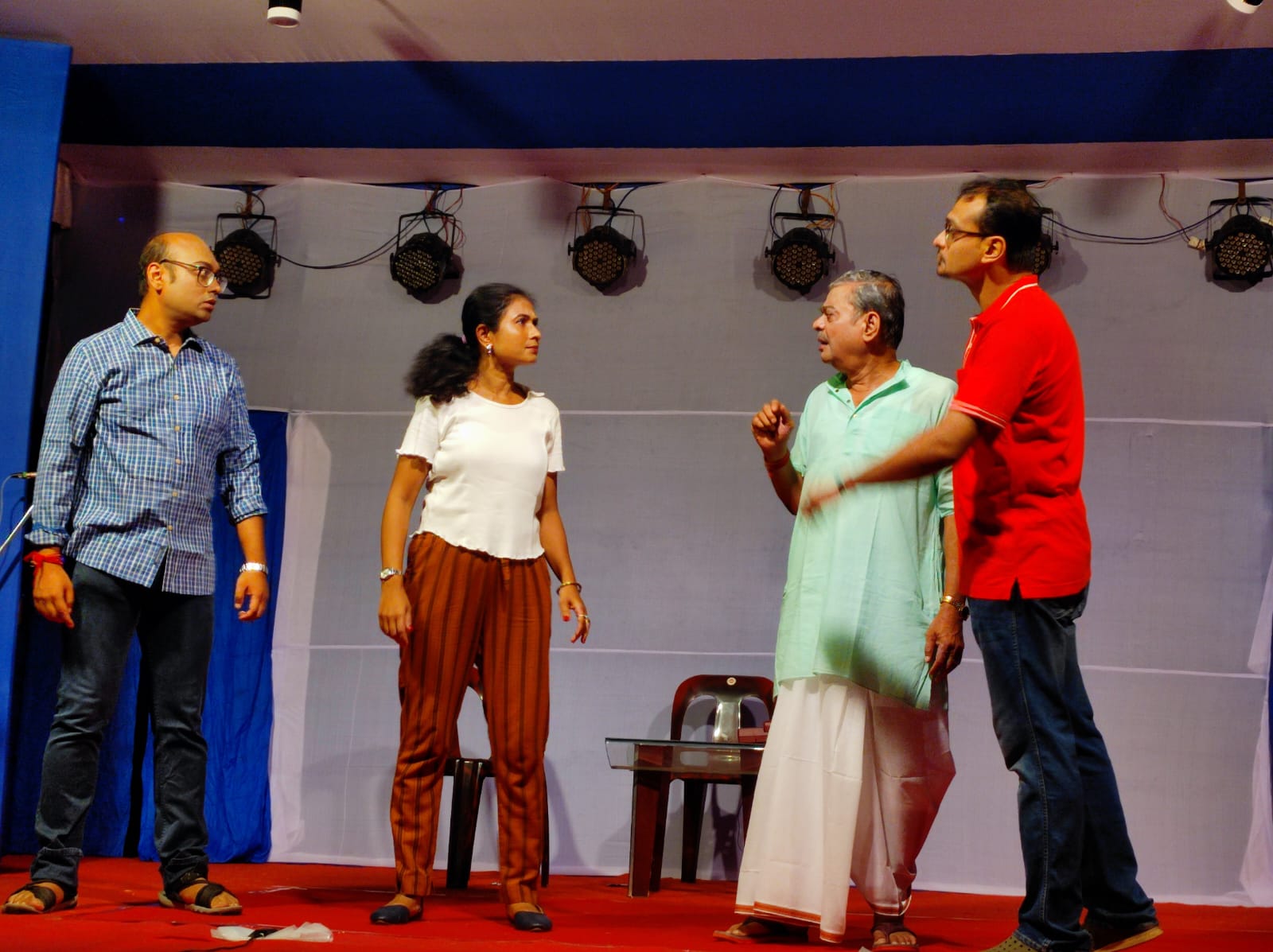
An experience that tried my soul occurred on the day of the cultural meet during the celebration of Durga Puja, the much-revered festival of my community. I was all of a twitter, plagued by the kind of anxieties that Gussie Fink-Nottle had felt in Right Ho, Jeeves when he was asked to deliver a speech at the Market Snodsbury Grammar School. In the absence of a jugful of orange juice, duly laced with a tissue restorative liberally added by such well-wishers as Reginald Jeeves and Bertie Wooster, dreadful thoughts consumed me. The brow was furrowed. The grey cells were abuzz with worries regarding the potential mishaps that could ruin not only my own performance but also the efforts of my fellow thespians while staging a play named Dampoti (Eng. Couple).

A Trauma of Titanic Proportions

It all began a few moons prior when I was somehow persuaded, against my better judgement, into playing a befuddled middle-aged man who strays from the straight and narrow path of a matrimonial alliance for a romantic tryst with his ex-girlfriend. Without question, this character could proudly proclaim to possess an impressive degree of superiority over many others from the tribe of the homo sapiens in matters of courage. All of us are aware that pulling off a feat of this nature needs not only nerves of chilled steel but also fortitude, aptitude, and an unwavering composure. For someone like me who has a strict moral code and is configured along the lines of a docile male rabbit, playing a role of the kind on offer was indeed an experience which left me shuddering from the base of my feet to the top of my head. My experience was akin to that of Bertie Wooster when Aunt Agatha was about to descend on his flat to retrieve her dog Bartholomew who had just been ‘gifted’ by Roberta Wickham to Kid Blumenfeld.

Picture further, if you will, the quagmire of complications that are bound to ensue when the said character finds himself caught by his on-stage-wife, red-handed, whilst basking in the sunlight on some picturesque sea beach with his ex., all the while blissfully unaware of his wife’s covert surveillance, duly facilitated by means of a pair of binoculars! The intense feelings of acute embarrassment, distress, shock and surprise this character would have felt in a situation like this would generate the kind of heat which would be sufficient to melt any nerves of chilled steel he might have boasted of. To someone like me whose nerves are merely made of wax, playing out a scene of that kind was bound to send a shiver down my spine of cottage cheese, inducing a veritable cascade of goose bumps upon my person.

An empathic reader would undoubtedly comprehend the titanic predicament I faced in enacting a role of this nature in the said play. Quite a tricky (if that is the term I am looking for) situation for the guy indeed! Initially, I did have reservations. But with no escape route in sight, I had little choice but to say ‘yes’ and embark upon tireless rehearsals to bolster my confidence for the impending performance.

The Challenge of Casting Romantic Glances

As things transpired on the dreaded “D-Day,” a snag emerged. Together with our director, we, the cast, conducted an extensive review of our rehearsals so far and surmised that a romantic exchange of glances between myself and my on-stage wife was conspicuous by its singular absence!

Now my dear chaps, those privy to my rather perplexing quirks and eccentricities would be acutely aware of the uneasiness that a person like me would feel when I come face to face with the daunting task of making eye contact with a lady with whom I am neither married nor romantically involved. We, the Dattas, are a chivalrous lot, you see. We have a code. Of course, like many of those who belong to the tribe of the so-called sterner sex, one is not averse to casting a surreptitious sideways glance or two at the curvaceous profile of a lady passing by. However, the prospect of making eye contact leaves one rather baffled, bewildered, confused, disoriented, fogged, flummoxed, mystified, nonplussed, perplexed, and puzzled.

The situation was further compounded by the presence of my better half and my on-stage-wife’s bitter half, both frolicking about in the same production. It was a predicament akin to the one faced by Aunt Dahlia when she was camping at Totleigh Towers. Either she could continue to avail the services of Anatole, God’s gift to our gastric juices, thereby keeping the lining of Uncle Tom’s intestines in the pink of health, or willy-nilly consent to a 30-days-without-the-option jail term for her nephew Bertie Wooster. A Hobson’s choice, indeed.

Regrettably, I had no recourse but to seriously ponder on the directorial demands of generating an ‘on stage chemistry’ with my on-stage-spouse, for it was much too late to summon a substitute.

So folks, this was the concatenation of circumstances leading to my real-life undertaking of a Gussie-like role, mired in trepidation and consternation. One of Jeeves’ trademark pick-me-ups might have been of some assistance, but alas, the opportunity never presented itself. What my ailing disposition also craved for was at least a few drops of Mulliner’s Buck-Uppo, which would have ensured my facing the impending doom with a jaunty sang froid. But an opportune moment for such indulgence never presented itself! Somehow, merely a couple of drops of a fruit-laden elixir found their way to my parched lips, though these did little to soothe my frayed nerves.

The Curtain Goes Up

Eventually, the gong was sounded, the curtain went up, and the show commenced. I set my foot on the stage with the eternal Shakespearean dilemma: ‘To be or not to be’ there. The prospect of rotten eggs and tomatoes being hurled at me by some familiar faces (I knew close to 80% of the audience which was from my own community) left me shuddering uncontrollably.

The parts that I knew well sprung forth from my person like cheese and coriander chutney from a sandwich, but the decisive moment rapidly approached, threatening to expose my inadequacies. My co-actor excelled with aplomb, executing her part with finesse, even dealing with the minor mishaps that normally accompany any live performance. However, the intriguing question of how to convey a romantic gaze still befuddled me. Of course, as a conscientious well-meaning person, I had made appropriate preparations after listening to my director’s demands (the reader might recollect that the issue was identified on the D-day itself). In the interim, I had practiced a number of facial manoeuvres before the mirror in my bedroom.

But my attempts at perfecting “love at first sight” were woefully inadequate. You know the lot — dreamy eyes, faint smiles, even excited hand-waving, et al. The harsh reality of being on stage ended up evaporating whatever self-confidence I had built up till then. My quest to develop a romantic connection (through glances) with someone of the opposite sex on stage seemed as challenging as learning a completely foreign language. Despite my fervent efforts, I found myself continuously circling around the idea of radiating the ‘perfect glance’, often getting reminded of a phrase from the ‘Holy Bible’:

Hitherto shalt thou come, but no further.

Indeed, I must confess that I was badly in search of a George Bevan (Damsel in Distress) or Arthur Mifflin (A Gentleman of Leisure) to play the role of The Buddha who can show me the path to ‘enlightenment’ (if that is indeed the right term I am using here). In short, what I faced was a Himalayan challenge, that too in full view of the assembled patrons, scrutinizing my every single move with wide eyes.

But my Guardian Angels appeared to be in a benign mood. As the final act started playing out, my co-actor bestowed upon me a magnificent, scene-stealing ‘gesture’ that I yearned to applaud as a maestro would a stunning grand performance. This bolstered my confidence no end, and I was left with no option but to reciprocate the gesture in a similar vein. I felt like Esmond Haddock, who could eventually find the courage to stand up to his five overbearing aunts. Just as I was teetering on the brink of my ignominious debut as an untalented thespian, a startling revelation dawned upon me: I realized that my nerves, which were hitherto behaving as if made of wax, suddenly metamorphosed into the kind which comprise chilled steel instead. Galvanized by this newfound understanding, I swiftly took action to restore the esteemed reputation of the illustrious ‘Datta’ clan. Summoning all the courage of my illustrious ancestors, I let out a timely exhalation that could perhaps be described as a well-placed-sigh in response to the boiling anger and huffy demeanor of my on-stage-better-half. Apparently, this resonated most ardently with our esteemed spectators, particularly those of the masculine persuasion, who found solace in witnessing the so-called “most romantic” retort to a wrathful wife. The rest of the performance went along like a song rendered with effortless gusto and we succeeded in holding the audience spellbound till the time the curtain slowly descended. 

A Lesson Learnt the Hard Way

The audience reaction was positively spiffing, though it was not the only reason for my uplifted spirits. All said and done, I had managed to pull off another remarkable feat. I had managed not to ruffle the feathers of two most influential stakeholders in this production – my wife and my co-actor’s husband. Surely, a consummation devoutly to be wished for.

Had you been present on the occasion, you might have noticed my humming a tune from the Bollywood film Jugnu

A song sung to define the fact that a cluster of innocent children far surpasses the transient beauty of Diwali’s flickering lights. For a while, the latter may shimmer and shine, but the radiance is momentary, whereas the former’s charm lingers on – a melody that tugs at the heartstrings and evokes an enduring joy.

Likewise, theatre, a fleeting flicker in the grand performance called life! Like the ephemeral glow of festive crackers on a joyous occasion, these performances lit up the stage with brilliance. And when executed with precision, they etch indelible memories in our hearts, as everlasting as the laughter of children. In the words of Khushwant Singh, ‘Theatre is life; cinema is art; television is furniture.’ So let us relish the transient magic of theatre, for it brings us joy and keeps our sofas from feeling neglected!

All is well that ends well. It turned out to be a jolly good show, and I could not have pulled it off without my fellow actors and the entire team backing us up.

Many of us may deride and ridicule Bertie for his pumpkin-headedness. Jeeves may hold him to be someone of negligible intelligence. But there are indeed times when what he says turns out to be a precious lesson for life. Consider this:  

A short while ago, the air was congested with V-shaped depressions, but now one looks north, south, east, and west and discovers not a single cloud on the horizon…Well, this should certainly teach us, should it not, never to repine, never to despair, never to allow the upper lip to unstiffen, but always to remember that, no matter how dark the skies may be, the sun is shining somewhere and will eventually come smiling through.

Notes:

  • Pictures courtesy Ankan Chakraborty.
  • Reviewed and somewhat spruced up by yours truly.

Related Post:

Read Full Post »

« Newer Posts - Older Posts »