Posted in The Magic of Movies! | Tagged Art, Black and White, Bollywood, Chiaroscuro, Cinematography, Movies | Leave a Comment »

As a fan of the world-famous detective Sherlock Homes, what is the first thing one does once one has landed in London? Elementary, is it not? Well, one heads to 221b, Baker Street, right?!
The Sherlock Holmes Museum located at the above-mentioned address had opened its doors to the public on the 27th of March 1990. A belated honour, but surely a befitting one, to the world-famous detective, created by one of the greatest wordsmiths of our times – Sir Arthur Conan Doyle.
Visitors get permitted to the hallowed premises only in batches of twenty. Moreover, before they climb up the narrow staircase, they no longer run into an inquisitive Mrs. Hudson. Instead, they get greeted by a staff member who is dressed like a ‘Bobby’ and checks their online booking confirmation before allowing them to trudge up the stairs.
The famous study which Holmes and his friend Doctor Watson shared for almost twenty-five years (circa 1881-1904) is on the first floor overlooking Baker Street.
As described by Doctor Watson, the siting room boasts of two broad windows and turns out to be disappointingly small. The detective’s chair is there, and so is the tool kit he used to untangle the mysteries presented to him. The back side of the first floor displays several other things of interest to a fan, though it is said to have been the bedroom of the detective.

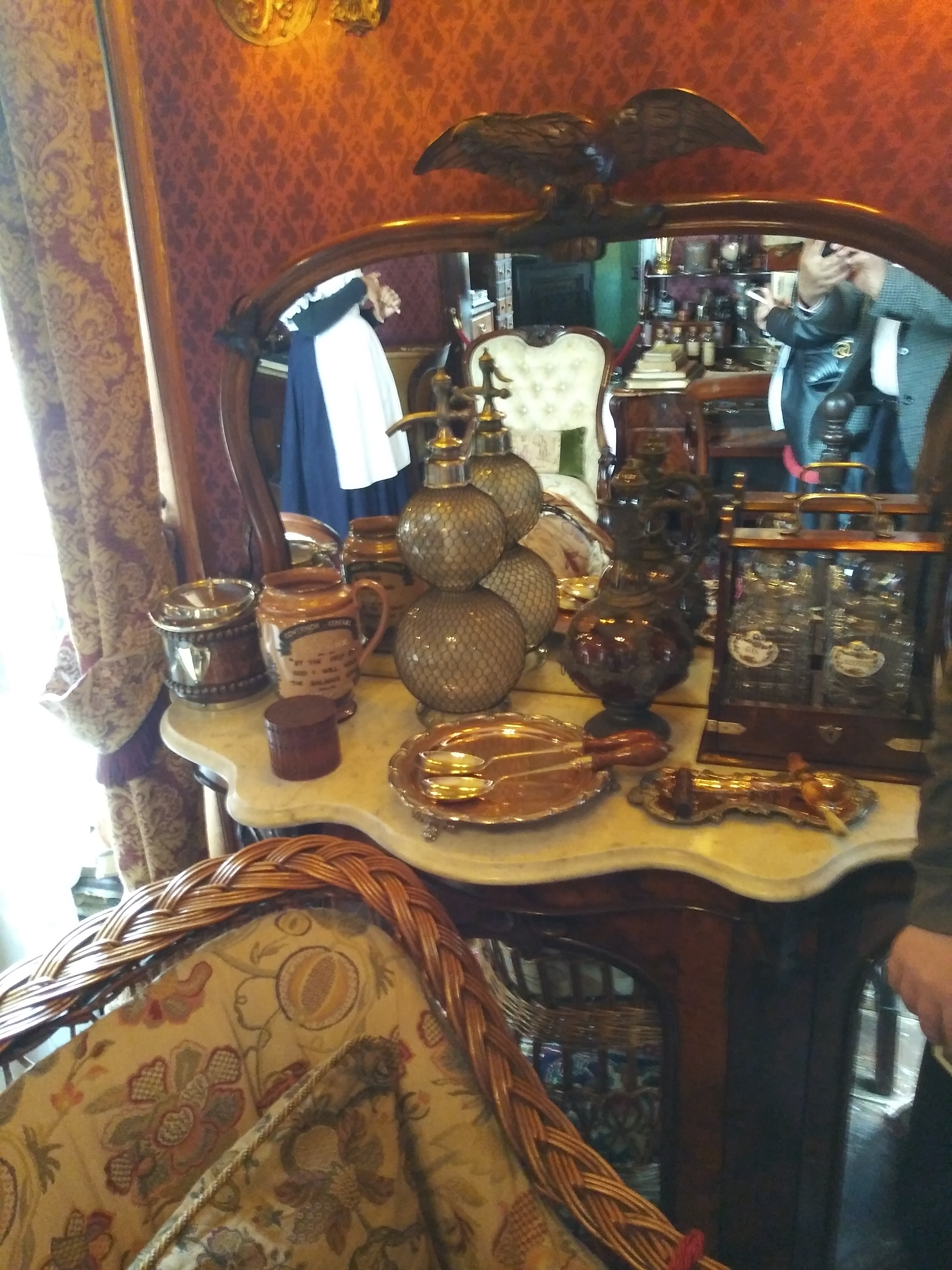

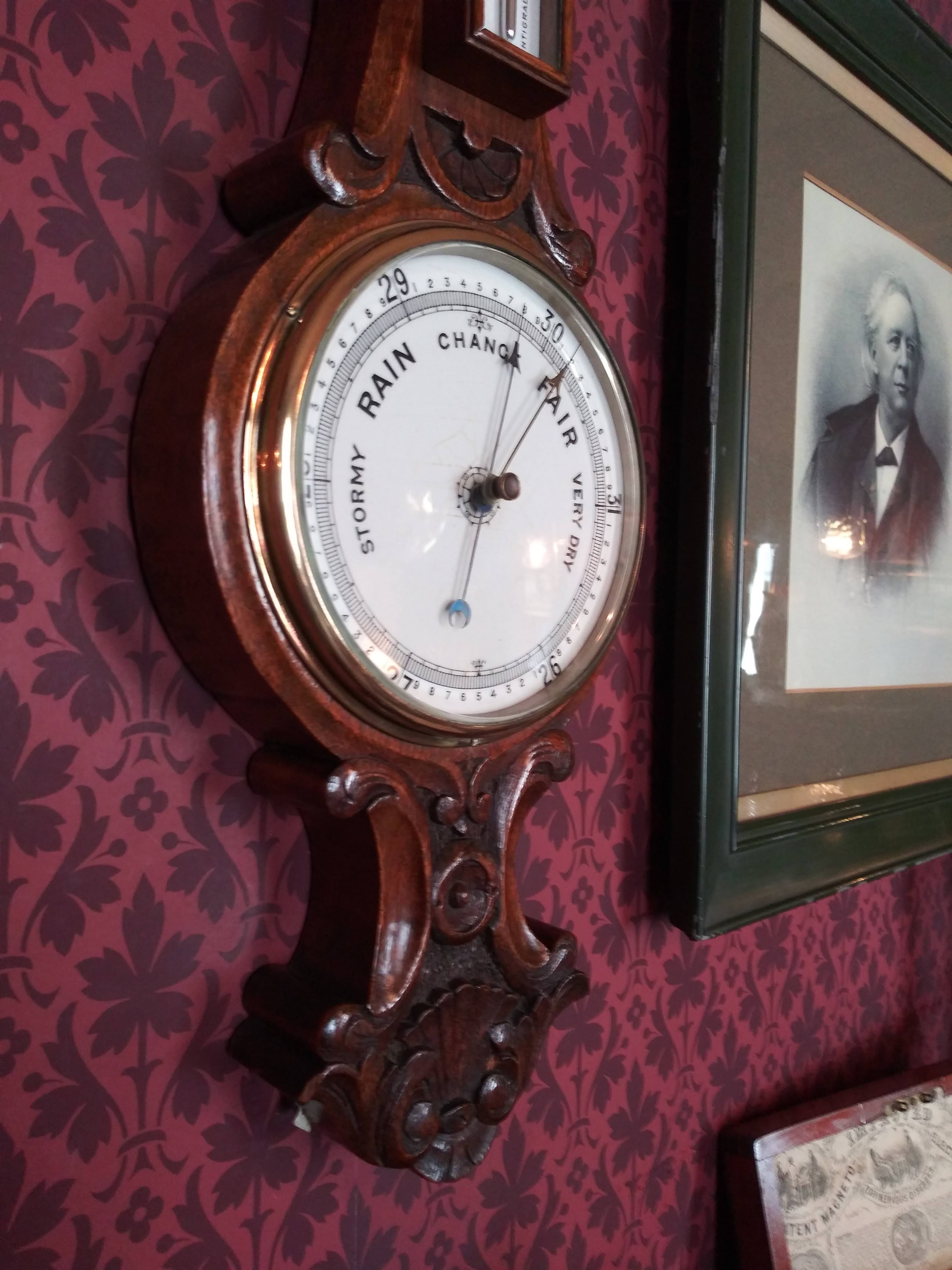

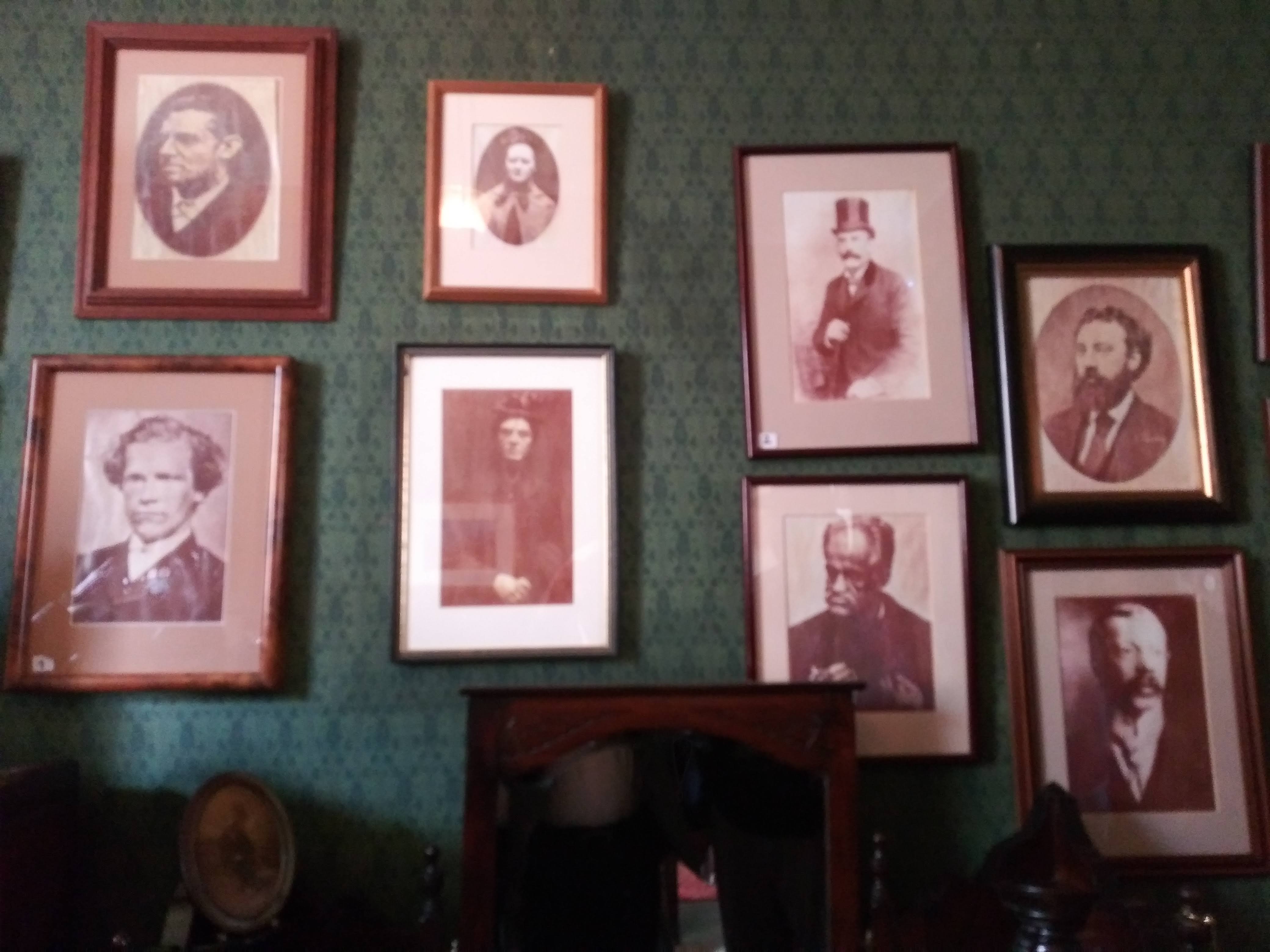
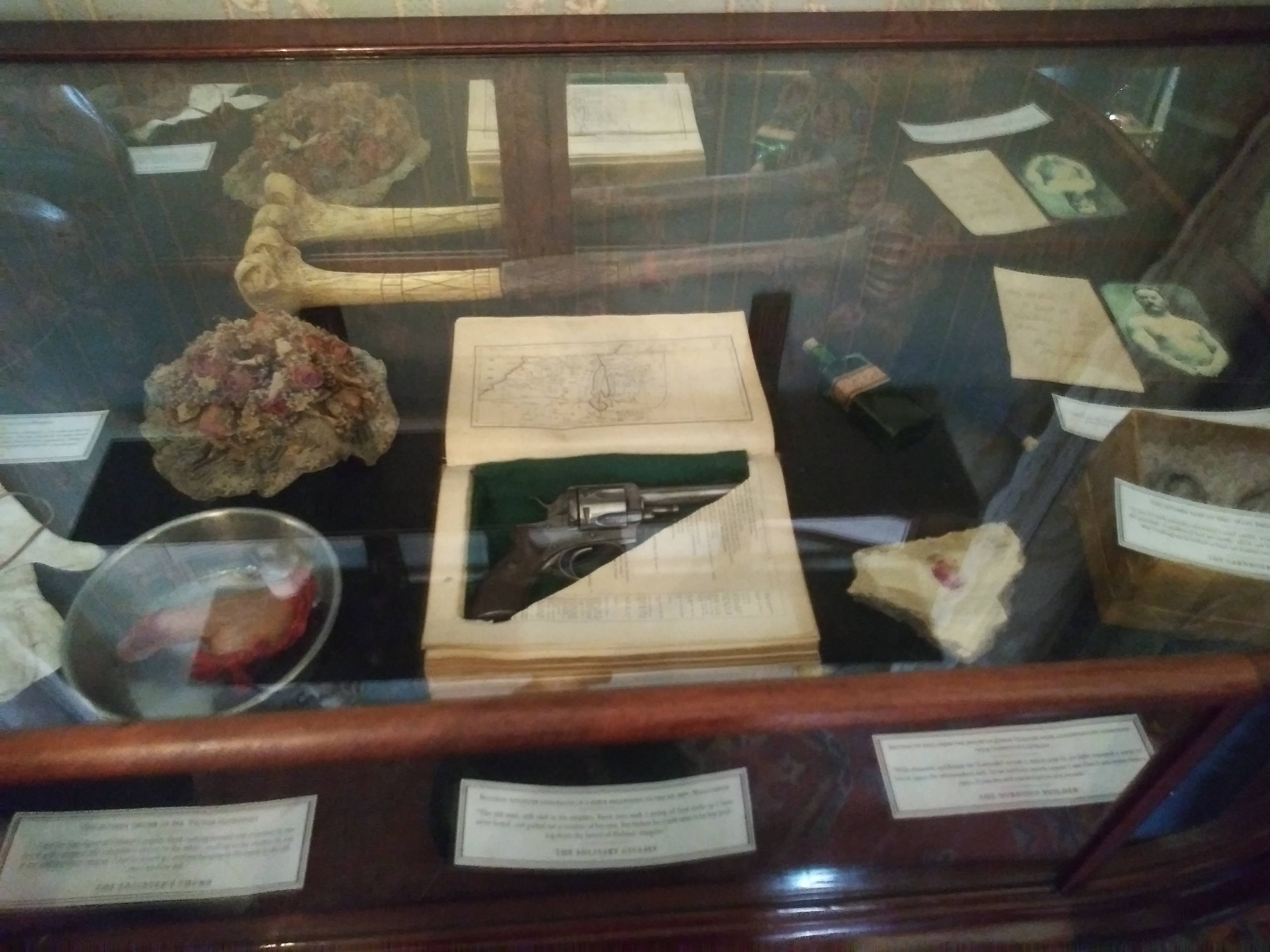


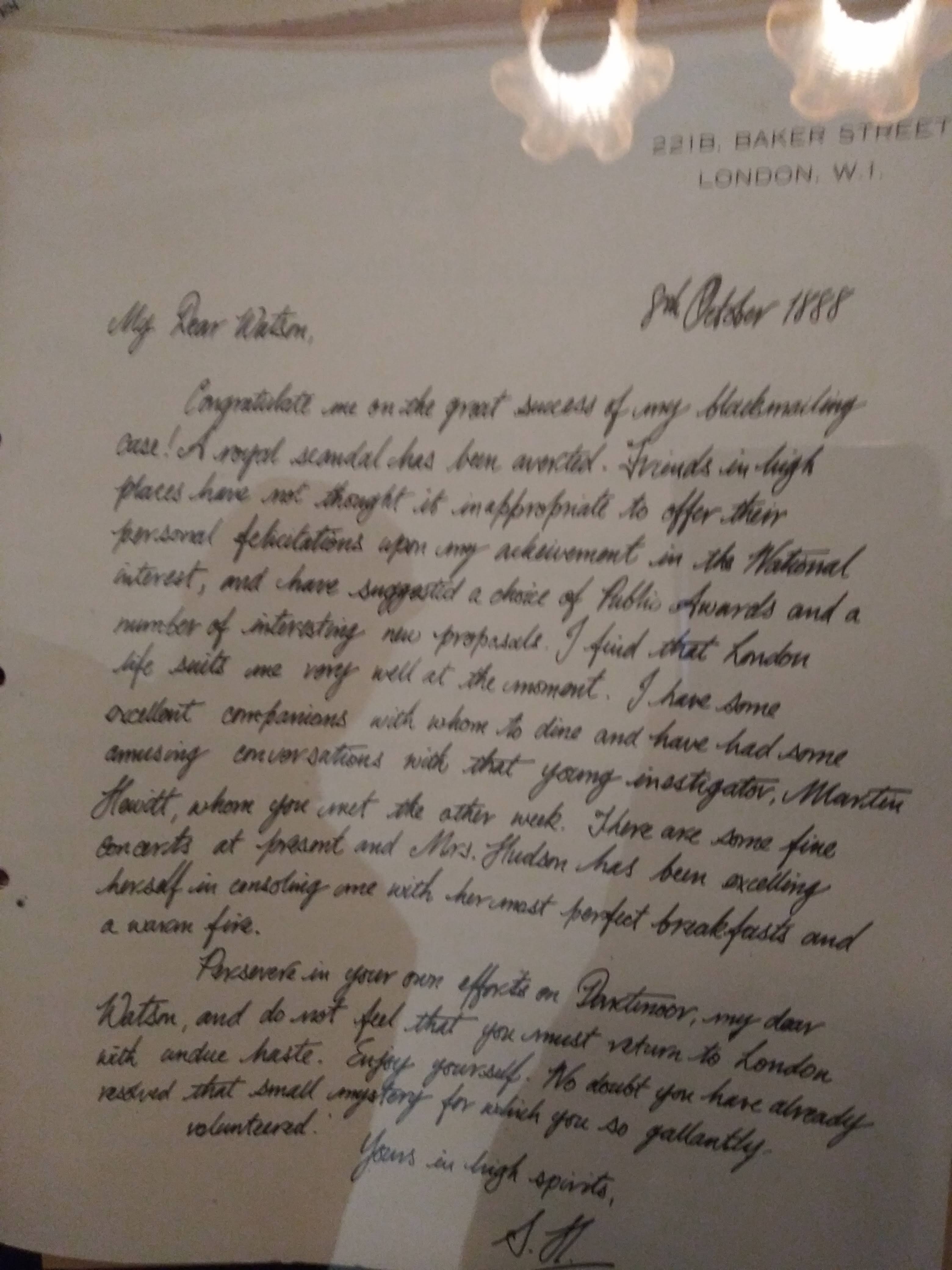
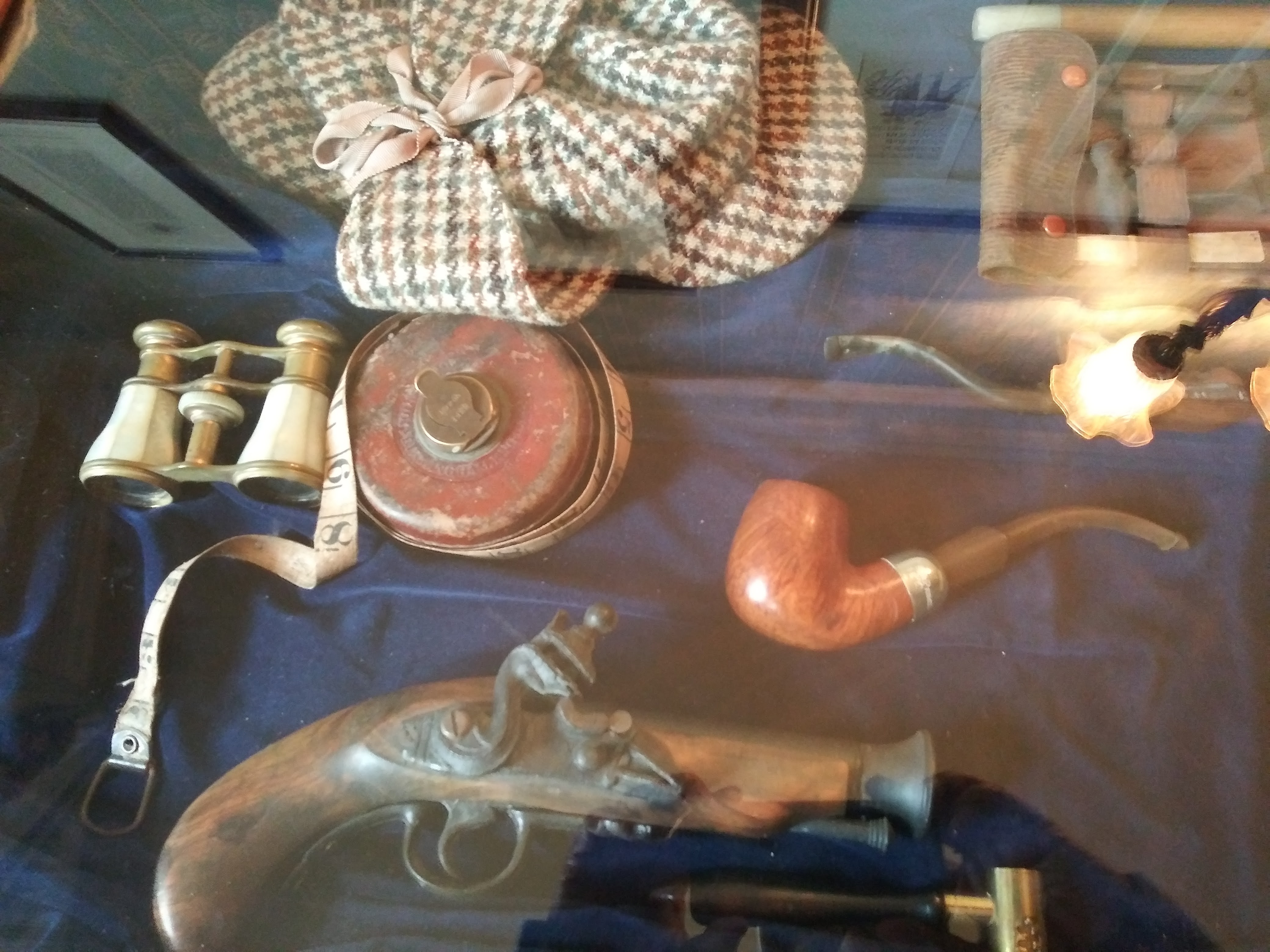
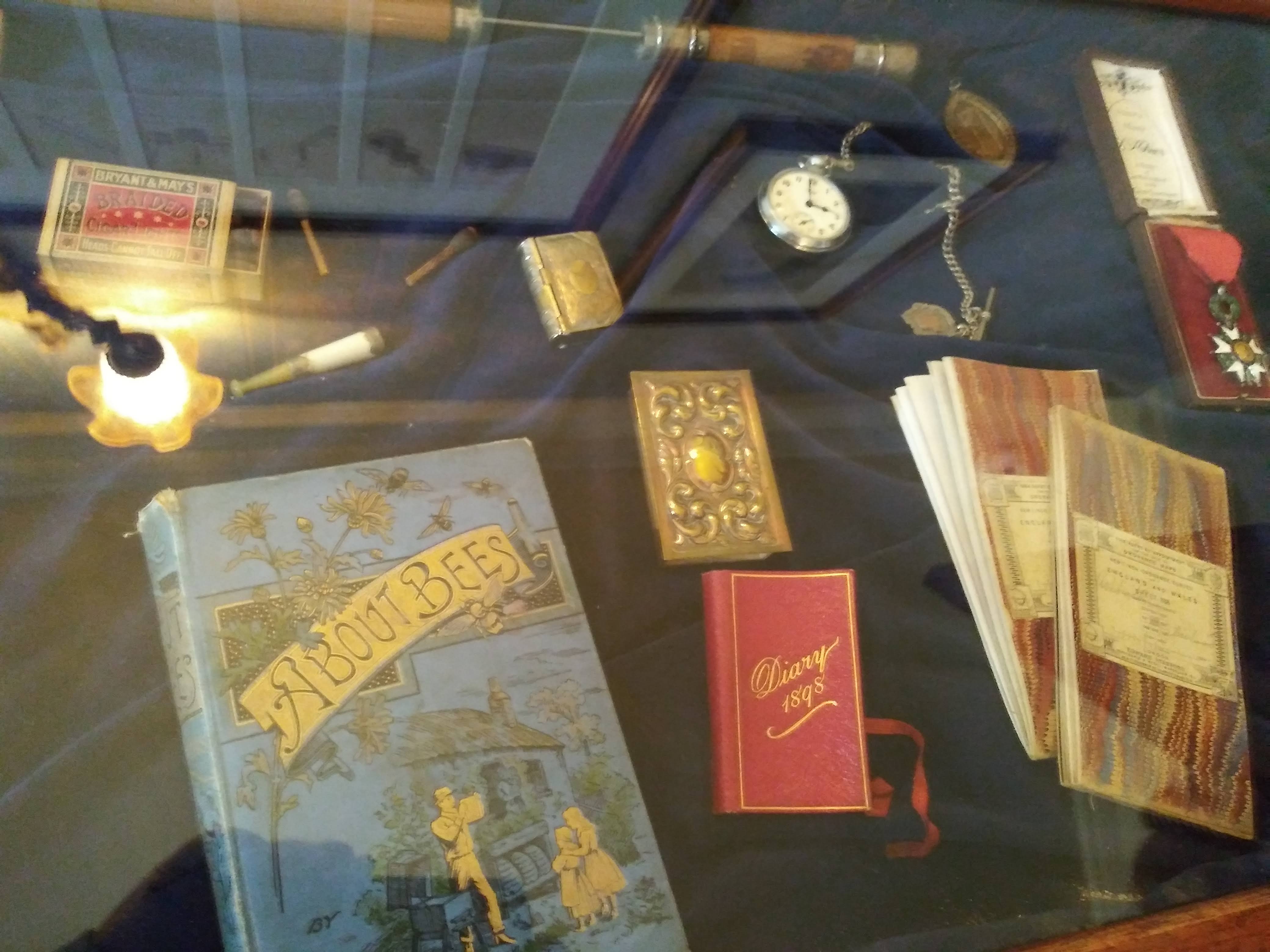
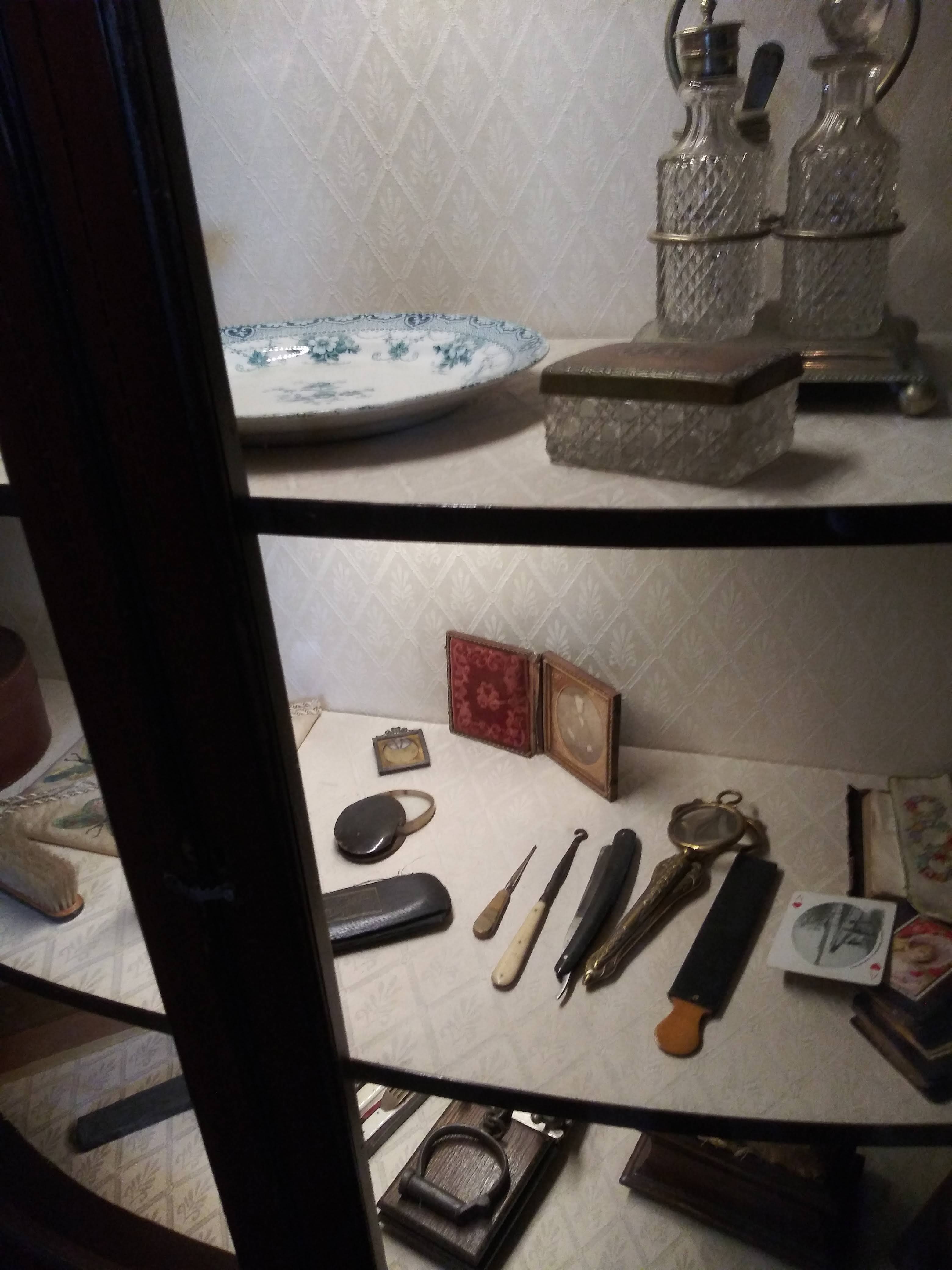

While going through the well-curated museum, visitors get readily transported to the Victorian era, immersing themselves in the gas-lit world of London’s iconic detective. The small and intimate setting of 221b is filled with authentic Victorian furniture and curiosities, and is a treasure trove of items belonging to Sherlock, his friends, and adversaries. Scores of familiar objects and paraphernalia mentioned in different stories are on display. Quite a few characters from his innumerable stories are also featured.
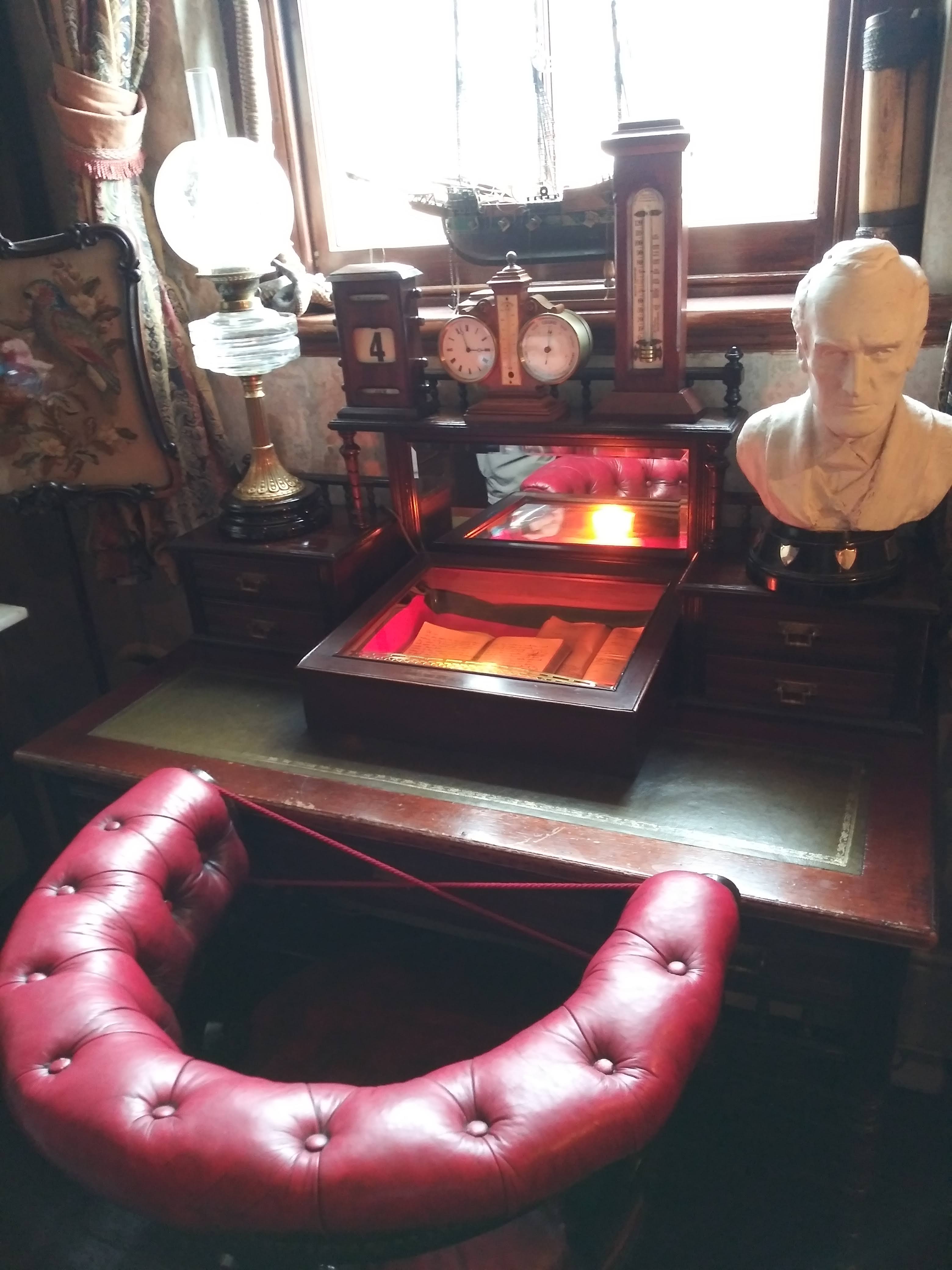
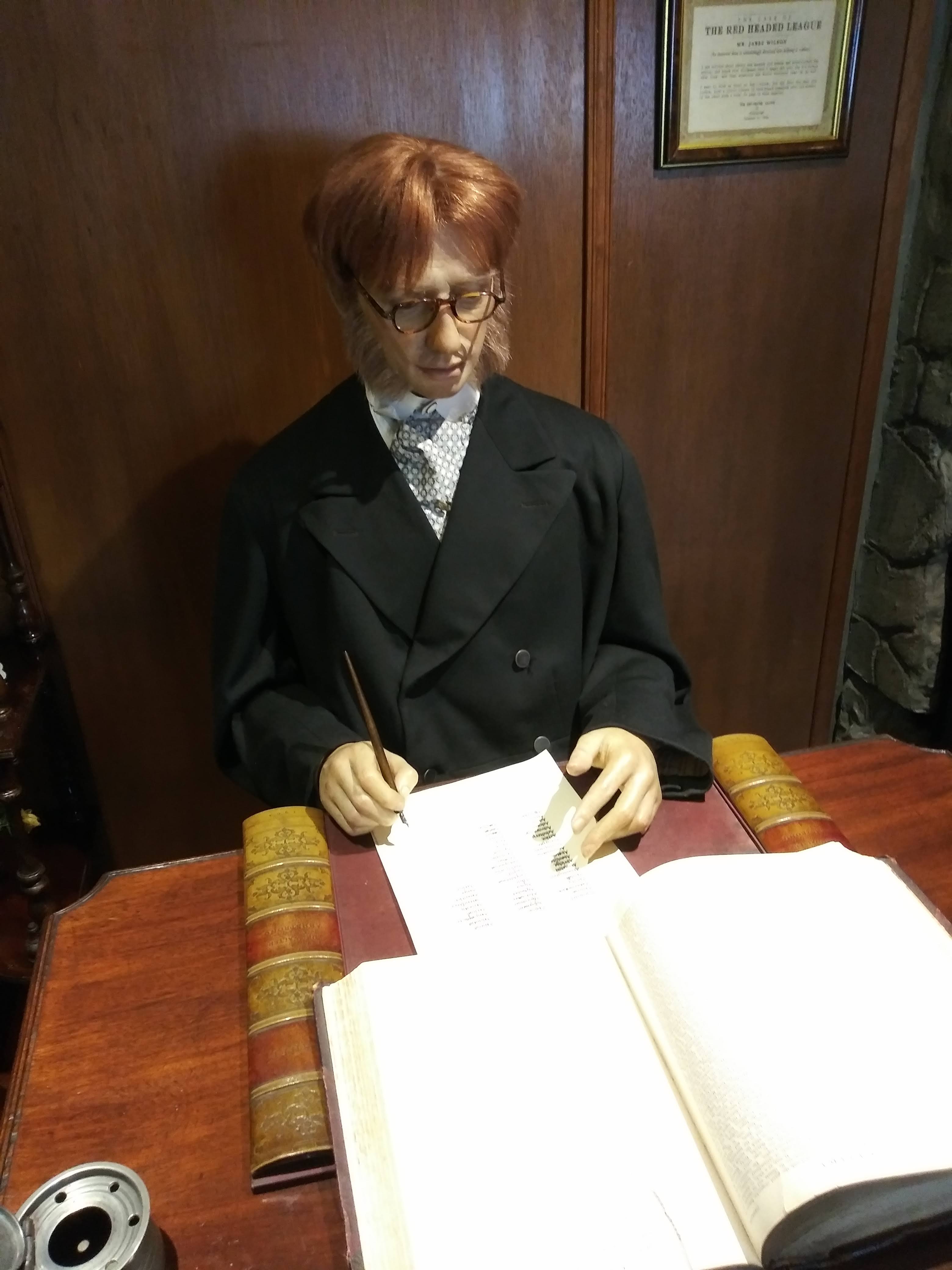

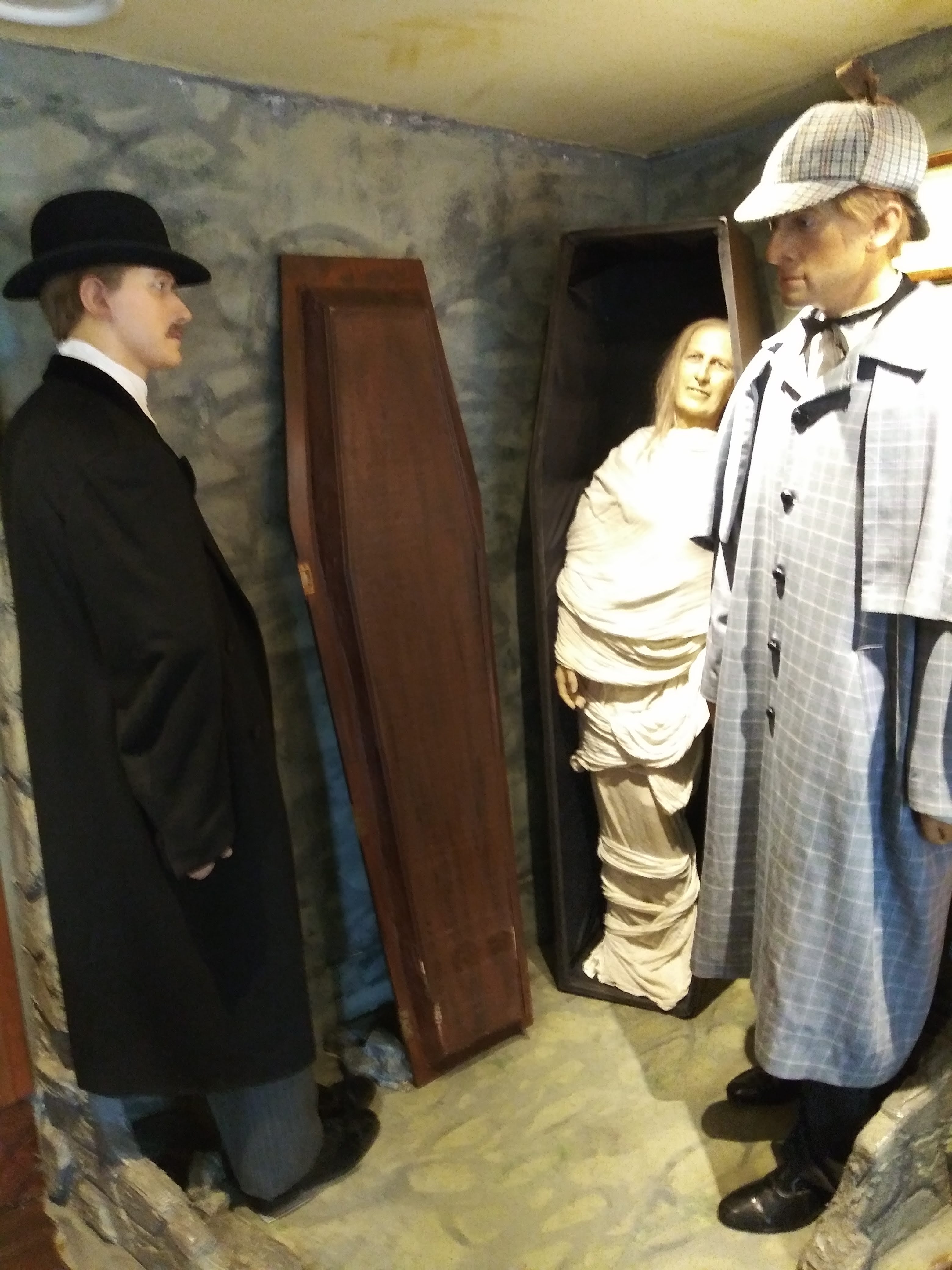




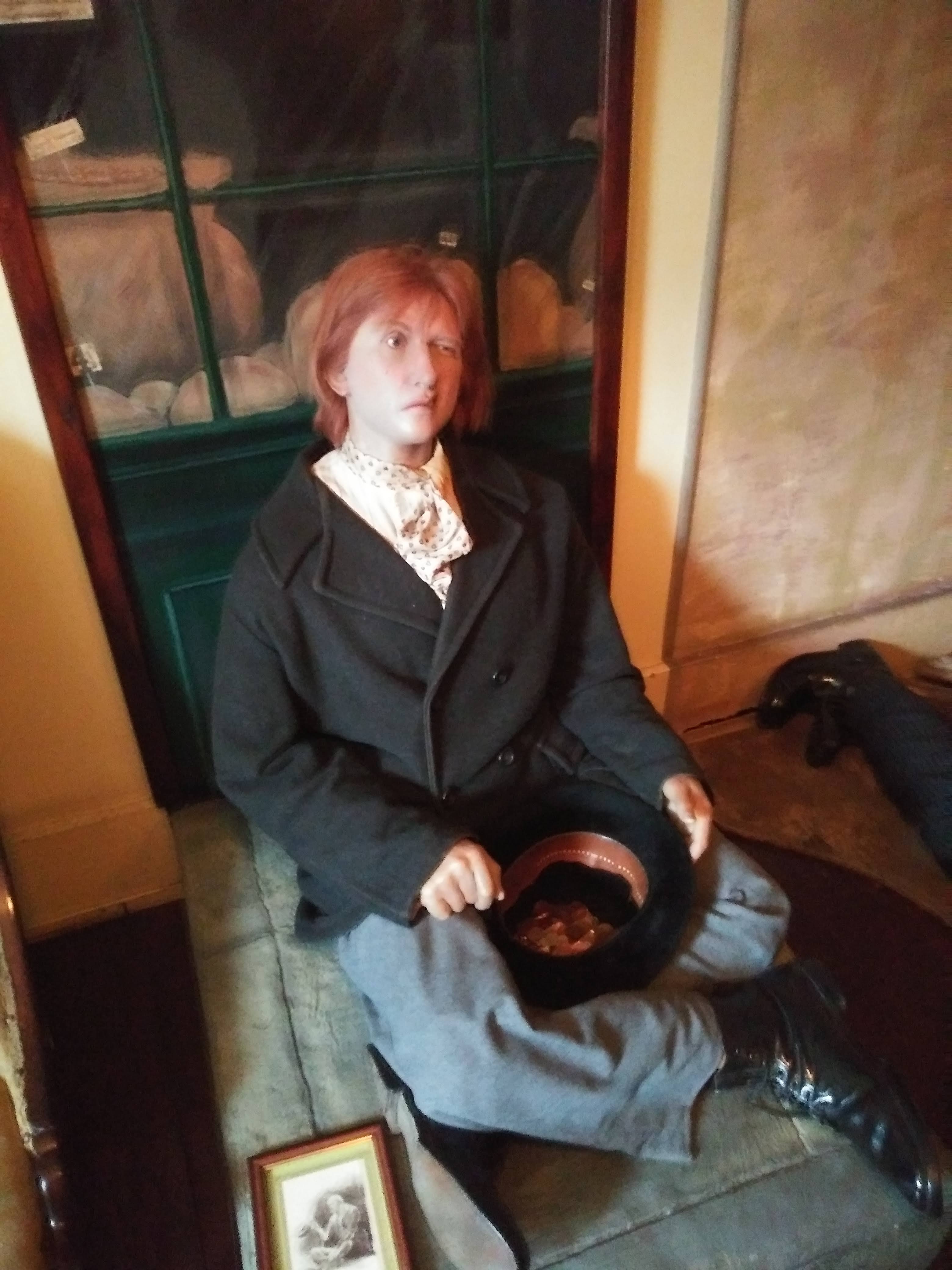
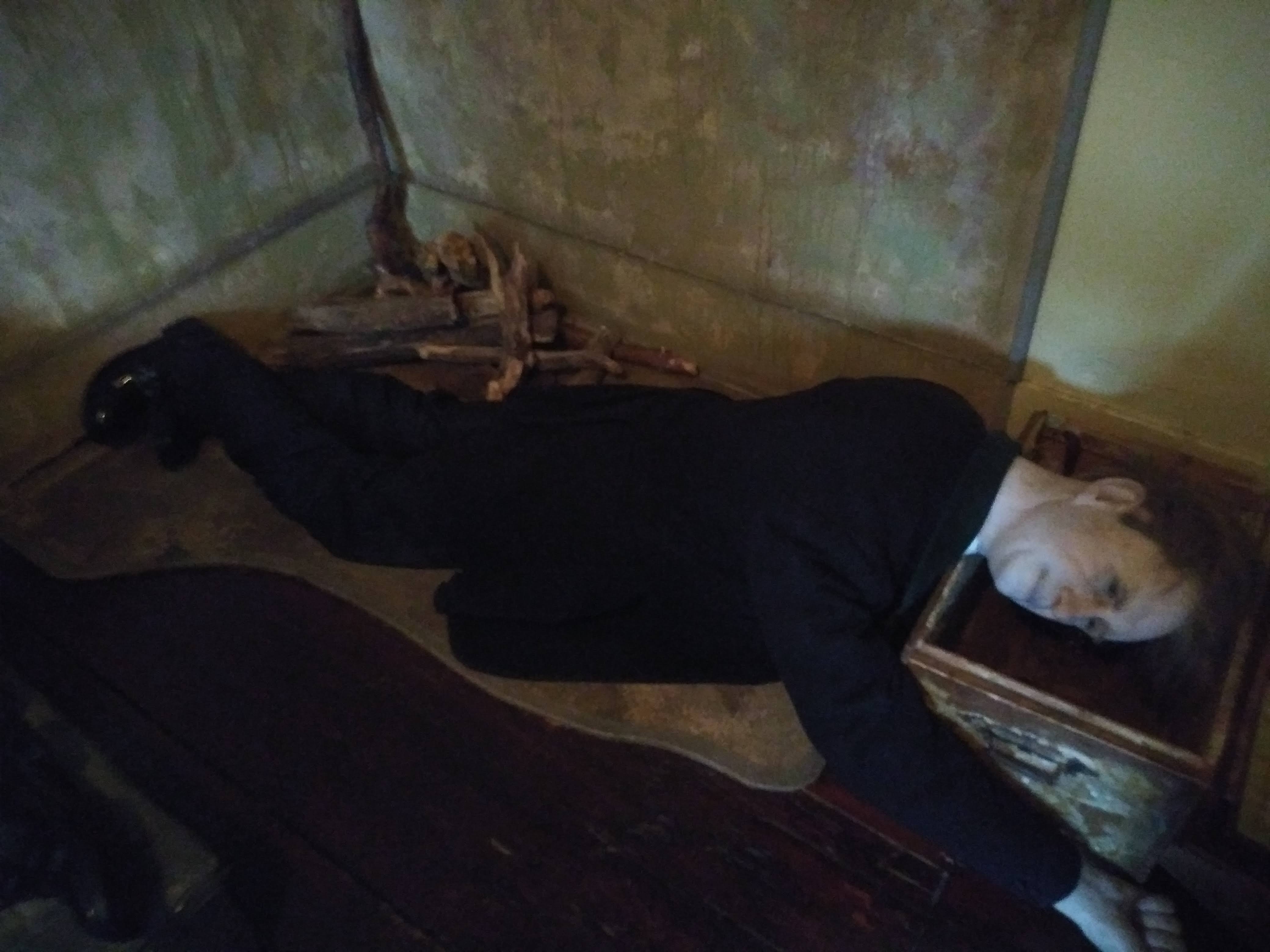

Doctor Watson’s bedroom is said to have been on the second floor, next to Mrs. Hudson’s room, both of which are used now as exhibit rooms. Professor Moriarty, arch enemy of Holmes, peers down menacingly at one from one of the corners.
The pilgrimage soon gets over. As one leaves the museum, one finds oneself wishing that one could simply hail a horse-driven hansom cab to take one to any joint which serves a wide range of tissue restoratives.
The Swiss Connection
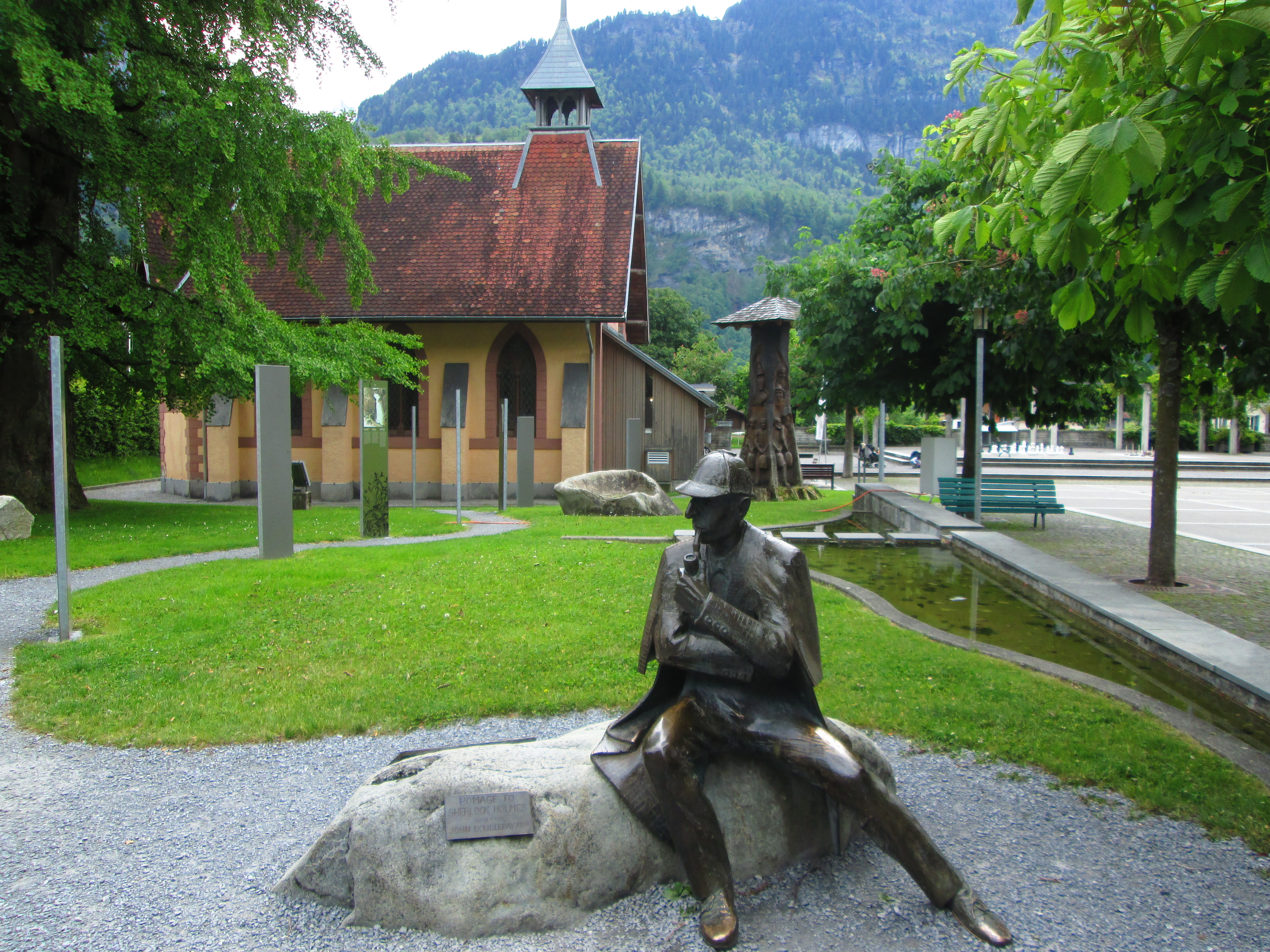
A few years back, I could visit the smaller museum dedicated to the world-famous detective at Meiringen in Switzerland. One marvels at the fact that Sherlock Holmes happens to be an honorary citizen of the township.
Included in the itinerary then was also a visit to the famous Reichenbach falls. That is where Sherlock Holmes was supposed to have met his end while fighting the criminal mastermind Professor James Moriarty. The Final Problem, a short story set in 1891, suggested the death of the detective. However, popular demand made the author eventually bring him back to life!
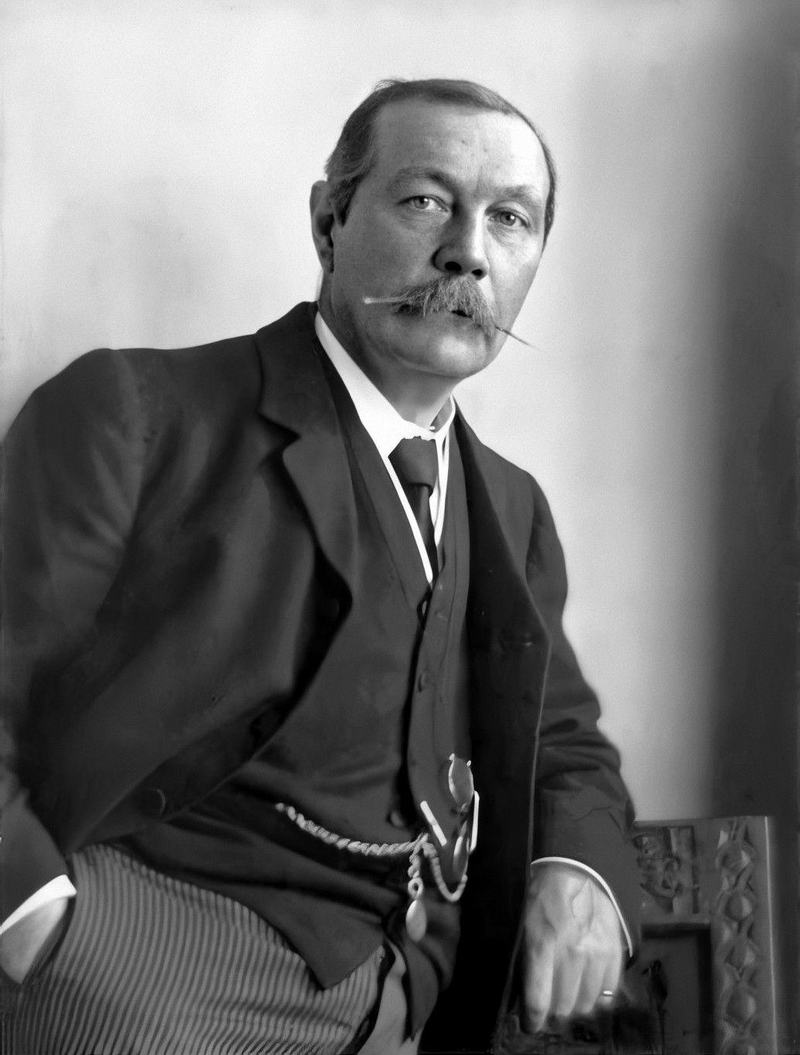
Can a fictional character assume a life and will power of its own? Can he scale heights of popularity and importance greater than those of his author and creator? That is precisely what appears to have happened in the case of Sherlock Holmes whose myth lives on. One marvels at the mental capabilities of a person like Sir Arthur Conan Doyle who created a detective who is more real to most of us than any real person we might have ever met.
In a way, Professor Moriarty still lives on even today. He manifests himself in various forms. Political manipulations, criminal deeds, injustice, disparity in opportunities and incomes, and corruption, just to name a few. However, one can derive satisfaction from the fact that characters like Holmes and Watson also continue to live on amongst us, represented by benign forces opposed to the likes of him.
(The picture of the London museum from outside and the one of Sir Arthur Conan Doyle are both courtesy Wikipedia. Most other pictures are courtesy Dominique Conterno. His contribution towards making the London visit happen is gratefully acknowledged).
Related Posts:
Posted in A Vibrant Life! | Tagged Doctor Watson, London, Meringen, Museum, Professor Moriarty, Sherlock Holmes, Sir Arthur Conan Doyle, Switzerland, UK | 7 Comments »
The teachings of Swami Vivekananda are highly motivational and convey some deep truths of life in a spiritual manner. Plum, as we know, also has an undercurrent of spiritual messages in his stories and books. Superficially speaking, both may sound as different as chalk and cheese. One, an expert in spirituality. Another, an expert in humour.
However, scratch below the surface and one is apt to find that there is much similarity in what Swami Vivekananda preaches and what quite a few of Plum’s characters practice. If Vivekananda’s words awaken us spiritually, Plum’s works, though insanely humorous on the surface, keep soothing our souls in many ways. Let us see if these two thought streams have a resonance that we might be blissfully unaware of.
Take the case of Lord Emsworth who discovers that Gladys has not had any nourishment on the day of the Parva School Treat. He sees to it that Beach feeds her well. Moreover, even a basket of goodies gets handed over for her brother Ern. And when she wants to have some ‘flarze’ from the garden and McAllister comes running at a speed of forty-five miles per hour or so, what does Lord Emsworth do? Well, he is firm in protecting his girlfriend. He stands up to him, living up to the lofty standards set up by his ancestors. His basic desire is to help someone who is good and is in distress. (Lord Emsworth and the Girl Friend)
Likewise, some of us may consider Bertie Wooster as being mentally negligible, but there is no denying that he has a heart of gold. To help a pal, he often goes to ridiculous lengths. He even takes a rap for something he has never been involved in anyway. When Stiffy holds him to be superior to Sidney Carton, she is not much off the mark. (The Code of the Woosters)
Also consider the case of Psmith, to whom ends are more important than the means. When Eve is in distress across the road, he merely pinches an umbrella from the cloak room of The Senior Conservative Club and offers it to her with a smooth dignity. (Leave it to Psmith)
All of them go out of their way to help a fellow being who faces a challenge of some kind. Now, this is a sentiment that Vivekananda would heartily approve of.
A Primer on Swami Vivekananda
For the uninitiated amongst us, Swami Vivekananda (1863 – 1902), was an Indian monk, philosopher, author, and religious teacher. He was a key figure in the introduction of Vedanta and Yoga to the Western world. His attempt was to raise interfaith awareness and bring Hinduism to the status of a major world religion.
Many of us already know that he became a popular figure after the 1893 Parliament of Religions in Chicago at which he delivered his famous speech beginning with the words: “Sisters and brothers of America…”. While doing so, I am certain that unlike Gussie Fink-Nottle, he was not intoxicated, oiled, boiled, fried, plastered, whiffled, sozzled, or blotto. Rather than pouring scorn on many others present on the occasion, as Gussie did during his speech, he went on to introduce Hinduism to Americans.
After remarkable success at the Parliament, in the subsequent years, Vivekananda delivered hundreds of lectures across the United States, England and Europe, disseminating the core tenets of Hindu philosophy. He founded the Vedanta Society of New York and the Vedanta Society of San Francisco (now Vedanta Society of Northern California) both of which became the foundations for Vedanta Societies in the West. In India, Vivekananda founded the Ramakrishna Math, which provides spiritual training for monastics and householder devotees, and the Ramakrishna Mission, which provides charity, social work, and education.
Vivekananda and Plum: A Timeline
Plum was born in 1881, so he was eighteen years junior to Vivekananda. Luckily, he lived to a ripe age of ninety- four, whereas Vivekananda kicked the bucket at thirty- nine itself, in 1902.
By 1902, Plum had already taken a leap of faith and decided to leave the Hongkong and Shanghai Bank and turned to writing full time. At around the same time his first novel was published—a school story called The Pothunters, serialized incomplete in Public School Magazine in early 1902, and issued in full in hardback in September. He resigned from the bank that month to devote himself to writing full-time.
To the best of my knowledge and belief, the two had never met. Even though Plum’s works do carry an undercurrent of the kind of spiritual propositions Vivekananda makes, the name of the fearless monk from India does not pop up in any of Plum’s narratives.
What Vivekananda Stood For
To sum up what the saint from India stood for:
- He stressed the importance of individual development.
- He believed that three things are necessary to make every man great, every nation great, namely conviction of the powers of goodness; absence of jealousy and suspicion; and helping all who are trying to be and do good.
- Working unitedly for others.
- Having courage, patience, and perseverance to overcome all obstacles.
- Having a strong mind and a strong body.
- Women’s empowerment.
- Detachment.
Let us now consider these, one by one.
Individual Development
When it comes to pushing the envelope and learning new things, Plum’s characters are always game. Some of them teach us how to evolve into better human beings, office executives, and husbands.
When Bertie Wooster joins an institution designed to teach the aristocracy to fend for itself, the course he decides to take involves boot-cleaning, sock-darning, bed-making and primary grade cooking. His finances are quite sound, but he feels that it is wise to be prepared for a future when the social revolution sets in with even greater severity. (Ring for Jeeves)
Take the case of Psmith. When he joins the New Asiatic Bank, he does not lose much time as an intern to figure out how to develop into a popular person. He identifies a friendly native and makes enquiries about the likes and dislikes of his immediate boss. Armed with this intelligence, he endears himself to Rossiter, his immediate superior and the head of the Postal Department. His next mission is to cozy up to the top boss and tackle him suitably. By the end of Psmith in the City, when Mike’s career in the bank is at risk, we find Psmith resorting to extortion. He leverages the political ambitions of the top boss to pull Mike out of the soup. He digs up some old speeches made by Comrade Bickersdyke at the Tulse Hill Parliament. If published, these would adversely affect the boss’ chances of getting in as the Unionist candidate at Kenningford. Mike gets off the hook.
Yet another example of development is presented to us by Bingo Little. We are aware of his romantic nature. Like a butterfly, he keeps hopping from one object of his affection to the next. But after each failed affair, Bingo does not necessarily sulk. The scales fall from his eyes, and he suddenly realizes that the next girl alone is his true soul mate. After many failed affairs, Bingo ends up marrying the romance novelist Rosie M. Banks. In the post-matrimony phase, we find a Bingo Little who is completely transformed. He is singularly devoted to his wife. Maintaining matrimonial peace and harmony is the sole purpose of his life. When it comes to keeping his lady-love happy and contented, there is little that he leaves to chance, which includes ensuring that the lady of the house gets her afternoon cup of tea. His reverse transformation – from a butterfly to a caterpillar – is complete. One is certain that this fact never came to the notice of Charles Darwin, who handed in his dinner pail during 1882 itself. If so, we might have noticed him rushing to his publishers, a revised manuscript of the Theory of Evolution tucked under his arms.
If Swami Vivekananda highlights the importance of individual development in his inimitable stiff-upper-lip manner, Plum deploys his wit and humour and gets some of his characters to set a high standard on the same count.
Conviction of the Powers of Goodness
Many of Plum’s characters have an abundant supply of the milk of human kindness coursing through their veins. Their belief in the power of goodness never wavers. When it comes to following a code, they never disappoint us. Bertie follows the family code of never letting a pal down. Captain Biggar sticks to a code that one should not propose to a female unless one’s own finances are in order. Chuffy refuses to propose to Pauline Stoker unless a deal to sell Chuffnell Hall materializes.
Chivalry is a sentiment which finds a place of prominence in Plum’s works. Bertie persuades Gussie Fink Nottle not to prod Stiffy between her legs to look for a missing diary. (The Code of the Woosters)
To save Uncle Tom from digestive troubles in the absence of Anatole, God’s gift to our gastric juices, he offers to undergo a sentence of thirty days. His only demand? A sumptuous fare dished out by Anatole at the end of his impending ordeal. (The Code of the Woosters)
Lord Emsworth, when caught picking up flowers from Kensington Gardens, seeks help from a recently sacked McAllister to identify himself to the police. His faith in the supremacy of goodness is touching, indeed. (The Custody of a Pumpkin)
While driving back from Brighton, Bertie and Jeeves offer Peggy Mainwaring a lift. Goodness prevails, though Bertie eventually realises the perils of delivering a talk to a bunch of girls who keep giggling and staring at him. (Bertie Changes His Mind)
Of Suspicion and Jealousy
Like all of us, Plum’s characters often suffer pangs of suspicion and jealousy. However, it does not take them much time to wriggle out of such negative emotions and live a happier life.
Think of Freddie who never suspects R Jones of any mischief. It takes a word of caution from someone like Ashe Marson for him to start seeing the truth for what it is. (Something Fresh)
Rupert Baxter earns his living by suspecting everything and everyone. If it means skipping a few nights’ sleep, so be it. (Something Fresh)
Roderick Spode suspects the intentions of anyone securing the affinity of Madeliene Bassett. (The Code of the Woosters)
Gussie Fink-Nottle experiences the perils of jealousy when he mistakenly thinks Bertie Wooster is competing for Madeline Bassett’s affection. (Right Ho, Jeeves). The same fate befalls Chuffy when he suspects Bertie of harbouring romantic thoughts about Pauline Stoker, whom he intends to marry. (Thank You, Jeeves). Madeleine suffers when she sees Gussie Fink-Nottle taking a fly out of Stiffy’s eye. (The Code of the Woosters).
Consider the emotions of Ronnie Fish when he finds Sue Brown dining with Percy Pilbeam.
The crust of calm detachment from all human emotion, built up by years of Eton and Cambridge, cracked abruptly, and there peeped forth a primitive Ronald Overbury Fish. […] His fists clenched. Eton was forgotten, Cambridge not even a memory. He inhaled so sharply that a man at the next table who was eating a mousse of chicken stabbed himself in the chin with his fork.
(Summer Lightning)
In most cases, explanations get called for and offered. Eventually, Reason returns to its throne. Sanity prevails. However, a spiritual purist like Swami Vivekananda would take a jaundiced view of such proceedings.
Helping All Who Are Trying to Be and Do Good
When Bobbie Wickham ends up gifting Aunt Agatha’s pet McIntosh to Kid Blumenfeld, a sense of Noblesse oblige restrains Bertie from dashing off to the Savoy and demanding the pet back. As always, Jeeves comes up with a solution – a look-alike replacement is arranged for the kid, whereas Bertie rescues McIntosh after sprinkling his trousers with aniseed powder. Aniseed has an aroma which appears to speak straight to the deeps of the terrier’s soul. The scheme works. Harmony rules. (Episode of the Dog McIntosh)
Many of us would recall that Perfecto-Zizzbaum is the company which Wilmot works for. When the studio is said to be facing rough weather, Wilmot meets the top boss and readily accepts a salary reduction, down from fifteen hundred to three hundred dollars a week.
His parting dialogue to the boss goes thus:
What a perfectly lovely day it is, is it not? I was thinking as I came along here that I had never seen the sun shining more brightly. One just wanted to be out and about, doing lots of good on every side. Well, I’m delighted if I have been able to do anything in my humble way to make things easier for you, Chief. It has been a real pleasure.
Quite understandably, his engagement to Mabel Potter gets terminated soon after. (The Juice of an Orange)
Just like good people must be helped, those who are a menace to society in general also need to be restrained and neutralized. When Roderick Spode becomes a raging hippopotamus, Aunt Dahlia gets Jeeves to dig up some dirt on him. The secret of Eulalie gets discovered. Bertie uses it with much success.
Pure intentions underlying an act matter as much to Swami Vivekananda as they do to many of Plum’s characters.

Working Unitedly for Others
Many of Plum’s characters have a streak of selflessness about them. Despite their professional and personal concerns, they try to do something for others who happen to be in distress.
They might do it single-handedly, or, like Bertie and Jeeves, form a team to help others. In The Mating Season, the duo ends up uniting as many as six couples, providing priceless clues to our IT whizz kids who design dating apps these days!
Uncle Fred is quite focused on his mission of spreading sweetness and light everywhere he goes. Gally is another person whose conduct is quite selfless. Both help others in need, of course with hilarious consequences.
Sally is also selfless. One of her actions is to nurse an elderly resident of her boarding house through his case of the Spanish flu. (Adventures of Sally)
Take the case of Stilton Cheesewright whose head is said to be comparable to a pumpkin. Florence Craye talks socialism to him and persuades him to read Karl Marx. When at Oxford, someone had temporarily converted him to Buddhism which preaches compassion to all fellow beings. (Joy in the Morning)
All of them take the help of others, wherever needed, to support others.
That is precisely the kind of public-spirited attitude Vivekananda would like many of us to have.
Of Courage, Patience, and Perseverance
Elsewhere in the canon, we meet Ukridge, an opportunist who will do anything to increase his capital – except, of course, work. He believes in the adage that unless one speculates, one does not accumulate. He keeps coming up with get-rich-quick schemes and failing in his ventures with a remarkable degree of consistency. But his optimism never deserts him. He shows remarkable courage and keeps working on.
We find him setting up a Dog College where dogs can get trained to perform at a music hall. We then find him setting up an Accident Syndicate so insurance claims could be split up. He also supports sailors in the boxing ring. Elsewhere, we find that he is not averse to splitting a real estate commission earned during the sale of an English country house. In Love Among the Chickens, we find him setting up a chicken farm which also fails. But his buoyant optimism never deserts him. He starts visualizing starting up a duck farm!
Another good example is that of Joan Valentine’s, our feisty heroine from Something Fresh. After she falls on tough times, she does theatre, works in a shop, becomes a lady’s maid, and takes up many other odd jobs that can help her to keep the wolf away from the door. When she sees an opportunity, she just grabs it.
Don’t get into a groove. Be an adventurer. Snatch at the next chance, whatever it is.
She makes us appreciate that the ideal adventurer needs a certain lively inquisitiveness. She has a sense of enterprise which keeps her moving on in life.
Such characters truly practice what Swami Vivekananda preaches.
Mind, Body, and Well-being
Vivekananda emphasized the importance of a strong mind and body. He said:
Whatever you think, that you will be. If you think yourselves weak, weak you will be; if you think yourselves strong, strong you will be.
Plum highlights the importance of mental well-being through the actions of Sir Roderick Glossop, the loony doctor. We resent his not being able to fully enjoy his meal at Bertie’s flat where some cats also happened to be present. But we are secretly relieved when he decides to cancel Bertie’s fixture with Honoria Glossop, thereby saving our favourite hero from taking a saunter down the aisle with someone who reduces you to pulp with sixteen sets of tennis and a few rounds of golf and then comes down to dinner as fresh as a daisy, expecting you to take an intelligent interest in Freud. (Carry On, Jeeves)
In fact, if Vivekananda motivates us to develop nerves of chilled steel, Plum’s works enable us to go through life’s myriad challenges with a jauntiness which would put an elephant fed on Mulliner’s Buck-U-Uppo to shame. Both help us to have a strong mind.
When it comes to physical fitness, we look up to the prescription dished out by Ashe Marson – Larsen Exercises (all twenty-nine of these), scientific deep breathing, cold baths, brisk walks, and strict diet control. He also recommends plenty of fresh air and no cigars. (Something Fresh)
Coming to the subject of diet control, who could argue with Laura Pyke as to the importance of fat-soluble vitamins and the negation of all kinds of tissue restoratives? (Jeeves and the Old School Chum)
Women’s Empowerment
Vivekananda often spoke about educating women and empowering them to shape their own destinies.
The great Aryans, Buddha, among the rest, have always put women in an equal position with men.
Plum had his own way of putting across a similar message. This is what Joan Valentine says to Ashe Marson when he offers to steal the scarab in her place:
That’s simply your old-fashioned masculine attitude toward the female, Mr. Marson. You look on woman as a weak creature, to be shielded and petted. We aren’t anything of the sort. We’re terrors! We’re as hard as nails. We’re awful creatures. You mustn’t let my sex interfere with your trying to get this reward. Think of me as though I were another man. We’re up against each other in a fair fight, and I don’t want any special privileges. If you don’t do your best from now onward, I shall never forgive you.
(Something Fresh)
Vivekananda said:
Women will work out their destinies – much better, too, than men can ever do for them. All the mischief to women has come because men undertook to shape the destiny of women.
Plum has commented:
At the age of eleven or thereabouts women acquire a poise and an ability to handle difficult situations which a man, if he is lucky, manages to achieve somewhere in the later seventies.
It is easy to see that both have remarkably similar views about emancipation of women.
The Perks of Detachment
How does one face the harsh slings and arrows of fate? Vivekananda recommended a spirit of detachment. He emphasized the need to remain unperturbed by the difficulties in life.
Quite a few of Plum’s characters practice this. When they fail, they do not sulk. They move on.
Consider the case of Freddie when he tries to sell Donaldson’s Dog-Joy biscuits to Aunt Georgina (The Go- Getter). He is clear about his goal and faces challenges with a spirit of detachment. First, he briefs her on the product’s wholesomeness, richness in essential vitamins, and its bone-forming properties. Then he showers her with product brochures. He shows samples. He even offers a fortnight’s free trial. When he fails to enthuse her, he attempts to give a live demonstration by chewing a dog biscuit himself.
When he chokes and business does not result, he uses Bottles to demonstrate the superiority of his product. He fails, yet again. But it is seldom that he is baffled for more than about a minute and a quarter. He then walks in with a sack full of rats. However, this proposal is vetoed by the audience.
Eventually, Bottles ends up proving his mettle in a fight with Aunt Georgina’s Airedale. A timely intervention by Bingham saves the day, prompting Gertrude, Aunt Georgina’s daughter, to fall back into his arms. This pleases Aunt Georgina. She places an initial trial order of two tons!
Vivekananda encouraged individuals to face challenges with resilience, courage, and a smile. In the unique world created by Plum, Bertie Wooster displays an unwavering cheerfulness even in the face of perplexing situations.
How does Bertie feel when, prodded by Jeeves and Stiffy, he agrees to go and tell Pop Bassett that he plans to marry Stiffy?
It has been well said of Bertram Wooster by those who know him best that there is a certain resilience in his nature that enables him as a general rule to rise on stepping-stones of his dead self in the most unfavourable circumstances. It isn’t often that I fail to keep the chin up and the eye sparkling.
The Common Spiritual Code of Vivekananda and Wodehouse
Both Vivekananda and Wodehouse believed in the power of humour as a remedy for life’s hardships. They acknowledged the innate absurdity of the human condition and advocated for finding humour even in the darkest moments. Vivekananda himself had a good sense of humour. His diary has several self-deprecatory references, which reveal the sunnier side of his personality. If he advocated some stark spiritual practices, many of Plum’s characters exemplify the same by the way they behave in the kind of situations they face.
The methods used by them to convey some spiritual messages are poles apart. Plum conveys it through the wit and comedy contained in his charming works. Swami Vivekananda does it through his sombre teachings. Both speak of the power of optimism and unwavering resolve in the face of life’s challenges. Plum conveys to us the bitter reality of life by first dunking them in a chocolate syrup of amusement, joy, and mirth. Vivekananda offers the same in a youthful and uplifting manner which makes us sit up and take notice of the importance of what he is saying.
By exploring their writings, we discover the parallel between these two extraordinary thinkers. Both exhort us to always have a positive frame of mind, as Jeeves says somewhere in the canon. Both put a premium on tenacity, resilience, perseverance, and a capacity to embrace change and use it as a stepping stone to higher things in life.
Conclusion
Plum is not necessarily about escapism in the guise of farcical butlers, spoiled nephews, and nosy and overbearing aunts. His works also contain philosophical insights and hidden truths of life. Subtly hidden in the works of Plum is the philosophy which is remarkably in tune with the teachings of Swami Vivekananda. His characters are blissfully unaware of the way they intrinsically follow what Vivekananda preaches – drinking deep from the cup of life, that too with a light- heartedness that mirrors Vivekananda’s call for joyous detachment.
We can consider taking a leaf out of Wodehouse’s comedy and Vivekananda’s spirituality. Embrace challenges with the infectious optimism of a Bertie Wooster and face the world with the dignified detachment of a Jeeves. In this curious amalgamation of humour and enlightenment, we might just discover that, much like in a Wodehouse novel, life is best approached with a twinkle in the eye and a chin up attitude.
(Inputs from Suryamouli Datta are gratefully acknowledged.)
Related Posts:
Posted in What ho! | Tagged Humour, P G Wodehouse, Spirituality, Swami Vivekananda | 4 Comments »

Having posted a few stories about being hit by lightning, getting hitched, and its repercussions, which seemed to meet with some degree of readers’ approval, I thought I will try to describe the actual drama that bound me in the bonds that are supposed to last our next seven lives. Unless, of course, this trip is already our seventh time around.
The Gussie Fink-Nottle Phase
I first met her in a dirty dingy government office, surrounded by mountains of dusty files, peering out from behind huge ledgers, to the background music of clattering typewriters. This was the pre-computer Stone Age of snail mail, manual computing, adding machines, telex machines, and files bound in tape holding typed letters. Finding this difficult to believe? And no, there were no dinosaurs then, and the world wasn’t black and white.
Hearing rumours that the presence of a young lady is about to improve the tone of the accounts department infinitely, I had gone on to investigate. Unlike Gussie Fink-Nottle, I had never fancied newts. But I was as diffident and tongue-tied as he was, when in the company of one from the tribe of the delicately nurtured.
Rather predictably, I returned crestfallen, as the petite lady had actually made an appearance, and was to head the department, but my breezy intrusion met with a dead pan visage, and my attempts at witticism with a freezing ‘oh really, how interesting.‘
I learnt later that I was just the kind of smooth talking long haired unreliable boys her mother had warned her about.
However, as we were the only two non geriatric beings in that vast dungeon, we sort of started to hang around together at lunch. It looked like other than being new recruits in this maze, we had nothing in common. Then one day, when I found her solving a crossword, I was elated. Pitching in, unasked, to help, we completed it to her mild irritation, but my skill with words must have impressed her a bit, as she seemed to thaw a few degrees.
The Rupert Psmith Phase
Finding at last that we had some common interest, I jumped in, and discovered that we shared a common passion for books, art house cinema and, although of drastically different genre, music. We began to relieve the tedium of work by exchanging books and cassettes, (remember those?) and news of exciting new writers, bargain prices for old books, or views on world cinema. Remember this was the pre-net, Google, Wikipedia and download world, when knowledge and information were at a premium and the exclusive purview of the ‘in’ set. I was introduced to the melodious world of Hindi music, and I in turn exposed her to the disruptive world of Rock, and the mystical realms of Rabindra Sangeet.
We progressed to visiting bookshops, Mandi House – the Mecca of theatre, and Shakuntalam – the auditorium for offbeat cinema. Next step, we became each other’s confidants. I shared the woes of my latest unsuccessful attempt at long time relationship, while she confided her problems in getting her dad to accept her unacceptable boyfriend.
Thus, I learnt that she was of that rare species that was thought to exist only in Bollywood or Hollywood, one who was willing to do the unheard-of naïve act of actually marrying for love, with no concern for Economics, History or Geography of the groom. Armed with this revelation, I took the only logical course, that of scheming to replace this undeservedly lucky guy.
At first, she thought it was a crude attempt at comedy. My absolute inability to be serious about anything obviously did not help. However, I launched a marketing strategy of perseverance, irreverence, and proximity. Brand promotion by my friends, and scientific product promotion helped by market feedback from her friends, started wearing down her resistance, duly aided and abetted by jealous tantrums of my predecessor. Finally, persuasion in the form of Psmith, who gets his Eve by telling her that the plus side of marrying an eccentric man is that you never get bored, swung the scales, to my eternal gratitude to P G Wodehouse.
The Emerald Stoker and Gussie Fink-Nottle Phase
Now, in true filmy style, politics played spoilsport. Members of her community were being targeted in communal riots by people of my religion. Her NRI dad planned her wedding with some suitable boy of their clan on the next available date. Her protests that she had other plans were peremptorily dismissed, especially when she produced a new candidate; me, this time.
Next logical step was elopement. While her dad was busy making arrangements for her quick stock transfer to another family, we decided to close the deal. The registrar requiring some notice period, the Arya Samaj Mandir agreed to play cupid. We were assured that it was quite legal. Having no time to inform anyone or make any arrangements, we planned to meet at the venue next day, get the certificate, and promptly leave for my hometown.
Now more hitches started developing. Those were the days of long-distance calls being made from post offices where you had to shout out your messages in front of a waiting crowd, that too after waiting for an hour for the expensive ‘lightning’ call to materialize. After going through this trauma, I learnt that my father was abroad on work, my mother having accompanied him, and my school going brother’s assurances that he was returning the next day, and that I am not to worry but catch the train, he will take care of all issues, did not boost my confidence.
By now, the jungle drums had spread the news, and there were a bunch of my friends waiting with me at the temple, doing their best to add to my nervousness. Her delay was explained as second thoughts on her part, late realization of her blunder, or her father having imprisoned her or worse.
My worry was that a Wodehousian story shouldn’t have a similar complication, where I wait by the Arya Mandir on Hanuman road, while she waits at the Hanuman Mandir on Arya Road.
Another helpful explanation offered was that she gave me a subliminal message in gifting a Talat Mahmood album, which speaks only of lost love.
When pals rally around
In between there is a subplot of a bunch of my other friends, a few girls from my college, having organized the wedding at another venue, which message did not reach me. As I had no telephone and was seldom home, this was not surprising. Remember, this was the pre-sms and email era. Thinking that I had changed my mind without informing them, they refused to speak to me for years afterwards.
Finally, she arrived explaining that she had to balance the books or some such office exigency, ignoring the fact that I had aged a decade in the meanwhile.
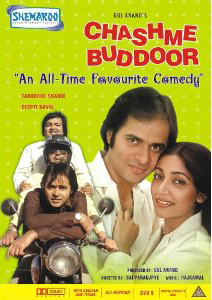
Quick ceremony over, certificate in hand, we proceeded to my barsati, a rooftop shelter I shared with my friends, a typical bachelor pad of those days, familiar to all who have seen the movie Chashme Baddoor. The plan was that my bachelor days roommates would move out, and she would move in. As I was completely broke, and she was leaving home with only the clothes she was wearing, my friends contributed to get us the basic furnishings and kitchenware to start a home.
I had warned my friends that I had neither money nor time to organize a party, so they volunteered to bring provisions. When we took stock, we found that everyone had brought liquid refreshments of various degrees of potency, and many had brought other aids for expanding the consciousness, but none had thought of getting food. A helpful neighbour produced eggs, sausages and bread, and a riotous party ensued.
Leaving behind various comatose bodies, a few relatively sober friends managed to load us on to the train. En route, at every station I wanted to jump off and head back.
At the station my kid brother was there to receive us, but refused to disclose the situation at home beyond the enigmatic message that we would soon find out.
All is well that ends well
A complete nervous wreck by the time we reached home, there was a sight waiting for me that I will never forget. The house was decorated in the traditional way to welcome the new bride and relatives had gathered over for the ceremony.
My brother explained later, that after my father’s return and receipt of the news, he had initially broken the world record for a sitting high jump. But his next reaction was that the poor girl whom his idiot son had got into the mess had to be made to feel welcomed. A traditional ceremony was organized overnight, with a diktat issued to all relatives that everyone was to be present to receive the new bride. The patriarch’s wishes were followed, and a warm welcome followed to the girl from an alien culture.
I wish I can be half the man my father was, in showing love and support to my children when they really need me.
The Bingo Little Phase of my matrimonial bliss continues to this day.
Thank you, Plum!
Related Posts:
Posted in What ho! | Tagged Humour, Love Affair, Marriage, P G Wodehouse | 3 Comments »

Plum has trained his fans well. Life’s harsh slings and arrows do not leave them gasping for breath. If they get surprised like a nymph while bathing, they are quick to recover. They are seldom baffled, bewildered, confused, confounded, disconcerted, flummoxed, nonplussed, mystified, perplexed, or puzzled for more than a few seconds. Thinking on their feet comes easy to them. So does a chin up attitude. If fate offers them lemons, they are happy to make a lemonade out of it and even lace it with a suitable tissue restorative. They wear humorous glasses which enable them to view life’s adventures in a lighter vein.
Here is an impromptu collection of some juicy narratives recently shared by some of his fans, ending with a few autobiographical kinds from yours truly.
Sukanya Lakshmi Narayan
Some decades back, I happened to meet a couple at the Annual General Meeting of our community. One of those MNC types when the MNCs were of a British demeanour. But they were given plush quarters elsewhere. My better half (BH) was elsewhere in some part of world trying to make his employer richer.
When we discovered a common village ancestry, despite the stiff upper lip etc, the dialect came pouring out, and much bonhomie followed with an invitation to drop in anytime. After all, same village ancestry equals family, right? At least in India it does.
Soon after, one balmy Sunday afternoon, yours truly was taking a well-deserved siesta when the doorbell rang. The BH, who didn’t like the striped PJs men in North India sported, nor the bare-chested half folded veshti (lower wraparound) avatar that South Indian men could be seen in, got into action. Instead, clad in one of those giant stiffly starched shorts of the British Raj police fame, khaki colour besides, and a banyan(vest), BH opened the door. So what if the said shorts were straight from some fancy store off Oxford Street!
The aforementioned MNC couple stood there and gave him a dekko, much as Bingo Little and Rosie M Banks might have done, had they ever come across Roderick Spode, albeit a genteel one. The man sized him up and with a polite but authoritative tone and asked, “Memsaab hain?” (read as, “Is the white lady of the house in?”). As one would ask a servant in the heyday.
BH ushered them in, made them comfy and ran in to tell me to get up, since some people have come to see you. Hurriedly bemoaning the loss of a precious siesta, I walked into the drawing room and the flurry of our dialect began. Did I mention it’s a foreign tongue to the BH?
Well, BH showed up in two minutes, dressed in a branded Polo tee shirt and Saville Row trousers and sat himself right next to me on the sofa. No purple socks or cummerbund. Jeeves would have approved.
As Plum would say, a kaleidoscope of expressions flitted across their faces, from shock, followed by outrage, followed by realisation and embarrassment and finally a difficultly executed polite half-smile expression of hello.
Priceless.
What’s even more priceless is the legacy Plum has left us, to view life’s situations in a lighter vein. So, we don’t mind laughing at ourselves too!!
Lekshmy Sreekantan
Something of a gaffe happened to me too although I am not hoity toity. I was standing in the doorway awaiting the arrival of an unseen newly appointed cook when a yet unseen new neighbour of mine popped up. I invited her in took her straight to the kitchen and outlined her duties. She listened to me (a beautiful soul) patiently and then informed me that she is our new neighbour!
Frankly, I did not know where to look. A bright pink shade might have popped up on my visage. Had Lord Emsworth been around, he could have been forgiven for thinking I was one of the blooming Bignonia Radicans in the Blandings gardens. But the lady was grace personified. A radiant smile from her and we became good friends.
John Korulla
If you want my ha’ penny worth, I could not do better than to relate of the subsequent discomfiture of an erstwhile colleague of mine (a Palakkad Namboothiri) into whose bank branch a prosperous looking man walked in with a purposeful mien. He went up to the Deposits counter and had to wait to be served. He had to wait for about ten minutes, which he passed with becoming grace. When his time came, he moved to the Officer’s counter and informed him that he just came to check the place out and that he would be taking charge the next day as the next Chair. His conduct would surely have met with approval of someone like Rupert Psmith. My mate could not live down the story the Chair kept repeating to show how Managers were not proactive enough. You should have seen the poor fellow cringe whenever the Chair came to a Managers’ Meet.
Yours Truly
Here are a few links which capture some of my own experiences in life:
Note:
- Illustration courtesy Suvarna Sanyal.
- Consent by respective fans to reproduce their narratives here is gratefully acknowledged.
Posted in What ho! | Tagged Fans, Humour, Incidents, Legacy, P G Wodehouse | 3 Comments »
Posted in For India, With Love! | Tagged Ethics, Lord Rama, Ram Rajya, Ramayana, Values | Leave a Comment »
One of the perils of suffering from the third and final stage of Wodehousitis is that wherever you may be and whatever mischief you may be up to, allusions to Plum’s characters and situations lurk just around the corner.
Recently, I had the opportunity of visiting the historic city of Allahabad (or Prayagraj, as it is known these days) in the northern part of India. The couple who took the risk of hosting me were cast in the mould of Angela and Tuppy Glossop. Having sunk all their differences over sharks, they had long since settled down to a state of matrimonial bliss. They were the epitome of hospitality, fussing over me and pampering me no end. Three times a day, the lavish spreads on offer made Greed win over Prudence, as they say. Trips to exotic locales in the city were meticulously planned and executed. All the itineraries inevitably included stopovers at joints famous for their importance, whether in terms of geography, history, culture, or those offering a lip-smacking variety of street foods, sweets, and savouries.

Sangam, the renowned confluence of three rivers – the Ganges, the Yamuna, and the mythical Saraswati – made one wonder if students at Allahabad University ever organize boat-racing nights there, eventually depriving some of the rozzers on duty of their caps or helmets. Also, after every twelve/six years, when a religious congregation of millions of persons happens, whether someone like Ukridge runs a syndicate which encourages people to bet on the percentage of dysfunctional public toilets in the area.
The city also boasts of haing been the capital of India for a single day.

A friend like Rev. Aubrey Upjohn, who happens to be a senior faculty member at Allahabad University, offered to drive me around the campus. He was accompanied by his illustrious elder brother who practices at the local High Court and is also a former student of the University. The latter proved to be a treasure trove of the institution’s glorious past. While passing by the English Department, which was once headed by such a literary stalwart as Harivansh Rai Bachchan, one’s head simply bowed in reverence.
When passing by an iconic coffee house in the Civil Lines area, one is told of the small room in its corner which used to play the role of the Drones Club where famous literary figures of yore would meet up and exchange ideas of books and poems to be unleashed upon the unsuspecting public.

While driving past the majestic High Court building, one wonders if a beak as prominent as Sir Watkyn Bassett would be dishing out harsh sentences to some criminals inside its hallowed precincts. If so, one pities the latter who, despite having mentioned false identities, might still be meekly shuffling their feet.
While watching a sound and light show which highlighted, inter alia, the supreme sacrifice made by one of India’s freedom fighters, one wonders if either Roderick Spode or Stilton Cheesewright had ever heard of him.
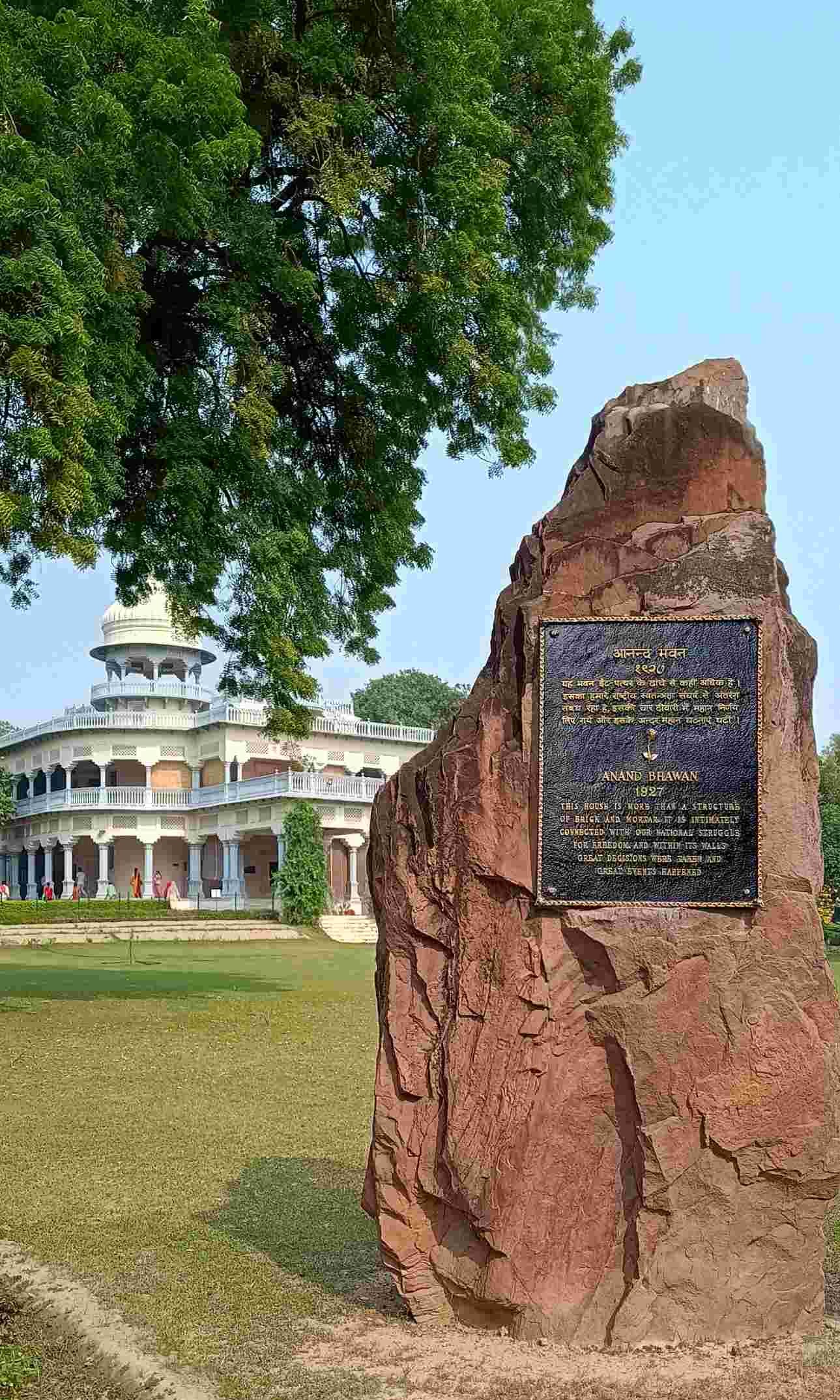
When visiting Anand Bhavan, the ancestral residence of the Nehru family and the place which played a crucial role in India’s fight for independence from British rule, one comes across a room where Mahatma Gandhi used to stay when visiting the place. One shudders to think of the outcome for India if the British had ever conspired to entice him there with a good juicy steak, followed by roly-poly pudding and a spot of Stilton, possibly nipping his movement of civil disobedience in bud.
Of course, the icing on the cake was a meeting with Ma and Pop Stoker who happen to live in the city. Just like yours truly, the latter happens to be not only a Plum fan but also a movie enthusiast. Both were gracious enough to call on me and discuss matters of mutual interest.

Pop Stoker is done with the Telecommunications stream of the Indian Air Force. He has had a jolly good time there, especially because, unlike the other ‘arms’ of Indian army, which happen to have more of a stiff-upper-lip temperament, the air force believes in keeping its tribe happier. It does so by according ‘Humour’ a remarkably high priority. This would perhaps explain his fascination with the antics of Jeeves, Bertie, Ukridge, Lord Emsworth, and the rest of them. As and when he can tear himself away from Plum’s oeuvre, he loves spending his time goggling at divas like Sophia Lauren, Julie Andrews, Audrey Hepburn, Julia Roberts, Drew Barrymore, and Meryl Streep on the screen. Having settled down in the sylvan surroundings of Chuffnell Hall, he and his wife have a large heart, generously offering to host even lesser mortals like yours truly at their place.
Ma Stoker has not really been an avid Wodehouse reader herself. But matrimony comes with associated perils. She is not immune to the moments when her husband is spotted variously chuckling, guffawing and, to use a modern illusion, rolling on the floor with laughter. Investigations conducted at these junctures do keep popping up Wodehousean passages as chief suspects. And she excels at that profound quality found in the better or bitter halves of devoted readers, without which the very pursuit of reading would be rendered impossible – indulgence. She indulges Pop Stoker as he reads and tolerates him even as he sometimes reads aloud to her. It was this sterling indulgence, supplemented by a dash of feminine curiosity, which had brought her to size me up.
Both happen to be proud parents of Pauline and Emerald. Pauline assists a large conglomerate in her capacity as an Instruction Designer. Since she has landed a desk job, it is not clear if she still expects her loved ones to swim a mile before breakfast and then proceed to play five sets of tennis post-lunch. Perhaps her dynamism now manifests itself in the virtual world. It is also not known if she is fond of wearing heliotrope pyjamas, whether borrowed from a friend or bought online.
Emerald is training to be a lawyer with an institute of eminence. One is not aware if she ever lost a bet on the racing tracks and had to work as a cook to cover up the losses. She could be one of those soothing, sympathetic legal eagles a wannabe litigant could take her troubles to, confident of having her hand held and her head patted, restoring her faith in our judicial system.
When persons known to one from social media pop up thus in flesh and blood, it is a refreshing experience to talk to them over a piping hot cup of tea and a couple of fresh samosas, duly organised by my genial hosts.
It defies one’s imagination to believe that a city like Allahabad which boasts of a rich literary heritage hosts only a single fan of Wodehouse. I am reasonably certain that there are quite a few others. However, they hide themselves well.
Plum was not much off the mark when he said that “There is no surer foundation for a beautiful friendship than a mutual taste in literature.” With due apologies to him, one gets tempted to add fine arts and movies as well to his assertion.
Related Posts
Posted in What ho! | Tagged Allahabad, Anand Bhavan, Emerald, High Court, Humour, Independence Movement, Mahatma Gandhi, P G Wodehouse, Pauline, Prayagraj, Sangam, Stoker, University | 3 Comments »
There is no doubt that there is in Delhi all that life can afford. Someone who is tired of Delhi is tired of life itself. The city and its surroundings are littered with relatives and friends of all hues, sizes, and shapes. There are localities which are replete with old memories. Besides glitzy malls, shopping areas and historic monuments, the city still retains many of its green areas. Street foods which suit all palettes and pockets and are from various parts of the country are readily available.
All this is not to say that there are no aspects of the metropolis which one does not hate. One loathes its teeming millions, its smells, its noises, its buses, its taxis, the mind-boggling variety of vehicles on its roads, its endless traffic snarls, its highly polluted air, its beggars trying to persuade perfect strangers to bear the burden of their maintenance with an optimistic vim, and its crowded pavements with aggressive sellers pouncing upon one to peddle their stuff. Commuting is a hassle, though the metro is a great boon to the citizenry.
During the peak of winter, when a smog envelops the city and its surroundings, and the sun goes AWOL, the pleasure of munching on roasted peanuts and gorging on either baked and spiced chunks of sweet potatoes or delectable carrot pudding is also snatched away from its hapless denizens.
But help is not far away. The prospect of meeting a bunch of fans of P. G. Wodehouse invariably drives the blues away. It makes one develop nerves of chilled steel and venture to crawl out of one’s multi-layered quilt. It infuses the inner being with a mirthful warmth, spreading light and sweetness all around.

And if the meeting gets held at a place with a unique ambience where one could even tuck into an Anatole-ish spread, the grass outside looks greener and the flowers swaying in a gentle wind blowing mentally transport one to the gardens of the Blandings Castle. One realizes that God is in heaven, and all is well with the world. More so, since there happens to be a gallery of modern art just next door, and there is no Honoria Glossop around to exhort one to not only look at the ghastly objects on display but also pass some intelligent-sounding comments about the same.
Rupert Psmith, who had coordinated the event, was already present, along with Eve Halliday, the affable lawyer. Having given up on fish business, being a fake poet, and then providing secretarial support services to Lord Emsworth, he had developed a passion for photography. His lens captures the eternal beauty of flora and fauna. While others got busy with much back slapping and what-ho-ing, he quietly went about using his lens to create a visual record of the boisterous proceedings.
Eve continues to be as strong and compassionate as she was when we met her last at Blandings Castle. Having had quite a few adventures in her life, she had decided to lead a relatively quieter life in the company of Psmith. While maintaining her dash and vigour, she decided to become a lawyer, to gainfully deploy her honesty, sympathy, and intelligence to assist her clients in seeking justice. Setting the tone of the party was the work of a moment for her.
Mrs. Spottsworth was amongst the first ones to show up, to check out the kind of mischief we were up to. This was her maiden attempt at joining in, and a fulfilment of one of her long-held pious intentions. One is not too sure if she is still interested in psychical research or if she uses a Ouija board to communicate with departed souls. One does know that she had been a lion-tamer of very young kids at a prestigious school in the city. However, she was humility personified when she pointed out that it was she who had got tamed instead, having had the opportunity of learning quite a lot from her wards.
Yours truly was the next one to troop in, looking like a stuffed frog. As is my wont when unduly elated in the exalted company of Plum fans, I guess I enlivened the proceedings somewhat by croaking intermittently.
Willoughby Scrope (Willy, in short), yet another legal eagle to grace the occasion, was the next one to pop up. The group was pleasantly surprised to find that besides looking some prominent beaks in the eye while advancing his cogent arguments in favour of his clients, he also happens to be an author. He gifted a copy of his recently published book The Sterling Bull and Other Stories to all of us. It turned out to be a nice collection of some juicy stories from his earlier days, written in a lucid manner, with a dash of Wodehousean humour.
When food was being ordered, Willy solemnly declared that he had recently turned a pure vegetarian. The group was left wondering if his predicament was similar to the one faced by Gussie Fink-Nottle who was once barred from making his stomach a graveyard by Madeliene Bassett.
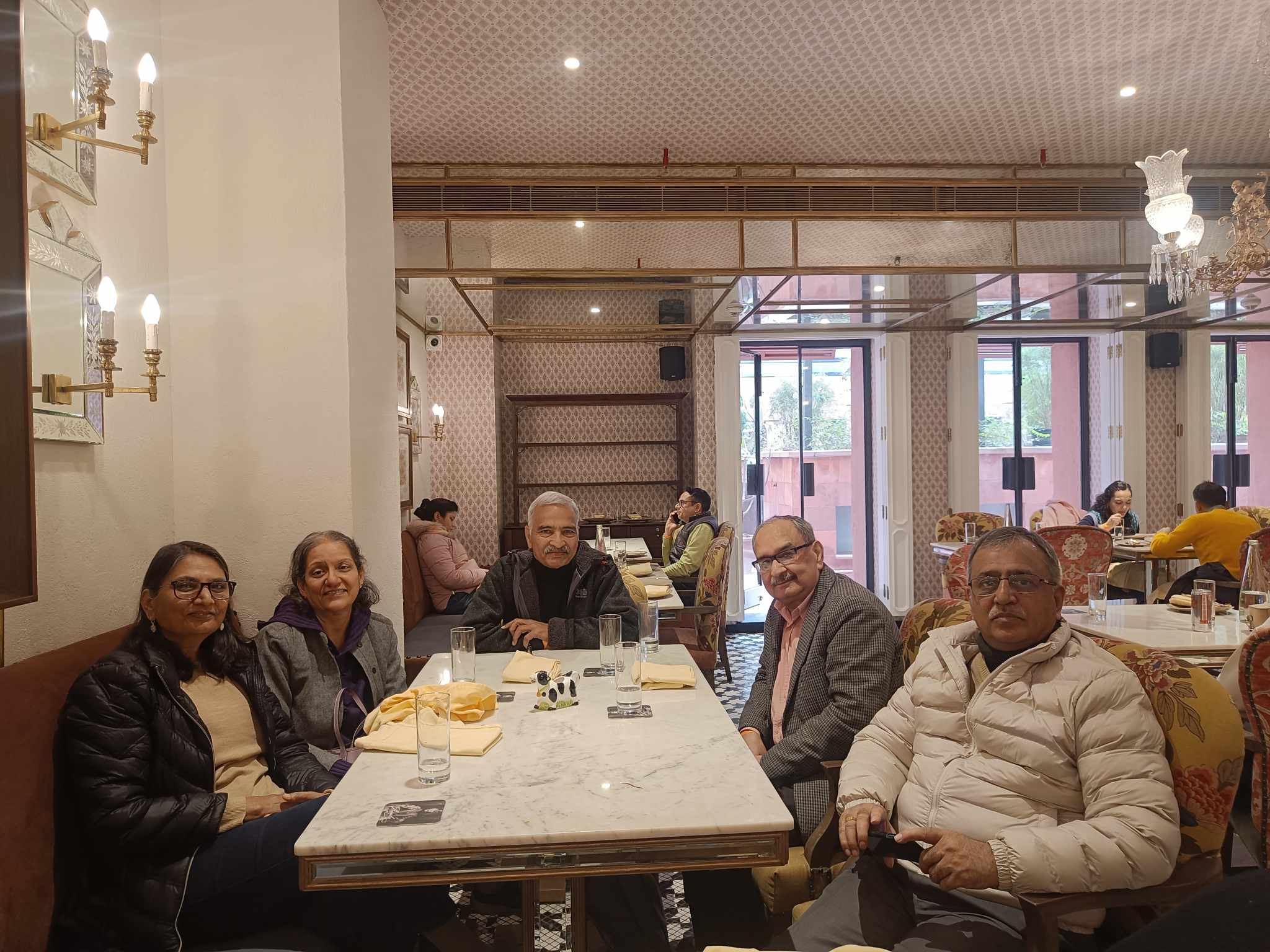
The conversation that followed covered a broad sweep of Plum’s works. Empress of Blandings. Lawyers. Heliotrope pyjamas. Kids who demand protection money from their would-be stepfathers. Butter slides. Blackened faces. The precise number of cats in Bertie’s room when Sir Roderick Glossop came for a spot of lunch. The head of a fish, staring up at Bertie in a rather austere sort of way, as if it wanted a written explanation and apology. Shoplifting leading to a shift from Madison Avenue, NY, USA, to a dilapidated country house in the UK. The propensity of millionaires from across the pond to scout around for stately mansions in Queen’s land. The castles where in the summer the river is at the bottom of the garden, and in the winter the garden is at the bottom of the river.
While delectable food was being put down the hatch, all advice rendered by Laura Pyke about fat-soluble vitamins was forgotten. Luckily, Doctor Murgatroyd, who might have cautioned the group about the perils of greed winning over prudence on the dining table, including but not limited to spots appearing on our chests, was singularly absent. Doctor Hailsham, had he been present, would have taken a jaundiced view of the gourmet food being gobbled up. He would have instead recommended either parsnip or seaweed juice, followed by stewed lettuce. Perhaps, even some potassium broth and grated carrots, followed by a refreshing cup of dandelion coffee.
On quite a few occasions, when the ripples of laughter emanating from the table crossed a certain decibel level, one could notice other customers seated nearby raising their eyebrows a quarter of an inch, an art which they might have learnt from Jeeves. The hassled waiters heaved a sigh of relief when the group ventured out. Goodbyes were said and phone numbers exchanged, followed by another photo shoot.

(From left to right: Willoughby Scrope, Yours truly, Mrs Spottsworth, Eve Halliday, Rupert Psmith)
Those who are turning green with envy upon reading this account need not fret. They would do well to brace up for the next gig, which may get planned around February 14, 2024.
(Note: All allusions to characters of P G Wodehouse here are purely arbitrary and subjective and are not intended to offend any of those who spared the time to join in and make this gig a memory to cherish for a long time. Permission to use photographs is gratefully acknowledged.)
Related Posts:
Posted in What ho! | Tagged Fans, Humour, NCR, New Delhi, P G Wodehouse | 6 Comments »
Swami Vivekananda: Uncovering the Humorous Side of the Fearless Monk: Guest Post by Suryamouli Datta
Introduction
“In shattered gates, your radiant stride, proclaiming triumph’s song,
In the vast ascension from shadows, yours, the victory throng.
O triumphant soul, at life’s dawn anew,
In your grasp, the hopeful scythe, cutting bonds askew.
Through ancient woes, in desolation’s field, let freedom ring,
Come, O melancholy, come, O tranquil, yours, the victory spring.
Come, O unstained essence, come, O fearless breath,
In the morning sun’s arrival, midst storms, vanquish death.
The chariot of sorrow, in your path, resounds loud,
Awaken the dormant minds, in the heavens, be proud.
In the tapestry of life, weave melodies of joy,
Yours, the call of victory, that nothing can destroy.”
The translated lines above are from a song by Rabindranath Tagore. To me, they provide a clear description of the ‘Fearless Monk’ from India, which resonates with me and many others.
On His Birth Anniversary
As we commemorate Swami Vivekananda’s birth anniversary, it’s customary to applaud his spiritual wisdom and profound contributions. However, let us embark on a unique journey into an often-overlooked facet of his personality – his impeccable sense of humour, beautifully encapsulated in many of his writings, however, I want to highlight particularly the piece titled ‘Paribrajak’ or ‘Traveller’. Here, we get a glimpse into the witty and comical storytelling prowess of Swamiji, accompanied by his closest disciples, Brother Tu (Swami Turiyananda) and Sister Nivedita.
Lethargy and the Diary Debacle
Swamiji, in his typical playful style, initiates the narrative with a candid confession about his inability to maintain a daily journal of his travel experiences. Blaming it on his inherited Bengali lethargy (and of course, his ‘inability’ to remember dates), he humorously claims his intention to write daily but continuously postpones it to eternity due to various engagements. The struggles of a Bengali writer unfold comically, resonating with the perpetual promises to put pen to paper but succumbing to the irresistible allure of life’s myriad distractions. Call it a shade of procrastination if you will.
Sea Sickness and Lord Hanuman
The adventure at sea brings its fair share of amusement as Swamiji ponders whether Hanuman, Lord Rama’s devoted monkey disciple, also experienced sea sickness during his legendary leap to Lanka. Tongue-in-cheek, Swamiji suggests that Hanuman might have encountered some sickness when he accidentally stumbled upon a demon’s mouth. Comparing their voyage on a ship to Hanuman’s ‘heroic leap’, (apart from the ‘small detail’ that Lord Hanuman managed to accomplish through a mere leap, here we have Swamiji, an ‘ordinary person’ (?!), attempting to achieve the same feat by riding in a ship that sways with the whims of the waves!), Swamiji further jokes that their fellow travellers are no less than mischievous imps (who Lord Hanuman encountered upon arriving in Sri Lanka), but unfortunately, as Swamiji describes, he himself is stuck traveling with these imps who, according to Swamiji, are heavy meat eaters, solely fixated on using forks and knives for their meals. With a playful tone, Swamiji teases his beloved disciple, Brother Tu, for being afraid of being assaulted by these harmless items of cutlery. For, according to Swamiji, his disciple is quite traumatized about the fact that those imps who have taken the shape of travellers will be quite eager to have him (Brother Tu) as a snack!

Comic Description of the Sea and Rivers
In the realm of Kalidasa’s poetic tapestry, the sea unfurls its boundless expanse, merging seamlessly with the distant orbits of the wheel. Along the shores, dark blue illusions dance amidst rows of swaying palms, their rhythm mirroring the heartbeat of the forest. On the maritime horizon, where the earth meets the sky, a black line dissolves into the saline stream of the ocean, creating a mesmerizing spectacle.
Swamiji takes a jocular dig at the famed poet Kalidasa’s romanticized depiction of the sea in his work “Raghuvamsa”. He asserts that reality differs greatly from poetic imagination. From the ship’s wild swings to Britannias shouting slogans, Swamiji amusingly reveals how his disciple, Brother Tu, succumbs to seasickness, likening his troubled state to a desperate search for the first grain of rice consumed during a rice eating ceremony. He then dives into humorous descriptions of India’s rivers, adding a splash of laughter to the narrative.
A Satire on Caste and British Rule
Swamiji uses his unique sense of humour to shed light on the caste system prevalent in India during the British Raj. With a sarcastic tone, he applauds the British government for considering all Indians as mere “natives,” thereby eradicating the evil of caste discrimination.
Moving on, he mocks the Indians who attempted to disown undesirable aspects of Hinduism by claiming to be of Aryan descent and enlightened by British blood, only to find that the British government disagreed. Swamiji emphasizes the need to cherish and learn from the West rather than blindly imitate it.
Racism and the Loss of Homesickness
Condemning racism, Swamiji humorously compares the Western concept of maintaining a distance from natives to India’s caste system. He expresses how this realization, though bitter, temporarily erased his homesickness, as it mirrored the Indian belief of a caste getting corrupted when mingling with people of lower social standing.
Entertaining Tales of Forts, Businessmen, and Seasickness
Swamiji entertains readers with amusing stories of forts, businessmen, and the challenges faced by fellow travellers on their voyage to the west. The witty anecdotes and lively descriptions bring history and places to life, providing delightful storytelling and a fresh perspective.
A Humorous Take on Cultures and History
Swamiji, the master of wit, unveils a delightful indifference as he takes us on a journey through cultures and the histories of nations. With his clever and comical lines, he effortlessly breathes life into his writing, leaving us in stitches. Let me share with you one such gem that may leave you chuckling uncontrollably.
“The Europeans,” quips Swamiji, “believe it is scandalous to have bare feet, so they go to great lengths to cover them up, completely disregarding the exposure of any other body parts! And in this incredible land of India, women are expected to cover their heads with veils, seemingly unconcerned about which other body part is on display in the process.”
Swamiji’s light-hearted tone adds an extra layer of amusement and intrigue to his narrative, making it an enjoyable ride.
How Swamiji Channels His Inner Western Art: A Delightful Analysis
Being an ardent admirer of the great humourist P.G. Wodehouse (whom, I think, Swamiji had never met), I can’t help but spot the same brilliant wit in Swamiji’s works! Believe it or not, his clever observations about society, the history of any nation documented, his fellow companions, and even himself, bring back fond memories of Plum’s delightful creations. You simply must delve into this masterpiece (Traveller) to grasp the essence of my claim. But alas, I must offer my sincerest apologies to my dear readers, as my feeble attempts at capturing the same mirth in my humble language may do grave injustice to the brilliance of his original writings. But fear not, for Swamiji’s words are an absolute riot,
For example, in the realm of architectural contemplation, Swamiji’s astute reflections on the nuances of German and French architecture elicit a hearty guffaw. With a dash of wit as effervescent as a perfectly shaken cocktail, he wittily opines:
“Behold the robust and masculine visage of German Architecture, akin to a residence crafted for grand elephants or noble horses. Contrastingly, the French architectural symphony, tailored for our cherished animal companions, paints a tableau of celestial beings frolicking in ethereal realms!”
Surely, such ingenious observations offer a sneak peek into the kind of humour-laced glasses which Swamiji used to differentiate between two starkly different architectural styles.
In a similar vein, Wodehouse describes a street in London in his inimitable tongue-in-cheek manner as follows:
“In shape Arundell Street is exactly like one of those flat stone jars in which Italian wine of the cheaper sort is stored. The narrow neck that leads off Leicester Square opens abruptly into a small court. Hotels occupy two sides of this; the third is at present given up to rooming houses for the impecunious. These are always just going to be pulled down in the name of progress to make room for another hotel, but they never do meet with that fate; and as they stand now so will they in all probability stand for generations to come.“
(Something Fresh)
In Conclusion
This exploration of Swami Vivekananda’s humour unveils a side of him rarely discussed – his comic genius. By delving into his humorous travel writings, readers gain insight into the wit possessed by this esteemed Indian monk. Beyond being a spiritual leader, Swamiji emerges as a storyteller with a keen sense of humour, inviting everyone to dive into the hilarity and discover the “Indian Monk with a sense of humour” for themselves.
Cheers to the fearless monk who not only enlightened our minds and exhorted us to lead purposeful lives, but also tickled our funny bones!
Related Posts:
Posted in What ho! | Tagged Humour, Kalidasa, P G Wodehouse, Spirituality, Swami Vivekananda | Leave a Comment »
Come festive season and a new Yuletide spirit casts its spell over Homo sapiens every year. A spirit of outwardly cheerfulness and goodwill prevails. Fresh rays of hope penetrate through the dense clouds of gloom. Concerns of eking out a living fade away, giving way to a transient resurgence of happiness. Relationships get nurtured afresh. Networking concerns reign supreme.

Kolkata, the erstwhile second city of the British empire, is no exception. For those enlightened souls who are already well-versed in the seasonal predicament that plagues the illustrious Park Street in Kolkata, no further elucidation is necessary. On the brightly lit street, one is apt to see spirited pedestrians deftly trying to avoid colliding with the ones coming from the opposite side, thereby re-affirming Nature’s law that a given spot on a given plane shall at a given moment of time be occupied by only one body. One can spot hassled drivers manoeuvring shimmering limousines as well as old jalopies which are crawling along at a speed which would make a tortoise glance at them in a supercilious manner.
In brightly lit departmental stores, befuddled customers can be seen getting lured by hefty but deceptive discounts. One may feel a sense of pity for the hassled husbands hidden behind a huge pile of shiny gift packets dutifully following their wives to the nearest billing counter. Lobby managers in hotels and restaurants can be seen perspiring, trying to manage the queue of weary shoppers pouring in, looking for something to put down the hatch.
Those peddling street foods of all kinds can be seen doing brisk business. Amidst all the razzmatazz, one can see quite a few pavement book sellers sit idly, having a forlorn look in their brooding eyes, as if contemplating the divine. Kolkata may pride itself on being a city of intellectuals but perhaps there are times when the festive cheer takes over the collective spirit of its inhabitants, suppressing their innate yearning for intellectual upliftment.
As opposed to the infernal din on Park Street, the ambience inside the hallowed establishment known as ‘Kwality’ was serene and cosy. If the government ever instituted an award for a successful and victorious entry into the equivalent of the Drones Club of Kolkata, its first claimants would surely be the five brave souls who could make it on the occasion.

Those turned up included a prominent beak who, had she been cast as Aunt Dahlia in one of Plum’s theatre adaptations, would have been spectacularly popular, a school principal in the mould of Rev. Aubrey Upjohn, a senior educationist in the realm of milk of human kindness, an IT expert who is devoted to his family as much as Bingo Little happens to be, and yours truly.
All those present were punctual, jovial, and exhibited a proclivity for rolling on the floor in fits of laughter (figuratively, of course). The gleeful yelps emanating from them often made other patrons seated on the nearby tables raise their eyebrows a quarter of an inch. Their indulgences were not limited to the culinary delights of Darjeeling tea and delectable fish fingers. Their minds were nourished by scintillating conversations and an abundance of references to literary treasures dished out not only by Plum but also by many others. Movies steeped in a Wodehousean spirit, or the ones inspired by his works, came up for discussion.
They spoke of Wodehouse and his influence on all of them. The challenges of translating his works were discussed. Surprise was expressed when one spoke of some creatures who do not like him, primarily owing to the language being a bit dated and many plots appearing to be copy-and-paste jobs. Information about the Bengali film Rajat Jayanti directed by Pramathesh Barua, which was an adaptation of Money for Nothing, was shared. Sakher Chor by Uttam Kumar, which bears a significant resemblance to A Gentleman of Leisure was mentioned.
The beak spoke with great enthusiasm about the famed Bengali cuisine and about her meetings with other fans located in Bengaluru and Delhi. The eminent educationist shared the kind of work he does to uplift the intellect level of his students at one of the premier institutes of management in India. The principal, who has just published a book of short stories, spoke briefly of challenges of taming lions and lionesses in our liberal times. Bingo Little gave a detailed account of works in Bengali literature and movies which happen to be inspired by Plum.
They listened with some interest to a brief account of my recent pilgrimage to Dulwich College. This made them recall another famous alumnus of that esteemed institution, Raymond Chandler, which took them to Humphry Bogart and Philip Marlow.
Suffice it to say that it was a feast of Reason and flow of Soul which was never punctuated by intervals of uncomfortable silences which arise when all the members are meeting each other for the first time.
Who says that joy cometh only in the morning? It also comes in the evening, especially if it is an occasion when fans of Plum meet, that too in a metropolis which is often alluded to as the City of Joy.
(Inputs from Ms Indrani Ganguly and Mr Suryamouli Datta are gratefully acknowledged.)
Related Posts:
Posted in What ho! | Tagged Calcutta, Fans, Humour, India, Kolkata, Kwality, P G Wodehouse, Park Street, Travel | 4 Comments »
-
Recent Posts
Buy the Book

buy the book
Categories
-
cc
Tags
Art Bertie Wooster Bhagavad Gita Bingo Little Birthday Blake Mouton Grid Blogging Bollywood Book Campus Life CEO Chivalry Consciousness Coronavirus Corruption Edwin Empress of Blandings English Ethics Feminism Happiness Health Hindi Hollywood Human Values Humour India Jeeves Kalidasa KIds Leadership linkedin Literature Lord Emsworth Love Lyrics Mahabharata Mahatma Gandhi Management Movies Music Norway Paintings Panjab University People P G Wodehouse Politics Pondicherry Portugal Psmith Puducherry Rabindranath Tagore Ramayana Ritusamhara R K Laxman Romance Rosie M Banks Rupert Psmith Seasons Shakespeare Social Media Something Fresh Songs SPANDAN Spirituality SQ Sri Aurobindo Stephen Covey Switzerland Tatas Thos UBS Values Wodehousitis WomenArchives
- March 2026 (1)
- February 2026 (5)
- January 2026 (2)
- December 2025 (1)
- November 2025 (2)
- October 2025 (2)
- September 2025 (3)
- August 2025 (3)
- July 2025 (2)
- June 2025 (2)
- May 2025 (4)
- April 2025 (5)
- March 2025 (5)
- February 2025 (4)
- January 2025 (4)
- December 2024 (6)
- November 2024 (6)
- October 2024 (6)
- September 2024 (5)
- August 2024 (5)
- July 2024 (4)
- June 2024 (4)
- May 2024 (5)
- April 2024 (5)
- March 2024 (3)
- February 2024 (1)
- January 2024 (4)
- December 2023 (2)
- November 2023 (3)
- October 2023 (3)
- September 2023 (3)
- August 2023 (5)
- July 2023 (5)
- June 2023 (7)
- May 2023 (6)
- April 2023 (6)
- March 2023 (8)
- February 2023 (8)
- January 2023 (7)
- December 2022 (6)
- November 2022 (5)
- October 2022 (8)
- September 2022 (5)
- August 2022 (6)
- July 2022 (6)
- June 2022 (8)
- May 2022 (7)
- April 2022 (8)
- March 2022 (7)
- February 2022 (3)
- January 2022 (7)
- December 2021 (4)
- November 2021 (8)
- October 2021 (7)
- September 2021 (6)
- August 2021 (7)
- July 2021 (7)
- June 2021 (9)
- May 2021 (8)
- April 2021 (9)
- March 2021 (10)
- February 2021 (8)
- January 2021 (8)
- December 2020 (7)
- November 2020 (6)
- October 2020 (5)
- September 2020 (9)
- August 2020 (9)
- July 2020 (8)
- June 2020 (8)
- May 2020 (6)
- April 2020 (5)
- March 2020 (7)
- February 2020 (4)
- January 2020 (7)
- December 2019 (12)
- November 2019 (10)
- October 2019 (5)
- September 2019 (9)
- August 2019 (10)
- July 2019 (9)
- June 2019 (14)
- May 2019 (13)
- April 2019 (14)
- March 2019 (11)
- February 2019 (11)
- January 2019 (14)
- December 2018 (12)
- November 2018 (12)
- October 2018 (14)
- September 2018 (9)
- August 2018 (10)
- July 2018 (10)
- June 2018 (8)
- May 2018 (11)
- April 2018 (11)
- March 2018 (6)
- February 2018 (9)
- January 2018 (10)
- December 2017 (10)
- November 2017 (9)
- October 2017 (8)
- September 2017 (11)
- August 2017 (10)
- July 2017 (10)
- June 2017 (11)
- May 2017 (9)
- April 2017 (7)
- March 2017 (7)
- February 2017 (8)
- January 2017 (10)
- December 2016 (9)
- November 2016 (11)
- October 2016 (10)
- September 2016 (10)
- August 2016 (9)
- July 2016 (6)
- June 2016 (10)
- May 2016 (10)
- April 2016 (10)
- March 2016 (10)
- February 2016 (12)
- January 2016 (10)
- December 2015 (11)
- November 2015 (11)
- October 2015 (10)
- September 2015 (10)
- August 2015 (10)
- July 2015 (10)
- June 2015 (10)
- May 2015 (10)
- April 2015 (10)
- March 2015 (9)
- February 2015 (10)
- January 2015 (8)
- December 2014 (9)
- November 2014 (8)
- October 2014 (8)
- September 2014 (7)
- August 2014 (7)
- July 2014 (7)
- June 2014 (7)
- May 2014 (7)
- April 2014 (7)
- March 2014 (7)
- February 2014 (6)
- January 2014 (7)
- December 2013 (6)
- November 2013 (6)
- October 2013 (6)
- September 2013 (6)
- August 2013 (6)
- July 2013 (6)
- June 2013 (6)
- May 2013 (6)
- April 2013 (6)
- March 2013 (6)
- February 2013 (6)
- January 2013 (6)
- December 2012 (4)
- November 2012 (4)
- October 2012 (3)
- September 2012 (2)
- August 2012 (4)
- July 2012 (2)
- June 2012 (2)
- May 2012 (2)
- April 2012 (2)
- March 2012 (2)
- February 2012 (3)
- December 2011 (3)
- November 2011 (1)
- October 2011 (2)
- September 2011 (2)
- August 2011 (2)
- July 2011 (2)
- June 2011 (3)

 ashokbhatia