Feeds:
Posts
Comments

Other than the topsy-turvy romances of younger couples, P G Wodehouse also regales us with romantic affairs of those who are advanced in age and young at heart. An affection which was discernible in a couple’s younger days – whether declared or otherwise – survives the harsh slings and arrows of life. A chance meeting unearths and rekindles the deep buried embers of love. A well seasoned romance bears fruit. The Valentine Spirit prevails.PGW Man with two left feet

One such couple we get to meet is that of Joe Danby and Aunt Julia, who make an appearance in the story entitled ‘Extricating Young Gussie’ (The Man with two Left Feet). This is how the narrative unfolds.

An inconsiderate Aunt Agatha drags Bertie out of bed ‘in the small hours’ (perhaps around half past eleven in the morning!), much before he has finished his dreamless and sipped his first cup of tea. She is most distressed that her nephew, and Bertie’s cousin Gussie Mannering-Phipps, has lost his head over a ‘creature’ in New York who is on the vaudeville stage.

Bertie recalls the fact that his Aunt Julia, Gussie’s mother, was also a vaudeville artist once. His Uncle Cuthbert saw her first when she was playing pantomime and decided to make her his wife. The family had resisted, but to no avail. Aunt Agatha had then pulled up her socks and groomed her impeccably. Twenty five years later, one could not tell Aunt Julia from a genuine dyed-in-the-wool aristocrat.

Gussie had vaudeville blood in him, and it looked as if he were reverting to type, or whatever they call it.

‘By jove’, I said, for I am interested in this heredity stuff, ‘perhaps the thing is going to be a regular family tradition, like you read about in books – a sort of curse of the Mannering-Phippses, as it were. Perhaps each head of the family’s going to marry into vaudeville for ever and ever. Unto the what-d’you-call-it generation, don’t you know?’

‘Please do not be quite idiotic, Bertie. There is one head of the family who is certainly not going to do it, and that is Gussie. And you are going to America to stop him.’

In New York, Bertie runs into Gussie, now going by the name of ‘George Wilson’. Gussie is determined to win the approval of the father of the girl he loves. The father, one Mr. Joe Danby, used to be a well-known stage artist himself. He would not hear of his daughter marrying anyone who is not in the profession.

Helped by the ‘creature’, Gussie’s first show rolls around. Gussie has stage-fright and starts badly, but halfway through his second song a pretty girl beside Bertie joins in, bucking Gussie up and getting a big round of applause from the audience. It turns out that she is Ray Denison, the girl Gussie loves.Bertie image

Bertie, worried by Gussie’s unwavering affection for Ray, telegraphs Aunt Julia for help. Aunt Julia arrives. Bertie does not explain the situation to her but uses the novel technique of letting her sense the problem of her own. He first takes her to see Gussie’s show. Then he takes her to Ray’s show. Thereafter, they call on the girl’s father.

This is how the scene plays out:

‘Joe!’ cried Aunt Julia, and staggered against the sofa.

For a moment old Danby stared at her, and then his mouth fell open and his eyebrows shot up like rockets.

‘Julie!’

And then they got hold of each other’s hands and were shaking them till I wondered their arms didn’t come unscrewed.

Between the reunited lovers, back-falls on the stage get discussed. Buns and ham sandwiches offered to Aunt Julia get recalled. Seed-cakes lavished on to her by Joe Danby get fondly recollected. Her singing ‘Rumpty-tiddley-umpty-ay’ in a double act called ‘Fun in a Tea-Shop’ gets remembered.

Both undergo a transformation which leaves Bertie twiddling his thumbs. Aunt Julia sheds her grande-dame manner completely, blushes, smiles and even giggles. Danby, ‘a cross between a Roman emperor and Napoleon Bonaparte in a bad temper’, behaves like a school boy.

Old Danby made a jump at her, and took her by the shoulders.

‘Come back where you belong, Julie!’ he cried. ‘Your husband is dead, your son’s a pro. Come back! It’s twenty-five years ago, but I haven’t changed. I want you still. I’ve always wanted you. You’ve got to come back, kid, where you belong.’

Aunt Julia gave a sort of gulp and looked at him.

‘Joe!’ she said in a kind of whisper.

‘You’re here kid,’ said Old Danby, huskily. ‘You’ve come back……Twenty-five years!…..You’ve come back and you’re going to stay!’

She pitched forward into her arms, and he caught her.

‘Oh, Joe! Joe! Joe!’ she said. ‘Hold me. Don’t let me go. Take care of me.’

Meeting Gussie soon after, Bertie hears that Julia and Danby are to be married, as are Gussie and Danby’s daughter.

The narrative ends with Bertie receiving a telegram from Aunt Agatha.

‘What is happening? Shall I come over?’

Bertie resolves to avoid England for a long time and responds thus:

‘No, stay where you are. Profession overcrowded.’

When it comes to Cupid’s machinations, age, caste, creed, profession and social status do not really matter. Love may remain dormant for a long time, but can get revived in a jiffy – much like a Psyche getting revived by a Cupid’s kiss!

Psyche Revived by Cupid's Kiss

Psyche Revived by Cupid’s Kiss

Yet another mature romance we come across in Plum’s works is that of Piggy and Maudie. We get introduced to this couple in ‘Indian Summer of an Uncle’ (Very Good, Jeeves).

Aunt Agatha, eager to protect the family name, plays a spoilsport in both the narratives – ‘Indian Summer of an Uncle’ and ‘Extricating Young Gussie’*. In both cases, she fails, much to the delight of the romantics amongst us.

In both the cases, to escape the fury of an aunt scorned, poor Bertie has to stay away from England for a long time, missing Anatole’s delectable spreads, rave parties and the Drones Club!

*(A century back, this story was first published in The Saturday Evening Post of USA in September 1915).

(Related post: https://ashokbhatia.wordpress.com/2014/02/04/piggy-maudie-and-a-seasoned-romance)

Undergrowth and Fungus are just two of the several terms used by Plum to describe beards. There being a positive correlation between beards and melancholy, it follows that a humorist of his stature would be a stout supporter of clean-shaven men.

Honoria Plum's avatarPlumtopia

P.G.Wodehouse, creator of dapper drones like Bertie Wooster (who once wrote an article for Milady’s Boudoir on ‘What the What the Well-Dressed Man is Wearing’) was not a beard lover. His leading men were clean shaven, taking to false beards only in times of crisis.

Writing of his own experiences in a German internment camp during WWII, Wodehouse said:

A lot of us grew beards. Not me. What I felt was that there is surely enough sadness in life without going out of one’s way to increase it by sprouting a spade-shaped beard. I found it a melancholy experience to watch the loved features of some familiar friend becoming day by day less recognizable behind the undergrowth. A few fungus-fanciers looked about as repulsive as it is possible to look, and one felt a gentle pity for the corporal whose duty is was to wake them in the morning. What…

View original post 361 more words

Time to meet Piggy and Maudie again and wish them a long innings together!

ashokbhatia's avatarashokbhatia

In old age, lust gets mellowed down and wisdom acquires a brighter shade of orange. Holding hands and physicalVeryGoodJeeves contact gets relegated to the background. Instead, common ailments and related medications and therapies rule the roost. At times, the lining of the stomach paves the way for a couple to start sharing the trials and tribulations of life together. One of the stories where P G Wodehouse puts this across succinctly is the one titled ‘Indian Summer of an Uncle.’

Uncle George is unduly attached to the pleasures of the table. The lining of his stomach is no longer in a good shape. Twice a year, his liver lodges a formal protest and he goes off to Harrogate or Carlsbad for some rest and recuperation.

He is contemplating a matrimonial alliance with a much younger Miss Rhoda Platt who happens to be a waitress at his club. Jeeves…

View original post 867 more words

Abstract
All of us strive for perfection. Achieving and maintaining a state of perfect health is a primary concern for many amongst us. There are various kinds of ‘pathies’ which are on offer to help us to do this. But the real help could also be sourced from within us. The faith we have. The willpower we exercise. The actions we take to help our bodies heal themselves. We could strive to be our own doctors.

On one of our luckier days when we happen to be in front of the idiot box, or when the latest internet-savvy gizmo is Health Monarch femalenestling in our palms, we are apt to run into a beautiful documentary which captures the birth of a Monarch butterfly. The radical transformation – from an egg to a caterpillar, then into a chrysalis, and finally into the Monarch butterfly – leaves us somewhat awe-struck and mesmerised. The universe appears to have programmed all living beings to strive to attain a state of perfection, balance and harmony.

When we speak of perfection, most of us refer to our external appearances, actions or conditions. Better inter-personal relations. Better status in society. Better harmony with our environment. Better compliance with laws, rules and regulations. Basically, we envisage a better, wealthier, happier and more humane kind of living.

The harsh slings and arrows of life make us aware of something we invariably take for granted – our physical selves. Those amongst us who have faced a medical crisis of some kind would often be found seeking perfection of the physical being through all the means available.

A rainbow of choices

We would be found tapping into the resources of the allopathic stream which offers diagnostic tools of high standards.Doctors Day We would be spell-bound at the capacity of this stream of medicine to look at the universe within us in a highly mechanical manner. We would be amazed at the extent of division of various organs which function within its complex confines. A cardiologist would declare that our heart continues to beat in a rhythmic manner befitting a piece of classical music. A neurologist would put us under a scanner and tell us that our brain is firing on all its twelve cylinders. A gastroenterologist would put our digestive system under the microscope and assure us that it is discharging its assigned functions in a prompt and regular manner.

Nevertheless, we would still be feeling tired and exhausted and, well, not up to the mark when it comes to physical fitness. As patients, we would then be told of the virtue of psycho-somatic diseases, with broad hints that we could be suffering from some such unidentifiable ailment. Oh, the feeling of smug satisfaction we derive when being told that we appear to suffer from some mysterious disease which the scientists of today are yet to properly catalogue and name, let alone devise a treatment protocol for!

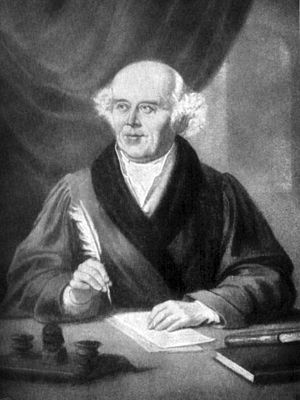
To some of us, the relatively older system of homoeopathy may sound better. We would find that it is more intuitiveHealth Hahnemann in nature. The medications are milder, with lesser side-effects. These might temporarily increase the severity of our symptoms, thereby indicating that a real cure is on its way. After a detailed one-to-one with the physician, we would be back to our ‘popping-the-pill’ routine.

Same goes for the Ayurvedic or Unani streams of healing. The physician would check our pulse and arrive at the disharmony in our bodies. Dietary restrictions would need to be followed.

Our pursuit of perfection does not end here. A brief stint at a health centre run on the principles of yoga, meditation and naturopathy might revitalise our physical and mental systems and show us the way to get out of our ‘pop-the-pill’ syndrome. The focus of this approach is on detoxifying the body and also training us to give up the luxury of indulging our taste-buds. Overall, it brings us closer to Mother Nature, a factor which is sorely missed by those of us who live in highly congested urban settings.

Sure enough, we enjoy the more holistic way of treatment offered under the alternate streams of medicine. TheseHealth Dhanvantari treat us as a composite whole of the body-mind-vital and not merely as an assembly of several parts which continue to function in their individual isolated glory.

We try our hands at flower therapy, colour therapy, magneto-therapy, acupuncture, acupressure, and several others. When it comes to healing, we have a wide range of choices of systems to choose from. Many of us try to take an integral approach, using the best treatments from diverse streams of medicine. We do it based on the faith we have in the physician as well as in the medicine. This plays a crucial role in the healing process.

Building up our inner resilience

When we push ourselves to do something we essentially like doing, we do not get tired. The body and the mind do not revolt. Instead, they bask in the inner glow of satisfaction and happiness. Scientists would call it ‘eustress.’

However, most of the times, we experience distress. We face situations in life which do not allow us to exercise an option of either ‘fight’ or ‘flight.’ Stress built up over a long time tends to be disastrous. The good news is that if stress is directly proportional to external factors, it is also inversely proportional to our internal resilience. Some people tend to take an event very lightly. For others, the same event could be highly demoralising. It depends on how strong we are from within.

How do we build up inner resilience? How do we achieve a better level of harmony between our inner and outer selves and between our heads and our hearts?

The Divine within us can guide us in this respect. If we were to live in harmony with nature, it would help. If we could Technology MEDITATION-ENTREPRENEUR-SUCCEEDchange our dietary habits, we could enjoy better well-being. If we were to control our negative emotions and live only in pure and positive ones, our cells would get healthier. If we smile, it would take away a lot of stress from our poisoned systems. If we feel a deep sense of gratitude within us – say, for simply being alive – positive vibes would generate the soft glow of self-fulfilment inside us, helping us to recover earlier. We would radiate happiness all around us.

The mind exercises a great deal of control over our body. It is surely within our powers to train it to give a positive message to the diseased cells within us. This, compounded with faith in the remedy, could work miracles.

What happens if we fail in our attempts, one might well ask. Not to despair. One, no effort goes waste. Perhaps, we shall not suffer as much as we might have done had we continued in our state of blissful ignorance. Two, the purpose of our birth might just be to reduce human suffering. We might end up bringing succour to others who suffer from a similar ailment. Three, by offering ourselves as a guinea pig and a living human laboratory, we might make a modest contribution towards advancing the knowledge about a particular disease afflicting mankind.

Of Nature, nurture and niftiness

As patients, we aim to gain two kinds of freedoms – freedom from the ailment and freedom from the remedy. How doFeatured Image -- 1211 we become and remain independent of all kinds of doctors and healing systems? Can we become our own doctors?

What we are and what we shall become is only controlled by our actions. The science of epigenetics shows that genes are not only inherited and transferred to our progeny; these also get altered by our actions and the environment. It is not only about what Nature has provided us with. It is also about how we have been nurtured and how clever we are in the actions that we take.

We can will ourselves to heal faster. We can open up ourselves and tap into the infinite energy swirling about in the universe. We could draw a lot of inspiration this way. Our intuitive faculties also come into play and help us in gaining freedom from ailments as also from medications. The potential of our bodies and minds can be tapped better.

The change has to come from within us – from the core of our psychic being. The aspiration has to be genuine. It hasHealth Monarch_Male to permeate all our thought processes and even our actions. A constant remembrance of the divine power within us can be the panacea for all our ailments – a key to achieving perfect health.

In ‘Gitanjali’, Rabindranath Tagore proposes: “Where tireless striving stretches its arms towards perfection (1)”. Even though ‘perfection’ may not be attainable in reality, what matters is the ‘tireless striving’, which could well prove to be a reward in itself. ‘Perfection’, like happiness, need not be a station one arrives at, but a mode of travel, making the journey interesting and worthwhile.

Reference

1. Tagore Rabindranath. Tagore for You. 3rd ed. Kolkata: Deep Prakashan; 2011, p. 45.

(Published in NAMAH, the Journal of Integral Health, Vol 22, Issue 4, dated the 15th of January, 2015)

Souffles and spades

All residents of Plumsville face a difficult choice. Does it make sense to view Plum’s narratives through the eyes of the heart? Or, should one use the mind instead and subject his brilliant works to a pitiless analysis?
Here is a thought-provoking post from Plumtopia which endeavours to address this dilemma.

Honoria Plum's avatarPlumtopia

‘You don’t analyse such sunlit perfection, you just bask in its warmth and splendor.’

Stephen Fry

Most Wodehouse readers will be familiar with this quotation, printed on thousands of new editions, and quoted ad nauseam by reviewers and fans alike. Unfortunately it is sometimes bandied about to support the argument that Wodehouse and his work ought not be discussed — that Mr Fry has spoken and we, mere readers, should restrict ourselves to spouting quotations (or better, dignified silence). As someone who blogs about Wodehouse, I naturally take a different view. Nor am I convinced that this is what Stephen Fry meant.

The quotation comes from Fry’s introduction to What Ho! The best of P.G. Wodehouse (republished in The Independent). Fry suggests the ‘miraculous verbal felicities’ of Wodehouse’s writing are best experienced by reading his work. No attempt to explain or analyse the mechanics of Wodehouse’s prose style…

View original post 961 more words

Often, we hear that age is a mere number,
But also wonder if it makes us dumb and dumber;
Unless proper and timely steps are taken through channels right,
The chances of our becoming dull happen to be bright.


The body needs all the care and affection it can get,
The mind needs to be kept active, not to forget;
The soul needs nourishment of a different kind,
Otherwise it is left in torment and in a bind.


The zeal of youth makes us leap light-heartedly into traps,
The spirit of adventure keeps us wandering off the known maps;
Romantics at heart, fragile in maturity, we jump at gold coins with strings attached,
We behave like zombies, often getting disappointed over chickens un-hatched.

 ZOMBIES

When advanced in age, our optimism fades, no longer making the spirits lift,
A feeling grows that our guardian angels no longer care to bear a gift;
Our triumphs are many, but all sound mellowed and get under-rated,
The aged machinery creaks, a depression often seeps in unabated.


Each day, we shudder to look at a stranger in the mirror,
With brittle bones, fuzzy brains and a heart which is all of a twitter;
Different organs protest, the lining of the stomach seeks our regular attention,
Willing to try any system of medicine, keeping fit being the mere intention.


The mellow wisdom of advancing age we often forget to treat as an asset,
Giving back to society and relishing an inner glow before we walk into the sunset;
Doing what we always dreamed of doing does bring in a wholesome joy,
Listening to the body, nourishing it with a healthy diet, is the right ploy.


The world is still waiting with open arms, to be explored by us,
Glorious sunsets, resplendent seashores and deep gorges beckon us;
Sunshine eager to bathe us, gentle breeze to caress our wrinkled face,
River rapids and waterfalls aspire to spray us with natural grace.

 VACATIONS

Sleeping under the canopy of a star-studded sky on quiet nights,
The moon showering us with its soft azure rays with full might;
The sweet fragrance of flowers missed on the tortuous highway of life,
Await our attention in a lovely phase with minimum strife.


Time to take it easy and have a circle of friends around,
A tissue restorative on one side, a Plum book on the other, and our joy is unbound;
Soaking in the strains of soothing music and catching up on a classic movie,
An outpouring of creative juices, some light exercise, and life is groovy.


Basking in the inner glow of satisfaction, enjoying a deep sense of fulfillment,
For having crossed major landmarks of our lives on this firmament;
Oh, the freedom of soaring at will, free of the sap of life’s intricate bee-hives,
Pursuing our hobbies and passions dreamed of all through our lives.


Wondering if we can leave behind some marks on the shifting sands of time,
Motivating the coming generations to aspire beyond a penny and a dime;
Living the values, ethics, norms and beliefs we expect them to follow,
Always feeling positive, never believing that we lived our lives hollow.


(Related posts:

https://ashokbhatia.wordpress.com/2014/01/12/6-things-to-do-before-you-turn-60

https://ashokbhatia.wordpress.com/2016/01/10/ode-to-old-age)

The Indian Republic is awash with fresh winds of change these days. New policies and programs are getting rolled out. Animal spirits of the economy are attempting to come out of a period of relative hibernation. Start-ups of all sizes and shapes are mushrooming by leaps and bounds. World leaders appear to be courting India in the hope that their own countries become an integral part of the growth story of India.happy-republic-day

Our science historians are busy digging up the glory of our ancient knowledge. Flying contraptions, genetic feats and precision surgical achievements of yore dominate the public discourse. Educationists are busy twiddling their thumbs trying to figure out ways of revamping the entire education system.

Some of our religious and political leaders are busy exhorting young women to reproduce at a higher rate, so the future of the country is brighter. Reversing the inverted triangle in red which denoted the family control program a few decades back, they are telling the delicately nurtured that having only two children will no longer work. Some advocate having five, some ten.

In these testosterone-driven times, those who have entrepreneurial inclinations could perhaps consider the following start-up ideas in the year to come:

1. KamaSutra.com
Taking advantage of the profound wisdom enshrined in ancient Indian texts, such start-ups would fire up the romantic fervor of those in the reproductive age group. Nothing vulgar and illegal would appear here. The content would merely offer simplified lessons in social and dating etiquette, personal hygiene, and reproductive pursuits of all kinds. Guidance would be available on the comparative merits and efficacy of all kinds of libido-enhancing supplements.

2. DesignerBabies.com
Some of the delicately nurtured might take a leaf out of our ancient scriptures like the Ramayana and Mahabharata. Estrogen-enriched sweets and savouries would be on offer here. For securing designer babies, the high standards set by some of the women in our epics would be followed. Demand for high quality sperms of illustrious figures from our armed forces, sports, entertainment and business arenas would be met by these start-ups, albeit at a premium. Sperm banks would be created and aggressively marketed.

3. Priest.com
For the religiously inclined, wanting to invoke Gods and Goddesses representing diverse virtues, these start-ups would provide wide-ranging ceremonial and IVF services. Invocating, propitiating and bidding farewell to entities from higher realms would get covered. Special designer packages would also be on offer.

4. GrandMom.com
This one would address all the neo-natal and post-natal services required by young women who wish to contribute towards the endeavor of nation building. For couples who have to overcome fertility issues, these start-ups would offer free advice and a listing of all fertility clinics in each district of the country. The government could announce special awards and incentives to honor those who deliver quadruplets and higher multiples of young babies in a single shot.

5. BackToTheFuture.com
Since our health infrastructure would be left gasping to handle the sudden surge in demand, start-ups in this category would promote the practice of home deliveries. It would provide on-call services of midwives who are adept at handling deliveries in the comfort of one’s own house. With internet accessibility improving, deliveries would be guided over Skype and Viber, thereby making life easier for wannabe mothers in the hinterland.

6. Lakshmi.com
Herein lies a unique opportunity to correct the adverse gender ratio in most parts of the country. Start-ups in this category would facilitate the proliferation of female babies as opposed to male ones. Over a period of time, when the country has a marginal excess of the delicately nurtured, their harassment would become a thing of the past. Female power would rule the roost.

7. TinyTots.com
To handle the rush of baby boomers, a string of preparatory schools would be on offer here. Teachers wanting to get trained to higher levels of proficiency would get directed to educational outfits specializing in this area. The need for additional educational facilities would be addressed in a mission mode.

8. ToysAndLiterature.com
The new wave of babies would need to be entertained, amused and kept busy. Toys, accessories and all related items would need to be made in India. Comic strip producers will need to scale up their capacities. Games and apps based on our epics would need to be developed and made available, so the hassled parents can upload these onto their latest kid-friendly tablets and enable the young ones to learn India’s ancient values and social mores.

9. Nanny.com
The demand for well-behaved nannies would undergo a quantum jump. Start-ups in this category would identify, train and place highly proficient nannies. Couples desirous of having such services without any interruption would get a nanny within a few hours of the earlier distraught one having left the household.

The possibilities are limitless. The mind boggles. Different sectors in manufacturing as well as in services would witness a boom. Mop up of direct as well as indirect taxes would exceed all targets.

Here is a call to all the young and patriotic citizens of India to gird up those loins, oil those wombs and get down to some serious work. There could be no better way of celebrating our 66th Republic Day.

Ode to a shiner..

Here is a composition by Ms. Sukanya Lakshmi Narayan, an ardent fan of P G Wodehouse. It is based on a true incident, which she has beautifully captured in a typical Wodehousian manner. A fitting tribute, indeed.

PGWodehouse

Our friend, a thorough and jolly gentleman
On Wodehousian principles his life ran,
Raised by overbearing aunts and grandmas
A La Dahlias and Agathas
Even though nary a one was a gentleman.

The devoted son sent his mother
To the park with the nurse and chauffeur
The nurse got drunk
The chauffeur did the bunk
And the nurse socked the master a shiner.

The sinister saga didn’t end there
There was more mystery and dare
To cut a long story short
The master decided to take a shot
And investigate the matter threadbare.

The hunt began for the missing driver
Anyone and everyone was promised a fiver
He was finally found
After much searching around
Crouching in the garage of a neighbour.

It was like a sneaky midnight raid
He was found to be neither sober nor staid
Hulk he was, and mighty
He was tried and found guilty
Of two timing the mother-in-law’s maid.

One gave him a multi-hued shiner
Another back stabbed like a dagger
Oh Plum! See me through
Only you can, only you
Restore my faith in mankind via laughter.

(Thank you, Sukanya, for permitting me to publish this limerick.)

For those who live in Pondicherry, it is often nice to get an objective view of the place, as it appears to someone from outside. Whenever time gives you a break, go through this post. It might be rewarding in more ways than one!

Slow Poke's avatarThe People Village

Who wants a taste of Française in India?

The Promenade, White Town, PondicherryThe Promenade, White Town, Pondicherry

Welcome to Pondicherry (Puducherry), the little humid French town which the French left to the Indians to domesticate. Though it is best to avoid seaside towns located any where near the Equator, I had to pay this town a visit as a traveller and voila. I discovered that this part of India is rich in culture and history and I am not just talking about Pondy but Karaikal, Tranquebar, Kumbakonam, Chidamabaram, Thanjavur, Nagapattinam… all within a four hour radius.

Joan of ArcJoan of Arc

Now let me surprise all of you who have not visited Pondicherry. The entire town does not look French. Only the original part of it does. And that small rectangle is limited to White Town which is between the sea and the canals which now line up the streets of Kassim Salai(Gingee Salai) and Ambour…

View original post 854 more words

Thirukkural (திருக்குறள்), also known as the Kural, is a classic Tamil ‘sangam’ (3rd century BC to 4th century AD) literature composition. It has 1,330 couplets or ‘kurals’. It was authored by the renowned poet Thiruvalluvar.

The Thirukkural is one of the most important works in the Tamil language. This is reflected in some of the other names by which the text is given by such as ‘Tamil marai’ (Tamil Vedas); ‘poyyamozhi’ (words that never fail); and ‘Deiva nool’ (divine text).

Just like ‘Ramayana’, ‘Mahabharata’, ‘Bhagavad-Gita’ and other scriptures, Thirukkural is also replete with words of wisdom. It is simple and contains profound messages.

Thirukkural has 133 chapters, each containing 10 couplets. Broadly speaking, all the 133 chapters can be divided into three sections: Righteousness, Wealth and Love. In the text below, the serial number of each couplet appears on the top, followed by its Tamil text and then by its near-literal translation in English.

Thiruvalluva

Practising as well as aspiring managers could draw quite a few lessons from Thirukkural. Here is a modest attempt to capture a few of its facets.

Leadership

Leadership is more of an attitude and a way of living and behaving. It is about opening one’s heart. It is about inspiring those around one. It is about leading others by example. It is about standing up for others and shielding them from harm.

770Thirukural 770Of what avail is the army of heroic warriors if there be no general to guide them?

388Thirukural 388He is a God among men who shields his subjects.

A good leader is an avid listener. He encourages dissent.

416Thirukural 416Listen to wholesome counsel however meager; for out of it springs great good.

389Thirukural 389The world is under the sway of the monarch who puts up with bold and bitter counsel.

529Thirukural 529Reject none on the score of disagreement. Men who have become estranged will flock to you.

LEADERS

A leader’s life is not easy. Following ‘dharma’ (righteousness) is his/her foremost trait. Being impartial and just is another.

33Thirukural 33Avail yourself of all opportunities. Do not cease from practicing Dharma on all possible occasions to the best of your ability.

111Thirukural 111An equity which knows no partiality is in itself a unique virtue.

432Thirukural 432Niggardliness, empty honor, blind favoritism, are all the faults of a king.

541Thirukural 541Strict enquiry and impartial justice mark the rule of a just monarch.

Intuition plays an important role in the life of a leader. Steve Jobs’ life is a living example of this trait.

429Thirukural 429Men of foresight who guard themselves against coming events know no distress.

Leadership is about human experiences and not about processes.

578Thirukural 578The world belongs to a king who can do his duty and yet be courteous.

Mergers and acquisitions often follow the rule of tying up with a former adversary in business. Google acquired Android, YouTube and Motorola Mobility, so as to extend the reach of its business as also to diversify into related verticals.

679Thirukural 679It is much more urgent to secure the alliance of one’s enemies, than to do good to one’s friends.

Brand Image of an Organization

Thirukkural has chapters which are intended for developing and managing kingdoms. The attributes of an ideal kingdom mentioned in the ancient text are equally applicable to the contemporary corporate world.

738
Thirukural 738Five are the ornaments of a kingdom – absence of disease, wealth, fertility, happiness and security.

This can be interpreted to mean that a great company is one which has a strong brand image amongst all its stakeholders. Healthy and vibrant employees form the backbone of a company. By generating a surplus for its shareholders, wealth gets created. A culture which enables fertile imagination and innovation ensures its long-term survival and well-being. A result-oriented but relaxed culture results into greater happiness of its employees. Guarding the company’s assets – material as well as intellectual – ensures survival in a highly competitive environment.

Management

Managers need to be resolute, decisive and action-oriented. Loyalty to the management and operating within the company policy paradigm are two of the several qualities they need to have.

668Thirukural 668What you have clearly decided to do, do it without hesitation and delay.

766Thirukural 766Heroism, honor, tried policy and fidelity to the king, these four are an army’s shelter.

Stephen Covey has spoken of the habit of ‘sharpening the saw’. The poet also emphasizes the need to keep upgrading our subject knowledge, so as to do well in our careers.

401Thirukural 401Entering an assembly without sufficient knowledge is like playing at a dice board without its knowledge.

444Thirukural 444To follow in the footsteps of those who are greater than oneself is the crown of one’s strengths.

Planning, and thinking ahead, needs to be given a high priority. Want to beat the competition? Know its strengths and review your plans accordingly.

461Thirukural 461After much deliberation over profit and loss and the final gains, launch on a task.

471Thirukural 471A king must act after measuring the strength of his plan, his own resources, the strength of the enemy and that of the ally.

Restraining anger is important. Anger is also an important weapon in a manager’s arsenal. It can be used to put in place a team member who might be getting too big for his boots. When held back and allowed to simmer within, it can be used very effectively. Patience and forbearance are recommended. We also need to have the knack of getting our timing right!

305Thirukural 305If a man were to guard himself, let him restrain anger. Otherwise anger gets the better of him.

487Thirukural 487The wise will not fly into a passion when assailed; they allow their anger to smoulder within till the right time comes.

158Thirukural 158Conquer with forbearance one who has done you harm and caused you anguish.

484Thirukural 484One can succeed in the attempt to conquer the world if the right time and the right place are chosen.

Management is all about getting things done. A smart manager would know what needs to be done, who is the best person for doing it, and the right time to get it done.

516Thirukural 516The thing to be done, the proper person for it and the appropriate time for doing it, must all be duly weighed.

Meetings

Here are some guidelines on when to speak, how to speak and what to speak.

711Thirukural 711Men should weigh their words in speaking when addressing an audience.

714Thirukural 714Before brilliant people, be brilliant; before plain people, be as plain as white chalk.

715Thirukural 715The humility to maintain silence before superiors is the best of all good qualities.

Planning and Execution

The poet exhorts us to avoid procrastination.

674Thirukural 674An unfinished deed and an unfinished fight will, like a half-extinguished fire, cause ultimate harm.

675Thirukural 675Do a thing after carefully deliberating on five things – resources, means, the time, the nature of the deed, and the place.

ch-12-we-and-us-2

677Thirukural 677The manner in which a thing should be done is to be determined after consulting an expert.

Getting Hired

Whether we are hiring a chartered accountant or an engineer, the cultural fit with the company is of great importance. People who sound the same based on their CVs are all different. Their value systems are determined by the family they belong to and the environment they have grown up in. Their personality traits are not the same.

Would they fit in with their immediate team members? Would they vibe well with the culture of the organization? These are some of the questions to be asked so as to ensure that we make better hiring decisions.

960Thirukural 960Out of modesty springs one’s greatness. Out of humility rises the honor of the family.

951Thirukural 951Probity and a sense of shame are virtues innate only in men of noble lineage.

The poet also exhorts us to make a hiring choice with due diligence.

509Thirukural 509Let men be chosen with deliberate care; when once the choice is made, let no suspicions crawl into your soul.

632Thirukural 632A minister should have five qualities: tenacity of purpose, birth in a respectable family, welfare of people, profound learning and perseverance.

Managing the Self

Like all spiritual texts, Thirukkural also extols the virtues of connecting with one’s inner self.

Being amiable and speaking positively helps.

93Thirukural 93To welcome one with a pleasant look and loving words is righteousness.

Helping others in a self-less manner may result into long-term loyalists getting developed. However, help rendered to an ungrateful person could be a waste of one’s time and efforts.

103Thirukural 103Help done expecting no return, if weighed, will be vaster than the sea.

105Thirukural 105Help rendered is not in terms of the return but its value depends on the receiver.

Forgetting and forgiving helps us to reduce our own stress levels.

108Thirukural 108It is not good to forget the benefit received; but it is good to forget then and there the injury done by another.

Self control is the real treasure. So is walking on the right path.

122Thirukural 122There is no greater wealth than self-control; treasure it as your wealth.
132Thirukural 132Strive hard to walk in the right path. One finds it one’s surest ally.

Tiruvalluvar_Statue_Kanyakumari

Loose talk, inane gossip and back-biting happen to be some of the tricks of making enemies and losing friends!

187Thirukural 187Those who alienate friends by back-biting may have forgotten the art of making friends through suavity of speech.
200Thirukural 200Speak profitable words; avoid nonsense.

Gems of General Wisdom

Renown

234Thirukural 234The wise are not favored by the gods; but the renowned on earth are adored by them.

Compassion

250Thirukural 250Oppress not the weak; remember your own fate in stronger hands.

Truth

298Thirukural 298Water cleanses the body; truth cleanses the soul.

True knowledge

352Thirukural 352Men of pure vision are led from darkness to light.

Will Power

595Thirukural 595The greatness of a person is proportionate to the strength of his will power.

Challenges

621

Laugh over your obstacles; nothing like it to push them further and further.

FEMALE POWER

When it comes to cautioning leaders and managers against amorous advances within the confines of their place of work, Thirukkural is silent. However, it is interesting to note that in the Love section, it does deal with matters of romance, sex and lust. If there are observations from the view-point of the so-called sterner sex, we also find insights from the delicately nurtured amongst us. To that extent, the text may be held to demonstrate a decent level of gender parity. Chivalry is far from being dead!

Each ‘kural’ is complete in itself. It deserves to be meditated upon, one at a time, and imbibed in our day-to-day lives. One wonders at the keen observations of the poet, his sagacity and the effort he has taken to collate and compile this beautiful work, replete with words of wisdom which continue to be as relevant today as they were in the days of yore.

(Notes:

  1. English translations of the ‘kurals’ quoted here are courtesy Mr V R Ramachandra Dikshitar, as per the book ‘Thirukkural of Tiruvalluvar’ brought out by The Adyar Library and Research Centre of The Theosophical Society, Chennai, India; ISBN 81-85141-08-8.
  2. My sincere gratitude to various persons who enabled this multilingual compilation.
  3. An abridged version of this post also appears in my book ‘Surviving in the Corporate Jungle’, ISBN 978-1-4828-8850-8.)

(Related Posts:

https://ashokbhatia.wordpress.com/2017/11/14/the-many-faceted-thirukkural

https://ashokbhatia.wordpress.com/2013/05/27/management-lessons-from-ramayana

https://ashokbhatia.wordpress.com/2013/07/12/management-lessons-from-mahabharata

https://ashokbhatia.wordpress.com/2015/09/04/management-lessons-from-the-life-of-lord-krishna

https://ashokbhatia.wordpress.com/2017/02/01/sacred-scriptures-of-india-and-the-bhagavad-gita)