Feeds:
Posts
Comments

Recently, a friend asked me what I thought of Katrina Kaif’s character in the just released Dhoom-3movies katrina (The Blast-3, 2013). Even at the risk of offending some of you, I confess I found it full of chutzpah and oomph but, alas, hollow otherwise. From this perspective, the script of Dhoom-2 perhaps etched the characters played by Aishwarya Rai and Bipasha Basu in somewhat greater detail.

This led me to think of the kaleidoscope of movies churned out by Bollywood and the wide spectrum of roles written for and played by women. It is also interesting to see how their roles have evolved over the past few decades, much in tune with two inter-related trends in the Indian society – a deeply patriotic fervor giving way to the rise of consumerism, and the outlook changing from a society-centric one to an individual-centric one. The first one has to do with growing incomes, and the second one to the gradual decay of the joint family system.

If there is a similarity in women’s portrayal across various films, there is also a stark contrast. In some, they are put on a pedestal and venerated. In others, they are subject to humiliation and objectification. Yet, they end up forgiving their tormentors, eventually running into their arms. Somemovies LeelaChitnis films portray them as epitomes of virtue where they are depicted as silent sufferers, always putting their families first. Some show them as temptresses who manipulate, destroy and seduce while unleashing their charms. In some, they are victims of betrayal. In others, they turn out to be ruthless avengers. 

They portray motherhood in myriad hues. They might be nagging housewives within the confines of the house, but would protect their soul-mates and family members against external harm much like tigresses out to protect their cubs. They turn up as great doctors. They also play fashionable patients who are often undaunted by their ailments. They portray meek and submissive daughters. They also turn out to be rebellious bold ones, breaking the rigid barriers of convention and overcoming societal stigma.

Of late, they have even managed to turn the tables on the sterner sex and started objectifying men. A welcome development indeed!

Ev(e)olution   

The portrayal of women in films getting churned out by Bollywood has undergone a sea change overMovies Achhut_Kanya the past few decades. The earlier notion of the perfect woman — tradition-bound, a lot of glory in sacrifice, her duty to accept what comes to her, etc – has now metamorphosed into an unabashed display of physical assets and a liberal attitude towards sexuality.

Way back in the 1960s, touching of hands used to be the outer limit of physical contact between the hero and the heroine. Kissing was a taboo and could only be hinted at indirectly, often by the camera capturing two blooming flowers swaying next to each other in a gentle breeze. Actresses would roll down a snow-covered slope with the hero, or go under a waterfall in their sari, but they would not kiss. A gruesome rape scene would be fine, but not any kind of sexual overtures.

If a woman was a prostitute, she had to be rescued before she lost her virginity. A woman could neither have an affair nor sex. If she did, the poor thing had to die in the end.

One factor has remained unchanged, though. In many movies, women are not human beings. They are just pretty dolls, mostly there to support the hero, incidental to the plot and exploited for their sex appeal.

A Masculine Outlookmovie Nikaah
Showing women in a helpless mode somehow appeals to the male audience. The image of stalking and hurting a woman excites this segment of the audience. Women in the audience perhaps identify with those on the screen and grin and bear the feudal treatment.

As a society, women are second-class citizens from birth, and cannot openly express any anger about that situation. Typically, a man is being cared for by his mother, by his sisters, by his wife and also by his daughter. So, he fantasizes about a woman who is passive and open to subjugation.

When a wronged heroine turns an avenger, the man claps in the theatre. However, at home, the way he treats the females around him shows a reality which is quite different.  

Love and Lust

Even as late as in Veer-Zaara (2004), we had a romantic relationship which retained its innocencePoster Veer Zaara and celebrated the deep commitment between the hero and the heroine. Contrast this with Love Aaj Kal (Love Nowadays, 2009), Anjaana Anjaani (Strangers, 2010), and Ek Main aur Ekk Tu (One Me and One You, 2012), where the couples showed a different attitude towards the bliss of togetherness.  In Ram Leela (2013), we get to see a Leela in Deepika Padukone who thinks nothing of unabashedly wooing a Ram in Ranveer Singh.

A hug is no longer much to write home about. Intimate scenes are the new buzzword, even from the stable of Yash Raj Films (Jab Tak Hai Jaan – As Long as I am Alive, 2012) and Rakeysh Omprakash Mehra (Bhaag Milkha Bhaag – Run Milkha, Run, 2013) who have otherwise given us romantic and socially relevant themes devoid of any obscenity in the past. These are subtle hints that lust is increasingly getting portrayed as love these days.

Sixteen Shades of the Bollywood Eve

  • ·         The Simpering Beloved

A majority of movies have black hats who are wooed and won over by white knights – in some with prior societal or parental approval. In others, a post-facto reconciliation takes place between the young couple and their parents just as the camera fades out and credits start rolling out towards the end.

Despite a relatively modern upbringing, Kajol remains a traditionalist to the core in Dilwaale Dulhaniya Le Jaayenge (The Bravehearts will Take Away the Bride, 1995). In the climax, she joins the hero only after receiving her father’s consent.

  • ·         The Soulmate

A spouse or a girl friend is often found leveraging her strength of character to support the hero inDark Bandini distress.

In Hum Dono (Both of Us, 1961), Sadhana did so. In Bandini (The Female Prisoner, 1963), Nutan decided to support her sick but long since separated husband – played by Ashok Kumar – rather than starting a new life with a younger and healthier Dharmendra.

In Maachis (Matchbox, 1996) and Hu Tu Tu (1999), Tabu turned into a terrorist and a human bomb so as to join the cause being championed by her lover. In Aitraaz (Objection, 2004), Kareena Kapur played a lawyer who wins a case for her husband. In Veer-Zaara (2004), Preity Zinta relocated to India from Pakistan so as to serve Shahrukh Khan’s parents who, unknown to her, was languishing in a jail in Pakistan. In Wake Up, Sid (2009), Konkona Sen Sharma became a friend and guide to Ranbir Kapur.

  • ·         The Venerated One

If the woman gets stalked in a majority of Bollywood flicks, she also gets venerated in few. And onemovie Vivah is not referring to the mythologicals here.

In Saathi (Companion, 1968), the love shown between husband Rajendra Kumar and wife Vyjantimala bordered on the reverential. In Purab aur Paschim (East and West, 1970), Manoj Kumar handled a heroine brought up in a western country with due regard to the diferences in their cultural upbringing. In Khushboo (Aroma, 1975), a sober Jeetendra was made to realize his folly by his wife who takes him to task for dithering in inviting her to join him in his home. 

At a time when harassment of women in all walks of life appears to be on the rise, Vivah (Marriage, 2006) came as a fresh whiff of air, projecting a male character who was considerate, caring and compassionate. The hero’s decision to marry the heroine who was from an economically weaker strata was praiseworthy. No dowry was demanded. Above all, the marriage got solemnized despite the heroine having received severe burns in a fire. 

  • ·         Femme fatale

A vamp is inevitably an insider to the affairs of the lead pair, whereas women portrayed in thismovies nadira category tend to be on the fringes of the narrative.

Gangster’s molls, sex objects and item dancers are all there to appeal to our baser instincts. Smoking, drinking and making seductive overtures comes habitually to them. Right from Cuckoo and Nadira to Helen and Bindu, we just love to hate them. While the gangsters are busy unfolding their Machiavellian plots to torment the lead cast and their near and dear ones, the molls provide the perfect foil to soothe the frayed nerves of the audience.  

When it comes to seductive dances, Helen’s belly dance in Inteqam (Revenge, 1969) and Padma Khanna’s cabaret in Johny Mera Naam (My Name is Johny, 1970) immediately spring to one’s mind.

Over the years, the presentation of ‘item numbers’ has got increasingly refined. There are severalmovie Helen crude ones which have kept a part of the male audience glued to their seats, their eyeballs popping out of their sockets with each gyration and pelvic thrust of a lissome dancer. Increasingly, this space has been taken over by the leading ladies themselves, relegating the poor side heroine to the background.

Aruna Irani did prance around a young Rishi Kapur in Bobby (1973). But it was Aishwarya Rai who wooed us with her ‘Kajra re…’ in Bunty aur Babli (Bunty and Babli, 2005). Rekha gyrated to songs old and new in Parineeta (The Married Woman, 2005) and Yatra (Journey, 2006). Katrina Kaif scorched the floors in Tees Maar Khan (2010) and Dhoom-3 (The Blast-3, 2013).

Sushmita Sen played a teacher in Main Hoon Na (I Am Here to Support You, 2004), but that did not restrain her from having a sensuous duet with her student, Shahrukh Khan.

  • ·         The Vamp

The woman with malicious intentions towards either the lead couple or the whole family. She is sexymovie ABHIMAAN and could be shown either smoking or drinking. She wears high heels, garish makeup and could be caught doing a cabaret at least once in the movie.

Nadira is remembered for her negative role in Shri 420 (Mr 420, 1955). Shashikala had evil designs in very many films, though B R Chopra and Hrishikesh Mukherjee used her in positive roles in films like Gumraah (Gone Astray, 1963) and Anupama (The Incomparable, 1966). Bindu played the spoilsport in Do Raaste (Two Separate Ways, 1969), Kati Patang (A Free-floating Kite, 1970) and Imtihaan (The Test, 1974); her role opposite Ajit as ‘Mona Darling’ in Zanjeer (The Shackle, 1973) is remembered till today, as is that of someone supporting the lead couple in Abhimaan (Pride, 1973). In Caravan (1971) and in several other movies, Aruna Irani played a negative role.

With changing social mores, vamps and dancing girls have become an endangered species. A courtesan played by Meenoo Mumtaz – in Sahib Bibi Aur Ghulam (The Boss, The Wife and the Servant, 1962), for instance – who used to present a dance based on a classical form while lip-synching soulful lyrics – has become virtually extinct. She has been crowded out by skimpily clad heroines seductively gyrating to item numbers like ‘Beedi jalayi le’, ‘Chikni Chameli’ and ‘Shiela ki jawaani’. In Dhoom-3, Katrina Kaif treats the voyeuristic amongst the male audience to a family friendly striptease.    

  • ·         The Victim

Greedy relatives, encounters of an unfortunate kind, social stigma and poverty have repeatedly beenmovie Pakeezah shown to force women away from following the straight and narrow path of chastity, matrimonial bliss and happiness.
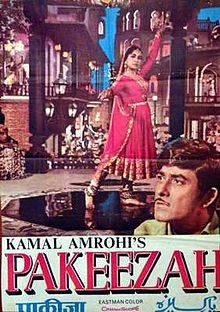
In Sujata (1959), Nutan portrayed the character of an orphan girl facing caste prejudices. In the lavishly mounted Pakeezah (The Pure One, 1972), Meena Kumari got rescued by the hero who faces stiff social resistance, finally overcome by the revelation that his uncle was the real father of the heroine.

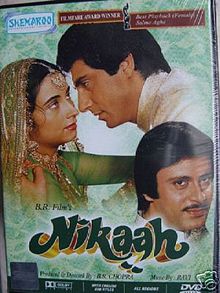
Ankur (Seedling, 1973) and Rudaali (The Professional Griever, 1993) effectively captured the oppression of women in a male dominated society. Sharmila Tagore in Satyakam (1969) and Saira Bano in Chaitali (1975) were only two of the several others who have portrayed hapless women being exploited. Bhumika (Role, 1977) captured the pathos of an exploited woman very well. In Umrao Jaan (1981), Rekha’s search for true love proved to be elusive. In an unabashed display of male parochialism, Nikaah (The Betrothal, 1982) and Woh 7 Din (Those 7 Days, 1983) showed two males arguing out the fate of the woman both are in love with, as if she herself need not be consulted.

Lajja (Shame, 2001) raised several feminist issues in a predominantly male chauvinistic world.movie Pinjar Pinjar (The Cage, 2003) portrayed the agony of a heroine disowned by her own family after getting kidnapped by a person from another religion.

In Aradhana (Worship, 1969), a widowed mother successfully brought up her son all by herself. In Silsila (Continuity, 1981), a pregnant Jaya Bachhan sought social approval and financial safety by getting married to the younger brother of her beau who had passed away in an air accident. In 1947: Earth (1998), Nandita Das ended up suffering at the hands of her lover. In Banaras (2006), Urmila Matondkar turned into an ascetic after her beau, hailing from a lower caster, was ordered to be murdered by her own mother.

In Pati, Patni aur Woh (The Husband, The Wife and The Other, 1978), the hapless housewife tried her best to restrain the romantic escapades of her husband who suffered from the ‘roving eye syndrome’. In Rang Birangi (Colourful, 1983),a bored wife found that an affair in the office prompted her husband to pay better attention to her at home!

Stalking is often depicted as a birth right of the men. Darr (Fear, 1993), led to tragic consequences. However, in most other movies, the heroine forgives and ends up accepting a romantic relationship with the former stalker. Raanjhanaa (The Beloved, 2013), took the art of stalking to new lows. Inmovie Ghar R…Rajkumar (Prince, 2013), the heroine eventually ends up falling for the hero, despite his wayward ways to win her over.

In Gori Tere Pyaar Mein (For Your Love, Fair Maiden, 2013), the heroine is a social worker, relentlessly pursued by the self-centered hero. When he points out a strand of white in her hair, she is not on the defensive. Here is an acknowledgement of the woman as being a person who ages like anybody else. Eventually, she ends up coyly in the hero’s arms. 

Rape scenes have been an integral part of the Bollywood movies. Roti, Kapada aur Makaan (Food, Clothing and Shelter, 1974), had a particularly graphic rape scene involving Maushumi Chatterji. We have also had sensible depiction of such scenes in some movies – like Satyakam, where a lamp rolling about on the floor was used to depict the traumatic event in the heroine’s life. One of the rare movies which handled the post-rape emotional rehabilitation of the heroine very delicately was Ghar (Home, 1978).

(Next part: https://ashokbhatia.wordpress.com/2014/01/05/women-through-the-bollywood-lens-part-2-of-2)

(Related Post:

https://ashokbhatia.wordpress.com/2017/01/06/the-powerpuff-girls-of-bollywood)

Santa Inc is an undisputed leader in the Happiness Industry, committed to spreadingSanta Elf_ornament cheer and hearty laughter all over the universe. With its headquarters at Island-222 on Kepler-22b, its top-line boasts of zillions of smiles and cheer all over.

With operations slated to increase at an annual compounded growth rate of 30%, it is on the look out for smart and tech-savvy elves who would be:

  • Able to demonstrate hi-tech toys and gizmos like smart phones, i-Pads, apps of all kinds, notebooks and fablets to the current generation of tiny tots.
  • Would assist Santa Claus in motivating kids to exchange their previous years’ gizmos with more conventional toys like dolls, train sets, racing cars, bikes and board games like Ludo, Snakes and Ladders, etc., thereby reviving their interest in traditional means of entertainment.
  • Elves who charm TV and internet-addicted bleary-eyed kids into playing more of outdoor games and can wean them off junk foods can expect faster promotions and better recognition. Those who make it to the top five of this group of elves could enjoy special dinner sessions with the founder Santa Claus himself. 
  • Aspirants should have had value-based education in any discipline from any institute of repute, with a CGPA ranging between 5.01 and 5.99. The company encourages aspirants who score higher on their Emotional and Moral Quotients.
  • Preference will be given to those who have had at least five years’ hands-on experience in any of the following industries: FMCG, Hospitality, IT, Logistics, Packing & Forwarding, Animal Husbandry, Entertainment, Toys and Vehicle/Sleigh Maintenance.
  • Aspirants should be familiar with at least five languages out of the several which are spoken on the planet referred to as Earth. Knowledge of languages spoken on other planets is desirable.
  • Should be willing to travel anywhere in the universe at a short notice. Prior exposure to inter-galactic or inter-planetary travel would help.
  • An ideal elf would be one with a pleasing personality. He/she would be without any family encumbrances, and shall possess the ability to work under high-stress situations.
  • Candidature of those possessing a Good Conduct Certificate from Rev. Aubrey Upjohn, Miss Tomlinson or Miss Mapleton shall be accorded higher priority.
  • Aspirants who have spent time with such Plumsville kids as Thos, Ogden Ford, Seabury, Edwin and Peggy Mainwaring are unlikely to be considered.
  • Prior experience in riding sleighs, sliding down chimneys and taking care of reindeers with care and compassion would be highly desirable.

Those interested in this exciting career opportunity are welcome to log on to hohoho.santaclaus.org and post their brief bios within fifteen Earth-days. Short-listed aspirants would be contacted by our Chief Elf Officer’s staff with further details of our screening process.

To those who are selected and decide to come on board, Santa Inc shall provide a three-month rigorous induction-cum-training program. A personal surety and bond of at least three years will need to be signed by those selected.

Canvassing in any form is strictly discouraged. Those making telephonic inquiries by calling up our Planetary Headquarters on Earth at its North Pole would run the risk of getting disqualified.

Santa Inc is an equal opportunity employer. Its remuneration packages compare favorably with the rest of the Happiness Industry anywhere in the universe.

photo(5)

Jingle bells, jingle bells, jingle all the way,

Santa asked us what he may bring us the next day.

We share with you the list which made him laugh aloud Ho Ho,

You may expand it, but please do not trim it, What ho!


We want to play with Poppet the dachshund who has a dislike for cats,

He would stop in his tracks, draw back his ears and drive away the gnats.

To play with Dog Bartholomew would be no less interesting,

Perhaps just to see the superior expression on his face vanishing.


Cat Augustus will perhaps become friends with us,

He may consent to doze off on our bed with us.

We hope a permission Lord Emsworth surely gives,

To visit the royal sty where the Empress lives.


Grand-uncle Tom we want to definitely meet in his study,

To offer him some advice on his cow creamer’s future safety.

Grand-aunt Dahlia may decide to treat us with Anatole’s meal,

While regaling us with stories of her Quorn and Pytchley zeal.

 Shalini Shankar Nov 2013

Bertie Uncle may tell us about the many cats left behind by a friend,

The prattle of our feet around him might cheer him up no end.

Uncle Jeeves must be ready with a few of his pick-me-ups,

So his master can perk up tomorrow and do some push ups.


All about stars and daisy chains Madeline Aunty will be happy to teach,

We shall hide our hot water bottles before Roberta Wickham Aunty can reach.

We request Santa to ensure the Reverend Aubrey Upjohn we never meet,

If we run into them, Miss Mapleton and Miss Tomlinson we shall definitely greet.


Never shall we become scouts, we merely promise doing a good turn to another,

For burning cottages or leaving guests marooned on islands we shall not bother.

Dear Santa, let the whole world enjoy a humorous time the whole of next year,

Basking in the sunlight of Plum Sir’s narratives, which alone we wish to hear.

To Sir, With Love!

90th birthdayA mighty leader of men, creator of institutions smart,

Demanding perfection and results, yet compassionate at heart.


Praising us in public, impeccable results you always demanded,

When we goofed up, in privacy you ensured we were reprimanded.


The inimitable spring in your stride came from the sole,

The sprightly attitude to problem solving emanated from your soul.


Oh, what a transformation you have witnessed in these 90 years,

Wars, acts of terror and news of genocides has reached your ears.


You may miss fountain pens, LP records and telegrams,

Not to forget a cell-and-internet-free placid life, noisy cars and trams.


You have witnessed a man landing on the moon, a space mission to Mars,

Time to network with the world but not connect with whom we call ours.


You have seen shrinking TV sets and shorter global hauls,

Several generations passing by, sprouting glitzy malls and highway tolls.


Time sits lightly on your mind and has certainly made you more wise,

We can still lean on your strong shoulders, despite challenges that arise.


You continue to be young at heart, in you inspiration we find, 

As always, your advice is practical, objective, frank and kind.


You are just short of ten to hit a century, surely a result of your positivity,

We all salute you, eager to learn more secrets of your longivity.

(In honor of a leading personality of the Indian Footwear Industry who turned 90 recently!)

When a loved one suddenly falls sick, our first reaction is that of disbelief. Then comes denial.Caring Michelangelo's_Pieta Superior powers get questioned as to why they thought it fit to bestow the loved one with such a challenge. Gradually, acceptance dawns and one moulds the activities of one’s life around the new core of reality. The health challenge could be either an accident or a serious ailment or even a lifestyle disease which behaves like an unbidden guest who refuses to go away.

How does one manage a change of this nature? Well, here are seven habits which can be cultivated to transform a wide-eyed and bewildered soul into an effective Caregiver.

Communicating as per the Psychology of the Patient

There are patients who prefer to show off their illnesses to any and all who express concern. They would prefer to wear their ailments on their sleeves, much like a Chopard watch. Then there are those who would consider an illness a strictly private affair, not to be discussed even within their close circle of friends. Based on the category under which one’s loved one falls, a Caregiver would tailor his/her communication to those around accordingly.

When it comes to communicating with a patient, there could be occasions on which the Caregiver can choose to be a hypocrite. Even if the Caregiver harbors a seething anger and a burning anxiety within his/her bosom, it helps to maintain the sang froid, so to say. A calm exterior and a cheerful disposition on the Caregiver’s part radiates a youthful energy all around, thereby lessening the level of anxiety and the fear of the unknown felt by the loved one.

Expecting the Unexpected

Lifestyle diseases are silent killers. These tend to accelerate the ageing process. Since all organs of the body are interconnected, complications involving other vital organs of the body could start popping up at unexpected times. It surely helps to have a prognosis and a crisis handling plan in place so as to minimize the subsequent setbacks, if any.

Cultivating a Circle of Doctors

The leisurely days of having a single family doctor are no longer with us. Considering the prognosis of the disease, it helps to have a circle of three kinds of medical experts. A specialist who addresses the core sickness, a generalist who can advise on side effects of drugs and can take care of peripheral issues as and when these come up and a group of friendly doctors which can be counted upon to provide a second opinion and whose help can be invaluable in case of an emergency.     

Being Prepared for a Long Haul

Lifestyle diseases creep in on one rather quietly. Once these settle down in the body, it is notPatient Medicines easy to wish these away. Yes, a sustained effort supported by exercise, meditation, medication and a positive mindset do help to keep these under check. One therefore needs to be prepared for a long haul, needing a strong will power and perseverance, especially on the Caregiver’s part.

Mind over Matter

It is critical to ensure that the patient remains relaxed and happy. Thus, it is important to create a stress-free environment with as much fun and frolic thrown in as possible. Knowing what makes the person happy and arranging the same is of crucial importance. A Caregiver needs to be prepared to make sacrifices to give up his/her own beliefs and individual fancies to ensure that the patient remains in a positive frame of mind.

Advising Wisely

The worst thing a Caregiver can do is to compare the condition of the patient with that of another afflicted with the same disease. Each individual is uniquely configured. Even though the broad principle of a treatment may be the same, there could be many variations based on the individual condition and temperament of the patient.

Advice should be given only when it is sought. Unsolicited inputs end up confusing and demoralizing the patient. Heresy dressed up as wise counsel often comes in from those who come calling on the patient. A Caregiver’s role is that of a filter which ensures that the patient receives a feedback which is balanced and objective.

Taking Care of Oneself

A Caregiver cannot afford the luxury of being sick himself/herself! The primary responsibility Caring Michelangelo_pietà_rondaniniis to take care of oneself, so the support provided to the patient does not get diluted.

Such habits, if inculcated by the Caregiver consciously, can help the patient to recover faster and better.

Overall, an important issue is that of the will and faith of the patient. If the patient believes that all will be well, good health is quite likely to follow. Faith in the doctor, as also in the medicine being taken, can work wonders. The Caregiver’s primary task is to create and sustain this belief in a realistic manner.

Those of you who face a similar challenge in life may like to comment and add a few more habits which they find useful. 

When a finer member of our species becomes the part of an all-men group, the results are obvious – better focus on the job at hand, a far more effective team, higher levels of decency and a groundswell of chivalrous overtures.

Chamaiporn Uerpairojkit

Chamaiporn Uerpairojkit

Better still, if she happens to be a CEO, we have a boardroom which is painted a deeper shade of pink, thereby driving away the boredom from the drab proceedings. We also have a crackling company which is more result-oriented and has better empathy while dealing with diverse stakeholders. We are also likely to get a greener and cleaner business entity which believes in corporate ethics and good governance.

In the Pink of Health

Several studies done in far-flung countries such as USA, France and Vietnam have shown that companies led by women deliver better financial results. A McKinsey study compared the top-quartile of companies in terms of share of women  in executive committees against companies that have all-male executive committees. It found that the former companies exceeded the latter by 41% in return on equity and by 56% in operating results.

Two studies have shown that companies with significant numbers of top women managers do better when compared to competitors in the same sector. The improved performance is in both in terms of such organizational aspects as innovation and accountability as also in terms of profit.

Wang Feng Ying

Wang Feng Ying

The tipping point is the key: At three members of the board, the benefits of women start to make a real difference. It appears that with that critical mass, female board members are more likely to come up with challenging questions and encourage the entire group to arrive at a more inclusive and better decision.

There are also studies which negate this view. The Credit Suisse Research Institute, acknowledging that it is hard to make sense of the many confusing and contradictory findings, came up with its own analysis. The study suggested that better performance by companies with female board members does not necessarily suggest that the women led to the stronger performance; it could also mean that companies that are financially successful tend to be more inclusive. Nevertheless, the authors concluded that “more balance on the board brings less volatility and more balance through the cycle.”

Eva Chen

Eva Chen

The Global Scenario

A Grant Thornton International Business Report released earlier this year concluded that 49 per cent of CEOs in Thailand are women, which is the highest proportion in the world. The global ratio was reported to be 24 per cent of senior management roles filled by women, up from 21 per cent in 2012 and 20 per cent in 2011.

In general, ASEAN and the Asia-Pacific regions are ahead of the global average with 32 and 29 percent female proportions, respectively. Vietnam and the Philippines are in the top 10, with 37 per cent of senior posts in the Philippines being held by women, down by two percentage points from 2012.

Nonkululeko Nyembezi-Heita

Nonkululeko Nyembezi-Heita

The G-7 economies appeared at the bottom of the league table with just 21 per cent of senior roles occupied by women. This compares to 28 per cent in the BRIC economies and a remarkable 40 per cent in the Baltic countries.

Japan was the worst performer with just 7 per cent of senior roles occupied by women. UK (19 per cent) and the USA (20 per cent) were reported to be within the bottom eight countries for women in senior management. In contrast, top of the table for women in senior management – not only CEOs – is China, with 51 per cent.

The report also revealed that proportion of women in senior positions depends on the sector under consideration. More than double the number of positions in the global healthcare sector was occupied by women than in construction or mining. The most popular top management position for women was reported to be chief financial officer, while chief information officer was the least.

If Thailand has Chamaiporn Uerpairojkit as a President of Henkel, Australia has Veronica Johns heading Fiat Chrysler’s operations down under. Di Humphries takes care of Pumpkin Patch in New Zealand, whereas Wang Feng Ying looks after the Great Wall Motor Company in China.

Eva Chen is the CEO of Trend Micro of Japan. Nonkululeko Nyembezi-Heita oversees the operations of Arcelor Mittal South Africa Limited.

Maria Asuncion Aramburuzabala

Maria Asuncion Aramburuzabala

Maria Asuncion Aramburuzabala fusses over Group Modelo in Mexico.

Women on Top

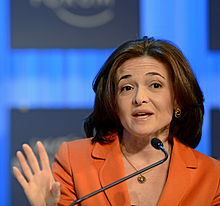
Globally, women have made it to the top in diverse sectors of businesses, ranging from IT, FMCG, chemicals, social media and banking. According to a Deloitte study, women comprise 12.5 percent of board directors on ASX 200 companies in Australia. Fortune lists an impressive array of powerful women, globally as also in USA. Think Ginni Rometty of IBM, Indra Nooyi of PepsiCo, Ellen Kullman of DuPont, Sheryl Sandberg of Facebook and Marissa Mayer of Yahoo and you get a part of the picture in USA alone.

The European Commission proposed new rules last year to require companies listed in EU countries with more than 250 workers to have 40 percent of women on their boards by 2020. But Germany and other EU countries resisted, arguing that rules should be set at the national level.

Ginni Rometty

Ginni Rometty

According to German media reports, women currently hold about 12 percent of corporate board seats. Among the 30 largest DAX companies, women have 101 of the 488 board seats, or 22 percent, according to the DSW, Germany’s largest association of private investors. Coalition compulsions have now made the Angela Merkel government to introduce a legislation that will require German firms to allot 30 per cent of their non-executive board seats to women from 2016.

Norway, which is not an EU member, imposed a 40 per cent quota in 2003, a target reached in 2009. Norwegian companies can be liquidated if they fail to reach the target. However, a recent study by two University of Michigan professors shows that a government mandated quota led to younger and less experienced boards, thereby putting the businesses to higher risk.

In UK, the Cranfield report came up with the assertion that women hold more than one in five (21.8%) of non-executive FTSE 100 posts but still only account for little over one in 17 (5.8%) executive roles. That means there are just 18 women executive directors in Britain’s top boardrooms, against 292 men. Perhaps more alarming still, the Cranfield study found, among the broader top management tier at FTSE 100 firms – the key decision-making groups, known as executive committee members – the representation of women had fallen dramatically, down from 18.1% in 2009 to 15.3% today.

Indra Nooyi

Indra Nooyi

Susan Vinnicombe, co-author of the Cranfield report, suggested this shrinking pool of top-flight women managers made it harder for progress to be made with chief executive and finance director appointments. “Despite women dominating the fields of human resources, law and marketing … [executive positions in the boardroom] are still going to men, who are being promoted internally over experienced female candidates.”

Annika Falkengren heads SEB, a Swedeish Bank. Angela Ahrendts takes care of Burberry in UK, while Jonella Ligresti oversees the operations of Fondiaria-SAI of Italy.

Wanted: Women Directors in India

In India, men make up 94.7 per cent of the boardroom. A survey conducted by the Association of Chartered Certified Accountants (ACCA) and the Commonwealth Business Council (CBC) earlier this year, across Commonwealth countries, found that India has one of the lowest percentiles of women in senior management positions, second only to Pakistan among the countries surveyed. In many cases, even when women are present in the board, they usually tend to be “sleeping partners”.

Kalpana Morparia

Kalpana Morparia

With the new Companies Act coming in force in India, mandating women’s representation on boards, companies are searching far and wide for good candidates. Naina Lal Kidwai of HSBC, Kalpana Morparia of JP Morgan and  Renuka Ramnath of Multiples Alternate Asset Management are all busy running their own companies. It does not help that top women bankers like Chanda Kochhar and Shikha Sharma cannot be tapped because RBI rules do not allow bank CEOs to be on the boards of other companies except by rare special permission.

The first woman to head the SBI in its 206 year old history, Arundhati Bhattacharya, recently made headlines by joining the elite group of women who control banks and financial outfits in India.

Mallika Srinivasan is a well-known thought leader and strategist, heading TAFE. Vinita Bali heads Britannia, whereas Kiran Mazumdar-Shaw steers Biocon. Roshni Nadar takes care of HCL Corporation. Debjani Ghosh heads Intel’s operations in South Asia.

Chanda Kochhar

Chanda Kochhar

One of the highly respected business groups from India, Tatas, is already on a gender-diversity overdrive. Falugni Nayar, Vishakha Mulye and Ireena Vittal have recently joined select companies of the group.

A case in point is that of ICICI Bank where winds of a subtle change are blowing. Chanda Kochhar is making the company transform its work culture from a stress-ridden one to a more relaxed one. She has drawn an internal road-map to make the bank a service-led and not a distribution-led organization. One of the key challenges the bank is handling is to tone down aggression without losing its USP of being a dynamic and result-oriented organization.

According to information available in the public domain, out of India’s top 100 listed companies, 34 do not have any women directors. Demand for proven, independent women who are well experienced in board service, possess the required domain or functional skill experience and fit the culture of a company far outstrips supply.

Mallika Srinivasan

Mallika Srinivasan

In India, gender diversity is more pronounced in the banking sector. By nature, men and women are not better bankers. The conditioning by society perhaps plays a more important role in shaping up women’s skills in money management. One, they carry the burden of balancing the household budget. Two, they tend to be thrifty because they have to manage the household affairs within the resources provided by the bread-winner of the family.

The Glass Ceiling of Corporate Frauds

A study reported in one of the recent issues of the American Sociological Review found that only 9 percent of people involved in high-level financial  corporate conspiracies are women. The study also shows that female criminals stole less than their male counterparts. The study proposes that this could be happening because men see women as less criminally competent.

However, according to a survey of nearly 1400 global fraud cases from the Association of Certified Fraud Examiners, at the lower levels, women

Roshni Nadar Malhotra

Roshni Nadar Malhotra

made up 45 percent of the culprits. But at all levels, women steal less than their men counterparts. The difference lay in that women do it for a specific reason or purpose, whereas men tend to do it for longer periods, more as a habit of sorts. Women are brought up with an ‘ethic of care’ which means they are less likely to behave in a manner which hurts others.

Have Daughter, Be Gentler

In another study covering more than 10,000 Danish companies, a study done by Michael Dahl, Cristian Dezso and David Gaddis Ross found that CEOs paid lesser salaries to their staff after having had a son. But there was no reduction when they had a daughter! The hypothesis appears to be that daughters tend to make fathers more gentle and caring.

Studies led by Alice Eagly demonstrate that women tend to give more than their male counterparts in close relationships than men.

The Pink Shades of Philanthropy

Bill Gates believes that his mother Mary and wife Melinda are behind his philanthropic initiatives. At a wedding in 1993, Mary read out a letter she had written to Melinda: ‘From those to whom much is given, much is expected.’

It is quite likely that with more women at the helm of affairs, organizations may take their environmental and social responsibilities more seriously.

The Gender Bender 

Women tend to be more balanced and meticulous in their approach. Giving care and offering empathy comes naturally to them. Look across various companies and one would notice that most HR departments are wo-manned.

Annika Falkengren

Annika Falkengren

When it comes to the impact of women heading organizations, the jury is perhaps still out. Recently, professors at the Stanford University Graduate School of Business and the University of Edinburgh examined two thousand firms and found that larger companies with bigger boards were more likely to add women. In other words, better performance was not necessarily due to women power in the top echelons.

In India, the challenge is to keep up a continuous supply of leadership talent of the delicately nurtured. This can be met only by progressive HR policies of organizations which proactively offer a level playing field to women enabling them to break the corporate glass ceilings.

Just as the Norway example has shown, it is debatable whether introduction of a government mandated quota is a good move. Yes, it does force

Sheryl Sandberg

Sheryl Sandberg

companies to do some soul-searching and ensure better succession planning while placing greater emphasis on gender parity. A positive beginning gets made. Over the long run, such steps would surely improve corporate governance levels and possibly check the cancer of graft and corruption nibbling away at the roots of India’s vibrant democracy.

Gender bias is deep-rooted in our psyche. Cultural bias and stereotyping restrains women from realizing their full potential. With her book ‘Lean In: Women, Work and Will to Lead’, Sheryl Sandberg has recently brought back the agenda of gender inequality on the global conversation map.

From Capitalism to Idea-ism

We are rapidly moving from capitalism to ‘idea-ism’ where the definition of capital is getting enlarged with each passing decade. The term capital covers not only the material and financial resources but also its softer and gentler variety – intellectual resources. In a world of this nature, gender parity can bring in a hitherto latent capital. A more efficient use of the same would be a key driver of competitiveness in the days to come.

The moves to paint our ‘bored-rooms’ a deeper shade of pink are endeavors in the right direction. Howsoever long it takes to achieve gender parity in business circles, the journey has begun.

In quite a few escapades of Bertie Wooster and his bosom pals, we come across headmistresses and headmasters who remind us of our own days at school. Many of us might not have ever won a prize for Scripture Knowledge, but the mere mention of a brightly authoritative gaze touches the darker realms of our individual scholastic experiences. Invariably, it is not only about the stern look and the stiff upper lip. It is also about our dread of public speaking – and of juicy canes in the soft spots.

The tyranny of these strict disciplinarians does not remain confined to childhood days alone. It often pops up years later when their understudies have grown into adulthood. Even a chance encounter leaves Bertie shaking like an aspen and fearing yet another admonition at the hands of the lion-tamers.

The Female Lion-tamer

Take the case of Miss Mapleton in Jeeves and the Kid Clementina. She lords over the affairs of St VeryGoodJeevesMonica’s, a girls’ school at Bingley-on-Sea. She wears steel-rimmed spectacles which glitter rather nastily. She is short in inches but makes up for it by possessing the quiet air of being unwilling to brook any nonsense. She exudes the air of a female lion-tamer. Unfortunately, she also happens to be a friend of Aunt Agatha.

In Very Good, Jeeves, despite being in town, Bertie attempts to avoid meeting her so as to escape the trauma of being asked to address the school girls. Well, fate and Roberta Wickham will it otherwise and he ends up facing Miss Mapleton. However, thanks to Jeeves, matters get arranged in such a way that Bertie does not earn a reprimand. Instead, he is shown in a favorable light, thereby ensuring Miss Mapleton’s transformation into a rather chummy lion-tamer. The outcome is a highly favorable letter getting posted by her to Aunt Agatha, praising the gallant and courteous conduct of Bertie.

An Outstanding Menace

Then we have the popular ex-headmaster Rev. Aubrey Upjohn who used to terrorise Bertie while in his study at Malvern House, Bramley-on-Sea, the preparatory school. He often used to flex his shoulder muscles by swinging his cane with burning eyes, foam-flecked lips and flame coming out of both nostrils. Bertie used to sneak down to his study at dead of night looking for biscuits he kept there. On one occasion, he found him seated there, relishing the biscuits himself. Next morning, six of the juiciest from his sinister cane on the old spot followed. On another occasion, Bertie faced a trial for having broken the drawing-room window with a cricket ball.

This is how Reginald (‘Kipper’) Herring cheers up Bertie:

‘You know, Bertie, we have much to be thankful for in this life of ours, you and I. However rough the going, there is one sustaining thought to which we can hold. The storm clouds may lower and the horizon grow dark, we may get a nail in our shoe and be caught in the rain without an umbrella, we may come down to breakfast and find that someone else has taken the brown egg, but at least we have the consolation of knowing that we shall never see Aubrey Gawd-help-us Upjohn again. Always remember this in times of despondency.’

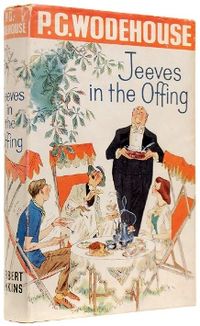
Fifteen years later, he is back in circulation, though mellowed down somewhat. The wide, bare upper lipPGW JeevesInTheOffing now sports a moustache, thereby reducing the severity of his appearance. In Jeeves in the Offing, he is aspiring to run as a Conservative candidate in the Market Snodsbury division at the next by-election. To create a good impression, he must deliver a flawless speech to the young scholars of Market Snodsbury Grammar School. To do so, he must get back the neatly typed out speech which, thanks to Jeeves, has come into the possession of Roberta Wickham.

The love of Roberta’s life, Kipper, has made uncharitable remarks about Aubrey Upjohn’s book on preparatory schools in Thursday Review. Thus, a libel suit is getting instituted by the Reverend against the magazine, and Kipper is sure to get a sack. The mantle of striking a bargain – that in return for the manuscript, Aubrey Upjohn would withdraw the libel suit – falls on Bertie. Predictably, his spirit fails him. Roberta promptly takes the lead and clinches the deal.

Aubrey Upjohn also pops up in Bertie’s reminscinces in The Mating Season. While checking the script of a play, he recalls how his English essays used to get blue-pencilled by the outstanding menace. At the end of a series of announcements, he would often conclude with a curt crack directing Wooster to see him in his study after the evening prayers.

No Nonsense

And who can forget Miss Tomlinson? She makes a brief appearance in Bertie Changes his Mind. She isPGW CarryOnJeeves the strong-minded headmistress of a girls’ school near Brighton. According to Jeeves, she is just like Bertie’s Aunt Agatha – with the same penetrating and brightly authoritative gaze. She has the indefinable air of being reluctant to stand any nonsense and has real grip over the young girls in her charge. When Bertie ends up fumbling with his speech to the assembly of girls, she brings the proceedings to a brisk end. When she starts investigating the fact of her students smoking in the shrubbery, enjoying the cigarettes provided by Bertie, the only option left for him is to hide beneath the rear seat carpet of the car and urge Jeeves to drive out of the school premises without further delay.  (Carry on, Jeeves).

Like many other characters from diverse walks of life which keep waltzing in and out of Bertie Wooster’s and Jeeves’ lives, the headmistresses and headmasters leave us with a feeling of dread. Under the inimitable spell of P G Wodehouse, we wilt and we shiver. We just love to hate them. Nevertheless, imagination boggles as to how drab the proceedings would have been otherwise!

What is it that makes a professional fondly look back and remember the time spent with a particular organization?

The initial package sounds jaded over a period of time and the Law of Diminishing Utility eventually kicks in. The seniority for which one so adroitly negotiates at the entry stage fails to charm after some time,  unless backed by further achievements, recognition and rewards, added responsibilities and advancements. Time also takes the glow and shine off the social prestige which goes with being associated with one of the better known brands in the industry.

So, what is a professional left with after having left an organization?

The Lingering Sweetness

Much after the association with an organization has come to an end, the everlasting impression one carries in one’s mind depends on two simple factors. One, professional achievements which were individually attained but facilitated and enabled by the support systems ingrained in the culture of the organization. Two, the manner in which one was treated as a human being. Often, one of the results is the number of long-lasting relationships that one makes while the association lasts.

Organizations happen to be made up of people of all sizes, shapes and temperaments. But the treatment received at the hands of key people one comes in touch with determines whether the after-taste remains sweet or sour; also, how long it lingers in the taste buds of our memory cells.

The Brand of the People

A brand represents an element of trust and reliability. The concept is not limited merely to the quality of the product or service on offer.  In fact, the systems and procedures followed by an organization, their sturdiness in the face of adversity and change, the element of fairness in its dealings with diverse stakeholders – all go on to add to the allure and enigma of the brand.

Much of the aura which characterizes a brand emanates from its people. It is they who create a buzz in the employment market. The lingering sweetness of an association is often determined by the Employee Brand Value.

I have had the opportunity of working with several companies. Each one had a different culture and a unique way of handling people. Nevertheless, it was interesting to observe how employees got treated far better by companies which had a stronger brand identity.

Allow me to share with you some of my experiences which have left me with a positive feel and a sweet after-taste!

The Human Touch

The care and companionship I was fortunate to receive in all the companies I worked with was unique in more ways than one.

When the management decided to shut down an operation headed by me, a colleague of mine and I were mercilessly beaten up by a gang of misinformed workers. Prompt medical attention, legal support, counseling for the self and the family and a compulsory vacation followed automatically. A month later, the then MD, nine rungs above us in the rigid hierarchy, called us over for a friendly chat over a cup of tea and instilled in us a sense of pride and fulfillment for having stood up to the rowdy elements in the work force.

In another company, a colleague met with a serious road accident on a busy highway while reporting for work. Over the next two years, he had to undergo a series of reconstructive surgeries to regain normality. No effort was spared to ensure that he and his family got the best support available. This, despite the company facing a severe financial challenge at the time.

In yet another case, my entry was marked by a gentle induction into the operations of the company. As my role expanded and evolved over a period of time, support – technical as well as emotional – was invariably close at hand. Above all, the HR policies facilitated a healthier work-life balance to be achieved. Which is not to say that there was ever a compromise on the goals to be achieved.

A Premium on Compassion

While I was on a personal overseas trip, a much revered colleague suddenly died of a cardiac failure. A prompt mail came from a colleague of mine. I was simply devastated. When I called back to find out precisely what had occurred and how, I was given only sketchy details. Subsequently, an inquiry was instituted to find out who had made the bloomer of conveying the disturbing news to me at a personally critical time!

A woman playing a critical role on the operations side faced a dilemma on a day which was very crucial for the company. Her husband, working in a far off city, was to return home for a brief period on the same day, that too after a gap of a few months. Having delegated her tasks and arranging a smooth conduct of her area of responsibility, she requested for half a day off from work. The immediate boss was in no mood to oblige, but relented after the top boss decided to intervene on humanitarian grounds.

Separations as Brand Building Opportunities

In one instance, a popular and effective manager suddenly decided to leave the company. At a glittering farewell ceremony, he was showered with lavish praise and presented with a gold medal by the President of the company himself. Within six months, he found that he was a cultural misfit in the next company. Feelers came in through informal channel and he soon rejoined us.

In another case, a much pampered and popular junior decided to leave the company after a long stint when he was in fact being groomed to take over a key department. A red-faced bunch of seniors met to discuss what steps could be taken to prevent the person from leaving the company’s employment. When all efforts failed, the group decided not to be vindictive in nature. Instead, the exit was facilitated so as to leave the employee in a highly positive frame of mind. The result is that even today, the , channels of communication between the company and the ex-employee remain open and smooth. Whenever the employee needs support in his new assignment, the company is there to back him up.

When the time came for me to part company (due to personal reasons, of my own accord), a smooth and graceful exit was ensured. In a farewell meeting, seniors, colleagues and others from across the company paid rich compliments in a manner which would forever remain fresh in my memory. An informal association continues till this day.

Winding Up With Minimal Resistance

Since business was not doing well, management decided to wind up the operations at the unit I was associated with in the past. The unit, directly employing more than 1,000 persons, happens to be located in an area which has seen multifold increase in labor disputes of all kinds over the past decade. As of date, there is hardly any unit which does not sport a red flag on its main gate, declaring the union which is active therein.

And what happens in this case? A well thought-out separation package gets rolled out. Most of the management staff get either relocated or out-placed. A well-rehearsed PR campaign gets underway with all the key government functionaries to ensure adequate and effective communication. The outcome of this well-designed initiative is that there are no unpleasant obstructions to the winding up plans of the company. Also, no one in authority enjoys the dubious pleasure of subsequently claiming that he or she could have done something to stop the loss of employment to a plethora of people, had they only been told of it before hand. A smart winding up, no?!

The Trust Reposed in the Employee

A common feel-good factor is the exemplary support provided to a senior manager on a critical mission. Just the feeling that one was free to take a call and will get backed up by the management, come what may, does the trick. An intrapreneur gets enthused no end when he or she is working on a mission wherein the survival of a business entity depends on him or her ensuring that a particular issue gets settled favorably. The top man merely looks him in the eye and tells him to go for it – and the goal is met. The after-glow of a professional  achievement of this kind surely lasts a life time!

Building up the Employee Brand Value

Organizations focus on crafting a powerful employee brand so as to attract and retain the best talent. What I have mentioned above are some examples which have added to the company’s brand value by focusing even on separations. A well thought out plan for winding up ensured that while business goals were met effectively, there was no damage caused to the brand.

When alumni recall their positive association with the organization, it is a sure sign that the memory of its brand is getting leveraged right. Making an employee feel valued even after he or she has parted company only adds to the long-term allure of the brand.

(Related Post: ashokbhatia.wordpress.com/2012/09/11/ramping-down-a-business-the-smart-way)

Going Potty

Inventors of the world need to quickly come up with a Poop Scoop which would work for humans. This would solve a messy problem which is driving governments all over the world a bit potty.

In third world countries, it is pretty common to find people defecating in the open. Any train passenger who has been Potty open-defecation-titleadventurous enough to peep out of his window while the train is entering an urban settlement in the morning hours would readily attest to the same.

The Great Public Loo

Ask any of the defecators and he would be quick to point out the benefits of open air ablutions – minimal irritation to the olfactory organs, a gentle breeze soothing the hind quarters and the pleasure of a comforting smoke without the imminent danger of a secondary inhalation by any of the co-defecators. A very environment friendly and socially sustainable practice, he would say.

Push him a wee bit more and he is bound to come out with yet another justification. Well-heeled passengers of railways are permitted to litter the tracks all across the length and breadth of the country with smelly abandon. They enjoy this liberty irrespective of whether the train is stationary or moving over vast tracts of land and rivers, pious or otherwise. If so, why should his tribe of open defecators alone be singled out and reprimanded?

A Potty Dawn

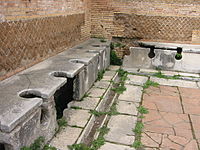
Come morning time and vast stretches all over the country witness the unusual spectacle of human droppings, putting Potty Roman Public Toiletsmany a bird and beast to shame. Early morning joggers have already perfected the art of dodging such excrescence, thereby saving their precious branded footwear from getting soiled.

In the bye-lanes of small towns, toddlers can be easily spotted relieving themselves just outside the main door of their palatial houses, thereby saving their parents the hassle of suffering from an Undue Potty Syndrome.

Marketing honchos of companies making diapers and plastic potty contraptions would do well to target this segment in their next promotional blitzkrieg.

A Gratitude towards Mother Earth

Those of the two-legged Homo-sapiens who are far away from home and hearth find the vacant stretches of land Potty Limbourg Belgiumabutting our swank new highways quite suitable for the purposes of fertilizing the soil. This is their way of expressing heart-felt gratitude towards Mother Earth.

In towns and market places, walls become an easy prey to such offerings, duly supported by the local civic authorities who ensure that our streets are poorly lit; if power is available, that is.

In most public spaces, denizens hardly need directions to the nearest rest room. Their keen sense of smell does not lead them astray. Their olfactory organs turn out to be better direction-finders than their GPS-enabled gizmos.

In many countries, democracy is taken pretty seriously. Quadrupeds of all sizes and shapes – whether bovine, canine, feline, or of any other kind – also believe that they have equal rights on public spaces. Since their lives invariably run as per the solar clock, they exercise their rights at any time of the day.

Bollywood Beats

Bollywood is not far behind in promoting the practice of open air urination and defecation. Showing a bunch of boys Potty Ishqiyarelieving themselves in an open space is no longer a taboo.

One of the protagonists in a recent flick (the inimitable Naseeruddin Shah in a particular scene in ‘Ishqia’) waxes eloquent over the sheer bliss of resorting to this ‘environment friendly’ practice.

However, there is some consolation that the heroine (Vidya Balan) subsequently supported a campaign by the Ministry of Sanitation and Rural Development of Government of India to promote an extensive drive towards toilet building.

Petty and Potty Problems

As we celebrate yet another World Toilet Day today (on the 19th of November), one hopes that the coming days would see a better focus on resolving this predicament of our modern lives.

Manufacturers of all kinds of sanitary products can pitch in and tackle this issue. Technocrats and scientists who are busy exploring the universe can come up with scoops designed to handle excreta of all hues and shapes.

Social scientists who keep discussing inane matters on our TV screens ad nauseam can plan for campaigns which are directed towards changing the mindset and attitudes of our citizens.

Movie directors can weave in clear messages denouncing the practice of open defecation in their future projects. Potty Vidya-BalanMayors of our cities can raise pig squads which would hopefully ensure that our streets are squeaky clean.

Politicians of all hues can stop wasting their energies in running down each other and highlighting petty problems; instead, they can address potty problems.

Mind over Matter  

The fact that we have more phones and TV sets than toilets goes on to show that, as a civilization, we accord a higher priority to matters of the mind than to those of the material body.

We are perhaps heading towards the next step of our human evolution into a species which would be far better endowed in terms of its intellectual capabilities!

(Related post: https://ashokbhatia.wordpress.com/2013/04/09/the-monkey-business-in-india)

Quite a few fans of P G Wodehouse often wonder as to how Jeeves and Bertie come together and why they stick PGW CarryOnJeevestogether despite having stark differences in matters of attire, appearance, love and relationships in general. Is there an underlying message in all their innumerable escapades that we are treated with, each one laced with intoxicating verbosity and linguistic opulence – a hallmark of this great author?

Getting Hired the First Time

In Jeeves Takes Charge, we are treated to the scenario of Bertie Wooster hiring Jeeves in the first place.

For the privilege of someone of the caliber of Jeeves shimmering into Bertie’s life, we have to thank two persons. One is Bertie’s previous valet, a bloke by the name of Meadows. Had he not stolen a couple of things from the master’s place, a request for a replacement would not have gone to the registry office. Second is some brainy bird at the registry who, God bless his soul, ended up sending Jeeves across. But for these two blokes, all of us would have missed a lot of fun in life.

Having attended a rather cheery party the previous night, Bertie is struggling to make sense of a book recommended by Florence Craye. Her intention was merely to boost Bertie a bit nearer to her own plane of intellect. Jeeves streams in, concocts one of his after-morning specials for the master, making hope dawn once more. He gets hired instantly.

Jeeves therefore displays an uncanny skill of diagnosing the problem and deploying his extensive knowledge and marvelous skills to whip up a solution. No marks for guessing why he gets hired in the first place. All job seekers can learn from his example.

Getting Re-hired; Becoming Indispensable

Given his track record, Jeeves does not really need to exert himself to get rehired. In Thank you, Jeeves, he puts PGW ThankYouJeevesin his papers, annoyed as he is with Bertie’s insistence on playing the banjo. Towards the end of the narrative, Chuffy, Jeeves’ new boss, decides to get married to Pauline Stoker. Bertie declares that he is no longer interested in pursuing his interest in the instrument; nor is he planning to retain Brinkley, Jeeves’ replacement. The following dialogue ensues:

Jeeves: ‘I ventured to express the hope, sir, that you might be agreeable to considering my application for the post. I should endeavor to provide satisfaction, as I trust I have done in the past.’

Bertie: ‘But…’

Jeeves: ‘I would not wish, in any case, to continue in the employment of his lordship, sir, now that he is about to be married. I yield to no one in my admiration for the many qualities of Miss Stoker, but it has never been my policy to serve in the household of a married gentleman.’

Bertie: ‘Why not?’

Jeeves: ‘It is merely a personal feeling, sir.’

Bertie: ‘I see what you mean. The psychology of the individual?’

Jeeves: ‘Precisely, sir.’

Bertie: ‘And you really want to come back with me?’

Jeeves: ‘I should deem it a great privilege, sir, if you would allow me to do so, sir, unless you are thinking of making other plans.’

He gets re-hired!

Employees who wish to be labeled as indispensable have to be in the learning mode, almost always. Those who continue to ‘sharpen their saw’ (as Stephen Covey would put it) stand a much better chance of attaining this exalted status.

Key challenges faced by HR honchos are: (a) Retaining good people who are routinely getting poached by aggressive competitors, (b) Wishing away those who are below average performers, and (c) Keep motivating those who are average performers but believe themselves to be star performers!

Managements need to identify critical positions in the organization which need continuity over a longer duration so as to bring home the bacon. In not-so-critical slots, they could otherwise end up being vulnerable to people who prove themselves to be indispensable.

The Art of Gentle Persuasion

In one of the rare pieces written by P G Wodehouse on behalf of Jeeves, Bertie Changes his Mind, Bertie PGW MuchObligedJeevesexpresses his frustration at the monotony of his life and his loneliness. He says he desires to have a larger house with several children prattling about around him. Jeeves realizes that if a wife comes in from the front door, he – the valet of bachelor days – has to go out at the back.

Landing up at a girls’ school, Jeeves manages to portray his master as a celebrity and somehow motivates the headmistress Miss Tomlinson to announce a lecture by Bertie Wooster to the students. The assembled lot of giggling students quickly manages to unnerve Bertie, thereby erasing from his mind any thoughts of children and matrimony. Thus, Jeeves’ employment prospects remain unaffected.

Smart managers often use the art of gentle persuasion to get overly enthusiastic employees to be realistic in their goals, thereby improving the team’s contribution to the organizational goals.

Jeeves is not a Yes-Man

On several occasions, there arise serious differences between the two. Even if Bertie displays annoyance and irritation, Jeeves remains steadfast in his views. Right from purple socks, check suits, mauve pyjamas and pink-feathered alpine hats to growing a moustache, Bertie invariably has to give up his bizarre tastes to accommodate the rather rigid views of Jeeves in matters of attire and appearance.

Yes, there are times when Jeeves appears to be rather flexible in his approach. For example, in Much Obliged, Jeeves, he confesses to having destroyed the eighteen pages of The Junior Ganymede club book, covering some intimate details about Bertie.

When Bertie contemplates a marriage, Jeeves does not hesitate to speak freely. In Jeeves Takes Charge, he tells Bertie that Florence Craye is of a highly determined and arbitrary temperament, quite opposed to his own. In Jeeves in the Offing, he opines that Roberta Wickham is volatile and frivolous.

This is a sterling trait of Jeeves’ character, worth emulating for all senior managers. Registering dissent in a polite but firm manner is a great quality to have.

What makes Jeeves and Bertie Tick

The fact that Jeeves gets unbridled authority to run Bertie’s affairs single-handedly is surely an important motive for PGW JeevesInTheOffinghim to aspire to continue in latter’s employment.

As to Bertie, he desists from the prospect of ever getting married. He shudders to think of Honoria Glossop who is hearty and a confirmed back-slapper. Madeline Bassett has large, melting eyes and thinks the stars are god’s daisy chain. Roberta Wickham is easy on the eyes but has the disposition and general outlook on life of a ticking bomb. Pauline stoker has the grave defect of being one of those girls who want you to come and swim a mile before breakfast and expect you to play five sets of tennis post-lunch. Florence Craye is an intellectual girl, who would like the male of the species to be sculpted into fine examples of cerebral excellence.

Also, Bertie is a perfectly chivalrous gentleman. He is bound by the Wooster Code which does not allow him to refuse a proposal coming his way. Nor does it allow him to bandy the name of a female in public. He is always open to risking his own reputation to help a pal of his.

Bertie and Jeeves – A Formidable Team

Why does Bertie allow himself to be dominated over by his valet? Despite being an employer, he is reduced to a hapless victim of circumstances and Jeeves invariably gets the full credit for having pulled him out of the soup almost every time. Bertie’s aunts consider him a blot on the landscape. His close friends, while seeking favors from him, describe him as being utterly unselfish. At times, he is held to be mentally negligible!

Overall, we get the picture of a person who represents a decaying aristocracy, is content to live a routine and comforting life where he is surrounded by goofy friends, potty females and scheming aunts. As to thinking things through deeply, he appears to have outsourced this function in his life to Jeeves. It is not that he does not try coming up with fruity schemes. Unfortunately, the harder he tries, more of a mess his intended beneficiaries get in to. Add to this his obvious distaste for a saunter down the aisle and the picture is almost complete.

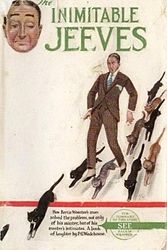
In The Inimitable Jeeves, we are treated to a scenario where Bertie has made up his mind to sack Jeeves.  To PGW Inimitable_jeevesquote a delectable passage from the memoirs:

I buzzed into the flat like an east wind…and there was the box of cigarettes on the small table and the illustrated weekly papers on the big table and my slippers on the floor, and every dashed thing so bally right, if you know what I mean, that I started to calm down in the first two seconds. …. Softened, I mean to say. That is the word I want. I was softened.

Needless to say, Jeeves stays put!

P G Wodehouse has visualized two characters which form a mutually appreciative team. Both Bertie and Jeeves complement each other, thereby forming a perfect team.

In business organizations, it is not uncommon to find teams comprising members who play the roles of Bertie and Jeeves alternately. Smart bosses often form such teams to extract the best results in a difficult situation.

A Beacon of Hope   

The character of Jeeves essentially symbolizes hope for all those who are depressed and temporarily knocked off by the rugged punches of life. He stands out as a friend, philosopher and guide – par excellence.

Howsoever bleak the scenario in life, if one picks up any of Wodehouse’s works, the clouds in one’s life start getting cleared away, the good old sun starts buzzing along on all six cylinders, the sky turns a bright shade of azure, the birds start chirping merrily, a soft breeze starts swaying the palm trees, the spirit is uplifted and one feels…,well, I mean, dash it!

(Related Posts:

https://ashokbhatia.wordpress.com/2013/11/09/when-jeeevs-takes-charge

https://ashokbhatia.wordpress.com/2017/12/13/a-brand-called-jeeves)