Feeds:
Posts
Comments

The Credible India

Howsoever dark a cloud is, there is always a silver lining. For those of us in India who are in a mood of despondency these days and continue to be defensive about quite a few things under the sun, let me list out what is there to cheer about.

  • There has been a record reduction in poverty, but we do not wish to announce it to the world. One, we are still concerned about the ones still lagging behind in the economic growth rat race. Two, we are not too sure about our own numbers!
  • There has been a sustained increase in rural wages and incomes. Pretty soon, we shall find that the market is being propped up by rural demand, while our urban folks continue to be in a doom gloom phase. While FMCG honchos are busy designing packages specifically targeted at the semi-urban and rural hinterlands, we continue to be diffident on this front.
  • In five year’s time, we have set up one-fourth of our installed capacity for power generation.  We have also laid power lines to 4.6 lac villages. We can not claim this to be an achievement because we have failed to provide back-up linkages of fuel, leaving vast swathes of country reeling under a power shortage.
  • On the road to financial inclusion, we have created and rolled out a programme which gives each of us a unique identity. This is also likely to help us plug leakages of subsidies, making resources available for other social welfare measures. We are defensive about it, because we are not too sure it would eventually work out. Sure enough, for the un-entitled ones who have been enjoying subsidies so far, the cost of living is just going to go up.
  • We have laid fiber optic cables to 2,50,000 panchayats. The only plausible reason for our hesitation to energizing the same and converting our narrow band capabilities into genuinely broad band ones  could be our fear of a majority of our denizens being covered by snooping measures of some foreign intelligence agencies!
  • Our parallel economy continues to thrive. Our politicos and private sector do not appear to be in a mood to stifle the same any time soon. However, one does come across some  papers and articles which indicate that post-Lehman Brothers, India faced the effect of a meltdown much later, the insulation having been provided by our underground economy. So, may be, we are being smart, allowing black money to proliferate!
  • Our rural tele-density at the beginning of this millennium was close to 1. As of now, it is around 40. We are quite defensive when it comes to claiming this to be an achievement because of some scam ridden decisions which were taken by those at the helm of affairs in the interim.  The argument is not that corruption is acceptable; it is only to say that there is indeed a positive aspect  which needs to be kept in mind.
  • We have also orchestrated a structural transformation of the economy. With the ratio of those engaged in agriculture coming down below 50%, we appear to be on our way to get more industrialized. We feel shy of talking about this because we have not pro-actively addressed the issue of urban housing and reforms.

Forget the ‘Incredible India’ campaign. The credible India has much going for it – a thriving democracy, a robust corporate sector, a young population, a growing and aspirational middle class, increasing urbanization, to cite some of the long-term strengths.  Brand India is there to stay. The devil is in the details – a tendency towards jugaad or short-term fixes, a habit of claiming rights sans any feeling of responsibility, a poor track record in implementation of grandiose projects, and the like.

So, here is a glass which is half full. Admittedly, there are mighty challenges ahead.  Just  as in the case of individuals, nations can learn to manage better from crises. If 1991 brought us economic reforms, the current crisis could prod us into reforming our legislative, executive and judiciary. Bolder and structural reforms could improve the standard of living of millions of Indians in the days to come. Let us be self-confident and push ahead in these times of economic turbulence.
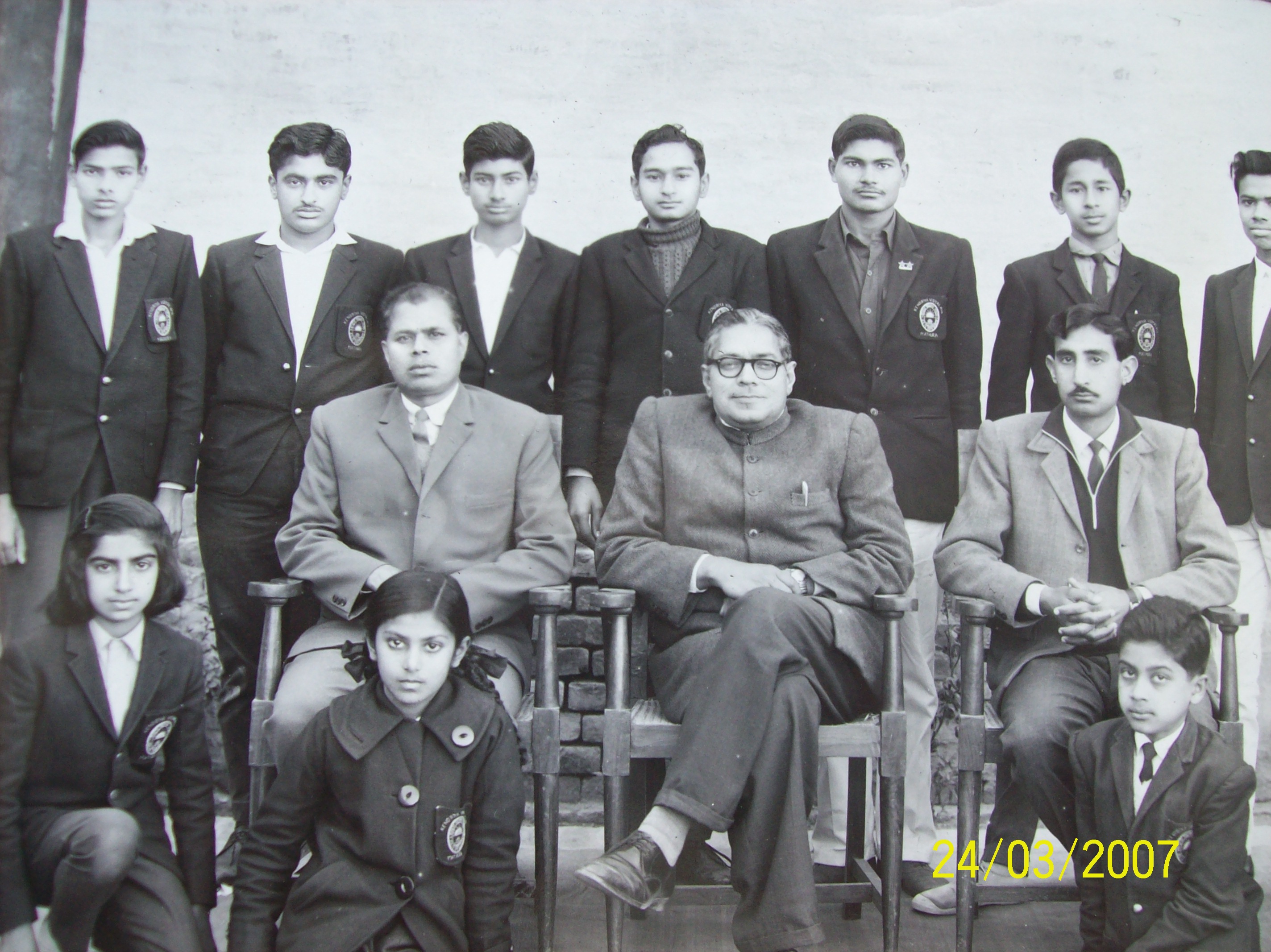
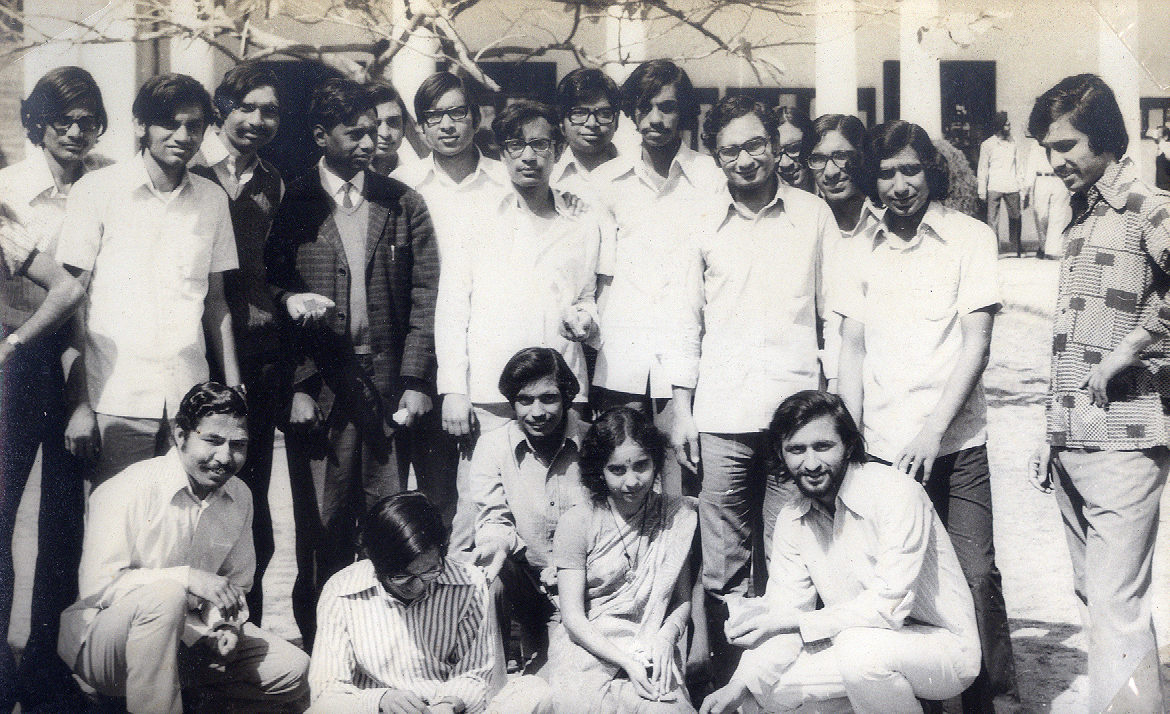
An Ode to our Teachers

       In our child-like innocence, we worshipped in you the light beautiful,

You goaded us, disciplined us, making us learn things awesome and wonderful;

Admiring and amazed, we were like wet clay in the hands of expert potters,

Clinging to you for mind’s nourishment and support, like your very own sons and daughters.

Part of 1969 batch, Central School, Mathura (UP)

Part of 1969 batch, Central School, Mathura (UP)


In our coming of age phase, you taught us to enjoy our freedom with responsibility,

Made us crunch complicated aphorisms and equations, keeping up our mental agility;

You had a tireless step so difficult to keep up with, our nature weary of concepts too great,

Prisoners of our human limitations, searching for livelihood, theoretical equations we did hate.

1974 batch, Delhi University, Department of Physics

1974 batch, Delhi University, Department of Physics


As we blossomed further, we found you to be friends, philosophers and guides,

At times we misbehaved but you continued exhorting us to explore unchartered waters and tides;

You were close to our hearts, yet distant, objective and impartial, difficult to comprehend,

Pushing us towards aims we could start understanding only when our association was about to end.

1975 and 1976 batches, UBS, Panjab University, Chandigarh

1975 and 1976 batches, UBS, Panjab University, Chandigarh


We explored new frontiers of music, dance, drama and elocution,

Hobnobbing with celebrities, we learnt the art of event execution;

The City Beautiful had seasons in which our romantic thoughts easily led to transient infatuations,  

Acquiring everlasting friendships, we braced to enter the business world to handle real situations.   

A friend, philosopher and guide, circa 1994

A friend, philosopher and guide, circa 1994


RIP, 2018

Some of us chose the challenges of entrepreneurship; some enriched the civil services archives,

Most of us crafted highly successful careers, adding value to our organizations, as also to our lives;

You were the platform from where we, like Jonathan Livingston Seagull, soared in the sky azure,

We continue to hold aloft the ideals and values learnt from you, our love and regards certainly pure. 


It is heartening to know that India’s civil services aspirants shall soon be taking an examination in ‘Ethics, Integrity and Aptitude’ as part of their endeavor to make a career in public administration. It is a laudable initiative, and one does hope that in the days to come, our denizens’ issues with the administration shall start getting resolved with empathy, pragmatism and promptness, sans any corrupt practices.    

As an average person, one is tempted to ask if our politicos should also be taking a similar test! We live in an era when probity in India emblempublic life is at a nadir. The conduct of some of our honorable MPs and MLAs on the floor of our august legislative bodies often leaves us red-faced and scurrying for cover. The only time we see a semblance of unity amongst politicians of different hues is when they are faced by the threat of declaring their finances under the landmark RTI Act or when trying to thwart the judiciary’s attempts to keep criminals out of our polity.

How about an Indian Political Service?!

May be, the time has come to introduce an Indian Political Service? If meritocracy has to rule, those aspiring for a career in politics can be made to first apply to a body like the Union Political Service Commission! Detailed CVs backed by details of socially relevant projects handled, vision for the future, parentage and financial backing etc will need to be submitted and made public. Thereafter, the aspirants would need to undergo a rigorous selection process, comprising a written examination, followed by a group discussion, individual PPT presentations for the benefit of their target constituents, personal interviews and the like.

A professional working license can get issued only after a five-year internship with a duly registered political party. Thereafter, the incumbent could become entitled to joining the election fray. license can be put up for renewal once every five years.

Criteria for disqualification can also be laid down. Involvement in scams of any kind, a lapse in discharge of core duties, getting convicted in a court of law, disrupting legislative work, browsing the net for pornographic content while on duty, tax arrears of any kind, etc., could lead to suspension of the license to practice.

An exhaustive appraisal system can be put in place. Performance could be rated on various aspects like development works completed in the constituency, number of new legislations introduced, hours of legislative attendance registered, besides core targets met for the portfolio handled. For re-election, the license will need to be renewed based on the ballot performance.   

Would a Management Development Program Help?India Parliament House

In case our leaders and constitutional experts declare the above mentioned approach as null and void, another option is at hand. We can ask some of our premier management institutes to design a Management Development Program for our politicians! Such a program could have modules on ethics and integrity and behavioral sciences – with a focus on etiquettes and manners. A crash course on meditation techniques could lead our politicos to do some introspection on their own part, trying to figure out ways to attract today’s educated youth into the political mainstream, handling important legislations with equipoise and equanimity, controlling passions on the floor of the house and cleaning up the finances of the parties they owe their affiliations to.

In an era of scams and systemic corruption, the reputation of our political honchos has taken a severe beating. This is not to say that there are no straight forward and honest politicians ruling us. But corruption appears to rule the roost. Whether it is through a loot of the exchequer (Westland helicopters, fodder scam), sale of patronage (allocation of natural resources) or plain extortion and rent-seeking (pay or take the highway), the ingenuity with which public money gets siphoned off to either fill the political parties’ tills or to shore up personal fortunes is something which one cannot learn at management or accounting institutes.

Connecting with the Post-reforms Generation

All political parties need to do some introspection as to how to win and influence potential voters, specifically Gen-Z, meaning those who were born in the post-reforms era and who expect performance in place of promises and delivery in place of dithering.

The writing on the wall is clear – cleaning up political funding, giving up vote bank politics, avoiding inane bickering to win India Rashtrapati Bhavanbrownie points and joining hands to work together and taking concrete steps which enable common citizens to become successful entrepreneurs and make the delicately nurtured amongst us experience true freedom.

It is apparent that as a country, India has so far focused only on economic reforms. Reforms in the other realms of a vibrant democracy, like legislature and judiciary, are yet to be conceptualized and rolled out. We have miles to go before we get to sleep!


UNDERGROUND CABLE CONNECTIONS

Strong relationships of a personal nature, which can be used once in a while to achieve good results. These need investment of time, affection and mutual trust to be built up over a period of time. The returns are surely worth the effort.


VACATIONSVACATIONS

Not to be neglected. Do not give in to the temptation of believing that the whole organization would collapse in your absence. Plan for the same in advance and delegate while keeping your boss updated. You would be surprised to find that your team turned in a better performance while you were away to Bahamas.

The absence of a good manager is never felt, because his team is trained up so very well!


“VICE” PRESIDENTS

Being a “Virtue” President makes eminent sense, being a “Vice” President does not. If the top management is being over ambitious and the delicate line between avoidance and evasion is disappearing, register your dissent. If you are not heard, look for greener pastures before the sordid affair gets dumped onto your shoulders and you get lynched.

It pays to build up and protect your own brand value!


VISIBILITY

Being a visible employee always helps.

To improve visibility, check if you are engaged and motivated enough on the job. Introspect and take corrective steps to improve your level of engagement. Analyze and imbibe the qualities and skills of those who are more visible than you are. Take charge of your behavior and stop feeling like a victim. Excel at what you do and make sure you are noticed by the right people across the organization.


‘Once a sister, always a sister’ goes the adage in Bollywood. Quite a few wannabe heroines, howsoever well endowed in their acting prowess, get typed in sisterly roles. Think of Nazima, Naaz, Daisy Irani, Tabassum, Farida Jalal and several others who got ‘typified’ and had to remain content playing docile sisters to dashing heroes in several movies. In fact, one of them was even labeled as a ‘Resident Sister’!

But some fine actresses had the guts and the opportunity to prove their detractors wrong. They managed to break through the glass ceiling, so to say, and metamorphosed into highly successful romantic heroines. Consider Mumtaz, for example. Having played a sisterly role in Gehra Daag (Director: O P Ralhan, 1963), she went on to become the darling of the masses later in her career.

Romance vs. Filial Love

We also have actresses who, despite playing a romantic lead against leading heroes of the day, ventured into unchartered waters andRakhi Bombaykababu played loving sisters with much aplomb. In some cases, they did so opposite the very hero whom they were romancing in some other flicks!

Here is a quick recap of some of Bollywood’s actresses who have dared to experiment along these lines.

Suchitra Sen

The diva from Tollywood, Suchitra Sen, started off in Bollywood by playing an ‘assumed’ sister to the debonair Dev Anand in Bombai Ka Babu (Raj Khosla, 1960). The movie tapped her emoting strengths quite successfully. When she realizes that the hero is impersonating her long-lost brother only to get access to her family’s wealth, her shock and surprise is spontaneous. Her anguish on finding a ‘brother’ making romantic overtures is well portrayed. Eventually, the hero is forced to accept their brother-sister relationship. He ends up supporting her marriage elsewhere.

Suchitra Sen also played a romantic lead opposite Dev Anand in the movie Sarhad. However, both these movies did not do well at the boxRakhi Hare Rama Hare Krishna office. Her subsequent movies, like Devdas, Mamta and Aandhi are classics which won critical acclaim as well as cine-goers’ appreciation.

Zeenat Aman

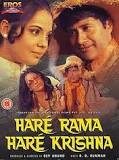
Who can forget the enchanting song ‘Dum maro dum…’? Picturised on a debutant Zeenat Aman in Hare Rama Hare Krishna (Dev Anand, 1971), the song remains fresh in public memory even today. The movie touched upon the decadence of the hippy culture and the drug menace. Dev ends up in Nepal, looking for her long-lost sister, played by Zeenat. He succeeds but the sister is unable to reconcile herself to a normal lifestyle and ends her own life.

Subsequently, Zeenat Aman slipped into romantic roles opposite Dev Anand in several movies directed by him, including Heera Panna (1973) and Ishq Ishq Ishq (1974). The fact that she eventually went on to become a successful star in mainstream Bollywood flicks shows that out-of-box career starts do not always lead to disasters. Rakhi Josh

Aishwarya Rai Bachchan

In Josh (Mansoor Khan, 2000), Aishwarya played Shahrukh Khan’s sister with much ease. Both were established stars in Bollywood by then but took up the challenge of portraying siblings in this flick. They also romanced each other in Mohabbatein (Aditya Chopra, 2000) and then in Devdas (Sanjay Leela Bhansali, 2002). 

Aishwarya made yet another foray into the sibling territory by playing Amitabh Bachchan’s sister in Hum Kisise Kum Nahin (David Dhawan, 2002).

Neelam Rakhi Hum Saath Saath Hain

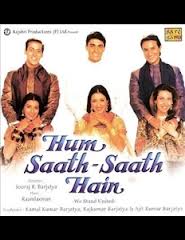
In Ek Ladka Ek Ladki (Vijay Sadanah, 1992), Neelam played a romantic lead opposite Salman Khan. Subsequently, they teamed up as a brother-sister duo in Hum Saath Saath Hain (Sooraj Barjatya, 1999).

Juhi Chawla

In Darr (Yash Chopra, 1993), Juhi was hounded and stalked by Shahrukh who is obsessive about her. In Raju Ban Gaya Gentleman (Aziz Mirza, 1992), Yes Boss (Aziz Mirza, 1997), Duplicate (Mahesh Bhatt, 1998) and Phir Bhi Dil Hai Hindustani (Aziz Miraza, 2000), Juhi and Shahrukh portrayed an intensely romantic relationship. However, in Paheli (Amol Palekar, 2005), Juhi played the role of Shahrukh’s sister-in-law!

Sisterly StarsRakhi My_Brother…_Nikhil_

Juhi Chawla played the role of a caring sister in My Brother, Nikhil (Onir, 2005). Her brother, played by Sanjay Suri, gets afflicted by HIV. The cause is never explained, but the effect is vividly captured. Juhi played the heart-warming role very well indeed, portraying the inner strength of her character of a sister who stands up for her brother, even though suffering internally herself.

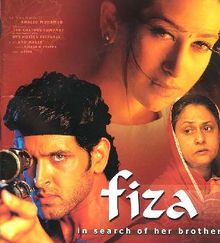
A successful romantic star in her own right, Karishma Kapoor played Hrithik Roshan’s sister in Fiza (Khalid Mohammed, 2000). In a happy Muslim family, tragedy strikes when the brother is wrongly implicated in the serial blasts which rocked Mumbai in 1993. He ends up becoming a terrorist. To save him from getting captured live by the police, the sister ends up killing him at his own behest. Rakhi Fiza

Exclusive Sister-Brother Movies

Once in a blue moon, Bollywood has also come up with movies which are based entirely on brother-sister relations. The fondness for each other, the pranks they play on one another and the special bond they share – to the exclusion of even their parents – are all features which have been captured in great detail.

Other than My Brother, Nikhil, an outstanding example is that of Boot Polish (Prakash Arora, 1954) which won critical acclaim as well as box office success. Rattan Kumar and baby Naaz put in credible performances in the movie which exhorted us to live even a penniless life with dignity. The importance of education for children was another critical message which was conveyed by the movie.

Divya Dutta’s scintillating performance as a loving sister in the recently released Bhaag Milkha Bhaag is worth mentioning.

A Professional ActRakhi Boot_Polish_

It goes to the credit of Bollywood that besides being secular, it provides a diverse platform for actors to showcase their talent. The fact that several stars are open to taking up challenging roles which change their on-screen romantic relationship into a filial one goes on to show the innate professionalism at work. The credit also goes to producers and directors who take a risk and cast popular stars in such roles.

This is but one facet of the maturity that Indian cinema has achieved in its hundred years of existence. 

(Inputs from Sanjana are gratefully acknowledged!)

Hormones are surely stronger than man-made borders between countries. Examples abound of couples tying the knot across the Indo-Pakistan border. Celebrity tennis ace Sania Mirza and cricket player Shoaib Malik did so a few years back. Several other couples have found true love across the borders – some have met with success, some with disappointment.

Bollywood has capitalized on enmity between India and Pakistan in several of its movies.  However, several directors have been bold enough to send out a message of peace and unity by offering movies depicting the trials and tribulations of lovers from across the border. Of late, the imagination of script writers has become more vivid, what with RAW and ISI agents falling in love with each other, inviting the wrath of their respective bosses!

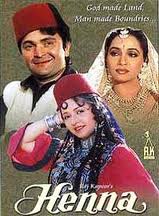
Henna (Raj and Randhir Kapoor, 1991)Poster Henna

Refugee (J P Dutta, 2001)Poster Refugee

Gadar – Ek Prem Katha (Anil Sharma, 2001)Poster Gadar

Veer-Zaara (Yash Chopra, 2004)Poster Veer Zaara

Agent Vinod (Sriram Raghavan, 2012)POster Agent Vinod

Ek Tha Tiger (Kabir Khan, 2012)Poster Ek_Tha_Tiger

Movies like Henna and Veer-Zaara had no violent scenes and conveyed the message of love between India and Pakistan in a very mature and sensible manner. In Veer-Zaara, the spirit of sacrifice made by Veer (Shahrukh Khan) to protect the family honor of Zara (Preity Zinta) tugged at one’s heart-strings. A surprise twist in the tale lay in the subsequent revelation that Zara had crossed over to Veer’s village in India and was running a school in the memory of Veer’s foster parents.

Actresses from across the border have often found meaty roles in Bollywood movies. Nikaah (B R Chopra, 1982) featured Salma Agha.Poster Garam Hawa Henna used the talent of Zeba Bakhtiyar. Recently, Meesa Shafi played a role in Bhaag Milkha Bhaag (Rakeysh Omprakash Mehra, 2013).

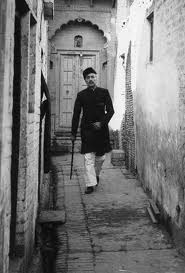
Bollywood has also captured the pangs of partition in various movies. Garam Hawa (M S Sathyu, 1973), Earth 1947 (Deepa Mehta, 1998), Hey Ram (Kamal Haasan, 2000) and Pinjar (Chandra Prakash Dwivedi, 2003) were well crafted. Bhaag Milkha Bhaag also made an effective portrayal of the pain, suffering and trauma associated with the holocaust.

The coming generations in both the countries are bound to be smarter than we are. They would also have the advantage of being free of our earlier generation’s emotional baggage. Time is a great healer, it is said. Hopefully, a day will dawn when the two countries would stop being pawns in the hands of other countries. Powers that be in both countries would one day realize that part of their massive military budgets can instead be used to fight their common war against hunger, poverty, malnutrition and education!

TALENT

The care that organizations bestow on managing money is generally much better than what they bestow on their people. Identifying, nurturing and constructively exploiting the talent and innate strengths of their people imparts a great competitive advantage to organizations. The competency of an organization to create a steady stream of in-house leaders determines its strategic success in the market place.

Successful organizations have this trait in common – a culture of observing, judging and unleashing talent.

TEAMSTEAMS

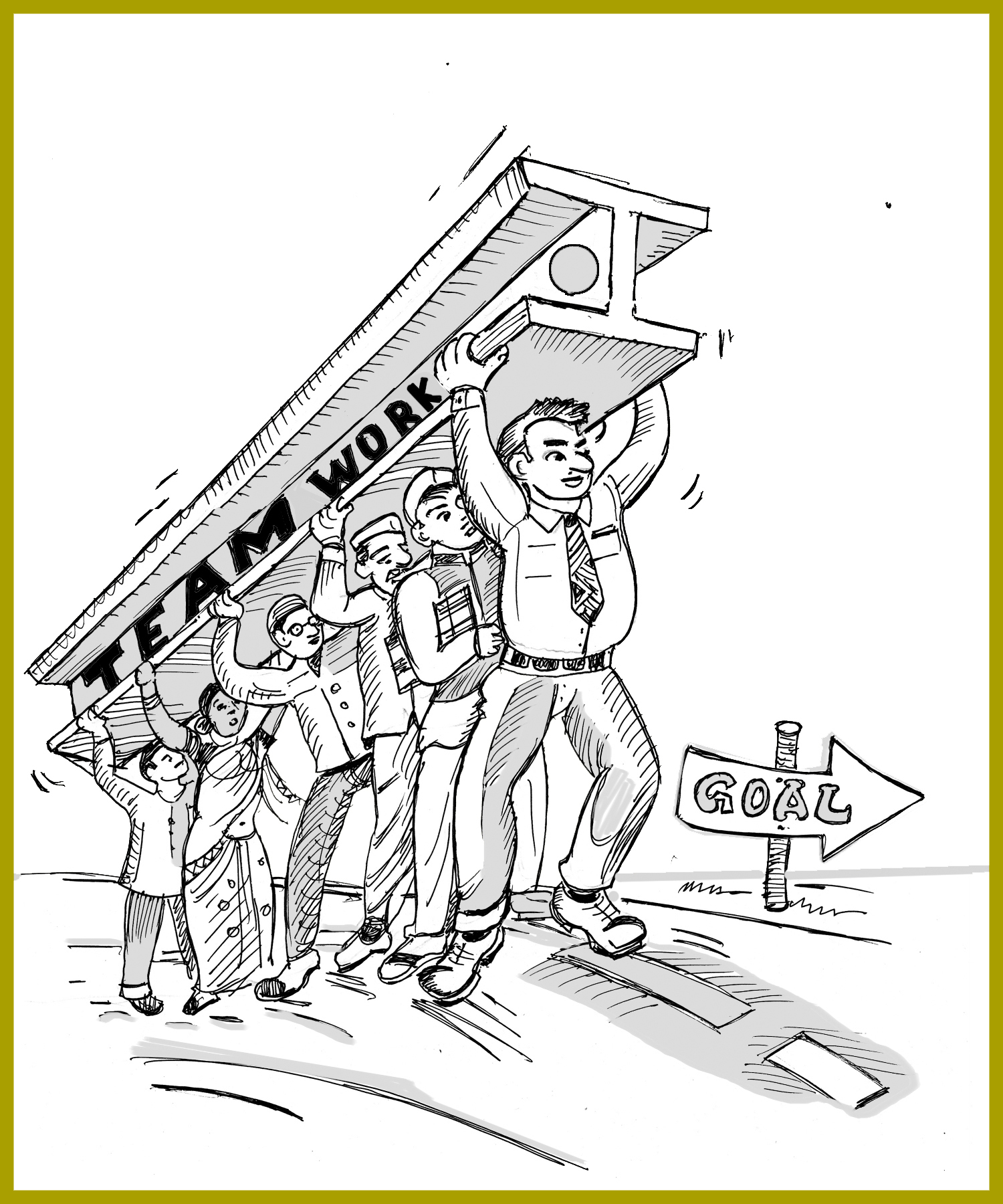
For cross-functional tasks to be carried out, build teams with due care. Let your team have like-minded people as well as a minority of likely dissidents who will ensure the team does not go off track.

TERROR

There are bosses who epitomize terror at the work place. Insulting and demeaning you is second nature to them. They would set impossible targets; as long as the task is in your hands, it would be top priority; once it reaches their own desk, you may not hear of it for the next two years. Some of them have agricultural inclinations – a suggestion made by you would get rejected with much fanfare, in full public view; after six months, it would become their idea and get marketed to the top brass.

Fight or flight? If you are sure of your ground and stand up to them once in a while, heavens will not fall. You could end up dealing with a less aggressive boss in the days to follow. The flight option gets linked to the status of the industry as well as your own USP.

When forced to continue under such a boss, bide your time and hope for a better planetary configuration in the days to come. Or, quietly work through the grapevine to have alternate relationships and collaborations within the company, so the immediate boss’ sins get exposed to others who might be able to do something about it.

THANKS!

Use it as frequently as you can. Use it genuinely, only when you mean it.

TIME, MANAGING

There would always be disruptions, leaving you frustrated with only truncated time at hand. Report for work early and enjoy a quiet time to plan your affairs for the day. Spend the last fifteen minutes of the day to outline the plan for the next day before leaving office. And yes, keep some time to spare for a friendly cup of coffee with a colleague – informal, no agenda – and see how new ideas take shape!

TRUST

There is a strong positive correlation between trust, loyalty, engagement and ownership of targets agreed to be met by people. Ignore building up of trust and you scuttle the chances of getting things done.

At present, the term GDP in India appears to have come to represent our collective Gross Despondency Perception. Our economists and statisticians can perhaps cheer up the hapless and overtly depressed citizens. They can do so by overcoming their obsession with pure materialistic growth. There are several ‘intangibles’ as well as ‘tangibles’ which can get added to the quantitative measure of our progress. For all you know, they could end up depicting a rosier picture which would also be closer to reality.

The following invisible facets of GDP could do with better visibility in the public domain:GDP Housewife

1.   Grand Domestic Pampering 

Household chores performed by a vast majority of the better half of our citizenry continue to remain invisible even to prominent economists who take such services for granted at their own homes. Home makers surely deserve a better deal. Without their contribution, the wheels of our economy would grind to a complete halt in no time. Home management services are provided by them 24×7. There is no doubt that they possess a high degree of multi-tasking skills. Also, their inventory management techniques always ensure that there are no stock-outs in the kitchen when uninvited guests suddenly pop up over the weekends.

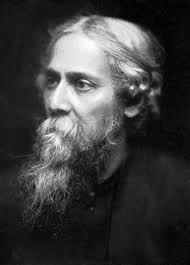
 2.   Gross Dramatic ProduceGDP Tagore

Why neglect works of entertainment, literature, music and art works? The movie industry keeps churning out pot-boilers one after the other. Over the years, only the bar of success at the box office keeps getting raised. Television has already blossomed into a primary source of entertainment for the masses. Both the mediums have transcended international boundaries and gone global. India boasts of prolific writers across all languages and there is no reason their contribution to the social thought process should get neglected. Creative personalities and achievers of all kinds have added value to the Indian identity – right from Rabindranath Tagore to M F Husain, from M S Subbulakshmi to Pandit Ravi Shankar, from Munshi Premchand to Vikram Seth and from Lala Amarnath to Saina Nehwal. The relative soundness of the Indian IP regime can facilitate the inclusion of this parameter in the GDP computation without much fuss.

 3.  Groovy Digital Products

With broadband getting rolled out across the country, and with spectrum sales eventually coming out of the depressing shadow of scams GDP Aishwaryaand judicial overreach, the Indian economy would soon start getting digitalized at a faster pace. Digital experiences are slated to improve in terms of reach as well as quality. This sector can boast of a unique range of intangible assets of its own. Such developments can only be ignored at our own risk and peril.

4.   Great Domestic Patience

Yet another soft power which remains ‘invisible’ to the Homo economicus (as opposed to the Homo reciprocans) amongst us is the religiosity, the innate bent towards spirituality and the resultant bias towards non-violence. The patience displayed by most of our denizens in dealing with shoddy civic facilities, super-slow public services and systemic corruption is perhaps a result of our social mores which are steeped in spirituality. By ignoring this facet, a great mechanism to handle setbacks in life is therefore left out of the reckoning.

GDP R&D

5.   Grand Design Patronage

R&D expenditure in the private sector is another area which deserves attention. Admittedly, we are far behind in the realm of innovation and design. But we do have the potential to catch up with the rest of the world. If such expenditure is considered an investment in the economy, a more realistic perspective would emerge.

6.   Green Development Plans

In the relentless pursuit of economic growth, we are guilty of drawing more than we replenish to Mother Nature. Whether it is mining, spectrum-sharing or water-management, we are taking myopic liberties which would prove very expensive, if not irreversible, in the timesGDP environment to come. Green initiatives taken to compensate for the loss of natural resources surely merit inclusion in our scheme of things. The aggregate value of ‘production’ should surely be adjusted to reflect the permanent damage caused to our fragile environment.

Considering intangibles in macroeconomics data is not a new idea at all. Way back in 1908, Thorstein Veblen, a sociologist and economist, had used the phrase ‘intangible investment’ to cover everything from innovation to promotion and advertising. At a business level as well, the proportion of tangible assets backing up a brand could be a miniscule 5% of the overall value of the brand.

The Bureau of Economic Analysis of US has recently created history of sorts by publishing a revised series of public accounts which include the R&D investment in private sector as well as original works of art such as films, books and music. As an example, for the period from 2002-12, the new data shows an annual average growth rate of 1.8% in place of the earlier declared rate of 1.6%.

We have a number of institutions, bodies, statisticians and economists who can surely propose a more balanced way of capturing the realities of the Indian economy. The data may not be easily available and may have its own share of initial controversies, but the attempt would certainly be an improvement in the right direction.

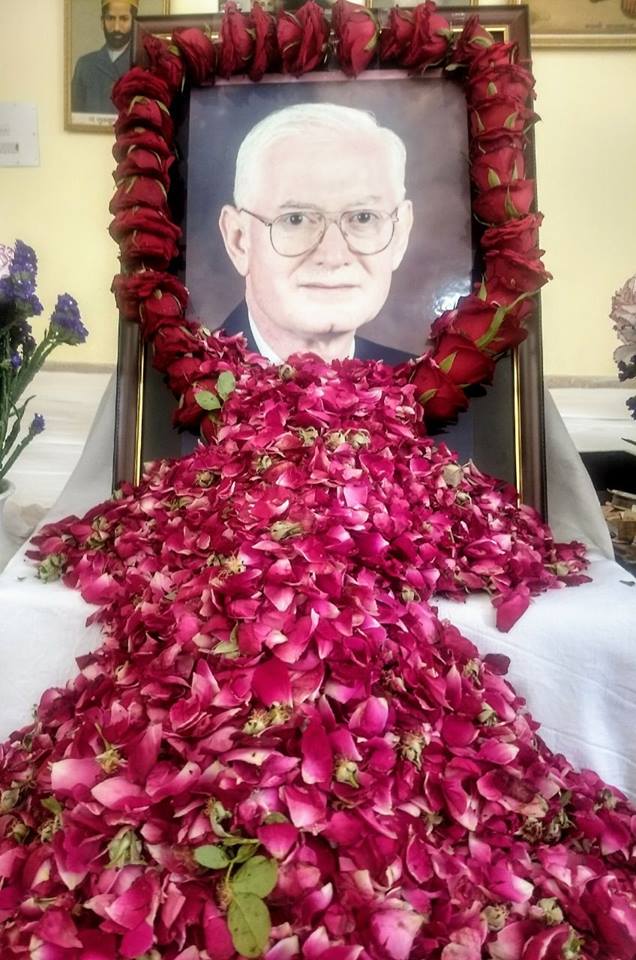
PS: Whatever little I understand of Economics, it is due to the learning received from late Prof. S P Singh, a friend, philosopher and guide. This article is merely a humble tribute to the great person. 

The conscientious ones amongst the mandarins in the Indian Health Ministry cannot really be blamed for having sleepless nights. The epidemic of such lifestyle diseases as obesity, diabetes, hypertension and cardiovascular abnormalities is leaving them a wee bit clueless. The need of the hour is to come up with a scheme which nudges Indians of all sizes and shapes to start living slimmer and healthier lives.

Take obesity, for instance. As many as 60 million Indians – roughly 5% of the population – are considered obese. With more than 50 millionObesity image suffering from high blood sugar, India is a nation headed for a health tsunami the devastation caused by which would be anything but sweet. This is a grave threat to our vision of the country reaping a hefty demographic dividend in the years to come.

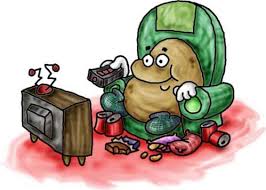
How do we motivate the Indian couch potatoes to switch off their TV sets and go out for a jog or a brisk walk? What is it that makes Indians tick?

One, all Indians have a great passion for gold. We are quite happy gobbling up around 900 tonnes of the yellow metal every year. Walk into any jewelry store and the rush there would make you wonder if someone inside is dishing out freebies. You would be excused for mistaking it for a fish market, albeit with an odorless soothing ambience where the sales people smell of perfume but are too busy to attend to your needs immediately. One thing we have surely learnt from our Gulf friends is to build multi-storied malls where a dazzling variety of bangles, rings, pendants, chains and other accessories are on display, each on an exclusive floor of its own. After all, aeons back, India was known as a ‘bird of gold’!

Two, like many of our brethren elsewhere on this planet, we despise paying taxes. In a country of 120 billions, where automakers face a slump but luxury cars still sell like hot cakes, less than 3% pay any tax on their incomes. Of these, merely 1.3% report an income exceeding Rs. 2 millions per annum. A Pareto’s Law is in operation here as well – these 1.3% alone make up for about 63% of the taxes collected! Come budget time, and our collective BP levels go up. The hapless salaried class, a sitting duck in any case, hopes for a tweaking of Section 80C etc. The businessmen keep improvising their art of fudging expenses year after year and still suffer from indigestion and insomnia. Corporates have a battery of professionally qualified people assisting them in tax planning, a euphemism for tax evasion being portrayed as tax avoidance.

The Government of India would do well to capitalize on these widespread weaknesses of Indians and launch a slew of incentives andgold bars schemes which nudge Indians of all hues to start living healthier lives. Dubai has already shown the way by deciding to lure its citizens to lose weight in kilograms and gain ounces of gold. India can improve upon the scheme and link weight loss of its citizens to tax savings as well. A carrot and stick approach based on a single health parameter which is easily measurable (like Body Mass Index, or BMI in short, for example) could be an instant hit with the masses.

The scheme can reward people whose BMI is in the normal range. They can hope to get 5 gms of gold plus a rebate of 10% on the taxes payable each financial year. Those who have a BMI in the obese or super-obese range can be made to pay a 10% surcharge on their taxes. Those who are underweight can be given extra rations in the proposed Food Security Bill. A scheme of this kind would surely motivate Indian citizens to start jogging, walking and refusing to become couch potatoes. Those who sustain fitness for longer periods can merit extra incentives. If they do not provide fitness certificates annually for a period of 5 years, there could be an obligation to return the gold thus earned. This would ensure that having pocketed their new-found wealth, the beneficiaries would not start piling up their pounds of flesh once again.

The spin-offs of such a scheme are many. Students, if given grace marks for being healthier, would certainly switch their lunch preferences in favor of salads, nuts and fruits, giving up on burgers and pizzas. Those opting for fitness-based careers would find their employment prospects brightening up. Our armed forces would no longer have to face a shortage of officers wanting to join its ranks. The additional supply of sports persons shall improve the country’s medal tally prospects in Olympics. Engineers and professionals of all kinds would start refusing white collar jobs, providing much-needed manpower for blue collared assignments. Medicos will start taking careers in public health more seriously.

Most of our denizens who have been happier staying out of the tax net would voluntarily start filing returns. The IT Department may soongym eqpmt image need to beef up its facilities to cope with the mad rush of filing returns, what with the humble paan-waalahs, the washermen and the milk delivery men also jumping onto the bandwagon. The rush for gym equipment, health monitoring accessories and healthy foods would increase manifold, bringing in fresh investments, thereby giving a much needed fillip to the ailing manufacturing sector. Bollywood stars who are already egging us on to remain in good shape would get a fresh lease of life. The just-to-be-married maidens who are fighting the battle of the bulge and chasing their size ‘zero’ dreams would soon start earning a part of their own dowry.

Politicians who remain cocooned in their climate controlled environs may soon decide to visit their constituencies more often, losing weight while walking through the heat and dust of the countryside. A healthy body houses a healthy mind. Soon, the citizens could expect a major improvement in the functioning of our parliamentary institutions. Bureaucrats would soon follow the healthier lifestyles of their leaders, thereby revitalizing a crucial part of our vibrant democracy.

Where is the infrastructure to implement a scheme of this nature, you might well ask. With inclusive banking just round the corner, postcouch potato offices, banks and hospitals of repute can certify the BMI levels of our citizens. P&T staff members who are twiddling their thumbs in the post-telegram era can be trained and used in the scheme. The excess outflow of foreign exchange on account of spurt in gold imports would be easily offset by the higher productivity of the working population of India. This in turn would give a boost to the much sought after GDP numbers, besides inching us conceptually closer to a Gross Happiness Product.

Overall, a win-win situation for all concerned. For all you know, India could prove to be the healthiest country on the planet in the near future!

(Realted Post: https://ashokbhatia.wordpress.com/2015/01/01/a-new-year-resolution-for-couch-potatoes)

Poster The_Beauty_InsideWould hi-tech companies like Intel and Toshiba believe in the traditional Indian ethos of spirituality and reincarnation? The fact that their recent promos give us a glimpse into a universe where what is on the inside alone counts does indicate this. The key message appears to be that whether it is a man or a machine, it is only the entity inside which makes a difference. ‘The Beauty Inside’ promo has a narrative of daily incarnations, which fits in rather well with what Lord Krishna tells us in the Bhagavad Gita – that the soul inside us is what really matters!

This is obviously not to say that the essential principles enshrined in Eastern scriptures necessarily need an endorsement from the West. It is common knowledge that post-Lehman Brothers, premier management institutions from the West have started showing some interest in the Eastern philosophy. The concepts of morality and ethics have gained currency in management circles. The fact that Stephen Covey speaks of an inner voice and a soul in his book ‘The 8th Habit’ is yet another manifestation of this trend.

Learning it from intelligent apes

The concept of a soul is an integral part of various streams of religion and spirituality we see around us today. It is interesting to understand how religion and spirituality originated; also, the value these really add to our mundane lives.Bonobos

After years of research on bonobos – intelligent apes closely related to us, homo-sapiens – Frans de Waal argues that human morality is not imposed from above but comes from within us. In his path-breaking book entitled The Bonobo and the Atheist, he therefore proposes that moral behavior does not begin and end with religion. It appears that our values and ethics are instead a product of evolution and cultural response.

The fact that our innate goodness resulted into diverse streams of religions we see around us today readily explains the success of religion – and various Gods revered in each stream – as a concept. The spiritual thought process is also an outcome of the same core of our need to be good within ourselves, in our own eyes.

A cat or a dog may not think through the process so thoroughly, but bonobos surely appear to be aware of the nuances of social norms. Religion Ankara_Muzeum_They have a developed sense of reciprocity and fairness. They are even known to intervene in a fight between two tribe members so as to maintain peace and harmony!

Ancient apes, whales and dolphins deserve our gratitude for several qualities that we possess – our sensitivity to others, our concern for fairness, love of harmony and other just forms of societal behavior. If religion or spirituality attract us, it is because these touch a chord somewhere deep within us.

Templates of Exemplary Conduct  

The contribution of religion therefore is in presenting us with templates of exemplary conduct. It has codified the social and ethical norms for the average person. In particular, it has made it easier to explain the nuances of ethical and moral values by portraying examples of Gods and Goddesses whose conduct is worth emulating for the average person. Religion cleverly uses fear and temptation to guide and control human conduct.

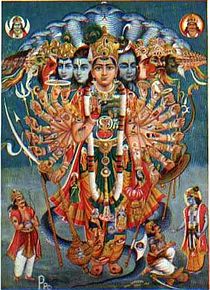
Irrespective of the stream of spirituality one chooses to follow, the basic template invariably is again that of exemplary conduct. However,A_Vishva-rupa_print the focus is on listening to one’s inner self. The endeavor is to silence the mind, thereby attaining inner peace and happiness. Each stream of spirituality has a different prescription and a unique methodology, but all are unanimous that the spirit is at the centre of it all. To that extent, spirituality has the potential of uniting people, whereas religion has been seen to divide it along communal lines.

As compared to religion, spirituality is more embracing. In religion, we have the good guys – devas – and the bad guys – asuras. Following one’s Dharma, the code of righteousness, man can hope to attain salvation. However, spirituality encompasses the good as well as the evil, both being manifestations of the Divine. When Krishna manifests his all-pervasive and all-inclusive Vishwarupa form in the midst of his sermon to Arjuna, it shows the negative side of the Divine as well.

A Heady Cocktail

Intel and Toshiba have surely come up with a winner promo in ‘The Beauty Inside’. Similar campaigns which work on a heady cocktail ofintel logo some basic tenets of religion and philosophy on the one hand and the latest that technology and management has on offer on the other would surely follow.

Given that our scriptures are replete with gems of wisdom and lay down templates of exemplary conduct, more and more corporates could be hopping on to the spiritual bandwagon in the days to come. Already, we find companies appointing Chief Belief Officers and Chief Ethics & Compliance Officers. Goes on to show that the role of conscience keepers in corporates is getting the recognition it deserves.

Toshiba logo

Such developments give one hope that the upcoming generations of our future business leaders and professional managers would rate high not only on their Intelligence and Emotional Quotients, but also on their Moral or Spiritual Quotient, bringing to the work place a set of ethical values and practices.