Feeds:
Posts
Comments

In a majority of movies churned out by Bollywood, doctors and nurses have only been on the fringes of the narrative. But there are some which have highlighted the professional trials and tribulations faced by our healers. Few have even commented upon the complex challenges of poverty, malnutrition and scarce resources faced by doctors and nurses in a developing country like India.

Keeping in tune with the times, the depiction has also undergone a major transformation. As our society has become more self-centered, so has the general character of the doctors and nurses shown in the Bollywood flicks. The self-sacrificing doctors of yesteryears have slowly but steadily given way to glamorous ones playing second fiddle to a mostly romantic script at hand.

Risking Their Own Lives

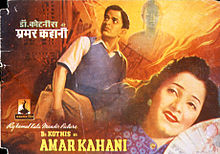
In the pre-independence era prior to 1947, we had self-sacrificing doctors who rendered their services in alien lands, serving the Poster Dr_Kotnis_ki_Amar_Kahanipeople affected by war and plague. Old timers may remember Dr. Kotnis Ki Amar Kahani (1946, V. Shantaram, ‘The Immortal Saga of Dr. Kotnis’) which was based on the true life-story of Dr. Dwarakanath Kotnis who was sent to China during World War II. Dr. Kotnis helps the people of China during the Japanese invasion. Rendering a selfless service, he marries and settles down there itself but eventually dies of plague.
Post-independence, we had Dil Ek Mandir (1963, C. V. Sridhar, ‘Heart is a Temple’), where the doctor performs a successful surgery but ends up collapsing due to the tireless effort he puts in preparing for the same. Aman (1967, Mohan Kumar, ‘Peace’) was inspired by the story of Dr. Kotnis. The hero gets inspired to serve humanity after meeting Sir Bertrand Russell and goes to Japan to serve the victims of nuclear holocaust.

In Selfless Service  

In movies like Anuradha (1960, Hrishikesh Mukherjee) and Khushboo (1975, Gulazar, ‘The Fragrance’), the heroes are doctors Poster Khamoshiwho decide to serve poor villagers in the interiors of India. Risking their own health and welfare, they keep busy with their work and neglect their family and personal lives. In Anuradha, the wife eventually ends up sacrificing her urbane musical ambitions to support the husband. In Khushboo, the wife does so but not before she has questioned his lack of initiative in inviting her to live with him. Both movies had finely chiseled performances by the lead actors – Balraj Sahni, Leela Naidu, Jeetendra and Hema Malini.

Khamoshi (1969, Asit Sen, ‘Silence’) had the inimitable Waheeda Rehman playing a nurse in a mental asylum. She falls in love with a patient who gets well and moves out without reciprocating her sentiments. Impressed by her success, the doctor-in-charge entrusts yet another patient to her care. She falls in love with him as well but loses her own mental balance when he is cured. The moral of the story: a medical professional should not get personally involved with a patient. Easier said than done!

Battling the Big C

In the 1970s, Bollywood came out with several movies which had a medical problem as the cornerstone. In quite a few movies, cancer took over from TB as the real villain. Most of these movies tugged at our heartstrings. One, there was the inevitability of death. Two, the sheer helplessness of a doctor made the narration even more poignant. Audiences loved them nevertheless and often came out of theatres with drenched handkerchiefs.

Safar (1970, Asit Sen, ‘The Journey’) had a doctor facing the charge of intentionally killing someone dear to her. The story was Poster Anandessentially a love triangle. The underlying theme was that of jealousy of the doctor’s husband, guilt of the doctor wife and reconciliation with the fact of impending death by the wife’s close friend who is afflicted with cancer.
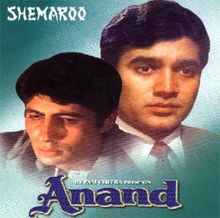
Anand (1971, Hrishikesh Mukherjee, ‘Bliss’) was a landmark film which touched upon several facets of a doctor’s life. Indian health care system’s discrimination between the haves and the have-nots of the society was one of the facets. Yet another was the transformation of an atheist doctor into someone who starts  believing in the power of prayer to heal. The need to have a positive attitude towards life, howsoever short it may be, was the basic message of the movie.

Commercial and Legal Dilemmas

Tere Mere Sapne (1971, Vijay Anand, ‘Your Dreams, My Dreams’) narrated the story of a doctor who migrates to a city after Poster Tere Mere Sapnehaving suffered professional as well as personal setbacks in a rural setting. His transformation into a money spinning professional in an urban environment is well captured. Eventually, he migrates back to the village and regains his sense of good values and ethical practices in healthcare.

Achanak (1973, Gulzar, ‘All of a sudden’) posed an interesting dilemma faced by a doctor at times. Does it make sense for a doctor to strive hard to save the life of a convict who is to be sent to the gallows? The movie answers this question in the affirmative.

The Fringe Benefits of Healthcare

In Silsila, we had a hapless doctor (Sanjeev Kumar) trying to figure out how to handle the post-marital affair of his wife (Rekha). In Satte Pe Satta, we had the heroine (Hema Malini) playing a gutsy nurse, though only in the first few reels.  Salman Khan in Maine Pyar Kyun Kiya, Abhishek Bacchhan in Dostana, Kareena Kapoor in 3 Idiots, Vidya Balan in Pa and Aishwarya Rai in Guzaarish were all glitzy characters playing to the gallery, with their medical talents appearing only on the fringes of the main narrative.  

Healthcare with Bear Hugs

Munna Bhai MBBS (2003, Rajkumar Hirani) was a hilarious take on the medical profession. It touched upon the mixed up Poster-Munna_Bhai_M.B.B.S.priorities in hospitals where patients lack a personal healing touch and where procedures take precedence over urgent medical issues. Quite a few of our aspiring and practicing doctors would have drawn inspiration from the movie to improve the healthcare system by according better priority to compassion, empathy and liveliness in treating patients!

Summer 2007 (2008, Suhail Tatari) raised the issue of lack of awareness amongst medicos about the social ills and absence of any healthcare delivery service in India’s rural areas. Greedy moneylenders and power-hungry politicians rule the roost. A group of medical interns attempts to cope with the daunting challenges facing villagers.

Waiting for Medical Blockbusters!

The wide variety of healthcare related issues touched upon in these movies is commendable. However, one still waits for an in-depth poster comatreatment of the field of medicine at the hands of Bollywood. There is immense scope for medical thrillers based on patent rights of gene based therapies, moral dilemmas raised by the new frontiers of medicine, whistle blowers exposing corrupt practices in the pharmaceutical industry, shortages of critical vaccines and contemporary challenges on providing universal healthcare services in India.

In the last decade, Bollywood has demonstrated its capacity to make shorter movies based on innovative themes. Hopefully, the field of medicine would also get better attention with script-writers and directors coming out with a Coma, a Strong Medicine, a Virus and, possibly, even an Erin Brockovich in not too distant a future!


STRESS

Pressure is an external stimulus. Stress is what we experience. The level of stress we experience therefore is directly proportional to the pressure weSTRESS receive. The good news is that stress is inversely proportional to our inner strength and resilience.

Since each individual is uniquely configured, the response of each person to the same level of Pressure would be different. Some would take it lightly and focus on the action at hand, thereby improving their chances of a better and quicker delivery of results. Others would take it seriously, and jeopardize their own achievements and career. Those who are ever-anxious and have an ‘A’ type personality would invariably experience more stress than those who are the happy-go-lucky ‘B’ types.

Stress experienced by a professional is also a function of time. The psychological condition varies with time and also plays a role.

Distress can be handled positively. Art of creative dissatisfaction, loosening up and letting go, a dash of humor and meditation can help.  (You may read more about this in a blog entitled ‘Handling Hurricane Stress’, published on Feb 1, 2013.)

A little bit of stress is good for a professional’s health and output. Thanks to Richard Lazarus and Hans Selye, we understand the distinction between ‘eustress’ and ‘distress’!

SUCCESSION PLANNING

Smart companies would have a talent pool which enables them to keep refreshing the senior levels at all times. If one senior gets promoted, they are prepared for two other seniors quitting. If one senior gets poached by a competitor, there are two to choose from internally.

SUSTAINABILITY

John Elkington has coined the term “triple bottom line”, based on people, planet and profits. Corporates which offer products and services based on this premise will surely sustain their businesses longer.

Jochen Zeitz, Director of Kering and Chairman of its board’s Sustainable Development Committee is also a Co-Chair of The B Team. He has worked on the first-ever environmental profit and loss (EP&L) for Puma. (You may read about Team B in a blog entitled ‘Plan B for Business’, published on June 27, 2013). 

Bill Ford Junior wants Ford Motor to evolve from a car maker to a “mobility company”. It is working with stakeholders to offer a spectrum of transportation solutions – walking, cycling, buses, metro rails and waterways.

SECRETARIES

A creed which has simply vanished from the corporate world. The advent of computers and the intelligence with which MS kept coming up with upgraded versions of its Windows software has resulted into most yester year secretaries donning a line manager’s hat by now. They have shown excellent results in most organizations, for which, of course, their erstwhile bosses take full credit, having coached them well in the first place.

SENIORITY, RESPECT FOR

A good way to kill an otherwise brilliant idea is to first convey it over mail.

If you are a lazy bum who can’t walk up to some of your seniors and colleagues to discuss an important matter, and have instead decided to send a mail on the subject, at least show due courtesy in addressing the mail in a proper manner, with due respect for seniority; also, double-check it for accuracy before hitting the “send” button.

Seniors are highly status conscious. An ever-changing sequence of their names in bulk mails, ignoring their level in the hierarchy, keeps most of them on tenterhooks; some could get offended and respond to your brilliant idea by hitting the “delete” button!

SHOOTING FROM THE HIP

Managers who either lack information or are too lazy to bother about details often end up being part of the Shooting from the Hip brigade. It takes another bunch of managers to use their ingenuity to the full and handle the nuclear fall outs of wrong decisions.

STEALING CREDIT

This is just not done! Label your junior’s idea as your own and push it upwards at your own peril. Openly name the team members who have contributed to a success, and your people would just love you.


As we celebrate this year’s Doctor’s Day, one’s thoughts inevitably turn to the string of doctors who have treated oneself as also near and dear ones at some point of time or the other. A word of gratitude is surely in order. For these are the people who show us light when we are enveloped by the darkness of ill-health. They give us hope when we need it the most. They have the capacity to ease our minds, make us worry less about our sickness and do their very best to lessen our pain and suffering.Doctors Day

They have to necessarily cope with patients of all sizes, shapes and temperaments whose income and curiosity levels also vary. Some patients are content with merely following instructions, whereas others who believe in self-medication and suffer from ‘Googlitis’ merely come to see a doctor to get a confirmation of the sickness they already believe they are suffering from. If the doctor comes up with an unfamiliar name of illness, orders a new test or prescribes a hitherto unheard of  medicine, such patients go back quite convinced that the doctor is a ‘good’ one!

If one has a complaint, it is only that they work too hard, often neglecting their own well-being in the process. One silently admires their chin-up attitude; despite remaining surrounded by human misery in possibly its worst form, they continue to smile and keep their focus on the task at hand. The poor souls have family responsibilities just like all of us. However, for a vast majority of them, patients are always the first priority, virtually 24X7.

The Angels in White

Same can be said of the nurses, technicians and other para-medics who are eternally vigilant in taking care of the patients under theirFlorence_Nightingale charge. The angels in white uniforms ensure that the right medicines are being taken at the right time. They also grapple with issues facing several patients at any point in time, coordinating with each of the doctors concerned and ensuring that relevant instructions are rigorously followed.

Nurses play an important role in maintaining the morale of the patients as well as the relatives at an appropriate level. Often, they have to bear with patients who have a foul temper. A caring and compassionate nature, coupled with a high Emotional Quotient, helps them to handle their complex task.

The Patient Patients

It is rather baffling that while we celebrate a Doctor’s Day (July 1 in India, March 30 in US) as also a Nurse’s Day (May 12 internationally), we do not spare a thought for the hapless patients. Their contribution to the field of medical science is no less; the entire medical fraternity owes its existence to patients! Moreover, besides being sick, they have to show remarkable patience while undergoing the trauma of getting treated – in getting an appointment with the doctor, endlessly waiting in queues to see one, pushing around to get all kinds of diagnostic tests done, rushing back to the doctor to get medicines prescribed and then going through the whole treatment.

In case a surgery becomes necessary, the immediate family gets involved. In these days of nuclear families, the support of theCartoon Dr Patient family’s social network becomes critical. The fear of impending surgery gnaws at the inner being of the patient, whose energy gets all the more depleted in the process. The fact that the he/she is causing so much trouble to all near and dear ones goes on to add to his/her agony. Post-surgery, pain and trauma have to be faced to which all others can only be mere spectators. Back home, an endless routine of visitors starts, with some of them making uncharitable and insensitive comments which make the poor patient suffer even more mental anguish.

The Silent Sufferers – Attendants

And what about the hapless attendants? They have to practice multi-tasking no end. Answering calls from anxious but distant relatives while procuring medicines is only one facet of the challenge. Organizing food which strikes a delicate balance between what is wanted and what is needed by the patient is another one. If admitted to a hospital, lot of formalities and paper work may become necessary. Round-the-clock surveillance becomes necessary. Skills in house-keeping come in handy, because prior to the scheduled visit of the doctors on rounds, the nurse with a stiff upper lip keeps nagging the attendant till the time the patient is in a ‘presentable’ condition and the room is tidy and orderly. Naturally, the fairer of the species fit into such roles with much ease!

For an attendant, PR skills are a sine qua non, because an endless stream of visitors has to be managed. In most cases, patients treatMother_Teresa_memorial_plaque the number of visitors as a clear measure of their personal popularity index. Nothing would cheer them up more than to keep a tally of the kind of fruits and goodies brought in by various visitors, so the favor may be returned at some future date in a proportionate manner. On their part, some of the visitors leave the hospital in a cheerful mood, thanking the Divine for not putting them in the patient’s predicament.

One would propose that as a caring society, we seriously consider declaring days earmarked to celebrate a World Patient Day as well as a World Attendant Day. The European Union has already taken a lead in this direction, with May 15 being observed as a Patient’s Rights Day. One sincerely hopes that other forward-looking countries would not only declare Patient Days but also honor the nameless attendants who silently slog and bring some relief and succour to the ailing patients. This would ensure an equitable treatment to all those who play a crucial role in the well-being of Homo sapiens!

Medicine-related blogs on this site:

  1. 1.   ‘A First Hand Experience in Medical Tourism’, published December 14, 2012
  2. 2.   ‘The Miracle of Alternative Therapies’, published March 31, 2012

Businesses all over the world chase profits, and rightly so. However, when they do so at the cost of the planet we depend upon or by usurping the legitimate rights of communities they operate in, there is a cause for concern.

All professionals who care for probity in corporate lives, stand for sustainable living and detest relentless pursuit of profits would heartily welcome the recent initiative taken by some of our far-sighted business and community leaders. These leaders have pledged themselves to work on an alternate paradigm for business which puts people and planet alongside profits.

Planet, People and Profits

Known as The B Team, the initiative is a global nonprofit venture co-founded by Sir Richard Branson, and Jochen Zeitz in October 2012. It brings together international activists and business leaders to “make business work better”. The “B” in The B Team represents the need for a “Plan B” for Business. By implication, “Plan A” is the current framework in which corporates are driven by commercial greed alone.

Branson has stated that business has had many positive impacts on the world but needs to move away from a focus on immediate profit to one where it invests and operates for the long-term good of people and the planet. The B Team intends to achieve this vision by dividing an Agenda into Challenges, which will be acted upon and implemented by B Leaders in their own organizations.

Upon its formation, the group assembled a collection of young influencers and gathered feedback on where and how The B Team could have the most impact and pinpoint the roadblocks that prevent businesses from contributing to the greater good.

The B Leaders

On June 13th, 2013, at an event in London, the full list of sixteen B Leaders was announced:

  • Sir Richard Branson, Founder and Chairman of Virgin Group comprising around 400 of its business entities, and Co Chair of The B Team.
  • Jochen Zeitz, Director of Kering and Chairman of its board’s Sustainable Development Committee; Co-Chair, The B Team. He has worked on the first-ever environmental profit and loss (EP&L) for Puma.
  • Dr. Gro Harlem Brundtland is an international leader in sustainable development and public health. Under her leadership, the Brundtland Commission had defined the word ‘sustainable development’ in the 1980s. She served three terms as Prime Minister of Norway (1981, 1986–89, 1990–96), and has served as the Director General of WHO. She now serves as a Special Envoy on Climate Change for the UN Secretary General Ban Ki-moon.
  • Shari Arison, the owner of the Arison Group, is an America-born Israeli businesswoman and philanthropist and is one of Israel’s wealthiest women. She is the owner of several business companies, the largest among them being Bank Hapoalim. She also manages several philanthropic organizations which are subsidiaries of The Ted Arison Family Foundation.
  • Kathy Bushkin Calvin is President and CEO, United Nations Foundation. She joined the Foundation in 2003, following a diverse career in politics, journalism, public relations and business.
  • Arianna Huffington, Chair, President & Editor In Chief, The Huffington Post Media Group, is a Greek-American author and syndicated columnist. She is best known for her news website The Huffington Post.
  • Dr. Mohamed “Mo” Ibrahim is a Sudanese-British mobile communications entrepreneur and billionaire. He worked for several other telecommunications companies before founding Celtel. After selling Celtel in 2005 for $3.4 billion, he set up the Mo Ibrahim Foundation to encourage better governance in Africa. He also created the Mo Ibrahim Index, to evaluate nations’ performance.
  • Guilherme Peirão Leal is a Brazilian billionaire entrepreneur. He is the co-chairman of the Board of Directors of, and owns a 25% stake in, Natura, Brazil’s leading manufacturer and marketer of skin care, solar filters, cosmetics, perfumes and hair care products.
  • Strive Masiyiwa is the founder and chairman, of global telecommunications group, Econet Wireless. He currently serves on a number of international boards including the Rockefeller Foundation, the Advisory Board of the Counsel on Foreign Relations, the Africa Progress Panel, AGRA, the UN Sec General’s Advisory Boards for Sustainable Energy, and for Education.
  • Dr.  Ngozi Okonjo-Iweala is a globally renowned Nigerian economist best known for her two terms as Finance Minister of Nigeria and for her work at the World Bank, including several years as one of its Managing Directors (October 2007–July 2011).
  • François-Henri Pinault, is a French business person and the CEO of Kering. He is the son of the company’s founder, businessman Francois Pinault. Often nicknamed ‘FHP’, he is also Director of Financière Pinault, as well as the President of Artémis’ executive board.
  • Paulus Gerardus Josephus Maria Polman is the CEO of the multinational Anglo-Dutch food and detergent company Unilever. He is committed to transforming Unilever, its customers as well as supply chain partners, into strict followers of sustainability.
  • Mary Therese Winifred Robinson served as the seventh and the first female President of Ireland from 1990 to 1997 and as the UN Commissioner for Human Rights from 1997 to 2002. Robinson returned to live in Ireland at the end of 2010, and has set up The Mary Robinson Foundation – Climate Justice, which aims to be ‘a centre for thought leadership, education and advocacy on the struggle to secure global justice for those many victims of climate change who are usually forgotten – the poor, the disempowered and the marginalized across the world.’
  • Ratan Tata, KBE, an Indian business person of the Tata Group, a Mumbai-based salt to software conglomerate. He was the Chairman of the group from 1991-2012. Since 2012 he holds the position of Chairman Emeritus of the group which is an honorary and advisory position. The Tata Group and its companies & enterprises are perceived to represent India’s best-known global brand within and outside the country as per an ASSOCHAM survey.
  • Zhang Yue, Chairman and Founder, Broad Group of China, which is one of the few Chinese manufacturing companies that has been widely recognized for its green policies and commitment to countering climate change.
  • Professor Muhammad Yunus is a Bangladeshi banker, economist and Nobel Peace Prize recipient. As a professor of economics, he developed the concepts of micro-credit and micro-finance. These loans are given to entrepreneurs too poor to qualify for traditional bank loans.

Team B therefore draws upon a wide array of skills, whether from business or from social activism side. There is a geographical diversification in the choices made, thereby bringing on board a broad spectrum of regional perspectives.

Challenges Aplenty

All the members want to first start practicing before they start preaching. In other words, they intend to start making changes at their own organizations first and then start motivating others to follow suit.

In an interview on the website of B Team, Ratan Tata touches upon the need to curb corruption in the corporate world. He also points out that 66% of the stake in Tata Sons, the holding company of the group, is held by Tata trusts which eventually plough the earnings back into charity. There is increasing realization within the group that the trusts’ activities should now spread globally, no longer restricted to India alone.

In the days to come, one would watch with considerable interest the way things shape up for the Team B. One hopes that fostering of values at the work place would be taken up as a serious challenge, as would be the task of developing future leaders driven by a strong moral compass.

Green Shoots of Cleaner Businesses

In a dismal scenario where not a week passes without us hearing of some corporate scam or other and where the memory of Lehman Brothers is still fresh in our minds, some recent initiatives sound like green shoots which have the potential of changing the business scenario by modifying the ways in which profits are pursued, as also by utilizing the returns from business for the common good.

Formation of The Team B is one such laudable initiative. In 2006, the World Economic Forum launched its Partnering Against Corruption Initiative. It continues to make progress by roping in more and more corporates from across the world. Earlier, in 2003, UN members had signed its Convention against Corruption. As of June 2013, there are 167 countries, including the EU, which are a party to the same.

If these initiatives bear fruit, most responsible corporates the world over would perhaps be e-publishing their EP&Ls in not too distant a future. More significantly, we shall have the collective satisfaction of handing over a healthier planet to the coming generations!

(Related blogs that you might find of interest on this site:

  1. Getting a Moral Compass would be a Sound Business Strategy for India Inc.’ published on December 9, 2012.
  2. Bidding an adieu to Mr. Ratan Tata’ published on December 27, 2012
  3. What would our Business Leaders be like in 2025?’ published on January 27, 2013.
  4. Combating the Cancer of Corruption’ published on April 4, 2013.)


Movies from Hollywood as well as Bollywood are often based upon romantic affairs which unfold against the backdrop of a work related scenario. Some of these also touch upon the issue of sexual harassment at the work place.

Since there are major differences between the Western and the Eastern cultural milieu and values, movies churned out by Hollywood are invariably bold. On the other hand, those coming out of Bollywood are relatively tame affairs, often confining themselves to flirtatious bosses.

But whenever either has chosen to dive into the murky waters of sexual harassment at work place, the director concerned has been rather liberal in depicting the relationship between a CEO and a team member. Yes, true to style, both Hollywood and Bollywood have ensured that the proceedings willy-nilly end up on a positive note!

THE HOLLYWOOD TAKE

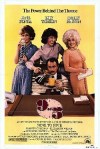
9_to_5_movie_poster

  • 9 to 5 (Colin Higgins, 1980) 

A comedy starring Jane Fonda, Lily Tomlin, Dolly Parton and Dabney Coleman, the movie is about three women living out their fantasies of getting even with their autocratic and sexist boss. Eventually, they manage to successfully overthrow him, extracting sweet revenge in the process. 

  • Disclosure (Barry Levinson, 1994)

Instead of getting an expected promotion, Tom ends up reporting to a woman with whom he had an affair in his bachelor days. His new boss, not only dangerously sexy but also overtly ambitious, has climbed the corporate ladder by exerting undue influence on the CEO. She apparently tries to pick up where they left off but he just about manages to resist. Eventually, realization dawns that she intends to use Tom merely as a scapegoat to cover her technical misdeeds. He decides to file charges of sexual harassment, a development of which the company takes a jaundiced view. The movie starred Michael Douglas and Demi Moore.

  • North Country (Niki Caro, 2005)NorthCountryPoster

The movie depicts a fictionalized account of Jenson v. Eveleth Taconite Co., the first sexual harassment class action lawsuit in the U.S. Josey’s refusal to give in to her male co-workers’ demands causes them to spread lies about her being promiscuous and trying to seduce them. When the company board does not take her charges of sexual harassment seriously, she decides to file a case. In court, an attempt is made to paint Josie as being promiscuous. Eventually, co-workers stand up to support Josey’s complaint. They are followed by more women, family members, and miners. With this, the mining company loses the case and is forced to pay the women for what they suffered, in addition to establishing a sexual harassment policy at the workplace.

  • The Proposal (Anne Fletcher, 2009)The_Proposal_poster

Starring Sandra Bullock and Ryan Reynolds, the movie depicts a hard-nosed boss Margaret Tate terrorizing Andrew Paxton at a New York publishing house. To avoid deportation to Canada upon expiry of her visa, Margaret hatches a scheme to marry Andrew – he agrees if she’ll promise a promotion. She flies to Andrew’s home to Sitka in Alaska and realizes the essential values of decency and goodness his family stands for. After she runs off from the marriage ceremony, Andrew’s grandma feigns sickness and facilitates a matrimonial union between the two.

THE BOLLYWOOD TAKE  

  • Pati, Patni aur Woh (B R Chopra, 1978, ‘Husband, Wife and the Other One’)

Ranjit is a CEO, happily married to his lady-love Sharda. He exploits his poor secretary Nirmala by arousing her sympathy over a fake illness of his wife. Eventually exposed, he tries to mend his ways but ends up falling for the charms of his next secretary! The movie starred Sanjeev Kumar and Vidya Sinha.

  • Rang Birangi (Hrishikesh Mukherjee, 1983, ‘The Colourful One’)Rang_Birangi Poster

Yet another comedy in which Ajay, a workaholic boss who neglects his wife Neema, is persuaded by his best friend to start a romance with his secretary, basically to bring some pep back into his seven-year old married life. The wife also decides to reciprocate the sentiment by taking up a job and then claiming to be getting close to her own boss. Eventually, Ajay realizes his mistake and they both live happily thereafter. The cast comprised Amol Palekar, Parveen Babi and Deepti Naval.

  • Chandni  (Yash Chopra, 1989, ‘Moonlight’)

Chandni (Sridevi) and Rohit (Rishi Kapoor) meet at a family wedding and fall for each other. Due to a misunderstanding, they get separated. Chandni shifts to another city and lands a job with a travel agency headed by Lalit (Vinod Khanna) who falls for her. He is already grieving over the loss of the love of his life and eventually ends up losing Chandni as well to her lover.Aitraaz Poster

  • Aitraaz (Abbas-Mustan, 2004, ‘Objection’)

The female boss Sonia (Priyanka Chopra) has the hot pants for Raj, a happily married subordinate. Raj resists her advances, with Sonia dragging him to court on a trumped-up attempt-to-rape charge. However, the subordinate has a lawyer wife who comes to his rescue, with the female boss committing suicide in the end. The movie was inspired by Disclosure.

  • Inkaar (Sudhir Mishra, 2013, ‘Refusal’)

This one is Bollywood’s latest take on sexual harassment at work place. Based on gender politics and power play in a large advertisingInkaar-Movie-Poster agency, the movie covers an investigation into a sexual harassment complaint filed by Maya (Chitrangada Singh) against Rahul (Arjun Rampal). Whereas the agency can obviously do without a scandal of this nature, both Maya and Rahul realize towards the end that they are in love with each other!

Story and screenplay writers for movies based on management related themes no longer need to scratch their heads to get new ideas for their scripts. Nor do they need to look around for a muse or even bother about the writers’ block. All they have to do is to build up on the juicy details of the sexploits of CEOs of various hues provided by the real corporate world and convert these into mega successes in the reel world.

What do Reka Maximovitch, Araceli Roiz and Lisa Rundle have in common? Well, their hormones broke through the glass ceilings of the rigid hierarchies of their respective employers. All of them had affairs with their high and mighty bosses and ended up filing sexual harassment cases against them. I am convinced that besides harassment, they also underwent the trauma of lewd comments and ridicule at the hands of their peers and subordinates. One can readily imagine the mental anguish suffered by them in the process.

Sexual harassment cases in companies are notorious for being immoral as well as immortal. Penguin Canada ex-CEO David Dravidar eventually went in for an out-of-court settlement. So did Phaneesh Murthy a decade back when he quit Infosys. The fact that he was recently back in the news for the wrong reasons, with i-GATE handing him a pink slip so as to minimize damages, goes on to show that old habits die hard.

Sexual-predator seniors and victim-subordinates often live off each other. As long as managements have a tolerant attitude on issues of sexual harassment at work place, skirt-groping CEOs and seniors with irrepressible libidos would conveniently continue to forget keeping their trousers zipped.

CEOs who are power drunk could indulge in this. So could those who are over-stressed and find such affairs an easy way to relax and unwind. Then there are the incorrigible ones who could not stay out of trouble. Whatever the justification, affairs of such nature lower the self-esteem of employees as well as the employers. These also corrupt the working eco-system, thereby impacting business results in the long run.

Some career-wise ambitious PYTs who do not mind petty flirtation in return for rapid advances in career could reach a tipping point after which it becomes difficult for them to apply brakes on the relationship. They then end up keeping the boss’ amorous treadmills running.

Managements which keep their eye only on the performance of their CEOs and tend to look the other way when it comes to issues of moral turpitude also create an enabling environment for immoral activities to flourish. They could also use a sexual harassment case to ease out a senior who has become too big for his boots.

What is it that managements can do without appearing to be intruding into the privacy of an individual? Having women in senior positions in the organization surely helps. Creating an atmosphere where developments of an amorous nature get reported and promptly acted upon is another anti-dote. The best deterrent is a clear and unambiguous message that sexcapades of any kinds are just not acceptable, irrespective of the level or importance of the persons involved.

Physical attraction and lust easily pass for love in the confined office space. And an affair of such nature easily turns into litigation. Once the mutual needs are no longer congruent, hot babes in offices, whether blonde or otherwise, could easily file lawsuits in countries where laws take a dim view of such conduct and courts award millions of greenbacks as compensation.

To save unnecessary costs as also to avoid a severe dent in their market image, managements need to understand that if they lock up a bunch of smart people in a room and not expect them to react to each other, they live in a fools’ paradise. After all, if left unchecked, human hormones are powerful enough to demolish a hierarchy!

How does one stem office politics? Ask a manager who has benefited from such politics, and he or she would be loath to even accept it exists. Prod someone who has lost out on that coveted promotion to the corner office and he (or she) would be spouting venom and making out a strong case for the degradation in company values, the way in which nepotism rules the roost and how unfair life in general is.

Smart leaders would nip office politics in the bud. This is how they go about doing it.

Minimizing one-to-one interactions 

When discussing a problem which involves several team members, a smart leader would encourage an open dialogue, with all stakeholders present. He would have a patient ear for the extrovert and aggressive ones who have a view on everything. He would ensure that by gentle persuasion, the less vocal ones also come out with their view on the subject.

Maintaining an open and transparent working culture would enable the team members to be more objective, thereby cracking their targets more effectively. Corner stand-alone meetings would only get tongues wagging all over, diluting the team`s effectiveness.

Prompt and open redressal

Rather than allowing things to keep simmering for long, it makes sense to confront the issue and call the bluff of the mischief mongers. The earlier it is done, the better it is for the eventual fate of the project at hand.

In large bureaucratic organizations, a rumour which keeps circulating for a few months often tends to become a reality. This has two clear disadvantages. First, the surprise element goes missing, thereby impacting the enthusiasm with which the implementation takes place. Second, cliques get formed based on perceived likes and dislikes of the top bosses involved, thereby vitiating the working culture.

Selective use of underground cable connections

Informal structures and groups are invariably more effective than the formal ones. Smart leaders take advantage of such informal groupings and communication channels to clean up the political mess. Team members who try to earn brownie points with the boss by reporting juicy gossips at frequent intervals get discouraged, whereas those who have solid data and clinching evidence to share in an open forum get all the  encouragement they deserve.

Transparent policies help

Organizations which keep tweaking policies to suit specific individuals or groups end up suffering in the long run. Employees loath the absence of a level playing field and eventually seek greener pastures elsewhere. Even after parting company, they tend to become negative ambassadors of the organization, thereby holding back potential employees from showing up at the HR outpost.

Being fair and lovely

A leader who maintains equipoise and is widely perceived to be fair enables a cleaner work culture. He or she does not discriminate between team members based on their race, caste, creed or sex and ends up creating a strong meritocracy based set up. Such attributes and behavioral norms cascade down the hierarchy, thereby improving the overall performance of the organization.

All said and done, only the foolhardy would chase the utopia of creating an organization totally devoid of any kind of politics. A healthy dose of stem cell therapy is therefore necessary to keep the political quotient below tolerable and at healthy levels.

RESPONSIBILITY OF DISSENT

Being a Yes-man is a risky proposition. When you do not agree with what the boss has to say, find a way to register your dissent and disagreement, if any. You will be helping your boss in making better decisions, and would be much valued as an effective team member. The higher you are in the pecking order, the higher the responsibility you carry on your shoulders – that of registering dissent.

RETIRINGRETIRING

CEOs and top honchos should retire themselves every five to six years. This would ensure some sanity in the operations of the company. As to lesser mortals, there is no point in their clinging to the seats of power till ill-health (or worse, death) comes knocking on the door.

Life is much bigger and brighter than work. The many shades of life which remain to be explored after retirement include simple joys – spending exclusive time with one’s spouse, putting life in the reverse gear by playing with grandchildren, taking up hobbies neglected for years and fulfilling other desires which had merely remained benign intentions all those years.

ROMANTIC ESCAPADES

Keep them strictly off-campus. Avoid getting involved with a person from the same office – it would save you the hassle of discussing office politics while having a candle-lit romantic dinner on the terrace of a beach side restaurant on a full moon night.

Hormones can easily override hierarchy, leading to complications on the job. Love blossoming within the confines of office space can also turn into litigation and expensive lawsuits. Amorous advances towards a colleague or subordinate are best avoided.

India can justifiably boast of a long history of culture, tradition and values. Scriptures of Indian origin are a treasure trove of nuggets of wisdom. These continue to be relevant in the current context and also find ready application in the field of business management and administration.

Here are some of the areas where I believe Ramayana can inspire management14 practitioners.

  • A Premium on Values

Sticking to some core values which are steeped in righteousness eventually leads to success. The main protagonist, Rama, is depicted in Ramayana as an epitome of virtue. He is an ideal king, an ideal son and a pragmatic person. He sets high ethical standards in warfare and invariably sides with dharma, or righteousness.

A random sample of all successful business houses which have been around for more than a century now – Siemens and Tatas, for instance – is ample proof that ethics in business do pay dividends in the long run. Names of such business houses enjoy tremendous brand equity in the market; understandably, that rubs off on their products as well.

  • High on Motivation

To me, the Ahalyaa episode is all about a good leader enthusing a team of demoralized members who have become zombies over a period of time and have stopped delivering results. Once ‘woken up’, they are fully charged and start performing along expected lines.

Rama wages a war on Lanka with very limited resources, backed by an army which is pretty out-of-the-box or unconventional. It is an army which is highly motivated, expecting minimal facilities. Goes on to show the superiority of motivation levels over the availability of physical resources.

A CEO who is out to increase his market share needs the back up of a highly motivated sales staff which – if motivated well – would go all out to win the hearts and wallets of the company’s customers.

  • Mergers and Alliances

When a merger is based upon a congruence of basic value systems of both the parties involved, long-term benefits accrue.

The alliance between Rama and Sita is a turning point in the Ramayana for more reasons than one. Sita is brought up in the household of the sage-king Janaka. When Rama gets banished to the forest after their marriage, she displays a clear absence of any hedonistic tendencies and chooses to accompany him to the forest. Without a synergy of this kind, the sequence of events could have been quite different!

Likewise, the friendship of Rama and Sugriva sets a good example of mutual cooperation between two people facing a similar predicament in life and career. What follows is Sita getting traced in Lanka and Ravana eventually getting vanquished.

When Etihaad decides to team up with Jet Airways, or when Tata Steel ties up with Corus, the parties involved are looking for synergies in their respective core strengths, so as to tap their joint business potential better.

  • Succession Planning

Dasaratha’s plans for installing Rama on the throne of Ayodhya do turn topsy-turvy, but the existence of a clear succession plan can never be denied. This is meant to ensure continuity in governance. It helped that besides being the eldest son, Rama was liked by all and hence chosen to lead the kingdom once his father passed away.

As per Raghuvansham of Kalidasa, when the time comes to relinquish his body, Rama divides the kingdom equitably between his two sons – Lava and Kusha.

All well-managed companies ensure that the career development plans of their top performers are directly linked to succession plans. Ideally, good leaders invariably groom at least three managers under them. When one gets promoted to the coveted slot, it is quite likely that two others may seek greener pastures elsewhere. Whatever happens, the goals and the processes involved in achieving the same enjoy uninterrupted continuity.

  • Leaving the Comfort Zone

When Rama gets ordered to remain in the forest for a span of fourteen years, Sita and Rama take it as an opportunity to engage with the ordinary citizens of their kingdom, rather than remaining confined to the comforts of their palace. This helps them to understand the ground realities better.

CEOs and marketing honchos of today who travel through the hinterland to get a better first-hand feel of the customer’s pulse do a far better job of servicing the market.

  • Excellence in Execution

The plan to locate Sita gets brilliantly executed by Hanuman. The wisdom withRamayana 3 which he conducts the search and the single-minded pursuit of the goal is an example worth emulating by managers at all levels. While crossing the sea, he declines an invitation from Mount Mynaaka to take some rest on the way.

The manner in which he assures Sita of his genuineness exhorts managers to conduct commercial negotiations by first setting the anxieties of the opposite party at rest.

  • Concern for Environment

For three days, Rama prays to the god of the sea to grant a passage to his army. Nothing happens. Rama then shoots arrows into the bosom of the sea, whereupon the sea-god appears and explains that he is bound by the laws of nature, just like earth, air, space, light and all constituents of the universe. Creatures living under his shelter he cannot forsake, but surely a shallow area can be shown where a causeway can be built.

Rama accepts the sea-god’s apology and orders the building process to start. Thus, the objective is met without damaging the eco-system.

In the current context, governments all over the world are realizing the importance of striking a judicious balance between economic growth and environmental concerns. Rama’s approach inspires us to strive to find the middle path and ensure that Mother Nature is not unduly disturbed to pave way for crass commercialism.

  • Dependence on Yes-men!

Ravana is a highly learned and accomplished person. One of the reasons for hisRamayana 2 downfall is to neglect the advice of nay-sayers. His wife, Mandodari, brother Vibheeshana and minster and maternal grandfather Malyavaan – all advise him to return Sita to Rama. Instead, he chooses to listen to his courtiers who play on his ego and pride and advise him not to do so.

A couplet in Sundara Kanda of Ramcharitmanasa clearly advises us to ignore the advice of a paid deputy, a doctor and a teacher who speak positively out of either fear or expectation of a gain. A king who acts upon such motivated advice loses his kingdom, his body and his righteousness (dharma) as well.

  • Humility in Victory

When Ravana is on his death-bed, Rama exhorts Lakshmana to learn the tenets of good governance from him. Lakshmana approaches Ravana rather haughtily first and fails. Rama then advises him to approach Ravana with due humility, whereupon Ravana speaks of the pitfalls of procrastination and shares his knowledge about statecraft and diplomacy.

  • Power of Attorney

The sincerity with which Bharata takes care of the kingdom’s affairs while Rama is away speaks of true values of follower-ship. Upon his return to Ayodhya, Bharata informs him that the kingdom’s revenue had gone up ten-folds during the fourteen years he was away.

Here is an excellent example of a kingdom held in trust and good faith, much akin to the present day concept of a power of attorney getting appointed to take care of administrative and legal matters of a business when owners are not readily available.

  • Make Haste, But Slowly!

Rama has won the war and is on his way back to Ayodhya. He decides not to rush back. Instead, he stays back at Sage Bharadwaj’s ashram for a night and makes enquiries about the state of affairs in Ayodhya. Also, he sends Hanuman upfront to break the news of his imminent arrival to Bharata who is living like an ascetic in Nandigram. He moves to Ayodhya only after receiving adequate feedback about its current situation.

  • Leadership Traits

With the possible exception of his handling of Sita upon her return from Lanka, Rama conducts himself in an exemplary manner throughout the narration. Feminists these days may scoff at the treatment meted out to Sita but the fact remains that Rama acts like a true-blue king for whom the overall welfare of the kingdom comes first, even though he suffers personally in the process.

Whether it is befriending Nishaad Raaj, refusing to return to Ayodhya when Bharat approaches him in Panchavati, conducting the last rites of Jataayu, accepting Vibheeshana in his fold or even when reuniting with his mothers and brothers upon his return to Ayodhya, he sets a high bar for humanity in general.

In the corruption-infested times we live in, his leadership traits inspire managers to do their best even under the most trying circumstances.

  • Ram Rajya

The concept of being fair to all is the bedrock on which modern management is based. For those in power at the top, an impartial conduct of those in authority is a sine qua non for the morale of the people. Sita gets banished to the Valmiki ashram when an ordinary citizen casts an aspersion on her character. Rama’s role is not much different from that of a true-blue CEO whose loyalty to the company’s overall welfare is unflinching.

Skirt-groping CEOs who have a roving eye and managements which look the other Ramayana 1way just because they accord a higher priority to business goals than to the character of their top honchos could take a leaf out of Rama’s conduct.

There are several instances when management has to divulge information on a ‘need to know’ basis. However, if the basic practices are perceived to be fair to all, even management policies which impact the employees adversely – like a down-sizing – are not taken amiss across the company.

Ramayana is rich with several other narratives which could be useful to management practitioners. Also, each narrative may be interpreted in several ways, depending upon how one goes about analyzing it.

References:

Ramcharitamanas by Goswami Tulasidas, Valmiki Ramayana, Ramayana by C. Rajagoplachari, Raghuvansham by Kalidasa, Adhyatma Ramayana, Series on Ramayana by Narendra Kohli.

Illustrations Courtesy Internet

http://attachment.benchmarkemail.com/c117651/July-Augusl.pdf 

(Related Posts: 

https://ashokbhatia.wordpress.com/2013/07/12/management-lessons-from-mahabharata

https://ashokbhatia.wordpress.com/2015/09/04/management-lessons-from-the-life-of-lord-krishna)