Feeds:
Posts
Comments

Even though quite a few business houses from India had joined the World Economic Forum’s Initiative against Corruption in November 2012, not a single Indian company has so far become a signatory to the UN Convention against Corruption. This is deeply regrettable and projects the image of a corrupt business environment in India. It discourages foreign investments and erodes the brand value of Indian companies. In the absence of a level playing field, businesses shy away from potential opportunities. Mr. Ratan Tata’s lament on not having able to enter the field of aviation quite some time back is still fresh in our minds.

Companies can never be faulted for hiring Vice Presidents who are highly virtuous, law abiding and disciplined souls. Understandably, only those who follow high ethical standards and are in sync with the core values of the company would make the grade. However, in quite a few organizations, such qualities are merely necessary but not sufficient. When it comes to handling external agencies, incumbents who can either bend a few rules or interpret the fine print of law creatively to add to the bottom line of the company alone would be rated high and viewed with awe and reverence.

The Dr. Jekyll and Mr. Hyde Scenario

In other words, VPs should not only be ‘Virtue’ Presidents, but should also possess the flexibility of doubling up as ‘Vice’ Presidents while dealing with liaison matters. This stems from the core belief that businesses cannot be run successfully without back-stage dealing and wheeling, obviously with the aid of what many would euphemistically refer to as ‘appeasement initiatives’.

Appeasement of any kind is invariably geared towards either tweaking government policy to suit the ends of business, as also for specific time bound gains in the forms of large contracts, largesse, concessions and indirect favors. Organizations believe that advance knowledge of government plans, policies and rules is a great tool to deliver results to shareholders who not only look for long-term capital gains but also for better results quarter after quarter.

Sleeping with the enemy

If a professional gets stuck with an assignment which involves corrupt practices which do not match his or her personal core values, one option would be to escalate the issue. This would ensure that the matter is reviewed at a higher level in the organization.

If this option turns out to be impractical for some reasons – whether professional or personal – another one would be to start actively searching for career options with companies which value ethical practices in business!

A much better option, however, could be to work for a change from within the organization. This could be done either by presenting alternative business plans to management or by recommending an approach whereby the company could sidestep the issue by projecting its innate strengths in an aggressive manner. Let us consider some of the tactics in a professional’s arsenal which could be used to combat corruption in business deals.

Tackling Business Competition in the Market Place

The best strategy for a business to have is one which is based on avoiding government doles and concessions. By focusing on core competence and by fighting out the competition in the market place, the business can reduce its dependence on a wide section of the government policies. Surely this calls for rare qualities of leadership, statesmanship and openness. Inviting the government to play favorites and to resolve competitive business issues that are better dealt with in the market place could be a boon as well as a bane. However, this may not be possible in industries which are highly regulated.

Operating in an Unethical Environment

If one has absolutely no other option but to operate in an unethical business environment, the following steps might help to avoid corrupt practices.

  1. Building trust: An honest and humble approach, backed by a long relationship built on explaining the contribution of business can and does work. Investments made, employment opportunities offered and revenue generated are a few of the things that can be leveraged to secure favorable decisions without indulging in corruption.
  2. Reputation travels ahead: The fact that a business house does not stoop down to corrupt practice is generally well-known. It is a strategic advantage to have a squeaky clean image which ensures that a request from such an outfit is treated with the respect it deserves.
  3. Investing in underground cables: It never pays to flaunt one’s relationships. By keeping them underground, one not only wards off competition but also ensures that in case of a change of regime, the damage is minimal.
  4. Diversifying one’s liaison ‘assets’: One learns to be friendly with political opponents. In TN, one needs to be friendly with both the Dravidian parties. In WB, it is tough even if both CPM and TMC are one’s friends. In Maharashtra, Congress, NCP and both the variants of Sena must all like one for one’s business to make some headway.                                                                           Business history teaches us the same lesson. In the pre-independence era, Tatas were funding Gokhale and engaging with the nationalist elements while British officers retired from ICS were being employed by the group. JRD had excellent personal rapport with Nehru. G D Birla had been corresponding with Winston Churchill for a long time. Churchill’s dislike for Mahatma Gandhi was well-known; even though he was being supported by Birlas. They gave a job to one of his sons. It is a fact that he was assassinated while staying as a guest at Birla House in Delhi.
  5. Be courteous, humble but firm: Most government officers take a dim view of business executives. Firstly, they are not viewed as being dependable. Secondly, they are thought to be paid exorbitantly high and generate a feeling of awe as well as jealousy in a public servant. Now, if one walks in with one’s latest cell phone and/or tablet in his office and starts showing off the latest Rolex watch, one would be surely shown the door promptly.

Setting the Moral Compass Right

The UN Convention against Corruption is a laudable initiative and deserves to be given a serious thought by our present day business leaders. It binds an organization to (a) reducing corruption risk in procurement and contracts, (b) engaging in competitive and transparent procurement processes and (c) disclosing all payments made in procurement deals. The global panel already has names such as Coca-Cola, Microsoft, Siemens and Accenture.

It is not that India does not have shining examples of groups which have demonstrated the strategic advantage of pursuing business goals while staying the ethical course. The Tata group has been at it for the past 120 years or so. Liberalization of the economy appears to have thrown up quite a few scams, but companies like Infosys keep our hopes alive. As per Elaine Dezenski, senior director at WEF and the head of PACI, Infosys, Godrej Industries, Bajaj Auto, Genpact, Wipro and M&M are already signatories to the initiative.

As argued in an earlier blog (Getting a Moral Compass Would be a Sound Business Strategy for India Inc, published on December 9, 2012), companies in India would do well to seize the opportunity to clean up their business deals. A beginning can be made by persuading major political parties to make their funding transparent. Those in real estate business can come out with a time bound plan to rationalize stamp duties all across India, thereby making their deals more transparent.

Hopefully, progressive companies in India would see the strategic benefits of committing themselves to such initiatives soon enough!
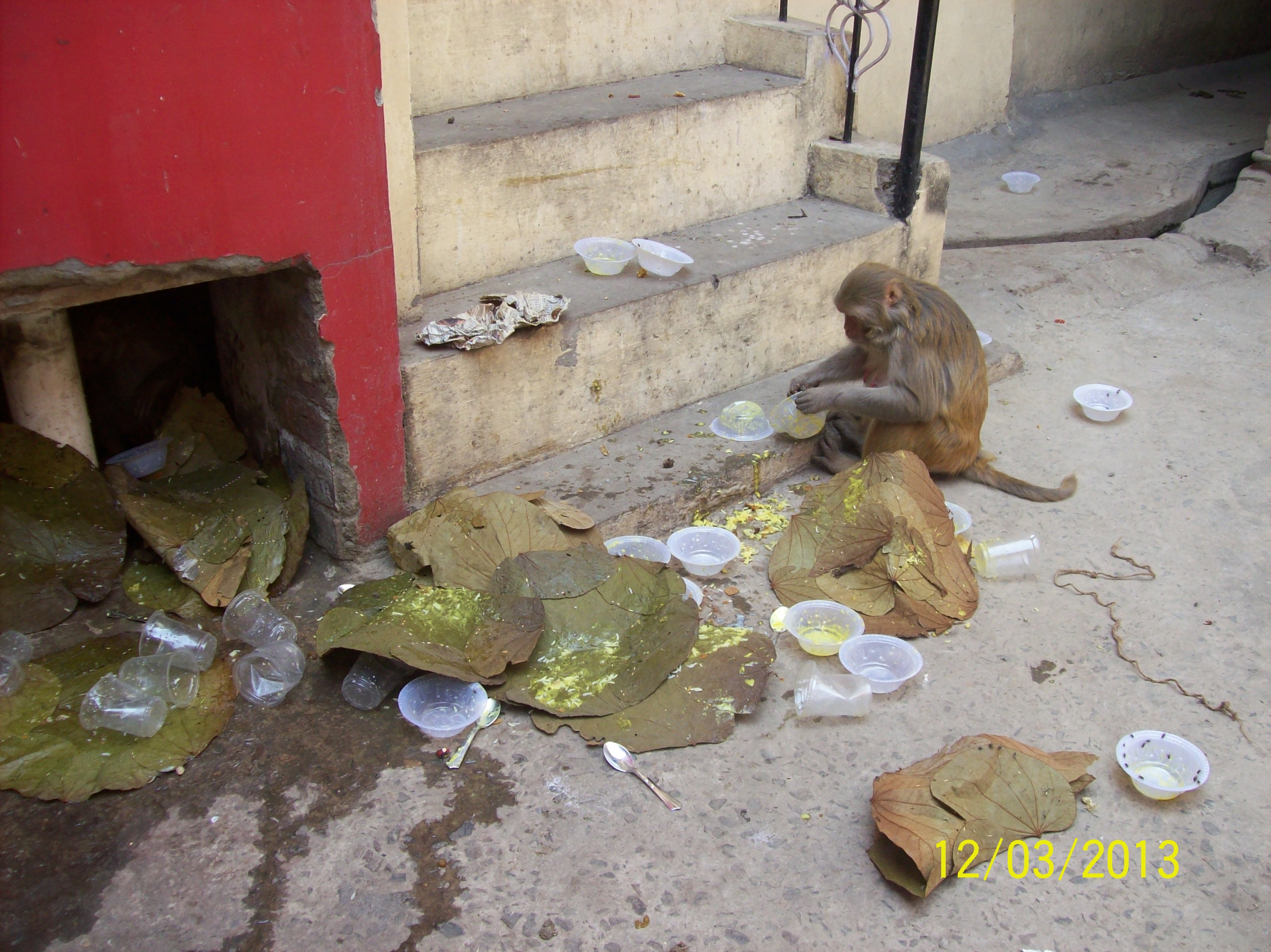
On a recent visit to Vrindaban, I was pleasantly surprised to discover the innate intelligence of our evolutionary predecessorsMarch 2013 471 residing there. A monkey decided to swoop down on our auto rickshaw and snatch away the spectacles of my wife. Not to despair, said the helpful driver. A currency note was offered to the monkey, and back came the glasses without much ado. We were told that it was standard practice for the monkeys to earn money in this manner, only to be exchanged with bananas and peanuts with a trader later! Sure enough, they have figured out how to survive and do well in life!

This led me to think of several other monkeys who have perfected the art of survival in the lives of ordinary Indians. The monkeys of ignorance, superstition, poverty, illiteracy, absence of clean drinking water, inadequate and ineffective delivery of public services and a marked absence of manners, civic sense and politeness in our public spaces. Unlike the Vrindaban monkey who left us in peace, these ones keep returning to haunt us. Each time, they leave us clueless as to how to make them go away permanently.

The Art of Apathy, Callousness and Greed

There is no point in blaming it all on our government. Do we ourselves care about the domestic waste that we generate – eventually, where does it land up and what happens to it? If we pass by an accident site, do we stop to check if anyone needs urgent medical help? While traveling by a bus or car, do we think before spitting or throwing a plastic bag out of the window? In public spaces, do we try to show restraint, respect and courtesy to those who are seniors in age? Do we not enjoy displaying our bravery by breaking a queue, whether at a railway station or while getting into a bus?

Blatant traffic violations are the order of the day. Our drivers routinely use high beams even during city limits, both during day as well as night-time. Overtaking from the left is a norm, and so is merciless honking, despite knowing that the vehicle in front has no way of giving us any overtaking space. When facing a traffic jam, we believe it is smart to go into the opposite lane, so as to make matters worse. Our respect for an authority figure is intact, though. Remove a traffic cop from a busy intersection and we are sure to jump the red light.

We have more mobile phones than toilets – which speaks volumes about the skewed priorities we have in life. Even if there are public conveniences, these are rendered useless by sheer neglect and apathy. In trains, there is no consideration for the following passengers who would like the place to be left in a reasonably clean condition. Men relieving themselves in public and fertilizing our soil across all roads is a common sight to behold.

Many of our corporates indulge in malpractices, perhaps believing that tax evasion is the same as tax avoidance! The fact that four major audit firms are now planning to hire forensic experts to check corporate frauds once again highlights the need for our moral compass to be set right. Our disdain for laws and courts is exemplary. We appear to thrive in informal systems, where rules are meant to be bent.

Blame it on Maasai Mara!

Why are we the way we are? Perhaps our ancestors and genes are to blame? Our ancestors had perhaps migrated all the way from 220px-Elephants_in_masai_maraAfrica. May be their nomadic lifestyles have shaped our genes, making us thrive only in a high degree of chaos. Then we had the invaders who kept plundering us time and again, making us love disorder and aggressive behavior. Or, has our own selfishness and individual greed grown to such an extent that we have turned highly myopic, with the greater good completely invisible to us?

The outlook of a majority of our workforce is still agrarian, giving rise to what one could label as a ‘Rabi-Kharif’ syndrome. What cannot be done today can easily be put off for another six months. No doubt, the attitudes we bring in to our work places (relative to our western colleagues) reflect this reality. As does our habit of making compromises in matters of quality – the thinking that ‘sab chalta hai’ (everything goes).

Ask any business executive and he would complain about long working hours and absence of quality time with family and loved ones. But is the quantity of time spent at the work place commensurate with the quality of the output? Having put in two hours’ honest work, don’t we get tempted to indulge in a long gossip session with a colleague, relaxing unduly long over a cup of tea or coffee?

Rights and Responsibilities

Come to think of it, are we not imitating the three monkeys loved by Gandhi-ji? Like one of those, we refuse to see the filth and squalor220px-Three_wise_monkeys_figure all around us. In fact, we go around spreading it all the more. Like another, we do not hear any voices emanating from our leaders, having given up on them quite some time back. And, of course, like the third one, we do not speak out when we see a serious issue plaguing a majority of our population. We remain safely cocooned in our comfort zone.

It is not my case that all is wrong with us Indians. The world can learn a lot from us – organizing mega events like the Kumbh Mela, managing coalition governments, yoga and spirituality, to name only a few. Our family bonds and values are still intact.  We have several systems that do work.

We also have a vibrant democracy to boast of. However, individually as well as collectively, we appear to be more keen on securing our rights rather than discharging our responsibilities. A touch of decency, concern, compassion, courtesy and humility is surely the need of the hour!

(Images of Elephants and Three Monkeys Courtesy Wikipedia)

POLICIES

Grandiose written policies are useful to Accountants who would love to raise relevant as well as irrelevant objections on various transactions, legitimate or otherwise. These are also useful to procedure oriented executives who would love to drive innovation and imaginativeness out of the organization.

If you happen to be a big fish in a small outfit, prepare and circulate a Policy Manual only at the organization’s risk and peril. If you have to, do so with scope for flexibility, and ensure it gets updated and re-circulated at regular intervals.

In case of very large organizations, Policy Manuals end up being statements of benign intentions of the top management. Internal Audit uses these to conduct frequent audits, pointing out minor deviations and confusing the top management at regular intervals. Often, crucial deviations having long-term impact on the business are left out, thereby increasing the organization’s vulnerability in facing either a legal or a statutory compliance related tsunami.

POLITICIANS

Like them or hate them, they are here to stay. Keep them in good humor, if you definitely have to interact with their tribe. After all, they could be high either on their Utility Quotient or on Nuisance Quotient.

Keep equidistant from politicians of all hues. You never know when the opposition party’s turn to warm the treasury benches may come.

When doing a favor, keep it away from public eye. This way, you would not only keep your competitors guessing but also ensure that a change in regime would be less likely to derail your business plans.

PROMISES

Either don’t make promises; if you do, try your very best to keep them. If necessary, buy time to commit on deadlines. Surprise your boss by delivering on your promise in advance.

Do this without fail. In the long run, your brand value as a manager would grow.

PROMOTIONS

An effective tool in the management’s arsenal to reward and motivate guys who excel in their jobs.

There are two key challenges faced in case of promotions:

1.     Pressure for time bound promotions:Everyone expects to get promoted after having slogged it out at a given level in the     organization for few years. The reason you find most organizations top-heavy today is because the managements twenty years back did not pay attention to managing the aspirations of its people and instead went along with the philosophy of time based promotions!

2.     Managing is different:   Doing a job yourself is one thing. Getting it done through others is a different ball game altogether. To be a good manager, one needs to be a leader, bestowed with skills in team building, communication, delegation and supervision. Often, two-thirds of the promotions in corporates are based on the incumbent putting in an impressive show in his/her present role. Once promoted, the incumbent is left twiddling his thumbs, trying to figure out how to manage the same activity through others.

The solution possibly lies in building up a culture which rewards good performance but does not overlook the projected managerial talent of the promotee. Job rotation, counseling and job enrichment are some of the tools which a wise HR guy may use to manage the majority which deems a promotion as its birth-right based on the fourth dimension of our universe – time – alone!

A populist approach like resorting to time based promotions can only be practiced at the organization’s long term peril, unless there is an aggressive scheme in place to enforce employee separations also, that too in a time bound manner!  

PRAISE & REPRIMAND

When responding to a team member’s performance, always praise in public but reprimand in private. Try not to follow the obnoxious policy of getting rid of an utterly-butterly useless guy by humiliating him in public. Assist him in getting out-placed instead.

Be generous with your formally conveyed appreciation only at your own risk. If a swollen-headed guy falls in his subsequent performance ratings, he could well turn around to use your formal communication to promote his case for the next promotion!

PROCRASTINATION

It is not altogether wrong to say that it is the early worm which gets caught! Procrastination works best when the idea is to delay a crucial decision which, if taken at that point in time, could create more problems than it would solve. Governments appear to do it all the time. The flip side is the higher probability of losing a business opportunity.  

PUBLIC RELATIONS

In a large complex business, you may need to hire an expert to handle your public relations. Check the guy’s credentials, and sign him on for a maximum period of two years at a time. Better still, get one of the smart secretaries to handle it in-house.


PACKAGES

Negotiable only at the entry stage, and may not remain so thereafter! Also, the rate of growth of packages outside the company would always be better than the jumps you get in-house! Bear in mind that packages are worked out in relation to the company’s corporate ego (read brand value), and also the comfort levels offered. If you are willing to challenge yourself and move out of your present comfort zone, don’t grumble for long; find another exciting opportunity and move on!

As postulated by the Motivation-Hygiene Theory of Herzberg, packages fall in the Hygiene category of rewards. In other words, to use a medical analogy, their presence does not necessarily make a person healthier; on the contrary, their absence can cause deterioration in health. To put it simply, when it comes to individual motivation levels, packages have a rather short shelf life!

PEOPLE

They are not spares of a machine, to be replaced once their utility is exhausted. Grooming them for higher responsibilities is the management’s prerogative.

The Two Factor theory established long time back that money is a poor motivator, boosting people’s morale only in the short run. Money is connected to material acquisitions and the mind. Intangibles appeal to the heart and make much better sense. A surprising word of praise from an unexpected quarter can cheer up an employee no end. A birthday greeting which goes out-of-the-way to enable an employee to spend quality time with his family may be far more effective. The intangibles build an emotional bond with the company.

PERFORMANCE

At times, first impressions of performance are wrong. Some slow starters may become star performers; some could well be flashes in the pan who eventually fumble and attain a state of clueless bliss. Most jobs would need consistent performance, whereas some require short-term bursts of energy and attention.

Assess performance of people over a period of time, against the backdrop of the nature of the assignment handled.

PLANNING

Good planning needs to be exhaustive, but also flexible. Business environment is always in a flux, and a plan always has to be reviewed to ensure not only its own relevance but also the enthusiasm of the team which would be burning the proverbial midnight oil to implement it.

I believe that the Romance Quotient of train journeys is much higher than that of air travel. I dislike the adrenalin rush of Toy trainchecking-in at airports, getting frisked all over and then sitting cooped up sardines-like in a wobbly metal container which has very few merits otherwise. Cutting short the travel time is surely a good advantage of air travel. Another is the ambience and the service one can possibly enjoy while traveling by air. But, given a choice, I would prefer a train journey any day!

The Travails of Air Travel

Not for me the endless hours spent on packing and repacking my stuff to ensure that the baggage is within the stiff weight limits prescribed by airlines. Liquid delicacies like home-made syrups and pickles are best left out. A meticulous planning needs to be done for what can or cannot go into hand baggage. Once, a minor quantity of liquid milk being carried for a small baby caused so much trouble that we almost ended up missing our flight! The whole drill of taking off my shoes, removing my belt and letting go of my laptop and cell phone in a separate tray leaves me rather nervous and exasperated.Italy

The duration of an air journey is good only for fleeting eye contact and for brief encounters with the finer and gentler of the species. I get looked at with fake and synthetic smiles by petite air-hostesses who are possibly planning their next activities after the flight gets over. The only time they appear to be smiling genuinely is perhaps at the end of the flight when I am leaving the plane. On the contrary, while leaving a train, I find great resistance from various quarters on terminating my journey – the passengers who are forcing their way into the compartment I am trying to leave, the porter who  shows up after much reluctance, and the ticket collector who thinks I have been traveling WT!

While flying, most commercial airlines maintain the cabin pressure for altitudes between 7 and 8,000 ft. May be, that is why I feel somewhat disoriented and confused at times while on a flight. Movies on board, a quick succession of saliva-inducing food items and beverages are all designed to keep my anxiety levels down as we cruise along at heights of around 35,000 ft.

Romancing the TrainsGlacier Exp

Consider the superior advantages of travelling by train. I am not referring to trains in the western world, where I could set my watch based on their arrival time, and the toilets and stations are spotlessly clean. Even if I were to consider trains in India, the experience turns out to be better than that of air travel.

To learn the basic tenets of karma yoga, all I need to do is to travel in an unreserved compartment of Indian Railways; the daunting task of going through the first few chapters of Bhagavad Gita can be easily avoided. Entry into the bogie is like life itself – full of struggle, adventure, victory and failure – requiring all the mental as well as physical agility at my command. I learn to overcome stiff resistance from those who are already inside and have managed to acquire a comfortable spot for themselves and their kith and kin. The struggle for survival brings out the worst in me. In the process, I believe, I get internally purified, getting rid of all my mental toxins!

Once I have jostled my way in, the next phase of seeking a comfortable perch begins. With toilets also jam-packed and inaccessible, I learn the value of patience and forbearance. By the next station, I have myself acquired the rights to start denying entry to those attempting to enter the compartment at all subsequent stations!Flamsbana

If I happen to travel in a sleeper class, I find it a very ‘homely’ experience – invariably, all passengers tend to treat the compartment as a second home! There is much sharing of news, views, family history and current troubles facing the passengers in my cubicle. Mention suffering from any disease and I am sure to be heaped with unsolicited advice on the efficacy of a wide variety of treatments. As I surmise over the troubles of my co-passengers, I am left convinced that my own problems are not that very serious. Now, what could be a better way of uplifting my sagging spirits?!

By the time the journey comes to an end, I have created tenuous bonds of transient relationships. If luck favors me, I could have even managed to charm the pretty young thing on the opposite seat by advising her on the possibilities of the next train connection and by offering to her some delectable food items bought at various stations on the way!

While traveling by air, I miss the windows. This deprives me of the simple pleasure of waving my hands, bidding a good-bye to those who have come to see me off. This is a privilege denied to those traveling by air. Also, in the absence of windows, I cannot haggle for the fruits and eatables I wish to purchase from a vendor on a station while enjoying the comfort of sitting glued to my seat.

In an AC compartment, I find great possibilities of networking. Newspapers and magazines get shared with quiet dignity. Mobile chargers can be readily borrowed. Movies can be readily shared on another passenger’s laptop. If my body language discourages a dialogue, there are good chances of me being left in peace. And what a pleasure it is to curl up with my favorite book and then enjoying a siesta after a hearty meal!

The seating in trains is invariably designed to promote brotherhood and human interaction. In an aircraft, we are seated theatre-like, with very little chance of either socializing or networking, except for the chance of hobnobbing with the passenger in the next seat.

As compared to the continuous drone of aircraft engines audible while travelling by air, trains have a unique melody and rhythm of their own. Like a lullaby, it tends to put me to sleep quite effectively.

I confess that my reasons for liking train travel are also economic; despite tall claims made by airlines of offering affordable air travel, trains are still much cheaper!

Indian Railways – Big Organization, Bigger Challenges

I really admire Indian Railways. They somehow manage to maintain 7,500 stations, 1,15,000 km of tracks and around 14 lac employees. They also cope with the daunting and mammoth task of handling 2.5 crore passengers and 28 lac MT of freight every day. This is despite the fact that 20% of their rolling stock has outlived its life, the tracks are not in the best of health and the demands of various regions are always piling up.

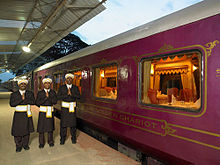
I believe they face serious issues in coach and track maintenance. Quite a few bridges are getting aged and slowing down trains. Outdated communication, safety and signaling equipment are not getting upgraded anytime soon. The penchant to keep announcing new trains every year continues unabated whereas safety measures invariably take a back seat.220px-Goldenchariot_train_luxury_service_in_india

Sanitation is a big concern. Indian Railways, the largest single employer of India, has helped perpetuate the caste oriented practice of manual scavenging for decades. The bulk of the blame for contributing towards the insanitary state of railway stations and tracks lies at their doorstep. Given the resources at its command, it should not be beyond IR’s capacity to equip trains with systems to handle fecal waste.

Improving the Romantic Quotient of Indian Railways

As an ordinary citizen of India, I would not push for bullet trains. I would rather have the railways invest in efficient waste management systems, better security measures, modern communication and signaling systems, mechanized track and station maintenance solutions.220px-Delhi_Duronto

Above all, if the stations and coaches start exuding a three-star ambience, IR would surely start persuading the passengers to treat its assets with better respect and affection, thereby improving the romantic allure of train journeys in India!

OBJECTIVES, GOALS

To come up with a clear and simple goal is the key task of a manager. A dithering on this score is bound to lead to disasters, with precious resources getting wasted. The goals also need to be flexible, to always remain in tune with the business environment.

ORGANIZATION STRUCTURESOVERSTAYING ONE’S WELCOME

Are these helpful or simply a drag on the business? A formal chart is handy for the HR guys to decide ranks, packages and perks. Also, to external agencies, it explains how the organization works. In reality, a matrix organization, with a heady mix of formal as well as informal linkages between different units and/or departments, is far more effective in meeting business goals.

In any case, an organization chart cannot be allowed to become responsible for business paralysis and rigor mortis setting in.

OVERSTAYING ONE’S WELCOME

It is just not done. It shows one to be in a deep comfort zone, enjoying the perks of familiar personalities, processes and systems, but missing out on newer challenges and some spice in one’s career.

All ideas which sound revolutionary from a new incumbent fade exponentially over a period of time. The incumbent himself gets bored and a sense of fatalism sets in. A smart incumbent would call it quits before he reaches this state of vegetation.

When one speaks of an Indian-Italian courtship these days, one’s imagination invariably veers around to the recent diplomatic row between the two countries on a matter involving the highest ‘court’ of India and the unfortunate death of two Indian fishermen at the hands of two marines of an Italian ‘ship’. But the ‘courtship’ between the two countries is much broader and deeper than this!

Italy and India are so similar, yet so different. One is a developed country; the other is striving to meet its Ajanta_Padmapanidevelopmental goals. One has a population of 62 million; the other is struggling to cope with its 1.2 billion! Italy is placed 10th in overall GDP terms globally, whereas India is placed at 3rd. In per capita terms though, Italy (USD 30,116) is 29th in the world, whereas India (USD 3,851) is placed 129th!

Yet, the two countries are very similar to each other! Both Italians and Indians tend to be warm-hearted, open and talkative. Both share a common disdain for their politicians and judiciary. Whether it is art and culture, variety of cuisine and language, history and geography, heritage and movies, both share several common characteristics. Both are famous for their movies, motor scooters, cars and gossip magazines.

The Italian Charms!

Indians have fallen for Italian charms since quite some time. During the 1970s, the preferred choice of a scooter in India was Vespa, an Italian brand. Espresso coffee soon followed and quickly became a household name. Pizza was the next to captivate the taste buds of Indians of all age groups. Gucci, Prada, Armani and Versace are already the favourite brands of the well-heeled. Several other major brands – like Alberta Ferreti, Fendi, Byblos and Scorpion Bay, to name only a few – have already firmed up plans to woo the Indian customer in the days to come.Colosseum_in_Rome,_Italy

Each state in India has its own delectable cuisine. Likewise, all the 20 regions of Italy boast of their own cuisines. If India has its paranthas, chhole-kulche and dosas, Italy has pizzas, risotto, lasagne and pasta. In each category, both offer a mind-boggling variety to choose from.

Mamma Mia!

Both countries place a high emphasis on family values, especially the affection their own brand of tiger moms bestow on their respective precious cubs! Culturally, within a family, the male adult comes first, is served first at the table and is fussed over better. It is never in doubt as to who wears the pants in the family. Females in both countries play an important role in the kitchen and like to focus on displaying their culinary skills better.

Both Italians and Indians tend to be passionate and express their feelings loud and clear when upset! In both countries, weddings are increasingly based on love, as opposed to being ‘arranged’ in the past.

A Soulful Connection

For Indians who have perfected the art of living with filth and squalor all around them, visiting Italy is like a sophisticated and upgraded home-coming of sorts. Despite being a European country, Italy has a unique Indian touch which captivates and enamours the Indian soul quite effectively.IMGP9042

Taking a leisurely stroll near the Rome Termini Train Station, one is gently reminded of similar surroundings of the railway stations in India. Running into few homeless vagabonds sleeping in a corner is quite likely. The stench of stale urine emanating from a boundary wall makes one feel quite at home. However, one still misses the graphic art masterpieces in various hues of maroon so lovingly created by our paan-chewing brethren on all kinds of walls back home.

One will find laundry drying and ladies squatting and chatting away merrily on roads and streets. Driving on roads is the same, that is, on the left side. Also, there is no difference in driving habits; in India as well as in Italy, the values of Freedom, Fraternity and Democracy are upheld with remarkable zeal on the roads, holding all rules in sheer contempt!

How We Hate Our Courts and Politicians

There is a shared contempt of courts. Emblem_of_Italy.svg was sentenced to a year in prison but does not appear to be going to jail anytime soon. The Indian legislative bodies can justifiably claim to have a liberal sprinkling of criminals. If Italy has a strong presence of the mafia, India has its own share of the underworld dons.

People in both countries are perhaps tired of the ruling dispensation as well as the opposition camps of all hues. Recent elections in Italy have thrown up a hung parliament. India has been experimenting with the coalition model of governance for more than two decades now and can offer rich expertise to Italy on managing Emblem_of_India.svg‘coalition compulsions’!

The Begging Bowl Syndrome

Italy and India share the same level of income disparities amongst their populace. If one were to go by the UN Gini index, Italy was assessed at 32 in 2006, whereas India was assessed at 33.4 in 2005. (Nil disparity would mean the Gini index would be ‘zero’; maximum disparity would mean the Gini index would be ‘100’). India has a middle class which keeps suffering in the space of public delivery of services in dignified silence.

It comes as no surprise that begging is an invariable part of life and is an art practised in both the countries. However, it is far more sophisticated in Italy. Boarding a train, one could find a pretty young lady claiming to be deserted by her boy-friend openly seeking money to raise her kids. On the streets of Florence, one could encounter statuesque artists dressed up in plaster-of-paris-like costumes, seeking alms.

History and GeographyVitruvianMan

Historically, India had been mostly ruled by the Mughals and the British. Italy had been under the influence of Austria, France and Germany. Both were cobbled together by several princely states, distinct kingdoms or regions coming together.

Geographically, both countries have similar profiles. Italy has the Alps on its Northern side, just like India has the Himalayas. Sea beaches are in abundance in both the countries. Italy shares its borders with France, Switzerland, Austria and Slovenia. India does so with China, Pakistan, Bangladesh, Myanmar, Bhutan and Nepal. In fact, Andaman and Nicobar share a maritime boundary with Thailand and Indonesia.Luciano_Pavarotti

Fine Arts and Science

Both Italy and India have had truly illustrious people in the realm of fine arts, literature, sculpture and science. If Italy can boast of Leonardo da Vinci, Galileo Galilei, Enrico Fermi and Dante, India can talk of Aryabhatt, C V Raman, J C Bose and Rabindranath Tagore. If Italy has Pavarotti, India has Pandit Jasraj and M S Subbalakshmi. If Italy stakes claim to as many as 47 UNESCO World Heritage sites, India does it for 29.

Language, Religion and Regional InitiativesPandit_Jasraj

Italian language has several dialects. Indians cope with as many as 26 scheduled languages, many of which have several dialects.

More than 91% of Italians are Christians. India has Hindus, Sikhs, Muslims, Christians and Jains as major groups of a diverse religious landscape.

Italy is a founding member of NATO and EU. India had espoused the cause of Panchsheel and is a founding member of BRICS. Italy is home to the Vatican. India is home to diverse ethnic groups and religions. Both are held to be important regional powers.

Architectural and Artistic Elegance

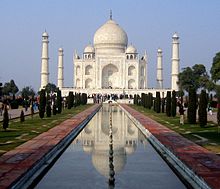
India boasts of the Taj Mahal which took 16 years to build. Italy boasts of St. Peter’s Basilica which took 120 years to get compTajleted. India has the Qutab Minar; Italy has the Leaning Tower of Pisa.

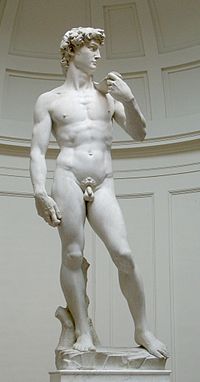
The difference surely lies in the attention paid towards maintenance of museums, heritage buildings and the exquisite paintings and sculptures Italy possesses. Visiting ‘The Last Supper’ by Leonardo da Vinci in Milan, one would notice the exquisite care with which the humidity and temperature are controlled in the hall containing the famous fresco. The care with which Michelangelo’s original masterpiece of ‘David’ is maintained in a Florence museum is something to be learnt from.

In India, tourists keep defacing the Ajanta and Ellora murals as well as all historical monuments with utter disregard and impDavid_von_Michelangelounity, slowly destroying a very rich heritage that the country possesses.

Lessons in Governance

When it comes to governing the ungovernable, there is a lot that Italy can learn from India. The latter has unique expertise in managing a complex country which can justifiably boast of flourishing black markets, mobsters, super-slow courts, crooked politicians, warring business families, hosting mega religious gatherings like the Kumbh Mela, cities which think they are states, states which believe they are independent countries and regions which believe they are continents.

Coming back to the marines imbroglio, diplomacy has won the day. Both Italy and India have managed to avoid embarrassing each other in international forums.The_Last_Supper

One has no doubt that despite occasional friction which is the hallmark of a deeper engagement, the two countries will continue with their courtship for a long time to come!

ashokbhatia's avatarashokbhatia

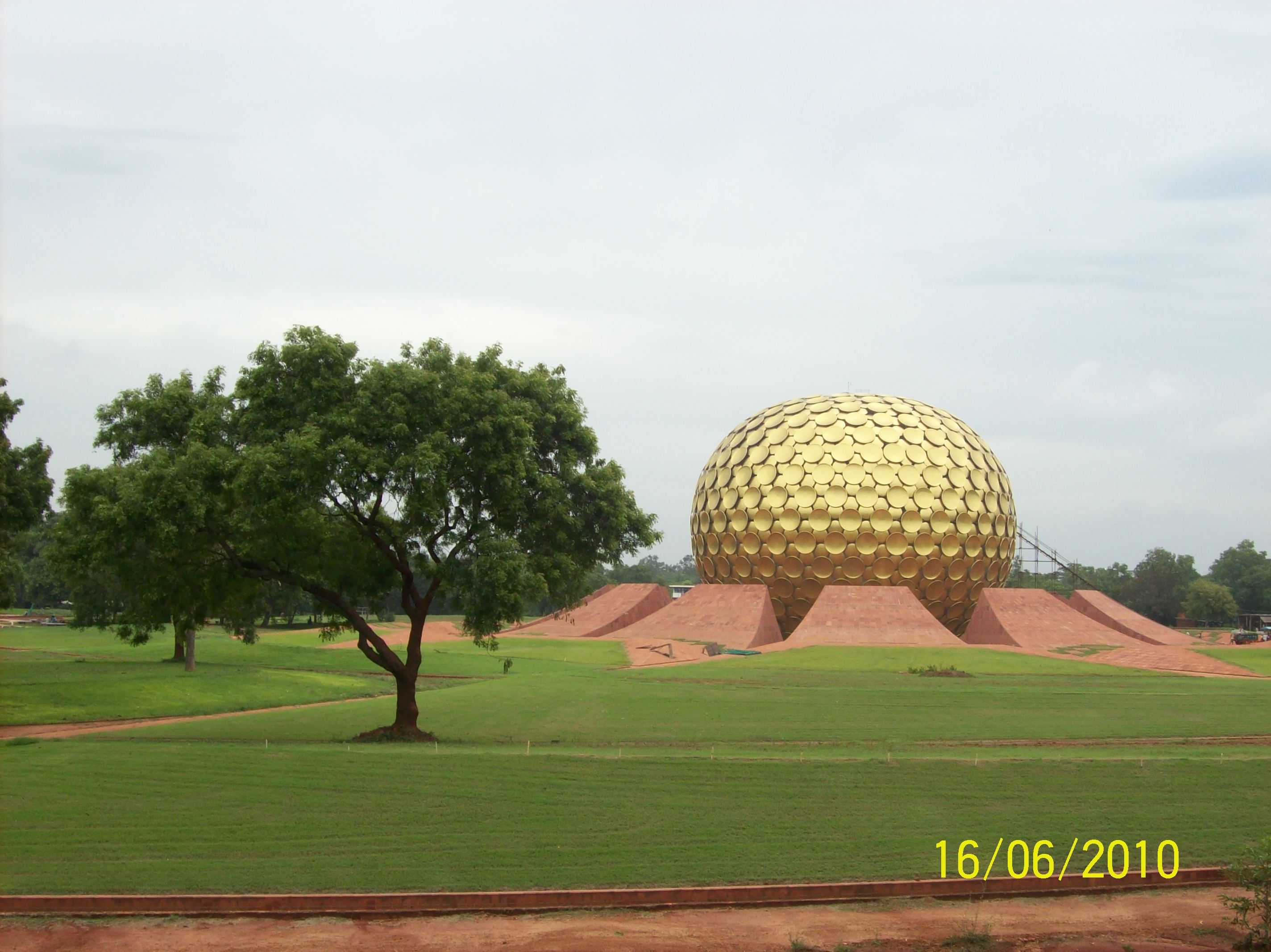
As the jetliner from Paris made its way to Puducherry, I turned nostalgic. When I had left it for greener pastures abroad, little had I June 2010 99imagined that it would take me close to twenty years to return to the town! I had left it as a semi-retired private sector honcho, and was now returning to my home base along with my wife Usha and grand-daughters Suman and Shalini. Looking out of the small window, I pointed out Matrimandir in the distance to Suman, who seemed pretty excited. The bluish-green waters of the Bay of Bengal below were shimmering in the setting sun, and a flock of pristine white seagulls was flapping along below us.

Once we landed, immigration and customs formalities got over pretty soon. The swank new international terminal looked like a smaller version of the Charles De Gaulle terminal in Paris. There were sign boards directing us to the…

View original post 1,063 more words

NETWORKING

It is great to be the part of a clique. But there is a flip side. The go-between you choose to introduce you to the big-wig might have his own axe to grind! Best is to call the big-wig cold, and keep in touch with your network to keep a tab on what is happening.

NAY-SAYERS

Try to be a ‘No-man’ and you will find that it is much more fun than being a ‘Yes-man’! It shows independence of thinking. It ensures that your boss notices you faster and values you better than your peers. Also, it may open up a new approach to solving the problem at hand.

You have wiped our tears with your gentle hands,

The core values of togetherness, love and sharing we understand;

You have been the catalyst of change in our lives day by day,

Ultimately enabling all of us to become what we are today.


Your understanding and compassion has made us brave,

Exploring new frontiers and facing situations grave;

Your tireless guidance has made us take an adventurous flight,

 Always propelling us like a beam from darkness to light.


As children safe within the warmth of your embrace,

Through all the trials and tribulations that we face;

Protected from the cold careless world outside,

We know that under your wings we could still run and hide.


God has taken care and reached us through you,

Nurturing, grooming and guiding us as and when due;

You are the angels, who have fallen from the sky,

To fix our wings whenever we cannot fly.


May the radiance of your thoughts and values never fade or go away,

Forever illuminating our paths like the millions of stars in the Milky Way;

Continuing to regale us like a beautiful and soothing rainbow in the sky,

So our coming generations shall always strive to make the things okay.


The sun-eyed children have already broken the caste-n-creed gloom,

Like morning stars the new buds have begun to bloom;

They shall wrestle with destiny and make their own way,

Their forceful tread shall make Earth pleasant and gay.


Feet echoing in the corridors of Time, no chance to excel shall they miss,

They shall be full of wisdom, sweetness, might and bliss;

Their lips shall chant new mantras to uplift the soul,

Aspiring for divinity, they shall realize a higher goal.