Feeds:
Posts
Comments

As a manager, one is always obsessed with expansions, diversifications, setting up new projects, and the like. In other words, boosting the organization’s top line. However, another important aspect of a manager’s role is to ensure that business units showing signs of sickness do not bog the company down and erode its market goodwill. How does one do it smartly?

Out of several companies I worked for in my career of 35 years, I had the unique experience of closing down business units in four. The reasons for closure were as diverse as the culture and the size of the company I was associated with then – an over-estimation of the marketing prospects of a product or service, a shrinking marketing space owing to changes in market characteristics, high overheads leading to sustained financial losses, abysmally low levels of productivity, IR issues, supply chain bottlenecks, financial mismanagement and the like. In one particular case, a peculiar combination of these factors had led to negative financial contributions – the more the unit produced, the higher were the losses incurred!

Size and Culture of the Organization

All the closures I had been involved with were manufacturing set-ups. All the organizations were configured differently – if one was a large company with a bureaucratic set-up, another was a fleet-footed medium-sized company; yet another was a small-scale unit where entrepreneurial zeal had misfired.

Culture-wise also, the companies were poles apart. From an open manner of decentralized working to a secretive style of centralized decision making, one had a closure challenge which had to be met in tandem with the way the organization was configured. The task was surely unpleasant, but the learning was invariably rich.

Whatever the reason, the size or the culture of the organization, there was not much difference in the basic steps to achieve the goal. The difference came about only in the detailed approach to each step. The larger the size, the better the refinement in the approach towards handling an aspect of the challenge. In all cases, conceptualizing a closure was a much simpler affair than executing it.

Handling a Closure

With the benefit of hindsight, I can summarize and share my learning with those who might be interested. Here is what I believe was a common thread running through all the closures I was associated with:

  1. Breaking Up The Task: When it comes to dissolution, fixed assets like land and building need a different approach. The skills required to handle requisite government permissions are surely not the same as those required for liquidation of inventories. Admittedly, the biggest challenge is to hold the hands of customers and of the people getting impacted by the decision.

  2. Making Smaller Teams: The probability of meaningful decisions getting made and executed at the operational level is inversely proportional to the number of members in a team. It also helps to have a dissenter in each team – someone who will stand up for his/her convictions. The senior guy in each group plays the role of an arbitrator, if and when necessary.

  3. Planning Well: A typical closure may take anywhere from 9 to 24 months to plan and execute. At the planning stage, tasks may be identified and allocated to various teams. The most important priority is to ensure minimal disruption in fulfilling the order book commitments. No less critical are good relations with suppliers and service providers who can add value by remaining committed to the organization till the end of the road. Timely payments come in handy in this area.

  4. Using Grapevines: Informal networks and cliques are surely of immense value when rolling out a closure plan. To keep undue demands under check and to ensure a fair deal to all stakeholders, grapevines can be used very effectively.

  5. Listening to Legal Eagles: Before freezing a Closure Plan, allow your Legal Eagles to put it under a microscope and chew it over. Down the road, there would be lesser surprises for the teams which are tasked with executing a closure.

  6. Flaunting Your Assets: Alternate utilization of land and buildings needs immaculate planning upfront, as does the shifting/disposal of plant and machinery. Way back in 1924, the Dallas assembly plant of Ford was redeveloped as loft apartments. In mid-1980s, DCM, a textiles conglomerate in India, closed down its Bara Hindu Rao factory in Delhi and contemplated a real estate project at the site. In 2005, Alfa Romeo managed to convert its Milan factory into a museum dedicated to the automobile industry in Italy. In 2008, Chrysler estate at Delaware was shut down in USA. It was bought over and converted into a science and technology campus of the University of Delaware. Closure of several textile mills and movie theatres in India in the recent past has resulted into swank new malls and residential apartments coming up.

  7. Preparing for Role Reversals: The Marketing team pores over the details of minimizing the damage to company’s image, whereas the Sales team starts working with your distributors and franchisees to fine tune the details of stock liquidation. Just as your Purchase team dons the Marketing hat and starts liquidating unwanted stocks, the Production and Maintenance guys roll up their sleeves and start worrying about getting the conveyors and machinery prepared for packing and disposal. The Finance team starts reviewing the organization’s obligations to financial institutions, and HR honchos start finding jobs for employees about to face an onslaught of the dreaded pink slips.

  8. Communicating Proactively: If there is something worth communicating, it is worth over-communicating! All stakeholders, including the community near the plant, need to get convinced that the closure is a ‘no option’ decision of the management. Communication needs to be designed to ensure that the management is perceived to be fair, transparent and caring.

  9. Handling People: There is a limit to which the issue can be kept under wraps. People are much smarter than we give them credit for. It helps to have a time-bound plan for necessary information to flow to different levels of the organization. Sure enough, this works best on a need-to-know basis. The CEO, the Plant Head or the HR head can play the role of a PR guy very effectively, though there could be other managers who have good people skills and can address concerns more effectively. The latter option provides better elbow room to the CEO/Plant Head in adopting a flexible approach. Other than a severance package, an enlightened management would offer out-placement services and hold the hands of those who have undue anxiety. When BP shut down its solar panel facility at Frederick, so as to shift manufacturing from UK to lower wage options in China, India and elsewhere, besides three months’ full pay and benefits,it offered a severance package and placement assistance to the affected employees. Good employers would travel the ‘extra mile’ to ensure that spouses, kids and parents of those affected would get taken care of as well.

  10. Expecting the Unexpected: If either the reason for closure or the severance package is perceived to be grossly unfair, we could be inviting unsolicited interference from unexpected quarters. These could be government agencies, politicians or some disgruntled elements well-disguised as self-proclaimed well-wishers of the workmen. This needs deft handling, backed by tact and resource.

A Smart Closure

The detailed strategy, planning and execution would obviously vary depending upon whether the whole company is being shut down, or only the manufacturing units are getting closed, or only a single plant is facing a ramping down situation. With manufacturing getting increasingly shifted from the developed part of the world to the developing part, more and more organizations are faced with a closure scenario.

As Bill Taylor points out in his brilliant article ”Your Company’s ‘Obituary’ Can Shape Its Future’ on ‘http://www.blogs.hbr.org‘, much after the dust has settled down, the key questions which will get asked by different segments of your stakeholders shall be: ‘What legacy did your company leave in its industry? What contributions did your business unit make to your company? How did your brand move the needle in a market category?’

Call it by any name – restructuring, redesigning, re-engineering, ramping down or down-sizing, the key elements to be handled in a closure are Customer Relations and Human Resources. A couple of years down the road, would a majority of those affected by a closure be still speaking well of the organization? Would your customers be missing your product or services?

As long as these criteria are met, the management would have done a smart job on its part!
JOB LABELSJOB LABELS

Tired of time-worn designations? Try these:

  • Chief Worrying Officer: Normally, the CFO who is worried sick about legal compliance in all areas of business.

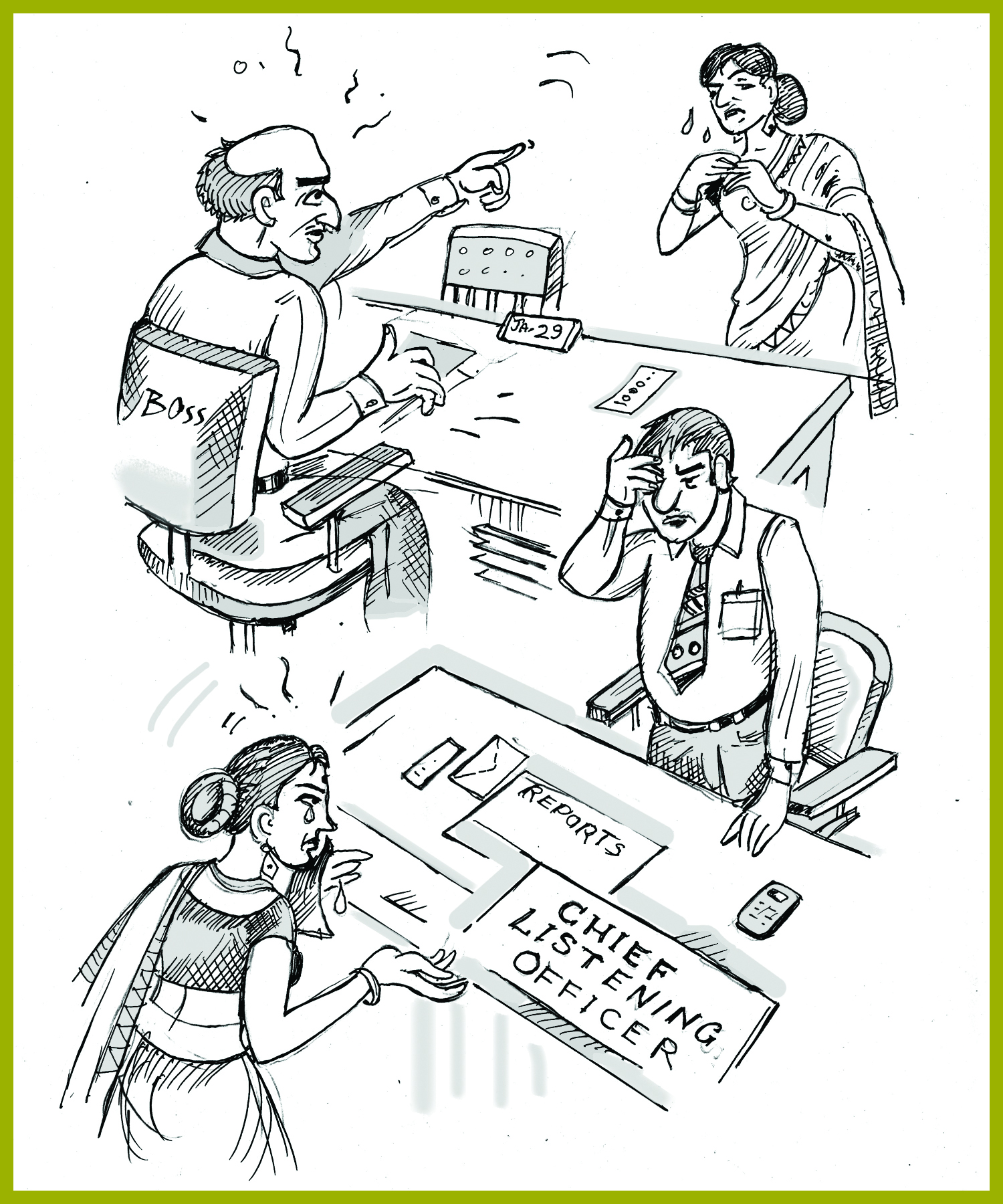
  • Chief Listening Officer: A VP-HR who is always ready with a bucket and towel to help employees facing emotional distress.

  • Chief Results Officer: The CEO who believes that ends justify all means.

  • Chief Dreams Officer: The R&D Head who keeps dreaming of new products and businesses.

  • Chief Ethics Officer: Keeps a strict eye on fraudulent behavior anywhere in the organization.

JUMPING TO CONCLUSIONS

Quite a few bosses have an innate ability to be able to think in four dimensions at the same time – viz., the length and breadth of a problem, its depth and also how it may unfold over a period of time. If your boss is not a specimen from this tribe, and if he happens to jump to conclusions without evaluating all the other dimensions of an issue at hand, one can only wish you the very best in your career.

If reporting to such a boss (God forbid!), each day you will be having a roller coaster ride, much like NASDAQ/Sensex, linked to the vagaries and uncertainty of the mood of the “market” at any given point in time. In one such company where I had the good fortune to work (great learning opportunity, if I may say so), public shouting at subordinates was the order of the day. One day, a very sullen looking junior walked into my office. When I asked him the reason for his sadness, he said he was missing the daily “quota” of shouting from the boss that day!

Dear Aamir ji,

As a person front-ending the ‘Satyamev Jayate’ show, you are truly making a change in the way we think and react to situations. Allow me to repeat a comment from one of your famous movies: ‘Jahaan-panah, tussi great ho…!’.

Our Sundays would never be the same again. After a sumptuous breakfast, we had got used to becoming couch potatoes, settling down in front of our TV sets. Like ‘Ramayan’ and ‘Mahabharat’ in the past, ‘Satyamev Jayate’ had got us used to a new prime time on TV!

 Each episode brought into our drawing rooms real issues we were aware of but had never thought of in detail. We have all built a cocoon around us. Safe in our self-created comfort zones, we believe that the problems we are aware of need to be addressed by someone else.

Well, here was a show that made us sit up and think. Harsh reality came knocking at our emotionally impregnable doors every Sunday. If we ever entertained self-congratulatory thoughts of India becoming a super power in the days to come, we learnt the sober reality of the long way we are yet to go to be able to make it.

Bringing about a change is not easy, whether at the individual level or at the societal level. By washing our own dirty linen in public, we at least made a beginning – by showing the courage to admit that problems exist, and by beginning to discuss these. The brains behind ‘Satyamev Jayate’ deserve kudos for this.

Right from female foeticide and sexual abuse of children to domestic violence and water and food pollution – you name it, and ‘Satyamev Jayate’ had touched upon it. Each issue was well researched and well presented. Each one covered unique success stories, where an alternative approach had been tried, with a positive outcome.

The marketing as well as the structuring of the show was smart. Its handling was such as to skirt current controversies. The protest by Medical Council of India did not rub off on the show’s image; it only lowered the public image of that august body further. There was no attempt to denigrate the government in power. The amount of financial support it has generated goes on to show the immense connect it built up with the audience. Surely, a great attempt at social activism, using the media’s potency in a positive manner.

One way to compliment the ‘Satyamev Jayate’ team is to ensure that we, the citizens, become vigilant on these issues. In our personal lives, we can abhor the derogatory practices we have witnessed on the small screen, week after week. In our social circles, we can try to discuss these issues, thereby spreading the awareness about the ill effects of such practices. A small beginning would then get made.

For those who are already yearning for more of the same stuff, it is perhaps time to ponder over important areas which never got discussed so far. In other words, if the show were to make a comeback, what are the burning issues it can cover? Permit me to make a few suggestions.

  • WORLD CLASS QUALITY: As a country which is poised to overtake Japan as the third largest economy of the world, how many globally acceptable products/brands do we make?

  • DELIVERY OF PUBLIC SERVICES: How can India rapidly apply technological innovations to improve the delivery of public services to its people? Whether it is getting a ration card made or receiving a LPG refill, a death certificate to be obtained or a FIR to be registered, mundane tasks make life rather complicated. Just like an Aadhar initiative shows, there is a tremendous scope of improvement.

  • MAKING OUR EDUCATION SYSTEM DEPENDENT ON REAL LEARNING AND NOT ON MEMORY: The current generation has failed to design and roll out a futuristic education system. This issue needs to be addressed on priority, so India’s human capital development no longer remains sub-optimal.

  • ENCASHING OUR DEMOGRAPHIC DIVIDEND: How can India better leverage its demographic dividend by rolling out an ambitious skill development programme, so our graduates really graduate and our researchers really search for innovative and sustainable solutions to our unique problems. How do we generate leaders for tomorrow?

  • BALANCING INDUSTRIAL GROWTH vis-a-vis ITS ENVIRONMENTAL IMPACT: How can we balance our environment protection goals with our need to expand our industrial base? With rising incomes and aspirations, the consumption base will continue to expand. Can we look for sustainable solutions?

  • GIVING UP OUR OWN ATTITUDE OF ‘CHALTA HAI’: Administrators in any field – public or private – complain (and justifiably so) that 90% of their time is spent in ‘following up’ things. This attitude, once commented upon by Mr. J. R. D. Tata himself, is at the core of many of our problems. Consider the following:

    1. We can build super highways, but how do we improve our driving skills and the courtesy we show to others on the road.

    2. During an agitation, where is the need to burn and destroy our buses, trains, hospitals and schools, created out of our own hard-earned money?

    3. Why does our sense of cleanliness remain confined to our homes and does not extend to public places?

        We, the people of India, need to take ourselves – and our roles – more seriously! The ‘Chalta hai’ attitude will not do!!

I am delighted to know that the SMJ team is already planning the next phase of the series. Some of these areas may interest them.

 Jahaan-panah, we wait for you to come back!

 With loads of admiration and love,

Ashok Bhatia,

Puducherry, India.

(akb_usha@rediffmail.com)

Oh, what a relief it is…to be able to leave a body behind, and to wait for a new one! Freedom from bondage, at last!

I just finished a rather fulfilling life. I write this to convey my deep gratitude to the Divine for giving me this opportunity. Now, I aspire to be allotted a brand new body, so I may fulfil the rest of my desires as well.

In the past 48 years or so, I had my destined quota of joys and sorrows. I relished a wide variety of sweets and savouries. Right from the famous pedas of Mathura to sandes of Bengal and from kulfi of Amritsar to payasam of Tamil Nadu, I have relished them all. Delhi’s famous kulche-chhole were always a favourite, and so were Indore’s pohe-jalebi and maava-baati. Mumbai’s vada-pav and Agra’s aloo-ki-tikki are not easily forgotten either.

The body which I tried to assist for so many years is now inching close to 60 years of age. I vaguely remember having made my appearance when it was just about 12 years of age. I had an exciting youth, when I bit and cut into all kinds of foods the body was partaking then. For the first 35 years, I enjoyed biting into sumptuous vegetarian as well as non-vegetarian dishes. Subsequently, with a focus on purely vegetarian fare, life became easier; the body gave up treating its stomach as a burial ground for all kinds of dead life forms.

I was one of the lower front teeth in the body. A dentist would typically refer to me as an ‘incisor’ tooth. The problem was that the upper front teeth did not like me at all. They kept hitting at me at all times. First, the jaw alignment was not right. Second, the person had an ‘A’ type personality. With a high level of anxiety in the system, he was often gnashing his teeth. Not surprisingly, he was diabetic and hypertensive. To add insult to injury, there was a strong addiction to tea.

Well, the result was that I lost my precious enamel and lustre pretty soon. My roots started getting exposed by the time the body was 55 years of age. Serious attempt was made to protect me by wearing various kinds of contraptions. However, time took its toll and finally I got so loose as to cause lot of discomfort to the body. Chewing became a difficult exercise. This resulted in digestive disorders. Through all this, I kept up a brave face and supported the body as long as I could.

Blissfully, my end came two weeks back, at a moment when the body was enjoying a delicious swiss chocolate, that too in the shadow of the Alps. I ensured that my parting with this body was sweet, harmonious and peaceful.

Much has been said about the painful experience of reclining in a dentist’s chair. However, I was lucky. Eventually, I had found a very compassionate and caring dentist. I shall be missing my visits to her clinic, which always had soft music playing in the background.

I know that my colleagues would be missing me by now. Even before I could come loose, another traumatized colleague of mine had gone underground; it still remains embedded in the gums. So, only 30 of them are now left behind. The front ones are already shaking in their foundations. I guess the body will get used to this new experience pretty soon, depending on the canines, pre-molars and molars to make the food digestible.

My gratitude is also due to the body assigned to me. It looked after my nourishment and hygienic needs rather well. I wish it well for as long as it lasts. If only it were to learn to smile more often, it would be happy to see its resemblance to the Bollywood legend, Dev Anand, who also had a front tooth missing!

Howsoever painful, it is not easy to let go of even a diseased part. I know how difficult it is for people to let go of their old habits, their fragile egos or their worldly possessions. Alas, a mere tooth like me is easily dispensable!

Just like me, there are diseased teeth in my country and in my society as well. There are rotten practices, evil thoughts and unpatriotic designs. There is inequality, corruption and mismanagement of resources. These are holding back my countrymen from enjoying prosperity and happiness.

On the upcoming occasion of India’s 65th Independence Day, I wish there are caring dentists who can either cure these ills or simply ‘extract’ the diseased aspects of our living.

Quite early in life, I discovered that a movie should be selected for viewing not based on its cast Lekinbut based on its director. Each director has a distinctive perspective on life, and the manner in which he/she presents a theme is as unique as, say, one´s finger prints. Admittedly, the core brilliance of a movie is determined by the producer-director duo. But the unmistakable stamp on the narrative is that of the director. To put it simply, if you sit down to watch a movie by Gulzar saheb, you know what to expect. On the other hand, if you are going to see a David Dhawan flick, you already suspect what is in store.

The Brand Equity of a Director

Over a period of time, a movie director builds up a strong brand equity for himself. It comes from the uniqueness of his style, the choice of his scripts, consistency in quality of his directorial ventures, earning a respect from the discerning viewers, crowned by some degree of commercial success.

As a person who has been brought up on a rich diet of Bollywood fare right since his childhood, and maachisas someone who has dabbled in the art of movie making himself, it is not difficult for me to appreciate the complexity of producing a commercial pot-boiler. The cine-goers eventually get to see only the end result on the screen, little realizing the hard work done by all to ensure a high quality product. That is why, a good movie makes me feel fulfilled. I feel like saluting the producers and directors who have invested their effort and money on a worthwhile product.

The CEO of a Dream Merchandise Factory

A director’s role in shaping a movie would perhaps be comparable to that of either the CEO of a company or the conductor of an orchestra. A CEO’s mindset determines the business strategy of a company. His style of functioning and his value system permeates across all levels of the company. Likewise, the conductor of an orchestra blends the notes of stringed, percussion and other instruments, creating a symphony which is unique. Like a CEO guiding a company or a conductor presenting a symphony, the director also balances the strengths and weaknesses of his team members and comes up with a movie which is entertaining – and possibly educative – in the social context.

Surely, a director coordinates and guides various specialists to achieve the level of perfection in hisGaja_Gamini_ product. Apart from the choice of a script and the main caste, no department of movie making would remain aloof from the influence of a director. Screenplay, cinematography, sound design, choreography, music, editing, budgeting, financing, marketing and many other facets of movie making come under a director’s watchful eye, thereby making each movie a unique attempt at story telling. And when someone as accomplished as M F Hussain decides to wield the megaphone, we are in for a stupendous visual treat, as in ‘Gaja Gamini’ and ‘Meenaxi – A Tale of Three Cities’!

A Director’s Take

Exploiting the latent potential of an actor is surely one of the key traits of a director. Look at some of the amazing transformations we have seen on the silver screen all these years! To recapitulate just a few:

  • A villain or a vamp being cast in a positive role: Remember Lalita Pawar in a matronly role in Raj Kapoor´s ‘Anari’? Or, Shashikala supporting the sulking heroine in Hrishikesh Mukherji´s ‘Anupama’? Cut to ‘Abhiman’ and you notice Bindu empathising with the lead pair. Under the baton of Manoj Kumar and Manmohan Desai, we had Pran playing positive roles in ‘Shaheed’, ‘Upkar’ and ‘Zanjeer’. From a staunch villain, Madan Puri became a doting grand-pa in Rajshri Production’s ‘Dulhan Wohi Jo Piya Man Bhaye’.
  • From a flamboyant playboy to a chivalrous gentleman: Yesteryear´s jumping jack JeetendraHum aapke hain kaun becomes a simpleton in ‘Geet Gaya Pattharon Ne’ and ‘Boond Jo Ban Gayi Moti’ under the watchful eyes of V. Shantaram. Gulzar is equally effective with Jeetendra in ‘Parichay’ and ‘Khushboo’. Lately, we have seen Salman Khan being tamed by Suraj Barjatya in ‘Maine Pyar Kiya’, ‘Hum Aapke Hain Koun..!’ and ‘Hum Saath Saath Hain’.
  • From a debonair hero to a villain: Under Brij, Ashok Kumar, the quintessential hero, becomes a villain in ‘Ustadon ke Ustad’; under Vijay Anand, he springs a surprise in ‘Jewel Thief’.

The chemistry between a music director and a director has also produced enchanting results for music buffs.

  • Besides raucous beats in movies like ‘Bombay’ and ‘Rangeela’, A R Rehman comes up withZubeidaa soulful music in ‘Zubeida’ for Shyam Benegal. Likewise, for Subhash Ghai, he composes a different genre of music in ‘Taal’.
  • The duo of Shankar-Jaikishan, when working with Raj Kapoor, left behind a rich repertoire of scores, some of which are evergreen and a treat for movie goers of all ages.
  • Salil Chaudhury, when coupled with Basu Chatterjee, came up with some unique scores in ‘Rajnigandha’ and ‘Chhoti Si Baat’.

Some Directors I Admire

Selection of a script essentially determines the social message that a director wishes to convey through his work. One fondly recollects the following directors who have sought to convey a unique message of their own through their work:

  • Aparna Sen did a great service to the senior citizens by highlighting their plight in the thought-provoking ’36 Chowringhee Lane’. The acute loneliness of Violet Stoneham touched our hearts. In ‘Paroma’, she explored the psyche of a tradition-bound housewife seeking liberation in her own way. In my opinion, her best offering so far has been ‘Mr. & Mrs. Iyer’. It conveyed the message of inter-religious harmony in a very effective manner. Her latest offering, ‘The Japanese Wife’, depicts the true meaning of love, sans any physical contact. One wishes her a long innings of creative offerings.
  • Ashutosh Gowarikar is another director whose work one has come to admire. ‘Lagaan’, ‘Swades’, ‘Jodha Akbar’ and ‘What is Your Rashee’ were all brilliant offerings. One surely looks forward to more movies from his stable in the days to come.
  • Basu Bhattacharya excelled in depicting the post-matrimonial relationships between couples. If ‘Anubhav’ captured the vacuum felt in the absence of a child and the misunderstandingTeesri kasam created as a result of an ex-lover of the wife walking into the household, ‘Aavishkar’ dwelt at length on the dissappointment caused by the realization that a college romance is so very transient. In ‘Teesri Kasam’, he came up with a classic philosophical treatise, whereas in ‘Sparsh’, he touched upon the challenges faced by the differently abled in our society. Finally, in ‘Aastha’, we saw him covering the impact of a materialistic culture on our morality and social values.
  • Basu Chatterjee‘s movies are classics in their own right. Depicting the dilemmas faced by the great Indian middle class with a dash of humour was his forte. Right from ‘Chameli Ki Shadi’ to ‘Baaton Baaton Mein’, ‘Chitchor’, ‘Hamari Bahu Alka’ and ‘Piya Ka Ghar’, he has regaled us with heart-warming tales, backed by tongue in cheek humour. In ‘Rajanigandha’, the hero, while watching a movie, imagines himself and the heroine as Dharmendra and Hema Malini on the screen – one of the several master strokes of the director. In ‘Chhoti Si Baat’, the hero and the heroine go about singing a song in crowded places whereas all others around them remain preoccupied with their own activities! In ‘Khatta Meetha’, we find an irritated Ashok Kumar threatening to kill Pradip Kumar, the heroine’s father, if he fails to bless her marriage with his adopted son.
  • One has admired some of the B. R. Chopra movies because of not only their socially Gumrahresponsible messages but also for their experimental streak. If ‘Naya Daur’ was about rapid industrialization leading to labour unrest, ‘Gumrah’ was about the perils of a wife likely to go wayward. ‘Humraz’ spoke of the dangers inherent in a situation where one attempts to hide facts from one’s spouse. ‘Insaf Ka Tarazu’ covered the trauma of rape, whereas ‘Nikaah’ was about a woman asserting her rights to choose a husband. ‘Pati Patni aur Woh’ was a humouros take on the proverbial seven-year itch of the male of the species, a theme which was effectively countered in ‘Rang Birangi’ subsequently by none other than Hrishikesh Mukherjee! His experimental foray into the genre of suspense led to two classics: ‘Kanoon’ and ‘Ittefaq’, both of which broke from convention and did not boast of any song, a taboo for the mainstream BollywoodDark Bandini cinema. ‘Baghban’, directed by his son Ravi Chopra, is a great comment on the derogatory attitude adopted by some of the grown up children towards their parents.
  • Bimal Roy gave us realistic movies with a socialistic message. ‘Do Beegha Zameen’ and ‘Bandini’ shall remain etched in our minds forever. In ‘Sujata’, he touched upon the stigma of untouchability in a very poignant manner.
  • David Lean‘s work has left an indelible impression on me. Think of either the elements of nature or the complexity of human relationships and you end up remembering ‘The Lawrence of Arabia’, ‘Dr. Zhivago’ and ‘Ryan’s Daughter’. ‘The Bridge on the River Kwai’ was yet another masterpiece from this great man.
  • Govind Nihalani has given us some brilliant movies over the years. ‘Aakrosh’ was based on a real life incident. ‘Ardh Satya’ captured the realities faced by our police force in stark detail. Much later, the trauma faced by youth involved in the naxalite movement was poignantly captured in ‘Hazaar Chaurasi Ki Ma’. Another unforgettable offering of his was the TV serial ‘Tamas’.
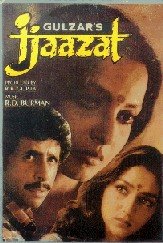
  • Gulzar is another favourite of mine. Right from ‘Mere Apne’, ‘Koshish’, ‘Parichay’, ‘Achanak’Ijaazat and ‘Kitaab’ to ‘Khushboo’, ‘Kinara’, ‘Aandhi’ ‘Angoor’, ‘Namkeen’ and ‘Ijazat’, he demonstrated a finely nuanced grip on capturing human emotions. Using flashbacks as an essential ingredient of his inimitable style of story telling, he has created a series of movies which explore the human psyche with unparalleled depth. For Doodrdarshan, he created a master piece in the serial ‘Mirza Ghalib’, ably assisted by Jagjit Singh and Naseeuddin Shah. Other unforgettable movies directed by him are ‘Lekin’, ‘Maachis’ and ‘Hu Tu Tu….’. What a creative line up!
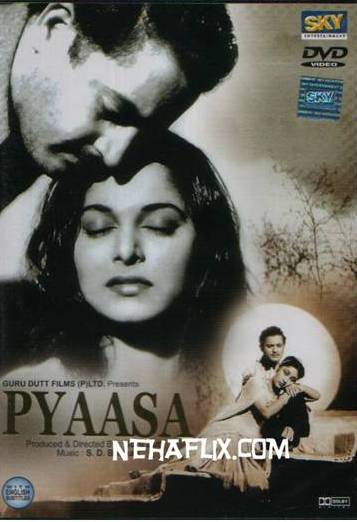
  • Guru Dutt has left behind a series of thought-provoking movies for all of us to enjoy for all times to come. ‘Pyaasa’ captured not only the frustration of a creative poet who earns recognition only after he is presumed to be dead, but also the angst of the youth dissppointedPyaasa poster by the shattering of socialistic dreams in post independence India. ‘Kagaz Ke Phool’ was autobiographical in nature, and went on to assume a cult status in black and white cinematography. ‘Sahib Bibi aur Ghulam’ looked at the degrading zamindari system and was backed by powerful performances. He also gave us ‘Chaudavin Ka Chaand’, memorable for its music.
  • Hrishikesh Mukherjee is yet another director who has captured the value system of the great Indian middle class in a very effective manner. If ‘Anupama’ portrayed the transformation of a docile daughter into a rebel of sorts, ‘Satyakam’ touched upon the trials and tribulations of a whistle-blower who values integrity and honesty above all else in his life. ‘Aashirwad’ captured a daughter’s longing for her father, whereas ‘Anand’ captured the dilemmas of the medical profession in a heart-wrenching manner. In ‘Guddi’, he touched upon the perils of hero-worship amongst teenagers and the negative influence of movies on those in an impressionable age. ‘Abhimaan’ put the fragile male ego under a microscope. In ‘Chupke Chupke’, he came up with a rip-roaring treatise on the eccentricities of the linguistic purists. ‘Bawarchi’ touched upon the joint family system, whereas ‘Golmaal’ was well-intended pun directed at moustache maniacs. In ‘Khubsoorat’, he drove home in his inimitable style the need of striking a balance between fredoom and discipline in family life, espousing the cause of nirmal anand (unalloyed bliss). His last offering was ‘Jhoot Bole Kauwa Kaate’ Pakeezahwhich conveyed the value of truthfulness in all relationships in a very humorous manner. One truly misses such directors!
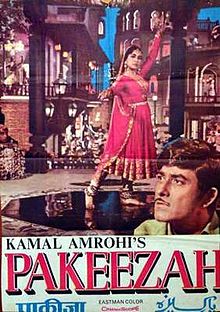
  • Kamal Amrohi came up with virtual poetry on celluloid with ‘Pakeezah’. The whole movie was a work of passion, akin to the rich tapestry of the bright red carpet he had got specially woven for a single dance sequence to be picturized. His ‘Razia Sultan’ was also a rich offering.
  • When it comes to clean family entertainment steeped in Indian tradition, Rajshri Productions has always been very consistent. Right from ‘Aarti’, ‘Dosti’, ‘Jeevan Mrityu’ andmovie Vivah ‘Tapasya’ to ‘Hum Aapke Hain Kaun…!’, ‘Hum Saath Saath Hain’ and ‘Vivah’, we have lived through good and bad times faced by families we could easily identify with. Several of their offerings have tugged at our heart-strings: ‘Uphaar’, ‘Ankhiyon Ke Jharokhon Se’, ‘Chitchor’, ‘Dulhan Wohi Jo Piya Man Bhaye’ and ‘Maine Pyar Kiya’, to name a few.
  • If there is one person who earned money in routine Bollywood pot-boilers and ploughed it back to produce some unique movies, it is Shashi Kapoor. ‘Vijeta’ captured in detail the challenges faced by young officers in the Indian Air Force. ‘Utsav’, directed by Girish Karnad, was yet another master piece, based on the famous Sanskrit play ‘Mriccha-katikam’. ‘Kalyug’ was based on the epic Mahabharata and was directed by ShyamAnkur Benegal.
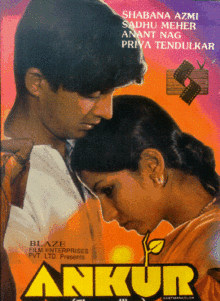
  • Shyam Benegal started off as a master of alternate cinema, offering such hard-hitting comments on the under-privileged of the society as ‘Ankur’, ‘Nishant’, ‘Manthan’ and ‘Bhumika’. ‘Zubeidaa’ presented an interesting slice of history. However, his recent offerings have been rich public-spirited satires, highlighting glaring deficiencies in the public delivery system and also taking a dig at our age-old misconceptions and taboos. If you have seen ‘Welcome to Sajjanpur’ and ‘Well Done, Abba’, you would know what I am talking about.
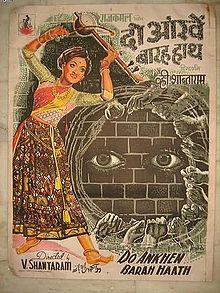
  • V Shantaram gave us classics which drew on the traditional values and art forms. If ‘Dr. Kotnis Ki Amar Kahani’ was based on a real life happening, ‘Jhanak Jhanak Payal Baaje’ captured the dilemmas faced by artists committed to their profession. ‘Do Aankhen Barah Haath’ touched on the criminal system, whereas ‘Navrang’ explored in detail the male fantasy of having the perfect female as a life companion. 
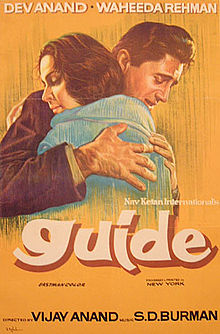
  • Vijay Anand gave us jewels like ‘Nau Do Gyarah’, ‘Jewel Thief’, ‘Tere Mere Sapne’ and ‘JohnyGuide_poster Mera Naam’. ‘Guide’ immortalized one of the great works of R. K. Narayan. Performance of the lead pair of Dev Anand and Waheeda Rehman still remains fresh in our memories. His penchant for perfection was such that in ‘Nau Do Gyarah’, if a bomb was to go off in seven minutes, the on-screen suspense went on for precisely seven minutes!

Several other legendary directors, like Raj Kapoor, Mehboob, K. Asif, Subhash Ghai, Yash Chopra, Shekhar Kapur and others do not appear here. Their exclusion here is in no way meant to belittle their immense contribution to the art and form of cinema as we know it today. It is just that a majority of their work has come to define what we generally refer to as ‘mainstream cinema’, whereas the idea here has been to capture directors who have been innovative in their own way.

Directors to watch out for

All this is not to say that brilliant work is not being done these days. ‘Khosla ka Ghosla’ directedDor by Dibakar Banerjee, ‘Iqbal’, ‘Dor’ and ‘Mod’ from Nagesh Kukanoor, ‘Tare Zameen Par’ by Aamir Khan, ‘Black’ by Sanjay Leela Bhansali, ‘Munnabhai’ series and ‘3 Idiots’ by Raj Kumar Hirani, ‘Chak de India’ by Shimit Amin, ‘Cheeni Kum’ and ‘Pa’ by R. Balakrishnan, ‘The Blue Umbrella’ by Vishal Bhardwaj, ‘Atithi Tum Kab Jaoge’ by Ashwani Dheer, ‘Chhodo Kal ki Baatein’ by Pramod Joshi, ‘Do Dooni Chaar’ by Habib Faisal, ‘Stanley ka Dabba’ by Amol Gupte, ‘I am Kalaam’ by Nila Madhab Panda and ‘Vicky Donor’ by Shoojit Sircar are all movies which give us the firm hope that Bollywood is finally out of the singing around the tree days, willing to experiment with unconventional themes, that too while keeping the box officeTaareZameenPar registers tinkling.

Rise in disposable incomes has led to the proliferation of multiplexes. Audience has turned younger. In turn, small budget movies have carved out a niche for themselves. Several producers have learnt to minimize financial risks by beating the star system and are instead banking on smarter scripts, thereby achieving better returns on their investments.

Exercising Our Emotional Muscles

Consider this: why do we get hooked on to movies in the first place? Is it sheer escapism? May be, yes, but also coupled with an appreciation of – and fascination with – this genre of entertainment. Identifying oneself with either a character or a situation presented on the screen gives one immense psychological relief. Also, one needs to exercise one’s emotional muscles or skills in a way that may or may not be acceptable in our routine lifestyles!

A director with a strong brand equity surely knows how to touch our heart-strings. In the process, he teaches us to exercise our emotional muscles better and think out-of-the-box when confronted with a real life situation!!

IMOVATION

Steve Jobs said it. It’s smart to adapt an idea and enhance it. The combined power of imitation and innovation can take your company to dizzying heights. And Apple is not the only outfit which did it with impunity.

Paper money (read credit and debit cards) was predicted by Arthur Hailey in his 1970s book “The Moneychangers”. Diners Club started it. American Express built it up.

In discount stores, Korvett came in first. Wal-Mart globalized the phenomenon.

For fast foods, no one remembers White Castle. McDonald’s immediately comes to mind.

Closer home, in the detergent market in India, Nirma took up cudgels with Surf. But eventually, it gave way to Wheels in the market place.

Shoji Shiba advises managers to “jump into the fishbowl” for a real feel of the environment and change accordingly. According to him, those with a “third eye” do that the best as they think about users at the bottom of the pyramid.

INTELLECTUAL COPULATION AND ORGIESINCENTIVES

Copulation at the physical level often results into the perpetuation of our species. Copulation at the intellectual level often results into newer ideas, which arise out of each partner building on the ideas of the other, thereby resulting into a synergistic orgasm. On the whole, the organization gains.

Once in a while, it is good to push all the routine work away and indulge in intellectual copulation. This could mean intense discussions with a buddy whose thinking matches that of yours, attending a management seminar on a topic of your interest or even sharing your learning and experiences either with youngsters in the team or with students at a nearby management institute. It would keep your learning batteries charged up and ensure that you get back to the task at hand with renewed gusto.

INCENTIVES

Very few outfits have realistic incentive schemes, making each stakeholder a virtual partner in business. Such outfits seldom have IR issues bugging them. Often, the challenge faced by Personnel guys is to link incentives not only to absolute quantities but also to productivity norms. Calling in an external industrial engineer who has some clue as to the way your industry is configured surely helps to design a better incentive scheme.

Discovering and Cultivating a Hobby

In the restricted circle of friends and relatives that our family is exposed to, it is common knowledge that since the past four years we have been assiduously chronicling the events and occurrences in the family. These chronicles have taken the shape of movies which are more in the nature of a collage of videos and still photos, backed by appropriate musical scores from diverse sources.

The intention of making these movies is surely not to advertise the family or its mundane achievements in life. The basic idea is to share the major events in the family with the extended family members who are spread across diverse geographical locations, as also to preserve the family history for posterity. If the history buffs in our future generations preserve these, our family background would always be just a click away.

Enabling Factors

What have been the enabling factors for the development of these movies? Let me attempt to list a few. One, a healthy dose of movies celebrating the middle class values like caring, sharing, mutual trust and a respect for one´s elders. Two, happy moments and events which leave one´s emotional core stirred and shaken. Three, a fondness for good music, backed by soulful lyrics. Four, a hobby of preserving the family archives, whether in the form of old photos, diaries left behind by our forefathers, and the like. Five, creative juices sloshing about inside one in gay abundance at times, not allowing one to rest till the time a meaningful external expression is found.

Challenges

What could be challenging about arranging some dumb photos in a sequence and backing them up with a few songs, you may well ask. Well, to present something new and unique to my audience every time is one. Also, one has to keep one´s self-promotional tendencies in check – so, no hapless visitor to our house shall ever be strapped to a couch and forced to watch one of these movies! Moreover, narcissism is not considered a virtue; so, each movie´s theme encompasses snippets of even those unsuspecting friends and relatives who are not necessarily a part of the main narrative.

The Journey So Far

Shruti-Vinod

The year 2007 saw our daughter getting married. Gradually, an idea took shape – to make a movie which would not only cover the various ceremonies that took place in connection with the marriage, but would also capture the childhood days and upbringing of both the bride and the bridegroom. Once old photos had been collected, search began for a studio which could transform the concept into reality. However, tradition-bound studios were not too keen to experiment with their own formats. With the help of a friend, we could identify a suitable software. Work started at home with a humble second-hand laptop.

Backed by quotations from Shri Aurobindo´s Savitri, the dvd took about eight months to get composed. Goodwill messages from all those who could not attend the event also got covered. Titled `Shruti Vinod`, the movie was 125 minutes long. Reactions from viewers were encouraging, to say the least.

Hamari Bahu Garima

Come 2008, and our son got married. Our daughter-in-law, Garima, joined the family. Motivated by the first experiment, the canvas of the second movie got wider. Appropriate cartoon sequences were added up, juxtaposed with audio clips of the bride and the groom. Few other special effects also brightened up the proceedings. The end result of this labor of love was a 250 minutes long movie. For the benefit of those in a hurry, a smaller version of 130 minutes was also prepared. This one was titled `Hamari Bahu Garima`.

Dhoom Macha Le

In 2009, our daughter had a toddler of her own. Aptly named Suman, the blossoming of this flower in the family garden at Asker in Norway was greeted with unbridled enthusiasm. A dvd running into about 35 minutes came up first. During 2010, a dvd named `Dhoom Macha Le` was completed and released. An interesting feature of this 100 minute long movie was a special chapter on Suman´s future career aspirations, with examples drawn from a long list of celebrity female achievers.

Both were followed up with another dvd which captured the second year of her life.

X´mas 2009 and God Bharai

This covered the get together of all the children and their families. Both the couples danced to their heart´s content, with Suman witnessing the God Bharai function of Garima.

Shalini´s Griha Pravesh

Lovingly done, this one hour-long dvd captured the birth of Shalini, our son´s daughter, in March 2010. It ended up showing the new-born entering her house in Basel, Switzerland, for the first time.

1962 : A Love Story

As I write this in July 2012, two more movies have got added to the family portfolio. In February, we could add `1962: A Love Story’. It is about 55 minutes long and covers the life and times of my eldest co-brother who completed 50 years of married life on the 8th of March this year. In this work, it was challenging to capture the trauma of partition of India in 1947, faced by the families then.

Shalini – The Beautiful

June 2012 brought about the completion of yet another movie, `Shalini – the beautiful`. Based on the first two years of our son´s daughter, this runs into 108 minutes. A special feature here is the coverage of diverse aspects of Shalini´s personality, as we have seen it evolving over time so far. The thematic peg used for this purpose is the `NAVARAS` concept espoused centuries back by Bharat Muni in his famous treatise on the fine arts, `Natya Shastra`.

An Enriching Experience!

Overall, cultivating this hobby has been a very fulfilling and enriching experience. The effort is highly labor intensive, what with a scheme to be followed for all inputs to be neatly arranged. Exhausting and challenging, yet exhilarating and liberating in more ways than one. Possibly, this is what Maslow meant when he spoke of self-actualization.

Courtesy Bollywood and Hollywood

All the family members have contributed immensely to all these ventures. However, the lion´s share of the credit goes to the creative minds from Bollywood as well as Hollywood. One has drawn liberally from the works of such creative geniuses as Gulzar, Basu Chatterji, Hrishikesh Mukherji, Yash Chopra, David Lean and the like. Movies from the Rajshri stable find a place of pride in our scheme of things. And, of course, renowned music directors whose immortal works have regaled all of us all these years have unknowingly enriched our family archives beyond compare.

One is grateful for all the grace one has received in different aspects of one´s life, including for the baby steps taken so far in capturing family events through the medium of movie making.

HIRING AND FIRING

Make the hiring process as comprehensive as you possibly can. A person hired wrongly could prove to be the proverbial millstone around your neck.

Firing is unpleasant but necessary at times, especially when a surgical intervention is necessary. A good manager would not shy away from removing the deadwood from his team, thereby motivating the good people in his team even better.

However, if you keep firing at regular intervals, some introspection might help. Ask yourself if you hired a wrong guy in the first place, or put someone in the wrong slot, or, worse still, if your expectations from the guy were out of sync with his innate capabilities.HIS MASTER’S VOICE

HIS MASTER’S VOICE

It makes sense to follow the golden rule, ‘the boss is always right’ even when he is absolutely wrong and is a perfect fool. However, sycophancy has its long-term limitations. Once in a while, if you do not agree with the boss, find the courage and the right time to register your disagreement. This way, you end up becoming a more effective and a healthier manager.

Beware of juniors who are “yes men”. They could be pretty dangerous to your career progression in the long run.

HR 2.0

Managements and governing bodies world over are putting the social media to good use, announcing policies and eliciting feedback from diverse stakeholders.

HR honchos now have a twin challenge facing them – bringing in policies which are transparent, flexible and agile, and also ensuring compliance with appropriate guidelines on usage of social networking sites by employees during work hours.

Smart executives ensure that no traces of corporate resentments – if any they harbor – are left in behind in the virtual world!

Always keep intangibles in mind when rewarding people publically. Honoring a special achiever? Invite his/her spouse over to the occasion and see the difference it makes.

GET TOGETHERSGET TOGETHERS

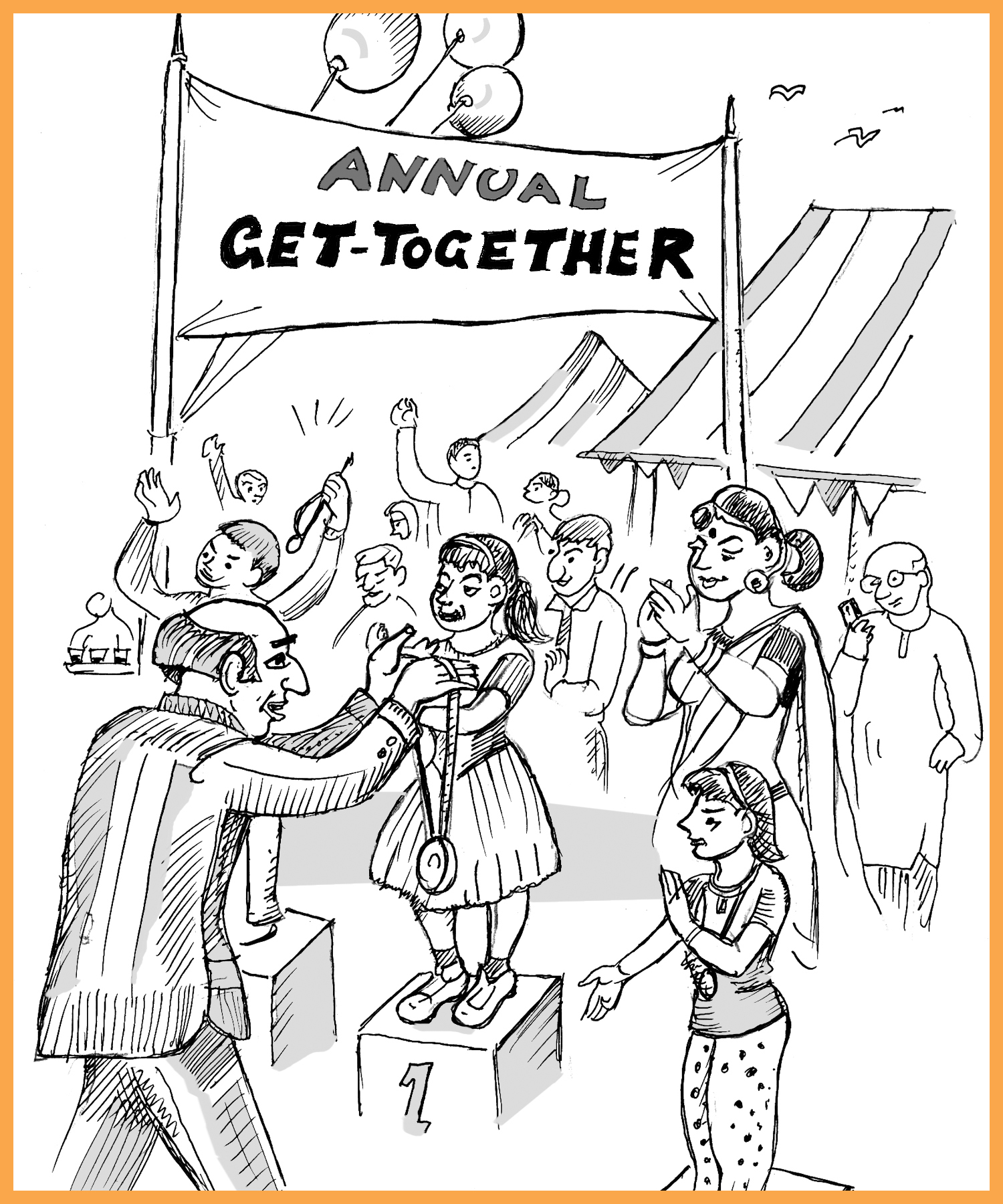
An annual get together where families also get invited is a good idea to make people feel the humane side of the organization.

Plan entertainment of all kinds, primarily focused on kids and see how much the parents love their day (or evening) out. Ensure that spouses hog the limelight – it is they who support the company’s operations in a silent but effective manner.

GRAPEVINES

Use them to your utmost advantage. If one of your colleagues is close to the top boss and you have been bypassed in the recent spate of promotions, share your concerns with him in a casual setting. You can be sure your message reaches the right quarters without much transmission loss.

FAT, REDUCTION OF

For an organization, it is necessary to weed out the deadwood from time to time, and keep itself trim and fit. For an individual, the signs of prosperity and/or frustration can be done away with by undertaking an exercise regimen.

FAVORS

It always pays to have a credit balance in your inter-personal relationships, especially with those who are critical for your area of work.

After receiving a favor, be sure to acknowledge it gracefully. That way, you build up on your inventory of credit balance.

FEMALE POWERFEMALE POWER

Having qualms about reporting to the fairer sex? Take it easy. They are far more professional (and also compassionate) than you imagine. Multi-tasking comes easy to them, what with their having to juggle various roles with aplomb at all times; being a daughter, a wife, a mother, a home maker, a daughter-in-law and a company executive at the same time, and still managing to retain sanity of mind is no mean task, after all.

Nature also gave them the exclusive rights for the perpetuation of our species. Encourage those who wish to re-start their careers after a three year post delivery sabbatical.

However, beware of the Cleopatra who flaunts her assets, flashes her kohl lined eyelids and charms you into making biased and partisan decisions.

FILING F-I-Rs

If you have made a mistake, be the first one to run across to the affected person and file a First Information Report. For all you know, a solution may emerge. In any case, it is better than the aggrieved person coming to know of it from another source and forming a wrong opinion and pre-judging the issue.

FIRE IN THE BELLY

Do not allow it to die down, ever. Be open to accept fresh challenges. Take up new assignments as and when they come your way. Keep sharpening your saw, as Stephen R Covey had said.

The only fire in the belly to be avoided is the one generated by ulcers and cysts; live a stress free life and avoid a contingency of that nature.