For someone like me who has been brought up on a healthy diet of movies since my tender years, it is not easy to visit a new place and the mind not veering off to recollect a movie which the place reminds me of. Besides, anything connected with movies in any way – be it a Walk of Fame, a theatre where the prestigious Oscar awards get presented, or even a drive past either Sunset Boulevard or Rodeo Drive and Beverly Hills – acts as a strong magnet, drawing me to it the way a moth would be captivated by a candle. Luckily, the analogy stops there, since, unlike a hapless moth, I do not perish. On the contrary, I live to tell the tale, merely in the spirit of sharing my experiences with those who are likewise besotted by the science and art of moving images.
Recently, an opportunity came up whereby I could visit the South-Western part of the United States of America. Here are some of my experiences.
The Grand Canyon
Irrespective of the viewing point one decides to visit, the stark beauty of raw nature here holds you mesmerized. Just like the many fjords in Norway, these unique rock formations would have taken millions of years to take their present shape. As one reads about the aboriginals who inhabited this area, believing in the forces of nature which protect them and guarding over the famous gold deposits which ended up sounding their death knell when those who consider themselves as ‘civilised’ ended up suppressing their rights, one wonders if there would ever be an end to human greed and avarice.
As the sun continued its journey in the clear blue sky above and the shadows of peaks falling on the opposite side of a narrow valley, my mind went back to Mackenna’s Gold (1969), with Gregory Peck and Omar Sharif chasing a pillar’s shadow to find the gold.
Meeting Some Orcas
A visit to Sea World, a large aquarium-cum-amusement park in San Diego, enabled me to have a close look at a herd of pink flamingos, some sea lions, penguins, besides other sea creatures like orcas.
The last mentioned may be baby whales, but their immense size does not fail to impress. As they glide past you with effortless ease, making some sounds which normal human beings like me would not be able to interpret, the awe and admiration which follows holds you in thrall for a long time. I was recalling the movie Free Willy (1993) which showcased the bond which develops between Willy and Jesse.
It Happens Only in Las Vegas
The ‘Sin City’ is famous for its unique tourist attractions. An ode to many European cities such as Paris and Venice, it even boasts of a small volcano which displays the fury of fire and red-hot lava when a show takes place. A shopping mall which is designed to make you feel as if you are in Venice, what with a meandering canal on which you could enjoy a gondola ride and a blue sky above with white clouds flitting by.
Many other attractions dot the landscape, including a yet-to-be-commissioned Sphere which is said to be an auditorium with a seating capacity of 16,000 persons, equipped with the latest audio systems. The external surface of this structure offers enchanting displays which often leave one mesmerized at night.
The musical fountain outside Hotel Bellagio ended up reminding me of the series of Ocean’s Eleven (2001 onwards) movies.
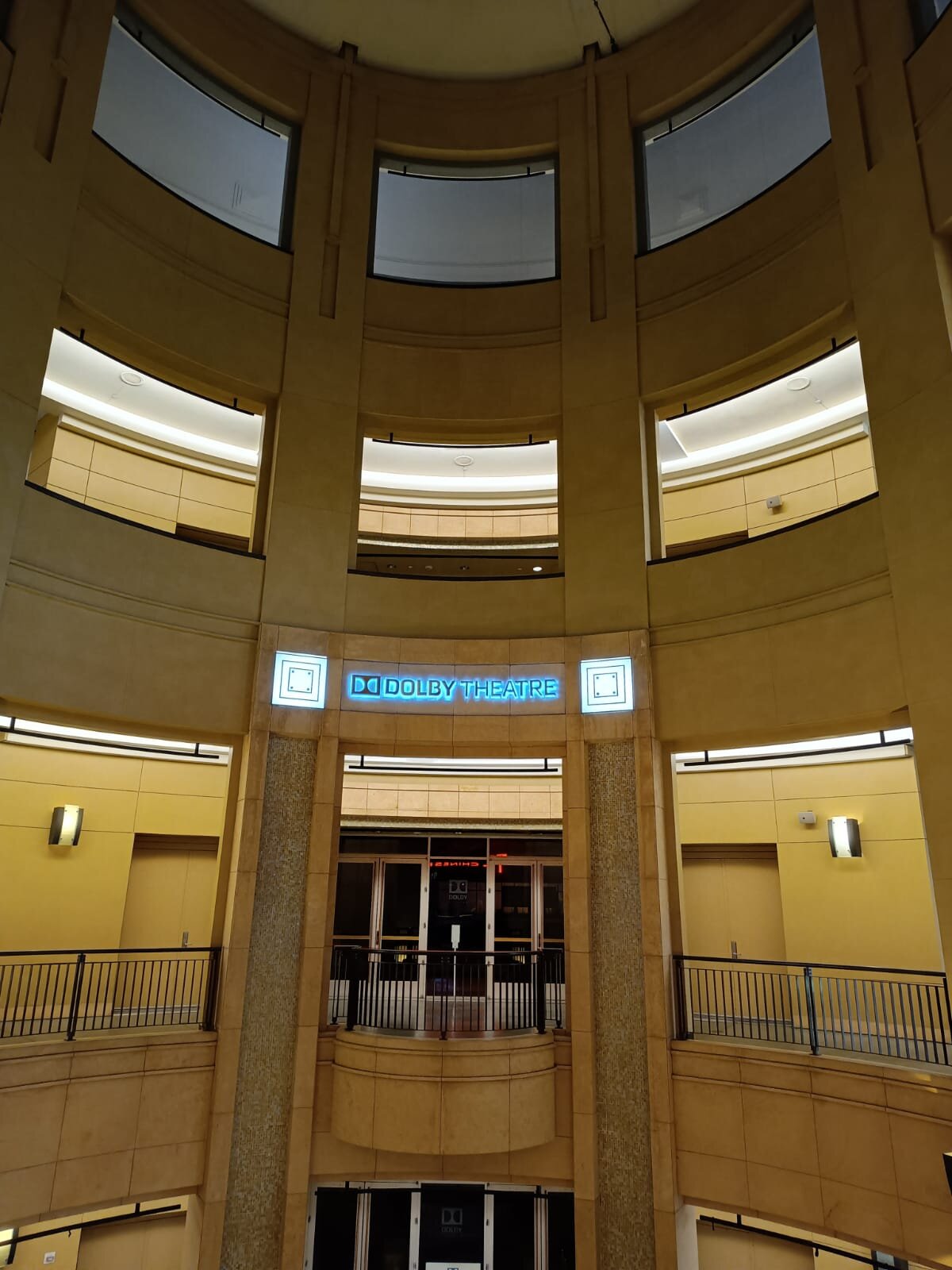
The Dolby Theatre
The Dolby Theatre (formerly known as the Kodak Theatre) is a live-performance auditorium in the Ovation Hollywood shopping mall and entertainment complex, on Hollywood Boulevard and Highland Avenue. This is where the annual Academy Awards ceremony takes place.
The Hollywood Walk of Fame
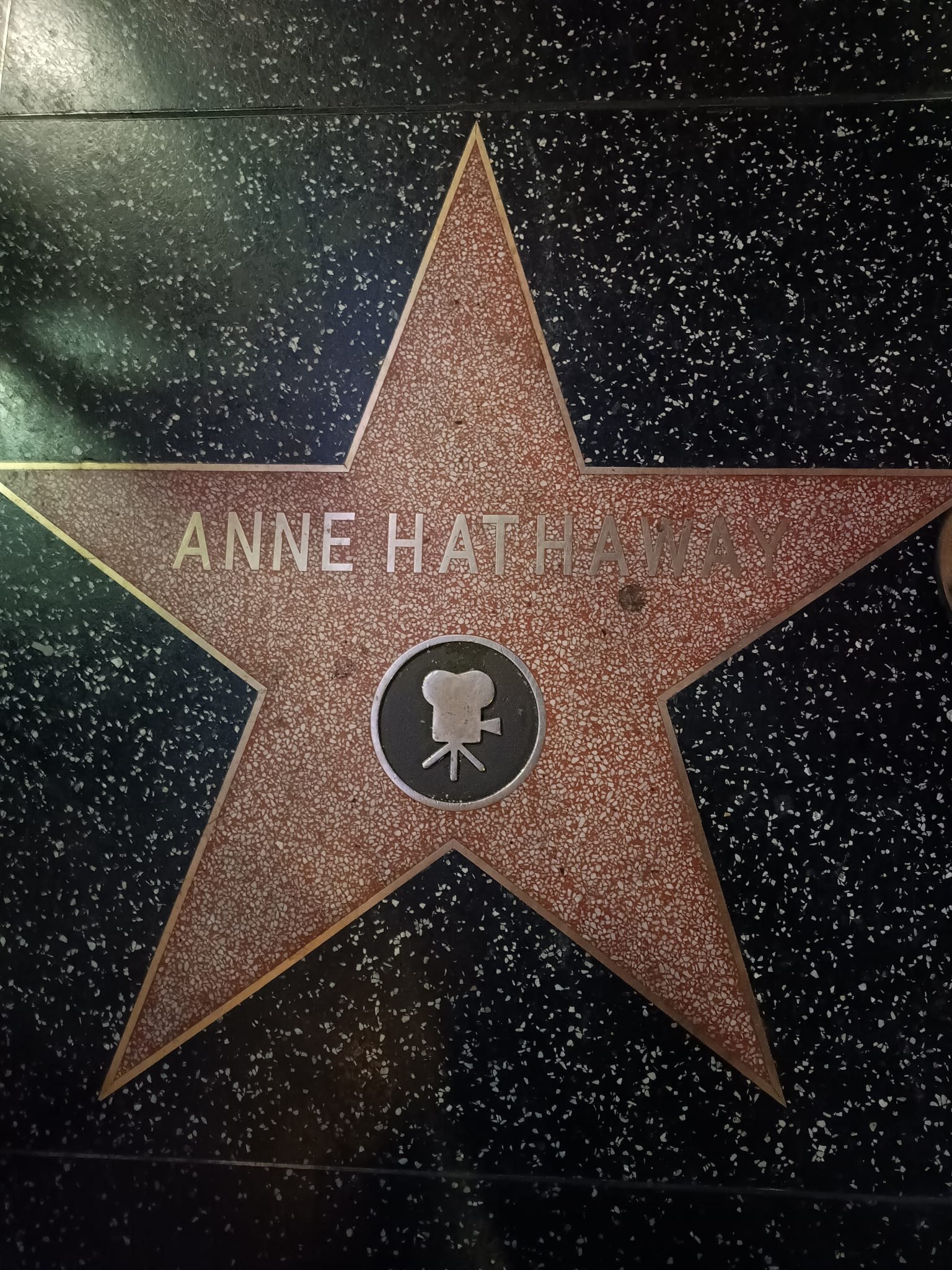
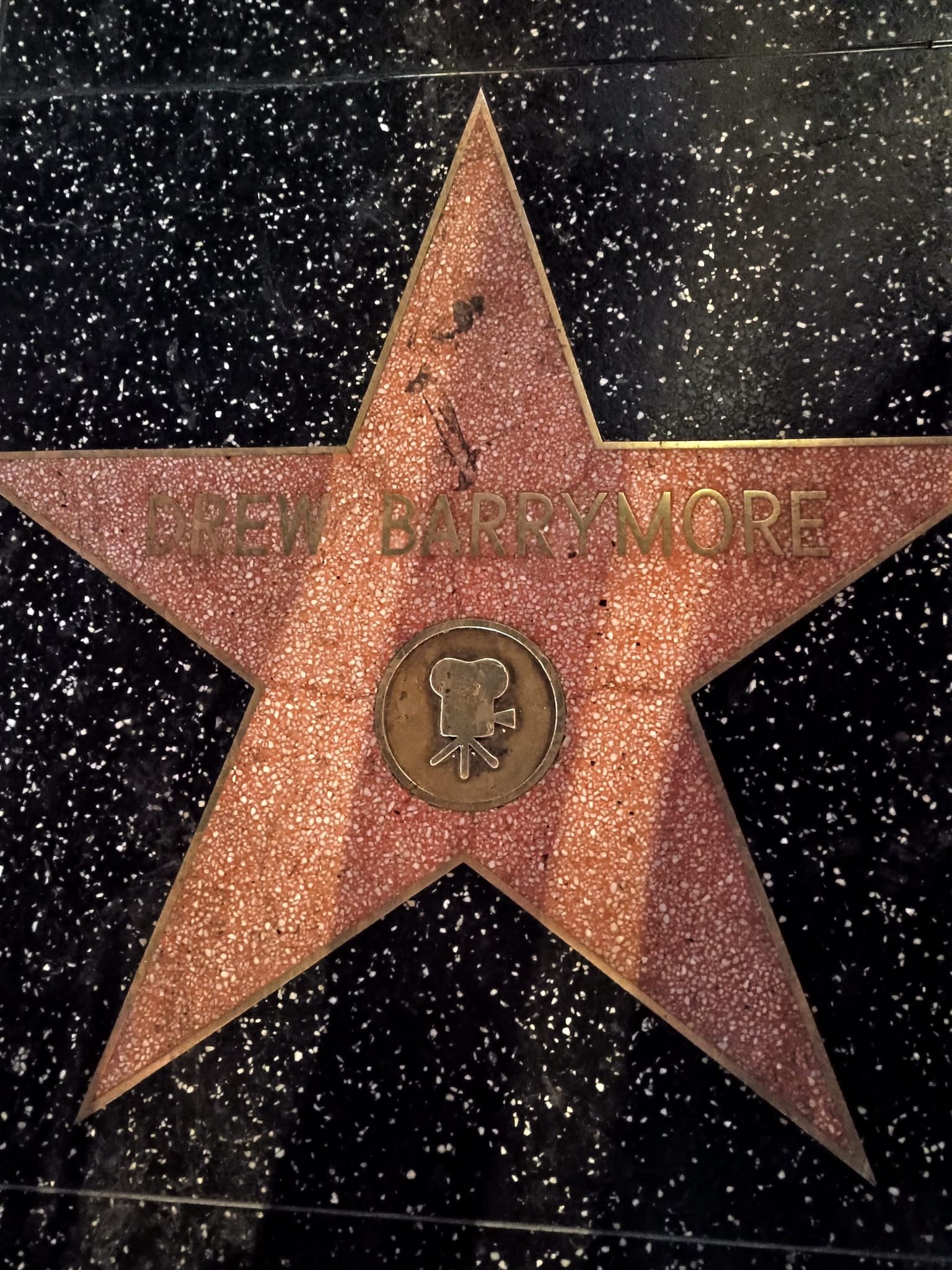
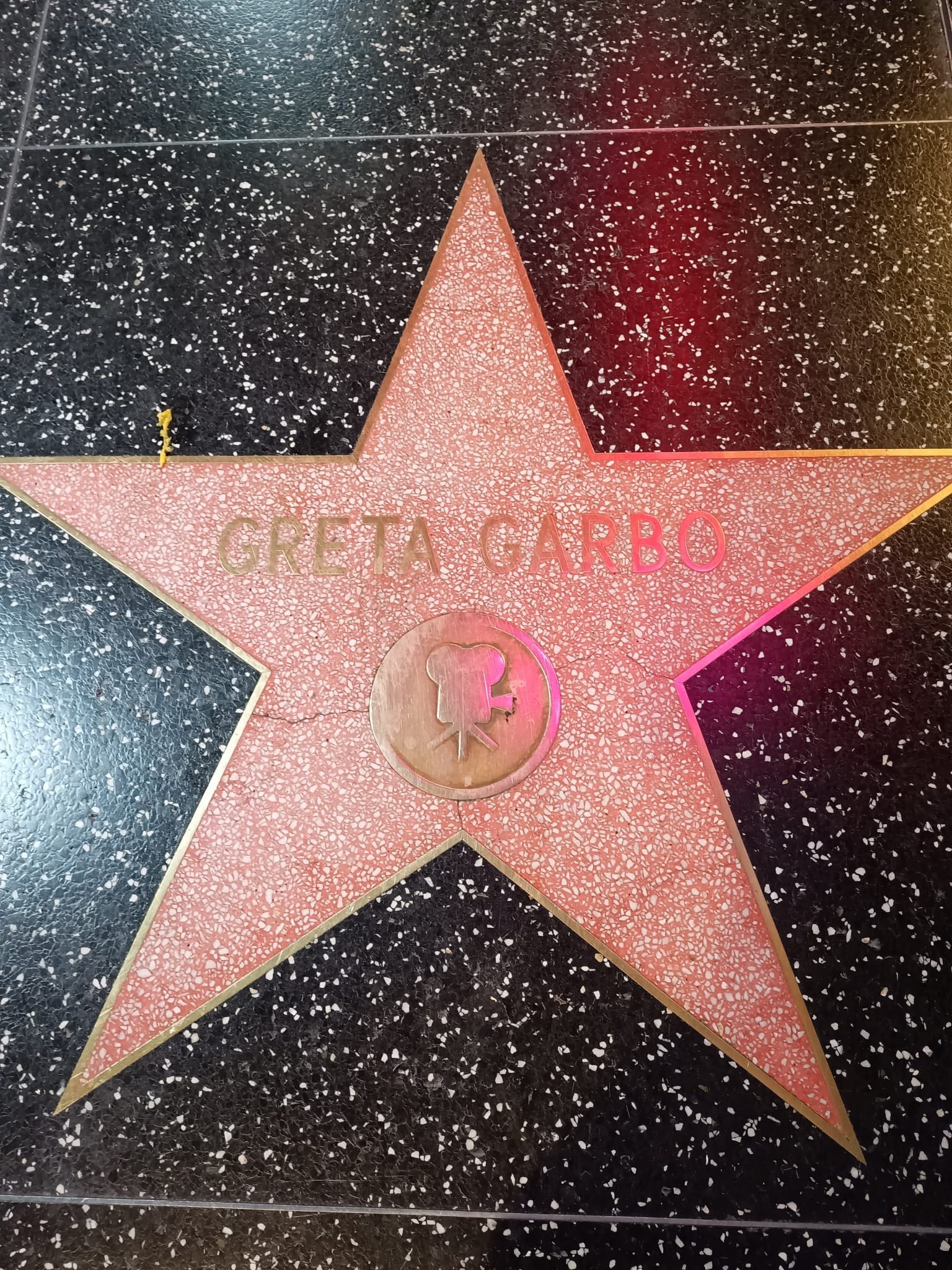
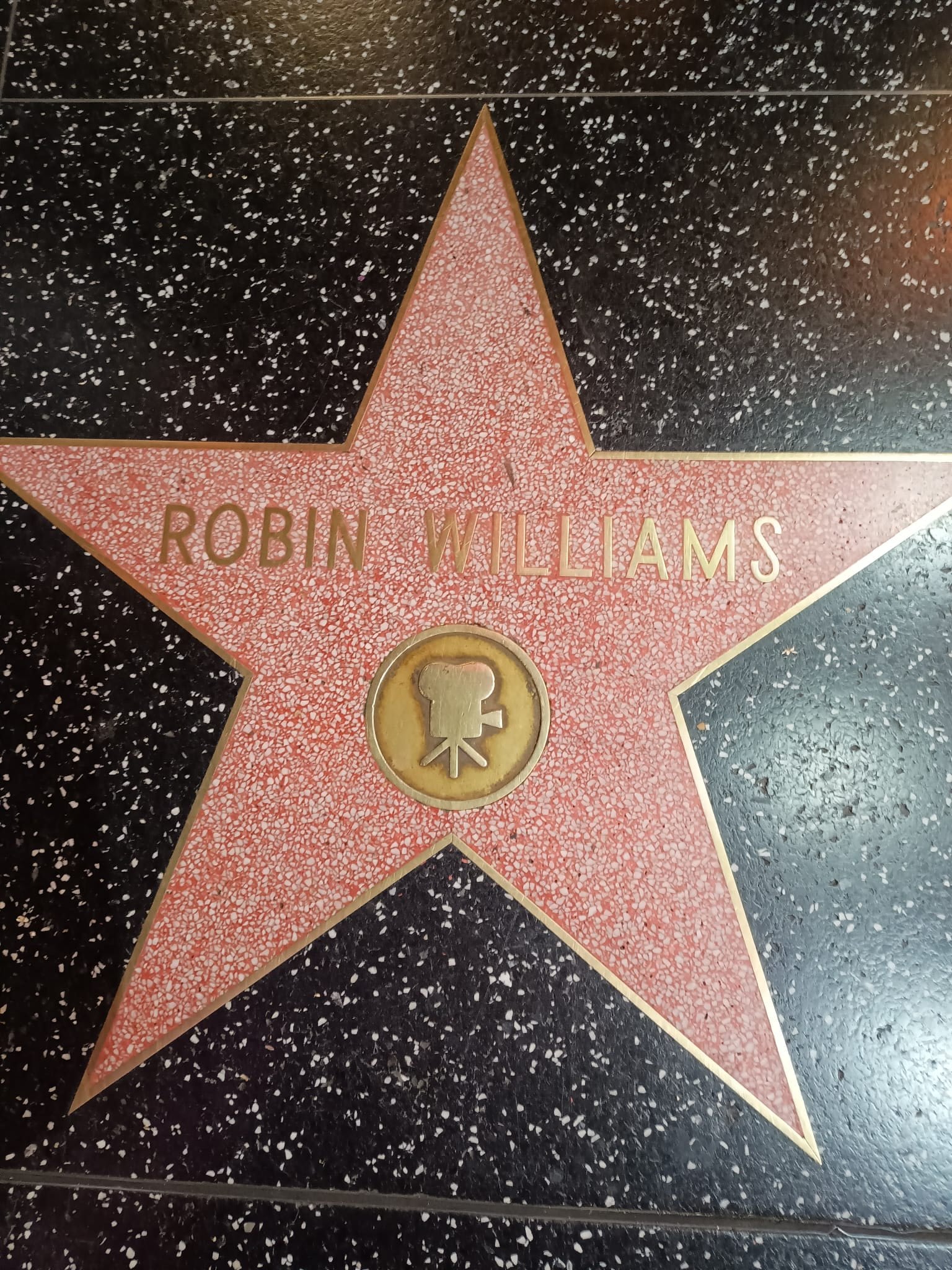
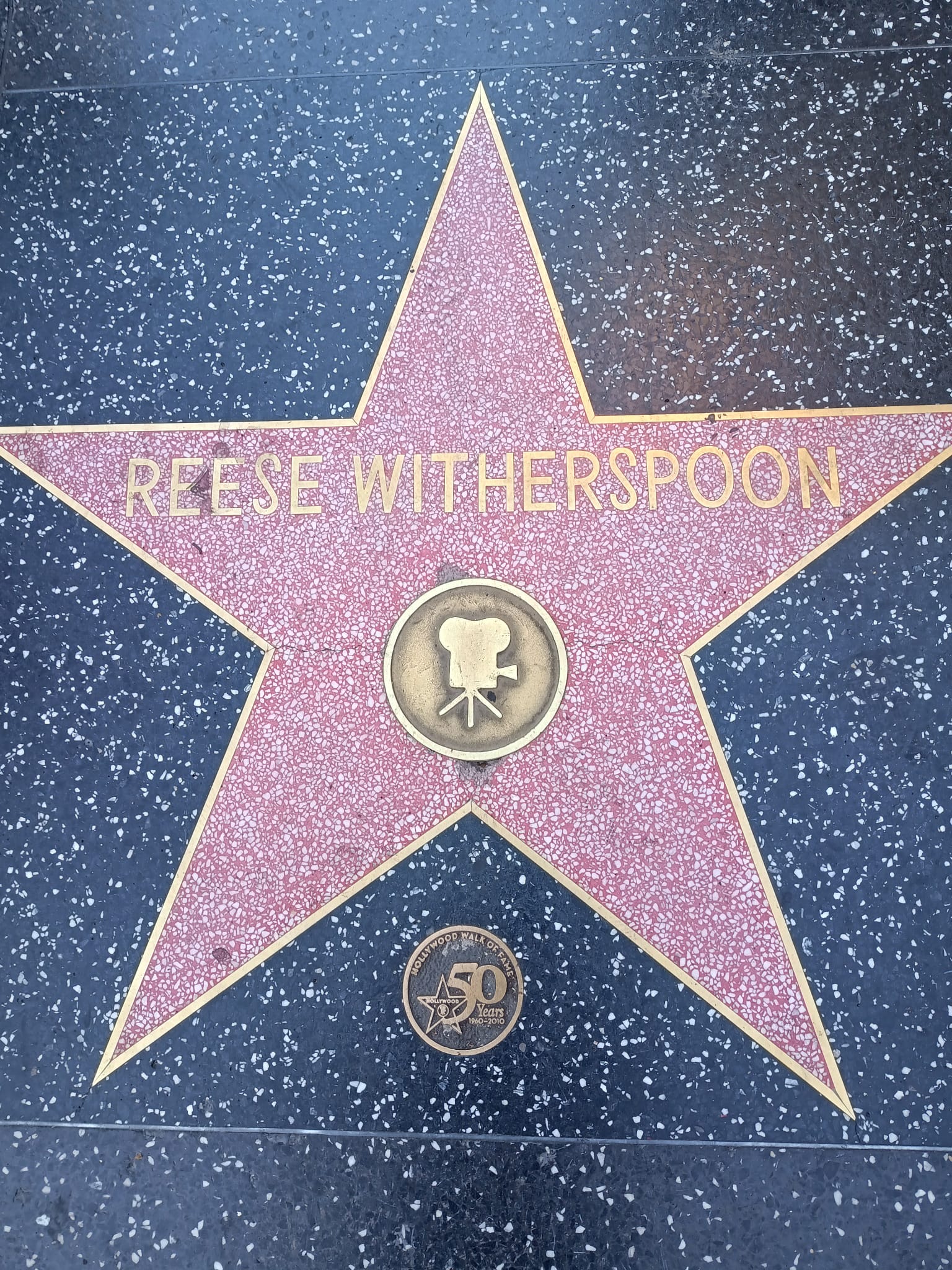
One may not expect to run into either Julie Andrews or Anne Hathaway here but walking over more than 2,700 five-pointed terrazzo and brass stars embedded in the sidewalks along 15 blocks of Hollywood Boulevard and three blocks of Vine Street in Hollywood, California leaves one in awe of the kind of multi-faceted talent nurtured and showcased in Hollywood offerings over the decades. It is a motley mix of actors, directors, producers, musicians, theatrical/musical groups, fictional characters, and others. Of course, it is a challenge to see many of these clearly, partly due to the sheer length of the walk, and owing to the jostling crowds which tread over these with gay abandon.
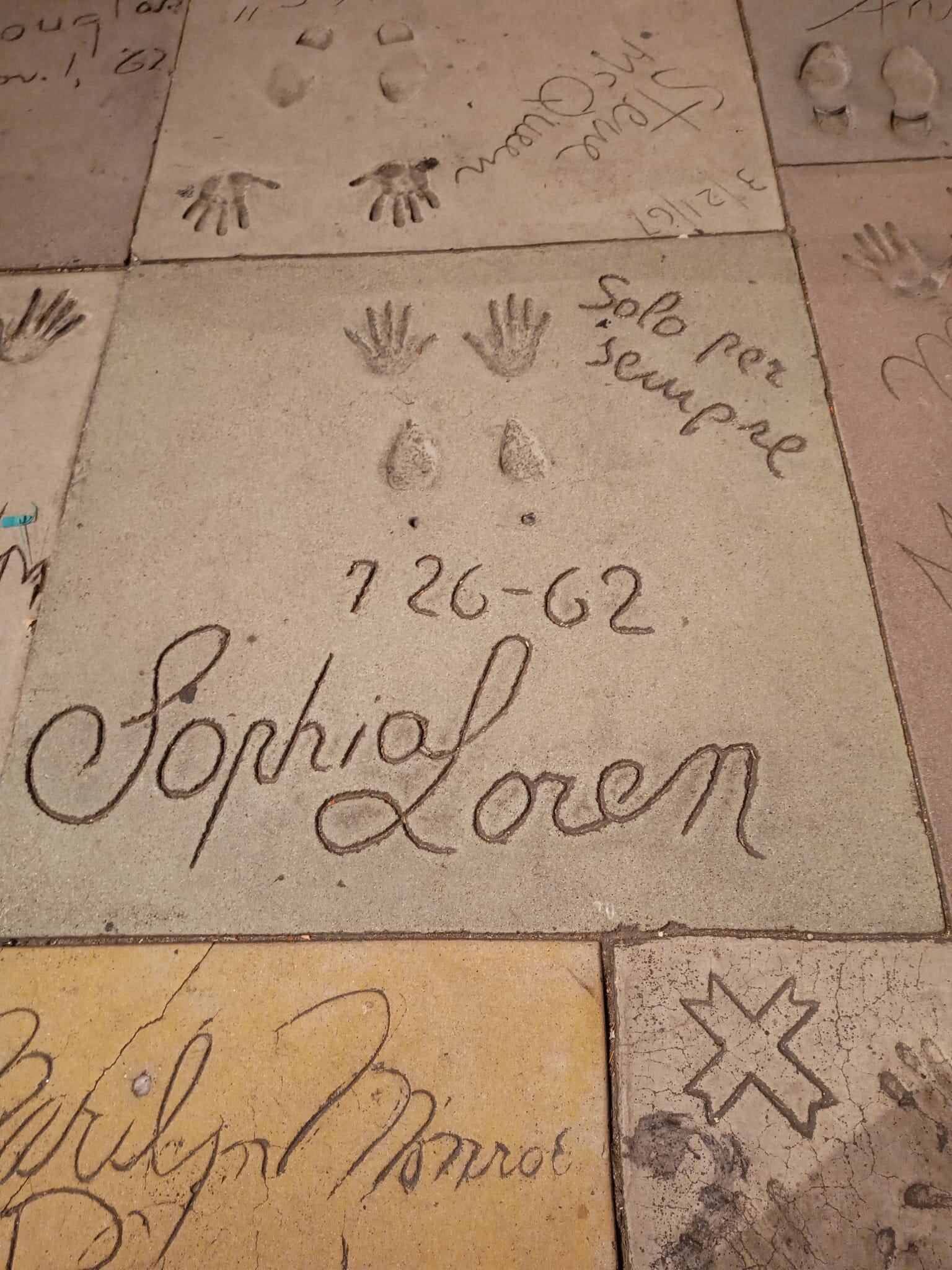
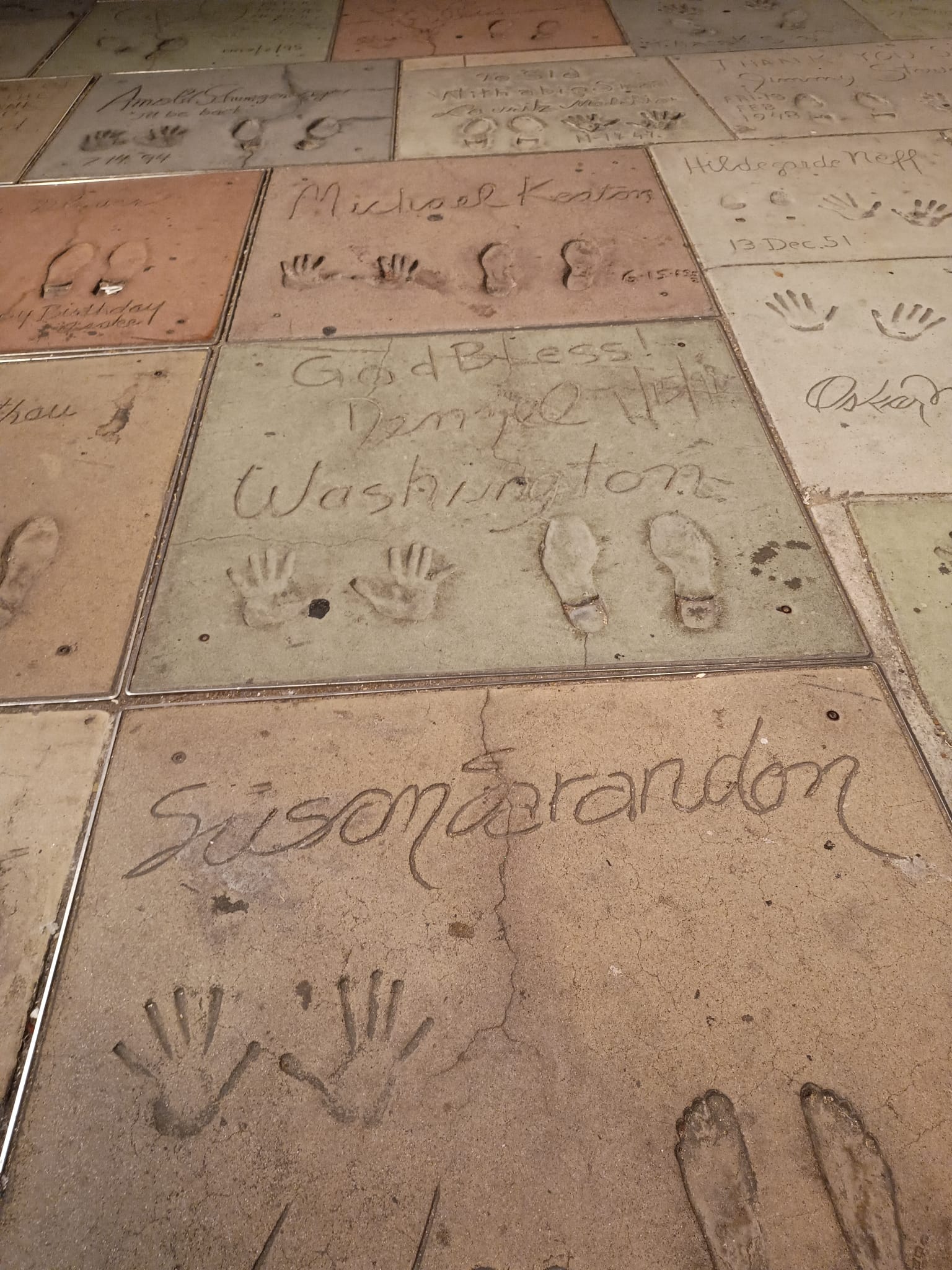
There is also a separate portion next to the Chinese Theatre where concrete slabs carrying either the signatures or the handprints of such yesteryear celebrities as Peter Sellers, Sophia Loren, Marilyn Monroe, Dean Martin, Tom Hanks, Susan Sarandon, and many others can be seen.
Hollywood and P G Wodehouse
Fans of P G Wodehouse are well aware that he had used Hollywood as a setting for some of his novels and short stories. He wrote a series of Broadway musical comedies during and after the First World War, together with Guy Bolton and Jerome Kern, which played an important part in the development of the American musical. Sometime during the 1930s, he began writing for MGM in Hollywood.
One may be disappointed to not to either find the offices of Perfecto-Zizzbaum Corporation or run into Montrose Mulliner and Rosalie Beamish in Hollywood. One may merely surmise that the couple might be quietly enjoying a peaceful time somewhere in Loas Angeles these days, listening to the prattle of the feet of their many grandchildren who are forever eager to sit around them and listen to them recounting the details of their marriage in a gorilla’s cage.
Likewise, Wilmot Mulliner, having retired as a manager of the affairs of a famous Hollywood celebrity, may be entertaining his grandchildren with some bird calls, at times fondly remembering Mabel Potter.
Wannabe starlets struggling to catch the eye of producers and studio owners would still be learning a few lessons from the case of Minna Nordstrom.
I did not come across any swamp of alcohol during my travels. In any case, running into Sister Lora Luella Stott, the woman who is supposed to be leading California out of the swamp of alcohol, was not on the agenda.
Some Lifelong Memories to Cherish
Travel is highly educational, said Jeeves. It is also a source of happiness, one may add. It is about experiencing the sights and sounds of a place. There is the sheer pleasure of soaking in its ambience.
When one passes by Hollywood, one feels having had a platonic brush with the many talented celebrities who, over the decades, have added all the glitz and glamour for which it is known.
What happens when Plum fans get to meet each other at a gig? Some may be known to one from the virtual world most of us inhabit these days. Others may be genial souls whom one meets for the first time, though some of them may soon assume the character of long-lost friends.
After all, Plum himself said somewhere that “There is no surer foundation for a beautiful friendship than a mutual taste in literature.” It follows that if the term “literature” here covers his own oeuvre, a high degree of bonhomie and warmth soon fills one’s bosom. The excitement of discussing his works and discovering some hereto unknown facets of his characters soon surpasses the kind of inner satisfaction Aunt Dahlia would have felt after having managed to corner the much-coveted silver cow creamer for Uncle Tom, thereby brightening the chances of ensuring a fresh lease of life to Milady’s Boudoir.
A feast of reason and flow of soul occurs. Over some browsing and sluicing, many issues get discussed. The myriad ways in which Bertie Wooster avoids many a walk down the aisle. The ethics of Rupert Psmith misleading Eve Halliday with a bunch of lies when on a boat ride in the lake at Blandings Castle. The curious case of Bingo Little who proves Charles Darwin’s Theory of Evolution wrong by undergoing a reverse metamorphosis -transforming from a butterfly during his pre-nuptial days into a caterpillar which is singularly devoted to Rosie M. Banks during his post-matrimony phase. The mystery of the disappearance of Psmith and Eve as a couple. Behavioural traits of not only the prominent loony doctors and ungentlemanly aunts but also of Batholomew, Augustus and Potato Chip come in for a detailed scrutiny.
On all such occasions, time invariably picks up speed, leaving many fans of Albert Einstein’s nodding in agreement. A duration of one hundred and twenty minutes, if spent in the enlightening company of Plum fans, sounds like a mere span of twenty minutes.
A concatenation of circumstances during the month of July 2023 led to yours truly having a couple of Plummy encounters. Here is a brief account of these.
A Mind-bending Quiz at the UK Society Meeting in London
Which breed of the canine species does Bartholomew (who, if you recall, biteth like a serpent and stingeth like an adder) belong to?!
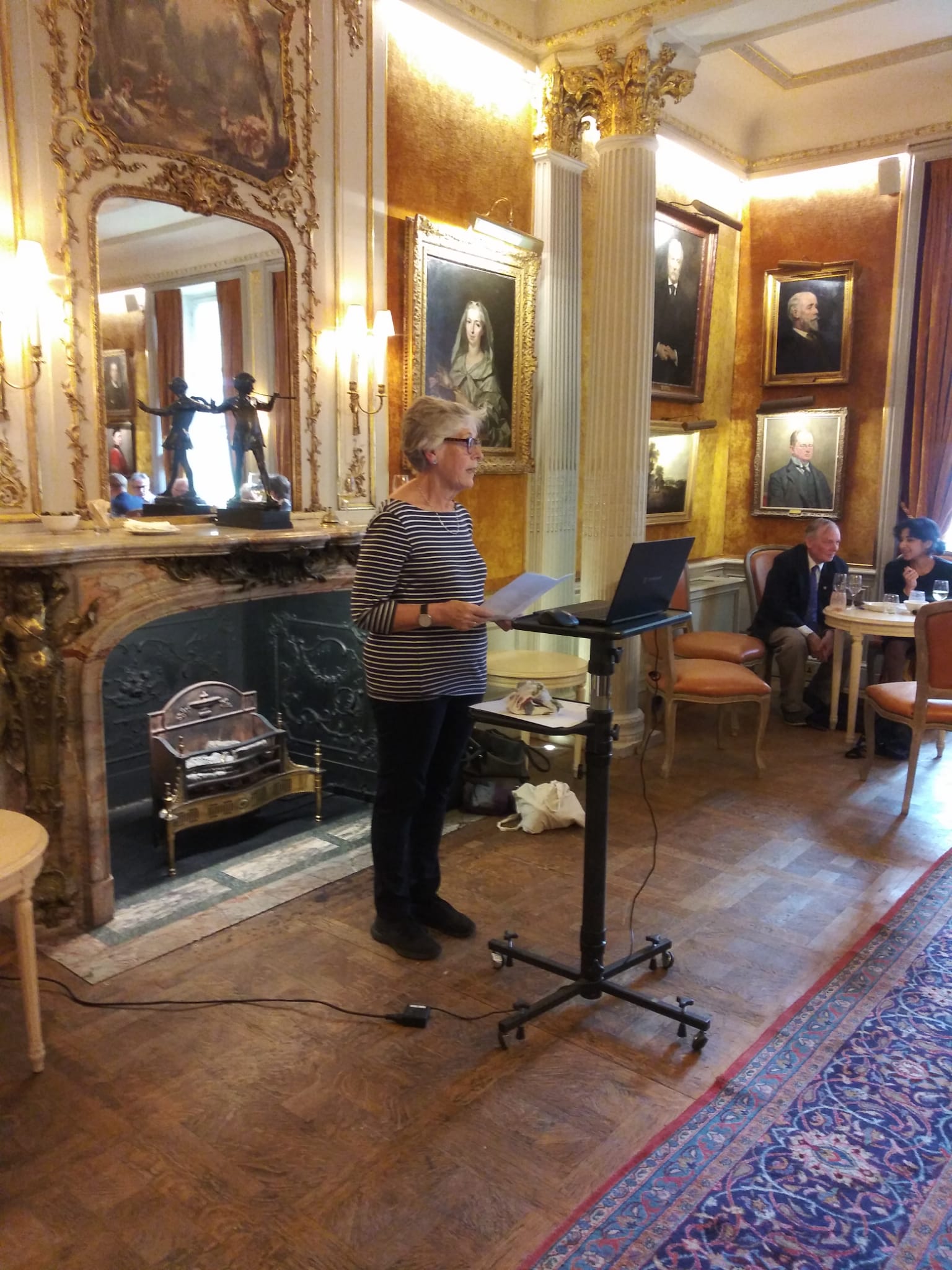
Well, this was merely one of the twenty-five odd questions which got unleashed upon one at a recent meeting of the UK Society in London. Conducted with rare aplomb and felicity by Lasley Tapson, a committee member of the Society, the quiz helped all of us to assess the current level of our respective Pumpkin Quotients. I, for one, found mine to be higher than that of Gussie Fink-Nottle.
Besides the pleasure of meeting many other fans at the gig, I had the privilege of exchanging pleasantries with Tim Andrew, the Chairman of the Society, and Andrew Bishop, the Editor of Wooster Sauce.
Meeting a Fan from Across the Pond
It so happened that a fan of Plum’s from across the pond and yours truly were infesting the environs of London around the same time. Lia Marie Hansen, Doug, the Bingo Little of her life, and yours truly could meet for some time. Lia is a theatre professional who has worked in the past at Vanguard Lyceum Theatre and is currently a Professor at Vanguard University of Southern California.
Given her profession, the exploits of George Bevan were bound to come up for a mention. So was the fascination of Kid Blumenfeld, the dish-faced kid who, despite his tender age, controls the theatrical productions of his father, with McIntosh, Aunt Agatha’s Aberdeen terrier. Gushing references to many of Plum’s characters and instances in his narratives invariably followed. Challenges faced by the world of theatre were discussed. So were matters pertaining to advances in acoustics and a few other realms of human enterprise.
A Visit to the Dulwich College, UK
This was a lovely and instructive encounter with an important part of Plum’s life. Some of you might have already come across details of this visit of mine here.
The Orange Plums
Gangs of Plum fans, whether masquerading as societies or otherwise, can be found all over the world. Besides the United States of America, United Kingdom, Netherlands, Sweden, Norway, France, Italy, Russia, Japan, Australia, and Canada also boast of devoted fans and admirers who keep his works alive by organizing events and conducting various activities from time to time. India, with its sizeable population, also has a liberal smattering of fans, with a latent desire for some browsing and sluicing which often manifests when a fan from another city pops up.
The Wodehouse Society (USA) has many Regional Chapters all over the country. One of these, located in the Orange County of California, is known as Orange Plums. Its members congregate once every month, thereby continuing to spread sweetness and light in their community. Their meetings take place at the Streamliner Lounge and Café which happens to be a diner located on the premises of the Orange train station. The credit of introducing me to the group goes to Thomas Langston Reeves Smith, a fan of Plum’s who infests another part of the country.
To ensure that the group members did not take me to be an imposter, as also to follow Jeeves’ advice that there are no times when ties do not matter, I had worn a Drones Club tie to the meeting. This, despite the sweltering heat outside. But what I had not imagined was the kind of warmth with which the members would greet and receive me. I might as well have worn an asbestos vest. After much ‘What ho’-ing and exchange of pleasantries, I was elated to receive a few mementos from the 2022 San Diego Convention of the Wodehouse Society. Precious gifts, indeed!
All of us are aware of the invigorating properties of the juice of an orange, especially when laced with a liberal dose of tissue restoratives. However, the sheer joy of meeting some fans of Wodehouse located in a different part of the world itself acts as a powerful intoxicant on someone like me. A generally shy, morose, and reticent person like me suddenly turns into a blabbering idiot. I am surely not a loquacious pub raconteur in the same class as that of Mr. Mulliner but a transient bout of chattiness does overtake me on such occasions.
Thus, the Double-Whisky-and-Splash, the Gin-and-Tonic and the Tankard of Ale who had assembled at the venue had to suffer a great deal of coarse buffoonery on my part for close to about one hundred and twenty minutes. However, it goes to the credit of Orange Plums that they withstood the onslaught upon their auditory senses with a chin up attitude which would have made Bertie Wooster proud of them. None of them exercised either of the two options of an escape available to them – either by using their jalopies parked upfront, or by using the back door to catch the trains which were chugging along at regular intervals. Climbing down pipes was ruled out because the café happens to be on the ground floor.
Fans of Plum often hide their talents well. The Double-Whisky-and-Splash, who had coordinated the meeting, turned out to be someone who dishes out not only a monthly newsletter but also two regular submarine-related magazines. He has long studied the art of whipping up TV scripts and producers of shows are watching his progress with keen interest.
The Gin-and-Tonic, a history buff who is in the noble profession of teaching, is also open to schooling others in music appreciation and even participating in karaoke competitions. A genial soul, I am certain that her pupils would have never alluded to her as being a female lion-tamer cast in the mould of either Miss Mapleton or Miss Tomlinson.
The Tankard of Ale happens to be in the service of the Almighty, perhaps delivering Sunday sermons the durations and handicaps of which keep the local betting syndicates agog with excitement. I am sure he has had the company of a goofy kid like Thos for some time and would thus be hotter at his job. A technology geek, he kept on locating various narratives and characters on his technical gizmo, in tandem with the flow of discussion of the group, which involved trading tales and sharing our mutual enthusiasm for The Master.
It was fun meeting a few members of the group. Sometime soon, the Orange Plums are planning to organize a flowerpot throwing competition. They are also keenly looking forward to the next Society Convention, scheduled to take place in Nashville, Tennessee, September 26 – 29, 2024.
I wish Orange Plums a goofy time ahead!
A Wish List
Perhaps the Bard was not much off the mark when he said that the world is an oyster. Just in case my Guardian Angels ever enable another visit either to the United Kingdom or to the southern parts of California, my travel plans may include the various spots said to be the inspiration of many of Plum’s narratives.
By way of an example, I believe that there are two claimants to the Drones Club – the Buck’s Club in London and the Montecito Country Club at Santa Barbara. As to Totleigh Towers, the Hearst Castle at San Simeon, where Plum is said to have stayed for several months during 1930, is said to be the inspiration.
Of course, brainy coves on both sides of the pond would have already listed out several such attractions.
Each encounter of a Plummy kind leaves one feeling enthused about the future of humanity.
May the epidemic of Wodehousitis continue to spread all over the world!
All kinds of studies done by brainy coves the world over keep telling us that our well-heeled denizens are gradually becoming even-better-heeled with each passing year. Thanks to the capitalistic theories propounded by such experts as Milton Friedman, the concentration of wealth appears to be going up for a tiny segment of the society.
One of the off shoots of the increasing concentration of money power is that of air travel becoming more popular by the day. Manufacturers of commercial airliners, overjoyed at receiving bulk orders for delivery of shimmering new aircraft, are laughing all the way to their banks. New airlines are springing up at a rate which would put many a mushroom-growing enthusiast to well-justified shame.
But it is the hapless customer who appears to be getting increasingly short-changed over time. Here are some of the typical blues which she faces while daring to travel by air.
Pre-flight Stress
For first-time flyers, or even infrequent flyers, the challenge starts right from the time they start twiddling their thumbs trying to squeeze in whatever they desire to carry while keeping a sharp eye on the dimensions as well as the weight of their bulging suitcases. With each passing year, following the advice dished out by their finance honchos, airlines keep reducing the baggage allowances, bringing in additional charges while offering apparently juicy deals for cheaper tickets. While the algorithms of our search engines keep highlighting airlines offering the best deals, the overall cost of travel keeps galloping at a pace which would make Potato Chip (of Aunts Aren’t Gentlemen fame) sit up and take notice.
Some countries like Japan and Switzerland have already kick-started campaigns to persuade travellers to pack less and reduce the airlines’ carbon footprints. Skiing gear, helmets, insulated wear, caps, snow goggles and many other mountaineering-related items are now available for rent upon arrival at major airports. Many airlines have already reduced their check-in baggage allowance from 32 kgs to 23 kgs, leaving many a passenger from countries like India carrying a year’s supply of toys, garments, spices, pickles, and other items of daily consumption fretting and fuming over the changes. Many airlines have already started charging for cabin baggage as well. Very soon, there could be additional cuts in allowances and handsome rewards for passengers who practice a size-zero policy for the baggage they carry.
Luckily for customers, many airlines are yet to wake up to the revenue-boosting potential of charging higher fares based on the gross weight of the passenger herself. Air New Zealand appears to have already started this practice. I suspect the day is not far off when many airlines across the world would start following a similar practice.
All clouds have a silver lining, and the practice of linking fares being charged linked to a passenger’s Body Mass Index could usher in a new craze of Homo sapiens’ desire to be leaner and fitter. World Health Organization would have us believe that by 2021, worldwide obesity had nearly tripled since 1975. Well-endowed passengers would start sweating it out merely to ensure that they do not get overcharged for travelling by air. Fitness experts like Ashe Marson (Something Fresh) and gym-owners like Chimp Twist (Money for Nothing) would surely enjoy higher levels of prosperity.
The Triathlon at the Airport
The Challenge of Checking-in
The requirements for online check-in vary not only from airline to airline but even from airport to airport, leaving many a flyer baffled, bewildered, confused, disoriented, fogged, flummoxed, mystified, nonplussed, perplexed, and puzzled.
With a rapid increase in those wishing to take to the skies, the challenges of navigating through milling crowds at the airport merely to reach a check-in counter could leave a passenger disgruntled, disappointed and dejected. The earlier norm of reporting at least three hours prior to the departure of one’s flight is no longer valid. Cost-saving measures introduced by many airlines have apparently ensured a drastic cut in the number of ground staff operating the check-in counters. These days, just to reach one, it could take up to two hours.
Upon reaching the counter, you may get greeted by someone cast in the mould of Florence Craye. While you may be trying to check out her willowy profile sideways, her sharp eyes would already be checking out your baggage profile and weight. Anything exceeding the limits prescribed, and she will pounce on you to extract an extra pound of flesh. She may or may not extoll the virtues of the Types of Ethical Overloading but is bound to demand some extra money you have to part with.
Gone are the heady days when one could keep the check-in baggage within the stipulated limits but could carry overloaded cabin baggage, hoping that the smartly dressed ground staff will indulge the hapless passengers and turn a blind eye to bulging hand-carried items. You will be asked to insert the cabin baggage into a super-tight metal box, and should you fail in doing so, or get noticed for overly exerting yourself to somehow shove it into the size-zero box, monetary consequences will need to be faced. Ukridge would have surely come up with a betting racket linked to whether a certain passenger would get away with an oversized baggage. Shylock himself would do well to undergo a crash refresher course conducted by ground staff of this kind.
Of Security Blues
The security guys and gals leave no stone turned to further fray the nerves of a passenger. If milk being carried for bonny babies gets thrown into a dustbin, so do some objects as small scissors and any precious gifts made of such material as wax, etc. Some kind of footwear and accessories invite a jaundiced eye, leaving the passenger praying for mercy. The process of taking off one’s belts hastily wound around by someone who faces Pear Pressure in office has left many a passenger de-trousered, shocking the on-lookers.
If your cabin baggage gets singled out for a detailed scrutiny, that too at the hands of someone of the stature of Roderick Spode, you feel as if you have just been found pinching an umbrella belonging to him. You only hope that he does not wish to jump on you with size eleven boots and see the colour of your insides. Too many traditional medicines carried by the elderly in bulk could arouse the worst suspicions. Even a silver-coated set of spoons and forks purchased by you for a loved one may have to be parted with.
Emigration and Boarding
Another long queue awaits you next at the emigration counter. Someone in the mould of Madam Bassett will ask you a perfunctory set of questions and then only do you get to hear the loud but reassuring noise of her having stamped your passport.
When you land up at the boarding gate, you often realize with sudden horror that the boarding is not through an aerobridge. Instead, you have to trudge down a flight of stairs, take a bus, brave the elements, and then huff and puff back up the aircraft boarding stairs. This is what management experts allude to as a win-win situation. Your heart gets some well-deserved exercise, whereas the airline saves the cost of engaging an aerobridge at the airport.
Long queues at the boarding gates are now a norm. Some airlines in the USA practice a policy of laissez faire, helping the flyers to maintain a high level of physical agility and fitness. The moment the gates get thrown open, a race down the aerobridge to grab the best possible seats begins, putting many an Olympian sprinter to shame. All those who, like Bingo Little, have allowed their sporting spirits to drive them to the races at Ascot and have keenly watched the winning tactics of racing horses stand a far better chance of securing seats of their choice.
Of course, you can have a seat of choice as well, provided you are prepared to shell out some more green stuff for the privilege.
When Reality Hits One
Finally, the passenger heaves a sigh of relief, squeezes herself into the narrow seat, fastens her seat belt, and looks forward to a time of rest and repose. But wait, some more excitement is on its way.
When she looks around, she starts feeling empathetic towards the sardines which get mercilessly compressed into a tiny tin/aluminium box. A realization soon dawns that the seats have been designed by expert ergonomists who have squeezed every square inch of the carpet area of the aircraft.
A Sudden Jump in the Blood Pressure
The security drill starts. She suddenly realizes that she is destined to travel by an aircraft which happens to be a Boeing 737 Max. She shudders to think of all the 346 passengers who had lost their lives many years back while travelling in the same model. Her blood pressure suddenly shoots up a few notches. She silently prays to one’s Guardian Angels that the same fate may not await her during the flight. She starts wondering if she had, like Aunt Dahlia, ever committed the sin of breaking a few infant Samuel figurines at a nephew’s lair, and Fate was now sneaking up from the back with a lead pipe in hand.
Of Tissue Restoratives and On-board-meals
Thanks to the over-zealous Chief Financial Officers (CFOs) of airlines who keep advising their managements on how to keep cutting down the operating costs and boosting the inflow of the green stuff, no initiative is good enough.
Forget the midair supply of such benign tissue restoratives as tea or coffee, even plain drinking water gets served with a flourish, only to be followed by a much-dreaded card payment gadget. Forget also the juicy and not-so-juicy meals which used to be part of the airfare many years back. There are no free lunches anymore. Be prepared for being not served any nourishment even after having made an online booking for the same.
The days are not far off when one would even be charged for using the washrooms aboard the aircraft, fundamental rights guaranteed by the constitutions of many countries be damned.
The Short-haul Sprints
The question of getting served anything on a short-haul flight does not even arise. By the time the seatbelt sign gets switched off and one starts soaking in the glory of nature while marvelling at the white cushion of fluffy clouds below, a short opportunity of getting a cup of tea/coffee may present itself. However, even before one has sipped half the cup that supposedly cheers one, the aircraft is already preparing to land at your destination, leaving one feeling cheated and disgruntled.
In the days to come, passengers may even be allowed a hefty discount on short-haul flights provided they consent to travel in a standing position, holding a velvet-covered handrail above, while being duly strapped to a safety belt dropping down upon one from above, duly herded like a flock of subservient sheep into a separate bay at the back of the plane. We may find them behind the privileged and seated passengers who would perhaps be enjoying their bouts of snootiness, casting supercilious glances at those having a standing ride, much like the kind they themselves are made to suffer at the hands of business class passengers!
The Horrors of Long Marathons in the Sky
Even the trauma suffered by those who travel on a long-haul flight is bound to increase in the days to come.
The Stiff-Upper-Lip Passengers
I wonder why and how airlines keep attracting passengers who follow a strict stiff-upper-lip policy while interacting with their co-passengers. Their faces and their body language carry an invisible ‘Do Not Disturb’ sign. Forget a tentative smile. Abandon the thought of a handshake. Eye contact, if any were to happen, may take place only when the guy in the window seat has to visit the rest room and expects one to get up and make way for him to attend to the nature’s call.
Those from the emerging economies who are always used to a friendly exchange of notes with the person seated next to them on, say, an eleven-hour flight across the pond, are left disgruntled at the singular absence of a human interaction, howsoever inane it may be. A wee bit of ‘What-ho’-ing is summarily ruled out, curdling whatever little milk of human kindness may still be coursing through one’s veins. This is one of the many perils faced when one undertakes a long journey on an airliner. Ashe Marson had a similar experience while traveling with Joan Valentine from London to Blandings in Something Fresh. The latter had held a magazine before her as a protection, so as to avoid making any conversation. Thanks to Covid, in-flight magazines have all but disappeared from the seat pockets in front of us. Thus, the modern woman today cannot be blamed for being found riveted to a screen in front of her.
There is a limit to studying the safety instruction card, the menu on offer, and the inflight purchases you can indulge in. Pretty soon, the only option left is that of perusing either a book or a downloaded movie or two or latching on to the movies/series on offer on the screen in front of one. Of course, the last mentioned would work only if you are willing to pay for the earphones you would need.
The Absence of Beauty and Amiability
It seems incredible that in this age of progress steps have not been taken to either improve the standard of looks among air travellers or even attracting those who have an amiable nature. Time after time I step on board, full of optimism and feeling that this trip at any rate my fellow-passengers will be at least semi-human, if not human. And every time I stagger back with a hand over my eyes, shaking my head in disbelief.
Perhaps, a reserved kind of nature is taken as a sign of maturity and wisdom. As to looks, I accept that it is not their fault that most of them look like what either Webster or Augustus might have dragged on to the plane. You see an exhausted looking aged lady devouring a literary tome in her wrinkled hands, peering through her horn-rimmed spectacles, and wearing a ghastly necklace of artificial pearls. Across the aisle, you notice a pot-bellied business honcho feverishly working on the tablet in his hands, ostensibly preparing plans to persuade his customers to part with some green stuff while buying whatever product/service his company may be offering. A sudden commotion draws your attention to a bunch of noisy and weepy tiny tots, with a much-wearied mom who has given up all hopes of reining in the noise pollution.
There is no beating the game. When the aircraft hits a stretch of turbulence, the seat belt sign gets promptly switched on, making you give up your brief saunter down the aisle and rush to your assigned seat.
The Invisible ‘Do Not Disturb’ Signs
Even if you have the good fortune to be seated next to some moderately attractive passengers, the ‘Do Not Disturb’ sign is invariably switched on for the entire duration of the flight. The charm, if any, starts waning soon after the crew starts its in-flight service.
Hope of a friendly chit-chat, if any, in your bosom, starts evaporating like water would in the vast Sahara Desert. Within the first hour of the journey, if I had imagined that someone would look over at me in a not unkindly spirit and say to herself “Ah! Jolly old Bhatia, the fan of P. G. Wodehouse, eh, what? Capital!”, I would be proven to be wrong.
By the end of the second hour, she feels that she may have seen me before somewhere and that I am not nearly the thing of engage-worthy intellect she had imagined me to be. My fascination begins to wane.
By the end of the third hour, a sort of nervous irritation floods over her as I sink into my seat and start going through a book of Plum’s. Half unconsciously, she begins to wonder if, like Bertie Wooster, I happen to be mentally negligible. She starts marvelling at the weird parental affection which kept my father and mother from drowning me in a bucket as a child. My rapidly balding head gleams at her in the overhead reading light, prompting her to wonder if I happen to be a distant cousin of Sir Roderick Glossop whose head is said to resemble the dome of St. Paul’s. More and more does she resent the vacant stare of my infernal eyes behind their spectacles. The way in which I shove some nourishment down the hatch seems to her proof of a diseased soul.
After an interminable stretch of time, when the eleventh hour finally arrives, the sheer relief at the prospect of release from a confinement in a metal tube cruising at an altitude of 35,000 feet above the ground, imposed upon me by a stern-looking beak, ends up inducing a sort of grisly geniality. However, it gets partially reciprocated only by the crew at the time of exiting from the aircraft.
The journey does end up boosting my respect for Albert Einstein who had postulated something somewhere about the speed of time slowing down when we approach the speed of light, even though the speed at which an aircraft travels is but a mere fraction of the speed of light. He surely knew his stuff.
A Censor Board for Air Passengers?
To return to the matter of improving the standard of personal beauty and amiability amongst air travellers.
The Role That Governments Can Play
Governments the world over would do well to start screening the passport applications presented to them to weed out those whose looks do not meet prescribed norms for beauty as well amiability. Since decades, the authorities have been insisting on non-smiling and morose-looking photos from the hapless applicants. This, I daresay, has eliminated the sheer pleasure of international travel and made all of us look like carrying the burden of the Homo sapiens on our slender shoulders. In fact, they should hand over such delicate tasks to their respective Ministries of Happiness, if any. The screening personnel should be ardent fans of someone like Plum, encouraging people to look good and smile when they get themselves clicked for a passport application.
Whereas the assignment may be easier for those screening applicants from the tribe of the delicately nurtured, there would be severe challenges while attempting to screen those from the tribe of the so-called sterner sex. Other than spotting three chins and a visage which reminds one of Stilton Cheesewright, those wearing horn-rimmed spectacles may have to be shown the door. Ears that stuck out at right angles would surely earn a black mark and would have to be made up for by singular beauty in the nose and mouth. There would be a standard measurement for foreheads, and it would be easier for a rich man to pass through the eye of a camel than for a gold tooth to win its way across the aerobridge when the passenger has trudged his/her way up to the boarding gate.
In any case, it would be fatal if the Board of Censors contained men and women of hasty and impulsive judgment. They would need to be cool, canny persons, with educated eyes. They would be people who would have nerves of chilled steel and who can peer at a face and brood over it for some time before hitting the delete button on their computer monitors.
So, all the authorities need to do is simply to take a firm line and refuse passports to all whose photographs fail to pass a Board of Censors specially created for the purpose of dealing with this matter. After all, we have many censors – formal as well as informal ones – these days. When I publish my thoughtful blog post on Management Lessons from Kama Sutra, those who follow me on social media lose no time in registering a strong protest, making me withdraw an excellent scholarly piece from circulation, thereby depriving a part of humanity from improving their intellect.
Some of the members of this screening board should be disciples of Sir Roderick Glossop, who can summarily reject applications of those whose Looniness Quotient does not match the requisite standards, and instead encourage those who have a very high HQ (Happiness Quotient, for the uninitiated) to acquire a well-deserved passport. Such denizens, whichever country they travel to, will be sure to spread some light and sweetness there, at least partially dispelling the gloomy darkness the local citizenry may be exposed to. Such persons would be the true brand ambassadors for their country of origin. The Happiness Index of countries which have the most exotic tourist destinations to offer would soon register an uptick, thereby keeping the government-backed public relations agencies busy.
What Airlines Can Do
Airlines could also pitch in and join this crusade. Those revealing a toothy grin on their passports could be offered discounts on air fare, besides some other privileges like priority in boarding, free water, and tissue restoratives, and the like. On long-haul flights, some group activities and competitions could be organized, so friendships have a chance to blossom and even some browsing and sluicing could take place.
The CFOs of airlines need not lose their beauty sleep over proposals of this kind. I am certain that the losses incurred would be more than offset by the jump in airlines’ revenues when passengers start coughing up fares which are linked to their body weights. Being an astute observer, the reader may already know that obesity levels are only going up the world over.
A Global Initiative
The International League of Happiness would do well to incentivise countries which aggressively promote humour amongst their denizens and prioritize passport applicants with happy and smiling faces affixed on their travel documents.
All is Well that Ends Well
After a long and gruelling flight, if you are entering a highbrow developed country which suffers from delusions of grandeur, the immigration process is designed to keep your nerves in a high state of entropy. A stern-looking officer cast in the mould of Dr Doctor E. Jimpson Murgatroyd who has sad, brooding eyes and long whiskers, welcomes you. His resemblance to a frog which has been looking on the dark side since it was a slip of a tadpole is apt to send your spirits right down into the basement. He is bound to give you a censorious look and ask you all sorts of unpalatable questions. After an interrogation which would be akin to a Scotland Yard detective enquiring into your life, you will sigh with relief only when you are excused for having disturbed the detective’s time to relax and unwind and are finally ‘accepted’ into the country.
Much elated, you then rush to meet your friends or relatives waiting for you outside. Whatever the nature of trauma suffered by a hapless passenger, it gets forgotten. Till, of course, it is time to return to your base camp!
Notes
Illustrations for representative purposes only; courtesy Esther Robles.
Inputs from Suryamouli Datta are gratefully acknowledged.
By no stretch of imagination can I be held to be an expert on cats. In any case, I have no clue as to how a cat which has been fed too much of cream would look like. Perhaps, having temporarily overcome its snootiness caused by the belief that in Ancient Egypt it would have been worshipped as a god of some reckoning, the milk of feline kindness would be coursing through its veins. Coming across a healthy mouse, it might just have shrugged its tender shoulders and decided to skip its quota of vitamins for the day. A wide grin would surely be adorning its visage.
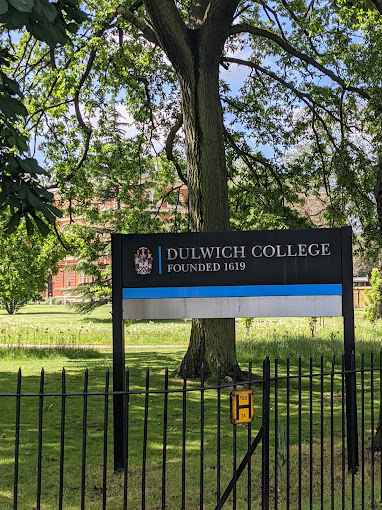
Anyone who had spotted me coming out of the hallowed portals of Dulwich College recently would have noticed the wide grin on my not-so-handsome countenance. She might have seriously suspected me to be a member of the feline species which had just gorged on a diet full of rich cream duly enriched with fat-soluble vitamins. The spotter would have been left twiddling her thumbs trying to figure out the singular absence of the morose look which usually adorns the face of the spotted, making her wonder if the latter had just put in his papers relinquishing his position as the honorary Vice President of the Global Morons’ Association.
She would not have been off the mark. My cup of joy was indeed running over. The sky was bluer. The grass was greener. The air was more fragrant. In short, God was in heaven, and all was well with the world. Peter Mark Roget, had he been around, would have described me as being blissful, chuffed, delighted, elated, ecstatic, glad, grateful, gruntled, pleased, happy, and satiated. At the time, the heart was overflowing with unalloyed joy.
The cause of my having attained this state of blissfulness was two-fold.
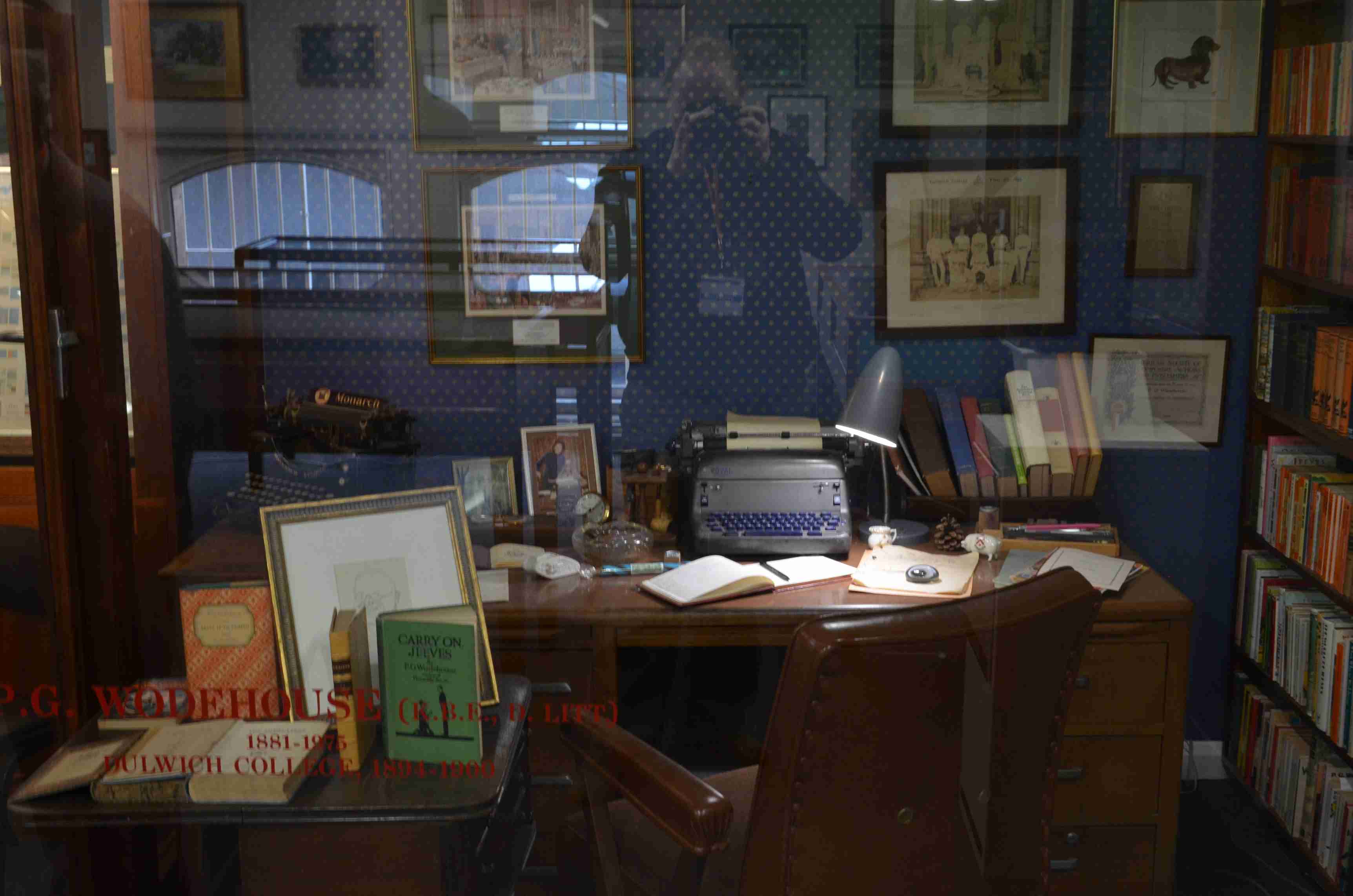
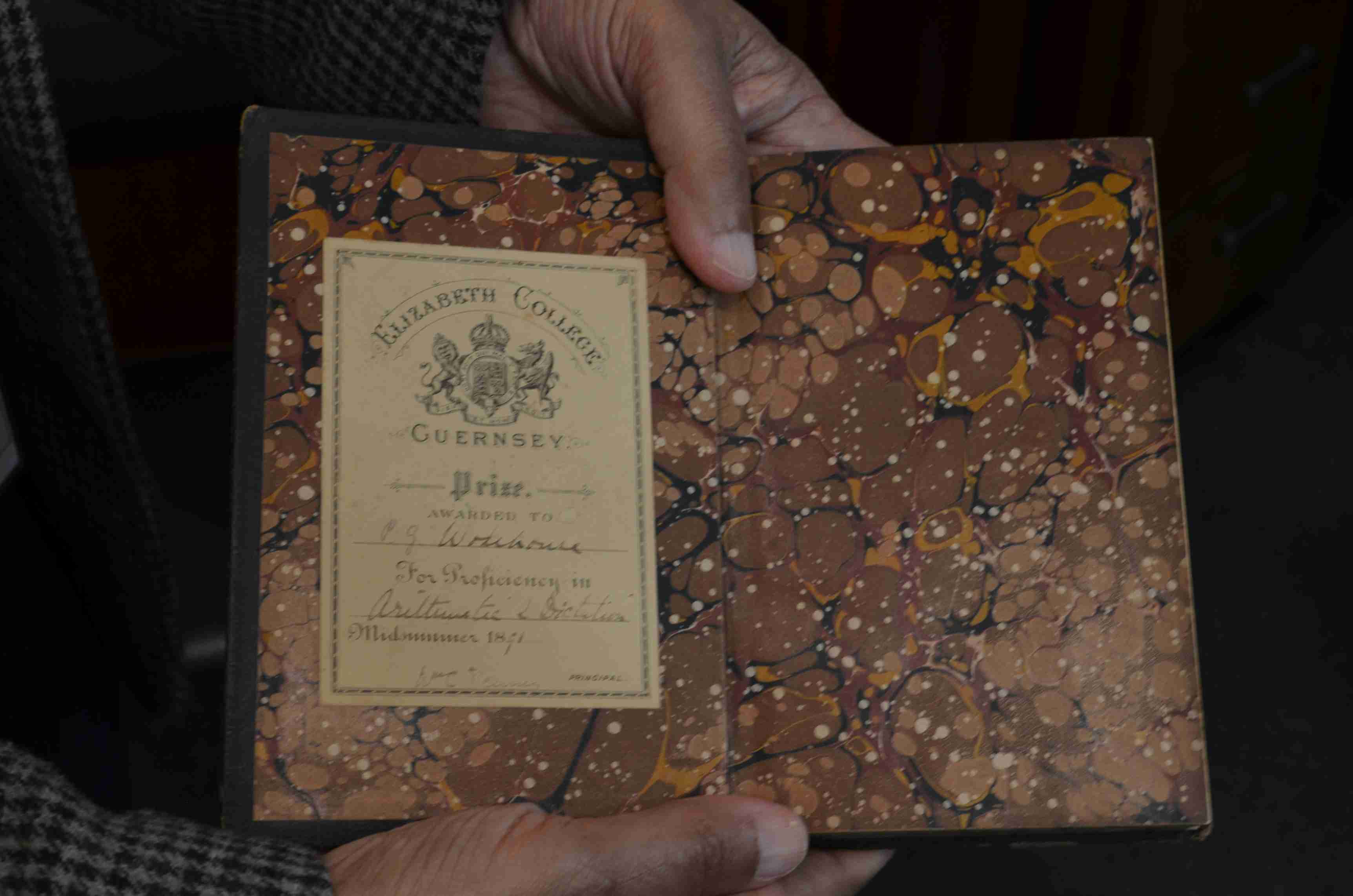
One, Dulwich College had turned out to be a treasure trove of Wodehousean memorabilia. A place where brainy coves who happen to admire the Master Wordsmith of our times could settle down to drink deep from the joyous waters of his works and his methods and dish out some scholarly research papers brimming with erudition of the first order. They could even soak in the ambience of his own study, a recreated version of the one at his home across the pond at Southampton in New York. After his death in 1975, Ethel had donated the same to his beloved Alma mater.
Two, an overwhelming feeling of gratitude pervaded my mortal frame. I was, and continue to be, amazed at the affection, care and conscientiousness with which Dulwich College has built up and maintains multi-faceted records pertaining to Plum. Besides his books and their translations or pastiches in very many languages of the world, one could peruse his academic report cards, cricket score sheets, records of singing and theatrical endeavours, duly embellished with some juicy comments from the Rev. Aubrey Upjohns of his life while he was there from 1894 till 1900.
Sample this specimen:
He has the most distorted ideas about wit and humour; he draws over his books and examination papers in the most distressing way and writes foolish rhymes in other people’s books. Notwithstanding he has a genuine interest in literature and can often talk with enthusiasm and good sense about it.
(Dulwich College report on Wodehouse, 1899)
It is well known that in addition to his sporting achievements, he was a good singer and enjoyed taking part in school concerts; his literary leanings found an outlet in editing the school magazine, The Alleynian.
It may be of interest to note that Plum’s six years at Dulwich were among the happiest of his life. According to a statement made by him:
“To me the years between 1894 and 1900 were like heaven.”
Perhaps it was this sentiment of Plum’s which rubbed off on me when I had the privilege of visiting the college, guided by Calista Lucy, the Keeper of the Archive.
The college was founded by Edward Alleyn in 1619. Since then, many of its alumni have made it proud of their achievements in different realms of human endeavour. A few other celebrities who have passed through its hallowed portals are the writers Raymond Chandler, Graham Swift and Michael Ondaatje, the banker Eddie George (Governor of the Bank of England), and Anand Panyarachun (Prime Minister of Thailand).
The buildings have obviously undergone several additions since 1900, when Plum ended his sojourn at Dulwich College. We entered through the North Cloister, a corridor which was open to the elements during Plum’s days. It was a place where he would do his Larsen exercises.
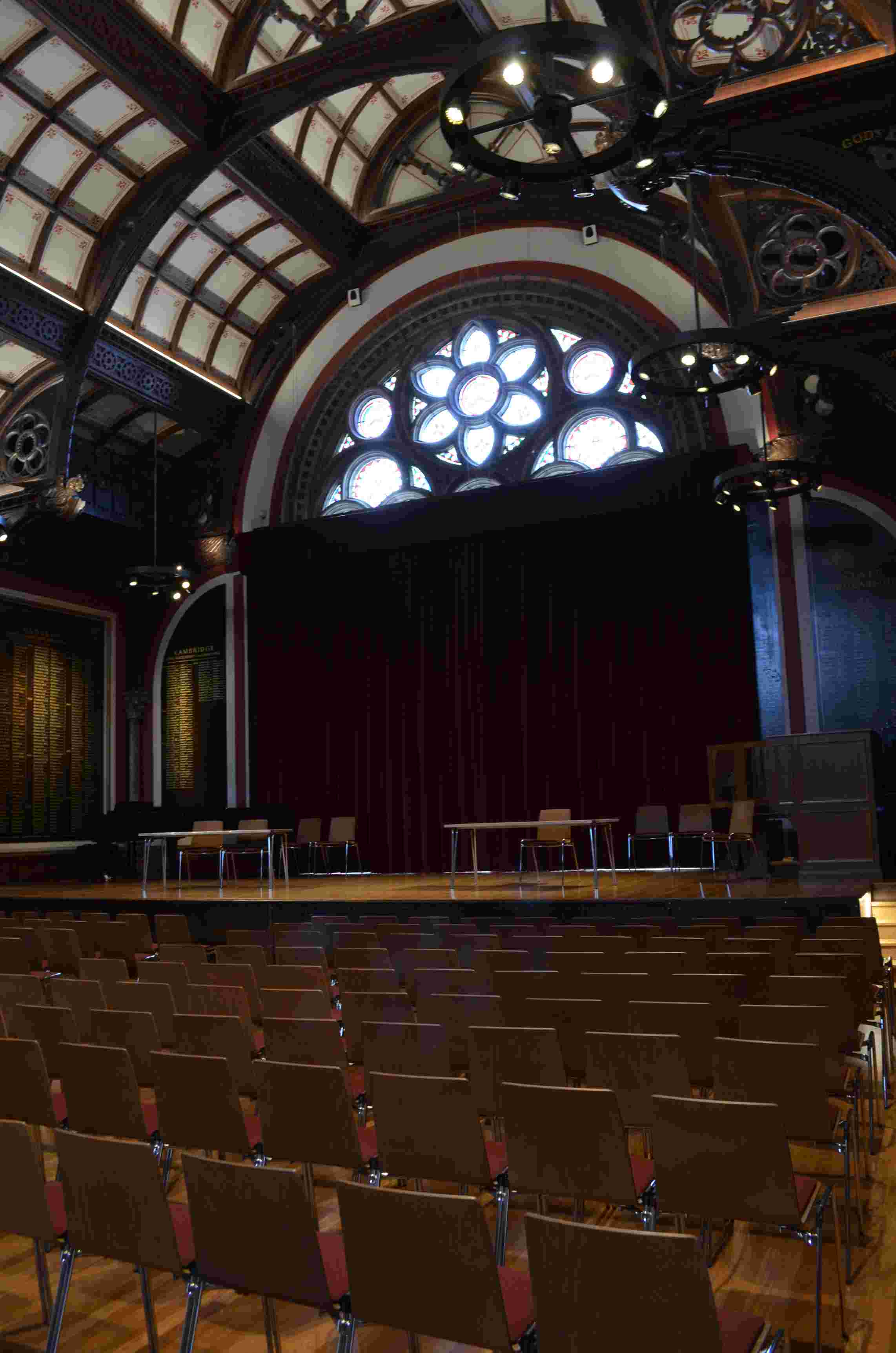
A grand staircase, adorned with portraits of various patrons of the college over time gazing benignly at us, led us to the Great Hall which is used for school assemblies and examinations. When Plum was at school, he and others would have eaten in the hall.
On the Honours Boards, one could see the name of Armine, Plum’s elder brother, who was also at the college. While the brother could subsequently gain admission to Oxford University, Plum was unable to do so owing to the financial difficulties faced by the family then.
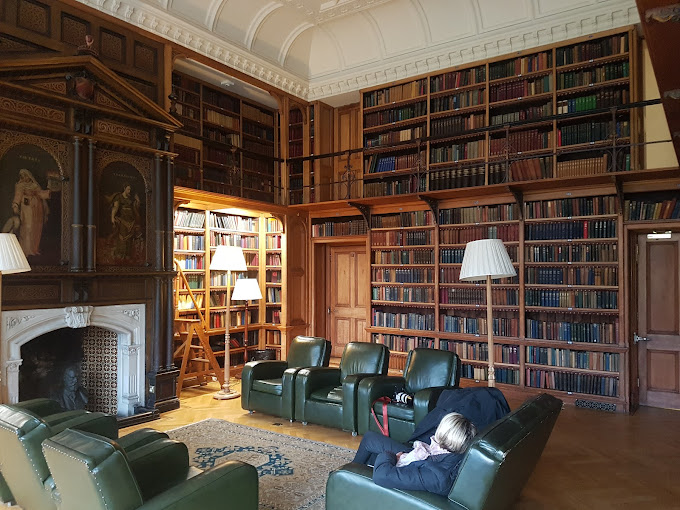
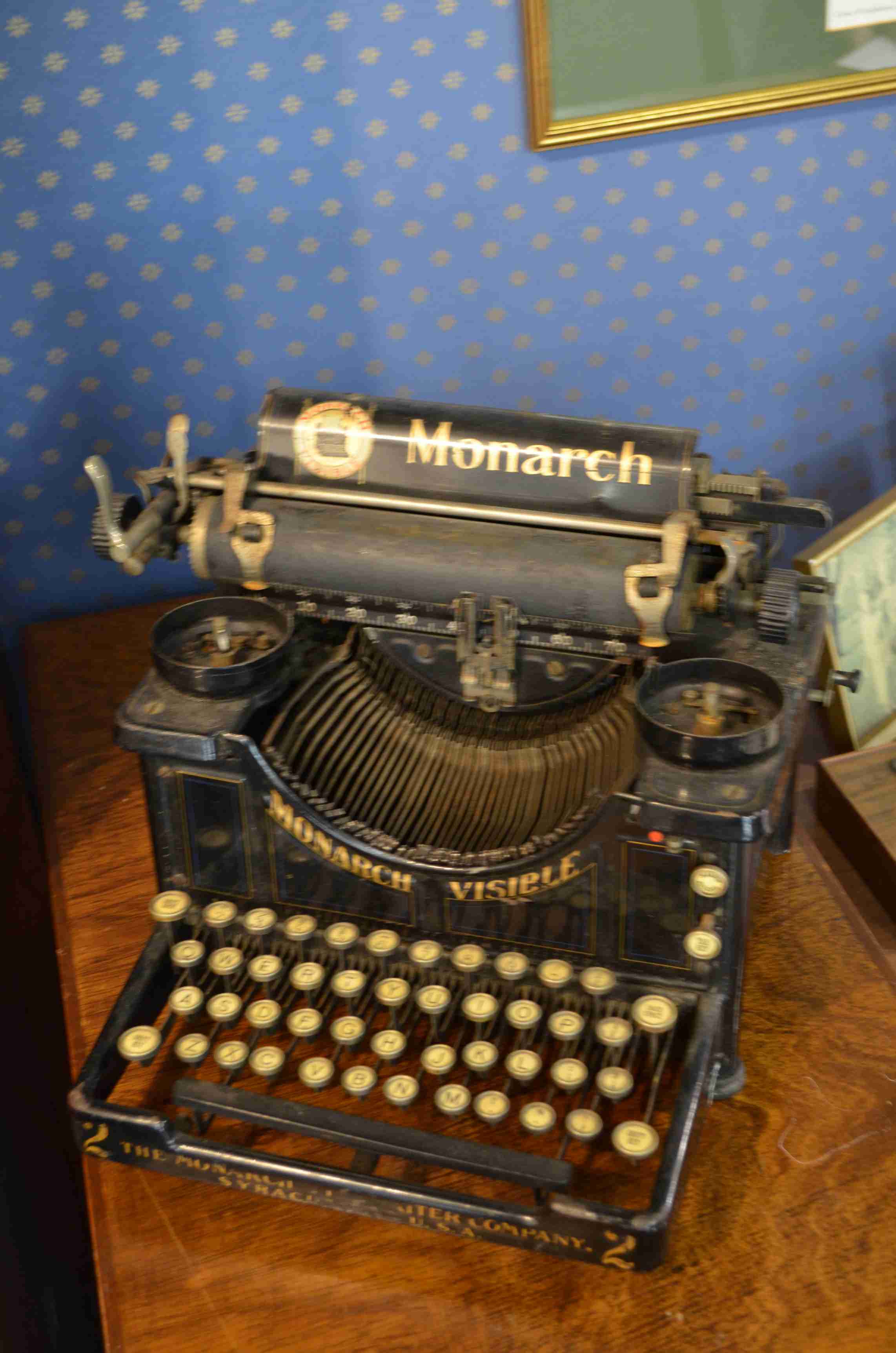
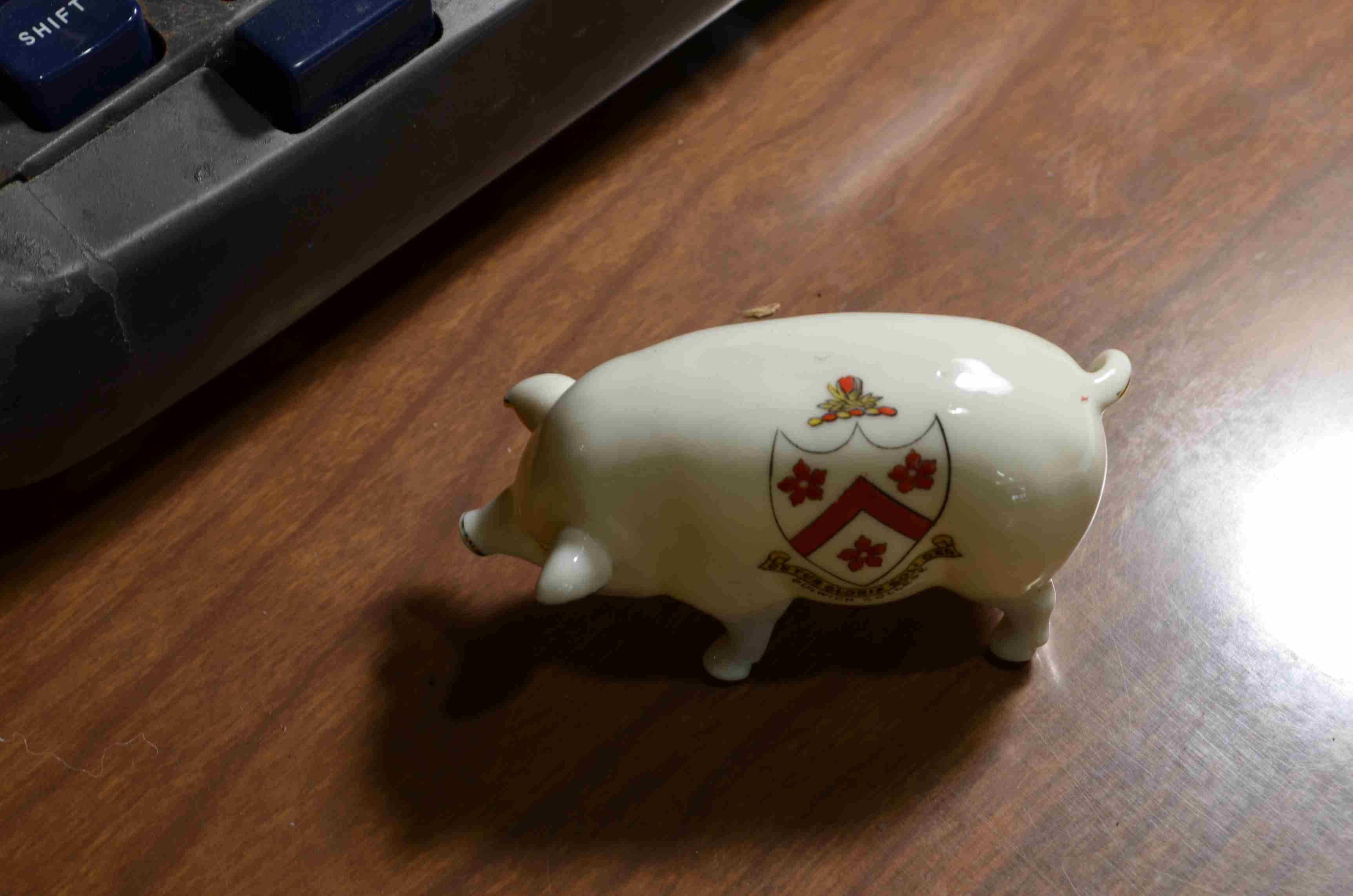
We passed by a well-stocked library of the college, named after Plum. Seeing the reconstructed study of his was a sheer delight. His working table, the chair that he used, two typewriters of his (one manual and another electric), his reading glasses, his pipes, the paperweights, a small figurine, and first editions of several of his books make the room come alive.
Calista was grace personified. She invited me to sit on Plum’s chair. Out of sheer reverence for the great man, I was hesitant, but than gave in to the temptation, merely to feel the vibrations of this genius humourist. The experience was something beyond words to describe, if you know what I mean. A signature in the Visitor’s Book was duly affixed.
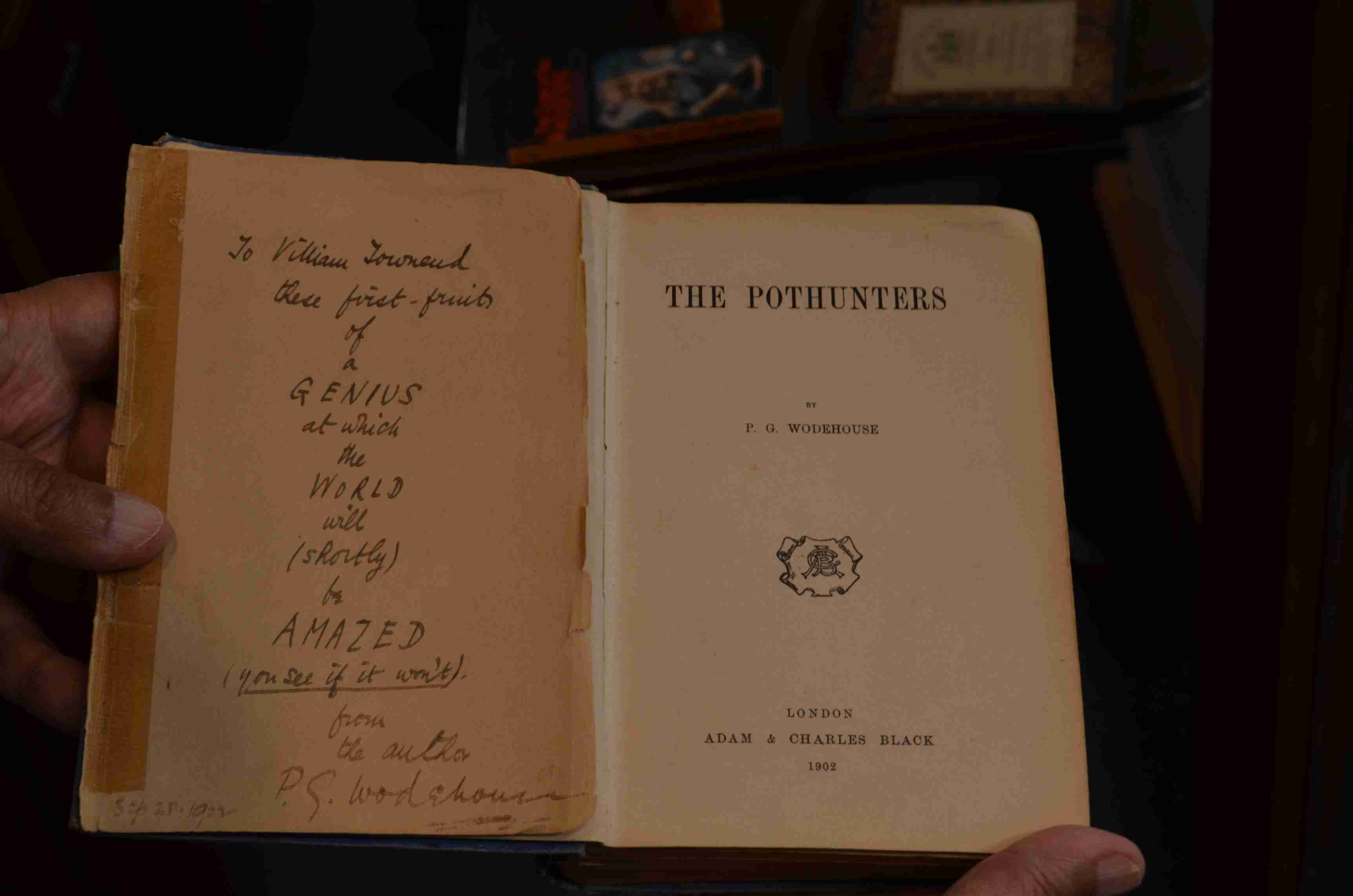
What followed was a perusal of his personal collection of books, Dulwich College report cards, cricket score sheets, and his correspondence with various other luminaries and friends, all lovingly catalogued and preserved. The icing on the cake was surely to be able to go through his comments on a manuscript of his own, mostly in red colour. Such comments as “Good,” “OK, but needs to be improved,” and “Not funny enough, rework on this,” gave a sneak peek into the kind of perfectionist he was when it came to dishing out his uproariously funny works.
Passing through a hall which had a bespectacled scholar working on a research project, we came across a room full of translations of his works in many languages and an array of books inspired by Plum’s works and published by authors of different hues, ethnicities, and nationalities in their native lingua franca.
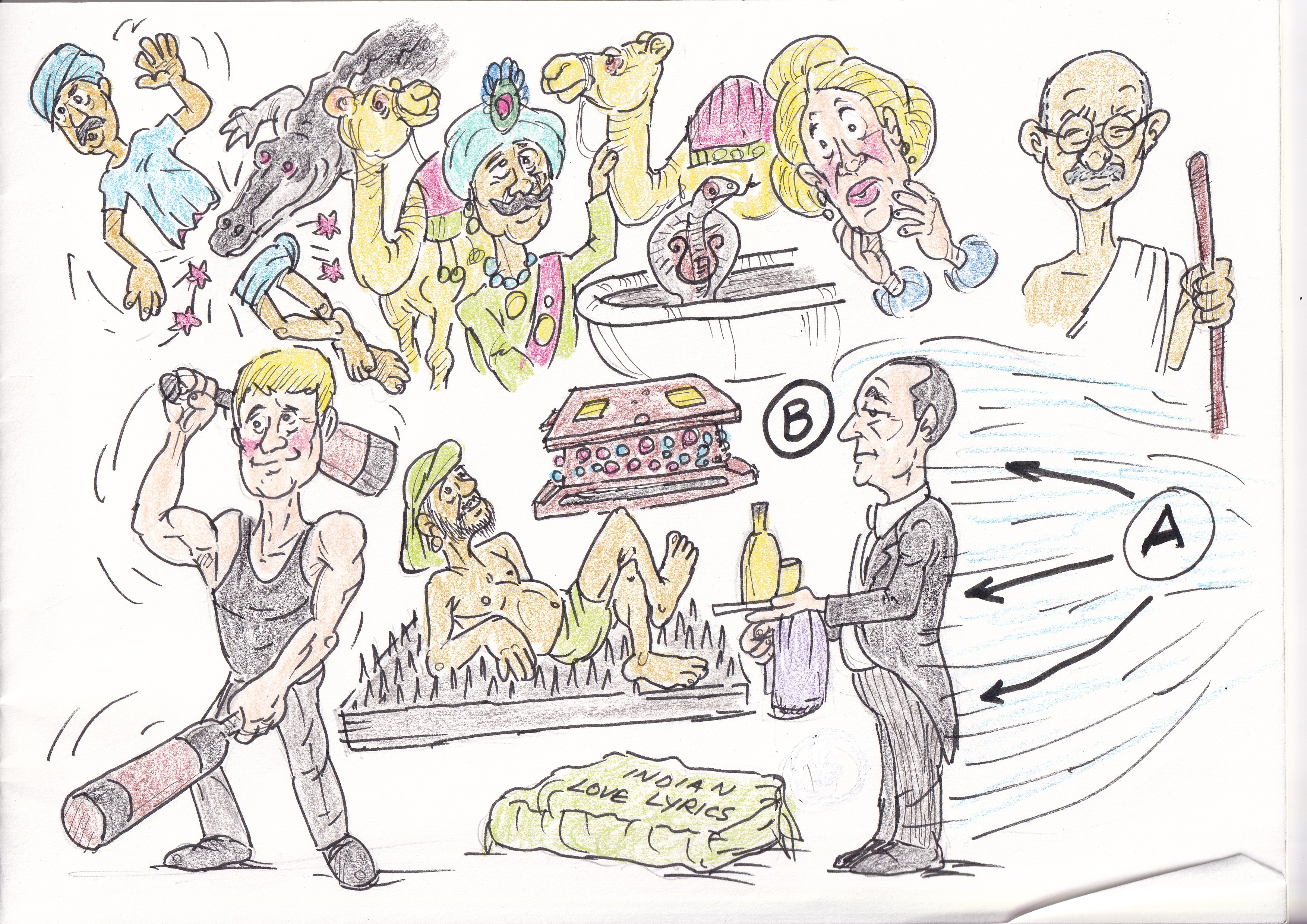
By way of a token of gratitude, I took the liberty of presenting my own compilation entitled “The Indian Curry Dished Out by Sir P. G. Wodehouse,” which is a long essay on various references to India in many of his works.
After expressing sincere gratitude to our gracious host for the time she could spare for us, I and my companion took leave of Calista and the college. If Lewis Carol had then described me as a Cheshire cat, albeit with a benevolent grin on my face, I would have taken the comment in my stride. The heart was aflutter. The world appeared to be full of joy, laughter, light, and sweetness. The everlasting value of the blissful cocoon left behind by Plum for Homo sapiens was driven home, yet again.
I also felt grateful to my Guardian Angels who had felicitated a trip to the Alma mater of P. G. Wodehouse by creating a concatenation of circumstances which had enabled my first ever trip to the United Kingdom.
If Plum and Ethel were then looking down from their cottage in heaven, I am reasonably certain that you would have noticed them both having a twinkle in their eyes. Perhaps, they might even have been waving at me!
Notes
Most of the photos here are courtesy Dominique Conterno, my host in the UK.
A few have been taken from the Dulwich College website.
Caricatures courtesy Suvarna Sanyal.
Plum at Dulwich courtesy the world wide web.
Inputs from Calista Lucy towards giving this article a better shape are gratefully acknowledged.
Whenever you pass by the desk of a colleague in office and see him staring with blank eyes at nothing in particular, you may be wrong in assuming that he is either worried about his upcoming annual appraisal or concerned about the academic performance of his kids. For all you know, like Rodin’s ‘The Thinker’, he could simply be withdrawn into himself, in a rather introspective mood, and trying to unravel life’s managerial mysteries which appear unfathomable at normal times.
One of the profound mysteries is that of facilitating innovation. History of major breakthroughs tells us of at least one factor which prompted the coveted ‘Aha!’ moment – a spot of idleness. Not the kind of idleness which is a trademark of laziness, but the dynamic type where the mind, firing at all six cylinders, suddenly decides to take a break, looks at its own self in a detached manner…
Just in case you ever feel that you have evolved into a headless chicken and have ended becoming a zombie chasing deadlines and goals with not even time to breathe, try coming over to Pondicherry.
For many of us, our lives are so much filled with stimuli, not to speak of the onerous responsibilities we carry on our slender shoulders. It is not possible for us to sit still and do nothing, much less relax, even for a few minutes. We have no time for meditation. Nor do we have time for some simple yoga exercises. We are always doing something or the other. How proud we feel in telling someone that we do not have time for this or that. Our fragile ego gets a much-needed boost. In place of being ‘human beings’, we have become ‘human doings’.
Often, relatives from distant parts of the world call up to…
We appear to be headed for two new challenges to our mental equipoise in this century – Nomophobia and Noconnphobia! The fear of being out of mobile contact, that is, No–Mobile-Phobia, is already well-recognized. The significance of the other, No–Connectivity-Phobia, is perhaps yet to dawn on most of us!
Our addiction to mobile phones and internet knows no bounds. Six years back, I was working with a company in a very senior position. A night before I was to be wheeled into an operation theatre for a cardiac surgery, I was furiously making calls to my team members to ensure that things were handled right when I was away from work for some time. My distressed daughter ended up confiscating the mobile phone, leading me to a feeling of utter loneliness and helplessness. It was as if my world had…
When someone of the calibre of Arunabha Sengupta decides to wield his pen (oops….keyboard!) and dishes out something Plummy, die-hard fans of the Master Wordsmith of our times rejoice. The sceptics make feeble attempts to punch holes in the arguments put forth. The fence-sitters suddenly realize that there is more to Plum than meets the intellectual eye.
The rest of humanity, comprising those who remain not-so-blissfully unaware of the blissful works of P G Wodehouse, continues to trudge through life, sans the succour which low-hanging fruits of eternal wisdom offer on the streets of Plumsville.



































 ashokbhatia