Feeds:
Posts
Comments

ACCESSIBILITY

True leaders of men are always accessible to their team members, 25×7. Hide in an ivory tower and your people would hide their good ideas and also Accessibilitytheir problems from you, thereby stunting your own growth.

Follow an open door policy (especially when you work with a lady secretary!) and reap rich rewards in your career.

ADVERTISING

As a CEO, if you hire a M F Hussain to create a corporate emblem for your company, would there be any point in getting a bunch of VPs and GMs to meddle with his final work? Define a target and a budget, and let the agency have a free hand.

As a trainee, join an ad agency if you love irregular working hours, midnight escapades and hob-nobbing with the hoi polloi of creative geniuses whose king (or, queen) size egos need to be managed at all times, with client’s deadlines looming large over your work horizon. Depending on your skill set, you may gravitate towards copywriting, production, media planning or client servicing. In all cases, creativity under pressure should be the motto of your life.

AGGRESSIVENESS

A Chinese proverb says: “Pity is a sentiment that befits the lion”. If you are in a line job, aggressiveness is a must. If you are in a staff function, you can possibly afford the luxury of being docile and meek and still lead a team.

AUDITORS

An auditor’s primary function is to provide an honest assessment of the financial health of the company. In other words, to keep the investors well informed. In the long run, investors’ ire can be incurred only at the company’s own risk and peril. A correct assessment of the company’s finances also helps the operating managers to take corrective steps before it is too late.

Treat an auditor like an insider, share business plans with him in advance, and reap rich dividends in the long run.

BEING UNREASONABLE

Taj Mahal was not created by a Mughal emporer who decided to be reasonable with the artisans. Great works of creativity, whether in the realm of science, fine arts or culture, did not get done by leaders in respective fields who decided to be mediocre in their approach. Nelson Mandela won over apartheid because he decided to be unreasonable and swam against the current. Of late, the Jasmine Revolution sweeping a part of our planet and the kind of social activism which we find blossoming within India, reflect social changes which could not have come about based on a doctrine of conformity and reasonableness. India can justifiably boast of business houses which have spurred the economy’s growth based on principles of fair practices in conducting their business and also a policy of pegging their business plans and targets much higher than what many would consider unreasonable in the present. The future is surely shaped by level-headed achievers who do not take “no” for an answer!

To quote George Bernard Shaw: “The reasonable man adapts himself to the world; the unreasonable man persists in trying to adapt the world to himself. Therefore, all progress depends on the unreasonable man.”

BEING AN OSTRICH

Most leaders operate on early warning systems. Those who do not foresee a problem coming up often repent at leisure.

BIG FISH IN SMALLER OUTFITS 

In a smaller outfit, one can get a closer view of the core business processes. If you have an entrepreneurial bent of mind, and love the unbridled authority, go for it.

Small enterprises are generally leaner and fitter; in fact, too bare bones for executive comfort. The idea is to hire a single guy when three are required. As a result, the exposure one gets is pretty rich and multi-hued. In comparison, larger outfits tend to accumulate more flab and less muscle.

Be aware that in smaller enterprises, authority flows from a single person (or his/her kitchen cabinet). Thus, the level of authority required at any point in time could vary depending upon the whims and fancies of the top dog (or bitch, if you like). In larger outfits, one could draw authority from multiple sources, and thereby enjoy better survival prospects!

BOSS – MEET HIM HALFWAY THROUGH

Amongst other things, you also get paid for keeping your boss’s BP under check. Pity the poor over-stressed guy and update himBoss - Meet Him Halfway Through before he thinks of any project assigned to you. In other words, meet him half way through.

If it is getting delayed, or worse, not getting done at all, make him an accomplice to murder by keeping him informed in advance. In case you are likely to meet your target, present him with a draft report/outcome before the deadline. In case the target itself gets upgraded or modified, it would give you a clear advantage.

BRAND BUILDING

Creating and maintaining a good corporate culture, giving employees a sense of ownership, is the first building block. Long term investment in R&D, quality and innovation is another sine qua non.

Trusting and empowering employees helps. So does having a numbers target for all departments, leading to easier evaluation and a transparent reward system.

BURN OUTS

A mental state attained by those who believe they are working very hard, thereby catapulting them to the category of those who are hardly working. Three clear signs of attaining this state are exhaustion, fatalism (leading to cynicism) and inefficacy. Causes could be an information overload, unrealistic targets and perpetual “busyness”.

The antacid cures for burn outs could be delegation, focusing on important rather than urgent and counseling.

BUSINESS SCHOOLS

The academic exposure is great, and leads one to visualize the impact of one’s decision across varied functions. If one believes that academic brilliance translates into business success, one is miles off the mark. The former is directly proportional to one’s IQ and the latter to one’s EQ levels.

Formally educated managers often suffer from the Analysis Paralysis Syndrome. A smaller company hiring more than one MBA is quite likely to go bankrupt. A larger behemoth can surely afford the luxury, and cannot do without quite a handful of them.

When it comes to creativity and innovation, they could drag you down. HR departments need to remember that Newton and Einstein never went to a business school. Had they done so, we might have never heard of them.

c1 (25)

When the mind is at rest,

Birds are chirping in the thicket abreast,

A gentle breeze is caressing the mortal frame,

Soft sunshine is making one’s surroundings aflame,

The gentle murmur of the sea nearby

Reaches one’s ears a trifle hesitatingly,

A flask of steaming hot tea is by one’s side,

One’s favourite newspaper is beside,

With one’s better half sitting quietly next,

Inner tranquility prevails whatever the pretext,

One knows that God is truly in heaven,

Caring for you and yours!


When one drives to work in quietitude and leisure,

Hearing some soothing music, deriving pleasure,

Landing up on one’s office desk with a few minutes to spare,

Working with the steadfastness of a tortoise

And the agility of a hare,  

Sharing a laugh with someone here,

Conveying discomfort to the other there,

Ensuring not getting the inner core ruffled up

Just because of some dude being curt or rude

Or being downright insensitive and unreasonable,

And leaving for home without any emotional baggage,

One knows that God is truly in heaven,

And caring for you and yours!


Nincompoops rushing into action

At the press of a button,

Tending to pre-judge issues and people,

Feeling stressed up and compelled to react instantly;

As trigger-happy as one may tend to be,

Mixing up criticality with urgency,

Rushing into speaking without thinking,

Missing the woods for the trees,

Often getting into trouble,

And hastily concluding that  

God does not care!


Procrastination is a virtue,

Where one saves energy – it is true,

Only to spend it more efficiently later,

Sleeping over a problem and shutting an overnight door

Till the time the answer comes from one’s divine core,

Apparently wasting time to brood over a problem,

When a solution automatically pops up in one’s conscious mind,

Buying time in one’s quest for perfection,

Lot of merit in snoozing amidst life’s mundane humdrum,

Oh, the virtues of being a lazy bum!!

(Related Posts:

https://ashokbhatia.wordpress.com/2015/03/22/of-procrastination-physics-and-statistics

https://ashokbhatia.wordpress.com/2013/01/23/of-idleness-innovation-and-the-peter-principle)

“Daadoo…….!”, comes an excited yell from across the house. It is early morning yet. I have just picked up my newspaper and am savoring my first cup of tea – a tissue restorative with which I prefer to start my day. With nimble feet, my 18 month old grand-daughter runs up to me. She catches hold of both my hands and, demonstrating athletic skills which could put a professional to shame, climbs up my not too sturdy a frame and promptly maneuvers herself on my lap. The English daily attracts her attention, and she joins me in an impatient browsing of its contents. “Vroom… vroom!”, she says, putting her dainty finger on one of the car advertisements. This is the start of a typical day in the life of our household.

The love and affection one feels for one’s grand-children is not easily captured in words. One never realized when and how one’s own kids grew up! Tied up then with responsibilities, chasing career ambitions, juggling the diverse roles one has to play in the society when in that age group, seldom did one have the luxury of spending quality time with one’s kids. But with grand-children, the scenario is quite different. Responsibilities have taken a back seat, and there is ample quality time available to be spent with the little angels.

Their simplicity and innocence is remarkable. Their million dollar smiles are priceless. The pranks that they play keep one amused. The clarity in their sharp eyes is such that one can peep into their souls. No prejudices and no biases – theirs is a pure soul. The soul is blemish free, yet to gather fresh impressions of a new life time.

They live in a world of their own. To them, life is possibly a garden, of which the lawns are covered with the soft morning dew. The sky is a brighter blue and the grass of a greener hue. Dawns and dusks are more fragrant. The days are carefree. See them doing a pantomime when playing a nursery rhyme like “Twinkle, twinkle, little star……” and you would see what I mean! Put them in a bath tub with a couple of toy ducks, and see how much they enjoy themselves!

The speed at which they learn from us and from the environment around them is simply amazing. Quite often, one realizes that their acts are merely a mirror image of what one does in their presence. Wordsworth, while expressing his love for nature, said that “The Child is father of the Man”. He was surely not off the mark. Grandchildren teach us how to experience unalloyed joy and love! They keep the family united and spread love amongst all the members.

The way we handle situations, our little angels quickly learn the same. When we feed the poor, they get a message. When our children show empathy and concern towards our welfare, their kids end up imbibing the same spirit towards their parents! When compared to a unit family system, the joint family system provides a healthier environment for the next generation to grow. The joint family system ends up creating an ecosystem which enables continuity in our cultural values and social beliefs. The same get passed on to subsequent generations.

On the flip side, children surely know how to wrap you around their tiny little fingers and get the result that they want – be it nourishment, entertainment or a simple toy which would lit up their face with an inner joy. If “management” is about getting things done, children are effective managers. Ask any marketing wizard, and he/she would vouch for the efficacy with which kids today determine the contours of a company’s advertising budget.

Their tiny egos surface the moment they feel neglected. They need undivided attention. Their demands brook no delay in execution. Tantrums come easy to them. Tears are one of the several weapons in their arsenal which they use with deadly precision to get what they want.

When one lives with one’s grand-children, one gets a unique opportunity to rewind one’s life back to the days of childhood. Each moment reminds one of one’s own childhood. Life itself is nothing short of a miracle; to see it reinventing itself, making a fresh start, and getting prepared for a new future is a blessing indeed.

“Allo, allo, allo…….ayye jutoo malo…”, she says. I find that my grand-daughter has started prattling on my cell phone. She has a very serious and intent look on her face. In her universe, a more serious telephonic conversation perhaps never took place! Soon, she hands over the phone to me, expecting me to continue talking to an imaginary person at the other end. I do her bidding, since I know she would expect me to chat endlessly for a few minutes. Meanwhile, her attention would waver and shift to some other object or activity. I can then possibly get back to the steaming cup of my morning restorative!


Divine Grace is always there to protect us. Unaware of this fact, we continue with our mundane lives. Then, out of the blue, something happens, and we wake up to realize the presence of Divine Grace in our lives!

During August 2002, an unprecedented occurrence in my life strengthened my conviction that Divine Grace touches us at all times. The incident left a deep impression on my psyche.

Have you ever been kidnapped and held in captivity any time? Have you experienced the challenge of utter helplessness and extreme isolation that a situation like this throws at you? The realization that you are absolutely on your own, with nobody to brainstorm your ideas with? To top it all, a raw fear gnawing at your innards, that I and my son may not live to see the next day? It was as if Death came looking for us and then decided to give us a reprieve for the time being.

I was then working with a small company in a very senior position. Tired of living cooped up in flats in Delhi all our lives, and fed up with the hustle bustle of a city life, we had decided to build a small nest of our own on the outskirts of Puducherry, just off the East Coast Road to Chennai. We had moved into this peaceful and thinly populated area during November 2001.

On that fateful day, after a rather exhausting and long day at office, I was returning home at about 10 PM, driving a company allotted small car. Wife was not at home, and son, then an engineering student in Chennai, was expected to come in for the weekend during the course of the night.

Just a few meters before our house, the car headlights picked up a group of four persons, wearing French toupees and carrying batons. They signaled me to stop the car. Imagining them to be policemen out to make some enquiry, I obliged. Before I could realize what was happening, I was blindfolded and gagged. My cell phone was whisked away and the car was forcibly driven to an isolated spot which lay somewhere between the East Coast Road and the highway connecting Puducherry to Tindivanam. Company cash of Rs. 15,000 in my possession that time was taken off, and so was some minor amount in my pocket  at the time. I could not believe this was happening to me!

The story eventually unfolded like this. My kidnappers’ gang leader was lodged in the Cuddalore jail on some murder charges. To be able to meet the High Court lawyers’ fees, a sum of Rs. four lacs was desperately needed. Somehow, the gang thought that I was a very rich guy, owning one of the multi-brand stores in town, and for them to find the amount lying around in my house would be a pretty quick and simple affair.

Once we settled down in a secluded area, a discussion could take place between the gang and I. Despite my poor understanding of the Tamil language, I could understand their problem. It took me some time to explain to my captors that I was a mere salaried employee, that  I had just finished constructing a house based on a bank loan, and even an amount of Rs. four thousand would not be available in the house! Amidst threats of being killed, dismembered or being embroiled in false murder cases, I gave them the house keys and told them to check this out for themselves.

They took up my offer and went off to search the house, leaving me in the custody of one of them. The sense of isolation was intense. Beneath a clear star lit sky, I sat in meditation, invoking protection from all the superior powers that I had faith in. In the middle of the night, when the gang was at the house, my son walked in. He was promptly bundled up and brought to the very spot where I was being held captive.

Protracted negotiations took place. On gun point, I was forced to affix my signatures on several blank sheets – plain as well as non-judicial stamp papers. I could somehow convince the gang that I shall approach my bank manager the next day and try to raise a loan of Rs. one lac for them. Obviously, I was not supposed to get the police involved. The sim card of my cell was returned to me, so the gang could keep in touch with me.

Around dawn time, we were driven to the Tindivanam highway, blindfolded. The gang leader wanted to take the car. When I explained to him that the car belonged to the company I was working for, and if the car went missing, the company would surely report the matter to the police, he relented. We were released without any physical harm, except for a facial injury my son suffered in an initial scuffle with them.

We returned home in the early hours, to find that the whole place had been ransacked. A camera, a suitcase and couple of other items were missing. However, my wife’s jewelry kept in the house had not been traced by the gang and was very much in place.

It took me a whole day to pick up the courage to meet a senior police official informally. He identified the gang leader pretty quickly, and handed over the case to the jurisdictional police officer. In about a month’s time, while I went off to the North to seek mental peace and solace, the police rounded up the culprits and took effective action. Some of the valuables taken off from the house were promptly recovered.

After the incident, support poured in from all sides. My family formed the core of the support group. Friends trooped in to console, guide and direct me against relentless follow-up by the gang leader to either quickly pay up or face the consequences. Unsolicited help came to us from diverse and unknown quarters, raising the whole family’s faith in the Divine’s way of working in our lives.

Till almost a year after the incident, I was paranoid. I lived in guest houses and with family friends in the town area. It was three months before I could return to my own house. I continued to have nightmares. Gradually, a notion developed that an incident of this kind would not recur, as if a protective ring had been thrown around the house.

I confess that the psychological scar of this incident lasted a very long time. Six years down the road, my son got married and his reception took place very near our own house. That night, after the last guest had departed, I felt that all the negativities in the environment had eventually got replaced by a benign and positive ambience. Later, at a healing workshop, I was finally able to forgive my tormentors and look back at the experience in a positive manner.

There were invaluable lessons learnt from the incident. On the physical plane, we became more conscious of our security needs and checks. Thanks to the incident, we remain vigilant till this day.  We came to appreciate the positive role that our law enforcing agencies play in letting ordinary citizens like us enjoy the peace in our lives. We learnt never to lose our calm in the face of adversity, howsoever acute it may appear at the time. By negotiating with the gang, we could secure our release from captivity.

On the spiritual plane, we realized that it is important to offer gratitude to the Divine even when things appear to be going smoothly in life. Under normal circumstances, we look up to the Divine only to seek protection when we hit a rough air pocket in our mortal flight. Moreover, just like Arjuna who witnessed the demonic side of the Ultimate Reality in Lord Krishna’s Vishwa Roopa on the battle field of Mahabharata, we could understand that there are dark forces in the environment. Sure enough, God has a purpose in their presence in the universe.

In retrospect, who guided my thoughts and actions throughout that night? The whole incident somehow unfolded as if a greater force acted like a hidden hand, driving all thoughts and actions, thereby ensuring a pre-destined and positive outcome. The incident reinforced our belief in the divine protection that we all enjoy throughout our lives, whether in good times or in bad times. In the realm of our consciousness, the incident was a true manifestation of Divine Grace. It revealed to us some of the mysterious ways in which it works in our lives!

http://rishicultureyoga.ning.com/page/rishiculture-yoga-magazine-june-2013


Standing by the side of my car, I was feeling quite frustrated. Here I was, rushing to a music concert in Chennai, with family in tow. We had started from Pondicherry well within time. The plan was to cruise through Chennai’s traffic infested roads before the evening rush hour kicked in, have a snack or two at our favorite joint and then troop in to the hall and settle down to an evening of soulful ghazals, to be rendered by an artiste of national repute. But our car was not possibly enthused by the idea. It had revolted in the middle of the highway, with no help in sight. For close to half an hour, we kept signaling to the vehicles whizzing past us to render some help, but to no avail.
Eventually, a skinny guy on a mud splattered moped stopped and asked us what the trouble was. He gave my son a lift to a workshop about three kilometers away. He then came back, with a mechanic in tow, on his shining bike, complete with a tool box and accessories. Within an hour, after a defective part had been replaced, we were off to our rendezvous with fine arts, our hearts full of gratitude to the Good Samaritan. We missed the snacks but arrived in time for the performance.
In today’s internet savvy world, life has become fast paced. There is a virtual disconnect between the real world and the virtual world. Fortunately, Bharat still lives on! Its age old values of athithi devo bhava still persist!!
I fondly recollect the earlier days, when a Bajaj Priya scooter was always there to serve the family’s needs. We were then located at Chandigarh. Often, wife and I would undertake a short trip to some nearby place, like Pinjore, Nahan, Kasauli, Shimla, Ludhinana, Jalandhar and Amritsar etc. It was a pleasure to feel the wind in our faces. The lush green farms rushing past the road were always in a welcoming mode. During winters, farms growing mustard turned a bright yellow and the rhythmic sound of a tube-well operating in the fields got mingled with that of the birds happily chirping along.
If we had to stay somewhere for the night, there was no issue at all. All we had to do was to enter a village at dusk time. We would invariably be welcomed with open arms into homes of perfect strangers. The hosts would not only feed us well but also insist upon our staying the night. We could only leave the next morning, and that too only after a hearty breakfast of yummy paronthas and a big glass of lassi to boot. We always carried back heart -warming tales of hospitality.
On one such trip to Nahan, our scooter had a puncture in the middle of nowhere. We realized that even the stepney did not have enough air, and we were truly grounded in our isolated glory. We locked the scooter, left it on the road side, and walked up to the nearest village, a small sleepy hamlet of about 20 odd families. We were directed to the house of the Sarpanch, the village headman, who alone had a scooter in that area. It turned out that he also owned a Bajaj Priya scooter! After offering us a warm glass of fresh cow’s milk, the Sarpanch insisted that we take his stepney and continue our journey. He advised us to give our stepney for repair to the sole mechanic in the area in a small town about 20 kms down the road, in the direction which we were taking. On our way back from Nahan, we could pick up our repaired stepney, and return the borrowed one to the Sarpanch on our way back to Chandigarh!
We were astounded to see the faith and trust the Sarpanch reposed in us. On his insistence, we took his advice and proceeded to Nahan. We had a nice quiet time there, soaking in the pristine beauty of nature sitting by the side of the lake in the centre of the town. In the evening, when we came back to return the borrowed stepney, we were treated with another glass of milk before being allowed to leave. The Sarpanch himself was not at home at the time, so we conveyed our profuse thanks to the family, and left with deep emotions tugging at our heart strings.
Similarly, in villages of Tamil Nadu, Karnataka and Kerala, we have had very pleasant experiences. Whatever food the family was having, we were invariably offered a share of it. Despite a language barrier, communication was never a problem. We were offered all assistance to happily continue our journey through the countryside.
We from the city believe ourselves to be cultured and educated. But the learning we have had from those living in our villages has taught us many values in life. On the physical plane of our existence, those living in villages are our food providers. On the psychological plane, their ability to welcome and trust perfect strangers to their homes and hearth, their eagerness to help strangers in distress and the sheer warmth of their hospitality is noteworthy and something to emulate.
Life is relatively simpler in the villages, and one lives in the lap of nature. May be, that is how they cultivate better values to live life by. But it would not be wrong to say that our age old traditional values are still being preserved in our villages. These are what “India” can re-learn from “Bharat”!

I was a little boy way back in time, living with my uncles at my native place in UP. On a frosty winter morning, I had come back home crying from an aborted bicycle learning mission. I had lost balance and hurt myself in the knee. With the biting cold, it was hurting even more. Even though my injuries were promptly attended to, I was dumbfounded to note that one of my uncles, rather than being sympathetic to my woes, was openly critical and cynical. I took it bad and sulked through the day. When he returned home in the evening, after work, I politely asked him why he was being so tough on me. He gave me the example of a rubber ball and explained that the harder one threw it to the ground, the higher it bounced back! Likewise, he explained, he was merely demanding more out of me! I gradually understood that he was being unreasonable with me only out of concern for my progress!
Divine has programmed us, the home sapiens, such that we enjoy a great deal of elasticity in our physical, mental and spiritual beings. Most of the times, we operate at a fraction of our own innate capacity. At the level of the physical body, important organs like brains and lungs are seldom used to the full. Our mental faculties are stupendous, but we chug along life with our mundane chores and concerns. As to our spiritual awareness, we realize that religion divides whereas spirituality unites humanity, but we continue to perform rituals and ceremonies which we do not always understand or identify with.
Our concern for conforming to standards set by others in our personal universe – parents, family members, friends, teachers, bosses, peers and subordinates – far outweighs a rational analysis of our own strengths and weaknesses. Thus, most of the times, we do not live up to our own innate potential. Unless we are challenged by an external stimulus, we make a virtue out of underperformance. In the process, we also cultivate another bad habit – that of blaming our external circumstances and others for our problems. To put it simply, we refuse to take responsibility for our own lives! We end up abdicating this very vital aspect of our life to those who comprise our personal universe. We do not synchronize our inner selves with our outer selves and create an inner disharmony. The result is that we become victims of psychosomatic illnesses. It is no surprise that this leads to untold misery and avoidable unhappiness. To take the argument a little further, most of us have no clue as to who we really are!
Our quest for our true identity begins the day we decide to take control of our own lives. When a superior rebukes us, or when we have a disagreement with our spouse, we feel miserable and end up blaming either the person or the circumstances. If the Divine is present within all of us, how can our mood get spoilt by an external occurrence? If we were already connected to our inner being and our intuitive faculties, may be the unpleasant encounter could have been avoided! We do not realize that we have the right to make a conscious choice of bringing about a change within, thereby bringing about a change in our outlook and our perception of external circumstances. Even if some harm is done, not all is lost. May be, we could approach the superior a little later and explain to him where we think we went wrong and what steps we propose to take to avoid a recurrence of the perceived default in future. Likewise, our spouse could also be approached a little later, with a loving and rational response.
By standing up to get counted and by refusing to bow down to popular pressure, we reveal the uniqueness and the core beliefs of our personality. In the process, we may appear to be socially suffering in the short run. However, in the long run, we earn the respect of those around us. We even end up getting a horde of followers!
What is it that holds us back from living life to our full potential? Most likely, it is our urge to be “reasonable” about things around us! We rationalize failures, whether ours or others. We readily accept and give excuses for a fouled up assignment. We have a ready list of reasons as to why we get late for an appointment. In other words, we do not strive for perfection. We do not demand it – neither from others nor from ourselves! When we see garbage strewn on the road, we blame the municipal guys and move on. When someone drives in the wrong lane, we curse him but allow him to pass by nevertheless. When a clerk in a government department keeps asking us to come back repeatedly, we devise a short cut by appeasing him somehow and getting our job done.
If we introspect further, we find that past conditioning is often the main culprit. Our own lack of self-worth or self-confidence also does us in. Our need to conform gets worse with a deepening sense of insecurity that we sometimes carry within ourselves. Our ego is another serious block to such internal progress. Our pride holds us back from acknowledging a mistake publically.
The challenge is to begin this journey of internal transformation. Depending on individual characteristics and sensibilities, regular meditation could surely help. A simple technique is that of reviewing the day’s incidents and our responses to them before going to bed. Eventually, we can hope to find an individual middle path, wherein we demand excellence from ourselves and also from those around us in an amicable and positive manner. The best contribution we can perhaps make to our team member’s internal progress is by facilitating and enabling them to achieve their goals.
Taj Mahal was not created by a mughal king who decided to be reasonable with the artisans. Great works of creativity, whether in the realm of science, fine arts or culture, did not get done by leaders in respective fields who decided to be mediocre in their approach. Nelson Mandela won over apartheid because he decided to be unreasonable and swam against the current. Of late, the Jasmine Revolution sweeping a part of our planet and the kind of social activism which we find blossoming within India, reflect social changes which could not have come about based on a doctrine of conformity and reasonableness. India can justifiably boast of business houses which have spurred the economy’s growth based on principles of fair practices in conducting their business and also a policy of pegging their business plans and targets much higher than what many would consider unreasonable in the present. The future is surely shaped by level-headed achievers who do not take “no” for an answer!

To quote George Bernard Shaw: “The reasonable man adapts himself to the world; the unreasonable man persists in trying to adapt the world to himself. Therefore, all progress depends on the unreasonable man.”

“Any serious meeting in the office today – looking very tense?” asked my wife while handing over the daily nourishment to me in a lunch box. “No”, I replied diffidently, slipping into the driver’s seat of my newly acquired hatchback. “It is the 90-minute drive to the office that is bugging me!”

My mind went back to the days when one could enjoy a peaceful cruise on the roads. Old world chivalry, basic decency and courtesy towards co-travelers were still alive those days. However, despite radical improvements in infrastructure of the metro I live in, driving has now become quite a nightmare. These days, it requires a unique combination of myriad skills and attitudes to navigate one’s way through the crowded roads. One’s ego has to be kept in suspended animation. Dexterity, flexibility, empathy, receptivity and humility have to be counter-balanced with aggressiveness and selective apathy. While on the road, one has to expect the unexpected. A penchant for predicting the behavior of others on the road has become a pre-requisite. Moreover, it has to be backed by a deep faith in the Divine without whose blessings one could not make it hassle-free to one’s destination!

It was with immense faith in the heart and a silent prayer on my lips that I drove out of the compound of the complex we lived in. Inside, my heart was all a-twitter, not knowing what was in store for me on the roads on this fateful day! I felt more like an Arjuna entering the battlefield of Kurukshetra, sans – of course – a benevolent guide like Krishna! As I summoned my courage and eased my car into the morning rush on the main road, a cacophony of sounds greeted me.

“Zoom…” came a sound and I was startled to find that a motorcycle rider had decided to overtake me in a hurry from the left hand side. At the very same time, I found another spirited rider overtaking me from the right hand side as well! I maneuvered the car in such a way as to not to harm either of them. Both, of course, sped off, with their truck-like horns blaring at full volume.

Finding a red traffic light ahead, I stopped. After two more changes from red to green, the car fellow behind me started tooting his horn impatiently. The horn became even more strident when the LED counter showed 15 seconds yet to go for the signal to turn green. I could empathize with him, but surely he could see that there was no way I could have helped him to speed up his journey? Unless, of course, our cars had wings!

Just as the traffic light turned green, a bunch of school kids decided to cross the road, leaving us waiting for an opportunity to resume our journey. Mean while, a cycle fellow scraped through the right side of my car, giving the car a nice bath of sambhar and rasam carried in a protruding lunch box. His wife would surely be unhappy to hear of this, I thought. While I was pitying him, he passed me by, looking at me with piercing eyes, daggers drawn, blaming me for all his travails!

After persevering with my journey at a snail’s pace for some more time, an auto rickshaw overflowing with students scraped violently through the left side of the car. Faced with the ferocity of the traffic coming from the other side, I had no room to shift the car to the right side.  In the process, I denied him the freedom to hurry off in an atmosphere of peaceful co-existence. The result was a big dent on both the left side doors. By the time I rolled down my glass window to lodge an ineffective protest, he yelled, hurled some invectives at me and sped off on his errand.

On one of the arterial roads, the audacity with which the bus driver in front of me kept swerving his vehicle from left to right left me quite befuddled. Surely, he aspired to drive a compact car instead! Unable to avoid an open manhole on the road, I could somehow step on the accelerator, thereby propelling the car across the abyss.

Every time I drive, I find a true manifestation of democracy on our roads. Other than the free-for-all that best espouses the cause of freedom of expression, changing lanes is deemed to be a fundamental right. To find either a cow or a buffalo in the center of a busy road, chewing their dose of nourishment with a soulful expression on their meditative countenance, is quite the norm. Pedestrians shooting across a busy road with an unwavering faith that God will take care of their safety is humbling, to say the least.

One of the most amazing transformations that I have noticed is when we sit behind a steering wheel. We believe we are invincible and a cut above the rest. We treat ourselves to illusions of grandeur by bestowing upon ourselves the right to be the first amongst equals, thereby jostling for space, changing lanes at free will, turning without proper signaling and generally behaving as if we are God’s gift to mankind.

We are obliged to show due respect to the buses and trucks pouncing upon us menacingly. We are also expected to be deferential in our treatment of those who prefer to walk across the road carelessly, as also of those on bicycles who show a sudden inclination to turn either way without any signal whatsoever. To those who drive with full headlights on even during day time, we had better show our goodness and concede space for them to pass us by. Even after following the protocol in a sincere manner, there are no guarantees that one’s vehicle would remain unharmed. Well, this is what Krishna taught us – to do our duty and not to get attached to the fruits of our action!

The Mother of Shri Aurobindo Ashram has listed the following twelve qualities which a spiritual aspirant should possess: Sincerity, Humility, Gratitude, Perseverance, Aspiration, Receptivity, Progress, Courage, Goodness, Generosity, Equality and Peace. One can readily see that almost all of these qualities come in handy when driving on our roads. This is what prompts me to conclude that regular driving on Indian roads leads one to faster spiritual growth in life!

Coming back to the day under reference, by the time I drove into the car park at the office, I was sweating and feeling drained of all energy. With a heavy heart, I inspected the damage the car had suffered. I felt grateful that it had helped me to survive another day of the war on the roads. As I got into the elevator looking forward to savoring the morning cup of tea in the office, I was wondering how that mighty warrior Arjuna would have fared in this war!

The other day, I was surprised to run into a friend of mine. He seemed to have suddenly advanced in age. With drooping shoulders, he offered a rather limp handshake, a far cry from his ebullient self and the firm grip I had experienced all along. We sat down to enjoy a cup of tea. It did not take me long to figure out that his long working hours, devoid of any relaxation and exercise, had possibly led to a gradual decline in his well-being. If urgent steps were not taken, he would be soon courting trouble with his heart, a contingency which is best avoided.

Some Corporate Maxims

In the rush of living life in the fast lane, most managers today hardly find time for themselves. A high-octane careerSTRESS would often demand very long working hours at the work place. This is especially true in India, where the feudal mindset still prevails. As per some of the popular corporate maxims prevalent in this part of the world:

(1)                          A manager’s efficiency and effectiveness on the job is directly proportional to the number of hours put in at the work station,

(2)                          Promotions depend upon one’s commitment to company’s goals, where the level of commitment is in reverse proportion to the amount of leave taken,

(3)                          The company culture is designed to enforce a check-in time in the office, but the check-out time is invariably left open. After all, there is a strong belief in the old adage that those who watch the clock merely remain the hands!

(4)                          The manager has no life outside the place of work. More odd the hours at which mails emanate from him, especially those between the stroke of midnight and till about 4 AM, the more committed he/she is!

For those in the senior echelons, the communication revolution has made the task of “switching off” even more challenging. Laptops and cell phones are invariably present, even though they may be supposedly on leave with their near and dear ones. It is fashionable to answer a critical mail while on a vacation. We now have an entire generation of managers and executives who have developed an addiction to the latest gizmos. 24 by 7 connectivity is the buzz word. If you are not in the e-rat race, you just do not count!

The path of Least Resistance

The result is an early burn-out for most managers. With no time to spend with the family, let alone any quality time,WORK-LIFE BALANCE stress builds up pretty fast. Hobbies and extra-curricular activities get relegated to the background. If at all any health issue crops up, there is no time to see a doctor. Finally, when the visit to a medical specialist does fructify, a brief spell of pill popping provides instant relief and, voila, the problem is solved! A wise doctor would always work on a mix of drugs, diet, relaxation and exercise. But, as a patient, a manager is happy to find his own path of least resistance – focusing only on drugs but totally neglecting diet, relaxation and exercise.  

As to physical exercise, a “busy” manager could not care less. The physical bodies are taken for granted. If a gym is joined, the work-out keeps getting deferred on one pretext or the other. After all, the body is a sturdy one, so why pay any attention to it? On a daily basis, it is imagined that one is doing one’s duty by performing the morning ablutions, by providing the run down body with nourishment which could well be junk food, and by allowing oneself some sleep, howsoever disturbed it might be.

Recharging our batteries

It is rightly said that we are what we eat. If alone we were to focus on developing correct eating habits, with a large dose of fruits and vegetables, good results would ensue. When we eat junk food, do we realize that the same amount of money would allow us to buy fruits which we would not be able to consume in one go? When we continue to flush our digestive system with acidic foods, we cause irreparable damage to our delicate organs. Meals could also be irregular, depending upon the pressure of work at hand. The result is heartburn, upset stomach, ulcer, pancreatic malfunction and, in extreme cases, even cancer.

Why do we detest physical activity? In some cases, sheer lethargy, lack of time management skills and an over-ridingYoga Dhanurasana_Yoga-Asana_Nina-Mel addiction to desk work prompts us to lead sedentary lifestyles. Diabetes, hypertension, cardiovascular diseases soon follow. Quite a few of us end up facing the surgeon’s scalpel, with dietary restrictions and exercising regimen which we are then forced to follow.

Undoubtedly, managers perform under tremendous pressure. But what is more important is as to how they take the pressure. For a thick-skinned manager, the going may be relatively easier; for a thin-skinned one, the same assignment could involve a high degree of stress. Possibly, the solution lies in transforming one from with-in, so as to change the way a manager perceives stress because of the circumstances with-out. Regular meditation, a healthy diet and a positive frame of mind could work wonders in the long run, keeping the manager always charged up!

Need for innovative HR policies

Far-sighted managements would surely take notice and fine tune their HR policies to ensure that a healthy work-life balance is maintained for all senior employees. In one of the evolved companies I happened to be associated with some time back, an annual master health check-up was made mandatory for all those above the age of 45. The top guy resolved not to disturb his team members on weekends, unless absolutely unavoidable. A planned annual leave of 15 continuous days was made compulsory – the experiment demonstrated that the company did not collapse during the 15 days’ period! Managers learnt to plan in advance and also delegate their tasks better. Every six months, an in-house yoga camp was held. Two years down the road, employee satisfaction levels had improved, and so had white-collar productivity!

To quote Stephen Covey from his much celebrated book “The Seven Habits of Highly Effective People”: The physical dimension involves caring effectively for our physical body – eating the right kinds of foods, getting sufficient rest and relaxation, and exercising on a regular basis. (7th Habit, page 289).

The Divine has granted us this life and given us a body to live it through. The soul strives to evolve by gaining newer experiences in this life time of ours. But it can do so only through the medium of our physical body. Should we not respect it, take care of it and remain physically fit? Just like our vehicles and household gadgets need preventive maintenance, our bodies also need to be looked after well, so as to fulfill their purpose – that of supporting our soul, the Divine presence within us, to experience what this wonderful gift of life has on offer for us.

Surely, we can summon our will power and plan as well as execute a plan to achieve this worthy goal?

(Related Posts:

https://ashokbhatia.wordpress.com/2014/08/22/of-offices-and-vacations

https://ashokbhatia.wordpress.com/2015/06/06/achieving-work-life-harmony)


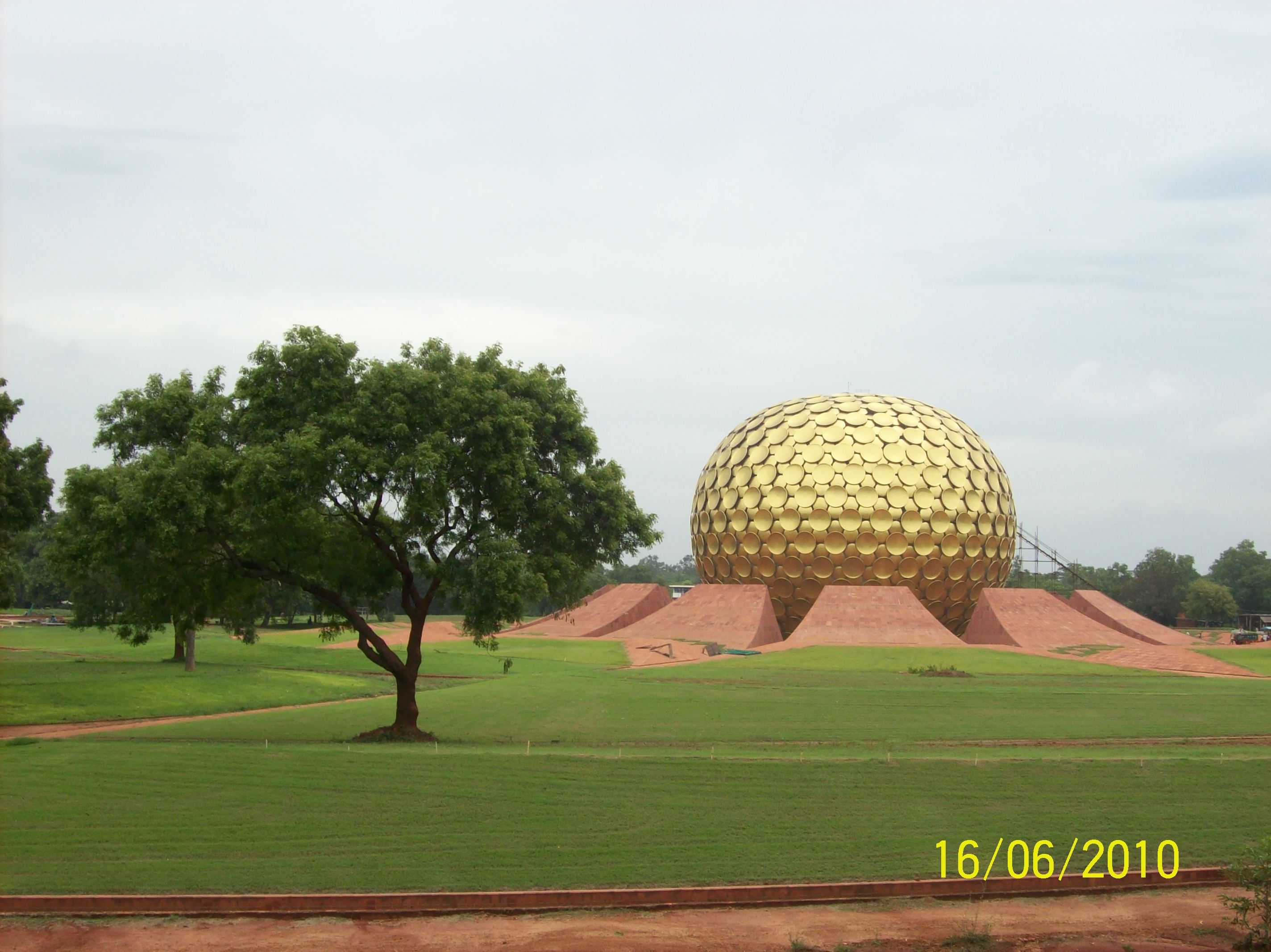
As the jetliner from Paris made its way to Puducherry, I turned nostalgic. When I had left it for greener pastures abroad, little had I June 2010 99imagined that it would take me close to twenty years to return to the town! I had left it as a semi-retired private sector honcho, and was now returning to my home base along with my wife Usha and grand-daughters Suman and Shalini. Looking out of the small window, I pointed out Matrimandir in the distance to Suman, who seemed pretty excited. The bluish-green waters of the Bay of Bengal below were shimmering in the setting sun, and a flock of pristine white seagulls was flapping along below us.

Once we landed, immigration and customs formalities got over pretty soon. The swank new international terminal looked like a smaller version of the Charles De Gaulle terminal in Paris. There were sign boards directing us to the metro station two levels below. We instead decided to take a cab into the town, so the family could get a better feel of the place.

As we settled down in the cab, the driver turned and asked if we wanted to take the toll road to town. “That would cost Rs. 750, sir”, he told us sheepishly. The normal route was also fine by him, he explained, but could take about 90 minutes to get to our place in town. We decided to take the toll road, and were delighted to be whisked off on an elevated road corridor. I could recognize JIPMER in the distance and realized that a host of elevated roads had come up in the town while I had been away.

One was a major ring road which, the cab driver explained, started off from the ECR near PIMS and ended up near Kanniakoil on the southern end of ECR. On the way, it was joined by radial elevated passages, connecting the town to the University, the new IIM, Auroville, Ousteri Lake, Chunnambar and to Arokiamedu. There were clear signboards on all the grade separators, and it was a sheer delight to cruise along the elevated motorways.

We reached our place in about 20 minutes, and were pleasantly surprised to see abundant greenery around even on smaller streets in the town. There were dedicated cycle paths all around the town. Only e-bikes and electric cars were visible on the roads. CNG buses were ferrying passengers. With a complete ban on pressure horns in force, the decibel levels were pretty low for a township of about 2.5 million people.  

In the evening, we went to the promenade. We were surprised to see a sandy stretch of about 50 meters beyond the Goubert Salai, with people and families of all kinds taking a leisurely stroll and enjoying the yellow moon which was just rising out of the sea. We could notice many safety kiosks spread all along the coast. Some skyscrapers had come up in the town, but the beach front had retained its original old world charm. It was very clean and dotted with French style wayside cafes.

In place of the old distillery, we found a multiplex, a science museum and a wine and champagne museum, the latter being the first of its kind in South Asia. Near the Kargil memorial, we found the entrance to an underwater aquarium which had been set up about five years back. A cultural performance was going on at the Gandhi Thidal. All along the beach road, near cafes, individual artists were playing musical instruments of various kinds, and the sound of music wafting through the air had an unwinding effect on all of us. From the jetty near the Park Guest House, we had the option of boarding a cruise ship, for a quiet moonlit dinner and a ride into the sea.  

Next day, I decided to take Suman and Shalini for a shopping spree. To my pleasant surprise, I found that only battery run vehicles were allowed to operate within the Boulevard area. Massive multi-level parking complexes had come up at all nodal points. Beneath each complex, there were shopping areas and food courts on the ground floor. From the basement, one could easily board a battery operated vehicle, either an exclusive one or a common one. A single voucher bought for the day allowed one to have as many hip-hop trips a day anywhere in the Boulevard area. The drivers were all well groomed and multi-lingual.

While crossing major junctions of J N Street and other roads like Anna Salai, M. G. Road, Mission Street and Ambour Salai, we noticed elevated train platforms, serviced by all-glass passenger cubicles. These were monorails, zipping across in both directions, carrying up to 20 passengers at a time. We were told that this novel mode of transportation was implemented recently with the help of foreign aid.

That night, our hosts told us about the severe smog problem faced by the town around 2015. Thereafter, the Government had taken vigorous steps to mitigate the problem of traffic congestion. Road tax on all motorized vehicles had been tripled. Parking meters had been installed and heavy charges were levied on all owners of private vehicles. The system of road usage fees had been computerized, thereby avoiding the possibility of any dilution in collections.

We were also told that to promote industries, a novel scheme had been worked out in tandem with the Tamil Nadu Government. Based on incentives granted by the latter, a 25 km wide belt around Puducherry had attracted massive investments, thereby tapping its commercial potential. Per capita income was three times the national average, and there was prosperity all around. All residents had smart cards, through which several benefits flowed to the beneficiaries. Government collected all its revenues through these cards, making the territory the first in India to do so. Crime detection and conviction rates had shot up and crime rate was the lowest in India.

The next day, we undertook a trip to Chunnambar Beach Resort where a permanent water sports facility had been created. We followed it up with trips to Arokiamedu, which had been spruced up to reflect the town’s historic links with the Roman empire. A replica of the age-old Ashram of Sage Agastya had been created, indicating the likely spot where Rama, Sita and Lakshmana would have come visiting long time back. A sound and light show at the site not only connected us back to Puducherry’s glorious past but also made our trip truly memorable.

Today is the 14th of July, 2025. We have visited Shri Aurobindo’s Samadhi in the forenoon and then made a trip to Auroville, which Jan 2010 01now boasts of being a green city, dependent only on solar and wind power. In the evening, we have boarded one of the Shatabdi trains connecting Puducherry to Chennai. Our journey takes us only 150 minutes. On the way, we look forward to enjoying fresh croissants and filter coffee from the pantry car.

As the train starts rolling out of Puducherry Railway Station, we bid adieu to the City Spiritual. The cherished memories of the trip shall forever be fresh in our minds. Surely, we shall motivate our friends abroad to visit Puducherry to enjoy its unique ambience.

(Related Post: https://ashokbhatia.wordpress.com/2015/04/13/reinventing-pondicherry)