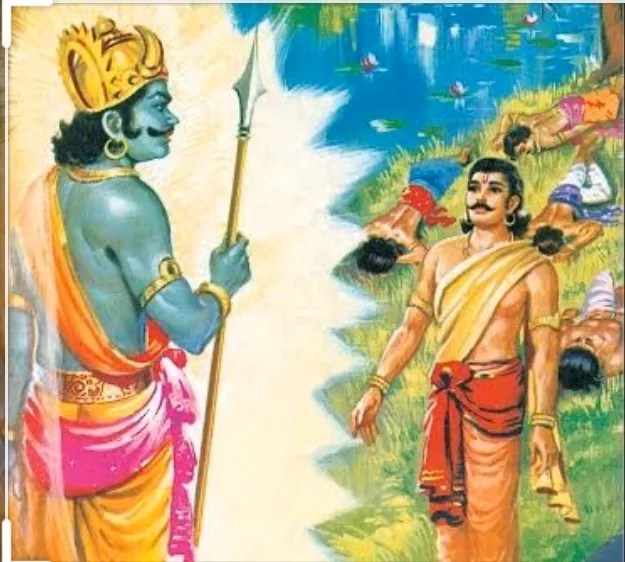
In the Yaksha Prashna episode of Mahabharata, Yudhishtira is asked many questions. One of these is:
“What do you find as the most surprising on earth?”
To which Yudhishtira replies:
“Numerous people are encountering death daily. Even though people are aware that they will have to die one day, they crave for worldly desires as if they are permanent on earth. There is nothing more surprising than this fact.”
Death and Taxes are both inevitable in life. But the sting of death is far deadlier than that of taxes. There is an irrevocability associated with it. When a loved one passes away, the physical form with which we associated ourselves for a long time simply vanishes. What is left behind is a void which is near impossible to fill.
The sting hurts us even more when the death is untimely. The passing away of a young person who was yet to drink deep from the joyful rivulet of life leaves us with a regretful feeling of deprivation. Shock, trauma, and depression follows. Our senses get numb. Nothing makes any sense anymore. A sense of disbelief envelopes us. Words of sympathy and condolences pour in, but these do not register. For some time, we act like zombies, moving about and doing things as we are advised by others to do. Lessons from Bhagavad Gita which tell us that the soul is immortal do not make any sense.
Feelings of guilt plague us. We regret not having done something more to save the person. We find it difficult to handle the anger we feel towards ourselves. Forgiving ourselves becomes an impossible task. We look up to the heavens and blame our favourite God for having been so cruel to us.
Losing a spouse is especially traumatic. I realized this myself when I lost my wife during 2018. Gradually, the reality of having lost a trusted companion, a bitter critic, and a true friend dawned upon me.
Two Persons Who Made Me Cry during 2022
Richa (1970-2022) was Principal Scientist at National Institute of High Security Animal Diseases (NIHSAD). Besides being an eminent scientist, she was a loving daughter, a devoted wife, and a caring and affectionate mother. She was not only a member of the selection committee of International Federation of Biosafety Associations for their much-coveted Biosafety Hero Awards; she had also won many awards herself at national as well as international level. She was the Secretary of Society for Biosafety, India, and a member of The Executive Council of the Asia Pacific Biosafety Association. She had published many research papers. A recognized badminton player, she was passionate about gardening, dancing, and singing. We lost her within a few months of 2022 to an aggressive form of cancer which was detected very late.
Pavan (1963-2022) was a self-made person. A first-generation entrepreneur par excellence. Someone who expanded his business by sheer dint of a lofty vision, hard work, perseverance, and a knack of identifying, nurturing, and deploying human talent. He played all the roles in his life to perfection, whether as a son, an elder brother, a husband, a father, and a grandfather. Above all, a fine and helping human being who would go out of his way to help the needy. With his passing away, we lost someone with excellent management skills. Premier management institutes would greatly benefit by publishing a case study on the business strategy which shaped his business and took it to dizzying heights. We lost him to a sudden cardiac arrest within a span of a few hours on a fateful day during December 2022.
The Five Aspects of Grief
In 1969, psychiatrist Elisabeth Kübler-Ross introduced what became known as the “five stages of grief.” These stages of grief were based on her studies of the feelings of patients facing terminal illness, but many people have generalized them to other types of negative life changes and losses, such as the death of a loved one or a break-up.
The five stages of grief, which I would prefer to refer to as aspects:
Denial: “This can’t be happening to me.”
Anger: “Why is this happening? Who is to blame?”
Bargaining: “Make this not happen, and in return I will ____.”
Depression: “I’m too sad to do anything.”
Acceptance: “I’m at peace with what happened.”
The reason I prefer to call these as aspects of grief rather than its stages is that these stages are not linear in nature, each following the preceding one over time. In my opinion, grief is cyclical or spiral in nature. Something happens, memories come flooding back, and we feel we are back to square one. But yes, the spiral does propel us forward, taking us gradually away from its epicentre.
Often, grief is like a sinusoidal curve of which the amplitude keeps decreasing over time, as the mundane concerns of life come back plaguing us soon enough. However, it is a curve which goes down in an exponential manner, never quite reaching a zero baseline. The emptiness within may never go away; we learn to accept it and move on in life. The time span of recovery is as individually unique as each one of us is.
Handling Grief
Remaining Surrounded by Loved Ones
In the initial phase, we tend to withdraw ourselves into a shell. Despite being surrounded by our loved ones, the feeling of loneliness and a vacuum inside persists.
Turn to friends and family members. Now is the time to lean on the people who care about us, even if we take pride in being strong and self-sufficient. Rather than avoiding them, draw friends and loved ones close and spend time together face to face. Physical hugs go a long way in the process of recovery.
Accepting the Assistance Offered
Often, people want to help but do not know how. We may have to be open and tell them what we need—whether it’s a shoulder to cry on, a listening ear, or just someone to hang out with. If we feel we do not have anyone you can regularly connect with in person, it’s never too late to build new friendships.
The Challenge of Comforting Others
We would do well to accept that many people feel awkward when trying to comfort us when we are grieving.
Grief can be a confusing, sometimes a frightening emotion for many people, especially if they have not experienced a similar loss themselves. They may feel unsure about how to comfort us and could be wary of saying or doing the wrong things.
Sharing Sorrow and Getting Busy
Sharing our sorrow with others who have experienced similar losses can help. What works best, however, is to get doubly busy with our occupation and start devoting more time to what we love doing.
Faith Can Help
As luck would have it, our physical body carries no guarantee. Perhaps, we can draw some comfort from our faith. If we follow a religious tradition, we may find that its mourning rituals may provide some comfort. Spiritual activities that are meaningful to us —such as praying, meditating, or going to religious places — can offer solace.
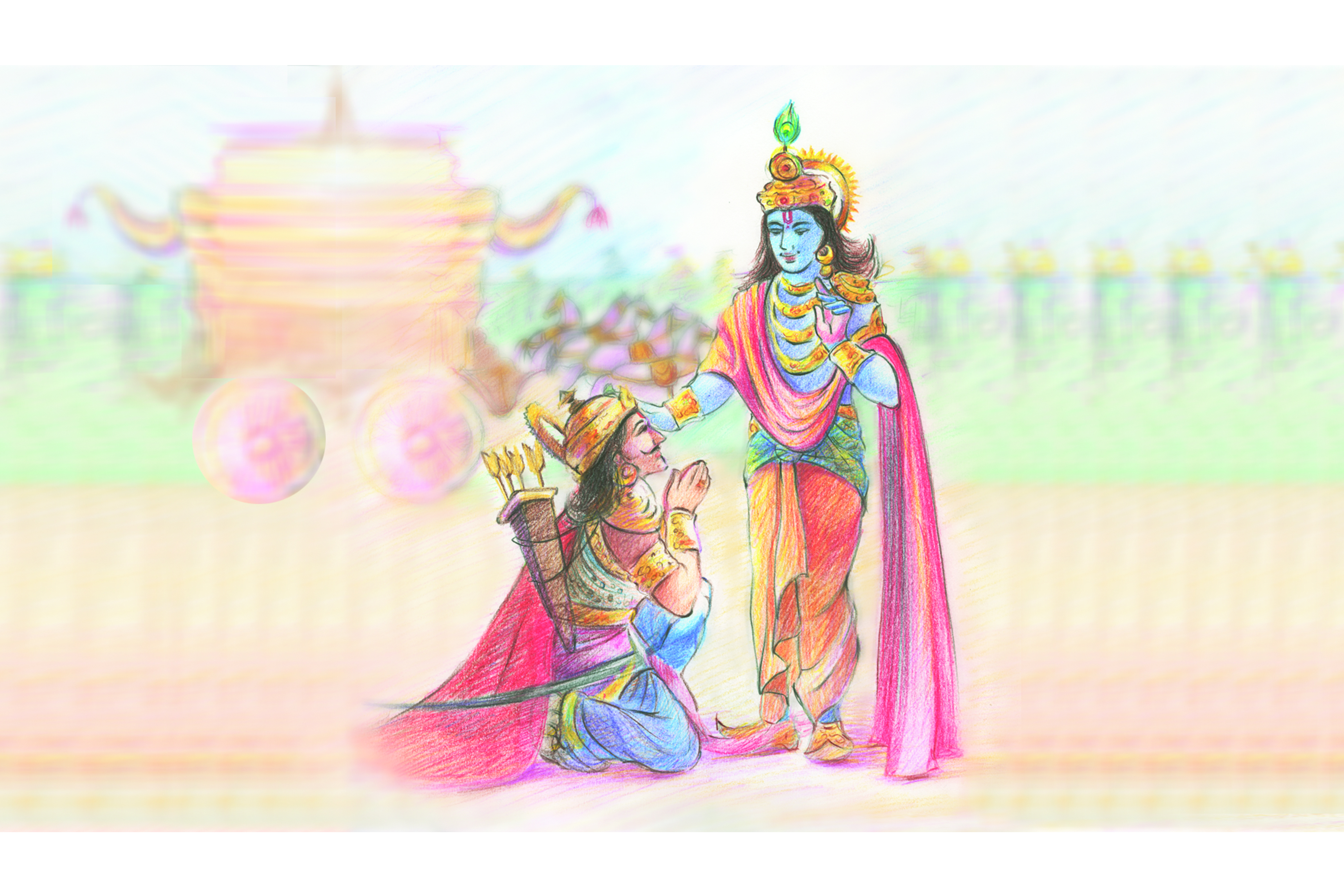
Lord Krishna speaks of reincarnation in the Bhagavad Gita, likening death to the way we change into a new set of clothes, discarding the old ones.
Fulfilling Pious Intentions
Most of us have a bucket list of things we always wished to do in our life. It helps to start fulfilling such pious intentions sooner than later.
It could be trips to places that we always wished to visit, a book that we always thought we could read, or write one of our own, few songs we could croon, close friends we wanted to visit, or movies that we wished to see, etc.
Imparting a Meaning to Our Suffering
Grief can beget meaning. It provides us an opportunity to reflect on what matters most to us. We could end up taking a social initiative which may, in some way, end up doing good to others. Suffering is virtually a steppingstone to spiritual upliftment.
On to Pleasant Memories
The good news is that the feeling of inner loneliness does get diminished over time. Our souls are forever seeking happiness within. Over time, memories which would have made us cry closer to the event, turn into pleasant ones. We remember the departed person with fondness. We keep in mind the values followed by the departed soul. We adapt to the new reality.
Making the Departed Soul Happier
The Mother of Sri Aurobindo Ashram, Pondicherry, India, has said that to make the soul happy, so that it reincarnates in good conditions, one should have no sorrow and remain very peaceful and quiet, while keeping an affectionate remembrance of the one who has departed. (Complete Works of the Mother; Words of the Mother – III; Death and Rebirth).
Some Myths and Misconceptions
Myth: The pain will go away faster if we ignore it.
Fact: Trying to ignore our pain or keep it from surfacing will only make it worse in the long run. For real healing, it is necessary to face our grief and actively deal with it.
Myth: It’s important to “be strong” in the face of loss.
Fact: Feeling sad, frightened, or lonely is a normal reaction to loss. Crying does not mean we are weak. We do not need to put on a brave front. Showing our true feelings can help us and those around us.
Myth: Not crying implies we are not sorry about the loss.
Fact: Crying is a normal response to sadness, but it is not the only one. Those who do not cry may feel the pain just as deeply as others. They may simply have other ways of showing it.
Myth: Grieving should last about a year.
Fact: There is no specific time frame for grieving. How long it takes differs from person to person.
Myth: Moving on with our life means forgetting about our loss.
Fact: Moving on means we have accepted our loss. This is not the same as forgetting. We can move on with our life and try to be happy. The memory of someone we lost shall always be an important part of us. In fact, as we move through life, these memories can become more and more integral to defining the people we are.
What To Avoid While Comforting Those Who Are Grieving
Aggressively seeking details as to how it happened. Allowing the grieving person to open up on his/her own makes better sense.
Right after the death, asking the affected person details about their immediate or future plans. Or, commenting on how things may shape up in the family in the times to come.
Discussing financial details of any kind.
Loose talk while being a part of any of the rituals or at any social gathering to mourn a death.
Talking about health-related precautions being taken by one, thereby implying that the responsibility of the sudden demise somehow lies on the deceased person or his/her family.
A Transformative Event
In his epic poem Savitri, Sri Aurobindo, the renowned Indian seer, presents the end of a person’s life as a transformative event, a passage or a door through which one passes towards a greater life. Essentially, the poem recounts the saga of human victory over ignorance and conquest of death.
Thus, on the racing tracks of Life, Death is but a pit stop. One gives up one’s creaking old jalopy. In exchange, one gets a shimmering new vehicle. One then zooms off to a newer horizon, the engine firing on all six cylinders. With each pit stop, one evolves further.
Conveying Positive Vibes to Those Who Are Still Around
If I ever run into Yaksha and he asks me as to what the next most surprising thing in life is, I would surely respond as follows.
“All of us realize that those we love are not going to be around all the time. Yet, we consciously end up praising a person only when he/she is no longer alive. During their lifetime, most of the times, we take them for granted and spend quite some time censuring, condemning, criticizing, and ridiculing them.”
Think of those around us. When was the last time we conveyed our genuine appreciation, praise, and gratitude to them for their importance in our life? Is it not better to do so when the person we love is still around and can appreciate it?!
(1. The illustration depicting Krishna and Arjuna in the battlefield has been reproduced with permission from the illustrator, Arati Shedde, and Heartfulness Magazine – www.heartfulnessmagazine.com.
2. All other illustrations are courtesy www.
3. A version of this article also appears in the July 2023 issue of NAMAH, a journal of Sri Aurobindo Society, Pondicherry, India).
Whether in literature or in fine arts, we relate to characters when we find an inner connection. There could either be a similarity in personality traits, or in the challenges faced. When this happens, we laugh with the person. We cry with the person. We willingly suspend our own beliefs and virtually start living the life of the character.
As a member of the tribe of the so-called sterner sex, I confess I have shades of quite a few characters etched out by P G Wodehouse. These could be males, or even females.
Amongst males, when it comes to notions of chivalry and a chin up attitude towards the harsh slings and arrows of Fate, Bertie Wooster becomes my role model. When the summons arrive from someone higher up in the hierarchy, and the prospects of a severe dressing down cloud the horizon, I meekly surrender and follow the messenger…
“So, Mr Bhatia, what do you think?” asked the tough looking beak-in-chief. I had just been ushered into this mandarin’s plush office. A cup of tea had been duly arranged, with few snacks in tow.
Across the road, the sea was going about performing its normal task, its mighty waves relentlessly pounding the rocks, roaring and frothing. The night sky was clear and a mild breeze was blowing. The moon was enjoying its usual saunter, its soothing light creating dancing ripples on the surface of the sea. It was a scene which was designed to soothe any soul in aguish.
But my soul was in torment. The heart was aflutter. The brow was furrowed. The pride of the Bhatias was wounded. You see, life had so far never prepared me for being treated as a criminal of sorts. Having been a law-abiding citizen all along, I was not used to…
Charles Darwin, were he to be around in the exciting times that we live in these days, and if commissioned by a prominent Hollywood studio to study the manner in which Hindi movies have evolved over time, might have come up with some unique insights into the matter!
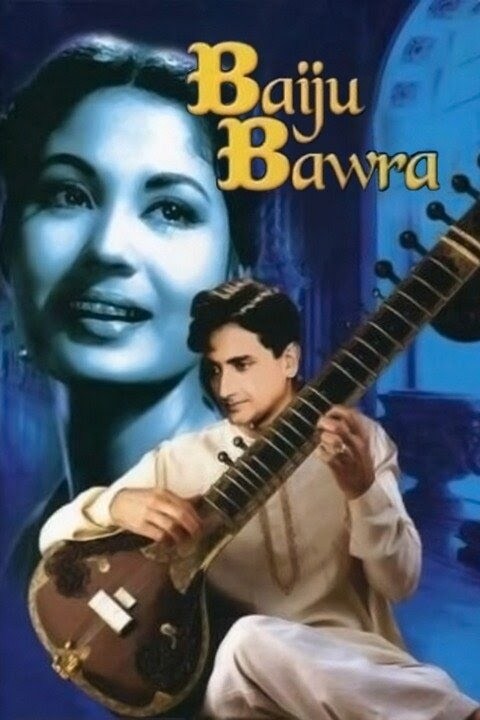
Perhaps, he might have proposed that movies do change over time, that new movies often pop up from some of the pre-existing ones, and that all movies share two common ancestors – an Adam who keeps providing the producers with healthy returns on their investment and an Eve who keeps nourishing wide-eyed-and-glued-to-their-seats kind of denizens with wholesome entertainment. He might have proposed that the concept of entertainment itself has undergone a major transformation. If the audience in the past used to get entertained by movies based on classical music and dance forms – like Baiju Bawra (1952) and Jhanak Jhanak Payal Baaje (1955), the flavour of the season now is that of item numbers, say, something on the lines of ‘Laila o Laila…’ in Raees (2017), which are meant for momentary gratification only, soon to be forgotten.
Recently, Bandish Bandits (2020) came as a whiff of fresh air.
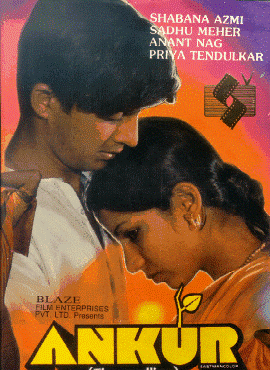
He might have pointed out that there are indeed movies which try to convey a social message as well, but these belong to a different genre/species. When it comes to caste-based prejudices, we have had Sujata (1959), Masaan (2015) and Article 15 (2019). A movie like Jhund (2022) showcases the everyday struggles of vagabond Dalit youngsters, haunted by the humiliating gaze of society. Speak of the disadvantaged and we are apt to think of Ankur (1974), Akrosh (1980), Chakra (1981) and Nil Battey Sannata (2015). Think of the angst of the educated unemployed and we discover Albert Pinto Ko Gussa Kyoon Aata Hai (1980) and Rang De Basanti (2006). Speak of sex workers and movies like Chandni Bar (2001), Chameli (2003) and Gangubai Kathiawadi (2022) pop up in our minds.
He might have even concluded that there is no universally applicable formula for whipping up a blockbuster, that past success does not guarantee future conquest, that such formulae have a rather short shelf-life, and that one must factor in the then prevailing social mores, the economic condition of the target audience and the impact of disruptive technology which has its own pace of evolution. If a delectable mix of sex and violence worked at a time, and if star power was the magnet which kept the box office aflame, content, acting prowess and slick editing work the magic now.
He might have pointed out that each genre/species has its own unique characteristics, that each one has its own path of evolution, and that the onset of the multiplex phase, followed by the OTT-era, has enabled our dream merchants to climb newer heights of imagination. Those of us who have loved such series as Gullak (2019-2022) and Panchayat (2020 onwards) might concur with this thought.
Specifically, he may have made a few general observations about the evolution of our Hindi movies over time:
Some Tectonic Shifts
In the pre-partition days, the audience lapped up offerings which were based on values, patriotism, mythology, or religious beliefs. Raja Harishchandra (1913), Bhakt Vidur (1921), and Amar Jyoti (1936) can be mentioned in this context. Kismet (1943) was a different cup of tea altogether.
In the years followed by India’s independence, hopes for a new country ran high. Besides romantic ones, idealistic movies steeped in socialistic thinking – like Awara (1951), Boot Polish (1954), Jagte Raho (1956), Do Aankhen Barah Haath (1957), Mother India (1957), Pyaasa (1957), and Phir Subah Hogi (1958) – came up. Mythologicals like Sampoorna Ramayan (1958) and Mahabharat (1965) also kept the audience engaged. A primarily agrarian economy liked such offerings as Do Bigha Zamin (1953).
In the next decade, we loved seeing movies like Mughal-E-Azam (1960), Hum Dono (1961), Sangam (1964), Guide (1965), and Aradhana (1969).
During the 1970s, the angst of the common man was identified by our dream merchants to be a key point of attraction. Movies like Deewaar (1975) and Sholay (1975) came to rule our collective psyche. Thanks to the likes of Shyam Benegal, Govind Nihalani and others, the parallel cinema stream catered to the tastes of the intelligentsia. We also had some Hollywood-style movies with a taut script, such as Ittefaq (1969) and Achanak (1973). The critics loved these, but not the non-discerning audience sold on cheap melodrama.
Thereafter, many of us would remember Tezaab (1988), Chaalbaaz (1989), DDLJ (1995), Lagan (2001), and Bunty aur Babli (2005). Somewhere down the road, cheap, low budget movies aimed at the front benchers also flooded the market. Many of these were South Indian productions made on tight budgets starring the likes of Jeetendra etc. in this phase, the production sources were dubious, and films were tasteless and crass. Over time, the upper classes withdrew from cinema halls and started devouring movies on VCRs.
Thanks to economic liberalization, we started becoming Westernised to an unrecognisable extent. Consumerism started blooming. The joint family system started disintegrating. Individualistic themes gained prominence. Gradually, we found ourselves faced with the reality of living not only in ‘Bharat’ but also in ‘India.’ The former was catered to by single-screen theatres. However, thanks to upward mobility, rising incomes, and ready availability of international merchandise, the culture of shopping malls and multiplexes sprouted. The multiplex phenomenon opened the doors for shorter and crisper flicks, based mostly on urban-centric themes. The cinematic landscape changed, offering ultra-commercial masala fare dished out by the likes of Subhash Ghai and Sanjay Leela Bhasali to the ultra-niche cinema of Vishal Bhardwaj, R Balki, Anurag Kashyap and Madhur Bhandarkar.
Over time, internet became easily available and then OTT followed. We, the audience, exposed as we were to international media offerings, became choosier. Now, our critical eye looks at a wider range of the cinematic offerings – its genre, storyline, acting prowess of the characters, music, camera movements, technical excellence, and so forth.
The Yin and Yang Balance
Most of you who have examined the phenomenon of falling in love would agree that in the earlier days of Bollywood, those belonging to the tribe of the so-called sterner sex happened to be the dashers and the knights in shining armours who could do nothing wrong. All the hero had to do was to flex his muscles, and a coy member of the tribe of the so-called delicately nurtured would swoon and fall in his arms. Most of the times, the females would not be dashers but merely dormice, exerting their soft power occasionally. Only once in a blue moon, when pushed with their backs to a wall, did they strike back.
Cut to the present. The heroes are no longer diffident about shedding their macho image and reveal their softer side on the screen. The heroines have now become far more decisive and assertive. They resist amorous advances. They call the shots. They continue to be as beautiful as ever but have become far bolder. Now, they come into their own out of sheer free will, revealing the inner strength they possess.
Even though the fight against a deeply entrenched patriarchal mindset is far from being over, the Yin-Yang balance has tilted in favour of the females. They rule the roost. On the other hand, the males are no longer shy about showing their vulnerabilities. The male rabbit often gets attracted by a female dasher. He no longer has the luxury of concentrating on some mild, gentle dormouse with whom he could settle down peacefully and nibble lettuce. In the past, we had Arth (1982) where the heroine chooses to lead a life independent of either her well-wisher or her ex-husband. Of late, we have had such movies as Astitva (2000), Aitraaz (2004), Wake-Up Sid (2009), Inkaar (2013), Queen (2013), Dedh Ishqia (2014), Ki and Ka (2016), English Vinglish (2012), Thappad (2020), and Jugg Jugg Jiyo (2022), which speak of women empowerment. On the OTT platforms, we have had Delhi Crime (2019), Bombay Begums (2021), Modern Love Mumbai (2022), and Modern Love Hyderabad (2022).
Not to forget such stand-alone female-centric movies as Kahaani (2012), Gulaab Gang (2014), Mardaani (2014), Parched (2015), Nil Battey Sannata (2015), Jai Gangaajal (2016), Neerja (2015), and Gunjan Saxena (2020), where males play either a supplementary or a villainous role.
Of late, script-backed roles for heroines have gained better traction. The effeminate side of males has garnered better prominence. Heady days are here!
Mamma Mia!
The image of the Indian mother has got a 180-degree makeover.
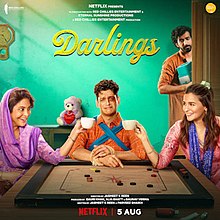
From a weepy, sacrificing Sulochana (Dil Deke Dekho, 1959) and Nirupa Roy (Do Bigha Zamin, 1953) to a dictatorial Dina Pathak (Khoobsurat, 1980) and Supriya Pathak (Goliyon Ki Rasleela Ram-Leela, 2013), we have seen her role metamorphosing over the decades. Now, we even have a mother who hatches a plan to torture/murder an abusive son-in-law, a la Shefali Shah (Darlings, 2022)!
Yes, we have always had the morally upright mother who goes to an extreme to restrain her errant son, like Nargis (Mother India, 1957) or Reema Lagoo (Vaastav, 1999).
Sex Education
No more flowers swaying in a gentle breeze touching other flowers. We are not only beautiful; we are also bold. Steamy scenes are now an essential part of a movie/series. Several movies use the services of an ‘Intimacy Director’ to manage the delicacy of such scenes, when getting shot. Teenagers no longer need to necessarily depend upon unreliable sources to learn the nuances of love making.
Consider the 1953 version of Parineeta (Ashok Kumar, Meena Kumari) wherein the mere act of garlanding signifies a matrimonial alliance. However, in the 2015 version (Saif Ali Khan, Vidya Balan), the level of intimacy between the couple goes to a different level altogether.
LGBT relationships are out of the closet and no longer make us raise our eyebrows, like Fire (1996) managed to do in the past. Whether it is a series like The Fame Game (2022) or movies like Badhai Do (2022) or Maja Ma (2022), such affairs are now out in the open.
Technology Rules
No more dacoits on real horses. Thanks to our new-found sensitivity towards other species, most scenes depicting animals depend on technology, which has made things easier. Compare the magnificent battle scenes of Mughal-E-Azam (1960) with those of Samrat Prithviraj (2022). In the latter, whole battalions of soldiers can be seen marching ahead in perfect unison, putting our brave soldiers who participate in the Indian Republic Day parade each year to shame. The absurdity and the sheer artificiality of the scene made me laugh out aloud, prompting my multiplex co-viewers look at me with scorn, their shapely highbrows raised more than an inch.
‘Dishoom-dishoom’ scenes have all but vanished. Instead, what we have now are gravity-defying stunts which would be leaving Sir Isaac Newton shaking his head in disbelief and perhaps even squirming in his grave.
The day is not far off when AI-backed tools will be churning out innovative scripts, screenplays, and lyrics, leaving many of the Bollywood writers and lyricists crying all the way to their respective banks.
The Diminishing Returns of Tragedies
One of the side-effects of the arrival of economic liberalization has been the reduction in the audience’s appetite for outright tragedies. When the aspirational upwardly class is obsessed with chasing economic goals, there is a greater need for positive narratives and happy endings. Tragedies like Andaz (1949) and Sahib, Bibi aur Gulam (1962), featuring such actors as Dilip Kumar and Meena Kumari, gradually become passe. While feel-good and revenge-oriented themes continue to be popular, movies like Matto Ki Saikil (2022), which depict the harsh realities of life, receive critical acclaim but meet with open disdain at the box office.
Many Shades of Grey
Gone are the days when we would be shuddering in our seats in a theatre while listening to Amrish Puri saying ‘Mogambo khush hua…’ while drumming his heavily ring-infested fingers on one of the arms of his throne, or Gabbar Singh calling out ‘Arre o Sambha, kitne aadmi they…?’ while prowling around menacingly with a pistol aimed at three of his terrified cronies, or Prem Chora pouncing upon a damsel in distress with clear intentions of outraging her modesty while mouthing such dialogues as ‘Prem naam hai mera, Prem Chopra’.
If Pran was a suave but scheming villain unleashing his vicious plans on a hapless couple, Ajit, duly attired in a white coat and even wearing white-coloured shoes, sent quite a few shivers down our spines. In each story, there was a good guy and a bad guy. When the ‘angry young man’ happened, the hero’s character itself took on an unapologetic black shade.
If Sholay set a new benchmark in the action sequences, directors like Vidhu Rahul Rawail, Vinod Chopra, and Ram Gopal Verma gave us gut-wrenching fights and dreaded villains in such movies as Arjun (1985), Parinda (1989), Satya (1998), Shool (1999), and Shiva (2006). These showcasedraw cycle chain and knuckle duster fights.
The advent of characters with negative shades has further accentuated this transformation; think of Shahrukh Khan in Baazigar (1993) and Darr (1993), Kajol in Gupt (1997), Aishwarya Rai in Khakee (2004), and Aamir Khan in Fanaa (2006), just to name a few.
I am skipping flicks in the horror genre here because I have never watched any of these.
Once liberalization happened, nobody had the nerve to lash out at a rich guy. Wealth ceased to be a liability; instead, it became a desirable goal and a badge to be unabashedly worn on one’s sleeve. Blacks and whites disappeared from our screens, and shades of grey became predominant. Movies moved closer to the real world and ceased to be pure fantasies.
The brain started kicking on all its six cylinders and eventually started ruling over brawn. In the past, cerebral offerings such as Jewel Thief (1967) were few and far between. Now, we have the likes of Kahaani (2012), Andhadhun (2018), Raat Akeli Hai (2020) and Drishyam (2013, 2022) keeping us biting our nails and twiddling our thumbs trying to figure out what will hit us next.
This trend gained further traction owing to a seminal change brought about by OTT. Think of Abhishek Bachchan playing Bob Biswas in Breathe: Into the Shadows (2020) series.
The original script of one of our epics, Ramayana, is still there. But the shades of the hero and the villain have evolved. Achieving the goal has become supreme; means be damned. Just like the characters in Mahabharata, different shades of grey prevail.
Lingua Franca
Given the delightfully rich diversity of Indian languages and dialects, movie makers obviously do a smart thing by resorting to the local dialect when presenting different characters on the screen. For example, Aamir Khan mouthed dialogues in what is alluded to as the tapori dialect of Mumbai (Rangeela, 1995). Tamannah Bhatia aped the Haryanvi dialect in Babli Bouncer (2022).
But when the characters start using cuss words, things go a bit too far, especially in movies which are meant for general viewing. Take the case of Vidya Balan in Ishqia (2010) or Rani Mukherji in No One Killed Jessica (2011).
However, with the plethora of movies and serials which capture the endeavours of northern hinterland warlords inundating our screens of late, this appears to have become a trend. The warlords wait till the end to jump into the fray directly. They let their henchmen do the dirty work, while they enjoy a public life which is as pure as freshly driven snow.
Likewise, urban-themed offerings now ape the American way, routinely using such words as sh*t, fu*k, and the like. This is the new normal.
Consider Gangs of Wasseypur (2012), Jamtara – Sabka Number Ayega (2020), Masaba Masaba (2020), and Hush Hush (2022) for instance.
The Loo Mania
Relieving oneself in open is rather common in India. However, to have it depicted on our screens, is rather nauseating and appalling. By doing so, the message given out is that it is perfectly normal to do so.
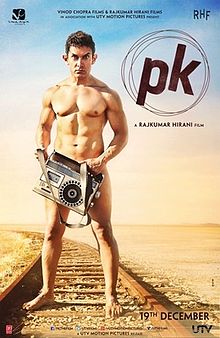
Even our top-notch actors have not shied away from performing such acts. Many of us would remember Akshay Kumar gleefully doing it in Singh is Kinng (2008), Madhavan and Sharman Joshi in 3 Idiots (2009), Ranbir Kapoor in Besharam (2013) and Yeh Jawaani Hai Diwaani (2013), Aamir Khan in PK (2014), and Anupam Kher in Baby (2015).
The fact that a tactic of this kind needs to be resorted to merely to improve the Comic Quotient of a movie goes on to show our directors and script writers to be woefully short of imagination at times.
The Sounds of Music
Over the decades, the music in Hindi movies has evolved in more ways than one.
Mother Nature Gets a Short Shrift
Elements of nature (moon, rains, lakes, rivers, seasons, clouds…) have gone missing. High rises, cityscapes, interpersonal relations take the front seat. So do emotions, feelings, and the like.
Songs like ‘‘Ye raat ye chandni phir kahaan…’ (Jaal, 1952), ‘Aaja sanam Madhur chandni mein hum…’ (Chori Chori, 1956), ‘Ye raatein ye mausam…’ (Dilli Ka Thug, 1958), ‘O sajana, barkha bahaar aayi’ (Parakh; 1960) and ‘Chalo dildaar chalo, chaand ke paar chalo…’ (Pakeezah, 1972) have almost vanished from the silver screen. Once in a while, we get treated to such songs as ‘Suraj hua maddham’ (Kabhi Khushi Kabhi Gham; 2001), ‘Barso re…’ (Guru, 2007) and ‘Hawaayein…’ (Jab Harry Met Sejal, 2017).
Visual Appeal Elbows Out Our Ears and Minds
Gradually, the orchestra and the sound have elbowed out the lyrics somewhat. Songs which appealed to the audience not only for their deep layered meaning but also for their soulful music have become part of a rare breed. Philosophical truths of life have got relegated to the background. Thus, we have become used to getting entertained by offerings which accord a higher priority to our ears than to our minds.
Moreover, with the new-found zeal for quick cuts, adroit camera work and the razzle-dazzle of a heightened visual appeal, we have virtually stopped hearing songs and have willy-nilly become reconciled to seeing them. Cinematography rules. Locations keep changing in quick succession. Even before we have had the chance to savour one, the next one pops up. The camera has become obtrusive. Even if a patriotic song like ‘Teri mitti mein mil jaawan…’ (Kesari, 2019) comes up, we are exposed to a visual world which is in the fast forward mode. Since our eyes are constantly being bombarded with visual information, the hapless ear often has no other option but to take the back seat.
Actors no longer need to worry much about their lip-synching abilities. Most songs get relegated to the background.
Cabarets have metamorphosed into ‘item numbers’.
Lullabies Lose Out to Screen Time for Kids!
No longer do we have scripts with room for any lullabies. Remember ‘Aa ja ri aa, nindiya tu aa…’ (Do Bigha Zamin, 1953), ‘Mein gaoon tum so jaao…’ (Brahmachari, 1968) and ‘Pyara sa gaon…’ (Zubeida, 2001)? Of late, the only lullaby we got treated to was ‘Jo tum saath ho…’ (Salaam Venky, 2022).
Kids are smarter these days. They need only their technical gizmos to get to sleep. Parents may rest easy. Inspired by ‘Mere buddy…’ (Bhootnath, 2008), grandparents of all hues, sizes and shapes are busy honing their dancing skills!
Like real-life kids, reel-like kids have also become far more intelligent, often mouthing dialogues which would leave us twiddling our thumbs trying to figure out their real age. Gone are the day of innocence epitomized by Baby Naaz, Daisy Irani and Baby Farida.
Species Which Have Become Extinct
Besides vamps and villains, poor comedians have also become mostly extinct. Though we still have the likes of Raghuvir Yadav and Rajpal Yadav entertaining us, the separate comedy tracks have all but vanished from our screens. Such roles have been usurped by mainstream heroes and heroines.
The comic timing of such talented artists as Sridevi (Chandni, o meri Chandni…Chandni, 1989) and Akshay Kumar (Hera Pheri, 2000 onwards) has consigned the parallel comedy track in which we earlier had such character artists as Johnny Walker, Mehmood, Mukri, Agha, Tuntun, Aruna Irani, Manorama et al, to the dustbins of history. In the past, even some villains had tried their hands at comedy, and successfully, at that. I refer to Amjad Khan in such movies as Qurbani (1980) and Chameli Ki Shaadi (1986).
An interesting phase was that of the Wodehousian comedy of a subtle kind, presented to us by such artists as Om Prakash, Utpal Dutt, and David in such movies as Chupke Chupke (1975), Golmaal (1979) and Baaton Baaton Mein (1979).
Even the golden hearted house help, popularly known as ‘Ramu Kaka’,has all but vanished.
Of Political Headwinds
Our politicos have never shied away from influencing the kind of messages which need to be conveyed to the hoi polloi through the powerful medium of cinema. Our dream merchants have also been sensitive to the political thinking of the day, coming up with movies which are relevant to the theme of the times.
The first Chinese aggression in 1962 prompted Chetan Anand to come up with Haqeeqat (1964) which tugged at our heartstrings.
Naunihal (1967), directed by Raj Marbros, was about Raju, an orphan, who believes that his only surviving relative is Chacha Nehru. The film’s music was composed by Madan Mohan, with lyrics by Kaifi Azmi, including the song ‘Meri Aawaz Suno, Pyar ka Raaz Suno’, sung by Mohammad Rafi. The song captured not only the funeral procession of the first Prime Minister of India, Jawahar Lal Nehru but also his study and his office; a loving tribute, indeed, to a towering personality then.
Much later, in 1988, one of his seminal works, The Discovery of India (1946), was presented by Shyam Benegal in the form of a television serial, labelled as Bharat Ek Khoj.
Rewind back to 1965, when Pakistan attacked India. Mr Lal Bahadur Shastri, the then Prime Minister, came up with the slogan ‘Jai Jawan Jai Kisan’. He is said to have persuaded Manoj Kumar to come up with a movie based on the slogan. That is how we got to see Upkar (1967).
Assassination of Prime Minister Indira Gandhi in 1984 led to riots in Delhi and elsewhere. The same were covered in the recent movie Jogi (2022) and were also briefly touched upon in Laal Singh Chadha (2022).
Mani Ratnam gave us Bombay (1995), based on the riots which took place in the city between December 1992 and January 1993 after the demolition of the Babri Masjid led to religious tensions between Hindu and Muslim communities. Gujarat riots in 2002 led to movies like Parzania (2005) and Firaaq (2008).
In the recent past, many of us have been swayed by the political headwinds and movies with a jingoistic nationalism have caught our imagination. A movie like Kashmir Files (2022) which shows a minority community in a negative light has been openly promoted by the present ruling dispensation. Another one, Samrat Prithviraj (2022), went a step further and highlighted the bravery and sense of nationalism of the majority community. The Accidental Prime Minister (2019) attempted to show the previous Prime Minister in a negative light, and now we wait for Emergency (2023).
Come to think of it, the worlds of movies and politics have several common traits. Dream merchants thrive in both. So does star power. Funding and returns on investment are fundamental concerns. Eventually, the onus of sifting the wheat from the chaff obviously falls on the common public.
A Rich Cultural Heritage Getting Lost?
It may not be out of context to mention here that in the days of yore, the kings used to consciously nurture fine arts and culture by patronizing poets, musicians and dancers. However, the way successive governments are turning a blind eye to the essential task of preserving our cinematic heritage, and even gradually withdrawing support to creative cinema, while continuing to gobble up the revenue generated by this industry, is a travesty of justice and common sense. Remember the outfit known as the National Finance Development Corporation, which gave us a stream of gems in the past – Ankur (1974), Manthan (1976), Mirch Masala (1987), Ek Din Achanak (1989), Train to Pakistan (1998), Mammo (1994), and the like? The future looks bleak on this front.
Acting Prowess and Content: The Ultimate Winners
Even though star-power, presentation and packaging continue to be important, content has now come to rule the roost. Acting is also back on its throne, where it rightfully belongs.
Now, if we root for a blockbuster like Pathaan, we also love an actor-driven movie like Laal Singh Chadha. If we like to see the trials and tribulations of the heroine in Gangubai Kathiawadi, we also empathize with the dilemmas faced by an elderly couple in Vadh, besides appreciating such off-beat offerings as Doctor G and Kantara.
As we sit bleary-eyed in front of our smart TVs, we now have the best of both the worlds – glamour, duly backed by razzmatazz, as well as the depth of genuine art.
(Some inputs from a few members of the Best of Cinema and OTT group on Facebook are gratefully acknowledged.)
It was probably early 1974 when I got called for State Bank of India’s (SBI) Probationary Officer’s interview. Because I sort of botched up my M.Sc. exams my plan of graduate studies in the U.S was not looking likely. I had been teaching in colleges for a couple of years. Meanwhile, two of my M.Sc. classmates who were also trying to go abroad and were actually quite brilliant academically, started appearing for bank tests as a backup. So I thought, “What the heck, if these guys are applying I might as well too” (These friends actually ended up as Professors at American universities!)
I did get called for interviews a few times. But I went for these interviews with zero preparation. I really had no idea then how banks worked and what the job entailed. Those days there were no coaching centres and such luxuries. Even if there were, I…
There are persons in Bollywood who become a legend in their lifetime itself. Helen is one such actor. Here is an insightful review of a book by Jerry Pinto.
I won’t go so far as to say that Helen was the first Hindi film actress I remember seeing (that would be Shakila, since CID was the first Hindi film I remember watching). But I distinctly remember being about 10 years old, watching Chitrahaar, and being very excited because an old favourite of mine, a song I had till then only heard and never seen, was going to come on (in Chitrahaar, there would always be a sort of intertitle between songs, a single frame in which the name of the next song, the film it was from, and the names of the music director, the lyricist, and the singer(s) would be listed).
This song was Mera naam Chin Chin Choo, and my feet were already tapping when it began. All that frenetic movement, those men in sailor suits dancing about. The energy, so electric that it…
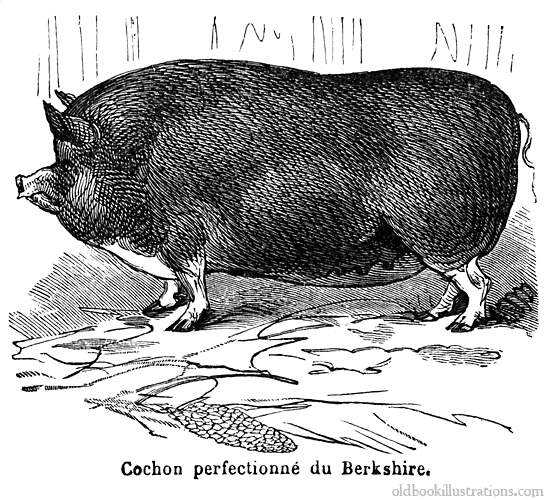
Those of you who watch the career achievements of the Empress of Blandings with keen interest may already be aware that the silver medal in the Fat Pigs class at the one-hundred-and-seventy-fifth annual Shropshire Agricultural Show held in 2023 has been won by the Earl of Emsworth’s black Berkshire sow.
Very few people, however, are aware how near that fine specimen of the porcine species came to missing the coveted honour.
Now it can be told.
This brief chapter of Secret History may be said to have begun on the night of the 6th of February, when news trickled in that the Animal Welfare Board of India (an advisory body under the Ministry of Fisheries, Animal Husbandry and Dairying), in its infinite wisdom, had issued a diktat exhorting all the lovers of ‘Gau-mata’ (cow mother) to celebrate the upcoming Valentine’s Day as ‘Cow Hug Day’. It extolled the many virtues of this much-revered animal, describing it as the backbone of Indian culture and even claimed that hugging with cow will bring emotional richness to the hugger, thereby making their life happy and full of positive energy.
As luck would have it, starting on the 13th of February, Lord Emsworth was away to the metropolis for a trip which was supposed to last three days. He hated being in London, but when one has to be a worthy descendant of one’s ancestors and duty calls, one has to take the rough with the smooth.
While he was away, the Efficient Baxter hatched a juicy scheme in connivance with Lady Constance Keeble. An ingenious plan to boost the revenues of the Castle was unleashed. Learning from the unique initiative of the Government of India, a promotional poster went around on the social media announcing that, for a nominal charge, a person could walk into the Castle and hug the Empress on Valentine’s Day. As an exception, on the day, visitors were permitted to pose for a selfie with the regal animal. Of course, flash photography was not permitted, lest the Empress lose her sense of equanimity and sang froid.
Given the sound reputation of the Empress in the nearby counties, a good many people landed up on the day, and went back with big smiles on their faces, having just clicked a selfie of their having hugged the famous personality. Some even purchased different kinds of mementos, duly cast in ceramic and papier mâché, which were put up on sale on the occasion, depicting the Empress of Blandings in different poses. Special balloons shaped like her were eagerly lapped up by parents who were relentlessly pestered by their obdurate kids.
At the end of the day, Lady Constance Keeble was delighted when The Efficient Baxter reported back on the magnitude of collections made. She was chuffed that she could not only manage to pay the exorbitant power charges for an entire year of operations at the Castle, but also execute the much-delayed plans for repairs and upgradation of facilities for all its guests, visitors, and impostors.
On the 15th of February, Empress of Blandings, always a hearty and even a boisterous feeder, for the second time on record, declined all nourishment.
On the 16th of February, George Cyril Wellbeloved, the pigman in the employ of Lord Emsworth, sent a telegram to Lord Emsworth which caused many at the local post office to raise their eyebrows by at least a quarter of an inch. The communication read thus:
Empress refuses feeding. Urgent. Need doctor immediately.
Lord Emsworth made an urgent call to the veterinary surgeon, cut short his visit to London, and rushed back to the Castle.
And on the morning of the 17th of February, the doctor called in to diagnose and deal with this strange asceticism, was compelled to confess to Lord Emsworth that the thing was beyond his professional skill.
To recapitulate the events so far:
February 6 – ‘Cow Hug Day’ notification gets issued in India.
February 7 – The Efficient Baxter comes up with a revenue-generation model by declaring the upcoming Valentine’s Day as the ‘Empress Hug Day’.
February 8 – Lady Constance Keeble, anxious about the finances at the Castle, approves the plan.
February 9 – Unbeknown to Lord Emsworth, a poster promoting the gala event gets released on social media.
February 10 – The Animal Welfare Board of India issues a terse notification declaring that its appeal for celebration of Cow Hug Day on 14th February stands withdrawn. Rupert Baxter promptly reports this to Lady Constance Keeble. Nevertheless, both decide to go ahead with their plans.
February 13 – Lord Emsworth leaves for the metropolis.
February 14 – ‘Empress Hug Day’ gets celebrated.
February 15 – Empress lays off the vitamins.
February 16 – Veterinary surgeon gets summoned.
February 17 – Veterinary surgeon baffled.
Right.
The effect of the veterinary surgeon’s announcement on Lord Emsworth was overwhelming. As a rule, the wear and tear of our complex modern life left this vague and amiable peer unscathed. So long as he had sunshine, regular meals, and complete freedom from the society of his younger son Frederick, he was placidly happy. But there were chinks in his armour, and one of these had been pierced this morning. Dazed by the news he had received, he stood at the window of the great library of Blandings Castle, looking out with unseeing eyes.
As he stood there, the door opened. Lord Emsworth turned, and having blinked once or twice, as was his habit when confronted suddenly with anything, recognized in the handsome and imperious-looking woman who had entered – his sister, Lady Constance Keeble. Her demeanour, unlike his own, betrayed the inner sense of gratification she was experiencing, having made a substantial contribution to the Castle’s coffers.
‘Clarence,’ she chipped in, ‘have you heard the good news?’
Lord Emsworth looked at her doubtfully.
‘What could be good these days? That man is an ass.’
As frequently happened to her when in conversation with her brother, Lady Constance experienced a swimming sensation in the head.
‘Will you kindly tell me, Clarence, in a few simple words, what you imagine we are talking about?’
‘I am talking about Smithers. Empress of Blandings is refusing her food, and Smithers says he can’t do anything about it. And he calls himself a vet!’
‘Then you haven’t heard? Clarence, Baxter, and I have managed to make a hefty collection on this Valentine’s Day. You no longer need to worry about our backlog of power bills and the critical repairs you were dreaming of carrying out at the Castle. Are you not happy?!’
‘And the Agricultural Show is already upon us!’
‘What on earth has that got to do with it?’ demanded Lady Constance, feeling a recurrence of the swimming sensation.
‘What has it got to do with it?’ said Lord Emsworth warmly. ‘My champion sow, with less than ten days to prepare herself for a most searching examination in competition with all the finest pigs in the county, starts refusing her food—’
‘Will you stop fussing over your insufferable pig and give your attention to something that really matters? I am trying to tell you that we have made a big pile of money while you were off to London to take care of some legal work.’
There was a silence. Brother and sister remained for a space plunged in thought. Lord Emsworth was the first to speak.
‘We’ve tried acorns,’ he said. ‘We’ve tried skim milk. And we have tried potato-peel. But, no, she will not touch them.’
Conscious of two eyes raising blisters on his sensitive skin, he came to himself with a start.
‘Pile of money, you say? How?’
Lady Constance spilled the beans. As she went on spilling the beans, the colour of her brother’s face started changing from a dull pink to a dark shade of red. His physical frame shuddered. His eyes, normally dull, looked like something out of an oxyacetylene blowpipe. As far as he was capable of being disturbed by anything that was not his younger son Frederick, he was disturbed. Somehow controlling his rage, he enquired.
‘Where is Rupert Baxter?’
‘He has gone off to the bank to deposit the amount we collected.’
‘I would surely like a word with him the moment he is back. If he thinks he can go about the place playing fast and loose with the Empress, exposing her to the trauma of getting hugged by all and sundry, and leading her to a mental state where she would refuse her daily quota of fifty-seven thousand and eight hundred calories, he is sorely mistaken. Absurd! Ridiculous! Did he think of seeking her consent before exposing her to such a preposterous arrangement?’
‘Clarence!’
Lord Emsworth blinked. Something appeared to be wrong, but he was convinced that he had struck just the right note – strong, forceful, dignified.
‘Eh?’
‘We had only worked for the overall good of the Castle.’
Lord Emsworth reflected.
‘But we have to take a strong line,’ he said firmly. ‘When it comes to her, I stand no nonsense. We have no right to deprive the Empress of her right to privacy. I am now going to the pigsty to see how to go about soothing her frayed nerves.’
There is no doubt that, given time, Lady Constance would have found and uttered some adequately corrosive comment on this imbecile suggestion; but even as she was swelling preparatory to giving tongue, Lord Emsworth looked wistfully at the door.
It was smoothly done. A twist of the handle, and he was where harmony prevailed. Galloping down the stairs, he charged out into the sunshine and rushed to the Empress’ abode. Each step that took him nearer to the sty where the ailing Empress resided seemed a heavier step than the last. He reached the sty, and, draping himself over the rails, peered moodily at the vast expanse of the pig within.
The imperial residence of the Empress of Blandings looked very snug and attractive in the mild sunlight. But beneath even the beautiful things of life there is always an underlying sadness. This was supplied in the present instance by a long, low trough, plainly full to the brim of succulent mash and acorns. The fast, obviously, was still in progress.
Not surprisingly, he found George Cyril Wellbeloved on duty there, wistfully viewing the untouched trough.
‘What does she convey, George?’
‘Sir, I have an impression that it is a matter of time before Reason returns to its throne.’
‘But time is what we do not have’, pointed out Lord Emsworth gloomily.
‘From what I could gather from her grunts and oinks, and also from her body language, she is quite upset at being exposed to so many hugs on a single day. However, she is also happy that she could spread some sweetness and light in the lives of the common public reeling under the impact of unemployment, inflation and the harsher slings and arrows of Fate which are the lot of the lower and the middle classes. She feels that by permitting people to hug her, she has contributed towards bringing about societal change and motivated many to choose the path of universal peace and harmony on a day which celebrates love.’
‘What a fine soul she has!’, quipped Lord Emsworth. ‘I wonder if she has caught the Indian craze of females of all kinds inwardly aspiring to attain what is euphemistically alluded to as Size Zero. But she has never entertained such ambitions. Those who keep a track of her dietary habits already know that she is a hearty and boisterous feeder. You know very well that she lives to feed, thus fulfilling her innate desire to drink deep from the fountain called Life. She has never cared about looking like a balloon with two ears and a tail. She lives a blissful life without bothering about her Size Infinity looks. I daresay all this hugging business has left her totally shaken and stirred, right from her snout to her tail.’
‘Indeed, sir.’
‘It fails me as to how you permitted her getting exposed to such a traumatic experience.’
‘Lady Keeble instructed me to give the Empress a nice bath for the occasion, sir. Mr. Baxter asked me to make a temporary enclosure for people who came over and waited for a long time to do the honours. I merely followed my orders, sir.’
Lord Emsworth drew himself up and adjusted his pince-nez. He felt filled with a cool masterfulness. He felt strongly tempted to fire the pig man. But an inner voice reminded him of the impending competition due to take place in a few days. He also recalled his having had to eat humble pie in respect of Angus McAllister when a favourite pumpkin had to win a prize.
‘Orders, eh, what, what, what? How many times do I have to remind you that when it comes to the Empress’ welfare, you take orders only from me. No one else, and I repeat no one else, is permitted to do so. If you do not see eye to eye with me in this matter, Cyril, say so and we will discuss what you are going to do about it. I value your services highly, Cyril, but I will not be dictated to in my own Castle in any matter, especially anything pertaining to the Empress. Do I make myself clear?’
George Cyril Wellbeloved stood aghast. He thought he had done an outstanding job by following his instructions. He knew the unpredictable temper of Lord Emsworth and wondered if he was about to get sacked. He disliked the idea very much. Blandings Castle was in his bones. Elsewhere, he would feel as if he were in exile.
‘Indeed, sir’, said the pig man sheepishly.
‘You know you have a way of saying, “Indeed, sir,” which gives the impression that it’s only your feudal sense which prevents you from substituting the words, “Says you!”’
‘Is that so, sir?’
‘But how are going to get her to start feeding again? Being an expert at pig rearing, surely you can resolve this issue without further delay? We run the serious risk of her losing out on a medal at the upcoming Shropshire Agricultural Show and instead being relegated to the mean obscurity of merely an ‘Honourably Mentioned.’
‘Sir, I have a suggestion for you to consider. You may remember the time when I was arrested by police constable Evans of Market Blandings for being drunk and disorderly at the Goat and Feathers. I was then jugged for fourteen days without the option of a fine.’
‘What has that got to do with this?’, Lord Emsworth enquired, blinking his eyes. The agony of having to rejig his memory cells showed on his face.
‘But you had then managed to persuade the Empress to approach the trough?’, he said, brightening up a wee bit.
“Oh, is it?” said Lord Emsworth, and paused awhile in thought. He had a vague recollection that someone had once told him to do something – what, he could not at the moment recall – about someone of that name.
Beach was duly summoned to resolve the mystery. He reminded his employer rather frigidly that his previous attempts at pig-calling in his company, duly aided by Angela, had failed to deliver the goods. He went on to point out that what had eventually brought home the bacon then was a pig-call made by James Belford.
The expression on Lord Emsworth’s face was that of a drowning man who sees a lifeline. He fumbled in his trouser pockets and, duly aided and abetted by Beach, could locate his smart phone. He lost no time in getting James on the line. Once the preliminary greetings had been exchanged, the challenge was brought to James’ notice.
‘Most people don’t know it, but I had it straight from the lips of Fred Patzel, the hog-calling champion of the Western States. It is a traditional call which all pigs instantly recognize and respond to. Can I get to speak to your pig-man on the line? I shall explain it to him.’
‘Splendid idea,’ said a cheered-up Lord Emsworth, handing over the instrument to Cyril Wellbeloved.
After a brief exchange, Cyril repeated what he was told.
‘Pig-hoo-o-o-o-ey!’
‘Nothing like it,’ James said. ‘You want to begin the “Hoo” in a low minor of two quarter notes in four-four time. From this build gradually to a higher note, until at last the voice is soaring in full crescendo, reaching F sharp on the natural scale, and dwelling for two retarded half-notes, then breaking into a shower of accidental grace-notes.’
Cyril went on practising the same till the time James approved of the outcome. The call was terminated, with Lord Emsworth offering profuse thanks to James and even inviting him and Angela to visit the Castle sometime soon.
The moment of reckoning had finally arrived.
Resting his hands on the rail before him, Cyril swelled before their eyes like a young balloon. The muscles on his cheekbones stood out, his forehead became corrugated, his ears seemed to shimmer. Then, at the very height of the tension, he let it go, as advised.
Slowly, fading off across hill and dale, the vast bellow died away. And suddenly, as it died, another, softer sound succeeded it.A sort of gulpy, gurgly, plobby, squishy, wofflesome sound, like a thousand eager men drinking soup in a foreign restaurant. And, as he heard it, Lord Emsworth uttered a cry of rapture.
The Empress was feeding.
The rest, as they say, is history.
Regrettably, both the unique ideas – whether that of a ‘Cow Hug Day’ or of a ‘Pig Hug Day’ – now remain consigned to a dustbin. Perhaps the ideas were a little ahead of their times. Were these to ever get revived, Valentine’s Days in future would witness disgruntled denizens experiencing a surge of positive energy and an inner glow of joy and satisfaction. Physical contact with a member of another species could work wonders for the psychology of an individual. Such initiatives would surely enthuse people to choose a more peaceable and wholesome approach to life, while keeping them away from such inane acts of mischief as aggression against some movies, coffee shops, fashionable retail outlets and even shops selling potatoes, tomatoes, and cucumbers.
Notes:
Based on the story of the same name by P. G. Wodehouse.
Most authors happen to be sensitive souls. The kind of cruelty they get subjected to in their routine lives makes one wonder as to how they keep dishing out juicy narratives day after day, despite facing mighty challenges.
For those who specialize in spinning fictional yarns, the basic challenge is that of cranking up a plot and etching out characters which fit into the overall scheme of things. For those who dish out a non-fiction piece of work, the challenge is that of coming up with a novel subject which would provide some satisfaction to their target audience.
Cruelty in the Creative Phase
When their creative juices are in full flow, distractions abound. Social commitments often impede the pace of work. Spouses pop up with some mundane queries just when the proceedings happen to be perking up. Maid servants and postmen come in just at the time when the heroine…
Many of our Bollywood heroines have waltzed into our hearts and minds based not only on their acting prowess but also owing to their knowledge of classical dance forms. The latter skill has enabled them to present some unique dances on the silver screen, with due support from their directors, music composers and choreographers. If some have been accompanied in their performances in the past by such stalwarts as Gopi Krishna, others have had the backing of legendary figures like Pandit Birju Maharaj.
Allow me to share with you some dances which I would label as being unique. Either because these are based on classical or semi classical forms of Indian dances, or simply because the presentation as well as the sheer attention to detail leaves one awestruck. Quite a few are solo performances, backed only by instrumental music. Collectively, these present a vibrant rainbow of various human emotions, ranging from love and passion to a gutsy fury.
The Drum Dance (Nagada dance) here is the grand celebration of a royal marriage. It was well choreographed and presented in an era which did not have access to the kind of technology available these days. The story was about a feud between two brothers over their right to rule their father’s kingdom. Each of the huge drums acted like a Trojan horse, hiding soldiers from the rival’s camp. Apparently, it took six months’ practice to get this dance ready for the silver screen.
Chandralekha (1948)
Lead Dancer: T R Rajakumari
Music: S Rajeshwar Rao
Uday Shankar and Amala Shankar entertained us with quite a few classical dances in another movie released in the same year. It was the first film to present an Indian classical dancer in the leading role and was entirely shot as a dance ballet and a fantasy. Here is one gem of a dance which depicts Lord Shiva and Parvati gyrating to their heart’s content.
Kalpana (1948)
Lead Dancers: Uday Shankar, Amala Shankar
Music: Vishnudas Shirali
V. Shantaram’s offerings were invariably based on classical forms of music. Even the design of the titles was highly innovative, often summarizing the key message of the movie in a poignant manner.
When Lord Shiva flies into a rage, he is believed to break into a special dance form: tandav. Part of this dance depicts the same. Eventually, a timely intervention by the feminine force of the universe – shakti – saves the day.
Jhanak Jhanak Payal Baaje (1955)
Dancers: Gopi Krishna, Sandhya
Music: Vasant Desai
These are two unique dances. One speaks of the extent of imperfection in our lives. Another captures the playful spirit of Holi – the festival of colours – and even features an elephant trying to match the dancing steps of the heroine.
Navrang (1959)
Dancer: Sandhya
Music: C. Ramchandra
Based on the classic play Abhigyan Shakuntalam from Kalidasa, this dance captures the feelings of a woman spurned in love.
Stree (1961)
Dancer: Rajshri
Music: C. Ramchandra
Here is yet another enchanting dance performance.
Chhaya (1961)
Dancers: Baby Farida, Asha Parekh
Music: Salil Chowdhury
Many movies have depicted the folklore of love between Radha and Krishna. Songs like Hamen gop gwala kehte hain…(Navrang, 1955) and Mohe panghat pe…(Mughal-E-Azam, 1960) readily pop up in our minds. Here is another such performance.
Phoolon Ki Sej (1964)
Dancers: Gopi Krishna, Vyjayanthimala
Music: Adi Narayana Rao
What we have here is a classic snake dance. A unique presentation, indeed, superbly crafted and rendered.
Guide (1965)
Dance: Waheeda Rehman
Music: S. D. Burman
Arthashastra of Kautilya mentions the grooming of visha kanyas (Poison Damsels) whose blood and body fluids had poisonous properties. They were used as assassins to eliminate powerful enemies of the state. This dance performance depicts one such case.
Sagaai (1966)
Dance: Rajshri
Music: Ravi
When a proficient dancer gets challenged in a royal court, she leaves us spellbound by her dancing skills.
Yet another solo dance which leaves one mesmerized.
Chhoti Si Mulaqat (1967)
Dance: Vyjayanthimala
Music: Shankar–Jaikishan
A captivating dance performance by a multi-skilled actress who went on the become a member of the Indian Parliament.
Kinara (1977)
Dance: Hema Malini
Music: R. D. Burman.
Versatile directors like Hrishikesh Mukherjee had a knack of presenting character artists who are otherwise famous for their negative roles in a positive light on the silver screen. In this dance sequence, we find Shashikala joining hands with Rekha.
Khubsoorat (1980)
Dancers: Shashikala, Rekha
Music: R. D. Burman
What happens when an introvert and shy person gets prodded by her well-wishers to showcase her dancing skills at a social gathering?
Chaal Baaz (1989)
Dancer: Sridevi
Music: Laxmikant–Pyarelal
This one is a temple dance by late Sridevi. Unfortunately, I am yet to trace the name of the movie.
Dancer: Sridevi
Yash Chopra, known as the King of Romance, had a unique way of presenting his heroines at their sensuous best. His name always reminds us of the colour white and of gorgeous heroines draped in plain colour chiffon saris and sleeveless blouses, swaying to rhythmic beats composed by eminent classical musicians.
Chandni (1989)
Dancer: Sridevi
Music: Shiv-Hari
Lamhe (1991)
Dancer: Sridevi
Music: Shiv-Hari
A sophisticated way of telling the ruler to behave himself when it comes to visiting the ‘other woman’.
Lekin (1991)
Dancer: Hema Malini
Music: Hridaynath Mangeshkar
This one captures the inner anguish felt by a woman who is part of a highly patriarchal family which tries to protect the name of a male member who, along with his friends, had gang-raped the maid servant.
Damini (1993)
Dancer: Meenakshi Seshadri
Music: Nadeem-Shravan
Two more captivating dances from the stable of Yash Raj Films.
Dil To Pagal Hai (1997)
Dancer: Madhuri Dixit
Music: Uttam Singh
Dil To Pagal Hai: The Dance of Envy
Dancers: Madhuri Dixit, Karishma Kapoor
Sanjay Leela Bhansali is yet another director whose movies are lavishly produced and mounted on a larger-than-life canvas. Consider this song and dance sequence.
Hum Dil De Chuke Sanam (1999)
Lead Dancer: Aishwarya Rai
Music: Ismail Darbar
Here is yet another offering from Bollywood based on the Radha-Krishna folklore. This version brings in the dancing skills of Madhuri Dixit, duly backed by Birju Maharaj’s choreography, music, and lyrics.
The memories of a distant past come flooding back when the passion for dance resurfaces after the dancer runs into an old love interest.
Dedh Ishqia (2014)
Lead Dancer: Madhuri Dixit
Music: Vishal Bhardwaj
A solo dance, sans lyrics, surely leaves the entire burden of a sparkling performance on the shoulders of the heroine. Our multi-talented divas have never failed us on this count.
It is not that our heroes do not possess outstanding dancing skills. However, these are very few. The names of Kamal Hasan, Hritik Roshan, Ranbir Kapoor, late Sushant Singh Rajput and Tiger Shroff can be mentioned in this context.
Here are two video clips which some of you may relish.
Ek Duuje Ke Liye (1981)
Dancer: Kamal Hasan
Music: Laxmikant–Pyarelal
(Courtesy Aman and Swasti Sharma)
Lakshya (2004)
Dancer: Hritik Roshan
Music: Shankar, Ehsaan & Loy
These days, most male actors can also shake a leg or two, though the trend is towards disco, break-dance, and such newer forms of dances as hip hop, lyrical, freestyle, and fusion.
Gaining proficiency in any form of art needs talent, passion, mentoring, and years of continuous practice. What we get to see for a few minutes on our screens is the culmination of a long-drawn-out effort towards conceptualization, synchronization, persistence, and hard work by all the crew members. One is filled with a feeling of reverence towards all the directors, choreographers, artistes, and technicians who bring such unique offerings to us.
Recently, at a private party, some youngsters had to work assiduously for about two hours to eventually come up with a dance sequence which ran into merely 53 seconds!
One can well imagine the magnitude of effort artists, choreographers and directors put in to come up with unique dance sequences which keep us enchanted. Imagine creating something as elaborate as, say, Pyar kiya to darna kya… (Mughal-E-Azam, 1960), Hothon mein aisi baat… (Jewel Thief, 1967) and Dola re… (Devdas, 2004). The mind boggles!

















 ashokbhatia