There are indeed instances in one’s life which leave one shaken and stirred. Scales fall from one’s eyes. Like Bertie Wooster, one feels befuddled, bewildered, fazed, flummoxed, and perplexed. The reality of one of the several facets of life gets revealed, much like a mountain making a reappearance once the fog has vanished and the sun has come out in all its glory.
While travelling in a local train in Switzerland recently, I had a rather unpleasant experience when a gentleman of Swiss origin ridiculed me for being an Indian.
It happened on the 1st of January 2023. The family had boarded a train to Lucerne to enjoy the fireworks display in the evening hours. Few stops before Lucerne, very many people boarded the train. We are used to overcrowding in trains in India, but this was a new experience for me – to see this happening in one of the advanced countries. I was already sitting on one of the few spring-back chairs available.
A gentleman, surely cast in the mould of Roderick Spode, had just come in along with many others. He looked at me sternly and asked me to get up. I got up and enquired if the gentleman wanted to occupy the seat. The gentleman clarified that he had asked me to stand up so that there is more space for others to squeeze in. So far, so good. But then he went on to give me a supercilious look and added rudely that such things happen only in India.
The basic message from the gentleman was right, but the rude and insulting way he said it hurt all of us. The fact that he insulted my country really hit hard. My daughter-in-law and my son intervened to say that he could have discussed this cordially, rather than being abrasive about it. But he went on arguing about it, claiming that he had spent a good deal of time in India and knew about how things worked there. Other passengers nearby kept telling us to avoid listening to his comments.
To give him a benefit of doubt, perhaps he had had a fight with his wife before leaving home that evening. However, a realization also dawned – that beneath a veneer of polite manners and sweet smiles, quite a few people in other countries may carry some deep-seated prejudices against those of Indian origin.
Jeeves would concur with me if I were to say that our psychology is such that when we love something, we somehow feel entitled to criticize it and make fun of it. But when someone else does it, we take offence! We are left twiddling our thumbs. I confess this is what happened to me on the day. I felt deeply embarrassed and wondered what I had done to deserve a treatment of this kind.
I admit I am a bit fluffy headed and forgetful, but by no stretch of imagination can I match the high standards set by Lord Emsworth in that department. I found it very difficult to forget this incident. On the contrary, it made me recollect many earlier instances when I did not have a satisfactory response to some meaningful and thought-provoking questions asked about India by those living abroad.
A cabbie in New York asking me as to why the government in the country was against Muslims and Christians.
A tourist from Canada who had just returned from India asking why the cab drivers in most parts of the country tended to either overcharge or harass customers. I wonder if she had ever lapped up the book ‘India and the Indians’, written by Lady Malvern who had spent some time in India.
A young lady in Norway enquiring whether it was safe for her to travel to India alone. She quoted frequently reported rape and murder cases in the country she had read about.
Another lady in Sweden checking as to why Indians have a practice of shaming the victim in a rape case rather than putting the spotlight on the perpetrator of the crime.
A person of German origin asking if our metro cities did not have enough storm drains to ensure that periodic flooding did not take place.
A movie enthusiast of French origin enquiring why, despite the presence of a film certification body, people kept calling for boycotts of some movies. She wondered how Indians have become so intolerant, especially when they pride themselves on being an ancient civilization and have really demonstrated how to be a multi-ethnic society.
A teenager from Denmark asking why Indian households do not segregate their domestic waste and why the country lacks enough capacity to handle such waste.
A person from Denmark who asked me why India was so noisy.
A group of businesspersons from Finland wondering why it was far easier to deal with businesses in the west and the south of India than with those in the north of the country. Some of them said they had been cheated by the latter.
What I quote above happen to be snippets of conversations with lay citizens of different countries, spread over the past few years. Those of us who believe we have already acquired the status of a Vishwa Guru – A Global Teacher – and who are swayed by the nationalistic fervour so very fashionable in India these days, may immediately jump to enquire who gave the rights to people in advanced countries to judge India and Indians. They might even suspect and allege a global conspiracy to defame India.
It is no one’s case that our First World countries happen to be perfect. Of course, these suffer from many ills. Graffiti in public spaces is a common sight. So are cigarette butts in otherwise pristine public gardens.
But the point here is that if we Indians can ape the west in terms of fashion, social relationships and in so many other ways, why can’t we do something about the kind of courtesy we show to tourists and fellow citizens in public spaces? Why do we need a Prime Minister to tell us to improve our levels of hygiene and keep our public spaces spick and span? Why can’t we respect the law, rather than priding ourselves in breaking it? Why do our political parties depend on criminals to win over the voters? Why do justices of our Supreme Court have to get involved in ensuring that road safety standards improve across the entire country? Why are we worried about elections and inane internal issues when an enemy is gleefully usurping our territory on our borders? The mind boggles.
We live in a multipolar world where interdependence between countries is an essential fact. Yes, as a country, India remains a work-in-progress. But we have tremendous soft power, whether in terms of our ancient scriptures, rich culture, music, dance, movies and the like. The diverse cuisine we have is popular across all countries. When it comes to frugal engineering, we shine on the global stage. The manpower we offer to the world is unique in many ways.
It is surely not wrong to be proud of our heritage. Nor is it improper to demand respect from others. But to remain blissfully unaware of our weaknesses and to do nothing to address the same will simply go on to ensure that chinks in the Brand India armour continue to fester.
A sister of Bertie Wooster’s lives in India. It follows that he would be gravely concerned about this situation. Perhaps, he may seek Jeeves’ advice on the issue. If so, I wonder if Jeeves would recommend a public relation campaign to improve India’s brand image worldwide. He may also suggest a mass communication drive within the country and ways to make a genuine effort to improve our civic infrastructure. Someone like Rupert Psmith may get one of his rich uncles to buy out a premier media house in a western country.
But the nub of the matter is that we, the Indians, need to indulge in a bout of introspection, and work upon improving our own civic habits and our behaviour towards others. The buck stops at us!
A culture which is rooted in Consciousness does not throw up hapless leaders who keep burning the proverbial midnight oil in their relentless pursuit of commercial goals only, while shoving concerns such as the environment, the society and human resources under the corporate carpet. It does not merely mean that our marketing honchos are doing their best in servicing our customers effectively and efficiently; instead, it implies that they do so while ensuring that the product/service as well as its packaging is environment-friendly.
It means that those toiling on the operations side design the processes in such a way that the carbon footprints are at least neutral, if not positive; that our financial wizards keep nudging the organization towards maximizing returns to all its stakeholders; and the human resource executives keep burning the midnight oil to ensure that people and processes respect human values and dignity, while keeping the costs…
Most of the songs in the movies being churned out by Bollywood happen to portray feelings of love. One often wonders as to how the heroine and the hero keep changing their outfits in each of the stanzas, keeping the wardrobe designers and producers laughing all the way to their respective banks. The high walls of manmade borders melt away, as they are seen wandering about on different continents of the world without any visa/immigration hassles, proving the age-old adage of Vasudhaiv Kutumbukam. Not to speak of the bevy of choreographers and a 100-piece orchestra which keeps following them scrupulously, without missing a single beat.
But once in a blue moon, we get treated to a love song which is more spontaneous in its depiction. The lyricist and the music director obviously work harder on creating such songs which appear as if these are getting composed by the couple in real time on the screen.
Consider the following songs which fall in this category.
One of the very few love songs which has an office setting as a background.
Jaane kahaan mera jigar gaya ji…
Movie: Mrs and Mr 55 (1955)
Singers: Mohd. Rafi, Geeta Dutt
Music Director: O P Nayyar
Lyricist: Majrooh Sultanpuri
Here is a flirtatious song from an otherwise serious movie. The back-and-forth chat between the heroine and the hero is a sheer delight.
Hum aapki ankhon mein…
Movie: Pyasa (1957)
Singers: Mohammed Rafi, Geeta Dutt
Music Director: S D Burman
Lyricist: Sahir Ludianvi
What happens when a lovers’ tiff results into a lovelorn backchat between the pair?
Achha ji main haari chalo…
Movie: Kala Pani (1958)
Singers: Mohd. Rafi & Asha Bhosle
Music: S.D. Burman
Lyricist: Majrooh Sultanpuri
A mischievous heroine puts the poor hero through an ordeal and then has the cheek to teasingly ask as to how he is feeling!
Haal kaisa hai janaab ka…
Movie: Chalti Ka Naam Gaadi (1958)
Singers: Kishore Kumar, Asha Bhosle
Music Director: S.D.Burman
Lyricist: Majrooh Sultanpuri
Claiming some dues from the party of the other part can happen even during a stage performance!
Paanch rupaiya barah anna…
Movie: Chalti Ka Naam Gaadi (1958)
Singers: Kishore Kumar, Asha Bhosle
Music Director: S D Burman
Lyricist: Majrooh Sultanpuri
How did you fall in love with me, asks the heroine coyly!
Sach bata tu mujh pe fida…
Movie: Sone ki chidiya (1958)
Singers: Asha Bhosle, Talat Mehmood
Music: O P Nayyar
Lyricist: Sahir Ludhianvi
Yet another song where bickering between a couple takes place during a stage performance.
Tere pyar ka aasra chahta hoon…
Movie: Dhool Ka Phool (1959)
Singers: Mahendra Kapoor, Lata Mangeshkar
Music Director: N. Datta
Lyricist: Sahir Ludhianvi
A romantic poem gets composed as the hero plays a muse to the heroine.
Chupke se mile pyaase pyaase…
Movie: Manzil (1960)
Singers: Geeta Dutt, Mohammed Rafi
Music Director: S. D. Burman
Lyricist: Majrooh Sultanpuri
The lovers list the precautions the party of the other part should take, lest any harm may come to the flora and fauna around.
Bikhra ke zulfien chaman mein na jaana…
Movie: Nazrana (1961)
Singers: Mukesh, Lata Mangeshkar
Music Director: Ravi
Lyricist: Rajendra Krishan
A delectable confluence of Carnatic and Hindustani music, this song captures the rivalry between two persons, both trying to woo the young lady.
Ek chatur naar…
Movie: Padosan (1968)
Singers: Manna Dey, Kishore Kumar
Music Director: R D Burman
Lyrics: Rajendra Krishan
Getting the beloved to accept that she loves the lover.
Baagon mein bahaar hai…
Movie: Aradhana (1969)
Singers: Lata Mangeshkar, Mohd. Rafi
Music Director: S D Burman
Lyricist: Anand Bakshi
Even surreptitious meetings between a couple get overshadowed by the heroine’s wish to return home early!
Achha to hum chalte hain…
Movie: Aan Milo Sajna (1970)
Singers: Kishore Kumar, Lata Mangeshkar
Music Director: Laxmikant-Pyarelal
Lyricist: Anand Bakshi
Strictly speaking, only the first portion of this song happens to be dialogue-driven. Nevertheless, overall, it surely has a dash of spontaneity to it!
Sa re ga ma pa…
Movie: Abhinetri (1970)
Singers: Lata Mangeshkar, Kishore Kumar
Music Director: Laxmikant-Pyarelal
Lyricist: Majrooh Sultanpuri
The subtle art of dodging the police by showcasing a clandestine meet as a lovers’ date.
O mere raja, khafa na hona…
Movie: Johnny Mera Naam (1970)
Singers: Kishore Kumar, Asha Bhosle
Music Director: Kalyanji Anandji
Lyricist: Rajinder Krishan
A budding romance soon gets transformed into a life-long commitment.
Aap yahaan aaye kisliye…
Movie: Kal Aaj Aur Kal (1971)
Singers: Kishore Kumar, Asha Bhosle
Music Director: Shankar Jaikishan
Lyricist: Neeraj
Social barriers and taboos keep the heroine on tenterhooks, whereas the hero is not worried about such mundane issues.
Gir gaya jhumka…
Movie: Jugnu (1973)
Music Director: S D Burman
Singers: Kishore Kumar, Lata Mangeshkar
Lyricist: Anand Bakshi
Two playful songs, depicting the sprouting of romantic feelings between two teenagers.
Mujhe kuchh kehna hai…
Hum tum ek kamre mein band hon…
Movie: Bobby (1973)
Singers: Shailendra Singh, Lata Mangeshkar
Music Director: Laxmikant Pyarelal
Lyrics: Anand Bakshi
Couplets (dohas) of such Sufi poets as Rahim and Kabir have regaled generations with pristine wisdom, duly laced with an earthy common sense. Trust Rajshri Productions to string some of these together for our sake.
Bade badaai na karen…
Movie: Ankhiyon Ke Jharokhon Se (1978)
Singers: Hemalata, Jaspal Singh
Music Director: Ravindra Jain
Lyrics: Dohas of Rahim and Kabir
Keep the dialogue on and love will soon follow it its wake!
Suniye, kahiye…
Movie: Baton Baton Mein (1979)
Singers: Kishore Kumar, Asha Bhosle
Music Director: Rajesh Roshan
Lyricist: Amit Khanna
The hero regales a bunch of kids with a juicy story about his encounter with a lion.
Mere paas aao mere doston…
Movie: Mr. Natwarlal (1979)
Singer: Amitabh Bachchan, Master Ravi
Music Director: Rajesh Roshan
Lyricist: Anand Bakshi
The hero and the heroine are cooing to each other like turtle doves. They keep rhyming words and phrases and end up creating an impromptu song!
Kaise ho pagal…
Movie: Chashme Buddoor (1981)
Singers: Raj Kamal, Hemanti Shukla
Music Director: Raj Kamal
Lyricist: Indu Jain
When his six younger brothers fall hopelessly in love, the elder one guides them!
Pyaar tumhen kis mod pe le aaya…
Movie: Satte Pe Satta (1982)
Singers: Kishore Kumar, Bhupinder and others
Music Director: R D Burman
Lyricist: Gulshan Bawra
These are songs which, I believe, showcase a higher level of creativity on the part of our lyricists and music directors. To bring in a spontaneity of this kind is no mean task. Alas, these are very few and far between.
Can you think of any songs which could be added to this list? If so, please leave behind a comment below.
{Note: Inputs from Ms Madhulika Liddle, Mr Sunil Jain and Ms Pooja Agrawal are gratefully acknowledged}.
China’s actions to keep violating its borders with India with impunity continue unabated. So do its endeavours to create a ‘string of pearls’ around India. Time will tell if its plans to become a global superpower fructify, but when it comes to its southern neighbour, it may never be able to win over the hearts of Indians.
Rewind to 1962
India observes National Solidarity Day on the 20th of October every year. This day is observed to honour her Armed Forces. China had begun its assault on India on this date in 1962, giving a good thrashing to Indian forces which were ill-prepared then to meet the challenge.
As a child of around 10 years then, I still remember the kind of patriotic fervour which had sprouted amongst the country’s citizens at the time. Tension in the air. Ears glued to the news bulletins of All India Radio. Blackened windows at home. Stocking of groceries. Half-blackened headlights on all the motorized vehicles. Patriotic songs at school. Movement restrictions. People rushing to train stations to convey their best wishes to departing jawans. Blankets, woollens, medicines, and jewellery being openly donated to strengthen the country’s response.
Not surprisingly, Bollywood had unleashed its soft power to counter the aggression. At trade fairs and other public spaces, a song, Awaaz do hum ek hain, featuring some of the popular heroes of the era, was getting shown.
What followed were visits by popular stars to the frontier, cheering up the jawans. And, of course, the immortal song, Ae mere watan ke logon, rendered by Lata Mangeshkar in the presence of Jawaharlal Nehru, at a function in January 1963.
Movies like Haqeeqat (Chetan Anand, 1964) brought the harsh reality of war to our cinema halls.
Cut to the present
Beginning on the 5th of May 2020, Chinese and Indian troops engaged in aggressive melee, face-offs, and skirmishes at different locations along the Sino-Indian border. In late May, Chinese forces objected to Indian road construction in the Galwan river valley. According to Indian sources, melee fighting on the 15th/16th of June 2020 resulted in the deaths of many Chinese and Indian soldiers. A low-voltage conflict persists till date, with occasional flare-ups across the border having become the norm.
This time round also, Bollywood has not failed us, but in a different way. The patriotic fervour is not getting whipped up. Instead, nationalistic sentiments appear to be already occupying the centre stage. Increasingly, it appears as if the soft power of Bollywood is being deployed to keep our attention away from the predatory tactics of our northern neighbour.
In 2020, the suicide of one of Bollywood’s popular stars, Sushant Singh Rajput, and his alleged girlfriend Rhea Chakraborty, kept us riveted to our television screens, conveniently forgetting the attack on our territorial integrity and even the raging pandemic.
These days, an unsavoury and inane controversy has been whipped up around the colour of the bikini worn by a Bollywood diva in a song of a movie which is scheduled to get released in January 2023. Sure enough, such issues as an aggression on our borders, galloping inflation, increasing unemployment, rising social distrust and polarization, and more people having gone down the poverty line in India have got swept under the carpet. The voyeuristic eyes of the so-called sterner sex of our species are having a field day. As luck would have it, the movie has ended up grabbing our eyeballs much before it would hit the screens.
We appear to be living in an era of strident nationalism, backed by attempts to keep the fire of communal disharmony burning bright, ostensibly with a view to encashing the same for electoral gains for the ruling dispensation. We keep playing the victim card favouring the majority community to the hilt, painting the minor ones in villainous shades. Patriotism appears to have taken a backseat in our mental space.
Of movies and patriotism
Amitabh Bachchan, a doyen of the industry, had made some insightful observations at a public function recently. He had spoken of the way in which the movie industry had always stood up against oppression of any kind, right through the days of British occupation of India in the past. For your ready reference, here is the link to his speech which I refer to:
He bemoaned the jingoism and imaginary historical movies which are in tandem with the current political discourse and even referred to the boycott culture which appears to be making light of the formal system of film censorship which India follows.
In a way, Vijay, the disgruntled hero of the iconic movie Pyaasa (Guru Dutt, 1957) was very much like the Vijay of Deewaar (Yash Chopra, 1975), played by Amitabh Bachchan himself. Both stood up against the traditional norms of society. Ganashatru (Satyajit Ray, 1990), mentioned by the renowned actor in his speech referred to above, gave us hope that howsoever rotten the system may be, the youth stand up to support a fair and just approach to problem solving.
Bollywood deserves to be commended for the staple diet of opium it keeps dishing out for the Indian masses. However, this time around, the support of a pliant media, backed by a motivated use of social media channels, appears to be magnifying its endeavours at keeping us engaged, entertained, and enthused, enveloping us in a kind of selective amnesia, putting some critical issues on the backburner.
A time for some introspection?
In one of his articles, Prof Badri Raina had distinguished between nationalism and patriotism as under:
Nationalism enjoins upon us to believe that our air is the most salubrious, our water magical, our sunsets and sunrises uniquely blessed, our accumulated histories and legends superior to those of all others, our culture the only worthwhile culture, our religious faiths nearest to god, and our stores of knowledge beyond compare.
Patriotism acknowledges that where I live is my beloved space, warts, and all. It makes no claims to exceptionalisms that are thought to be God’s unique gift to us. It recognises that our streets are shabby, our lanes full of clutter, our habits shoddy, our resistance to rationality often grossly debilitating, our defiance of law a routine habit of mind, our male chauvinism shameful and violent, our casteism or racism or communalism deleterious to the most desirable ideals of human rights and human oneness.
While the dragon keeps giving us the chills at the borders, our trade relations continue to show a heart-warming trend. Total merchandise trade between India and China rose 34% to $115.83 billion in the 12 months to March 2022, according to data from the Commerce Ministry released to parliament some time back.
Time for us, the denizens of India, to look within and check if we have lost our innate sense of patriotism; or have we outsourced our thinking prowess and discriminatory powers, thereby losing our ability to sift the wheat from the chaff? Have we got used to getting distracted by inane internal issues and resigning to a relentless bullying by China thus? Can we demolish the narrow walls we have built around ourselves and take a strategic call on meeting external challenges of this kind?
Hopefully, our dynamic government is already working on the same.
Gone are the days when teachers could terrorize their students with nasty looks, well-oiled canes, and threats to suspend them without seeking any explanations. Now a days, it is the hapless teachers who are at the receiving end, having to justify taking any action against their pupils. Principles of natural justice apply. Pupils, and their doting parents, often demand a democratic style of education, where both the teacher and the taught get treated as equals.
One of the safest courses for the teachers to take these days is to write non-threatening and non-accusatory letters to the parents, conveying only their love for the misdemeanours of the pupils and pointing out the ways of reforming them. Being polite and ensuring a positive tone is of paramount importance.
Imagine rogue kids like Thos, Seabury, Bongo, Peggy, Edwin the Scout, Sebastian, and Clementina studying in any of the present-day schools. What would the harvest be?
Let us consider some of the e-mails and letters recently said to have been received by their blissfully ignorant guardians.
Dear Ms Gregson,
We are delighted to inform you that your child, Master Thomas Gregson, displays remarkable initiative. Not for him the simple-minded obedience to teachers. He believes in thinking out-of-the-box and shows early traits of growing into a business leader with a manipulative mindset.
We refer to his admirable refusal to do homework. We have, however, humbly requested him to stoop to our level and condescend to do his homework.
We also find his habit of leaving visiting dignitaries stranded on the small island in the lake at our premises by setting their boats adrift a trifle disturbing. One of them was recently attacked by an angry swan and vowed to put a hold on his annual contributions of a rather generous nature, thereby forcing us to shut the swimming pool funded by a charity in his wife’s name. This has led to widespread protests by other students. One of the governors was even wondering if we could request you to henceforth foot the bill. We have also counselled him to stay at home on the days when any dignitary visits us next.
Your support in the matter will be appreciated.
Yours anxiously,
Teacher
Dear Lady Chuffnell,
We are pleased to let you know that Master Seabury is doing as well in his studies as in bullying those who happen to annoy him. We support him in his belief that the art of bullying is what a kid needs these days, to survive and do well, especially when getting trolled for some inane stuff. Authority is something he does not care much about. He believes in equitable and fair treatment. He can look his Latin teacher and warden in the eye and demand protection money. In case it does not get coughed up within the due date, he takes appropriate steps.
He has developed a keen interest in an innovative use of all kinds of dairy products. The in charge of the school mess is never surprised when the slabs of butter stored in the cold store vanish overnight. If the protection money is not paid, he loses no time in creating a butter slide on the steps of the warden’s cottage. Since the latter is covered by the school’s group insurance policy, we merely counselled your child to avoid taking such steps in future and to ensure that at least some quantity of butter is left behind, so the children may not suffer at breakfast time the next morning.
We convey this only by way of information, not as a complaint. We are hopeful that he will one day become a famous dairy expert.
With best wishes,
Principal
Dear Ms Travers,
Reg: Master Bonzo Travers
We write this to inform that your child’s distaste for mundane subjects such as mathematics shows an imaginative mind which appears to be more appreciative of subjects in the realm of humanities and fine arts. Why, he wonders, does the square of the hypotenuse have to be equal to the square of the other two sides in a right-angled triangle? He also demands proof that (x + y)-squared translates into x-squared plus y-squared, plus 2 times x into y. It is no wonder that he has scored a splendid zero in his math exam. Unfortunately, even brilliant students must pass exams. Could you gently break that news to him?
We are of the view that given his inquisitive mind, he has a bright future ahead of him as a movie critic, provided he gives up his current infatuation with Emma Corrin.
Yours entreatingly,
Teacher
Dear Prof. Mainwaring,
Your child Ms Peggy Mainwaring and few of her close friends at school are good at making visiting lecturers nervous. They simply start giggling while the lecture if going on. They also keep staring at the hapless lecturer who is left shuddering from the top of his head to the base. We are of the opinion that she has a great future as a psychoanalyst.
But what we get unduly concerned about is that she slyly persuades the visitor to part with his cigarette case. Often, we have noticed her and her friends hiding away in the shrubbery and puffing contentedly, breathing in the deadly fumes which could do their tender lungs a great deal of damage. We have, of course, counselled her against this, pointing out that Covid is yet to melt away and it is a significant risk she is taking.
While we admire her social and leadership skills, on the academic front, we have recently found that she submitted a blank paper for last week’s science test, influenced by Albert Camus who said, ‘Whether the earth or the sun revolves around the other is a matter of profound indifference’. Your daughter shares that profound indifference, undoubtedly for philosophical reasons.
You may desire to have a word with her as to her developing a smoking habit. Could you kindly also inform her that to study psychology, she must pass class eight first?
Yours plaintively,
Ms Tomlinson
Hon’ble Lord of Worplesdon,
We have always been appreciative of the kind of scientific and engineering flair displayed by Master Edwin Craye. He deserves to be applauded not only for his innovative skills but also for the daily acts of kindness he keeps performing, bringing much succour to his teachers and fellow students.
He can be often found making earnest attempts to open and repair the smart phones of his teachers, after the same have been stolen and then thrown by him into the small fishpond on the school campus. After many of his failed attempts, tiny parts of the damaged phones are found spread all over the corner of the Physics laboratory where he works on some utopian projects.
Leaving lizards and frogs between the sheets of his hostel mates is his way of learning biology.
Whenever the canteen chimney gets clogged, he rushes in to clean it with gunpowder and paraffin. Just the other day, he inadvertently ended up starting a major fire on the premises. Luckily, the fire tenders came in promptly and brought the blaze under control. There was no loss of life or limb. However, a banjo and many other musical instruments used by the school orchestra for a practice session the previous evening were burnt to ashes.
He has a taste in literature, owing to the influence of Lady Florence Craye, his elder sister. It is unfortunate that he is yet to read Types of Ethical Theory. Instead, he appears to be under the influence of Friedrich Nietzsche’s Beyond Good and Evil, which is perhaps why he was copying from the boy next to him during yesterday’s test. Like Nietzsche, he believes that Supermen like him have little use for conventional notions of morality. The teacher who caught him copying is a conventional type and promptly gave him a zero.
Yours desperately,
Teacher
Dear Ms Moon,
Regarding: Master Sebastian Moon
We are impressed by your child’s knowledge of martial arts. In the past month, he has broken two legs, four arms and three noses. He also shows prudence while fighting, taking care to pick on weaker boys. For some reason, however, the fathers of the boys who were beaten up are planning to come over to your home with hockey sticks.
He also happens to be besotted with Drew Barrymore, a Hollywood diva of yesteryears. If you can arrange for him to see more of her movies at home, especially those in the Charlie’s Angels series, he might mend his aggressive ways, try to rise to his higher self, and demonstrate that he is worthy of her affection.
Yours wretchedly,
Teacher
Dear Parent,
Your ward, Ms Clementina, is a very resourceful student. She is an expert at putting sherbet in the ink pots in her classroom. She has also learnt the art of going AWOL on her birthdays, persuading Ms Roberta Wickham, a cousin of hers, to organize a dinner-cum-movie outing to celebrate the occasion, with the active assistance of Bertie Wooster, her friend.
When Bertie came in to make a courtesy call on Ms Mapleton, our principal, he ended up helping St. Monica’s by chasing away some intruders, even though a guardian of the law happened to be present and only managed to distract him. In the ensuing melee, Clementina managed to sneak in unnoticed and was subsequently found sleeping peacefully in her bed. A letter praising Bertie’s exemplary conduct was promptly despatched to Aunt Agatha.
We are always concerned about the safety and wellbeing of our wards. We suggest such escapades of your daughter get attempted only against a letter of prior approval directly from yourself.
Worriedly yours,
Warden and Class Teacher
(Illustration concerning Thos had originally appeared in The Strand magazine; it has been sourced through https://www.madameulalie.org/index.html. Illustration concerning Peggy is courtesy Suvarna Sanyal)
Recently, your truly had the privilege of addressing members of the Rotary Club of Pondicherry Mid Town. Business lessons from some of the cartoons created by the inimitable R K Laxman and Mario Miranda were presented.
Since the orange juice served before the talk was not laced with an appropriate tissue restorative, yours truly was all of a twitter. At such occasions, one tends to get tongue-tied, much like a Gussie Fink Nottle when he runs into a Madeline Bassett. Nevertheless, the Wooster policy of a chin-up attitude comes to one’s rescue. Services of one’s nerves of chilled steel have to be called upon. It also helps not to have any giggling girls in the audience.
This is how yours truly was introduced to the audience.
“Mr Bhatia is a management guy by profession and a romantic at heart. He did his MBA in what he labels as the pre-Jurassic period…
There are indeed times when one is feeling rather chuffed and believing that God is in heaven and all is right with the world, and it is precisely at times such as these that life plays a cruel joke on one. Residents of Plumsville would agree that it quietly sneaks up behind one and strikes at the not-at-all-bulging-at-the-back head of one with a hollow lead pipe, duly stuffed with cast iron pellets.
A straight forward person like yours truly would never aspire to walk in the footsteps of someone like Soapy Molloy or Sid Marks. But life recently played a prank and made me come very close to such an experience.
I had just returned to my home and hearth in Pondicherry, India, from a lovely trip to Europe, full of sweet memories of the time spent with my children and grandchildren who inhabit that part of the world. The…
If we look a little deeper, we are apt to find that lifestyle diseases not only represent a crisis in our lives. These also provide us an opportunity for a spiritual upliftment of sorts.
Take the case of a patient suffering from diabetes. The manner in which this affliction leads one to progress on the path of spirituality can be readily appreciated by considering what a hapless patient has to go through.
Surely, no one aspires to have a silent killer like diabetes as a part of the package of challenges life offers. But once known to be afflicted by it, it takes courage to accept the fact – internally as well as socially. One’s propensity to accept things in a courageous manner goes up.
Willingly having to forsake the pleasures of the palate, the patient learns the art of humility. Delectable sweets get banned from one’s dining table…
Other than its trademark dish – fondue – which are a few other things that describe the unique landlocked country in Europe known as Switzerland?
The first words which obviously pop up in our minds are cheese, chocolate, banking, cuckoo-clocks, watches, lakes, and snow-topped mountains which often look like giant chocolate-pistachios ice cream cones covered with a drool-worthy vanilla topping.
Many of these attributes of this beautiful country have often figured in the stories and 100-odd books which Wodehouse, fondly referred to as Plum, wrote during his highly creative life.
All inputs were invariably grist to the humour-producing mill of P. G. Wodehouse. He had this unique talent for turning and twisting even the most inconsequential of things into something which would leave his readers chuckling, guffawing, rollicking, laughing, and falling from their couches. All his works are like beehives dripping with honey; these possess the unique property of making one look at the sunnier side of life. His sole aim was always to amuse, entertain, educate, and uplift his readers. Give him an enchanting country like Switzerland and he delivers utmost satisfaction.
Here, we look at some of the ways this beautiful country dotted with lakes, mountains and greenery has been depicted by him in several of his narratives. All these references go on to make a delectable fondue.
His Visits
For someone as knowledgeable as Plum, visiting a country appears to have had no relation to the number of times he refers to that country in his works. By way of example, around a year ago, yours truly endeavoured to compile Wodehouse’s references to India. Surprisingly, several popped up, even though he had never visited India. Of course, since he was born in UK and had then settled in the USA, these two countries get covered the most, closely followed by France.
Switzerland has also been fortunate to attract his humorous gaze occasionally. Plum is likely to have visited Switzerland several times. Letters exchanged between two friends of his reveal that at least in 1923 and 1936, he had stayed at the Carlton Hotel at St. Moritz.
William Tell Told Again
As early as 1904, he wrote the story of this legendary character from the country. It comprises prose and verse with illustrations. The main prose element was written by Plum, while Philip Dadd supplied the frontispiece and 15 full-page illustrations, all in colour. The 15 illustrations were each accompanied by a verse written by John W. Houghton, who also wrote the prologue and epilogue in verse.
The book was dedicated “to Biddy O’Sullivan for a Christmas present”, who was much later identified as the young daughter of Denis O’Sullivan (1869–1908), an actor and singer who was a friend of Wodehouse in the early 1900s.
The title of the book comes from its prologue, which is told in verse by John W. Houghton:
Switzerland is famous for its hospitality as well as for its grooming of staff in the best traditions of the trade. Swiss waiters get frequently mentioned in Plum’s works. To those of us who have travelled to Switzerland in modern times and have been impressed by the quality of service in Swiss hotels, Wodehouse’s disparaging references to Swiss waiters are difficult to understand, unless Switzerland made a point of exporting their less-competent staff to work in other countries. A more likely explanation could perhaps be the desire of hotels in other countries to use the services of Swiss waiters at the lowest rung of proficiency, thereby saving on costs.
Stanley Featherstonehaugh Ukridge is a charismatic opportunist who will do anything to increase his capital—except, of course, work. The stories in which he appears generally involve his get-rich-quick schemes. In Ukridge and the Home from Home, he has been left in charge of his Aunt Julia’s house and comes up with the ingenious idea of renting out rooms to an exclusive clientele of boarders while she was away.
Owners of large private houses find it’s too much of a sweat to keep them up, so they hire a couple of Swiss waiters with colds in their heads and advertise in the papers that here is the ideal home for the City man.
In Farewell to Legs, we meet Evangeline Brackett whose betrothal to Angus McTavish is built, in large part, on the way she bites her lip and rolls her eyes when she tops her drive, says the Oldest Member. But when Legs Mortimer takes up residence in the Clubhouse, Evangeline’s mind wanders from her golf, and Angus worries that she is losing her form for the Ladies’ Medal. Legs is a practical joker and life of the party who tries to steal Evangeline away from Angus. But the scales fall from Evangeline’s eyes when Legs does the unthinkable on the links.
In the story, at one point, Evangeline speaks of Legs Mortimer thus:
I met him when I was over in Switzerland last winter and saysthat Legs yodelled to the waiters because they were Swiss.
In Doctor Sally, we find yet another mention of Swiss waiters.
On the Front—or Esplanade—of Bingley-on-Sea stands the Hotel Superba; and at twenty minutes past four the thin mist which had been hanging over the resort since lunch time disappeared and there filtered through the windows of suite number seven on the second floor that curious faint gamboge light which passes for sunshine in England. Its mild rays shone deprecatingly on one of those many coloured carpets peculiar to suites at south coast hotels, on the engraving of “The Stag at Bay” over the mantelpiece, on the table set for tea, and on Marie, maid to Mrs. Higginbotham, who had just deposited on the table a plate of sandwiches.
In addition to the sunshine, there entered also the strains of a dance band, presumably from the winter garden below, where Swiss waiters prowled among potted palms and such of the Superba’s guests as wished to do so were encouraged to dance.
In The Girl on the Boat (Three Men and a Maid), the maid of the title is a red-haired, dog-loving Wilhelmina “Billie” Bennett, and the three men are Bream Mortimer, a long-time and long-suffering suitor of Billie; Eustace Hignett, a shy poet who is cowed by his domineering mother but secretly engaged to Billie at the opening of the tale, and Sam Marlowe, Eustace’s dashing cousin, who falls in love with Billie “at first sight”.
The four of them find themselves together on a White Star ocean-liner called the Atlantic, sailing for England. Also on board is a capable young woman, Jane Hubbard, who is in love with Eustace. Wodehousean funny stuff ensues, with happy endings for all except Bream Mortimer.
In Chapter 8, Swiss waiters come up for a mention.
The Swiss waiters at the Hotel Magnificent, where Sam was stopping, are in a class of bungling incompetence by themselves, the envy and despair of all the other Swiss waiters at all the other Hotels Magnificent along the coast.
Swiss Cheese
Switzerland produces over 475 varieties of cheese, a milk-based food produced in a large range of flavours, textures, and forms. Cow milk is used in about 99 percent of the cheeses Switzerland produces. The remaining share is made up of sheep milk and goat milk. It stands to reason that Swiss cheese occupies a place of pride in many of narratives dished out by Plum. However, he focuses more on cheese holes, whether he is referring to vicious dog bites or to weak evidence in a legal matter, or even to the inner structure of a gun.
A Very Shy Gentleman (The Mixer) is an autobiography of a member of the canine species. At one point, the protagonist describes itself thus:
I am jet black, with a white chest. I once overheard Fred say that I was a Swiss-cheese-hound, and I have generally found Fred reliable in his statements.
In Stiff Upper Lip, Jeeves, Bertie Wooster is a guest at Totleigh Towers, the castle belonging to Sir Watkyn Bassett. When he sees Major Brabazon-Plank, a detractor of his, visiting the place, he is unable to avoid meeting him by escaping from a window since he fears that the dog Bartholomew may take him to be a burglar. After all, he biteth like a serpent and stingeth like an adder.
My first thought was to wait till he (Plank) had got through the front door and then nip out of the window, which was conveniently open. That, I felt, was what Napoleon would have done. And I was just about to get the show on the road, as Stiffy would have said, when I saw the dog Bartholomew coming sauntering along, and I knew that I would be compelled to revise my strategy from the bottom up. You can’t go climbing out of windows under the eyes of an Aberdeen terrier so prone as Bartholomew was always to think the worst. In due season, no doubt, he would learn that what he had taken for a burglar escaping with the swag had been in reality a harmless guest of the house and would be all apologies, but by that time my lower slopes would be as full of holes as a Swiss cheese.
In A Pelican at Blandings, Gally hears from Linda Gilpin that her engagement to Halliday is no more, and Halliday himself visits, to explain the incident (a grilling he was obliged to give Linda as a witness in a court case he was defending) which led to their split. He is keen to meet Linda in person, but Gally sends him home, promising to do his best on his behalf.
G. G. Clutterbuck is a chartered accountant for whom John Halliday was appearing in the action of Clutterbuck versus Frisby. And Frisby is the retired meat salesman whose car collided with Clutterbuck’s in the Fulham Road, shaking Clutterbuck up and possibly causing internal injuries. The defence, of course, pleaded that Clutterbuck had run into Frisby, and everything turned on the evidence of a Miss Linda Gilpin, who happened to be passing at the time and was an eyewitness of the collision.
It was my duty to examine her and make it plain to the jury that she was cockeyed and her testimony as full of holes as a Swiss cheese.
In Do Butlers Burgle Banks, Horace Appleby, who lives in London suburb Valley Fields, looks and acts like a butler. This makes it easier for him to locate jewels for his burglar gang as a butler. Charlie is an American safe blower who loves carrying a gun on his person, whereas Horace detests guns. Charlie locates Horace and wants to scoop up all the money lying on a table. Horace is a man of peace. His speciality is brainwork, and he is painfully aware that, in the encounter that then threatened to develop, brainwork would not serve him.
The thought that somewhere in the recesses of Charlie’s neat custom-made suit there lay concealed the gun which had started all the unpleasantness would have been enough to disconcert a far braver man, for it was a gun, Horace suspected, as liberally pitted with notches as a Swiss cheese, and one more, he feared, to be added almost immediately.
Migration to learn English
Out of School (The Main Upstairs) introduces us to James Datchett who happens to be an assistant master at Mr. Blatherwick’s private school, Harrow House, a well-reputed boarding school for the younger generation. He is also a poet. In his Oxford days he had contributed to the Isis; and for some months past now he had been endeavouring to do the same to the papers of the Metropolis, without success, until a day when he opens a letter he had received at breakfast from the editor of a monthly magazine, accepting a short story. Elated, he goes out for some fresh air and the first person he runs into is Violet.
Violet is a housemaid who works at the residence of Mr. Blatherwick.
It is not a part of James’ duties as assistant master at Harrow House to wander about kissing housemaids, even in a brotherly manner. But in a state of joy, he does precisely that.
James thought the incident was closed. But Violet did not. Retribution came James’ way. The weapon she chose was Adolf, the servant of the house.
He was one of that numerous bands of Swiss and German youths who come to this country (the UK) prepared to give their services ridiculously cheap in exchange for the opportunity of learning the English language.
Adolf starts blackmailing James, earning some money, and even taking English lessons from him. But Fate often has this tendency to contrive to make amends after doing us a bad turn. The story eventually ends on a positive note.
Swiss Navy Admirals
In Heavy Weather, Lady Julia Fish, a handsome middle-aged woman of the large blonde type, and of a personality both breezy and commanding, decides to pay a visit to Lord Tilbury, the founder and proprietor of that vast factory of popular literature known as the Mammoth Publishing Company. She hopes to secure a job for her son Ronnie Fish who is trying to marry a chorus-girl. It seems to her that if Ronnie were safe at Tilbury House, inking his nose and getting bustled about by editors and people, it might take his mind off the tender passion.
Offices of all kinds specialize in keeping unwelcome intruders, wannabe authors and imposters out of their premises. Top honchos build impenetrable walls around themselves. Mammoth Publishing Company is no exception. Tall gentlemen with quasi-military uniforms and forbidding stiff-upper-lips welcome one at its doors. Liveried boys make you fill up all kinds of forms and visitors’ slips.
This is how Lady Julia opens the conversation with Lord Tilbury:
“So this is where you get out all those jolly little papers of yours, is it? I must say I’m impressed. Quite awe-inspiring, all that ritual on the threshold. Admirals in the Swiss Navy making you fill up forms with your name and business, and small boys in buttons eyeing you as if anything you said might be used in evidence against you.”
Admiral of the Swiss navy is understood to be a US Armed Forces slang for a self-important person.
Merry Swiss Peasants
Narrative of The Prince and Betty takes us to the tiny island of Mervo where millionaire Benjamin Scobell gets the hero to build a casino that will rival Monte Carlo. We are told of the unique way the interiors of the Mervo Casino had been designed, with various cubicles representing different countries.
Although the UK and US versions of the aforesaid narrative have substantially different texts, the quotation below appears in each edition.
Imposing as was the exterior, it was on the interior that Mr. Scobell more particularly prided himself, and not without reason. Certainly, a man with money to lose could lose it here under the most charming conditions. It had been Mr. Scobell’s object to avoid the cheerless grandeur of the rival institution down the coast. Instead of one large hall sprinkled with tables, each table had a room to itself, separated from its neighbour by sound-proof folding-doors. And as the building progressed, Mr. Scobell’s active mind had soared above the original idea of domestic coziness to far greater heights of ingenuity. Each of the rooms was furnished and arranged in a different style. The note of individuality extended even to the croupiers. Thus, a man with money at his command could wander from the Dutch room, where, in the picturesque surroundings of a Dutch kitchen, croupiers in the costume of Holland ministered to his needs, to the Japanese room, where his coin would be raked in by quite passable imitations of the Samurai. If he had any left at this point, he was free to dispose of it under the auspices of near-Hindoos in the Indian room, of merry Swiss peasants in the Swiss room, or in other appropriately furnished apartments of red-shirted, Bret Harte miners, fur-clad Esquimaux, or languorous Spaniards. He could then, if a man of spirit, who did not know when he was beaten, collect the family jewels, and proceed down the main hall, accompanied by the strains of an excellent band, to the office of a gentlemanly pawnbroker, who spoke seven languages like a native and was prepared to advance money on reasonable security in all of them.
Of Swiss Vice-Presidents
In The Rise of Minna Nordstrom(Blandings Castle) we come across Jacob Z. Schnellenhamer, the popular president of the Perfecto-Zizzbaum Corporation. Like all good men, he loves his well-stocked cellar at home and is stunned to find that it is empty. So, there will not be anything to drink at the party he is hosting that very night for a hundred and eleven guests including not only a British Duke but also the Vice-President of Switzerland.
Open House introduces us to Eustace Mulliner whose godfather, Lord Knubble of Knopp, tries to persuade him to join the British Embassy in Switzerland. Eustace stoutly refuses to avail himself of the offer. He wants to stay in London. He is the favourite nephew of his wealthy and elderly Aunt Georgiana, Lady Beazley-Beazley, and wants to continue earning her affection to stay in her will. Eustace also wants to continue courting Marcella Tyrrwhit.
However, things turn out differently when he is caught throwing cucumber sandwiches at Francis, a feline creature which is a favourite of his Aunt Georgiana. At the time, two more characters pop up, taking a jaundiced view of the proceedings. One of these is Marcella, who is upset about Eustace having gifted her favourite dog to another lady friend of his.
His obduracy evaporates. He decides that Switzerland is a safer country to be in. He does exceedingly well in his job at the British Embassy in Berne, and is awarded the Order of the Crimson Edelweiss, Third Class, with crossed cuckoo-clocks, carrying with it the right to yodel in the presence of the Vice-President.
Of Wars and Treaties
In The Luck of the Bodkins, Albert Peasemarch, the well-intentioned but goofy steward onboard the New York bound ship RMS Atlantic, says:
“What caused the war? That bloke in Switzerland shooting the German Emperor.”
The incident usually considered to have been the immediate cause of the First World War was the assassination of the Archduke Franz-Ferdinand, the heir to the Austrian Emperor, at Sarajevo in Bosnia, by the Serbian nationalist Gavrilo Princip (28 June 1914). Peasemarch surely has his facts delightfully mixed up.
The last time the Swiss fought a military battle was 500 years ago, against the French. (The Swiss lost.) Two hundred years ago, Switzerland was acknowledged as a neutral state in the Treaty of Paris. Since 1815, the country has become globally famous for its neutrality.
However, in a comically fictional account titled The Swoop!, Wodehouse treats us to a scenario wherein England has been invaded by as many as nine armies at the same time.
The invaders are the Russians under Grand Duke Vodkakoff, the Germans under Prince Otto of Saxe-Pfennig – the reigning British monarch of the day was Edward VII of the House of Saxe-Coburg-Gotha — the Swiss Navy, the Monegasques, a band of Moroccan brigands under Raisuli, the Young Turks, the Mad Mullah from Somaliland, the Chinese under Prince Ping Pong Pang, and the Bollygollans in war canoes.
Simultaneously the Mad Mullah had captured Portsmouth; while the Swiss navy had bombarded Lyme Regis, and landed troops immediately to westward of the bathing-machines.
Raisuli, apologising for delay on the ground that he had been away in the Isle of Dogs cracking a crib, wrote suggesting that the Germans and Moroccans should combine with a view to playing the Confidence Trick on the Swiss general, who seemed a simple sort of chap.
Half-way through the Swiss general missed his diamond solitaire, and cold glances were cast at Raisuli, who sat on his immediate left.
The combined forces of the Germans, Russians, Swiss, and Monacoans were overwhelming, especially as the Chinese had not recovered from their wanderings in Wales and were far too footsore still to think of serious fighting.
The European parties form an alliance and expel the other invaders. The Swiss soon leave, to be home in time for the winter hotel season, and when Prince Otto and Grand Duke Vodkakoff are offered music hall engagements and the leader of the army of Monaco is not, he takes offence and withdraws his troops.
The two remaining armies are overcome thanks to the stratagems of the indomitable Clarence Chugwater, leader of the Boy Scouts. By causing each commander to become jealous of the other’s music hall fees, he succeeds in breaking up the alliance and, in the ensuing chaos, Clarence and his Boy Scouts are able to overcome the invaders.
In Ukridge’s Dog College, Ukridge comes up with a scheme to train dogs for the music hall stage. He thinks he will groom performing dogs. He believes there is pots of money in it. He plans to start in a modest way with six Pekingese. When he has taught them a few tricks, he will sell them to a fellow in the profession for a large sum and buy twelve more. He will then train those and then sell them for a large sum, and with that money buy twenty-four more.
However, the scheme fails when an irate landlord of Ukridge’s pinches the dogs in lieu of unpaid rent. The narrator then comes up with the idea of approaching George Tupper who works at the Foreign Office. He is the sort of man who is always starting subscription lists and getting up memorials and presentations.
He listens to the Ukridge story with the serious, official air which these Foreign Office fellows put on when they are deciding whether to declare war on Switzerland or send a firm note to San Marino, and was reaching for his chequebook before I had been speaking two minutes.
A Bit of Luck for Mabel has Ukridge again touching George Tupper for a fiver. However, this time around, he is not in a positive frame of mind.
“It’s very bad for you, all this messing about on borrowed money. It’s not that I grudge it to you,” said Tuppy; and I knew, when I heard him talk in that pompous, Foreign Official way, that something had gone wrong that day in the country’s service. Probably the draft treaty with Switzerland had been pinched by a foreign adventuress. That sort of thing is happening all the time in the Foreign Office. Mysterious veiled women blow in on old Tuppy and engage him in conversation, and when he turns round he finds the long blue envelope with the important papers in it gone.
When Insulin Puts One on a Pedestal
Hierarchy rules even amongst those who are indisposed. A Covid patient takes a dim view of someone having a common cold. A cancer patient believes he is superior to someone suffering from a mere bout of gout. Someone dependent on an imported medicine treats another one gobbling up a local medicine with mute contempt.
Romance at Droitgate Spa (Eggs, Beans and Crumpets) speaks of the high status of those amongst the patients of the spa who have been out in Switzerland taking insulin for their diabetes. Sure enough, in the medical/social rank within the spa, they rank higher.
Skiing, Glaciers and Golf
In Jeeves in the Offing, we meet an old friend of Bertie Wooster’s – Reginald “Kipper” Herring. While at Brinkley Court, the lair of Aunt Dahlia, they meet Phyllis Mills who is goddaughter of Aunt Dahlia and stepdaughter of Rev. Aubrey Upjohn, who was once Bertie and Kipper’s oppressive headmaster.
At one point in the story, Kipper says to Bertie about Phyllis Mills:
“We met out in Switzerland last Christmas.”
Later, Phyllis tells Bertie:
“We were in the same hotel in Switzerland last Christmas. I taught him to ski.”
In The Letter of the Law, this is how the golfing skills of Wadsworth Hemmingway’s get described:
When eventually he began his back swing, it was with a slowness which reminded those who had travelled in Switzerland of moving glaciers.
Later, another character by the name of Legs shins up a tree with an adroitness born, no doubt, of his Swiss mountaineering.
In Right Ho, Jeeves, a hapless Bertie Wooster is sent off by Jeeves on a midnight bicycle ride, to fetch a house key which was, in any case, readily available.
While cycling through a jungle without a lamp, Bertie faces many perils. Part of his experience gets recounted thus:
I recalled the statement of a pal of mine that in certain sections of the rural districts goats were accustomed to stray across the road to the extent of their chains, thereby forming about as sound a booby trap as one could well wish.
He mentioned, I remember, the case of a friend of his whose machine got entangled with a goat chain and who was dragged seven miles—like skijoring in Switzerland—so that he was never the same man again. And there was one chap who ran into an elephant, left over from a travelling circus.
But all is well that ends well. Bertie’s absence of a few hours sets many things right. All the other characters unanimously hate Bertie for having rung the fire alarm bell in the middle of the night, and this leads to mutual reconciliation on all the fronts. Angela and Tuppy get reconciled, Gussie and Madeline become engaged again, the French cook Anatole withdraws his resignation, and Uncle Tom writes Aunt Dahlia a cheque for 500 pounds.
Hot Water introduces us to American millionaire Patrick “Packy” Franklyn. This is how he gets described when he is at a Festival with a roll in his hand:
He seemed undecided whether to throw it at the leader of the orchestra or at an obese, middle-aged Gaul with a long spade-shaped beard who, though his best friends should have advised him against it, had come to the Festival dressed as a Swiss mountaineer.
In Jeeves and the Greasy Bird, while rehearsing for a scene which involves a passionate embrace between himself and a young lady, Bertie describes his experience thus:
She made it good, and I felt like a Swiss mountaineer engulfed by an avalanche smelling of patchouli.
Bellringers and Echoes in the Mountains
In Barmy in Wonderland, Cyril “Barmy” Fotheringay-Phipps ends up investing in a play titled Sacrifice. The play opens in the try-out town of Syracuse and proves to be a disaster of sorts. Fanny, the wife of one of the producers and a World-Famous Juggler recommends a troupe of Swiss bellringers to cover a dead spot in a show.
Uncle Dynamite touches upon the difficulty one faces in carrying out a conversation with a stiff-upper-lip rozzer.
“Ho!” he cried, startled.
“Ho!” said Constable Potter, like an echo in the Swiss mountains.
In Ukridge Starts a Bank Account, we find a dialogue between Aunt Julia and her nephew Ukridge.
“Do you mind if I take two or three books of yours about antique furniture? I’ll return them shortly.”
She sneezed sceptically.
“Or pawn them,” she said. “Since when have you been interested in antique furniture?”
“I’m selling it.”
“You’re selling it?” she exclaimed like an echo in the Swiss mountains.
Likewise, there is a mention of echoes in Swiss mountains in many other narratives of Wodehouse.
Company for Henry
“If it occurred to Clarkson that his overlord was modelling his conversational style a little too closely on that of an echo in the Swiss mountains, he did not say so.”
Jeeves in the Offing
“Make up your mind whether you are my old friend Reginald Herring or an echo in the Swiss mountains. If you’re simply going to repeat every word I say—”
Pearls, Girls and Monty Bodkin
‘Make up your mind, Bodkin, whether you are a man or an echo in the Swiss mountains,’said Mr Llewellyn with a return of his earlier manner.
Uncle Fred in the Springtime
“Good God, Connie, don’t repeat everything I say, as if you were an echo in the Swiss mountains.”
Full Moon
When Col. Wedge speaks to Lord Emsworth, he feels thus:
The latter’s habit of behaving like a Swiss mountain echo or the member of the crosstalk team who asks the questions might well have irritated a more patient man.
The Girl in Blue
“Yes,” said Crispin, justifiably irritated, for no uncle likes to converse with a nephew who models his conversation on that of an echo in the Swiss mountains.
St. Bernard dogs
The spirit of the Italian monk Bernard of Menthon would be delighted to know of the innumerable references by Plum to this sterling species which is famous for its rescue missions in the Alps. Even though their operations extend to Western Alps which straddle not only Switzerland but also Italy, I am tempted to mention some such references.
The Mating Season
“You wouldn’t blame a snowbound traveller in the Alps for accepting a drop of brandy at the hands of a St. Bernard dog.”
Joy in the Morning
“One should always carry a flask about in case of emergencies. Saint Bernard dogs do it in the Alps. Fifty million Saint Bernard dogs can’t be wrong.”
Performing Flea: “Huy Day by Day”
“We are elderly internees, most of us with corns and swollen joints, not Alpine climbers. If we are supposed to be youths who bear ’mid snow and ice a banner with the strange device ‘Excelsior’, there ought to be Saint Bernard dogs stationed here and there, dispensing free brandy.”
The Code of the Woosters
“…that brandy came in handy. By the way, you were the dickens of a while bringing it. A St Bernard dog would have been there and back in half the time.”
Much Obliged, Jeeves
“I was badly in need of alcoholic refreshment, and just as my tongue was beginning to stick out and blacken at the roots, shiver my timbers if Jeeves didn’t enter left centre with a tray containing all the makings. St Bernard dogs, you probably know, behave in a similar way in the Alps and are well thought of in consequence.”
The Old Reliable
Bill Shannon to Phipps:
“You really ought to go around with a keg of brandy attached to your neck, like Saint Bernard dogs in the Alps. No delay that way. No time lag.”
Pigs Have Wings
And indeed the years had dealt lightly with the erstwhile Maudie Montrose. A little more matronly, perhaps, than the girl with the hourglass figure who had played the Saint Bernard dog to the thirsty wayfarers at the old Criterion, she still made a distinct impression on the eye…
Big Money
“She stood behind the counter, waiting, like some St Bernard dog on an Alpine pass, to give aid and comfort to the thirsty.”
Cocktail Time
“Another of the same, please, Mr. M,” he said, and Rupert Morrison once more became the human St. Bernard dog.
Money in the Bank
“They sent out the St. Bernard dogs, and found him lying in the snow, lifeless and beautiful.”
Pearls, Girls and Monty Bodkin
He remembered the creamy stuff as particularly palatable, and it seemed to him incredible that Ivor Llewellyn had not jumped at it like a snowbound wayfarer in the Alps reaching for the St. Bernard dog’s keg of brandy.
Spring Fever
It astounded him to think that he could ever have disliked this St. Bernard dog among butlers.
Summer Moonshine
He directed his steps to the public bar and was glad to find it unoccupied except for the blonde young lady who stood behind the counter and played the role of St. Bernard dog to the thirsty wayfarers of Walsingford Parva.
Right Ho, Jeeves
St. Bernard dogs doing the square thing by Alpine travellers could not have bustled about more assiduously.
The Luck of the Bodkins
“…I’m to buy a pack of St. Bernards, am I, and train them to go out and drag them in?”
Something New
It was Adams’ mission in life to flit to and fro, hauling would-be lunchers to their destinations, as a St. Bernard dog hauls travelers out of Alpine snowdrifts.
Of Divorce Rates
In an autobiographical account, Over Seventy: Christmas and Divorce, Plum refers to Switzerland divorce rates as being far behind those of the USA.
In one field of sport America still led the world. Her supremacy in the matter of Divorce remained unchallenged. Patriots pointed with pride at the figures, which showed that while thirteen in every thousand American ever-loving couples decided each year to give their chosen mates the old heave-ho, the best, the nearest competitor, Switzerland, could do was three…
About a judge who denied a woman her thirteenth divorce:
It may be that it is this judge who is lacking in team spirit… Has this judge never reflected that it is just this sort of thing that discourages ambition and is going to hand the world’s leadership to the Swiss on a plate with watercress round it?
The Untapped Ingredients in the Fondue
Just in case Wodehouse had also paid attention to a few other unique characteristics of Switzerland, some of his characters might have been etched out differently.
Madeline Bassett, a mushy and dreamy member of the tribe of the delicately nurtured, might have been working as an apprentice at the Sphinx Observatory near Jungfraujoch, trying to ascertain if stars indeed go on to form a part of God’s daisy chain.
American millionaires of the stature of J. Preston Peters (of Something Fresh fame) and Donaldson (the owner of the conglomerate known as Donaldson’s Dog-Joy Biscuits Inc.) would have been found frequenting some of the top banks in Switzerland, surreptitiously operating their numbered accounts and lockers therein.
The likes of Mrs. Spottsworth (of Ring for Jeeves fame, at the mere mention of whose name, the blood-sucking leeches of the Internal Revenue Department raise their filthy hats with a reverent intake of the breath), and Mr. J. Washburn Stoker (in Thank You, Jeeves, he is keen on buying Chuffnell Hall) would have been scouting around for juicier real estate deals in Switzerland.
Anatole, the French cook, and God’s gift to our gastric juices, would have been the Catering Director of one of the premium hotel management schools in Switzerland.
Lord Emsworth (of the Blandings Castle fame) would have been found ruing the inevitable loss of the Empress of Blandings, his favourite Berkshire sow, at the annual pig race Hotschrennen on New Year’s Day in Klosters.
Roderick Spode, the leader of the Saviours of Britain, would have been busy engaging researchers in Switzerland, aiming to develop advanced versions of Velcro-reinforced laces which could be used in the new designs of lingerie to be marketed under his brand name Eulalie.
When it comes to innovations and discoveries, Switzerland is amongst the top countries in the world. Consider the number of Nobel Prizes awarded till October, 2019 per 10 million of population. As per Wikipedia, if Luxembourg clocked a score of 33.8, Sweden 33.0, UK 19.4 and USA 11.7, Switzerland stood at 31.6.
It is quite likely that Wilfred Mulliner, the well-known analytical chemist, and the inventor of Buck-U-Uppo, Mulliner’s Raven Gypsy Face Cream, Mulliner’s Snow of the Mountains Lotion and other preparations used by the nobility, would have, by now, won a Nobel nomination or two. Or, he would have turned his attention to launching a new range of mega-chocolates, duly fortified with fat-soluble vitamins, which, when fed to elephants in Indian and African jungles, would make them face fierce lions with a jaunty sang froid.
Reginald Jeeves, the inimitable valet of Bertie Wooster, would have been found doing a brief stint at the Swiss Foundation for Alcohol Research and might have already patented his trademark pick-me-ups.
Not to forget Gussie Fink-Nottle, our amateur herpetologist, who would have been found doing advanced research on the mating patterns of newts as a scholar under the Swiss Amphibian and Reptile Conservation Program.
Pauline Stoker, who believes in swimming a mile before having her breakfast and then follows it up with at least five sets of tennis matches, would have been running a tennis academy under the guidance of either Roger Federer or Martina Hingis.
Roberta Wickham would have been found developing precision laser-guided hot water puncturing needles under the aegis of an institution like the Paul Scherrer Institute, thereby giving sleepless nights to politicians who keep foisting wars on their neighbouring countries.
Doctor Sally might have been discovered working on advanced medical procedures using sub-atomic particles at CERN.
George Bevan, the famous American composer of successful musical comedies, would have been learning the nuances of harp music at an outfit like Harp Masters.
Using the countless bridges across the many rivulets in the country, Bertie Wooster would have been busy honing his skills at pushing Oswald Glossop into the gushing waters below, thereby increasing the chances of his pal Bingo Little winning over the affections of Honoria Glossop, Oswald’s elder sister.
Freddie Threepwood, the son of Lord Emsworth, would have been making frequent marketing trips to this country, promoting Donaldson’s Dog-Joy biscuits. For a country where as many as 5,440,000 dogs were estimated to be living in 2021, he just could not afford to miss an opportunity of this magnitude. Moreover, since he always likes making frequent trips from Blandings to London, he could even study the systems and procedures followed by SBB to ensure the punctuality of its trains.
If all this had indeed happened, someone like Reginald Jeeves, who stands as a beacon of light for all those trying to render flawless and impeccable service in any field of human endeavour, might have already been declared an honorary citizen of any pub-infested city in the country, much like Sherlock Holmes happens to be an honorary citizen of the City of Meiringen, which, incidentally, also boasts of a small museum dedicated to Sir Arthur Conan Doyle, a friend and cricket-mate of Plum’s.
The possibilities are endless. The mind boggles. However, rather than worrying about what-might-have-been, let us focus on what-we-already-have.
The Master Wordsmith of Our Times
Some Swiss fans of P G Wodehouse who have a chin-up attitude like that of Bertie Wooster and, also a hearty capacity to laugh at themselves, may have appreciated the kind of Swiss-centric similes Wodehouse listed out above, capturing the behaviour and the utterances of his characters.
Wodehouse used a mixture of Edwardian slang, quotations from and allusions to numerous literary figures, and several other literary techniques to produce a prose style that has been compared to comic poetry and musical comedy.
Other than the Bible and the omnipresent Bard, his works occasionally refer to Agatha Christie, Sir Arthur Conan Doyle, Browning, Burns, Frost, Keats, Kipling, Omar Khayyam, Spinoza, Tolstoy, Tennyson, Wordsworth and many others.
Few writers have Plum’s mesmerizing command over English. He uses it in an innovative manner, leaving the reader steeped to the gills with an overdose of Vitamin H(umour). It comes as no surprise that English-speaking people the world over simply adore him. I say so even though so many of his works have been translated into several other languages.
Nevertheless, he has left behind for us a delectable fondue to savour, making Switzerland shine through in so many ways through a vast array of his novels and stories.
Notes:
The author wishes to emphasize his moral rights over the contents of this essay, save and except quotations from the books/stories of P. G. Wodehouse, the rights to which belong exclusively to the Wodehouse Literary Estate, UK. Anyone planning to publish any part of this essay including quotations from Wodehouse’s writing would do well to obtain appropriate consent from the Trustees of the Estate. Some material has been sourced from Wikipedia.
The author is grateful to Tony Ring, an expert on all Plummy matters, who made several suggestions towards improving the contents of this aricle.
The author is also grateful to Chris Starling, President of the Anglo-Swiss Club of Lucerne, who has taken the trouble of reviewing this article before its publication.
It is said that Mr. R. M. Lala, an editor, writer and publisher of repute, once commented to Mr. J. R. D. Tata that the latter believed in excellence. The great man is said to have retorted thus: “Not excellence. Perfection. You aim for perfection; you will attain excellence. If you aim for excellence, you will go lower.”
But even achieving excellence is not a cake walk. Many leaders are not clear how to go about doing it. The mirage of excellence is elusive, and most often, it is not a surrogate for achieving outstanding business performance alone by measuring and surpassing business results. There is more to it than what meets the eye.
Satyendra Kumar’s book endeavors to answer this question.
The author shares distilled insights from his four decades of accumulated learning from various organisations to portray the fundamentals — that are often elusive —in building organisational excellence.
This book is a valuable treasure trove of insights. It has the potential to enable as well as enrich the thinking process of business leaders when it comes to achieving excellence in a sustainable manner.
Elusive Secrets in Seven Chapters
The book etches out seven steps to facilitate the process of achieving excellence, each step being covered in a separate chapter.
The Foundation is obviously laid by a leader’s spark of genius beyond intelligence, evoking intuitive facets to nurture essentials that fuel a never-ending appetite for learning.
This leads to the concept of Learning Forever, which, in turn, instills a norm of Measurement and Predictability.
A climate of learning and measurement provides an impetus for Productive Working that leads to a build-up of confidence across teams and groups entrusted with the task of achieving business goals.
This brings out the criticality of The People Factor which is an important ingredient in creating a Culture of Improvement and Transformation.
Last, but not the least, is the Invisible Backdrop of a deep purpose guided by values and ethics that the author presents as it loops back to the very essence in the acts towards building the Foundation.
Each chapter progressively enhances the value of the conversation with an elevated level of awareness, thereby igniting the intuitive mind to grasp what is relevant and necessary.
Every company eager to protect its soul and spirit for worthy outcomes could benefit from reading this book.
Author’s Profile
Satyendra Kumar has enhanced the quality systems for world-class global organisations with his contributions for over 40 years. He has served on several industry bodies and has received numerous awards in shaping the conversation for progress with his deep understanding of the systems view of an organisation that is a precondition for nurturing a culture of excellence.
Kumar today continues his passion by helping organisations strengthen their systems maturity by providing his rich experience as an Independent Advisor and Consultant to several large and medium-scale institutions and enterprises since 2013. Kumar was the Global Head and Senior Vice President – Productivity & Quality, Technology Tools & Software Reuse at Infosys Limited (2000 – 2013). He has worked as Vice President at IMR Global, the USA, between 1998 and 2000. As Deputy Chief Executive for Tata Quality Management Services – Tata Group between 1996 and 1998, he provided an intellectual impetus in laying the foundation for instituting the Tata business excellence initiative. Kumar’s rich experience spans his consulting expertise to over 50 national and multi-national clients in areas of Business Excellence, Operational Efficiency, Customer Satisfaction Management, Business Continuity Management, Project and Programme Management, and Quality Management.
He has served on many Boards and Panels such as Board member (QuEST USA), On the Panel of Judges – Wisconsin State Award (USA), Administrative Reforms Committee of Indian Institute of Science, Bengaluru, and Chief Technical Advisor to the Confederation of Indian Industry – Institute of Quality. Has been a recipient of the IEEE-Software Engineering Institute (Carnegie Mellon University) International award (2011) and honoured with the “Lifetime Achievement Award for Quality and Business Excellence” by an IT industry association.
Some Accolades
Satyendra Kumar’s relentless and unfettered focus on excellence played an important role in the high percentage of repeat business Infosys obtained from customers. This book is a distilled wisdom of his impactful journey at Infosys during 2000 – 2013 and many other companies during his professional career. I recommend this book to leaders, managers, and development professionals in any company to read it, learn from it, and deploy the lessons.
— N.R. NARAYANA MURTHY Co-founder Infosys Ltd
Satyendra and I worked together at Infosys till 2009 … I believe his relentless pursuit of excellence played a seminal role in the evolution of Infosys. As you read through this book, you will get a glimpse of what I believe are the fundamentals that need to be put into place to aspire for excellence. The best part is that you will hear them from Satyendra first-hand! I hope that the next generation of leaders invests time and patience to learn from this work and find ways to incorporate it into their leadership, culture, and the basic fabric of their organisations.
— NANDAN NILEKANI
Chairman and co-founder Infosys Ltd, Chairman and co-founder EkStep Foundation
Achieving excellence in business is an arduous journey. One has to design for quality and innovation, and plan for longevity, a truer measure of business success. Satyendra Kumar, with his experience in steering quality movement in the IT industry, provides a practical guide for future leaders in building organisational excellence.
— KRIS GOPALAKRISHNAN, Former CEO and Co-Founder Infosys Ltd, Chairman Axilor Ventures
Satyendra Kumar’s book bestows upon the reader his wisdom, expertise, and countless years of professional and personal experience. We are fortunate that Kumar has taken the time to document his life’s work. One will learn from his many incredible successes and will also learn how to avoid or overcome difficulties he encountered over time. I enthusiastically recommend and endorse this book.
— STEVEN HOISINGTON,
Retired senior executive, leadership coach.
I have seen Satyendra Kumar in action for three decades. His unwavering focus on building a culture of learning and improvement with long term focus is amazing. This book elegantly reflects his experiences and should be leveraged by start-ups or established companies to instill these great practices for long term success.
— ARUN NARAYANAN,
President and the Mentor, US Technologies Global Ltd
Despite the enormous body of literature from the academic and consulting worlds, Organizational Excellence is still elusive to most people. This book precisely addresses this issue through interesting anecdotes, case studies, and experiential stories. It reflects — how organisational learning, people caring, and ethical governance can lead to long-term organisational excellence and sustenance. Satyendra Kumar has nicely brought out many hidden facets that business owners and leaders born or made, and passionate entrepreneurs should read and take advantage of.
— MITALI CHATTERJEE, Former Director General, STQC, Ministry of IT, Govt of India
A powerful and elegantly written book with deeper insights.
— MADAN MOHAN, EVP Coforge Ltd
Satyendra Kumar has written an interesting book backed by years of experience. His narrative is experiential, giving guidance and insights into systems, implementation, and achieving organisational excellence. I recommend this book to everyone in the corporate world who wish to focus on organisational excellence.
— S.D. SHIBULAL,
Former CEO and Co-Founder Infosys Ltd
Satyendra Kumar as a practitioner and leader brings three decades of his rich experience relevant to businesses and business leaders of various types. Quality is not just a buzz word but is about its leaders, their values or ethos and purpose imbibed through a long journey is well brought out. It was a pleasure for me to have been part of leading this journey with him in Infosys as well as relive that journey on reading it.
— K. DINESH, Chairman AHT Foundation and Co-founder Infosys Ltd.
Satyendra Kumar has distilled into this book, decades of his experience in creating a culture of excellence in some of the world’s most successful corporations. His incisive and yet simple principles are relevant equally for large corporations and young start-ups. I have seen him passionately inculcate excellence in every aspect of business at Infosys and I am confident that the book will be a key guide for leaders navigating an increasingly competitive world. Each chapter of the book provides a vivid road map for creating excellence through pragmatic steps. A must read for leaders who aspire to create world-class organizations!
— M.D. RANGANATH, Chairman, Catamaran Ventures, Independent Director, HDFC Bank



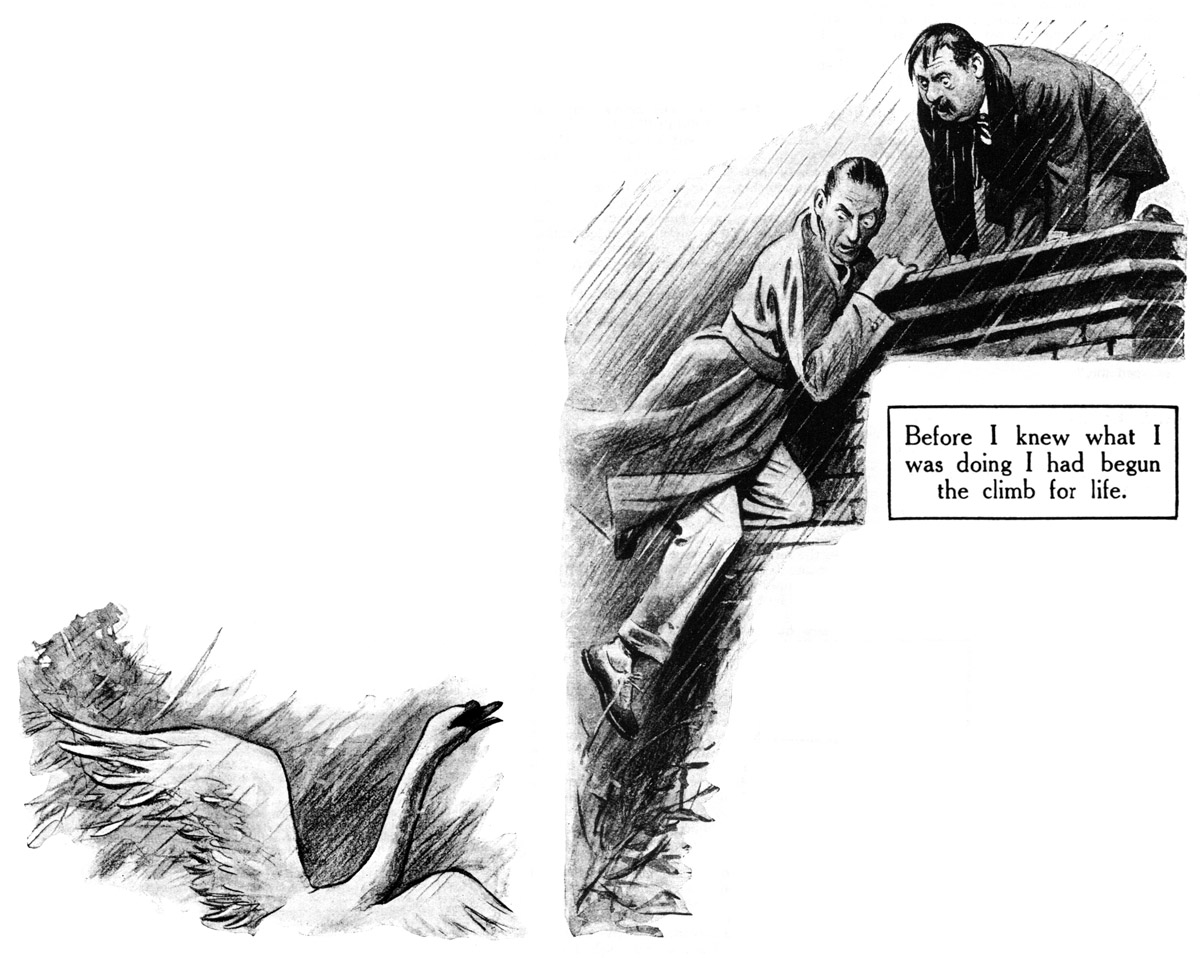
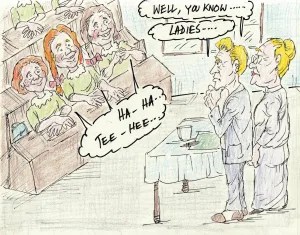
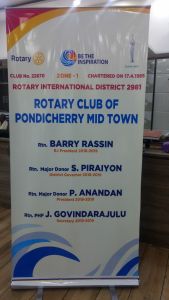


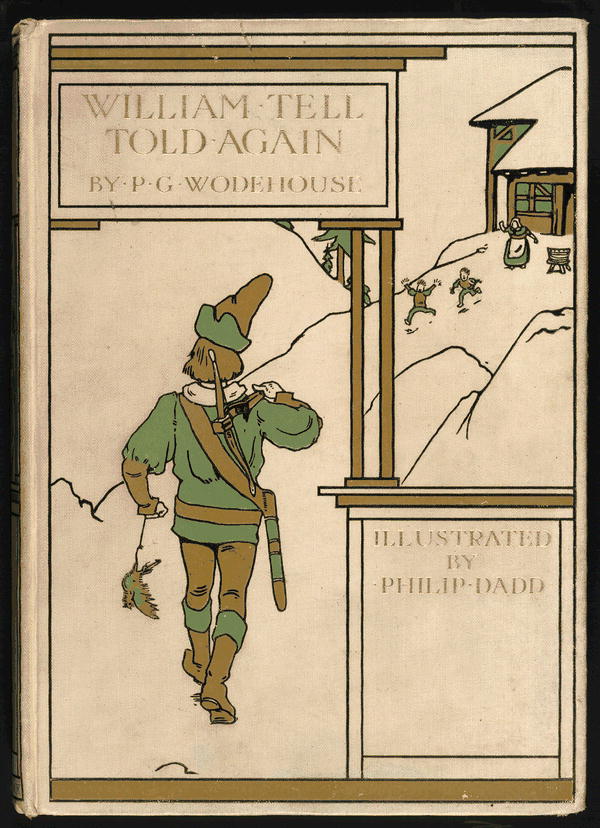


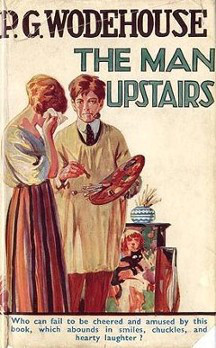


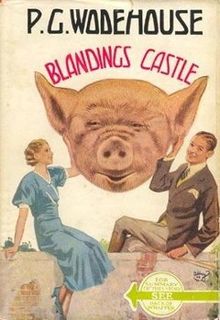
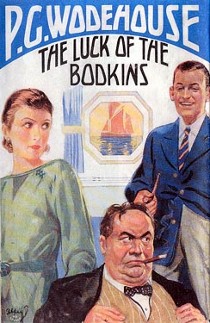
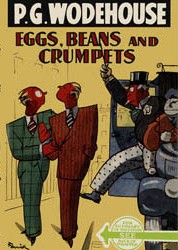



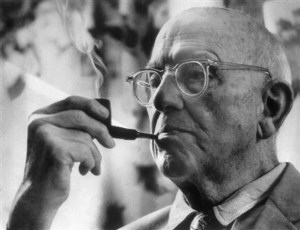



 ashokbhatia