Feeds:
Posts
Comments

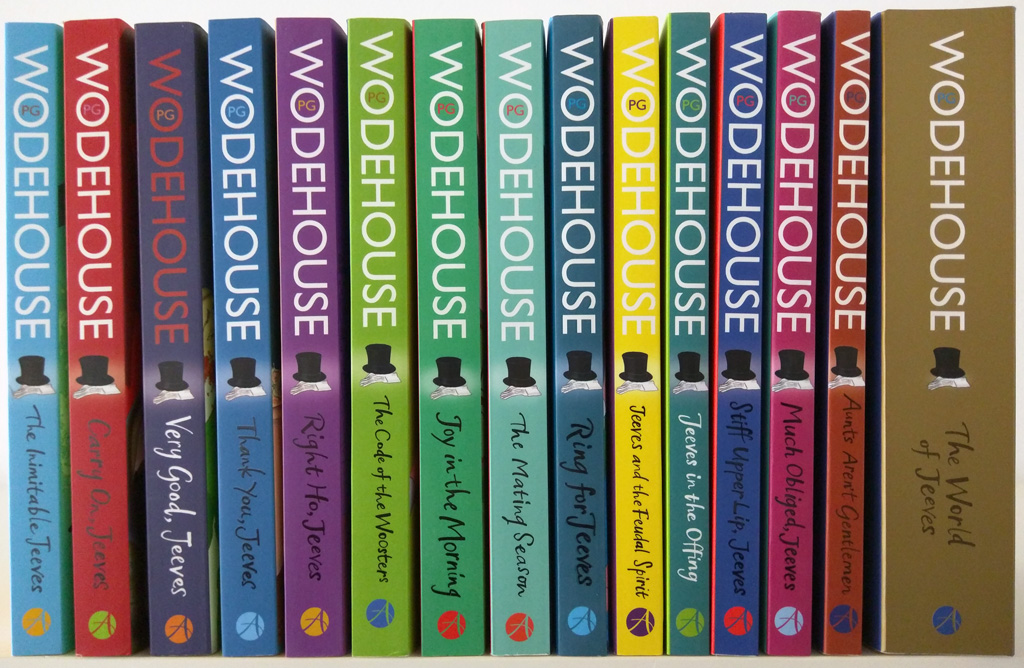
Not merely the number but the amazing variety and range of comic situations and characters that Plum has created entitle him to more than the appellation of a comic genius. And then there is the beauty of his language, the mot juste, the easy flow and the almost lyrical quality of the descriptions of nature, especially in the Blandings novels. It was not for nothing that Hillaire Bellock once described him as the best living writer of the English language. It is difficult to pick one’s favourites from his uniformly delightful output. One can merely endeavour to capture the broad contours of his canon here.

Take the case of the Blandings Castle stories wherein the humour is derived from such adorable absurdities as the woollen-headed peer, Lord Emsworth, whose sole passion in life is his prize pig, the Empress of Blandings; his eccentric brother, Galahad, who never went to bed till 4 am and has no business to be in the pink of health that he is in, in his fifties ; his son, Freddie, the go-getter salesman of Donadson’s Dog-joy biscuits; his secretary, the ever-suspicious Rupert Baxter; his gardener Agnes McAllister who detests any attempts by kids to pick up flaar’z from his fiefdom; the array of his formidable sisters and last, but not the least, the dignified and portly butler, Beach, whose walk reminds one of an elephant having a saunter in an Indian jungle, and one for whom it is difficult to stop once the subject of the lining of his stomach comes up. 

The Jeeves-Wooster stories depend on a plethora of odd-ball characters such as the hero, Bertie Wooster, himself; his incomparable gentleman’s personal gentleman, Jeeves, who is also Bertie’s friend, philosopher and guide and rescues him from many a sticky situation, being endowed with a master brain, probably the result of his predominantly piscine diet; Bertie’s favourite aunt, Dahlia, whose telephone conversations can be heard in the next county; Sir Watkyn Basset, the ex-magistrate, who, according to Bertie, has grown rich by pocketing a five pound fine here and a five pound there, imposed on miscreants; his daughter, Madeline, who thinks stars are God’s daisy chain; his niece Stiffy Byng, a girl to be carefully avoided by all sensible gentlemen because she is always hell-bent on sending them on crazy errands; Bingo Little, who beats the record of falling in and out of love with many members of the tribe of the delicately nurtured till he walks down the aisle with Rosie M Banks, and, of course, Roderick Spode, ‘the eight foot tall’ tinpot dictator, who is once reduced from being a menace to a mouse by Bertie telling him that he knows all about Eulalie!

Not to forget one of his friends, Augustus Fink-Nottle, the bespectacled newt-fancier, whose uninhibited speech at the Market Sondsbury Grammar School, made when he was duly oiled, plastered, sozzled, whiffled, and blotto (as Roget would have it), would need another piece altogether.

Can one really blame many of Plum’s fans who bemoan the fact that Rupert Psmith, the suave Etonian, appears in very few of his works? The way in which he manages his bosses in Psmith in the City, goes about wooing Eve Halliday in Leave it to Psmith, and even tackles underworld dons in Psmith the Journalist, leaves one yearning for more.

Mr. Mulliner’s juicy tales, narrated to a devoted audience of his at The Angler’s Rest, recounting the escapades of a vide array of his nephews and nieces, are so very delightful. Whether it is Eustace who, while working at the British Embassy in Berne, earns the right to yodel in the presence of the Vice-President, or Adrian who uses his crooked smile to enrich himself with a sum of hundred thousand pounds and even win over the love of his life, the sheer range of these characters would regale as well as baffle the mind of any lesser mortal.

And then we have the inimitable Ukridge, whose amoral and dreamy schemes to earn money simply tell us how not to conceive and run a business venture. After the failure of each of his ventures, he does not take much time to rebound. A chicken farm going for a toss merely leads him to start thinking of setting up a duck farm. A great lesson in tenacity and resilience, one would say.

Besides, we have many stand-alone novels which are simply superb. If The Damsel in Distress tells us about the lives of authors and music composers and ends on a strong anti-obesity note, The Girl in Blue covers the perils of shoplifting, renovating old crumbling properties, and teaching the rozzers a lesson or two by pushing them into the refreshing waters of a brook. Of course, there are many others, but I wish to let my audience have merely a bird’s eye view, so to say.    

These days, having just picked up ‘The Old Reliable’, I realize that though it is not as riotously funny as many of the above groups of stories, it is also a very nice read because of picturesque characterization and delightfully witty dialogue.

Plum had the unique skill of making the weirdest and oddest situations seem entirely laughable. His works make even a nonagenarian like me get up each morning, overcome the kind of subdued pessimism which engulfs one at a ripe age, and cheerfully look forward to the day, basking in his blissful humour while devouring one of my favourite tissue restoratives, there being no necessity to put any of Jeeves’s famous pick-me-ups down the hatch.

About the Author:

Mr. S. Subbaraman retired from the Archaeological Survey Of India (A.S.I.)  in 1987 as Superintending Archaeological Chemist, having been the Head of the Southern Region of the Chemistry Branch of A.S.I. at Hyderabad, and having worked on such famous monuments as Ajanta, Lepakshi and Brihdeeshwara (Thanjavur) temples etc on the conservation and restoration of our mural painting heritage and in Belur, Halebid etc in Karnataka on stone conservation. He has led many teams to exotic monuments abroad, rendering specialized services and advice for conservation of many structures.  

After retirement from A.S.I., he served as Director of the INTACH Chitrakalaparshath Art Conservation Centre, Bangalore, from 1993 to 2006. He was then responsible for the conservation and restoration of many art objects of various kinds for institutions as well as for individual owners.

He took voluntary retirement in June 2006 and settled down in Mysore to lead a life of retirement, consisting of such activities as reading. P G Wodehouse is one of his favourite authors.

Note:

I confess to having taken some liberties with the original text posted by the author on the Fans of P G Wodehouse page on Facebook recently; his permission to blog it here is gratefully acknowledged.

ashokbhatia's avatarashokbhatia

Where have all the Berties gone? 
The lilies that toil not, nor do they spin,
They’ve all arisen with the dawn,
To get their three miles running in.

Then holed up all day, in offices or banks,
Won’t join you in a leisurely brunch, 
No afternoon tennis or games or pranks,
Coping with month’s end accounting crunch.

Even dinner is a rushed affair, 
No time for idle chat or chit,
March through the rose garden’s scented air,
To meet the quota of the Fitbit.

One sighs for the Berties of yester-year,
Mentally negligible, but always at hand.
One found their naïveté rather dear,
And could have molded them into something grand!

(The above mentioned composition has been whipped up by Lisa Dianne Brouwer who describes herself thus:

“Lisa cut her milk teeth on P.G. Wodehouse. Literally, in fact, as many of her father, Professor W. Brouwer’s orange and white Penguins…

View original post 84 more words

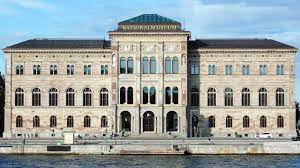
A saunter down the National Museum of Sweden is a unique experience in more ways than one. It gives one a sneak peek into the country’s rich history and culture. It showcases the evolution of its fine arts over time. It tells us about its diplomatic relations and stand-offs with other countries. It also makes us aware of the various stages through which this exquisite Nordic country has passed to attain its present state.

The collection at the museum comprises around 70,000 artefacts: paintings, sculptures, drawings, and graphics from the 16th century until the turn of the century in 1900. The museum, originally started in 1792, was renovated last in the 2010s.

The Sculpture Courtyard

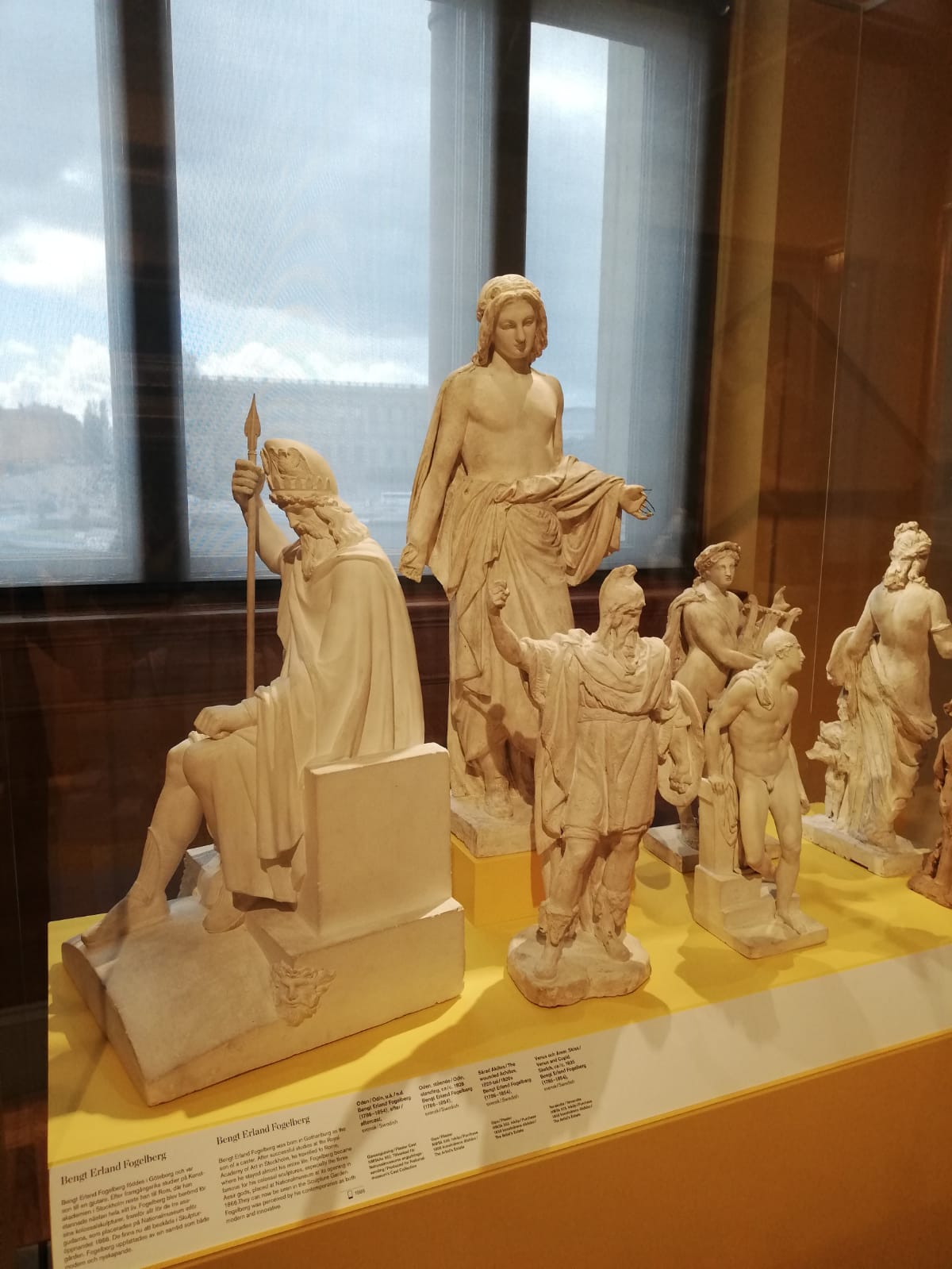
The ground floor has The Sculpture Courtyard which makes one wonder how Idealism in the past shifted to Realism during the 19th century. Mythology and gods represented here link us to human ideals and values, all of which are universal in nature.

(The images you see above have been downloaded from the internet. The images which follow are the works of an amateur photographer like yours truly.)

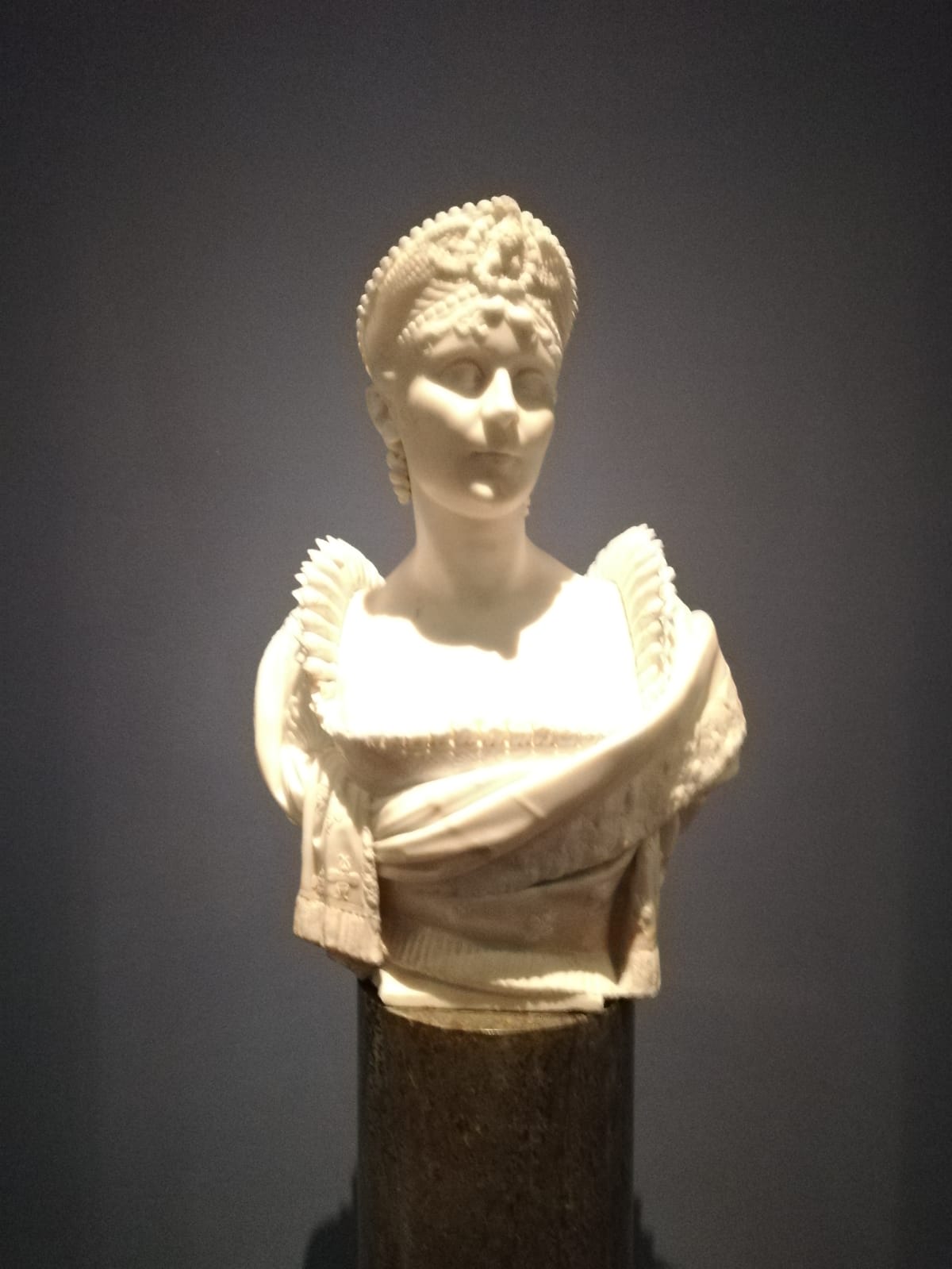
Few other sculptures of a relatively smaller size can be found on the upper floors of the museum, as a part of its Timeline theme. A piece depicting a horse also craves the viewer’s indulgence.


In the following parts of this series, you can have a look at some of the clocks, jewellery, paintings and other items on display at the museum.

Related Posts:

What happens when one comes across a bevy of super-brainy persons who ended up contributing something significant to the society at large?

For one, the sheer creativity and perseverance of such persons leaves one shaking one’s head in awe, admiration, and bafflement. One wonders as to from which plane of consciousness these persons were operating while making discoveries which have improved our lives. It also makes one realize how little one has achieved in one’s own life. A deep feeling of humility envelopes one. And yes, it motivates us lesser mortals to do something better in our own lives!

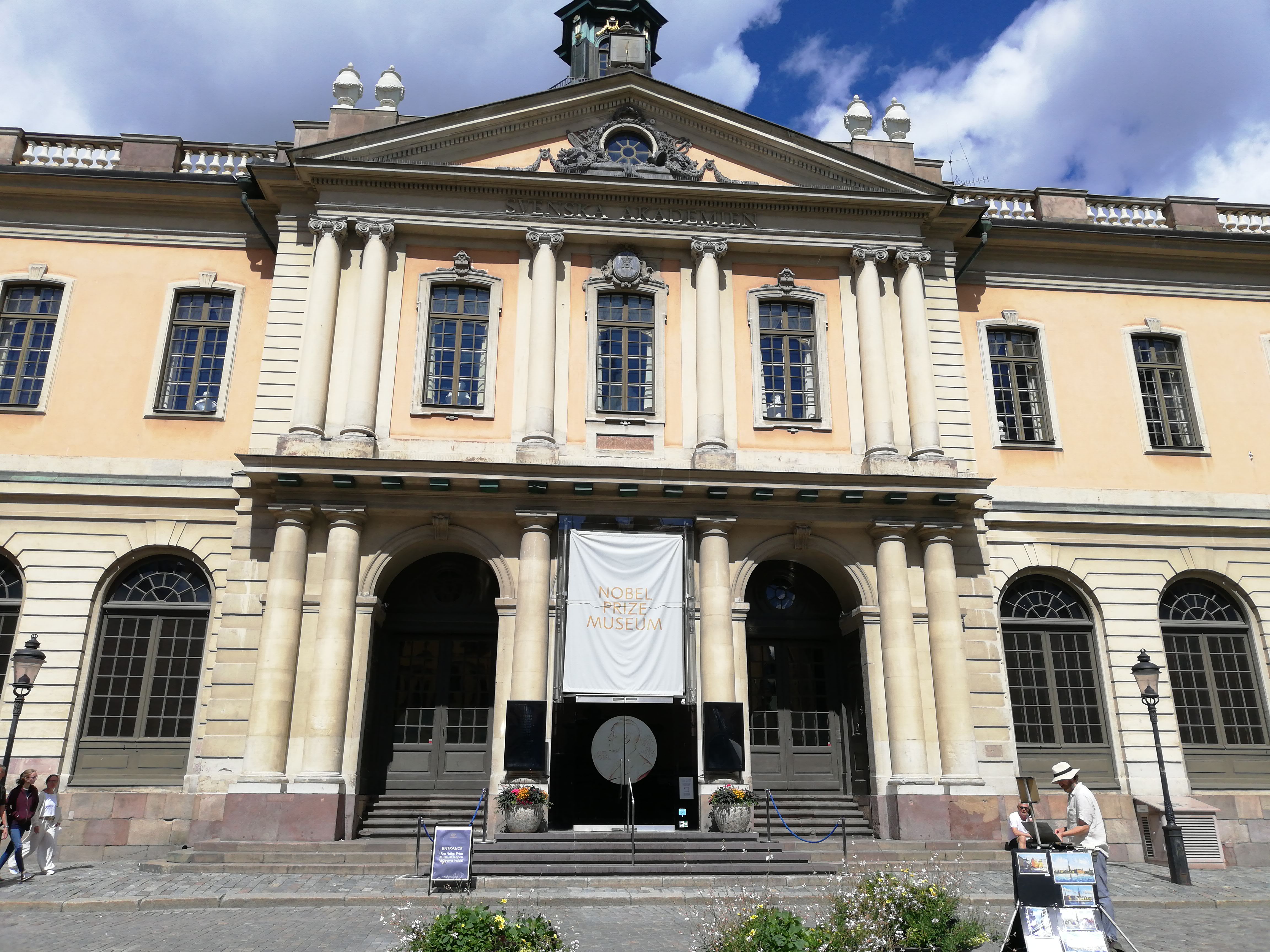
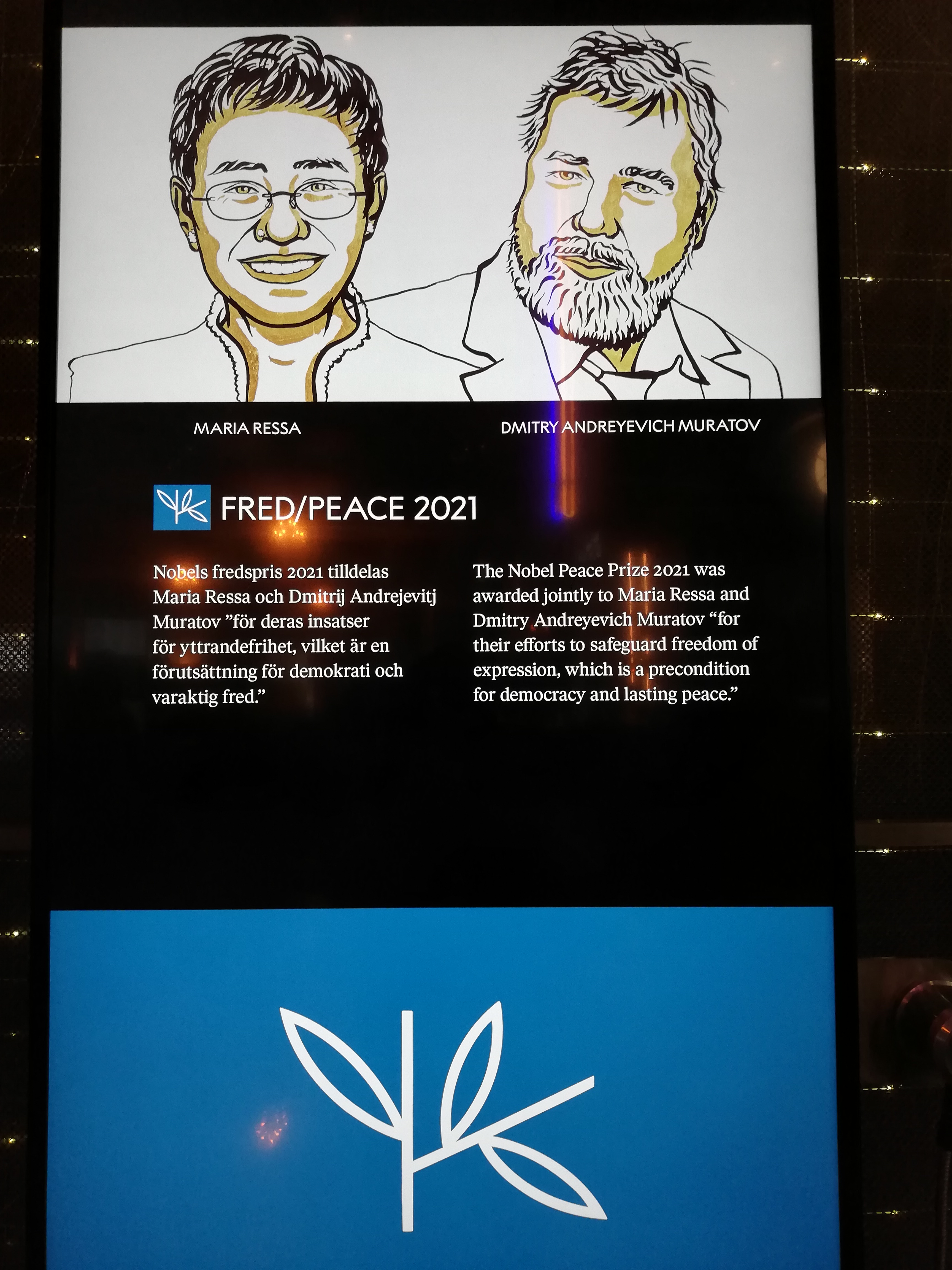
On a recent visit to Stockholm, your truly could visit the Nobel Prize Museum in the city. In the process, all the feelings mentioned above were experienced.
When Negativity Leads to Positivity

Swedish industrialist Alfred Nobel (1833-1896) was a chemist, engineer, and inventor. He amassed a fortune during his lifetime, with most of his wealth coming from his 355 inventions, of which dynamite is the most famous.

In 1888, Nobel was astonished to read his own obituary, titled “The merchant of death is dead”, in a French newspaper. In fact, it was Alfred’s brother Ludvig who had died in an uncontrolled experiment relating to explosives. The article disconcerted Nobel and made him apprehensive about how he would be remembered.

Nobel wrote several wills during his lifetime. Inspired by the death of his brother, he composed the last one over a year before he died, signing it at the Swedish–Norwegian Club in Paris on 27 November 1895, bequeathing all his ‘remaining reliable assets’ to create the prestigious prize named after him. In his will, he wrote that he wanted to reward those who had ‘conferred the greatest benefit to humankind’.

On December 10, 1896, Alfred Nobel died in his villa in San Remo, Italy, from a cerebral haemorrhage. He was 63 years old then.

Owing to scepticism surrounding the will, it was not approved by the Norwegian Parliament until 26 April 1897.

Nobel Prizes were first awarded in 1901.

Nobel Prizes were originally awarded in the fields of Physics, Chemistry, Physiology or Medicine, Literature, and Peace. In 1968, Sweden’s central bank funded the establishment of the Prize in Economic Sciences in Memory of Alfred Nobel, to also be administered by the Nobel Foundation.

In 1905, the union between Sweden and Norway was dissolved. Till this day, except for the Peace Prize, the Nobel Prizes are presented in Stockholm, Sweden, at the annual Prize Award Ceremony on December 10, the anniversary of Nobel’s death.

The Prize

The prize ceremonies take place annually. Each recipient (known as a “laureate”) receives a gold medal, a diploma, and a monetary award. In 2021, the Nobel Prize monetary award was 10,000,000 SEK.

The recipients’ lectures are normally held in the days prior to the award ceremony. The Peace Prize and its recipients’ lectures are presented at the annual Prize Award Ceremony in Oslo, Norway, usually on December 10.

The award ceremonies and the associated banquets are major international events. One can secure an invitation to these only if one happens to know some of the laureates! I understand that these are now broadcast live.  

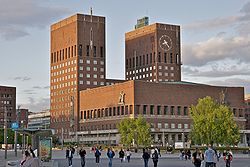
The Prizes awarded in Sweden’s ceremonies are held at the Stockholm Concert Hall, with the Nobel banquet following immediately at Stockholm City Hall.

The Nobel Peace Prize ceremony has been held at the Norwegian Nobel Institute (1905–1946), at the auditorium of the University of Oslo (1947–1989), and at Oslo City Hall (1990–present).

The highlight of the Nobel Prize Award Ceremony in Stockholm occurs when each Nobel laureate steps forward to receive the prize from the hands of the King of Sweden. In Oslo, the chairman of the Norwegian Nobel Committee presents the Nobel Peace Prize in the presence of the King of Norway and the Norwegian royal family.

After the award ceremony in Sweden, a banquet is held in the Blue Hall at the Stockholm City Hall, which is attended by the Swedish Royal Family and around 1,300 guests. The Nobel Peace Prize banquet is held in Norway at the Oslo Grand Hotel after the award ceremony. Apart from the laureate, guests include the president of the Norwegian Parliament, on occasion the Swedish prime minister, and, since 2006, the King and Queen of Norway. In total, about 250 guests attend.

The Curious Case of India’s Apostle of Non-violence

Although Mahatma Gandhi, an icon of non-violence in the 20th century, was nominated for the Nobel Peace Prize five times, in 1937, 1938, 1939, 1947, and a few days before he was assassinated on January 30, 1948, he was never awarded the prize, possibly due to the cordial relations between Norway and the United Kingdom.  

In 1948, the year of Gandhi’s death, the Norwegian Nobel Committee decided to make no award that year on the grounds that “there was no suitable living candidate”.

In 1989, this omission was publicly regretted, when the 14th Dalai Lama was awarded the Peace Prize, the chairman of the committee said that it was “in part a tribute to the memory of Mahatma Gandhi”.

Geir Lundestad, 2006 Secretary of Norwegian Nobel Committee, said:

The greatest omission in our 106-year history is undoubtedly that Mahatma Gandhi never received the Nobel Peace Prize. Gandhi could do without the Nobel Peace Prize. Whether Nobel committee can do without Gandhi is the question.

Display at the Museum

Besides the history of the Nobel Prize, the museum displays many gifts from many of the laureates. These include a letter from Albert Einstein confessing the inability of mathematical formulae to capture the nuances of human behaviour. There is a unique display of the kind of dresses used by celebrities while attending some of the banquets and many other details.

A guided tour lasting about 30 minutes shares interesting anecdotes from the lives of some of the laureates.

At the age of 17, Malala Yousafzai, is so far the youngest to have received a Nobel Peace Prize in 2014.

The Cultural Outreach

Being a symbol of scientific or literary achievement which is recognisable worldwide, the Nobel Prize is often depicted in fiction. In my younger days, I recall having read The Prize, a novel by Irwing Wallace. There have been films like The Prize (1963), Nobel Son (2007), and The Wife (2017) about fictional Nobel laureates, as well as fictionalised accounts of stories surrounding real prizes such as Nobel Chor (The Nobel Thief), a 2012 film based on the theft of Rabindranath Tagore’s prize. In a series named Genius (2017) on Netflix, a meeting between Albert Einstein and Marie Curie at one of the Nobel Prize ceremonies was depicted.

Improving the World

The Nobel Prize shows that ideas can change the world. The courage, creativity and perseverance of the Nobel Laureates inspire us and give us hope for the future.

Such initiatives help create exciting encounters between people – people who dare to challenge the status quo, who want to ask new questions, think new thoughts and contribute to a better world.

(Sources: The Nobel Museum guided tour and website, Wikipedia)

(Related Post:

ashokbhatia's avatarashokbhatia

Interpersonal relationships happen to be a key factor in achieving success in aRelationship managerial career. Even otherwise, positive relationships boost our Happiness Quotient in life.

Here are few insights on relationships based on some well-known scientific principles.

FB and the Roentgen Effect

Never take a person at face value. Be ruthless in acting like a X-ray machine, Scientist Roentgenascertaining the inner motives of the party of the other part.

Create your own Facebook – a filtered version of the bosses, peers and subordinates you come across. Categorize them into, say, Close Friends, Friends, Acquaintances, Foes and those Vehemently Opposed to whatever you say or do. Deal with them at their respective wavelengths. You would vibe well.

Be sceptical of sudden unwarranted praise. A very tough project could be coming your way. The lynching mob could be sharpening its arsenal by the time you gleefully accept to drive a car all the…

View original post 1,044 more words

I have never—in all the years this blog has been in existence—compiled a list of my favourite Madan Mohan songs. An oversight, and one for which I have no explanation to offer: just reparation. Born Madan Mohan Kohli in Erbil (Iraqi Kurdistan) on June 25, 1924, the young Madan Mohan returned with his family to […]

Ten of my favourite Madan Mohan songs — Dustedoff

Are you an architect, an interior designing expert, or an MEP (Mechanical, Electrical, and Plumbing) services professional? If so, here is a book which could assist you in building a sustainable business with a strong brand equity and help you earn long-term customer loyalty.

Practicing Ethics

This book does not merely preach the importance of ethics in your profession. It goes a step ahead and tells us which healthy practices can be adopted and shows us precisely how to imbibe the same.

The book provides new perspectives for Architects, Interior Designers, and MEP Designers to enhance their skills, enrich the roles they play and minimize the chances of their businesses end up facing an ethically awkward or complex situation.   

The word “ethics” refers to the moral principles or values that enable us to do the right things. In a broader sense, ethics include integrity, objectivity, professional competence, confidentiality, and professional behaviour. In the context of “business ethics”, the author makes an honest attempt in this handbook to examine business activities in “project design and engineering functions” in any construction organisation at the micro-level and identify potential activities that can adversely affect business performance.

The book lists activities that have the potential of leading a business down an unethical path, thereby adversely impacting design quality, project quality, project costs, or sales revenue; or compromising customer satisfaction levels or statutory compliance levels. It then goes on to offer suggestions which, if followed scrupulously, would avoid the businesses facing any such challenges.

The basic approach is that of enabling professionals to digitalize their design activities and integrate the same with ERP environments or software solutions already deployed in the business.

Structure of the Book

The book is divided into eighteen chapters and runs into 688 pages, of which 377 pages comprise the main text, the rest being 53 annexures which carry illustrations designed to enhance the reader’s understanding of the subject at hand.  

It covers as many as 91 business processes and lists 916 business activities which, if performed correctly, can enable significant improvements in the quality of design and construction, project cost optimisation, and customer-focused delivery. In addition, there are 44 annexures, included on the website of the author, each capturing narration of business activities as a reference guide for readers. The details can be viewed at the website of the author: https://www.ethicalprocesses.com.

The book classifies activities into three categories based on their likely adverse effect on business performance: (a) Those which relate to either the quality of design or the quality of construction, could lead to an escalation in project costs or lower customer satisfaction levels, (b) Statutory /regulatory compliances, and (c) The ones which relate to either the efficiency or the effectiveness of the designing process.

What Designers Can Achieve

The book can assist designers to accomplish the following objectives:

  • Enhancing the quality of designs
  • Supporting improved quality of construction
  • Reducing Project costs
  • Increasing sales revenue
  • Improving end-customer satisfaction index
  • Complying with statutory conformances
  • Enhancing design efficiency and design effectiveness

It is a ready reckoner for architects, interior designers, MEP designers, project teams, risk managers, auditors, students pursuing design as a career, and COO/ CEOs of design-oriented outfits to take cognizance of design function-related activities that can or have the potential of adversely impacting business.

About the author

The author, Arvind Dang, is a mechanical engineer from the Delhi College of Engineering and an MBA from the University Business School, Chandigarh, Punjab, India. He has also obtained ISO 9001 certification for Quality systems from Cranfield University, U.K.; CISA-Certification from ISACA, U.S.A and BS7799 certification for Information Security from BSL, U.K.

Arvind has served as a President of The Institute of Internal Auditors, Delhi Chapter. He has been a governing board member of ISACA, Delhi. With a rich professional experience of 41 years in the Engineering and Real Estate Industry, he retired as the President – Of procurement and Corporate Services of a prominent real estate company in India.

The book is available at https://www.amazon.in/Ethics-real-estate-hospitality-industry/dp/9393635706.

ashokbhatia's avatarashokbhatia

Day 1

It is widely believed that Jeeves was fed a lot of fish in his childhood, thereby making him a brainy cove, with his head bulging at the back. However, all bloggers may not have had the same fortune. Their grey cells often register a protest, refusing to budge, much like Balaam’s Ass.

But there are indeed times when the creative juices are in full flow and an idea pops up!

Day 2

The idea simmers within. Many sub-ideas spring up and fall into the creative cauldron. The blogger often behaves like Angus McAllister, nurturing the Achilleas, the Bignonia Radicans and the Yucca in the Blandings garden, eventually creating a bouquet of exotic ideas, cleverly brought together.

The outcome is a juicy idea which often gives a sleepless night to the blogger who twiddles her thumbs to figure out words and phrases so the key idea gets draped appropriately.

View original post 459 more words

ashokbhatia's avatarashokbhatia

(Disclaimer- I make no claims to being an expert literary critic. I am just a lay reader who has been reading books in English for over seventy years. This is my take on why PG Wodehouse will never become dated and will always retain his appeal)
Reading- both fiction and non-fiction, is my principal hobby. I read for pleasure, rarely for profit. I have enjoyed the works of many over the years : Edgar Wallace, Sapper, HG Wells, Somerset Maugham, Lawrence Durrell, Steinbeck, Hemingway, Daphne Du Maurier, John Le Carre’, Harold Robbins, Kingsley Amis, Ian Fleming, Salman Rushdie, Charles Dickens, Jane Austen, Bronte sisters, George Eliot, Thomas Hardy, PG Wodehouse, Dean Swift, Oscar Wilde, Leon Uris, James Clavell, Aldous Huxley and Pearl Buck- to name some.
I have been blessed with the rare opportunity of traveling physically to many of the locales which figured in their books- London, rural England…

View original post 492 more words

Stiff-upper-lip police authorities world over surely take a jaundiced view of the kind of narratives dished out by P. G. Wodehouse, holding these to be posing a grave danger to the law and order situation in their respective areas of contol. After all, these espouse the merits of pinching not only policemen’s helmets but also umbrellas, silver cow creamers and such other objects which are dear to their owners. Suave gentlemen, in a hurry to impress a young lass waiting for the rain to stop, think nothing of stealing someone’s umbrella and offering it to the party of the other part. Woolly-headed Lords do not shy away from pocketing a scarab from the collection of American millionaires. Aunts who are not gentlemen keep enticing their nephews to steal cats so as to win an upcoming race. Even members of the porcine species get kidnapped. Cooks get charmed into moving to greener pastures so the lining of the stomach of their prospective employers may continue to be in the pink of health. Gutsy young ladies who are bent upon making insurance companies more spiritual by the latter having to cough up large amounts of claims resort to persuading profesional thieves to steal vintage stamp collections owned by their heart throbs.

Given this singular absence of morals and ethics amongst the characters etched out by Plum, it should come as no surprise that his books are not permitted to be stocked in the libraries of our prisons. This is the only way the prisoners can be reformed and the foundations of our civilization can be stopped from quivering uncontrollably.

Here is a rib-tickling post covering an incident which occurred in one of the jails of India earlier this year, wherein a hapless prisoner was summarily denied a book by the Master.

sureshsubrahmanyan's avatarSuresh's Corner

Stone walls do not a prison make, / Nor iron bars a cage / Minds innocent and quiet take / That for an hermitage. 17th-century English poet Richard Lovelace from his poem To Althea, from Prison.

My heart goes out to the well-known human rights activist, Gautam Navlakha. I shan’t go into the whys and wherefores or the rights and wrongs pertaining to the justification or otherwise of his confinement in a prison in Mumbai, where he is holed up in a high security cell. Let the lawyers and the judges break their heads over matters that go over my head. That is not part of the mandate I have set for myself in setting out to pen this piece. Reports tell us that he is allowed a 30-minute constitutional ‘in the open space’ and must clean his own cell. So far so bad, but it gets worse and this…

View original post 1,366 more words