Feeds:
Posts
Comments

William Faulkner is reported to have said that “The past is never dead, it’s not even past.”

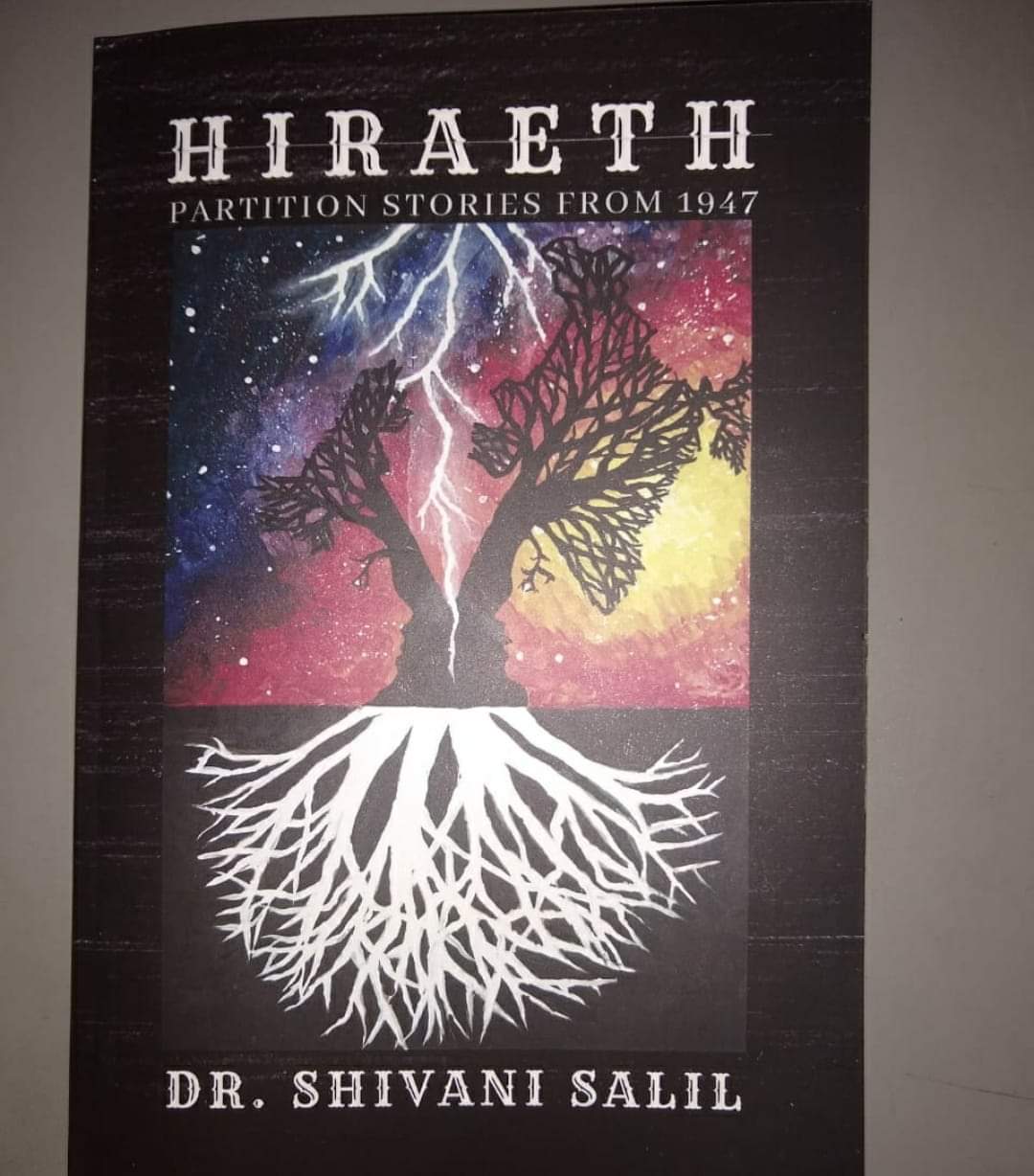
Partition, or rather the tearing apart of India into three parts circa 1947, has always been a theme of enduring interest. To those who lived to tell the diabolical tales of their survival, it brings back a flood of memories, awash with deep-seated regrets and a sense of deep loss of one’s original home and hearth. Hence the title Hiraeth, meaning a longing based on a feeling of helplessness of not being able to revisit a place.

To their succeeding generations, it is a valuable record of the trauma of the planet’s biggest mass migration on record. It also captures the endurance and resilience of the human spirit, of an innate will to live and prosper, and of keeping the descendants isolated from the traumatic pain and suffering of their preceding generations.

Just like the graphic works of Saadat Hasan Manto, Khuswant Singh and many others, Hiraeth captures the agony, the suspicion, the cruelty and the madness that pervaded the air in those turbulent times. A commendable endeavour, indeed.  

The stories, based on the experiences of the author’s grandparents and other seniors in her family circles, capture not only the courage and sacrifice but also the generosity of the human spirit. These are written with a piercing beauty, alive with moral passion and sorrowful insight.

However, a word of caution may be in order. Picking up and going through the book needs nerves of chilled steel. It took me close to three years to build up the courage to get a copy. I could then devour the stories only one at a time. Each one of them, so very poignantly written, made me either sob uncontrollably or cry. Identifying with the main characters was apparently my undoing. Suffering the pain and deprivation they underwent.

Somewhere, a father was killing his own daughter so as to protect the family honour. Elsewhere, a recently widowed lady was able to release her inner grief only when she came across the turban cloth of her late husband.

Some offered solace as well. A just-orphaned kid getting breast-fed and adopted by a lady who has undergone the trauma of giving birth to a stillborn child of her own, their different religions notwithstanding.

The last story touches upon the ripple effect of a parent’s decision on the next generation. It goes on to demonstrate that partition, though the term in itself is a highly sanitized version of what really transpired then, is not so much an event in the past, but one that continues to influence the descendants of those who survived it. Those displaced and uprooted have stood up, shaken off the dust of negativity from their feet, taken control of things and ensured that the coming generations did well in their life and career. But the scars remain.  

Thanks to the efforts put in by the publishers, the book is well presented. Urdu titles of stories have been beautifully calligraphed, adding a unique charm to the text. The use of common terms to address parents, grandparents and other relatives in Hindi/Punjabi language bring the stories closer home. The cover itself says a lot, though, at first glance, one does not appreciate it.

At the end of it all, the book does lead one to feel more anger and even more anguish. Is there a way to avoid such tragedies in future? Can our leaders not be more prescient and take better control of things? As human beings, we pride ourselves on our technological achievements. But do we care to dismantle the invisible walls that exist between us? Could we widen our consciousness in such a way as to avoid conflicts and wars? Could we not instead channelize our collective energies towards addressing environmental challenges that we, as a race, face?

One may well ask if there is any point in remembering yet again what one cannot forget in a lifetime. Perhaps, a closure lies in moving towards mutual acceptance of culpability, a joint mourning for the lives we took, the attendant horrors we inflicted upon each other and then go in for mutual forgiveness. However, it is easier said than done. Wounds of the flesh heal; not so with the mental scars. Thus, the cycle of violence continues unabated. It suits our politicians to keep stoking these dormant embers.  Often, we end up being mere puppets in their hands.

In fact, this is the larger purpose the book serves. It reminds us of our past follies. It makes us sit up yet again and start wondering as to how to take better care of ourselves and our brethren. It prompts us to build bridges wherever needed and break down the walls of our biases and prejudices. It shows us the futility of treating those different from us as ‘others.’ It exhorts us to use our individual intellect to judge if what we are doing is right, not to be led astray by jingoism, chest thumping and wars.

I am reminded of a song which Talat Mehmood had rendered in his velvet-like soothing voice long time back:

Hein sabse madhur woh geet jinhen hum dard ke swar mein gaate hain…

Roughly translated, this says that the songs which are the sweetest are the ones which are set to the melody of sorrow!

It is in this spirit that this book deserves to be picked up, devoured and brooded upon. 

About the Author:

Dr. Shivani Salil, MD, calls herself a voracious reader, in love with words – both written and spoken. She used to work at KEM Hospital, Mumbai, until some time back when a geographical move pushed her into a sabbatical. She currently resides in Hong Kong with her husband and daughter.

As a child, she harboured two dreams: one, to become a doctor and the other, to pursue literature so that she could become a writer. Having lived and loved her first dream, this book is a step forward towards the second.

Get to know more about her on her website http://www.shivaniwrites.in and her Facebook page http://www.facebook.com/shivaniwrites18.

Availability of the Book:

In India: https://www.amazon.in/Hiraeth-Partition-Stories-from-1947/dp/8194132622

In US: https://www.amazon.com/dp/B07WRLTGLC

In UK: https://www.amazon.co.uk/dp/B07WRLTGLC

In Canada: https://www.amazon.ca/dp/B07WRLTGLC

In Australia: https://www.amazon.com.au/dp/B07WRLTGLC

In Germany:
https://www.amazon.de/Hiraeth-Partition-stories-1947-English-ebook/dp/B07WRLTGLC

The book is available on Kindle as well and is free on Kindle unlimited.

(The book has been published by Room9 Publications (www.artoonsinn.com).

Goodreads:

Hiraeth: Partition stories from 1947 by Shivani Salil

My rating: 5 of 5 stars

https://ashokbhatia.wordpress.com/202…

Other Book Reviews on this Blogsite:

Often, we complain about the inane offerings of mainstream Bollywood cinema. We bemoan the fact that we are expected to spend our hard-earned money, leave our brains outside a cinema hall, give our common sense a commercial break, temporarily suspend our beliefs and just enjoy the proceedings on the silver screen.

Some scripts make us go through the romantic upheavals in the lives of the hero and the heroine. Few others offer us unique insights into the world of crime and gore. Others thrive on keeping us glued to our seats wondering as to what may happen next. The thrill of a car chase, a saga of revenge and dollops of suspense make the experience worthy of our time, cost and attention.  

But there has always been a tiny segment of intellectually inclined directors who have kept regaling us with their unique insights on ills which plague our society as well as our economy. Call it the Parallel Cinema, the Consciousness Movement or the Cinema on the Fringes, if you will.

When Cinema on the Fringes becomes Meaningful

When it comes to caste-based prejudices, we have had Sujata (1959), Masaan (2015) and Article 15 (2019). A movie like Jhund (2022) showcases the everyday struggles of vagabond Dalit youngsters, haunted by the humiliating gaze of society. Speak of the disadvantaged and we are apt to think of Ankur (1974), Akrosh (1980), Chakra (1981) and Nil Battey Sannata (2015). Think of the angst of the educated unemployed and we discover Albert Pinto Ko Gussa Kyoon Aata Hai (1980) and Rang De Basanti (2006). Speak of sex workers and movies like Chandni Bar (2001), Chameli (2003) and Gangubhai Kathiawadi (2022) pop up in our minds.

When it came to our criminal justice system, movies such as Do Ankhen Barah Haath (1957), Kanoon (1960), Bandini (1963) and Achanak (1973) stood up for bold reforms. A cooperative movement leading to a resounding success in brand management inspired Manthan (1976). Difficulties faced by marginal farmers formed the central theme of such movies as Do Bigha Zameen (1953) and Heera Moti (1959). Challenges based on disabilities were poignantly captured in such movies as Koshish (1972), Black (2005) and Guzaarish (2010).

If the plight of rural migrants was showcased in Jagte Raho (1956), movies like Garm Hava (1973) and Pinjar (2003) brought home the trials and tribulations of those affected by Partition. Patriarchal maladies formed the crux of such movies as Sahib, Bibi aur Ghulam (1962). The plight of a widow moved us in Ek Chaadar Maili Si (1986). Swades (2004) spoke of using innovative frugal engineering solutions to the issues faced by villagers.

The Winds of Change

However, jingoistic nationalism, often camouflaged as patriotism, is the flavour of the season. In the past, movies like Haqeeqat (1964), Shaheed (1965), Lakshya (2004) and Mangal Pandey (2005) led to a rise in patriotic fervour amongst movie watchers. Upkar (1967) was all about ‘Jai Jawaan Jai Kisaan’. In the recent past, we have had Bajrangi Bhaijaan (2015), Raazi (2018) and Kesari (2019).

In tandem with the political headwinds, Islamic terrorism has come under a sharper focus. Gone are the days of such socials as Chaudvin Ka Chaand (1960), Mere Mehboob (1963), Mere Huzoor (1968) and Jodhaa Akbar (2008), wherein our composite Ganga-Yamuna ‘tehzeeb’ (culture) was lovingly portrayed. Instead, we now rejoice in people of a certain faith being portrayed as violent aggressors and anti-nationals. The recent successes of such movies as Padmaavat (2018) and The Kashmir Files (2022) form a part of this trend.

It is not that riots and genocides have not been captured by Bollywood before. A wonderful example which stands out is that of Mr. and Mrs. Iyer (2002). Movies like Mission Kashmir (2002), Parzania (2007) and Firaaq (2008) brought home the futility and tragedy of hatred. Some of these have attempted to uncover the inner turmoil experienced by the main protagonist. Many such movies have been banned. However, the focus now appears to have shifted on widening our social fissures rather than mending the same. Perhaps, a deeper cleaning of sorts of our social fabric is taking place.   

The rise of OTT platforms, thanks partly to a pandemic, has broadened the scope of offerings. If Jalsa (2022) keeps us on tenterhooks, The Fame Game (2022) gives us a sneak peek into the lives of celebrities. If Bombay Begums (2021) captures the ambition of gutsy females wanting to break the proverbial glass ceiling, Panchayat (2020) took us back to the countryside and showed us the kind of challenges which rural folks face. Bandish Bandits (2020) was a brilliant ode to the prowess of classical music.  

Even outside the traditional channels of cinema halls and OTT platforms, several talented directors keep coming up with offerings which show the day to day challenges faced by us in an inspiring mode. Those of you who have heard of Nirmal Anand Ki Puppy (2021) directed by Sandeep Mohan would heartily agree with me.

The line between conscious cinema and not-so-conscious cinema (in other words, ‘masala’ movies!) often gets blurred.  

Of Creative Consciousness

Creative juices need several favourable conditions which enable these to spring forth and eventually reach their target audience. When it comes to the powerful medium of cinema, a good script, backed by proficient actors, lilting lyrics and music, adroit editing and good production values surely helps. We may call many of these as meaningful. But if a movie entertains, educates and even goes on to address our deeply embedded social concerns and prejudices, it plays a useful role in shaping the values which govern our society. Such movies originate from a higher level of consciousness. Personally, I would prefer to call these movies as being the real meaningful ones!

A question may be asked as to whether it is possible for producers and directors to churn out socially relevant movies even when commercial considerations rule the roost. In Awara (1951), Boot Polish (1954) and Shri 420 (1955) Raj Kapur showed us how. So did B. R. Chopra when he came up with Nikaah (1982), and Yash Chopra when he offered us Dharmputra (1961) and Veer Zara (2004)!

Eventually, it all boils down to the level of consciousness of the producer-director duo. Awareness, Care and Intent alone are the enabling factors. These alone act as catalysts of Creative Consciousness. Those who have the courage and conviction to offer such movies pay back to the society what they get from it. 

Some Neglected Areas

There are three areas of strategic concern which appear to have been given the short shrift in the scheme of things.

What we lack is a vibrant children’s film movement. Movies like Aakhri Khat (1966), Makdee (2002), The Blue Umbrella (2005), Tare Zameen Par (2007) and Bumm Bumm Bole (2010) are few and far between. In the rat race of commercial considerations, this segment of the audience has lost its appeal. The outcome is that the age of innocence has got brutally cut short. The advent of internet and animation movies has further eroded the interest in child-friendly offerings. Children are losing the opportunity of imbibing rich values from such ancient texts as ‘Hitopadesha’ and ‘Panchatantra’. Poor souls are getting sucked into adult entertainment right away.   

Secondly, state funding for socially relevant and meaningful cinema has all but vanished. Unlike countries such as France where state support ensures that movies steeped in consciousness keep getting made, the rulers of today turn a blind eye to their own soft power.

Thirdly, the interest in preserving the history of cinema for the sake of posterity is singularly absent. It is an irony that not even a single print of Alam Ara (1931), the first ‘talkies’ to be churned out by Bollywood, is available in our archives.

If such strategic issues are left to the manipulations of the private sector alone, Bollywood will keep marching ahead with bolder and bolder themes, wooing their audience with exotic locales, sex appeal and special effects which leave the viewers in a state of shock and awe. Return on investments alone would count. The movies it churns out may be entirely soulless, so to say. Viewer tastes will keep getting manipulated by our dream merchants.

Related Posts:

Here is a delectable piece, if piece is indeed the word I want, which can be accessed at https://www.deccanherald.com/opinion/right-in-the-middle/full-moon-still-shines-brightly-1091669.html

(Note: Somehow, yours truly could not resist the temptation of sharing it here. Should the author or The Deccan Herald have any objections to my sharing this piece here, prompt corrective steps would surely be taken.)

ashokbhatia's avatarashokbhatia

Many of our homemakers happen to be depressed these days,

They wish their spouses to refrain from inviting yours truly to their homes;

Lest he behave like a male Laura Pyke, exhorting them to lay off the vitamins,

And while away his own time merely devouring some literary tomes.


A lazy bum, he continues to gobble up cookies from the kitchen jar,

Making the Aubrey Upjohn in the family take a jaundiced view of things;

He opens the hatch to guzzle down jugfuls of tea and milk,

Much like Bertie, he gets up very late, anticipating what the morning tray brings.


His cooking abilities are limited to boiling milk and eggs,

An apprenticeship under Anatole is what he desperately needs;

Doing the dishes and tidying up the place is not his idea of fun,

Oh, how they wish these could count as some of his chivalrous deeds.


View original post 343 more words

ashokbhatia's avatarashokbhatia

In order to celebrate the 137th birth anniversary of P G Wodehouse, the Pittsburgh Millionaires decided to meet up on the 14th of October, 2018. The meeting took place at one of the Panera Cafés in the Oakland area of Pittsburgh, USA.

Lest some of you get an impression that the millionaires foregathered to discuss some trustworthy sources from where one could secure either a cow creamer or a scarab, you would be sadly mistaken. If your ambitions lead you to believe that you could have run into an arts dealer offering The Girl in Blue, the famous Gainsborough miniature, to one of the millionaires present at the gathering, you would be even more off the mark.

Had you been able to make it to the gig, you would have discovered the Pittsburgh Millionaires to be a group of strong and adventurous folks, well endowed and successful…

View original post 461 more words

Silent Symphony

FictionPur's avatarFictionPur

.

.

Ranveer Singhania, the tall debonair steel-grey eyed heir to Delhi-based Singhania Empire, had thought that her cheerful vibrant personality, her uninhibited laughter and easy going nature would balance out his serious and colorless life. That she would be the best life partner for him. He had felt it in his heart that making this chirpy and full of life girl his wife will be the best decision of his life. She had caught his attention from the day she had stepped into his life like an innocent cute deer, prancing through life without any worries. She was the only one who made him smile with her non-stop chattering, and make him laugh at her antics. Her huge doe shaped eyes were filled with warmth. And her beautiful smile could warm up any one’s heart. She was one of a kind and she was the one for him. Or so he thought.

View original post 8,023 more words

Along Came Love

Recently, I came across this wonderful site which has many delectable stories to narrate. Permit me to share this one with all of you.

FictionPur's avatarFictionPur

.

.

She was just an average young girl. Like 20 million others in India. Born in a loving middle class family, with normal pretty looks, average intelligence, a genuine heart and big dreams. Lofty aspirations fueled by movies and novels. Specially that of her future husband or boyfriend. All she wanted was a tall, dark, brooding, rich yet loving, possessive guy for herself. Nothing that can be termed as asking for much, if you ask her. But blame it on her deeply ingrained middle class values or lack of opportunities, the boyfriend phase never came in her life. She directly graduated to the matrimonial phase. And true to their word and ambitions, her parents swiftly found her a ‘suitable and nice boy’ as soon as she was of age.

And he was something she never thought she would ever end up with. Too sweet. Too understanding. Too accommodating…

View original post 2,325 more words

  1. Introduction

“You have the right to work, but never to the fruit of the work. You should never engage in action for the sake of reward, nor should you long for Inaction”. These are some of prominent verses of Shri Bhagavad Gita, which essentially convey the most significant human values that we must inculcate within us throughout this journey of life.

In this era of 21st century, where employees in the organizations are in a constant competitive space, trying to fulfil their individual and organizational goals, basic values which make up the human are often getting ignored. As Samuel Johnson, one of the prolific English writers quoted, ‘The true measure of a man is how he treats someone who can do him absolutely no good’, explains the true quality that every human being should possess.

Values are basically the beliefs that refer to desirable goals that drive action. Our values are extremely important as they help us to grow and develop in the desired way. They help us to create the future we desire to experience. Every organization and the individuals working there are involved in making hundreds of decisions every day. These decisions are the reflection of our own values and beliefs and they are always directed towards a specific purpose. Thus, this purpose serves as the satisfaction of our individual or collective needs.

2. Present context in organizations

Technology is now ingrained at each and every step of our lives. Organizations have been keen on leveraging the maximum usage of these technological advancements and, thus, are looking out to a better diversification of their businesses. Start-ups have been rising at a tremendous pace, not only creating a competition to the established entities but also offering wide opportunities to the working employees’ segment. Thus, with such hustle and bustle in the outside world, most of the employees at any level or designation are today being compelled to only think about the results and achieving recognition in the market. While achieving the results is, undoubtedly significant, but focussing on processes is equally important. Today, in the quest of achieving more, higher managements can often be seen setting goals which seem impractical to achieve and employees while striving to achieve the same are seen as being being ruthless to their subordinates. According a study by Gallop across 27 million employees and over 2.5 million work units, it was seen that only 30% of the employees in US are actually engaged at work and only around 13% around the globe are engaged in the work at their workplaces.

3. Significance of Human Values in Organizations

Values are significant as they guide our beliefs, attitudes and behaviour. Realising, understanding, and staying true to our values is, therefore, one of the most important efforts that any human being can make. The same applies to our work places where the importance of values cannot be ignored.

When we say values in organizations, these can be perceived through two perspectives. One belongs to ‘Leadership Values’ which pertains to values possessed by the higher management in the organizations. The second one is the ‘Employee Values’ which is associated with the values possessed by the employees working in any organization.         

a. Leadership Values

i. Compassion and Patience

The higher management and managers in the organizations, today, should necessarily inculcate a sense of compassion and patience within them. Though the company’s goals and targets are equally important, at the same time, leaders must also realise that the employees working towards it should not get overburdened. A true leader must always have an understanding of employee capabilities and interests and thus taking these factors into account, one should shape one’s expectations from them accordingly.

Patience is another human value which gets ignored these days while getting the things get done. Leaders should precisely consider the work efforts required for a particular task and should also consider the employee constraints while working on it. Thus, having a perfect balance of compassion and patience, leaders in the organization will be able to achieve the results as desired without disturbing the employee morale.

ii. Self Confidence and Trust in Employees

In this rapidly changing technological environment, leaders often come across situations where they need to adopt or develop a completely new emerging application based on the requirements. In such cases, the leaders have to rely upon their past experience and have to find out ways in which the new application can be developed.

A sense of trust has to be built among the employees and higher management, where it is ensured that the employees do not feel exploited by the company. At the same time the management has to also ensure that they express their trust towards employees by offering them the required and expected rewards and entitlements.

b. Employee Values

i. Adaptability and Inclusivity

The value of adaptability can be seen as one of the most influencing factors in the organizations. The ability of any employee to adjust with his/her fellow colleagues drives not only that particular employee but also the overall team. Employees, when they join a new organization or a new team, often find it challenging to bond with the new colleagues. But the quality of ‘accepting people as they are’ is extremely necessary in such cases.

When it comes to solving the problems in the organizations, the value of inclusivity ensures every team member is given the required value and their opinions are equally respected. This provides a freedom for the employees to express their views and promotes the feeling of ‘every thought is precious.’

ii. Love, Care and Respect towards Subordinates

Staying competitive in business is obviously important. However, the value of loving, caring and respecting the subordinates is no less important and critical. Today, it can be seen that employees, either to mark their prominence, betray their subordinates by taking the credit or create hurdles for them in achieving their goals.

The values of love, care and respect for employees, will not only help their subordinates in achieving the goals, but in turn, they themselves will be benefitted in their work, as a sense of positivity will be running through their veins

4. Conclusion

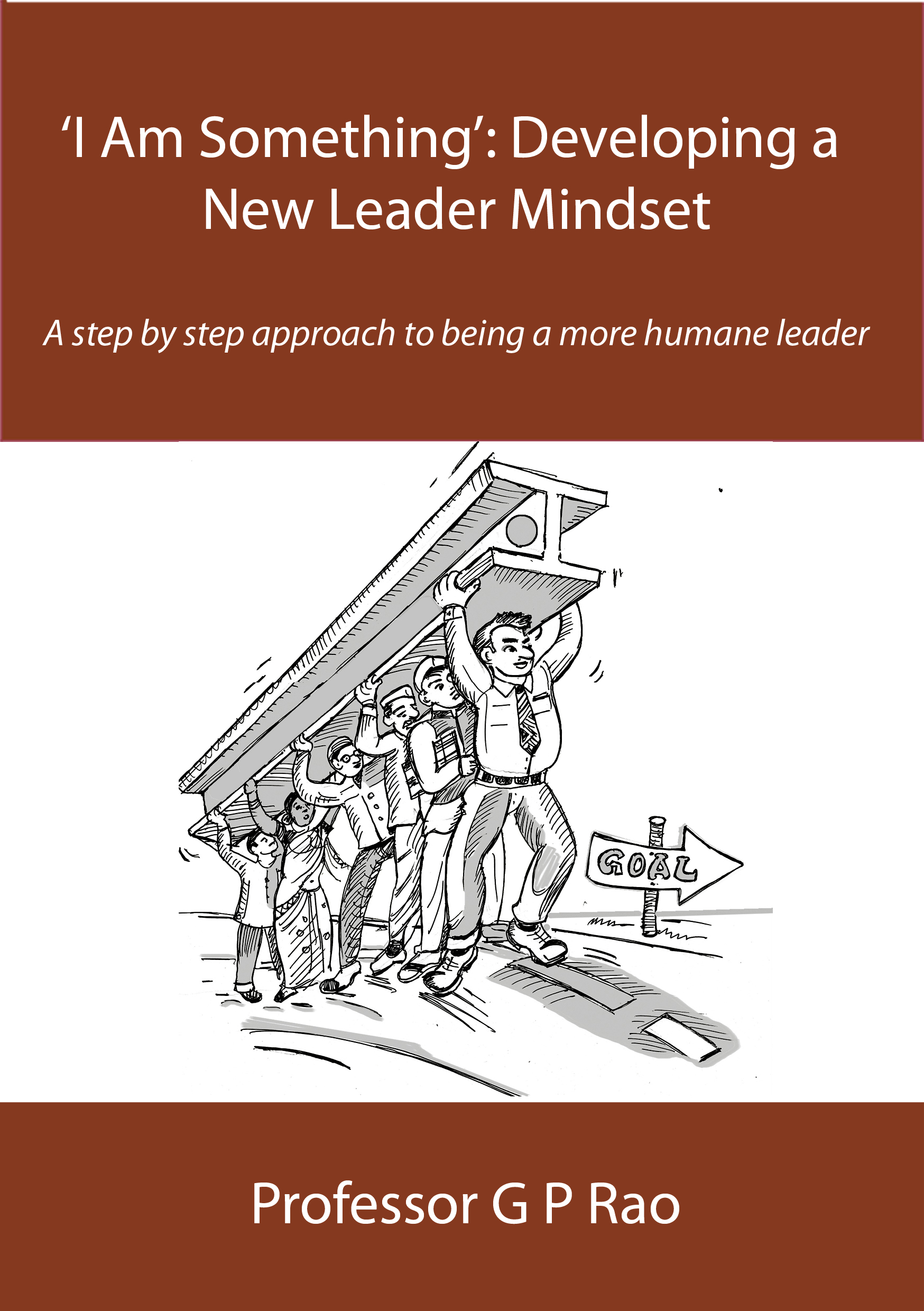
As conveyed by Lord Krishna in Bhagavad Gita, ‘the human intent behind any act always matters’. It follows that employees should always posses the intent of accomplishing their tasks in the best possible way, while helping anyone whom they meet in their journey. Employees in the organizations, today, should not develop a sense of either “I am Everything’ or ‘I am Nothing’. Instead, they need to develop an attitude of ‘I am Something’, which induces the self-confidence within them and also at the same time reminds them that there is lot of scope for them to learn and grow.

Having these essential values makes the working environment very conducive to new ideas and innovations, where every employee does not only feel valued, but they work at their fullest potential in order to make their organizations reach newer heights. Thus, in this era of fierce competition, human values combined with right skills to work will not only make the organizations thrive and be successful, but also add much required strength to humanity and make this planet a much better place to live.

Introducing the Author:

Ankur Sharad Mahajan is 27 years young and is currently pursuing my MBA in Operations at K J Somaiya Institute of Management, Mumbai, India.

He is an Instrumentation Engineer and worked at Tata Consultancy Services before joining his MBA. His hobbies include writing articles and poems, chanting Sanskrit Hymns and playing cricket, table-tennis and chess. Participating in various article writing competitions has always been his core interest. He is happy to have availed the opportunity provided by SPANDAN of expressing his views on a topic that he believes is most relevant and important in the present context.

Notes:

  1. Permission of SPANDAN to reproduce this essay here is gratefully acknowledged.
  2. This essay is a winning entry in an Essay Contest organized by SPANDAN recently.

Related Posts:

“Carrots and sticks are well alive and well within the change canon, and some businesses forgo the carrots”

The dominant paradigm, particularly in today’s world, is that organizations are there to principally generate shareholder value and profit. When profit is threatened, laying off workers; and when profit is surplus and so is demand, then skill-scale-speed followed by HRs as an optimum variable in the recruitment, has become an uncontroversial norm. In both of these cases, human values take a backseat and that won’t do. While this archetype has been further reinforced by the pandemic, it doesn’t hurt to reevaluate the same while visiting some of the catastrophic consequences in the 20th century that coercion and neglect of human rights had on organizations and nations at large. While the unions and strikes against some marginalisation and enslavement based on extreme structures, like that of the US Plantation Economy or the Atlantic slave trade, have resulted in the enactment of labor laws, formulation of code of conduct and structuring the blueprint of corporates, methods inculcating humanistic values including self-actualization, dignity and purpose are still a far cry.

Organizations might have evolved around structure, policy, culture and technology but the need to centralize business through human intrinsic values still holds relevance. Now is the time that we start devising structural plans to align the present day organizations with human values and most importantly take cognisance of its relevance in all kinds of setups.

The stepping stone to understand the relevance and eventuate the same would revolve around redefining the role of HRs, understanding the core values that remains the same irrespective of the changes in organizational set up, the importance of adhering to the human values in the ever changing world around AI and envisioning the implications on stakeholders outside the organization while formulating any plan.

HR = Human Resilience

Industry stalwarts like Ajeet Bajaj are now defining resilience as an important attribute of HR. In this ever changing dynamic and diversity of the business world, employees are expected to emerge as a winner no matter what. They are expected to manage boundaries, conflicts, transitions, and deliver sustainable results. In short, they are expected to be resilient along with holding competence. However, more than physical and mental strength, resilience is a person’s emotional response to the situation, says Former MD & CEO of National Skills Development Corporation. And to harbour that level of emotional resilience, we can’t expect this term “HR” to be merely referred to as “Human Resources” but there is a need to redefine it as “Human Resilience”, there is a need to see humans as more than just well-oiled machines. HR is a profession that identifies the potential of people, nurtures the talent, facilitates self discovery and incentivises talent multiplication. And all of this is imperative to an organization’s success.

The pandemic however has made HRs respond reactively rather than proactively that further libeled them as “Termination Trays”. To break this notion, it would require organizations to diverge from “profit maximization to value maximization” and to bring about the change, HRs remaining at the very apex of it. This would involve HRs to undertake fundamental research about people in the context of governments, societies, corporate sector, villages, districts, talukas, so that they have a shared vision and value with humans coming from all walks of life. This, in turn, empathetically guides them towards the path of passion-purpose-positivity and revert back the setback brought in by the COVID-19 pandemic through a knack of bringing out the best in them amid crisis situations. And in this process, the resilience and adaptability fostered by human values remains innate as a key functionality in the ongoing digital revolution, an era that surely demands even more inclusivity, employee engagement and innovation. In short, it demands us to be more human.

THE CORE REMAINS THE SAME!

In recent times, we have seen massive changes in the corporate scenario which is an amalgamation of reconstruction driven by the digital revolution. Needless to say, the dimension and scope of hybrid culture, remote work, and most importantly startups gets much larger.

Having said that, there is a greater need for organizations to enhance competitiveness everyday. But, the core principle that makes an organization competitive remains the same regardless of the dimension and its setup. It is mostly a reflection of human characteristics such as adaptability, ethics and resilience.

The increased number of startups and ventures has made the stakeholders enamoured and obsessed with the products and services but the rate of success still revolves around business intent, customer connection, and employee experience. This requires us to make work more relational than transactional. When investors at times push a firm to professionalize and strive to fulfil market demands, companies tend to take a superficial approach and neglect what truly matters to the venture. But the successful examples of ventures like Nike, Netflix, Study Sapuri has taught us that the root of successful businesses can always be traced back to Employee Experience, customer satisfaction and organizational spirit.

The most consistent and flexible of them has been Netflix. It worked relentlessly to retain its soul of helping best content creators around the world get a wider audience and became the best global distributor. It epitomizes the concept of human values and organizational profit going hand in hand while perfectly complementing each other.

And some recent examples like that of the Google employees demanding the tech giant to shelve plans to stifle dissent in China in 2018 show that organizations and employees are still willing to place human values above profit even for the stakeholders outside the ambit of organization. And in today’s world of automation and digitization, we surely need more such examples to set precedents and instill a sense of oneness.

CHANGED MANAGEMENT (AUTOMATION AND ARTIFICIAL INTELLIGENCE)

While the world is leapfrogging towards Artificial Intelligence and Automation, it is incumbent upon us to practice it with utmost care and for the service of humanity and not against it. Some of the notable uses of AI for wildlife conservation or climate change through unmanned aerial vehicles and Machine Learning informatics are truly praiseworthy. But, we need to exercise wariness when we bring AI to the organizational setup. Taking a human centric approach would help the use of AI and automation intelligibly and proportionately. For that, it’s important that we have open and inclusive discussions about human values across diverse communities so as to avoid reinforcing unfair bias and create more innovative and representative uses of AI.

CONCLUSION

All of the three stepping stones including redefinition of HR’s role, Core values, Changed Management and automation help us to delve into the deeper trenches of the relevance and applicability of human values in present day organizations. To further augment all the three, there is a need to democratize businesses in order to envision the implications of our decisions that the stakeholders even outside the immediate sphere of an organization face. This would help us reevaluate some of the disastrous decisions including patent policy, jacking up the prices of life saving drugs and working against environmental protections that the organizations took lately in the light of shareholders profit.

While a transition to this self realization is surely difficult, observers suggest the main deterrence to the transition is our own mindset which is informed by a set of global narrative of how business is supposed to be. It has deepened the narrative of “dog eats dog” as a successful model of business. But, successful models like”Twin win” and “human chain” can be the silver lining to the ever evolving relationship between an organization’s success and the human values it professes.

And let’s remember that business and organization are the places where experience and insights came first and theories later. And in order to keep evolving and formulating new successful theories it is important to treat the significance of human values as being foundational, so as to solidify the ever evolving superstructures including business models and organizational cultures.

REFERENCES

www.investopedia.com/insights/history-of-us-monopolies

Harvard Business Review : https://hbr.org/2019/07/the-soul-of-a-start-up

Uses of AI: https://www.forbes.com/sites/bernardmarr

https://en.wikipedia.org/wiki/History_of_slavery

SHRM, South Asia,

https://blog.shrm.org/sasia/blog/resilience-an-attribute-important-to-hr

  • Human Dignity and Welfare Systems: Chicago University Press
  • Wilson, On human nature: Harvard University Press
  • Humanizing Business : EY
  • Kelly Sikkema-Medium.com

https://medium.com/swlh/have-we-overlooked-our-human-values-in-the-business-of-valu e-creation-dc52ef8ff26c

Introducing The Author:

Shreya is 21 years young and a 3rd year Chemistry (Hons) student from Patna women’s college, Bihar. She has been active in the field of debating and speaking and has won awards at both national and international levels.

Some of these are:

1. “international conventional debate, Nimbus, DU” 2020

2. Jashn e abhivyakti, National debate competition, Satyawati college 2021
3. JIMS Kalkaji National Debate, 2021 
4. Evaluation contest winner, Toastmasters International 2020

Besides, she is an avid reader, writer with experience in the field of management, education and writing. She aspires to form a community of like minded people while always striving to learn more. 

Notes:

  1. Permission of SPANDAN to reproduce this essay here is gratefully acknowledged.
  2. This essay is a winning entry in an Essay Contest organized by SPANDAN recently.

Related Posts:

UNDERSTANDING HUMAN VALUES

Values can be defined as abstract and conceptual beliefs which act as a guideline in the lives of humans and influence the ways in which people and events are evaluated. The values of honesty, integrity, love, and happiness are termed as destination values whereas the values of health, status, intelligence are path values which help attain destination values.

While the destination values remain constant and act as a guiding light towards higher order goals, the path values are temporary and help achieve lower-order goals for humans. Humans are a mix of both types of values which are reinforced by the culture and environment in which they grow.

Where Do Values come from?

Values cannot exist in isolation from society. Every value can be referred to as a ‘goodness’ that exists in one’s mind, which in turn, exists as a sociometer construct that guides both collective and individual action.

Values can be formed biologically, determined by human needs, wants, and desires, and following one’s birth, they are formed from particular social groups, whose core values are determined by its purpose.

HUMAN VALUES AND ORGANIZATIONS

One can hardly glance at the front page of a newspaper without being confronted by a story of misconduct or unethical behavior in organizations. With this world becoming more and more profit centered, the relevance of value-based lens in this world of materialism is getting blurred.

For a vehicle to perform efficiently, it needs both an engine for power and a steering system for guidance. A similar analogy can be applied to any organization as well; the purpose or vision is the engine that propels it forward and the human values act as the steering system which guides it.

Just as it is important to be able to identify with an organization’s purpose, it is also important to align with its values. Organizations that authentically define their values show employees how to align their behaviors with the things that matter to the organization.

MAKING VALUES EFFECTIVE

An organization’s core values only have power when – and to the extent that – the humans in and around the organization feel a connection to them. When human values and organizational values overlap for employees, that’s when they are truly connected to their workplace.

The three ingredients that actually make values effective in an organization setup can be termed as follows:

Make Values Operationalized: Every organization can come up with a fancy set of value system that they follow. However, in order to make it effective it is important that similar values are reflected in the way the organization, its departments, teams and individual employees’ work on a day to day basis, propelled by actions and decisions.

Start from the Top: Leadership group of every organization must live up to the values that they stand for. Developing such value driven organizations always flows from the actions and decisions at the top level. An employee always idolizes his boss, so it is important that people at the top level are able to practice what they preach.

Communicate Values: Using content to communicate one’s value helps to develop a virtuous cycle. The content connects the organization to its values, keeping the values at the top of the mind for each team member when they are making decisions or crafting processes as a part of their daily tasks.

HUMAN VALUES AND RELEVANCE FOR ORGANIZATION STAKEHOLDERS

Values are an indispensable component of a healthy workplace culture. These provide a framework within which the organization can test its decisions, accomplish tasks, and interact with outside stakeholders.

Values and Organization: When organizations explicitly define their values and beliefs, they provide immediate clarity for decision making. Upholding human values helps create boundaries that show staff and clients where the organization is headed to.

A recent study conducted by the World Economic Forum highlighted how the organizations that nurtured a value system making it a part of their brand appeal without being single-mindedly focused on profit making were the ones which actually generated the most value and attained market leadership position.

The best example within the Indian context is that of the Tata Group. The guiding principles of the TATA group evolve from its rich value system and traditions of trusteeship as a way to redistribute the wealth created by the industrial society kept aside exclusively for the benefit of people at large.

Values and Leadership: Many leading thinkers and business practitioners advocate that true leadership is best expressed through the lens of values and beliefs of an organisation’s senior management, which serve to mould the broader organisation’s core identity and mindset. Values distinguish an able leader from a mere instructor.

As per the definition given by Busch and Murdock (2014), value-based leadership is considered as goal-setting, language-creating, problem-solving, and value-developing interaction, which is an integral part of any organization’s human values and very high ethical standards.

Following a value-driven path not only brings about clarity but also facilitates better decision making and goal accomplishment on the part of a leader. Value-driven decision making makes the leader standout and leave an everlasting imprint.

Values and Employees: Any business is as value-driven as the value systems of its individual employees. Value-driven employees not only turn into a long-term asset for the organization but also end up doing well in their lives and careers.

According to Maslow’s Need Hierarchy theory, human needs can be broadly categorized under five categories. Of these, Self Actualization needs come at the top of the pyramid. This clearly highlights how an employee – being a social animal – wants much more than monetary satisfaction.

Various studies show how employees are positively impacted when involved in CSR initiatives or when they follow their value system, rather than when driven by greed. Human values can act as a guiding light towards a better professional and personal life for an employee.

FINAL REMARKS

Business Ethics is a recent buzzword in modern organizations which constitutes the different human values and goes much beyond the materialistic business objective of profitability and growth. As most of the organization decisions are based upon values, the long-term sustenance of any organization is not possible without a robust value system.

With the increasing needs of different stakeholders, the modern organizations demand a more value-based approach of decision making. Value alignment not only helps in better decision making but also help organizations develop a feeling of trust with external stakeholders – like customers – ultimately leading to improved business performance.

Human Values can be considered as the soul of any modern organization. These act like the binding thread that integrates the organization with individual employees leading to holistic growth of the organization and the associated stakeholders.

Introducing the Author:

Vasu Garg (22 Years) is a 2nd-year student at MDI Gurgaon specializing in the field of Finance and Marketing. Prior to this, he completed his B.com (Hons) from Hansraj College, University of Delhi.

Despite no past experience in a corporate environment as a full-time employee, he has gained a certain level of exposure to the corporate world through a range of internships with organizations like Nomura, PharmEasy, UrbanCompany, IIFL, etc.

In terms of hobbies, he is passionate about participating in social work and playing cricket.

Notes:

  1. Permission of SPANDAN to reproduce this essay here is gratefully acknowledged.
  2. This essay is the top winning entry in an Essay Contest organized by SPANDAN recently.

Related Blog Posts: